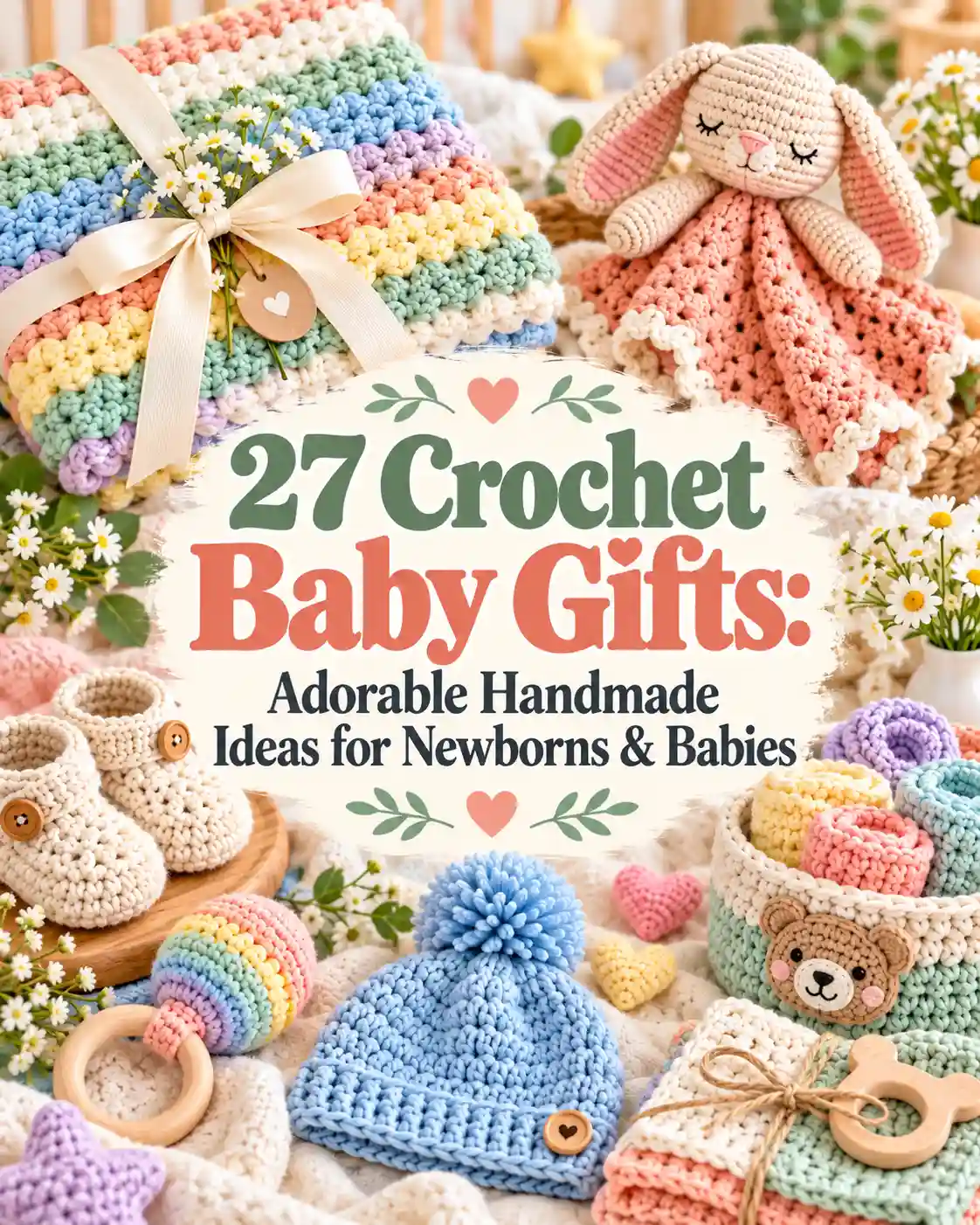
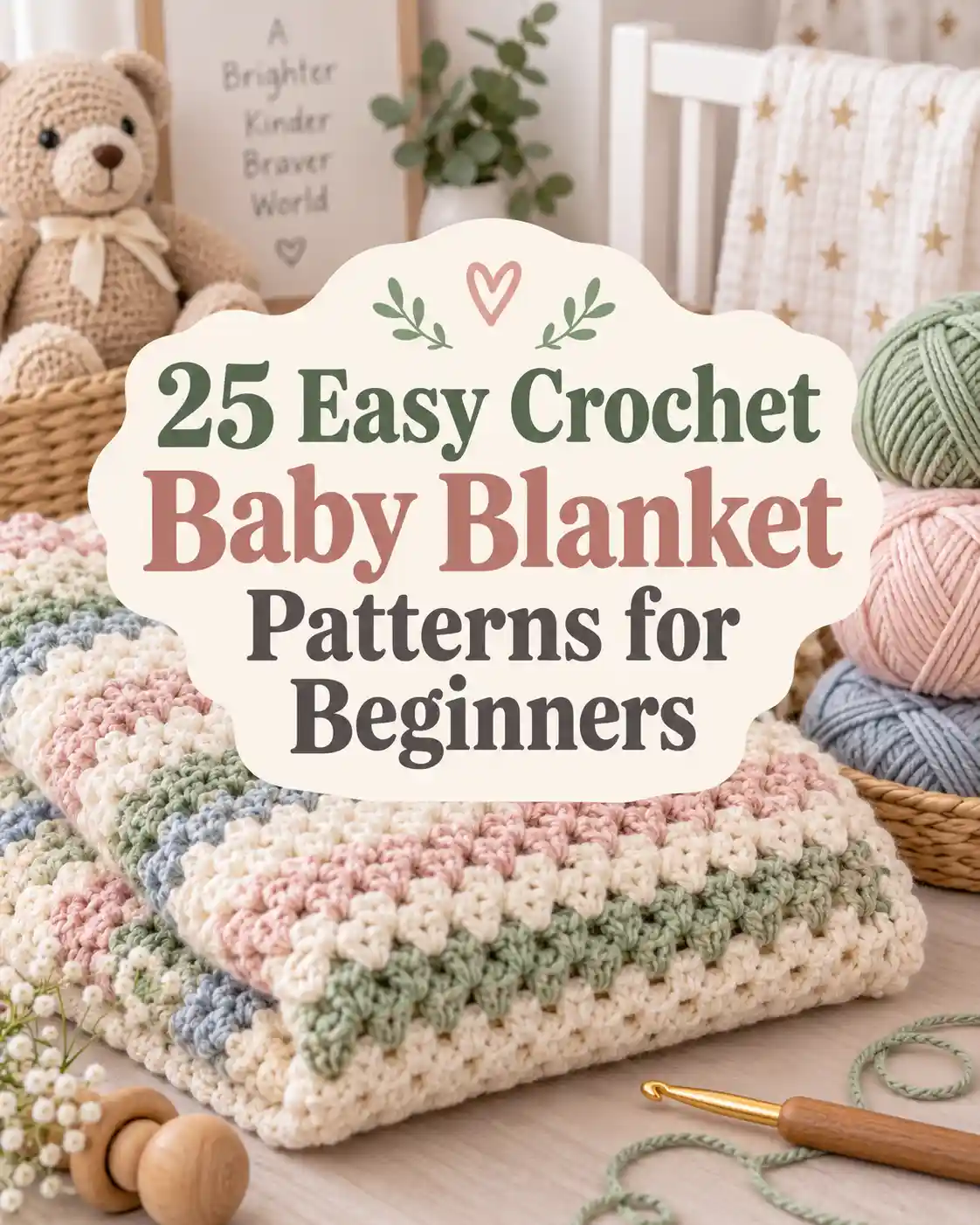
An easy crochet baby blanket does not need complicated stitches to look beautiful. For most beginners, the easiest options use single crochet, half double crochet, granny clusters, or a simple one- or two-row repeat with soft yarn and an uncomplicated border.
If you have been searching for an easy crochet baby blanket free pattern, this roundup will help you narrow down the stitch, texture, yarn, and color style you actually want to make. I have kept the ideas beginner-friendly, practical, and varied enough that you can find something for a newborn gift, baby shower, or your own first blanket project.
I know how easy it is to save dozens of beautiful baby blanket patterns and then feel unsure about which one is actually beginner-friendly. Some designs look simple in photos but involve constant counting, frequent color changes, or stitches you have never tried before. That is why I like starting with patterns that have a clear rhythm, visible stitches, and enough repetition to let you relax once the first few rows are finished. Whether you want a calm one-color design, a quick chunky blanket, or something a little more decorative, these 25 ideas give you plenty of approachable options without making your first blanket feel overwhelming.
Key Takeaways
- Start with an easy crochet baby blanket free pattern.
- Choose simple stitches and predictable repeats.
- Match yarn weight to the pattern instructions.
- Use stitch markers to keep edges straight.
- Pick washable yarn for practical baby gifts.
- Keep infant sleep spaces free of loose blankets.
Baby blanket safety note: Handmade blankets make lovely gifts, but loose blankets should not be placed in an infant’s crib or other sleep space. The U.S. Consumer Product Safety Commission says a baby’s sleep space should contain only a fitted sheet, and the American Academy of Pediatrics also recommends keeping loose bedding out of the crib.
Which Easy Crochet Baby Blanket Pattern Is Best for a Beginner?
A one-row repeat, half double crochet, single crochet, or granny stripe blanket is usually easiest for a beginner because the stitch pattern is simple and easy to repeat.
At a Glance:
- Choose a repeat you can memorize.
- Avoid too many color changes.
- Use smooth yarn with visible stitches.
- Start with basic crochet stitches.
- Pick a simple border.
For a first blanket, I would start with a pattern that has a repeat you can remember without checking instructions after every few stitches. If you are completely new, this guide on how to crochet for beginners can help you review the basic chain, stitch placement, and tension before starting. One-row repeats, half double crochet, granny stripes, and simple two-color blankets are especially approachable because you can concentrate on tension and straight edges instead of complicated shaping.
The Craft Yarn Council classifies yarn from weight 0 through 7 and provides suggested hook and gauge ranges for each category. Those ranges are guidelines rather than fixed rules, so the pattern gauge and yarn label should still guide your final hook choice.
| Pattern Style | Beginner Level | Best Feature | Color Changes | Good Choice If You Want |
|---|---|---|---|---|
| One-row repeat | Very easy | Easy to memorize | Optional | Relaxing crochet |
| Half double crochet | Very easy | Quick, neat texture | Optional | A first blanket |
| Single crochet | Very easy | Dense, simple fabric | Optional | Basic stitches |
| Granny stripe | Easy | Fast visual progress | Easy | Colorful stripes |
| V-stitch | Easy | Light, decorative texture | Optional | A softer open look |
| Chunky blanket | Easy | Works up quickly | Optional | A faster project |
| One-color texture | Easy | Few yarn ends | None | Minimal style |
| Tunisian crochet | Easy–moderate | Woven appearance | Optional | Learning something new |
What Should You Look for in an Easy Baby Blanket Crochet Pattern?
Look for a simple repeat, beginner-friendly yarn, clear gauge information, and straightforward finishing instructions.
At a Glance:
- Check the stitch repeat first.
- Review yarn weight and care.
- Confirm the required hook size.
- Look for clear finished dimensions.
- Choose uncomplicated edging.
There are three things I would check before starting.
First, look at the stitch repeat. A beautiful blanket can become frustrating very quickly if the repeat requires constant counting.
Second, check the yarn. Softness matters, but so do washing instructions, stitch definition, and how comfortable the yarn feels in your hands. Yarn labels normally include fiber content, yardage, care information, yarn weight, and suggested hook or needle information, according to the Craft Yarn Council.
Finally, think about finishing. A blanket with a simple body and neat border often looks more polished than a complicated pattern with uneven edges.
25 Easy Crochet Baby Blanket Patterns for Beginners
The easiest baby blanket patterns use basic stitches, repeating rows, simple color changes, or beginner-friendly textures that become predictable after the first few rows.
- Try one-row repeats for relaxing crochet.
- Use HDC when you want faster growth.
- Choose one color to reduce finishing.
- Try stripes for easy visual interest.
- Save Tunisian crochet for a next-step project.
1. One-Row Repeat Baby Blanket
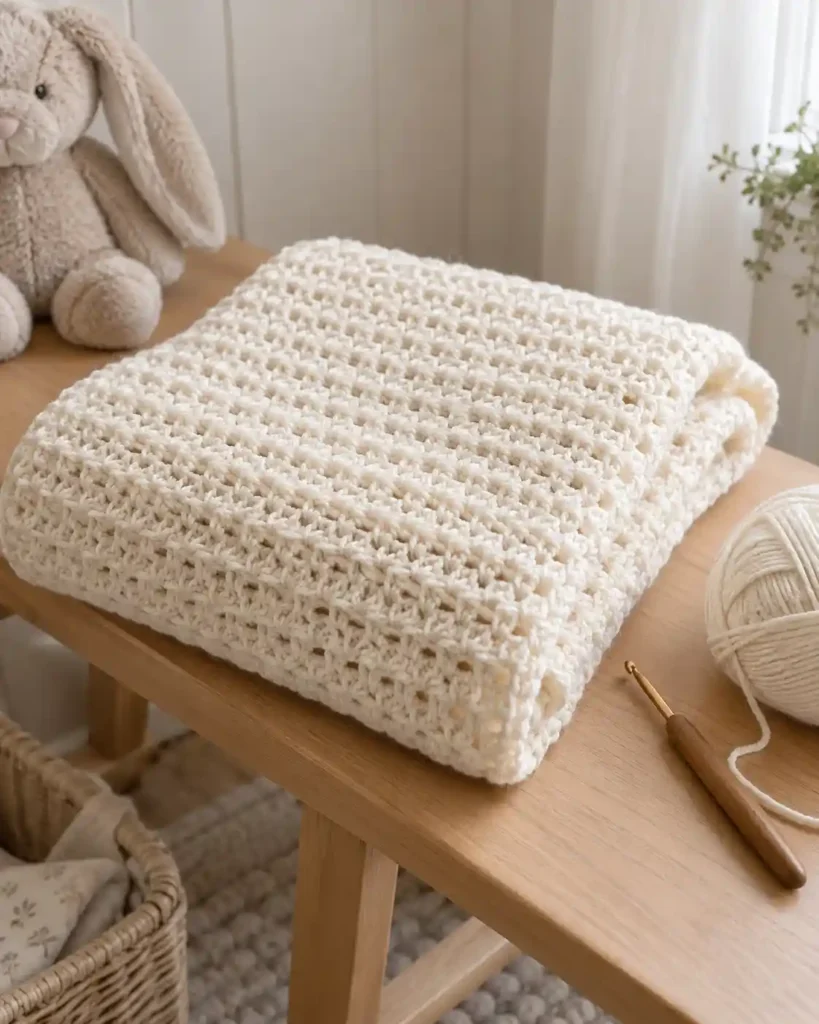
The one-row repeat baby blanket is probably where I would send a nervous beginner first. Once you understand the repeating row, you can stop concentrating on the written pattern and simply enjoy crocheting.
That makes it less mentally demanding than designs that change stitches every few rows. I especially like this type of blanket for evening crochet because the rhythm becomes easy to remember.
Choose it if you want a genuinely simple baby blanket crochet pattern easy enough for a first larger project. The best part is how polished a basic repeated texture can look when the tension stays even.
Use a soft medium-weight yarn and keep stitch markers on the first and last stitch until your edges become consistent.
Special Tip: Count your stitches every few rows rather than waiting until the blanket is almost finished to discover that one side has started shrinking.
2. Two-Row Repeat Baby Blanket
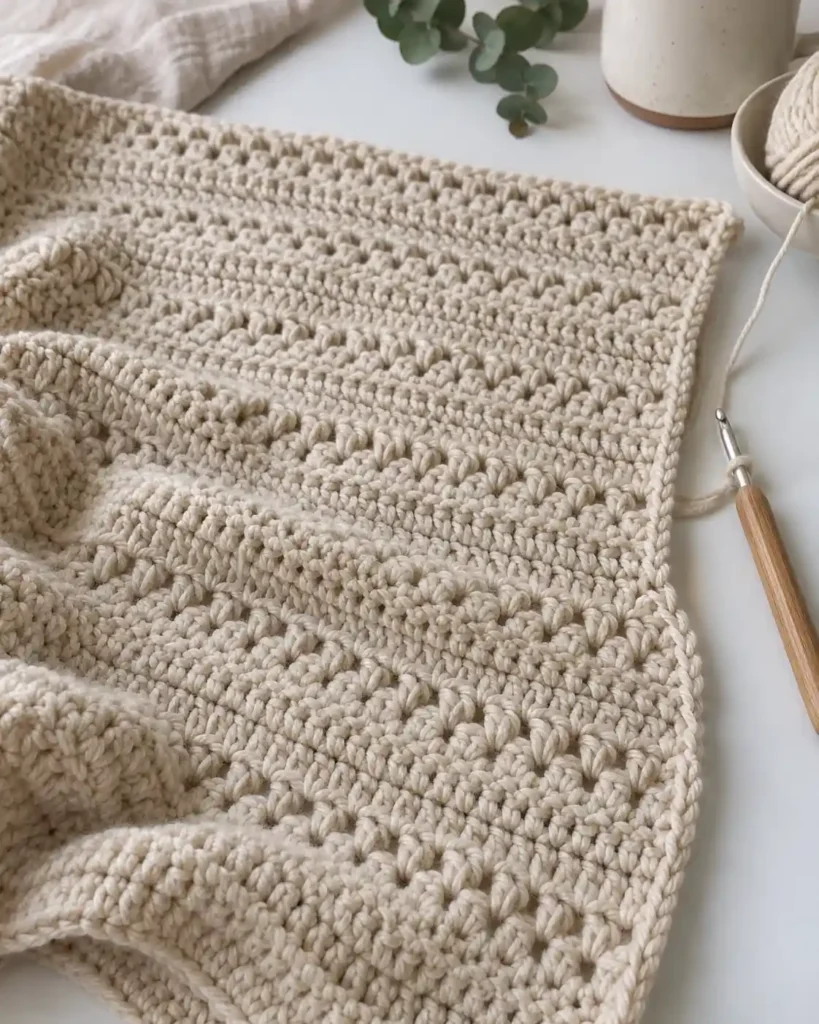
A two-row repeat gives you a little more texture without making the project dramatically harder. The two rows usually alternate in a predictable rhythm, so after a few repeats you know exactly what comes next.
Compared with a single-stitch blanket, this one looks more detailed even when the actual crochet skills are basic. I like it when I want something interesting enough to keep me engaged but still relaxing enough for television crochet.
It is a good choice for beginners who already know two basic stitches and want the finished blanket to look a little more advanced. The payoff is texture without complicated shaping.
Try using a light solid color so you can actually see the alternating stitch pattern.
3. Classic Blanket Stitch Baby Blanket
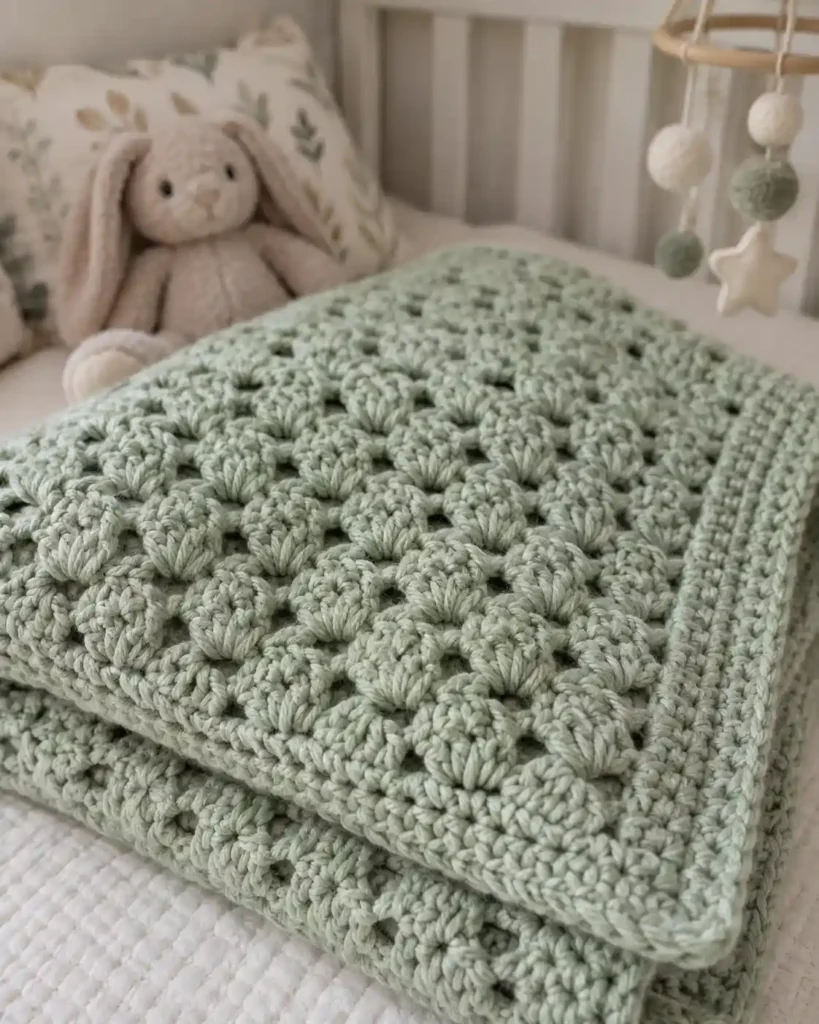
A classic blanket stitch gives an easy crochet baby blanket a tidy, repeating texture that feels timeless. Instead of relying on lots of colors, the stitch pattern itself gives the blanket character.
That makes it especially useful when you want a simple solid-color baby gift. I would choose this style for cream, pale sage, dusty blue, soft pink, or oatmeal yarn.
It suits beginners who are comfortable repeating a small group of stitches across each row. Once that group becomes familiar, the blanket moves surprisingly smoothly.
Keep the border understated. A simple single-crochet round is often enough.
4. Half Double Crochet Baby Blanket
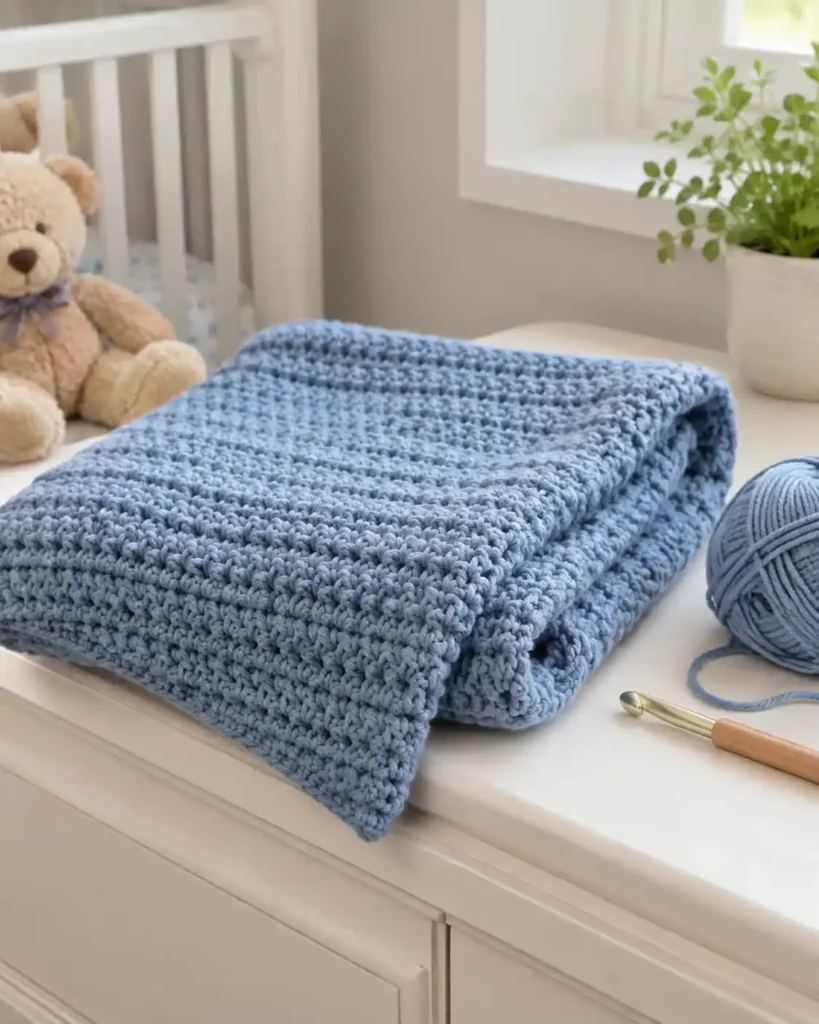
Half double crochet is one of my favorite stitches for beginner blankets because it sits nicely between single and double crochet. It grows faster than single crochet but still creates a substantial fabric.
That balance makes it easier to finish a full baby blanket without feeling as though you have been working on the same row forever. Daisy Farm Crafts uses half double crochet variations in beginner-friendly baby blanket designs for exactly this kind of simple, textured result.
I would use this pattern when making a practical everyday blanket with a clean, modern finish. It is difficult to make the design feel overly busy.
Try a solid body with one contrasting border for an especially simple first project.
5. Single Crochet Baby Blanket
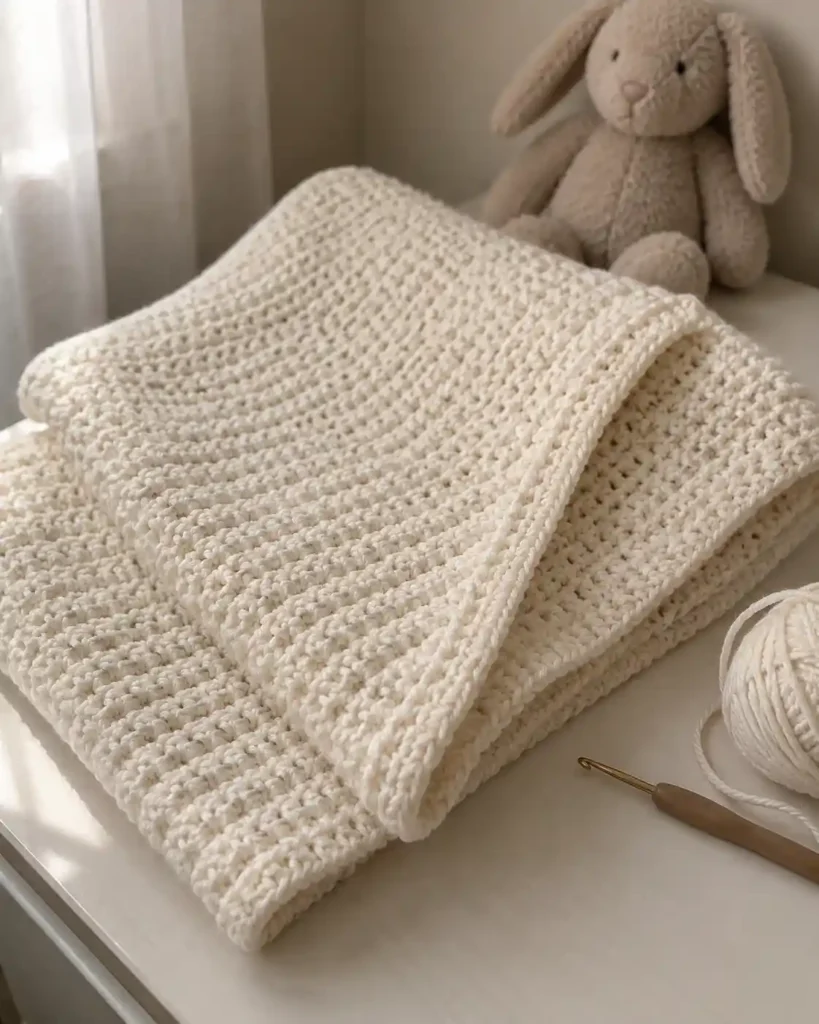
If you have only recently learned crochet, start with what you already know. A single crochet baby blanket is about as straightforward as it gets.
It takes longer than some taller stitches, but that slower pace can actually help a beginner learn tension and stitch placement. I like single crochet for simple color blocks because there is no complicated stitch pattern competing with the colors.
This is the blanket for someone who wants confidence more than speed. By the end, you will have repeated the basic stitch enough times that it feels completely natural.
For extra interest, alternate two close shades rather than introducing a complicated stitch.
6. Shell and V-Stitch Baby Blanket
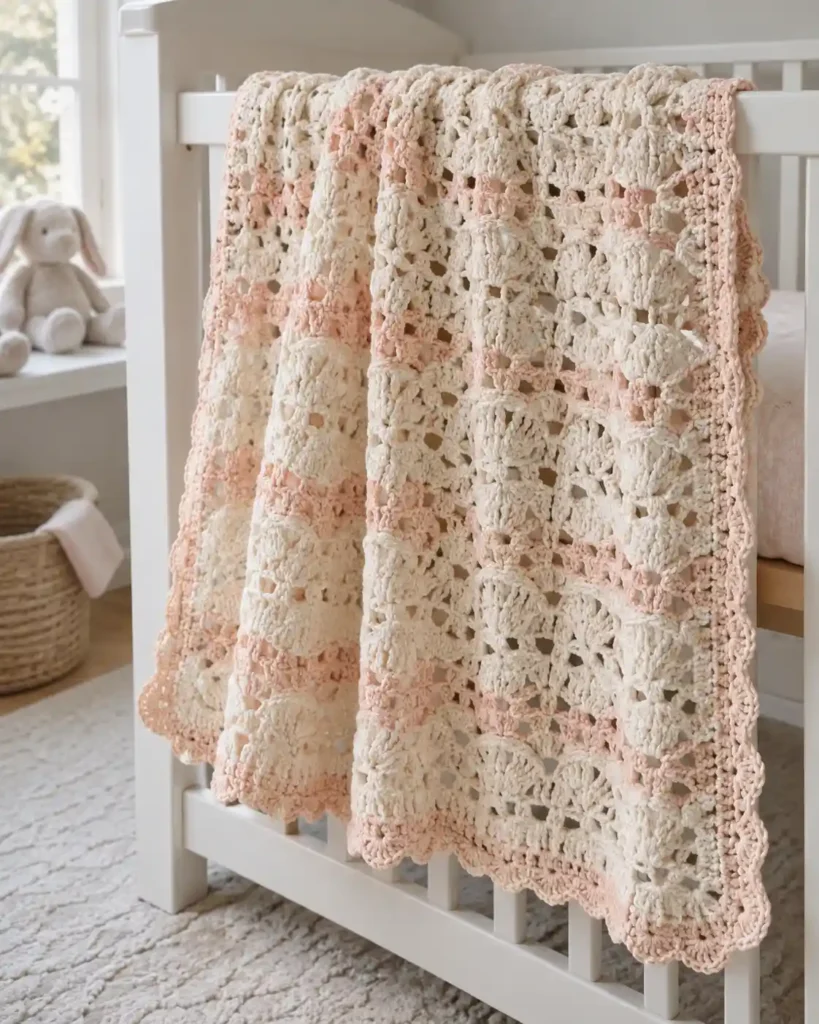
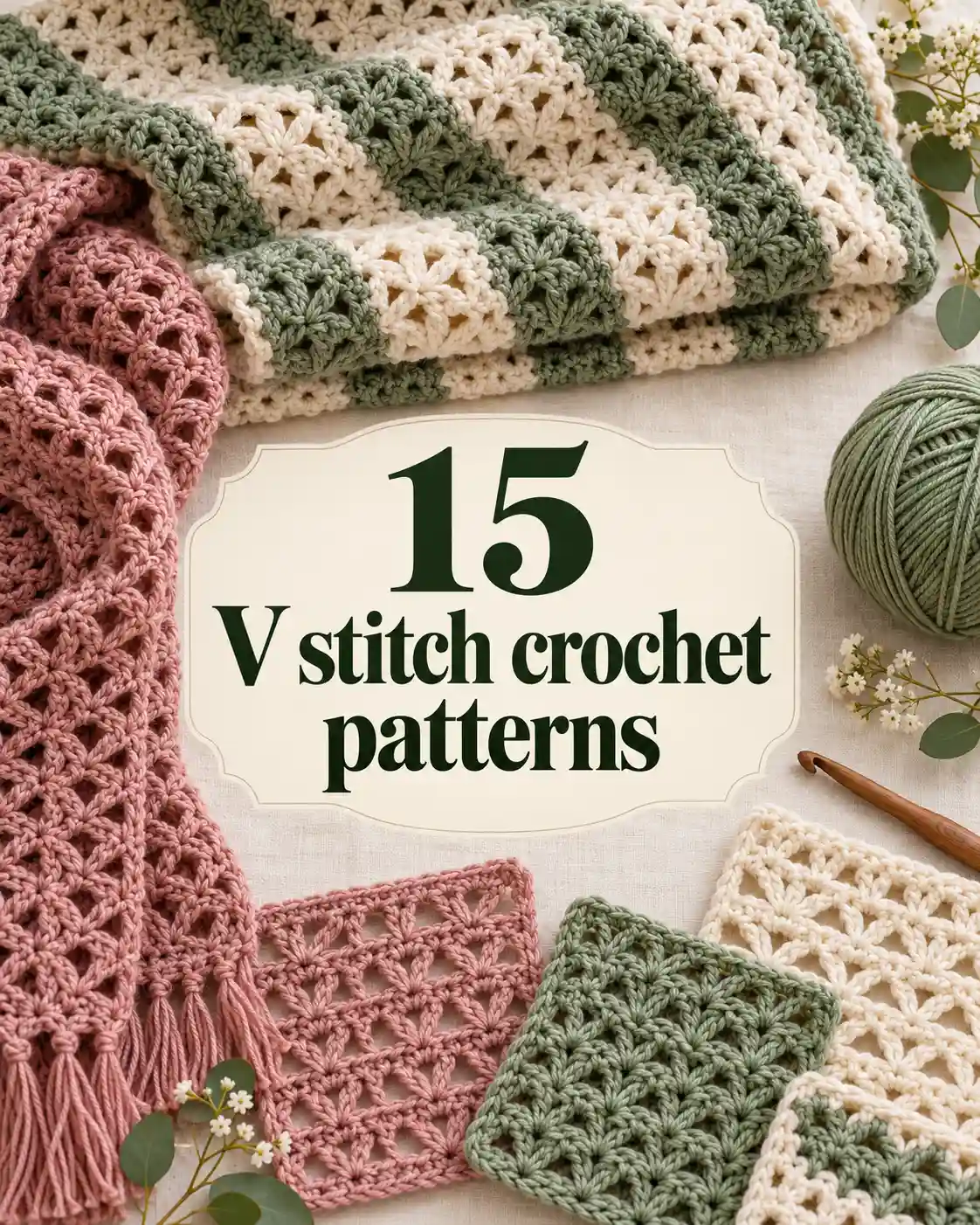
The V-stitch and crochet shell stitch look decorative, but neither automatically means “advanced crochet.” A simple repeating version can create a beautiful baby blanket with far less effort than the finished texture suggests.
This is what makes it more exciting than a plain row of basic stitches. I especially like V-stitch blankets when a light, graceful look fits the gift.
Choose this design after you feel comfortable placing multiple stitches into the same space. The biggest payoff is getting that classic crochet texture without learning difficult shaping.
Daisy Cottage Designs also features V-stitch and shell-style baby blankets in its beginner-focused roundup, showing how common these constructions are in accessible blanket projects.
7. Modern Granny Square Baby Blanket
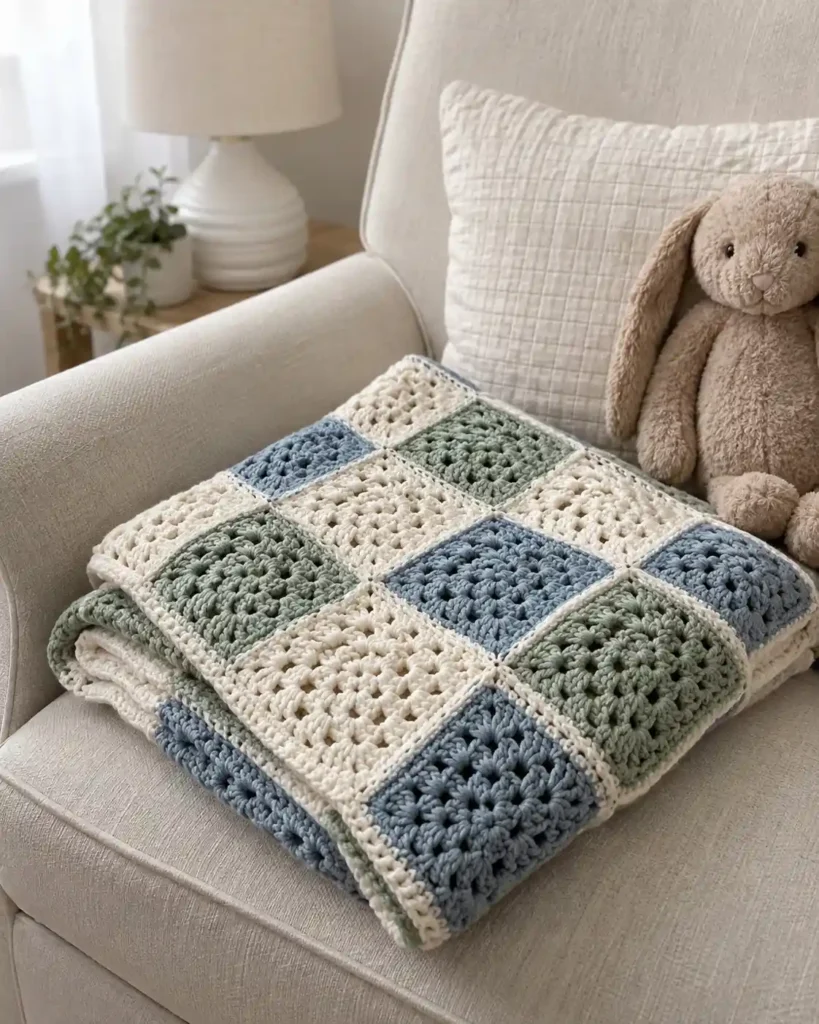
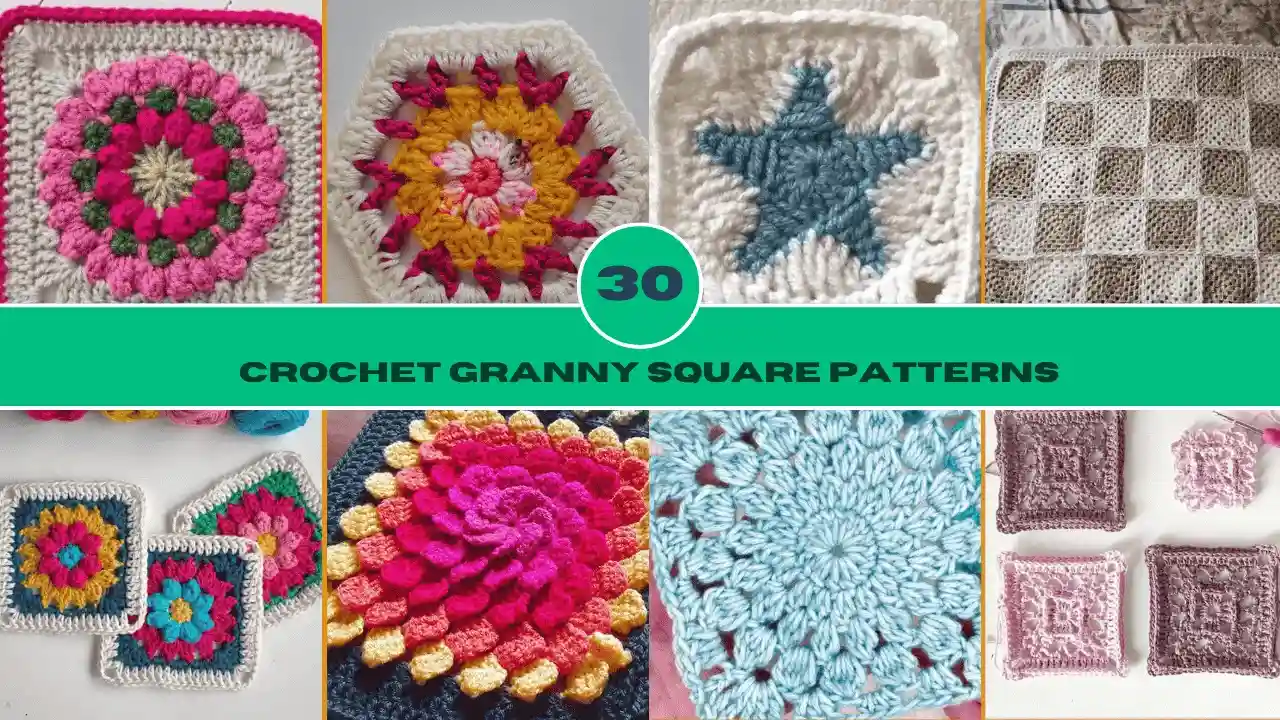
Granny squares can be colorful and traditional, but they can also look surprisingly modern. If you want more motif ideas, these crochet granny square patterns can help you explore different square styles before choosing a blanket layout. Use larger squares and a limited palette, and suddenly the whole blanket feels cleaner and more contemporary.
The advantage over a full row-by-row blanket is portability: you can work on individual motifs almost anywhere. I like making a few squares at a time rather than staring at a long unfinished row.
This pattern works well for beginners who already understand basic granny clusters and want to practice joining pieces. The finished blanket also gives you endless options for personalizing nursery colors.
To make it easier, use only two or three colors and repeat the same square design throughout.
8. Easy Granny Stripe Baby Blanket
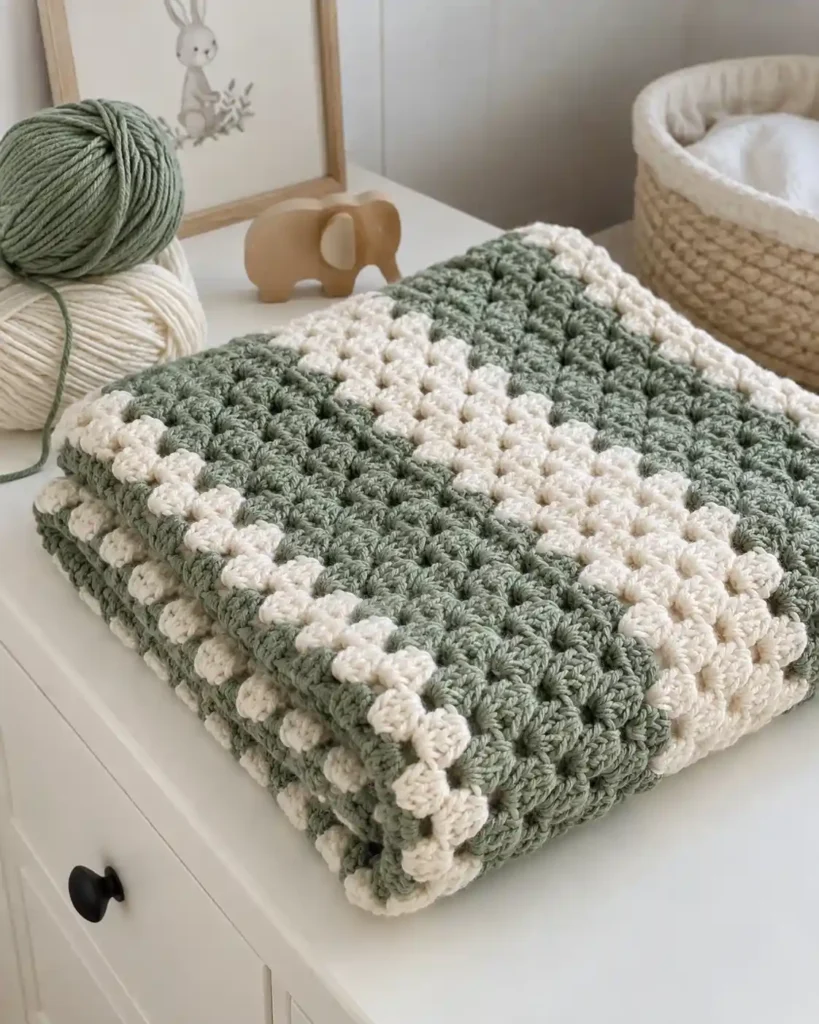
If joining individual squares sounds like extra work, keep the granny stitch but work it in rows. A granny stripe baby blanket gives you the familiar cluster look with much less finishing.
It is quicker to settle into than many decorative stitch patterns because you repeatedly work into the spaces between clusters. I like wider color bands here because they reduce the number of yarn ends.
This is an excellent easy baby blanket crochet style when you want visible progress after every crochet session. Stripes make even a straightforward stitch feel lively.
Two colors are enough, although self-striping yarn can make the project even easier.
9. Lattice-Texture Baby Blanket
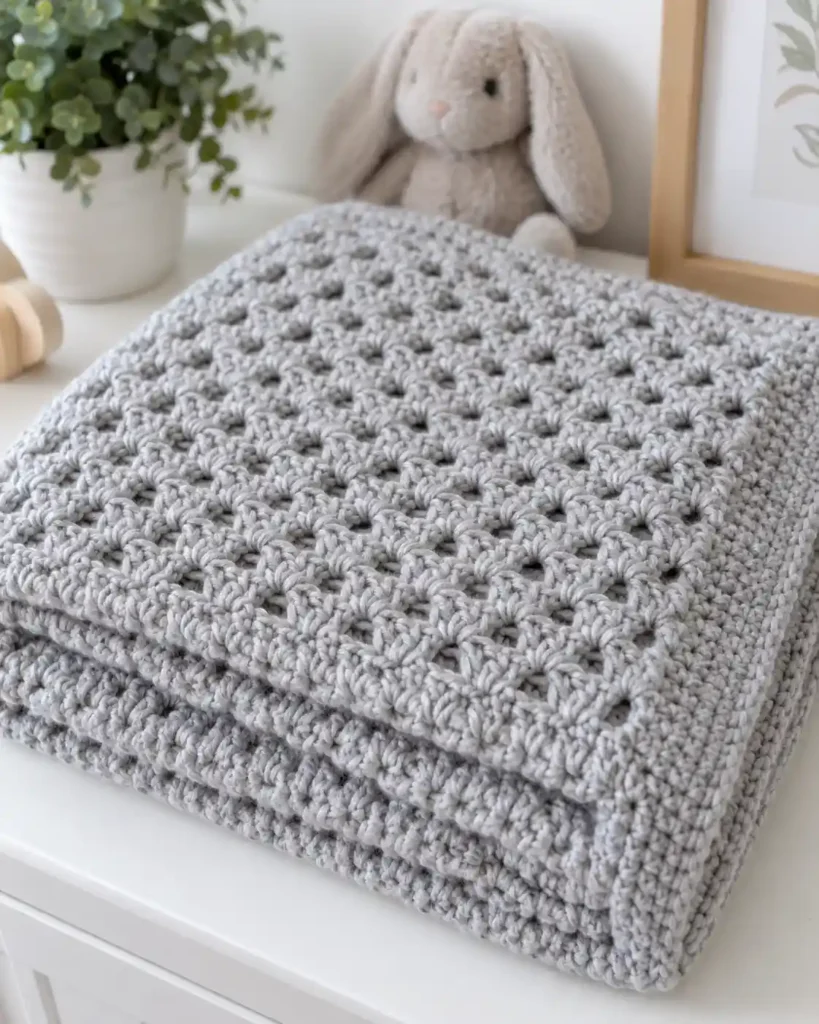
A lattice-style crochet blanket has just enough open texture to look delicate without needing complicated lacework. The trick is choosing a repeating lattice that remains easy to follow.
Compared with a dense basic blanket, the visual texture looks lighter and more detailed. I would use a soft neutral yarn so the stitch construction becomes the main feature.
This pattern suits beginners who want to move slightly beyond ordinary rows while still working a predictable repeat. The finished blanket can look much more difficult than it actually was.
Add a solid border to visually frame the lattice pattern.
10. Raised Brick Texture Baby Blanket
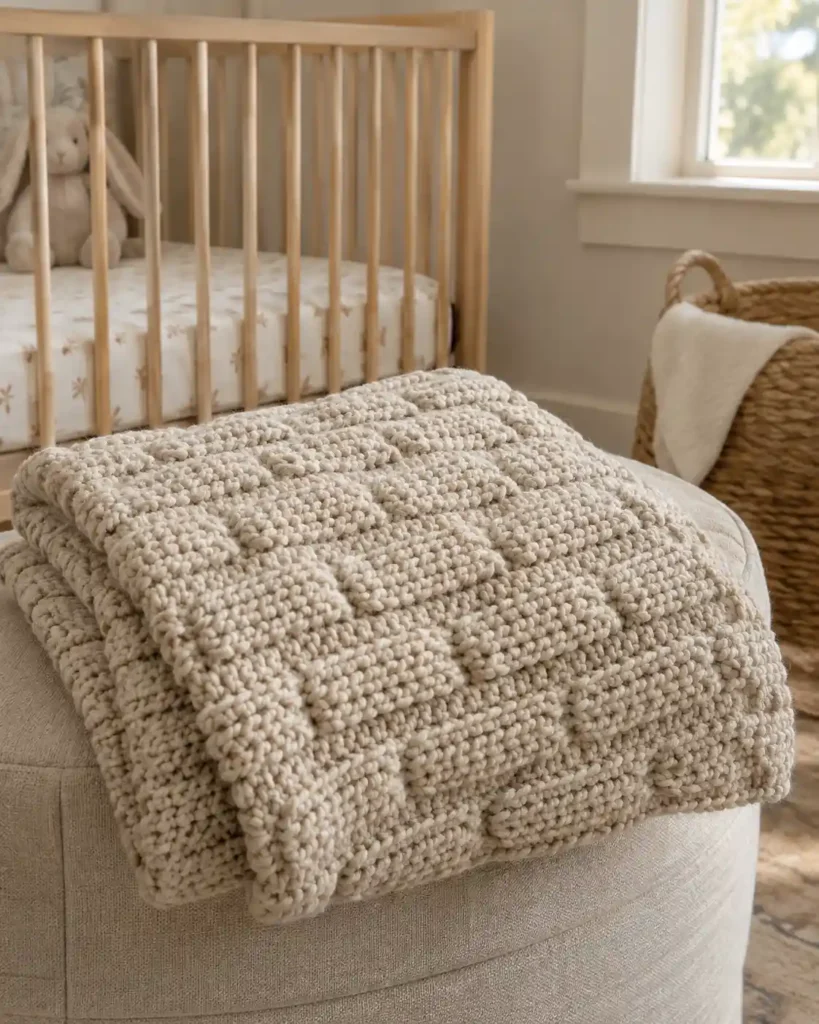
A raised brick texture turns one solid yarn color into something much more interesting. Instead of switching shades constantly, you use stitch placement and relief to create the design.
That makes it easier to manage than multicolor crochet while still producing plenty of visual detail. I love this idea in oatmeal, cream, soft grey, or muted green.
Pick this style if you prefer modern nursery colors and do not want dozens of yarn ends to weave in. The texture does almost all of the decorating for you.
Use a smooth yarn with good stitch definition so the raised pattern does not disappear into fuzzy fibers.
11. Mixed-Loop Texture Baby Blanket
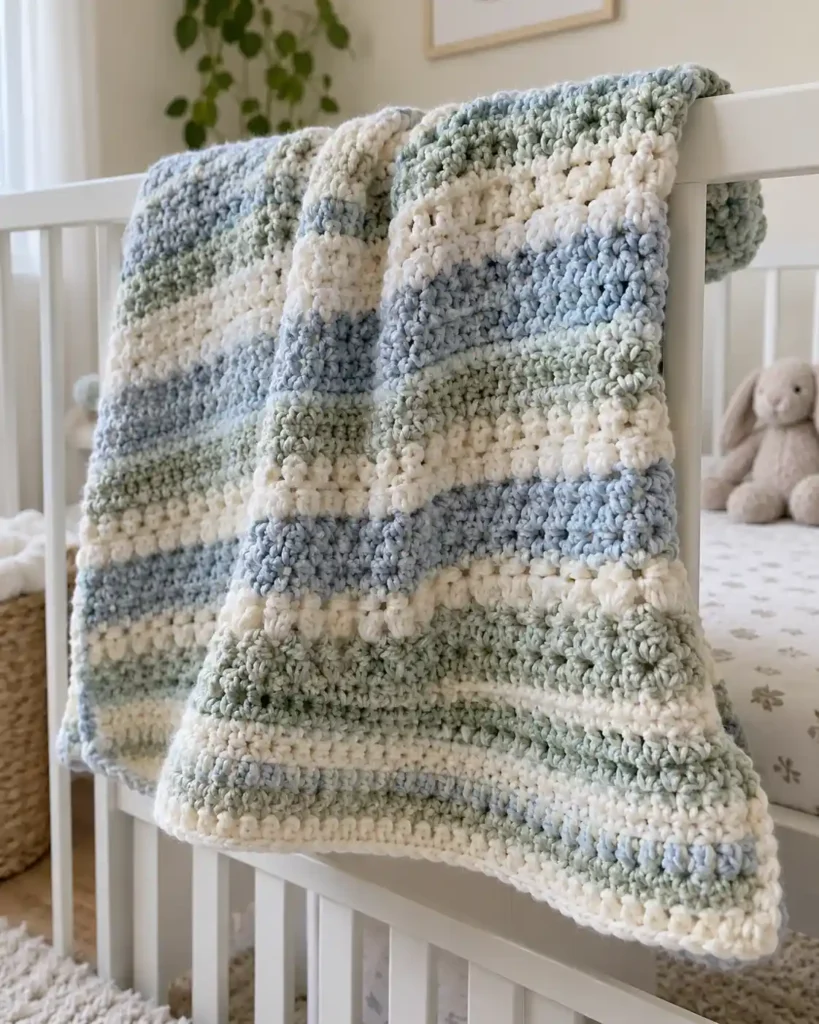
A mixed-loop stitch blanket is a fun choice when plain rows feel a little too ordinary. The repeating loop texture gives the surface movement while the overall construction can remain simple.
I especially like pairing this with self-striping yarn because the yarn handles the color changes for you. That can look far more involved than manually alternating every shade.
Choose it if you are comfortable with your basic stitches and want an easy project that feels slightly different. The main reward is texture and color without complicated motif work.
Keep the border plain so it does not compete with the main fabric.
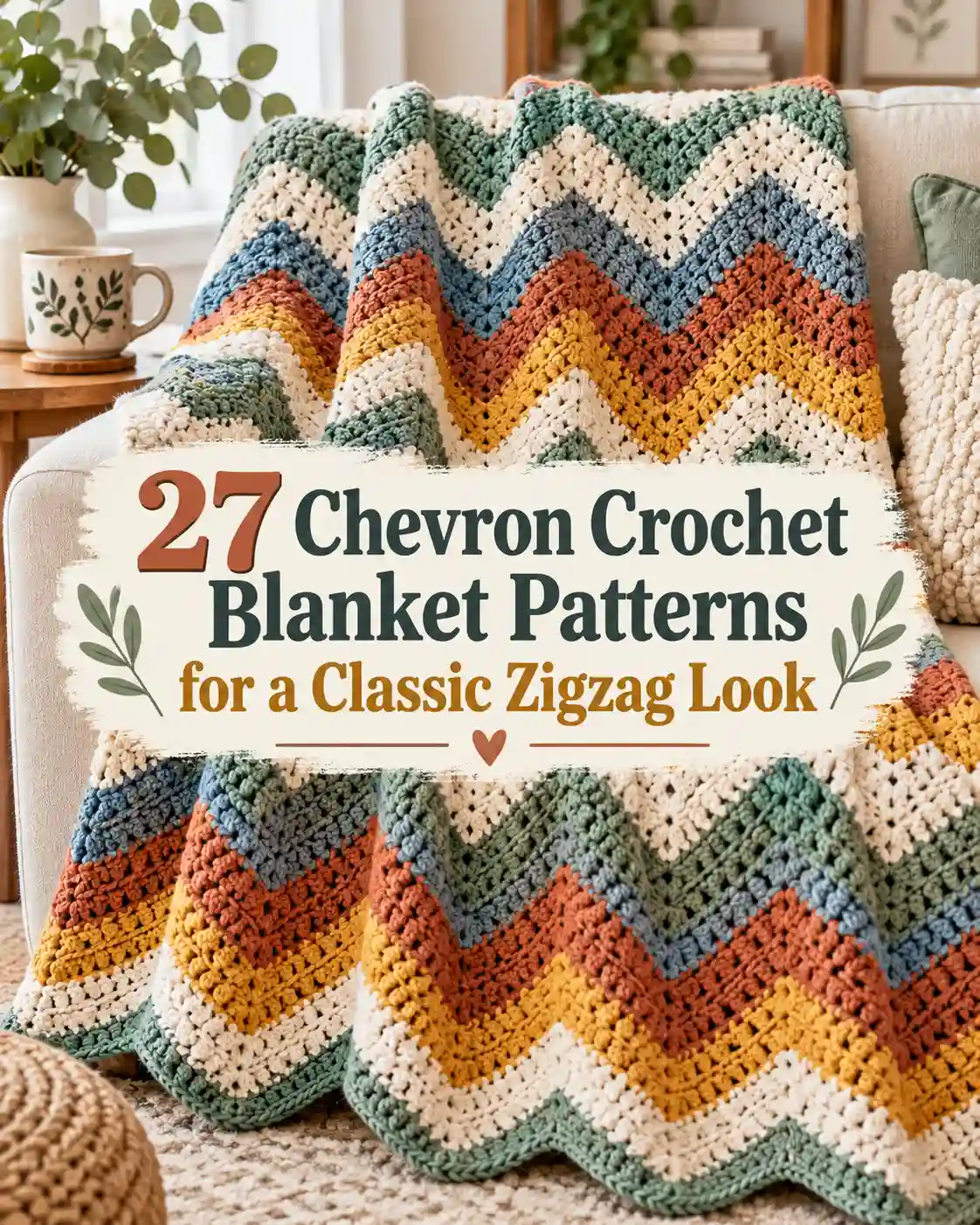
12. Soft Ripple or Wave Baby Blanket
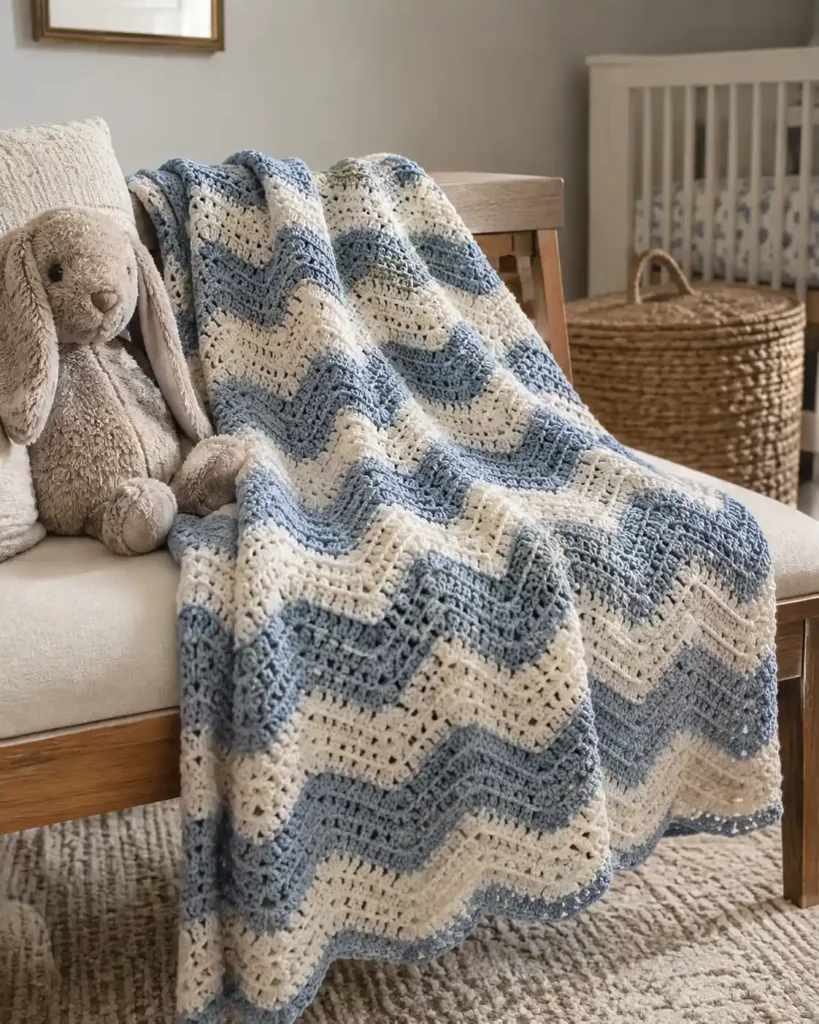
Ripple blankets look dramatic, but a shallow wave can be surprisingly manageable. You repeat increases and decreases at predictable places to create gentle peaks and valleys.
The design has more movement than straight stripes, which is why it works beautifully with two or three colors. I like a softer wave for baby blankets because it feels less sharp than a strong zigzag.
This is a good beginner-next-step project if you are ready to count carefully. Once the first few repeats are established, the pattern becomes much easier to read.
Use stitch markers at the important increase or decrease points until the repeat becomes familiar.
13. Striped Star Baby Blanket
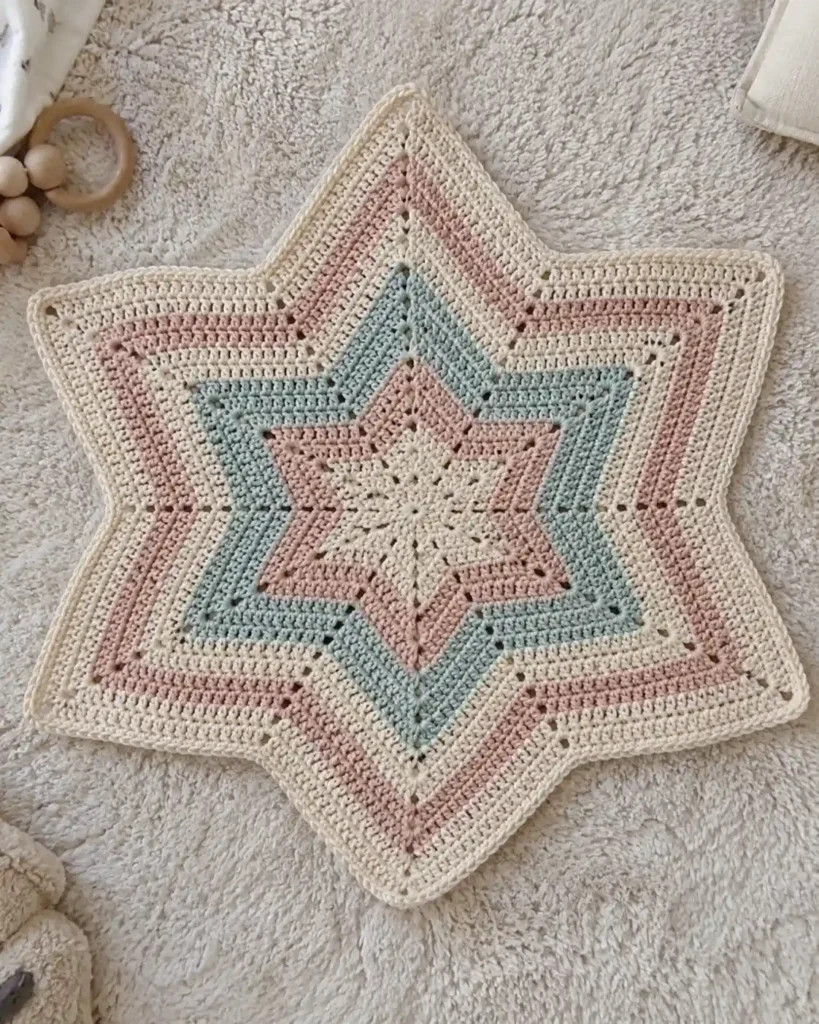
A star-shaped baby blanket is the wildcard on this list. Instead of working from one straight edge to the other, the design grows outward from the center.
That makes it feel completely different from a normal rectangular blanket without necessarily requiring advanced stitches. I would use just two or three soft colors so the shape remains the star of the project.
This one is best for an adventurous beginner who already understands increases. The reward is a handmade gift that stands out immediately from ordinary baby blankets.
Keep each star point consistent and count carefully during the early rounds.
14. Lightweight Cotton Baby Blanket
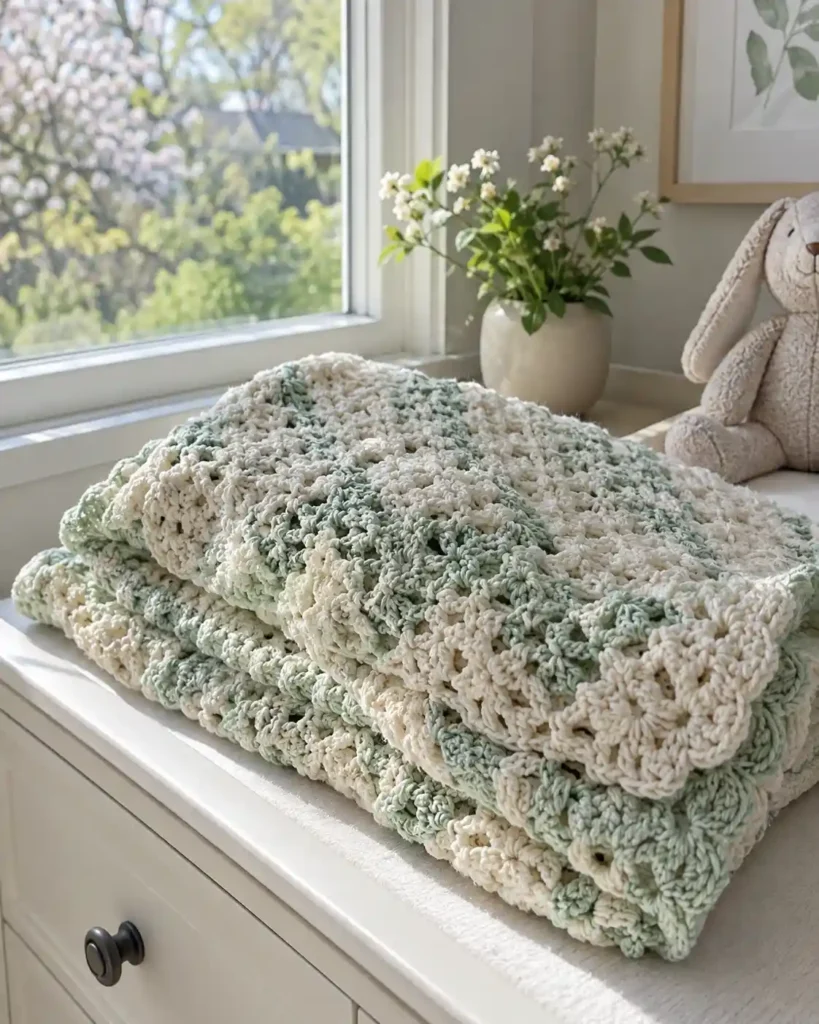
Cotton gives a baby blanket a different personality from fluffy acrylic or wool blends. The stitches often look crisp, and the finished fabric can feel lighter when paired with an appropriate pattern.
I prefer cotton for warm-weather gifts and simple textured stitches where definition matters. It is also nice when you want a less fuzzy surface.
Choose this idea if you enjoy a clean, structured crochet look. Just remember that different yarns behave differently, so make a small gauge swatch before assuming two yarns of the same listed weight will produce identical fabric; the Craft Yarn Council specifically warns that yarns within one weight category are not automatically interchangeable.
15. Chunky Baby Blanket
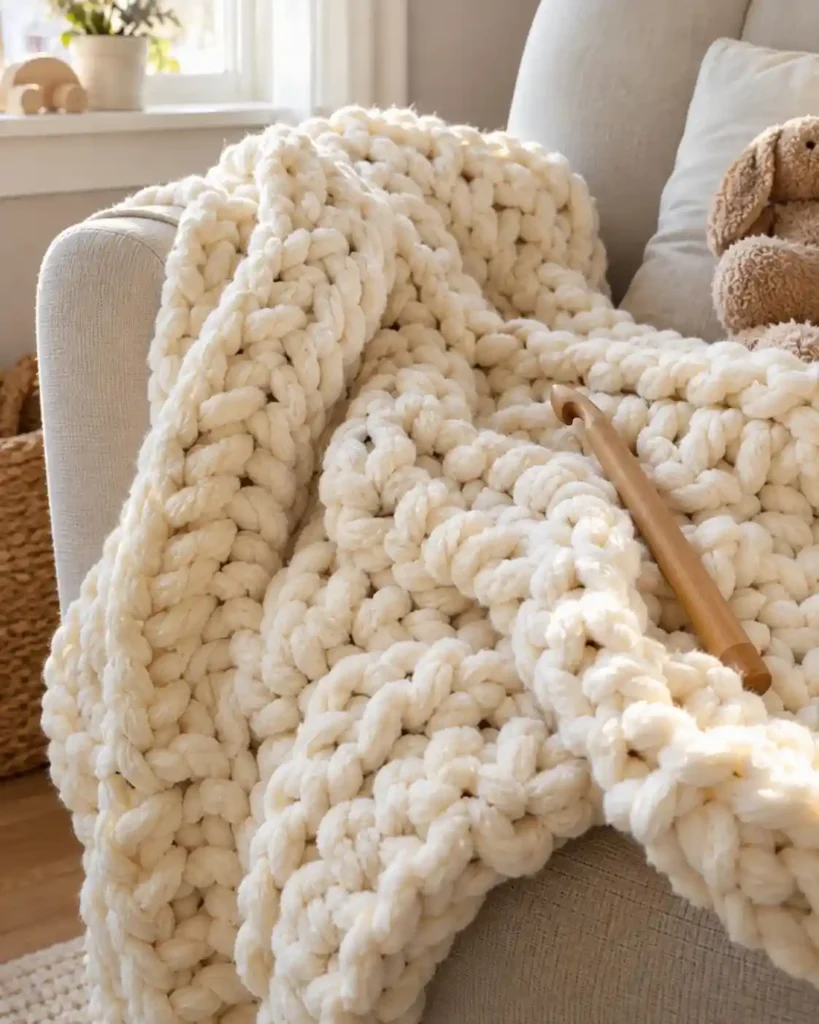
When you want visible progress quickly, thicker yarn changes everything. Chunky crochet blanket patterns use larger stitches, so fewer stitches and rows are often needed to cover the same area.
That is why it feels much faster than making the same size blanket in a fine yarn. I like chunky projects for last-minute handmade gifts because the crochet grows every time you sit down.
This is ideal for beginners who get discouraged by very slow projects. The biggest advantage is momentum—you can actually see the blanket developing.
Use a simple stitch so the thicker yarn remains easy to handle.
16. One-Color Textured Baby Blanket
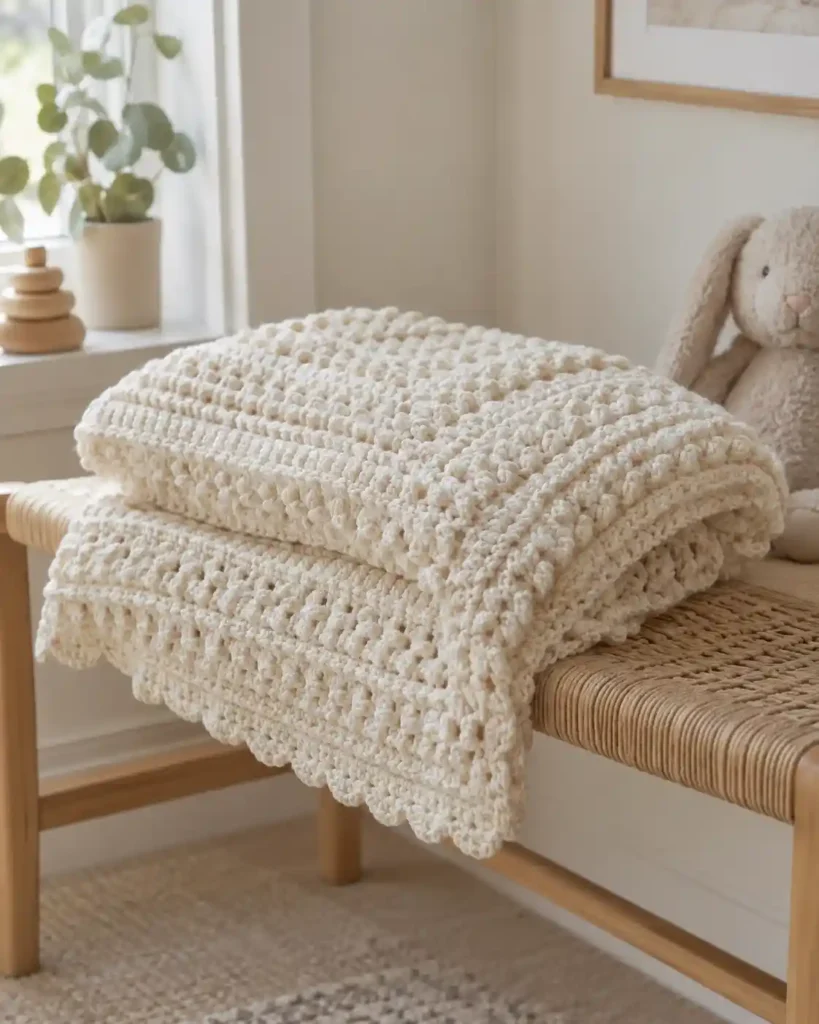
One yarn color does not mean one-dimensional crochet. A good texture can make a single-color blanket look more sophisticated than a complicated stripe sequence.
You also eliminate most of the stopping, joining, and end-weaving that comes with frequent color changes. I love this for calm, modern nursery styles.
Choose this pattern if you want an easy crochet baby blanket free pattern style with fewer moving parts. The blanket feels intentional because texture becomes the design rather than an afterthought.
Cream, sage, dusty blue, taupe, and muted rose all work beautifully.
17. Two-Color Stripe Baby Blanket
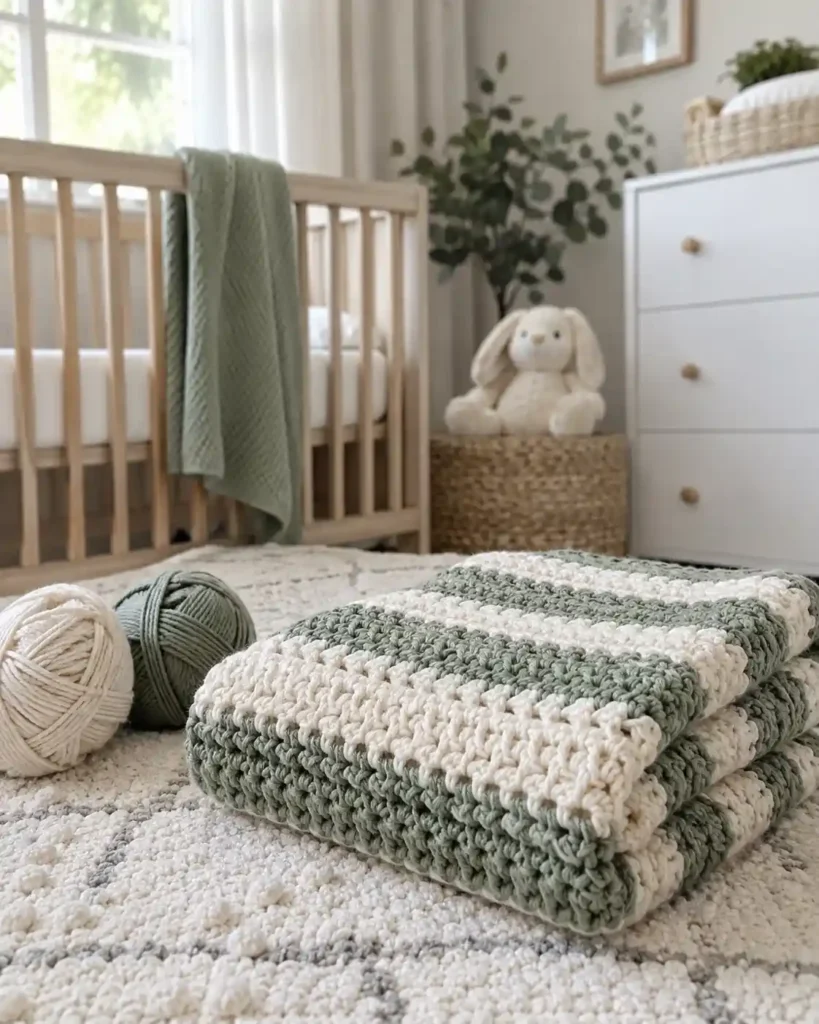
Two colors are often all you need to make a beginner blanket look finished. Alternate wide stripes, narrow stripes, or color blocks while keeping the actual stitch simple.
Compared with a five- or six-color project, it is much easier to plan and much less intimidating. I like cream paired with sage, dusty blue, blush, warm grey, or caramel.
This is perfect for crocheters who want color without constantly managing multiple skeins. The best thing is how easily you can adapt the same structure for different gifts.
Use wider stripes if you want fewer yarn changes and fewer ends.
18. Gender-Neutral Neutral-Tone Baby Blanket
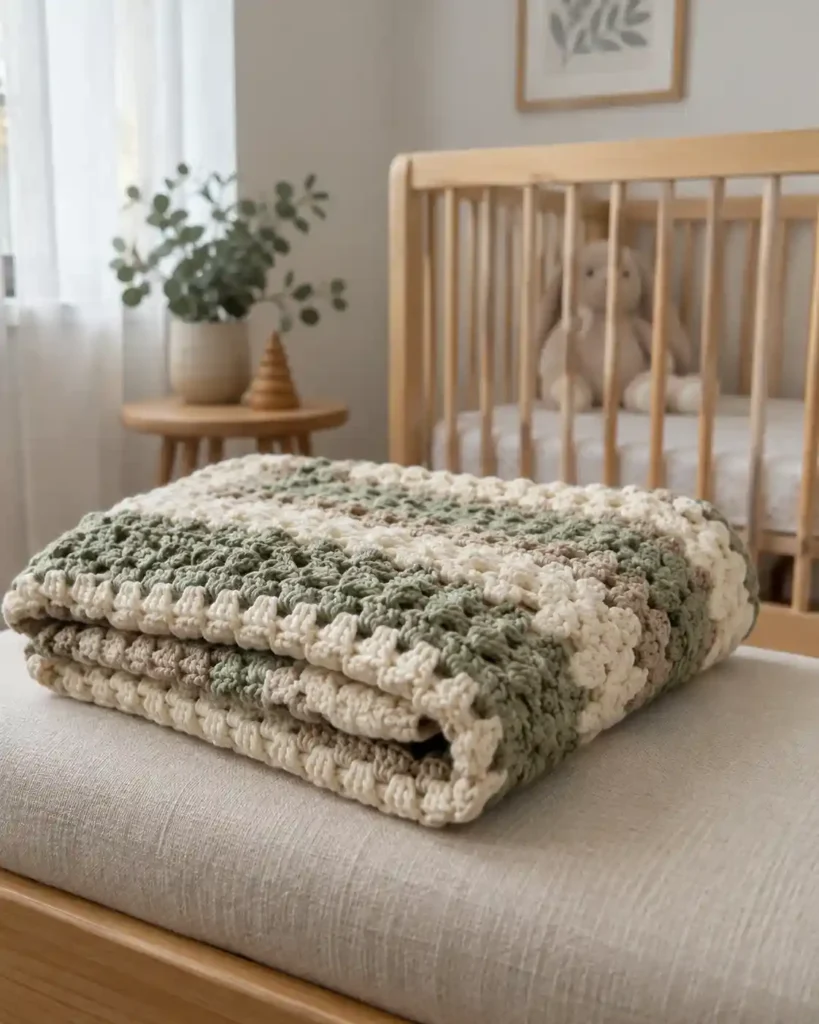
You do not need to know a baby’s gender to make a beautiful handmade gift. Cream, oatmeal, soft grey, sage, taupe, and muted yellow can create a warm, gender-neutral palette.
That is more flexible than designing the whole blanket around traditional blue or pink. I like this approach for baby showers when the nursery colors are not yet known.
Pair the neutral palette with a visible but uncomplicated texture. It works especially well for a modern crochet baby blanket free pattern unique enough to feel handmade without becoming overly themed.
A wooden or natural-toned gift ribbon can complement the blanket nicely when gifting it.
19. Quick Baby Boy Blanket
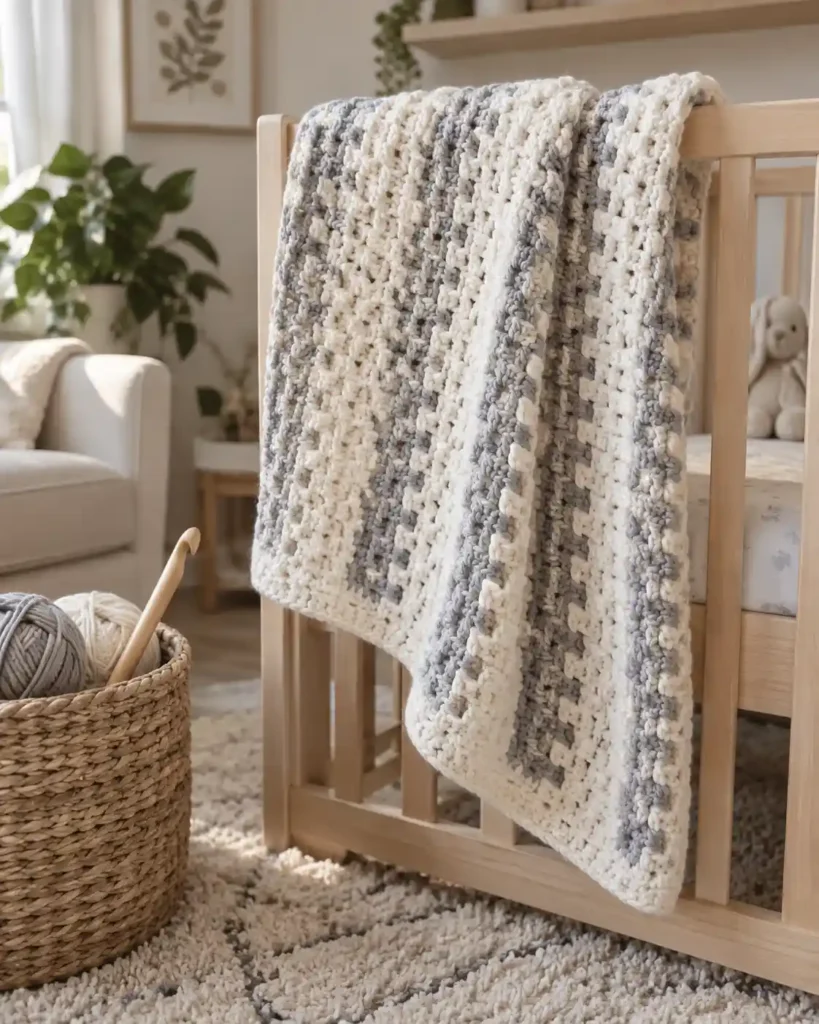
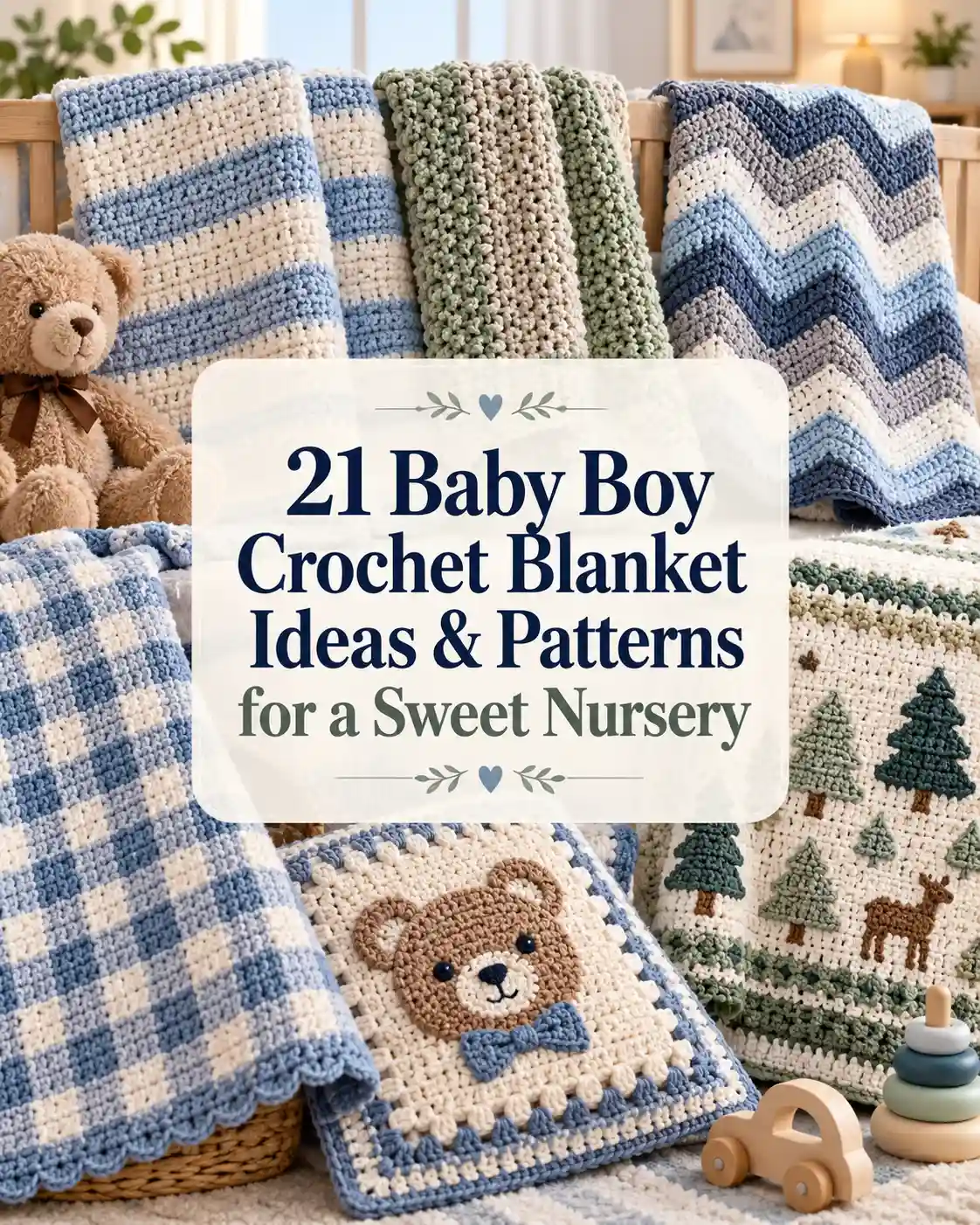
A quick baby boy blanket does not have to be covered in dark blue. Dusty blue, denim, sage, grey, cream, teal, and muted navy all give you more modern choices.
Keep the stitch uncomplicated and use a medium or thicker yarn if speed is important. That is much easier than combining intricate texture with several color changes.
I would choose this pattern for a last-minute baby shower gift when you still want the blanket to feel thoughtful. A simple design executed neatly usually looks better than a complicated design rushed to completion.
Remember that any “four-hour” or “five-hour” crochet claim should be treated as an estimate because individual crochet speed varies.
20. Fast Gender-Neutral Blanket
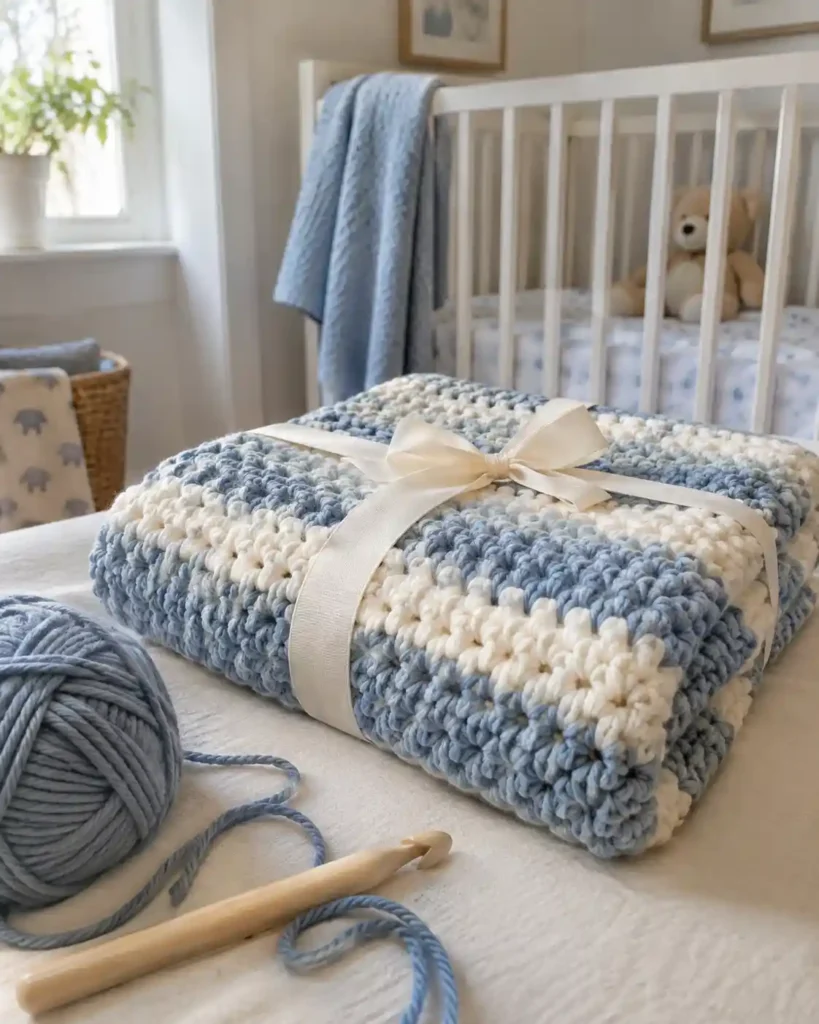
This blanket focuses on speed and flexibility at the same time. A larger hook, easy repeat, and two neutral colors can turn a simple design into something gift-ready without weeks of work.
It beats an elaborate motif blanket when your deadline is close. I would use this for a surprise baby announcement or invitation that gives you very little making time.
Choose a stitch you already know rather than learning something entirely new while racing the clock. That familiarity is what actually makes the project feel fast.
Finish it with one uncomplicated border round and stop there.
21. Quick Half Double Crochet Blanket
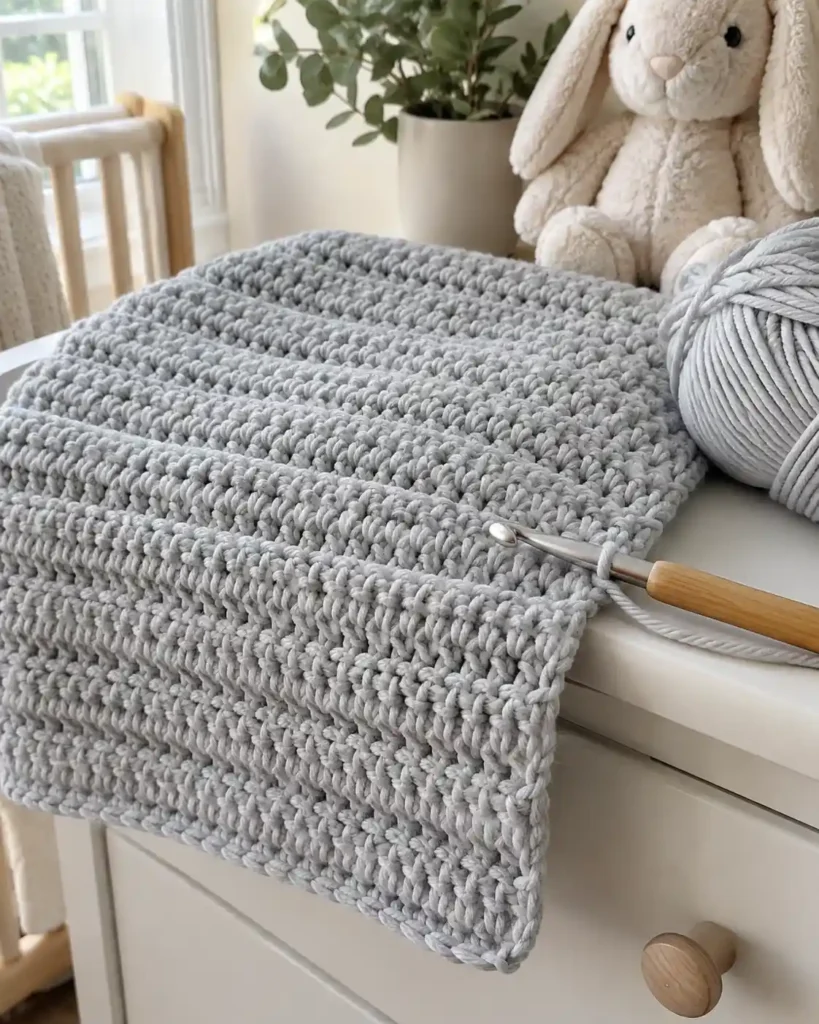
If I wanted to make a fast blanket without moving into very bulky yarn, I would come back to half double crochet. Its extra height gives you quicker row growth while keeping the motion easy to repeat.
This is simpler than many “quick” patterns that save time by using unusual construction. You are still making ordinary rows, just efficiently.
It is a great choice for someone who wants a baby blanket crochet pattern easy enough to memorize after the first few rows. Add stripes only if you genuinely want them, the stitch works beautifully in one color.
A slightly larger hook may create more drape, but always check the pattern gauge and yarn recommendations instead of assuming one hook size suits every yarn. A crochet hook size chart can also help when you need to compare metric and U.S. hook sizes.
22. Soft Rose Baby Girl Blanket
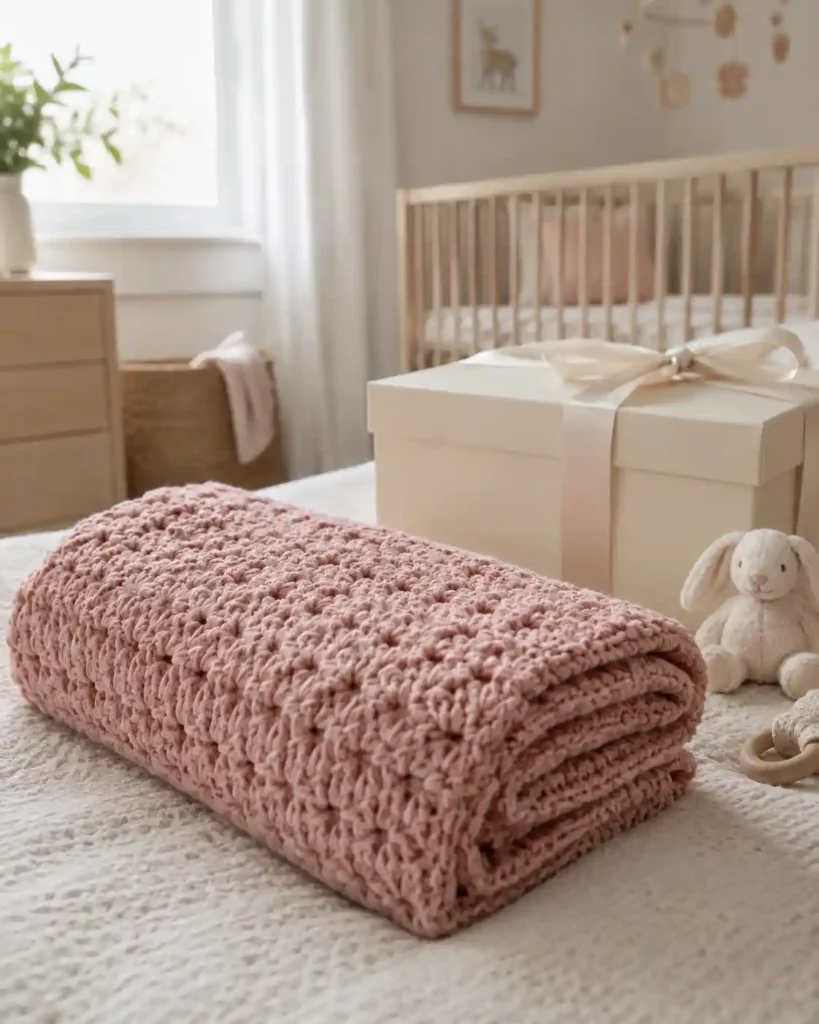
A baby girl blanket can feel feminine without covering every inch in bright pink. Rose, blush, peach, mauve, and cream create a softer palette that feels much more versatile.
I like pairing those colors with one understated repeating texture rather than lots of decorative motifs. It lets the color carry the personality of the blanket.
Choose this for a handmade newborn gift that feels sweet but still modern. The prettiest part is how easily the same pattern can be recolored later for another baby.
Try a cream border around a rose body for a simple finished frame.
23. Self-Striping Yarn Baby Blanket
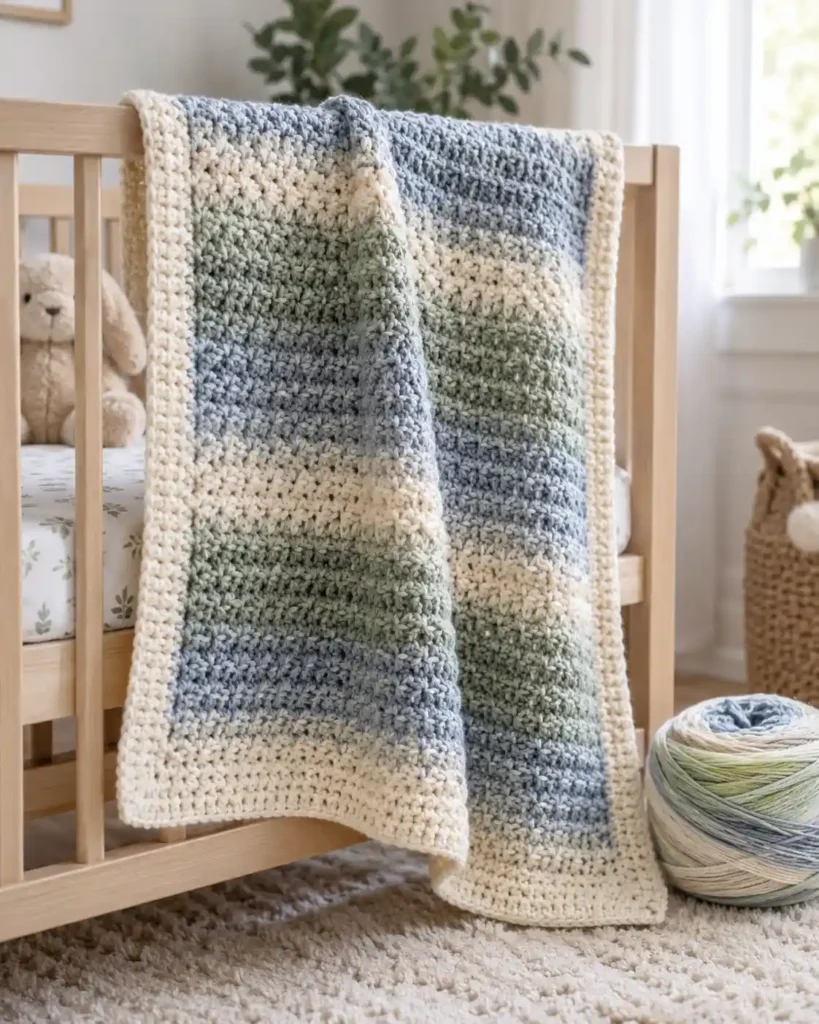
Self-striping yarn is almost like letting the yarn design the blanket for you. The colors change as you crochet, which means you get visual movement without constantly cutting and joining separate yarns.
That makes it much easier than planning a complicated stripe sequence manually. I love pairing self-striping yarn with the simplest stitch possible because the color changes already provide plenty of interest.
This option is ideal if you want a unique-looking blanket without adding technical difficulty. It is also wonderful for long, relaxing crochet sessions.
If the body becomes visually busy, finish it with a solid-color border pulled from one shade in the yarn.
24. Easy Tunisian Crochet Baby Blanket
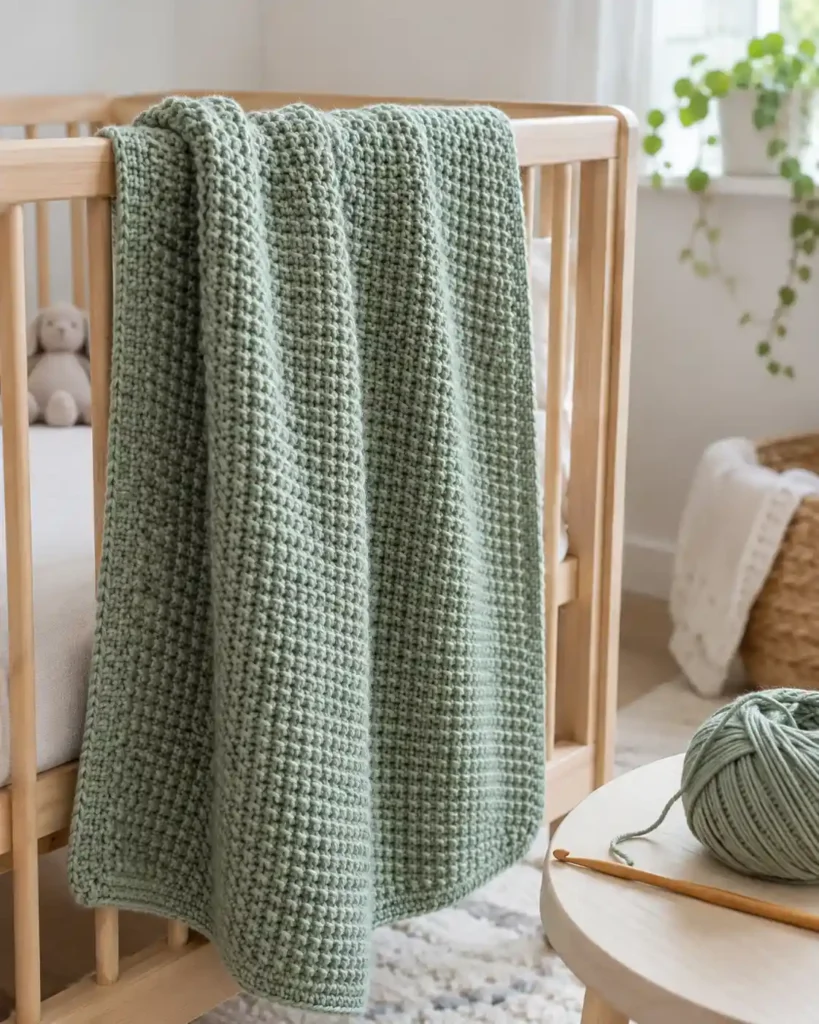
Tunisian crochet looks almost woven, which immediately makes the blanket stand apart from traditional crochet. You use a longer hook and work a forward pass and return pass rather than finishing each stitch in the usual way.
It sounds different at first, but a basic Tunisian simple stitch becomes rhythmic once you understand the movement. I would choose it when I wanted to learn one new technique while keeping the project shape simple.
This is the most adventurous beginner option here, but it can produce one of the most distinctive results. A solid yarn color makes the woven-looking texture especially easy to appreciate.
Add a border afterward if the edges curl or if you want a more finished frame.
25. Everyday Newborn Cuddle Blanket
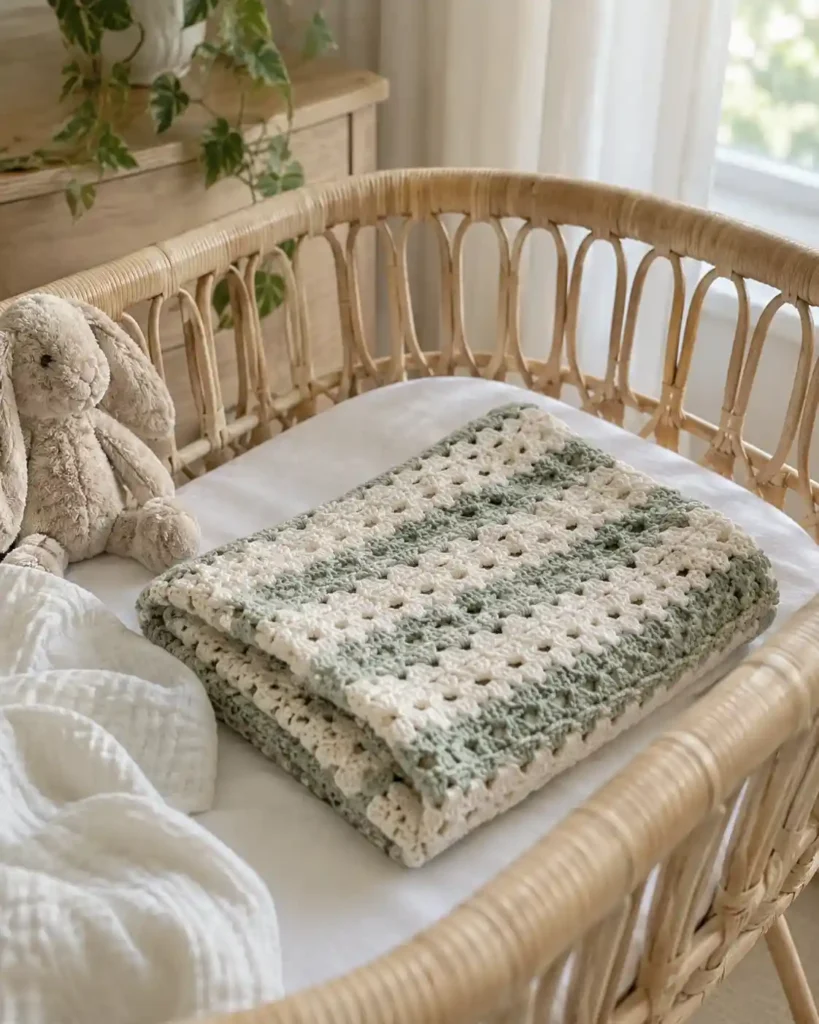
The final idea is deliberately simple: a soft everyday blanket that does not need a clever stitch name or complicated color plan. Use a washable yarn you enjoy touching, a comfortable stitch repeat, and a durable neat border.
That simplicity is what makes it more useful than a highly decorative blanket you are afraid to wash or handle. I love this kind of project because it feels like something a family can keep using rather than merely displaying.
If this is your first easy crochet baby blanket, this is also a perfect place to start. Choose the stitch you already know best and focus on consistent tension, straight sides, and a finish you are proud of.
For gifting, include the yarn’s washing and care instructions so the recipient knows how to look after the handmade blanket.
How Do You Choose the Best Yarn for an Easy Crochet Baby Blanket?
Choose a soft yarn with clear stitch definition, practical care instructions, and a weight recommended by your pattern.
At a Glance:
- Prioritize softness and washability.
- Check the yarn label.
- Match yarn weight to the pattern.
- Make a gauge swatch.
- Avoid yarn that hides stitches.
For beginners, I would prioritize three things: softness, easy stitch visibility, and practical care instructions.
Smooth yarn is often easier to learn with because you can clearly see where the hook needs to go. Very fluffy or highly textured yarn can hide stitch anatomy, which makes correcting mistakes harder.
The Craft Yarn Council’s Standard Yarn Weight System places yarns into categories from 0, lace, through 7, jumbo. It also stresses that the suggested hook sizes and gauges are guidelines and that the gauge specified by the actual pattern should take priority.
Medium or light yarn is often comfortable for learning because the stitches remain easy to see, while bulky yarn can be useful when you want the blanket to work up faster.
What Is the Easiest Crochet Stitch for a Baby Blanket?
Single crochet and half double crochet are two of the easiest stitches for beginner baby blankets because they are simple to learn and easy to repeat.
At a Glance:
- Single crochet creates dense fabric.
- Half double crochet grows faster.
- One-row repeats reduce memorization.
- Granny clusters add easy texture.
- Simple stitches improve consistency.
For absolute beginners, single crochet and half double crochet are two of the easiest places to begin.
Single crochet is simple and creates a dense fabric. Half double crochet adds height, so the blanket grows a little faster without requiring a complicated stitch sequence.
A one-row repeating combination can be just as beginner-friendly once you learn the repeat. Daisy Cottage Designs, for example, highlights beginner baby blankets built around simple repeats, basic stitches, V-stitches, granny stripes, and other approachable constructions.
How Can You Keep the Sides of a Crochet Baby Blanket Straight?
Use stitch markers, count stitches regularly, and identify the correct first and last stitch of every row.
At a Glance:
- Mark the first and last stitches.
- Count every few rows.
- Check turning-chain instructions.
- Lay the blanket flat regularly.
- Fix mistakes early.
Uneven edges are probably one of the most frustrating beginner blanket problems.
Try these habits:
- Place a stitch marker in the first and last stitch.
- Count stitches every few rows.
- Learn whether the turning chain counts as a stitch in your chosen pattern.
- Check your work before continuing after every color change.
- Stop occasionally and lay the blanket flat.
- Do not rely on a border to hide major stitch-count changes.
Daisy Farm Crafts’ simple baby blanket tutorial specifically points out the importance of identifying the final stitch correctly when working its half double crochet variation.
A simple border can tidy slightly uneven edges, but prevention is much easier than trying to correct a major width change at the end.
Do You Need a Border on a Crochet Baby Blanket?
No, a crochet baby blanket does not require a border, but a simple border can make edges look cleaner and help unify the finished design.
At a Glance:
- Skip borders on already-neat edges.
- Use single crochet for simplicity.
- Add contrast with one border color.
- Keep corners flat.
- Avoid overcomplicating the finish.
No. A baby blanket can look completely finished without one.
A border is useful when you want to:
- Frame stripes or color blocks.
- Add a contrasting color.
- Stabilize the edge visually.
- Give the blanket a more intentional finish.
Single crochet is the easiest border for beginners. If you want more finishing ideas, a guide to crochet blanket edging can help you compare simple borders before choosing one. Half double crochet is another simple option, while a restrained shell border can add decoration once you are comfortable working around corners.
If the blanket already has beautifully straight sides and a strong stitch texture, leaving it borderless can look just as polished.
Can a Crochet Baby Blanket Be Used in a Crib?
No. Current U.S. safe-sleep guidance recommends keeping loose blankets and other soft bedding out of an infant’s crib or sleep space.
At a Glance:
- Keep infant sleep spaces bare.
- Use only a fitted crib sheet.
- Avoid loose blankets during sleep.
- Follow current safe-sleep guidance.
- Gift blankets for appropriate supervised use.
A handmade blanket should not be placed loose in an infant’s crib, bassinet, or other sleep space.
The CPSC’s current safe-sleep guidance says “bare is best” and advises keeping pillows, blankets, and other soft items out of an infant sleep space. The American Academy of Pediatrics similarly recommends keeping loose blankets and other soft bedding out of the crib because they can increase suffocation risk.
That does not make a handmade baby blanket a bad gift. It can still be used appropriately for supervised cuddling, stroller outings, floor time when suitable and supervised, photographs, or later use when the child’s age and situation make a blanket appropriate.
Frequently Asked Questions
What is the easiest crochet baby blanket pattern for a beginner?
A one-row repeat, single crochet, or half double crochet blanket is usually a good starting point. These options let you practice tension and straight edges without constantly learning new stitches.
How long does an easy crochet baby blanket take?
There is no universal completion time. Blanket size, yarn weight, stitch height, hook size, and individual crochet speed can all change how long the project takes, so labels such as “four-hour blanket” should be treated as estimates.
Can I make an easy crochet baby blanket in one color?
Absolutely. A one-color blanket can look beautiful when the stitch creates enough texture. It also eliminates most color changes and reduces the number of yarn ends you need to weave in.
Which yarn weight is best for beginner baby blankets?
There is no single required weight, but smooth light, medium, and some bulky yarns can all work depending on the pattern. Follow the yarn and gauge specified by the pattern rather than substituting based only on the weight number.
Do I need to know many crochet stitches to make a baby blanket?
No. Some attractive blankets use only one or two basic stitches. A consistent simple stitch often looks better than a complicated pattern worked with uneven tension.
Final Thoughts
The best easy crochet baby blanket is not necessarily the one with the most impressive stitch name. It is the one you can comfortably repeat, enjoy working on, and finish neatly.
If you are completely new, start with the one-row repeat, single crochet, or half double crochet ideas. If you already know the basics, try a granny stripe, V-stitch, ripple, textured one-color blanket, or even beginner Tunisian crochet.
The best pattern is not necessarily the one with the most impressive stitch name. It is the one you can comfortably repeat, enjoy working on, and finish neatly.
And that is really what makes handmade baby blankets special. Even the simplest stitch becomes meaningful when you spend hours turning yarn into something made especially for another person.
For more beginner crochet inspiration and future blanket guides, explore more ideas on crochetmind.com.

![The Best 30+ Free Crochet Cat Patterns [Beginner-Friendly Guide]](https://crochetmind.com/wp-content/uploads/2025/04/1-The-Best-30-Free-Crochet-Cat-Patterns-Beginner-Friendly-Guide.webp)