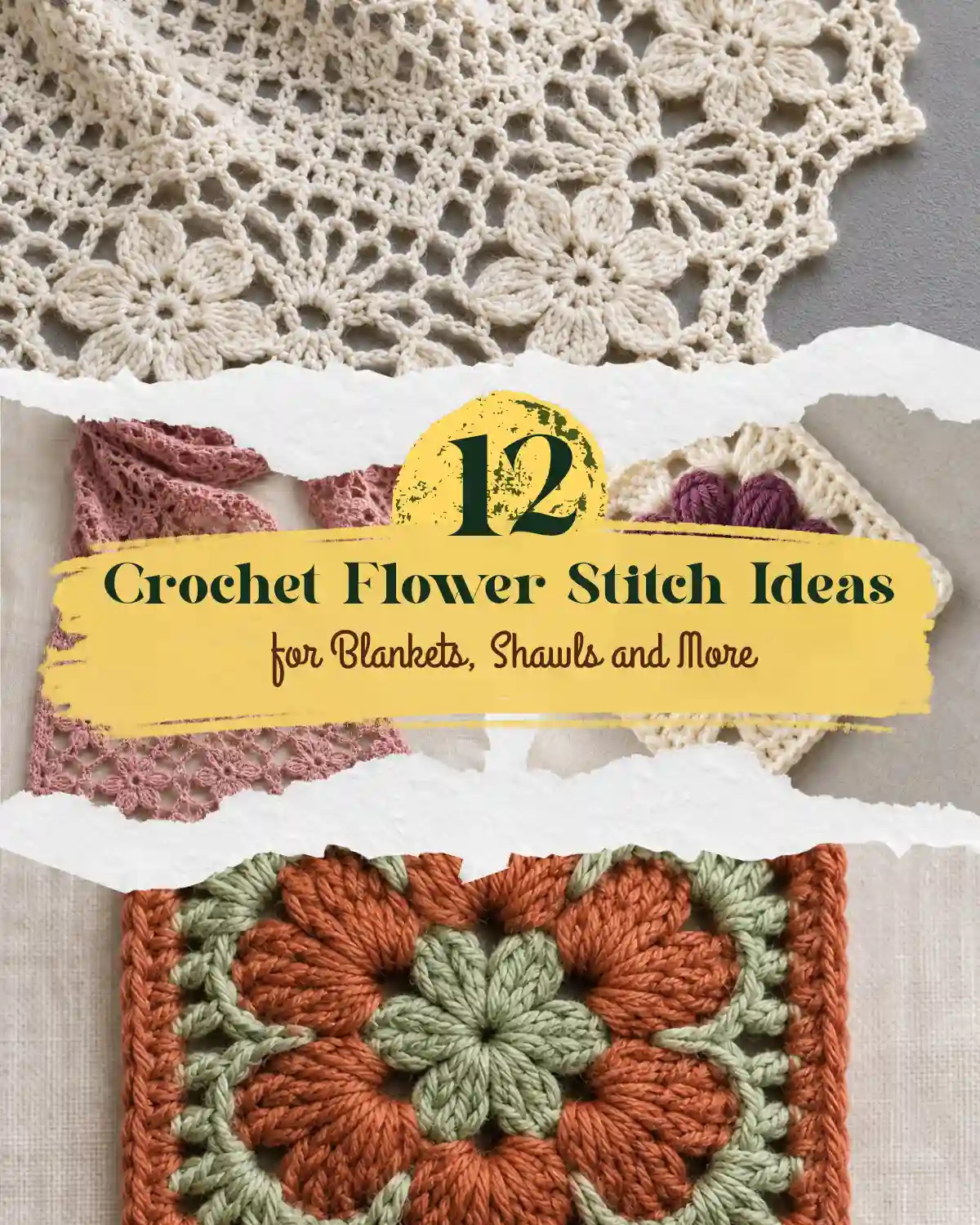

The best crochet flower stitch depends on what you’re making. Start with a six-petal puff flower for a small appliqué, try daisy or jasmine stitch for textured fabric, or choose flower mesh for a light summer layer. These 12 ideas show what to swatch first and how to use the result, from a single bloom on a tote to a whole blanket of flowers. Picture the finished piece first. A flower on a tote needs enough shape to stand out, while a shawl needs room to drape.
Key takeaways
- Practice a crochet puff stitch flower as a small appliqué.
- Use daisy or jasmine stitch for continuous floral texture.
- Swatch open flower mesh before making a summer top.
- Block granny squares before testing your blanket join.
- Check scarf drape before committing to the full length.
Which crochet flower stitch should you try first?
Decide whether you want a motif or a fabric stitch. A motif is an individual piece you can sew on or join to other pieces. A fabric stitch repeats across rows, so the flowers become part of the fabric itself. A swatch is a small practice sample you can use to check the texture, width, and drape before committing to a project.
| What you want to make | Try this first | Practice before starting |
|---|---|---|
| A flower to sew onto a bag | Six-petal puff flower or popcorn flower | One motif with petals of equal size |
| A scarf with a soft floral texture | Daisy star stitch | Two full repeats with straight sides |
| A dense cushion cover or throw | Jasmine stitch | An even row of joined puffs |
| A blanket with a stripe of flowers | Two-color tulip accent | One row of green stems and one row of buds |
| A summer top or light shawl | Flower mesh, floral lace, or aligned lotus | A washed and dried sample that hangs comfortably |
| A blanket made from small pieces | Puff flower granny squares | Four blocked squares joined at the center |
| A modular cushion or mug mat | African flower hexagon | One motif with six clearly marked corners |
Before you start: Pick a smooth, light-colored yarn so you can see where your hook goes. The Craft Yarn Council classifies worsted yarn as medium weight, category 4. Its yarn-weight chart gives a general crochet hook range of 5.5 to 6.5 mm for that category. Use the hook specified in your chosen pattern when gauge matters.
Which flower stitches give you raised petals and textured rows?
Use puff stitches for soft, raised petals, jasmine for connected blooms, daisy star stitch for rows of tiny flowers, and tulips for a stripe of raised buds.
At a glance
- Puff flowers work as individual appliqués.
- Daisy and jasmine stitches repeat across fabric.
- Tulip rows pair a stem color with a bud color.
12 Crochet Flower Stitch Ideas for Blankets, Shawls and More
1. How do you make a six-petal crochet puff stitch flower?
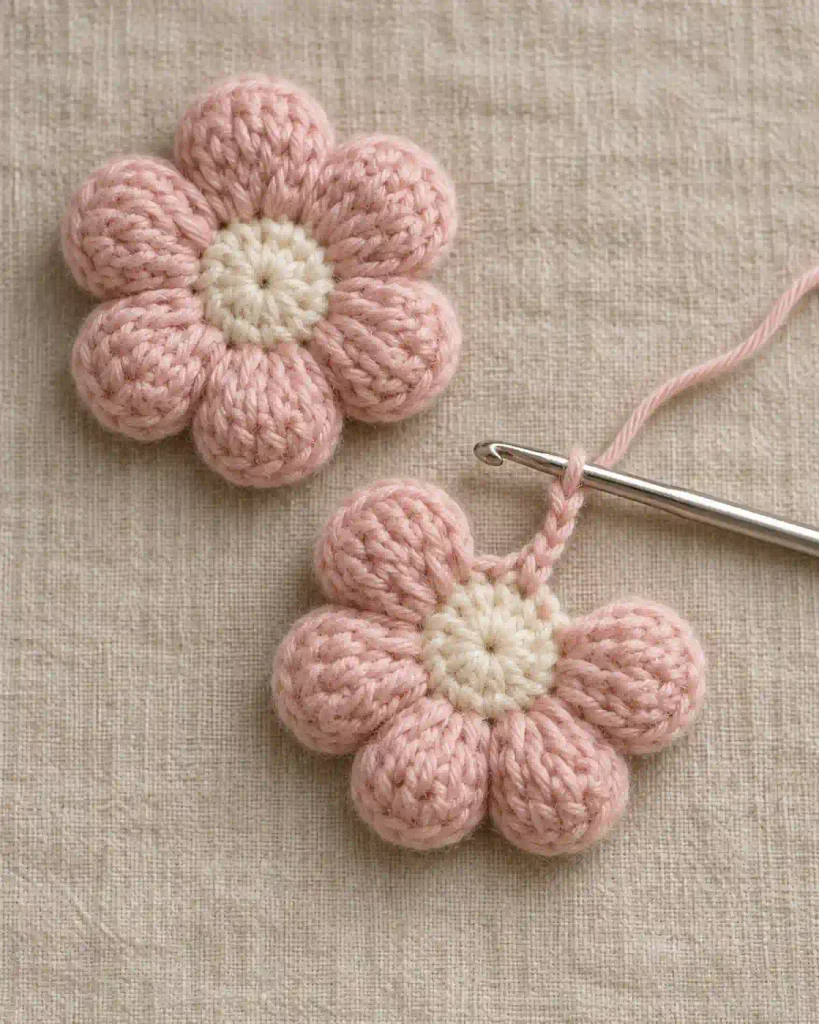
A crochet puff stitch flower gives you a soft, rounded bloom you can finish before deciding what to do with it. Practice the technique with this guide to puff stitch crochet before making your appliqué. The petals have more lift than a plain flat appliqué, so even one bloom stands out on a canvas tote. Start here if you can chain and single crochet and want a small project for practicing tension.
Try a smooth worsted yarn for your practice flower. Meladora’s Creations demonstrates a six-petal version built on 12 single crochet stitches, with each petal spanning two stitches. Follow that pattern’s puff instructions and stop after your first complete flower if you’re making an appliqué. Before closing each petal, check that the loops reach the same height. Leave a long tail if you plan to sew the flower onto a bag.
2. Where do you pick up loops in daisy star stitch?
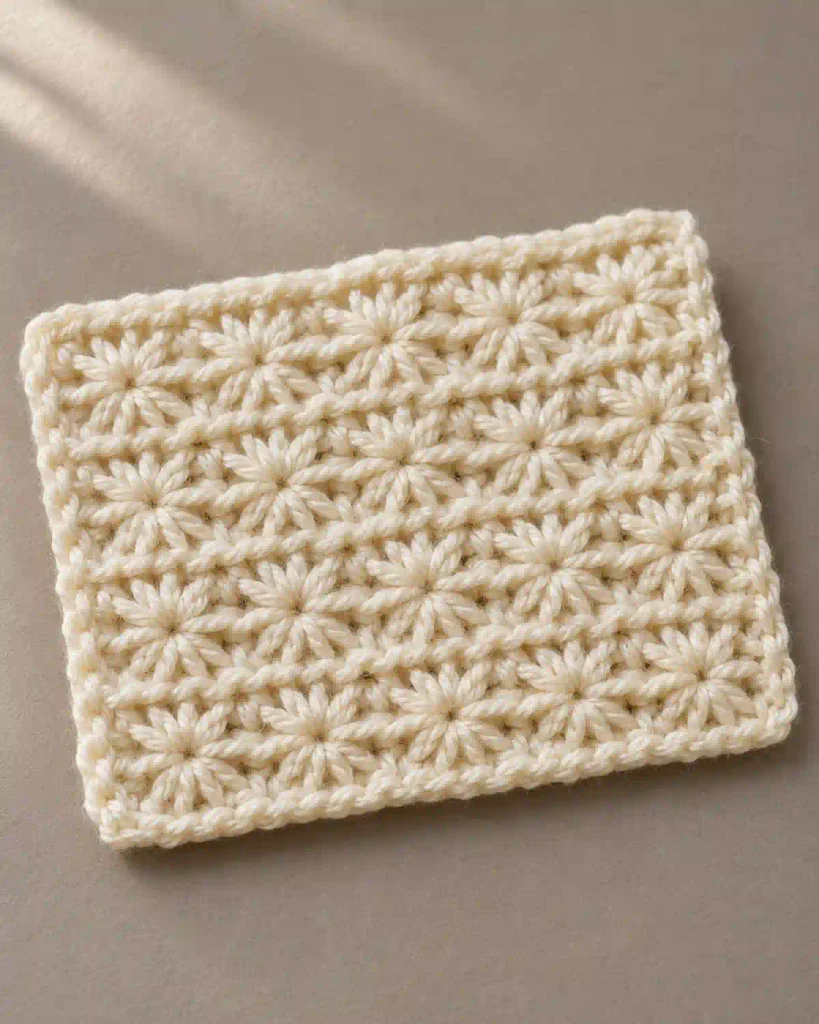
Look for the little eye at the center of each daisy. In the star-stitch version shown by MJ’s Off the Hook Designs, that eye is both part of the flower shape and a place where you work the return row. The tiny stars make a plain, solid-color scarf look detailed, and you can practice them without juggling several skeins.
Mark the outer stitches on your first practice row. Work slowly through the first star, then check the tutorial’s pickup sequence for the next one. On the return row, use the eye as a landmark and check the final edge stitch separately. If your swatch narrows, check the sides where you turn before adjusting hook size.
3. When should you choose jasmine stitch?
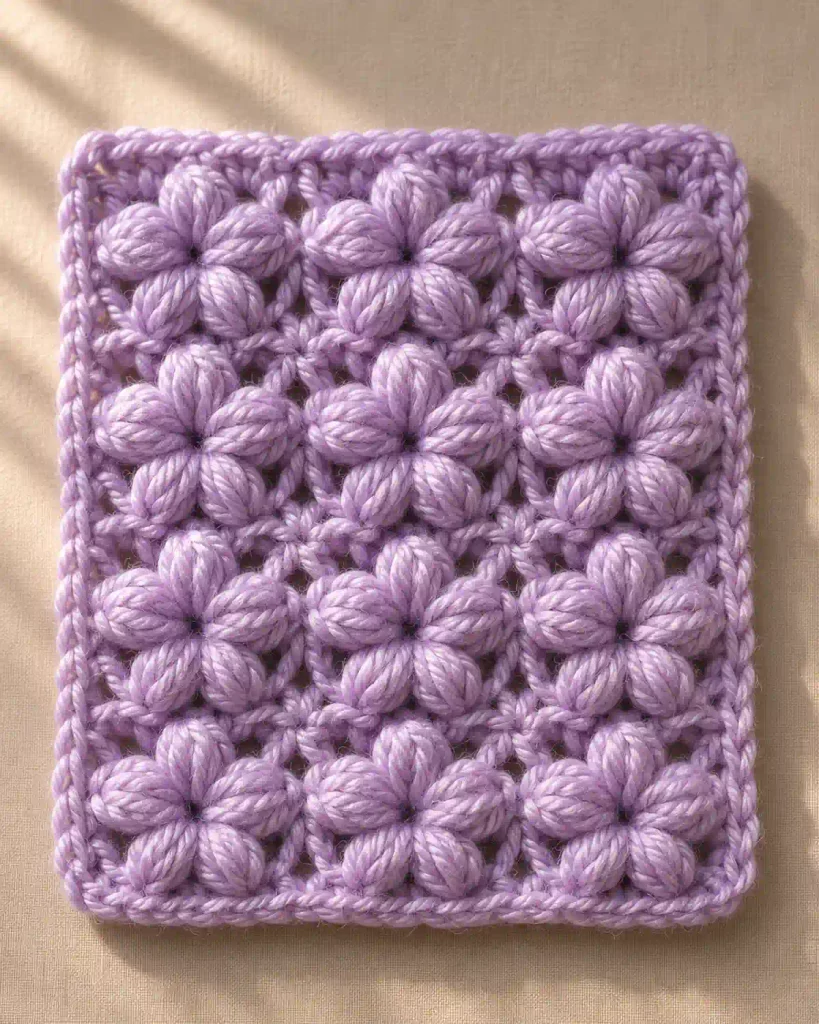
Jasmine stitch creates a thick fabric of connected blooms. A solid color lets light fall across the petals, which works especially well on a cushion front. Choose it if you already feel comfortable drawing up puff loops and want that floral texture to cover the entire surface.
Desert Blossom Crafts teaches a version that starts with a row of foundation puff stitches. It uses one extra puff to begin the next row. Keep the loops level as you draw them up, then compare the finished swatch with a slightly looser one. Weigh the sample you prefer before buying yarn for a throw, since your own puff size affects how much yarn each row uses.
4. Can you add two-color tulips to a blanket?
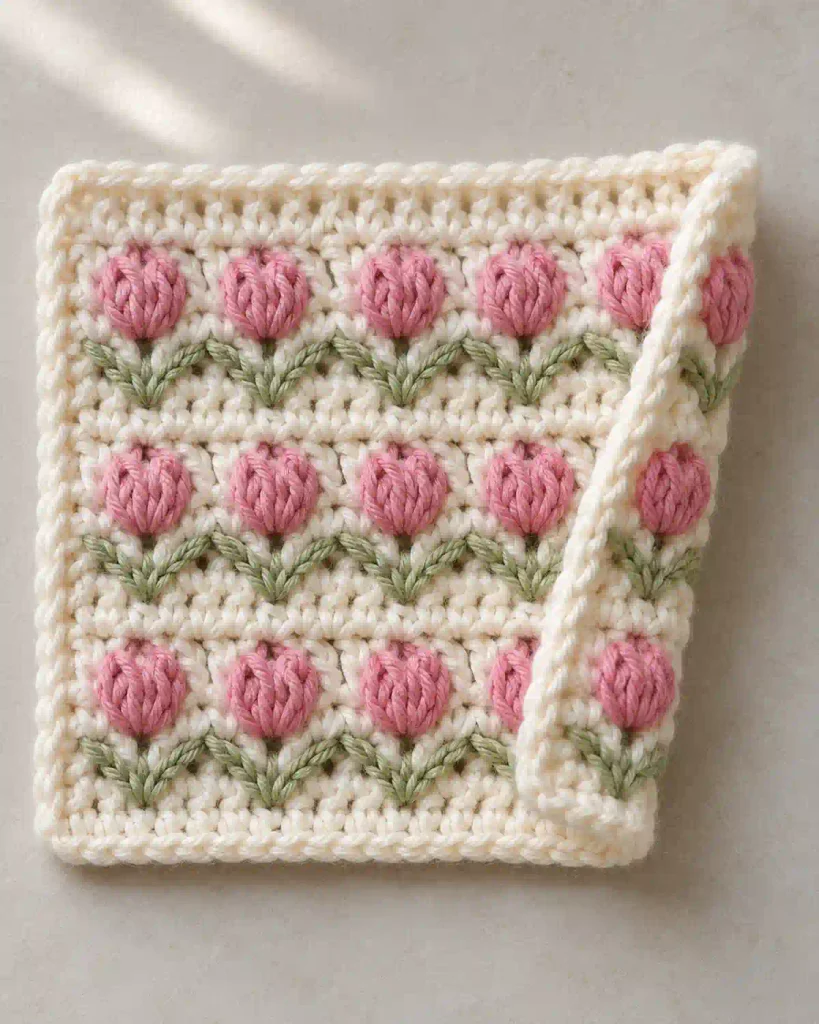
A green stem row and a pink bud row can turn the end of a plain blanket into a little flower bed. The two accent colors make each part of the plant easy to see. For a simpler finish, place the tulips in one stripe near a short edge and keep the rest of the blanket in the base color.
The Crochet Crowd’s version works a green row of V-stitches, followed by popcorn stitches in the petal color. It uses a separate base color for the background. Swatch the full sequence, including the row that closes the gaps above the buds. If you’re adapting it to a blanket already on your hook, check the stitch multiple and both edges before adding the stem row.
Which crochet flower stitch pattern works for an airy fabric?
Choose flower mesh for wide openings, floral lace for a light shawl with textured petals, or aligned lotus stitch for openwork with flowers that line up in columns.
At a glance
- Hold a mesh swatch up to check how open it looks.
- Block floral lace before measuring a shawl panel.
- Mark two lotus repeats to check petal alignment.
5. Can you use open flower mesh for a summer top?
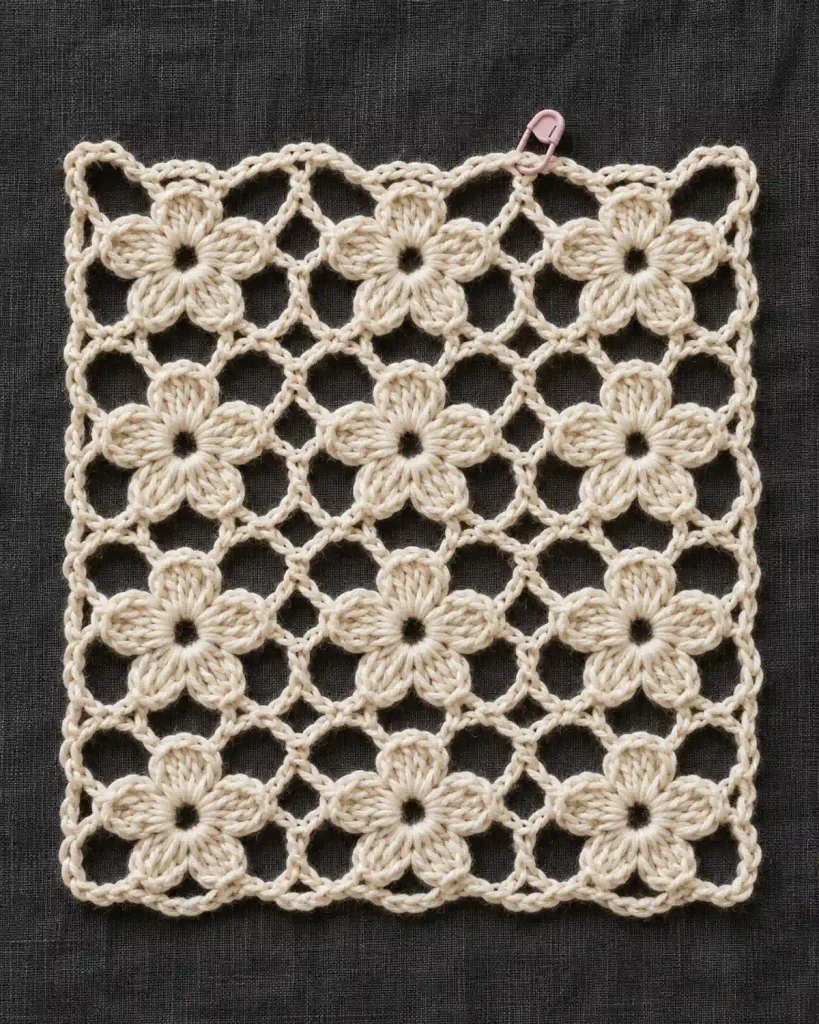
Open flower mesh looks almost like a grid until you hold it up and see the petal shapes between the chain spaces. You can also explore crochet summer tops for more lightweight designs and wearable inspiration. That openness works well in a sleeveless panel you can layer over a tank. Try it if you know the basic tall stitches and are comfortable counting spaces across a row.
Lisa Auch’s version uses treble crochet, single crochet, and chain spaces. Choose a light cotton yarn, mark the start of each repeat, and work enough rows to see the flowers form. Wash and dry the sample as you would the finished top. Then hold it up and check both the openness and how much the fabric lengthens when it hangs.
6. Where does floral lace work best in a shawl?
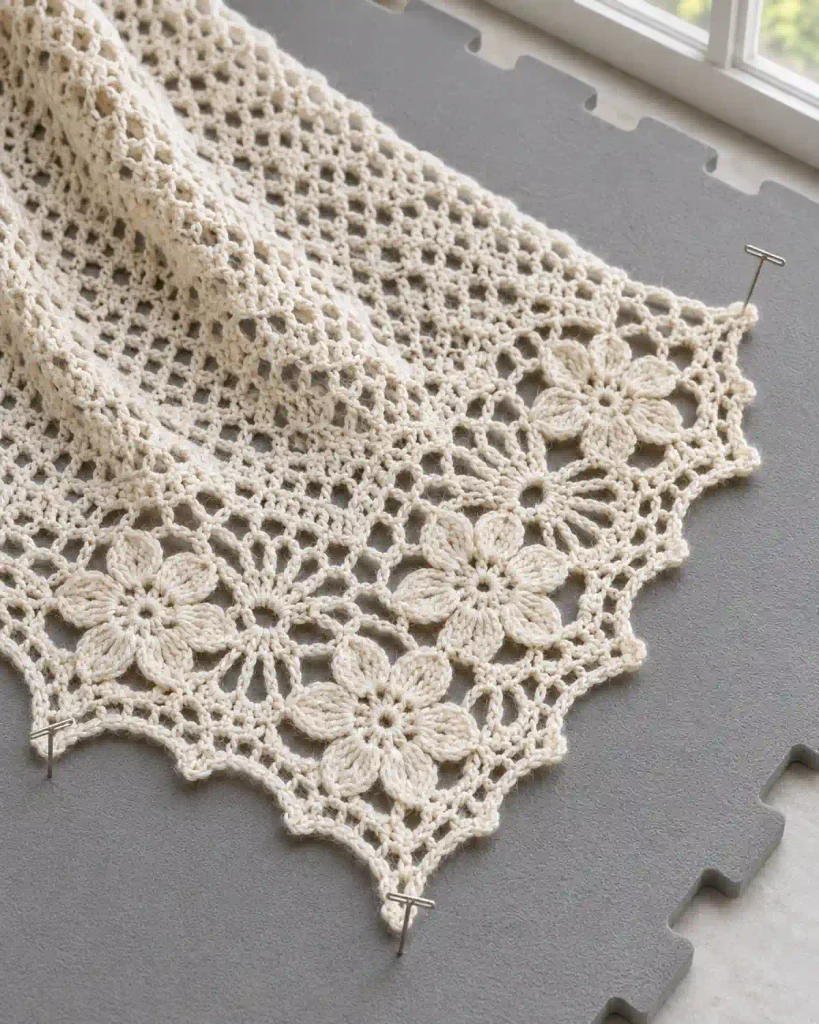
Floral lace with puff petals looks especially good near the loose end of a rectangular shawl, where you can see the flowers against what you’re wearing. Explore more crochet shawl patterns for additional floral designs and wearable inspiration. The rounded petals give the open fabric a little texture. This is a good pick if you want a shawl that drapes easily and don’t mind pausing to count between flowers.
In Made by Gootie’s lace flower version, the floral cluster contains three puffs separated by chain spaces. Make a sample wide enough to show one whole flower and the spacing on either side. Measure it before and after blocking, the process of shaping the fabric to its intended dimensions and letting it dry. For a charted version, follow the chart key and mark where one complete repeat ends.
7. How do you keep lotus flower stitch rows aligned?
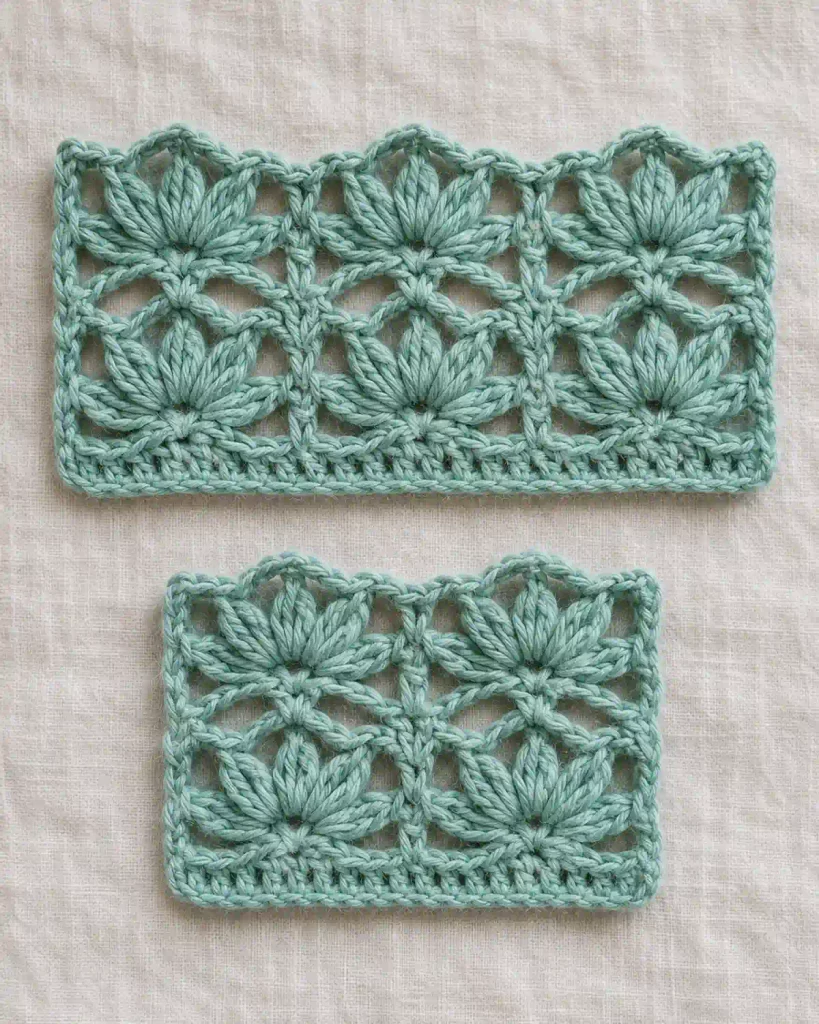
Aligned lotus stitch looks best when you can follow a column of petals from one row to the next. On a narrow table runner, that regular spacing makes the repeat easy to see from either end. Pick this one if you’re comfortable with taller stitches and enjoy watching a design come together over several rows.
Nordic Hook’s aligned lotus variation repeats across four rows and combines puff stitches with single, double, and treble crochet. Work two full repeats in a smooth yarn. Mark the base of a flower in the first repeat and check which stitch or space sits directly above it when the next flower forms. That gives you a point to check before an alignment mistake travels across the piece.
Which flower motifs are easiest to use as accents or join into panels?
Use a popcorn flower as a raised accent, a puff flower granny square for a straight grid, or an African flower hexagon for a staggered layout.
At a glance
- Sew a single popcorn flower onto a bag or pocket.
- Join four squares first to check the center intersection.
- Lay out hexagons before joining to spot gaps along straight edges.
8. Why use a popcorn flower on a crochet bag?
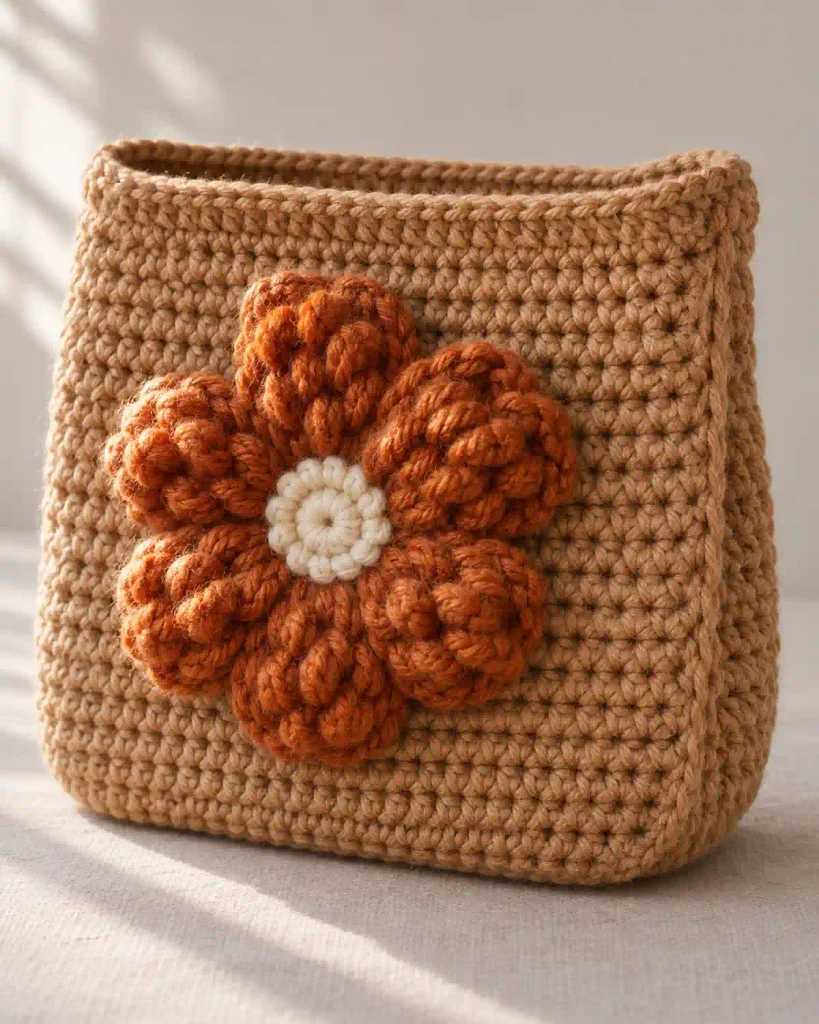
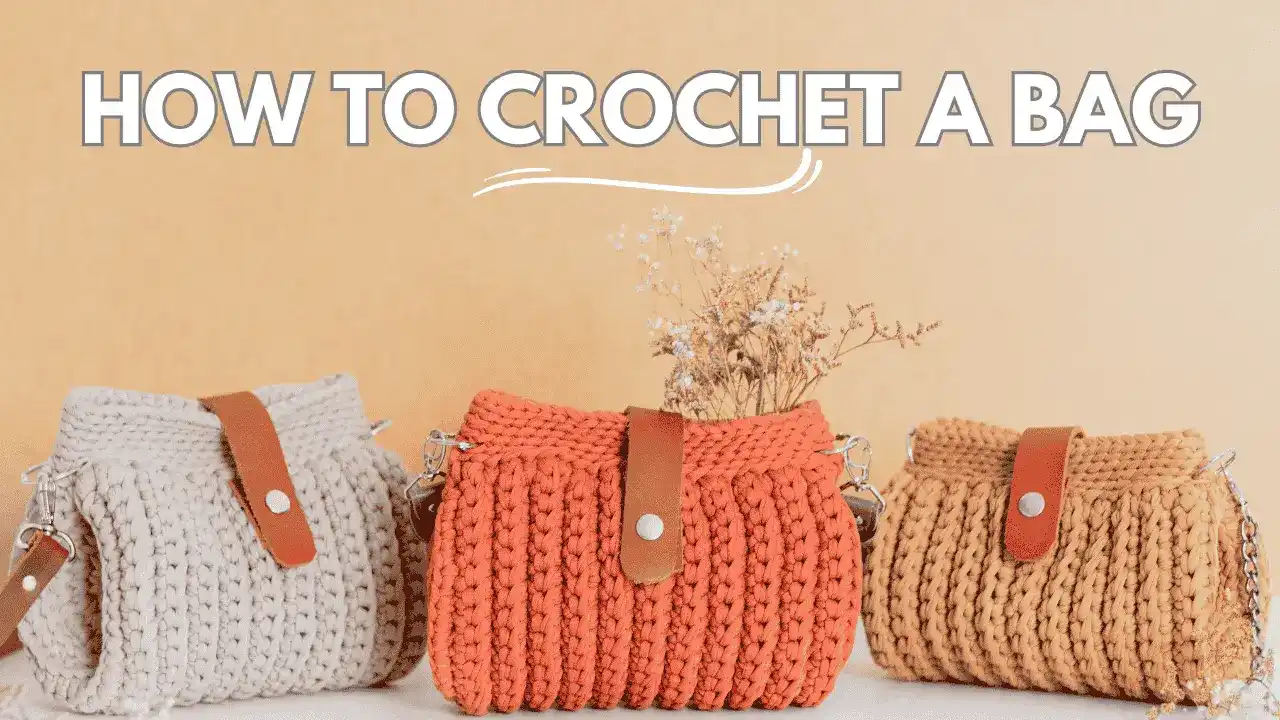
A popcorn flower is a good choice when you want one raised detail on a bag you use every day. Its petals have a more distinct ridge than soft puff petals because you bring the first and last stitches of the group together. Place it near a top corner or on a pocket where it won’t rub against the bag strap.
Practice the closing motion before working the motif. In the five-double-crochet popcorn shown by The Crochet Crowd, you take the hook out of the active loop, insert it into the first stitch of the group, and pull the active loop through. Swatch a puff petal in the same yarn to see which edge you prefer. When sewing the motif on, tack down any petal tips that curl away from the fabric.
9. How do you keep a puff flower granny square flat?
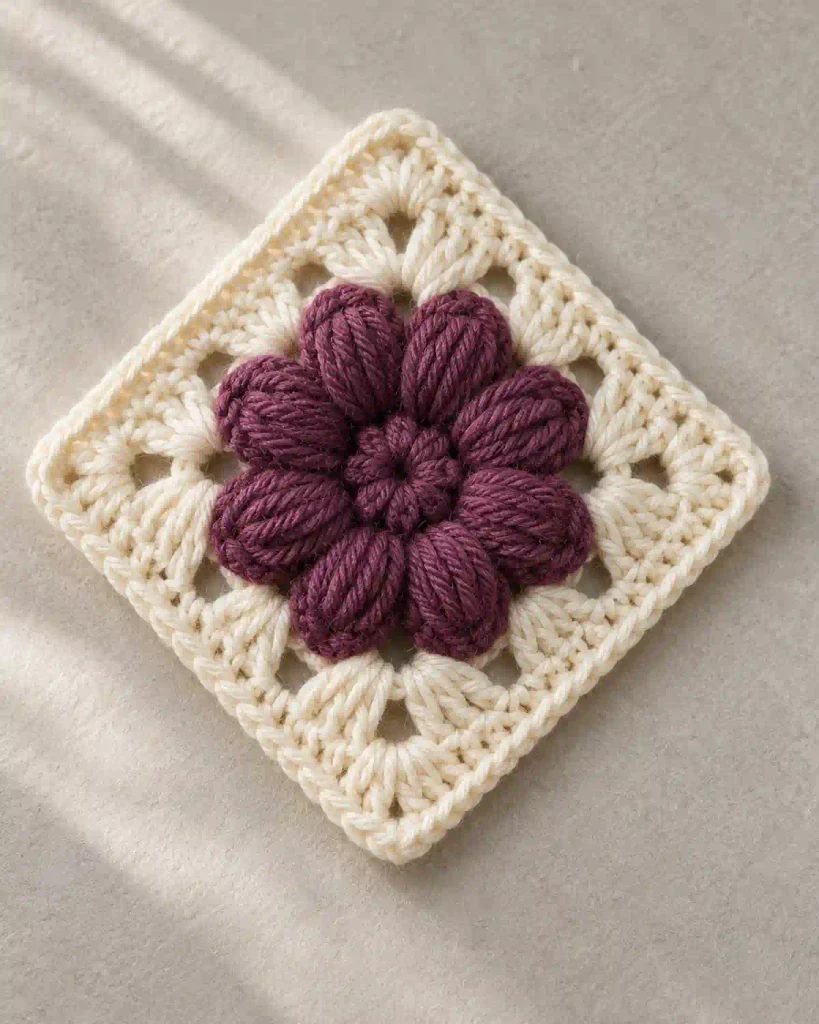
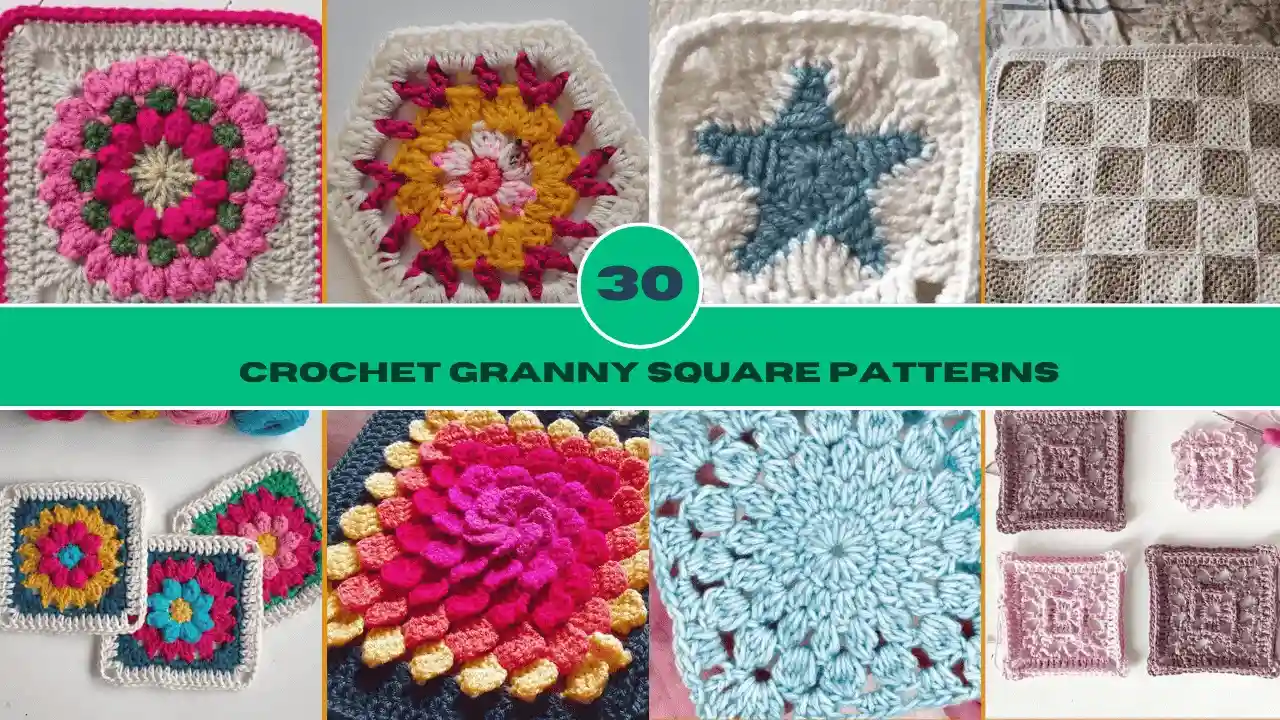
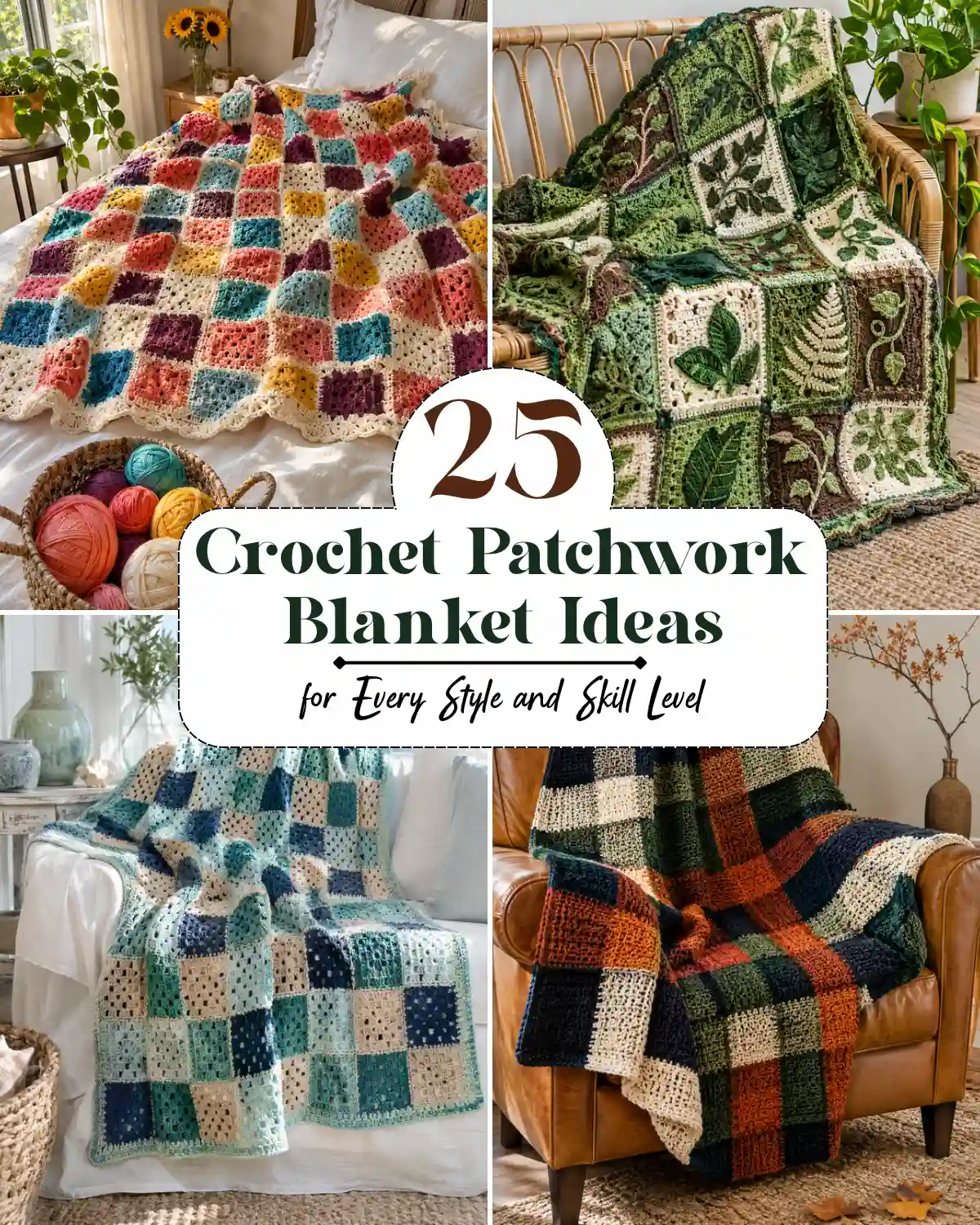
A puff flower granny square keeps the center raised while giving you four straight edges to join. Explore these crochet granny square patterns for more motif ideas and blanket layouts. It’s a good choice for a blanket made a square at a time, especially if you like to shuffle the colors before settling on a layout. The part to watch is the round that turns the flower into a square.
Mark all four corners as you make them. Check that each side has the stitch count your pattern gives, then learn how to block crochet squares to a consistent size before joining them. Join four first and lay them flat to see how the corners meet in the middle. The Spruce Crafts points to a pattern that starts with a two-round flower and extends it into a square you can join to others.
10. When is an African flower hexagon worth trying?
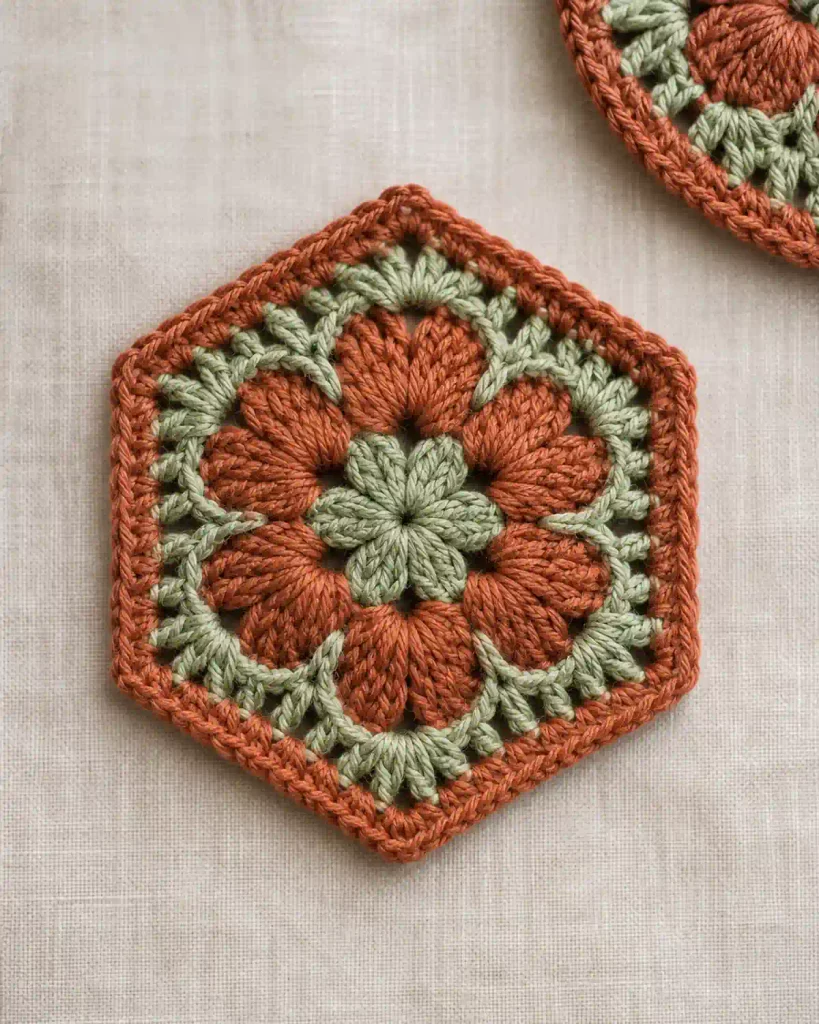
The African flower hexagon has six sides, which gives joined pieces a staggered layout. Try three colors so the center, petals, and outline each stand out. A single hexagon works as a practice mug mat, and a few more let you try a honeycomb layout for a cushion.
Use the same hook and yarn weight throughout your trial group. After each color change, check the first few stitches for slack and mark the six corners as they form. Heidi Bears has separate tutorials for the motif and for joining hexagons as you work. For a cushion with straight edges, sketch the layout early so you can see where the hexagons leave gaps at the sides.
How can you use these floral stitches in a finished project?
11. Should you make a flower blanket in one piece or join squares?
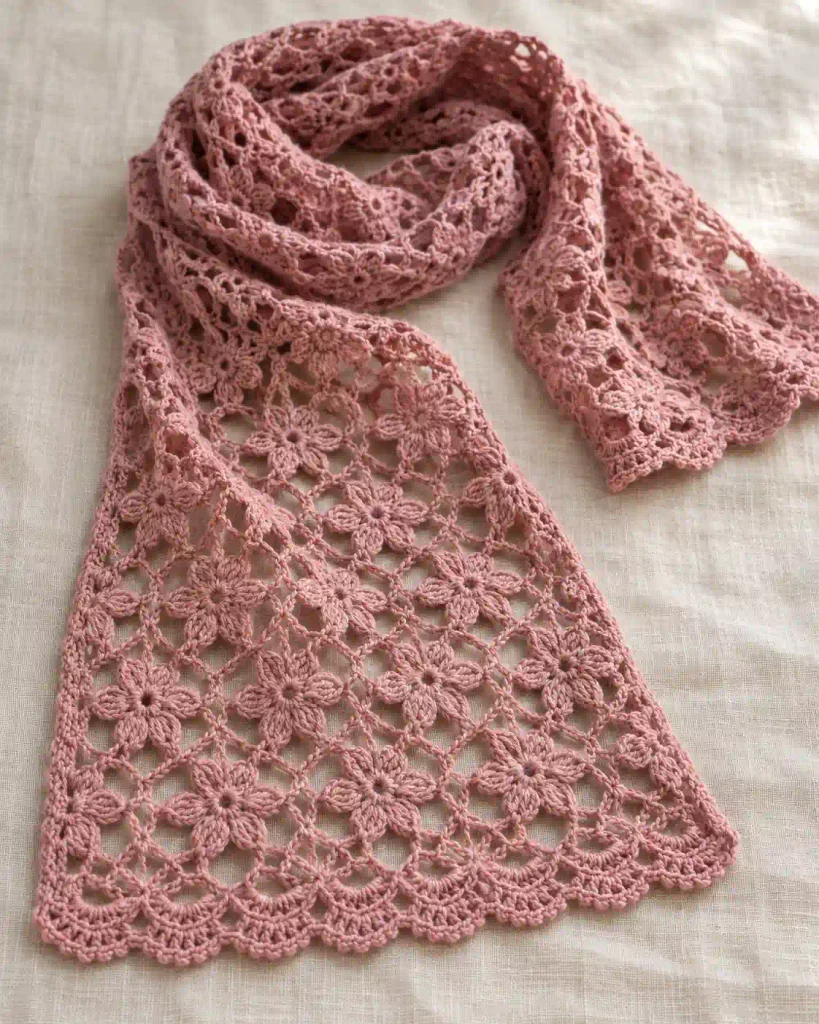
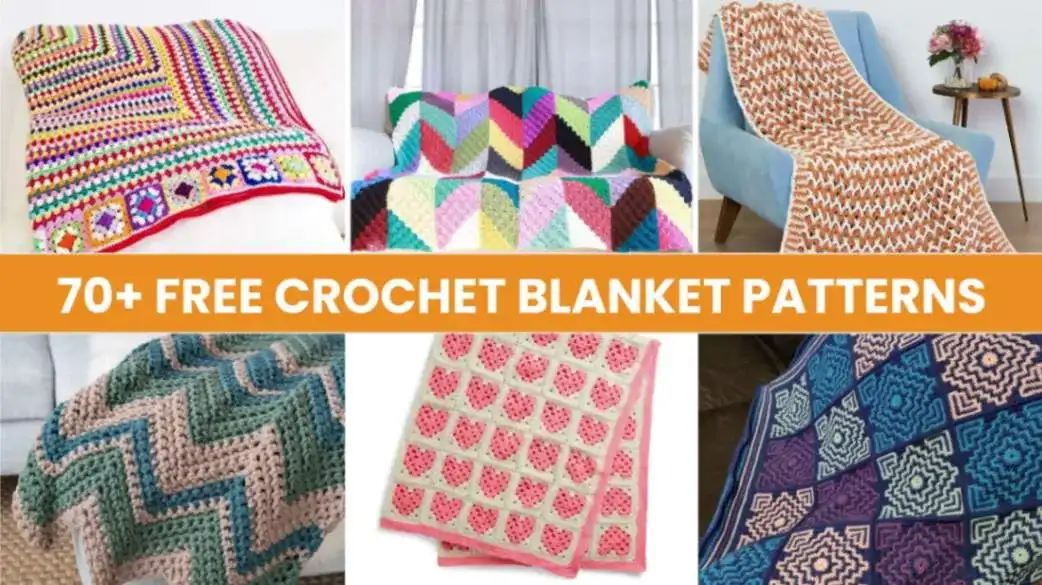
A continuous jasmine panel gives you uninterrupted floral texture. Joined puff flower squares let you make one block at a time and move colors around on the floor before committing. Choose based on how you like to work and whether you want a grid of separate flowers or a surface of connected blooms.
To plan a 36-inch-wide blanket, suppose one blocked square measures 6 inches. Six squares would give you a nominal 36-inch row before accounting for the join and border. Compare a join-as-you-go sample with a sewn seam and measure the joined units before settling on a count. For a continuous panel, measure complete repeats through the middle of a blocked swatch and account for edge stitches separately. Yarnspirations recommends using the project yarn when making a gauge swatch.
12. How do you keep a spring flower stitch scarf light?
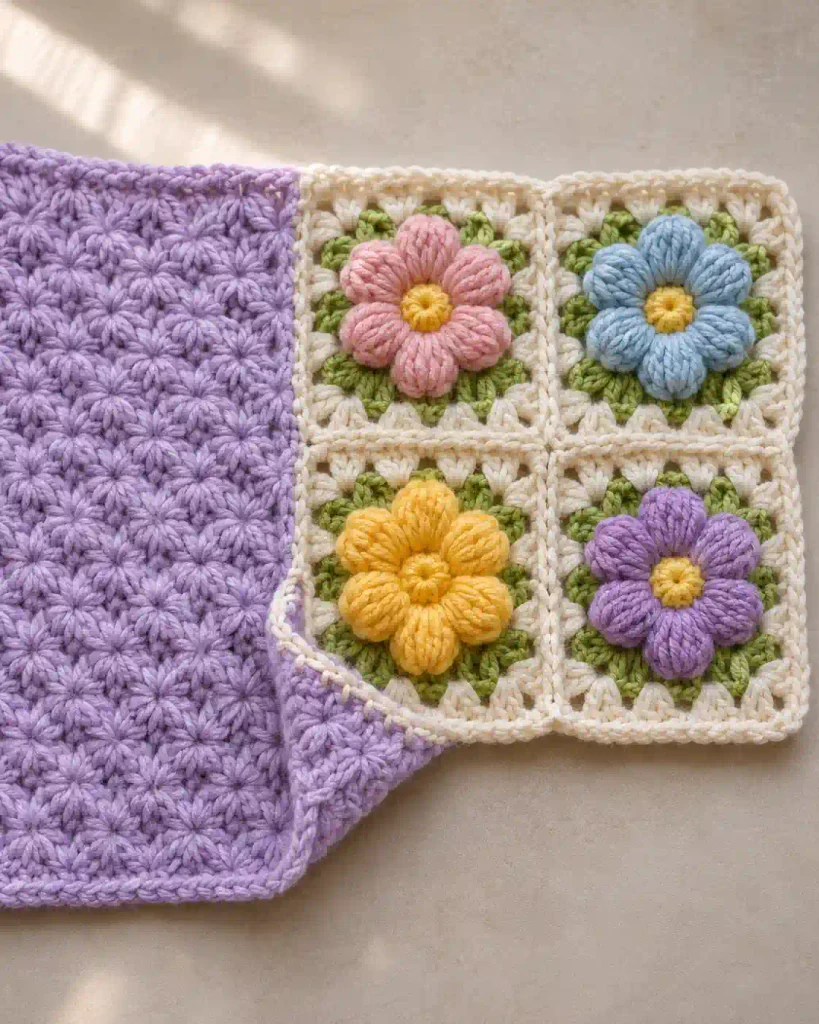
A narrow scarf gives you room to show off a floral lace repeat without adding much bulk under a jacket. For more floral inspiration, explore crochet flower patterns for different motifs and decorative designs. Pick a lightweight yarn and make a short test strip at your intended width. Loop it once around your neck to see whether the flowers stay visible and whether the fabric folds easily.
Choose the width by counting complete repeats, including whatever edge stitches your pattern specifies. Before working the full length, check whether the last row looks like the foundation edge. A simple edging in the same yarn can give the two ends a more even finish. Try it on the sample first, since a tight edging can pull the openwork out of shape.
Frequently asked questions About Crochet Flower Stitch
Which crochet flower stitch is easiest for beginners?
Start with a single puff flower if you already know how to chain and single crochet. You can finish a small piece while practicing one new skill: drawing up evenly sized loops and closing the petal cleanly. A crochet puff stitch flower also gives you a finished appliqué to sew onto a tote.
What if my pattern uses UK crochet terms?
Check the terminology note before you start. The Craft Yarn Council’s crochet abbreviations and terminology guide explains the differences between US and UK crochet terms, including single crochet and double crochet.
How do you resize a crochet flower stitch pattern?
Measure a blocked swatch with several full repeats. Add or remove whole repeats to get close to your target width, then include the starting and ending stitches specified in the pattern. In a crochet flower stitch pattern, keep the edge stitches separate from the repeating section when you calculate the starting chain.
How do you keep floral lace edges from pulling inward?
Check the turning chain and the first and last stitch on each row. If the stitch counts match, try another swatch with more relaxed chains and compare the two after blocking.
How much yarn do raised flower stitches use?
The amount depends on the size of the puffs, your yarn, and your tension. Weigh a dry, blocked swatch, estimate from its area, and allow extra yarn for borders, joining, and the practice samples.
Final Thoughts
Choosing the right crochet flower stitch comes down to the project you have in mind. Raised puff and popcorn flowers add texture to bags and appliqués, while daisy, jasmine, and tulip stitches create beautiful floral patterns across blankets and other fabric. For lighter projects like shawls, scarves, and summer tops, flower mesh and floral lace offer a more open, delicate finish.
Before starting a full project, make a small swatch to check stitch definition, yarn use, and drape. If you’re joining flower motifs, block the pieces first and test a few joins to make sure the edges line up neatly. With the right stitch and a little practice, you can turn simple crochet techniques into beautiful handmade pieces.