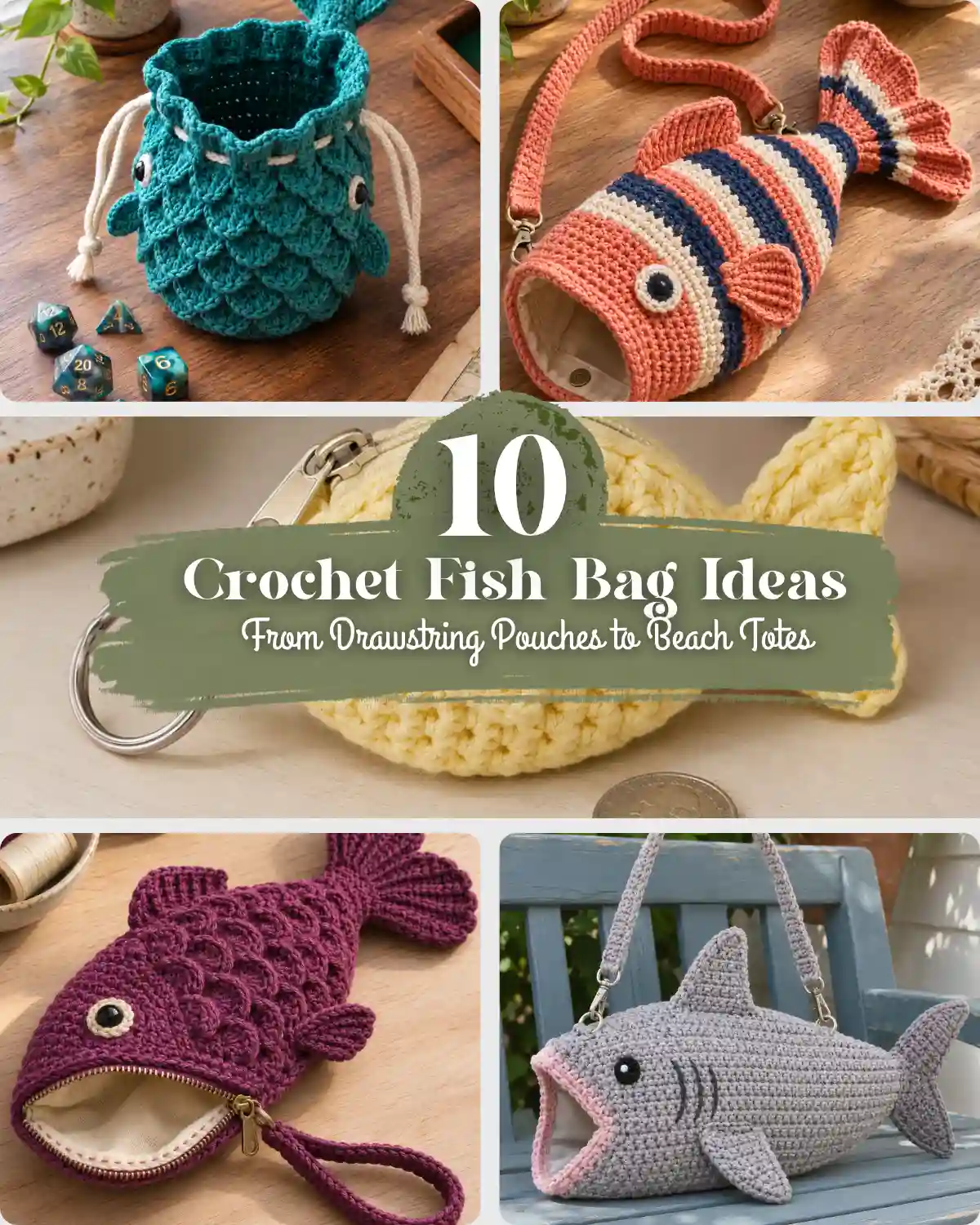




















A small cotton drawstring pouch is the easiest crochet fish bag to start with. For everyday carry, make a fish-shaped crossbody with a reinforced strap. This guide covers 10 designs, including a zippered coin pouch, a beach tote, and a hanging fish that dispenses grocery bags. If you’re choosing a crochet fish bag pattern, set out what you want to carry before you pick up your hook. It’s much easier to plan a fish mouth around your glasses or phone now than to squeeze them through it later.
Key takeaways
- Start with a small cotton drawstring pouch.
- Match your crochet fish bag pattern to what you carry.
- Measure the opening before finishing the body.
- Test strap attachments with the bag loaded.
- Choose a zipper for loose coins.
Which Crochet Fish Bag Should You Make?
Choose a crochet drawstring bag shaped like a fish for a first project, a crossbody for everyday essentials, or a wide-mouth tote for beach gear.
Choose by what needs to fit through the opening. A fish can have a wide belly and a narrow mouth, so measuring the body alone can leave you with a bag that looks roomy but won’t take your phone, glasses, or wallet.
| Project | What it holds | Construction detail to plan |
|---|---|---|
| 1. Beginner drawstring fish | Small notions or accessories | Evenly spaced eyelets for the cord |
| 2. Striped fish bag | Everyday essentials | Color changes and enough yarn for both sides |
| 3. Lined fish purse | Cards, lip balm, and loose items | A fabric lining and short zipper |
| 4. Fish messenger bag | A phone and small notebook | Reinforced strap attachments |
| 5. Fish beach tote | A towel and a removable pouch | A sturdy base and reinforced handles |
| 6. Mini fish coin pouch | Coins and a key or two | A short zipper or snug drawstring |
| 7. Fish dice bag | A seven-die set | Two cords that cinch the opening |
| 8. Fish grocery bag holder | Folded plastic grocery bags | A top refill opening and elastic at the bottom |
| 9. Shark purse | Small outing essentials | Fin placement around the closure |
| 10. Fish glasses case | Folded glasses | A wide enough opening and soft lining |
10 Crochet Fish Bag Ideas From Drawstring Pouches to Beach Totes
1. How Do You Make a Beginner Crochet Fish Drawstring Bag?
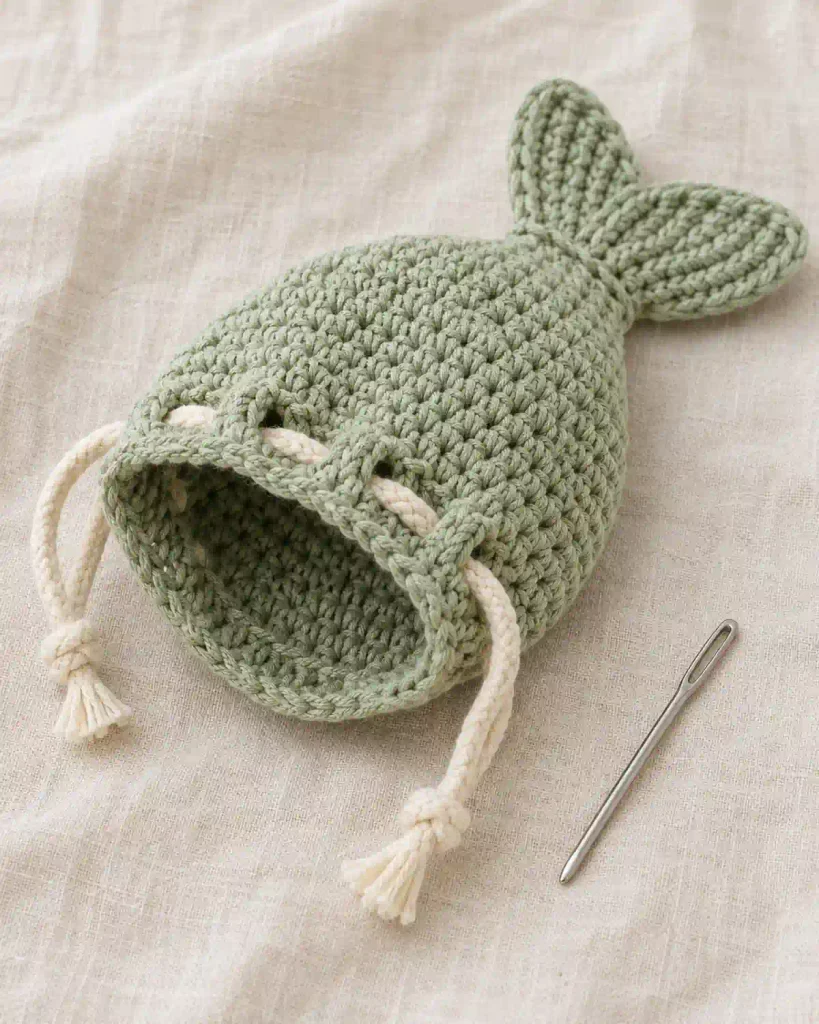
A drawstring turns the fish’s mouth into the opening, so even a plain body and a simple tail give the pouch its shape. Sage cotton with a cream cord would work nicely for a pouch that lives in your project basket. This is the one to pick if you know the single crochet stitch and want to practice working in rounds. Start with a body about 5 inches (13 cm) long before the tail as a design target, then adjust it to what you want to store.
For the build, gather cotton yarn, a compatible hook, a stitch marker, scissors, and a tapestry needle. In US crochet terms, sc means single crochet, ch means chain, and sl st means slip stitch, as listed by the Craft Yarn Council.
- Work the body in single crochet rounds, marking the first stitch as you go.
- Add a round of evenly spaced chain gaps near the mouth. These gaps are the eyelets the cord passes through.
- Thread a cord through the eyelets. Pull it closed and check that the rim gathers evenly without one side bunching up.
- Crochet the tail separately and sew it to the closed end. Add an embroidered eye once you know which side will face out.
2. Striped Crochet Fish Bag for Leftover Cotton Yarn
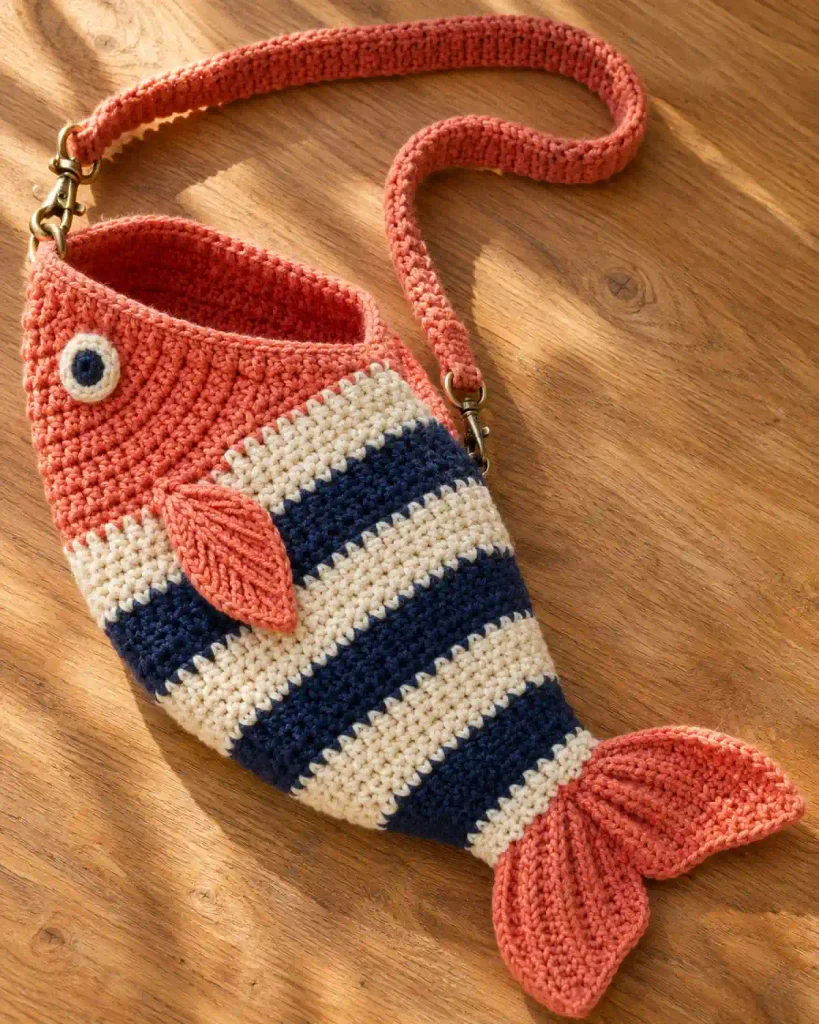
Wide stripes make the fish readable even when it’s hanging from a hook or tucked under your arm. Try rust and ivory for a two-color version, or use coral and cream on the body with navy for the tail and strap. Reserving one color for those smaller pieces is handy when you have enough yarn for an accent but only a partial ball. Check that your leftover yarns produce fabric of a similar thickness before mixing them.
For solid bands, finish the last pull-through of the stitch before the color change with the new yarn. Put the transitions on the underside or the back of the fish so the most visible side stays tidy. Carry an unused color only across short gaps where it won’t pull tight or snag. For wider bands, cut the yarn and weave in the ends as you go.
3. How Do You Line a Crochet Fish Purse With a Zipper?
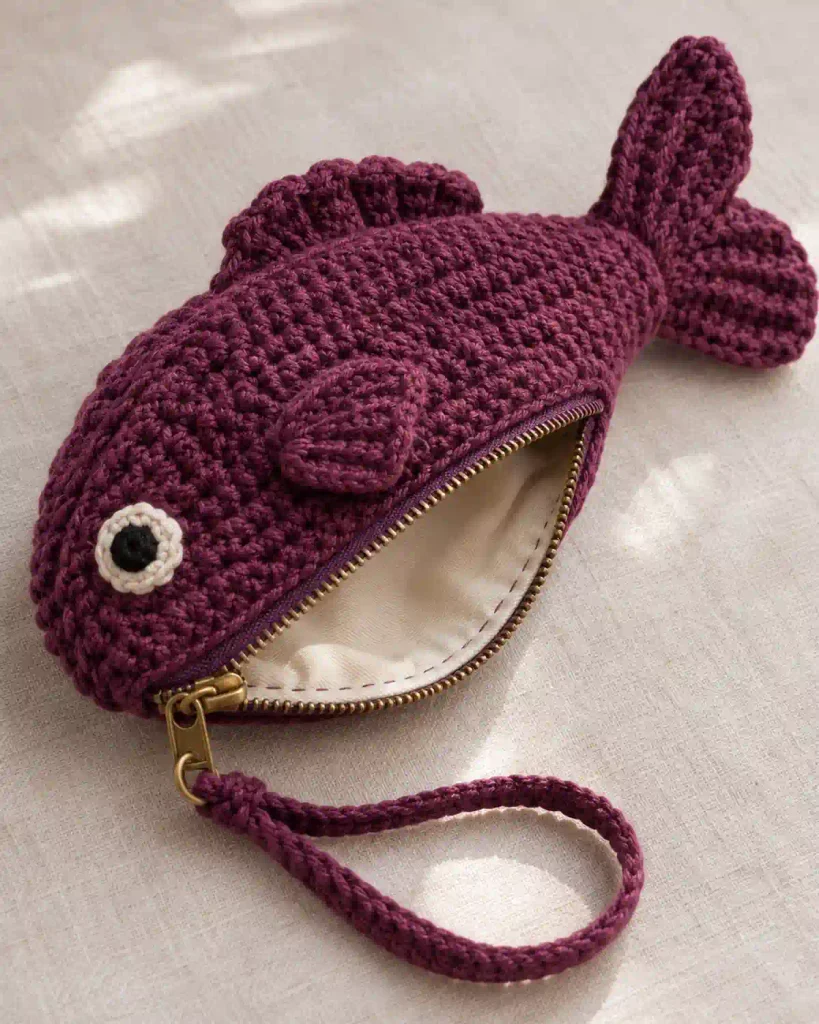
A plum fish wristlet with a cream lining gives cards and lip balm a pocket of their own. The smooth inner fabric keeps small items from poking through the stitches, and a zipper is useful if the purse spends half its time sideways inside a larger bag. Make the tail part of the silhouette and keep it outside the storage compartment. That leaves the usable space in the widest part of the fish.
Trace the finished body onto paper and mark where the zipper will open. Cut woven cotton with extra fabric for the seams and the folded top edge. The Crochet Guild of America’s pouch-lining workshop has learners start with fabric extending at least 2 inches around the crochet piece as working room before fitting it.
Fit the lining inside the purse before sewing it in place. Hand-stitch the folded edge near the zipper tape, leave the teeth clear, and run the slider back and forth before tying off.
4. Crochet Fish Messenger Bag for Everyday Carry
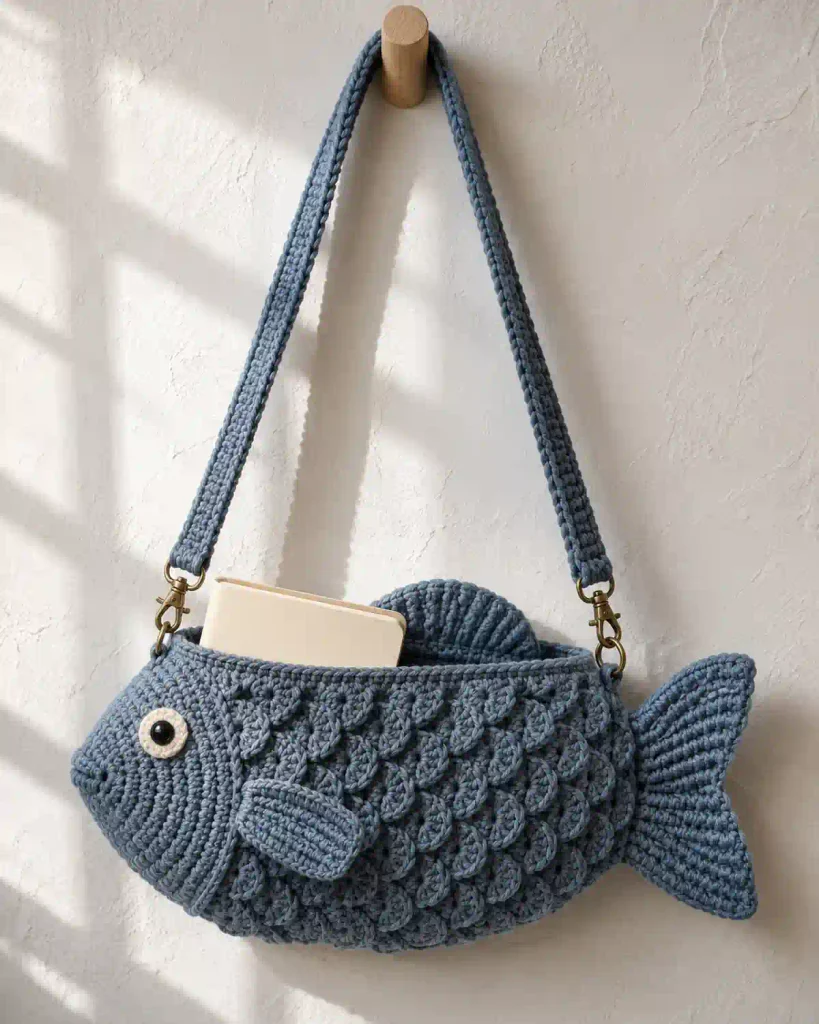
A slate-blue crochet messenger bag shaped like a fish works best with a broad body and an opening you can reach while wearing it. Set your phone and notebook on the table together before you decide how wide the fish needs to be. If you reach for your phone often, give the top opening enough space to slide it out without turning the whole bag. This is a good project if you want the novelty shape in a bag you’ll actually carry.
Use dense stitches for the body and try cotton webbing or a firm crocheted strap backed with woven tape. Pin both strap ends in place, add your usual contents, and hold the bag at the height you intend to wear it. If the tail dips or the mouth tips open, move the attachment points before stitching them down. Spread the reinforcement over several stitches on each side.
5. What Makes a Crochet Fish Tote Work for the Beach?
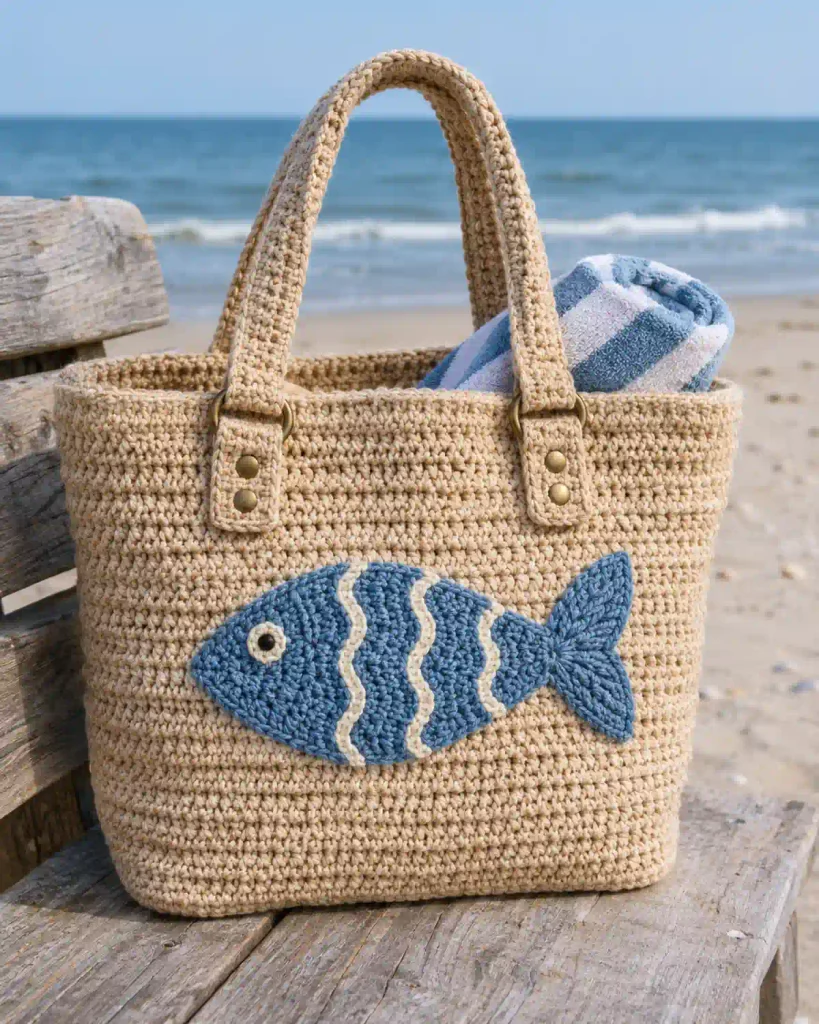
A sand-colored tote with a blue fish appliqué gives you the fish motif and a rectangular opening wide enough for a rolled towel. An appliqué is a separate crocheted piece sewn onto the fabric. You can use it to add a fish to a tote pattern you already like, or make the whole body fish-shaped if the silhouette is what drew you in. For a crochet beach bag, the flat base and wide opening are worth planning first.
Work the base in a firmer stitch than any openwork you use on the sides. Once the handles are attached, load the tote with the towel and whatever else you usually bring. Lift it by both handles and look for pulling where they join the body. A removable pouch gives sandy hands one place to find keys without digging around the bottom.
6. Mini Crochet Fish Coin Pouch With a Key Ring
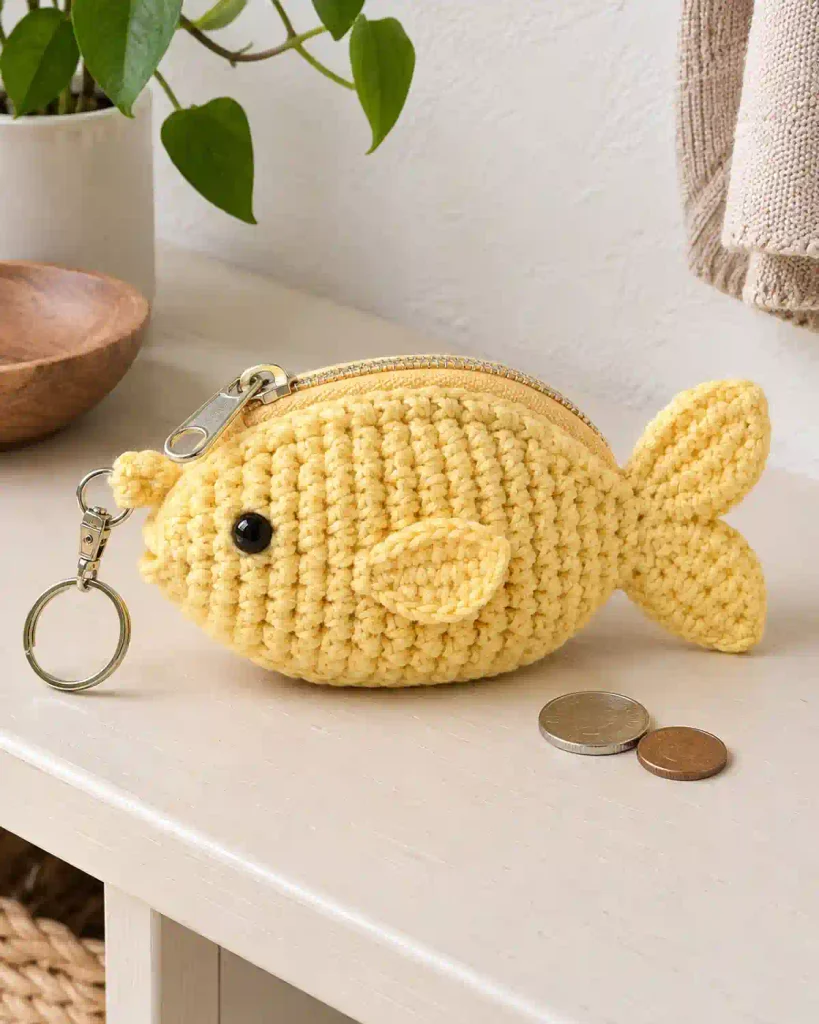
Butter-yellow cotton and a tiny zipper make this fish-shaped crochet mini bag easy to spot at the bottom of a tote. Make the pouch wide enough for your fingers to reach the coins, even if that means shortening the body to keep it palm-sized. A short zipper is a good choice for loose change. A drawstring is simpler to add if you mainly want somewhere to tuck a key.
Use the actual zipper to check the opening before the last few rows. If you’re adding a key ring, sew a small folded fabric tab into a sturdy seam or stitch through several firm crochet stitches to distribute the pull. Clip it to the inside of a larger bag and check that you can open the pouch while it’s attached. This is a good use for the cotton left over from a striped fish.
7. How Do You Keep Dice Inside a Crochet Fish Dice Bag?
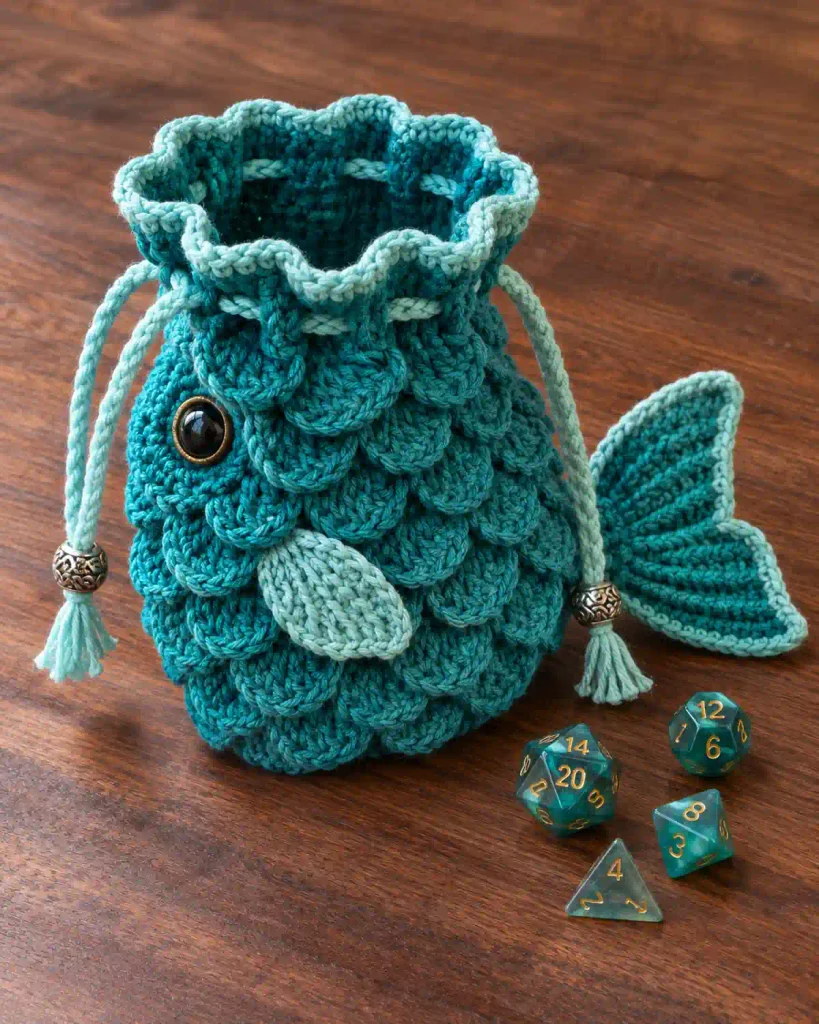
The most important feature of a fish dice bag is a mouth that closes around the smallest die. A teal fish with a flat base can stand on a game table while everyone searches for the right die. Dense stitches help keep the corners from poking through the fabric, and two drawstrings let you pull the opening closed from both sides. Size the first version around one seven-die set, with room to reach inside.
Thread one cord all the way around the opening and tie its ends together on one side. Start the second cord on the opposite side, then thread and tie it the same way. Put in the smallest die, cinch both cords, and turn the pouch over above the table. If the die slips through the mouth, tighten the opening or add a small inner flap before you commit to the finishing stitches.
8. Hanging Crochet Fish Bag Holder for Grocery Bags
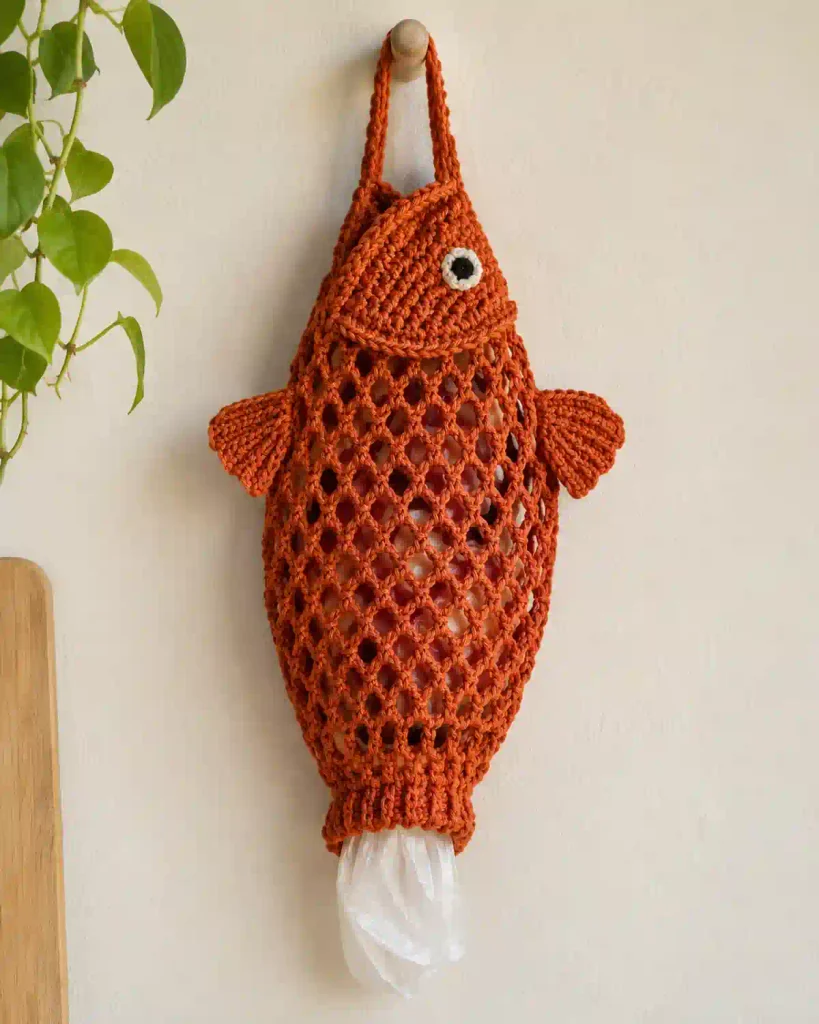
An orange mesh fish hanging on a pantry hook can give the grocery bags in your kitchen drawer a home. Fill it through the mouth and pull a bag through the opening at the tail. Mesh lets you see how full it is, and the elastic at the bottom keeps the pile from falling out all at once. This is the project to make if you want a fish design that does a daily job in the kitchen.
Add the hanging loop to a firm upper edge. At the bottom, work a denser band with a channel for the elastic, or sew a fabric casing onto the opening. Before you secure the elastic, load several of the grocery bags you actually reuse. Pull one out with a single hand and adjust the opening until it holds the others in place.
9. Crochet Shark Purse With a Soft Pink Mouth
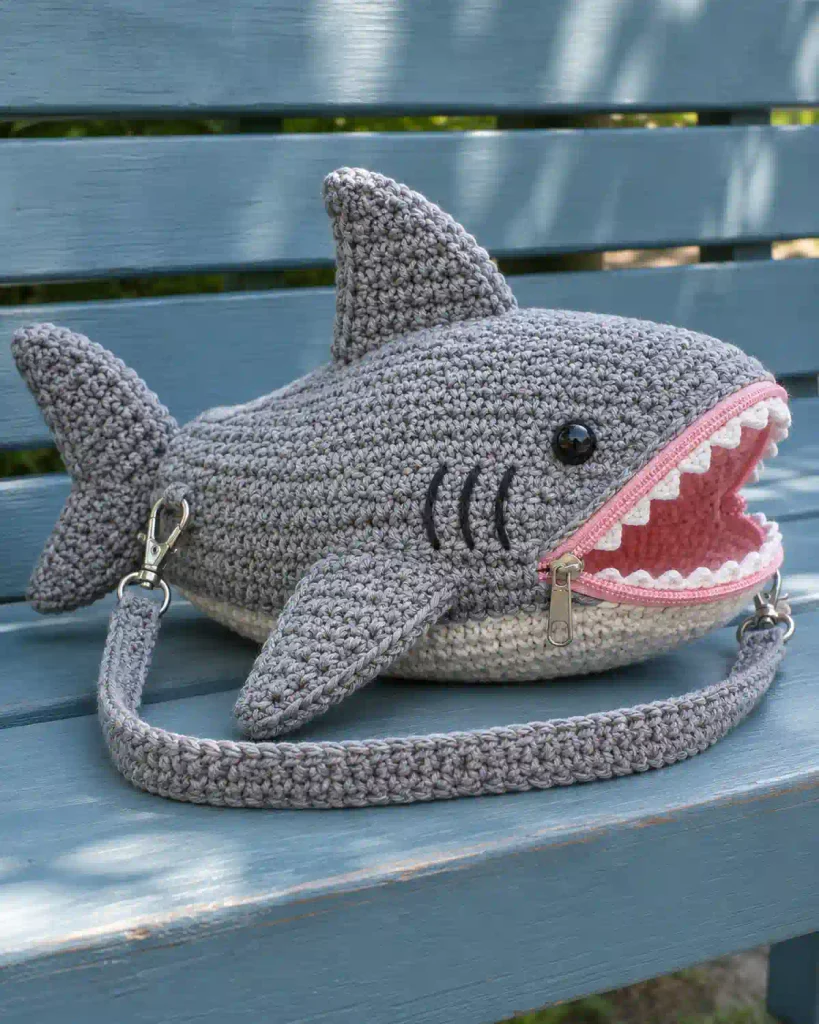
A dorsal fin and a strip of pink around the opening can turn a plain gray fish purse into a shark. A short strap suits a small outing bag where there’s only a cardholder and a snack to carry. Put the fin toward the middle of the back so you can see the shark silhouette from the side. Keep the mouth soft and add an embroidered eye if you want the whole face to sit flat.
Pin the fins on before you install the lining. That gives you room to sew through the outer crochet without catching the inner fabric. Check the zipper or flap with the fins in place, especially at the corners where a bulky seam can get in the way. Once the closure moves freely, finish the lining and attach the strap.
10. How Do You Size a Crochet Fish Glasses Case?
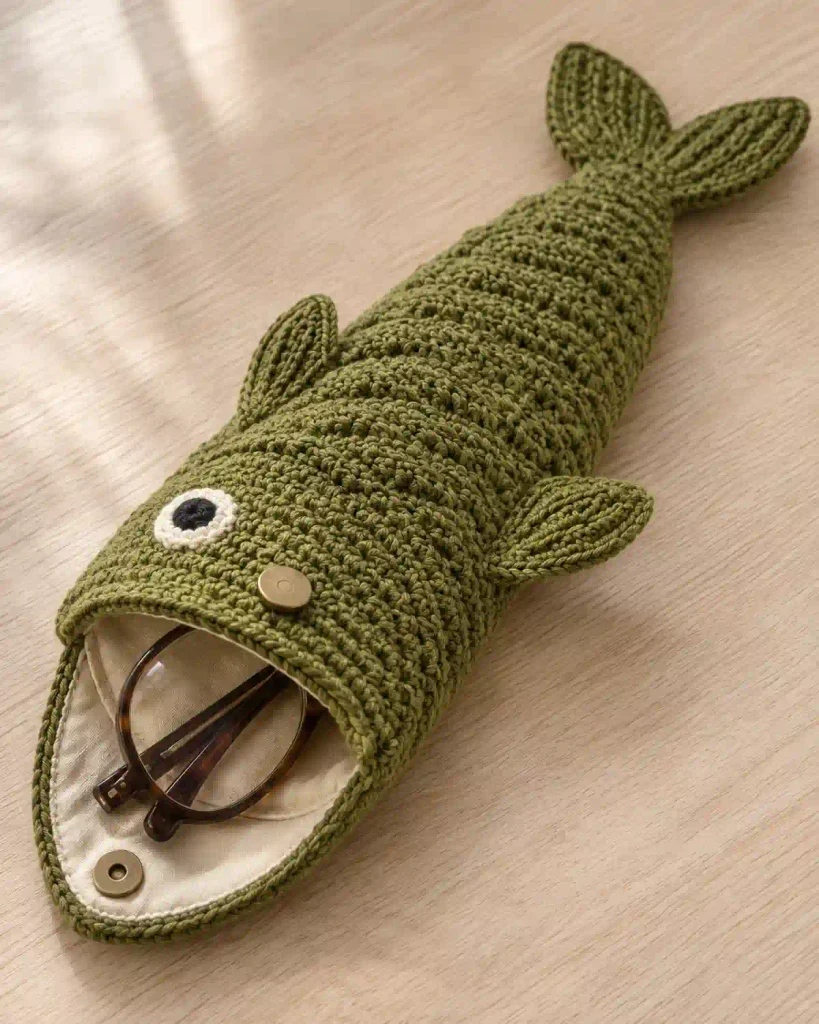
An elongated olive fish makes a neat sleeve for reading glasses, especially with a soft lining visible at the mouth. Measure your folded frames at their widest and thickest points and give the opening room for both. A long body alone won’t help if the temple arms catch on the edge. A soft flap works well for a sleeve that goes from a reading table into a tote.
Lay the folded glasses on paper and mark their full length so you can see where the tail shaping should begin. Fit the lining and slide the glasses in before you close the final seam. Keep hard eyes, buttons, and other firm embellishments clear of the lens area. If you need something to carry glasses alongside heavy items, use a rigid case for crush protection.
How Do You Choose Yarn, Gauge, and a Closure?
Choose yarn that gives you the fabric you want, check its gauge against your pattern, and size the closure around the widest item the bag will hold.
At a glance
- Use smooth cotton for a firm pouch.
- Swatch with the yarn and stitch you plan to use.
- Check the opening with your largest item.
- Test the closure with your smallest item.
Start with smooth cotton for a firm little pouch and choose a denser fabric for coins or dice. Use mesh where seeing the contents helps, as in the kitchen dispenser. Check your closure against the widest item early. A drawstring gathers the whole edge, a zipper needs an opening long enough for the item to pass, and a flap needs enough overlap to stay closed when the pouch is full.
Gauge is the number of stitches and rows across a set measurement. The Craft Yarn Council suggests making a 6-inch swatch and measuring gauge across the center 4 inches so the edges don’t affect the count. That check is especially useful when the finished opening must fit a specific object.
Frequently Asked Questions About Crochet Fish Bag
Where can I find a crochet fish bag free pattern?
Stitch and Hound offers a free web version with email signup. Its pattern uses a 5 mm hook and lists a finished fish of 42 × 18 cm at its longest and widest points. Ribblr also lists a free intermediate fish pouch that finishes at 28 × 12 cm.
Is OldBagLady’s Fish Bag still available?
Ravelry lists Marjorie Jones’s OldBagLady’s Fish Bag as a discontinued digital pattern. For instructions you can access now, start with the Stitch and Hound or Ribblr options above.
How do you keep a crochet fish bag strap from stretching?
Choose woven webbing or back your crochet bag strap with fabric tape. Reinforce both attachments across several stitches and test the length with the bag loaded before finishing.
Does a crochet fish purse need a lining?
Add a lining if your stitches have visible gaps or you plan to carry small items such as coins. A dense pouch for larger items can work without a lining if its opening closes securely.
Can you wash a crochet fish bag?
Follow the care instructions for the yarn, lining, and any hardware. The Craft Yarn Council explains the wash and dry symbols you’ll find on yarn labels. If the label calls for flat drying, reshape the fish and tail before leaving it to dry.
Final Thoughts
The best crochet fish bag is the one you’ll actually use. Start with a small cotton drawstring fish if you’re new to crocheting in rounds, try a zippered pouch for loose change, or make a roomy beach tote if you need space for a towel.
Before you pick up your hook, set out what you want the bag to hold and measure the widest item. That gives you a starting point for the opening and closure. Once you know everything will fit, have fun with the details. A cream cord, a few leftover stripes, or a contrasting tail can give your fish its own personality.