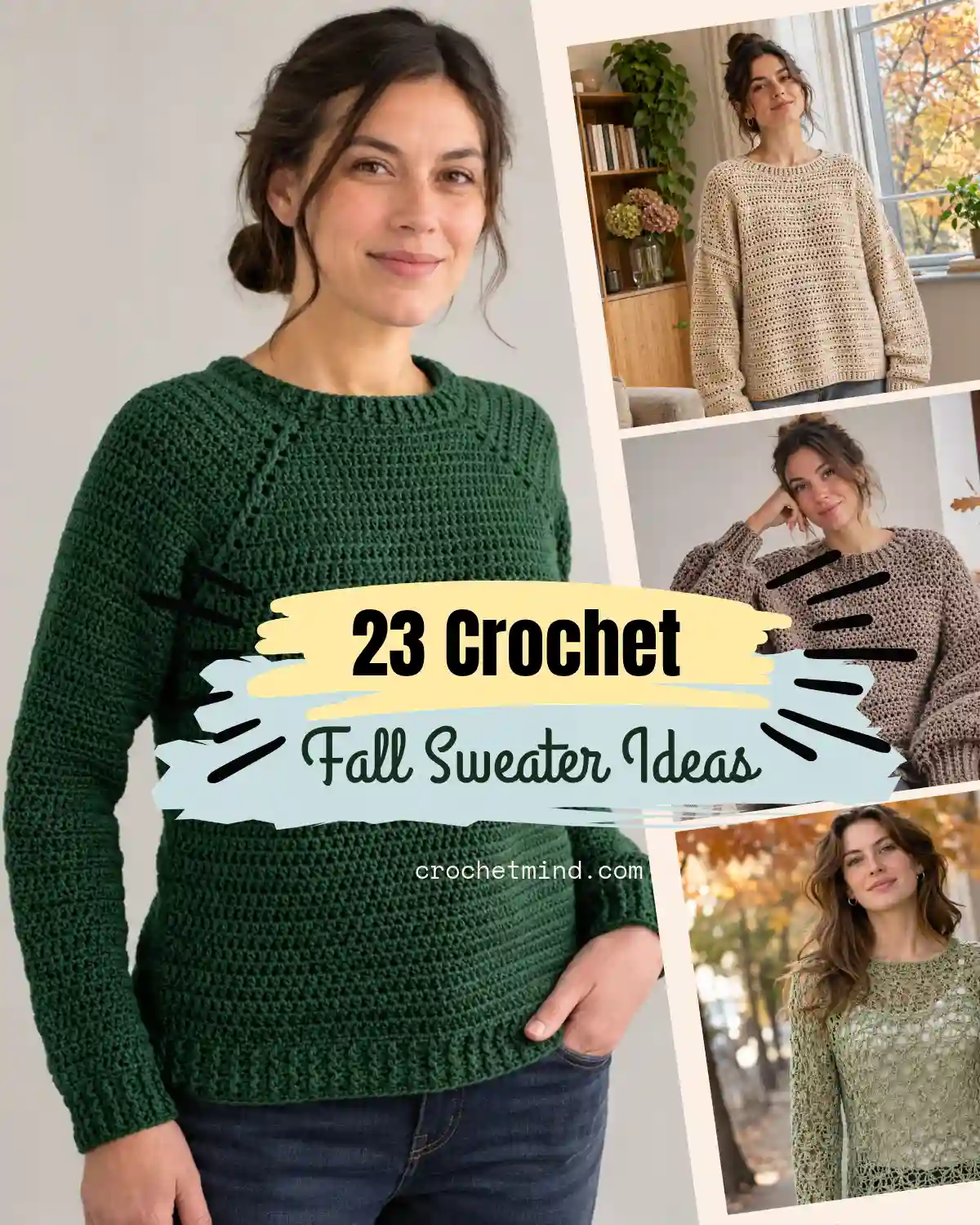
A crochet fall sweater can be anything from a light, open-stitch pullover to a warm, oversized cardigan. These 23 ideas cover beginner-friendly shapes, crochet pullover sweater patterns, colorful motifs, and easy-to-layer autumn outfits, so you can find a project that suits your style and skill level.
You don’t need to start with complicated shaping, either. A few rectangles can become a wearable sweater, while a thoughtful color choice can make a familiar stitch look completely different. Whether you’re planning your first wearable crochet project or adding another handmade layer to your fall wardrobe, there’s an idea here worth saving.
Key Takeaways
- Start with rectangle panels or relaxed drop shoulders.
- Match yarn weight to the weather and desired drape.
- Check gauge before choosing your sweater size.
- Explore fall crochet sweater ideas by color and silhouette.
- Verify free pattern instructions before starting.
Which crochet fall sweater ideas are easiest to start with?
Rectangle-panel and drop-shoulder pullovers are approachable starting points because they use relatively straightforward shapes and relaxed construction.
At a Glance:
- Rectangle panels simplify garment assembly.
- Drop shoulders create a comfortable, relaxed silhouette.
- Lightweight pullovers work well for transitional weather.
- Gauge and finished measurements help determine the right fit.
If you’re looking for fall crochet sweater ideas, start with the construction as well as the look. Straight panels and relaxed shoulders tend to be easier to understand than fitted yokes or detailed shaping. This quick guide helps narrow down the choices.
| Sweater style | Why choose it | Best starting point |
|---|---|---|
| Rectangle-panel pullover | Simple pieces and seams | First handmade garment |
| Drop-shoulder sweater | Relaxed everyday fit | Beginner with basic seaming |
| Lightweight pullover | Comfortable for early fall | Open stitches and breathable layers |
| Granny-square sweater | Colorful, modular construction | Confident motif maker |
| Top-down raglan | Fit adjustments as you go | Intermediate garment project |
| Open-front cardigan | Easy styling over other clothes | Layering and outfit versatility |
23 Crochet Fall Sweater Ideas for Cozy, Handmade Autumn Style
1. Beginner Rectangle-Panel Pullover: Where Should You Start?
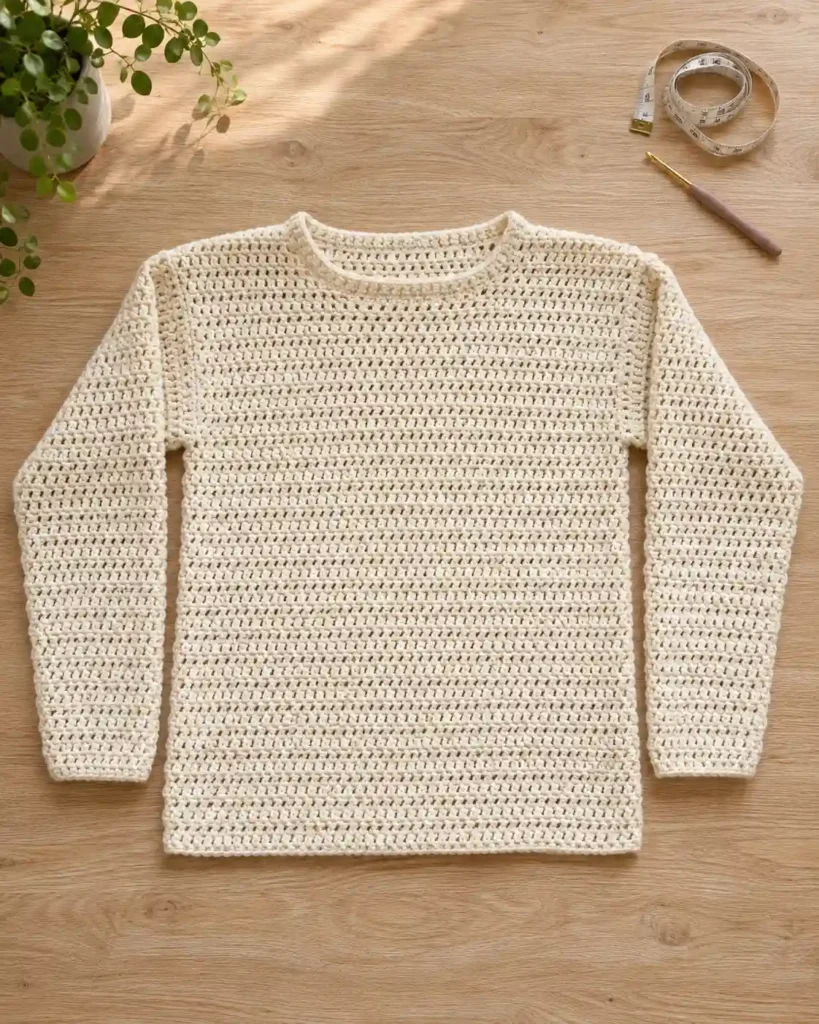
A rectangle-panel pullover is proof that a sweater doesn’t need fancy shaping to look good. Instead of following a complex neckline from the first row, you build straightforward fabric pieces and join them into a wearable top. Picture a soft cream version with jeans and ankle boots on a chilly morning. It’s a smart first project if you’ve made scarves or blankets and want to learn how to crochet a sweater.
Choose a pattern with clear shoulder, armhole, and neckline instructions. A plain double-crochet fabric makes it easier to spot uneven stitches, while a measured gauge swatch helps the pieces meet neatly.
2. Everyday Drop-Shoulder Crochet Sweater
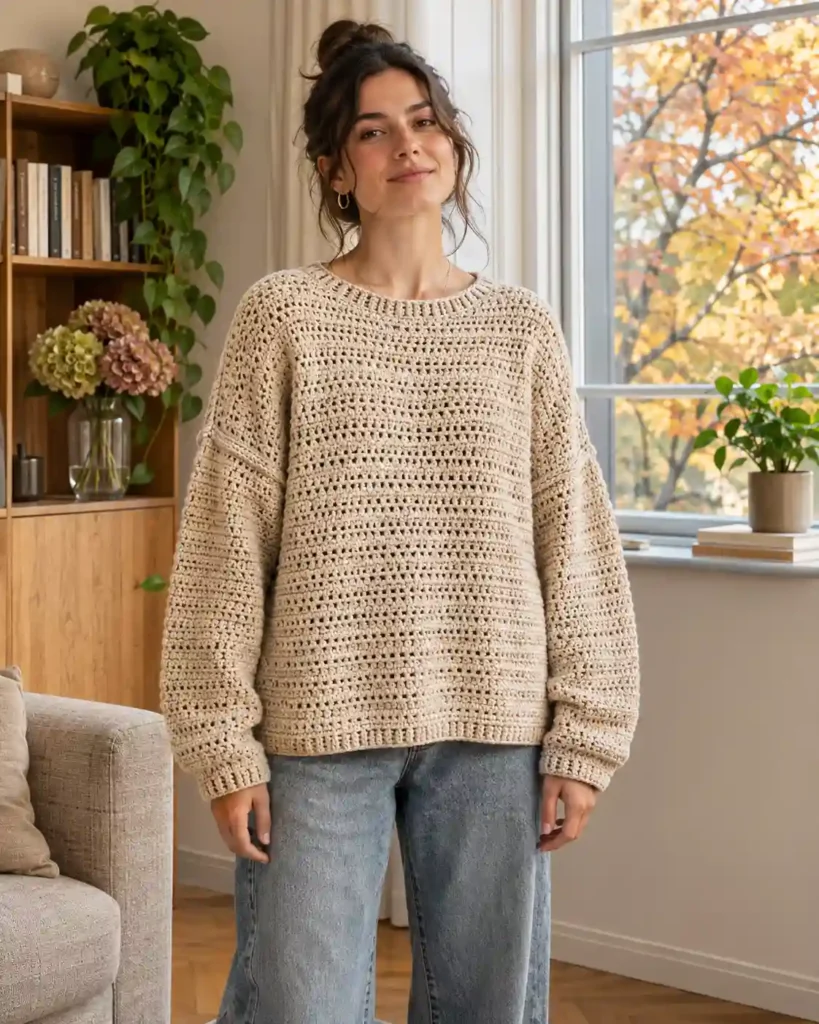
Some sweaters just belong in the weekly rotation, and a drop-shoulder design is one of them. Its sleeve seam sits below the natural shoulder, giving a relaxed shape without the precise tailoring of a fitted pullover. Wear an oatmeal version with straight-leg denim for errands or a casual coffee date. This is a particularly useful choice when you want comfort without a huge, bulky silhouette.
Check the finished bust measurement rather than choosing your usual store size automatically. Medium-weight yarn and tidy cuffs keep the sweater from feeling shapeless.
3. Oversized Weekend Crochet Sweater: How Roomy Is Too Roomy?
The oversized weekend sweater is the one you reach for when the forecast says cool and the plan says stay comfortable. Unlike simply making a standard pattern several sizes larger, a well-designed oversized sweater balances body width with sleeve and neckline proportions. Taupe, mushroom, and soft cocoa shades look right at home with leggings. Choose it for generous movement and an easy, cozy look.
The Craft Yarn Council’s standard body measurements and sizing guidelines describe oversized garments as having approximately 6 inches (15 cm) or more of positive ease, meaning extra room beyond the body measurement. That’s a useful reference, not a substitute for the actual pattern schematic.
4. Chunky Textured Crochet Sweater
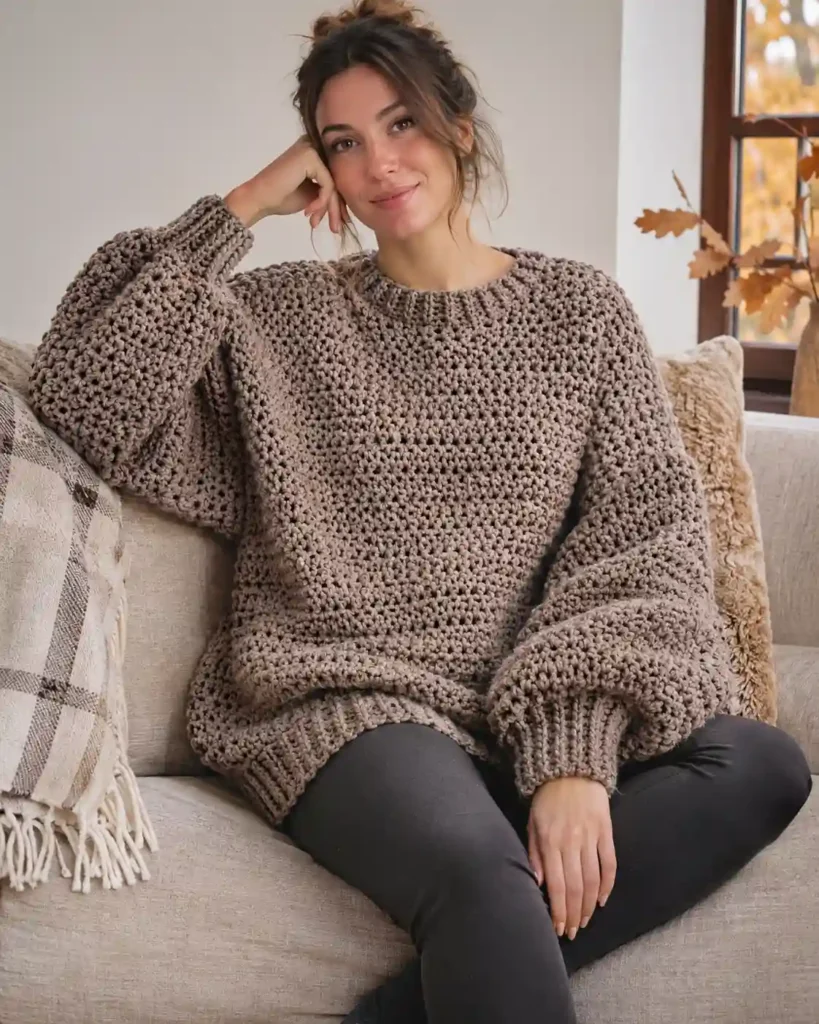
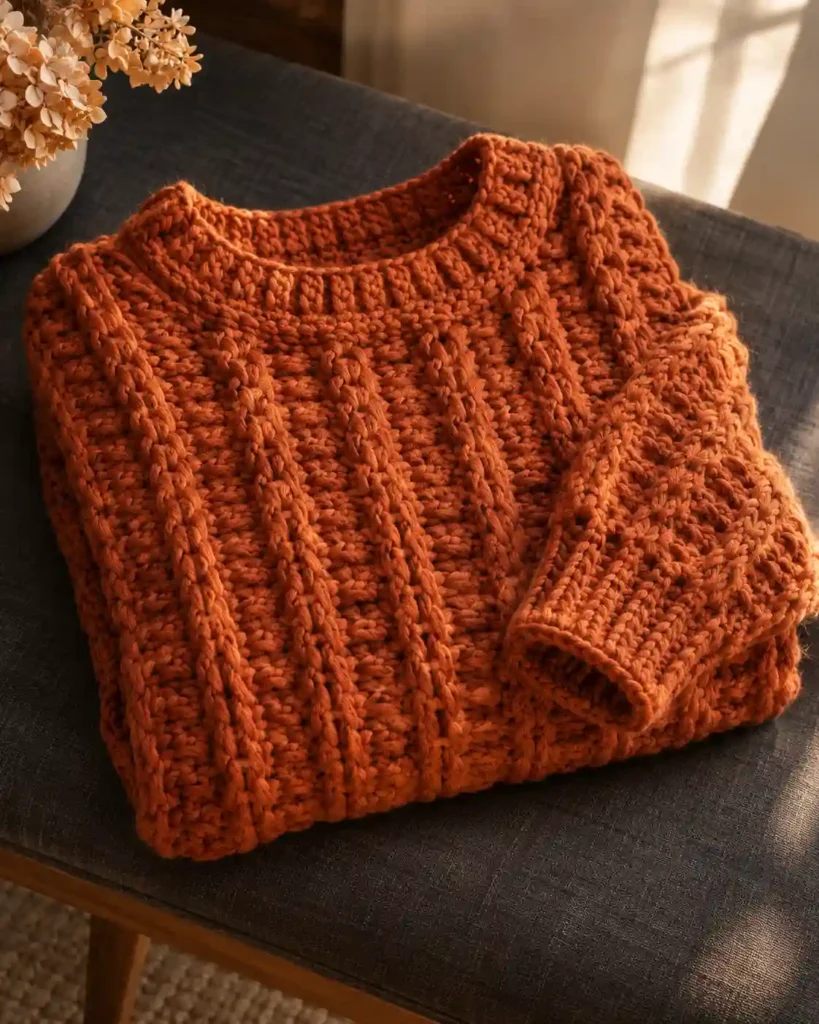
A chunky textured sweater makes simple fall outfits feel more interesting before you add a single accessory. Raised crochet stitches give the surface depth, while bulky yarn can create a substantial, cozy layer. A terracotta pullover with dark trousers looks especially good on days when you want the sweater to do the styling work. This is a lovely option for texture lovers, provided the finished fabric still drapes comfortably.
Don’t judge a design by yarn thickness alone. Work a sample and hold it up: a dense, heavy fabric may be less comfortable than a lighter yarn with bold stitch texture.
5. Lightweight Early-Fall Crochet Pullover: Can It Still Feel Cozy?
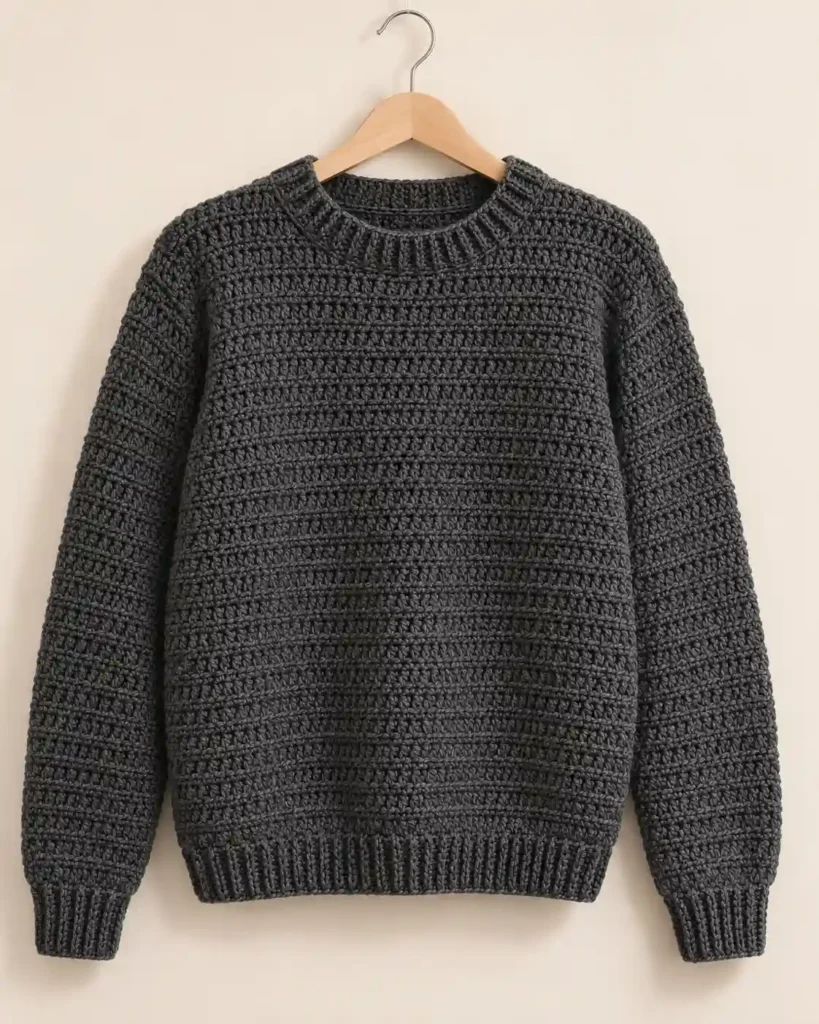
Early autumn doesn’t always call for a thick sweater. A lightweight crochet pullover gives you sleeve coverage without feeling like winter clothing, especially when the stitches have a little breathing room. Try sage green over a plain tank with dark jeans for a mild afternoon outside. It’s the better pick for transitional weather and anyone who prefers layers they can adjust throughout the day.
Look for a drapey pattern made with a suitable light or medium yarn. If the stitch pattern is open, plan your base layer as part of the outfit.
6. Classic Ribbed Crochet Crewneck
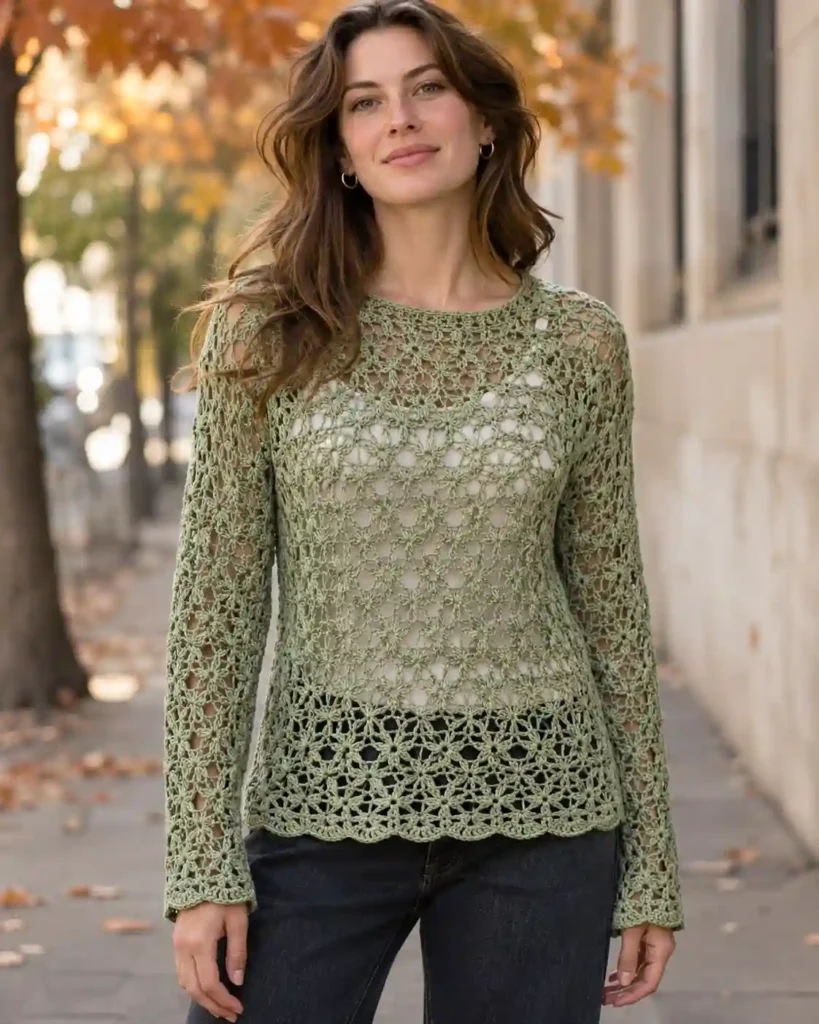
A ribbed crewneck brings a familiar, clean shape to handmade crochet. The collar, cuffs, and hem add definition, so the sweater looks polished even with plain trousers. Charcoal gray is an easy match for almost everything already in a fall wardrobe. Pick this style when you want something more classic than a colorful patchwork sweater.
Back-loop and slip-stitch techniques can create ribbed effects, although they do not behave exactly like knitted fabric. Follow the pattern’s neckline instructions closely so the collar lies comfortably.
Which crochet sweater construction should you try next?
Top-down raglan and round-yoke constructions are useful choices when you want more control over shoulder shaping and garment fit.
At a Glance:
- Raglan sweaters feature diagonal shoulder shaping.
- Round-yoke sweaters create circular upper-body shaping.
- Top-down construction allows fit checks during crocheting.
- Follow the pattern’s increase and gauge instructions.
7. Top-Down Raglan Crochet Pullover: Why Try It?
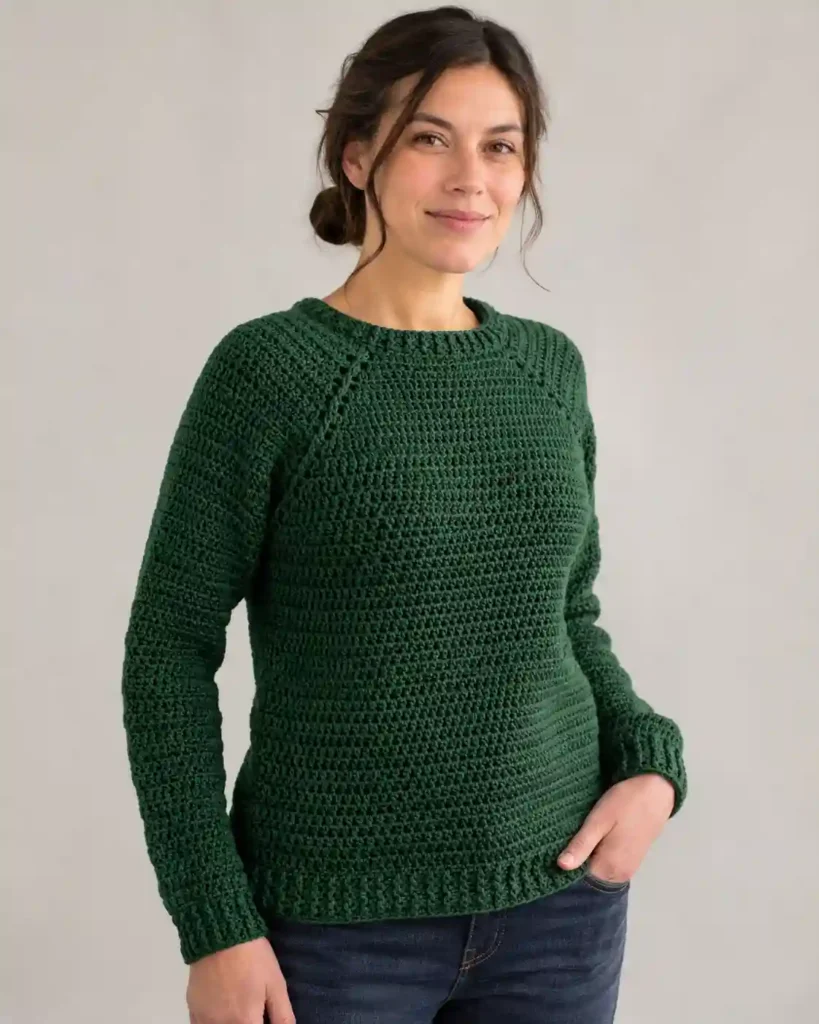
The appeal of a raglan sweater is all in those diagonal lines running from neckline toward the underarms. In a top-down design, you can often check the fit before committing to the full body length. Forest green turns this practical construction into a quiet autumn staple. It’s a satisfying next step for crocheters who want more control over shoulder fit than a basic seamed rectangle offers.
Pay attention to the increase points, sleeve separation, and neckline depth. A pattern with a clear yoke diagram makes the shaping much easier to follow.
8. Seamless Round-Yoke Crochet Sweater: What’s Different?
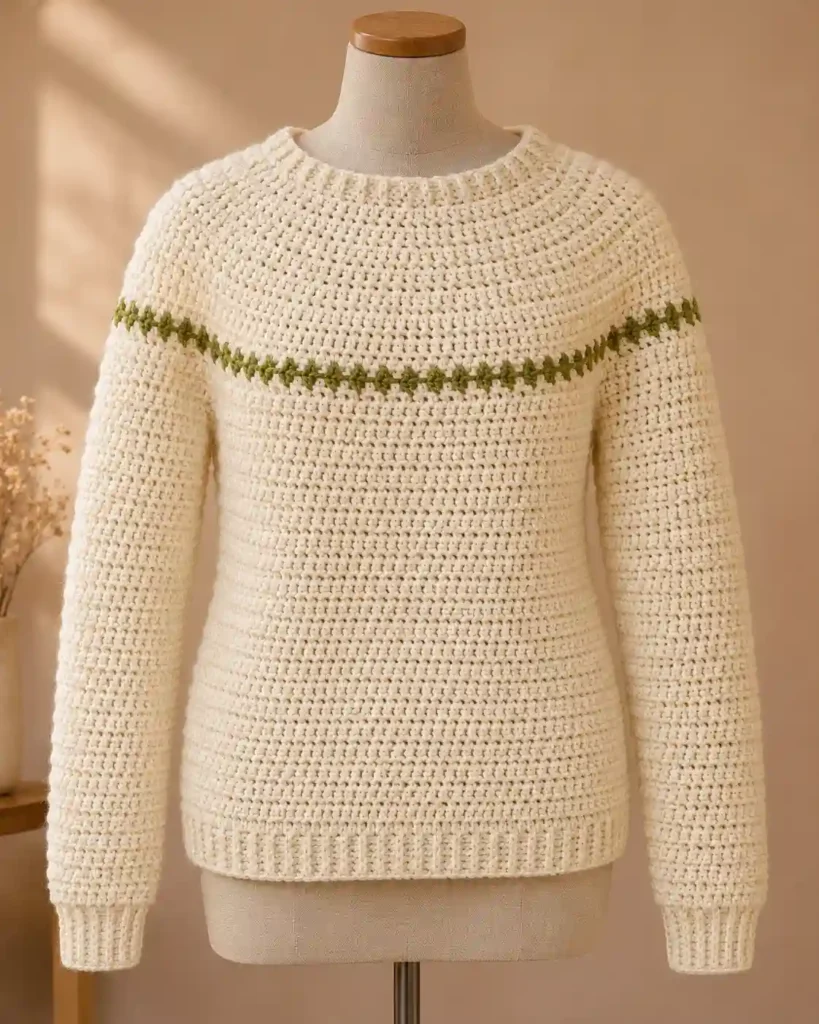
A round-yoke pullover gives the shoulders a smooth, continuous shape instead of visible raglan lines. That creates a natural place for a small olive-and-ivory color band circling the upper chest. It looks especially pretty over simple pants, where the yoke can take center stage. Consider this style if you enjoy shaping and want a sweater with a subtle decorative feature.
Round yokes and raglans are not interchangeable constructions. Check upper-arm room, underarm depth, and the recommended gauge before making your size.
How can fall colors and motifs change a crochet sweater?
9. Autumn Granny-Square Patchwork Sweater: Which Colors Work?
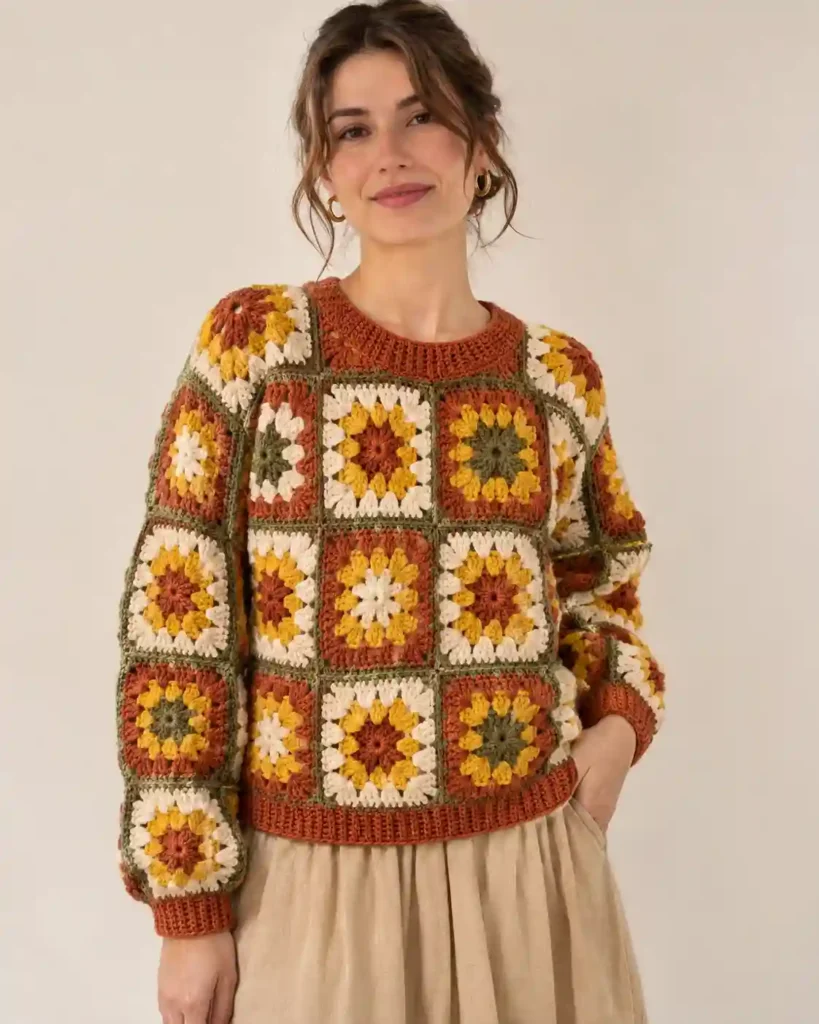
Crochet granny square patterns bring a little vintage charm to a patchwork sweater. Rather than creating one uninterrupted fabric, you join individual motifs into a coordinated garment. Rust, mustard, cream, and moss green make a cheerful combination for pumpkin-patch visits or weekend markets. It’s ideal for someone who loves color and doesn’t mind spending time on thoughtful assembly.
Make a sample square first, then measure it after any finishing recommended by your pattern. Consistent motif size matters just as much as the colors.
10. Retro Granny-Stitch Crochet Pullover
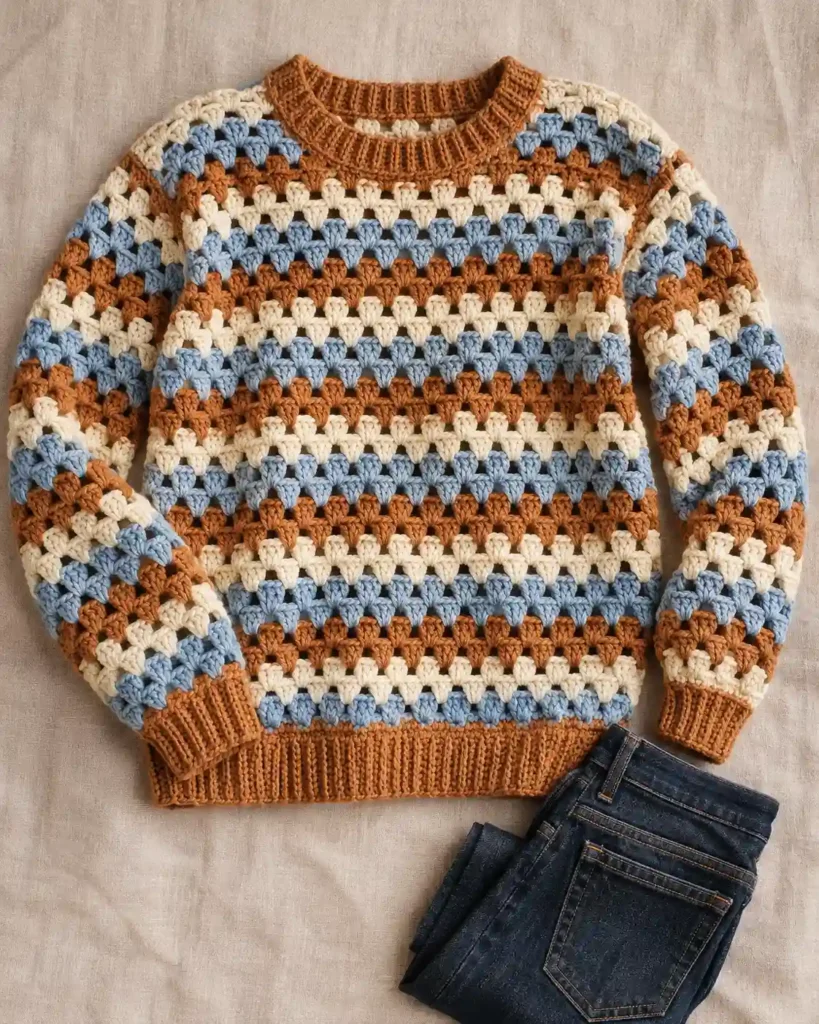
Want the retro effect without joining dozens of separate squares? A granny-stitch pullover uses repeating crochet clusters to build stripes directly into the sweater fabric. Caramel, dusty blue, and cream keep the look playful without becoming too busy. It works beautifully as a statement sweater with ordinary denim, especially for crocheters who enjoy rhythmic stitch repeats.
The stitch repeat may be approachable, but garment sizing still takes planning. Make sure the pattern explains shoulder width, sleeves, and finishing—not just the cluster stitch.
11. Rust-and-Cream Striped Crochet Sweater: How Wide Should the Stripes Be?
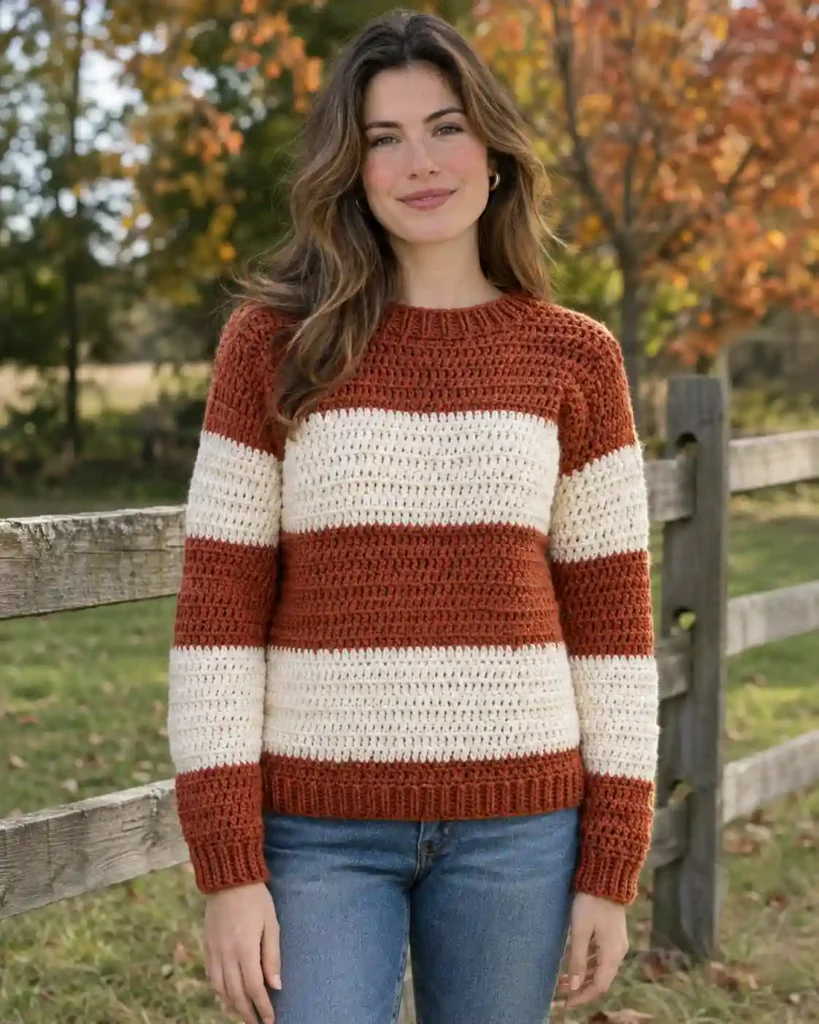
Rust and cream stripes feel unmistakably autumnal without relying on pumpkin prints or leaf motifs. Wide bands create a bold, modern look, while narrow stripes feel softer and more vintage. Imagine this pullover with dark jeans on a crisp walk through the neighborhood. It’s a good choice if you want a colorful sweater that still mixes easily with everyday clothes.
Plan stripe placement before you reach the sleeves. Matching, or deliberately offsetting, the bands at the seams helps the final garment feel intentional.
12. Multicolor Wave-Stitch Autumn Sweater
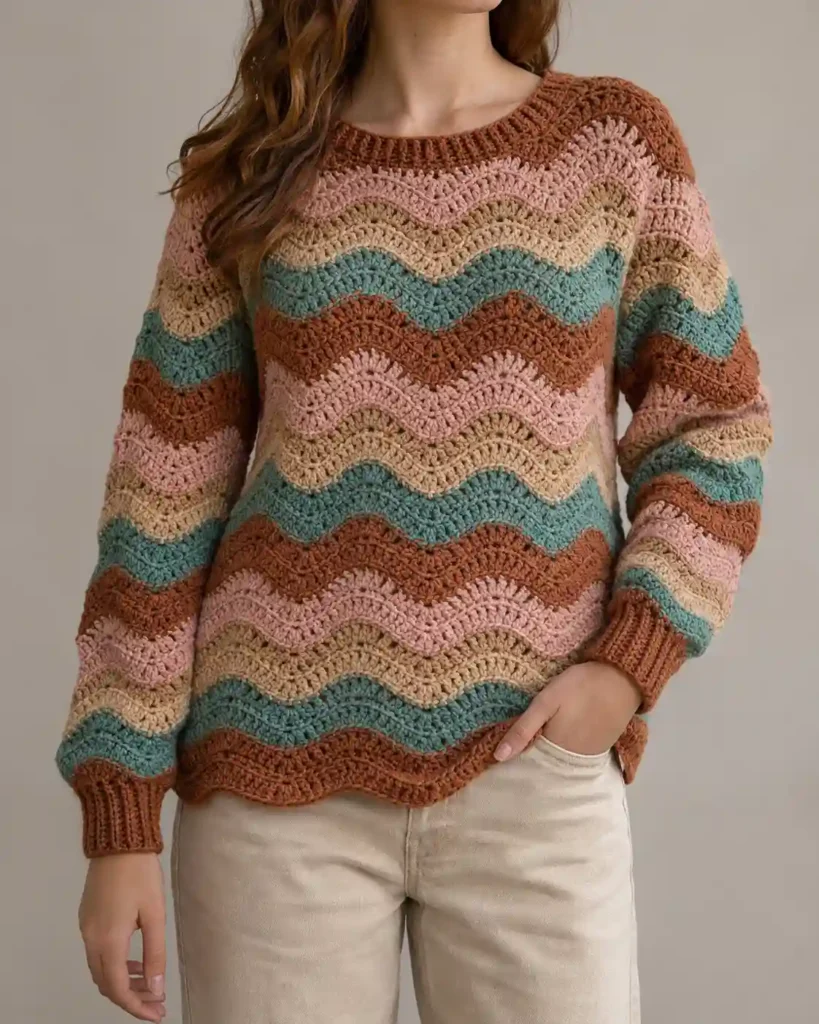
A wave-stitch sweater has movement built right into its fabric. Gentle curves in cinnamon, tan, dusty pink, and muted teal offer something more fluid than straight horizontal stripes. Keep the rest of your outfit simple so the pattern remains the star. This style suits someone who enjoys colorwork and wants a sweater that looks different from the usual fall pullover.
Wave and chevron stitch patterns can require different increases and decreases. Stick to the chosen pattern’s repeat and check that the fabric lies flat before making large panels.
Which crochet cardigan styles are best for fall layering?
Explore easy crochet cardigan pattern ideas, including open-front, hexagon, and longline designs, for different ways to layer handmade garments over everyday fall outfits.
At a Glance:
- Choose open-front cardigans for flexible everyday layering.
- Try hexagon construction for a distinctive garment shape.
- Select longline designs for longer outfit proportions.
- Consider yarn weight and drape before making a large cardigan.
13. Pumpkin-Spice Crochet Cardigan: How Would You Style It?
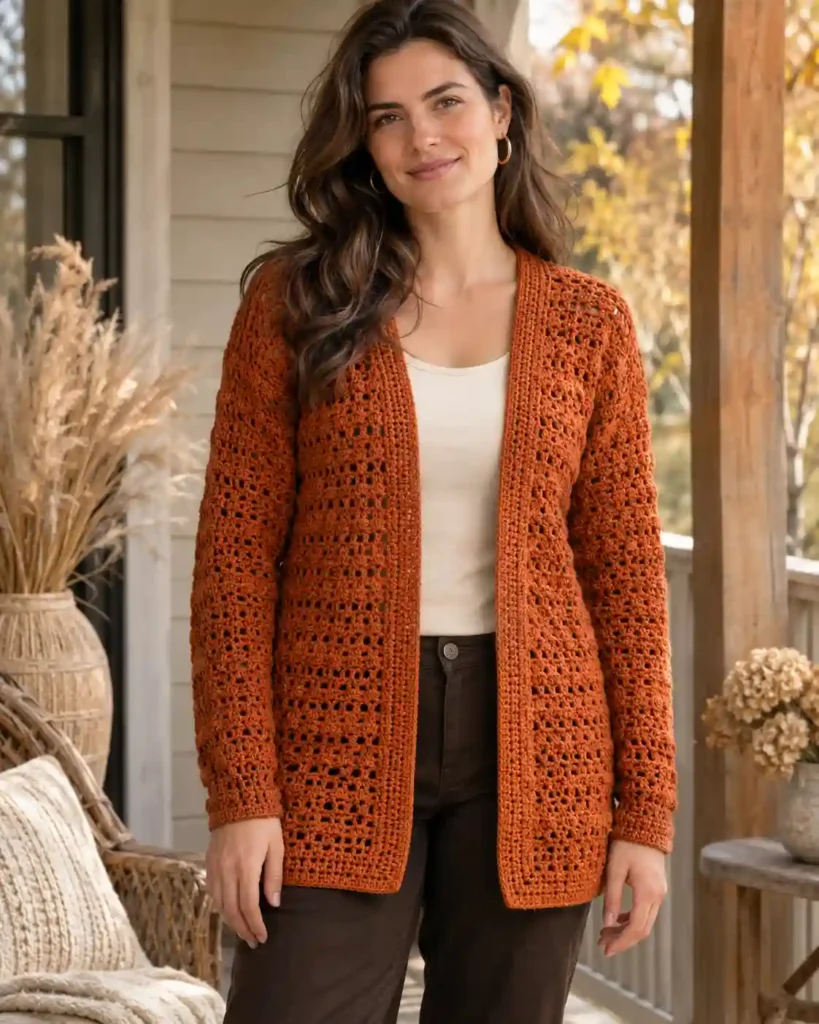
A pumpkin-spice crochet cardigan brings a warm cinnamon tone to just about any simple outfit. Its open front makes it easier to layer than a pullover when mornings are cool and afternoons are mild. Over a cream tee and dark trousers, the color looks rich without needing extra accessories. Choose this one if you want a practical autumn layer with a little seasonal personality.
Consider a buttonless edge for a casual look, or add a closure only if your pattern supports it. Pockets are useful, but they need thoughtful placement to avoid pulling on the fabric.
14. Hexagon Crochet Cardigan for Fall
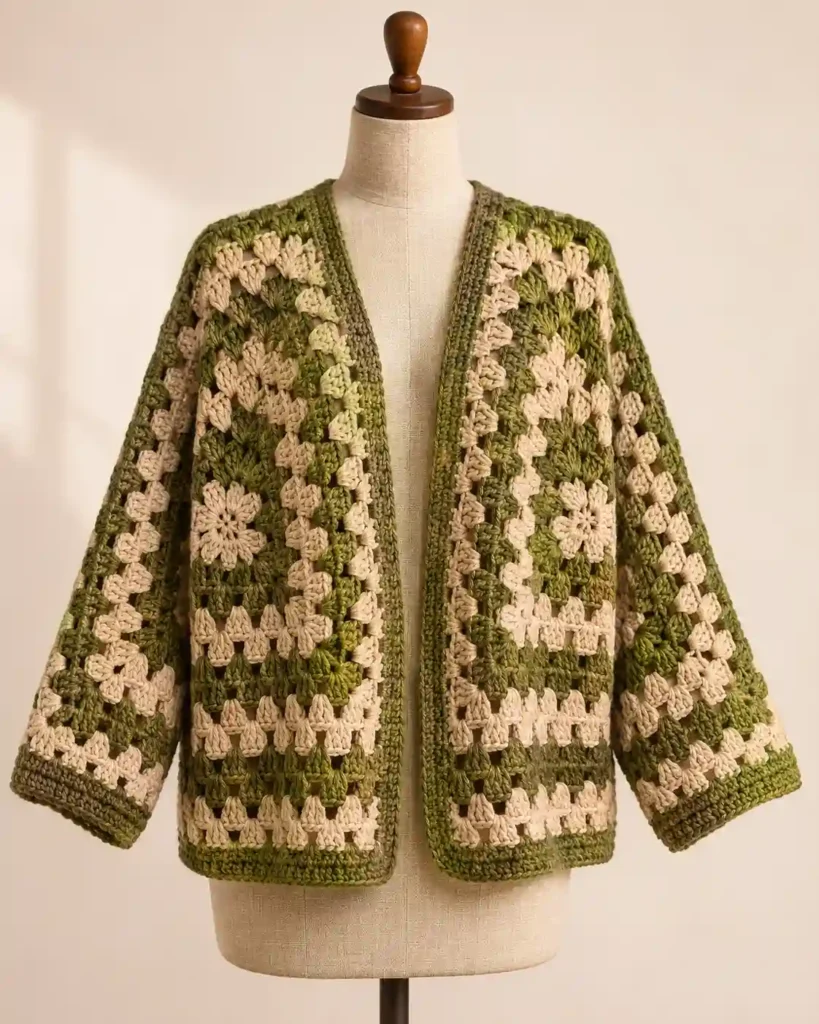
The hexagon crochet cardigan has a clever construction that makes crocheting feel a bit like solving a puzzle. Two shaped motifs are folded and joined to form the beginnings of a wearable cardigan, rather than separate traditional body panels. Moss green with tan edging gives it a relaxed woodland feel. It’s appealing to motif fans who want to try a garment with an unusual build.
Choose a pattern that shows how to adjust sleeve width and body length. Check both halves as you work; symmetry makes the final cardigan look and fit better.
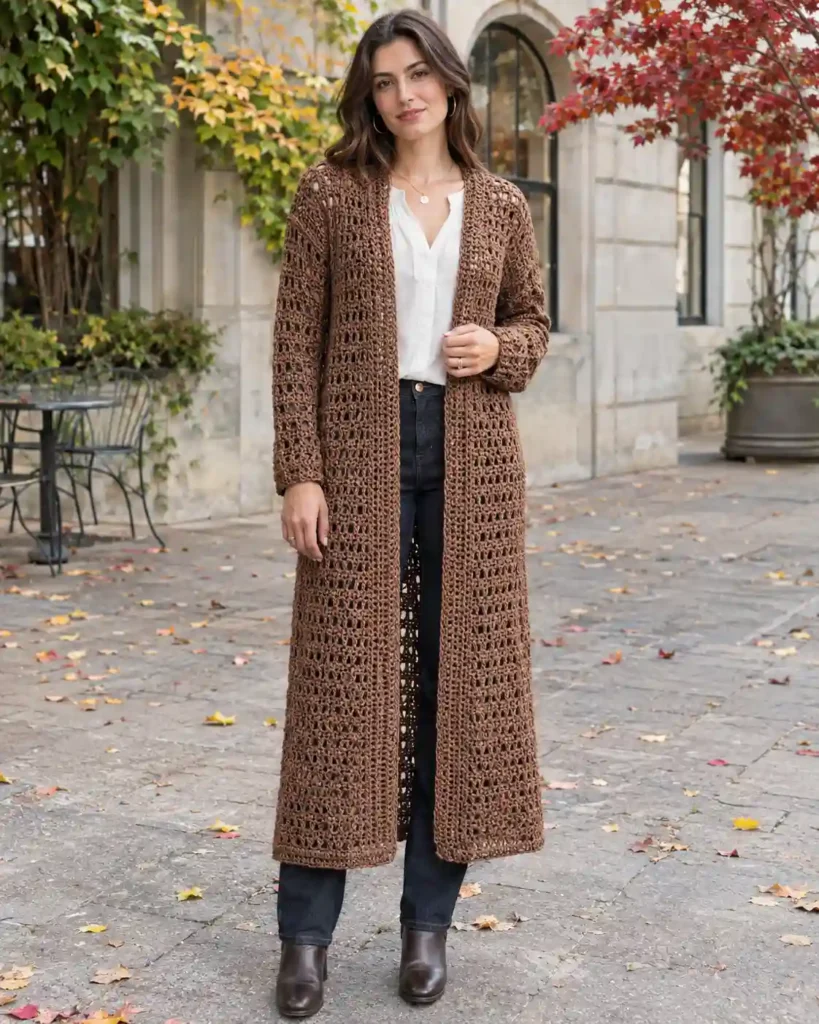
15. Longline Crochet Duster Cardigan: Is It Worth the Extra Length?
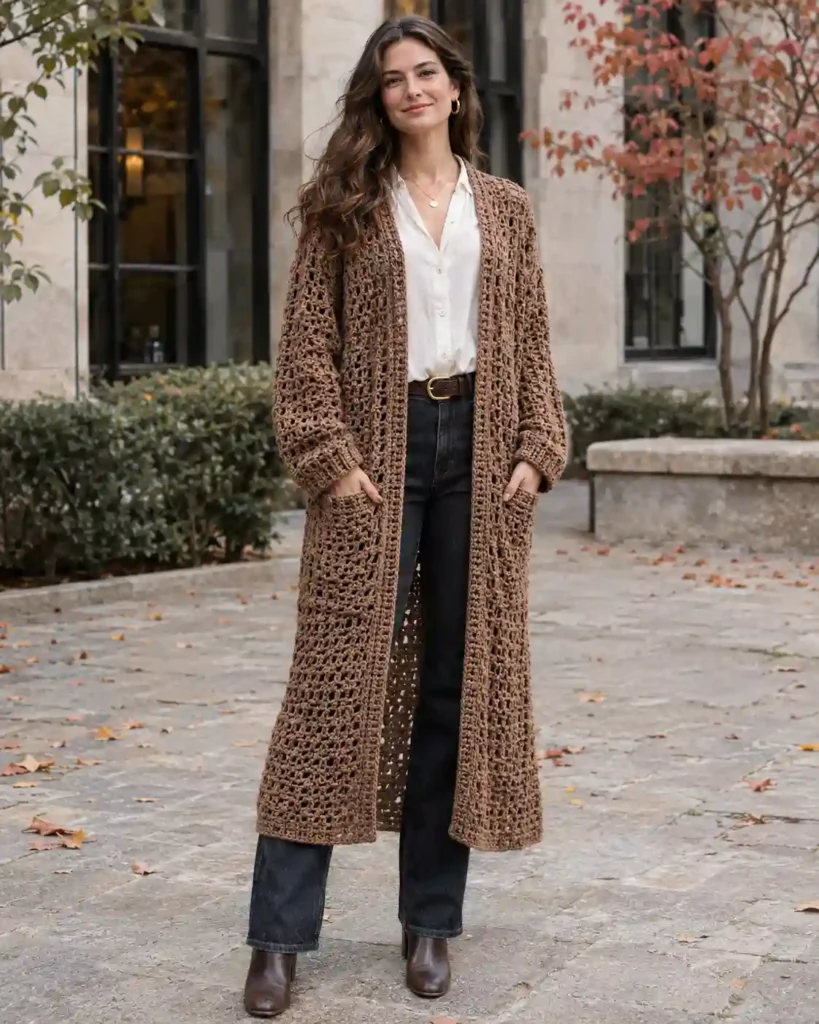
A longline duster cardigan adds drama with almost no effort from the rest of the outfit. Falling below the hips, or even toward the knees, it creates a soft vertical line over dresses and fitted trousers. Mocha brown works well for a walk through town or dinner on a cooler evening. Pick a duster if you want a layering piece that feels a little more dressed up than a short cardigan.
Length adds weight, so yarn choice matters. A drapey, manageable fabric is usually more comfortable than a very dense stitch repeated all the way to the hem.
Which crochet fall sweater necklines and sleeves suit your style?
16. Cropped Crochet Sweater: Can You Wear It With High-Waisted Jeans?
A cropped crochet pullover looks especially balanced with high-waisted denim. Its shorter body gives the outfit shape, while full-length sleeves keep it feeling like a sweater rather than a summer top. Try a soft sage version with a neutral camisole underneath for cool but not cold days. It’s a natural choice for anyone who likes modern proportions and quicker-to-finish garment lengths.
Measure where you want the hem to fall before shortening a pattern. The neckline and sleeve balance should still make sense with the new length.
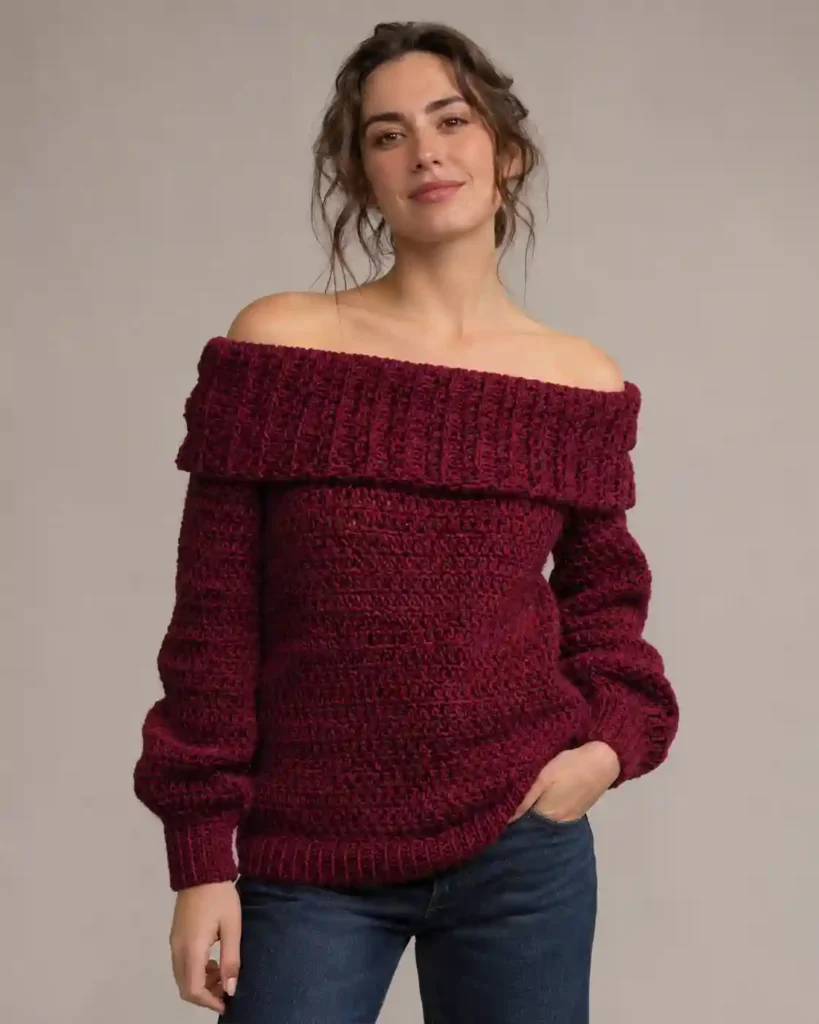
17. Off-Shoulder Crochet Sweater: What Makes the Neckline Work?
An off-shoulder crochet sweater makes an ordinary fall outfit feel a little more dressed up. The wide neckline is the feature, so a single rich color such as burgundy is often enough. Pair it with dark jeans for an early-fall dinner or a mild-weather gathering. This one works best when you want a softer, more decorative look rather than maximum coverage.
Check whether the design is truly off-shoulder or simply boat-necked. Neckline stability is important; a pretty opening isn’t useful if you’re constantly adjusting it.
18. V-Neck Crochet Layering Sweater
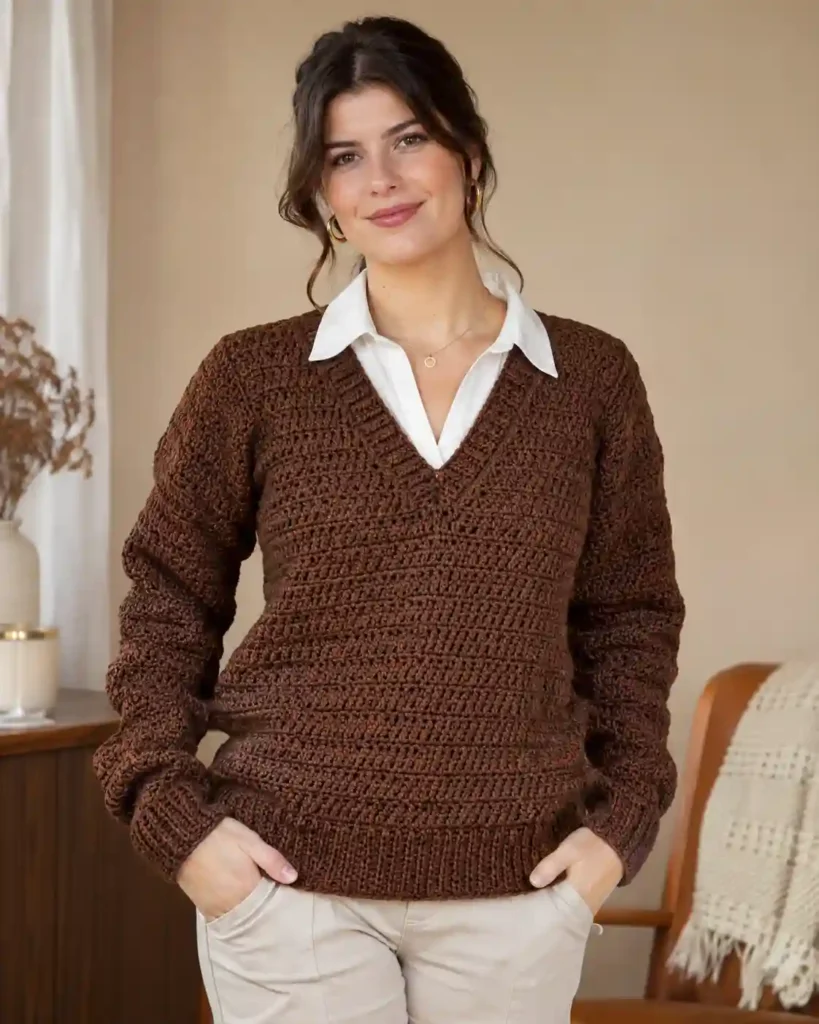
The V-neck crochet pullover earns its place by making room for other pieces. A cocoa-brown sweater over a white collared shirt looks neat, warm, and ready for a casual office day. Compared with a high crewneck, the open shape lets the underlayer become part of the design. Choose it if your fall wardrobe leans toward simple, repeatable outfits.
A clean V-neck depends on even edging and a sensible depth. Look for instructions that explain the decreases on both sides of the neckline.
19. Mock-Neck Textured Crochet Sweater: How High Should the Collar Be?
A mock-neck sweater provides that tucked-in, cold-weather feeling without a full turtleneck. Camel yarn and subtle raised stitches create a quietly cozy look with black trousers. It’s an easy way to make a basic outfit feel finished on later-fall days. Choose this neckline if you like extra coverage but don’t enjoy a long folded collar.
Make sure the neck opening can pass comfortably over the head. A stiff stitch or tight edging may look tidy on a hanger but feel awkward when worn.
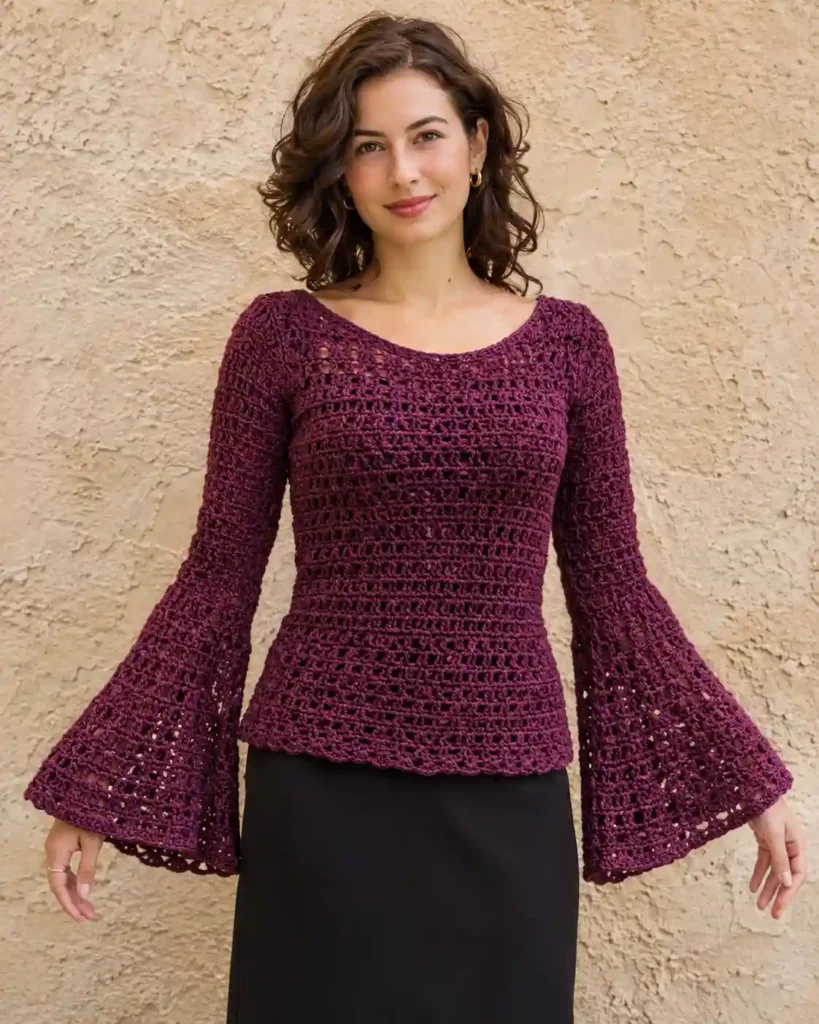
20. Bell-Sleeve Crochet Sweater
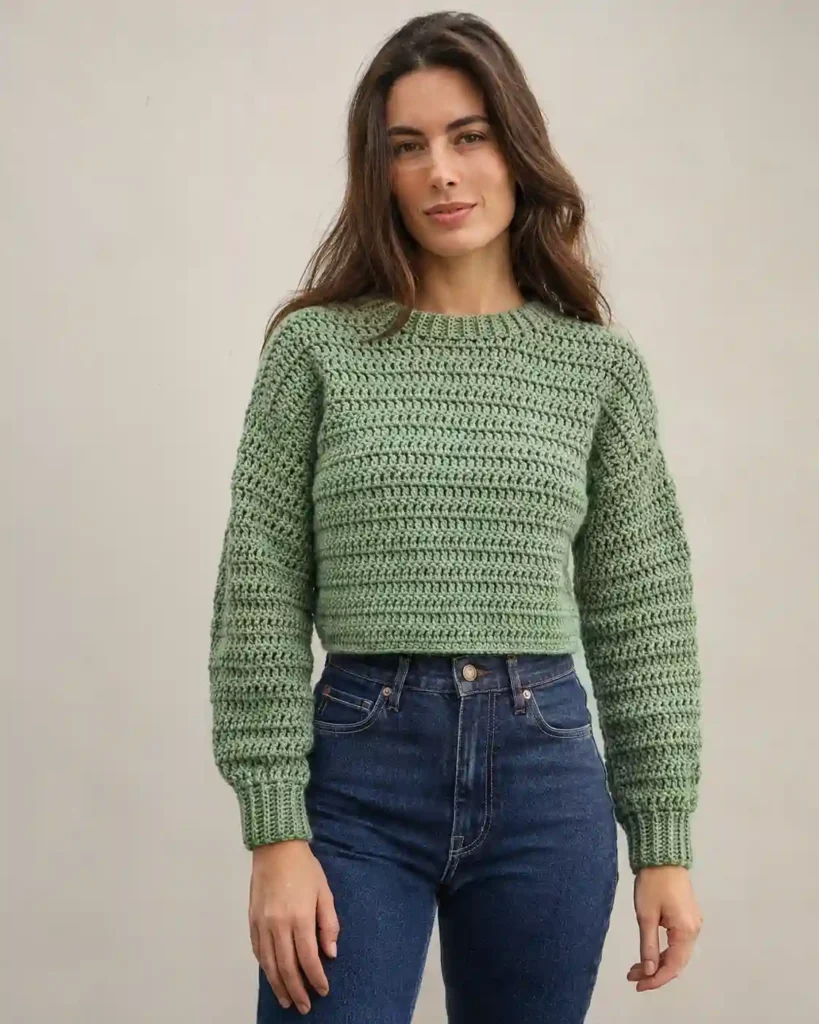
Bell sleeves give a crochet sweater its personality before you even choose a color. A fitted upper sleeve that flares toward the wrist feels playful without requiring a busy body pattern. Deep plum looks especially striking with a plain skirt or slim pants. This is the sweater to consider if you enjoy a little movement and a statement detail in your everyday clothes.
Think about sleeve length in real life. A dramatic flare is lovely for an outing, but a shorter, moderate bell may work better when cooking or working at a desk.
Can crochet sweaters mimic knitwear or suit outdoor fall looks?
21. Knit-Look Crochet Ribbed Sweater: Can Crochet Really Look Knitted?
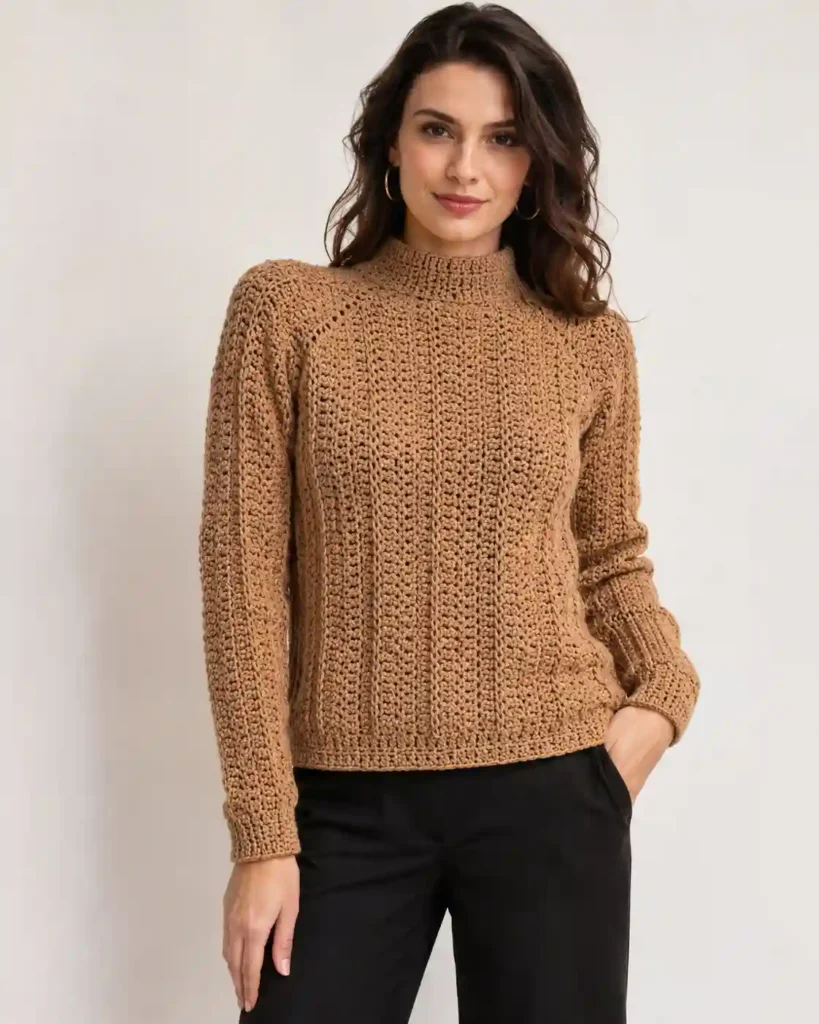
A knit-look crochet sweater surprises people with its tidy vertical ribs. Exploring different crochet stitches can create a similar visual rhythm to knitted fabric, even though the technique is different. Stone gray makes this design an easy wardrobe basic rather than a novelty project. It’s a good match for anyone who prefers minimal, classic clothing but loves to crochet.
Remember that appearance isn’t the same as stretch. Swatch the exact stitch and check how the fabric behaves at the cuffs, neckline, and hem.
22. Moody Patchwork Crochet Sweater
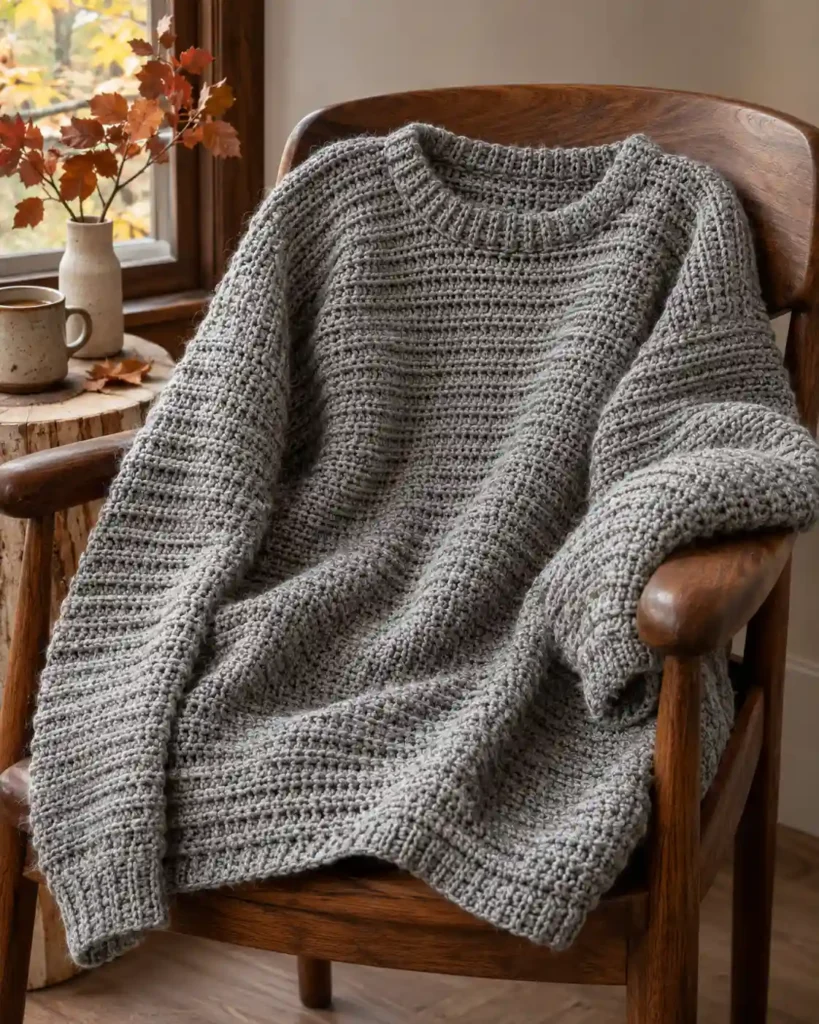
Not every autumn palette needs orange. A moody patchwork sweater in espresso, charcoal, olive, and burgundy feels right at home with a pleated skirt and boots. Textured panels give the look depth without demanding bright contrast. Choose this dark-academia-inspired style if your wardrobe is full of rich neutrals and you enjoy planning an interesting patchwork layout.
Keep the pieces consistent in size and density. Mixing motifs with very different stretch can make a patchwork garment pull unevenly after assembly.
23. Nature-Hike Crochet Sweater: What Makes It Practical?
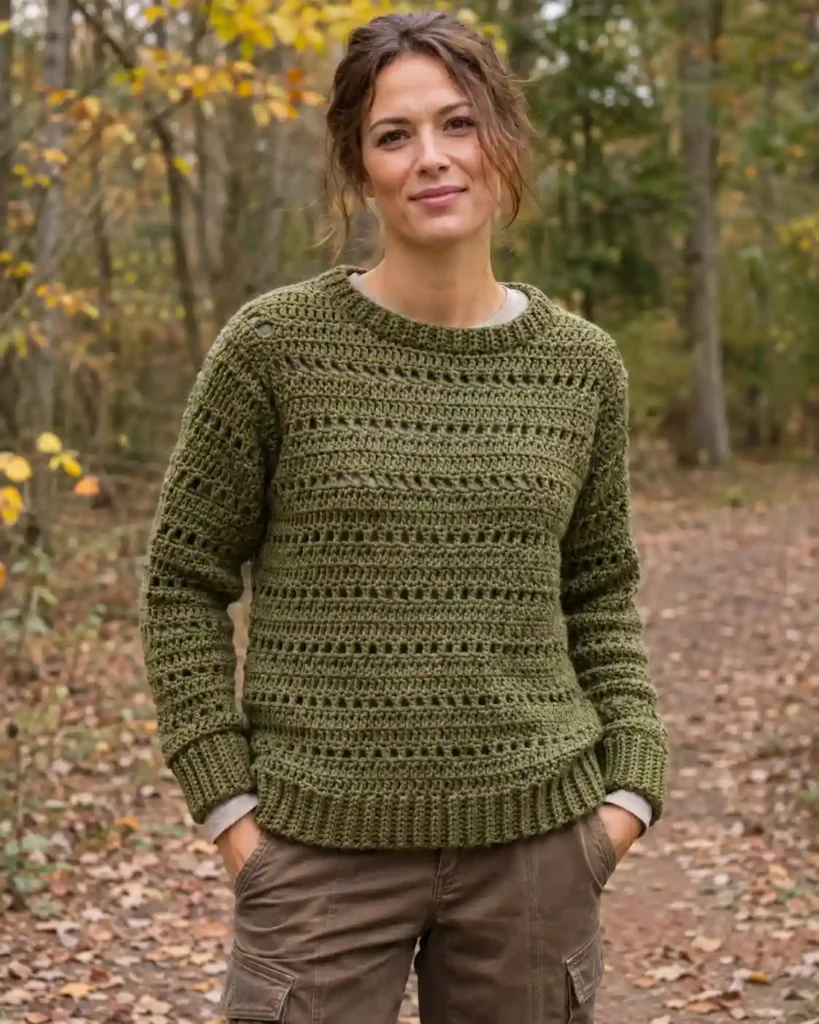
A nature-inspired crochet sweater belongs on a cool, dry fall walk, especially in forest green or muted olive. Close-fitting cuffs and a comfortable hem make it easier to move than an oversized sweater with dangling sleeves. Wear it over a light base layer and bring an appropriate outer layer if the weather changes. This style is for makers who want their finished sweater to be worn often, not only photographed.
Choose washable yarn suited to the intended use and follow the care label. Crochet fabric alone isn’t a substitute for windproof or waterproof outerwear.
How do you choose the right crochet fall sweater pattern?
Choose a crochet fall sweater pattern by comparing its construction, skill level, gauge, finished measurements, yarn requirements, and complete instructions.
At a Glance:
- Check the pattern’s skill level and construction.
- Review finished measurements and available sizes.
- Confirm the yarn, hook, and gauge requirements.
- Verify free access before saving a pattern.
Start with your crochet experience, then look at the garment’s actual construction. A simple repeating stitch isn’t necessarily a beginner sweater if the pattern includes complex shaping or unclear sizing.
Before committing, check for a complete materials list, stitch abbreviations, gauge, finished measurements, size options, assembly instructions, and clear photos. If you want a crochet fall sweater pattern free, confirm that the full instructions are accessible rather than only a preview or paid PDF listing.
One concrete example is Crochet with Carrie’s Fall Sweater, which provides materials, sizes, and written panel-by-panel instructions on the page. For broader free-pattern research, Yarnspirations maintains a crochet sweaters and cardigans collection. Always check the individual pattern before presenting it as a free, complete match.
Which yarn is best for a crochet fall sweater?
The best yarn depends on the sweater’s intended warmth, stitch pattern, desired drape, and the gauge specified by its pattern.
At a Glance:
- Light yarn can suit breathable early-fall designs.
- Medium yarn works for many everyday sweater styles.
- Bulky yarn creates a more substantial fabric.
- Check fiber feel, care instructions, and finished drape.
Yarn changes the sweater as much as the stitch does. A light, drapey yarn suits early-fall pullovers; a medium yarn works for many everyday designs; and bulky yarn can highlight texture, although it may make a large sweater heavy.
The Craft Yarn Council’s Standard Yarn Weight System identifies category 3 as light (including DK), category 4 as medium (including worsted), and category 5 as bulky. Its suggested hook sizes and stitch ranges are guidelines, not replacements for your pattern’s gauge.
Consider fiber feel, washing instructions, stretch, and how the finished fabric hangs. A beautiful skein isn’t automatically comfortable against the skin or practical for a cardigan you plan to wear every week.
How do you get the right crochet sweater size and fit?
Measure your body, compare it with the pattern’s finished garment measurements, choose your preferred ease, and make a gauge swatch before starting.
At a Glance:
- Measure your chest or bust accurately.
- Compare body measurements with finished garment dimensions.
- Consider positive or negative ease.
- Check stitch and row gauge before making the garment.
Measure your chest or bust, compare it with the pattern’s finished garment measurements, and decide how much ease you want. Positive ease simply means the sweater is bigger than your body measurement; negative ease means it’s smaller and stretches to fit. Sleeve length, shoulder position, and armhole depth matter too.
Before making the full sweater, crochet a gauge swatch in the pattern stitch. The Craft Yarn Council’s gauge guidance explains why a sample of roughly 4 by 4 inches (10 by 10 cm), or the size specified by the pattern, helps prevent unexpectedly large or small garments. If your measurements differ, try a different hook size and swatch again rather than guessing.
How can you style a crochet sweater for fall?
Style a crochet fall sweater with simple wardrobe pieces, complementary autumn colors, and layers suited to the weather.
At a Glance:
- Pair oversized sweaters with fitted jeans or leggings.
- Style cropped pullovers with high-waisted denim.
- Layer cardigans over simple tops and dresses.
- Match scarf colors to the sweater palette.
A sweater doesn’t need a complicated outfit to look good. Try an oversized pullover with fitted jeans, a cropped sweater with high-waisted denim, or a long crochet cardigan over a plain dress. Rust pairs nicely with cream, olive with oatmeal, and burgundy with charcoal.
For a coordinated handmade look, add a simple crochet scarf in a complementary color rather than repeating every color from a patchwork sweater. Let open-stitch tops work with an underlayer, and save denser textures for days when you need a warmer-feeling layer.
Frequently asked questions about crochet fall sweaters
What is the easiest crochet fall sweater for beginners?
A rectangle-panel or straightforward drop-shoulder pullover is a good starting point. Choose a complete pattern with basic stitches, clear assembly photographs, and finished measurements.
Can I find a crochet fall sweater pattern free?
Yes. Some designers publish full sweater instructions on their websites, and yarn companies offer free garment-pattern collections. Check the individual design’s access, sizes, gauge, and complete instructions before starting.
How much yarn do I need for a crochet sweater?
It depends on your size, stitch pattern, yarn weight, sleeve length, and intended fit. Use the yardage listed for your chosen pattern and size, then check the skein label before purchasing.
Is a crochet cardigan the same as a crochet sweater?
A cardigan is a type of sweater with an open front, sometimes closed with buttons or ties. A pullover is generally pulled over the head and has a closed front.
Are granny-square crochet sweaters warm enough for fall?
They can work well as autumn layers, especially with suitable yarn and a shirt underneath. More open motifs let in more air, so match the fabric to the temperature rather than assuming all granny-square sweaters feel equally warm.
Where can I find a free crochet fall sweater pattern?
Look at independent crochet designers’ websites and established yarn-company pattern collections. Check that the individual pattern provides accessible instructions, suitable sizing information, and the materials and gauge details needed to complete the garment.
How do I choose fall colors for a crochet sweater?
Start with colors already present in your wardrobe. Rust and cream, olive and oatmeal, and burgundy and charcoal are flexible combinations that can make a handmade sweater easier to style.
Can crochet sweaters look like knitted sweaters?
Yes. Some crochet stitches create a ribbed or knit-like appearance. However, crochet and knitting use different construction techniques, so the fabric’s stretch and drape may differ.
Final Thoughts
Finding the right crochet fall sweater is about more than choosing a beautiful stitch or autumn color. It means finding a style that matches your crochet experience, preferred fit, and the kind of weather you want to wear it in. From beginner-friendly rectangle-panel pullovers and relaxed drop-shoulder designs to colorful granny-square sweaters, textured cardigans, and elegant V-neck styles, these 23 crochet fall sweater ideas offer plenty of inspiration for your next handmade project.
Before picking up your hook, check the pattern’s gauge, finished measurements, yarn requirements, and construction details. Choose rust, cream, olive, burgundy, or other shades that complement your wardrobe, and make sure the finished fabric feels comfortable enough for everyday wear. Save your favorite design, prepare your yarn, and create a cozy crochet sweater you’ll look forward to wearing throughout autumn.