
A crochet Christmas table runner adds handmade color and texture to a holiday dining table without covering the entire surface. These 24 ideas range from easy striped rectangles to snowflake motifs, poinsettia appliqués, filet Christmas trees, and textured winter designs. Choose a style by your skill level, the size of your table, and how much room you need for serving dishes.
Christmas decorating feels different when one piece has been made stitch by stitch. Maybe your table needs a cheerful red accent, or perhaps you’re after something quiet and cream-colored that stays out well into January. Either way, there’s a runner idea here worth making your own.
Think about what you want your holiday table to feel like before choosing a stitch. Some settings call for bright traditional motifs, while others look better with soft snowflakes or a quiet forest-green stripe. You can keep things simple with easy rows, or follow a crochet christmas table runner pattern built around joined motifs and detailed colorwork. The ideas below help you pick the look first and find a practical way to make it.
Key Takeaways
- Start with easy stripes or color blocks if you are new.
- Match motifs and color choices to your Christmas table.
- Measure the table before choosing the runner length.
- Check each crochet christmas table runner pattern for complete instructions.
- Follow yarn-care directions and keep raised details away from dishes.
Which Crochet Christmas Table Runner Idea Should You Make First?
Start with the look you love, then check whether its stitches match your experience. The Craft Yarn Council’s project-level guide distinguishes basic projects from ones involving more detailed colorwork, stitch patterns, or shaping. That makes a plain rectangle a sensible first choice, while a charted village scene may suit someone who enjoys a longer project.
| Your goal | Design to consider | Suggested level | Main technique |
| Quick, colorful first project | Red-and-cream stripes | Beginner | Straight crochet rows |
| Easy to resize | Granny squares | Beginner–intermediate | Repeating joined motifs |
| Soft winter look | Joined snowflakes | Intermediate | Openwork and joining |
| Classic Christmas centerpiece | Poinsettia appliqués | Intermediate | Flat base and sewn motifs |
| Graphic holiday pattern | Nordic tapestry | Intermediate–advanced | Controlled colorwork |
| Simple contemporary table | Forest-green color blocks | Beginner | Color changes and neat edges |
These levels are editorial estimates for the proposed construction, not ratings of a particular published pattern. Use the instructions and difficulty rating of any pattern you eventually choose.
24 Crochet Christmas Table Runner Ideas for a Handmade Holiday Table
1. Why Start with an Easy Red-and-Cream Striped Runner?
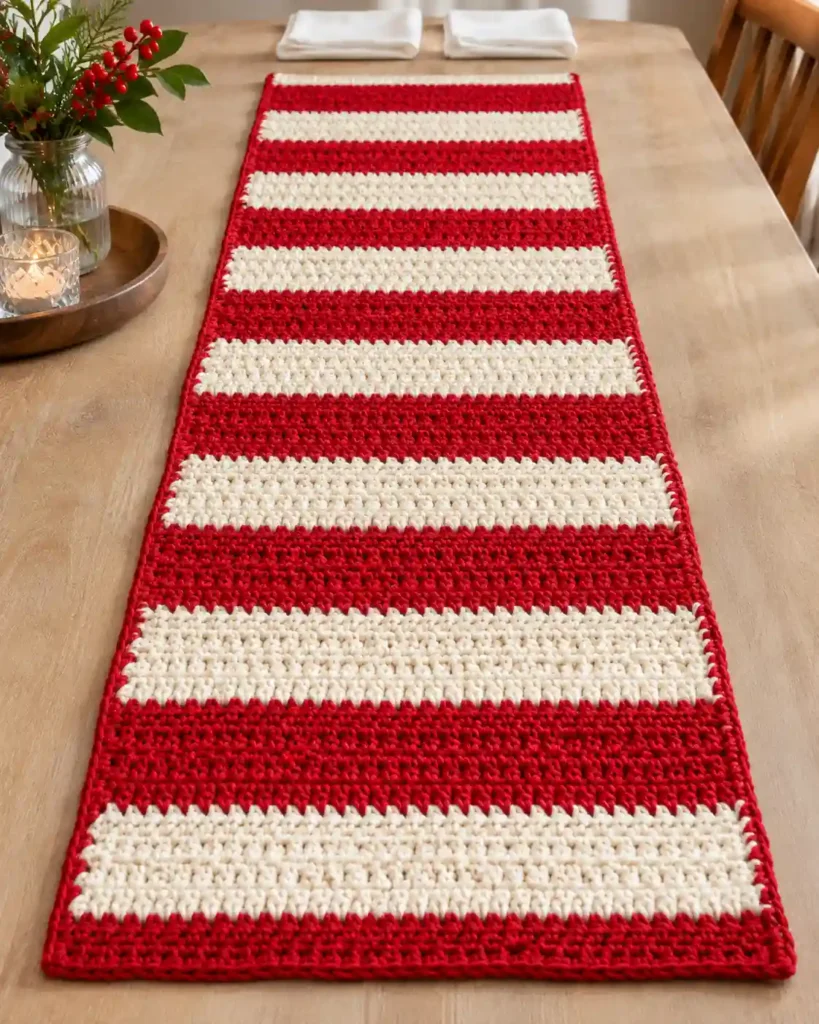
The red-and-cream striped runner is Christmas in its simplest form: cheerful bands, tidy edges, and no complicated motifs. Instead of piecing together dozens of shapes, you work one continuous rectangle and change colors as you go. It looks especially welcoming on a pale wood table with everyday white plates. For a first holiday project, the big reward is a finished piece you can actually use without mastering a new technique.
Try single crochet for a firm surface or half double crochet for slightly quicker rows. Explore different crochet stitches to find textures that suit your table runner design. Count the edge stitches as you work, and carry color changes neatly at the ends. Cotton or a washable cotton blend makes practical sense for a piece near food.
2. Could a Festive Granny Square Table Runner Fit Any Table?
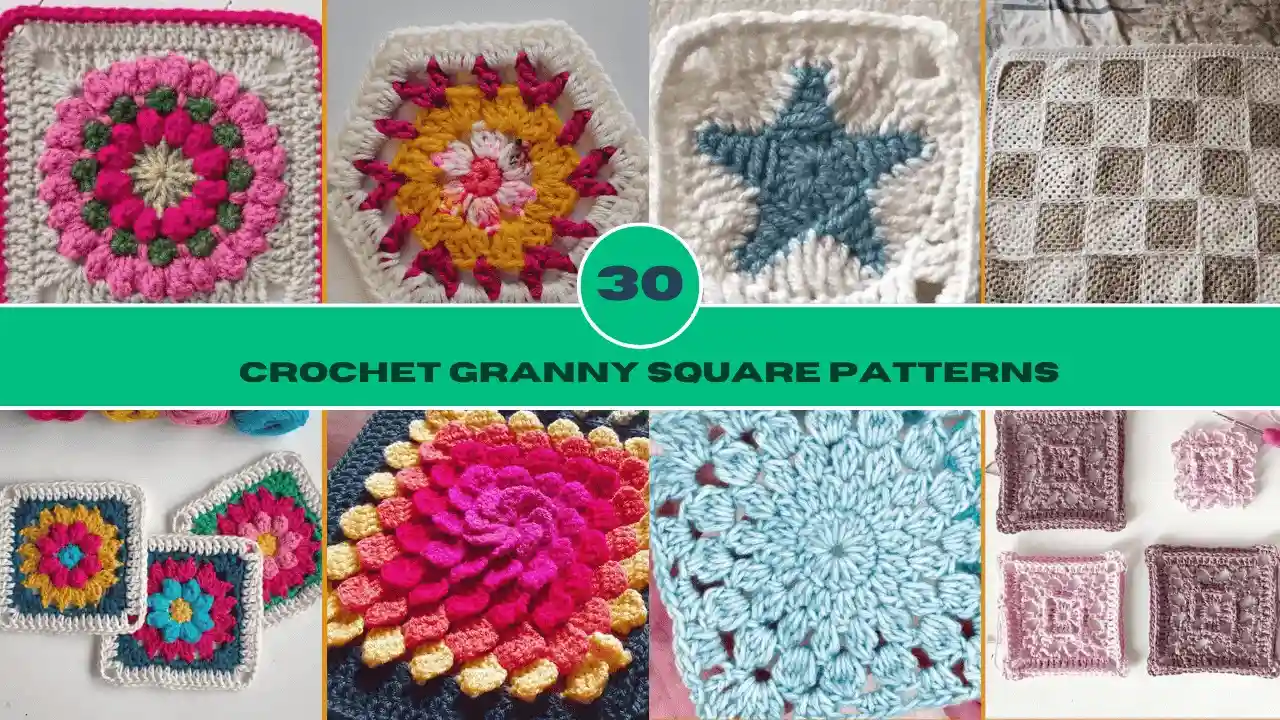
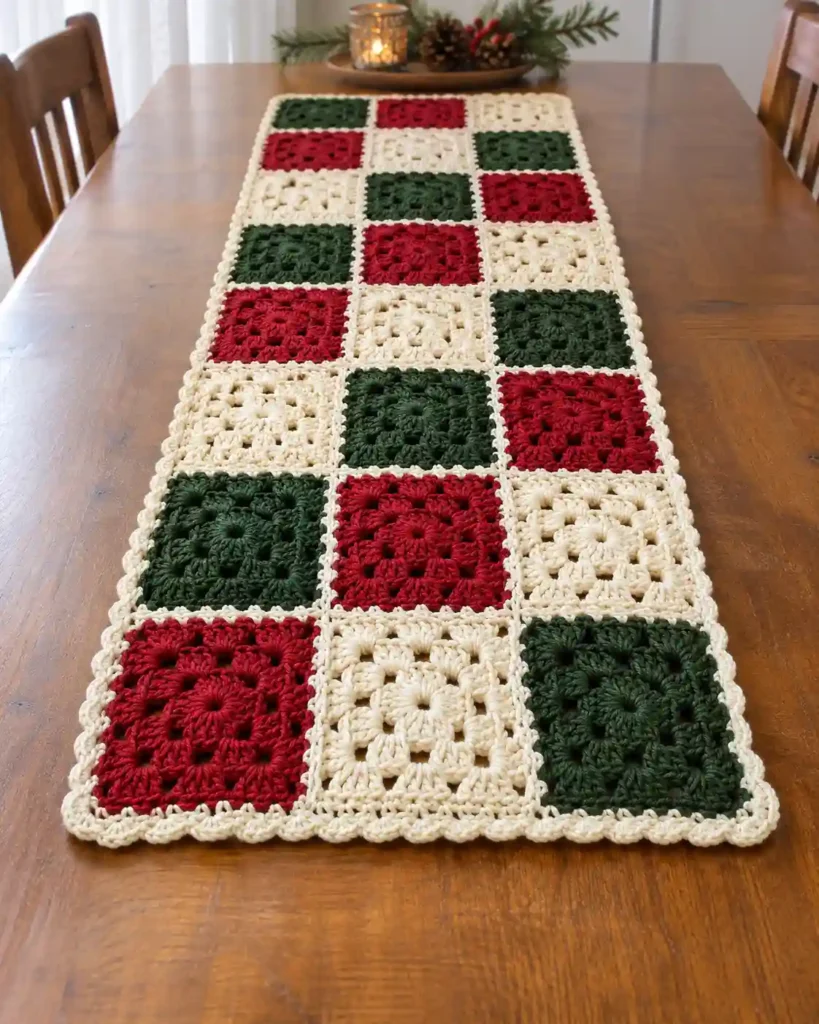
A festive granny square table runner brings little patches of red, green, and cream together like a homemade Christmas quilt. Explore more crochet granny square patterns if you want additional motif ideas for customizing your runner. Unlike a single long panel, each square is manageable on its own, so you can work on one during a quiet evening. A narrow arrangement looks lovely down the middle of a dining table or across a sideboard. Choose it when you want a flexible length and enjoy seeing a project grow one motif at a time.
Make a sample square and measure it after finishing before deciding how many you need. Join squares with slip stitches, sewing, or a join-as-you-go technique, then add a slim border to unify the edges. Keeping the joins flat matters more than using a fancy joining method.
3. Why Choose a Joined Snowflake Motif Table Runner?
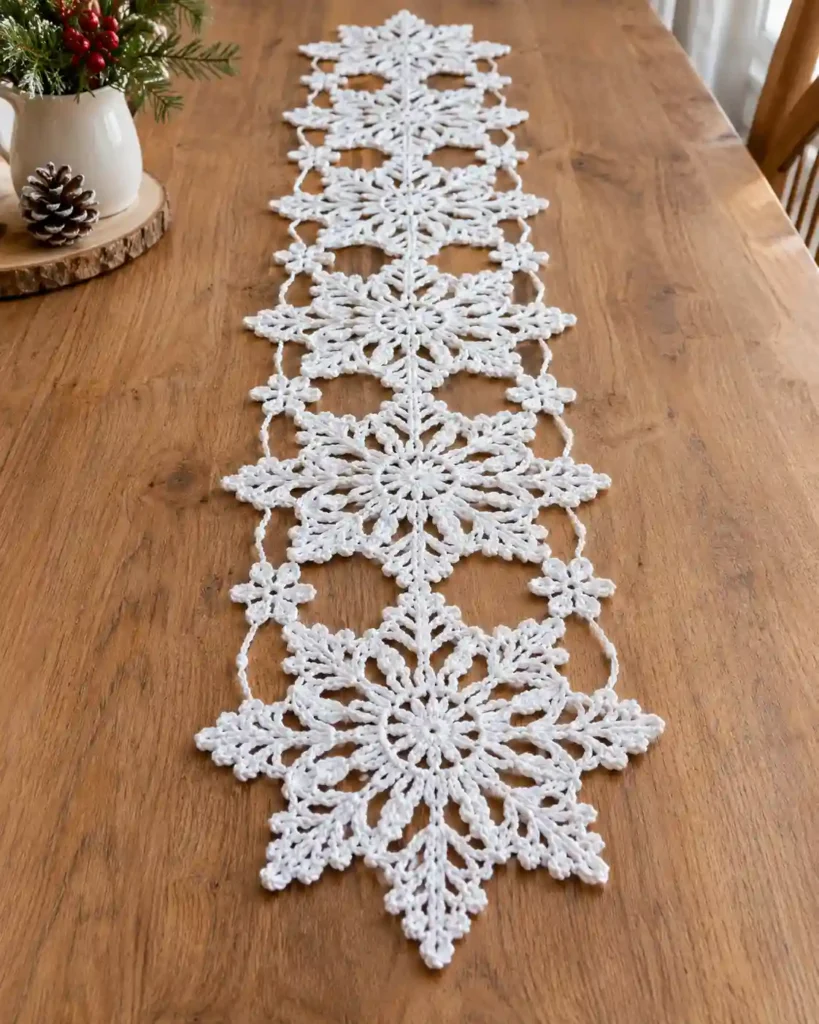
A runner made of joined crochet snowflakes looks wonderfully light, with the tabletop showing through the spaces. If you enjoy delicate winter motifs, explore these crochet snowflake patterns for more inspiration. Solid fabric can feel heavy on a small table, but openwork six-point motifs leave the setting airy. Picture white snowflakes on dark oak with a few plain evergreen sprigs nearby. This is a lovely pick for someone comfortable crocheting in the round who wants a piece that still looks right after Christmas.
Work all motifs to the same size and connect them at planned points, rather than guessing where their tips meet. Gentle blocking helps the points spread evenly. For a related complete project, Moogly has a free snowflake table runner tutorial using six different snowflake designs.
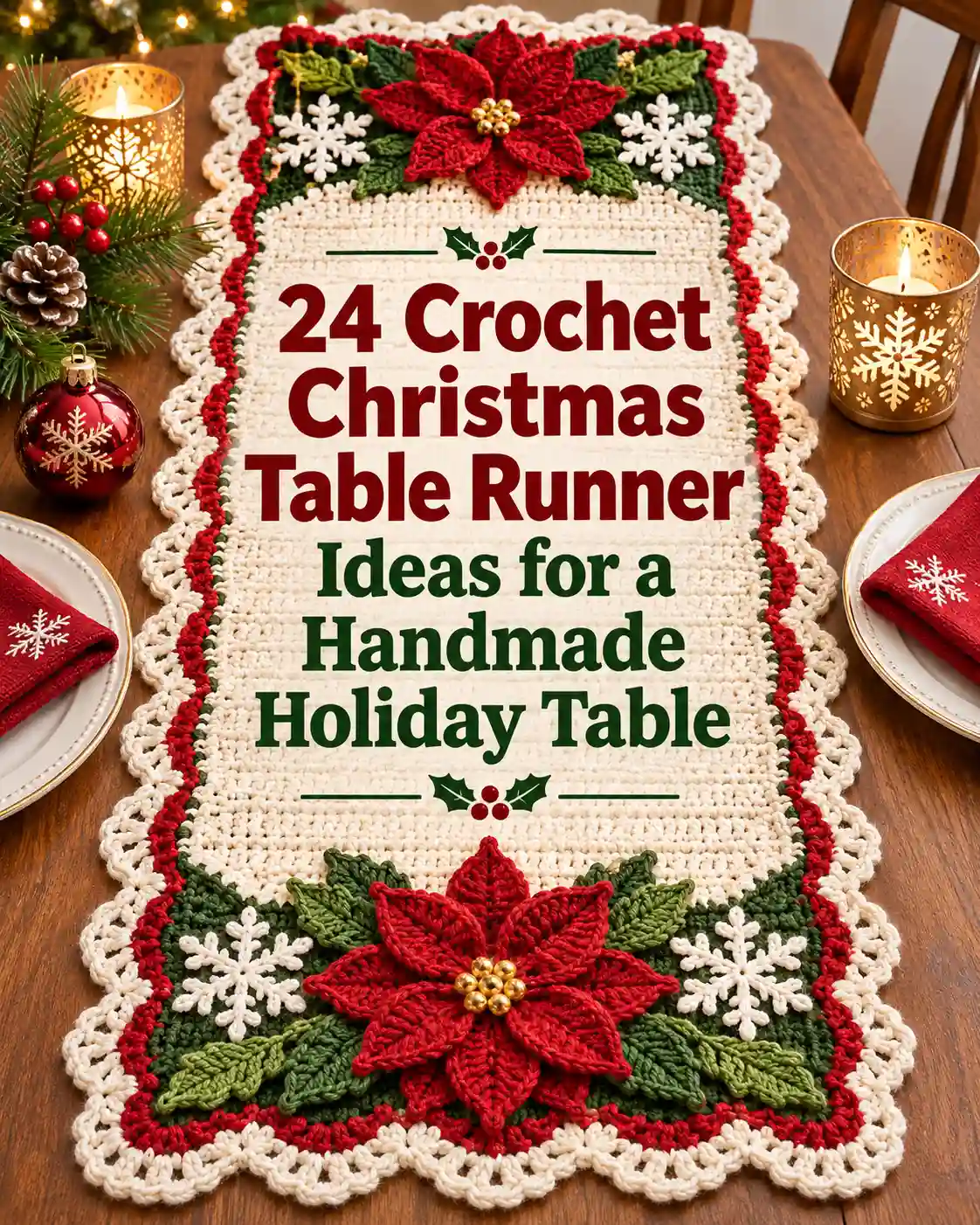
4. Poinsettia Appliqué Table Runner
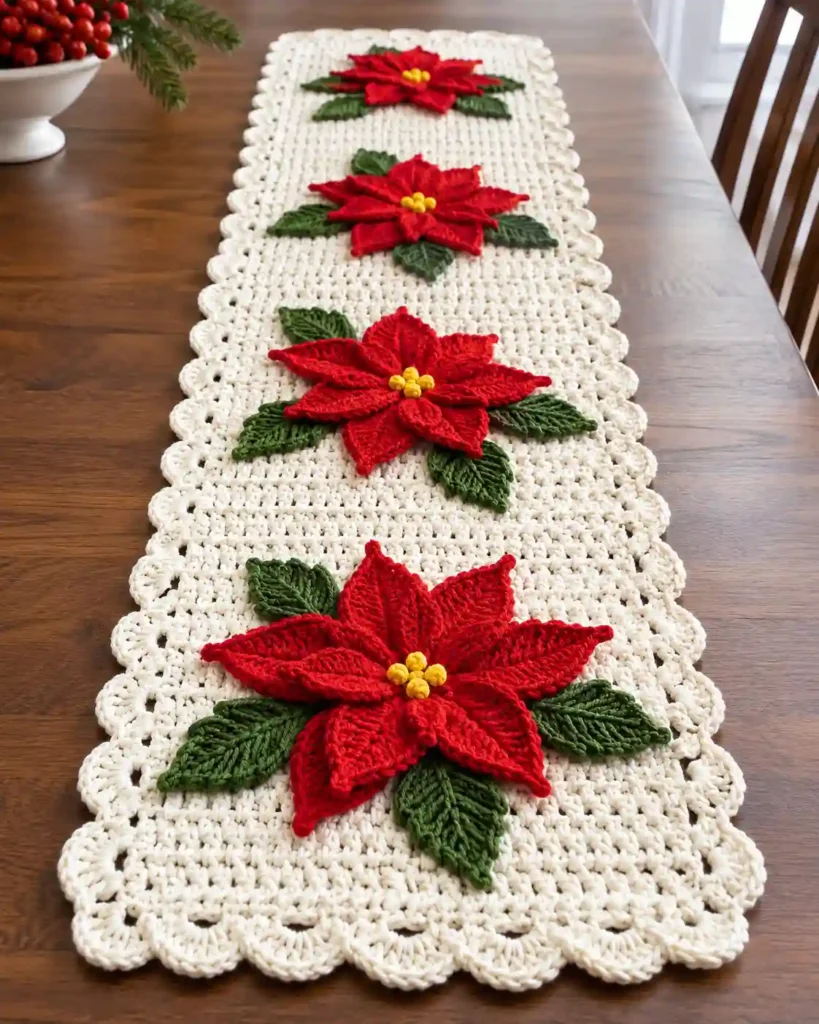
Bright red poinsettias give a plain cream runner its own little Christmas garden. The flowers are made separately, which is easier to position than trying to build each petal into the main fabric. Three evenly spaced blooms can dress up a buffet without overwhelming the plates and platters. If floral decorations make your holiday table feel special, this design provides plenty of seasonal charm.
Crochet a smooth rectangular foundation first, then attach flat flowers and leaves with secure stitches. Keep thicker petal layers away from areas where dishes will stand. Soft green leaves and small golden centers can add detail without making the surface too busy.
5. Can Filet Crochet Create a Christmas Tree Table Runner?
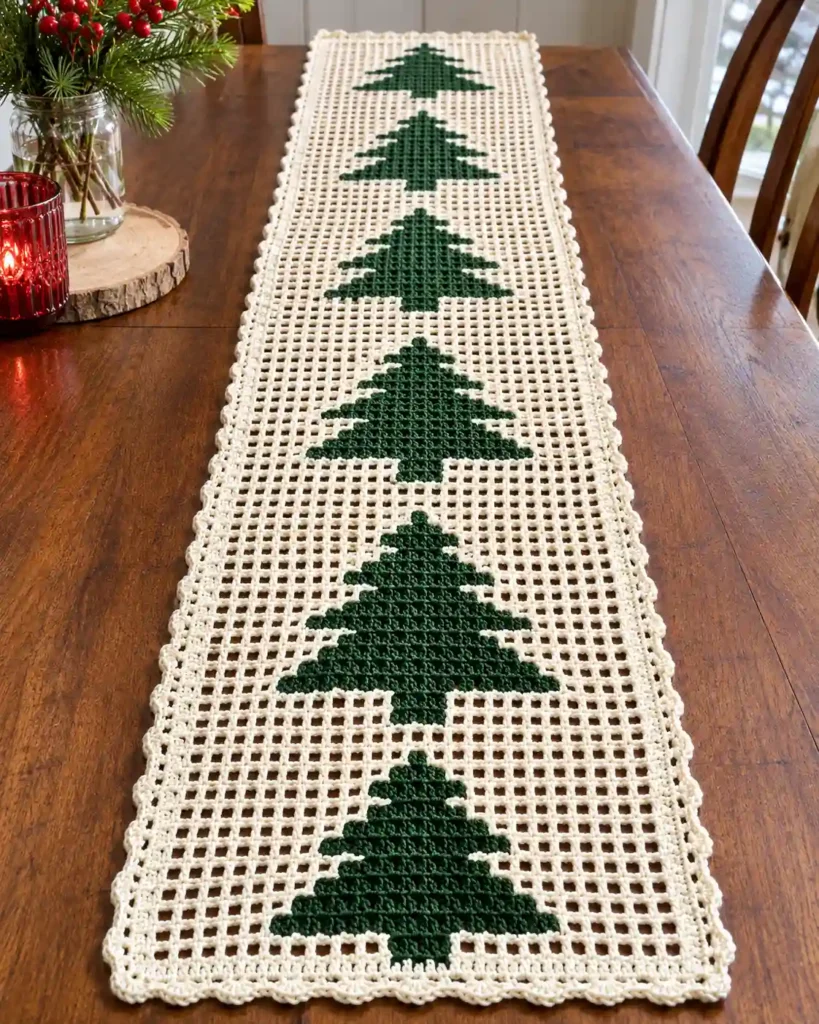
Filet crochet turns a grid of open and filled spaces into rows of Christmas trees, almost like drawing with stitches. It offers a more graphic finish than sewn-on ornaments, because the tree shapes belong to the fabric itself. Use a light background to show the silhouettes when the runner lies on a darker table. This suits a chart-loving maker who enjoys counting and watching a picture appear row by row.
Start with a clear filet chart, check the pattern’s mesh instructions, and place stitch markers at repeat boundaries. A short test swatch will tell you whether the tree outlines look distinct in your yarn. Don’t confuse a filet diagram with a tapestry colorwork chart; they create images in different ways.
6. Why Add a Holly and Berry Border?
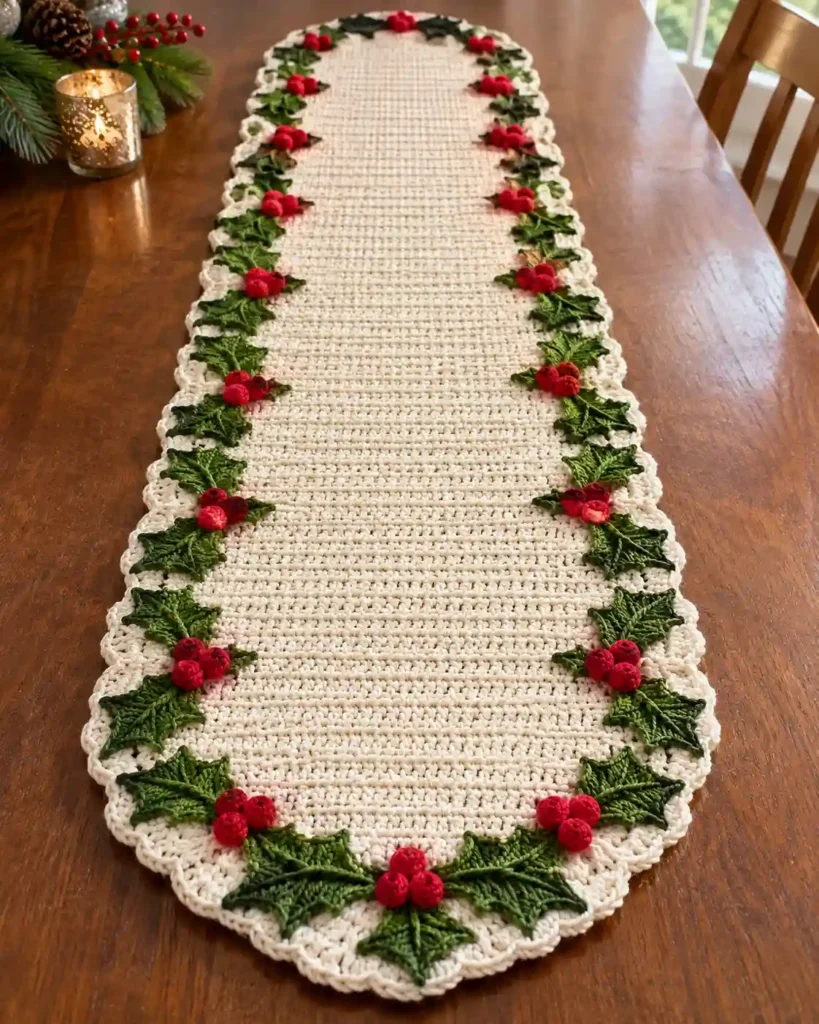
A holly-and-berry border keeps the middle of the runner simple while placing Christmas detail exactly where it gets noticed. The green leaves and tiny red berries frame dinnerware rather than compete with it. On a long family table, that little edging is enough to turn a neutral runner into a seasonal decoration. Pick this approach if you prefer a useful flat center with decorative edges.
Work leaves and berries consistently so the border doesn’t curl or look uneven. Small crocheted berry bumps are better kept away from serving dishes. For a published option, Yarnspirations offers a free Holly Trim Table Runner pattern.
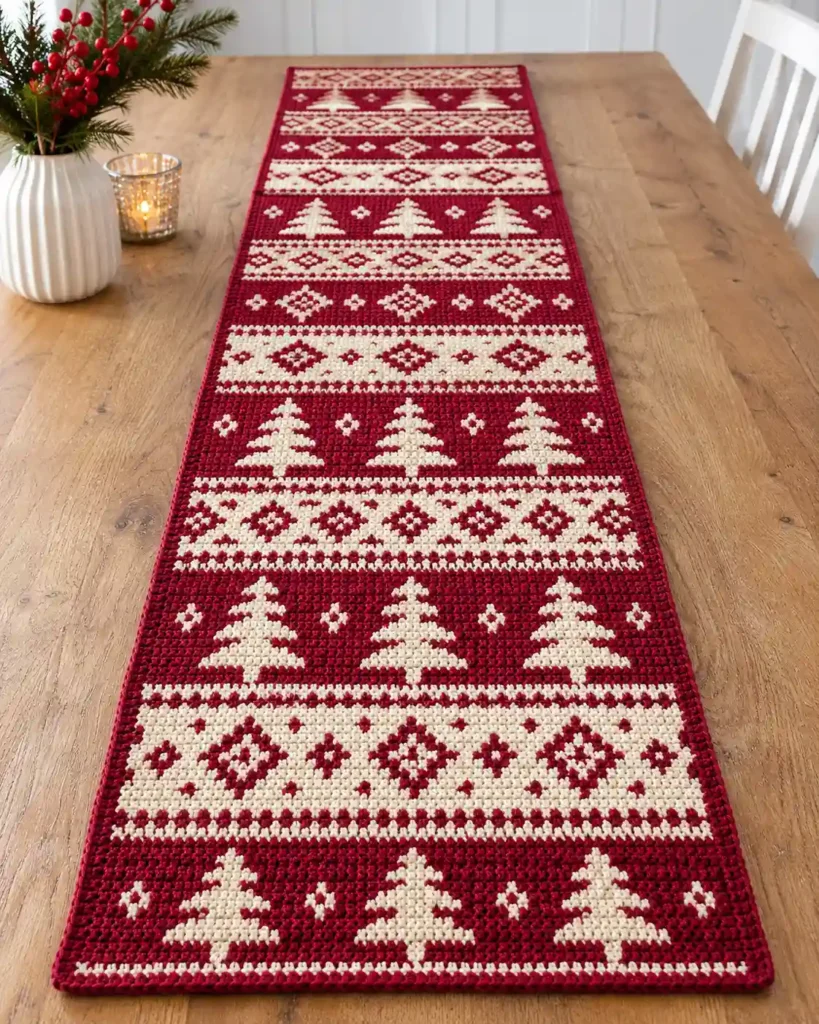
7. Nordic Tapestry Crochet Runner
A Nordic tapestry runner brings little fir trees, diamonds, and geometric repeats into a striking two-color design. It feels more tailored than scattered appliqués because every shape follows the same visual rhythm. Deep cranberry and ivory work beautifully against natural wood or simple ceramic plates. This one rewards crocheters who enjoy careful colorwork and want a crisp Scandinavian-inspired centerpiece.
Practice carrying the unused yarn before tackling the full width. Keep your tension relaxed enough that the fabric doesn’t pucker when colors change. A chart with clearly marked repeat columns makes it easier to catch mistakes early.
8. Why Try a Red-and-White Chevron Runner?
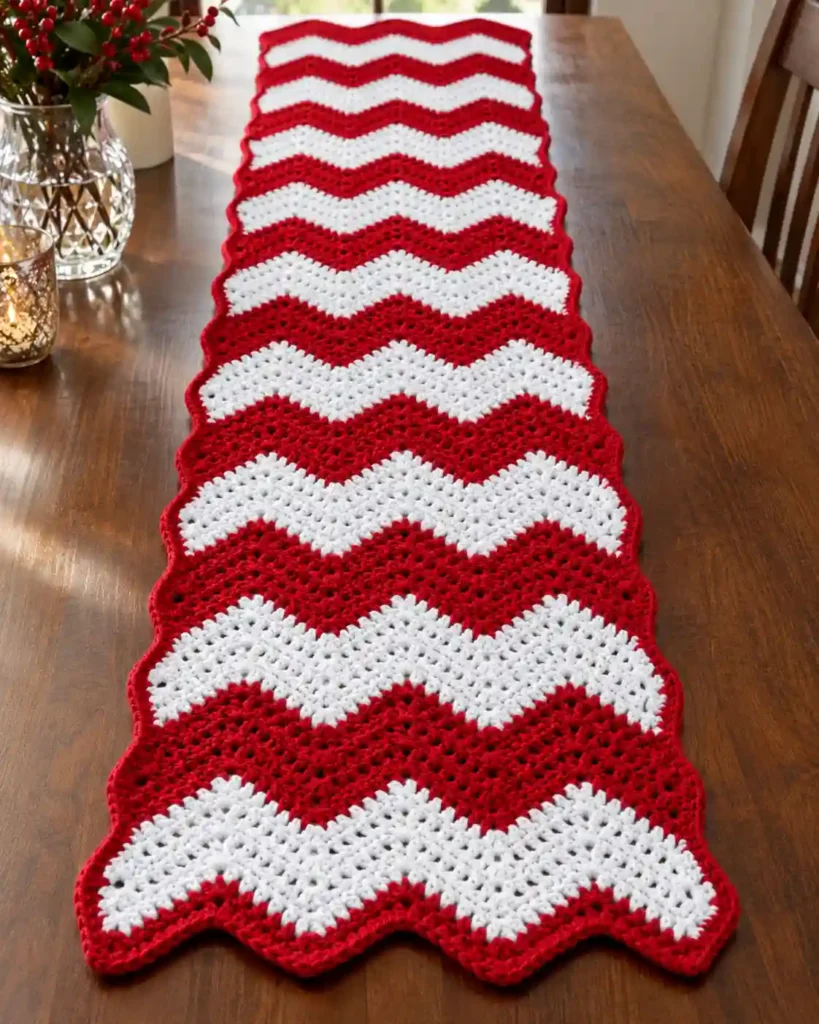
Red-and-white chevrons add movement to a table without a single ornament or appliqué. The repeated zigzags look playful, yet the same two colors keep the design coordinated. Lay one down a long kitchen table and the angled lines naturally draw the eye toward the centerpiece. Choose this when you know basic stitches and want to learn the increases and decreases that create ripple patterns.
Work a practice repeat first to see where the peaks and valleys fall. Mark the turning points and check your stitch count every few rows. When finished, shape the edges so the waves look intentional rather than stretched.
Which Cozy and Playful Runners Work for Different Holiday Tables?
9. Is a Rustic Farmhouse Textured Runner More Practical?
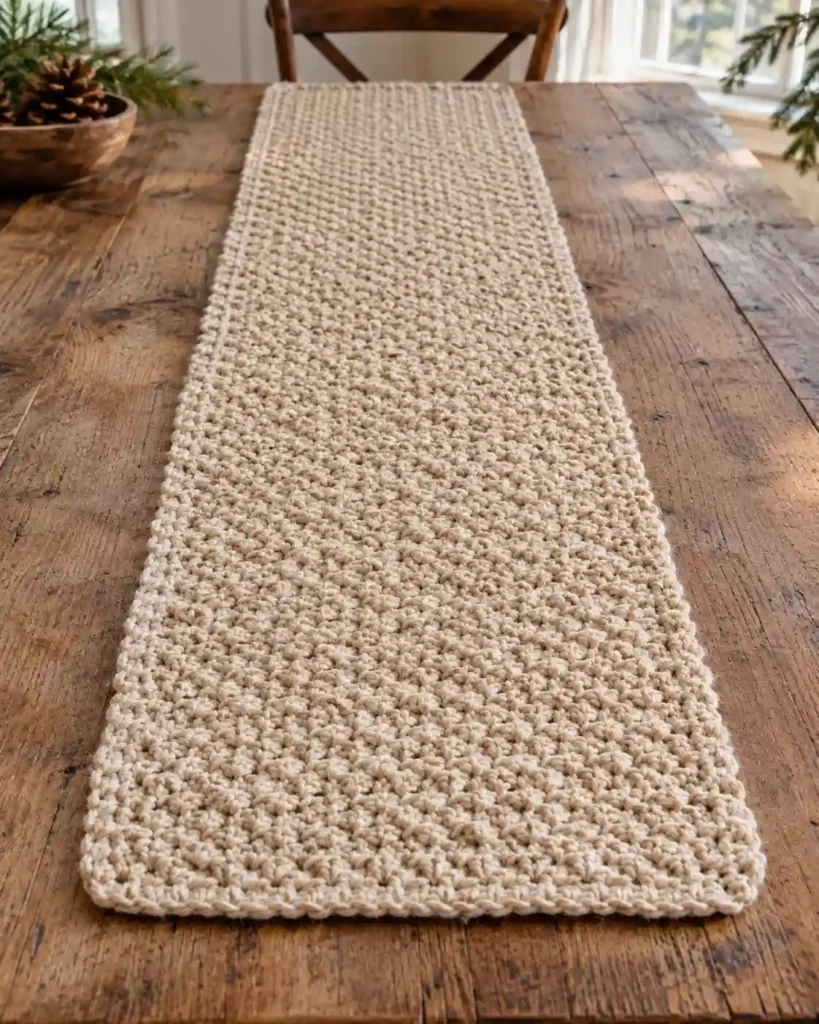
The rustic farmhouse runner trades bright holiday graphics for warm oatmeal yarn and interesting stitches. Its quiet texture pairs with pinecones, greenery, and mismatched plates without turning the table into a crowded display. A simple stitch repeat also makes this a comforting project on evenings when you don’t want to follow a chart. It is particularly appealing if you decorate for winter, not just Christmas Day.
Try a low-relief texture that will lie flat beneath lighter table accessories. A cotton-linen blend can offer a natural look, but check how your chosen fiber behaves after washing. Avoid very bulky stitches directly under plates.
10. Why Does a White Lace Openwork Runner Feel Special?
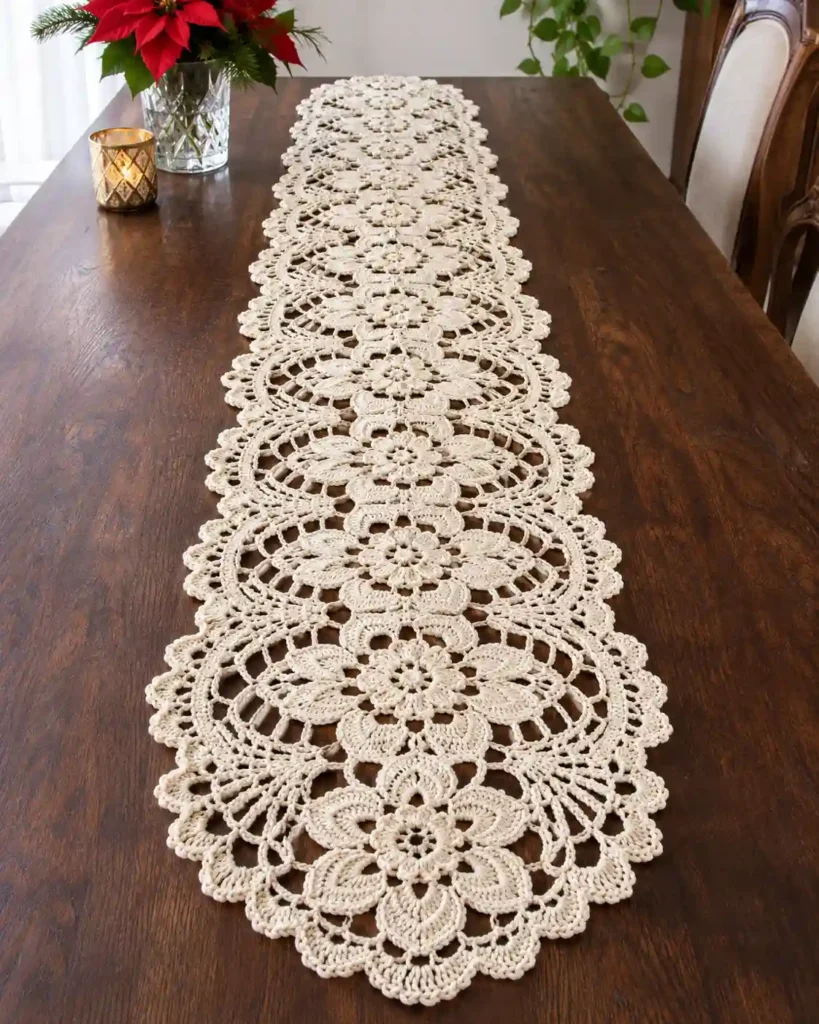
A white lace openwork runner has that heirloom look without needing much color. Fine loops and delicate spaces show beautifully against darker wood, giving the table detail even when the decorations are minimal. It can dress up a formal Christmas dinner and stay out for a winter gathering in January. If you enjoy patient, repetitive lacework, the delicate finish is the reason to choose it. For a neat finish, follow this guide on how to block crochet.
Match the yarn and hook to the lace pattern rather than choosing by appearance alone. Openwork often needs careful shaping: Crochet.com’s blocking guidance recommends checking the yarn label and testing a swatch before blocking. Never press a hot iron directly onto the stitches.
11. Candy Cane Diagonal-Stripe Runner
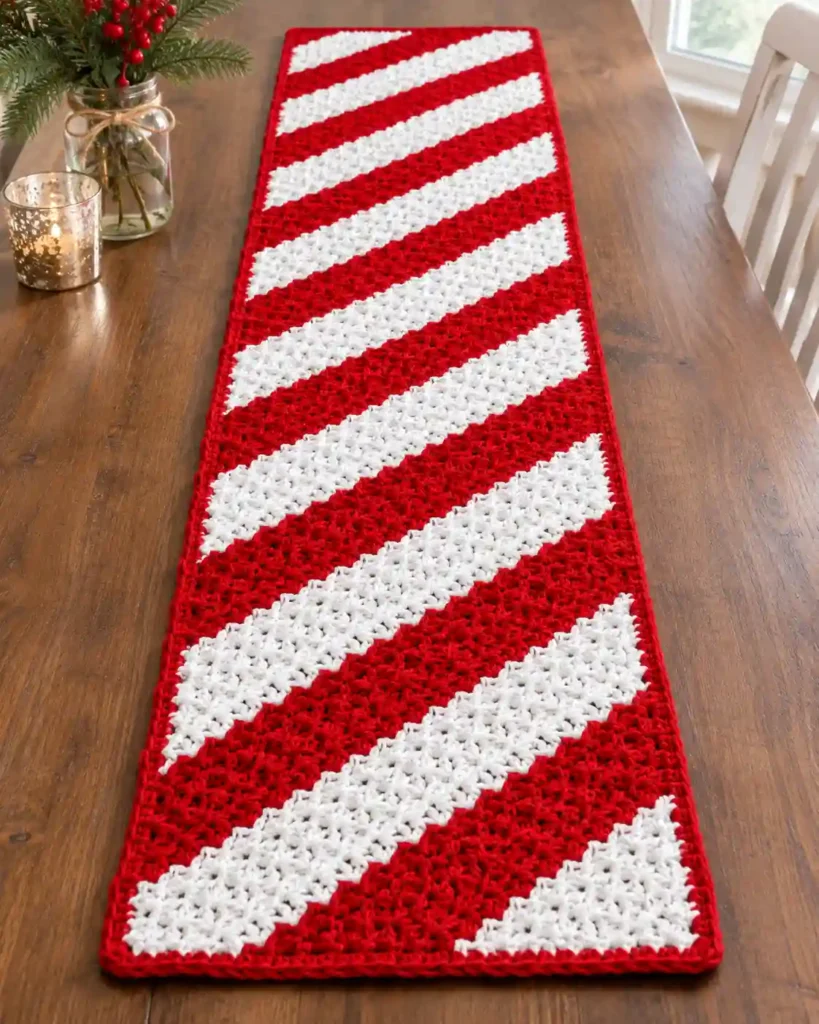
Candy cane stripes have an unmistakable holiday personality, especially when red and white bands run diagonally across the runner. They’re bolder than ordinary straight stripes, so even a fairly simple table setting feels festive. This is a fun design for a breakfast nook where cheerful colors matter more than formal styling. Try it if you want a little colorwork challenge without adding separate decorations.
A diagonal effect may come from angled shaping or a charted color pattern; choose one method and plan the band width before beginning. Keep the color changes consistent. A plain edging helps the finished runner maintain a clean outline.
12. Could a Snowman Patchwork Runner Make the Table More Playful?
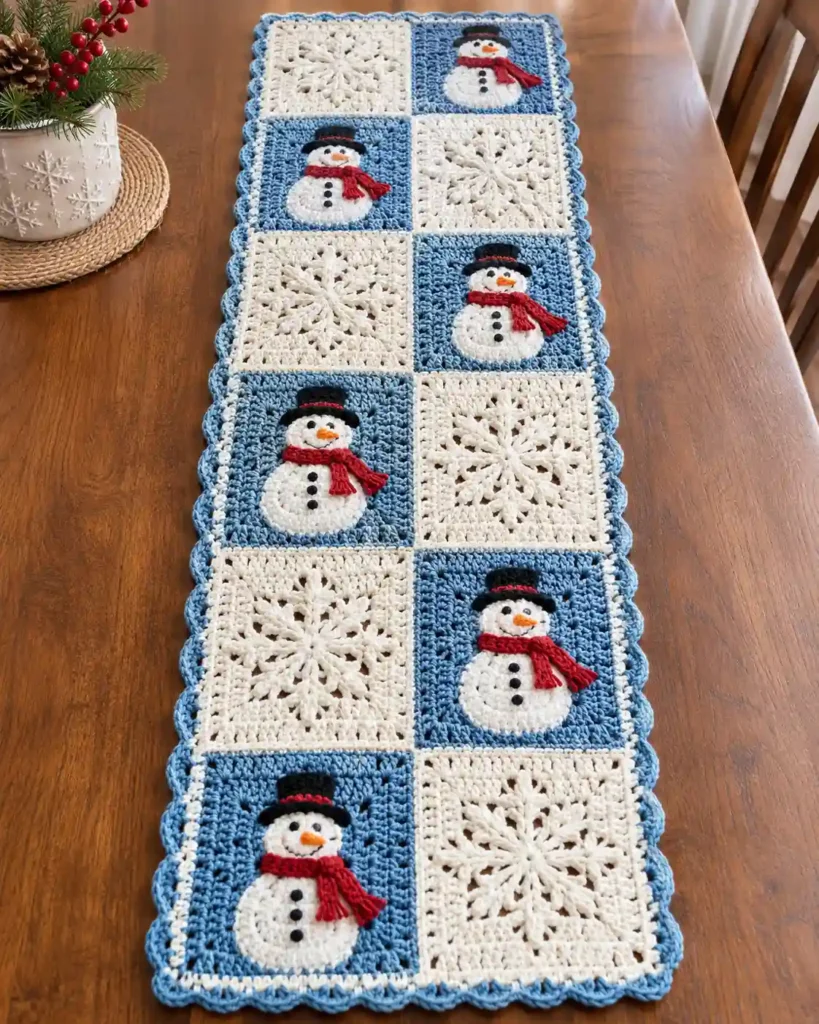
Snowmen with tiny scarves bring a cheerful storybook feel to a crochet table runner. Compared with lace or geometric designs, these recognizable little characters invite a closer look. Try the idea on a family kitchen table with simple white bowls and winter-blue napkins. It’s best for makers who like constructing separate panels and adding small finishing details.
Use flat snowman shapes on square blocks and stitch their features securely. Join the blocks with even seams, then add a border to keep the patchwork straight. Avoid loose buttons or removable decorations, especially around young children.
13. Gingerbread House Motif Runner
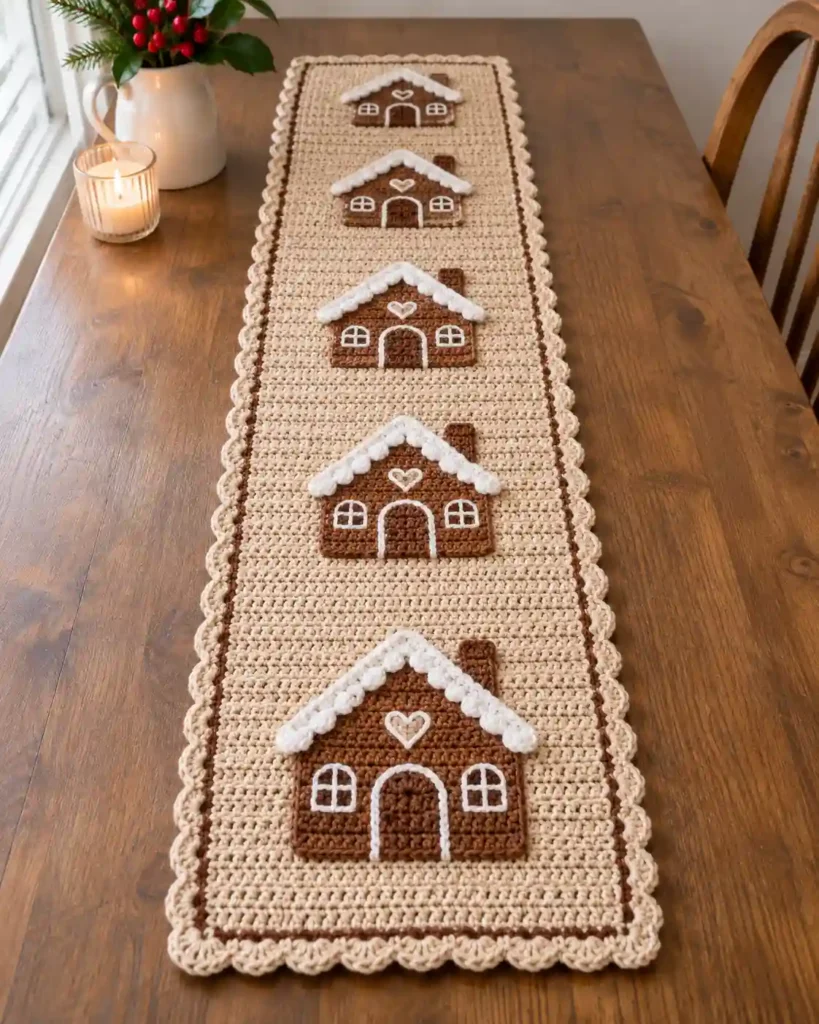
A gingerbread house runner brings the charm of holiday baking to the table, minus the crumbs. Tiny brown houses with white rooflines feel different from the usual snowflakes and flowers. On a dessert buffet, the repeating houses make a sweet visual theme beside cookie plates. It’s an enjoyable choice if you like appliqués and prefer a playful design with plenty of room for customization.
Make one house template and repeat its dimensions so the design stays balanced. Use surface embroidery or simple stitches to suggest icing, doors, and windows. Sew each motif firmly onto a neutral base that can be washed according to its yarn label.
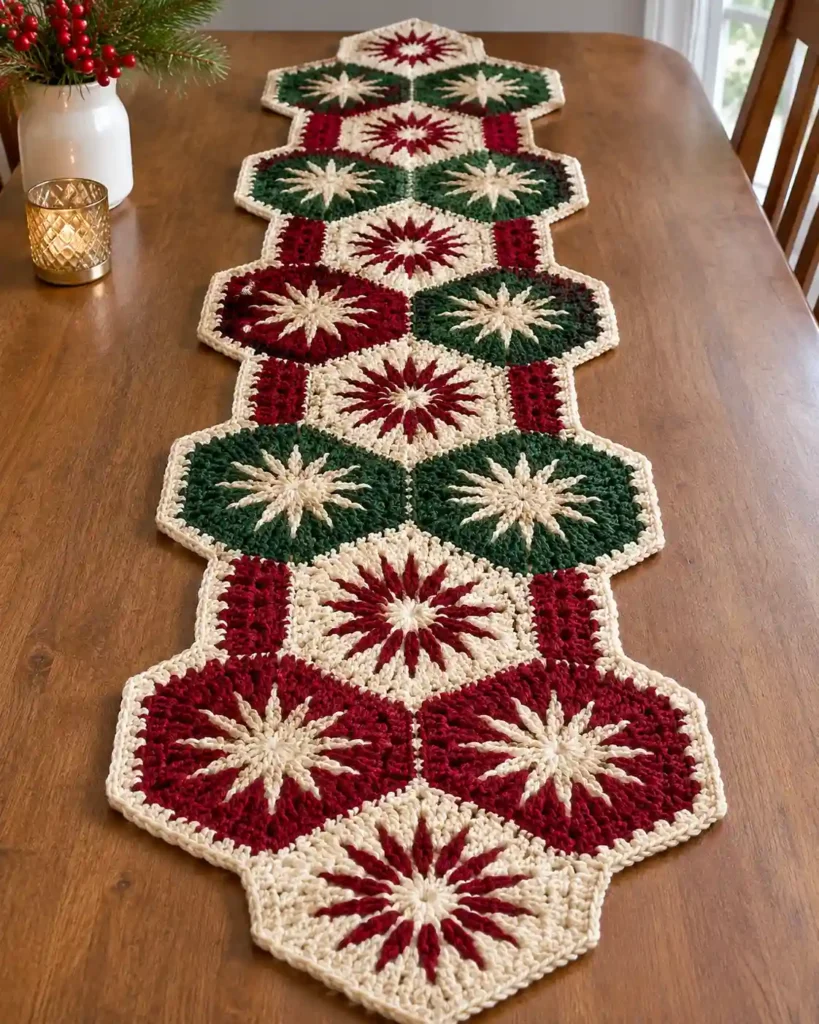
14. Why Use Starburst Hexagons Instead of Squares?
Starburst hexagons create a runner filled with radiating little stars and a more unusual outline. Where granny squares build a tidy grid, hexagons make the joins part of the decoration. Deep red, forest green, and cream stars look particularly pretty down a narrow hallway console or dining table. This design is made for someone who enjoys motif construction and wants something more distinctive than straight stripes.
Plan the layout on a flat surface before joining the units. Half motifs or a finishing border can straighten the sides if needed. Block the shapes to the same dimensions so the runner doesn’t twist.
15. Is a Red-and-Green Plaid Runner Too Bold?
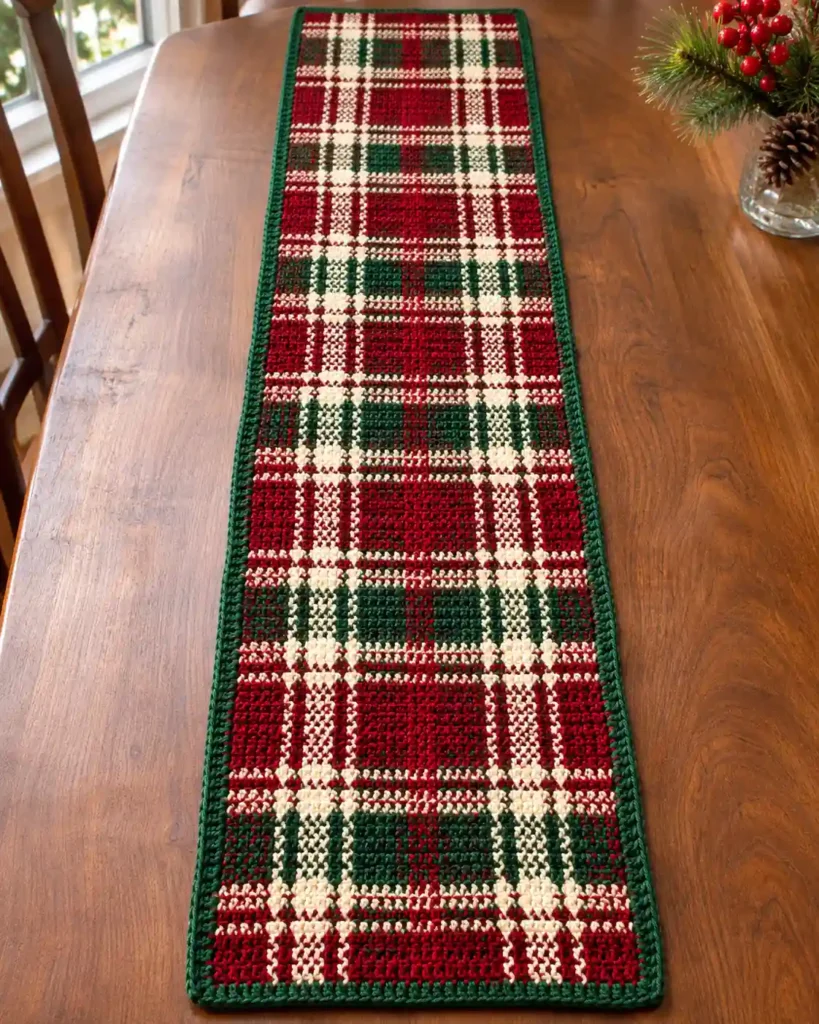
A red-and-green plaid runner can feel wonderfully traditional when the checks are arranged neatly. It offers a cozy, fabric-like look while still showing the texture of crochet stitches. Against plain dishes, the pattern becomes the focal point without needing garlands or extra ornaments. Choose plaid if you’re comfortable managing repeated color blocks and want a recognizable holiday classic.
Small colorwork swatches help you see whether carried yarn shows through. Work from a chart to keep checks aligned, and add a restrained outer border. Using a third neutral color can soften a very bright combination.
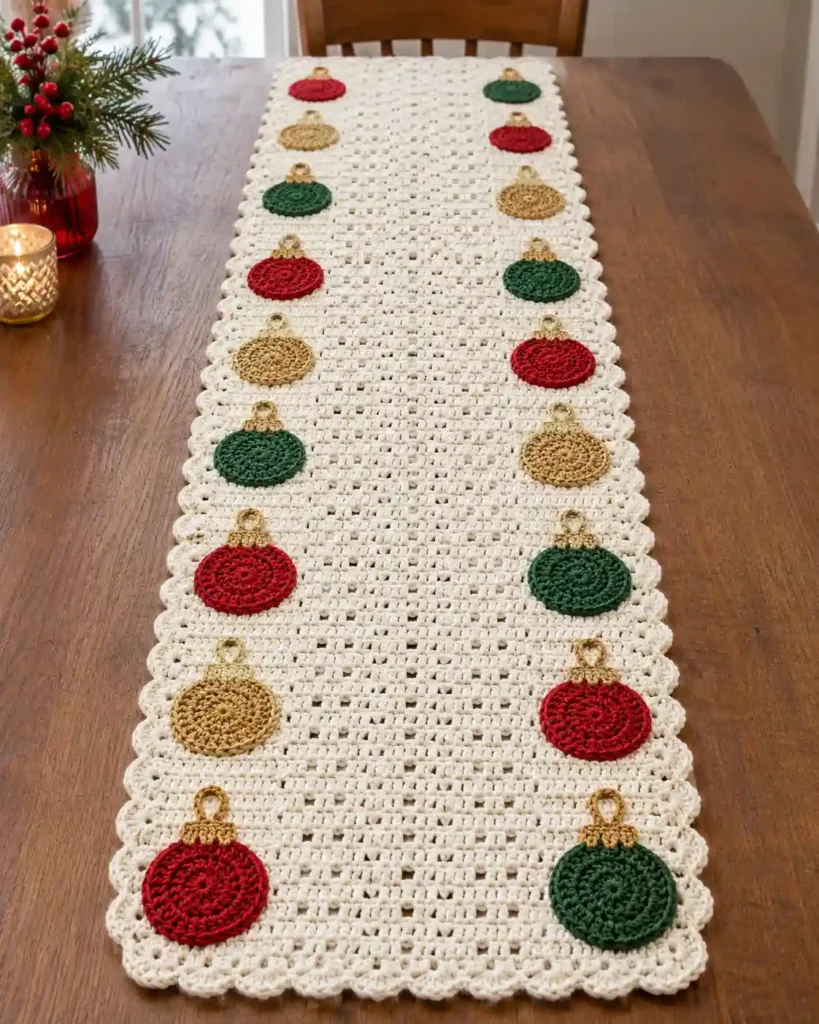
16. Christmas Ornament Appliqué Runner
Tiny crocheted baubles let you put the look of a decorated tree right on the table. For more festive handmade decorations, explore these crochet Christmas ornaments. Instead of one large central image, little red, green, and golden ornaments can run neatly along both edges. This works well when the center needs to stay open for a serving tray. If you like seasonal details but don’t want a complicated base pattern, the appliqués do the decorating for you.
Crochet flat circles, small caps, and simple hanging-loop shapes, then attach them securely. Space them evenly and keep the ornaments away from plate positions. Avoid glass or metal add-ons that make laundering and dining less practical.
Which Detailed Christmas Runners Are Worth a Longer Project?
17. Why Make a Winter Village Silhouette Runner?
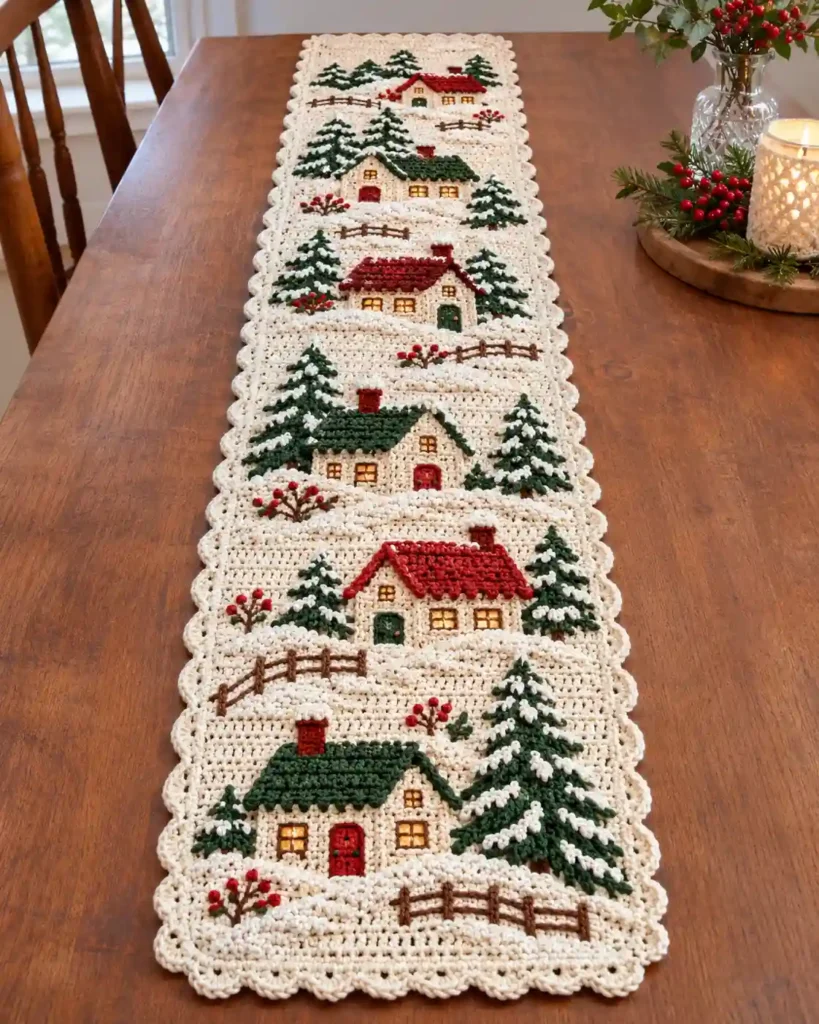
A winter village runner tells a little story with rooftops, snow, and evergreen trees. The repeating house silhouettes make it feel more like a miniature landscape than an ordinary table textile. It’s lovely on a long sideboard where the entire scene remains visible. Choose it if you enjoy reading a filet or tapestry chart and want an ambitious project to bring back every December.
Keep the house shapes simple enough to read from across the room. Mark the width of every repeat before starting, especially if the design has multiple panels. Use a plain margin around the scene to prevent the edges from looking crowded.
18. Holiday Wreath Medallion Runner
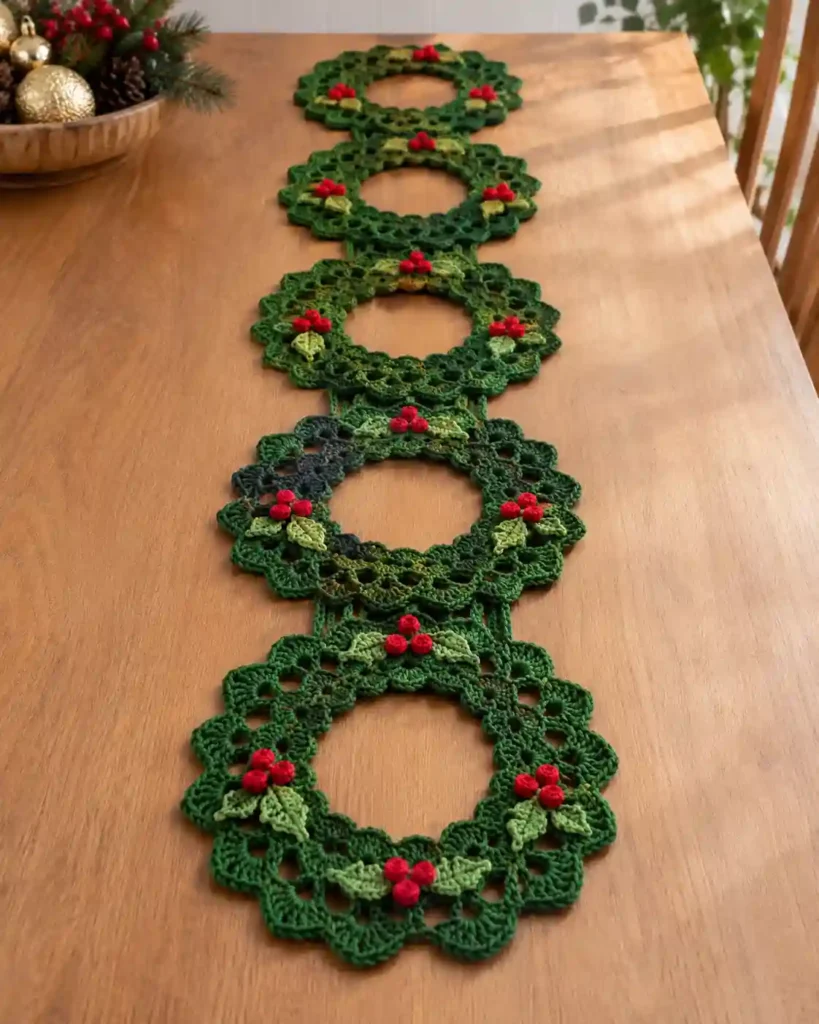
A line of crocheted wreath medallions gives the table a graceful chain of little green circles. Because the tabletop shows between the connected motifs, the piece feels lighter than a solid rectangle. It makes a lovely setting for a narrow table or a festive console. Try this idea if crocheting in rounds is your favorite part of a project and you enjoy assembling motifs into a longer design.
Make identical wreath rings and use connecting strips or small joins to link them. Add only modest red berry accents so the motifs stay reasonably flat. Check the overall length after every few joins.
19. Could a Puff-Stitch Snowdrift Runner Work on a Dining Table?
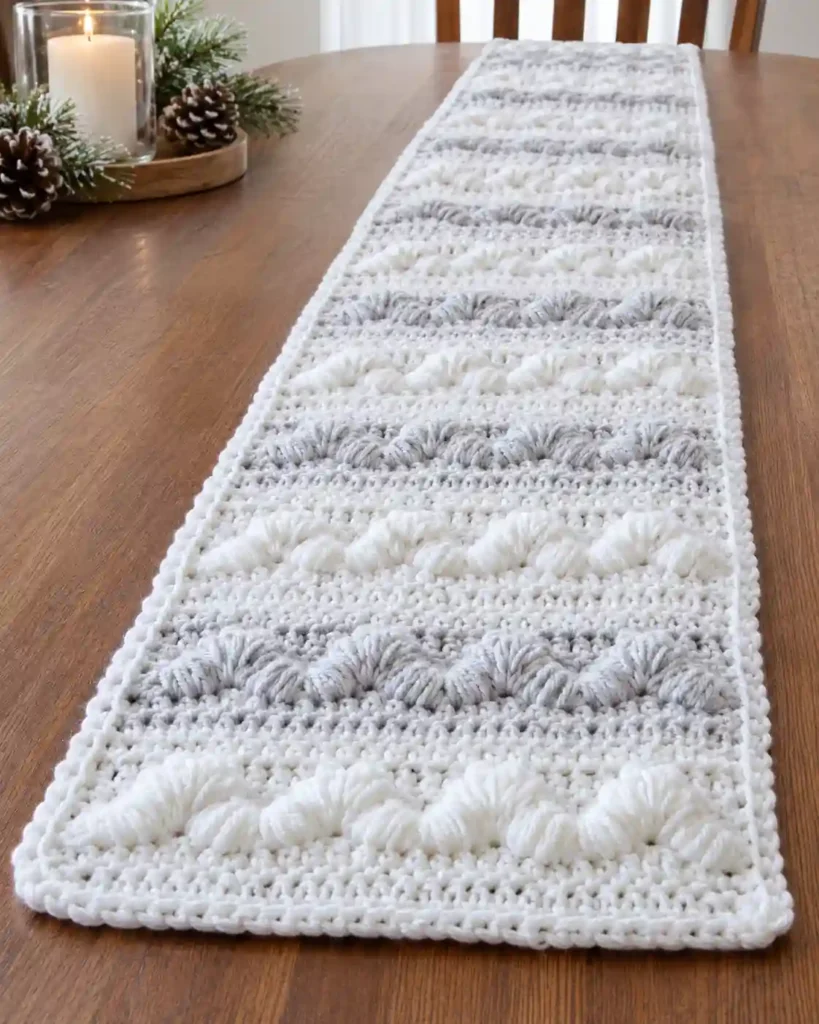
A puff-stitch snowdrift runner creates soft ridges that look like little drifts of winter snow. The raised stitches add dimension without asking you to build complicated pictures. On a coffee table or sideboard, the texture can be the only decoration you need. For a dining table, it suits makers who enjoy tactile stitches and are happy to keep the puff sections away from plates.
Place raised bands sparingly and keep the main serving area flatter. Test a short section to see whether the yarn makes the puffs too thick. A smooth border helps the finished runner sit comfortably.
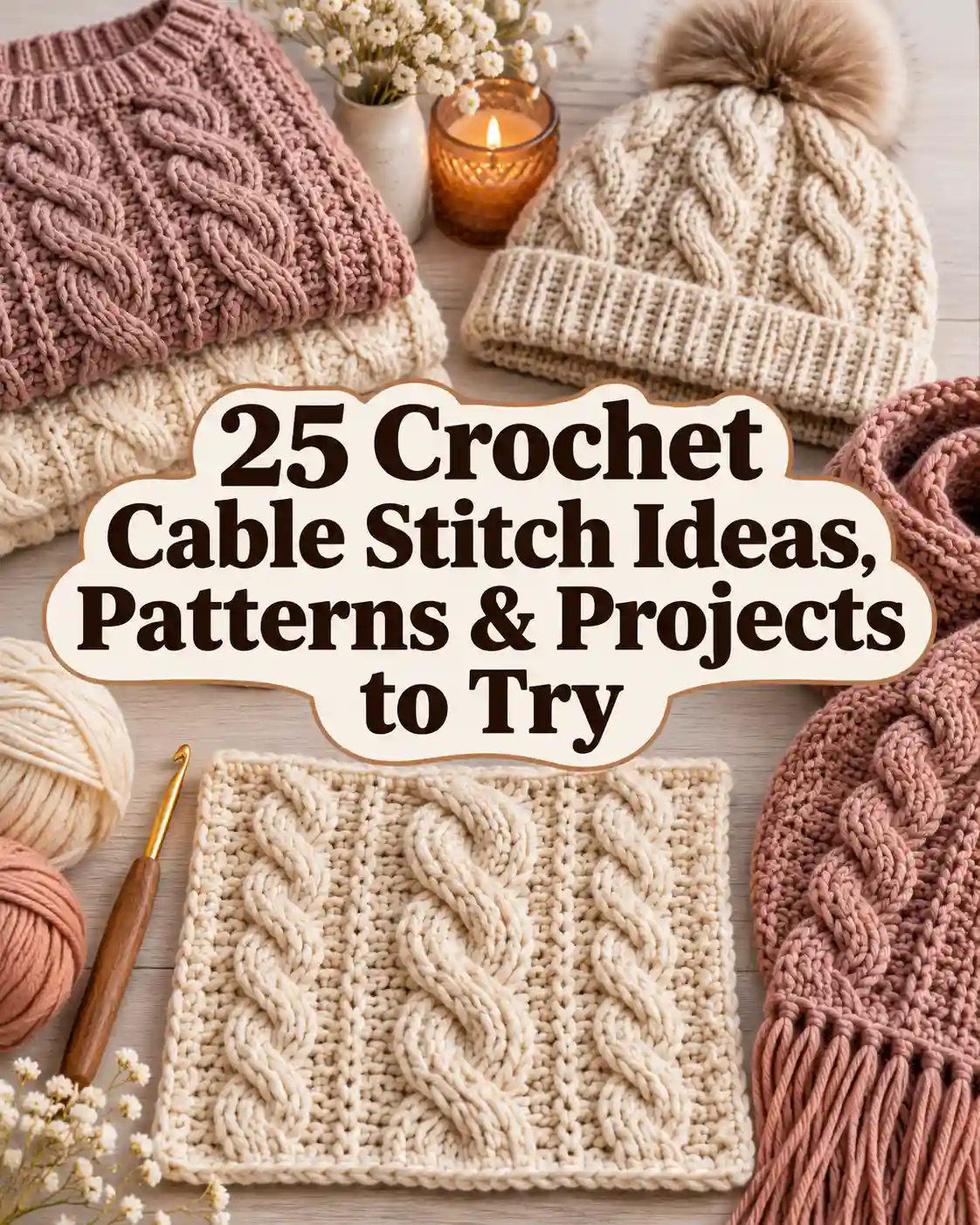
20. Why Try a Cable-Style Raised-Stitch Runner?
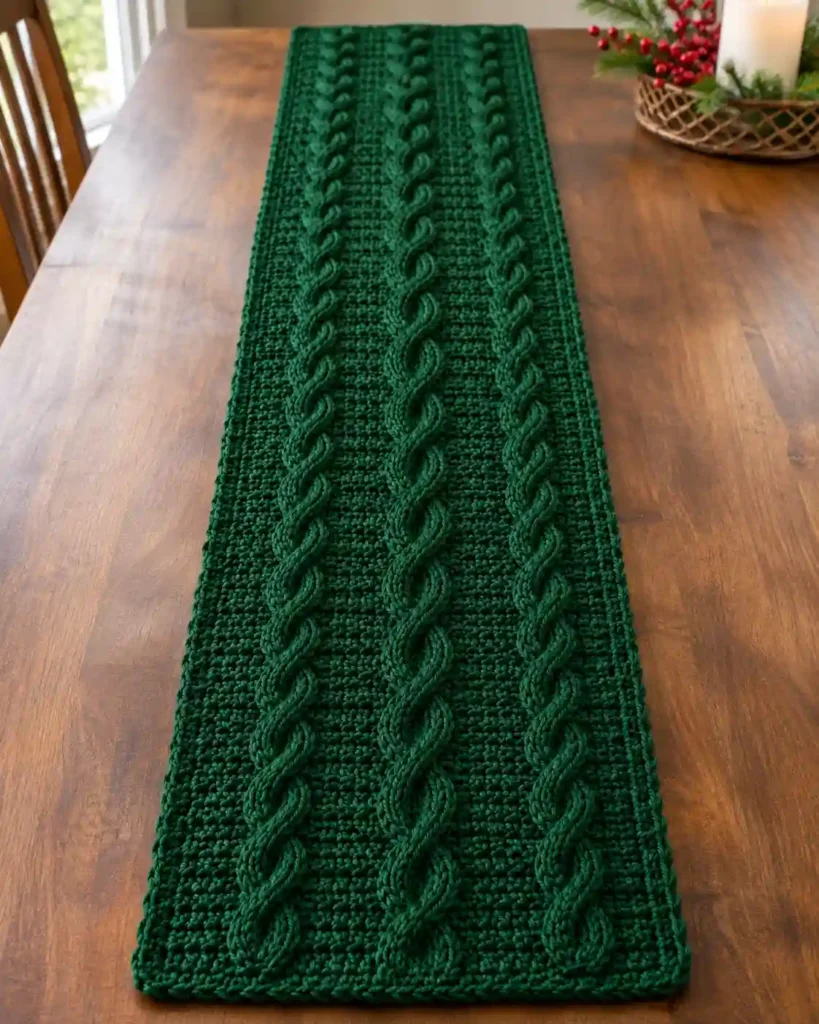
A deep-green cable-style crochet runner looks warm and substantial, almost like a favorite winter sweater for the table. The raised braided columns provide more visual interest than plain stitches without relying on bright motifs. It works particularly well in a minimalist home with natural wood and cream dishes. Choose it if front-post stitches are familiar or you’re ready to learn how crossed crochet columns behave.
Practice the cable repeat on a small sample to understand the crossing order and tension. These are crocheted post stitches, not knitted cables. Frame the raised columns with flatter rows so the runner stays useful.
21. Diamond Mosaic Christmas Runner
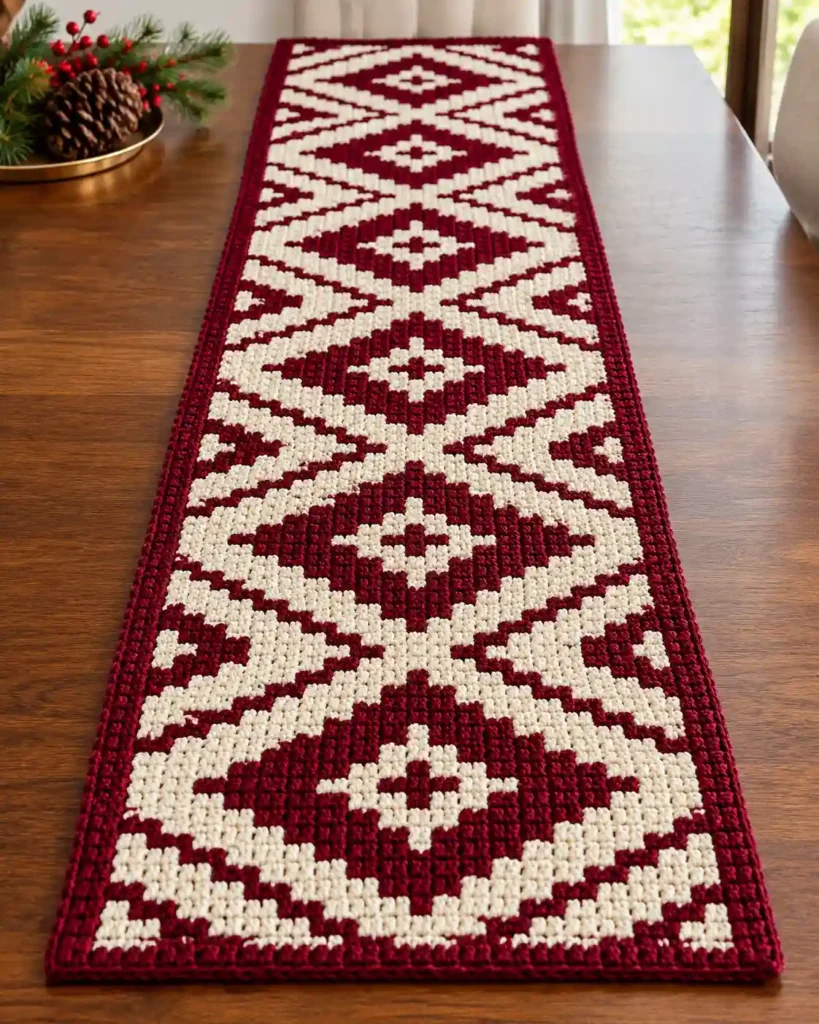
A diamond mosaic runner brings strong geometric color to a holiday table. Burgundy and cream shapes look crisp from a distance, so the piece can stand alone without much extra decorating. Unlike separate appliqués, the design forms as you crochet the colorwork rows. It’s a satisfying option for intermediate or advanced makers who enjoy following detailed charts.
Decide whether you’re using overlay or inset mosaic crochet before selecting instructions, because the row methods differ. Check the chart and borders carefully; a consistent edge makes a huge difference to the finished look. Make a sample repeat to confirm your color contrast.
22. Would a Jingle Bell Motif Runner Be Better Without Real Bells?
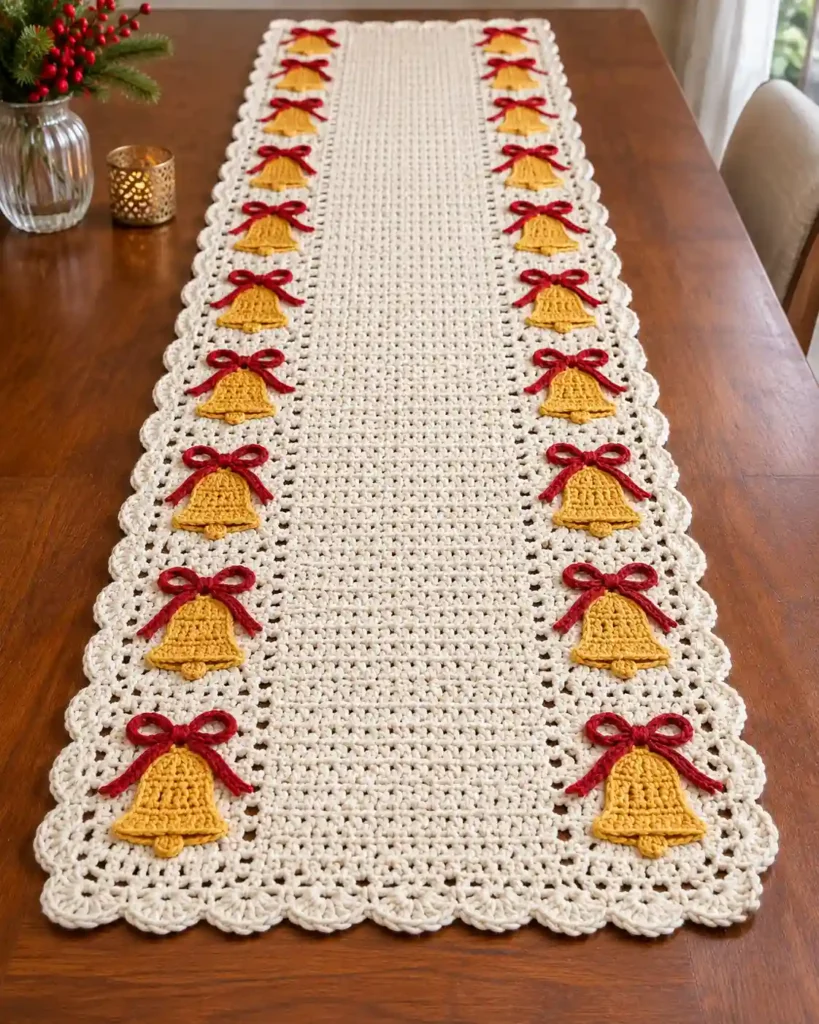
Golden crochet bell motifs bring a vintage Christmas touch without any jingling hardware. Their rounded shapes add a gentle decorative rhythm to a plain ivory base. This makes a lovely runner for a traditional dinner table where the decorations should feel festive but not fussy. It’s a good choice if you enjoy embellishing with flat motifs and want something easier to store and wash than a runner with metal attachments.
Use ochre or muted gold yarn to suggest bells, adding small red bows with stitched details if you like. Keep the shapes flat and sew down loose ends. Actual bells are best skipped on a functional dining runner.
23. Minimalist Forest-Green Colorblock Runner
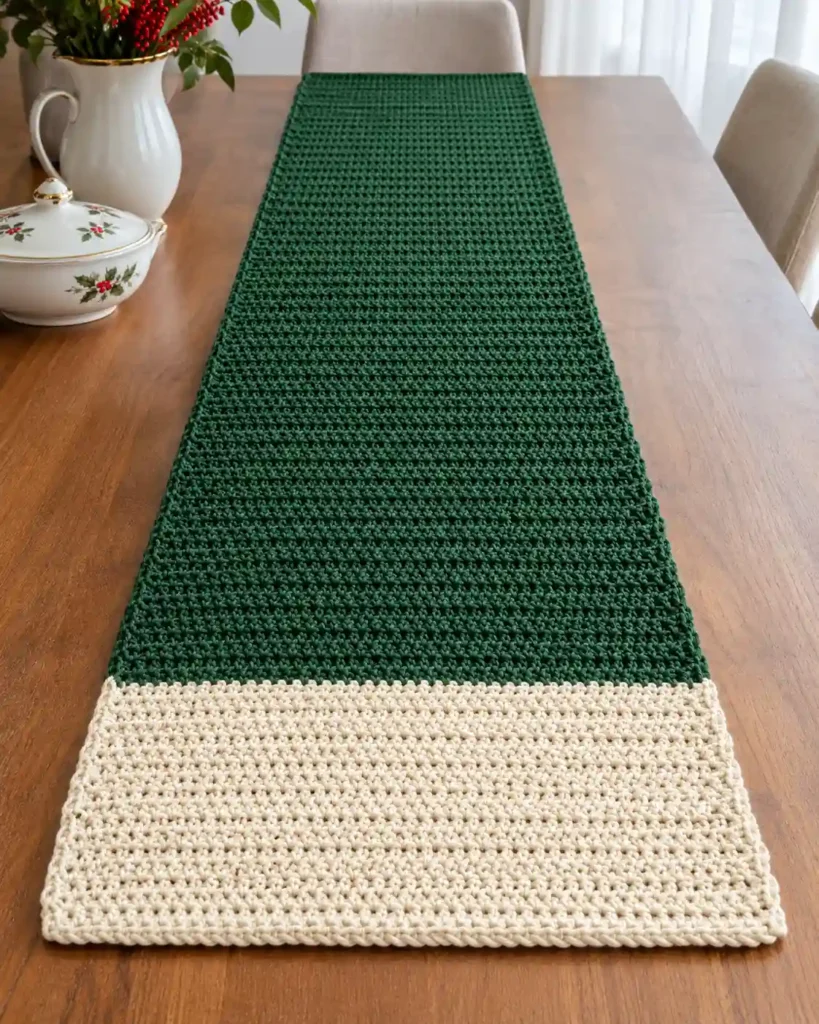
A forest-green colorblock runner proves Christmas decor doesn’t have to be busy. Two broad sections of green and warm cream create a calm, modern shape with enough contrast to feel intentional. It fits beautifully beneath plain porcelain or wooden serving boards. If you’re a beginner who prefers understated decorating, this simple rectangle delivers the look with very little extra construction.
Work even rows and change colors at the same edge each time. A narrow border can tidy the sides without distracting from the large color fields. Use a yarn that lies flat and suits your cleaning needs.
24. Why Finish a Simple Runner with a Scalloped Edge?
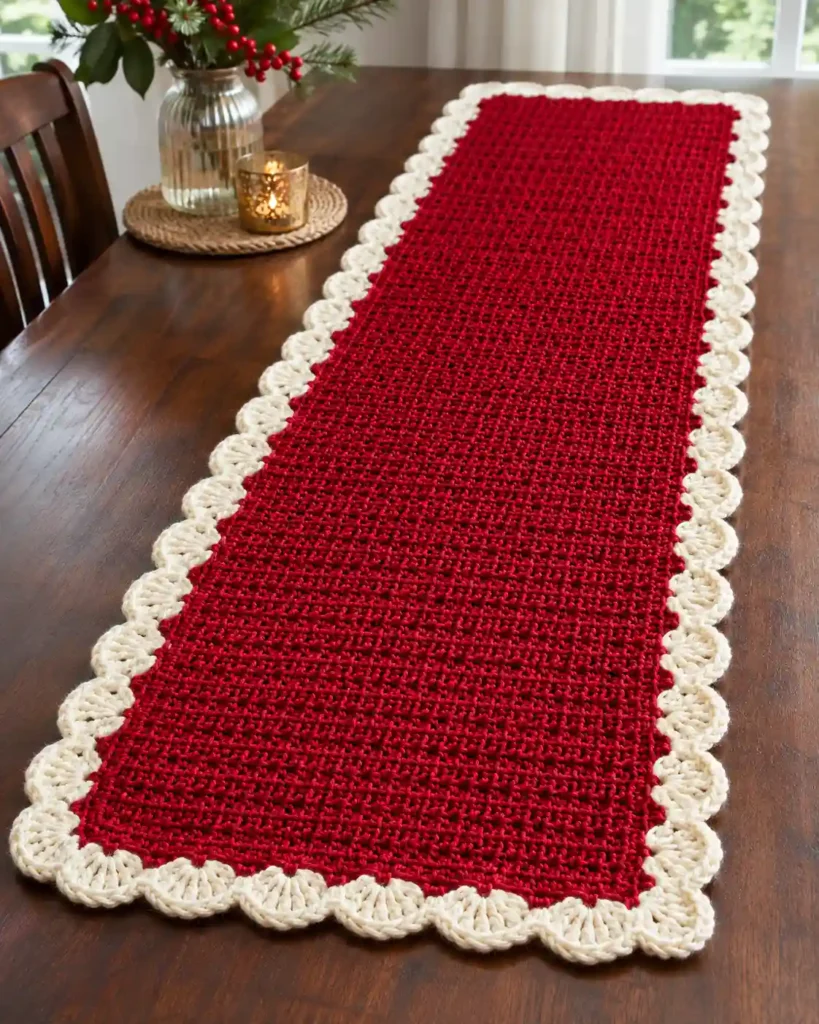
A scalloped-edge runner turns a straightforward rectangle into something delicate with just one decorative border. Cream shell stitches around a red base add movement without demanding an elaborate center motif. It looks especially pretty on a small holiday table where the edge stays visible. Choose this if you want to learn one new finishing technique while keeping the rest of the project familiar.
Test the shell repeat around a corner before working the full perimeter. Too many stitches can make the border ruffle; too few can pull the fabric inward. Gently shape it according to the yarn’s care guidance.
How Do You Choose the Right Crochet Christmas Table Runner Pattern?
Choose a pattern that matches your crochet skills, table measurements, preferred Christmas style, and available time.
At a Glance
- Check whether the instructions use U.S. or U.K. stitch terms.
- Measure your table before calculating repeats or motifs.
- Check the gauge and finished dimensions before starting.
When choosing a crochet Christmas table runner pattern, start with how you actually like to crochet. Simple rows, stripes, and color blocks are approachable. Snowflake joins, tapestry charts, and mosaics ask for more counting and finishing work. The Craft Yarn Council’s U.S. crochet abbreviation list is useful when a pattern uses terms such as sc (single crochet), dc (double crochet), or sl st (slip stitch). Check whether your pattern uses U.S. or U.K. terms before starting.
Next, measure the place where the runner will sit. Decide whether you want it fully on the tabletop or hanging over the ends. If you’re planning to use serving dishes, choose a width that leaves space for plates, glasses, and hands to move comfortably. Repeating stripes and motifs are easier to shorten or extend than a picture with a fixed beginning and end.
A simple sizing example: For a 60-inch table, a runner with a 6-inch drop at each end would measure about 72 inches long (60 + 6 + 6). If you want no drop, a shorter length can look just as deliberate. This is a design example, not a standard size requirement.
Check the finished measurements and gauge before purchasing yarn. The Craft Yarn Council’s standard yarn weight guide provides general hook and gauge ranges but specifically says to follow the gauge in your chosen pattern. A small test swatch is worth making when the final length matters.
What Yarn, Hook, and Finishing Method Should You Use?
Choose yarn and a hook suited to your specific pattern, then secure ends and finish the fabric according to the yarn-care instructions.
At a Glance
- Consider cotton or cotton blends for practical table projects.
- Follow the pattern’s hook and gauge recommendations.
- Check the yarn label before washing or blocking.
Cotton and cotton blends are useful options for runners because they can produce clearly defined stitches and are often chosen for table accessories. However, care varies by exact product, so the yarn label always wins. DK or medium-weight yarn is a practical starting point for many solid and textured concepts, while finer yarn or crochet thread can show off lace detail.
Choose the hook recommended by your actual pattern, not a single universal hook size. For context, Yarnspirations’ free striped Tunisian crochet runner measures approximately 12 by 52 inches (30.5 by 132 cm), excluding fringe; that is one published pattern’s measurement, not the size every runner should be.
Once you’ve finished crocheting, weave in all yarn ends and inspect seams and appliqués. For openwork, careful blocking can help the motifs reach a more even shape, but follow the fiber’s care instructions. The Craft Yarn Council’s care-symbol guide explains the washing, drying, ironing, and other label symbols you’ll see on many yarns.
Where Can You Find Free Crochet Christmas Table Runner Patterns?
Look for original designers offering complete free instructions or charts, and confirm the pattern is accessible before beginning.
At a Glance
- Look for full stitch directions, materials, and finished dimensions.
- Use the original designer’s page when possible.
- Check whether the PDF or pattern itself is free.
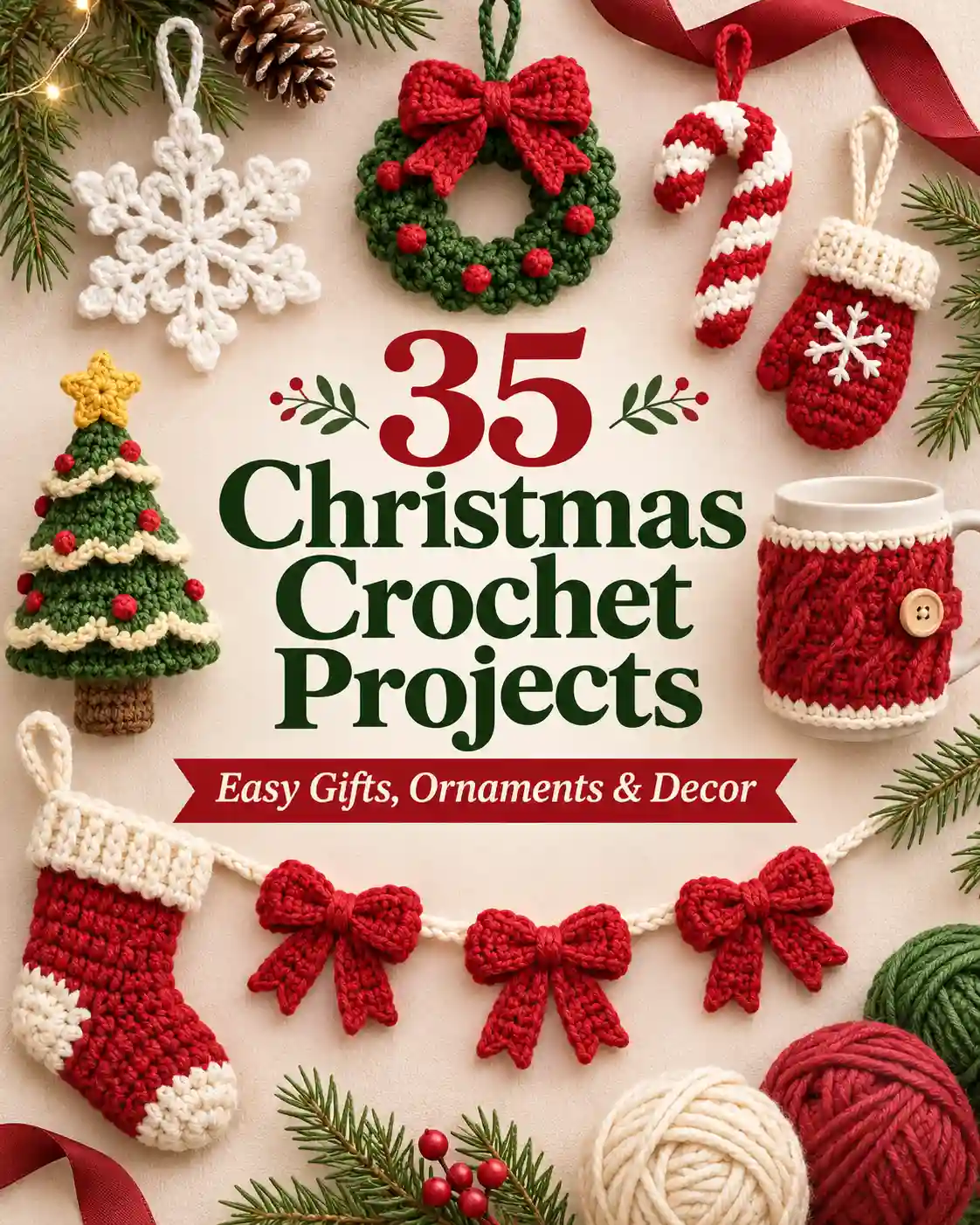
A roundup of design ideas isn’t the same as a downloadable crochet christmas table runner pattern. If you want more seasonal projects to make alongside your runner, explore these christmas crochet projects. If you need complete stitch counts, charts, and finishing instructions, use the original designer’s pattern page rather than treating an inspiration photo as the tutorial.
Here are several original-source options identified as free on their pages when checked:
- Snowflake Table Runner — Moogly: Snowflake construction with a tutorial and pattern links.
- Starflake Crochet Table Runner — Yarnspirations: An easy labeled pattern, with a listed finished size of approximately 15 by 36 inches.
- Holly Trim Table Runner — Yarnspirations: A free holiday-inspired runner design.
- Star Table Runner — Yarnspirations: An intermediate crochet-thread pattern with a free download.
Check the pattern’s current access terms, materials, finished size, and terminology before starting. Some patterns may be free to read online but charge for an optional PDF; others are sold outright. A good pattern should tell you what to make, not just show you a pretty finished photo.
How Can You Style and Care for a Holiday Crochet Runner?
Keep the runner visible, place hot dishes on suitable trivets, and clean and store the textile according to its yarn label.
At a Glance
- Place decorative motifs away from plates and serving dishes.
- Keep candles and other heat sources away from yarn.
- Clean, reshape, and dry the fabric before seasonal storage.
Let the runner be the main handmade accent. Add simple dishes, a little greenery beside the fabric, or a wooden tray that doesn’t hide all those careful stitches. Keep the busiest appliqués out of the areas where hot serving items or dishes will rest, and always use appropriate trivets rather than placing hot cookware directly on yarn.
Be especially careful with candles. The National Candle Association recommends placing lit candles on stable, heat-resistant surfaces away from flammable items. Keep flames well away from crochet textiles and greenery; battery-operated candles offer a flame-free alternative.
After the holidays, follow the yarn’s washing instructions, reshape the runner if the fiber requires it, and let it dry fully before storage. Fold it loosely in a clean, dry place. Extra care with joined motifs and raised details will help them retain their shape from year to year.
Frequently Asked Questions About crochet christmas table runner
What is the easiest crochet Christmas table runner for beginners?
A striped or colorblock rectangle is usually the simplest choice because it uses basic rows with very little shaping. Start with a stitch you already know and practice keeping the edges even.
Can I make a Christmas table runner from granny squares?
Yes. Join identically sized granny squares into a long, narrow panel, then add a border if you want straighter edges. Measure a finished square before calculating how many to make.
How long should a crochet table runner be?
Measure your table, then decide whether the runner should stay on top or hang over the ends. Add your chosen drop length twice to the table length if you want equal overhang on both sides.
What yarn works best for a crochet Christmas table runner?
Cotton or a cotton blend is a useful place to start for a flat, practical table accessory. Follow the specific pattern’s yarn weight, gauge, and care directions rather than choosing fiber by appearance alone.
Where can I get a free crochet Christmas table runner pattern?
Start with original designers such as Moogly and Yarnspirations, which publish specific free runner patterns. Check whether the complete written directions or downloadable chart are available, not just a photo or roundup description.
Final Thoughts
A handmade crochet Christmas table runner is a lovely way to bring warmth, color, and personality to your holiday table. Whether you prefer classic granny squares, delicate snowflakes, festive stripes, or charming Christmas motifs, these 24 ideas offer plenty of inspiration for creating a piece that suits your style. Choose a design that matches your skill level, experiment with seasonal colors, and enjoy making something special for your holiday celebrations. A handmade runner can become a treasured decoration you’ll look forward to bringing out every Christmas.