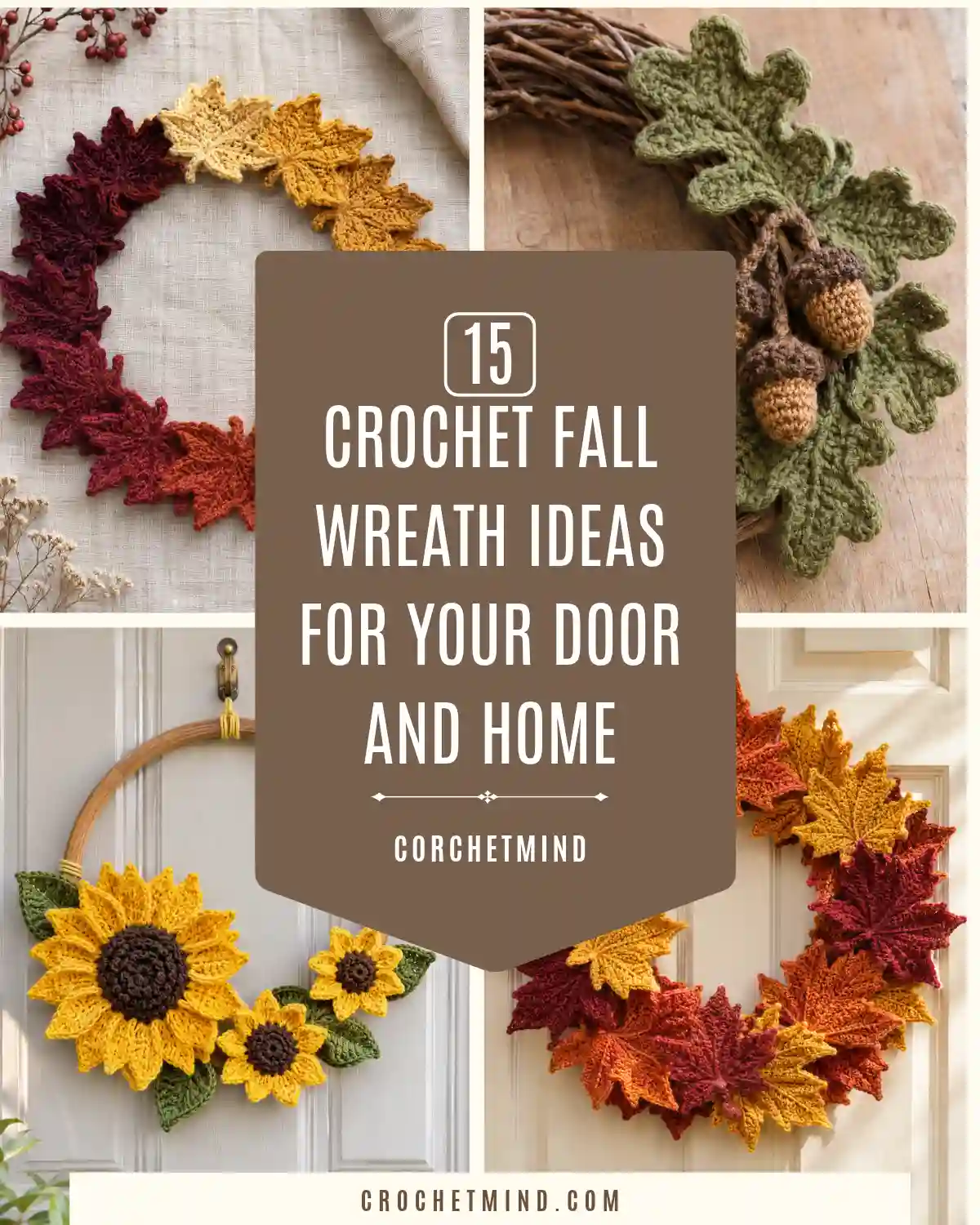



For a first crochet fall wreath, cover a foam ring with a strip of single crochet and sew on three autumn leaves. For a wreath you can restyle each year, tie pumpkins, flowers, or leaves to a grapevine base. Below are 15 designs for doors, mantels, and Thanksgiving tables, plus two free patterns with full instructions. If you’re still deciding, pick one motif you’d enjoy making and let it guide the rest of the wreath.
Key Takeaways
- Cover a foam ring with single crochet for your first wreath.
- Tie motifs onto grapevine so you can swap them later.
- Make mini wooden-ring wreaths for Thanksgiving place settings.
- Choose a free pattern based on form size and skill level.
- Hang the wreath briefly before securing the final knots.
Which crochet fall wreath should you make?
Choose a covered foam ring for a first project, exposed grapevine for removable motifs, or a small wooden ring for a table decoration.
| What you want to make | Best starting point | Wreath base | How to attach the motifs |
|---|---|---|---|
| A first wreath with basic stitches | Easy foam-ring wreath | Foam ring | Sew through the crochet cover |
| A door wreath you can change next year | Grapevine wreath with leaves | Grapevine ring | Tie through the vines |
| A small Thanksgiving table decoration | Mini place-setting wreath | Small wooden ring | Stitch onto the ring cover |
| A large wreath with several fall motifs | Harvest wreath | Burlap-wrapped straw ring | Use greening pins or floral wire as directed by the pattern |
| A wreath with plenty of open space | Neutral hoop wreath | Wooden embroidery hoop | Tie onto the wrapped section |
15 Crochet Fall Wreath Ideas for Your Door and Home
Measure the spot where you’ll hang the wreath before you pick a form. Allow room for anything that sticks past the edge, especially sunflower petals, a wide bow, or dried grasses. Yarnspirations’ fall wreath tutorial shows how different the starting points can be with an 8-inch grapevine ring and a 14-inch metal form.
1. How do you crochet an easy fall wreath on a foam ring?
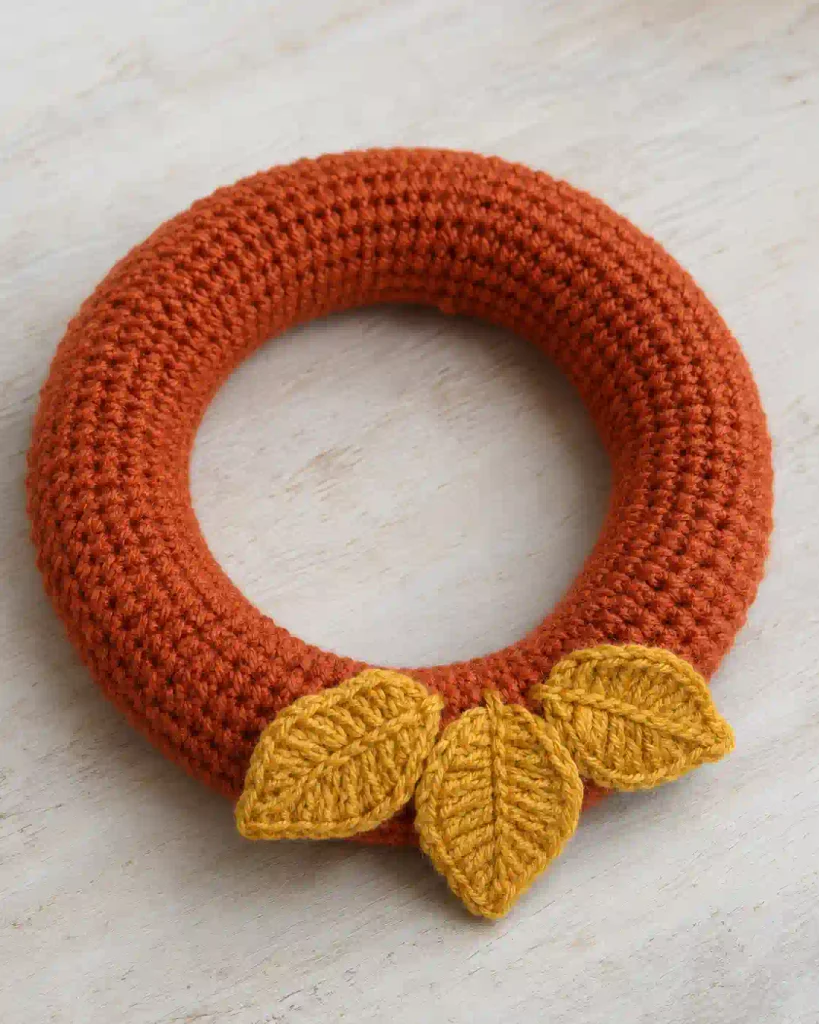
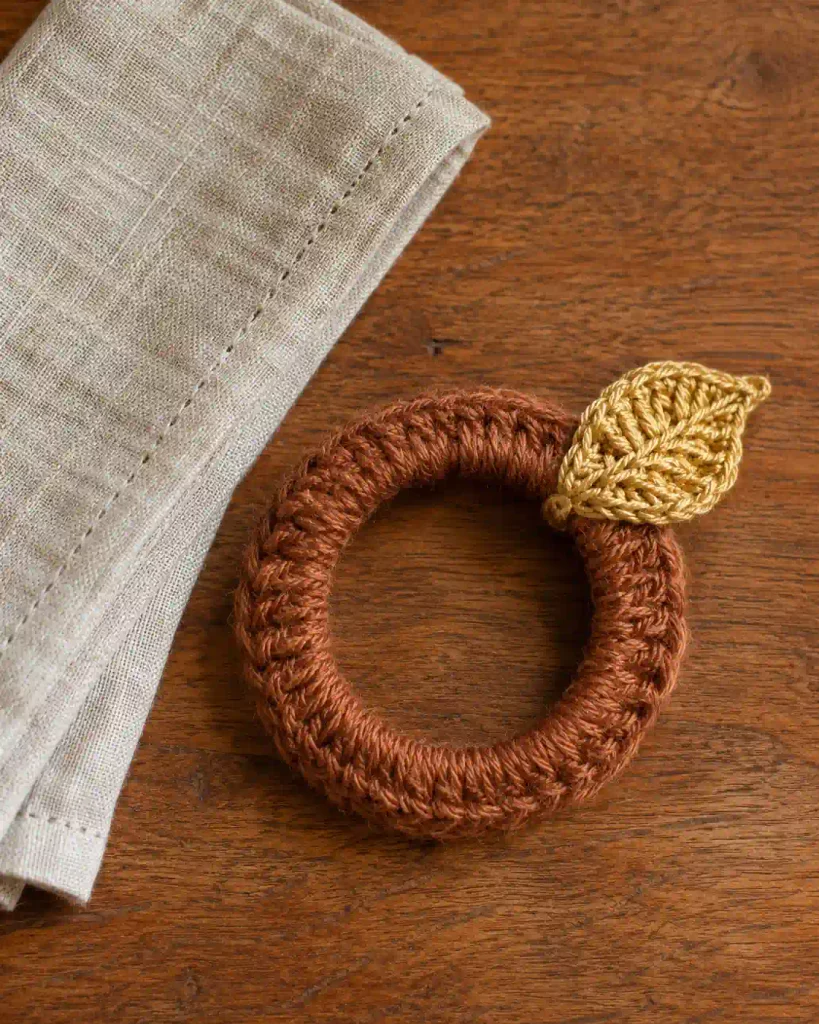
A rust-colored cover with three gold leaves gives this beginner wreath a finished look with just one basic stitch on the base. Work a flat strip in single crochet, making it wide enough to wrap around the thickness of the foam and long enough to go all the way around the ring.
Test the fit as you go, then sew the long edges together along the inside of the ring. Add the leaves near the bottom and use the middle one to cover the join where the ends of the strip meet.
2. What makes a maple leaf crochet wreath stand out?
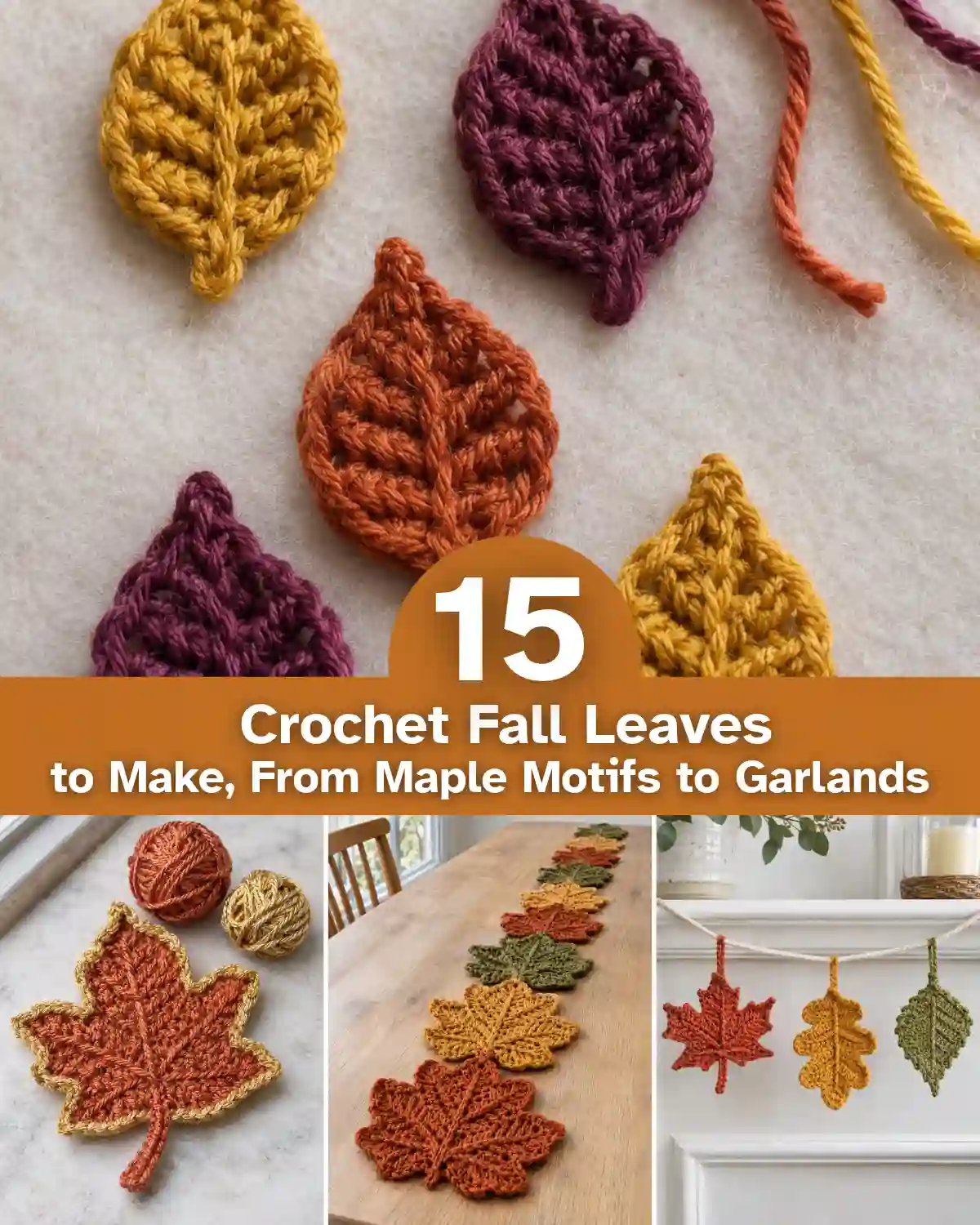
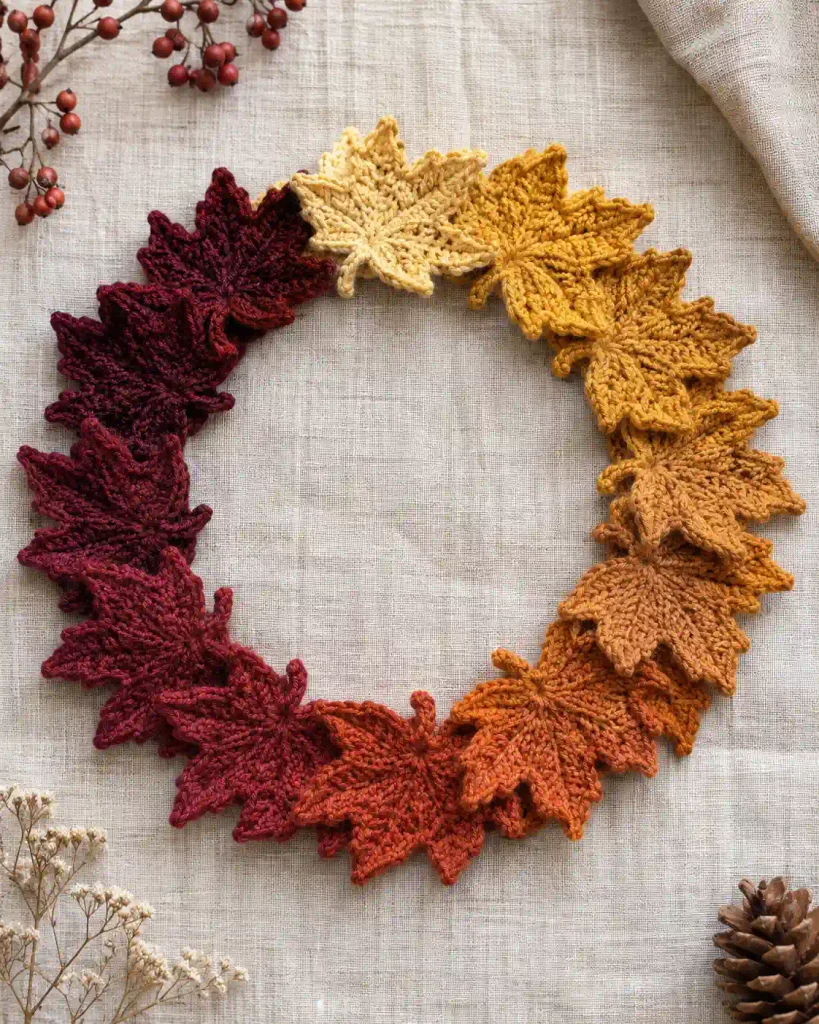
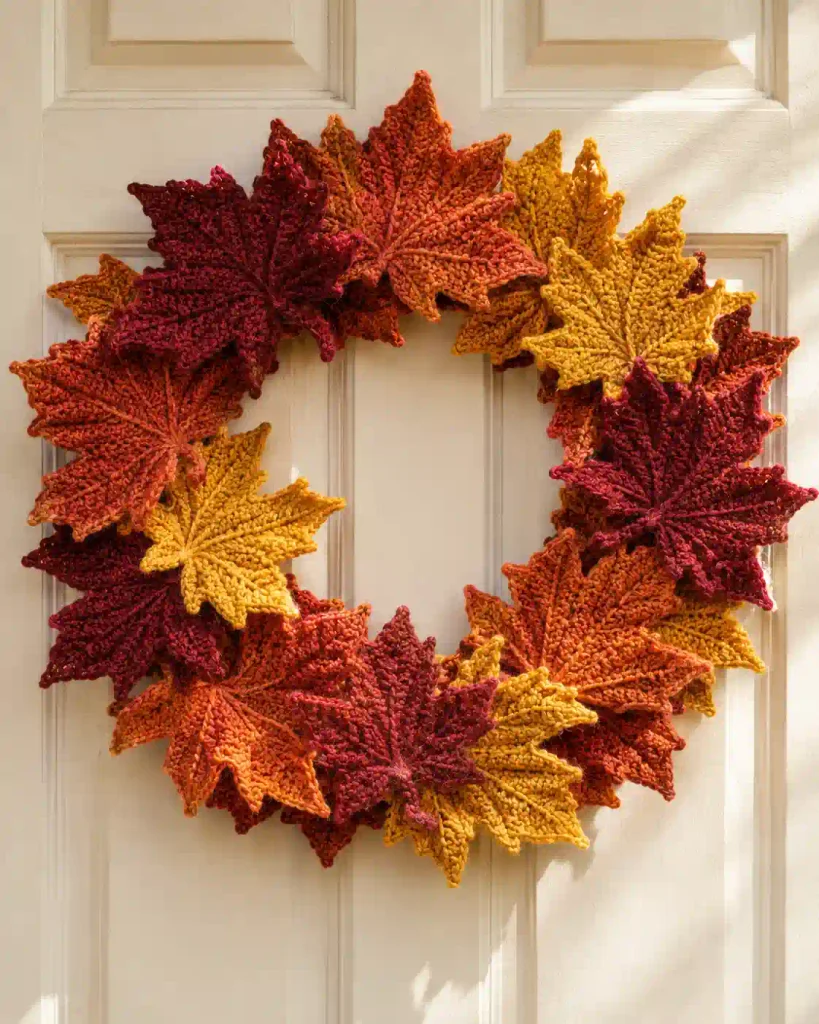
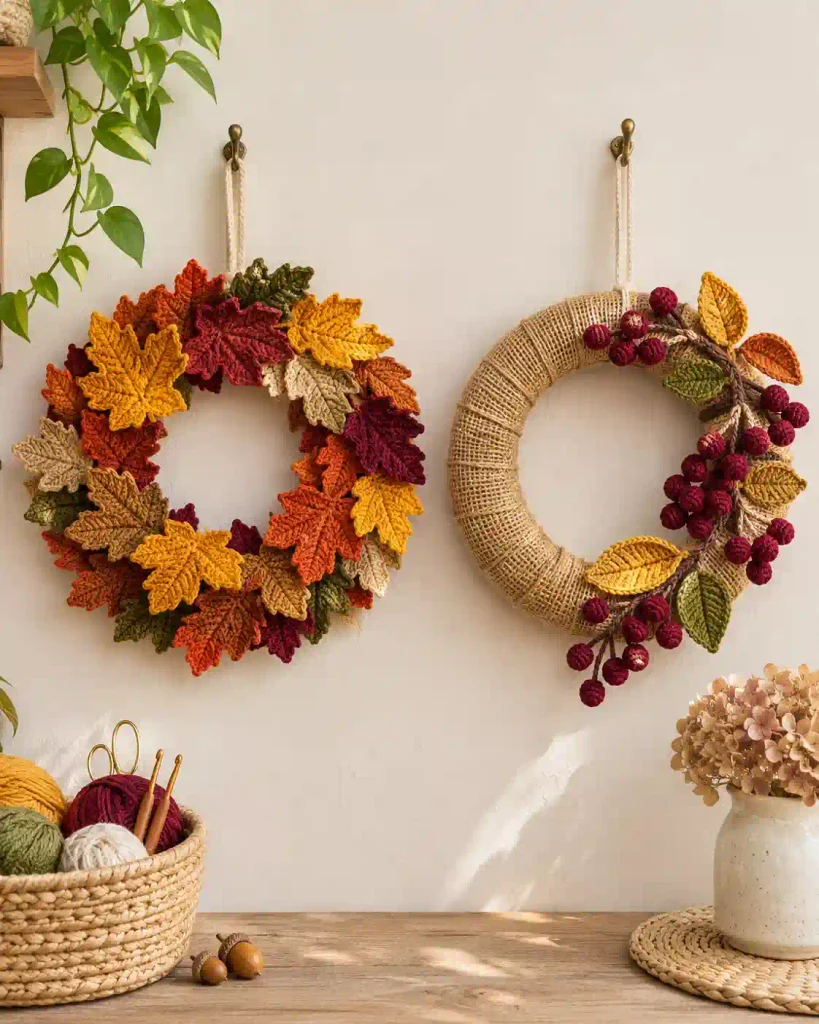
Maple leaves have pointed tips that give a wreath a crisp outline, especially against a plain cream door. Crochet the same leaf in rust, gold, and burgundy, then gently shape each one and let it dry flat if the yarn care instructions allow.
Overlap the stems to hide the attachment points and turn a few leaves so their tips break the circle naturally. Step back before sewing them down to make sure each color still has room to show.
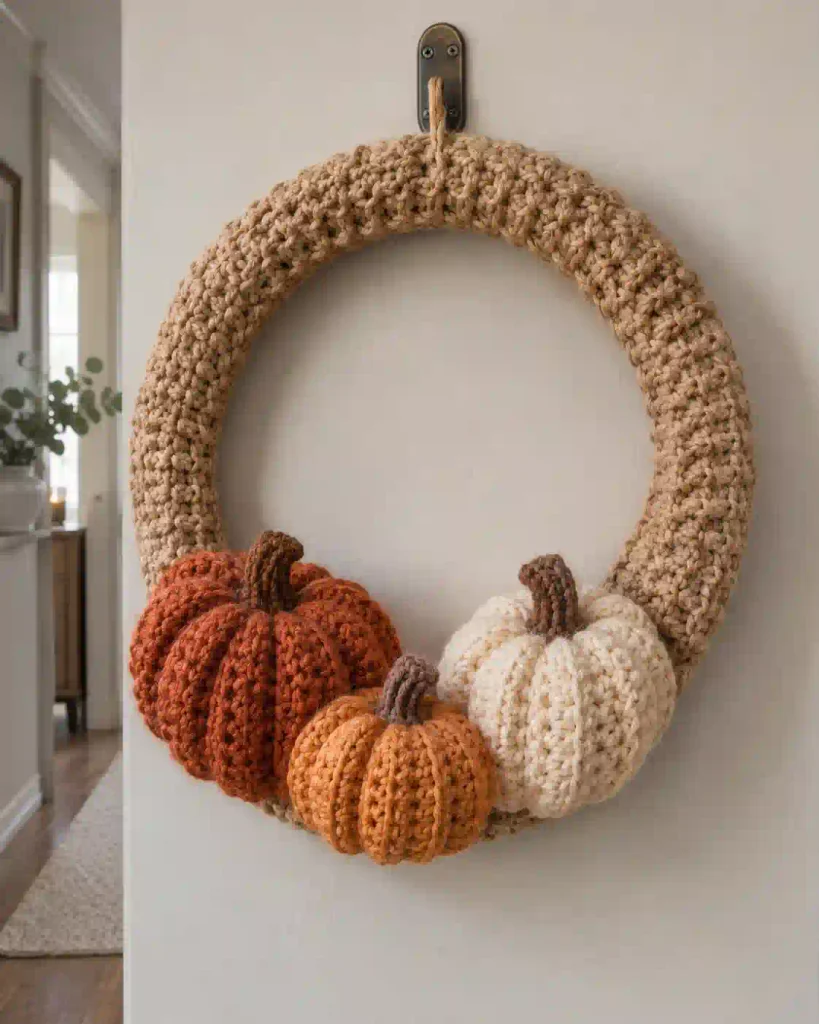
3. How do you arrange a mini crochet pumpkin wreath?
Start with the largest pumpkin slightly off-center at the bottom, then tuck two smaller ones beside it. Ribbed pumpkins show up well against a smooth cover, and adding one cream pumpkin gives the orange ones a little breathing room.
Cinch each pumpkin at the center and leave a long yarn tail to attach it to the ring. Hang the wreath temporarily before making the final knots so you can see whether the cluster pulls it to one side.
4. How do you make a sunflower crochet door wreath?
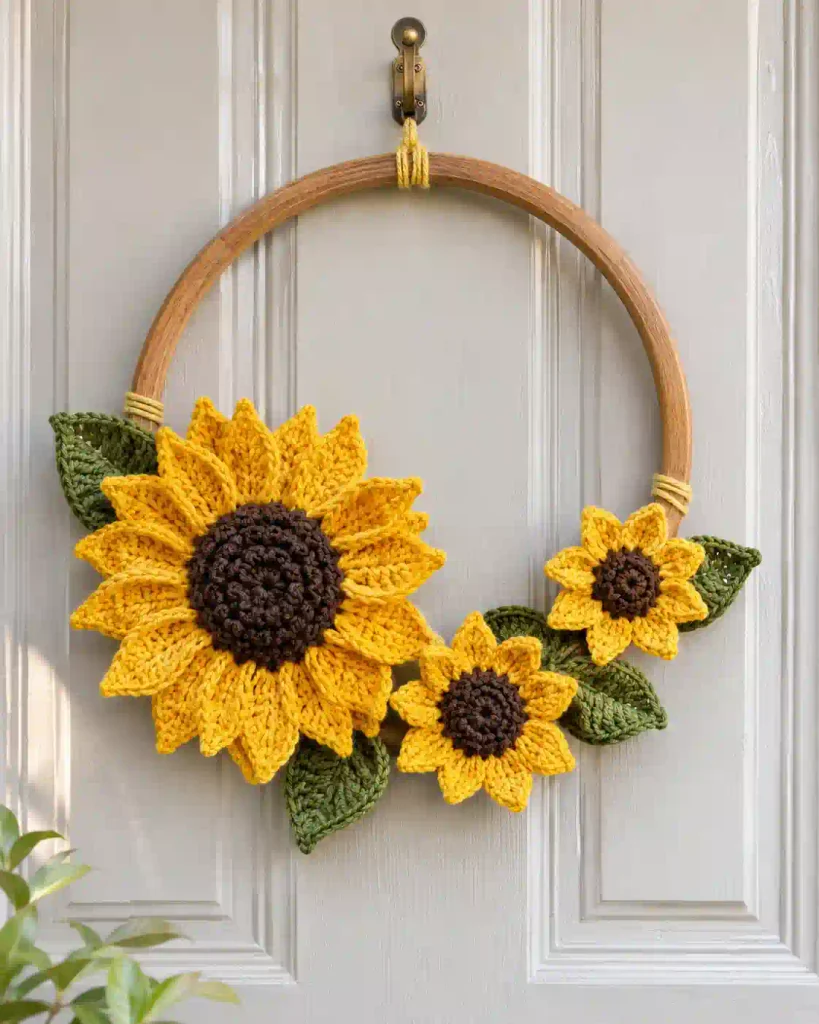
One large sunflower and two small ones are enough to make this design readable from the porch steps. Use these free sunflower crochet patterns to pick a bloom for the center. Use a dark center and golden petals for the main bloom, then place the smaller flowers close enough to appear as a group.
On a dark door, try a few pale yellow outer petals to sharpen the silhouette. Secure each flower through its center and tack down a few petals if they curl forward.
5. Which leaves pair well with crochet acorns?
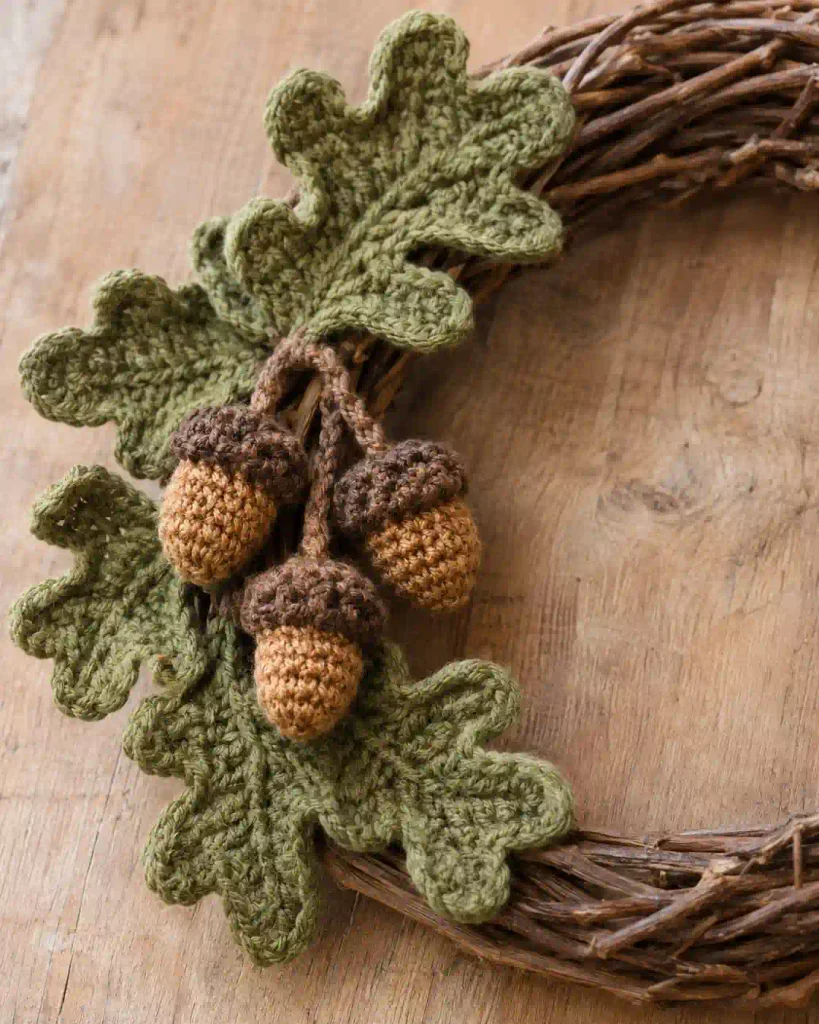
Blunt-lobed oak leaves are a natural fit for the rounded shape of a crochet acorn. Try olive and muted copper leaves with tawny acorns and darker, textured caps.
Set the leaves down first to see where you can tuck the acorn ties underneath, then leave one cap fully visible so the cluster reads from a distance. The muted colors work especially well beside a wooden entry table or on an indoor peg rail.
6. How can you use mini crochet wreaths at Thanksgiving?
A mini wreath can double as a napkin accent and a small favor for someone to take home. Cover a palm-size wooden ring with crochet, stitch on a tiny leaf, and add a narrow yarn loop so it can hang later.
Use the same yarn for every ring and vary the leaf color from place to place. Make one sample and set it on a folded napkin before starting the batch to check the scale.
7. Where do crochet toadstools look best on a wreath?
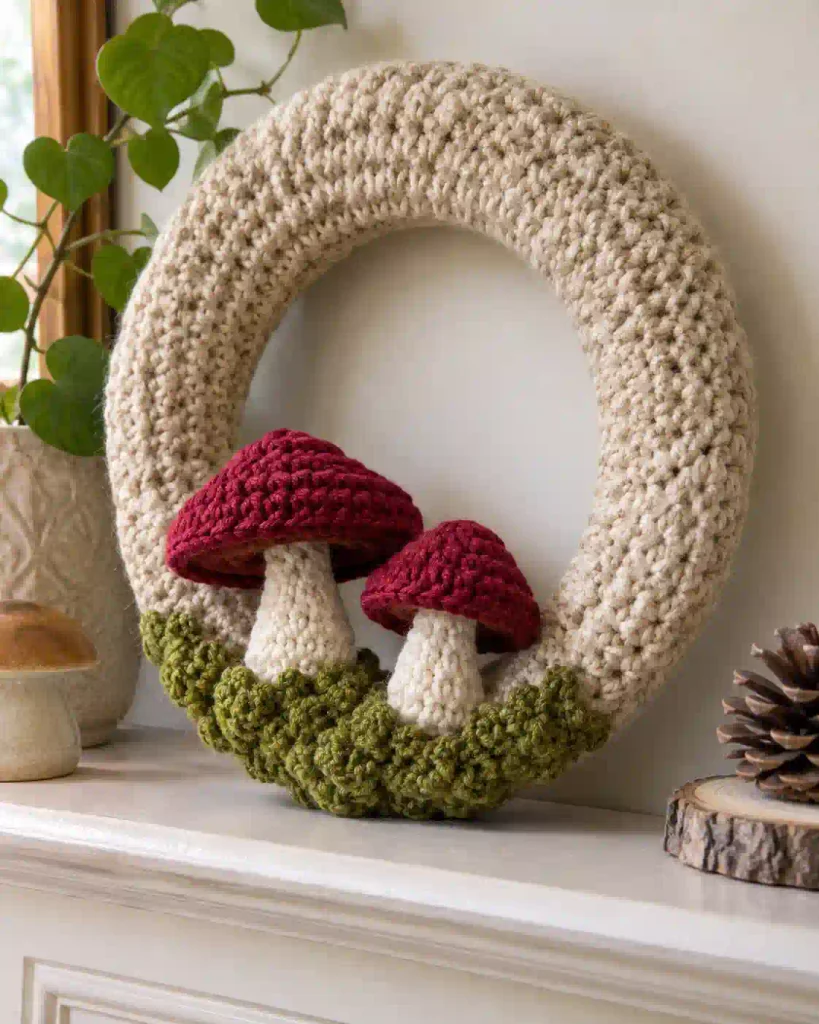
Set two stuffed toadstools low on the ring so their stems look planted and the caps have room above them. If you’re still choosing a shape, start with these free crochet mushroom patterns. A narrow band of moss-green crochet under the mushrooms gives the cluster a setting without filling the center.
Sew through the bottom of each stem and add a second anchor higher up if a cap wants to tip. This is a good mantel project because the small details are easy to see up close.
8. Can you make a fall wreath with an exposed grapevine base?
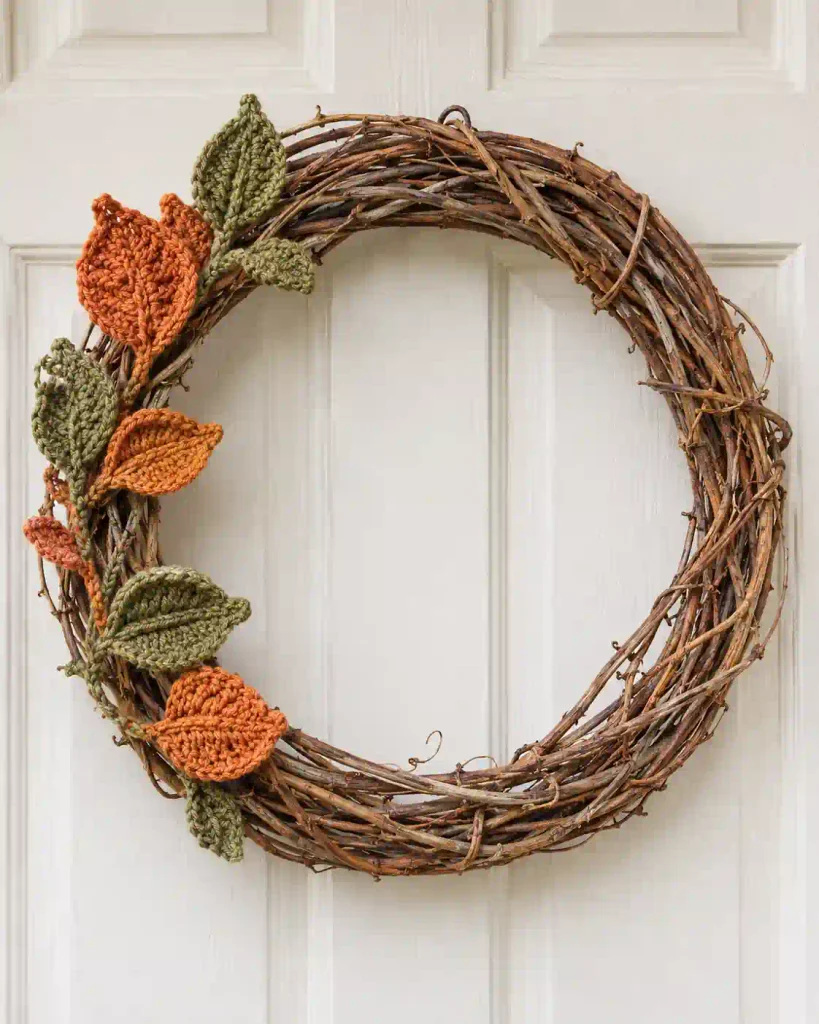
Yes. Leave most of the grapevine visible and sweep a handful of crochet leaves along one side. Thread the yarn tails through sturdy vines, knot them at the back, and tuck the ends away from the front.
It’s a useful setup if you want to switch from bright maple colors in early fall to deeper harvest shades later. For a fuller version using the same base, Crochet 365 Knit Too’s pattern combines pumpkins and flowers on an 18-inch grapevine wreath.
9. Chunky crochet wreath with an oversized bow
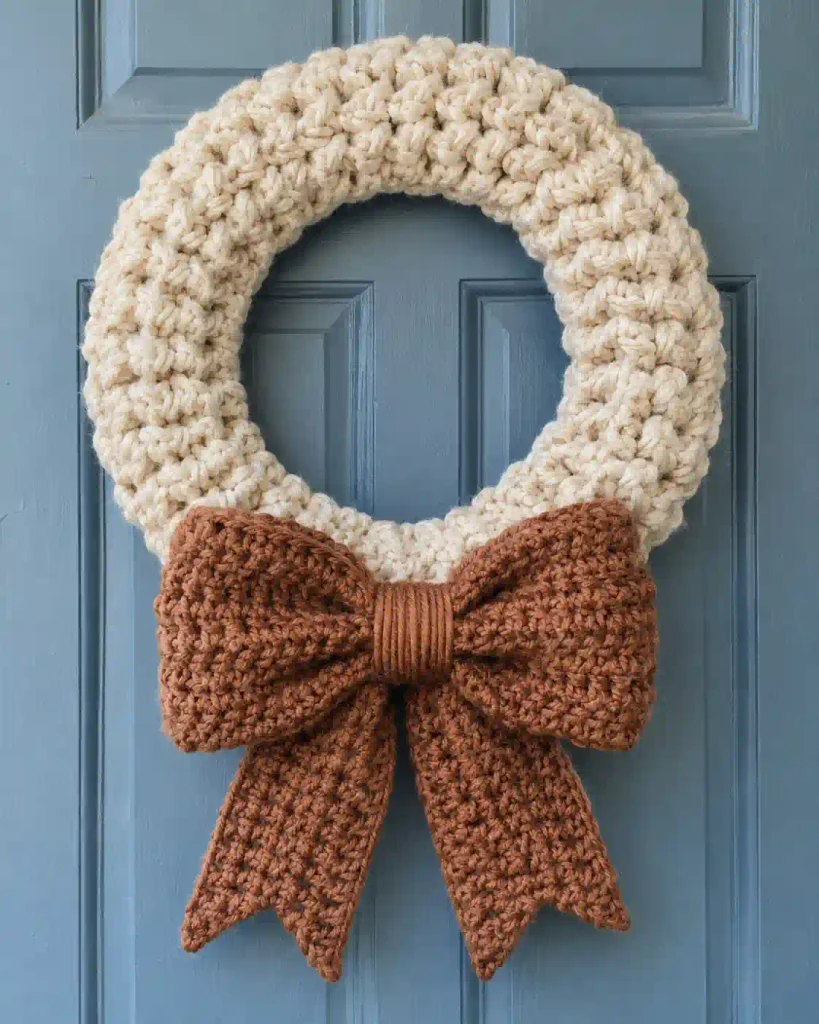
An oatmeal ring and a cinnamon bow make a strong pair when the stitches are large enough to see across the room. Crochet a small test piece before committing to the cover, since a thick fabric can change how easily it bends around the form. For the bow, pinch a crocheted rectangle in the middle, wrap that pinch with yarn, and stitch through the wrap to secure it.
The Craft Yarn Council classifies chunky yarn as bulky, category 5, so look for that number when comparing labels.
10. How do you turn scrap yarn into an ombré leaf wreath?
Lay your scraps out from light ochre to deep burgundy before choosing which leaves to make. Use one simple shape for your crochet fall leaves so the gradual shift in color gets the attention, then move the finished leaves around the ring before sewing them on.
Keep yarns of similar thickness together when you can. If a thicker scrap makes a noticeably larger leaf, put it near the focal cluster where the extra size feels deliberate.
11. Crochet turkey wreath for Thanksgiving
A crocheted turkey gives a Thanksgiving wreath a focal point guests can spot the moment they walk in. Attach the soft body at the bottom of the ring, then fan flat feathers behind it in mustard, clay, and brown.
Try each feather position while the wreath is lying on the table, and stitch through the feather bases after the spacing looks right. A second tie behind the turkey body helps keep it upright when the wreath hangs.
12. Harvest crochet wreath with berries and leaves
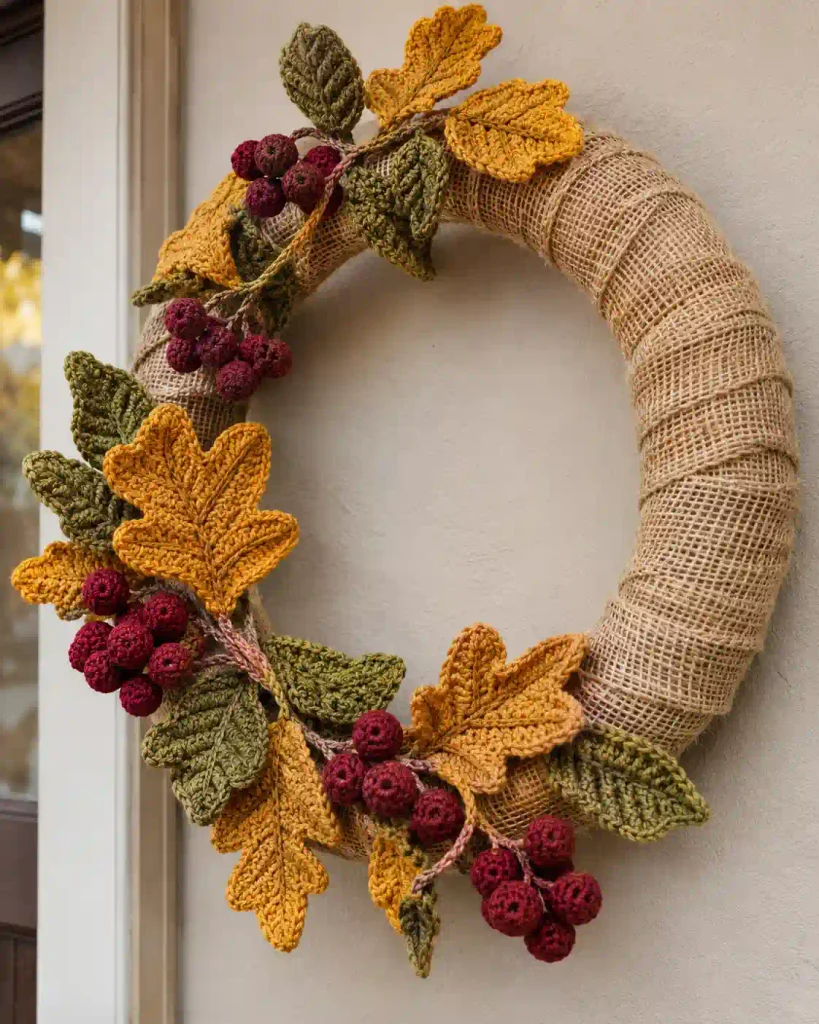
If a leaf wreath feels a little flat, small crocheted berry clusters add dimension without taking over the design. Start with a patch of gold and olive leaves on one side of a burlap-wrapped ring, then tuck burgundy berries into the gaps.
Keep the densest bunch together and let the arrangement taper toward the top. A burlap background also gives you a place to hide ties and pins behind the leaves.
13. How do you make a flat crochet fox wreath?
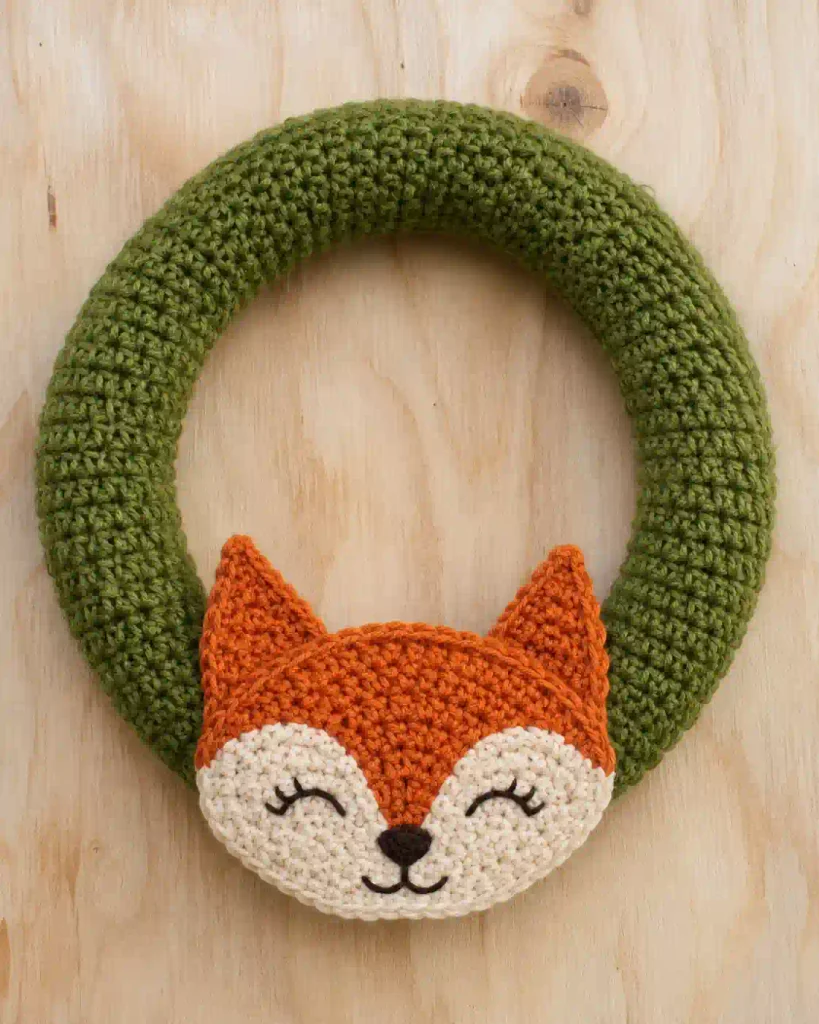
Give a flat orange fox face a moss-green backdrop and leave space around its pointed ears. Cream cheeks and embroidered eyes are usually enough for the face to read clearly, even on a smaller ring.
Lay the fox on the covered form and check its position while the wreath is upright. Once the face looks centered, sew it in place at the cheeks and near the base of the ears so it stays flat.
14. Crochet pinecone and copper leaf wreath
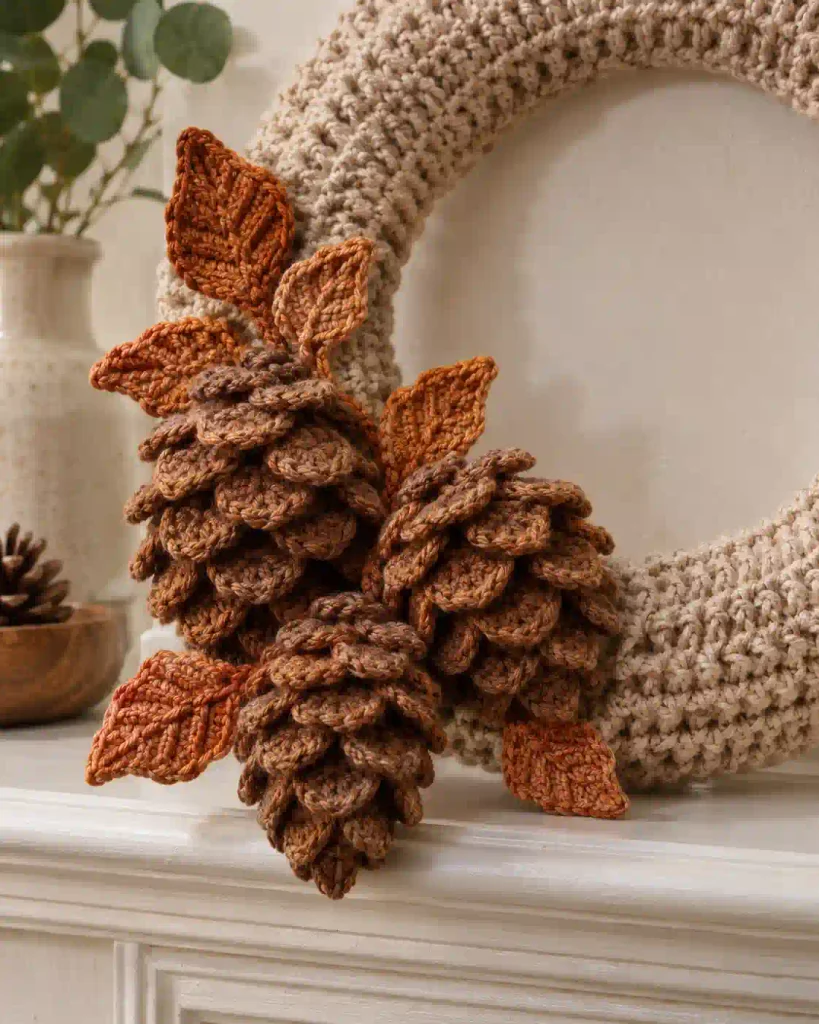
A trio of crocheted pinecones gives this wreath its texture, with flat copper leaves filling in the spaces between them. Use a plain tan cover so the layered brown scales stay easy to see.
Angle the cones slightly apart, as they might sit on a branch, then sew through each base and add a hidden stitch higher up if it rolls forward. Hang it near a lamp or window where angled light can pick up the raised stitches.
15. Neutral crochet wreath with dried grasses
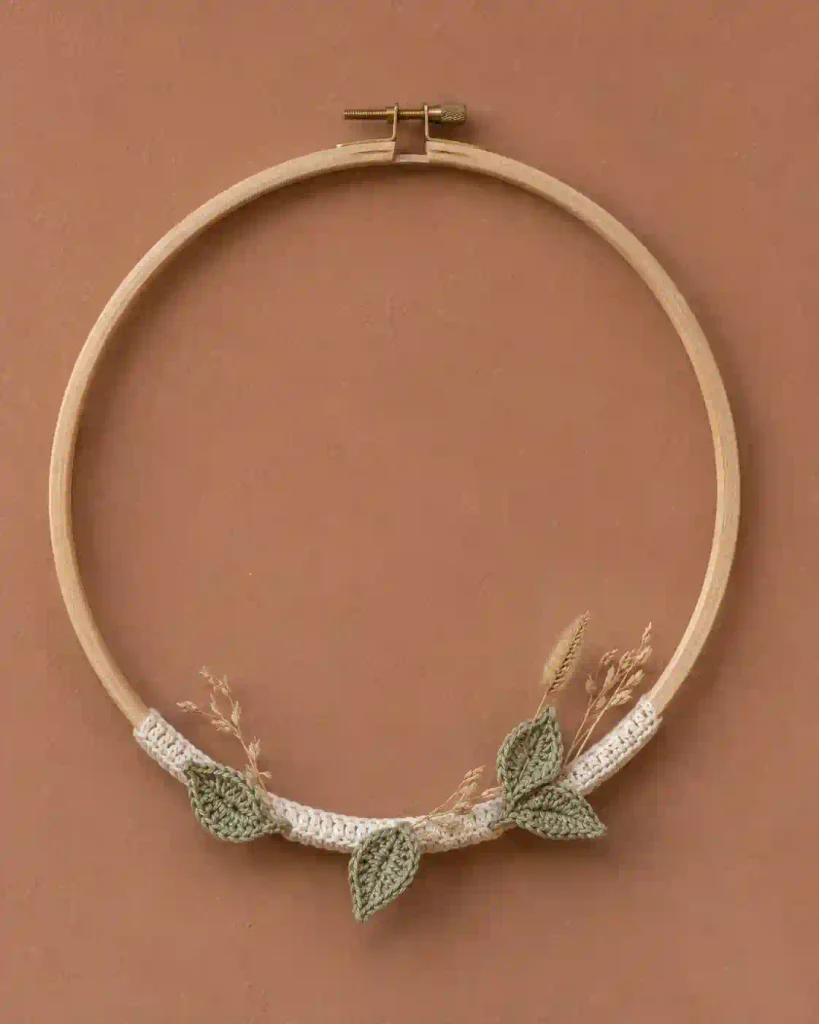
A thin wooden hoop, a short ivory crochet band, and a few sage leaves give this wreath a light profile for a hallway or apartment door. Wrap only the lower section of the hoop and keep the upper arc open so the wood stays visible.
Tie a small bundle of dried grasses behind the leaves and trim the stems after you check the shape from the front. Display it indoors or in a sheltered spot where the grasses will stay dry.
Where can you find a free crochet fall wreath pattern?
Start with one of these two Red Heart patterns. Yarnspirations provides both as free downloads, and each uses a different form size and assembly method.
- Autumn Leaves Wreath. Yarnspirations rates this pattern easy. It calls for a 12-inch straw form, stuffing, and a glue gun. Pick it if you want a smaller finished piece and enjoy making autumn leaves.
- Fabulous Fall Wreath. This intermediate Red Heart design uses an 18-inch burlap-wrapped straw form, with floral wire and greening pins to secure the details. Pick it if you have room for a larger harvest display.
How do you attach crochet leaves and pumpkins to a wreath?
Sew motifs onto a crocheted cover, tie them through grapevine, or use greening pins on covered straw when the pattern calls for them.
At a Glance
- Leave long yarn tails on motifs you plan to sew or tie.
- Use more than one attachment point for heavier pieces.
- Check the spacing and balance with the wreath hanging upright.
Choose your attachment method before you weave in the yarn tails. A long tail can double as a sewing thread or a removable tie.
- Sew onto a crochet-covered ring. Use a yarn needle to catch the cover stitches and the back of the motif. On a larger piece, add stitches at two or more points to keep it from rotating.
- Tie through a grapevine ring. Feed the tails around a sturdy vine and knot them at the back. This is especially handy when you plan to swap the motifs between seasons.
- Pin into a covered straw form. Use greening pins where the pattern calls for them. Catch the back of a leaf or its stem, then cover the fastener with the next motif in the cluster.
Lay out every piece before making permanent attachments. Then hang the wreath briefly to check how the arrangement looks upright. A pumpkin that sits neatly on the worktable may need a second anchor once its weight is pulling down.
Crochet fall wreath FAQs
What size wreath form should I buy?
A 12-inch form is a practical starting point for a compact door wreath, and an 18-inch form gives a full harvest arrangement more room. Measure the display area and allow for leaves, flowers, or a bow that extend beyond the base.
What yarn works well for crochet wreaths?
Medium-weight cotton is a good starting point for flat leaves with defined edges. Medium-weight acrylic works well for stuffed pumpkins and other shaped motifs. For an all-over cover, make a small swatch first and check that the fabric hides the form when stretched.
Can you hang a crochet wreath outside?
A covered porch or recessed doorway is a better spot than a door exposed to rain. Bring the wreath indoors during wet weather, especially if it contains straw, dried grasses, or stuffed crochet pieces.
Why does my crochet wreath hang crooked?
A heavy cluster can pull the ring to one side. Hang it temporarily and move the loop a little toward the heavier side until it sits level. If an individual motif droops, give it another attachment point before adjusting the hanger again.
What should I check before downloading a free wreath pattern?
Check the skill level, form size, and attachment supplies before choosing a pattern. If you searched for crochet fall wreath free pattern, look for a materials list and assembly directions so you can tell whether it covers the whole wreath.
Final thoughts
Choose a wreath that suits the spot you have in mind. Start with the foam-ring design if you’d like to practice a simple cover, or use grapevine if you want to change the leaves and pumpkins later. Crochet one motif first and hold it against the form.Seeing its actual size and color makes it much easier to decide how many more you need. When you’re ready for another project, browse the Fall Crochet Pattern archive for ideas.