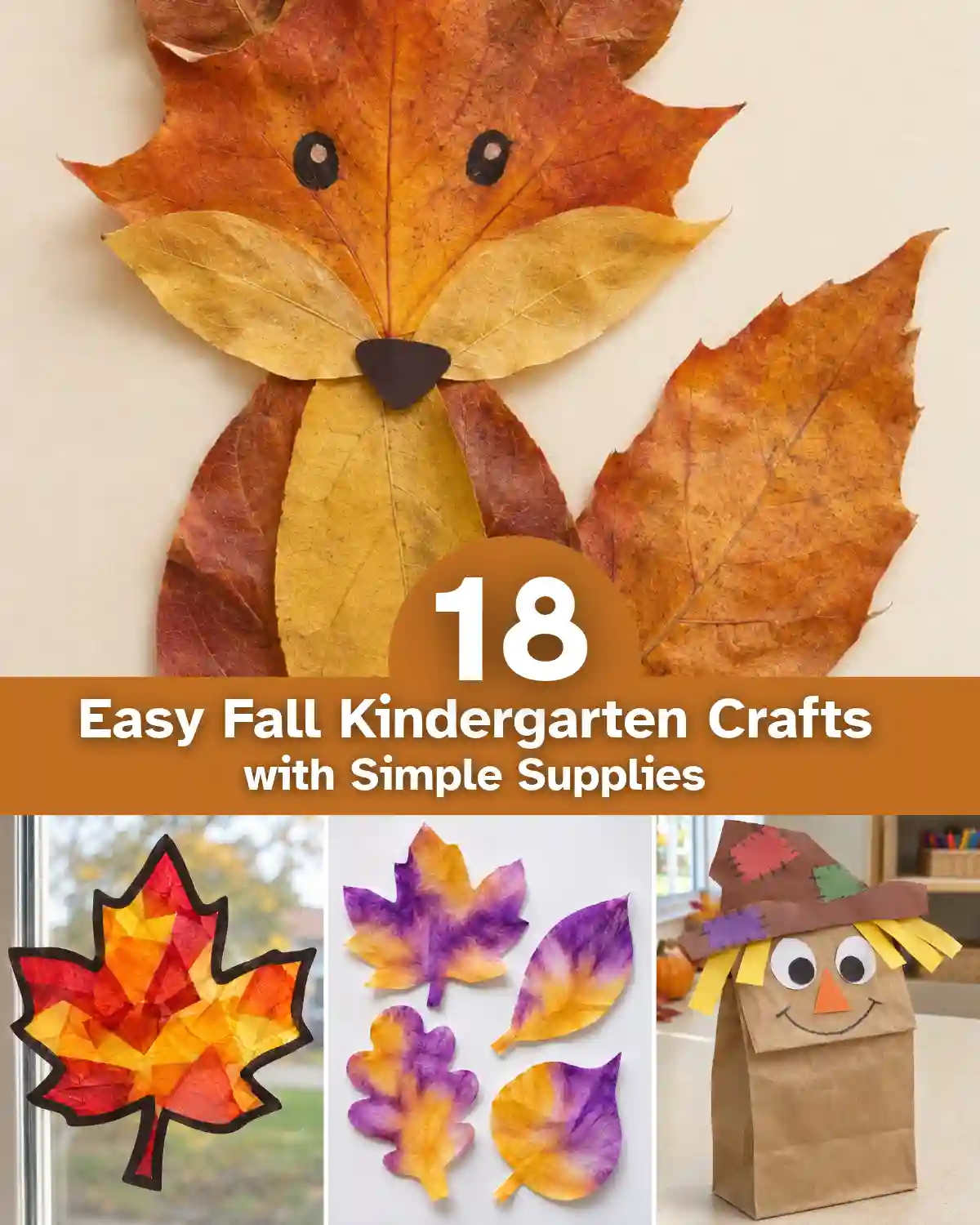




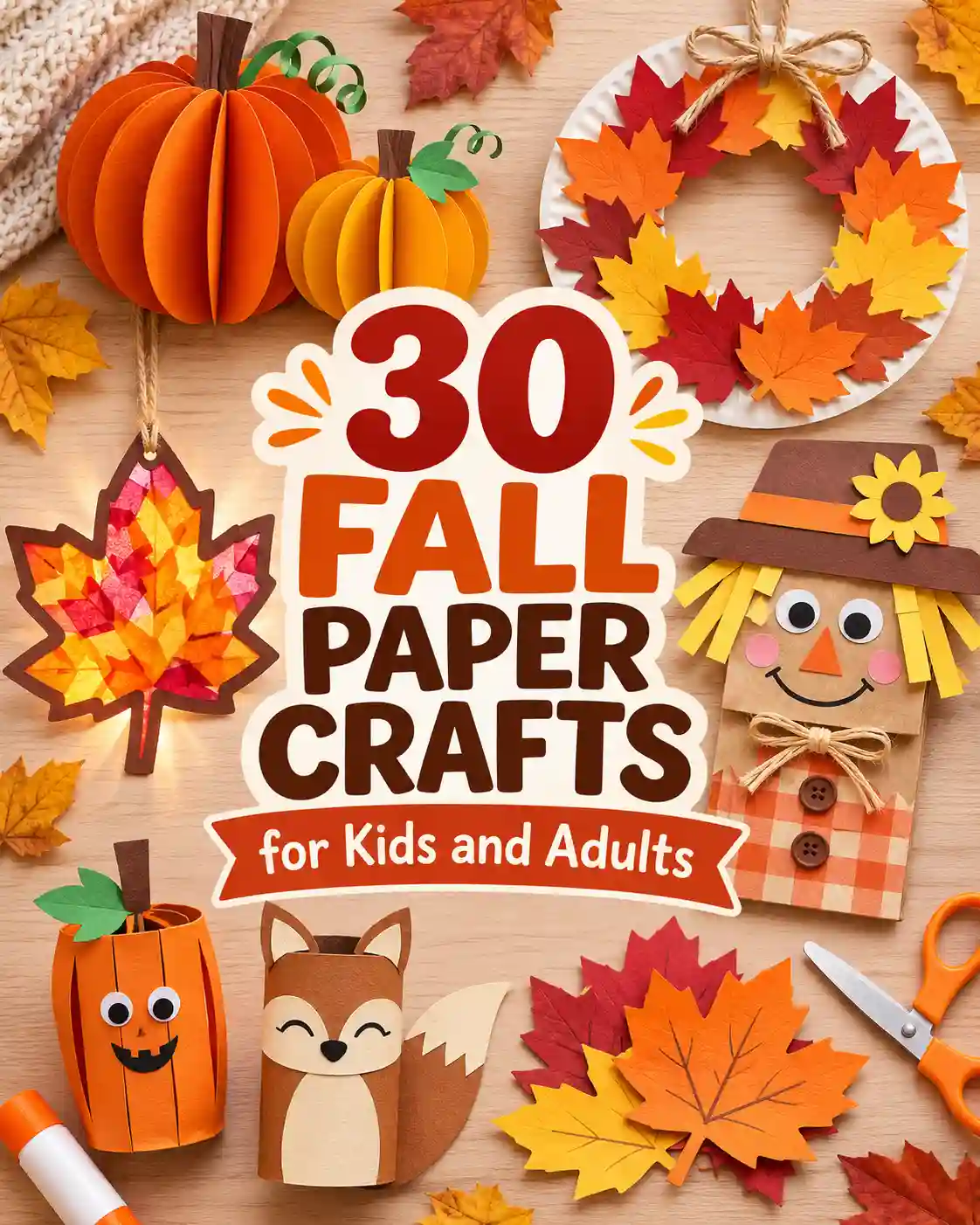


These 18 fall crafts for kindergarten use familiar supplies like crayons, construction paper, glue sticks, and washable paint. Start with leaf rubbings or a torn-paper pumpkin for a short art block, choose a pumpkin seed collage for counting practice, or set out paper plate wreaths for a classroom party. If your class comes in from recess with a handful of leaves, you’ve already got the start of an art station. Pick one project that fits the time you have, and leave a few choices open for the kids.
Key takeaways
- Start with leaf rubbings when you have a short art block.
- Choose dry fall crafts for kindergarten when cleanup time is limited.
- Use paper pumpkins for name practice or seed counting.
- Cut plate rings ahead for a fall party station.
- Set wet artwork flat to dry before displaying it.
Which fall kindergarten crafts should you start with?
Decide how much setup and drying time you have. A basket of crayons and dry leaves can go straight onto a table, while coffee filter art needs a tray and somewhere flat to dry. For a classroom group, put one finished sample at each station and explore more fall crafts for preschoolers that suit different skill levels before handing out supplies.
| What you need | Try this craft | Set out first |
|---|---|---|
| A quick nature craft | Leaf rubbings with crayons | Copy paper, dry leaves, unwrapped crayons |
| A dry art center | Torn-paper pumpkin mosaic | Orange paper strips, glue sticks, pumpkin outlines |
| A name activity | Pumpkin patch name craft | Paper pumpkins, a paper vine, name cards |
| A math center | Pumpkin seed counting collage | Numeral cards, paper seeds, folded paper pumpkins |
| A window display | Tissue paper leaf suncatcher | Cardstock frames, clear contact paper, tissue scraps |
| A fall party station | Paper plate leaf wreath | Pre-cut plate rings, paper leaves, glue sticks |
For paints, markers, and other art supplies, the Art and Creative Materials Institute recommends its Approved Product (AP) seal for children in sixth grade or younger. Check the product directions as you set out materials.
18 Easy Fall Kindergarten Crafts with Simple Supplies
1. How do you make leaf rubbings with crayons?
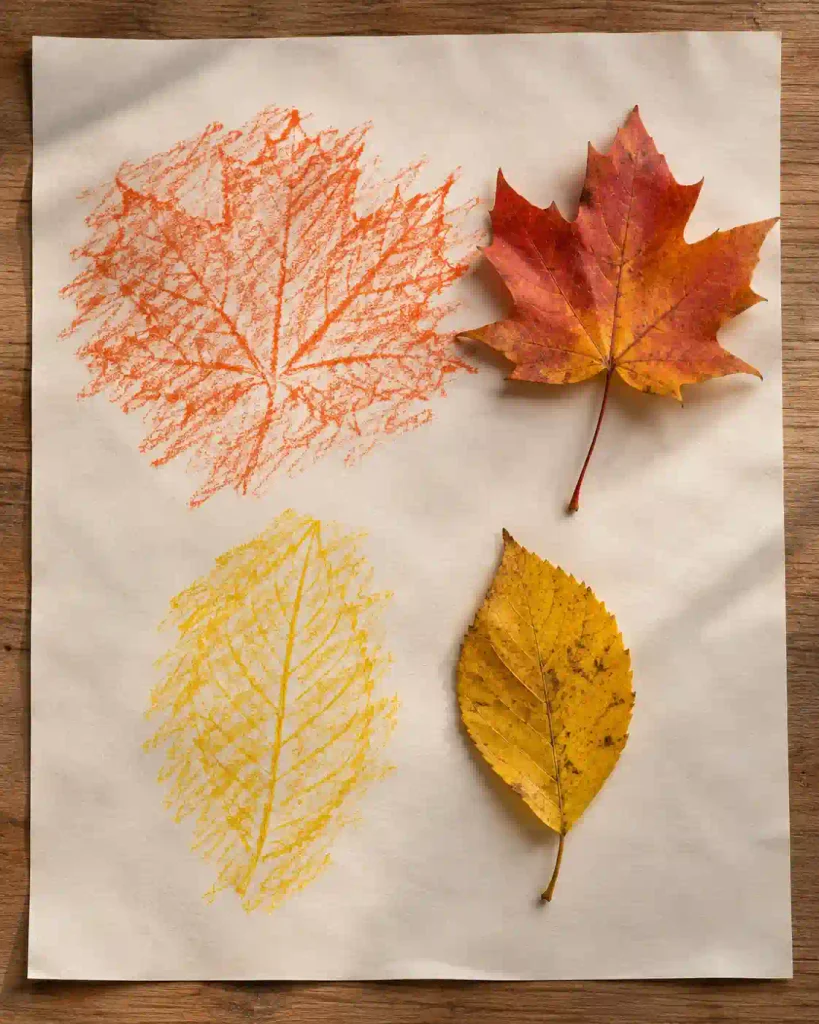
The first few strokes look like ordinary coloring. Then the veins appear, and kids can see details they might miss on a leaf walk. This is an easy table activity for children coming in from recess with a favorite leaf. A wide maple leaf and a narrow oval leaf make a good pair because their outlines look so different on paper.
- Tape a flat, dry leaf vein-side up to the table at the stem.
- Lay thin copy paper over it and hold the paper still.
- Rub gently with the side of an unwrapped crayon, then try a second leaf beside the first.
The National Weather Service explains that as green chlorophyll breaks down in autumn, yellow pigments already in a leaf become visible. After making a rubbing, ask children to compare its colors with the real leaf.
2. How do you make a tissue paper leaf suncatcher?
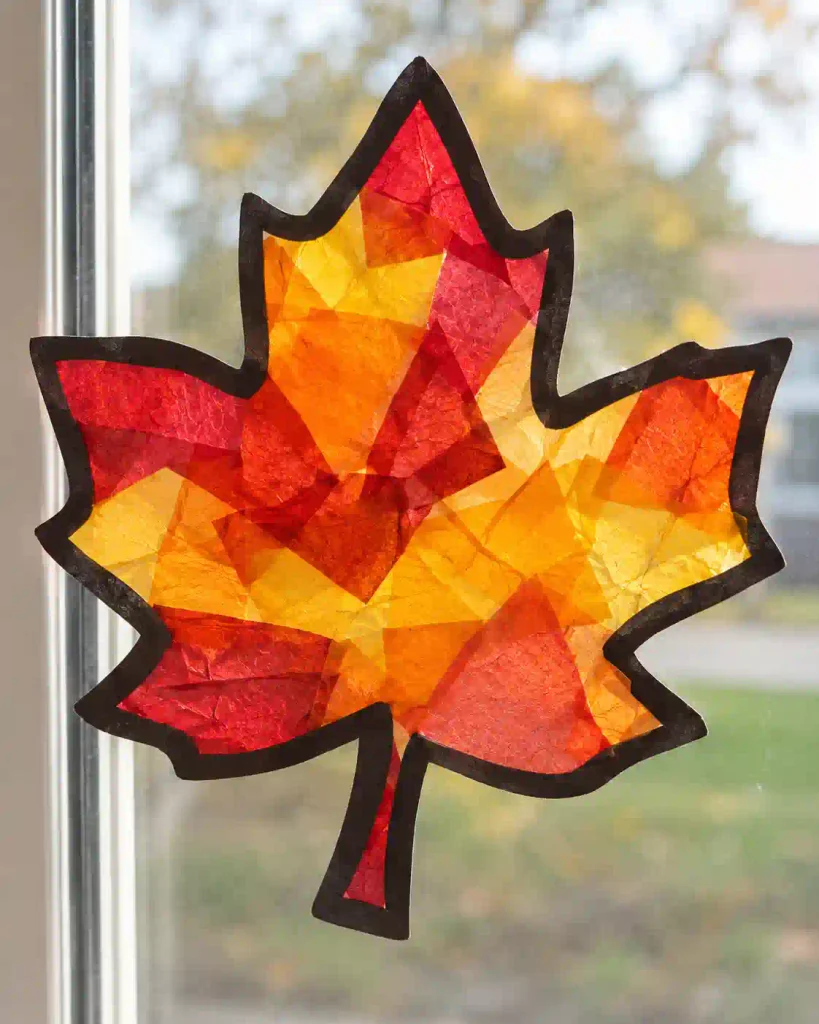
Two overlapping tissue scraps can make a new patch of color when you hold them to the window. Cut a leaf-shaped opening in cardstock ahead of time, then press one piece of clear contact paper behind it, sticky side facing the opening. At the art table, let children fill the space with torn tissue and try layering yellow over red. Seal the finished piece with a second clear sheet and tape it to a bright window.
3. Which leaf shapes make a fox collage?
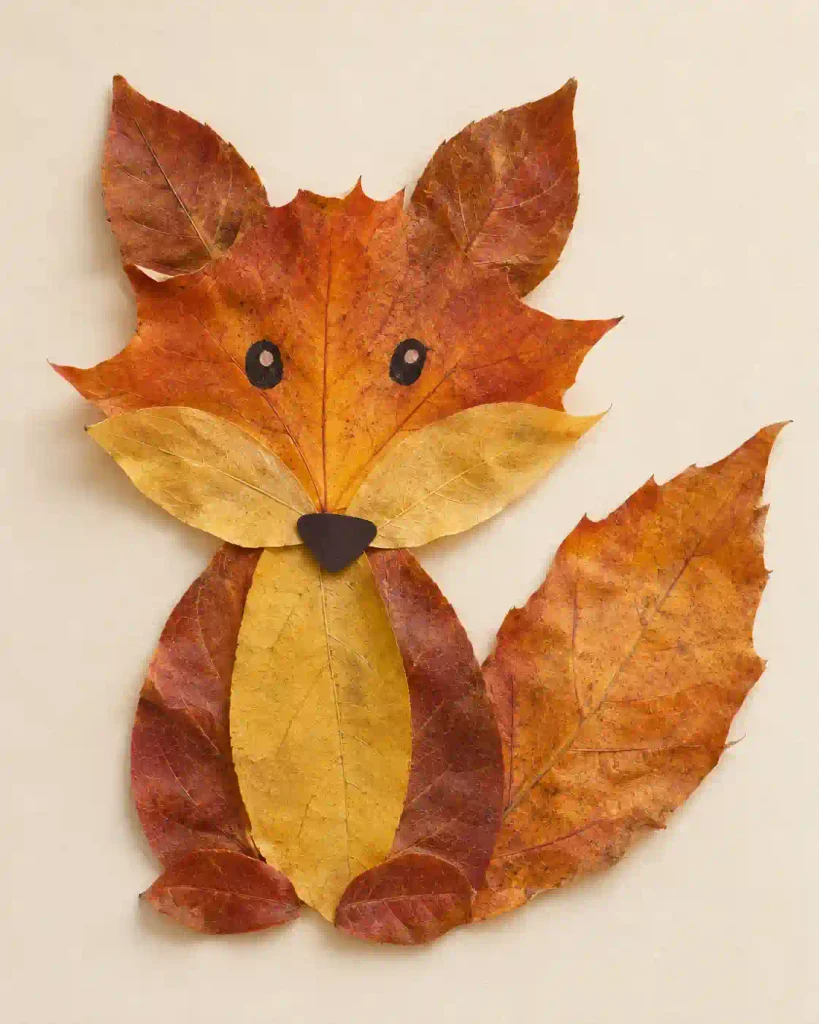
A pointed leaf makes a fox face and two smaller leaves make ears. Let children move the pieces around on cardstock before they glue anything down. A long leaf can become a tail, or the same pile might turn into a bird once someone spots a leaf shaped like a wing. If the playground leaves are wet or brittle, offer paper cutouts in several shapes so everyone can still build an animal.
4. How do washable markers color coffee filter leaves?
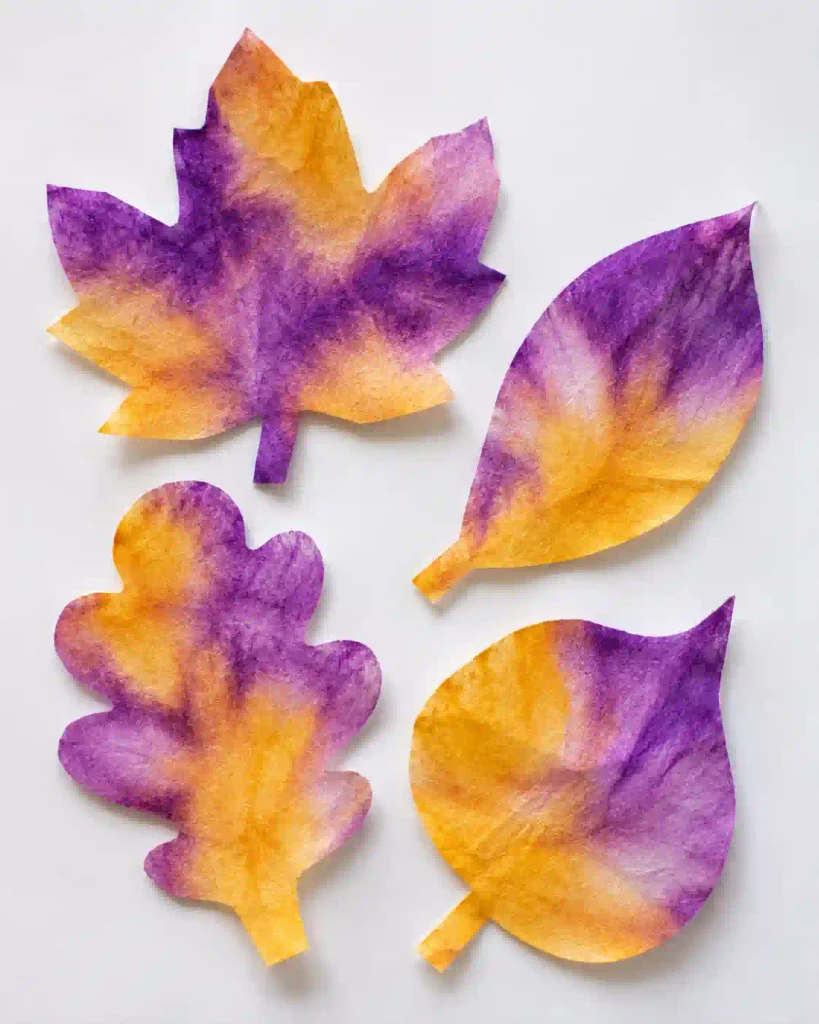
A few neighboring streaks of washable marker can spread into a wash of color across a coffee filter. Give each child a flat filter and two or three markers, then mist the filter lightly on a tray or dab it with a damp brush. Let the colors travel before adding more water. Once the filters dry, cut out leaves and hang them together so children can compare where the colors blended.
5. Can kids paint an autumn tree with cotton balls?
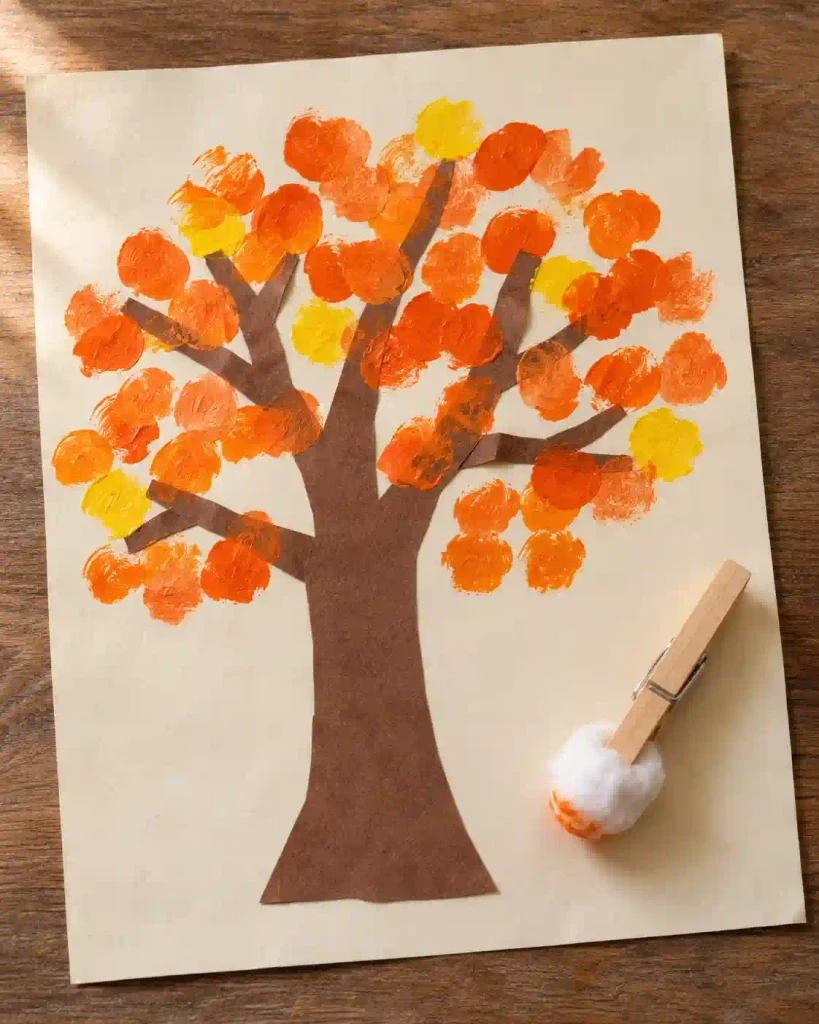
Cotton balls make soft clusters of color around a paper trunk. Clip one into a clothespin for each paint color so children can switch colors without hunting for a clean brush. Ask them to tap lightly on the page, then decide whether the leaves are still on the branches or scattered on the ground. A little space between the dabs keeps the trunk and branches visible.
Which pumpkin crafts add math or name practice?
Use a paper pumpkin vine to practice putting name letters in order, or a pumpkin seed collage to match a numeral to a group of objects.
At a glance
- Pumpkin vine · Put one letter on each pumpkin.
- Seed collage · Match the number card to a group of paper seeds.
- Leaf wreath extension · Repeat two colors around the rim.
6. How do you make a torn-paper pumpkin mosaic?
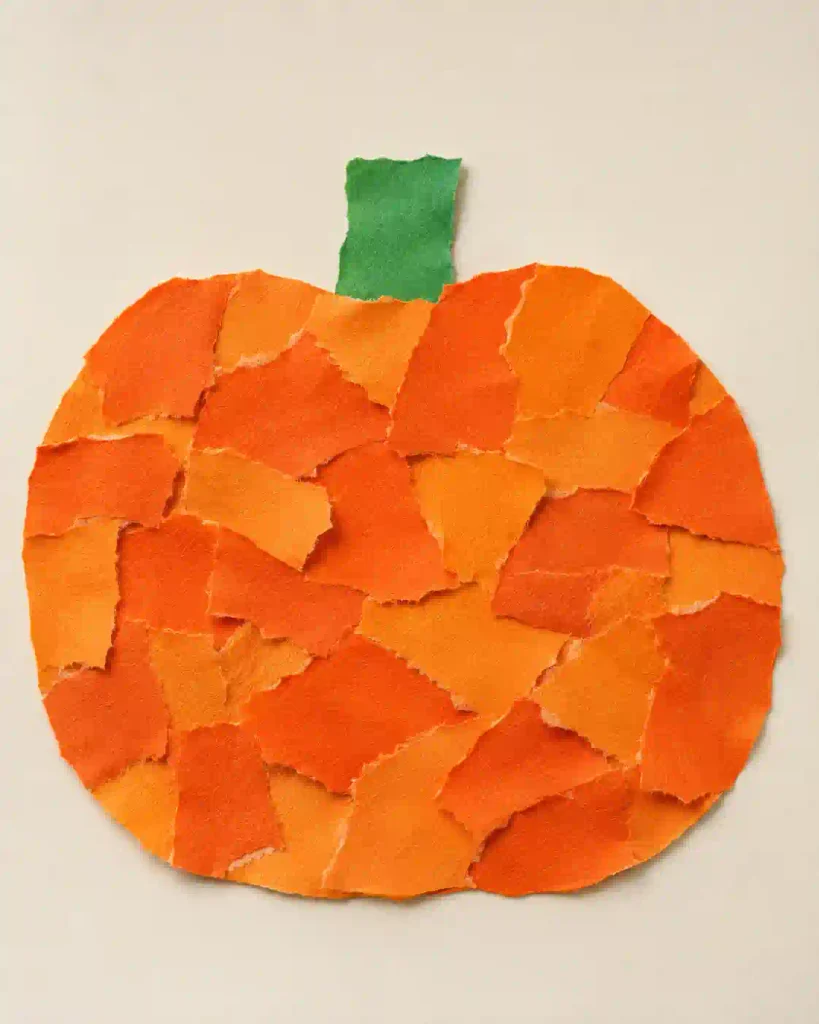
A torn-paper pumpkin is one of the easiest fall paper crafts for kindergarten, getting its texture from small overlaps and uneven edges. Draw a wide pumpkin outline on cardstock, then give children orange strips in two shades to tear and glue inside the shape. A child can cover the center with larger pieces and tuck smaller scraps around the curves. Finish with a green paper stem for a dry craft that fits a short activity block.
7. How do you turn paper pumpkins into a name craft?
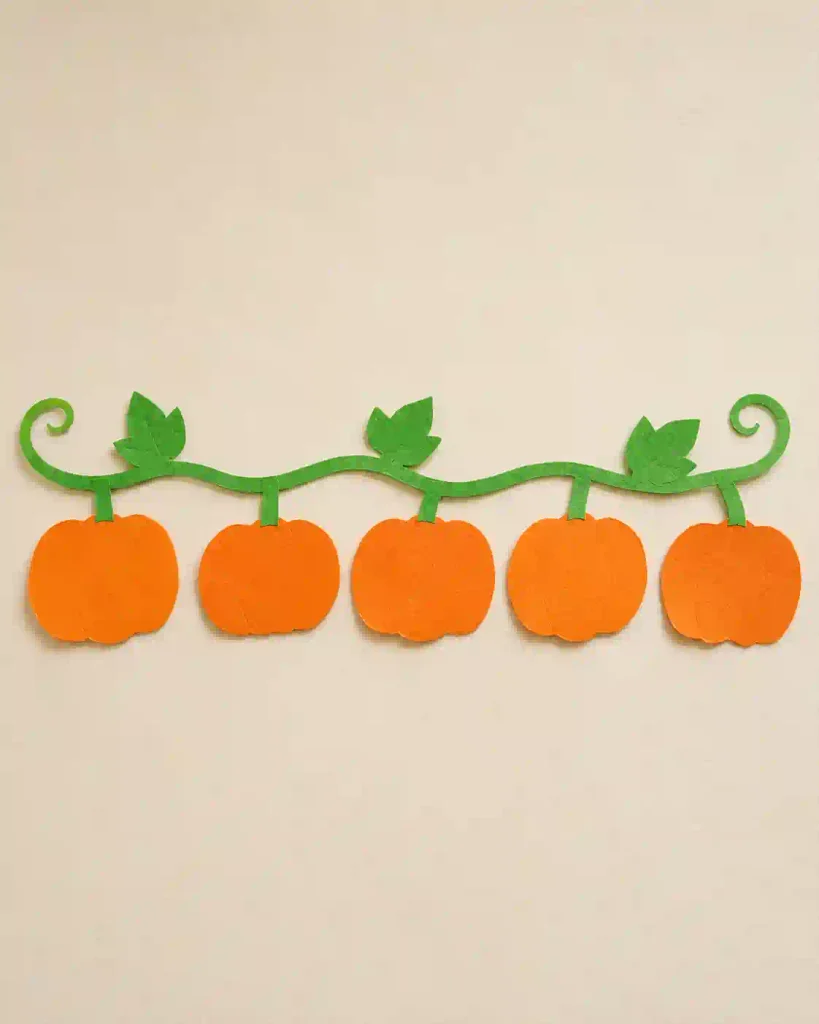
Each pumpkin carries one letter, and a paper vine gives the letters a place to go. Put each child’s name card on the table and have them find the first letter before arranging the rest from left to right. Once the order looks right, glue the pumpkins in place and invite the child to read the name aloud or point to its first letter. Cut extra pumpkins for long names and repeated letters.
8. How can paper pumpkin seeds teach counting?
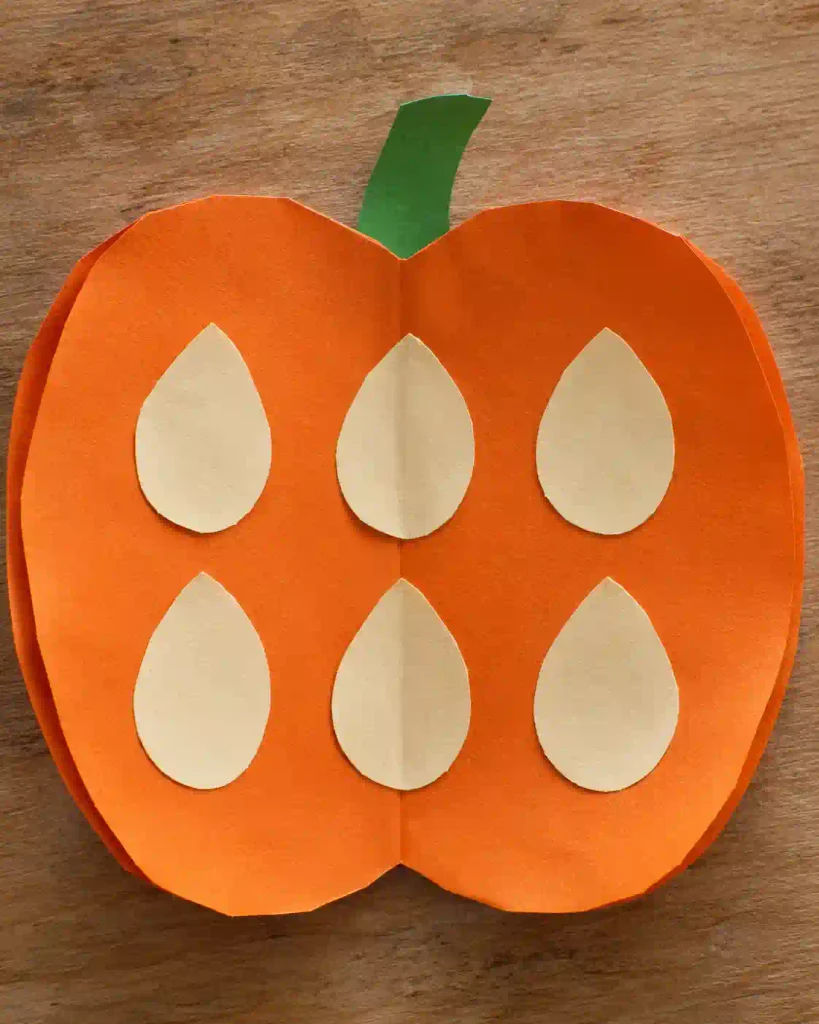
Give a child a card with a numeral, a folded paper pumpkin, and a small pile of large cream paper seeds. The seeds can move, so the child can spread them out and check the amount before gluing. This works well at a small-group math table, where you can hear each child count and ask how many seeds the pumpkin has altogether. Start with numbers one through five and offer cards up to ten when the group is ready.
Ask the child to move one seed as they say each number. That practices the Common Core kindergarten counting skills of pairing one number word with each object and using the final number to say how many objects are in the group.
9. How do you make a pumpkin that stands up?
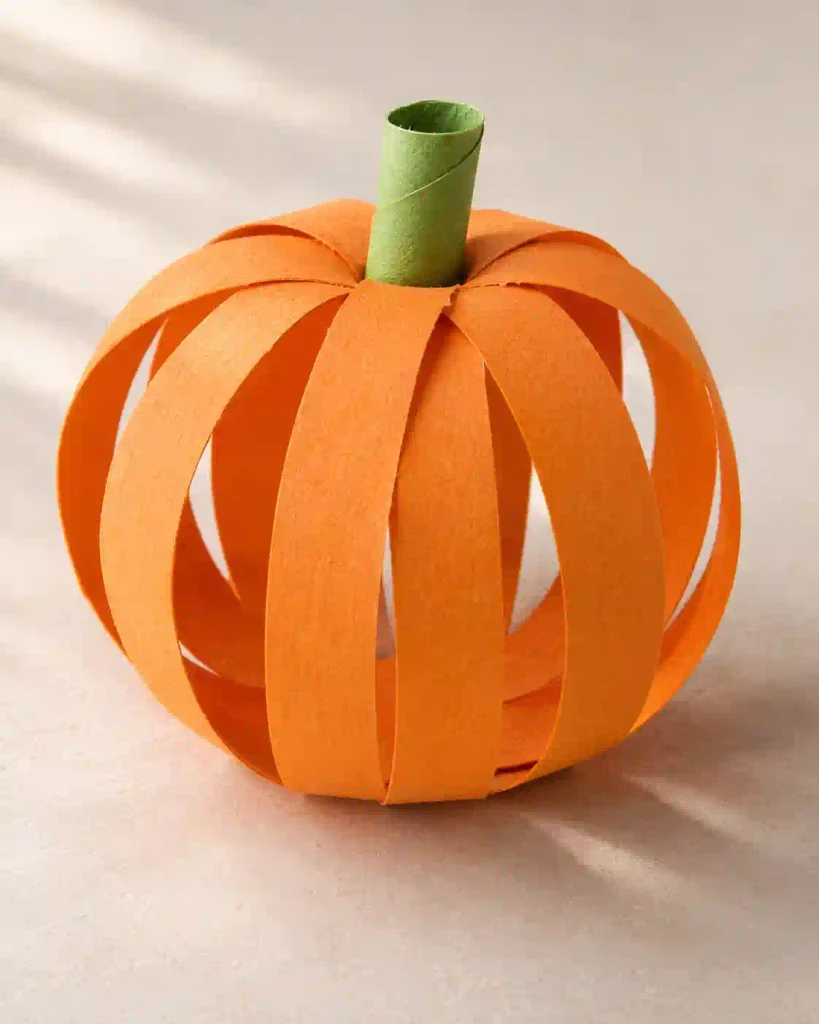
Arched cardstock strips give this paper pumpkin a rounded shape that can sit on a shelf. Have an adult cut several equal strips and roll a short cardstock cylinder for the core. Children use glue dots to attach one end of each strip near the top and the other near the bottom, spacing the hoops around the core. Add a green stem and leave room between the strips so the pumpkin’s shape shows from the side.
What can kids make for an apple theme?
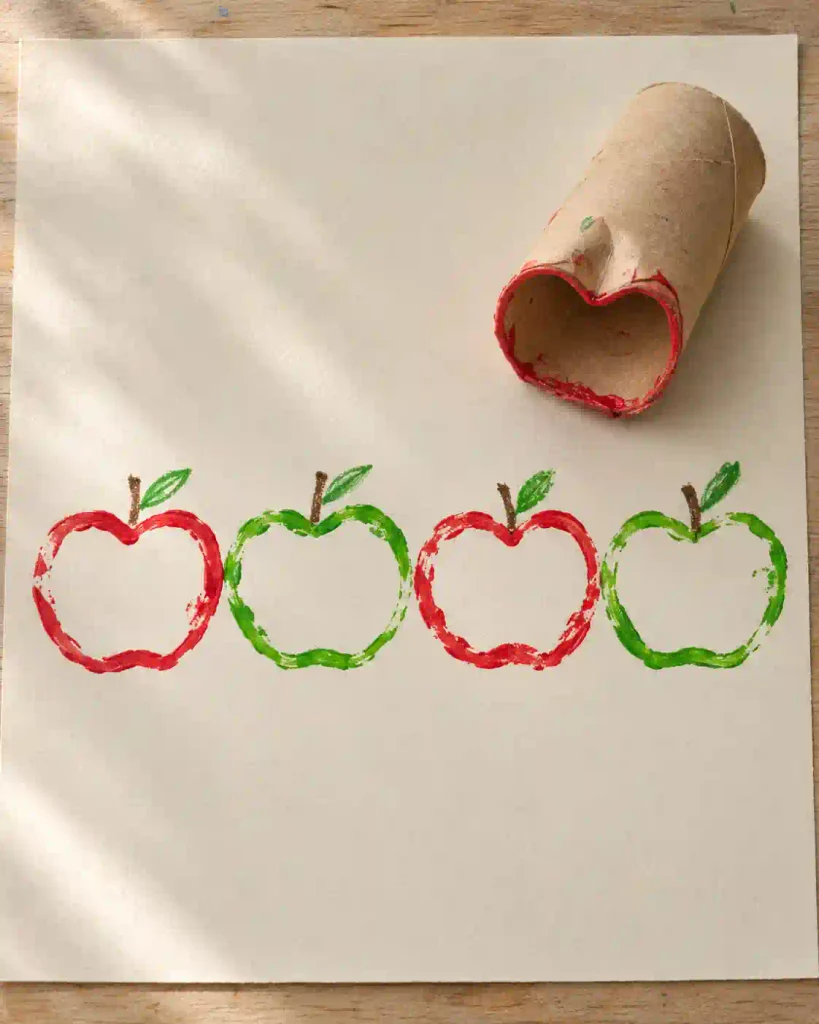
10. How do you stamp apples with a cardboard tube?
A small inward crease in the rim of a clean cardboard tube makes the dip at the top of an apple. Dip the shaped end into a shallow layer of washable paint and stamp it onto paper with gentle pressure. After the prints dry, add stems with a crayon or marker. Offer red and green paint and see what patterns children make across an apple orchard banner.
11. What makes a handprint apple tree a good keepsake?
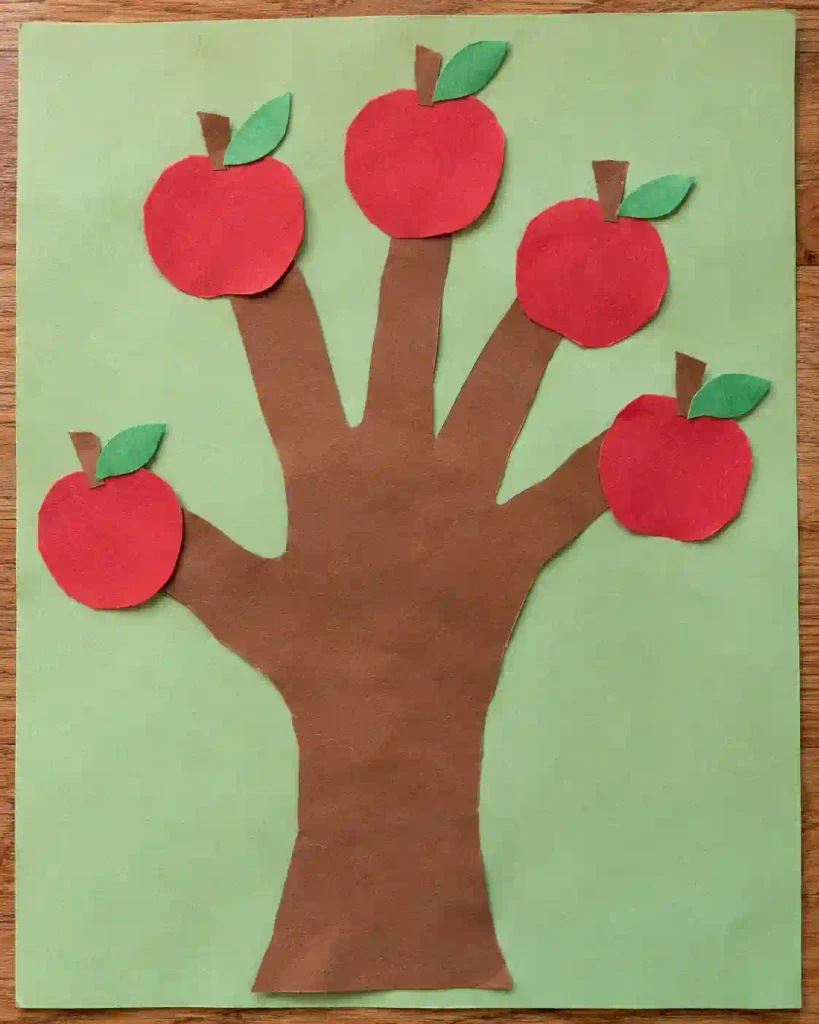
The spread of each child’s fingers shapes the tree’s branches. Trace the hand and wrist on brown construction paper, cut out the outline, and glue it onto a backing sheet. Children decide which branches get red paper apples and whether any apples belong on the grass. A pre-cut tree lets children who prefer fewer cutting steps spend their time arranging the fruit.
Which fall crafts work for a classroom party or harvest unit?
Quick answer. Paper plate wreaths and pie wedges work well at a party table, while scarecrow puppets give children a project they can use during storytime.
At a glance
- Leaf wreath · Set out plate rings and paper leaves.
- Pumpkin pie · Put orange tissue and brown crust strips in separate bowls.
- Scarecrow puppet · Prepare a lunch bag and a paper hat for each child.
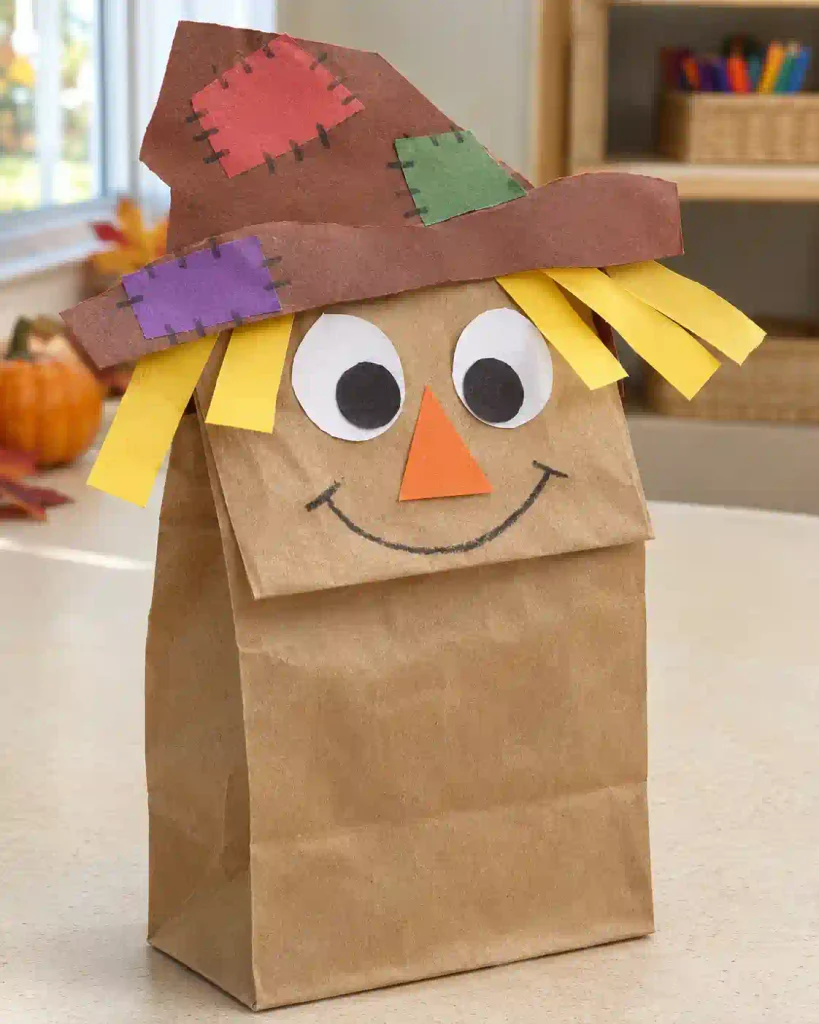
12. Paper bag scarecrow puppet
A paper lunch bag turns a cut-and-paste scarecrow into something children can talk through. Add eyes and a nose to the flap, draw a mouth where it folds, and glue a paper hat and wide yellow strips above the face. Set out larger cut pieces so the details are easy to handle. After the glue dries, give partners a story prompt such as what the scarecrow saw in the garden that morning.
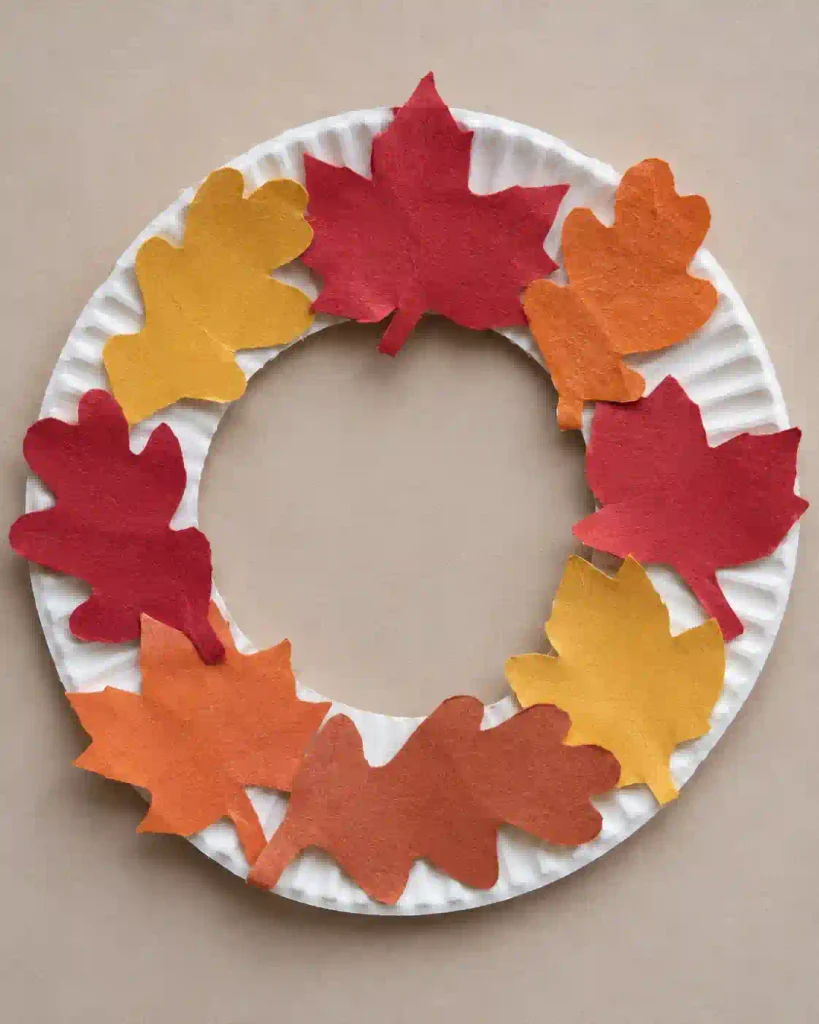
13. How do you make a paper plate leaf wreath?
Start with a ring an adult has cut from a paper plate. Children overlap cut-paper leaves around the rim and choose how many colors to use. For a pattern station, start with red, yellow, red and invite them to pick the next leaf, or give them space to arrange their own colors. The finished wreath can hang on a classroom door or lie flat as a table decoration.
14. Paper plate pumpkin pie
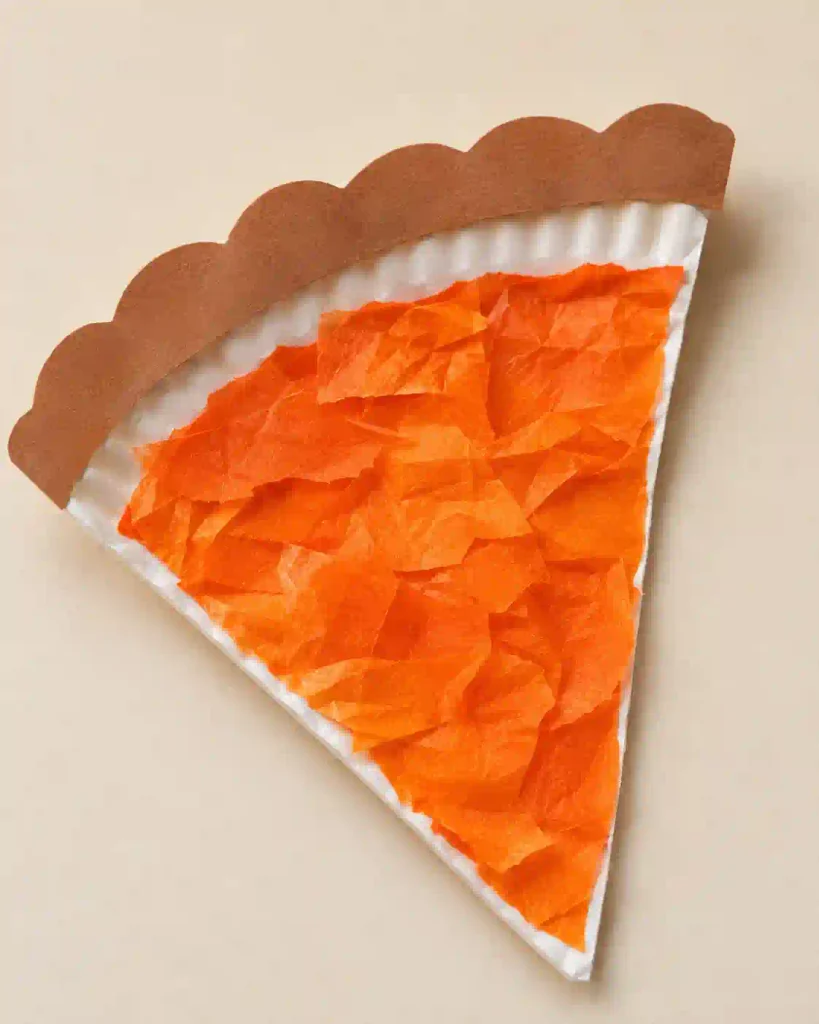
An orange tissue-paper filling gives this paper pie a crinkled surface that looks good even when pieces overlap. For a party table, prepare quarter-plate wedges and small piles of orange tissue. Children glue the tissue to the center, then add a strip of brown paper along the curved edge for the crust. At home, try the same process on a whole plate and let children draw lines to mark the slices.
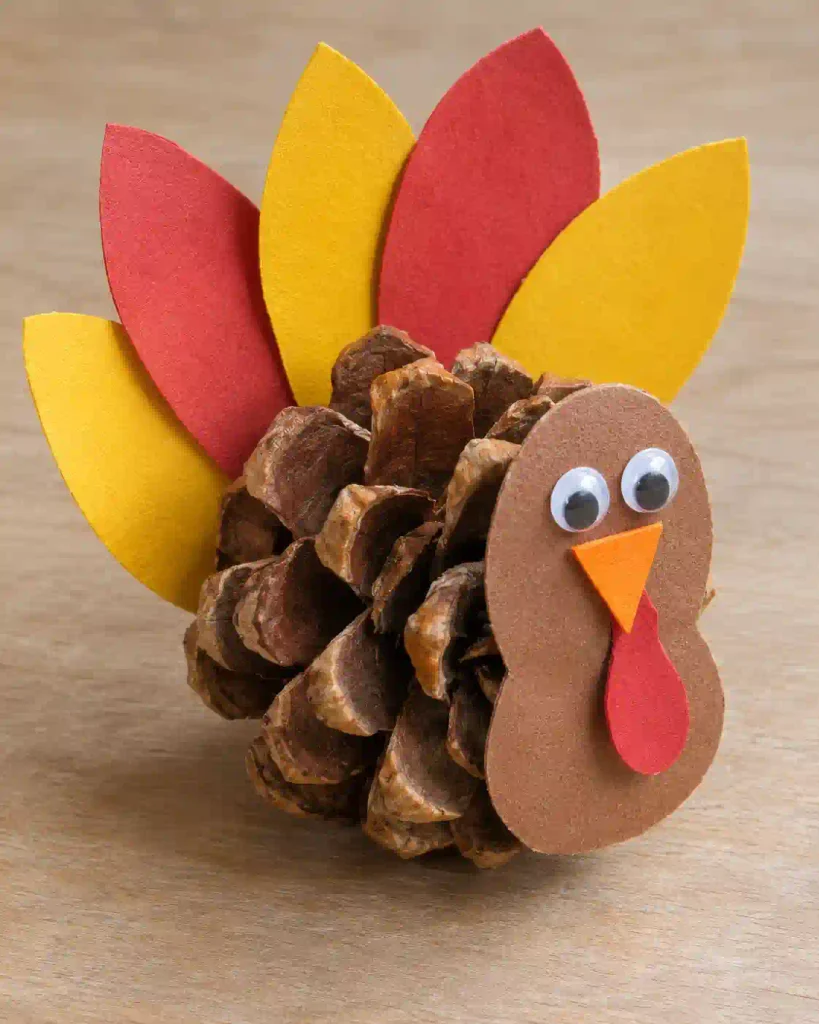
15. How do you make a pinecone turkey with paper feathers?
A dry pinecone gives broad paper feathers a textured base. Have an adult select the pinecones and help attach the cardstock feathers at the back with tacky craft glue. Children choose the feather colors and make the face while the base dries. A folded brown cardstock body gives anyone without a pinecone a turkey that can still stand on the harvest table.
What else fits a woodland art table?
16. Can you turn cupcake liners into owl wings?
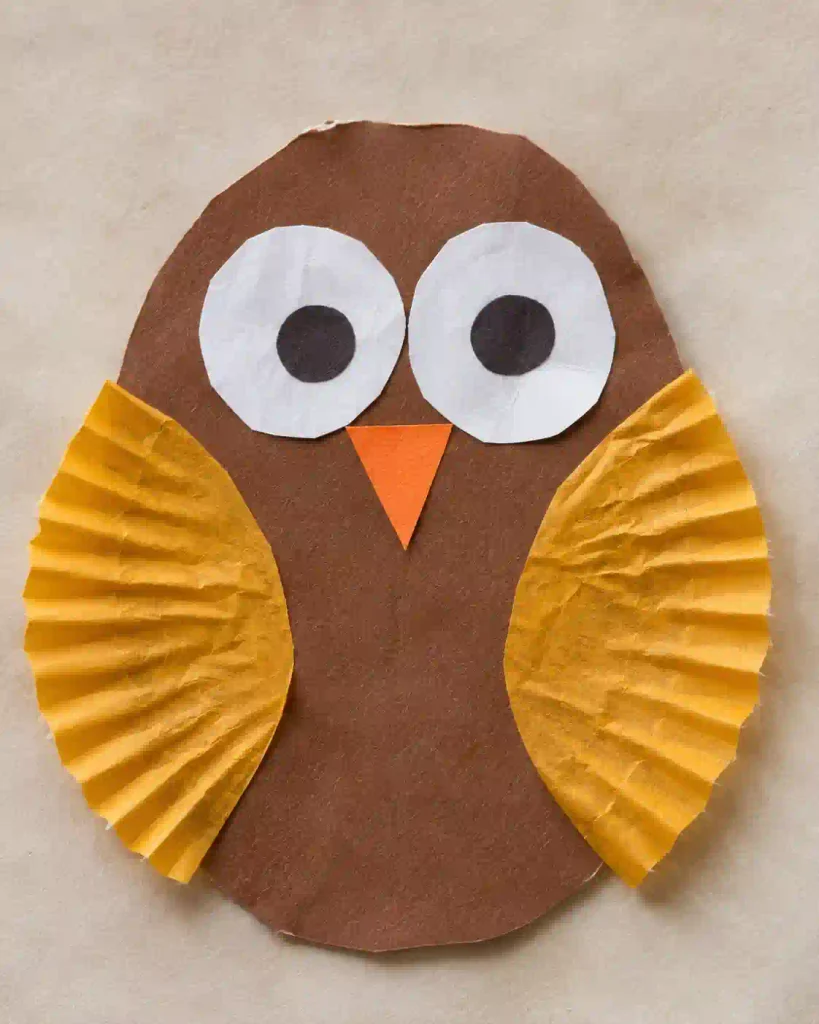
One folded cupcake liner can fan out into a pleated owl wing. Flatten a liner for the body on cardstock, then add two folded liner halves for the wings and cut-paper circles for eyes. Children can angle the wings downward for a perched owl or outward for a flying one. Set this out with a glue stick and a few large paper shapes for a simple indoor art center.
17. Autumn leaf hedgehog
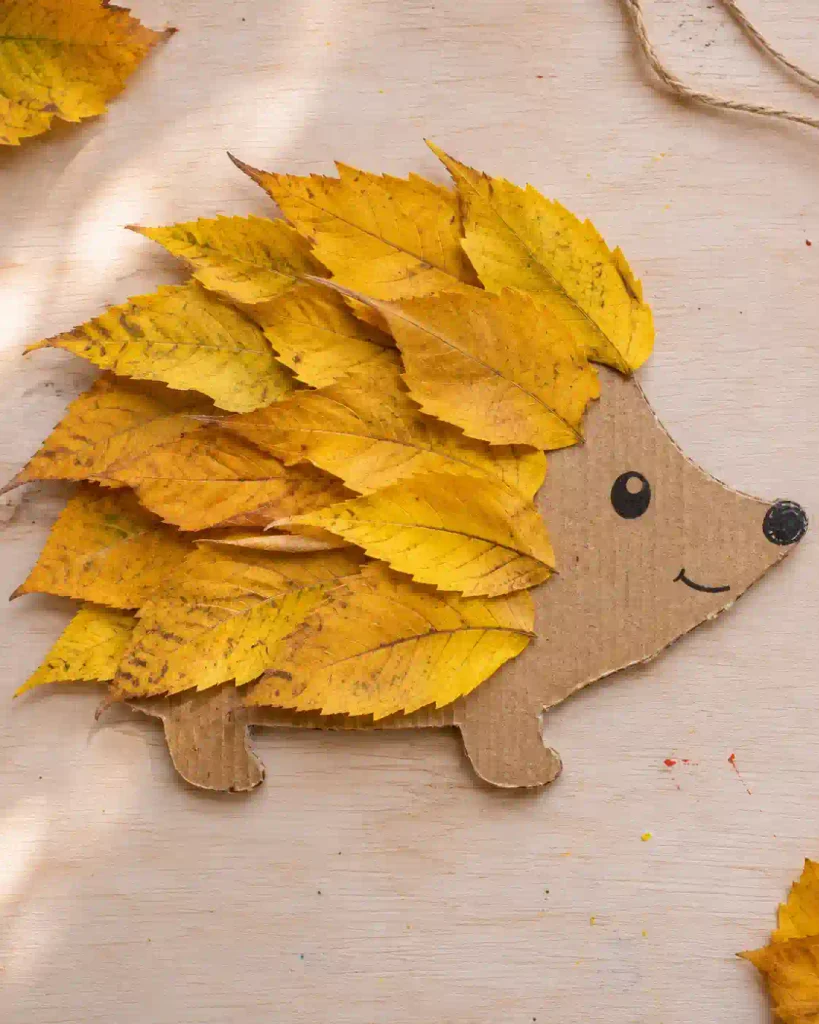
A row of pointed leaves gives a cardboard hedgehog its spiky back. Draw and cut a simple silhouette, then have children layer narrow leaves from back to front, leaving the face clear. Long paper strips with pointed tips work well when real leaves are unavailable. Before gluing the last row, look at the edge together and ask which way the tips need to point.
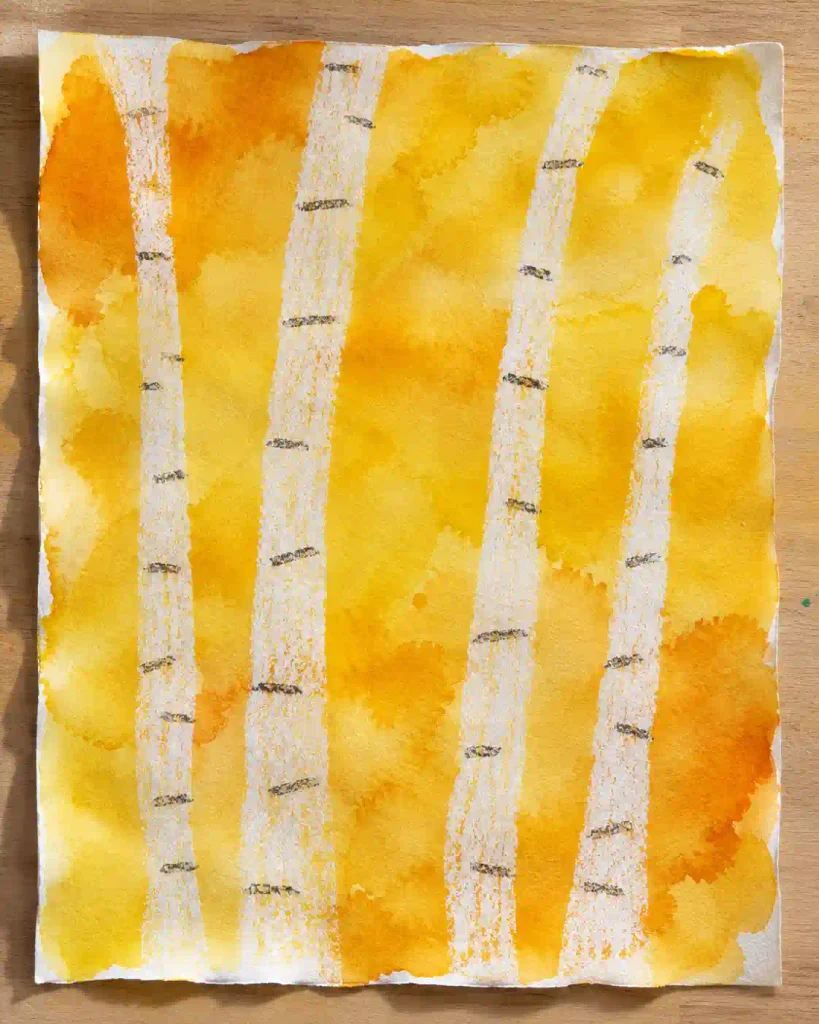
18. How do you paint crayon-resist birch trees?
White crayon bark appears when a brush loaded with amber watercolor passes over it. Give children watercolor paper and have them press firmly as they draw their white trunks. Brush a thin wash across the page and watch where the paint pulls away from the wax. After the painting dries, finish with short dark bark marks and display the birch trees side by side.
Frequently asked questions About Fall Kindergarten Crafts
What are the easiest fall crafts for kindergarten with minimal prep?
Try leaf rubbings, a torn-paper pumpkin, or a cupcake liner owl when planning engaging fall kids crafts with minimal preparation. Set out the paper and supplies in a tray, and choose larger pre-cut shapes if you have a short art block.
Use paper leaves for collages and wreaths, tissue paper for suncatchers, and a textured rubbing plate for crayon rubbings. Draw veins on the paper leaves so children have details to notice as they work.
Which fall craft works best for a kindergarten math center?
Try the pumpkin seed counting collage. Children pick a numeral card, move one paper seed per number they say, and glue the seeds down once they’ve checked their total. This activity supports the Common Core kindergarten counting standards, including one-to-one counting and cardinality.
How can I adapt fall crafts for kindergartners who need help cutting?
Set out larger pieces or pre-cut the trickier shapes, such as suncatcher frames and plate rings. Children can still choose colors, tear paper, stamp shapes, or arrange the pieces themselves.
Which fall crafts can we do without a holiday theme?
These fall arts and crafts, including leaf rubbings, cardboard tube apple stamps, and crayon-resist birch trees, all work well for a general autumn unit. If you’re choosing a fall craft for kindergarten storytime, the paper bag scarecrow can also go with a story about a garden or a farm.
Final Thoughts
Fall crafts give kindergarten children a simple way to explore autumn through colors, textures, shapes, and hands-on creativity. From leaf rubbings and torn-paper pumpkins to counting collages and paper plate wreaths, these 18 projects offer plenty of options for classroom art stations, seasonal activities, and family craft time. Choose projects that match your available supplies and schedule, prepare tricky shapes ahead when needed, and let children make their own creative choices along the way. The best part is watching simple materials turn into artwork they’ll be excited to share and display.