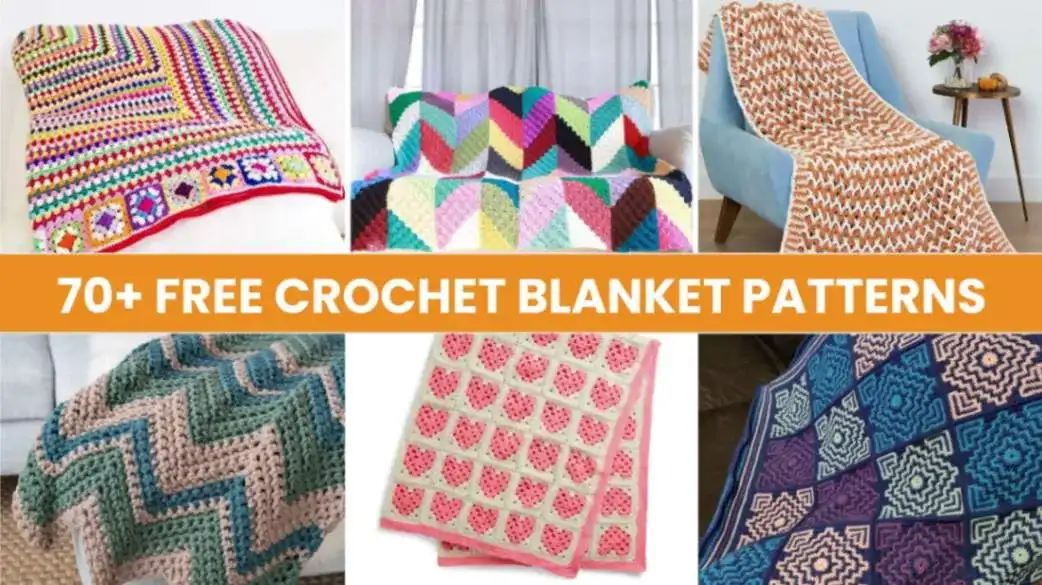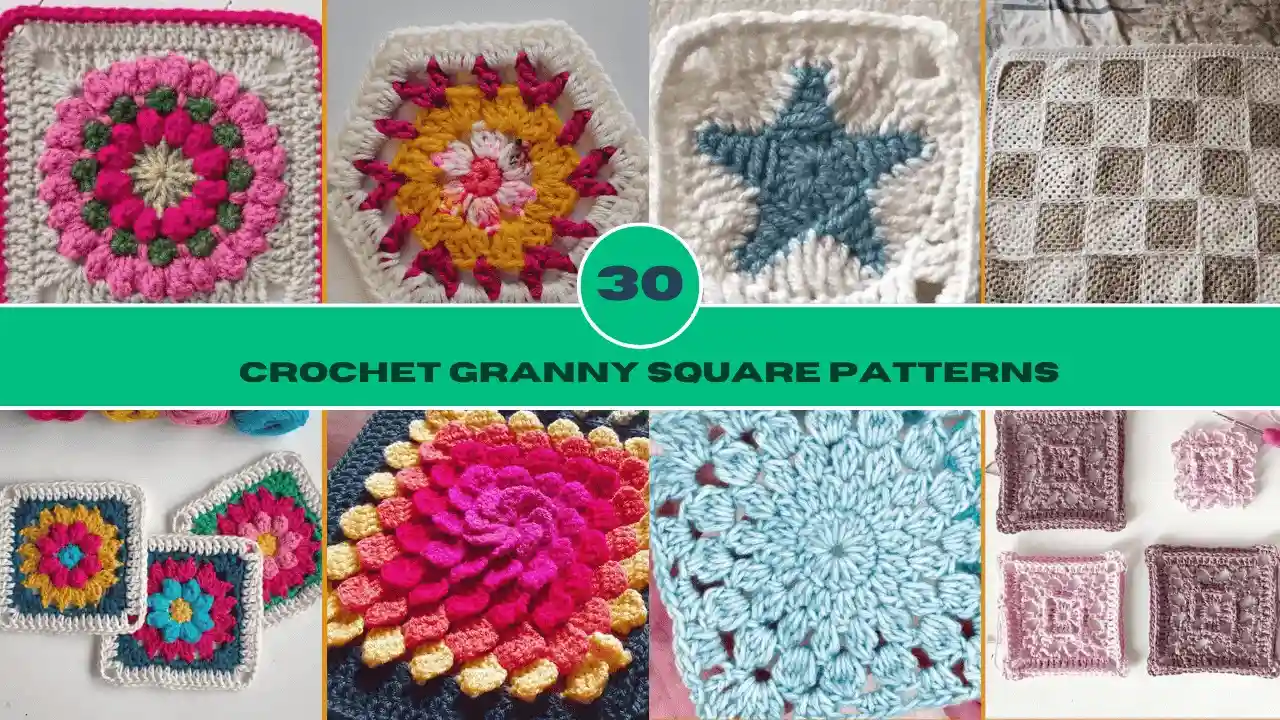
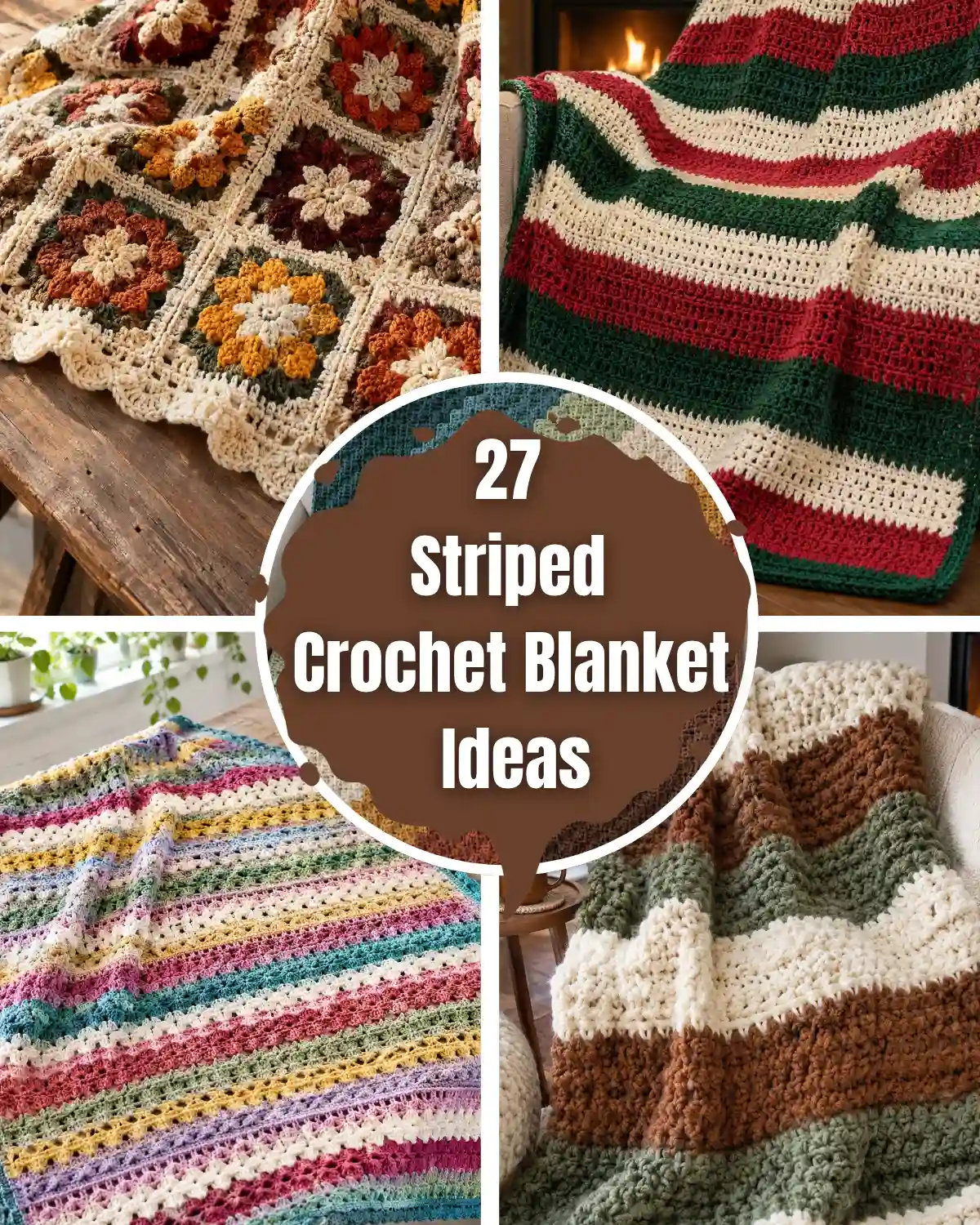


A striped crochet blanket can be as simple as repeating one stitch and changing yarn colors every few rows. These 27 ideas cover beginner crochet throw blanket designs, granny stripes, textured patterns, baby blankets, diagonal designs, and seasonal color schemes, with practical guidance for choosing a design you can finish. Start with a basic row-repeat blanket if you are new to crochet; try chevrons, corner-to-corner, or Tunisian crochet when you are ready for a different construction method.
It is easy to fall for a gorgeous blanket photo and then get stuck on the first color change. The trick is to choose your stitch, stripe width, and palette before buying the full yarn quantity. Think of this guide as a collection of designs to adapt, not 27 complete written patterns; verified free pattern links appear below where available.
Key Takeaways
- Start with a one-row repeat for your first blanket.
- Swatch before planning stripe widths, sizing, and yarn needs.
- Choose colors and textures that suit your space.
- Follow a verified crochet striped blanket pattern for instructions.
- Keep loose baby blankets out of infant sleep spaces.
Which striped crochet blanket ideas are easiest to customize?
Simple row-repeat blankets with two or three planned colors are the easiest styles to adapt for different rooms, sizes, and skill levels.
At a Glance
- Choose a one-row repeat for an approachable first project.
- Adjust stripe widths by counting rows, not guessing.
- Pick granny clusters or textured stitches for more detail.
Most striped blankets change their look more dramatically through color planning than through difficult stitches. Here is a quick way to choose where to begin.
| Blanket approach | Best for | Main technique | Skill starting point |
|---|---|---|---|
| One-row-repeat throw | First blanket | Simple repeated crochet rows | Beginner |
| Two- or three-color stripes | Contemporary decor | Planned row-based color changes | Beginner |
| Granny-stripe throw | Vintage texture | Repeating stitch clusters | Confident beginner |
| Moss- or wattle-stitch blanket | Subtle texture | Short stitch repeats | Confident beginner |
| Chevron or ripple blanket | Graphic movement | Repeated increases and decreases | Intermediate |
| C2C or Tunisian blanket | New construction skills | Diagonal blocks or forward/return passes | Intermediate |
| Baby-size striped blanket | Handmade gift | Soft yarn and secure finishes | Beginner to intermediate |
27 Striped Crochet Blanket Ideas for Every Style and Skill Level
1. How Do You Make a Beginner One-Row-Repeat Striped Throw?
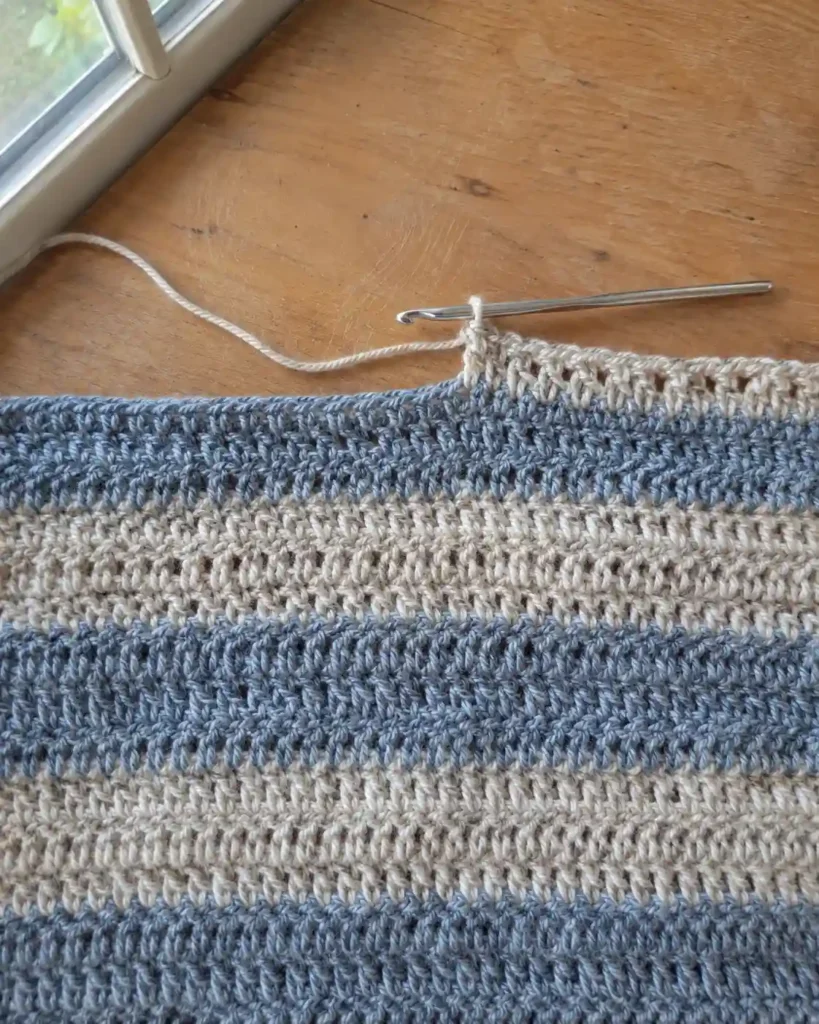
The beginner one-row-repeat striped throw is a good first blanket because the same stitch rhythm carries you across every row. Instead of juggling complicated texture changes, you only need to watch your stitch count and switch colors when your stripe reaches its planned height. A broad ivory-and-terracotta version looks at home folded over a reading chair. Choose this if you want to build confidence while making something genuinely useful.
Try double crochet in U.S. terminology, using one yarn weight throughout. Practice a small swatch, measure your row height, and decide whether each stripe will be four, six, or eight rows tall. A clear example of a beginner striped project is available from Daisy Farm Crafts. That designer’s actual stitch repeat differs from this simple-double-crochet concept, so follow its own written instructions when making that particular blanket.
2. What Makes a Modern Two-Color Wide-Stripe Blanket Work?
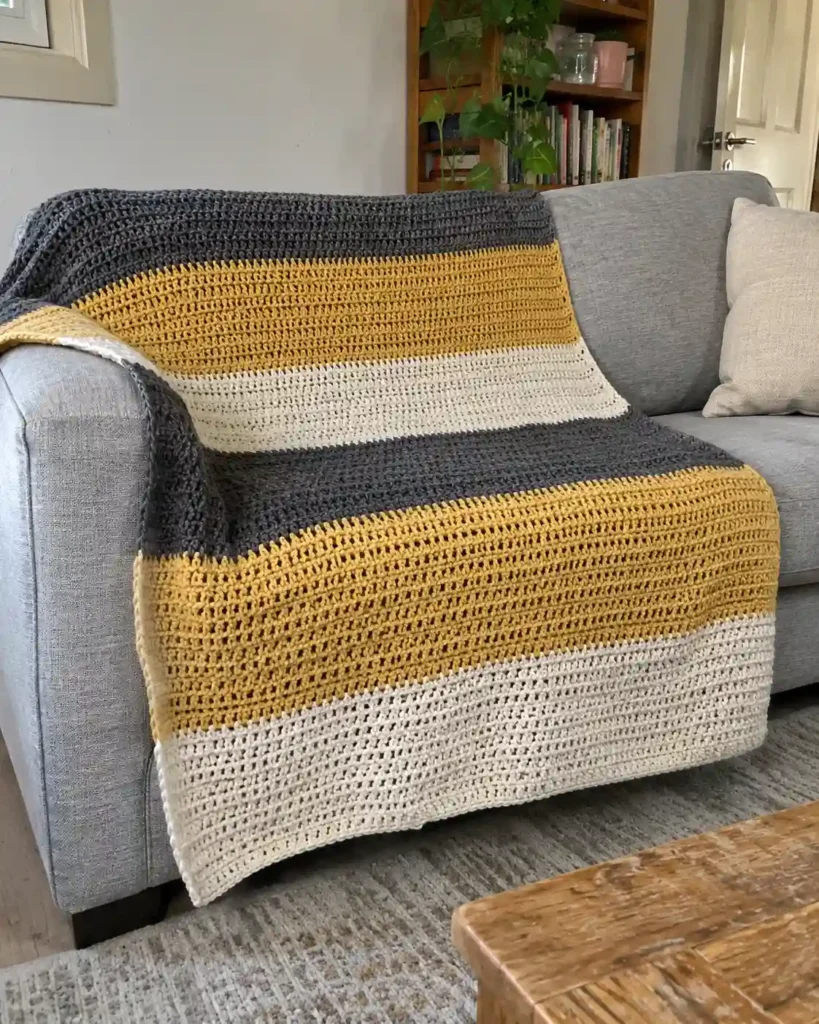
A modern two-color wide-stripe blanket gets its character from deliberate contrast rather than fancy stitches. Cream and charcoal can look much cleaner than a busy assortment of narrow bands, especially when both colors are used in generous blocks. Picture it along the arm of a pale sofa where the stripe pattern is visible from across the room. This approach suits anyone who likes minimalist decor but still wants a handmade texture.
For a balanced layout, test a repeating plan such as eight rows of the light color and four of the dark color. For stronger asymmetry, make a few dark stripes twice as wide as the others. Weave in tails securely, or carry yarn at the edge only if your chosen edging will hide it neatly.
3. How Do You Balance a Three-Color Stripe Blanket?
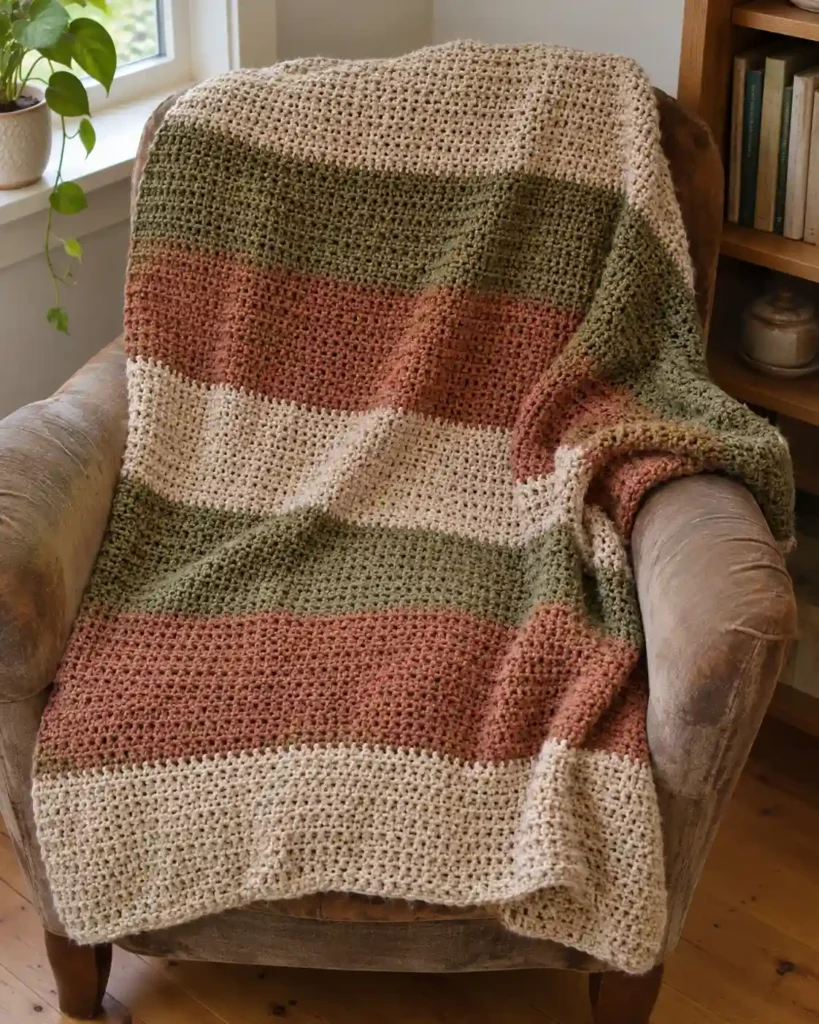
A balanced three-color stripe blanket lets one shade lead while the other two add depth. Three equal colors can compete for attention, so the more reliable choice is a dominant neutral, one supporting color, and a smaller accent. Oatmeal, olive, and muted rust make a relaxed blanket for an armchair or guest bedroom. It is a lovely middle ground between the simplicity of two colors and the excitement of a rainbow.
For an illustrative sequence, try four oatmeal rows, three olive rows, four oatmeal rows, and two rust rows; repeat after checking how the swatch looks. Keep a written count of each color’s rows so your final section does not unexpectedly run out of yarn. This is a planning example, not a tested pattern or yarn-quantity estimate.
4. How Does a Four-Color Coordinated Stripe Blanket Stay Cohesive?
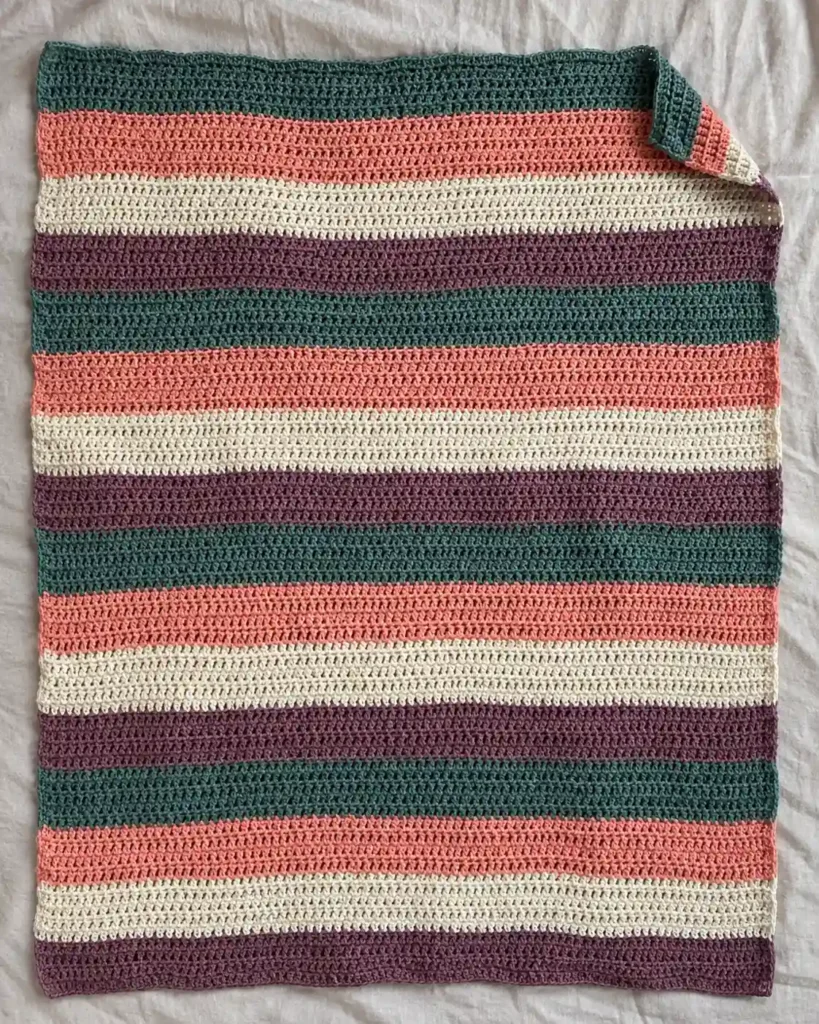
Four colors can make a striped blanket lively without turning it into visual noise. The difference is giving the colors distinct jobs: one quiet foundation shade and three accents that share a similar softness or saturation. Cream, clay, slate blue, and muted mustard work particularly well on a bed with plain bedding. Pick this idea when you want the blanket to bring personality into a room without dominating every other textile.
Arrange your skeins before crocheting and photograph two possible stripe sequences. A simple trick is to return to cream between some accent blocks, creating breathing room. Try to keep yarn weights and care requirements consistent across all four colors.
5. Neutral Minimalist Stripe Blanket
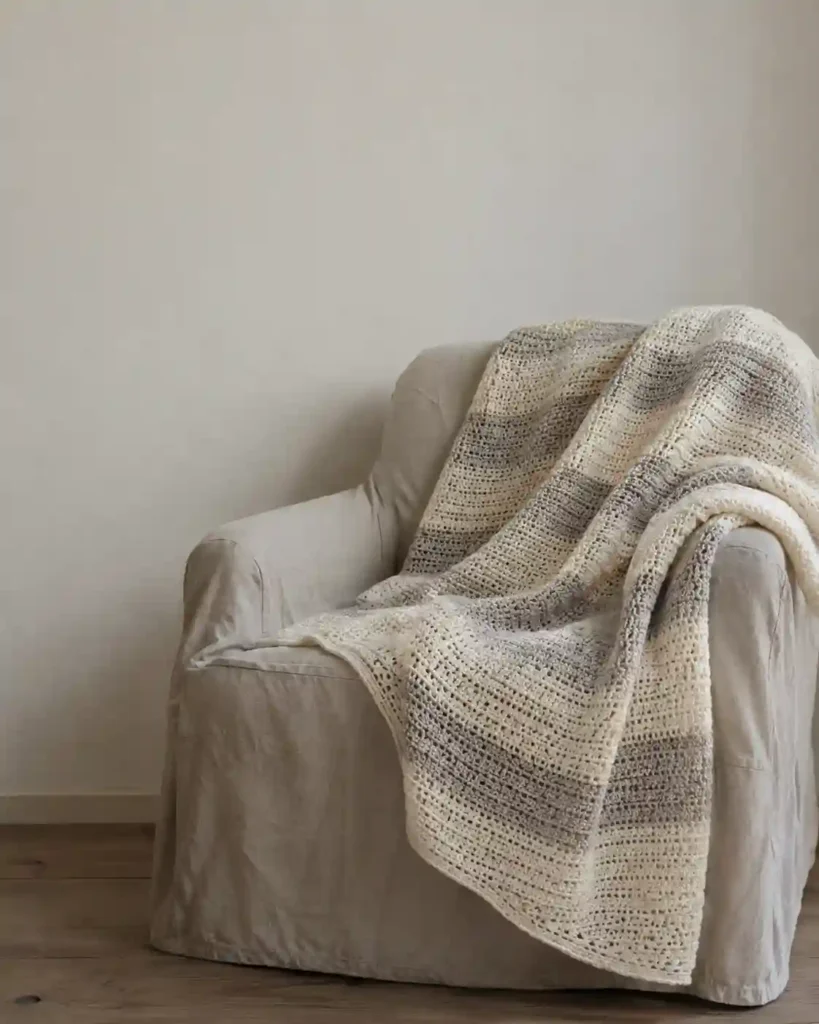
A neutral minimalist stripe blanket proves that stripes do not have to shout. Ivory, sand, and taupe produce a gentle shift that lets stitch texture do more of the work than color. It can soften a modern sofa where a black-and-white blanket would feel too graphic. This is especially appealing if you love tonal interiors and want something that will mix with changing decor.
Use light and shadow as your guide: swatch the three yarns together in daylight, not just under store lighting. A moss stitch can make subtle color changes appear more woven, while a double-crochet repeat creates clearer rows. Keep fringe optional so the finished silhouette stays tidy.
6. Which Green Shades Suit a Sage and Cream Stripe Blanket?
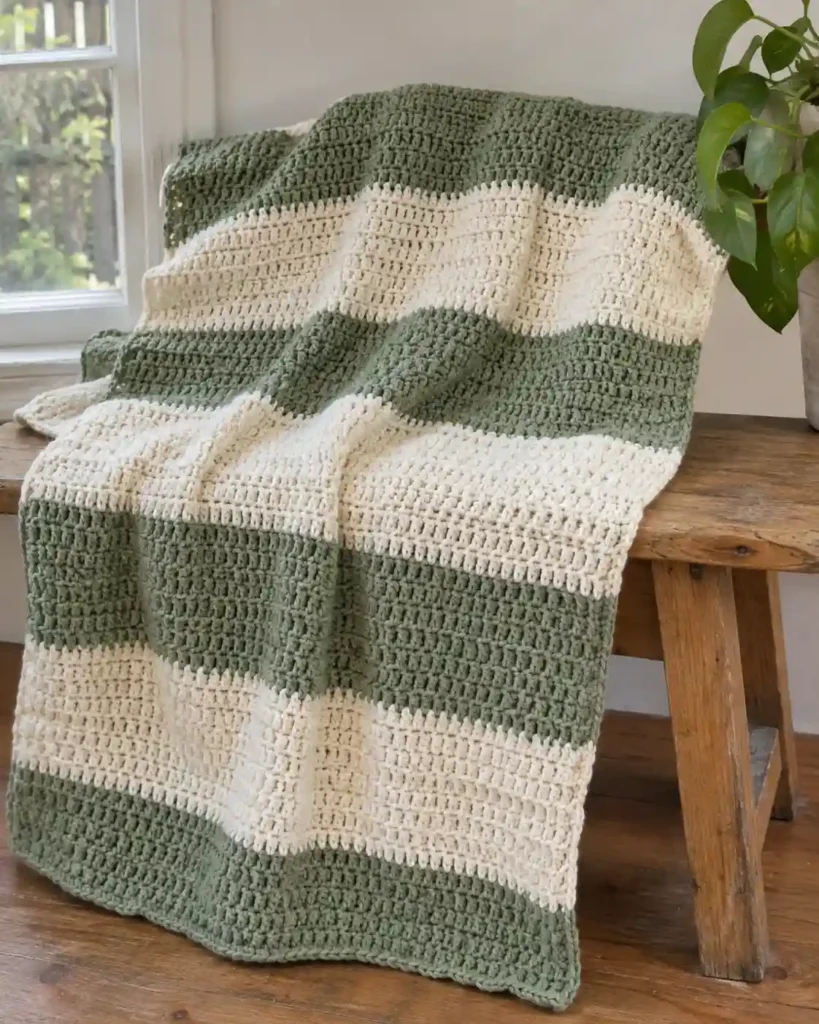
The sage-green-and-cream stripe blanket has a calm, botanical look without requiring an elaborate stitch pattern. Sage feels softer than bright emerald, while cream prevents a large green blanket from looking too heavy. Draped over a pale oak bench or bedroom chair, it adds color without losing that restful mood. Choose it for a gentle palette that still reads unmistakably as stripes.
Try alternating five sage rows with three cream rows, then test a slightly darker olive border. Mint is a fresher substitute, though it changes the mood from earthy to light. If you are making a gift, compare the colors under natural light before committing to all your skeins.
7. Coastal Blue and White Stripe Blanket
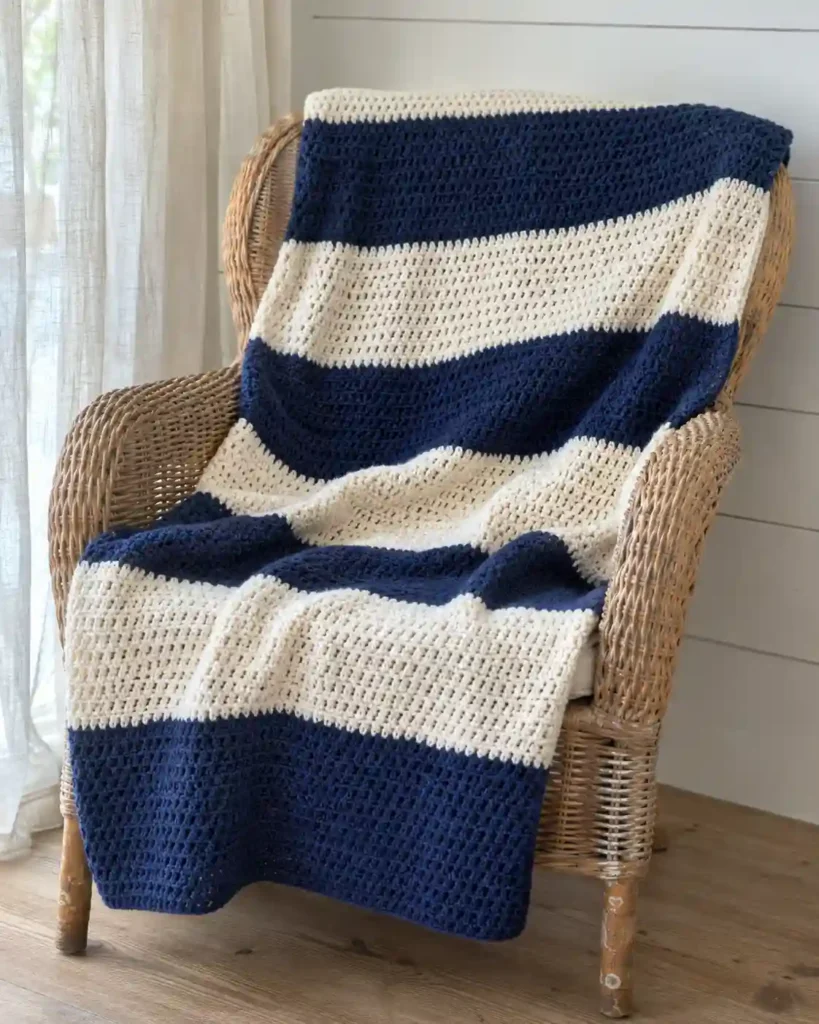
The coastal blue and white stripe blanket borrows the easy rhythm of nautical stripes without needing anchors or seaside decorations. Navy-and-ivory bands feel structured, while pale-blue-and-white stripes look airy and relaxed. On a wicker armchair by a bright window, either version can feel instantly inviting. It is an ideal project for someone decorating with blues who wants a throw that works throughout the year.
Narrow stripes create a crisp, almost tailored effect; broad bands feel more contemporary. Keep the border simple so it does not compete with the main pattern. For a softer coastal look, replace pure white with oatmeal or warm ivory.
8. What Makes an Earthy Boho Stripe Blanket?
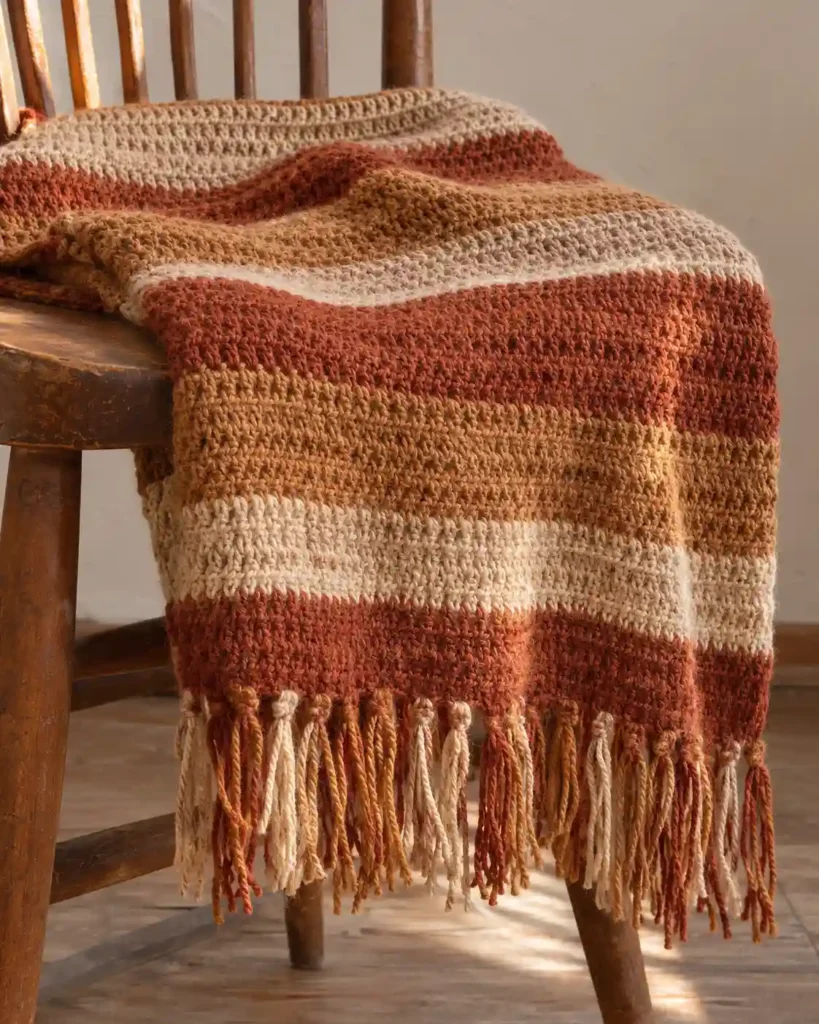
An earthy boho stripe blanket feels collected and relaxed because the colors are warm and the stripe widths are not perfectly uniform. Clay, caramel, brown, amber, and natural cream give it depth that a standard rainbow repeat would not. It belongs just as comfortably on a woven bench as it does at the end of a bed. This design works best for makers who enjoy mixing earthy colors and want a little freedom in the sequence.
Plan a loose but repeatable rhythm, such as a wide rust band followed by two narrower neutrals. Add short, secure fringe only to an adult decorative throw if you like that finish. Sample the fringe length first; too much can distract from the crochet fabric itself.
9. Rainbow Multicolor Stripe Blanket
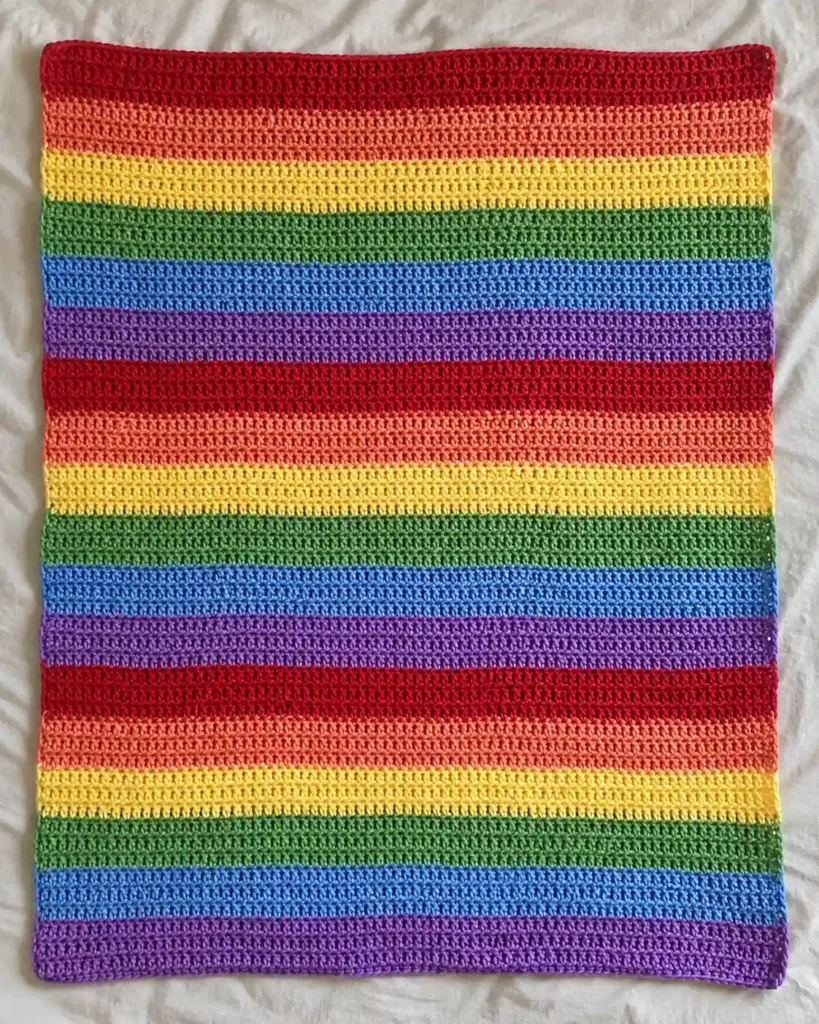
A rainbow multicolor stripe blanket is a cheerful project when the colors are organized rather than added at random. Repeating red, coral, yellow, green, blue, and purple creates an intentional pattern that still feels playful. Spread across a plain white bed, the colors become the focal point with very little extra styling. It is a natural choice for using a coordinated palette or making a bright gift.
Choose whether the rainbow runs in the same order each time or reverses direction after every cycle. Thin cream separators can help very saturated shades sit together. Before starting, sketch the complete color sequence and check that each shade has enough yarn for its planned rows.
Which crochet stitches make striped blanket patterns stand out?
Granny clusters emphasize open texture, moss stitch creates a woven look, and chevrons or ripples turn color bands into shaped patterns.
- Use granny stripes for a classic, clustered appearance.
- Try moss or wattle stitch for surface texture.
- Choose V-stitch for a more open fabric.
- Practice chevrons or ripples for shaped stripes.
Once the palette is chosen, stitch structure changes the feel of the fabric. A cluster stitch produces little gaps and texture; a compact stitch makes more of a woven surface. Work a small sample first, because the same stripe plan can look completely different in each stitch.
10. How Does a Retro Granny-Stripe Crochet Blanket Work?
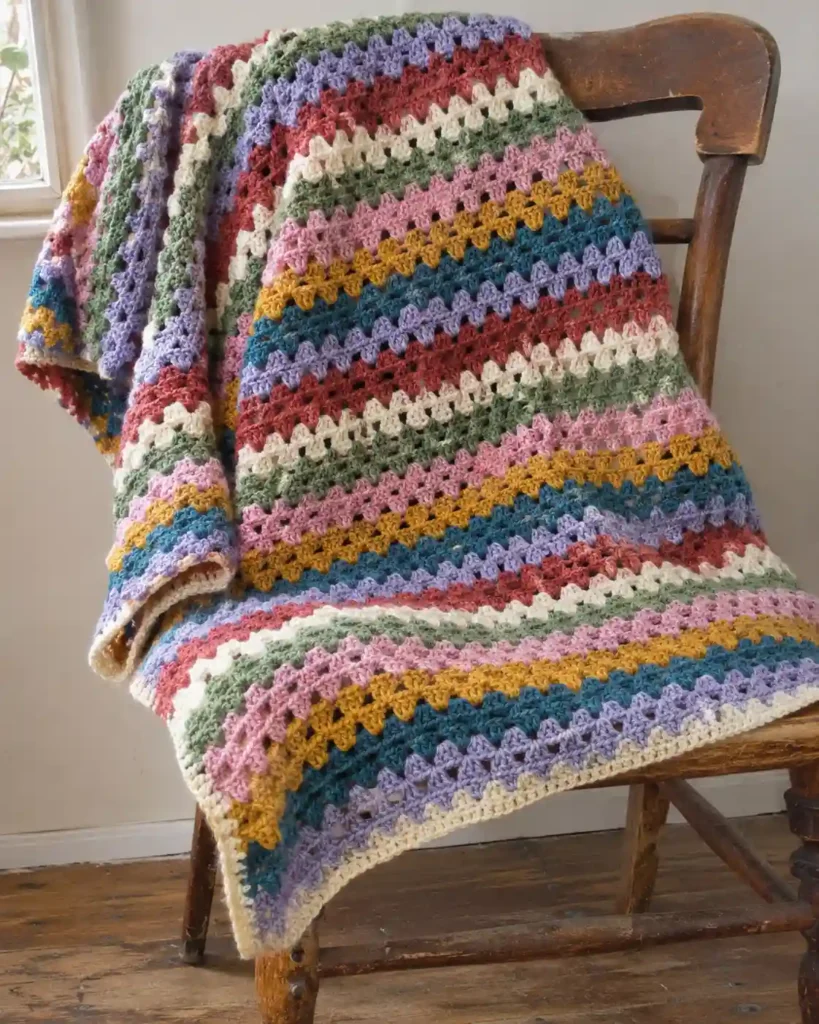
A retro granny-stripe crochet blanket gets its unmistakable charm from repeated groups of double-crochet stitches. Those clusters leave small spaces between them, giving the stripes a lively texture that solid rows cannot quite reproduce. Orange, olive, brown, and cream look wonderful over a vintage wooden chair. It suits confident beginners who are ready to learn a cluster repeat and enjoy a slightly nostalgic finish.
Try a small granny-stripe sample before starting a full throw, especially if you are learning where to place clusters in the next row. Count the spaces as carefully as the stitches. A narrow single-crochet border can help visually frame the clusters without covering their texture.
11. What Is a Half-Granny Stripe Baby or Lap Blanket?
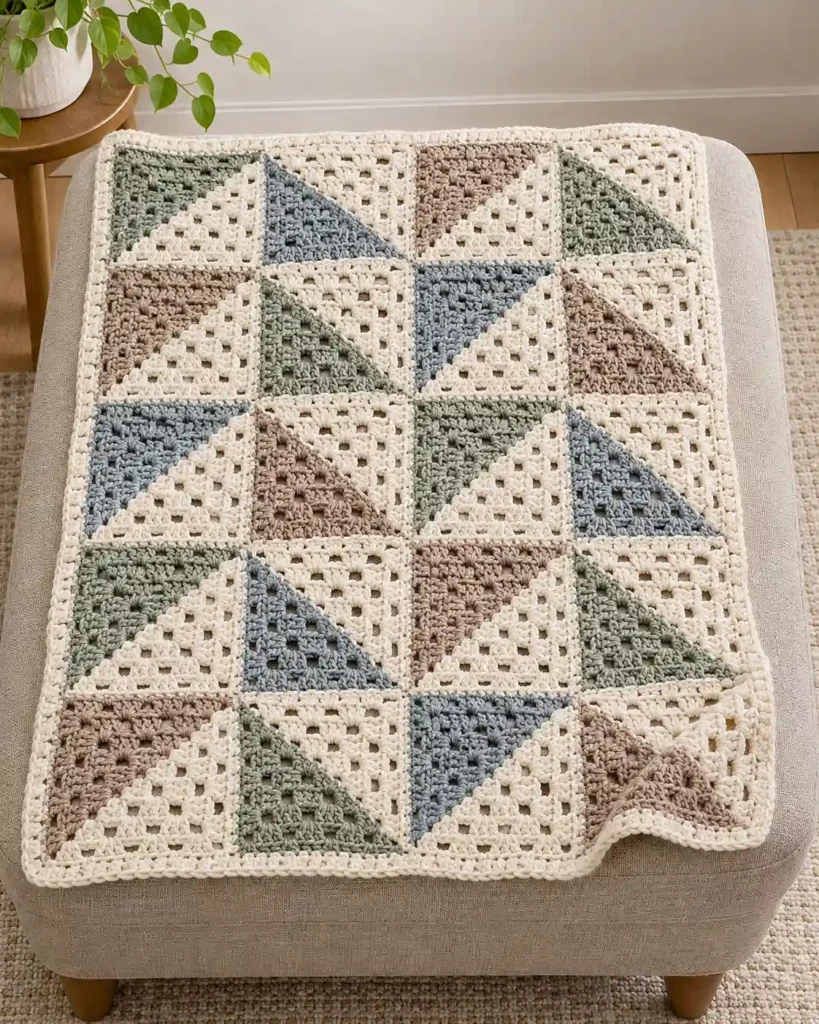
A half-granny stripe blanket has a different construction personality from a standard rectangular granny-stripe throw. A triangular or expanding-row half-granny arrangement creates a geometric impression that ordinary horizontal clusters cannot match. In soft peach and cream, a compact lap blanket can make a lovely gift for an adult who likes delicate crochet. Select this design if you are comfortable following shaping instructions and want the stripes to grow in an interesting direction.
Check the specific pattern’s corner and increase rules; there is no single universal half-granny construction. Block or lay out your sample to see whether the edges have the intended angle. For a baby-gift version, keep the finish secure and avoid decorative tassels or loose attachments.
12. Moss Stitch (Linen Stitch) Stripe Blanket
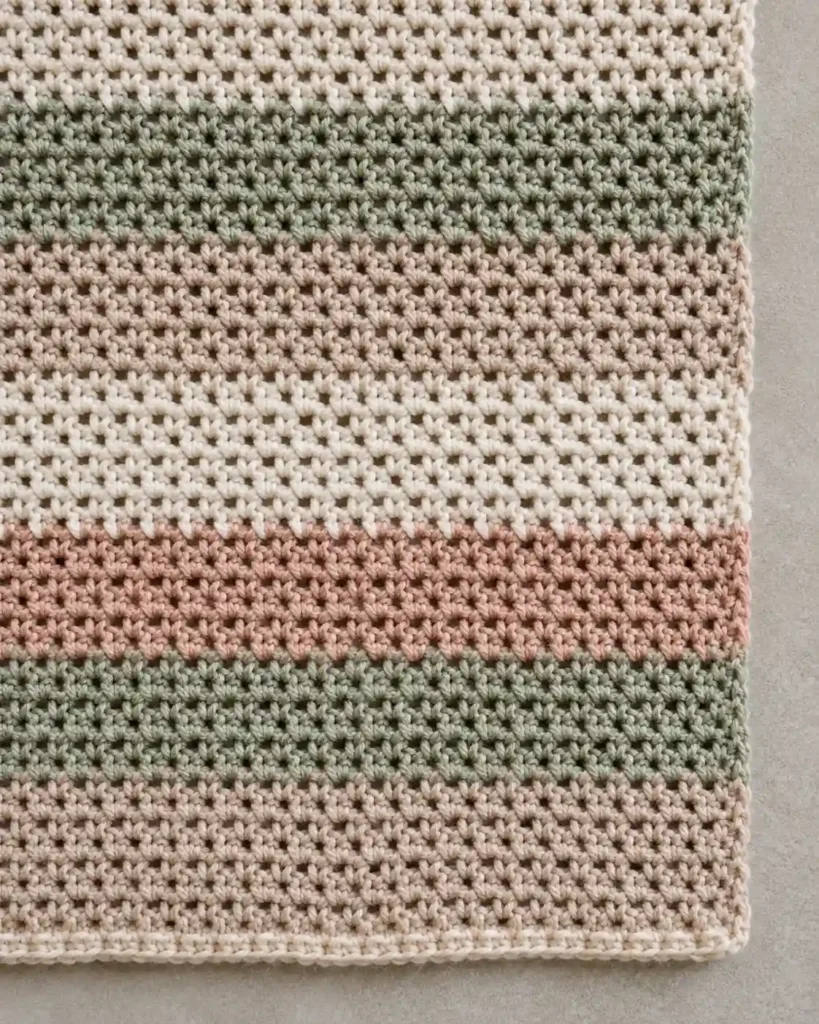
The moss-stitch stripe blanket has a neat, woven-looking texture made from single crochet and chain spaces. Its compact rhythm can make even soft color combinations look polished, especially in pale blue, oatmeal, and cream. Because the stitches are small and regular, this blanket is attractive laid flat or folded on a guest bed. It is a good next project if you want something quieter than granny clusters but more textured than plain double crochet.
Pay attention to working into the chain spaces rather than the wrong stitch tops. A wider swatch will show how your chosen yarn affects drape. The repeated texture also makes this a useful technique for a coordinated striped baby blanket, provided the final fabric and finishing are appropriate for its intended use.
13. Why Choose a Wattle Stitch Textured Stripe Blanket?
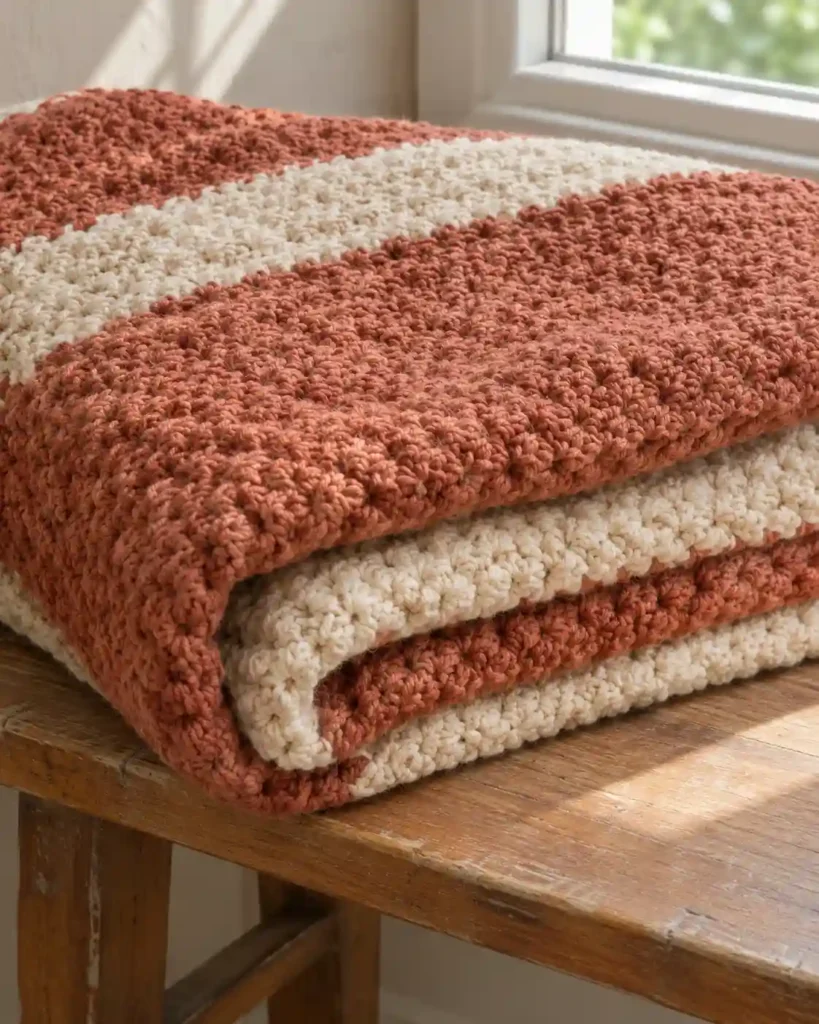
The wattle-stitch textured stripe blanket adds a raised, pebbly surface that catches the light across each band. Unlike a flat stripe design, it feels interesting even if you use only moss green and cream. Fold it over a sofa arm and the texture becomes part of the room’s styling. This is a rewarding choice for makers who want a distinctive fabric without switching among many unrelated stitches.
Practice the exact wattle-stitch repeat from a reliable tutorial before calculating the starting chain. Measure its row height carefully; textured repeats do not necessarily match the height of a basic double-crochet row. A restrained single-crochet border usually lets the stitch texture remain the star.
14. How Does Herringbone Texture Change a Winter Throw?
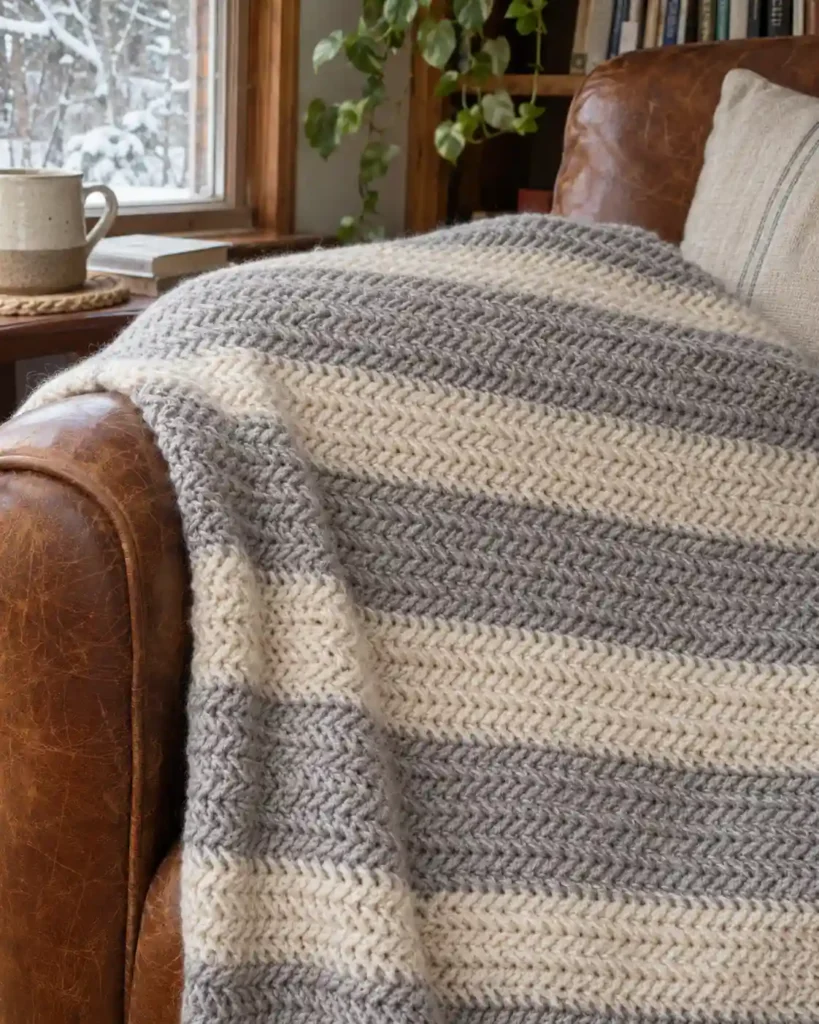
A herringbone stripe winter throw combines direction in the stitch fabric with direction in the color bands. The subtle slant can look especially rich in charcoal, oat, and camel, even without bright accents. It is a natural match for a winter reading corner where a thick blanket is used often. Choose herringbone when you want a more tailored texture than standard rows and do not mind practicing a new stitch first.
Pick a yarn that feels pleasant against the skin and swatch for both density and drape. Heavy yarn plus a tight stitch can produce a stiff blanket, so adjust hook size as the pattern allows. Keep the stripe schedule simple to make the directional stitching visible.
15. Airy V-Stitch Striped Blanket
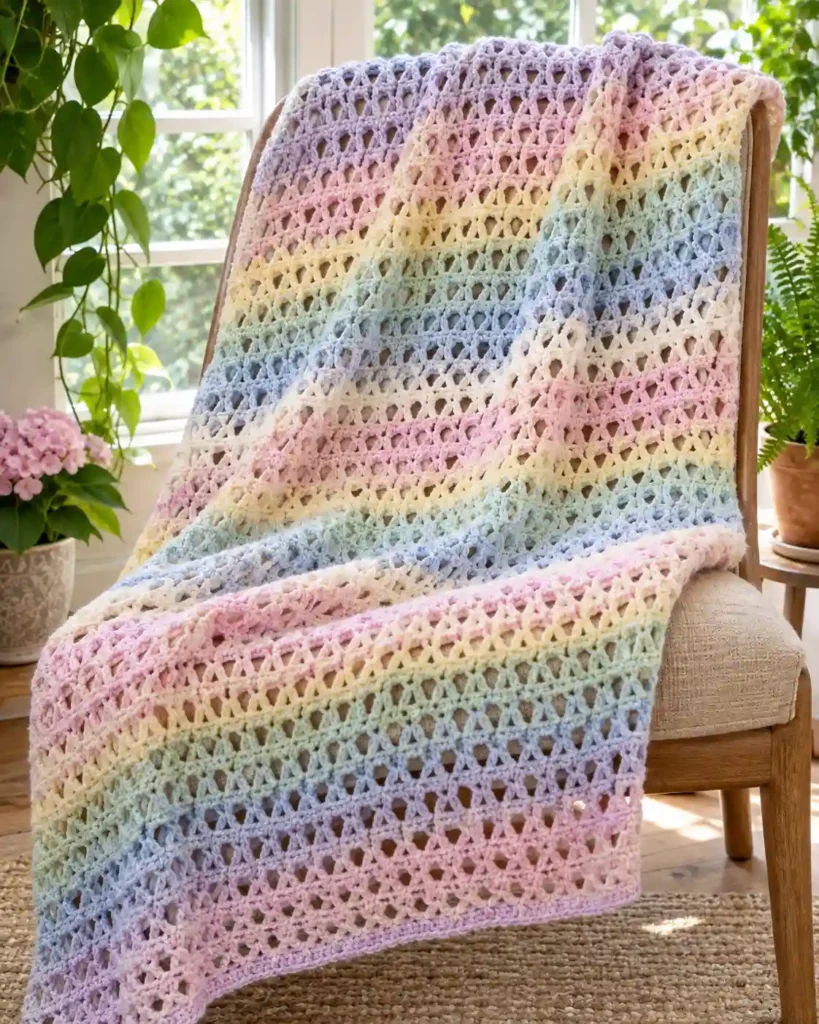
An airy V-stitch striped blanket feels lighter because its repeated V-shaped spaces open up the fabric. That makes it quite different from a dense winter throw, even when the colors are similar. Peach and cream stripes look lovely over a wicker chair in a bright spring room. This idea is best for anyone who prefers a drapey decorative throw to a thick, tightly crocheted blanket.
Keep the V-stitch placement consistent so the gaps line up across your rows. Medium or lighter yarn often shows the openwork clearly, but the final result depends on hook size and tension. Treat it as a decorative adult throw rather than a default choice for infant bedding.
16. How Can You Make Chevron Zigzag Stripes?
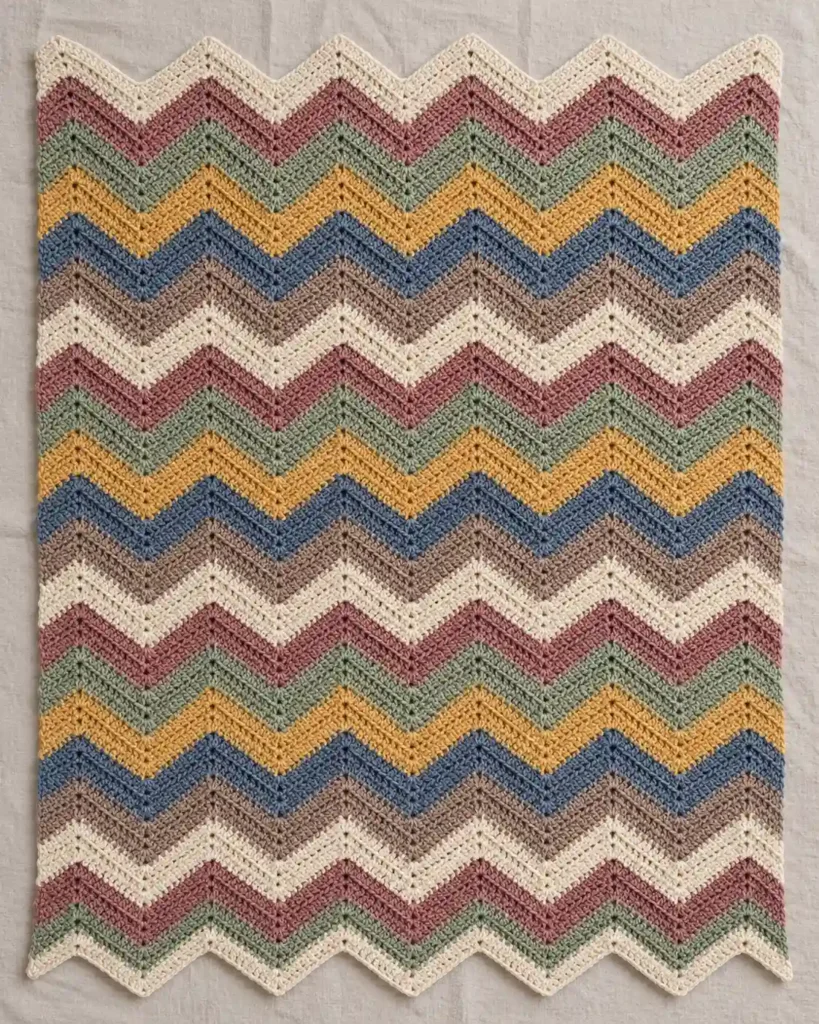
A chevron zigzag striped blanket turns straight color bands into bold peaks and valleys. The sharp angles come from repeated increases and decreases, not from joining separate zigzag pieces. Indigo and ivory create a dramatic graphic design across a bed or sofa. This one is particularly satisfying for crocheters who like watching a visible pattern take shape with every row.
Mark your increases and decreases when you first learn the repeat. Changing colors at consistent row intervals helps the zigzags stay visually balanced. Check the turning edges as you go, because missed stitches can make the whole blanket lean.
17. What Makes Ripple Wave Stripes Different?
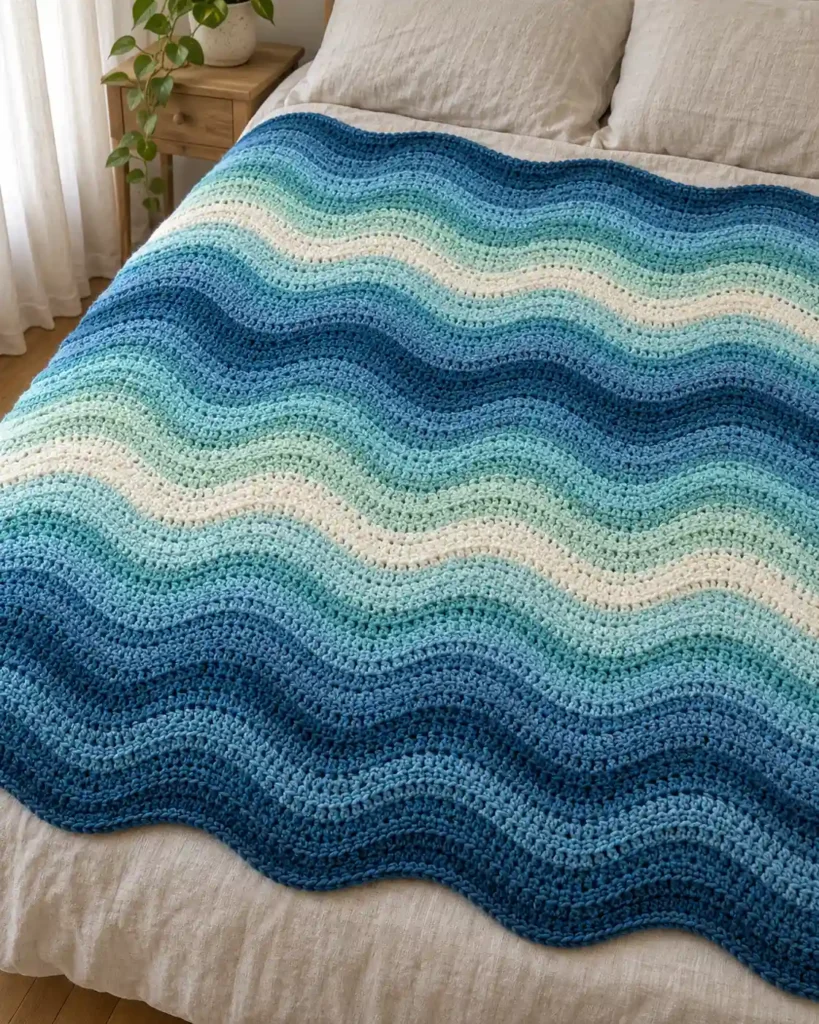
A ripple-wave striped crochet blanket has a softer movement than a sharp chevron design. Its rising and falling rows create gentle curves, which look especially natural in teal, aqua, and cream. On a bed with plain linens, those rolling bands can feel like a quiet landscape. Pick a ripple if you love patterned blankets but find high-contrast zigzags a little too bold.
Use gradual changes in color value to emphasize the wave rather than compete with it. The shaping still depends on carefully counted increases and decreases, so keep markers handy until the repeat becomes familiar. Compare a full repeat swatch before choosing the final blanket width.
How can stripe direction and construction change the look?
Horizontal rows, lengthwise panels, diagonal C2C blocks, and Tunisian passes each change the direction or texture of the finished stripes.
- Join vertical panels for lengthwise color bands.
- Work corner-to-corner blocks for diagonal stripes.
- Try Tunisian crochet for a denser, woven-look surface.
Horizontal stripes are only one possibility. Panels, diagonal blocks, and Tunisian techniques change how a blanket is built, not just which colors are added.
18. Vertical Striped Crochet Panel Blanket
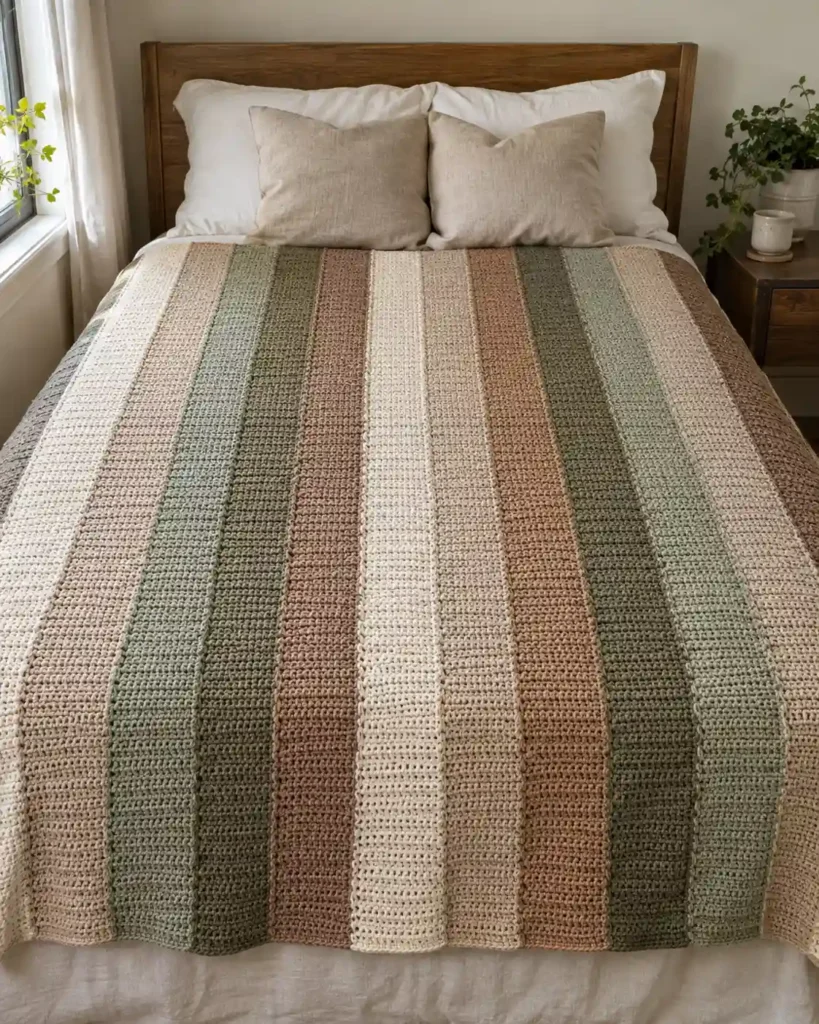
A vertical striped crochet panel blanket has long clean lines running the length of the finished fabric. Working separate strips and joining them makes this look possible without repeatedly changing yarn on every short stripe. On a bed, beige, slate, and clay panels create a streamlined, architectural finish. This construction is a good fit for someone who likes orderly projects and does not mind a careful joining stage.
Make a test panel and measure it after relaxing the fabric before producing all the others. Consistent row counts and gauge prevent one panel from ending up longer than its neighbor. Choose an unobtrusive join if you want the stripe colors, rather than the seams, to attract attention.
19. How Does a C2C Diagonal Stripe Crochet Blanket Work?
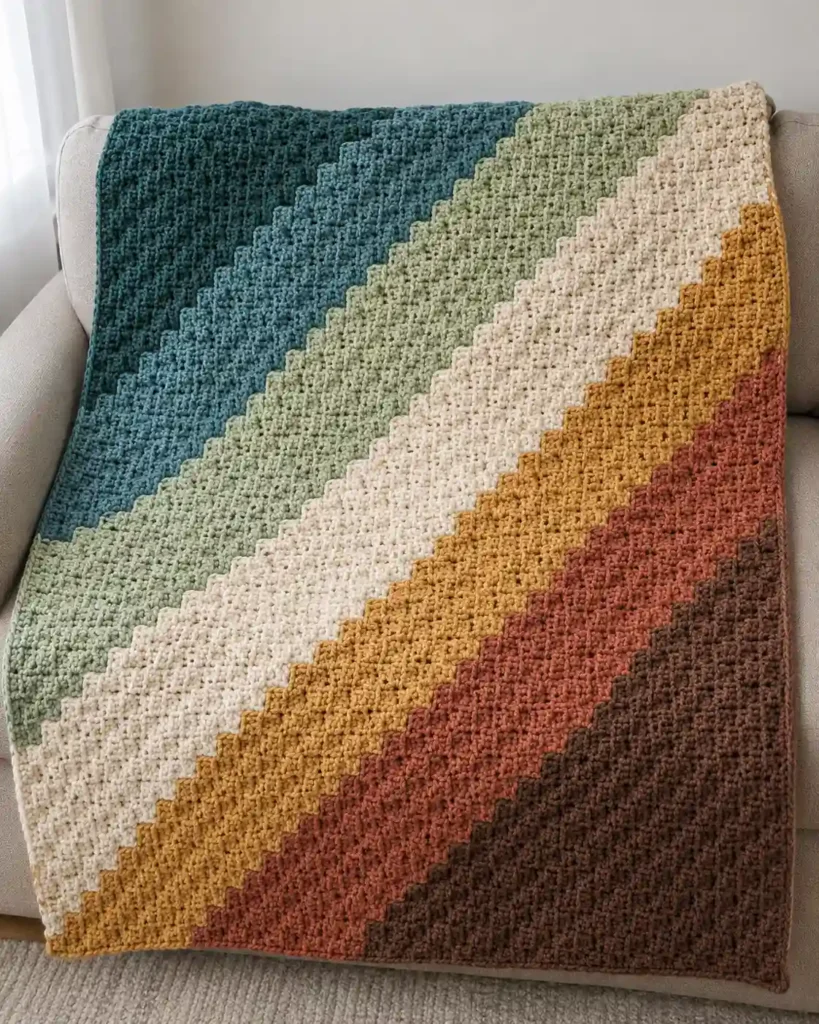
A C2C crochet blanket grows in small blocks rather than ordinary straight rows, creating diagonal stripes instead of ordinary horizontal rows. The color bands sweep across the fabric at an angle, giving even a simple blush, cream, and gray palette a fresh look. A folded C2C throw is especially appealing when you want the diagonal texture to remain visible. Choose it when you are ready for a construction method with clear increases, a middle section, and decreases.
Start with a small practice square to understand the direction of the blocks. Plan the color bands by diagonal rows rather than by horizontal inches. For an exact final size, check both your block gauge and the selected C2C pattern’s increase-and-decrease instructions.
20. What Makes a Tunisian Crochet Striped Blanket Different?
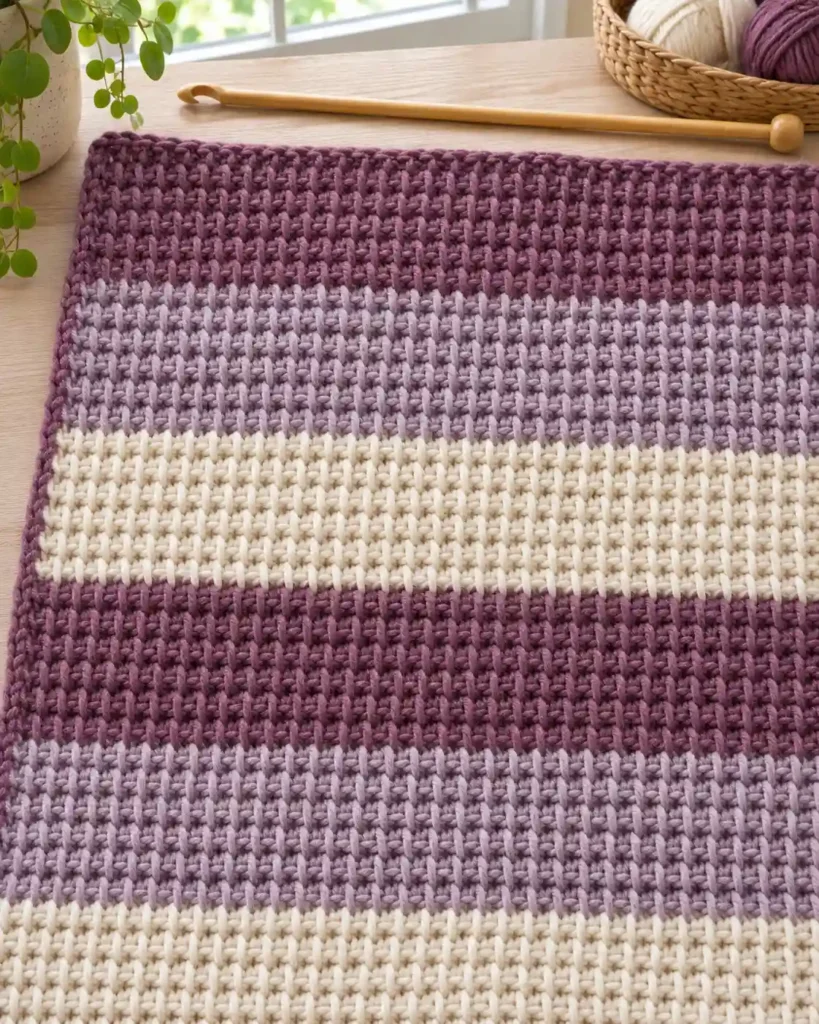
A Tunisian crochet striped blanket has a distinctive woven-looking surface created with forward and return passes. That texture is different enough from ordinary crochet that even a simple two-color sequence feels like a new technique. It makes a handsome throw for a modern living room, especially in quiet neutrals. Choose this project if learning a new tool and managing a different kind of tension sounds more interesting than repeating familiar stitches.
You will generally need a suitable Tunisian hook or cable system for the width you choose. Some Tunisian fabrics curl, so follow a pattern’s advice on tension, stitch selection, and edging. The Craft Yarn Council identifies Tunisian forward and return passes separately in its standardized terminology.
21. Striped Crochet Stitch Sampler Blanket
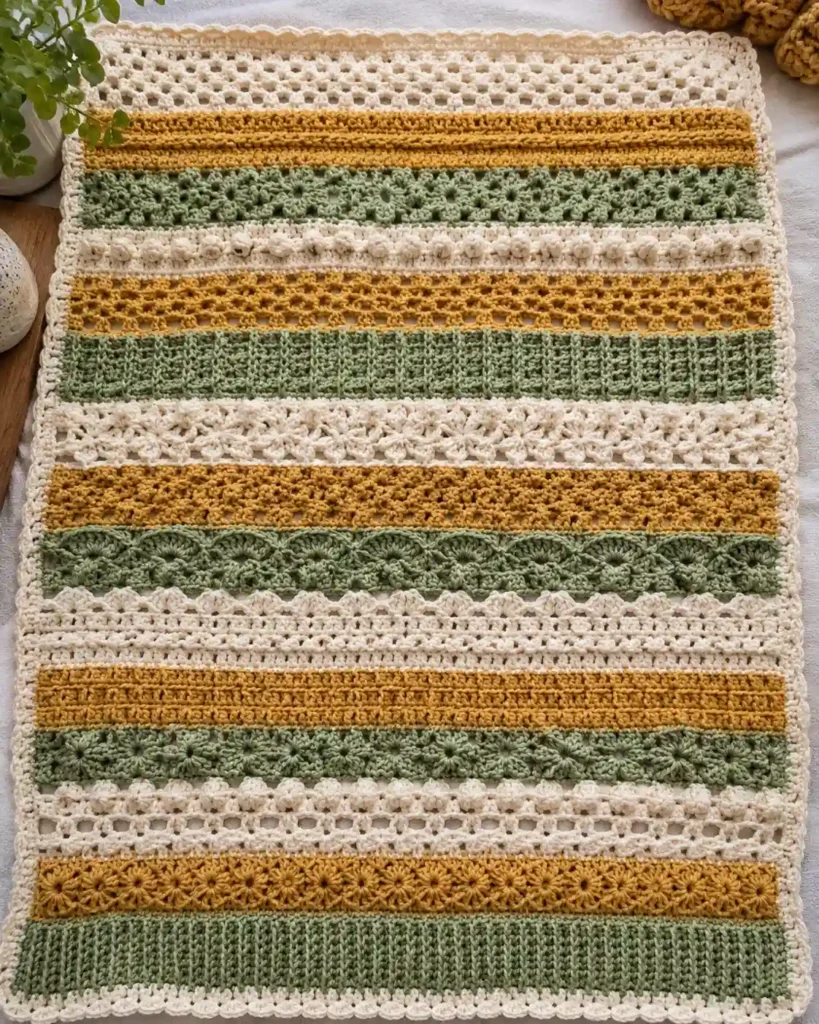
A striped crochet stitch sampler blanket turns the project itself into a collection of textures. Rather than learning one repeat for the entire throw, you can alternate compatible sections of moss stitch, V-stitch, bobbles, and simpler rows. A cream, sage, and gold palette keeps the experiment looking coordinated on a sofa. It is a strong choice for an improving crocheter who wants to learn without making several disconnected practice pieces.
The challenge is matching widths when stitch multiples and row heights differ. Swatch each stitch before committing to the final sequence, then adjust stitch counts or transitions as your chosen pattern specifies. Three or four textures are usually enough to create variety without making the blanket visually restless.
What striped crochet blanket projects suit different yarns and uses?
Match yarn thickness, washing instructions, and blanket dimensions to the intended use before choosing a chunky throw, scrap-yarn project, baby gift, or oversized afghan.
The best design also depends on who will use the blanket and where it will live. A sofa afghan can be oversized and decorative; a baby gift needs much more care around materials, edges, and how it is used.
22. Chunky Bulky-Yarn Striped Blanket
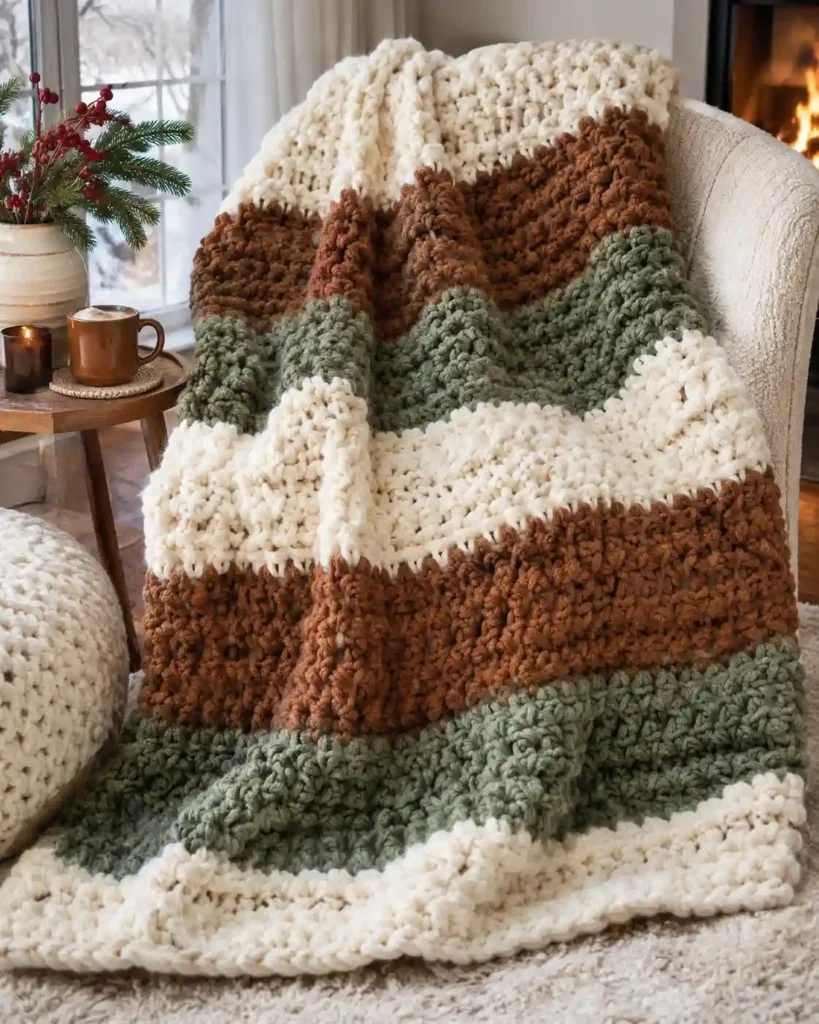
Chunky crochet blanket patterns make the stitches themselves a major design feature, especially when thick cream and slate yarns create plush-looking stripes with a straightforward repeat. Thick cream and slate bands can look plush even with a very straightforward repeat. Slung over an oversized chair, it reads as a cozy winter accent rather than a delicate lace piece. This is appealing for makers who like substantial texture, provided the completed fabric is not uncomfortably heavy.
Choose yarn and hook size together instead of assuming every chunky yarn behaves alike. The Craft Yarn Council classifies bulky yarn as weight 5 and gives a general crochet-hook range of 6.5–9 mm, while emphasizing that these are guidelines rather than replacements for a pattern’s gauge. Check washing instructions before making a large, difficult-to-clean blanket.
23. How Can Leftover Yarn Become a Scrap-Yarn Stripe Blanket?
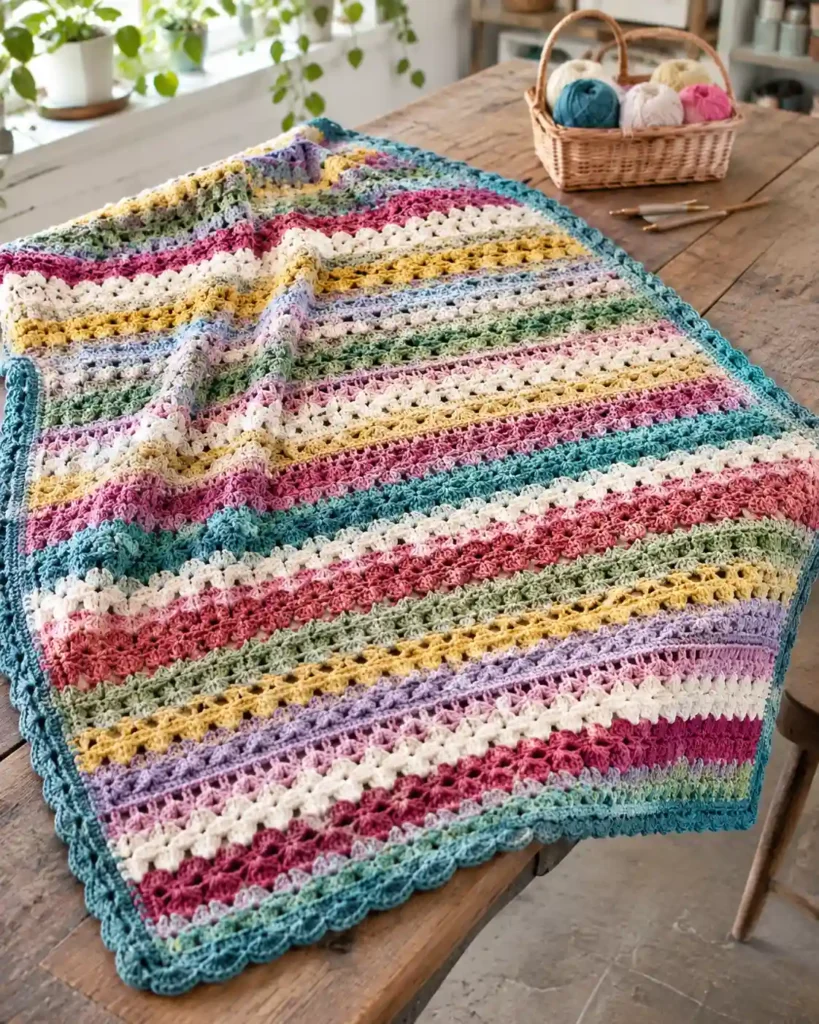
A stash buster crochet blanket can turn small leftover skeins into a cheerful, useful throw. The result looks more intentional when you organize the colors first rather than adding every remnant as it appears. The result looks more intentional when you organize the colors first rather than adding every remnant as it appears. A basket of yarn beside a partly finished scrapghan makes the project feel wonderfully practical. It is perfect for stash-busters who enjoy improvising but still want the fabric to behave consistently.
Sort scraps by approximate weight and washing requirements. If the yarns have very different thicknesses, save the odd ones for another project rather than forcing them into the same rows. Try alternating a colorful stripe with a repeat neutral to create rhythm, and leave enough tail at every join to secure it properly.
24. Striped Baby Blanket Crochet: What Makes It Practical?
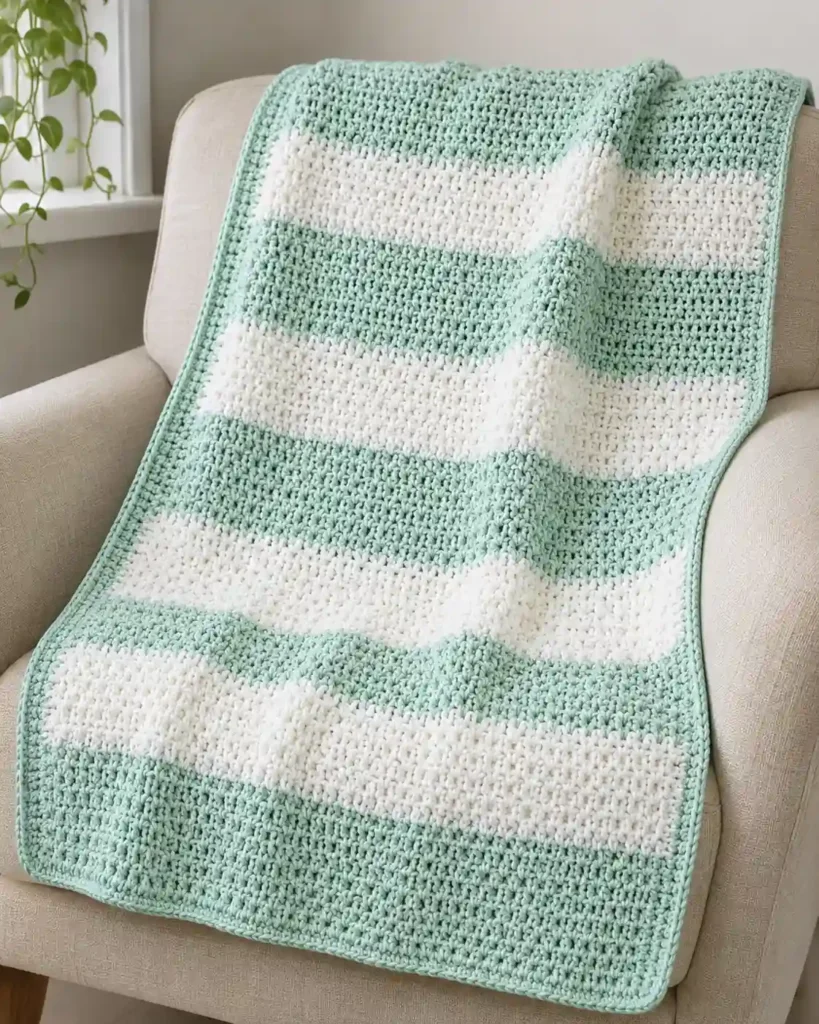
Crochet a baby blanket as a thoughtful handmade gift by choosing suitable materials and finishing it carefully. Seafoam and ivory stripes offer a gentle look, while a close, even stitch keeps the fabric simple and easy to inspect. Seafoam and ivory stripes offer a gentle look, while a close, even stitch keeps the fabric simple and easy to inspect. Folded on a nursery chair, it feels personal without needing ribbons, buttons, or fringe. Choose a washable, soft yarn and avoid loose decorative pieces or detachable embellishments.
For a complete beginner-friendly baby blanket pattern, Leelee Knits publishes a free Candy Stripes pattern with materials, a row repeat, and size information. Importantly, the American Academy of Pediatrics recommends keeping loose blankets and other soft bedding out of an infant’s sleep space; this gift must not be presented as safe crib bedding.
25. Oversized Striped Sofa Afghan
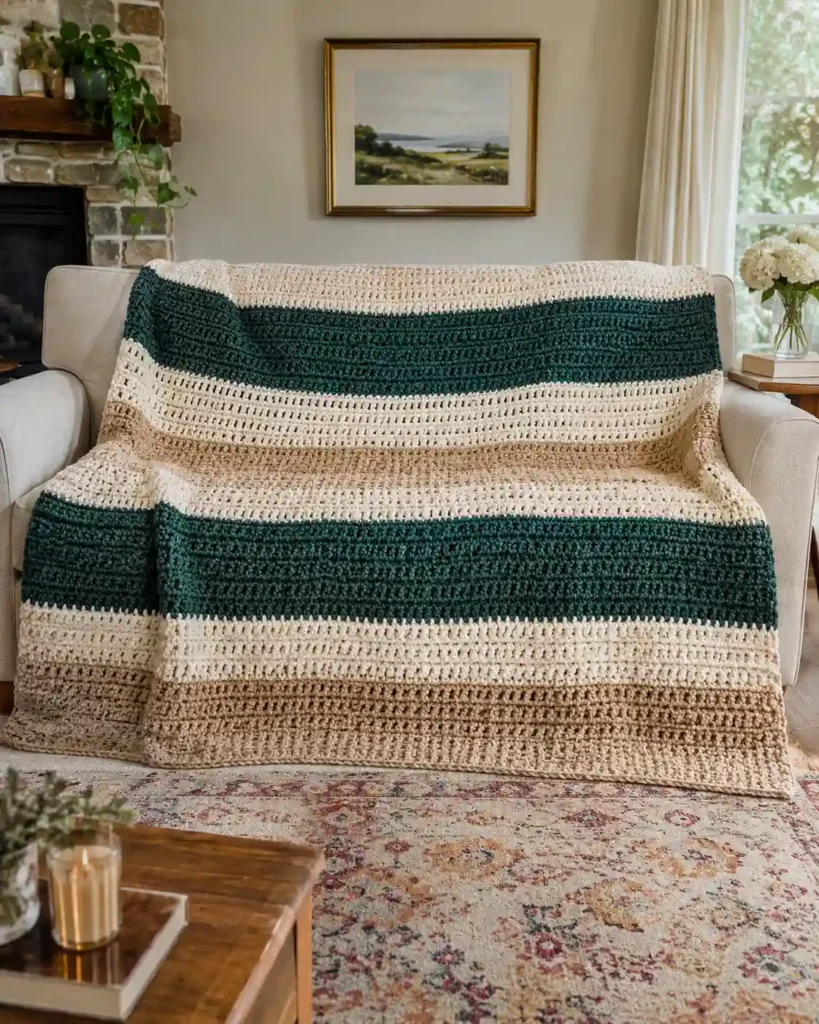
An oversized striped sofa afghan is as much a furnishing as a blanket. Its larger surface gives wide horizontal bands enough room to breathe, and the finished fabric can cover the back and seat of a generous sofa. Deep blue, ivory, and muted gray make a timeless combination in a busy family room. This option works for someone who wants a substantial statement piece and is comfortable budgeting extra yarn and time.
Measure the sofa or intended user first instead of assuming one standard throw size will fit. Crochet a gauge swatch in the exact stitch and yarn, then calculate the required foundation width and estimated number of rows. Yarnspirations explicitly recommends matching a pattern’s gauge and lists its free Bernat Woven-Look Striped Crochet Blanket at approximately 43 by 54 inches; its intermediate pattern is a useful documented example, not a universal afghan size.
Which seasonal striped crochet blanket colors feel right?
Rust, pumpkin, and moss create an autumn palette; muted red, forest green, and cream suit a winter holiday throw.
Seasonal palettes can change the mood without changing the underlying stitch. These last two ideas are about choosing colors you will enjoy beyond the first holiday photo.
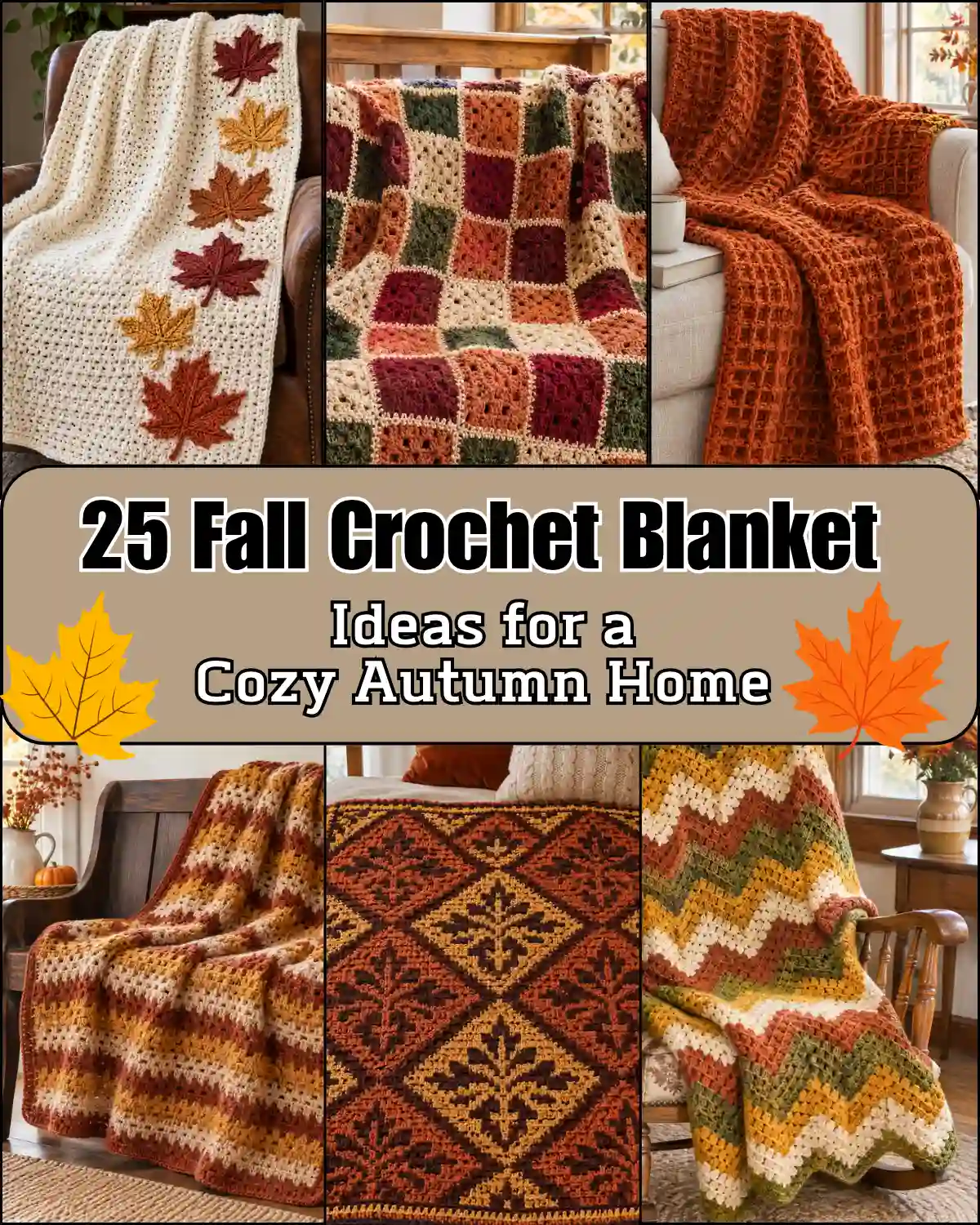
26. What Colors Work in a Pumpkin and Rust Autumn Stripe Blanket?
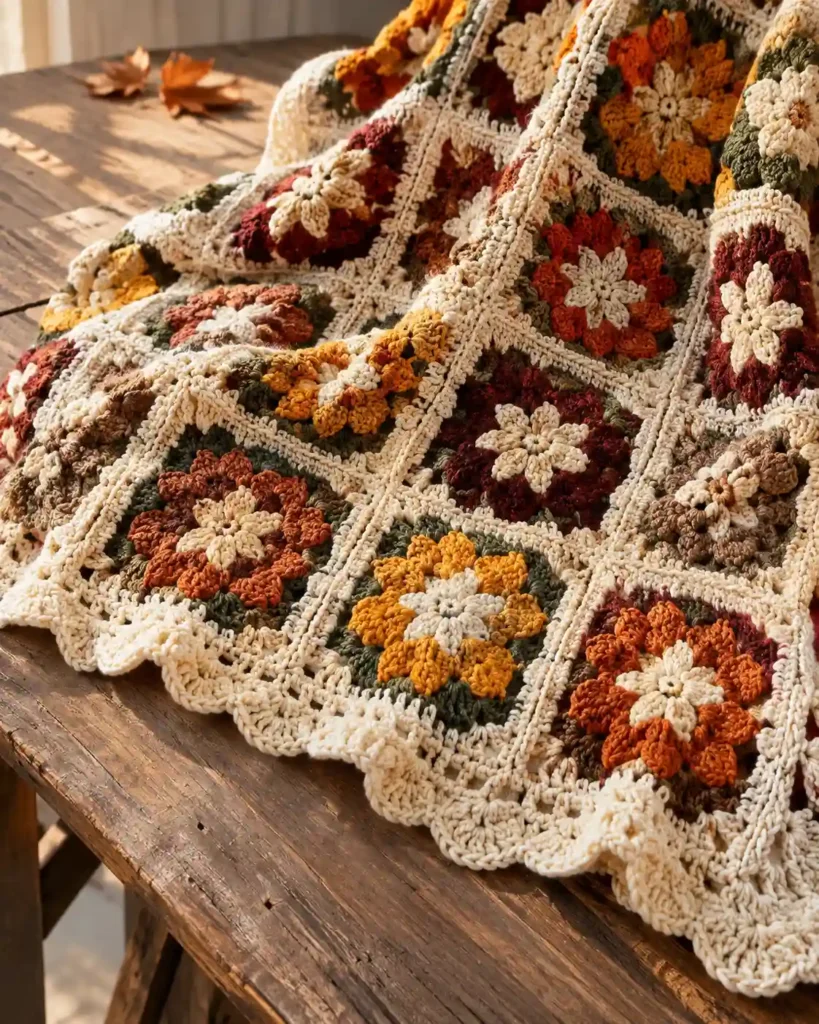
A pumpkin-and-rust autumn stripe blanket captures fall through warm color rather than complicated motifs. Cinnamon, pumpkin, tan, and moss make the stripes feel rich without relying on bright orange alone. Draped over a wooden bench, it is a comforting accent for a living room in October. This is a lovely project for anyone who enjoys seasonal decorating but wants something usable after the leaves are gone.
Try wider pumpkin bands with slimmer cream or moss breaks. Compare the palette beside your furniture before finalizing the stripe order. A dark brown or moss border can frame the warm shades without adding another distracting pattern.
27. Classic Christmas Color Stripe Blanket
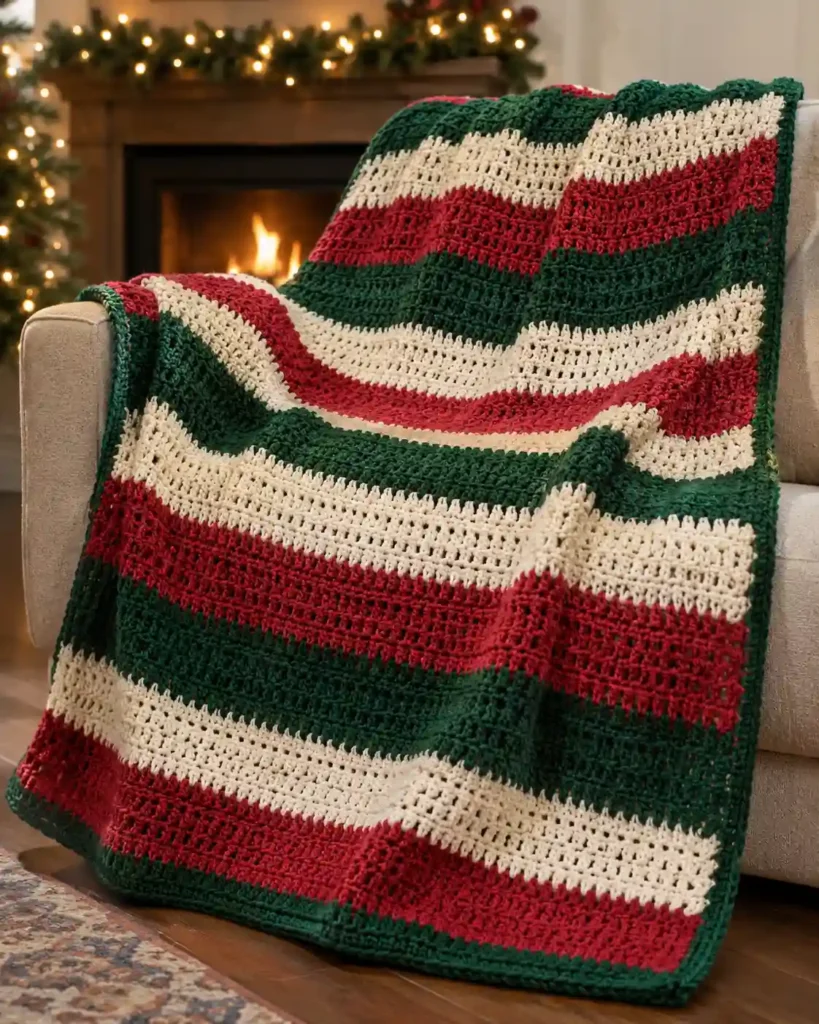
The classic Christmas color stripe blanket can feel festive without becoming a novelty item. Forest green, muted red, and cream create a recognizable holiday palette, while a restrained stripe pattern keeps the blanket useful throughout winter. Fold it on a comfortable chair near soft holiday lights for a simple seasonal look. Choose this when you want a handmade decoration that can also become a long-lasting gift.
To avoid a too-busy finish, give cream a clear role between some of the stronger red and green bands. Test two stripe arrangements with yarn laid side by side before you begin. Keep any holiday decorations separate from the fabric rather than attaching small ornaments that could snag or detach.
How should you choose yarn, hook size, and blanket dimensions?
Choose yarn for the blanket’s use and care needs, then follow the selected pattern’s gauge and hook recommendations to calculate a suitable size.
- Check the yarn label and washing instructions.
- Make a gauge swatch before estimating width or length.
- Account for stitch multiples, edges, and borders.
Start with the intended use and the care label. A practical all-purpose throw often benefits from washable yarn, while a purely decorative blanket offers more freedom in fiber and texture. The Craft Yarn Council’s standard yarn-weight system separates medium, bulky, and super-bulky categories and gives starting hook recommendations, but it specifically advises following your pattern’s gauge instead of relying on a category label alone.
A simple planning method is to make a swatch in your chosen stitch, measure the stitches and rows across a known width and height, and scale those counts to your desired blanket measurements. For example, if a swatch measures 12 stitches across 4 inches, a 40-inch target width suggests about 120 stitches before accounting for pattern multiples, edge stitches, or borders. This is a calculation example, not a ready-to-use foundation chain for every stitch.
Also check the pattern’s terminology. The Craft Yarn Council notes that U.S. single crochet is called double crochet in U.K. terminology, so mixing instructions from different sources can change your fabric substantially.
How do you plan stripes and change colors neatly?
Write down the color order and row counts, change yarn according to the pattern, and weave in ends securely for a tidy finish.
- Record each color change in a row-by-row plan.
- Keep turning chains and stitch counts consistent.
- Finish loose ends and test the border tension.
Write a stripe plan before beginning. You do not need fancy software: a notebook row with color names and row counts is enough. Repeat the same sequence for a tidy traditional look, or deliberately adjust band widths for a more modern blanket.
When the new color begins at the end of a row, follow your specific pattern’s method for joining it and maintain the correct turning-chain rule. Leave tails long enough to weave securely through the finished stitches, especially in a blanket that will be washed. If you carry a color up the edge, plan a border that conceals the carried strand instead of leaving long floats exposed.
A border is optional for a neat, even blanket, but crochet blanket edging can improve the visual effect of irregular edges. Single crochet creates a simple frame; reverse single crochet offers a corded look. Test the border on one side first so it does not ripple or pull tight.
Where can you find a free crochet striped blanket pattern?
The Daisy Farm Crafts, Leelee Knits, and Yarnspirations projects linked below offer complete striped blanket instructions; choose the one that matches your skill level and intended size.
The 27 ideas above are design directions, not 27 downloadable patterns. When looking for a crochet striped blanket pattern you can actually follow, start with these three designer or brand pages, available when this article was prepared:
- Daisy Farm Crafts, Beginner Striped Crochet Blanket: A beginner-oriented striped blanket pattern with stitch instructions, materials, and a stripe chart.
- Leelee Knits, Candy Stripes Baby Blanket: A free on-page striped baby blanket pattern; an optional paid PDF is separate.
- Yarnspirations, Bernat Woven-Look Striped Crochet Blanket: An intermediate-level pattern offered as a free downloadable file.
Read each designer’s stitch instructions rather than treating these links as interchangeable. Their materials, techniques, and finished dimensions differ. Credit the original pattern designer when sharing a finished project or linking a tutorial.
Frequently asked questions about striped crochet blankets
What is the easiest striped crochet blanket for beginners?
A one-row-repeat blanket in double crochet or moss stitch is a manageable starting point. Use one consistent yarn weight and change colors after a fixed number of rows.
How many colors should I use in a striped crochet blanket?
Two colors make the sequence easy to plan; three or four offer more visual variety. A dominant neutral with one to three accents often keeps the stripes coordinated.
How do you change crochet colors without messy edges?
Follow the pattern’s end-of-row color-change method, maintain consistent stitch and turning-chain counts, and weave in the loose ends securely. An optional border can conceal tidy carried strands along the edge.
What is the difference between chevron and ripple stripes?
Chevron stripes form sharper zigzag peaks and valleys, while ripple patterns create smoother waves. Both use a stitch repeat with increases and decreases, but the shapes and stitch counts depend on the specific pattern.
Can a striped crochet baby blanket be used for infant sleep?
No loose crochet blanket should be placed in an infant’s sleep area. The American Academy of Pediatrics recommends a firm, flat sleep surface with a fitted sheet and no loose blankets or other soft bedding.
Where can I find a free crochet striped blanket pattern?
Daisy Farm Crafts, Leelee Knits, and Yarnspirations publish accessible striped blanket instructions through the links above. Select a crochet striped blanket pattern by checking its stitch repeat, materials, finished size, and skill level before starting.
What should I check before starting striped baby blanket crochet?
For striped baby blanket crochet, select soft, washable yarn and finish the edges without fringe, buttons, or loose attachments. The American Academy of Pediatrics advises keeping loose blankets out of an infant’s sleep area.
Final Thoughts
A striped crochet blanket is a beautiful way to combine colors, textures, and simple stitches into something both practical and personal. Whether you prefer classic granny stripes, modern color combinations, chunky designs, or soft baby blankets, there’s an idea here to suit your style and skill level. Start with a pattern that matches your experience, choose yarn that feels comfortable, and plan your color changes before you begin. Most importantly, enjoy the process and make each stripe your own. With a little patience and creativity, you can create a cozy handmade blanket you’ll love using or gifting.