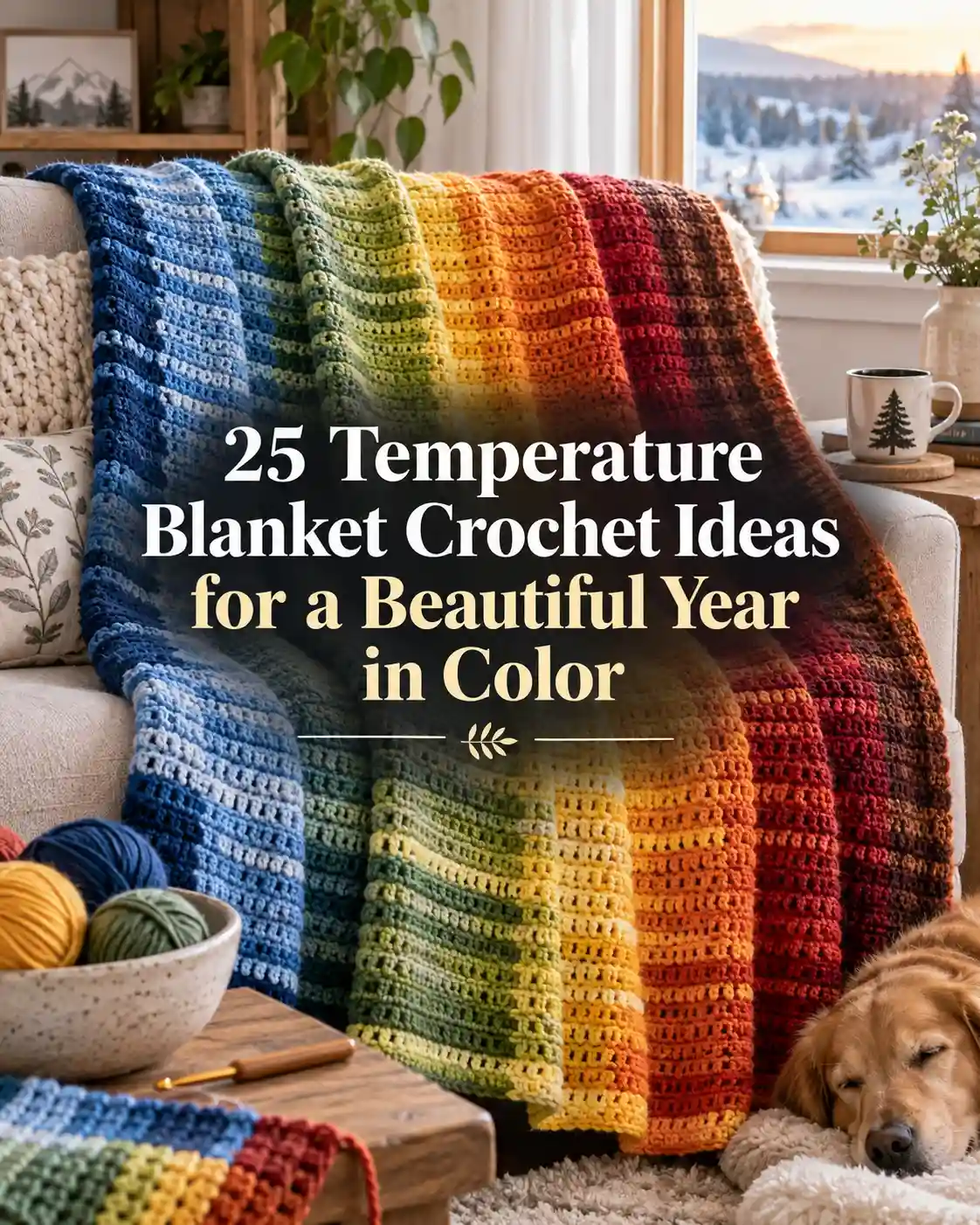
A temperature blanket crochet project records the weather through yarn: assign colors to temperature ranges, then crochet a row, motif, or section for each day. By the end of the year, you have a one-of-a-kind visual record of the seasons. The best version is not necessarily the most complicated, it is the one you can comfortably finish.
If you have ever wondered how an ordinary year could become a meaningful handmade keepsake, this project offers a wonderfully creative answer. Whether you prefer traditional stripes, portable squares, floral motifs, or a quiet neutral palette, the ideas below will help you choose a crochet blanket pattern that reflects both your local climate and your personal crochet style.
Key Takeaways
- Choose one reliable source for daily temperatures.
- Match temperature ranges to your local climate.
- Swatch before calculating the finished blanket size.
- Select a manageable crochet temperature blanket format.
- Record temperatures even when crochet falls behind.
- Save yarn details for later replacements.
What Is a Temperature Blanket Crochet Project?
A temperature blanket uses designated yarn colors to turn daily or periodic weather readings into crocheted rows, motifs, or sections.
At a Glance
- Select a location and weather measurement.
- Assign one color to each temperature range.
- Record the temperature consistently.
- Crochet rows, squares, rounds, or motifs.
- Keep the finished color key with the blanket.
A temperature blanket turns weather data into a color pattern. First, you create a temperature chart in which each color represents a range, such as 40–49°F. You then check the chosen temperature measurement for each day and crochet the corresponding color.
Many makers use the daily high, but you can record the low, mean temperature, or both. You can also work one row per day, combine several days into a motif, or use weekly and monthly averages.
For a full calendar year, a daily striped blanket usually contains 365 rows—or 366 rows in a leap year. That makes stitch height, yarn weight, gauge, and starting width important decisions.
| Approach | Best for | Weather unit | Main consideration |
|---|---|---|---|
| Daily stripes | Beginners and traditional blankets | One day per row | Can become very long |
| Split-color rows | Showing highs and lows | Two readings per day | More color changes |
| Weekly averages | A manageable schedule | One week per section | Less daily detail |
| Monthly motifs | Portable, modular crochet | Days grouped by month | Requires joining |
| Calendar squares | Detailed visual records | One day per small square | Many pieces to assemble |
| Historical-year blanket | Births, weddings, anniversaries | Archived temperatures | Reliable records are essential |
How Does a Crochet Temperature Blanket Work?
Choose one location, one daily measurement, and one color chart, then apply those rules consistently throughout the project.
- Use daily highs, lows, or averages.
- Keep one measurement method all year.
- Record every date and assigned color.
- Catch up later without losing data.
Choose one location, one weather measurement, and one reliable source before you begin. Do not switch between the daily high, low, and average halfway through the project unless the change is intentional and documented.
For current U.S. observations and forecasts, the National Weather Service API provides official forecast, alert, and observation data. Historical projects can use NOAA’s Global Historical Climatology Network Daily database, which includes daily climate observations from land-based stations around the world.
Keep a simple record with four fields:
- Date
- Recorded temperature
- Assigned yarn color
- Crochet status
Recording the temperature takes less time than crocheting the row, so continue logging even if you fall behind. You can catch up later without losing the year’s weather pattern.
How Should You Choose Temperature Ranges and Colors?
Build your temperature ranges around the weather your chosen location actually experiences, then select clearly distinguishable colors.
- Review typical local highs and lows.
- Use narrower bands for mild climates.
- Arrange colors from coolest to warmest.
- Check contrast before buying extra yarn.
- Save a printed and digital color key.
Start with the climate, not a generic chart copied from another location. A palette designed for a place with snowy winters and hot summers may produce a nearly solid blanket in a mild coastal climate.
NOAA defines a climate normal as a 30-year average calculated for a uniform period. Its current official U.S. normals cover 1991–2020 and include maximum, minimum, and average temperatures for thousands of stations. Reviewing these U.S. Climate Normals can help you estimate the range your location is likely to experience.
Try this planning method:
- Find your location’s typical low and high temperatures.
- Divide that span into roughly 8–15 useful ranges.
- Use narrower ranges where temperatures occur most frequently.
- Assign a distinct yarn color to every range.
- Arrange the skeins in temperature order and photograph them.
- Save the final key in both digital and printed form.
Your colors do not need to follow the conventional blue-to-red spectrum. A woodland palette, coastal palette, jewel-tone gradient, or collection of muted neutrals can communicate temperature just as effectively. What matters is that neighboring colors remain distinguishable.
How Can You Plan Yarn, Gauge, and Finished Size?
Crochet and measure a realistic swatch before estimating the blanket’s width, length, and yarn requirements.
- Swatch with the final yarn and stitch.
- Measure both stitch width and row height.
- Multiply row height by planned rows.
- Purchase frequently used colors early.
- Save yarn labels and dye-lot details.
Make a swatch in the exact stitch and yarn you intend to use. Measure both stitch width and row height after the swatch has rested or been washed according to the yarn-care instructions.
For example, if ten rows measure two inches, 365 rows would measure approximately 73 inches before borders. A stitch with taller rows could create a blanket far longer than expected.
The Craft Yarn Council’s Standard Yarn Weight System divides yarn into categories from lace through jumbo and provides starting ranges for crochet gauge and hook size. The council notes that these figures are guidelines, so your own swatch remains the best predictor of finished size.
A lighter yarn and compact stitch generally make daily rows easier to manage.If you prefer worsted or bulky yarn, consult a crochet hook size chart and consider weekly sections, motifs, or a shorter stitch pattern rather than 365 conventional rows.
Purchase at least one skein of every selected color before starting. Save the brand, line, fiber content, weight, dye lot, and color name. If a color appears frequently in your climate, secure extra skeins early instead of assuming it will remain available all year.
Which of These 25 Temperature Blanket Crochet Ideas Is Right for You?
Choose a format based on your available time, desired blanket size, favorite technique, and willingness to join individual motifs.
The following designs range from beginner-friendly stripes to modular flowers, stars, panels, and keepsake calendars. Choose according to your available time, preferred construction method, and tolerance for joining or weaving in ends.
25 Temperature Blanket Crochet Ideas for a Beautiful Year in Color
1. Are Classic Daily Single Crochet Stripes the Simplest Start?
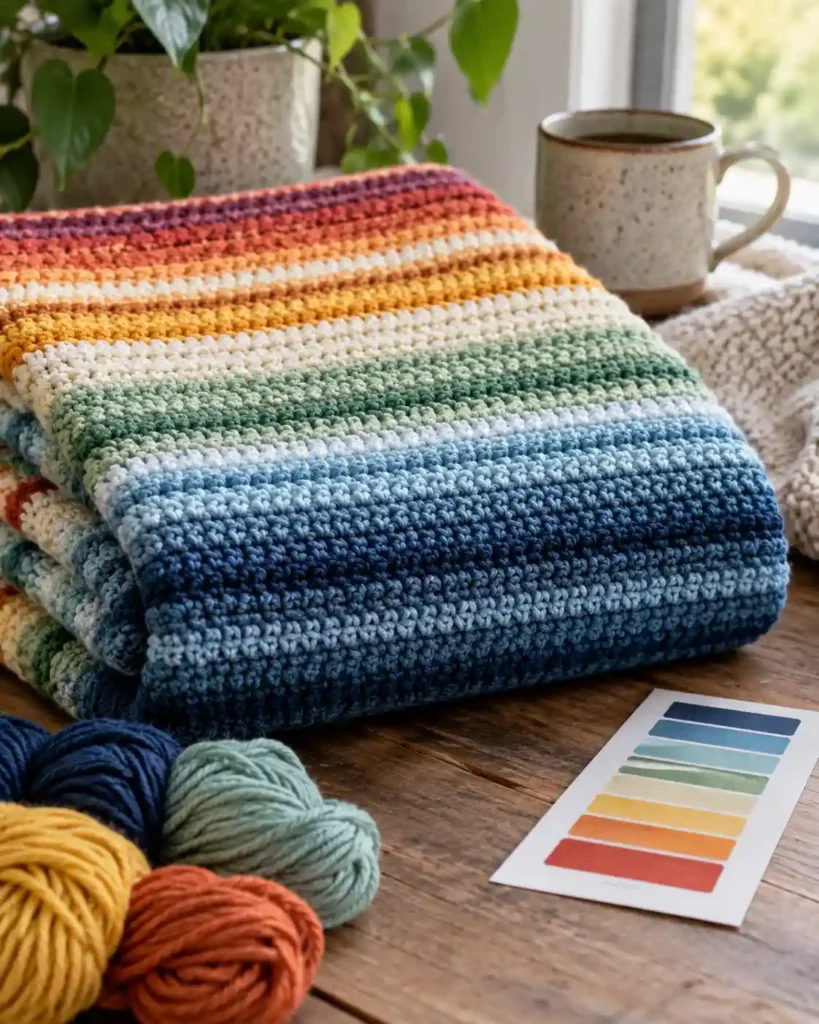
Classic single crochet stripes keep the weather record clear and easy to read. One row represents one day, so cold snaps and heat waves appear as immediate bands of color. The dense fabric feels substantial without asking you to learn a complicated repeat. It is an especially comfortable first project if you want the data, not the stitch pattern to command attention.
Single crochet rows are short, but 365 of them can still create a long blanket. Swatch carefully and consider sport or DK yarn if your projected length looks excessive.
2. Why Choose a Moss Stitch Temperature Blanket?
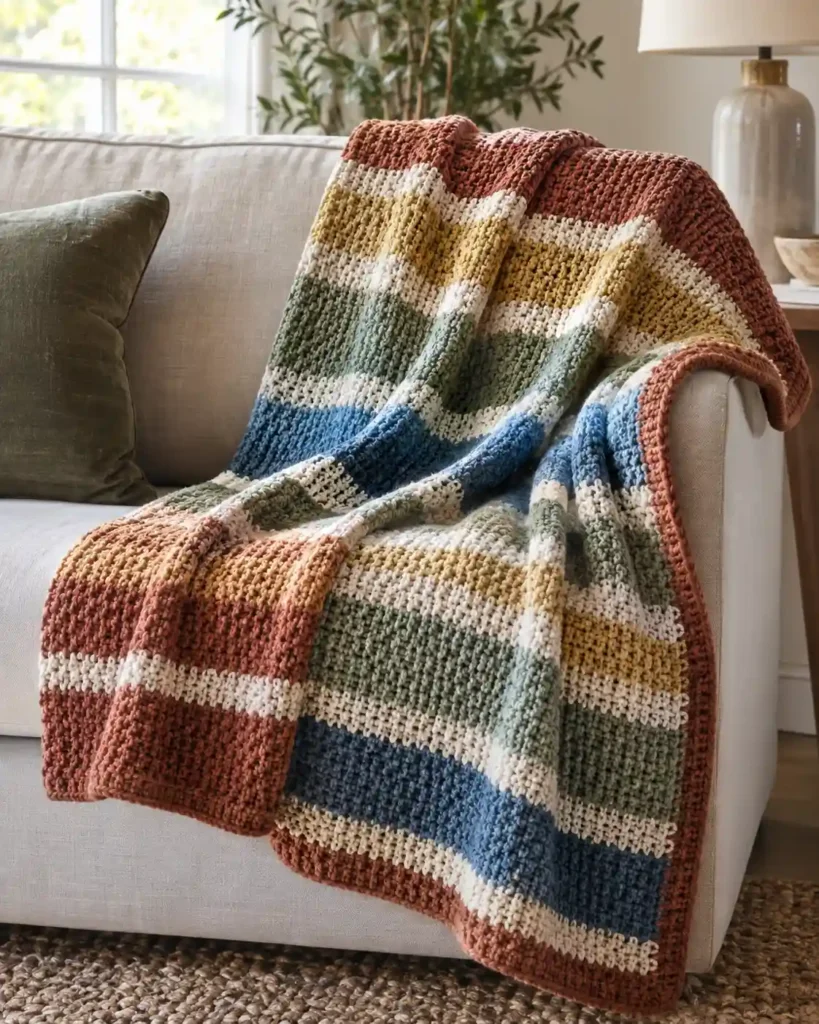
Moss stitch crochet alternates single crochet stitches with chain spaces, producing a neat woven texture and pleasantly subtle color changes. Its rhythm is easy to memorize, making it well suited to a project that will be revisited throughout the year. The fabric usually has more drape than solid single crochet and looks polished in both bright and understated palettes. It is a lovely middle ground between plain stripes and busy texture.
Because stitches are worked into chain spaces, place a marker at each edge and count periodically. Straight sides will make the eventual border much easier.
3. Is Half Double Crochet Better for Faster Progress?
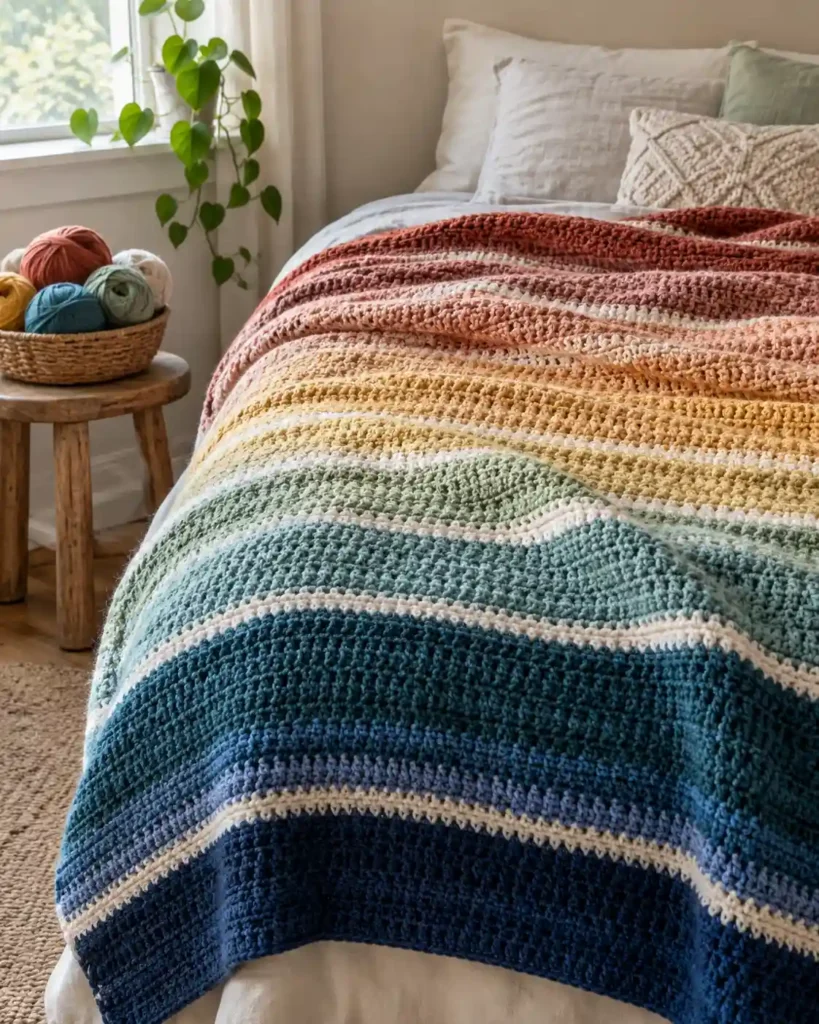
Half double crochet grows more quickly than single crochet while remaining dense enough for a warm blanket. The extra height gives each day greater visual presence, which is useful when you want bold, clearly separated stripes. It also produces a soft texture that suits everyday throws. The tradeoff is length: 365 half double crochet rows may create a very large finished piece.
Use a thinner yarn, work two days within one row, or switch to weekly averages if your swatch predicts an impractical size.
4. Would a Granny Stripe Temperature Blanket Suit a Relaxed Style?
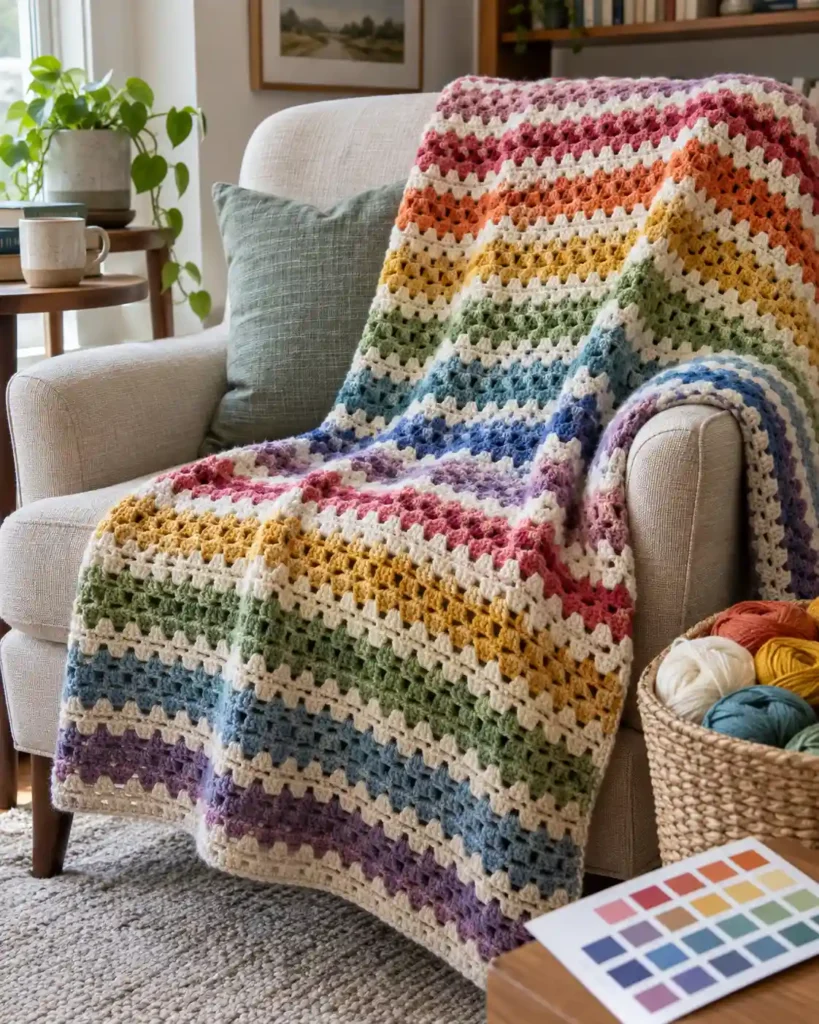
Granny stripes bring openness, movement, and a familiar handmade character to the weather chart. Clusters make each row progress quickly, while small gaps keep a large blanket from feeling overly heavy. Frequent color changes look intentional in this format, even when the weather produces unexpected combinations. The result feels cheerful and informal rather than graph-like.
Plan whether a “day” means one cluster row or a pair of rows. Whichever rule you choose, use it consistently throughout the project.
5. Can Monthly Granny Squares Make the Project More Portable?
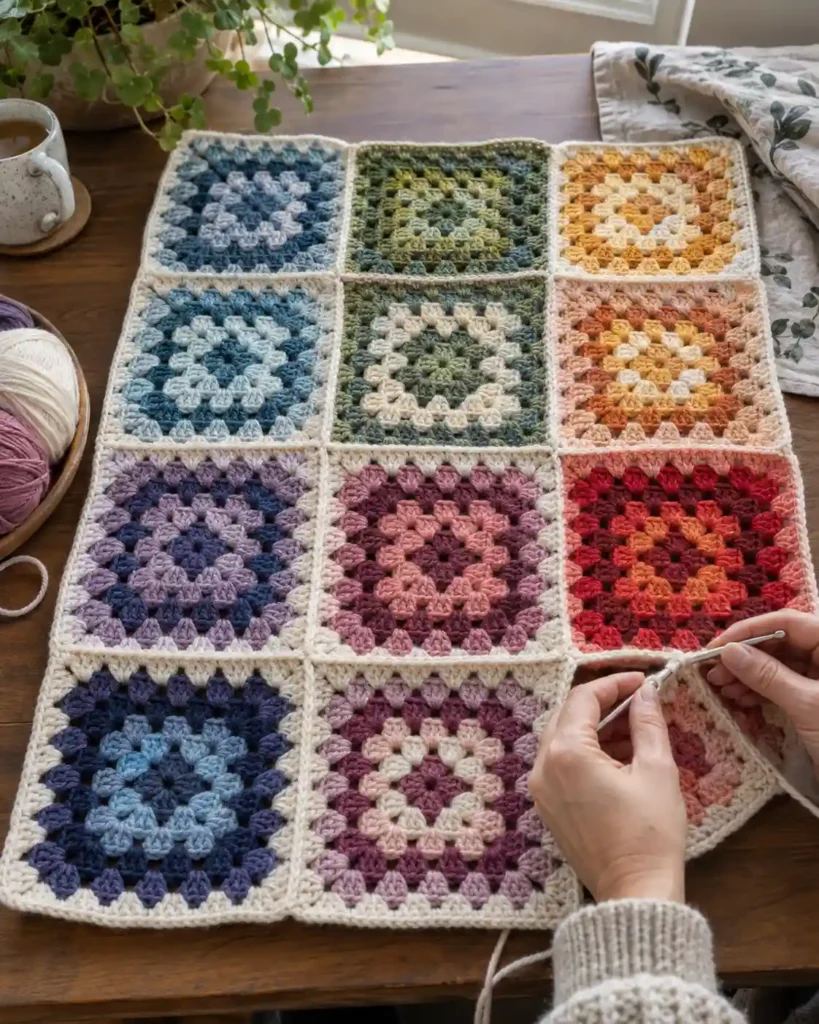
A monthly granny-square design breaks the year into twelve manageable pieces. Each square can contain daily rounds, weekly color groups, or smaller day-based motifs joined into a larger block. You can carry one month’s work without hauling an increasingly heavy blanket everywhere. When the year ends, the squares become a visible calendar once arranged from January through December.
Label every completed square immediately. A removable tag containing the month, orientation, and join position prevents confusion at assembly time.
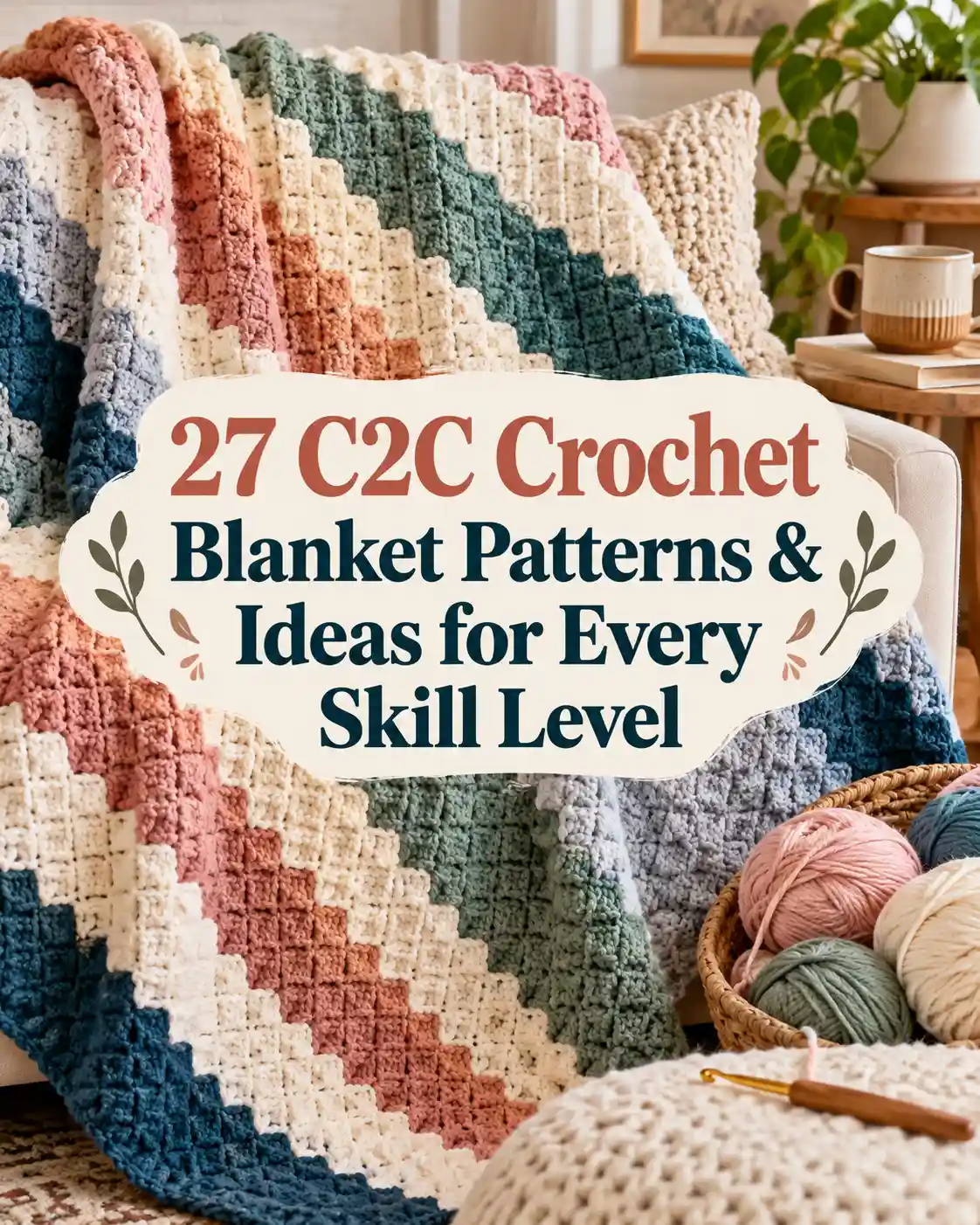
6. How Does a Corner-to-Corner Temperature Blanket Work?
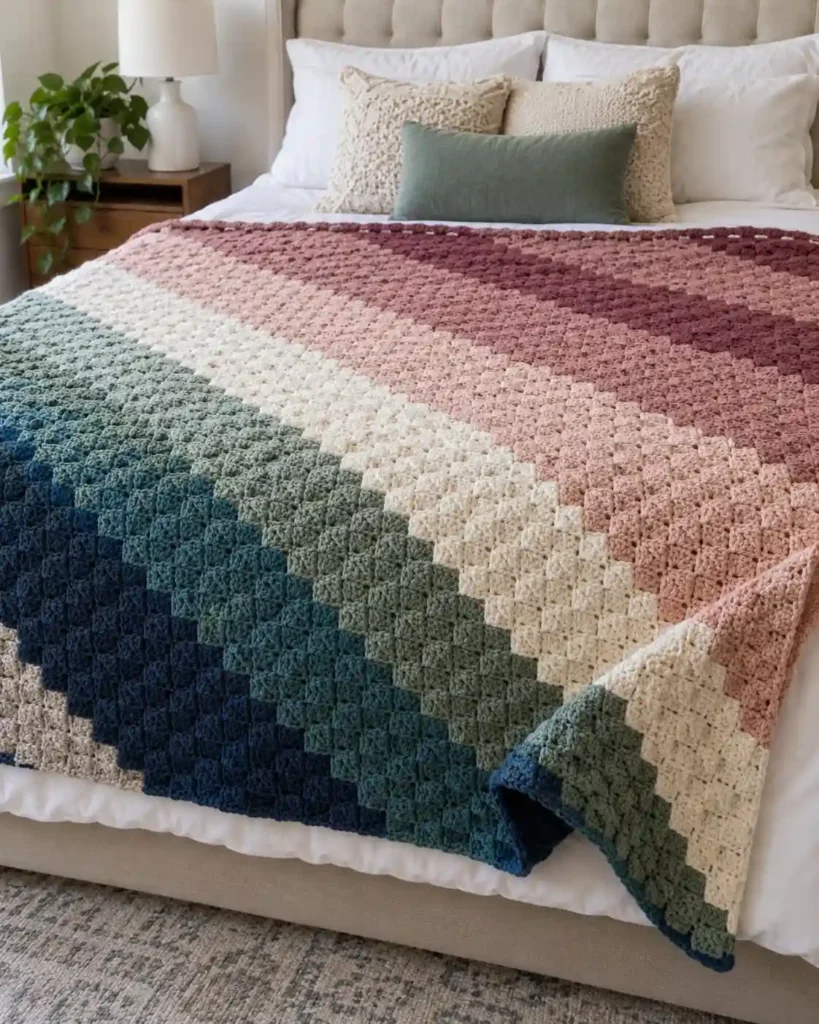
C2C crochet builds diagonal blocks rather than horizontal rows. Temperature colors can form daily bands, weekly sections, or pixel-like areas that move across the blanket. The diagonal construction gives a familiar concept a more dynamic appearance, especially when the palette contains strong contrast. It also offers an engaging alternative for crocheters who enjoy working from charts.
Decide how many blocks represent one day before beginning. A full diagonal for every date would be enormous, so grouped days or weekly averages are usually more practical.
7. Is Tunisian Simple Stitch Good for a Temperature Blanket?
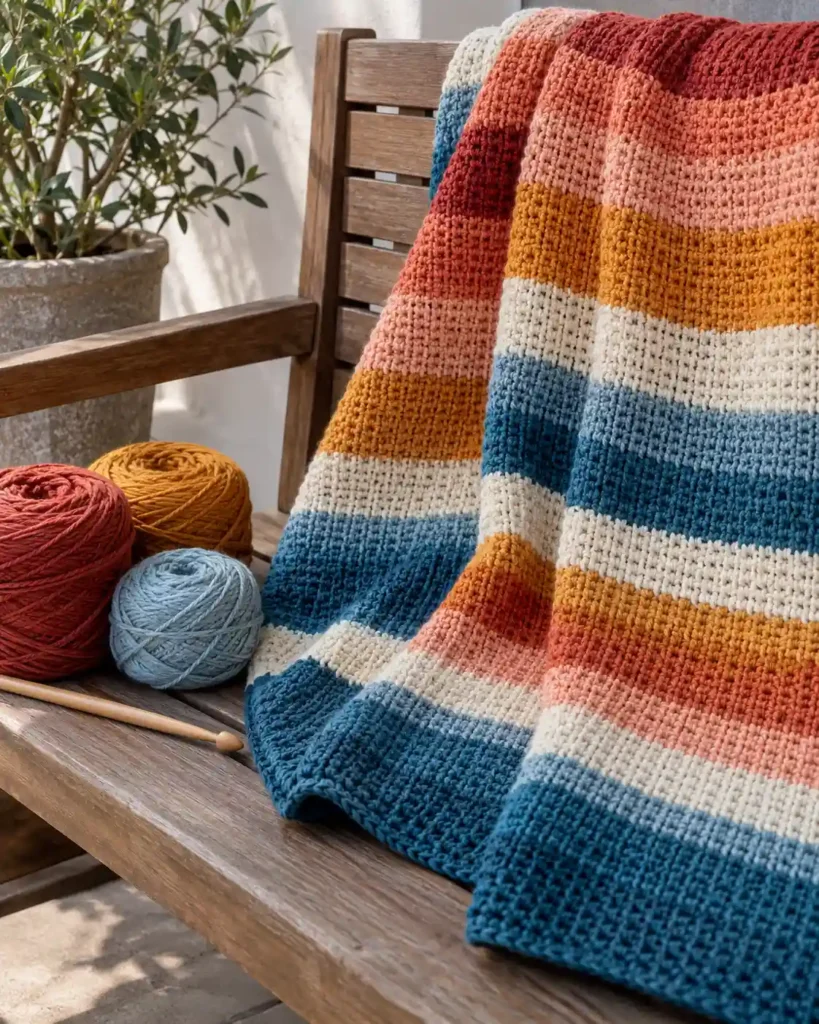
Tunisian simple stitch creates a structured fabric with crisp vertical bars. The tidy surface makes changes in temperature easy to see and gives the blanket a modern, almost woven appearance. A long Tunisian hook or interchangeable cable system holds the working stitches, so the process differs from ordinary crochet. It is an appealing choice when learning a new technique is part of the yearlong experience.
Tunisian fabric can curl and become dense. Use a larger hook than you might select for conventional crochet, swatch generously, and plan a stabilizing border.
8. Could Hexagon Motifs Turn the Weather into a Honeycomb?
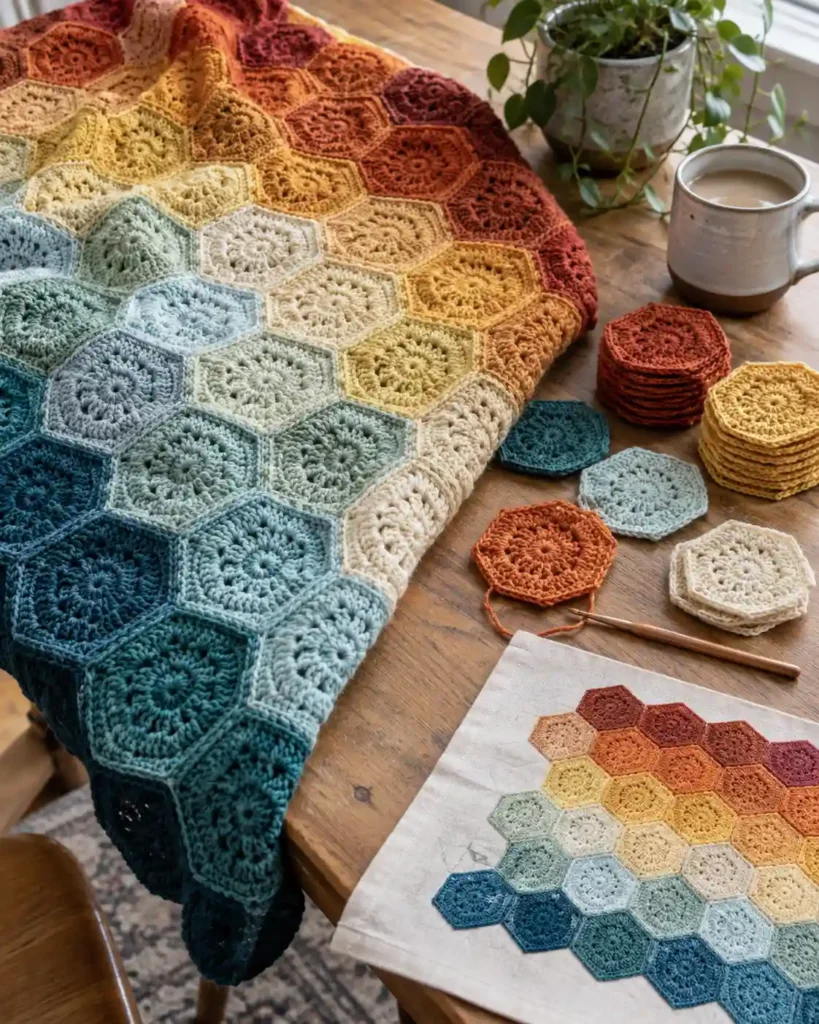
Hexagons transform daily data into a lively geometric field rather than a stack of stripes. Each motif might represent a day, a week, or an average surrounded by a neutral joining color. The changing directions soften abrupt color transitions and distribute temperatures across the blanket. This construction works particularly well for organic palettes inspired by flowers, forests, or autumn leaves.
A 365-hexagon blanket involves significant joining and end management. If that sounds daunting, make one hexagon per week and use its rounds to show the seven daily readings.
9. How Can Flower Motifs Record Daily Temperatures?
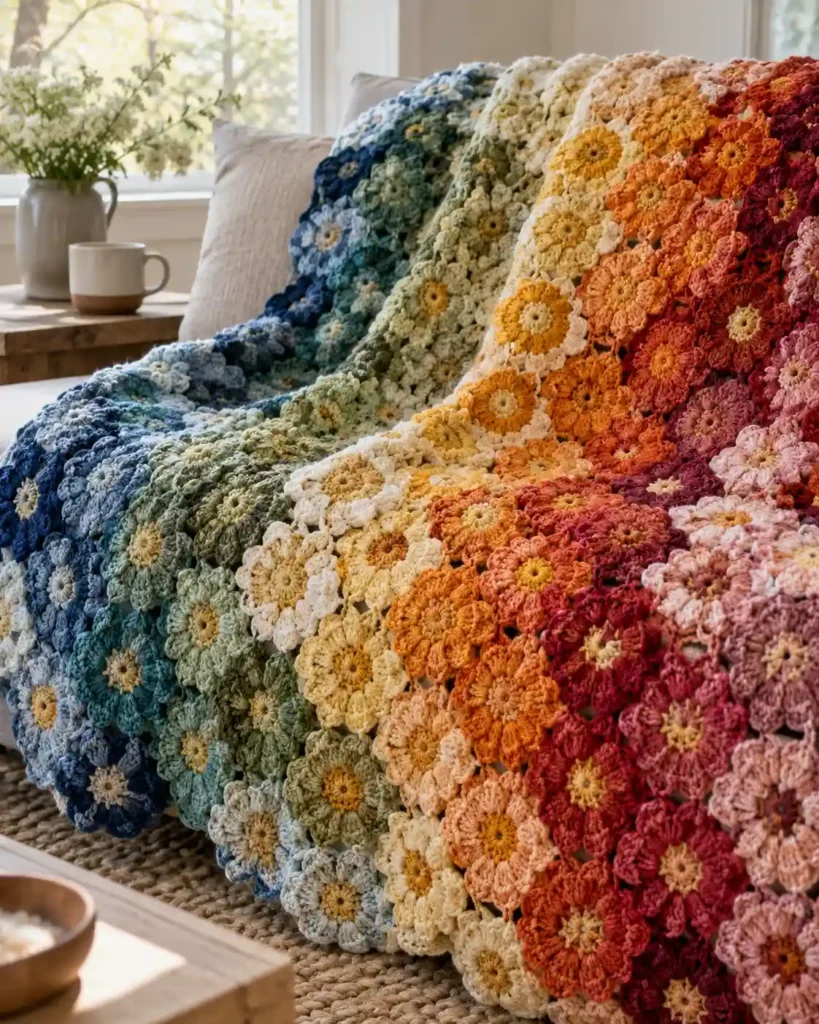
A flower motif makes every day feel like a small event. The center can represent the low, the petals the high, and an outer round the month or season. Once joined, the individual blossoms form a garden that changes with the weather. This is an expressive option for a baby’s first year, a memorial project, or a year associated with a personal milestone.
Choose a compact flower with minimal finishing. Test-join several samples before committing, since heavily textured petals can produce a bulky blanket.
10. What Makes a Twelve-Point Star Temperature Blanket So Striking?
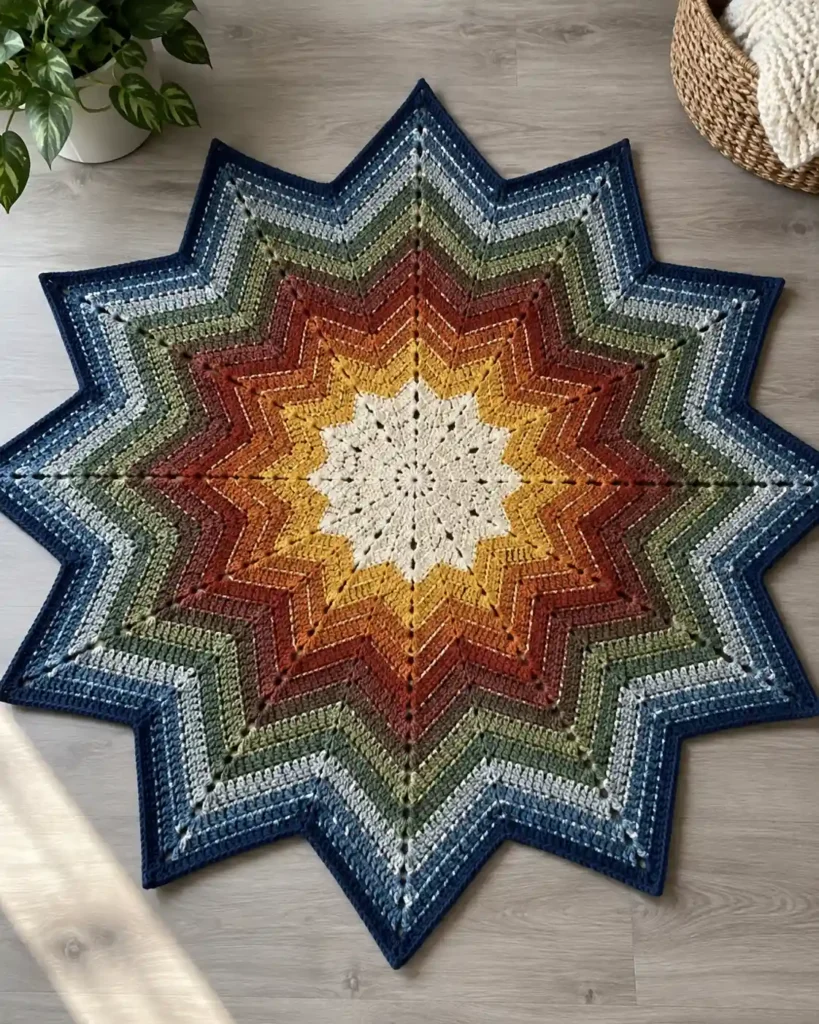
A twelve-point star grows outward in dramatic rings, allowing the year to radiate from the center. One point can suggest each month, while daily or weekly colors build concentrically. The format turns temperature changes into ripples and flashes instead of straight bands. It works best as a statement blanket for someone comfortable with increases and careful stitch counting.
Check the work on a flat surface regularly. If it cups or ruffles, adjust the increase rate before the distortion spreads through several rounds.
11. Can a Chevron Blanket Show Seasonal Movement?
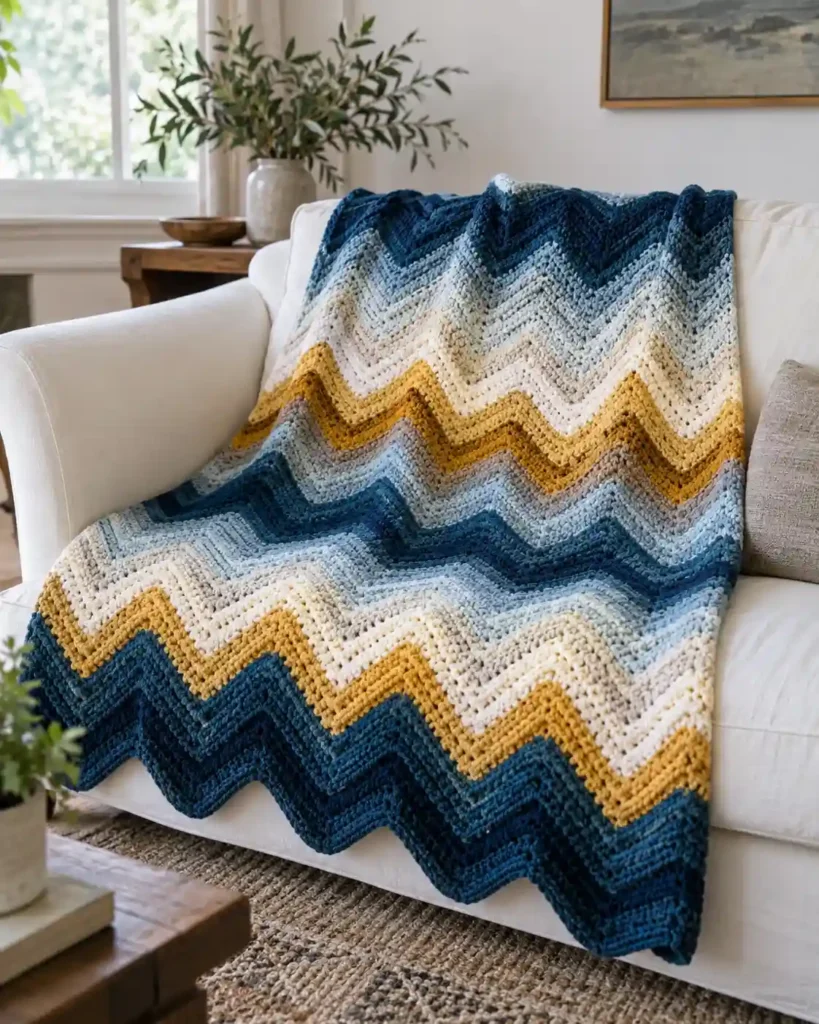
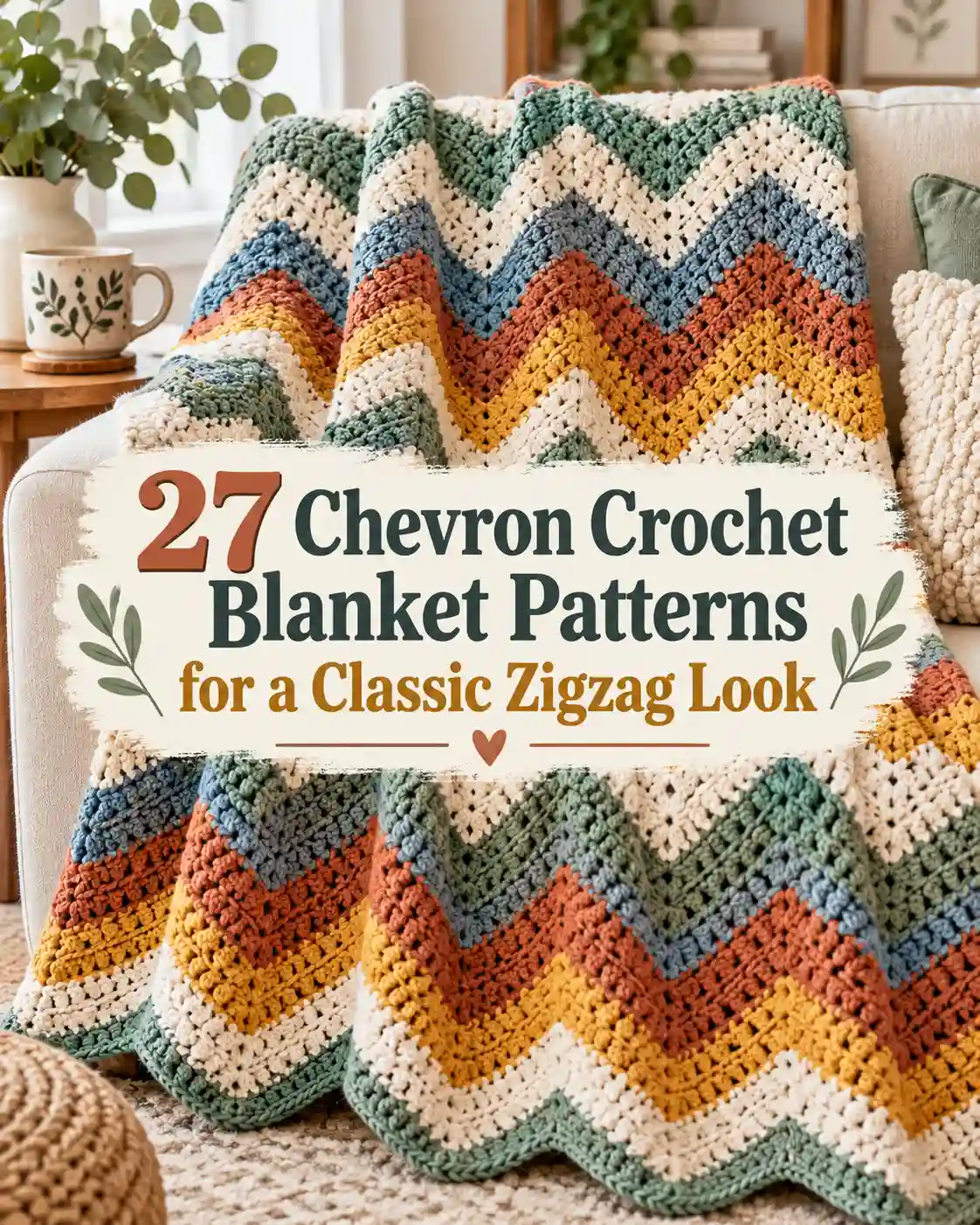
Chevron stripes already suggest peaks and valleys, making them a natural match for rising and falling temperatures. Warm and cool colors appear to move across the fabric rather than sitting in rigid horizontal lines. The repeat is memorable once established, but the finished result has more energy than a plain stripe. It is ideal for a bold palette with clearly separated values.
Mark every increase and decrease point. A missed stitch can shift the entire zigzag, so count at regular intervals instead of waiting until the row ends.
12. Should You Try a Mixed-Stitch Sampler Temperature Blanket?
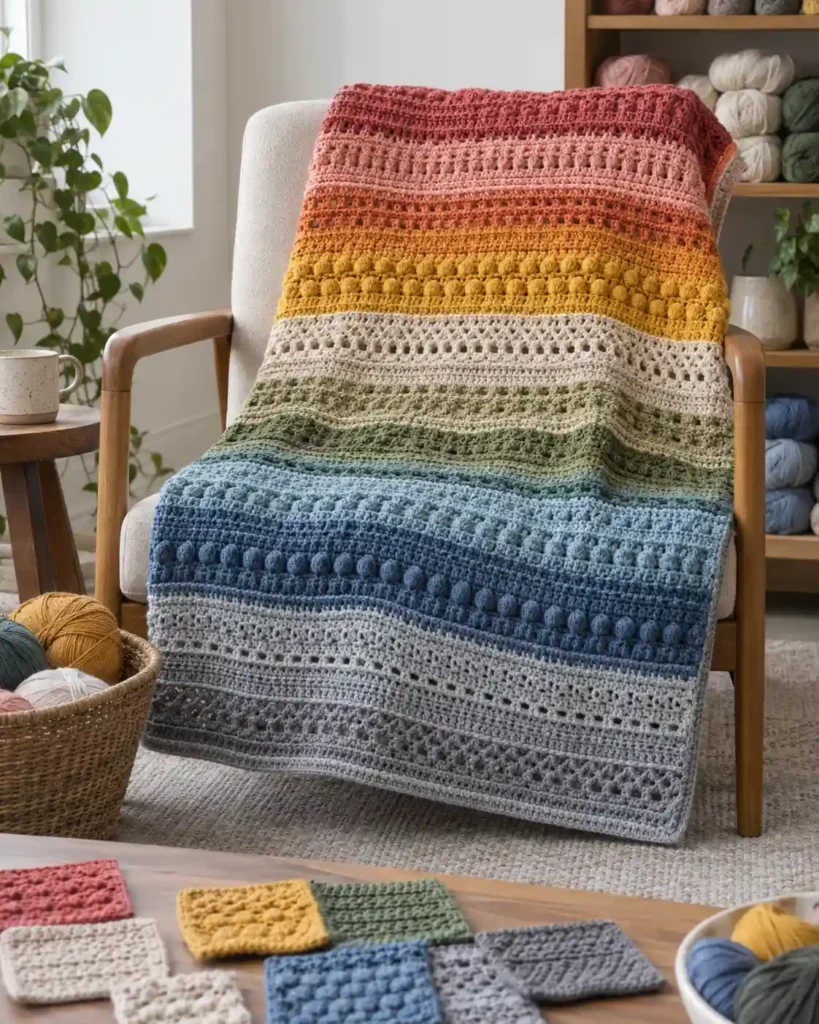
A sampler combines the story of the weather with a year of crochet practice. You might assign a different stitch to each month while allowing the temperature to control the color. Dense winter textures can give way to open summer stitches, reinforcing the seasonal progression. The changing techniques keep the project interesting for makers who become bored by one repeated row.
Swatch each stitch to compare width and height. Adjust hook size or stitch counts so every section remains close to the same width.
13. How Does a High-and-Low Split Row Work?
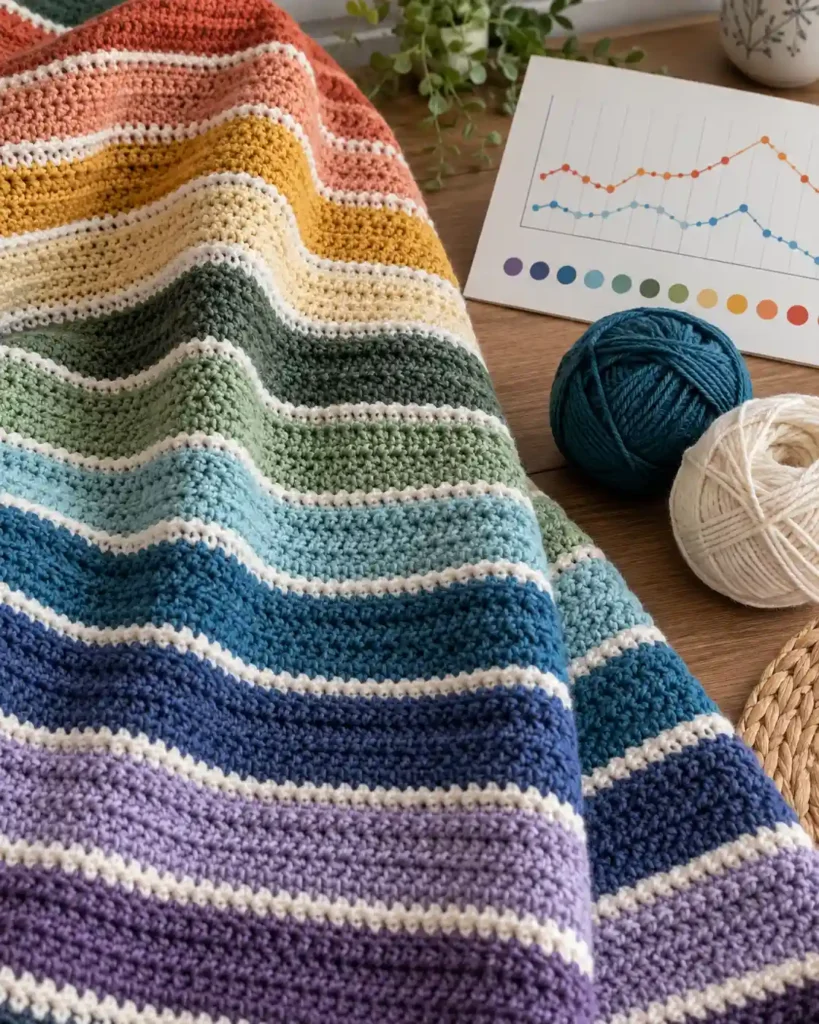
A split row displays two pieces of weather data without doubling the blanket’s length. Crochet the first half in the daily low color and the second half in the high color, placing the division at the center. The shifting midpoint creates a striking vertical seam of changing combinations. This technique reveals the daily temperature range more clearly than a single reading can.
Carry the unused yarn only if it does not show through. Otherwise, use separate yarn sections and weave in or secure the center ends as you work.
14. Would Two Rows per Day Show More Weather Detail?
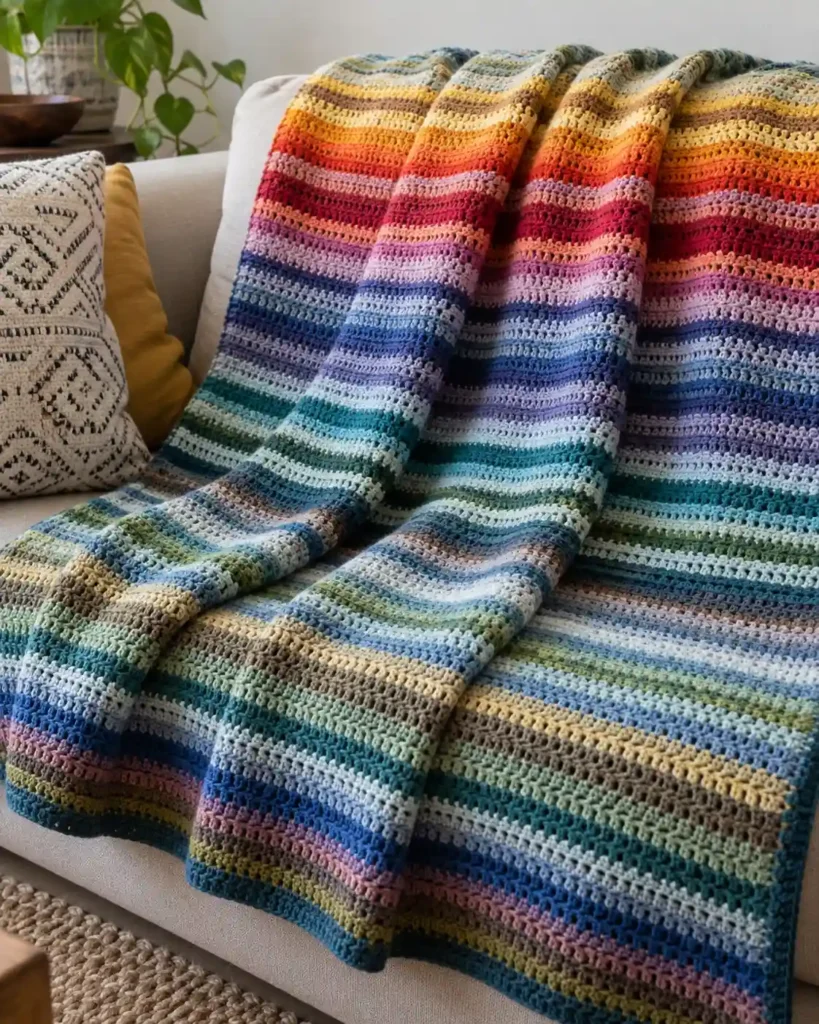
Two rows per day give the high and low temperatures equal space. The finished fabric contains a rich record of warm afternoons, cold nights, and sudden changes between them. It is wonderfully detailed, but 730 or 732 rows can become unmanageable in a conventional stitch and yarn. Treat this as a data-first design that needs careful scaling.
Choose fine yarn, a very short stitch, or a narrow panel construction. Another option is to crochet two small rows inside a daily square rather than across the full blanket width.
15. Is a Weekly Average Temperature Blanket Easier to Finish?
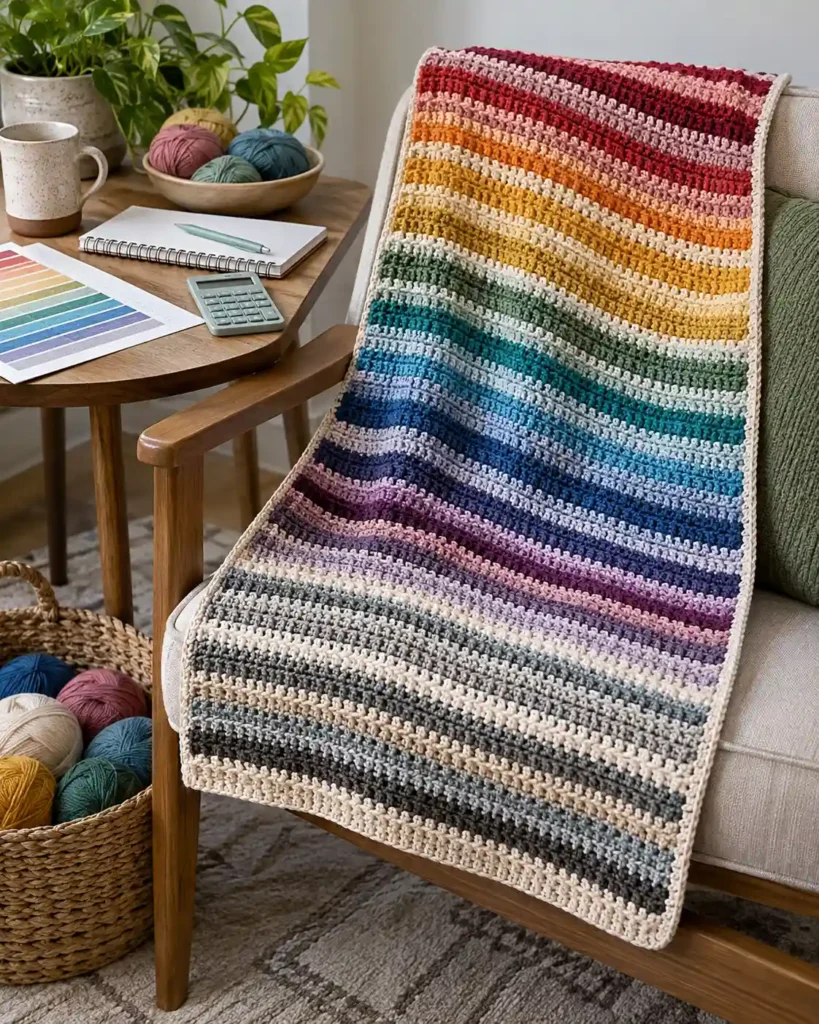
A weekly-average blanket reduces the year to about 52 sections. This gives you breathing room during busy periods while retaining the broad transition from winter to summer and back again. The wider color bands feel calm and graphic, particularly in tonal palettes. It is also a good solution when thick yarn is essential to the desired look.
Define your averaging rule before starting. Add the seven chosen daily readings, divide by seven, and apply the same rounding method every week.
16. How Can Monthly Average Panels Simplify Construction?
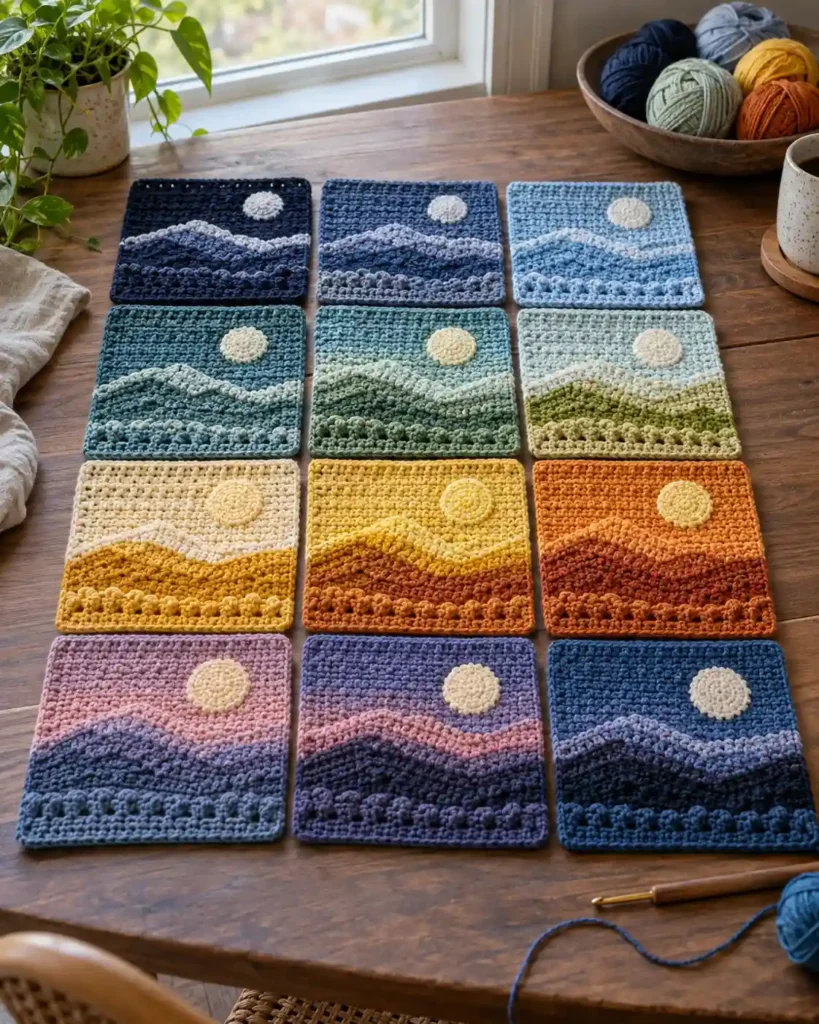
Monthly panels divide a large project into twelve compact sections that can be joined at the end. Each panel might contain daily rows, weekly averages, or one broad color representing the month’s average. Working on smaller pieces reduces weight in your lap and makes the blanket easier to transport. Alternating panel direction can also create a woven or patchwork appearance.
Use the same foundation count and blocking measurements for every panel. Join them in calendar order or arrange them by color flow for a more abstract result.
17. What Works Best for a Warm-Climate Temperature Blanket?
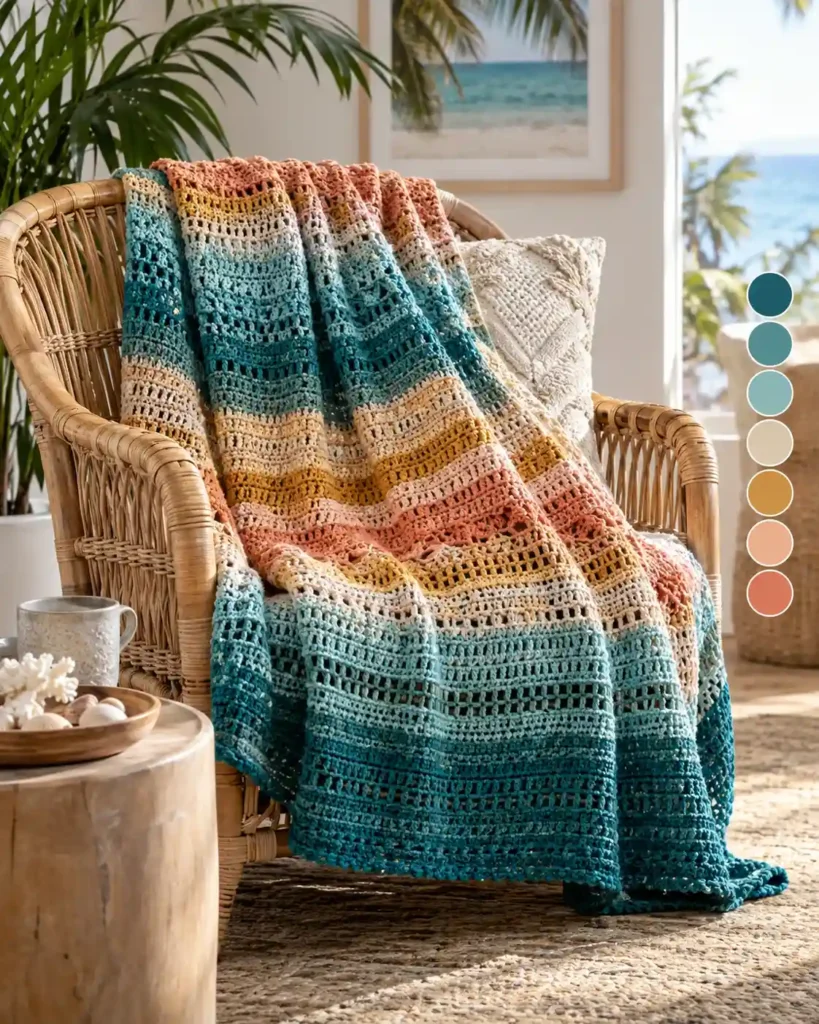
Warm climates need narrower, locally relevant ranges to prevent months of nearly identical rows. Instead of assigning one color to every ten degrees, you might use smaller increments across the temperatures your location experiences most often. A separate color for unusually cool or exceptionally hot days will make rare events stand out. This approach provides variation without exaggerating the data.
Review local climate normals or a previous year’s records before setting the key. Your lowest color does not have to represent snow; it only needs to represent the coolest meaningful range in your climate.
18. Can You Make a Celsius Temperature Blanket?
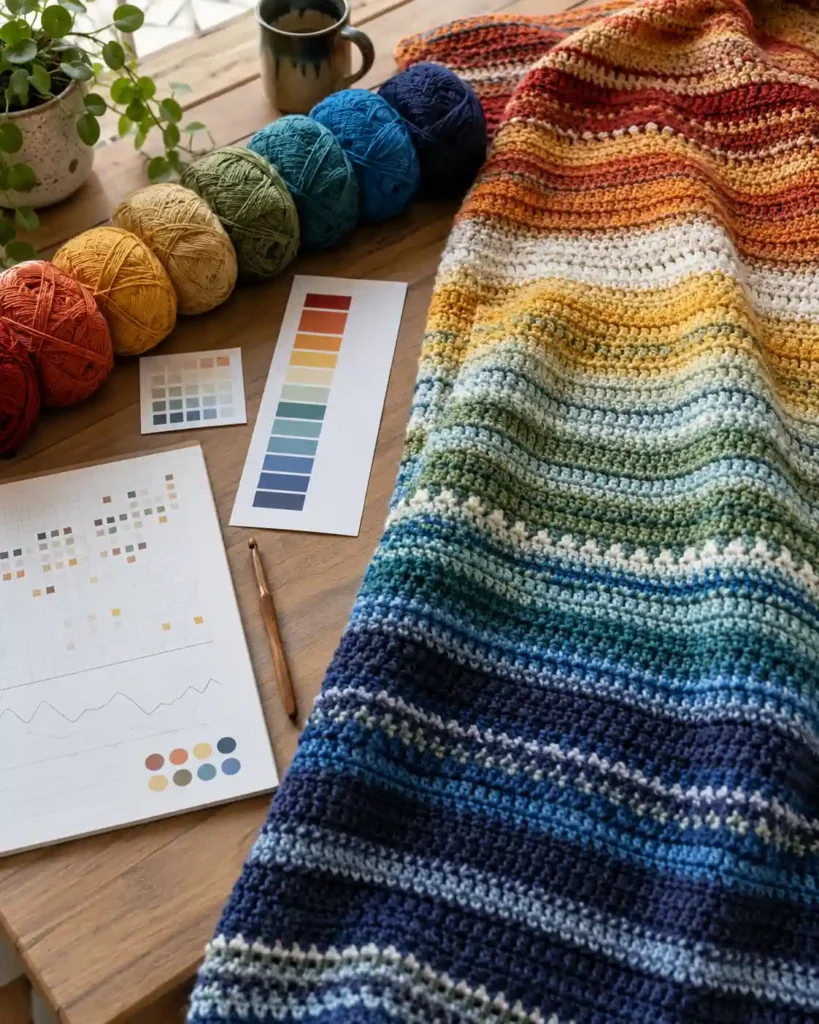
A Celsius temperature blanket follows exactly the same process as a Fahrenheit project. The important step is to build ranges directly in Celsius rather than converting a ready-made Fahrenheit chart inconsistently. Five-degree Celsius bands produce broad categories, while two- or three-degree bands reveal subtler changes. Choose increments that fit the local climate and the amount of color variation you want.
Write boundary values clearly—for example, 10–12°C and 13–15°C—so every possible measurement belongs to one category.
19. Will a Neutral and Muted Palette Still Show Temperature Changes?
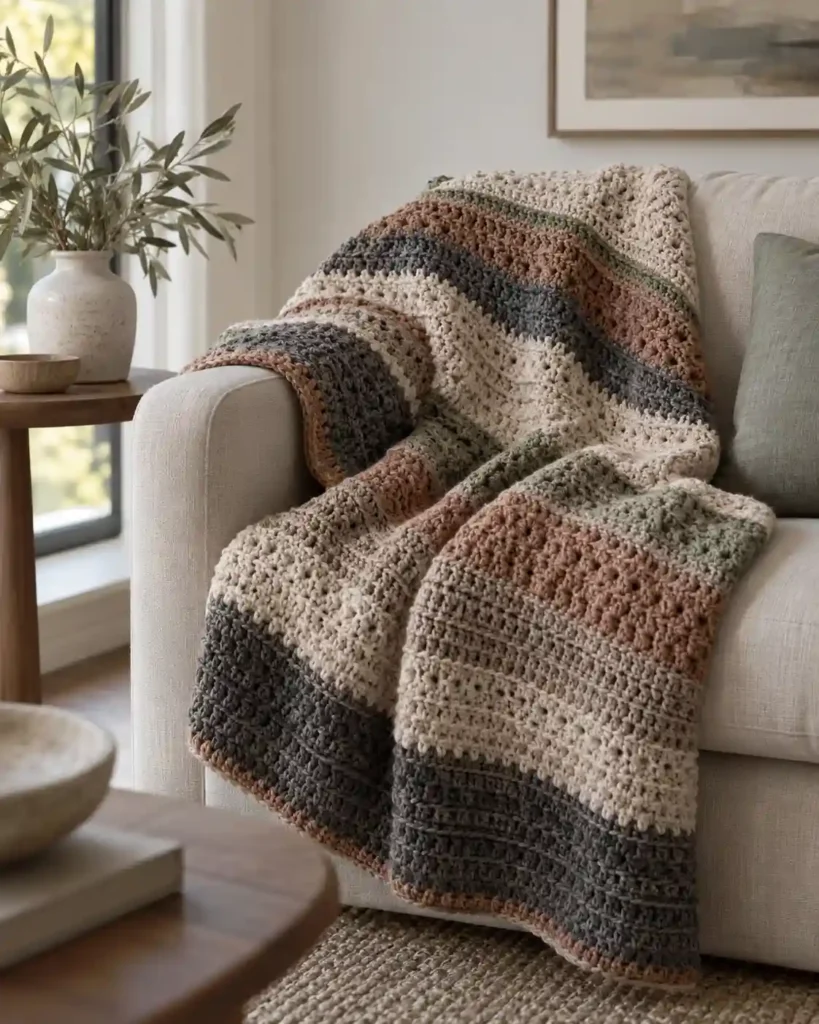
A temperature blanket does not need vivid rainbow yarn to communicate the seasons. Cream, oat, taupe, sage, dusty blue, terracotta, charcoal, and muted rose can form a quiet gradient that suits a neutral room. Differences in lightness are especially important when the hues are subdued. The finished blanket can look sophisticated while still preserving the weather story.
Photograph the yarn in grayscale before starting. If adjacent colors appear identical without hue, increase the contrast between them.
20. Why Make a Rainbow Temperature Blanket?
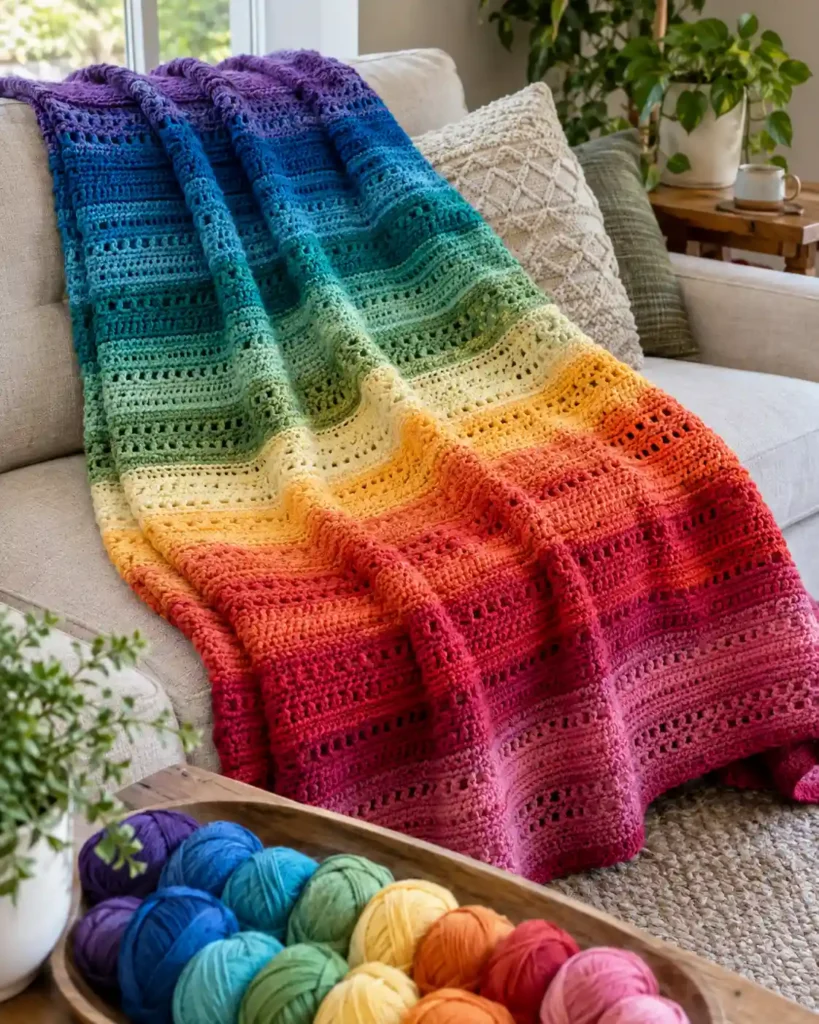
A rainbow palette gives the classic temperature concept its most recognizable appearance. Cool purples and blues can move through green and yellow toward orange, red, and deep pink. The continuous spectrum makes warming and cooling trends easy to interpret at a glance. It is a joyful choice when the blanket is intended to become a colorful focal point.
Arrange all skeins before assigning ranges. Swap any neighboring colors that are too similar, especially if they will frequently appear together.
21. Could a Seasonal Palette Replace One Yearlong Gradient?
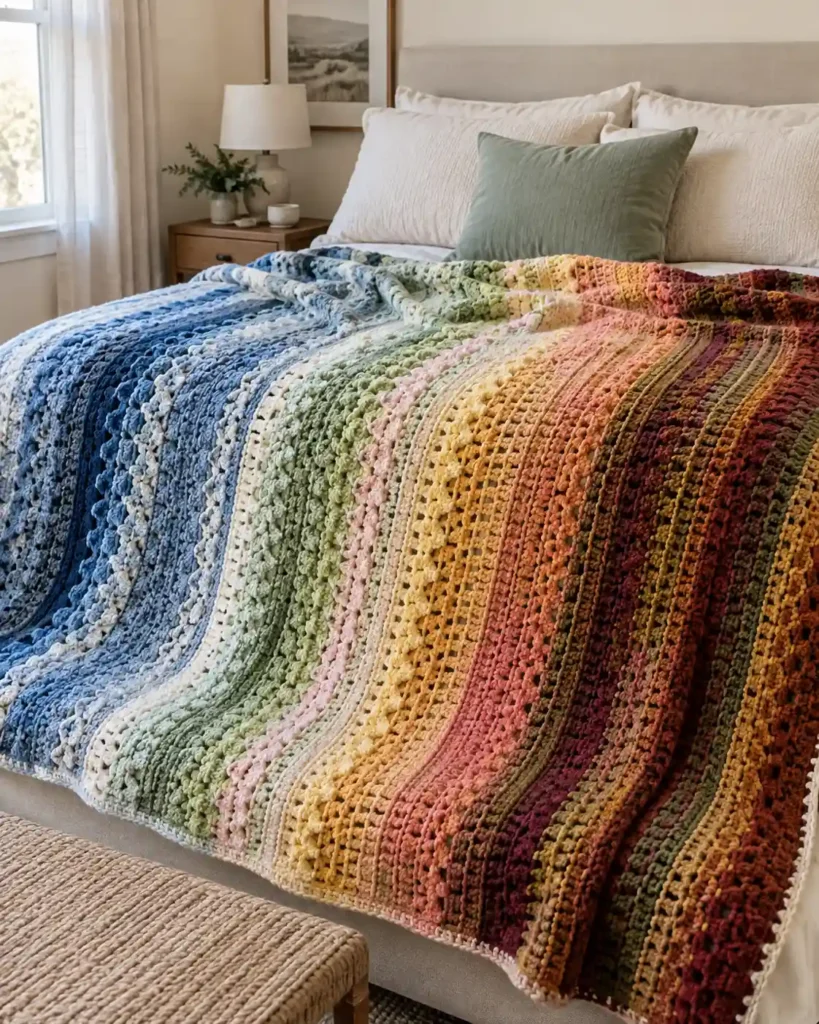
A seasonal design changes its color family every three months while continuing to record temperature. Winter might use icy blues, spring soft greens, summer bright citrus shades, and autumn warm earth tones. This method makes the calendar structure unmistakable even when temperatures overlap between seasons. It also gives you room to use more favorite colors without creating an unwieldy temperature key.
Add one neutral divider row between seasons if you want clear boundaries. Record any palette change in the project notes.
22. Is a Scrap-Yarn Temperature Blanket Practical?
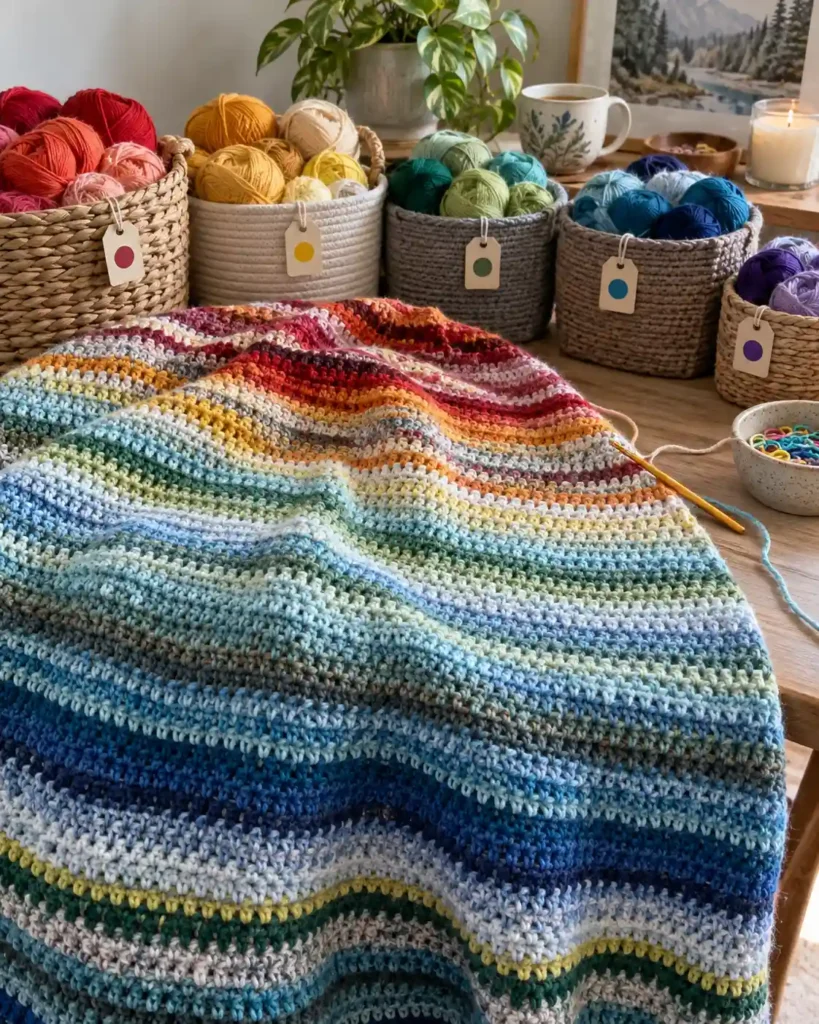
A scrap-yarn version turns leftovers into a record of the year while reducing the need for a large matching purchase. Sort yarn by color family or temperature impression rather than requiring every row in a range to use the identical shade. Slight changes in fiber and tone create a lively, memory-filled surface. This approach is best when you enjoy spontaneity more than perfect uniformity.
Keep yarn weight reasonably consistent and avoid mixing fibers with incompatible care instructions. If the scraps vary in thickness, adjust the number of strands or hook size after testing a swatch.
23. How Can a Baby’s First-Year Blanket Become a Keepsake?
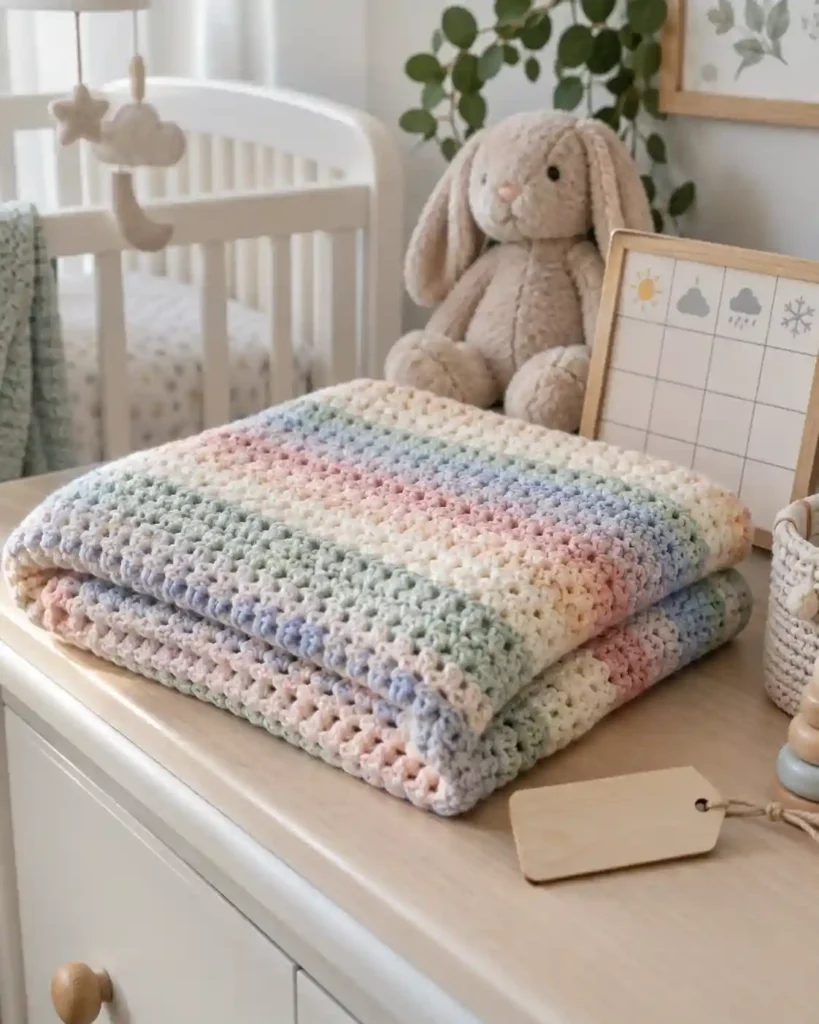
An easy crochet baby blanket for the first year can begin on the baby’s birth date instead of January 1. Each row or motif records the temperature where the child lived, turning ordinary weather into part of a family story. Monthly markers, milestone colors, or an embroidered name can add personal meaning without replacing the main data. The finished piece becomes both a useful blanket and a record of the child’s earliest year.
For safe, practical care, choose washable yarn with secure joins and avoid loose embellishments. Keep the data chart with the blanket so its colors remain understandable years later.
24. Can You Recreate an Anniversary or Birth Year?
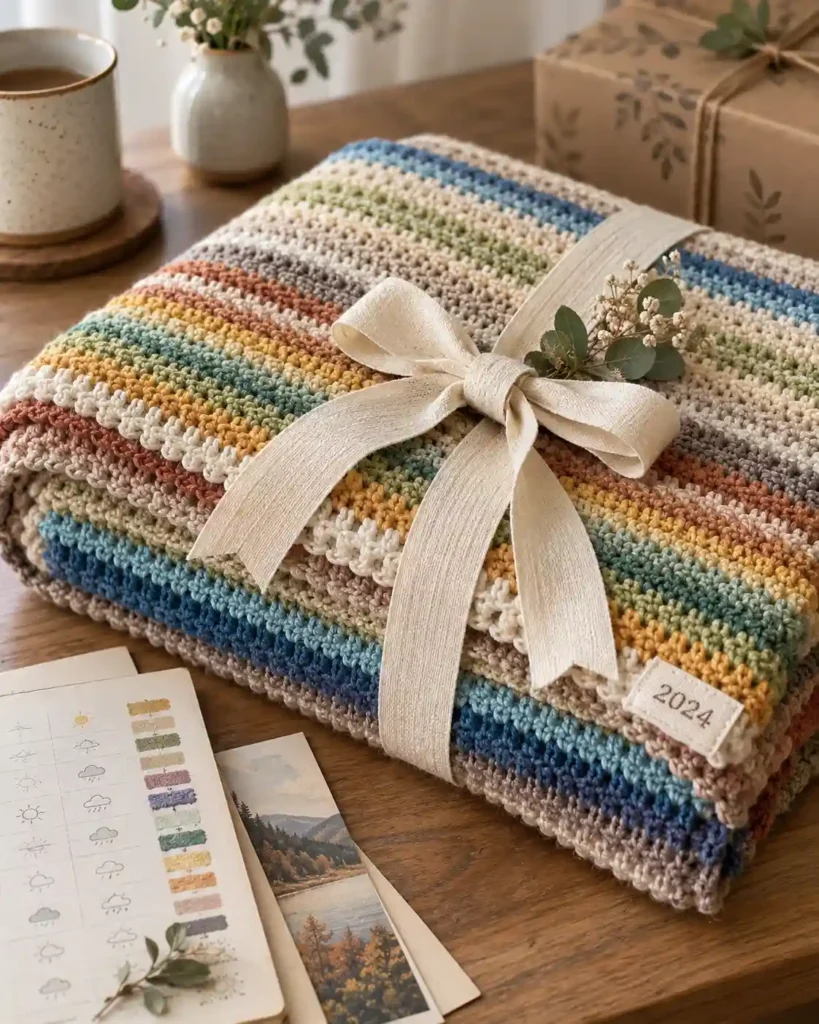
Historical temperature data lets you crochet a meaningful year long after it has passed. A wedding year, birth year, graduation year, or the year a family moved can become a thoughtful commemorative gift. Because the complete data already exists, you can work at any pace instead of following the calendar. You can even select a location tied to the event rather than your current home.
Use one consistent reporting station whenever possible. Record its name or station identifier, the chosen measurement, and how missing dates were handled.
25. What Is a Temperature Calendar Squares Blanket?
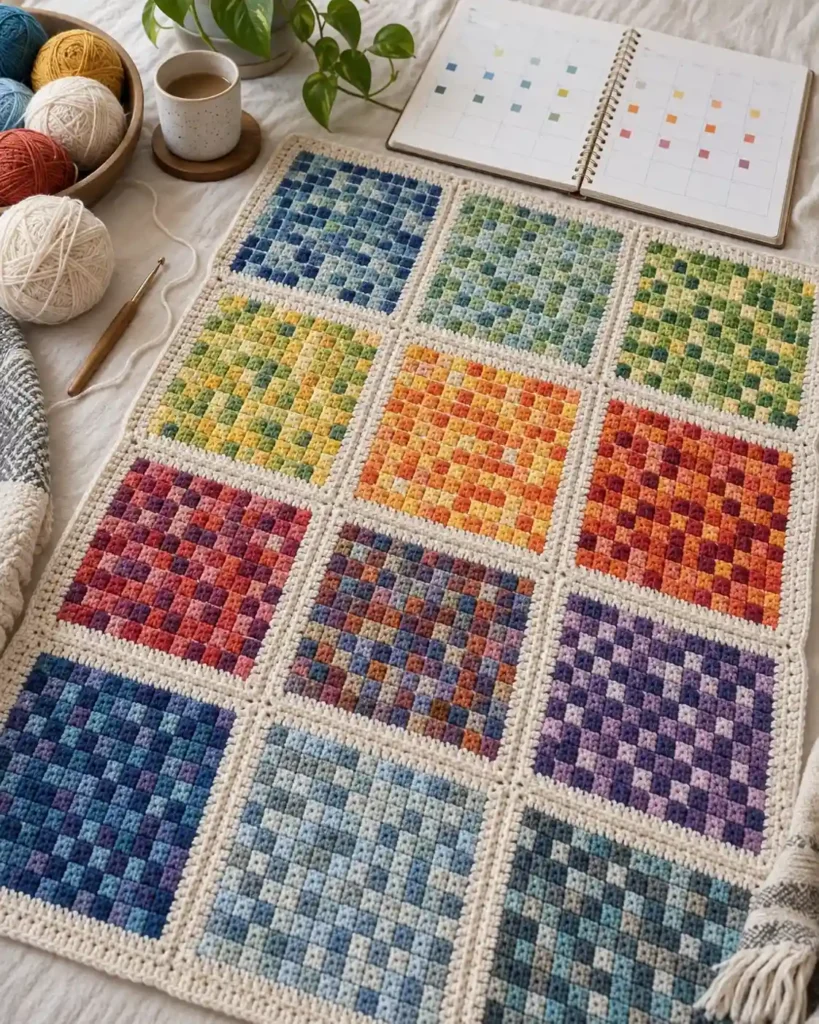
Calendar squares arrange days in a grid that resembles a traditional month-by-month calendar. Each small square represents a date, while neutral spaces can mark blank cells before the first day and after the last. The layout preserves both color and chronology, making weekdays, weekends, and month boundaries easy to identify. It is one of the clearest ways to turn weather records into textile data.
Create twelve monthly blocks and add labels after joining. To limit loose pieces, work each calendar row as joined squares or use a join-as-you-go method.
How Can You Track the Year Without Falling Behind?
Record every temperature promptly, then crochet in small daily or weekly batches that fit your schedule.
At a Glance
- Separate weather tracking from crocheting.
- Schedule one weekly catch-up session.
- Mark weeks and months in the fabric.
- Check the stitch count regularly.
- Weave in ends before they accumulate.
A temperature blanket is a long project, not a daily test of discipline. Missing a few crochet sessions does not mean the project has failed.
Use a tracker even when you do not have time to pick up the hook. A notebook, spreadsheet, calendar, or temperature-blanket planning tool can hold the readings until you are ready.
A sustainable routine might look like this:
- Record the temperature every evening.
- Crochet seven rows on the same day each week.
- Place a stitch marker after every Sunday.
- Check stitch count at the end of each month.
- Photograph each completed monthly section.
- Weave in ends before beginning the next month.
If you fall several weeks behind, divide the backlog into small groups. Three or four rows during each session will close the gap without turning a relaxing project into a chore.
How Should You Add Borders, Labels, and Finishing Details?
Add an even foundation round, choose a border that complements the fabric, and attach a label explaining the weather record.
A border gives uneven edges a cleaner appearance, but it cannot completely correct severe rippling or narrowing. Check the width during the year so problems can be addressed early.
For clean crochet blanket edging, begin with one round of evenly spaced single crochet. Then add a simple ribbed, moss-stitch, shell, or granny border. A neutral border frames a colorful blanket, while a temperature color can repeat the year’s most common or most meaningful range.
Finish the blanket with a sewn or embroidered label containing:
- Project location
- Recorded year
- Daily high, low, or average
- Temperature scale
- Maker’s name
- Yarn and care information
You may also attach a small fabric key showing the temperature ranges and colors. That key transforms an attractive blanket into a readable record.
Frequently Asked Questions
What is a crochet temperature blanket?
A crochet temperature blanket uses yarn colors to represent recorded temperatures. The maker assigns colors to temperature ranges and crochets a row, round, square, or motif for each day or period. The finished blanket visualizes how the weather changed over time.
How many colors should a temperature blanket use?
Many projects work comfortably with about 8–15 colors, but there is no fixed requirement. Use enough colors to show variation in your climate without making yarn management frustrating. A mild climate may benefit from more colors and narrower temperature ranges.
What is the best stitch for a temperature blanket?
Moss stitch and single crochet are popular because their rows are compact, repetitive, and easy to read. Granny stripes work well for a lighter, faster blanket. The best stitch is the one that produces a manageable projected size in your chosen yarn.
How do you make a temperature blanket in a warm climate?
Study the temperatures your location actually experiences and use narrower ranges across that span. Two- to five-degree bands may create more visible variety than broad ten-degree bands. You can also record daily lows, which may fluctuate more than afternoon highs.
Can you start a temperature blanket after January?
Yes. Retrieve the missing readings from a trustworthy historical weather source, record their assigned colors, and crochet the earlier sections at your own pace. You can also begin on a birthday, anniversary, solstice, or any other personally meaningful date.
Final Thoughts
The strongest temperature blanket crochet plan balances meaningful data with realistic construction. Select a reliable weather source, build ranges around the local climate, swatch the chosen stitch, and calculate the likely finished dimensions before committing to hundreds of rows.
Then choose the format that makes you want to return: traditional stripes, portable motifs, bold chevrons, a star, or a calendar grid. Your blanket does not need to follow anyone else’s colors or schedule. It simply needs a clear set of rules—and enough flexibility to remain enjoyable for the whole year.

![The Best 30+ Free Crochet Cat Patterns [Beginner-Friendly Guide]](https://crochetmind.com/wp-content/uploads/2025/04/1-The-Best-30-Free-Crochet-Cat-Patterns-Beginner-Friendly-Guide.webp)