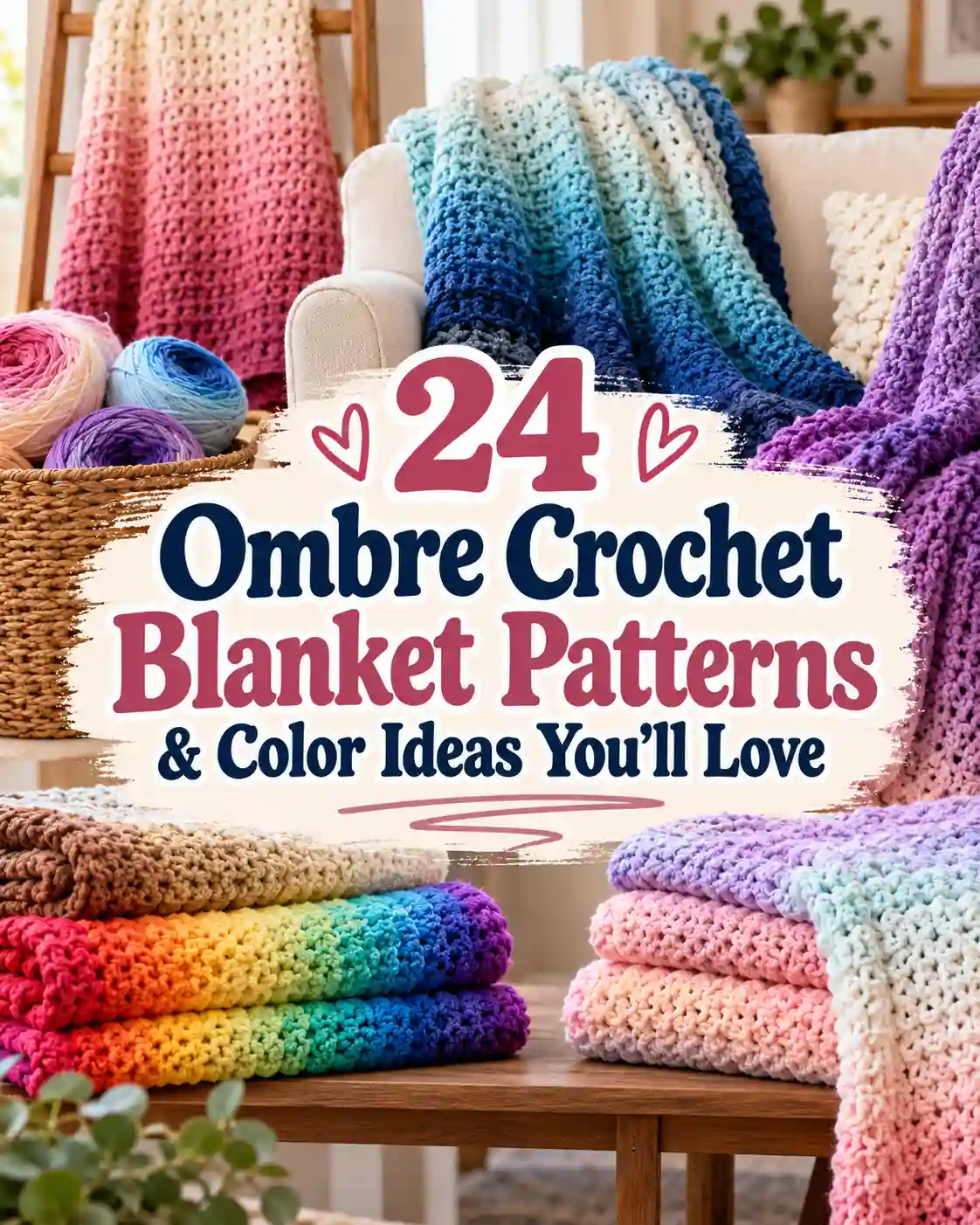

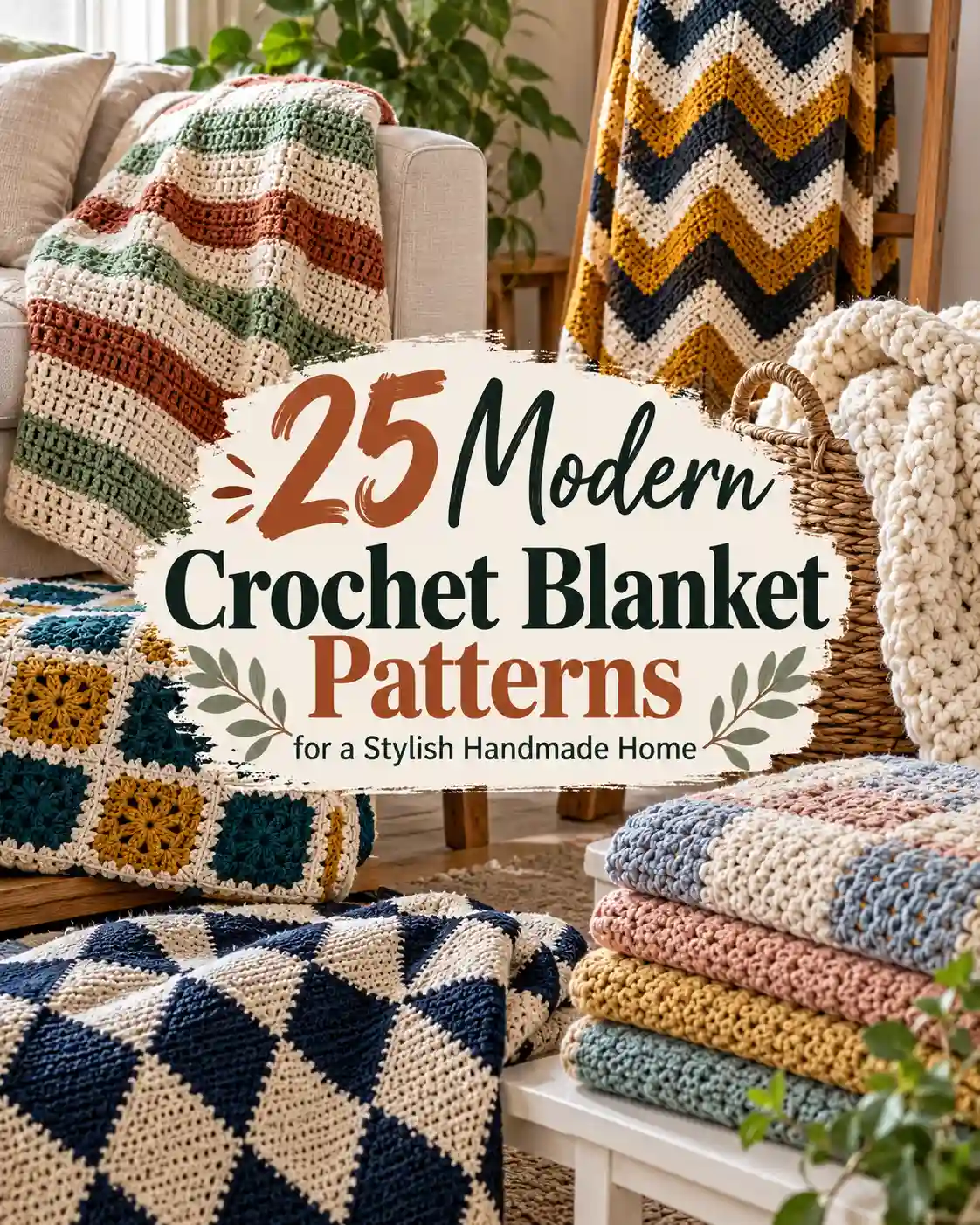
An ombre crochet blanket uses gradual color changes to create a beautiful fading effect, whether you prefer soft pastels, bold rainbow shades, or cozy neutral tones. You can make one with self-striping yarn, carefully arranged solid colors, or simple crochet stitches that allow the gradient to stand out.
These 24 ombre crochet blanket patterns and color ideas include beginner-friendly throws, textured designs, granny squares, baby blankets, and modern color combinations. For more inspiration, explore these crochet blanket patterns for different styles and skill levels. Some are easy to adapt using basic stitches, while others offer inspiration for your next creative project.
Whether you’re searching for an easy ombre crochet blanket or want to experiment with something more decorative, there’s plenty here to help you choose your next project.
Key Takeaways
- Choose self-striping yarn for easier gradient transitions.
- Start with basic stitches for an easy ombre crochet blanket.
- Explore ripple, chevron, granny square, and textured designs.
- Match yarn weight to your preferred blanket thickness.
- Plan color changes before starting larger projects.
- Check gauge, yardage, and care instructions before crocheting.
What Are the Best Ombre Crochet Blanket Ideas?
The best ombre crochet blanket depends on the look you want and how comfortable you are with different stitches. Beginners may prefer a simple rectangular blanket made with self-striping yarn, while more experienced crocheters might enjoy ripple patterns, textured waffle stitches, or color-coordinated granny squares.
Here’s a quick comparison to help you decide.
| Blanket style | Skill level | Best feature |
|---|---|---|
| Simple ombre blanket | Beginner | Easy stitch repetition |
| Moss stitch blanket | Beginner | Subtle woven texture |
| Granny square blanket | Intermediate | Flexible color arrangement |
| Ripple or chevron blanket | Intermediate | Eye-catching waves |
| Chunky ombre throw | Beginner–Intermediate | Thick, cozy fabric |
| C2C ombre blanket | Intermediate | Diagonal color transitions |
| Shell stitch blanket | Intermediate | Decorative stitch detail |
| Rainbow ombre blanket | Beginner–Intermediate | Bright color combinations |
Skill levels are approximate and depend on the particular pattern.
24 Ombre Crochet Blanket Patterns and Color Ideas
1. Beginner Ombre Crochet Blanket
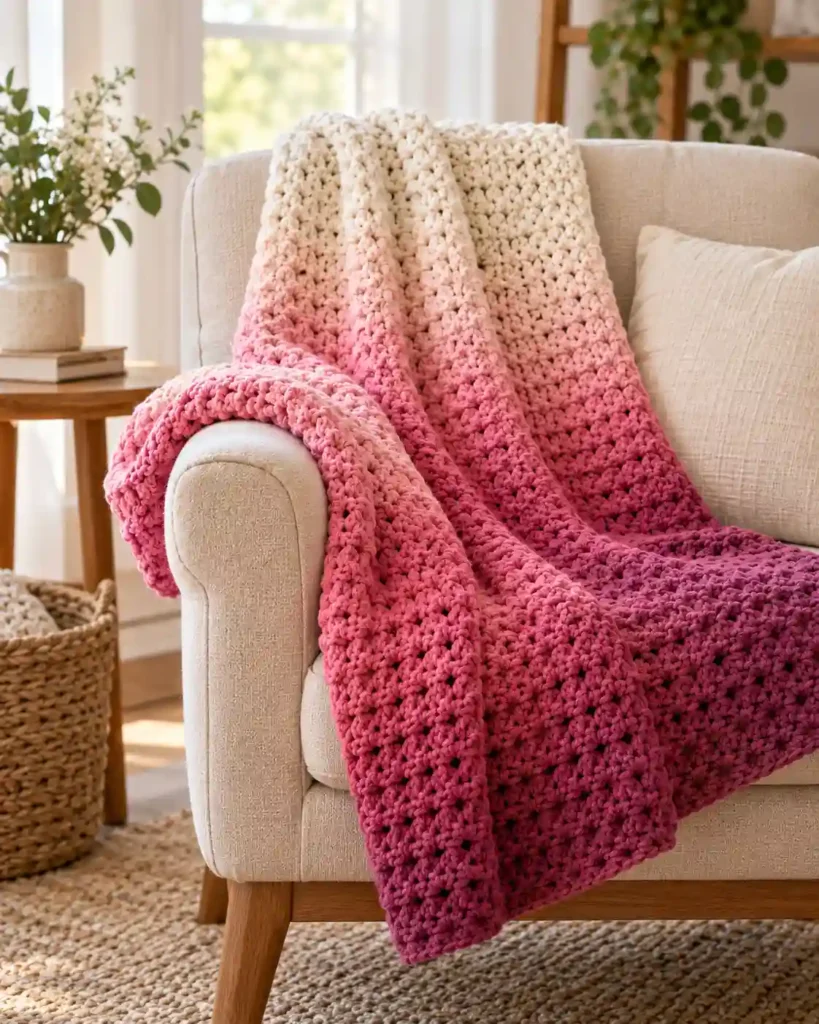
A beginner ombre crochet blanket is one of the easiest ways to enjoy beautiful color changes without learning complicated techniques. With a simple stitch repeat and a gradually changing yarn, you can create a finished blanket that looks more detailed than the work involved.
Instead of switching between several yarn colors, choose a self-striping gradient yarn that changes shades naturally. This makes the project especially appealing when you’re still practicing consistent stitch tension.
A soft cream-to-blue or blush-to-rose gradient looks lovely draped over a living room chair. It’s also a relaxing project for evenings when you want to crochet without constantly checking complicated instructions.
Best stitches to try:
- Single crochet for a dense, even fabric.
- Half double crochet for a softer, flexible texture.
- Double crochet for quicker progress and a lighter feel.
Special Tip: Start with a small swatch to see how quickly your yarn changes color. A gradient that looks gradual in a yarn cake may form narrow stripes across a wide blanket.
2. Free Ombre Crochet Blanket Pattern
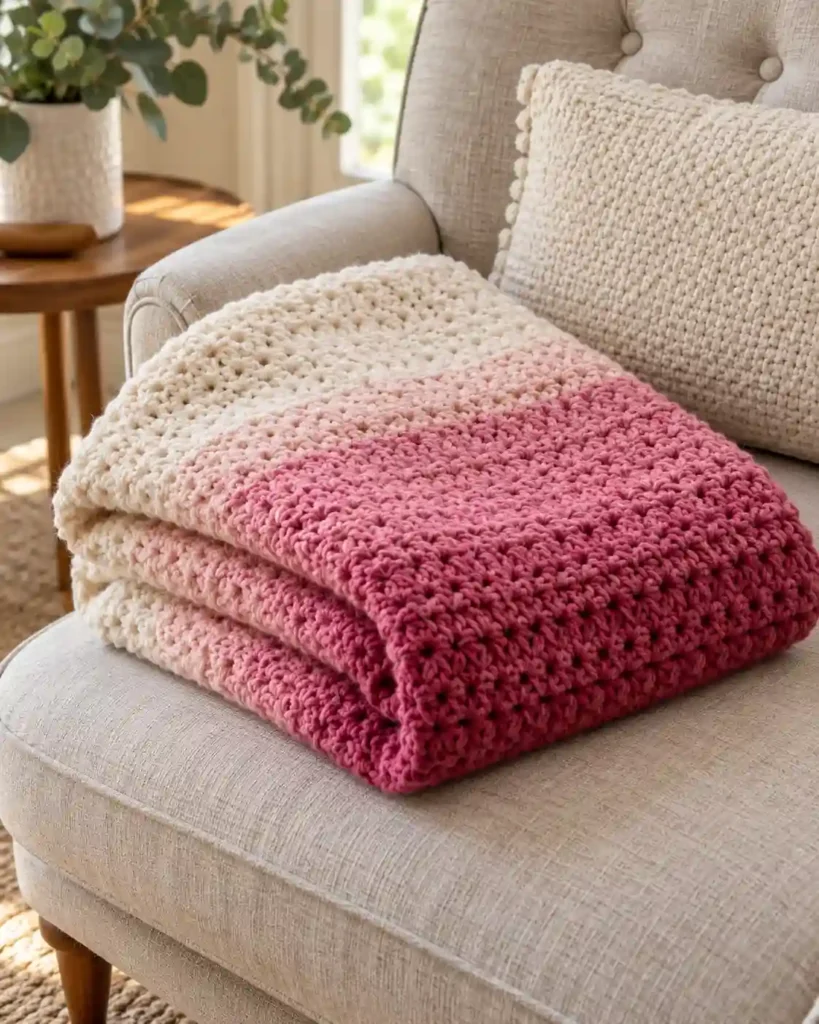
A free ombre crochet blanket pattern is a great starting point when you want clear instructions before buying yarn. Rather than guessing your starting chain, stitch count, or finishing method, you can follow a tested design with stated measurements.
Look for patterns that explain yarn weight, hook size, gauge, and stitch repeats. These details make a difference, especially when you’re using gradient yarn that may behave differently from the yarn pictured.
For example, Yarnspirations offers a free Red Heart Fading Ombre Crochet Blanket pattern. The listed finished size is approximately 50 × 60 inches (127 × 152.5 cm), making it a useful reference for a throw-sized project.
I would start with a simple rectangular pattern if you’re new to blanket making. It gives you more room to enjoy the changing colors without worrying about shaping.
Special Tip: Check whether a free pattern includes written instructions, a chart, or a video tutorial before choosing it. The format that works best for you can make the entire project easier.
3. Ombre Yarn Crochet Blanket
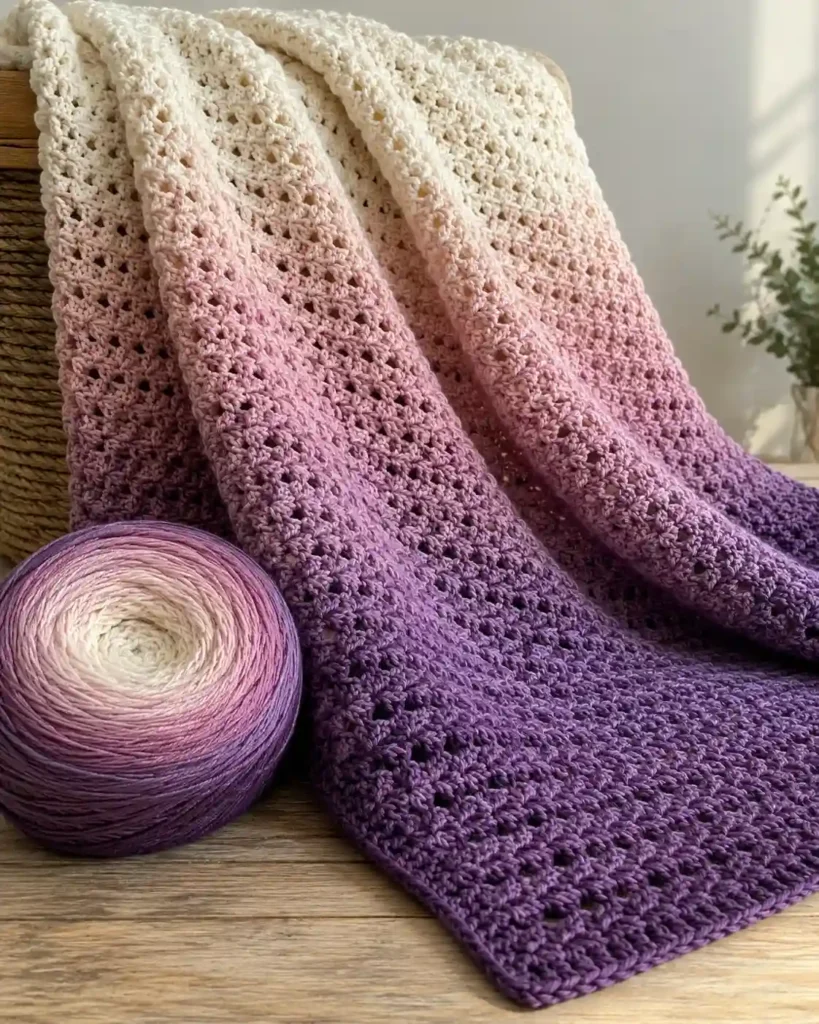
An ombre yarn crochet blanket lets the yarn do much of the visual work. Long color transitions create a flowing gradient, so even a basic stitch can look impressive across a finished throw.
Unlike a blanket made with separate solid-colored skeins, a gradient yarn can reduce the number of manual color changes. Some yarns create broad fades, while others produce shorter stripes depending on the blanket’s width and stitch pattern.
A yarn cake beside a partly finished blanket is one of those satisfying crochet scenes where you can already imagine the completed project. This style is ideal for anyone who enjoys watching colors develop row by row.
When choosing yarn, pay attention to the difference between self-striping, variegated, and gradient colorways. They don’t always produce the same result.
Best approach: Work a swatch with the actual stitch you plan to use, then check how the colors appear over several rows.
4. Modern Ombre Throw Blanket
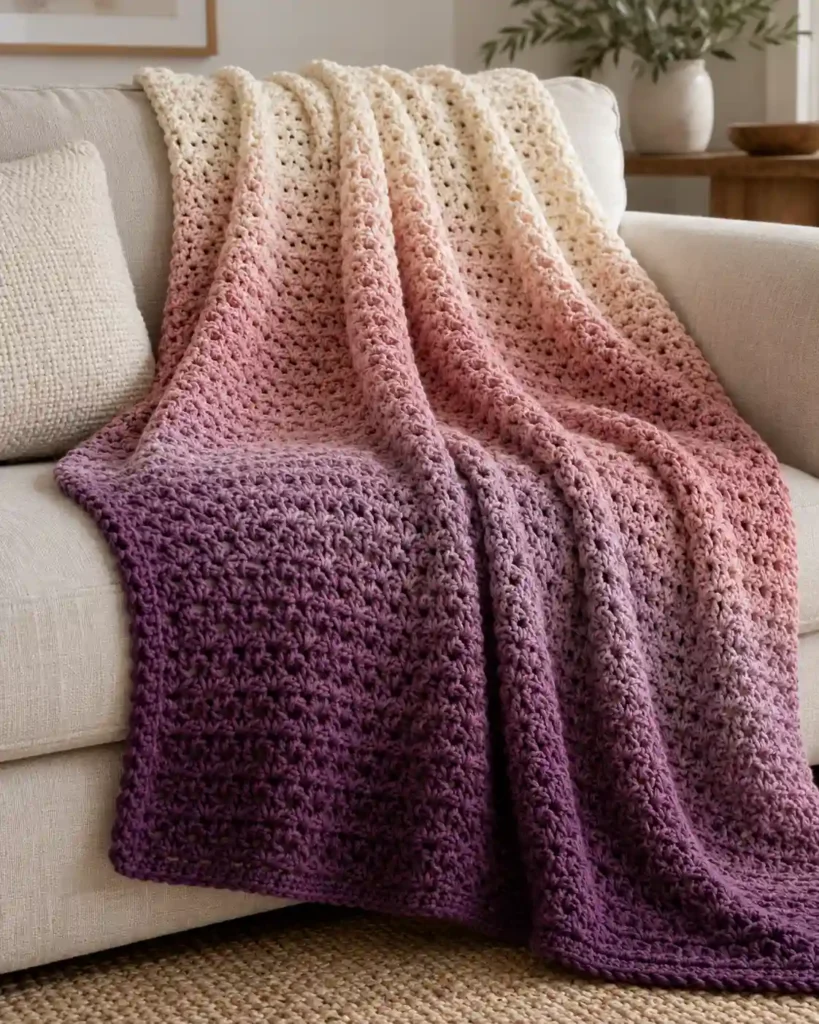
A modern ombre throw blanket brings gentle color movement into a room without needing a busy stitch pattern. Clean lines, smooth textures, and a restrained palette make this style particularly attractive for contemporary interiors.
Think warm beige fading into ivory, or charcoal gradually becoming pale gray. These combinations feel more understated than a bright multicolored blanket, allowing the texture of the crochet to complement your furniture.
Over the arm of a neutral sofa, a neatly folded ombre throw adds just enough detail to make the space feel inviting. It works especially well when the rest of the room features simple fabrics and natural materials.
For a modern finish, try half double crochet, moss stitch, or another consistent stitch pattern with a tidy border.
Special Tip: Choose a border color that already appears in your gradient. This helps the edging look intentional rather than separate from the design.
5. Blue Ombre Crochet Blanket
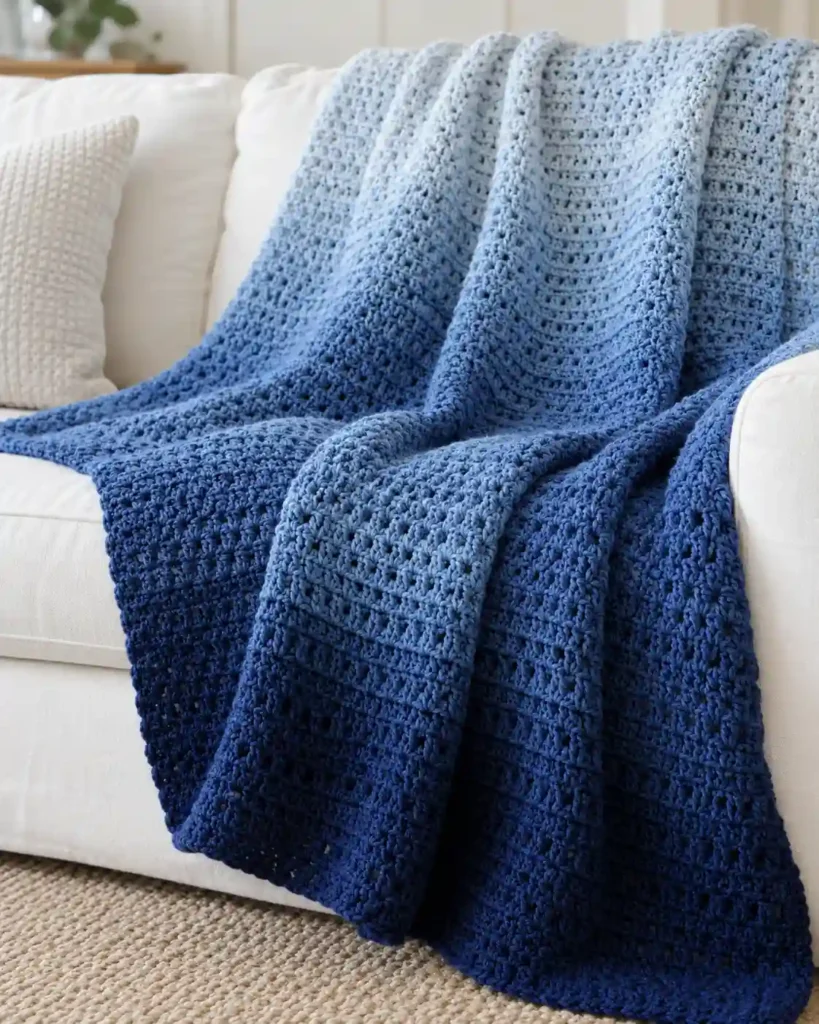
A blue ombre crochet blanket captures the calming feel of water and sky. Moving from deep navy through denim and dusty blue to pale sky blue creates a gradient that’s easy to recognize and satisfying to crochet.
The appeal is in the range of shades. A single blue yarn can look beautiful, but several coordinated blues create depth without making the blanket feel overly colorful.
This design would be especially pretty on a white couch, in a coastal-inspired bedroom, or folded at the foot of a bed. The deeper shades anchor the blanket while the lighter colors keep it fresh.
Try working broad horizontal stripes so each shade has room to stand out. A simple double crochet stitch can help keep the focus on the gradient.
Color palette: Navy → denim blue → dusty blue → sky blue → pale blue.
6. Pink Ombre Crochet Blanket
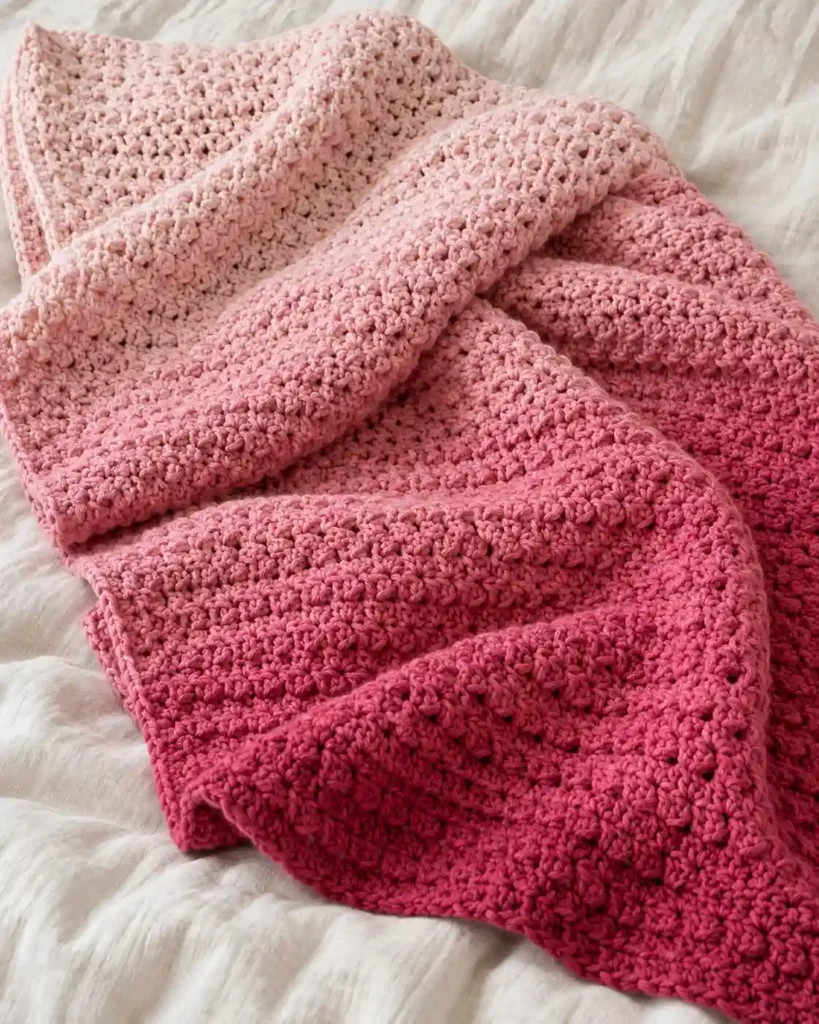
A pink ombre crochet blanket is all about soft, romantic color transitions. Blush, dusty rose, mauve-pink, and deeper rose shades can create a warm gradient that feels delicate without being overly bright.
Instead of relying on complicated lacework, let the color combination carry the design. A simple stitch with a gentle drape allows each shade to flow into the next.
Picture a finished pink gradient blanket folded over ivory bedding or resting on a cozy reading chair. It’s a lovely option for a handmade bedroom accent or a thoughtful gift.
For a lighter finish, choose a smooth yarn that shows the stitches clearly. You can also add a narrow cream border for a subtle contrast.
Special Tip: Compare your pink shades in natural daylight before starting. Some pinks have peach undertones, while others lean purple, and that difference affects the overall fade.
7. Purple Ombre Crochet Blanket
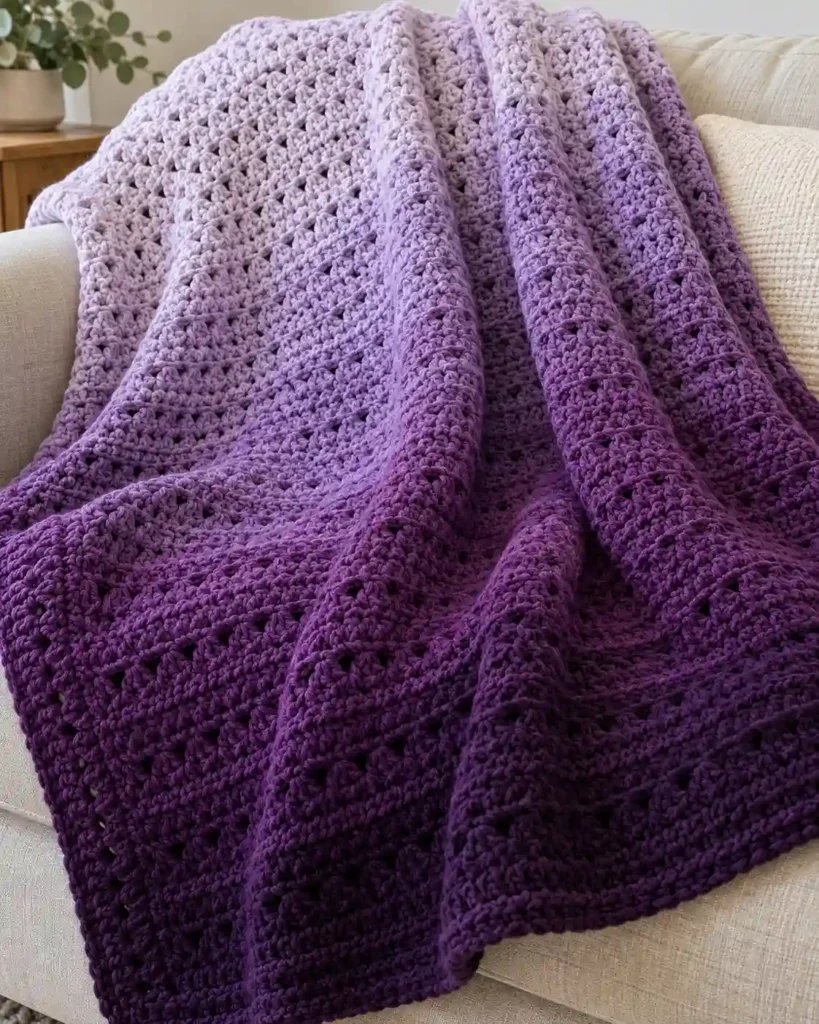
A purple ombre crochet blanket can feel dreamy, dramatic, or wonderfully cozy depending on the shades you choose. Lavender fading into violet and plum gives the blanket a rich color progression without needing several unrelated colors.
Purple gradients are particularly attractive when you arrange the lightest shades at one end and gradually deepen the colors toward the other.
A lavender-to-plum throw would look beautiful against neutral bedding or a pale gray sofa. The darker section adds visual weight, while the lighter section keeps the design soft.
For a smooth finish, use a stitch that maintains consistent row height. You can also reverse the gradient halfway through for a mirrored effect.
Color palette: Pale lavender → lilac → orchid → violet → plum.
8. Rainbow Ombre Crochet Blanket
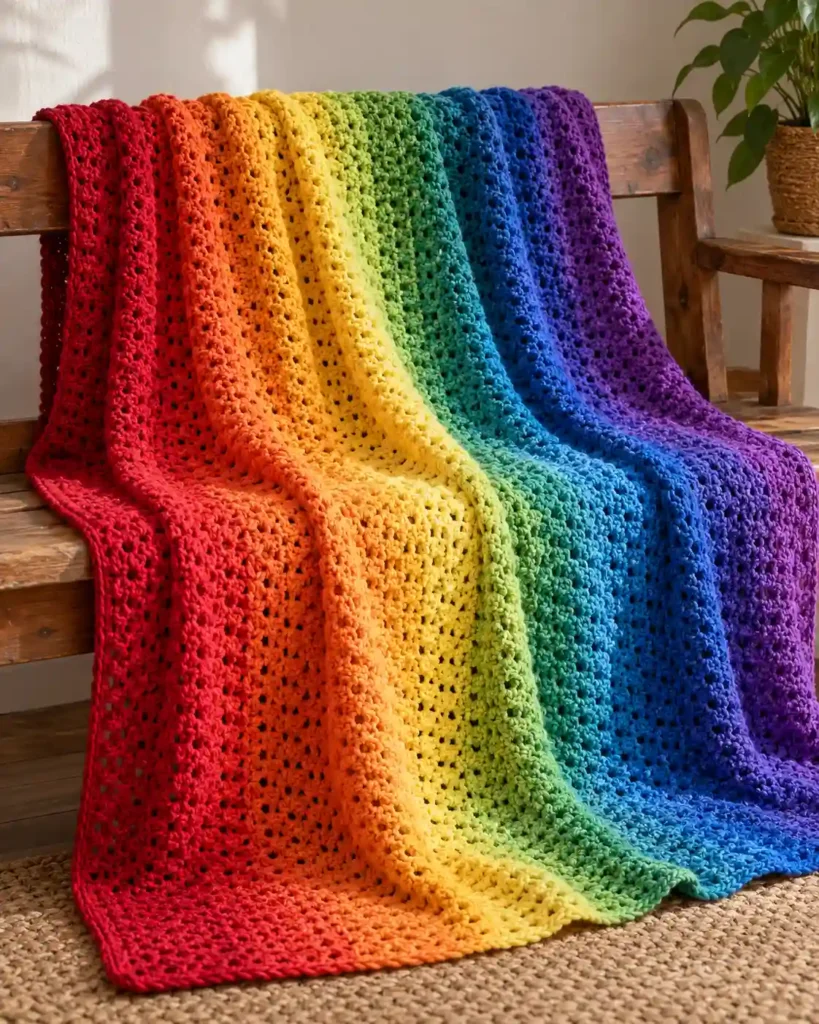
A rainbow ombre crochet blanket is the perfect choice when you want your crochet project to feel bright and cheerful. Instead of abrupt, unrelated stripes, a carefully planned rainbow gradient moves naturally from one color family to the next.
Red, orange, yellow, green, blue, and violet can create a beautiful progression. Softer versions of these shades work well if you prefer a pastel rainbow rather than a bold statement piece.
This blanket would make a playful addition to a colorful craft room or a child’s reading corner. It’s also a fun project for crocheters who enjoy experimenting with yarn combinations.
A rainbow crochet blanket free pattern can provide a useful starting stitch count and construction method, but you can also adapt a simple striped blanket pattern with your chosen rainbow palette.
Special Tip: Lay out all your yarn colors before crocheting. Photograph the sequence so you can refer to it whenever you change shades.
9. Neutral Ombre Crochet Blanket
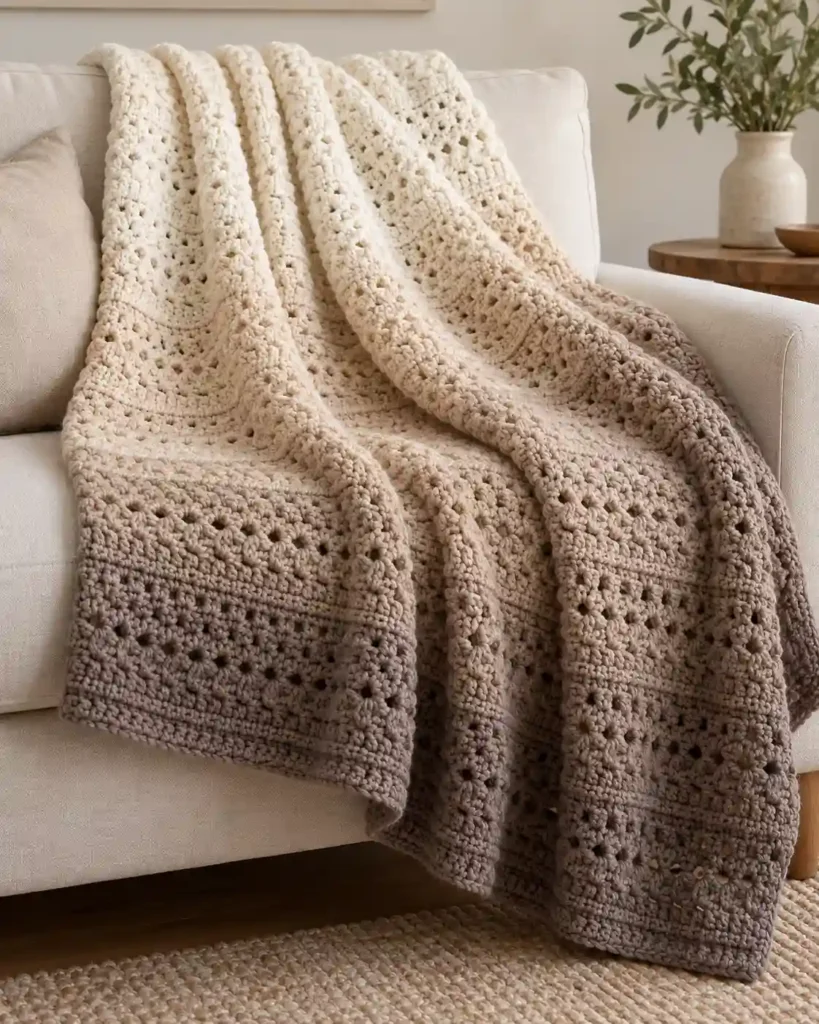
A neutral ombre crochet blanket proves that a gradient doesn’t need bright colors to make an impression. Cream, oatmeal, beige, taupe, and warm brown can create a beautiful handmade throw with a timeless feel.
What makes this combination special is the subtle transition between shades. Instead of dramatic contrast, the blanket relies on gentle color differences and visible crochet texture.
It would look right at home in a minimalist living room, a farmhouse bedroom, or a cozy reading nook with natural wood furniture.
Moss stitch or half double crochet works particularly well because both can create a balanced fabric without distracting from the color changes.
Color palette: Ivory → oatmeal → beige → taupe → warm brown.
10. Three-Color Ombre Blanket
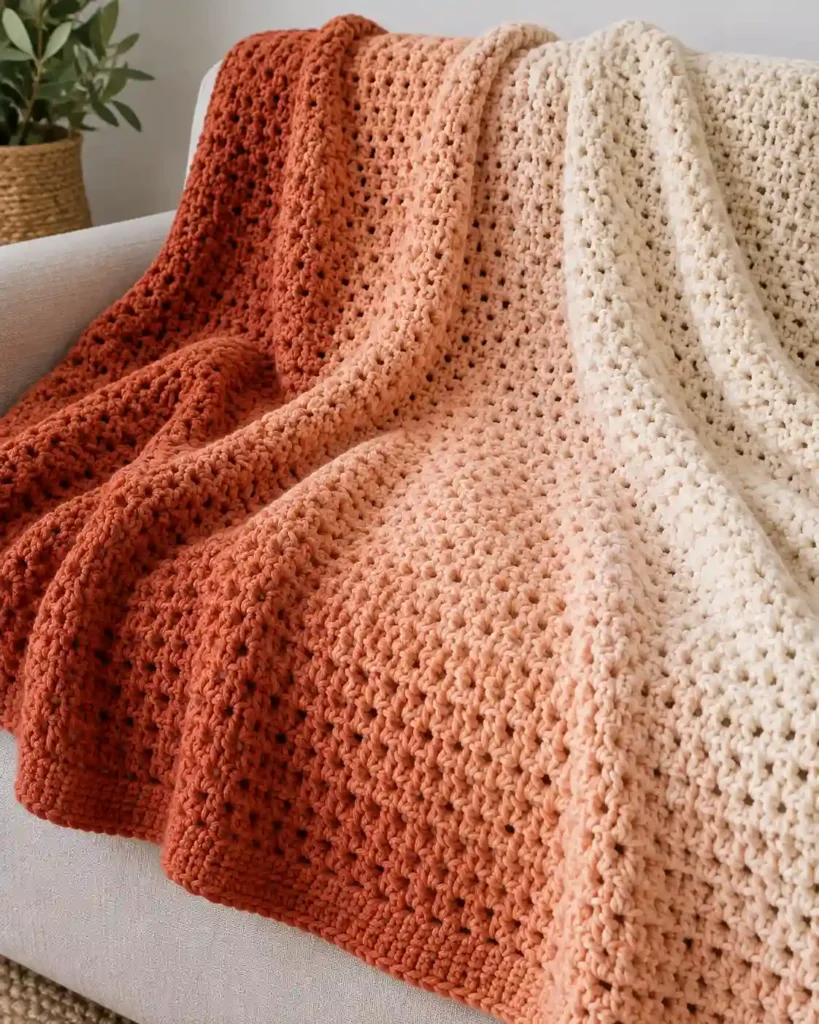
A three-color ombre blanket is a practical option when you love the gradient look but don’t want to manage a large collection of yarn shades. Three carefully chosen colors can produce a clear transition with a little planning.
For example, cream, peach, and terracotta create a warm sunset-inspired blanket. You can use each color in broad sections or introduce shorter transition stripes between them.
Compared with a rainbow design, this approach is easier to coordinate and often suits rooms with a limited color palette. It’s especially useful when you already have three complementary yarn colors in your stash.
Try using a simple stitch repeat and keeping your stripe widths consistent for a polished result.
Special Tip: To soften the transitions, consider a compatible multistrand technique that gradually replaces strands of one color with another. Make a swatch first, since holding multiple strands changes the fabric’s thickness and gauge.
11. Two-Color Ombre Blanket
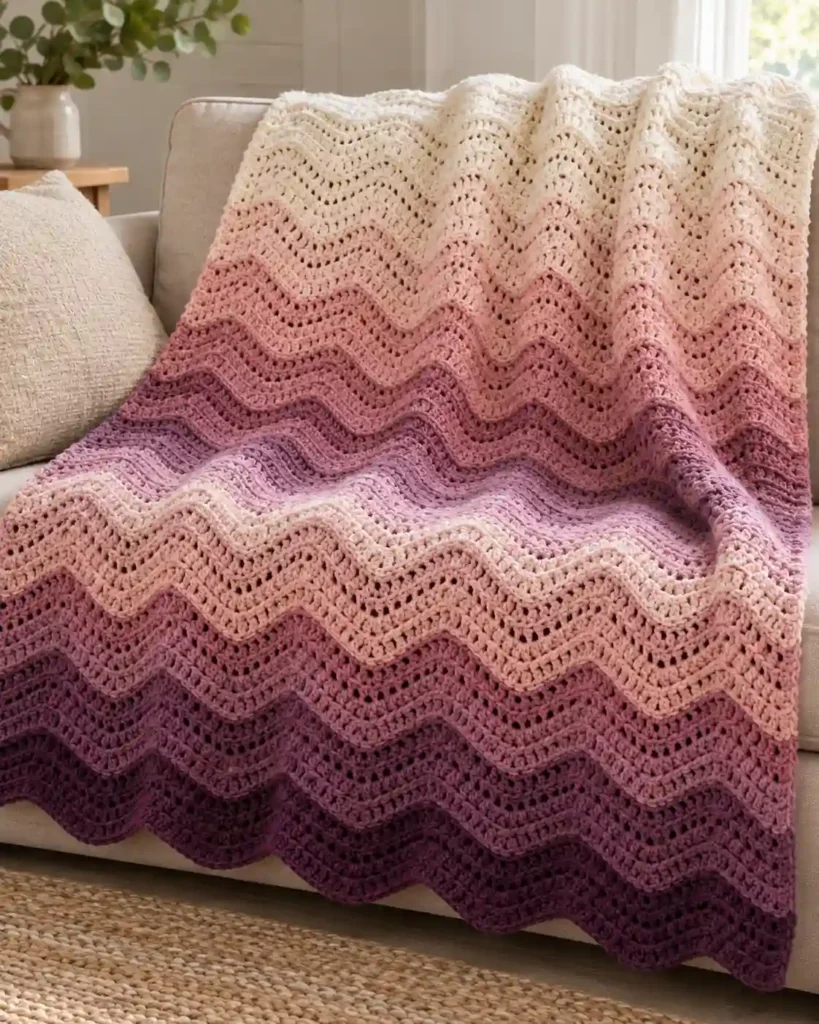
A two-color ombre blanket offers a simple way to experiment with color fading. Sage green and ivory, for example, can create a fresh, calming throw without requiring many different yarn colors.
The main challenge is making the transition look gradual rather than like two separate blocks. One option is to use a blended middle shade; another is to combine compatible yarn strands during the transition.
This design is especially appealing when you’re making a blanket to match a particular room. With only two main colors, it’s easier to coordinate the finished piece with cushions, curtains, or bedding.
Choose a stitch with a consistent texture so the color transition remains the focal point.
Best for: Beginners who are comfortable changing yarn colors and want a simple, coordinated blanket.
12. Ombre Granny Square Blanket
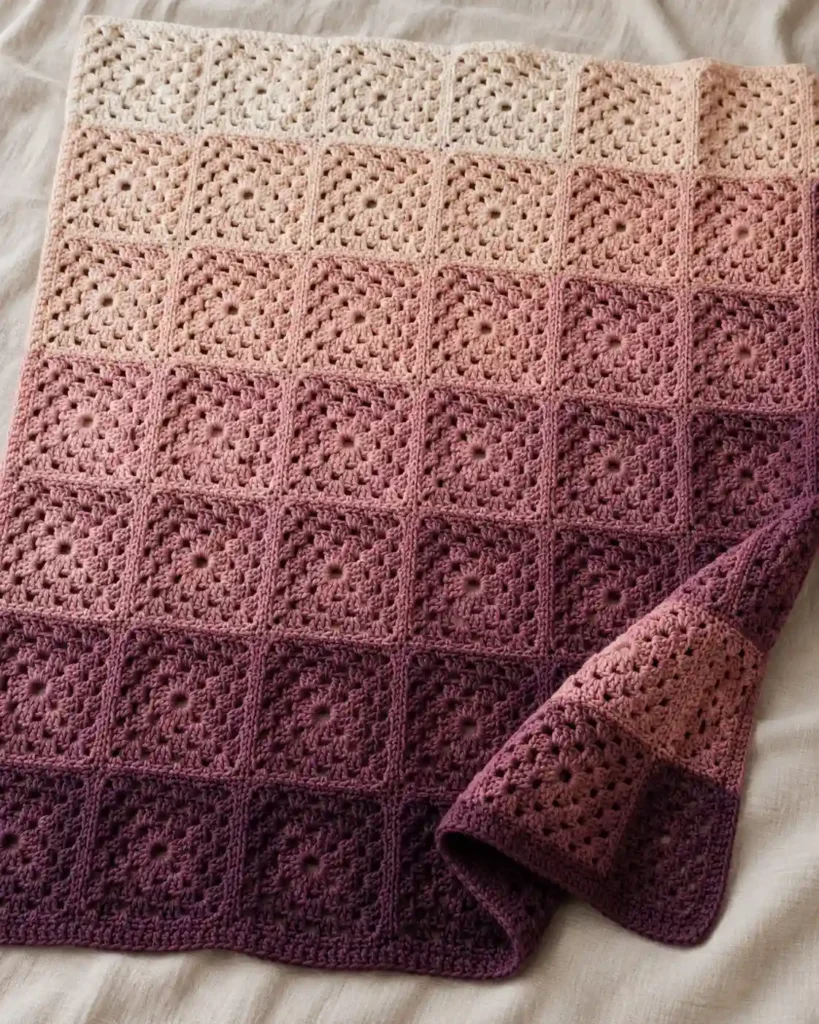
An ombre granny square blanket turns individual crochet motifs into a larger color story. Instead of working one continuous gradient, you arrange squares from light to dark to create a beautiful fading effect across the blanket. For more motif inspiration, explore these crochet granny square blanket ideas.
The best part is the flexibility. You can make squares in small sessions, experiment with layouts, and rearrange the colors before joining anything together.
A blanket made from cream, pale pink, rose, and burgundy granny squares would look wonderful spread across a bed. The repeating motifs add structure, while the color placement creates movement.
Before joining the squares, lay them on a flat surface and photograph your preferred arrangement.
Special Tip: Use a consistent hook size and check your square measurements. Even small size differences can make the joining process harder.
13. Ombre Ripple Crochet Blanket
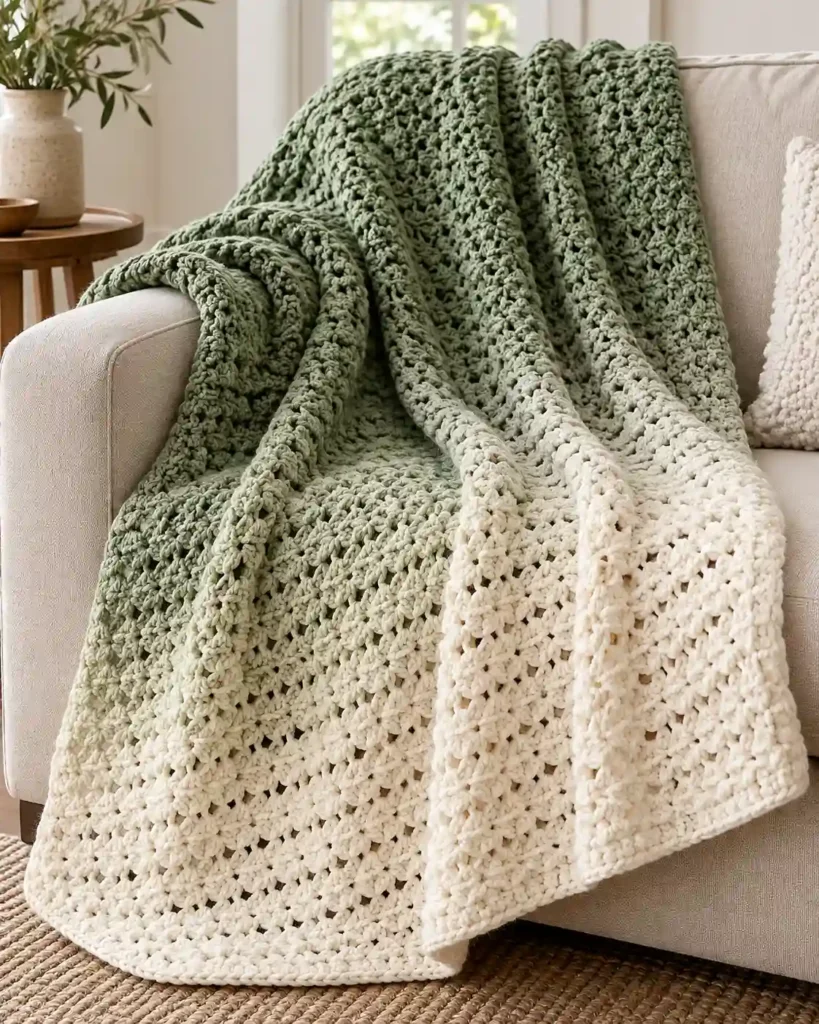
An ombre ripple crochet blanket combines flowing color changes with gentle waves of crochet texture. The rise and fall of the ripple pattern adds movement, making the gradient feel even more dynamic.
Unlike a straight striped blanket, a ripple design uses planned increases and decreases to create its wavy shape. This takes a little more attention, but the finished effect is worth exploring.
Imagine soft ocean blues moving across a blanket in long, curved rows. It’s a lovely choice for a coastal-inspired throw or a handmade gift for someone who enjoys textured designs.
For the clearest effect, choose shades that change gradually rather than jumping between highly contrasting colors.
Best for: Crocheters who already know basic stitches and are ready to practice shaping within a repeating pattern.
14. Ombre Chevron Crochet Blanket
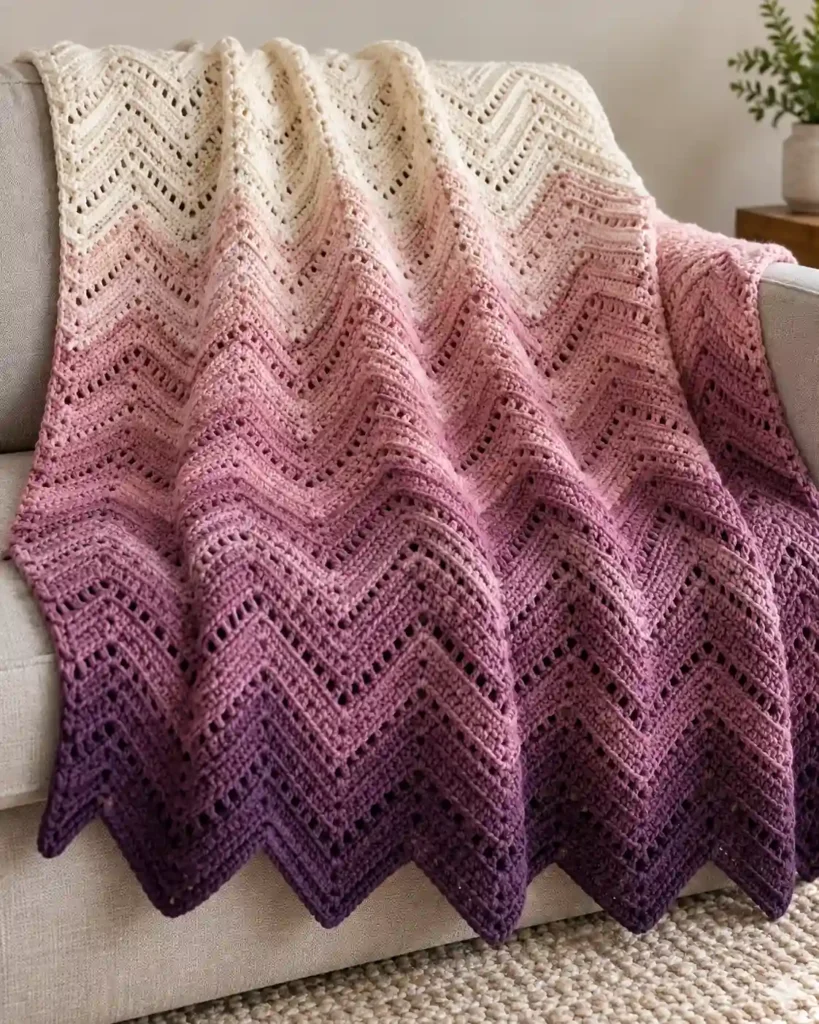
A chevron crochet blanket gives the classic gradient effect a sharper, more geometric look. Its pointed peaks and valleys create bold zigzag lines that stand out beautifully with coordinated colors and gradual color transitions.
While ripple blankets often have softer waves, chevron patterns emphasize defined angles. This makes them particularly attractive when you want a modern, graphic blanket.
A mustard-to-cream or teal-to-navy chevron throw can become a striking accent in a living room. Even a simple color palette looks interesting when paired with the repeating zigzag shape.
Plan your stripe sequence before starting, especially if you’re changing colors manually.
Special Tip: Keep careful track of the increases and decreases at each peak and valley. Missing one can gradually change the width of your blanket.
15. Ombre Moss Stitch Blanket
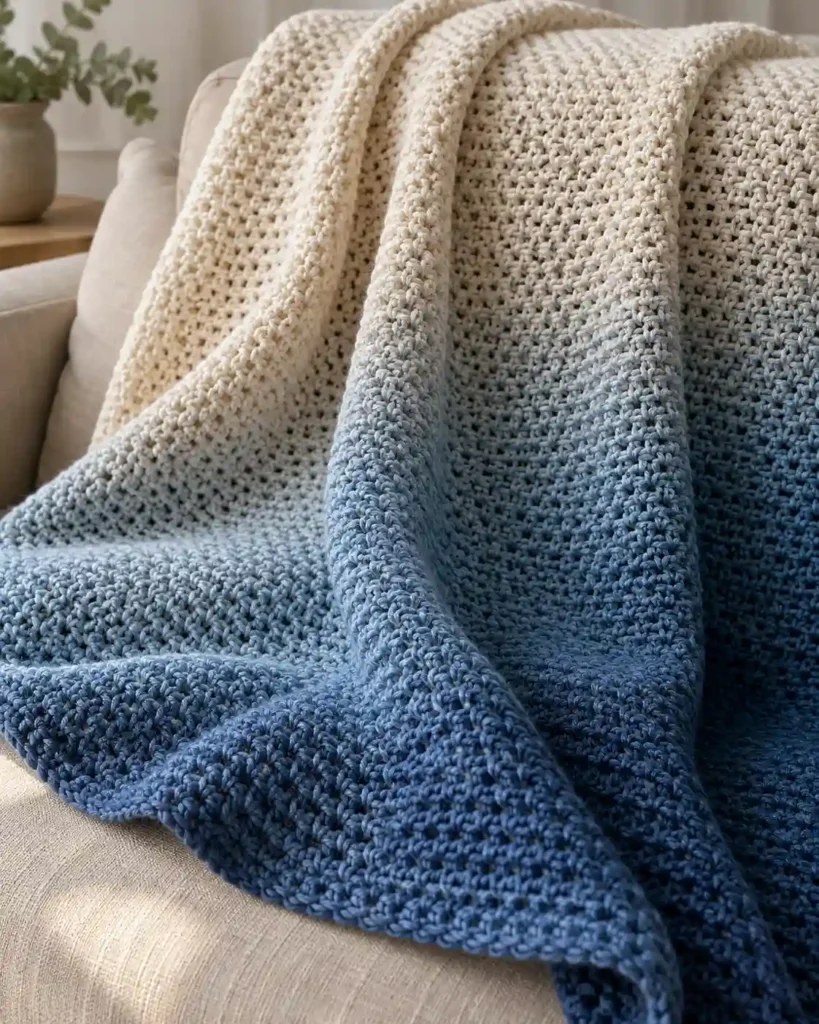
An ombre moss stitch blanket has a lovely woven appearance that pairs naturally with gradual color changes. The small, evenly spaced stitches create a subtle texture without overpowering the yarn.
Moss stitch crochet, often called linen stitch, typically combines single crochet stitches with chain spaces. This produces a flexible fabric with a neat, understated surface.
I particularly like this style for soft neutral gradients because the stitch texture adds interest even when the color changes are subtle. It would make a beautiful everyday throw for a sofa or reading chair.
Moss stitch can also work well with variegated yarn, although the final color effect depends on the length of the yarn’s color repeats.
Special Tip: Crochet a generous swatch before committing to a large blanket. The stitch pattern can look quite different with smooth worsted yarn versus plush chenille.
16. Ombre Shell Stitch Blanket
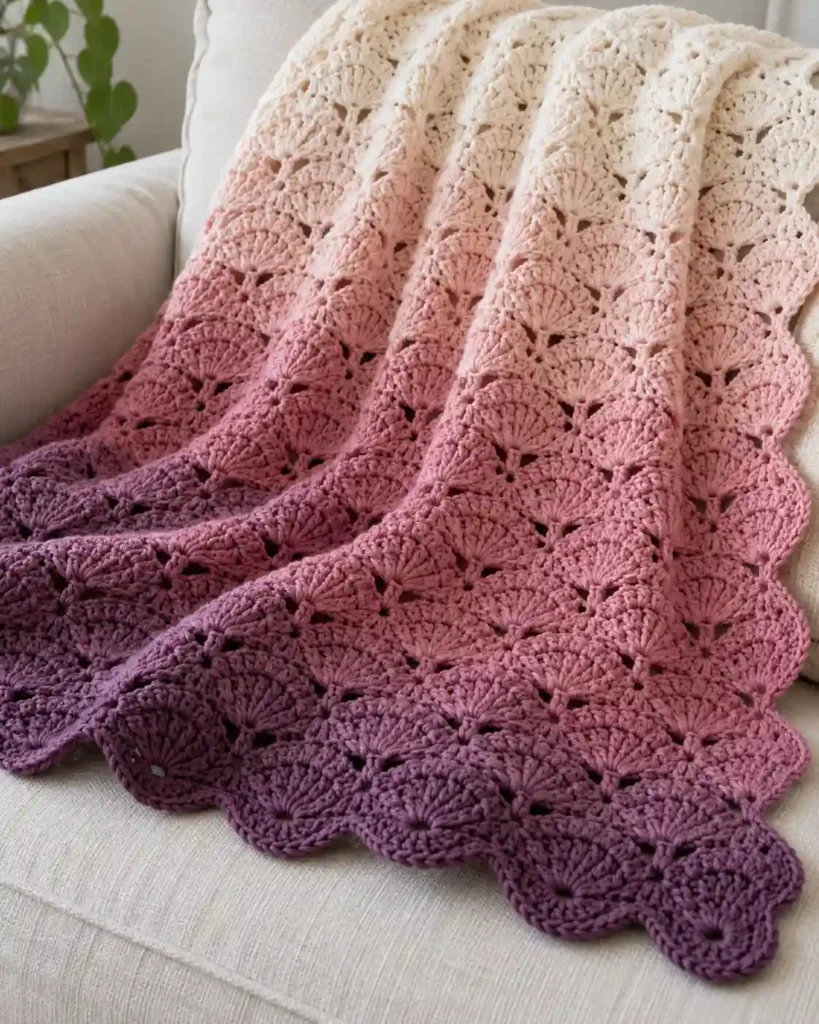
An ombre shell stitch blanket combines decorative crochet texture with soft, flowing color. The repeated shell shapes create a delicate pattern that looks especially pretty in pastel gradients.
Unlike a basic double crochet blanket, shell stitch forms small fan-like groups of stitches. These add visual interest and can give the finished blanket a more traditional, decorative appearance.
A cream-to-lavender shell stitch blanket would be lovely as a bedroom accent or a handmade gift. The repeating shells catch the light and help show off the changing shades.
Choose yarn that provides enough stitch definition for the shell shapes to remain visible.
Best for: Crocheters who enjoy decorative stitch patterns and want a blanket that looks detailed without using many separate motifs.
17. Ombre Waffle Stitch Blanket
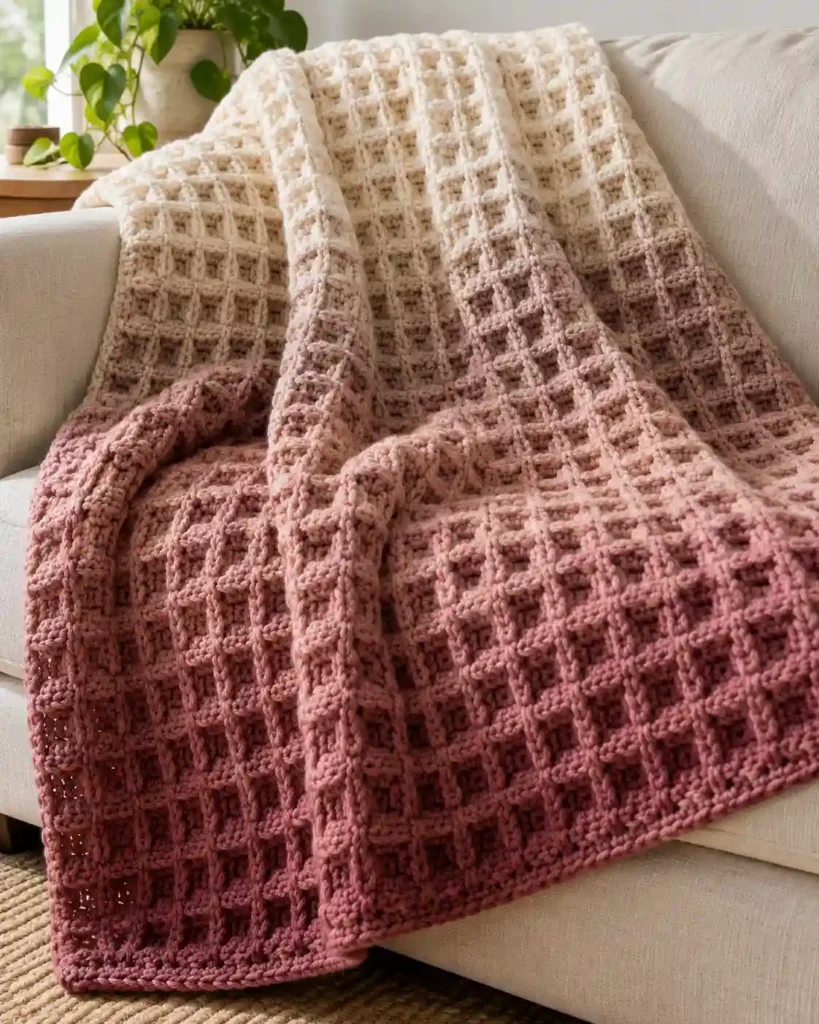
An ombre waffle stitch blanket is wonderfully textured, with raised squares that give the fabric a cozy, dimensional appearance. Pairing this stitch with a gradual color fade creates a blanket that’s interesting to look at and comfortable to use. Learn more about the technique with this guide to waffle stitch crochet.
Waffle stitch typically uses combinations of regular and post stitches to form its characteristic grid. The raised texture can make the blanket thicker and may use more yarn than a simpler stitch pattern.
This is the kind of throw that looks inviting folded over an armchair on a chilly evening. Deep blues, warm browns, or soft gray gradients all complement the textured surface.
A chunky yarn can emphasize the waffle pattern, but it’s important to check the resulting fabric’s weight and flexibility.
Special Tip: Make a measured swatch and weigh it before buying all your yarn. Textured stitches can affect yarn requirements significantly.
18. Ombre C2C Crochet Blanket
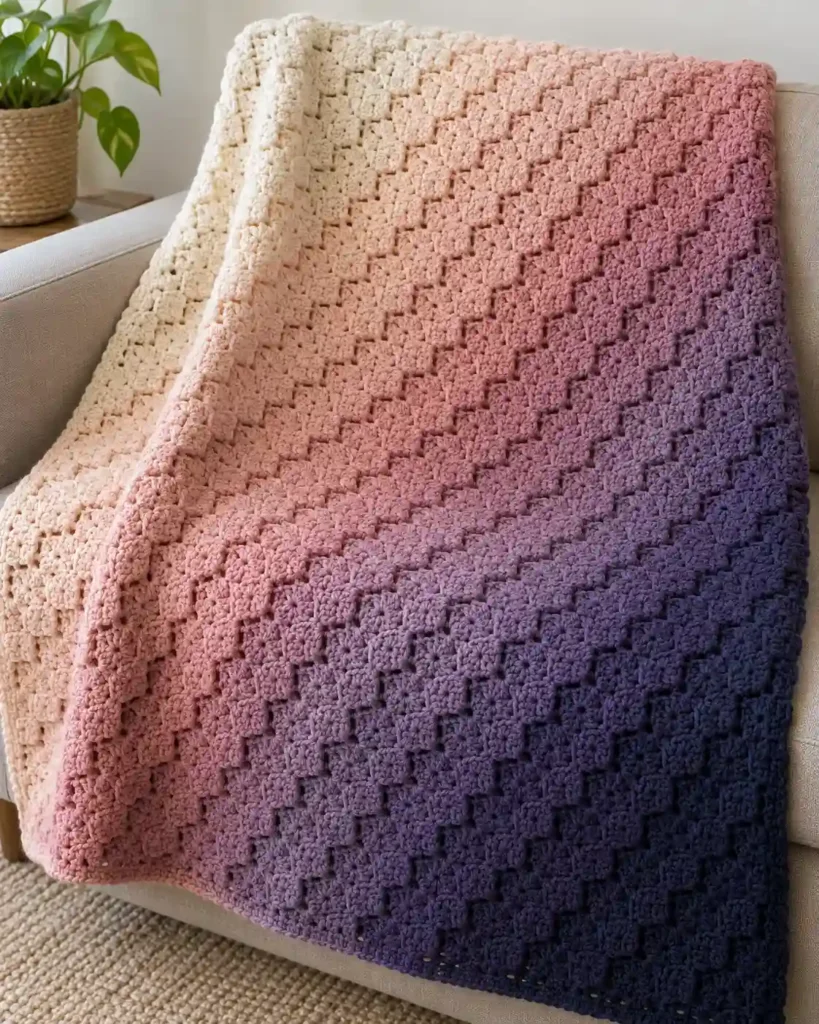
An ombre corner-to-corner crochet blanket creates a beautiful diagonal color transition. Instead of working straight horizontal rows, the C2C technique builds the blanket from one corner toward the opposite corner.
This changes how the gradient appears across the finished piece. A color fade that would normally run from top to bottom can travel diagonally, giving the blanket a distinctive look.
A teal-to-cream C2C throw would be especially attractive spread across a bed, where the diagonal blocks are easy to see.
Many C2C designs use small groups of double crochet stitches, although other stitch variations are possible.
Best for: Crocheters who want to learn a new construction method while still enjoying a repetitive stitch pattern.
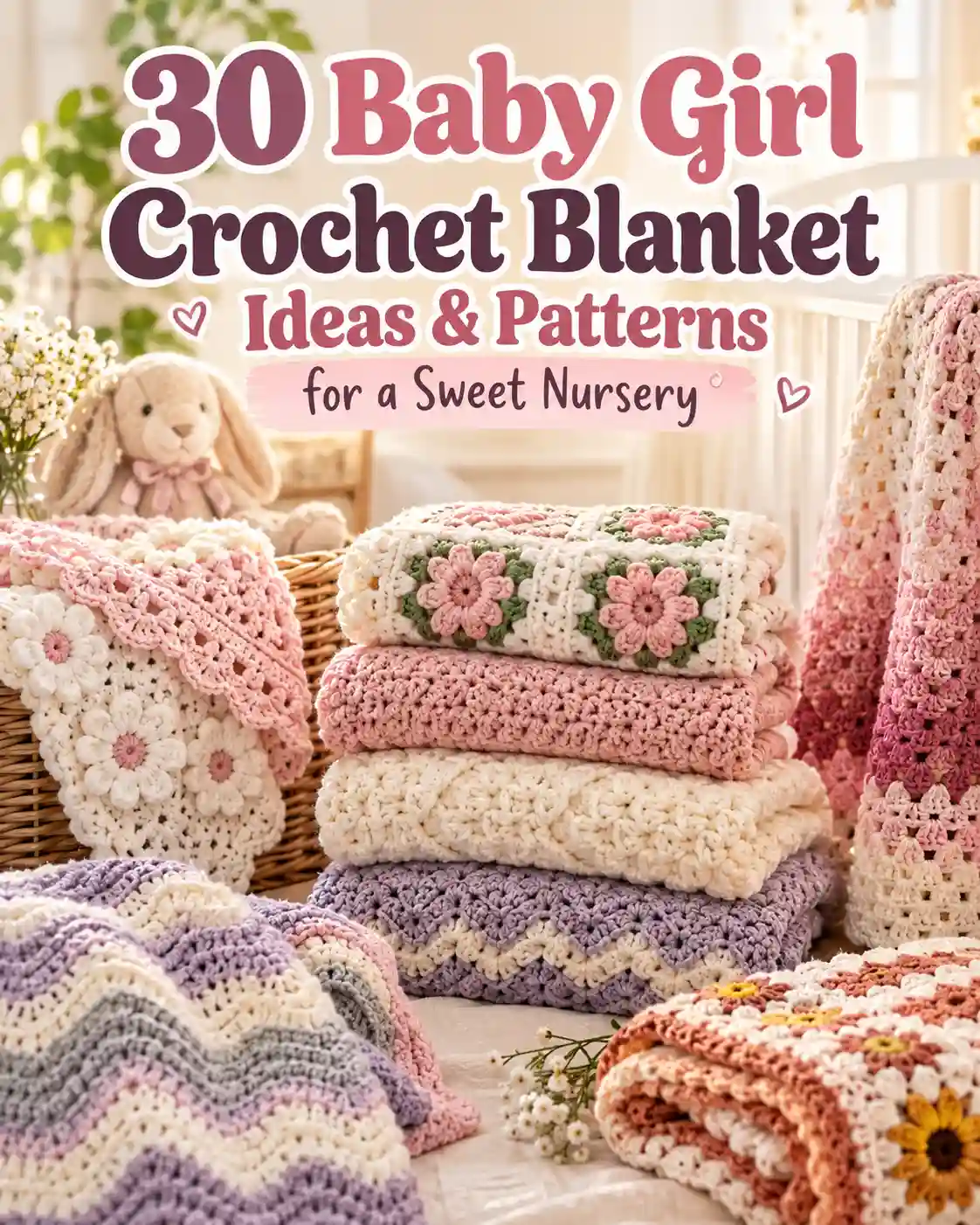
19. Ombre Baby Crochet Blanket
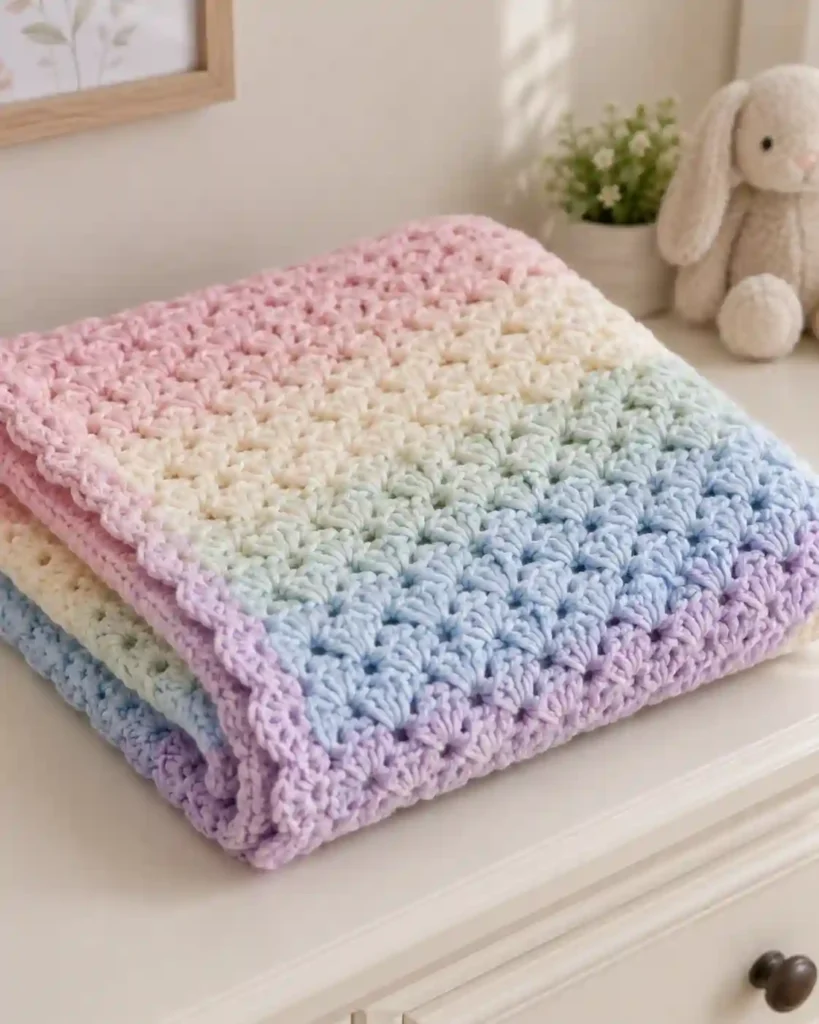
An ombre baby crochet blanket is a lovely project for soft colors and practical yarn choices. Pale mint, cream, blush, and gentle lavender can create a delicate gradient without overwhelming the design.
For a baby blanket, yarn softness and washability matter just as much as appearance. Choose a fabric that’s comfortable, easy to care for, and finished securely without loose decorations.
A pastel ombre blanket folded on a nursery dresser makes a thoughtful handmade gift. It’s particularly useful as a supervised playtime or cuddle blanket.
Keep the stitch pattern relatively simple so the fabric is easy to maintain and doesn’t have long, loose loops.
Important safety note: The American Academy of Pediatrics recommends keeping loose blankets and other soft bedding out of an infant’s sleep area. Handmade crochet blankets should not be placed in a crib or bassinet for infant sleep. Read the American Academy of Pediatrics’ safe sleep recommendations for more information.
20. Chunky Ombre Crochet Blanket
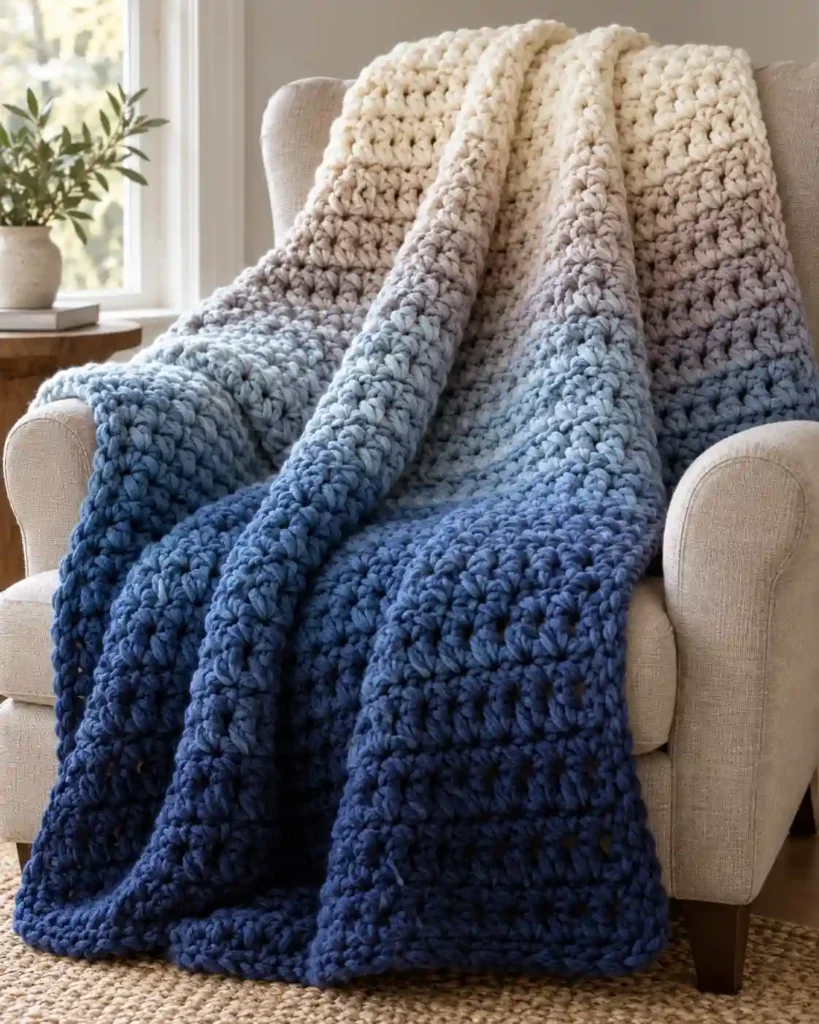
A chunky ombre crochet blanket is a satisfying choice when you want a thick, plush throw with noticeable texture. Bulky yarn creates larger stitches, so the blanket can grow quickly compared with a similar design made from finer yarn.
This style looks especially inviting in soft chenille or another plush yarn. A gray-to-cream or dusty-blue gradient makes the finished blanket feel cozy without needing an elaborate stitch pattern.
If you enjoy oversized throws for movie nights or cold evenings, this is a project worth considering. Even a basic stitch can create a substantial fabric when worked with thick yarn.
Bernat blanket yarn is one option to investigate for this style, including suitable ombre or dappled colorways. Check the exact product label and pattern requirements because yarn lines and colorways vary.
The Craft Yarn Council classifies super bulky yarn as category 6 and lists a typical crochet hook range of 9–15 mm, although the specific yarn label and pattern gauge should take priority.
21. Ombre Striped Crochet Blanket
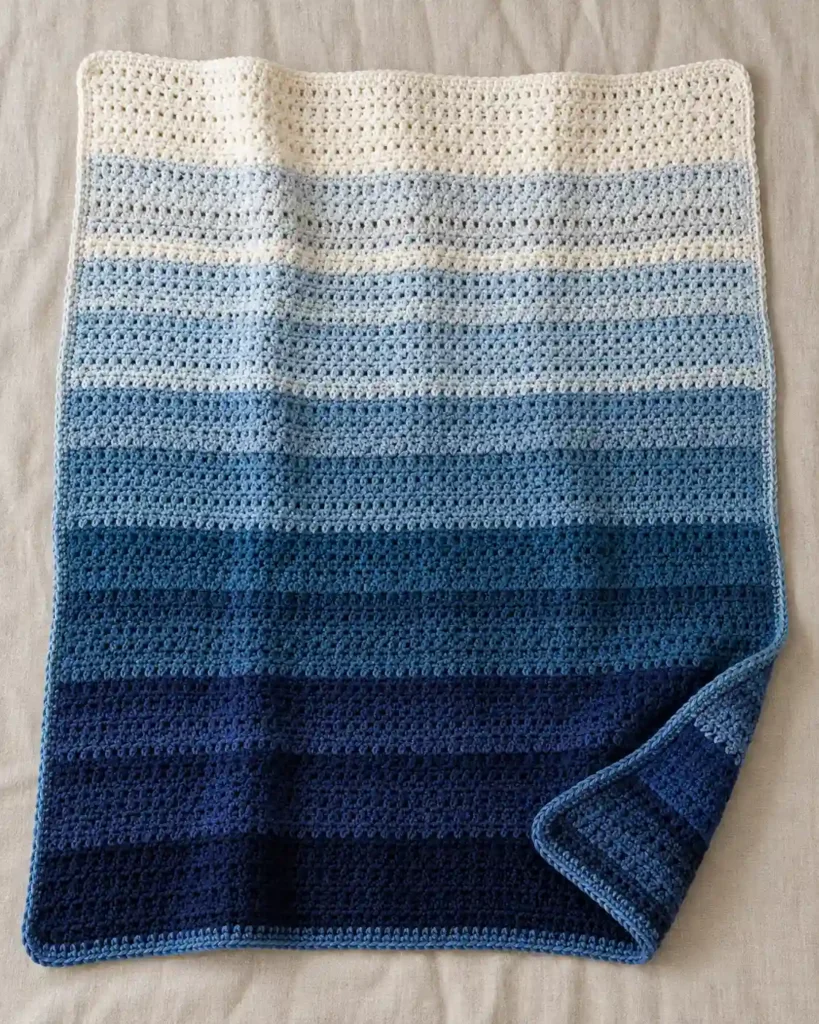
An ombre striped crochet blanket offers more control over color placement than many self-striping yarn projects. By changing shades manually, you can decide exactly where each color begins and how wide each section should be.
Narrow stripes can make a gradient feel gradual, while wider bands create a stronger color-blocked effect. Both approaches can look beautiful when the colors are chosen carefully.
This style works well for a custom living room throw, especially when you want the blanket to match an existing palette.
Try arranging five shades from light to dark and repeating the sequence in reverse for a balanced design.
Special Tip: Keep a written record of your stripe order and row counts. It’s much easier to maintain symmetry when you don’t have to remember the sequence from memory.
22. Ombre Crochet Blanket Border
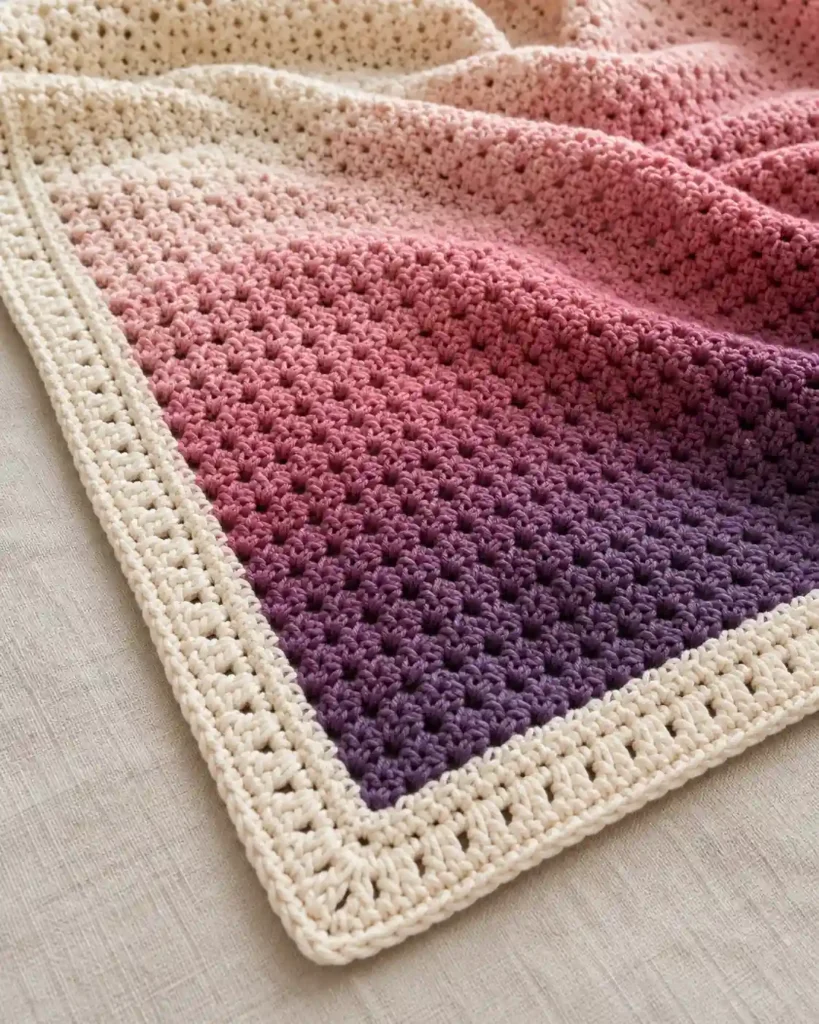
An ombre crochet blanket border is the finishing detail that brings the entire project together. A neat edge can straighten the appearance of the blanket, frame the gradient, and give the finished piece a more polished look.
A simple single crochet border is often enough for a modern blanket. If you’re working with a decorative shell or ripple pattern, explore these crochet blanket borders for more edging options that may complement the existing texture.
For a blue ombre blanket, a navy border can create a defined frame, while a pale blue edge gives a softer finish. Both can work depending on the overall design.
Avoid choosing an edging that overwhelms the gradient, particularly when the blanket already has a busy stitch pattern.
Best for: Adding a clean, intentional finish to handmade throws and afghans.
23. Ombre Blanket Yarn Selection
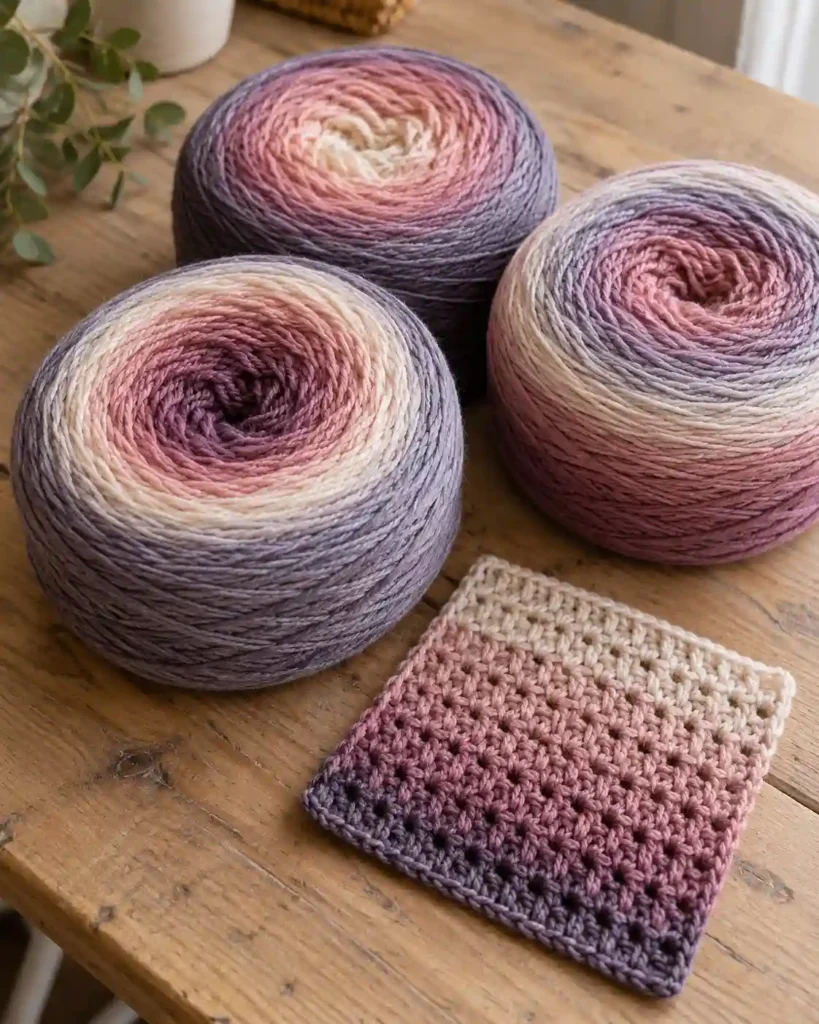
Choosing the right yarn is one of the most important decisions in an ombre blanket project. The fiber, weight, color-repeat length, and overall yardage all influence how the finished blanket looks and feels.
A soft gradient yarn may create beautiful transitions in a small sample but form unexpected stripes in a wider blanket. That’s why it’s useful to test the yarn before starting the full project.
Consider how the blanket will be used. A washable everyday throw may benefit from easy-care yarn, while a decorative blanket might prioritize drape or stitch definition.
The Craft Yarn Council explains that yarn labels provide information such as fiber content, yardage, care instructions, recommended hook size, and dye lots. Purchasing enough yarn from a matching dye lot can help avoid subtle shade differences.
Special Tip: Record the yarn name, colorway, dye lot, and number of skeins before starting. This makes it easier to buy matching yarn if your project requires more than expected.
24. Ombre Blanket Color Planning
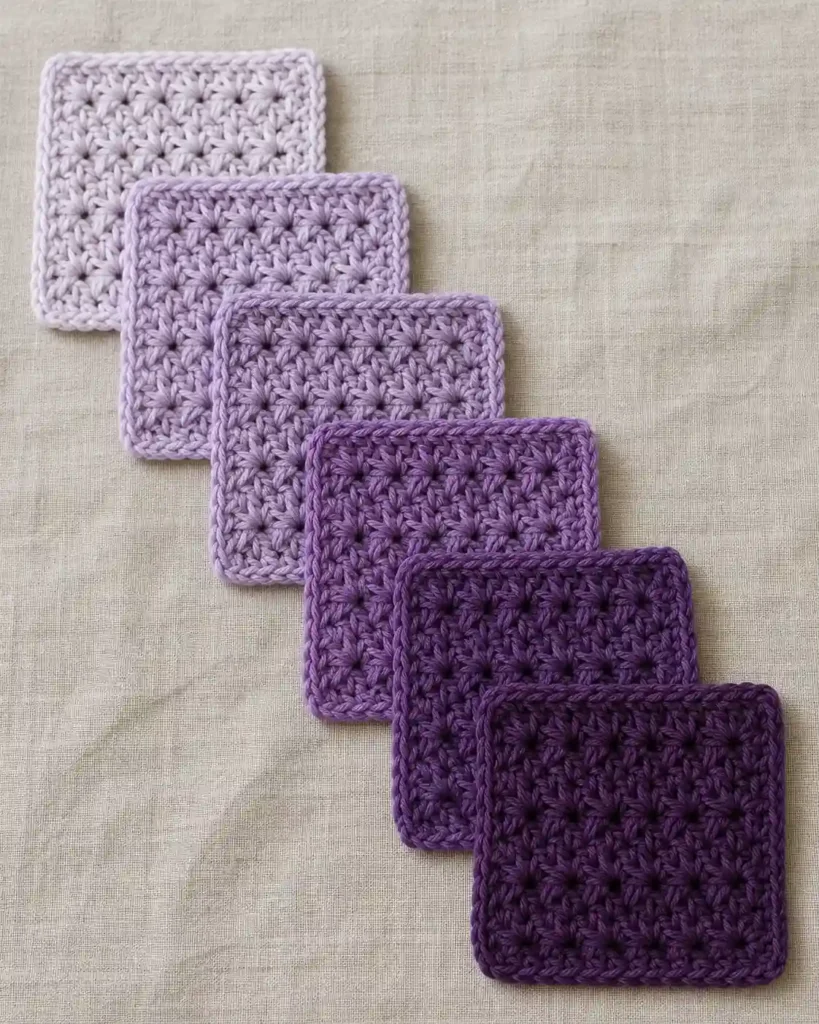
Ombre blanket color planning is where you can make the project feel truly personal. Even a familiar crochet stitch becomes something different when you change the order, intensity, or direction of the colors.
A light-to-dark gradient creates a natural progression, while a mirrored gradient moves from light to dark and back again. You can also arrange colors from the center outward when using granny squares or other modular designs.
For a warm, earthy throw, try ivory, sand, caramel, terracotta, and rust. For a cooler look, combine pale gray, dusty blue, slate, and navy.
Before crocheting, place the yarns beside one another and check whether each transition feels natural.
Special Tip: Take a black-and-white photograph of your yarn selection. It can help reveal unexpected jumps in lightness between adjacent shades.
How Do You Choose the Best Yarn for an Ombre Crochet Blanket?
Quick Answer: Choose yarn based on fiber content, weight, care requirements, yardage, and how gradually its colors change.
The best yarn depends on the blanket’s intended use, your preferred stitch texture, and how you want the colors to change.
Self-striping and gradient yarns are convenient because the color changes happen within the yarn itself. Solid-colored skeins offer more control over the placement and width of each shade.
Consider these factors before choosing:
- Yarn weight: Worsted-weight yarn works well for many everyday throws, while bulky and super bulky yarns create thicker blankets.
- Fiber content: Acrylic is often a practical choice for easy-care blankets. Cotton can provide clear stitch definition, while wool blends may offer additional warmth.
- Color-repeat length: Longer transitions are useful for broad fades; shorter repeats may create visible stripes.
- Care requirements: Check the yarn label for washing and drying instructions.
- Yardage: Buy enough for your intended dimensions, stitch pattern, and border.
If you’re trying Bernat Blanket yarn for a chunky project, confirm the exact weight and hook recommendation for your chosen variety.
How Can You Make Smooth Ombre Color Transitions?
Quick Answer: Arrange related shades in a gradual sequence, test them with your chosen stitch, and keep color changes consistent.
A beautiful ombre effect depends on how neighboring shades blend together. You don’t necessarily need expensive yarn or a complicated crochet pattern to achieve it.
Follow these steps:
- Choose colors from the same family or with a clear progression in lightness.
- Arrange the skeins in their intended order before crocheting.
- Make a sample to check how the shades appear with your chosen stitch.
- Decide whether you want broad color sections, narrow transition stripes, or a continuous gradient.
- Maintain consistent tension and record your color-change rows.
For example, a blue blanket might begin with pale sky blue, move into medium blue, and gradually deepen toward navy.
If you’re using self-striping yarn, pay attention to where the color sequence begins in each new skein. Matching the sequence can help prevent an unexpected jump in the gradient.
What Size Should an Ombre Crochet Blanket Be?
Quick Answer: A typical crochet throw is approximately 50 × 60 inches, but the ideal dimensions depend on its intended use.
The ideal size depends on whether you’re making a small lap blanket, a sofa throw, or a larger bed blanket.
These are approximate planning dimensions rather than universal pattern standards.
| Blanket type | Suggested size |
|---|---|
| Small lap blanket | 36 × 48 inches |
| Lap blanket | 40 × 50 inches |
| Standard throw | 50 × 60 inches |
| Large throw | 60 × 70 inches |
| Bed blanket | Measure for the intended bed and drape |
For a more accurate yarn estimate, crochet a measured swatch using your chosen stitch and yarn. Weigh the swatch, calculate its area, and use that information to estimate the yarn required for the finished blanket.
For example, if a 10 × 10-inch swatch weighs 40 grams, a 50 × 60-inch blanket would require approximately 1,200 grams for the main fabric, assuming similar gauge and stitch density. Allow additional yarn for the border and a reasonable margin.
This approach is more reliable than assuming every blanket of the same dimensions needs an identical number of skeins.
How Do You Finish and Care for an Ombre Crochet Blanket?
Quick Answer: Secure loose ends, add a suitable border if desired, and follow the yarn label’s washing and drying instructions.
A well-finished blanket looks neater and is more likely to withstand regular use. Once you’ve completed the main crochet fabric, spend a little time checking the edges and securing the yarn ends.
Weave in loose ends carefully using a yarn needle. If the blanket needs edging, choose a border that complements the colors and stitch pattern rather than competing with them.
Blocking may help even out the shape, depending on the yarn and stitch. Always use a method suitable for the fiber, and avoid applying excessive heat.
For everyday care, follow the yarn manufacturer’s washing and drying instructions. Some blankets can be machine-washed, while others need gentler handling.
Special Tip: Keep a small sample of the yarn or a photograph of its care label. It’s useful when you need to wash the finished blanket later.
Frequently Asked Questions About Ombre Crochet Blanket
What is an ombre crochet blanket?
An ombre crochet blanket features colors that gradually transition from one shade to another. The effect can be created with gradient yarn, self-striping yarn, or carefully arranged solid-colored skeins.
Can beginners make an ombre crochet blanket?
Yes. Beginners can make an easy ombre crochet blanket using basic stitches such as single crochet, half double crochet, or double crochet. Self-striping yarn can simplify the project by reducing manual color changes.
What is the best stitch for an ombre crochet blanket?
Moss stitch, half double crochet, and double crochet are good choices for showing color transitions. Ripple, shell, and waffle stitches add more texture but may require additional practice.
How much yarn do I need for an ombre crochet blanket?
The amount depends on the blanket’s dimensions, yarn weight, stitch pattern, and gauge. Make a measured swatch and calculate the estimated yarn requirement before purchasing your full supply.
Can I make an ombre blanket with only two or three colors?
Yes. Two or three coordinated colors can create an attractive ombre effect. For smoother transitions, add blended intermediate sections or choose shades that are close in tone.
Final Thoughts
An ombre crochet blanket is a wonderful way to combine beautiful color combinations with the relaxing rhythm of crochet. From beginner-friendly throws and soft baby blankets to textured waffle stitches and colorful granny squares, there are plenty of ways to make the gradient effect your own.
If you’re new to crochet blankets, start with a simple stitch and a self-striping yarn. Once you’re comfortable with the basics, experiment with ripple patterns, decorative textures, or custom color arrangements.
The most enjoyable project is one that matches your skill level, your favorite colors, and the way you plan to use the finished blanket.
Choose a palette you love, gather your yarn and hook, and enjoy watching the colors come together one row at a time.
SEO Meta Description: Explore 24 ombre crochet blanket patterns and color ideas, from easy beginner throws to rainbow gradients, moss stitch designs, and chunky blankets.