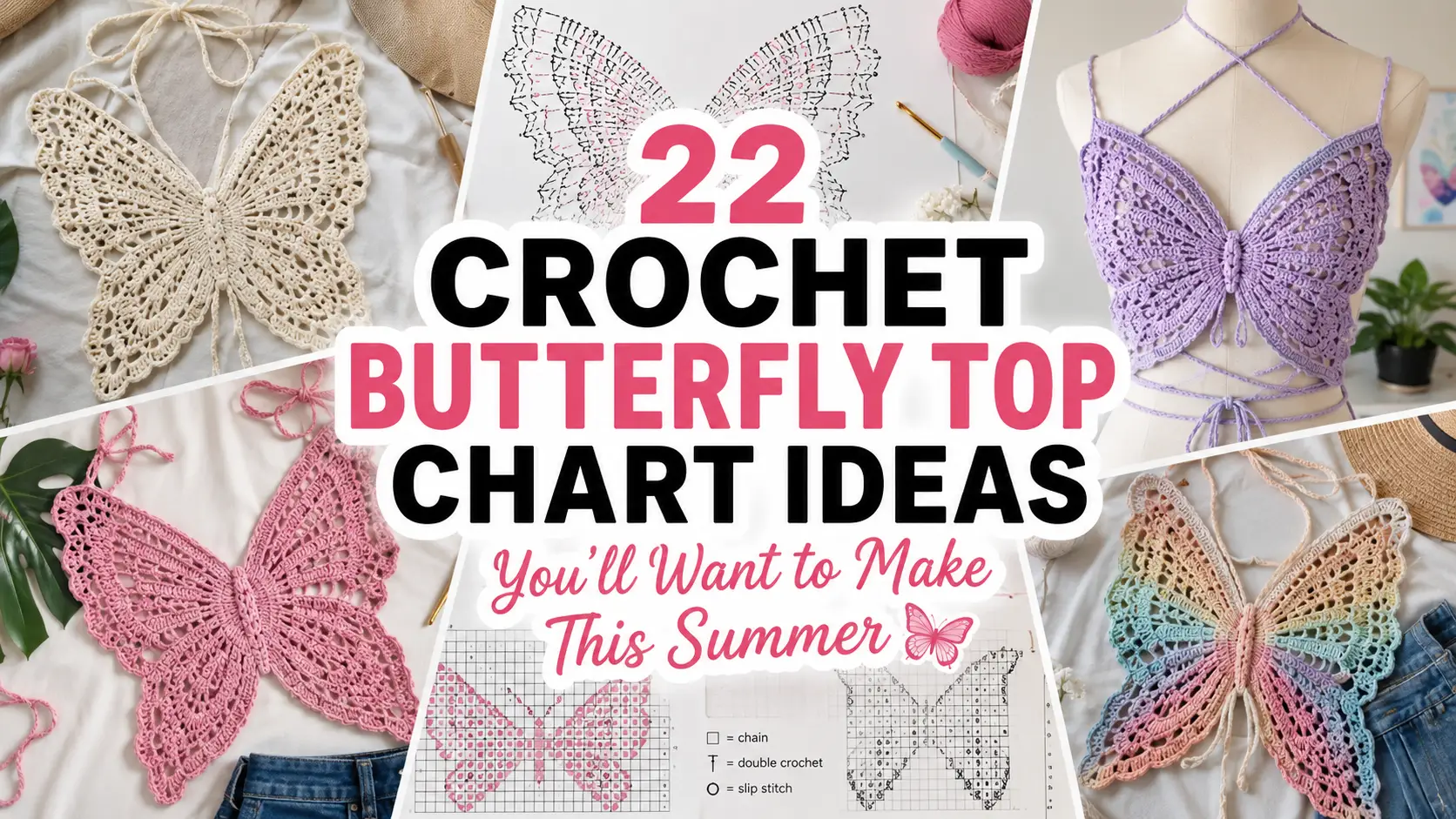
Are you dreaming of a top that feels a little bit magical, a little bit flirty, and 100% handmade? Then you’re in the right place. Butterfly tops have been having a moment for a while now, and honestly, I don’t see them going anywhere. There’s just something about that open-back, tied-strap silhouette that makes you feel like a beach fairy the second you put it on.
If you’ve been searching for a crochet butterfly top chart, chances are you already know how these tops work: a small central “body,” two wing-shaped panels worked out from the sides, and long straps that criss-cross and tie however you like. What trips a lot of people up isn’t the concept; it’s finding a chart that actually matches the style, size, and skill level they’re working with.
So I rounded up 22 crochet butterfly top chart styles and variations to help you find the exact look you’re picturing in your head. Keep scrolling to find your favorite!
Quick Answer: A crochet butterfly top chart is a visual, symbol-based diagram (instead of written row-by-row instructions) that maps out the butterfly-shaped body, the two wing panels, and the strap placement of a butterfly top, and it’s typically worked using basic stitches like chain, double crochet, and increases.
Key Takeaways
- Most butterfly-top charts are built from a small, increasing center panel, with two wing sections worked outward from either side.
- You can find charts in filet crochet (charts with grid symbols), graphgan/C2C style (color-block charts), and standard stitch diagram formats.
- Worsted weight (#4) and light/DK (#3) cotton yarns are the most popular choices, though fine and fingering-weight versions exist for a lacier look.
- Charts range from true beginner-friendly to intermediate, depending on whether they use only double crochet or incorporate filet grids, shells, or post stitches.
- Sizing is the biggest variable. Some charts are one-size, others are graded, and a few are fully customizable using your own measurements.
- Free crochet butterfly top charts and PDF options make it easy to start without buying a pattern first.
Why Work From a Chart Instead of Written Instructions?
Before we get into the list, let’s talk about why so many crocheters (myself included) reach for a chart version of this pattern. Written row-by-row instructions are great, but when you’re shaping something as asymmetrical as butterfly wings, a chart lets you see where every increase, chain space, and strap attachment point goes. You catch mistakes faster because you’re comparing your actual stitches to a picture instead of just counting numbers in your head.
That said, charts aren’t one-size-fits-all either. Some are simple stitch diagrams meant to sit alongside written instructions. Others are full filet crochet grids, where each square on the chart represents either a solid block of double crochets or an open chain space, and the negative space is what forms the butterfly shape. Below, I’ve grouped 22 chart styles and variations so you can pick the one that fits your project best.
22 Crochet Butterfly Top Chart Styles to Try
1. Classic Symbol-Based Body and Wing Chart
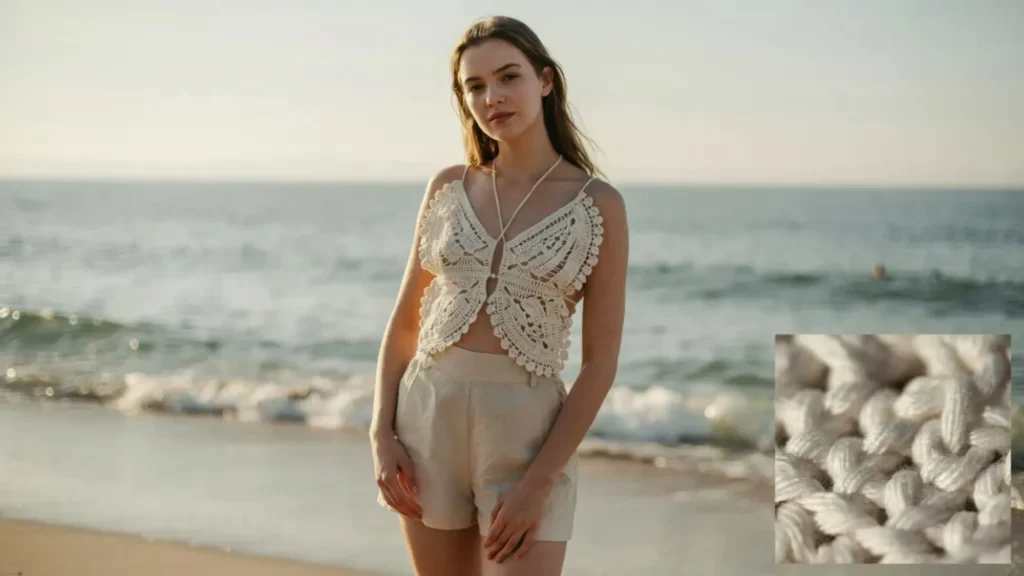
This is the most common format you’ll come across. It uses standard crochet symbols (little ovals for chains, T-shapes for double crochets) to map the increasing center panel and the two wings. Great for visual learners who still want row numbers alongside the picture.
2. Filet Crochet Grid Chart
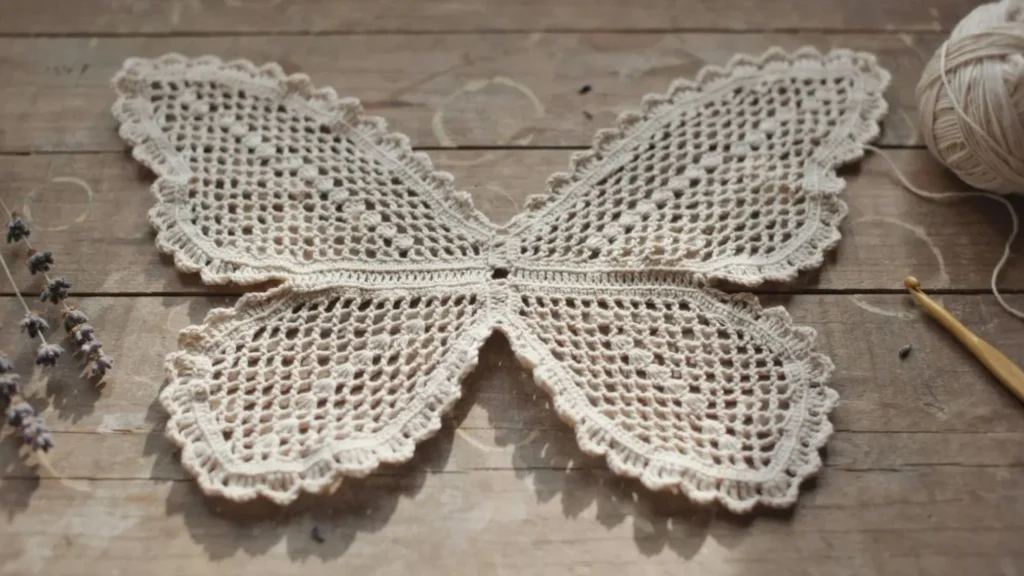
Filet charts use a simple grid of filled and empty squares. Filled squares are solid double crochet blocks; empty squares are open mesh. This style is popular for butterfly tops because the negative space naturally creates that lacy wing outline.
3. Beginner One-Size Chart
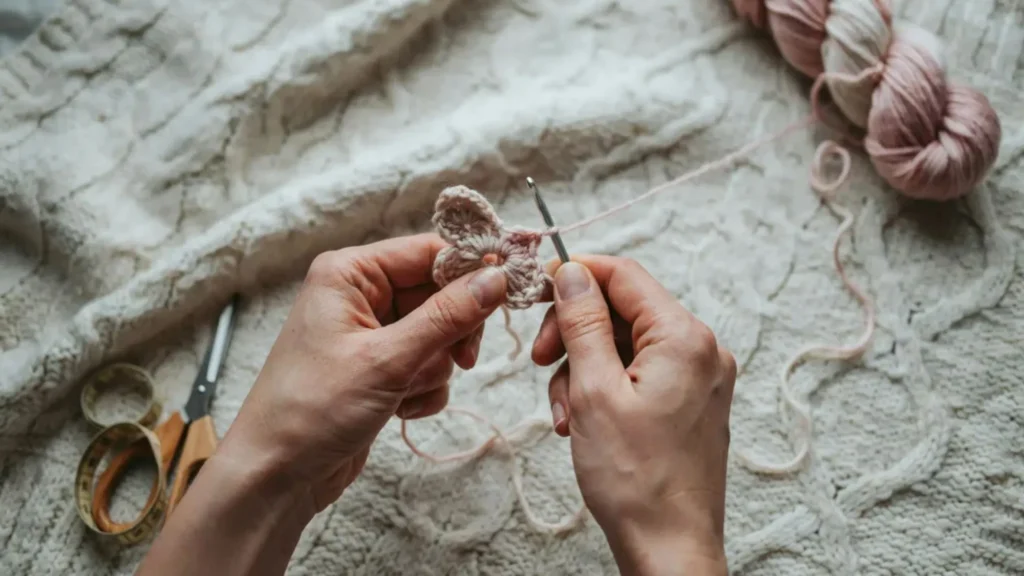
Designed with new crocheters in mind, this style sticks to just chains and double crochets: no filet grid and no post stitches. It’s the easiest entry point if you’ve never shaped a garment before. This is also a great pick if you’re looking for a simple crochet butterfly top chart to build your confidence before trying anything more advanced.
4. Graded Multi-Size Chart (XS–5XL)
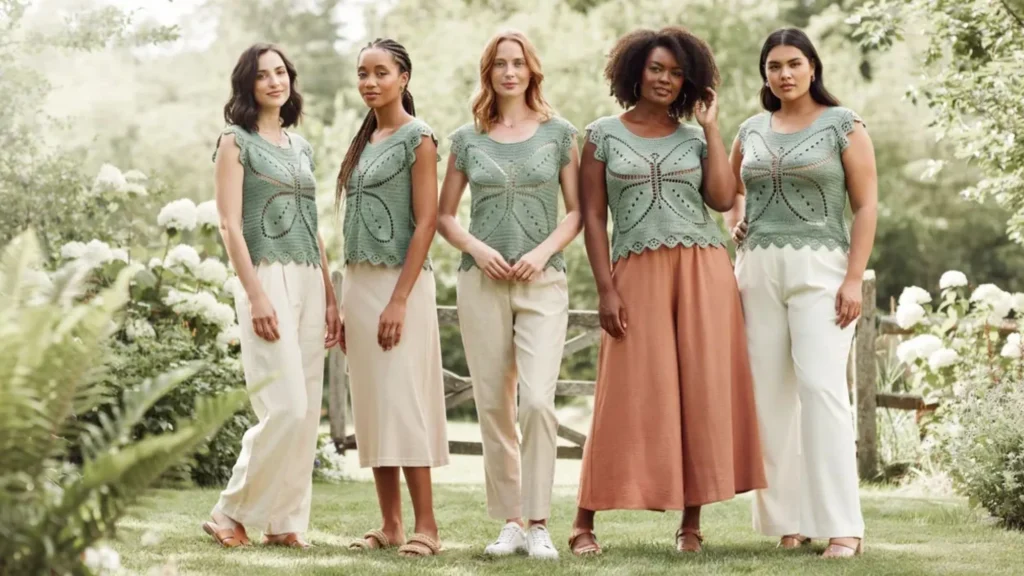
For a size-inclusive option, look for charts that come with a separate diagram (or overlaid numbers in parentheses) for each size range. These take a little more concentration to follow since you’re tracking multiple stitch counts at once, but they save you from having to redraft the whole thing yourself.
5. Bikini-Style Cup Chart
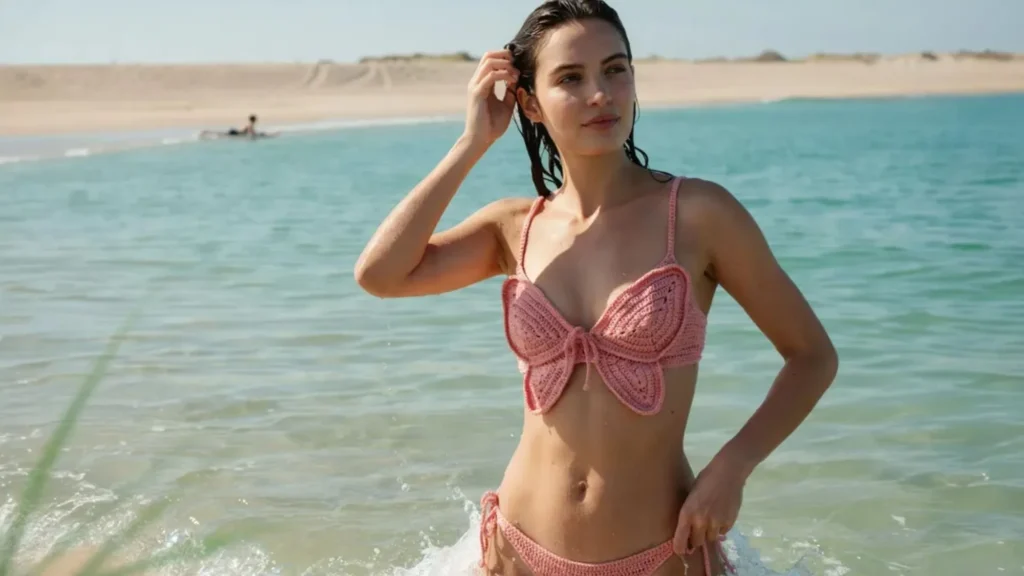
Some butterfly-top charts are adjusted to sit more like a bikini top, with a deeper cup shape and a more fitted band. This version usually calls for a slightly denser gauge for extra support.
6. Shell Stitch Wing Chart
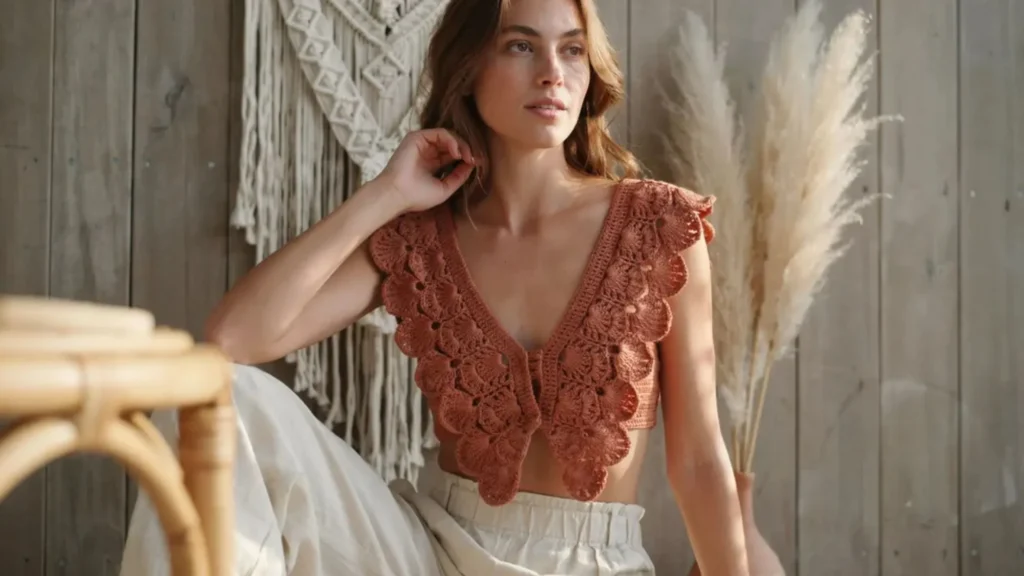
Instead of plain double crochet wings, this variation layers in shell stitches along the wing edges for a scalloped, textured look. It reads a little more “boho” than the classic smooth version.
7. Popcorn Stitch Accent Chart
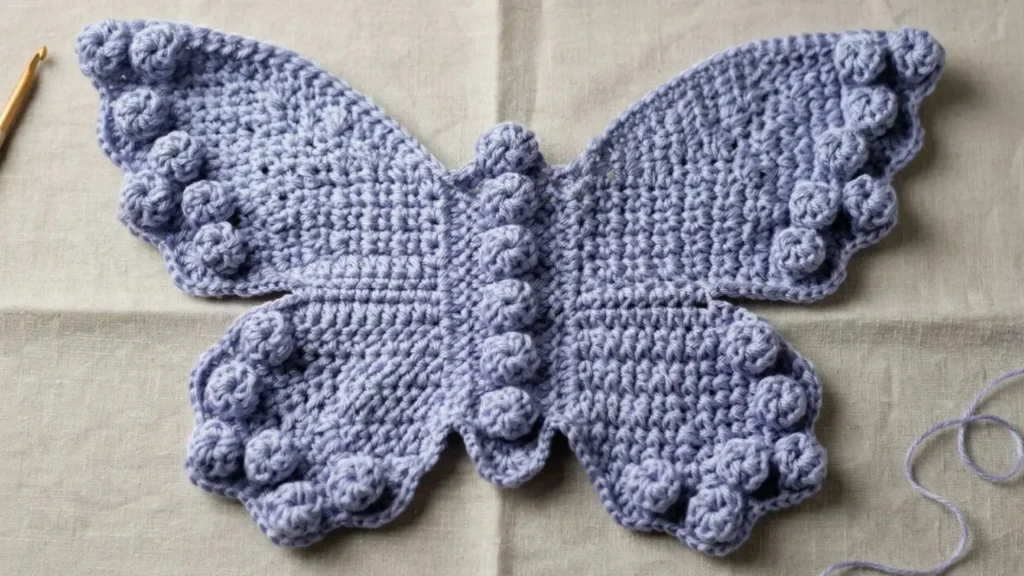
A fun option if you want texture without committing to a fully textured top. These charts usually place popcorn stitches along the center body or wingtips as an accent, while keeping the rest in simple double crochet.
8. Fingering Weight Lace Chart
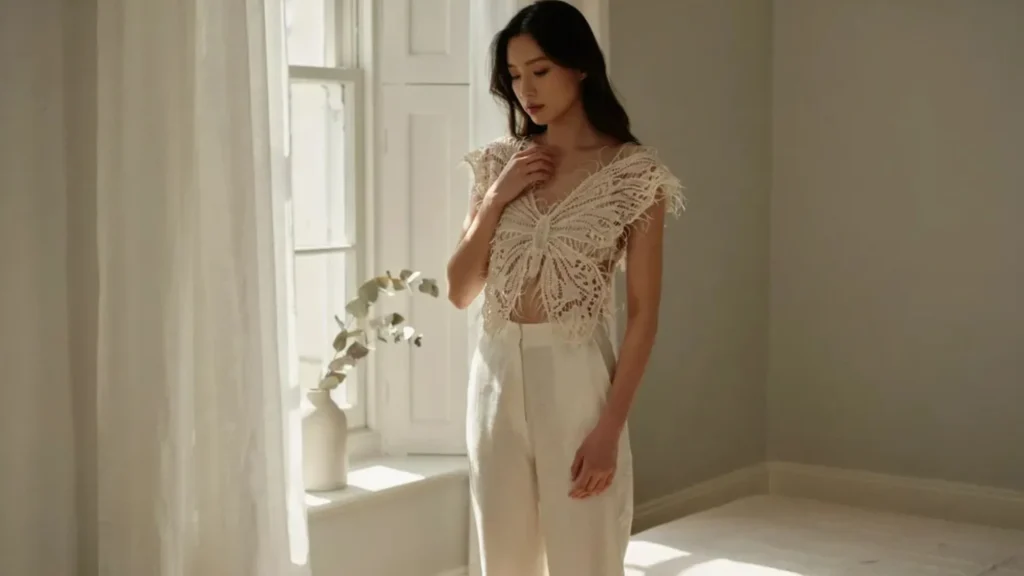
If you love a delicate, almost see-through look, search for charts written for fingering or lace weight yarn with a small hook (think 2mm–2.5mm). These take longer to work up, but the drape is stunning.
9. Chunky Yarn Quick-Make Chart

On the opposite end, some charts are scaled up for bulky or super bulky yarn. These work up in an afternoon and are perfect if you want instant gratification over delicate detail.
10. Corset-Back Lace-Up Chart
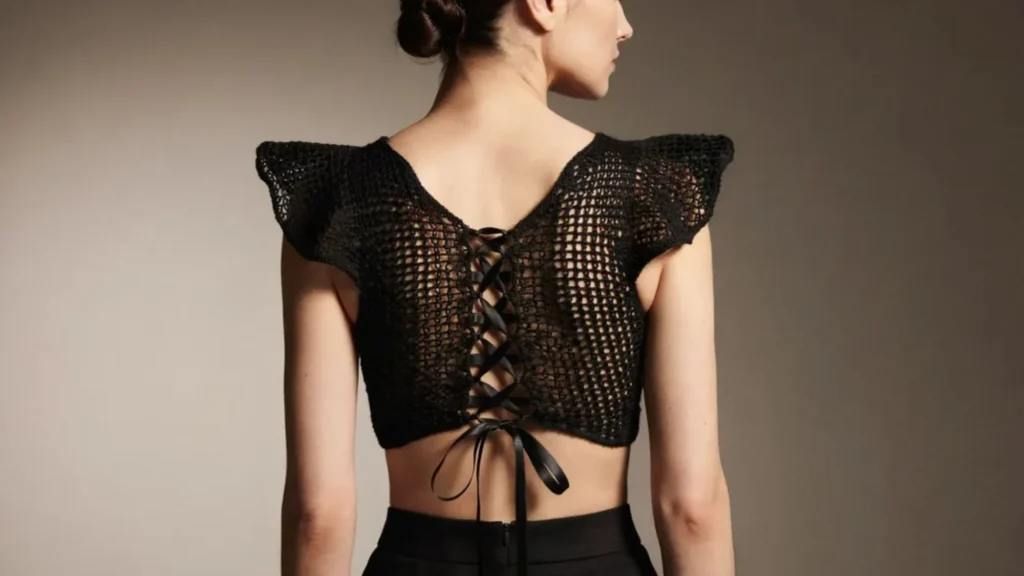
Rather than simple crisscrossing straps, this chart style adds small chain loops down the back so you can lace it up corset-style. It gives you more adjustability if your bust size and back width don’t quite match a standard grading.
11. Adjustable Cup Chart with Written Cup Guide
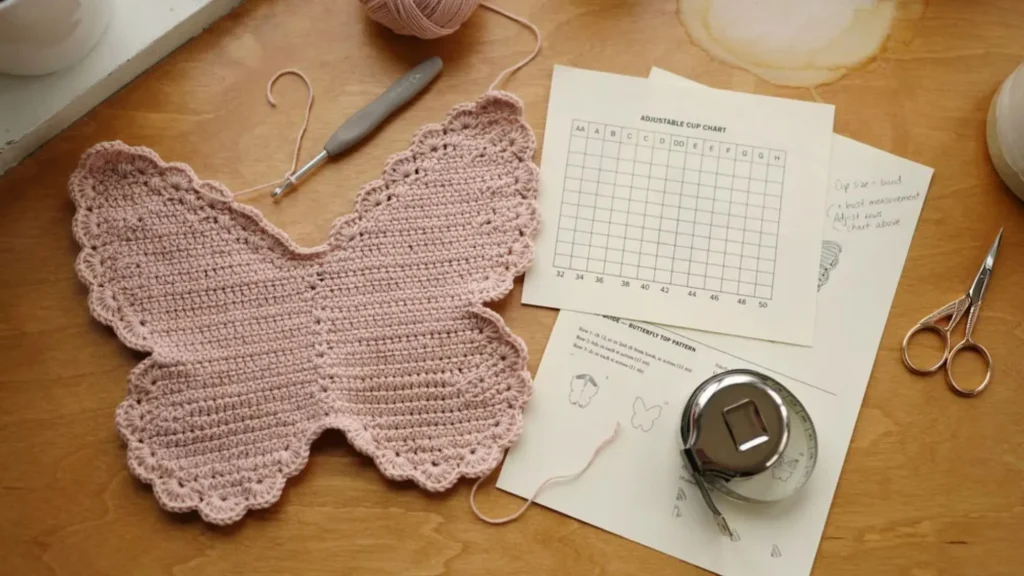
Some charts pair the wing diagram with a short written insert explaining how to add or remove rows in just the cup area so you can custom-fit the top without redrawing the whole wing shape.
12. Graphgan-Style Color-Block Chart
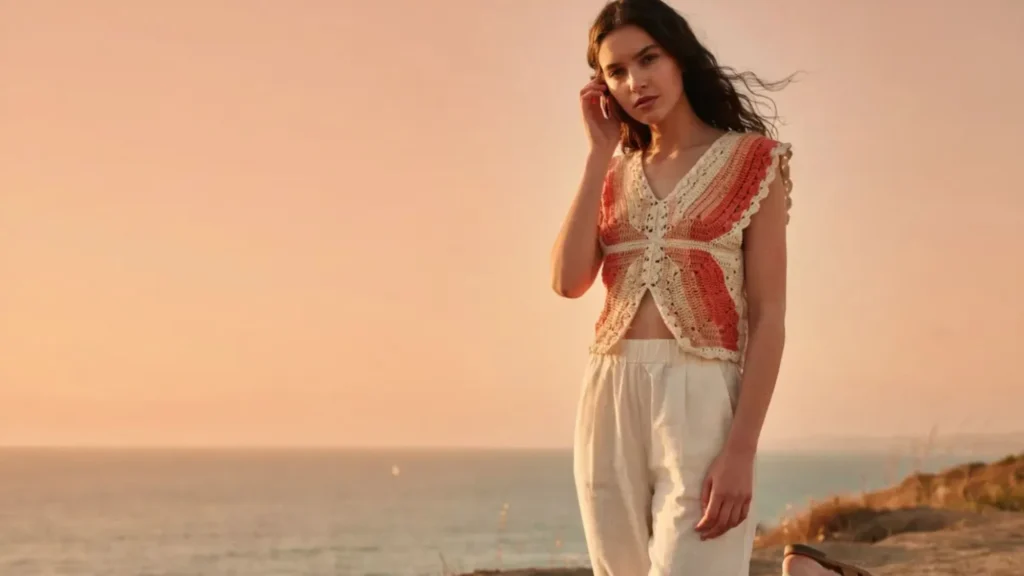
This is a true pixel-style chart, similar to what you’d use for a granny square blanket, where each square represents one stitch in a specific color. It’s used for butterfly tops that have a two-tone or ombré wing design.
13. Bottom-Up Construction Chart
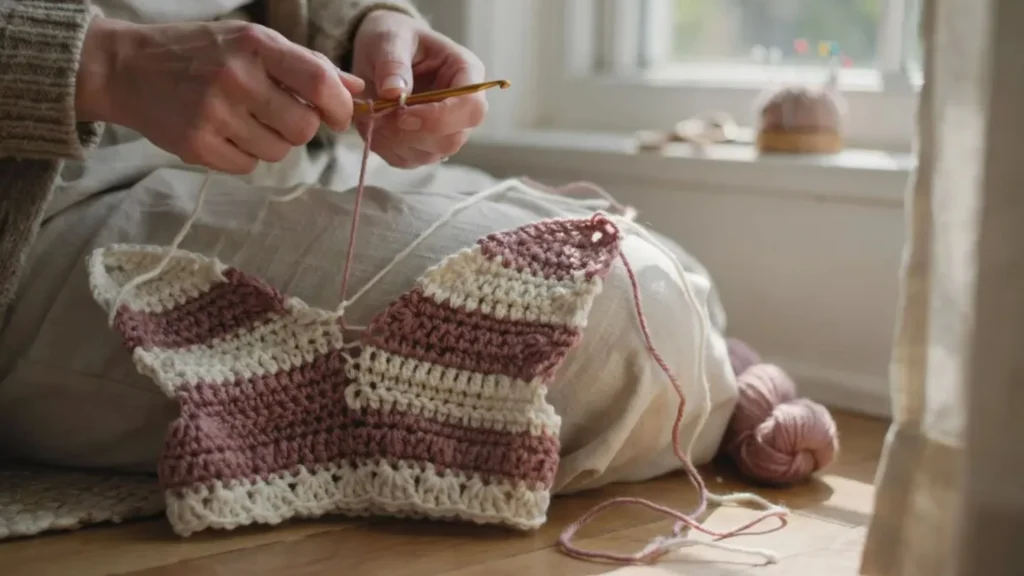
Most butterfly top charts start from the center body and branch outward, but a few flip the construction and start from the bottom hem, working upward into the wing shapes. This version is worth trying if you find the standard construction confusing.
14. Sleeve Add-On Chart
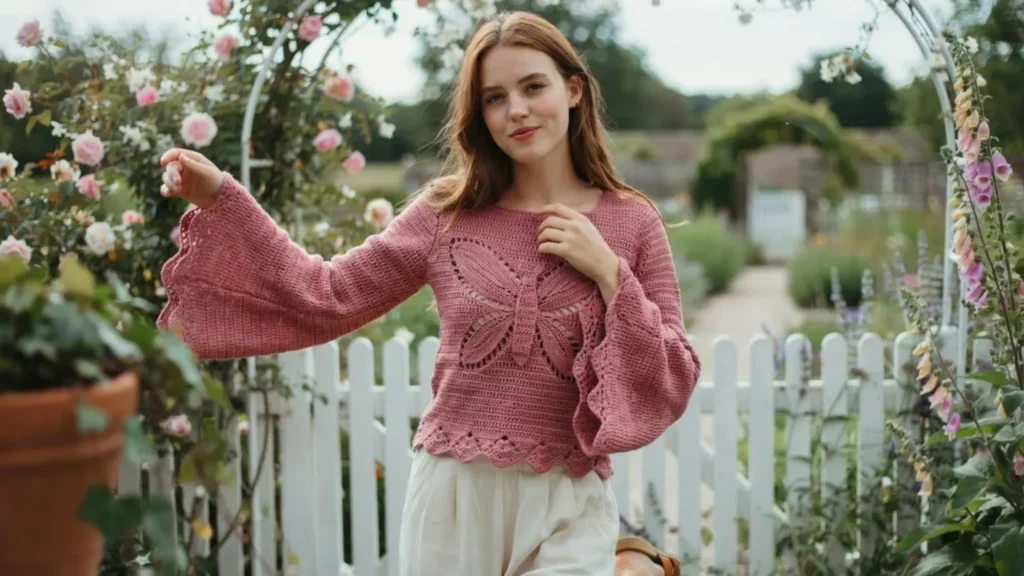
For anyone who loves the wing shape but wants a bit more coverage, look for an add-on chart that shows how to attach either bell sleeves or straight sleeves to an already-finished butterfly body. This is the go-to option if you specifically want a crochet butterfly top with sleeves rather than the traditional sleeveless wing silhouette.
15. Alpine Stitch Textured Chart
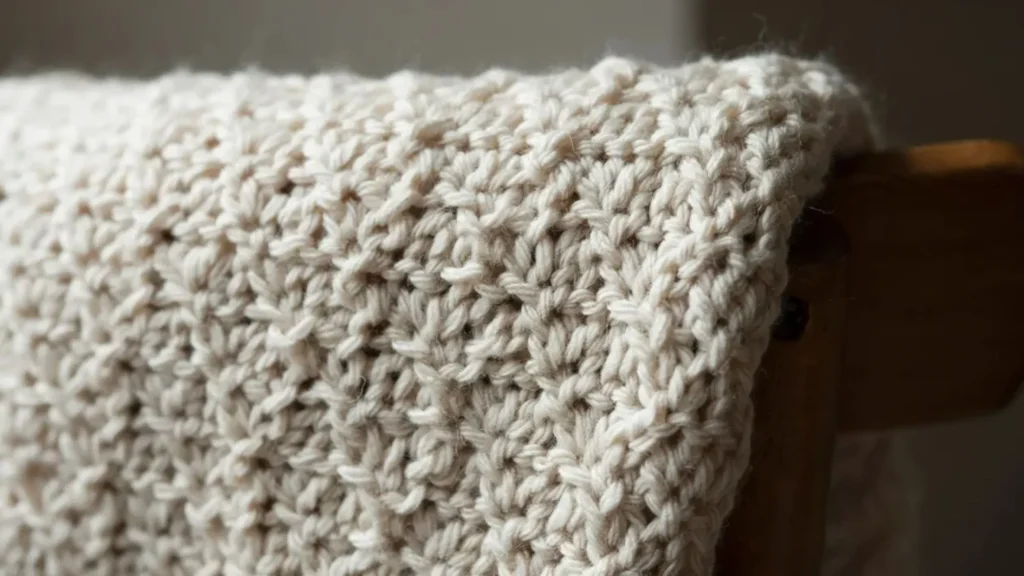
The alpine stitch creates a woven, basket-like texture that looks a lot more complicated than it actually is. Butterfly top charts using this stitch usually mark it with a distinct symbol so you don’t confuse it with a regular double crochet.
16. Back Post/Front Post Combo Chart
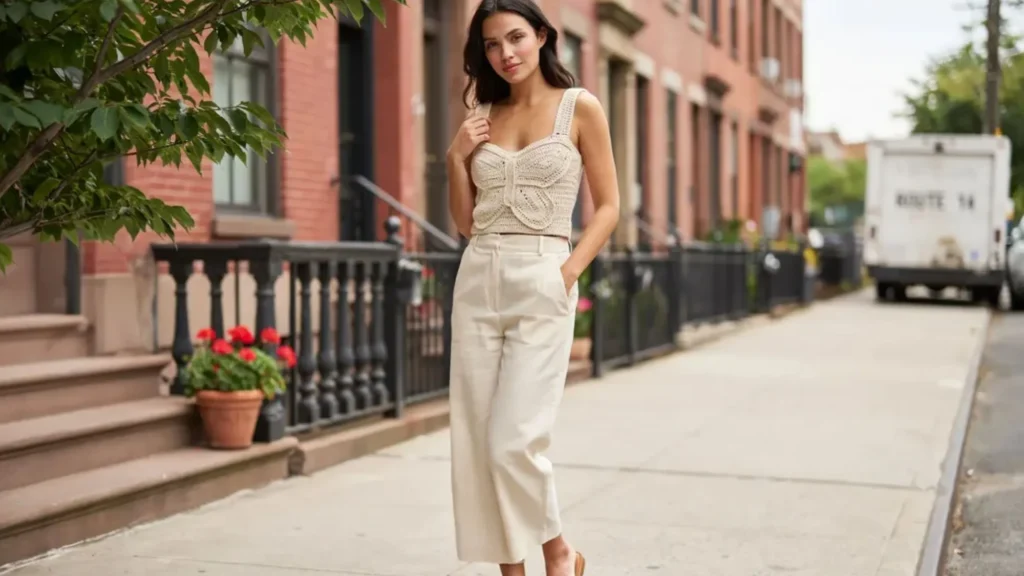
This variation uses front post and back post double crochets to create raised ribbing along the wings or straps. It adds structure, which is nice if you find plain double crochet fabric a little too soft and stretchy for a top.
17. Ombré Yarn Chart
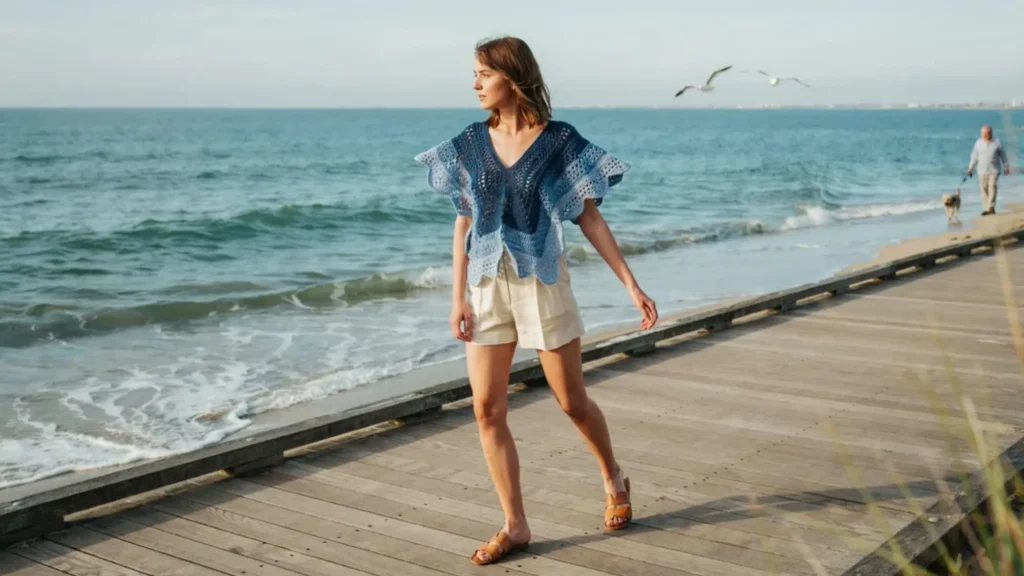
Not a different construction, just a styling note: these charts are written with color changes and gradient yarn in mind, so the increases in the wing sections are timed to land in a way that shows off the color shift evenly.
18. UK Terminology Chart
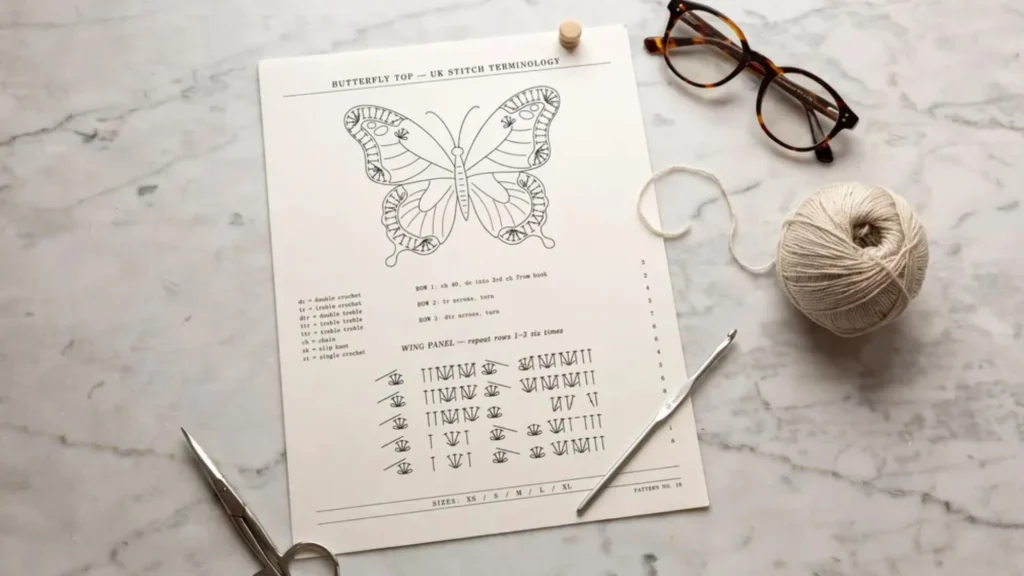
If you learned to crochet using UK terms, double-check before you start, because a huge number of butterfly top charts are written in US terms. A UK-terminology version swaps double crochet for triple crochet, so read the key on your chart carefully.
19. Bow-Shaped Variation Chart
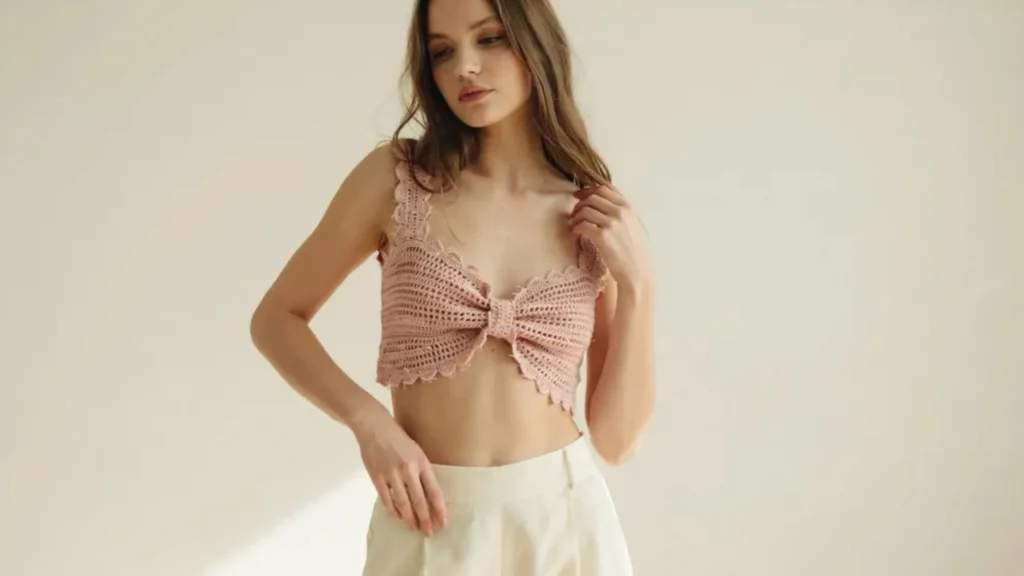
Technically a cousin of the butterfly top, this chart reshapes the center body into a bow instead of rounded wings. It’s worth including here because the overall construction and strap placement are nearly identical.
20. Halter-Style Chart with Neck Ring
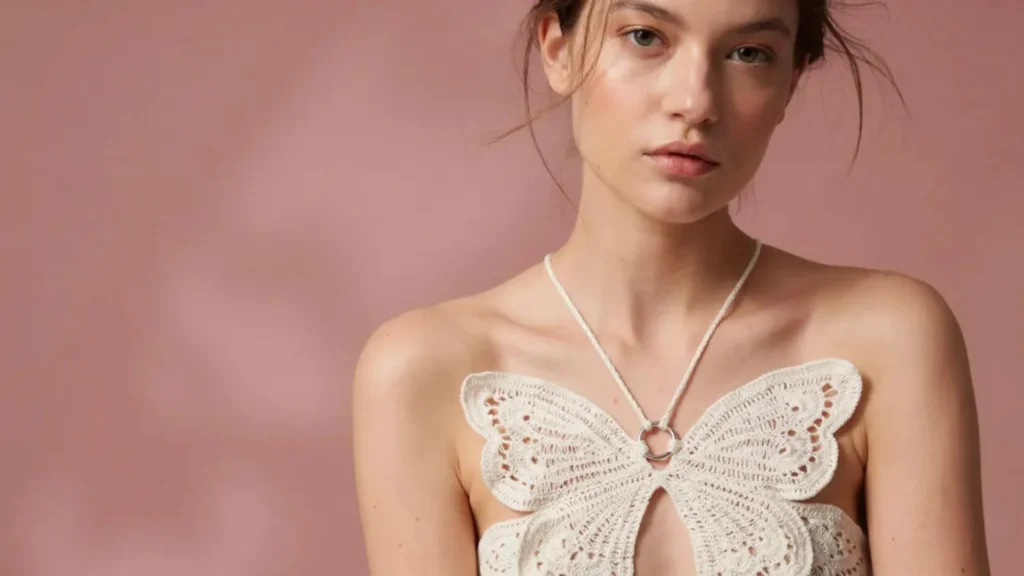
Instead of tying straps around your neck, this chart incorporates a small crocheted or purchased ring at the top so the halter sits flat without knotting. It’s a nice option if you find neck ties uncomfortable after a full day of wear.
21. Video-Paired Chart
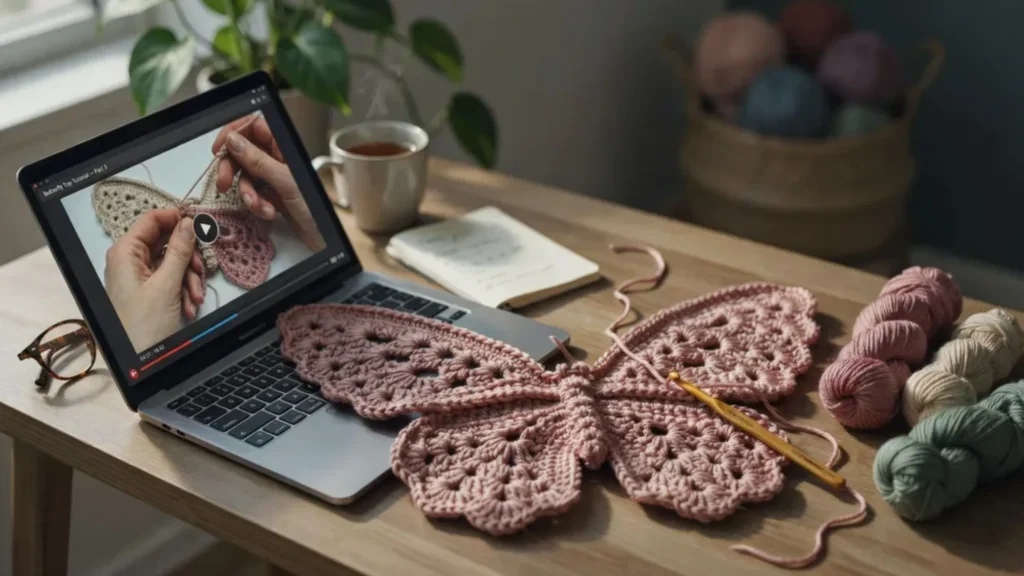
Some designers release a chart specifically to be followed alongside a video tutorial, with timestamps or row markers that line up to a specific point in the video. These are worth seeking out if you’re a hands-on, watch-and-repeat kind of learner.
22. Digital PDF Chart with Printable Grid
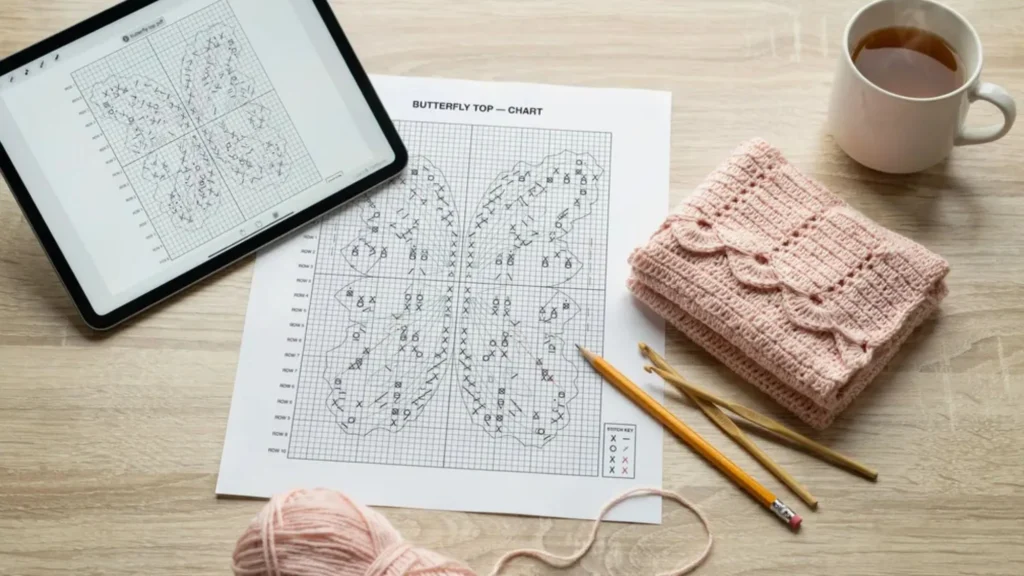
Finally, a lot of designers now sell downloadable PDF charts with a full-size printable grid page, so you can literally check off rows as you go. If you like a tactile, paper-in-hand approach to pattern reading, this format is worth the small investment. This format is especially popular among crocheters searching for a crochet butterfly top chart PDF they can save and print at home.
Free and Printable Chart Options
Quick Answer: Yes, many designers release a free crochet butterfly top chart or a downloadable crochet butterfly top chart PDF, which makes it easy to try a simple crochet butterfly top chart before committing to a paid pattern.
At a Glance:
- Free crochet butterfly top chart versions are widely available online and great for testing the construction before buying a paid pattern.
- A crochet butterfly top chart PDF gives you a printable, offline-friendly copy to reference while you work.
- Many free butterfly crochet top pattern downloads pair a chart with written instructions for extra clarity.
- Look for a butterfly top crochet pattern free PDF if you prefer working from paper rather than a screen.
Full Coverage, Sleeve, and Sweater Variations
Quick Answer: If you’d like more coverage, a crochet butterfly top full-coverage adaptation or a crochet butterfly top with sleeves gives you the same wing silhouette with added coverage, and some crocheters extend the shape into a butterfly crochet sweater for cooler weather.
At a Glance:
- A crochet butterfly top full-coverage version typically extends the wing panels and narrows the open back.
- Adding sleeves (see Chart #14) is the easiest way to get a crochet butterfly top with sleeves.
- Lengthening the body and switching to a warmer yarn is how some crocheters adapt the shape into a butterfly crochet sweater for fall.
Tips for Choosing the Right Chart
Looking through all 22 of these, you’ll notice the underlying construction repeats a lot: a small increasing center, two wings worked outward, and straps that tie in the back. What actually changes is the stitch complexity, from a beginner-friendly double crochet-only chart all the way up to filet, alpine, and post-stitch combinations.
Before picking one, ask yourself:
- Am I comfortable reading a stitch diagram, or do I need written instructions alongside it?
- Do I want a lacy, drapey fabric (fingering weight) or something with more hold and support (worsted weight)?
- Does the chart offer my size, or will I need to adjust it myself?
If you’re newer to garment shaping, start with a beginner one-size or graded chart in worsted weight before jumping into filet or alpine textures.
Best Yarns for a Crochet Butterfly Top
Mercerized cotton and other breathable worsted or light/DK weight cotton yarns work best for a crochet butterfly top because they hold the wing shape without going stiff.
My go-to picks for butterfly tops are mercerized cotton blends and any soft, breathable worsted weight (#4) or light/DK (#3) cotton yarn. Cotton has just enough structure to hold the wing shape without going stiff, and it breathes well, which matters a lot for something you’re likely wearing in the heat.
If your chosen chart calls for fingering or lace weight, a cotton-bamboo blend gives you that same breathability with a bit more drape.
At a Glance:
- Worsted (#4) or light/DK (#3) mercerized cotton: best all-around choice
- Cotton-bamboo blend: better drape for fingering/lace weight charts
- Avoid pure acrylic if you want the wing shape to hold rather than stretch out
Materials You’ll Likely Need
- Yarn: worsted/Aran (#4) or light/DK (#3) cotton for most charts; fingering (#1) for lace versions
- Crochet hook: typically 3mm–4mm for standard charts, smaller for lace weight
- Tapestry needle: for weaving in ends and attaching wing panels
- Scissors: for trimming yarn tails
- Stitch markers: genuinely helpful for tracking increases on the wing charts
How Much Yarn Do You Need?
Because a butterfly top uses so little fabric, most versions only need around 150–300 yards of worsted weight cotton, though textured or fully covered variations (like the sleeve add-on) will use more.
More You’ll Love
- Best Crochet Halter Top Patterns
- Easy Crochet Bralette Patterns for Summer
- How to Read a Filet Crochet Chart (Beginner Guide)
- Crochet Top Sizing 101: How to Adjust Any Pattern to Fit
Frequently Asked Questions
Is there a simple crochet butterfly top chart for beginners?
Yes, beginner charts use only chains, double crochets, and basic increases, making them a good starting point before trying filet or textured versions.
Where can I find a free crochet butterfly top chart?
Many crochet designers and blogs publish a free crochet butterfly top chart online, often paired with written instructions for added clarity.
Is a crochet butterfly top chart pdf available for these patterns?
Yes, many designers sell or share a crochet butterfly top chart PDF with a printable grid so you can track your rows on paper.
Can I make a crochet butterfly top with sleeves?
Yes, sleeve add-on charts let you attach bell or straight sleeves to a finished butterfly-top body for more coverage.
Is there a full coverage or sweater version of the butterfly top?
Yes, a crochet butterfly top full-coverage adaptation extends the wing panels, and lengthening the body with a warmer yarn creates a butterfly crochet sweater variation.
Final Thoughts
Whether you’re drawn to a delicate lace-weight version, a quick chunky-yarn afternoon project, or a fully graded size-inclusive chart, there’s a butterfly top style on this list for you. My honest advice? If this is your first time shaping a garment, start simple. You can always come back and try the filet or alpine stitch versions once you’ve got the basic wing construction down.
Now go pick your favorite chart, grab your hook, and get ready to feel like a beach fairy all summer long. And if you make one, I’d love to see it; tag your project so I can admire your work!

![The Best 30+ Free Crochet Cat Patterns [Beginner-Friendly Guide]](https://crochetmind.com/wp-content/uploads/2025/04/1-The-Best-30-Free-Crochet-Cat-Patterns-Beginner-Friendly-Guide.webp)