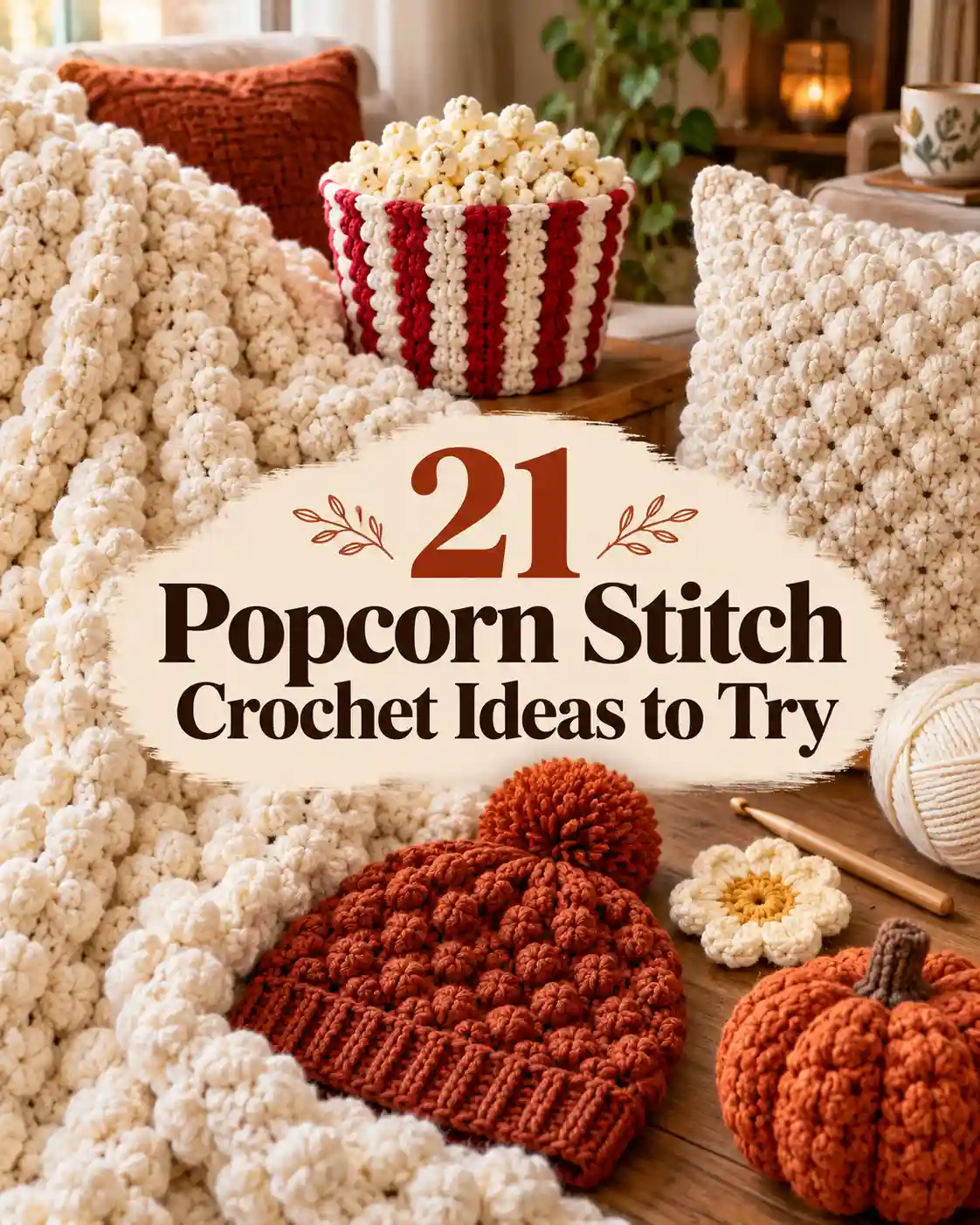
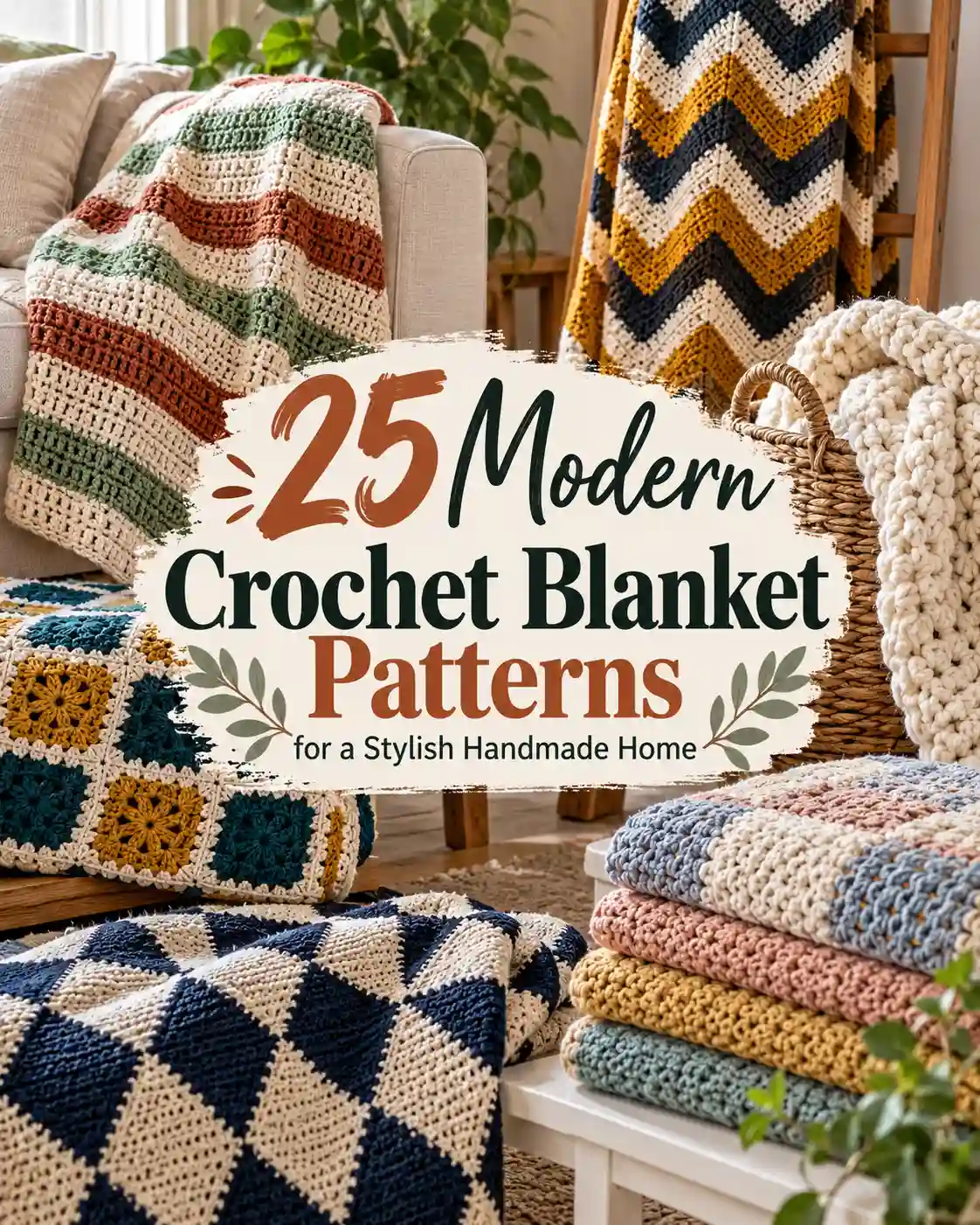
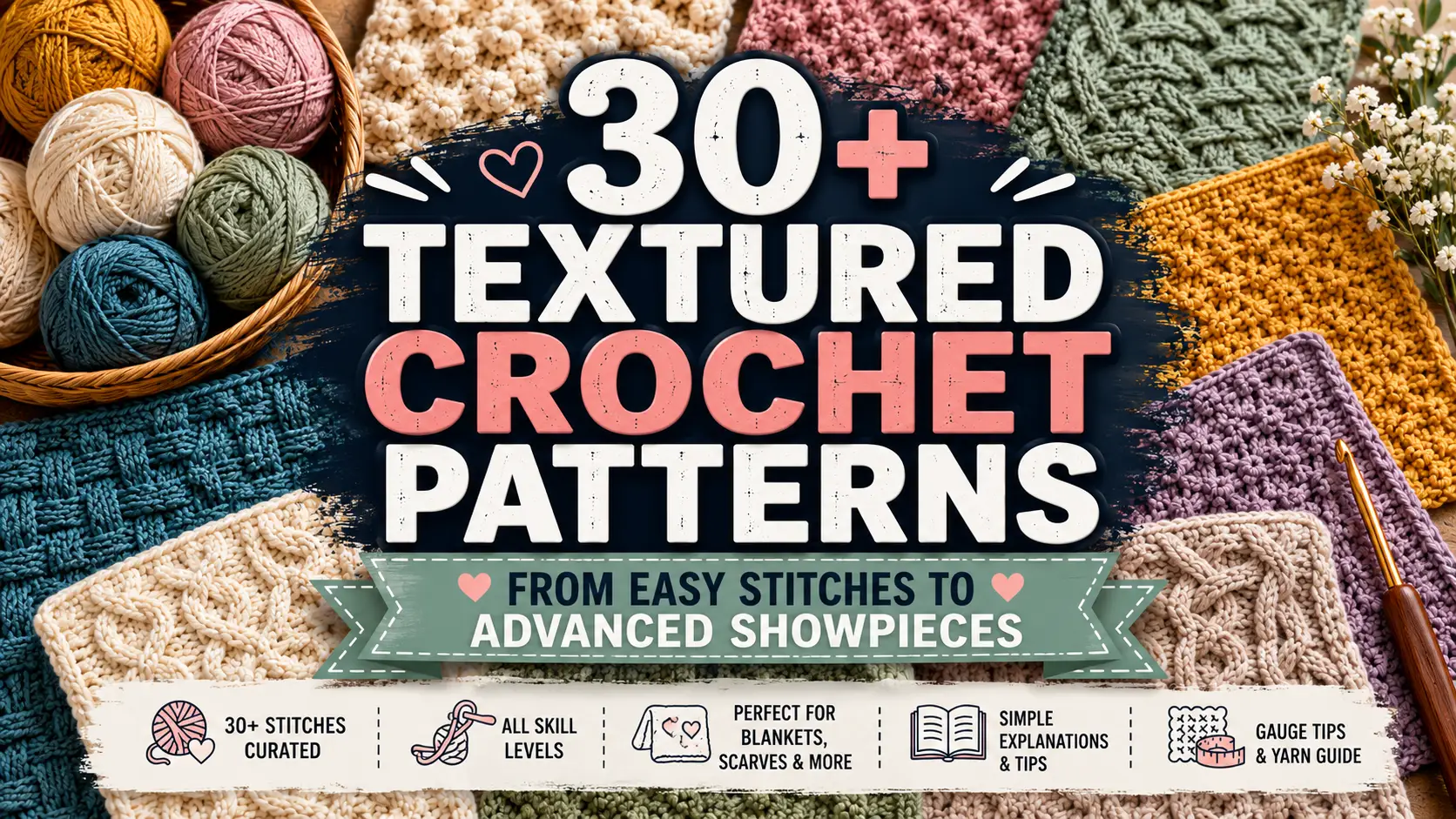
A flat stitch can only do so much for a blanket. The moment you want a piece that looks handmade on purpose with shadow, height, and movement built right into the fabric, you need textured crochet patterns, the stitch combinations that turn a plain single or double crochet into something with real dimension.
Textured crochet patterns are stitch techniques, like bobbles, popcorns, post stitches, and crossed cables, that raise, ridge, or weave the fabric instead of leaving it flat. They’re built from stitches you already know, just clustered, crossed, or worked into different loops to create depth.
Below, you’ll find 30 of these stitches sorted by skill level and best use, plus a quick-reference chart so you can match the right texture to your next scarf, cowl, or blanket before you even pick up your hook.
Key Takeaways
- Browse 30+ textured crochet patterns sorted by skill level
- Textured crochet stitches for blankets add bold visual weight
- Pick reversible textured crochet stitches for scarves and wraps
- A crochet textured blanket needs about 10–15% extra yarn
- Try textured crochet stitches in the round for cowls
- Swatch first, since textured stitches pull in tighter than flat rows
What Makes Textured Crochet Patterns Different From Basic Stitches?
Textured crochet patterns use clusters, post stitches, or crossed stitches to raise, ridge, or weave the fabric instead of leaving it flat like a basic stitch.
At a Glance
- Basic stitches (single, double, half double) sit flat and even
- Clusters like bobble and popcorn push stitches into raised bumps
- Post stitches create ribbing, cables, or a woven look
- Textured crochet stitches often pull in tighter, so gauge shifts
- Swatching first prevents surprises in the finished textured blanket
A basic stitch, single crochet, half double, double produce a flat, even surface where every stitch sits at the same height. Textured crochet patterns break that uniformity on purpose. Some, like bobble and popcorn stitches, cluster several stitches into one spot to push fabric outward in relief. Others, like front post and back post combinations, work into the stitch itself rather than the top loops, creating ribbing or a woven look. The Craft Yarn Council notes that gauge and hook size recommendations on yarn labels assume a standard stitch, textured stitches almost always pull in tighter, so swatching before committing to a full blanket is worth the extra ten minutes.
Quick Comparison: 30 Textured Crochet Stitches at a Glance
| Stitch | Skill Level | Best For | Reversible? |
| Basketweave | Intermediate | Blankets, pillows | No |
| Waffle | Intermediate | Blankets, dishcloths | Mostly |
| Bobble | Beginner–Intermediate | Blankets, cardigans | No |
| Puff | Beginner | Hats, scarves | No |
| Popcorn | Intermediate | Blanket motifs, edging | No |
| Moss (Linen) | Beginner | Scarves, blankets, in-the-round | Yes |
| Suzette | Beginner | Blankets, wraps | Mostly |
| Star | Intermediate | Blankets, cowls | No |
| Crocodile | Advanced | Statement blankets, appliqué | No |
| Corn Kernel | Intermediate | Blankets, baskets | No |
| Post Stitch Rib (FPDC/BPDC) | Beginner–Intermediate | Scarves, hats, cardigans | Yes |
| Trinity (Bramble) | Intermediate | Blankets, cushions | No |
| Sedge | Beginner–Intermediate | Blankets, scarves | Yes |
| Cable (Crossed Post) | Advanced | Scarves, sweaters | No |
| Alpine | Intermediate | Blankets, wraps | No |
| Griddle (Grit) | Beginner | Blankets, dishcloths | Yes |
| Woven | Intermediate | Blankets, bags | Mostly |
| Spike | Beginner–Intermediate | Blankets, edging | No |
| Diamond (Catherine’s Wheel) | Advanced | Blankets, shawls | No |
| Boxed Puff | Intermediate | Blankets, cowls | No |
| Fan | Beginner–Intermediate | Scarves, shawls | No |
| Tulip | Intermediate | Baby blankets, appliqué | No |
| Daisy (Marguerite) | Intermediate | Baby items, blanket motifs | No |
| Bean | Beginner–Intermediate | Blankets, hats | No |
| Wattle | Intermediate | Blankets, scarves | Mostly |
| Primrose | Intermediate | Blanket motifs, coasters | No |
| Sand | Beginner | Dishcloths, blankets | Yes |
| Loop (Fur) | Intermediate | Rugs, animal toys | No |
| Aspen | Intermediate | Blankets, wraps | No |
| X-Stitch (Woven Cross) | Beginner–Intermediate | Blankets, scarves | Mostly |
The 30 Textured Crochet Stitches
1. Basketweave Stitch
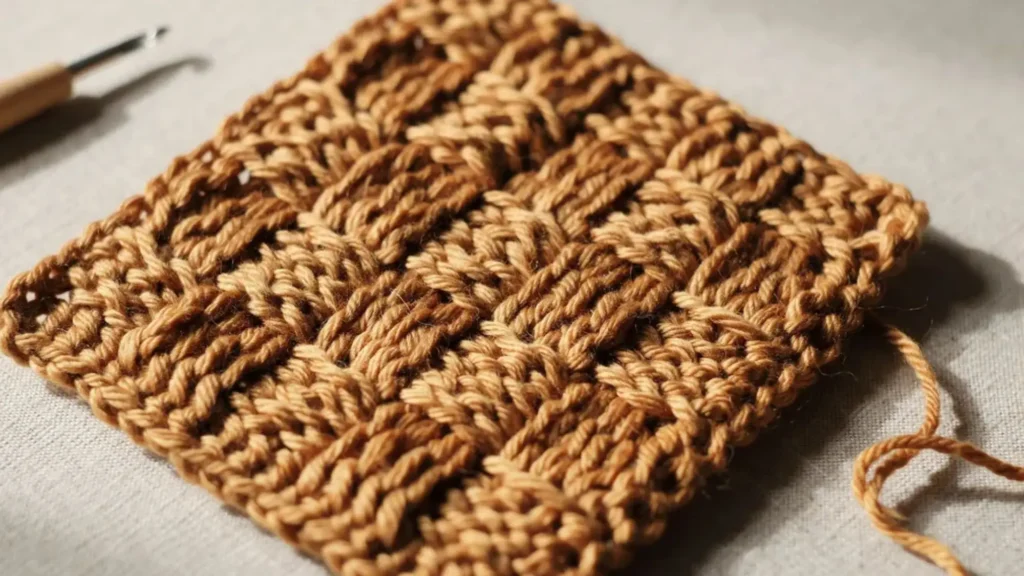
The basketweave stitch is the one that fools people into thinking you wove the blanket on a loom instead of crocheting it. Blocks of front post and back post double crochet stitches alternate direction every few rows, so the raised ridges cross like actual basket strips. Unlike a plain post stitch rib that just runs in one direction, basketweave changes course, which is what gives it that woven illusion rather than a simple corduroy look. It’s the stitch reached for most often for a textured crochet blanket meant for a couch or a nursery, since the pattern reads clearly even from across a room.
Special Tip: Keep a stitch marker on the first stitch of each block, it’s easy to lose count of where one direction switch ends and the next begins.
2. Waffle Stitch
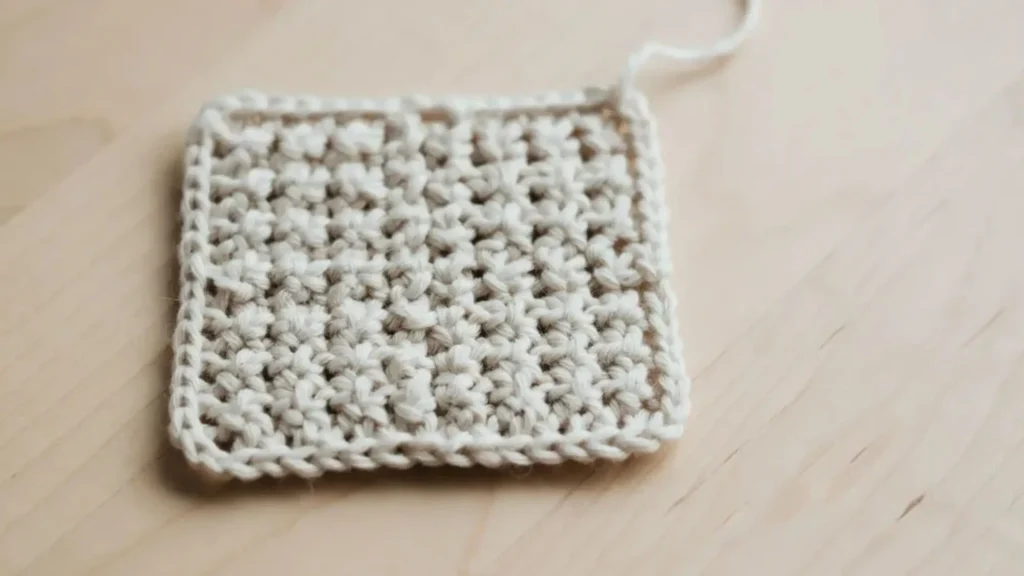
Waffle stitch stacks front post double crochet columns between rows of regular double crochet to create a grid of little raised squares, almost like the stitch itself has a dimple in every cell. Compared to basketweave, which reads as diagonal or woven, waffle stitch reads as a clean grid, it’s the stitch of choice when you want geometry rather than movement. It shows up constantly in textured crochet stitches for blankets and dishcloths because the little pockets trap and hold water or warmth depending on the project.
- Works up fastest in worsted weight with a 5.5mm hook
- Repeats over a multiple of 2 stitches, easy to resize for any blanket width
- Slightly thicker fabric than basketweave, so it uses a bit more yarn per square inch
3. Bobble Stitch
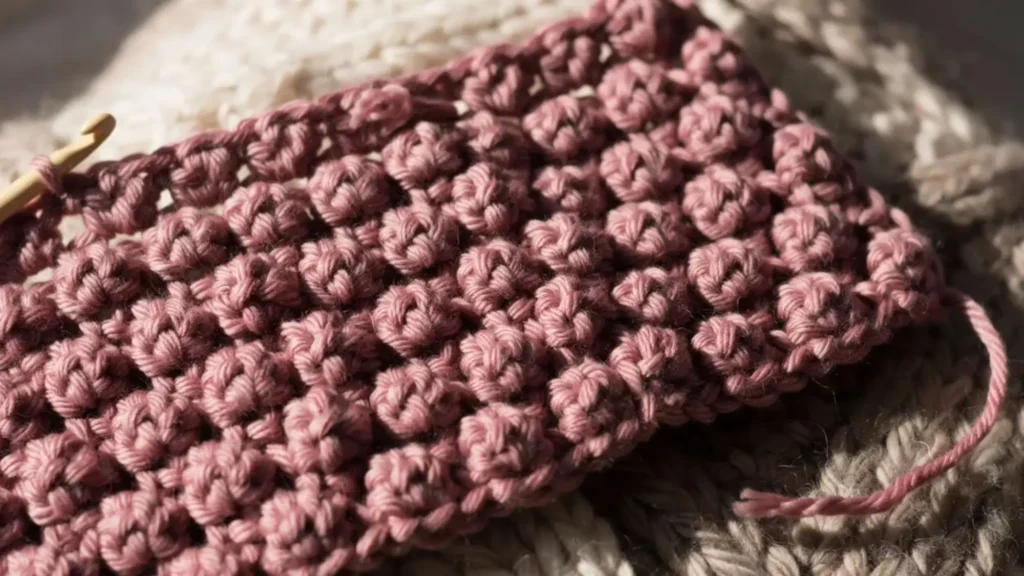
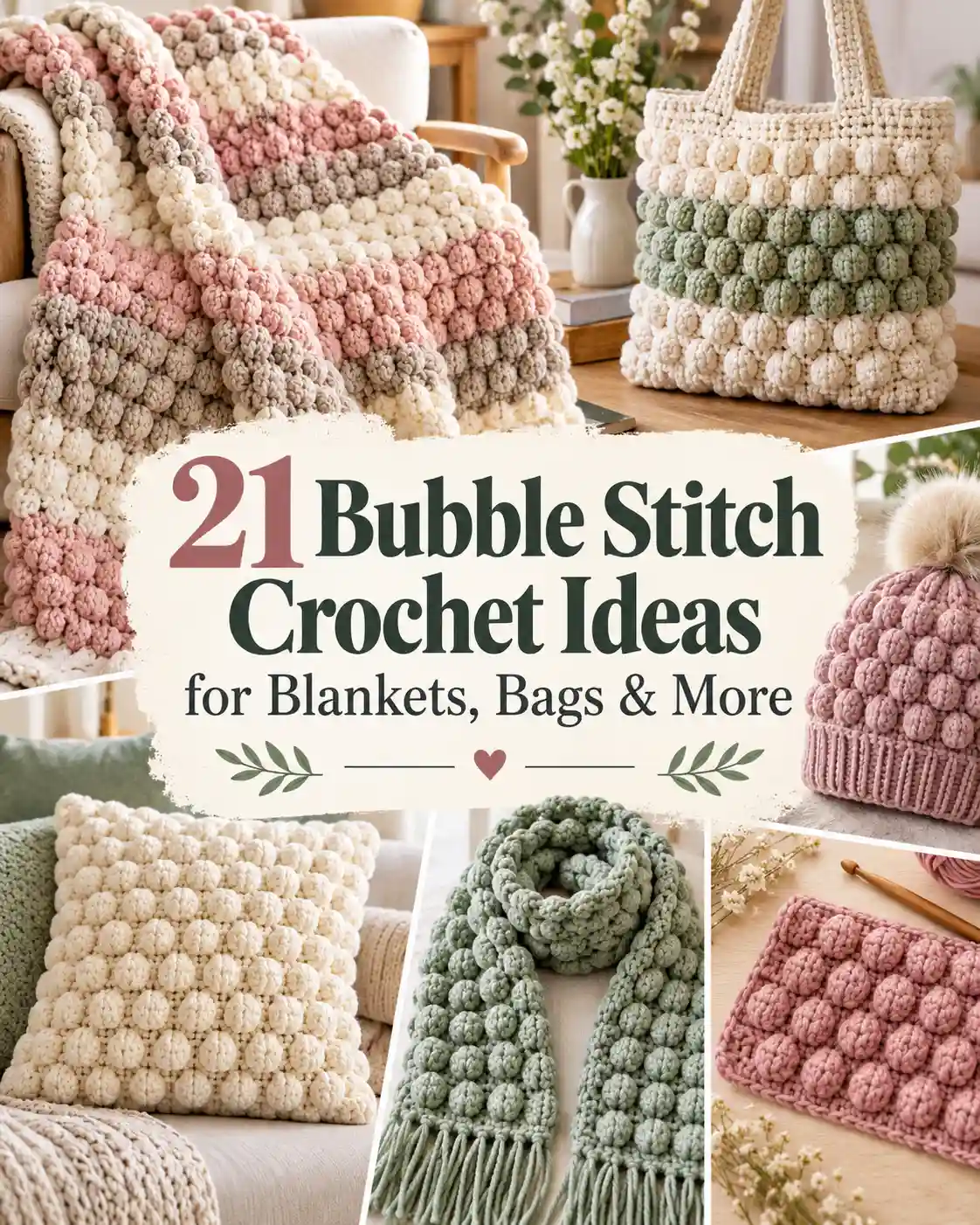
The bobble stitch is the classic raised dot, five or more incomplete double crochets pulled together into one stitch, popped out to the front of the fabric. Where popcorn stitch builds a closed shell and pushes it forward afterward, bobble stitch builds its dome as you go, which makes it slightly faster once you’ve got the motion memorized.
It’s the texture most people picture first when they hear “textured crochet patterns,” and it turns up in everything from baby blankets to cardigan yokes.
4. Puff Stitch
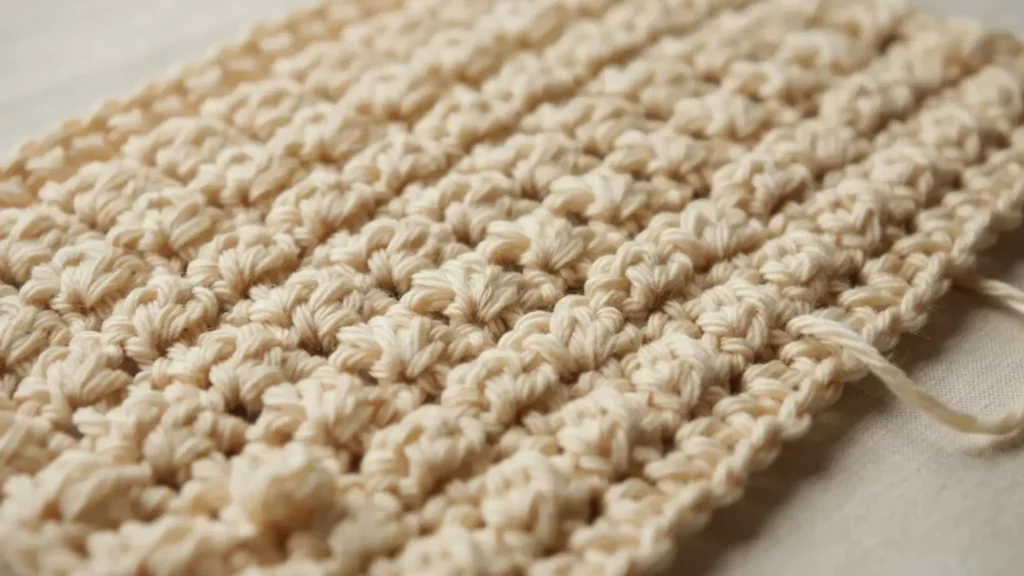
Puff stitch pulls up several loops to the same height before closing them together, so instead of a hard dot like a bobble, you get a soft, rounded cluster. The difference matters for wearables, a puff stitch hat or scarf sits closer to the head and neck without the bobble’s sharper poke.
It’s a good entry point into textured crochet stitches easy enough for a first attempt at dimensional crochet, since the technique is really just “yarn over, insert hook, pull up a loop” repeated a set number of times before one final pull-through.
Special Tip: Keep your loops loose as you pull them up, tight puffs shrink the stitch and flatten the texture you’re going for.
5. Popcorn Stitch
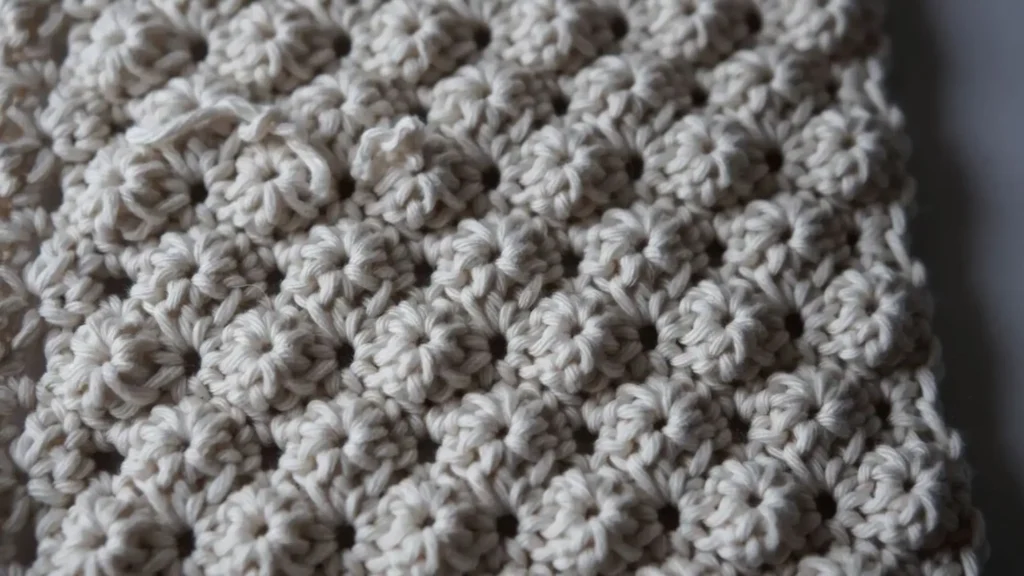
Popcorn stitch builds a small shell of double crochets into one stitch, then folds it forward and secures it with a single stitch through both top loops, creating a hollow dome instead of a solid bobble.
That hollow center is the real distinction, a popcorn stitch has a slight give when you press it, where a bobble stitch is solid yarn all the way through. Anyone chasing rich textures in crochet patterns free of complicated stitch counts tends to land on popcorn stitch fairly early, since most versions only need a handful of double crochets and a single closing stitch.
6. Moss (Linen) Stitch
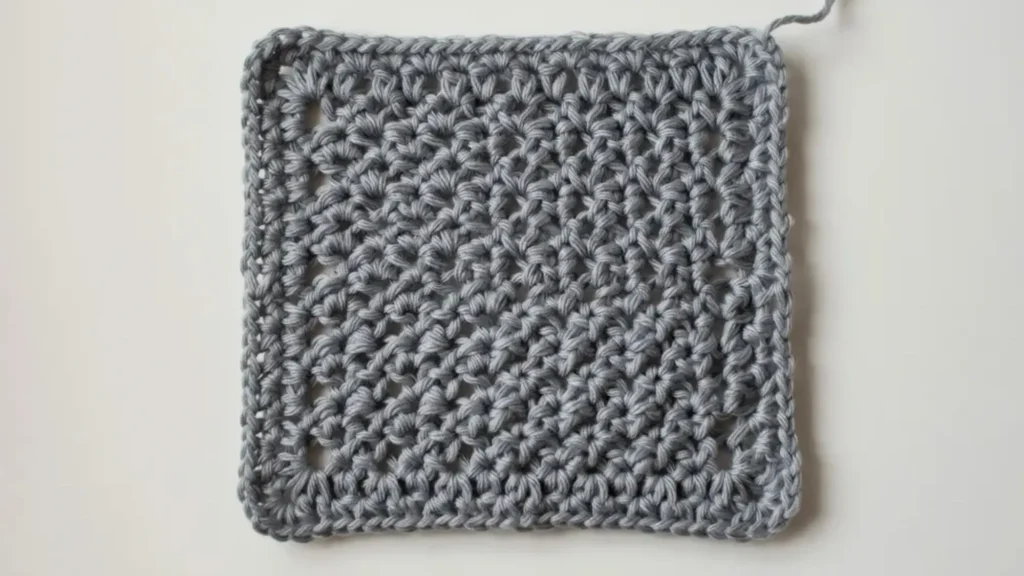
Moss stitch, also called linen stitch, alternates single crochets and chain-one spaces across rows in a way that staggers with the row below, producing a woven, almost fabric-like texture rather than a raised one. It’s one of the few stitches on this list that’s genuinely reversible; both sides look nearly identical, which matters if you’re making a scarf that will get flipped and re-wrapped all day.
Moss stitch also happens to be one of the better textured crochet stitches in the round, since the stagger pattern holds up cleanly whether you’re working flat rows or continuous rounds.
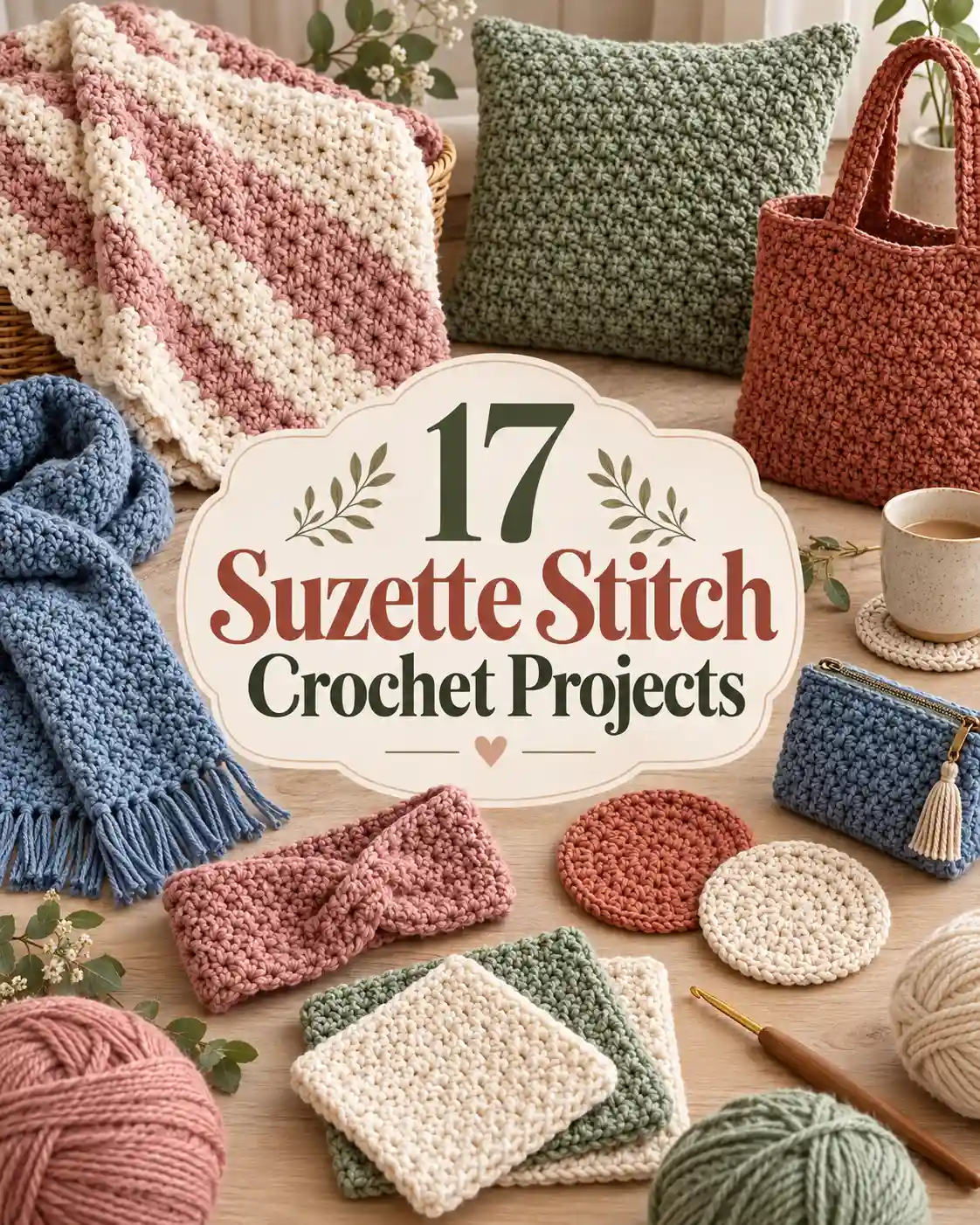
7. Suzette Stitch
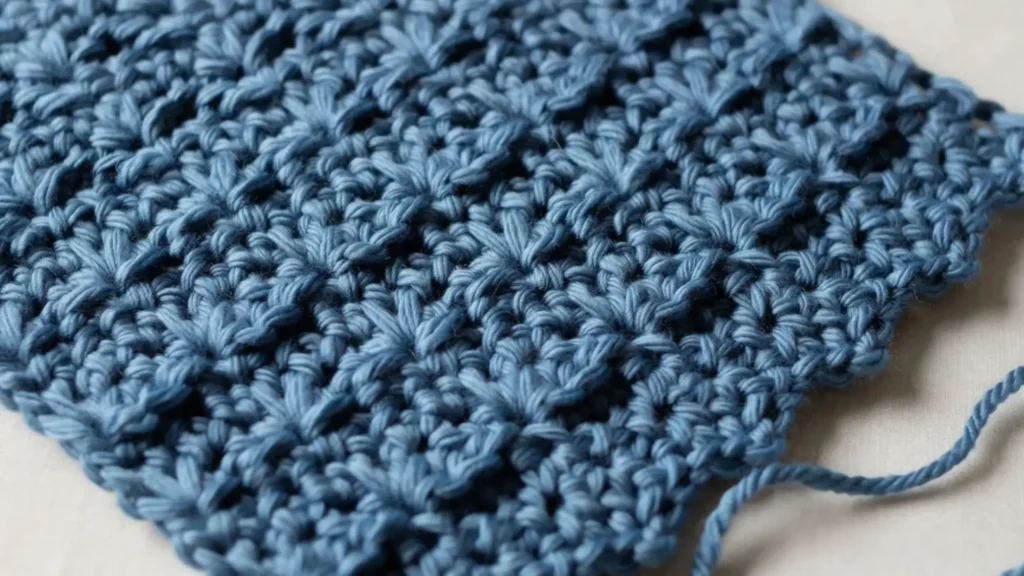
Suzette stitch alternates clusters of double crochet with single chain spaces in a brick-like offset, giving a bumpy, tactile surface that’s denser than lace but airier than a solid bobble stitch. Where moss stitch lies almost flat, Suzette has real ridges you can feel with your fingers, which is part of why it’s a favorite for baby blankets meant to be touched and squeezed.
The stitch count is forgiving too; it’s a two-row repeat, so once you’ve worked the first two rows, the rest of the blanket is just muscle memory.
8. Star Stitch
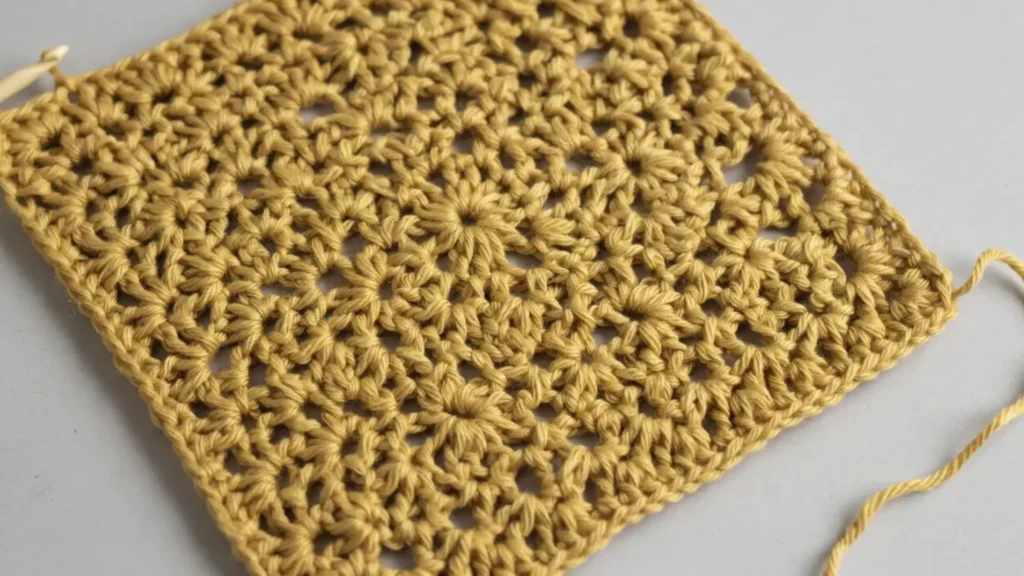
Star stitch pulls up loops from five points and closes them into a single stitch with a chain at the center, producing a small five-pointed shape across the whole fabric that looks deliberately embroidered rather than crocheted. It’s denser and slower than most stitches on this list, so it isn’t the first choice for a full-size blanket unless you enjoy a slow, meditative project.
Where it earns its place is in smaller items, cowls, dishcloths, and blanket borders, where the density actually works in the piece’s favor by making it extra plush.
9. Crocodile Stitch
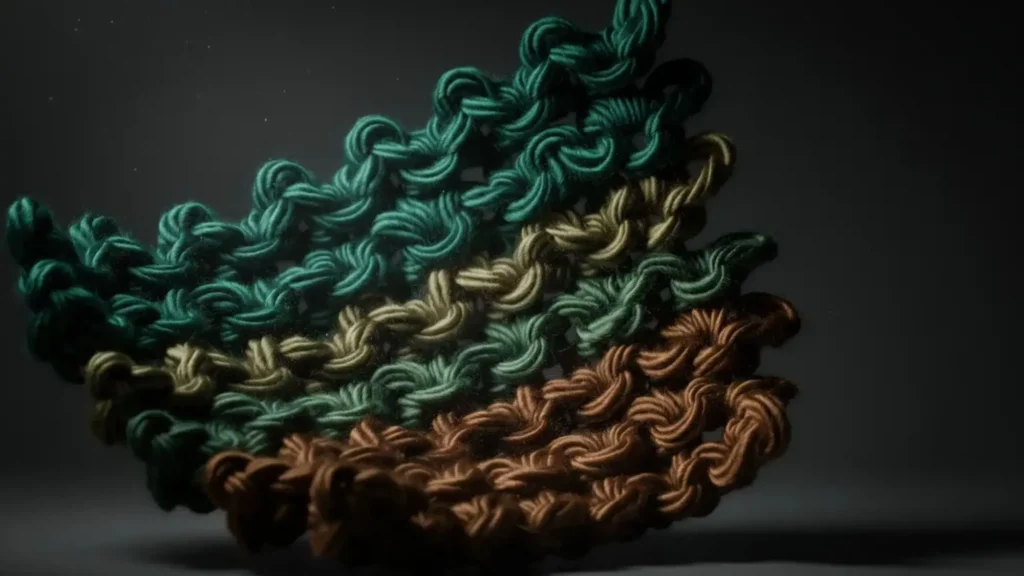
Crocodile stitch layers V-stitches into overlapping “scales” worked over a foundation of double crochet clusters, and it’s easily the most dramatic texture on this list, genuinely three-dimensional rather than just raised.
It takes longer to learn than anything else here, since you’re working stitches around posts rather than into the row below, but the payoff is a fabric that looks scaled, almost reptilian, which is exactly the point. Crocodile stitch shows up most in statement blankets, boho vests, and appliqué flowers rather than everyday accessories.
- Best worked in a smooth, non-fuzzy yarn so individual scales stay visible
- Uses noticeably more yarn per square inch than any other stitch on this list
10. Corn Kernel Stitch
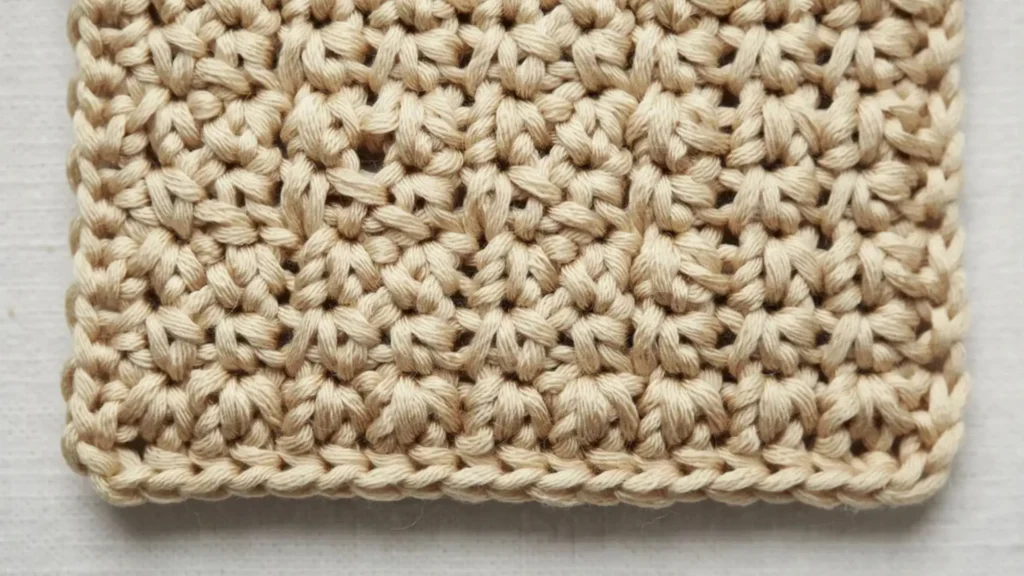
The corn kernel stitch clusters several double crochets into one stitch much like a bobble, but it’s worked so the bumps sit closer together in tight rows, giving a texture that genuinely resembles kernels on a cob.
It reads as denser and more uniform than a scattered bobble pattern, which makes it a good option for blanket panels where you want the whole surface textured rather than a few isolated bumps. The stitch is worked entirely with double crochet clusters, so if you already know bobble stitch, the technique transfers over with only a small adjustment to spacing.
11. Post Stitch Rib (Front Post/Back Post Double Crochet)
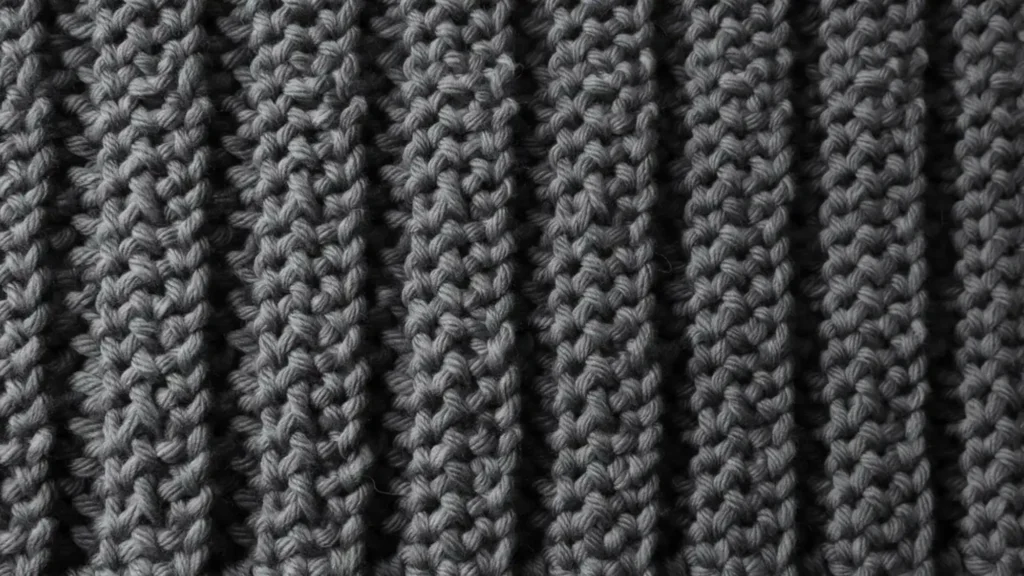
Alternating front post and back post double crochet stitches in a simple 1-1 or 2-2 rhythm produces a stretchy, corrugated rib that looks almost knitted rather than crocheted. It’s one of the most useful reversible textured crochet stitches on this list since front post and back post columns simply swap which side they show on when you flip the fabric over. That reversibility, plus the stretch, makes it a natural choice for scarves, hat brims, and cardigan cuffs where both sides might show and the fit needs a little give.
12. Trinity (Bramble) Stitch
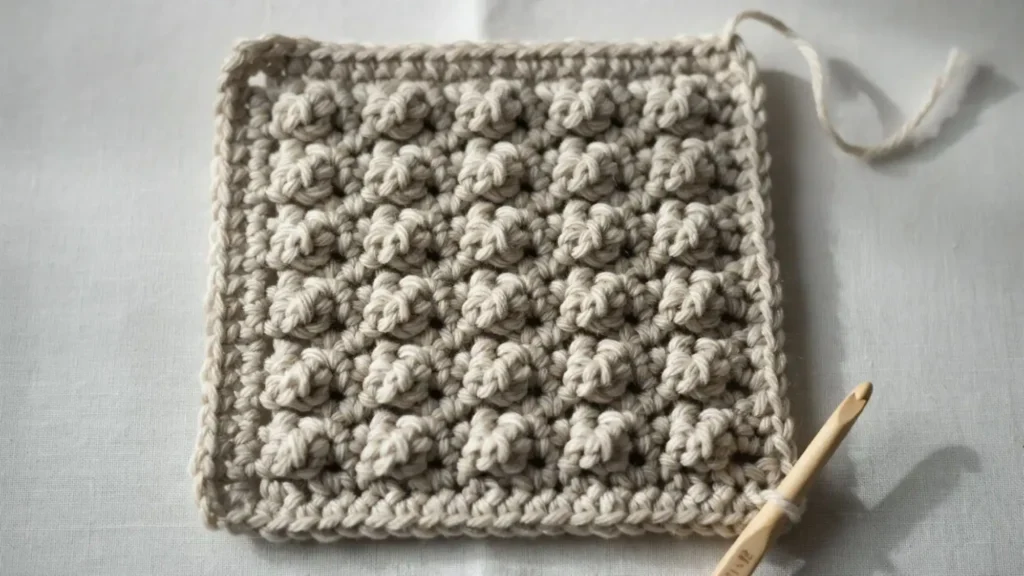
The Trinity stitch, sometimes called bramble stitch, clusters three double crochets pulled together at the top into a single stitch, then repeats in a staggered brick pattern across the row. The result is bumpy but flatter and more uniform than a bobble stitch, closer to the texture of tweed fabric than to distinct raised dots.
It’s a favorite for blanket bodies specifically because the bumps are small and consistent enough not to overwhelm a large surface the way bigger bobbles can.
13. Sedge Stitch
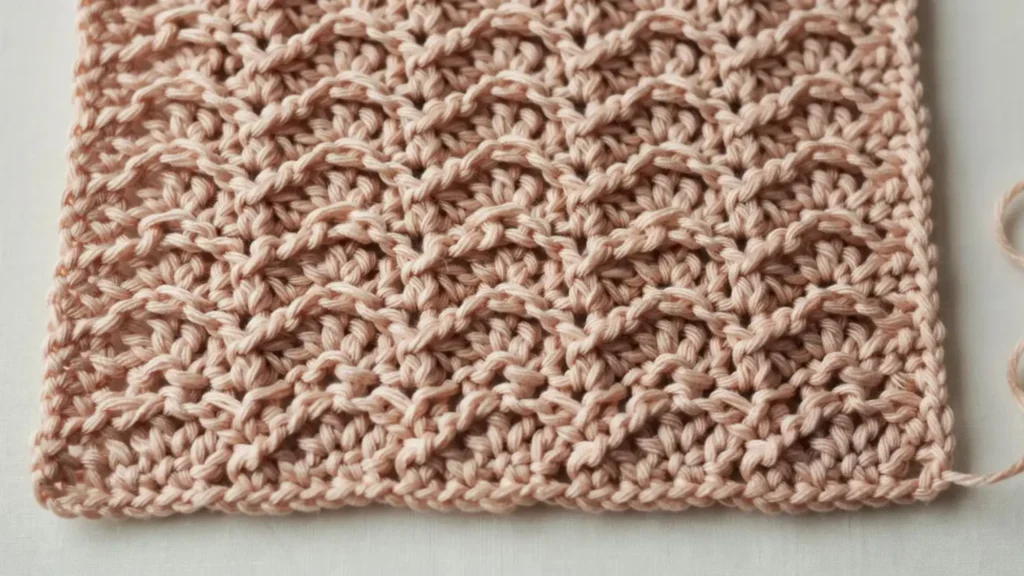
Sedge stitch combines a shell of three double crochets with a single crochet anchor point, repeated in a way that creates soft, scalloped ridges rather than sharp bumps. It lies flatter than bobble or popcorn stitch, which makes it comfortable against skin, a real advantage for scarves and baby items where raised texture can feel scratchy after a while.
Sedge stitch is also genuinely reversible, so it lands on the shortlist whenever reversible textured crochet stitches for scarves come up, alongside moss stitch and post stitch rib.
14. Cable Stitch (Crossed Post Stitch)
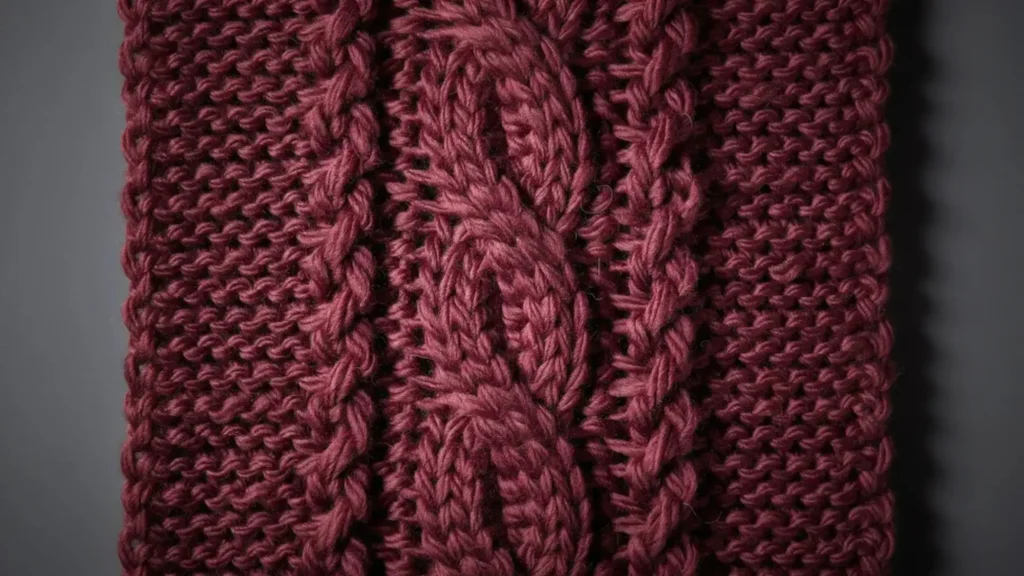
Cable stitch in crochet mimics knitted cables by crossing groups of front post stitches over each other, usually worked as one raised column crossing in front of or behind its neighbor every few rows. It’s one of the more advanced textures here, since you’re working stitches out of order and holding some aside while you complete others, but a knitted-look cable is hard to fake any other way in crochet.
It shows up most in scarves, sweater panels, and cardigan fronts where a single strong vertical column of texture reads as more tailored than an all-over bumpy stitch.
Special Tip: Use a spare hook or stitch holder to park the stitches you’re not working yet, it keeps the cross clean and stops stitches from twisting the wrong way.
15. Alpine Stitch
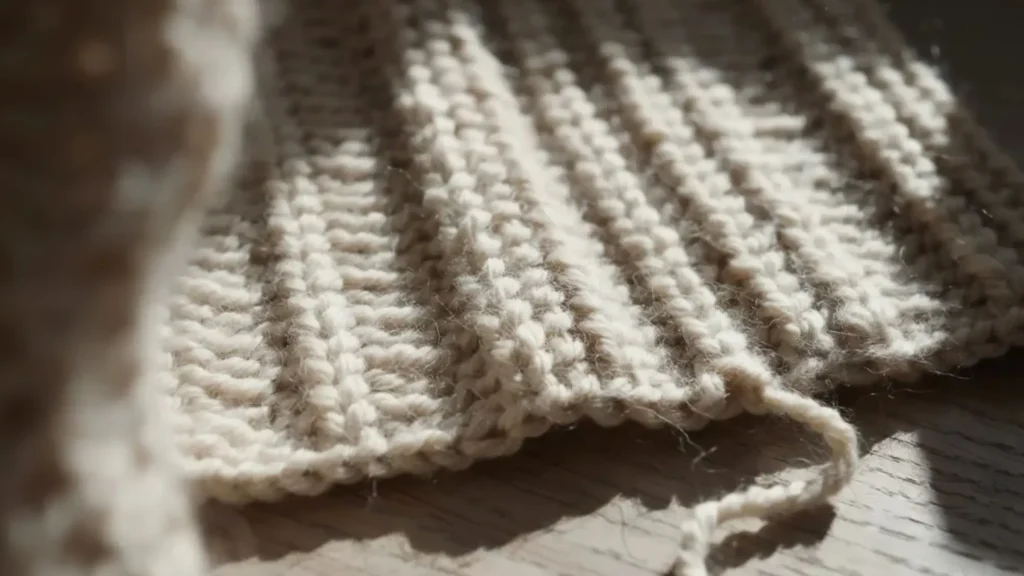
The alpine stitch works front post treble crochets around stitches from two rows below, creating tall, waffle-like ridges with noticeably more loft than the basketweave or waffle stitch. Because the post stitches reach down past the previous row, alpine stitch produces a thicker, warmer fabric, genuinely one of the coziest textures on this list, which is exactly why it’s a repeat favorite for winter blankets and wraps. It uses more yarn than most other stitches here since every post stitch spans two rows of height.
16. Griddle (Grit) Stitch
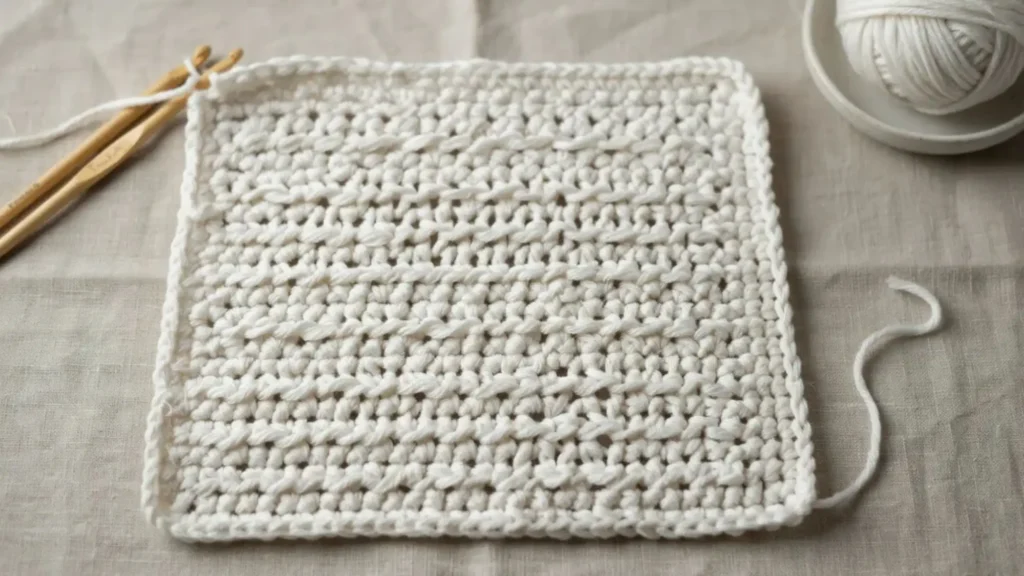
Griddle stitch, also called grit stitch, alternates single crochet with double crochet in the same row, and the height difference between the two stitches is what does all the work — no clusters, no post stitches, just a simple two-stitch swap. It’s one of the fastest textures to learn on this entire list, since both stitches are ones a total beginner already knows. The ridged, almost corduroy look it produces punches well above its difficulty level, and it happens to be reversible, so it’s a solid pick for a first attempt at a textured crochet blanket without diving into bobbles or post stitches yet.
17. Woven Stitch
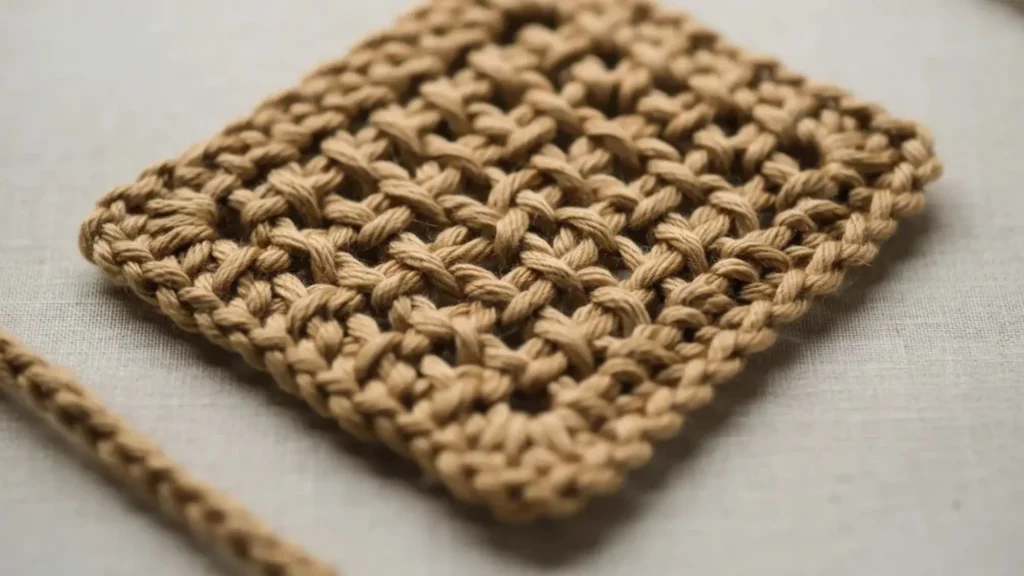
The woven stitch chains past a stitch and anchors it with a single crochet a row or two down, building a basket-like lattice that looks laced together rather than crocheted row by row. It sits between basketweave and moss stitch in complexity, more visually intricate than moss, less fiddly than basketweave’s direction changes.
Bags and market totes lean on woven stitch specifically because the lattice structure holds its shape under weight better than a plain single crochet fabric would, so it’s worth learning even outside of blanket projects.
18. Spike Stitch
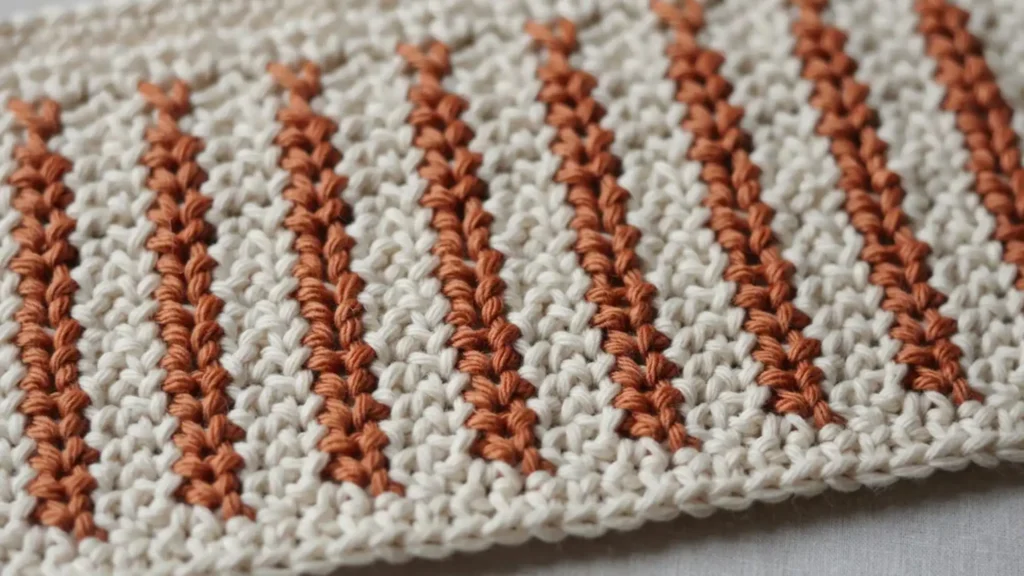
Spike stitch inserts the hook a full row or two below the current one and pulls the loop all the way up, so the resulting stitch “spikes” down into the fabric below instead of building height upward like most textures on this list.
It’s the rare textured stitch that reads more as a color or shadow effect than a raised bump, especially when worked in a contrasting yarn color every few stitches. Edgings and blanket borders use spike stitch constantly for exactly that reason, a single row of spikes adds visual interest without changing the fabric’s overall thickness or drape.
19. Diamond (Catherine’s Wheel) Stitch
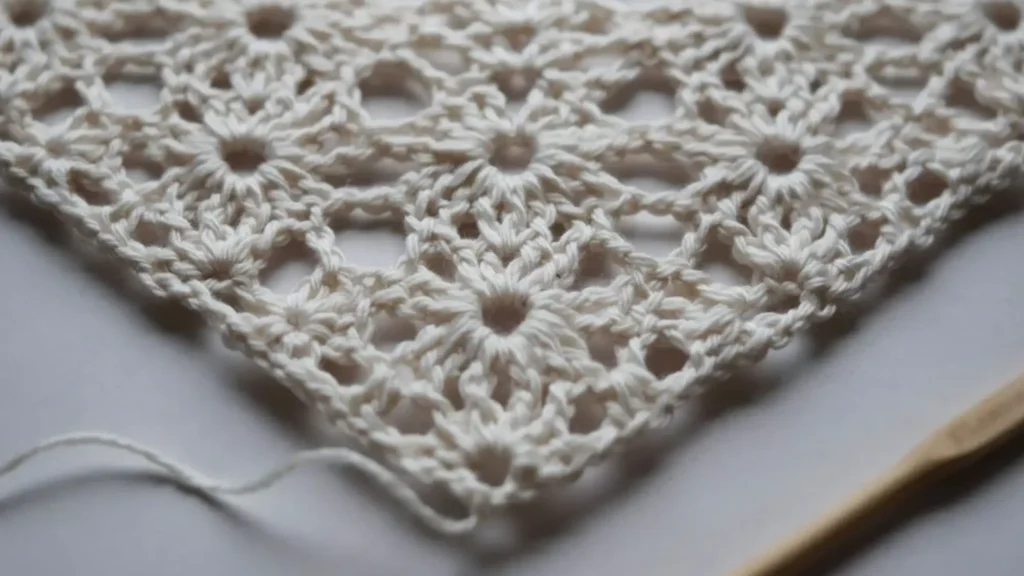
Diamond stitch, sometimes labeled Catherine’s wheel stitch, clusters stitches into a fan shape anchored at a single point, then repeats the fans in an offset grid so the empty spaces between them read as diamonds.
Where crocodile stitch builds texture through overlapping scales, diamond stitch gets its shape from negative space, the pattern is as much about what’s left open as what’s stitched. It takes real practice to keep the fans even, which is why it lands toward the advanced end of this list, but a finished shawl or blanket in this stitch looks genuinely lace-like rather than bulky.
20. Boxed Puff Stitch
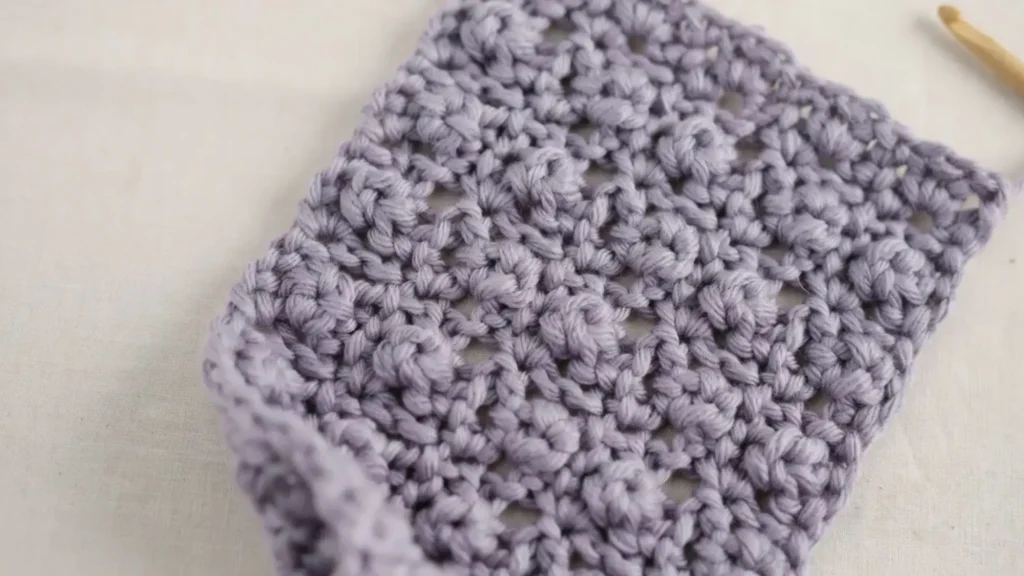
Boxed puff stitch frames a standard puff stitch with chain stitches on all four sides, so instead of puffs sitting directly against each other, each one floats in its own little square window. The chains do double duty: they keep the fabric lighter than an all-over puff stitch pattern, and they give the eye a clean grid to rest on between the raised clusters.
Cowls made in boxed puff stitch drape noticeably better than ones in plain puff stitch, since the chain spacing keeps the fabric from stiffening up the way tightly packed puffs tend to.
21. Fan Stitch
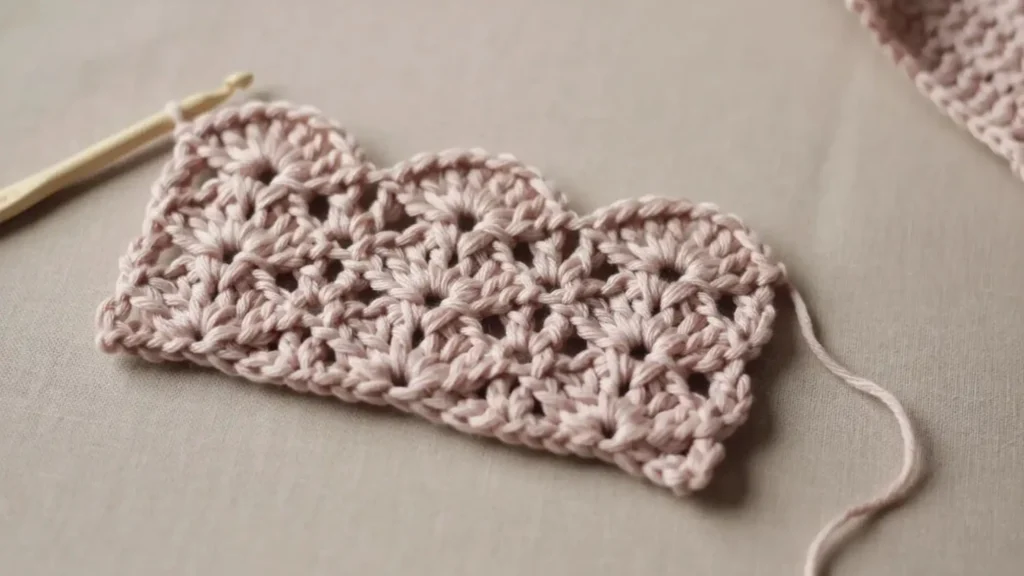
Fan stitch works a cluster of double or treble crochets from a single base stitch, spreading them out like the ribs of a hand fan across the row. Unlike shell-style stitches that stay fairly flat, a well-blocked fan stitch has real dimension once the fans are pressed open, especially in a drapey yarn.
Shawls and lightweight wraps are where fan stitch earns its keep, since the open fan shapes let air through while still reading as clearly textured rather than plain lace.
22. Tulip Stitch
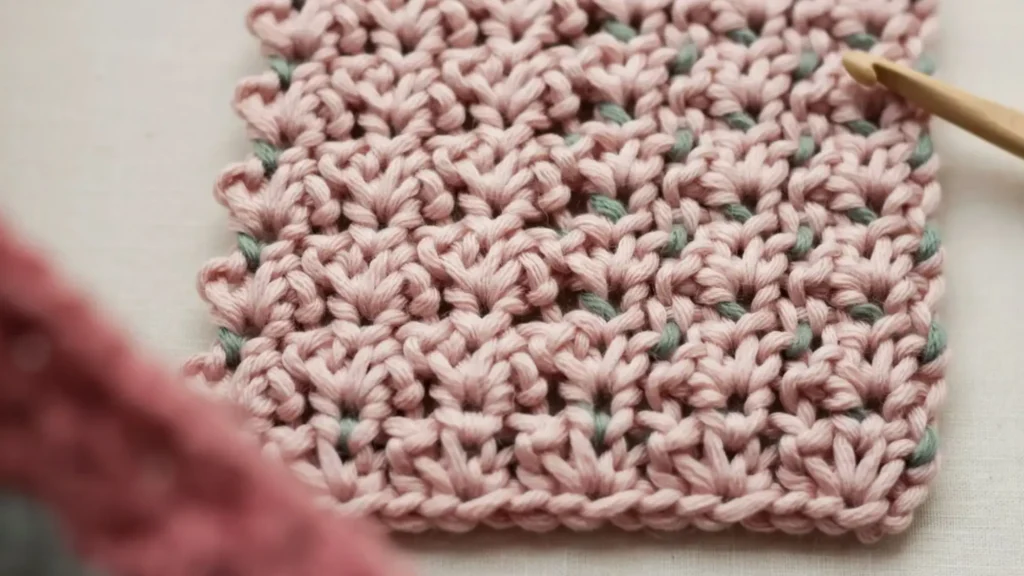
Tulip stitch groups three or four stitches worked into the same space and joined at the top, closing into a rounded shape that genuinely resembles a closed tulip bud sitting on the fabric.
It reads softer and rounder than a bobble or popcorn stitch, which is exactly why it shows up so often on baby blankets and appliqué flowers rather than adult-sized throws. Working a whole row of tulip stitch in a single color still looks intentional and pretty, but scattering it as an accent motif is just as common a use.
23. Daisy (Marguerite) Stitch
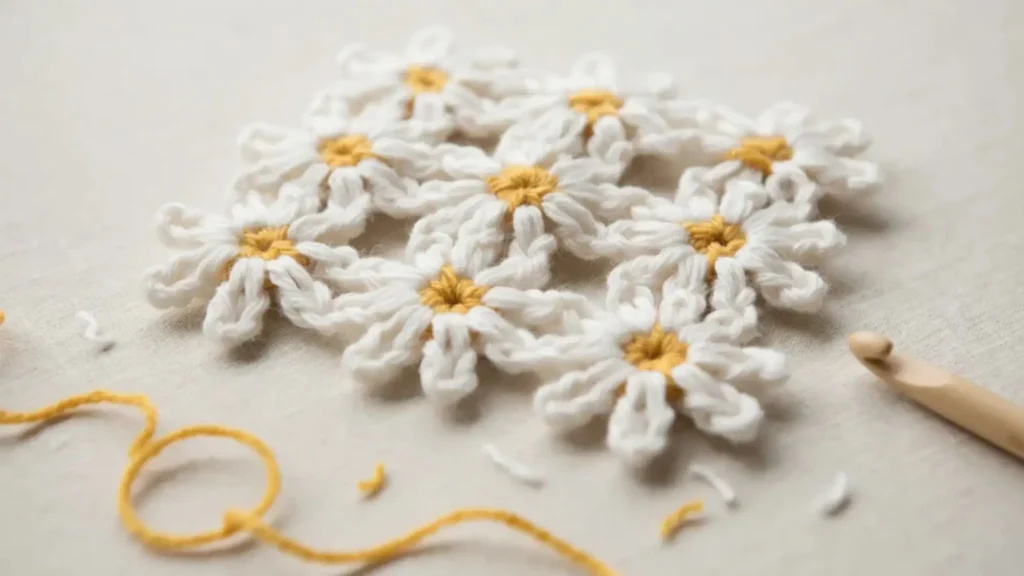
Daisy stitch, also called marguerite stitch, builds a five- or six-petal flower shape out of loops pulled through a single center stitch, closing much like a puff stitch but fanned outward instead of stacked upward. It’s slower than most stitches on this list since each “petal” is its own small step, but the payoff is a fabric that looks embroidered with flowers rather than crocheted in a repeat pattern.
Baby blankets and nursery decor lean on daisy stitch heavily, since a whole surface of tiny flowers reads as intentional and sweet without needing any actual embroidery afterward.
24. Bean Stitch
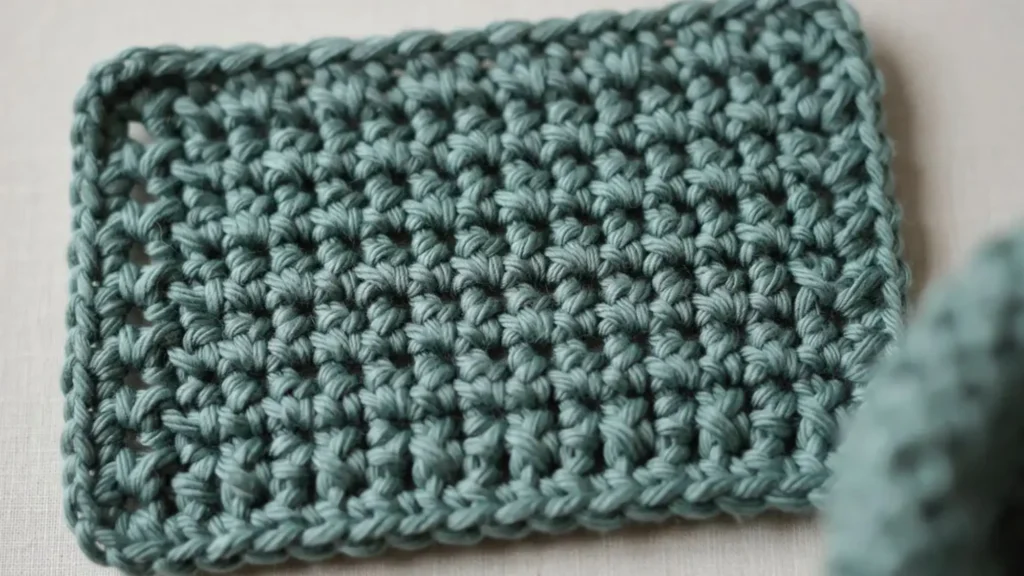
Bean stitch pulls up three loops in the same stitch and closes them together, landing somewhere between a puff stitch’s softness and a bobble’s firmness, smaller than either, which makes it a good texture for projects where a bigger bump would feel out of scale. Hat brims and small accent rows use bean stitch often for that reason: it adds visible texture without bulking up a piece that needs to stay fitted. It’s also quick to memorize, since the whole stitch is just three pull-ups and one closing stitch repeated down the row.
25. Wattle Stitch
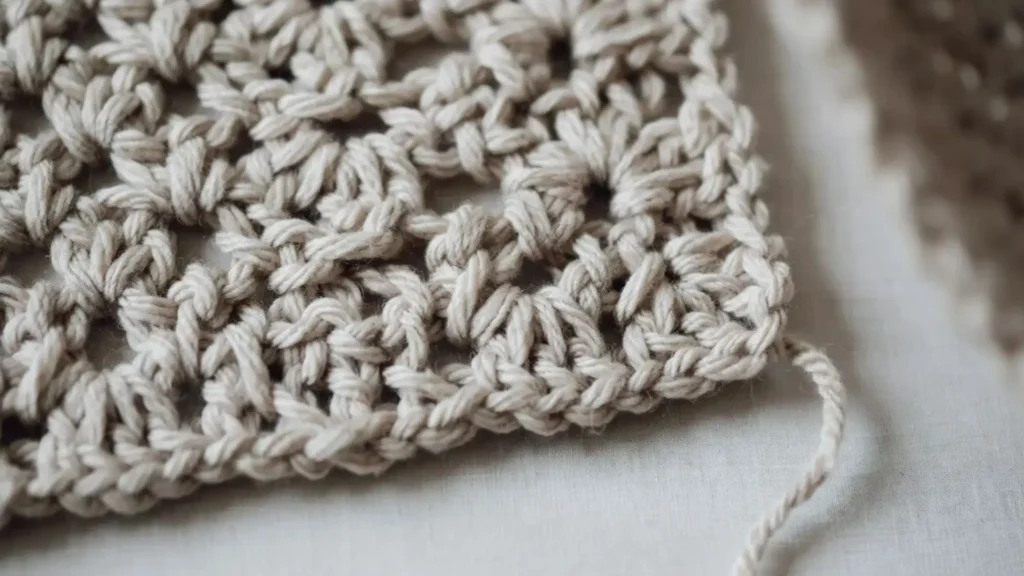
Wattle stitch works small clusters of stitches into the gaps of the row below rather than directly into stitches, producing a loose, basket-like weave with visible open spaces between the clusters. Compared to basketweave’s tight, solid crossing pattern, wattle stitch is airier and drapes more like a lightweight throw than a dense blanket. It’s a good middle-ground choice when a project calls for visible texture but the yarn on hand is bulkier than the pattern anticipated, the open structure keeps the fabric from feeling too stiff or heavy.
26. Primrose Stitch
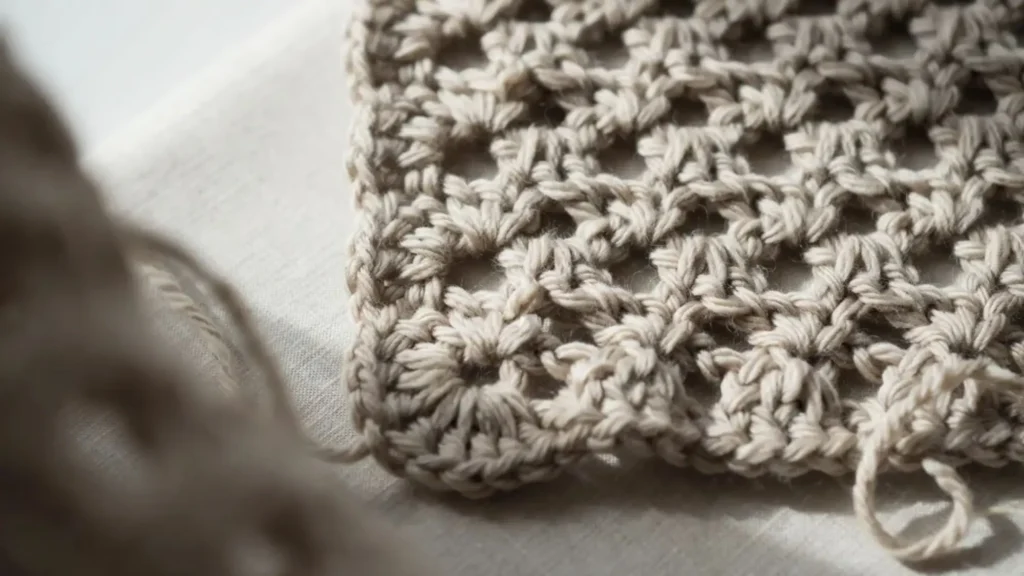
Primrose stitch layers a small cluster stitch over a mesh-like base of chains and double crochets, so each raised bump sits inside its own diamond-shaped frame of open space. It shares some DNA with diamond stitch, but the clusters here are smaller and more evenly spaced, giving a calmer, more repetitive texture that suits smaller projects like coasters and blanket squares better than a full afghan.
If a project needs texture that reads as delicate rather than chunky, primrose stitch delivers that without dropping into full lacework.
27. Sand Stitch
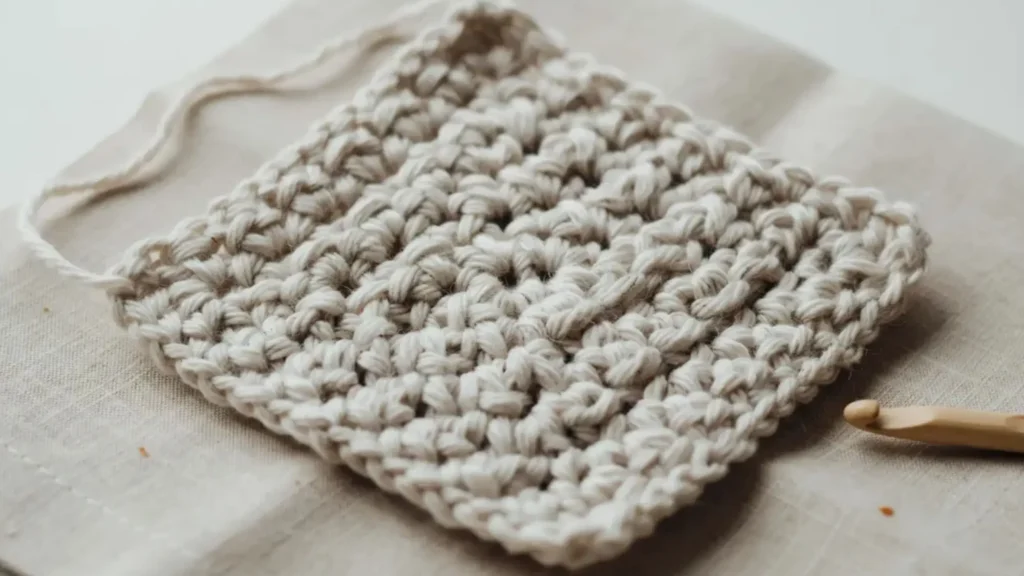
Sand stitch alternates single crochet with a chain-and-skip pattern across two rows, producing a subtle, grainy surface that’s easy to underestimate until you run a hand across it. It’s one of the flattest textures on this list, nowhere near as dramatic as a bobble or crocodile stitch, but that subtlety is the appeal for dishcloths and washcloths where a scrubbing texture matters more than visual drama.
It’s also fully reversible and one of the fastest two-row repeats here, so it’s a reasonable stitch to practice texture fundamentals on before attempting anything more advanced.
28. Loop (Fur) Stitch
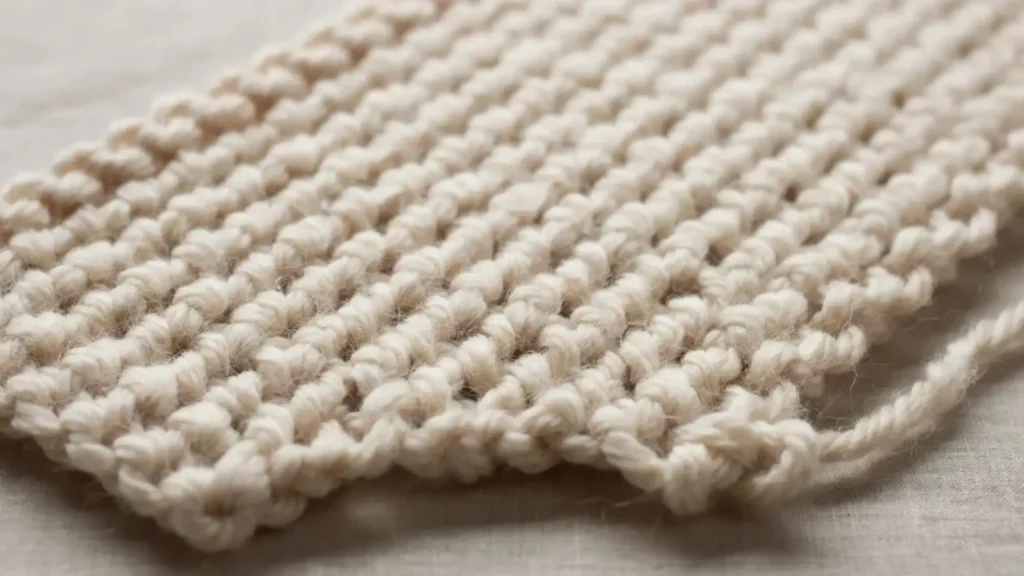
Loop stitch, often marketed as fur stitch, wraps the working yarn around a finger or a ruler before securing it into the row, leaving a loop of yarn standing proud of the fabric instead of a raised cluster of stitches.
It’s a completely different kind of texture from everything else on this list, closer to faux fur than to a bumpy knit-look stitch, which makes it the go-to choice for rugs, amigurumi manes, and animal toys that need actual pile rather than a raised surface. It’s slow going since every stitch involves an extra wrapping step, so it’s usually reserved for smaller accent areas rather than full-size blankets.
29. Aspen Stitch
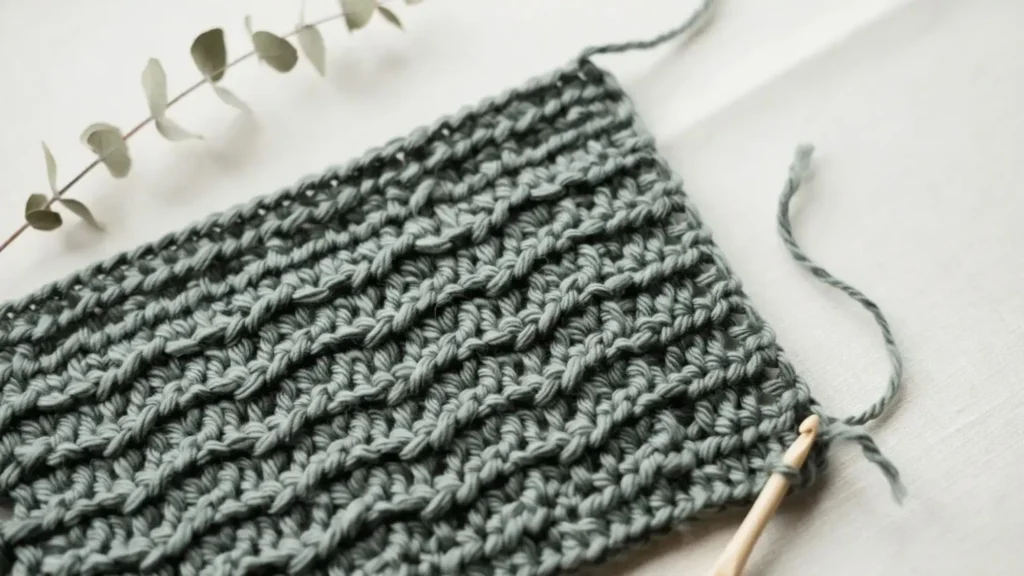
Aspen stitch works front post double crochets in a staggered brick pattern rather than straight columns, producing a texture that looks like tree bark or rippled water, depending on the yarn used. It sits between basketweave and waffle stitch in visual complexity, with more movement than a grid and less structured than basketweave’s direction changes.
Wraps and blanket panels benefit from aspen stitch when the goal is organic-looking texture rather than a geometric repeat, since the staggered bricks avoid the perfectly ordered look that some of the more architectural stitches on this list have.
30. X-Stitch (Woven Cross Stitch)
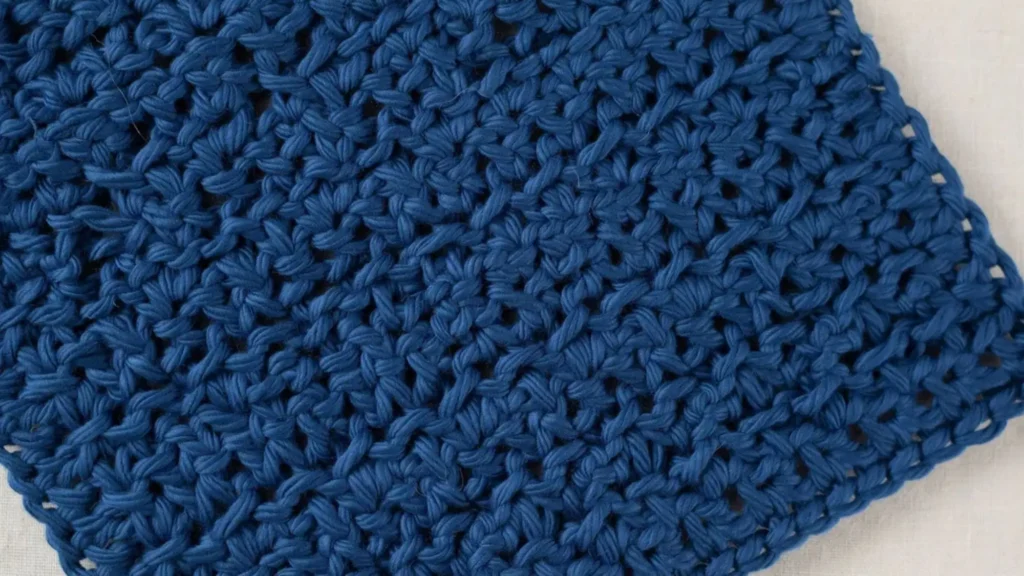
X-stitch crosses two double crochets over each other in every repeat, similar in spirit to cable stitch but worked flat across a row rather than built up as a raised vertical column. The crossed stitches sit close enough together that the fabric reads as a woven crosshatch from a short distance, without the extra bulk that a true post-stitch cable adds.
It’s a solid last stop on this list for anyone who’s worked through the easier stitches here and wants one more technique that combines a bit of the cable stitch’s crossing motion with a flatter, blanket-friendly drape.
How Do You Choose the Right Textured Crochet Stitch for Your Project?
Match the stitch to how the piece will be worn or used, soft, low-profile stitches for scarves and baby items, bolder textures for blankets meant to be seen more than touched.
At a Glance
- Scarves, hats, baby items: moss, sedge, sand, or post stitch rib
- Couch throws: basketweave, waffle, alpine, or crocodile stitch
- Both-sides-visible projects: stick to reversible textured crochet stitches
- Working in the round: moss, post stitch rib, sand, or puff stitch
Match the stitch to how the finished piece will be used, not just how it looks in a photo. For anything worn against skin, scarves, hats, baby blankets, moss stitch, sedge stitch, sand stitch, or post stitch rib keeps texture soft and low-profile. For a couch throw meant to be looked at more than touched, basketweave, waffle, alpine, or crocodile stitches give the most visual payoff per hour worked.
If the project needs to look identical on both sides, narrow the list to the reversible stitches in the comparison table above before picking a favorite.
What size should a textured crochet blanket be?
A standard throw-sized textured crochet blanket runs about 50 by 60 inches, which suits a couch or single-bed lap covering. Because textured stitches like basketweave and alpine pull in tighter than plain double crochet, plan on 10–15% more foundation chain and extra yarn than a flat-stitch blanket of the same finished size.
Frequently Asked Questions
What are the easiest textured crochet stitches for beginners?
Puff stitch, moss (linen) stitch, griddle stitch, sand stitch, and post stitch rib are the most beginner-friendly, since each is built from stitches most crocheters already know, just combined in a new order.
Which textured crochet stitches work well in the round?
Moss stitch, post stitch rib, sand stitch, and puff stitch all adapt cleanly to working in the round for hats and cowls, since their repeats don’t depend on turning the work at the end of a row.
Are there reversible textured crochet stitches good for scarves?
Yes, moss stitch, sedge stitch, sand stitch, and front post/back post rib all look nearly the same on both sides, which matters for a scarf that gets flipped and re-wrapped throughout the day.
Do textured crochet patterns use more yarn than plain stitches?
Most do, since clusters, post stitches, and crossed stitches add extra yarn per stitch. Crocodile stitch, loop stitch, and alpine stitch use noticeably more yarn than basketweave, sand stitch, or griddle stitch for the same finished size.
Can I substitute one textured stitch for another in an existing pattern?
Only if the stitch repeat and gauge are close. The Crochet Guild of America’s master swatch program specifically tests gauge control because swapping textured stitches without checking gauge is one of the most common reasons a substituted stitch changes the finished size.
Final Thoughts
Textured crochet patterns are one of the easiest ways to make handmade projects look richer without relying on complicated shaping or expensive yarn. Whether you’re trying your first puff stitch, adding classic basketweave to a cozy throw, or challenging yourself with cables and crocodile stitch, the right texture can completely change the look and feel of your work.
Start with a stitch that matches your skill level, make a quick swatch to check your gauge, and don’t be afraid to experiment. Before long, you’ll have a collection of favorite textured stitches that bring extra depth, warmth, and personality to every project you create.

![The Best 30+ Free Crochet Cat Patterns [Beginner-Friendly Guide]](https://crochetmind.com/wp-content/uploads/2025/04/1-The-Best-30-Free-Crochet-Cat-Patterns-Beginner-Friendly-Guide.webp)