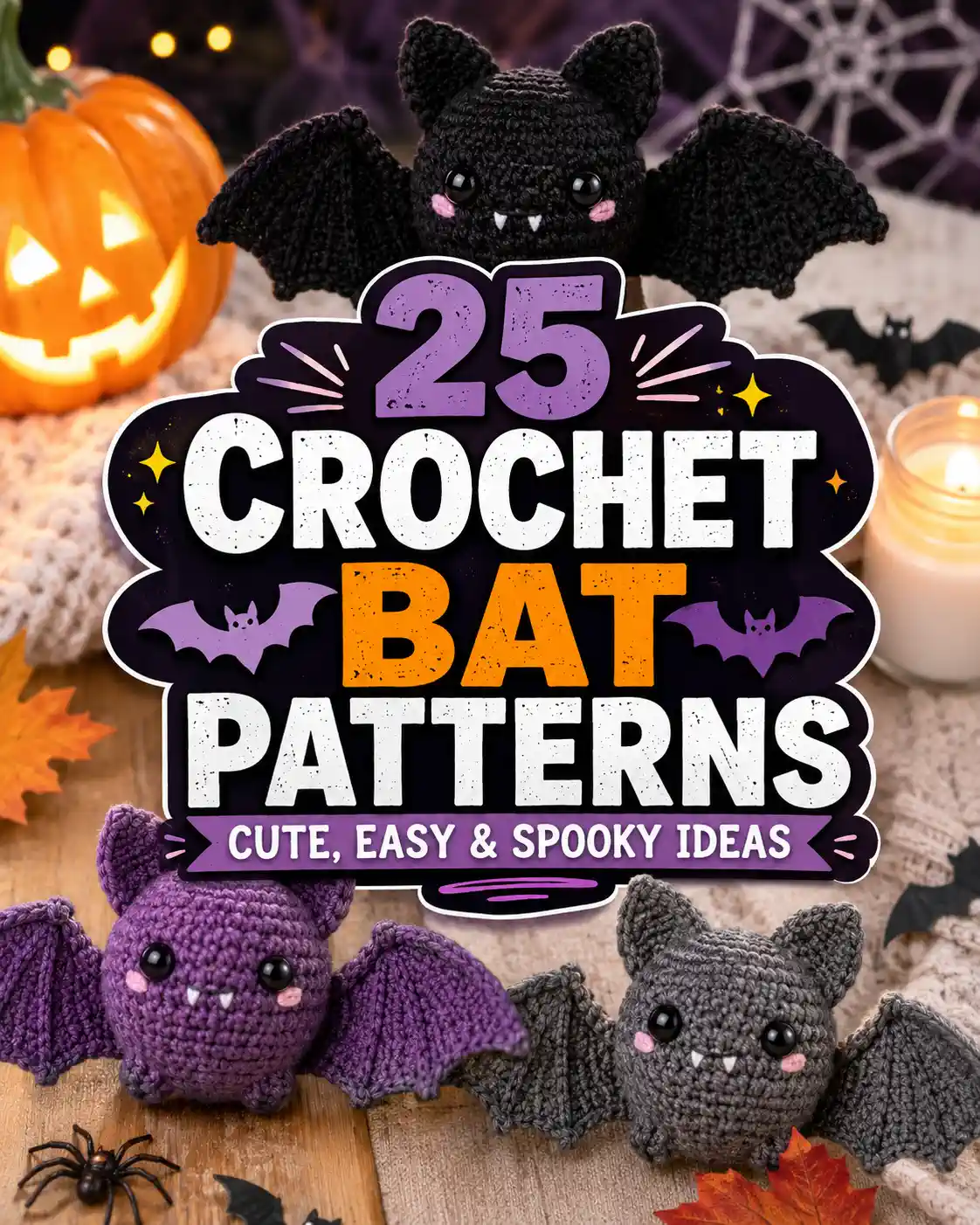
A crochet bat is a handmade bat-shaped project that can be created as amigurumi, an applique, a plushie, an ornament, or seasonal Halloween decor. What makes these projects so fun is how easily the same basic idea can shift from spooky to sweet simply by changing the yarn color, wing shape, ears, face, or size. Whether you are looking for an Easy crochet bat for your first project or want something more detailed for a Halloween display, there is plenty of room to make the design feel personal. You can also explore more halloween crochet ideas when you want to build a complete spooky-season collection. I especially like projects that let you use leftover yarn, experiment with different expressions, and turn one simple bat idea into decorations, gifts, accessories, and little characters.
Key Takeaways
- Start with an Easy crochet bat for simpler construction.
- Use smooth yarn when learning new shaping.
- Experiment with Crochet bat wings for different silhouettes.
- Turn small bats into garlands, ornaments, or gifts.
- Personalize bats with colors, faces, hats, and embroidery.
- Use child-safe finishing for projects intended for young children.
A crochet bat can be as simple as a flat applique or as detailed as a stuffed amigurumi with shaped wings, ears, tiny feet, and embroidered features. These 25 crochet bat ideas cover beginner-friendly makes, Halloween decorations, gifts, wearable details, and playful ways to use a free crochet bat pattern without making every project look the same.
Author note: [Author Name], [crochet experience or relevant credential]. Please replace this placeholder with your real byline and experience before publishing.
What Is the Easiest Crochet Bat to Make?
A flat crochet bat applique is usually the simplest starting point because it requires fewer pieces, less assembly, and little or no stuffing.
At a Glance:
- Start with a flat applique.
- Choose smooth, visible yarn.
- Keep wing shaping simple.
- Embroider details instead of adding extra pieces.
The easiest crochet bat is usually a flat applique because it uses fewer pieces, little or no stuffing, and minimal assembly. A small amigurumi bat can also be beginner-friendly when the body is worked in simple rounds and the wings are made separately.
If you are new to crochet, start with smooth yarn in a light or medium color so you can see every stitch. Black yarn looks wonderfully spooky, but charcoal, purple, dusty blue, brown, or even pink can be much easier to work with while you learn.
At CrochetMind, this roundup is organized by project style and practical use, so you can choose an idea based on your skill level, yarn stash, and how you want to display the finished bat.
| Crochet bat style | Best for | Typical skill level | Good yarn choice |
|---|---|---|---|
| Flat applique | Garlands, clothing, bags | Beginner | DK or worsted |
| Mini amigurumi | Gifts, ornaments, keychains | Beginner to intermediate | DK or worsted |
| Chunky plush bat | Soft decor, quick makes | Beginner to intermediate | Bulky or blanket yarn |
| Detailed winged bat | Display pieces | Intermediate | Worsted |
| Bat garland | Halloween decorating | Beginner | Scrap yarn |
The Craft Yarn Council notes that yarns within the same weight category are not automatically interchangeable; gauge, softness, and drape can still vary. That matters when you change yarn in a crochet bat pattern, especially if you want the wings and body to keep the same proportions.
What Supplies Do You Need for a Crochet Bat?
Most crochet bat projects need yarn, a suitable hook, scissors, a yarn needle, stitch markers, and optional stuffing or embroidery supplies.
At a Glance:
- Match the hook to your yarn.
- Keep scissors and a yarn needle nearby.
- Add stuffing for amigurumi projects.
- Use embroidery floss for facial details.
- Pin wings before final assembly.
Most crochet bat projects need only a small set of basics: yarn, a crochet hook, scissors, a yarn needle, and a stitch marker. Stuffed bats also need fiberfill, while facial details can be embroidered or added with safety eyes when appropriate.
The Craft Yarn Council uses metric hook sizing because hook-number systems can vary among manufacturers, so checking the millimeter size is the clearest way to match a pattern recommendation.
A useful starter kit includes:
- Smooth DK or worsted yarn
- A hook suited to your yarn and desired fabric density
- Yarn needle
- Scissors
- Stitch markers
- Toy stuffing for amigurumi
- Embroidery floss for eyes, mouths, fangs, or wing lines
- Pins for positioning ears and wings before sewing
Now for the fun part: choosing which bat you want to make first.
Which Crochet Bat Ideas Are Worth Trying?
The best crochet bat idea depends on whether you want a quick applique, a stuffed character, wearable accessory, gift, or larger Halloween decoration.
At a Glance:
- Choose appliques for quick projects.
- Make amigurumi for character-style bats.
- Try chunky yarn for larger plush designs.
- Use mini bats for gifts and ornaments.
- Combine several bats for seasonal displays.
1. Classic Amigurumi Crochet Bat
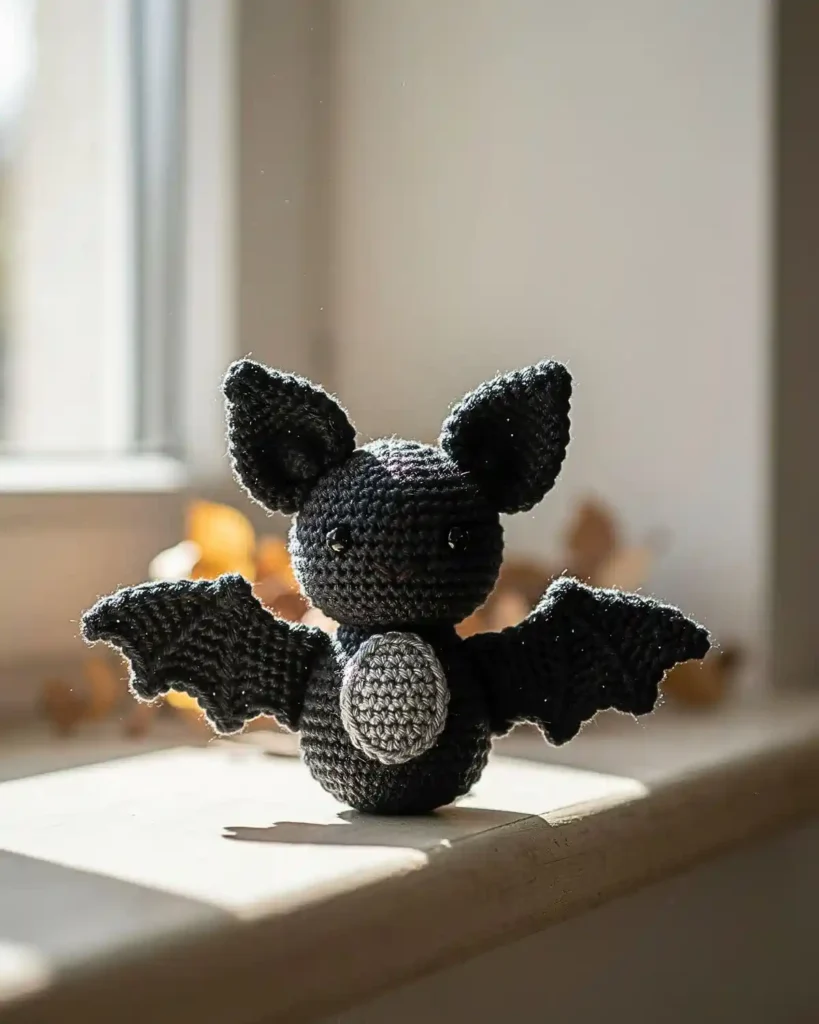
The classic amigurumi crochet bat is the one I would start with when you want something instantly recognizable but still cute enough to sit on a shelf. If you enjoy making small stuffed characters, these free amigurumi crochet patterns are another fun place to find inspiration. Instead of relying on a flat silhouette, the stuffed body gives you room for expressive ears, a tiny face, and wings that can wrap slightly around the front. I especially like this style for a Halloween basket because it feels like a little character rather than just a decoration. It is a strong choice if you want one project that shows off the whole bat shape without becoming overly complicated.
Special Tip: Pin both wings in place before sewing so you can compare their height and angle from the front.
2. Easy Crochet Bat for Beginners
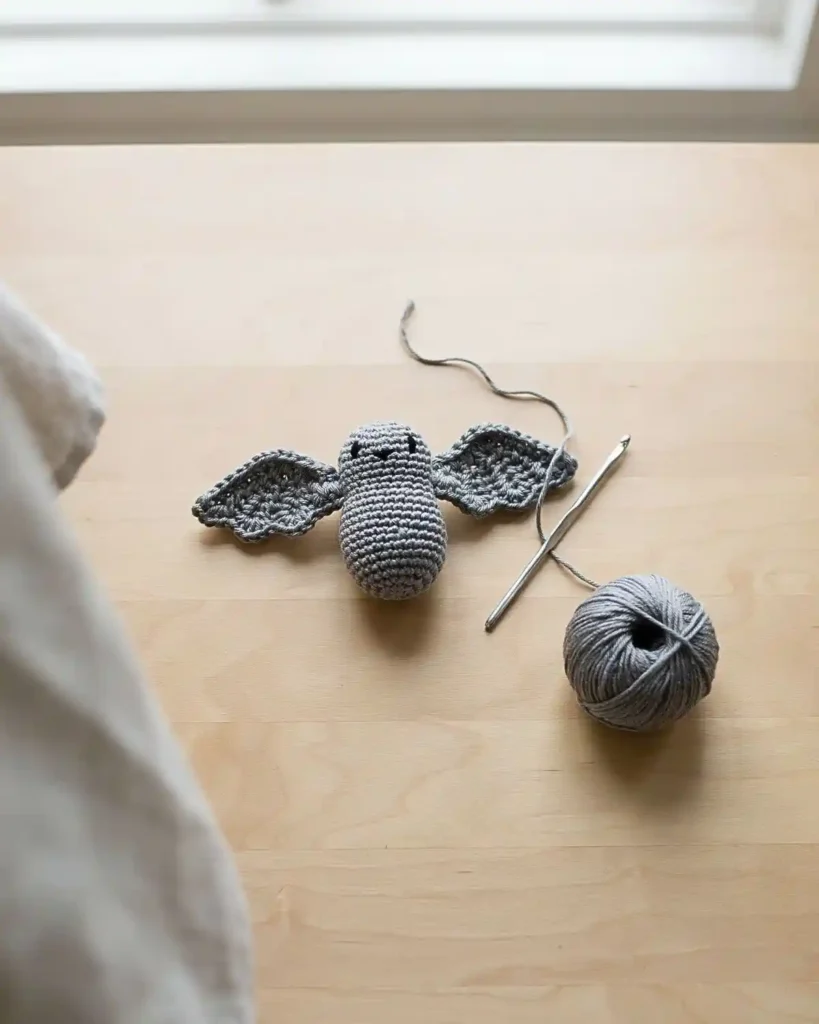
An easy crochet bat keeps the shaping simple and lets the wings do most of the visual work. Compared with a heavily sculpted amigurumi, a basic oval body and two flat wings reduce counting, sewing, and opportunities for uneven stuffing. This is the version I would pick for a first Halloween amigurumi or a relaxed weekend project. The best part is that a few embroidered stitches can create the face without adding extra pieces.
Use smooth, light-colored yarn for your first one, then remake the same idea in black once the construction feels familiar.
3. Mini Crochet Bat
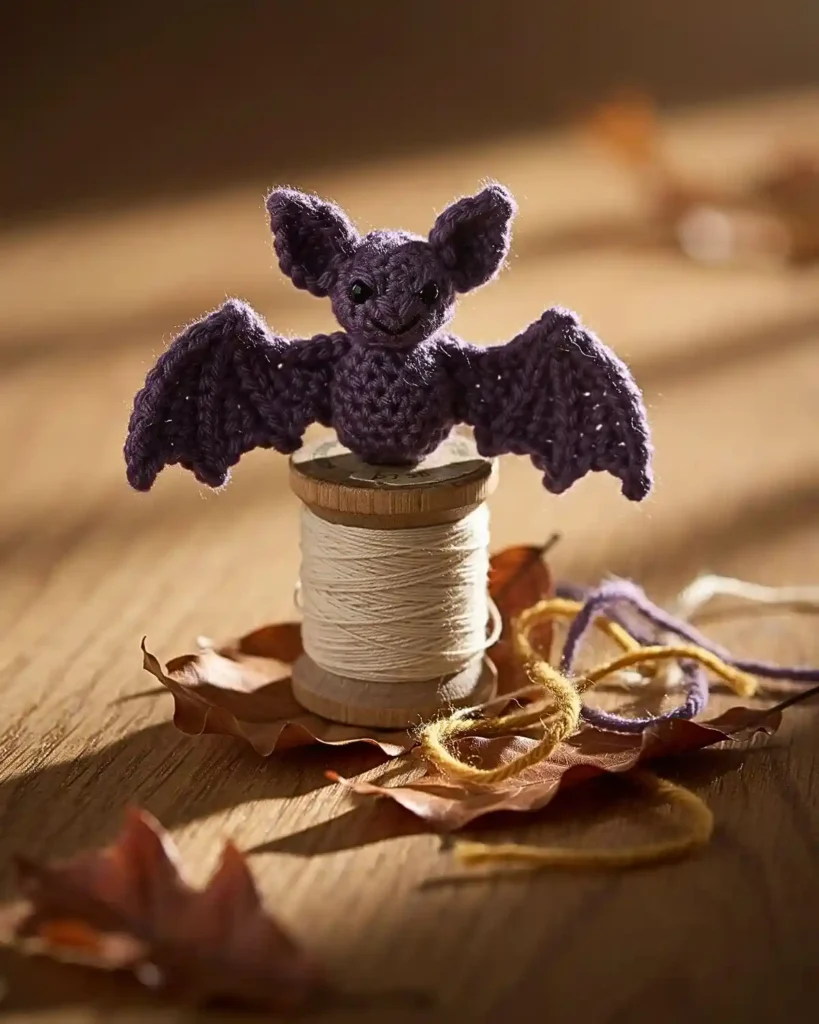
A mini crochet bat turns the same spooky-cute idea into something small enough for favors, ornaments, or desk decor. Larger bats need more stuffing and more careful wing support, while a miniature version often looks charming even with very simple shaping. I like making several in different colors because the small scale makes experimentation feel low-risk. This is ideal when you want a quick project with plenty of personality from only a modest amount of yarn.
Try: charcoal, plum, rust, moss green, or dusty rose for a softer Halloween palette.
4. Chunky Plush Crochet Bat
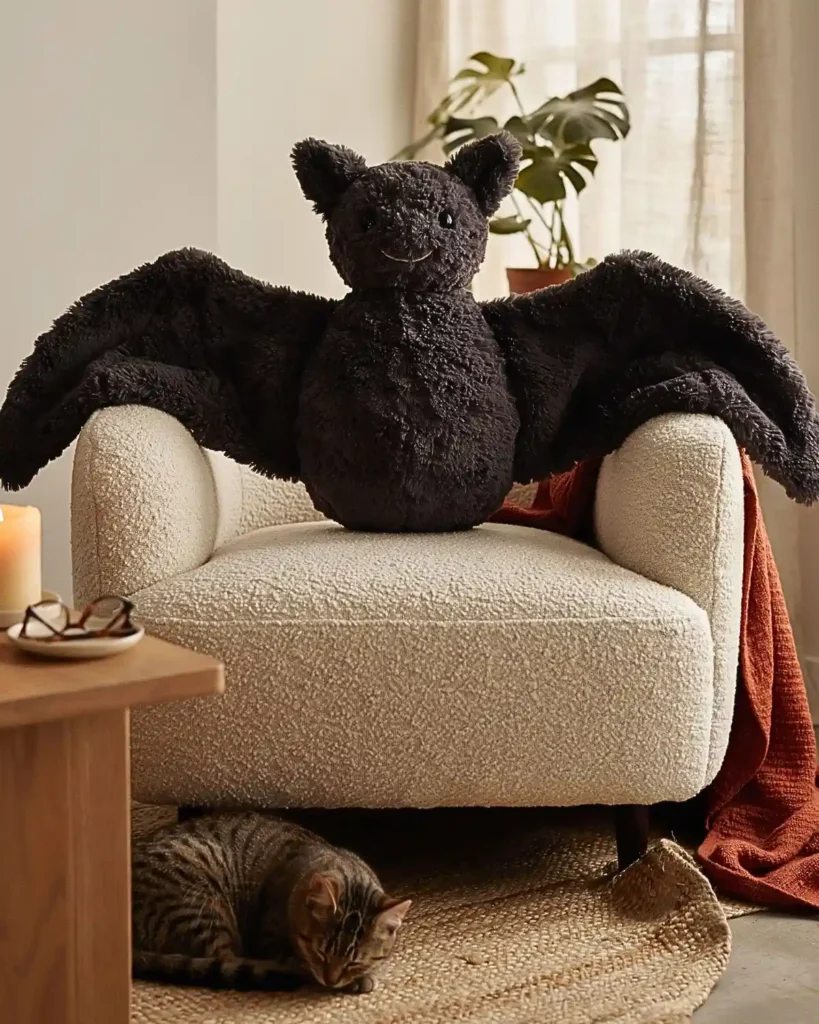
The chunky plush crochet bat is all about softness, oversized proportions, and a finish that looks huggable from across the room. Fine yarn gives you crisp detail, but blanket or chenille-style yarn makes the body and wings feel bold with fewer visible stitches. This style works especially well on a bed, reading chair, or Halloween-themed sofa. Choose it if you want a statement piece where texture matters more than tiny details.
Keep the facial features simple because plush yarn can hide small embroidery and complicated shaping.
5. Crochet Bat Applique
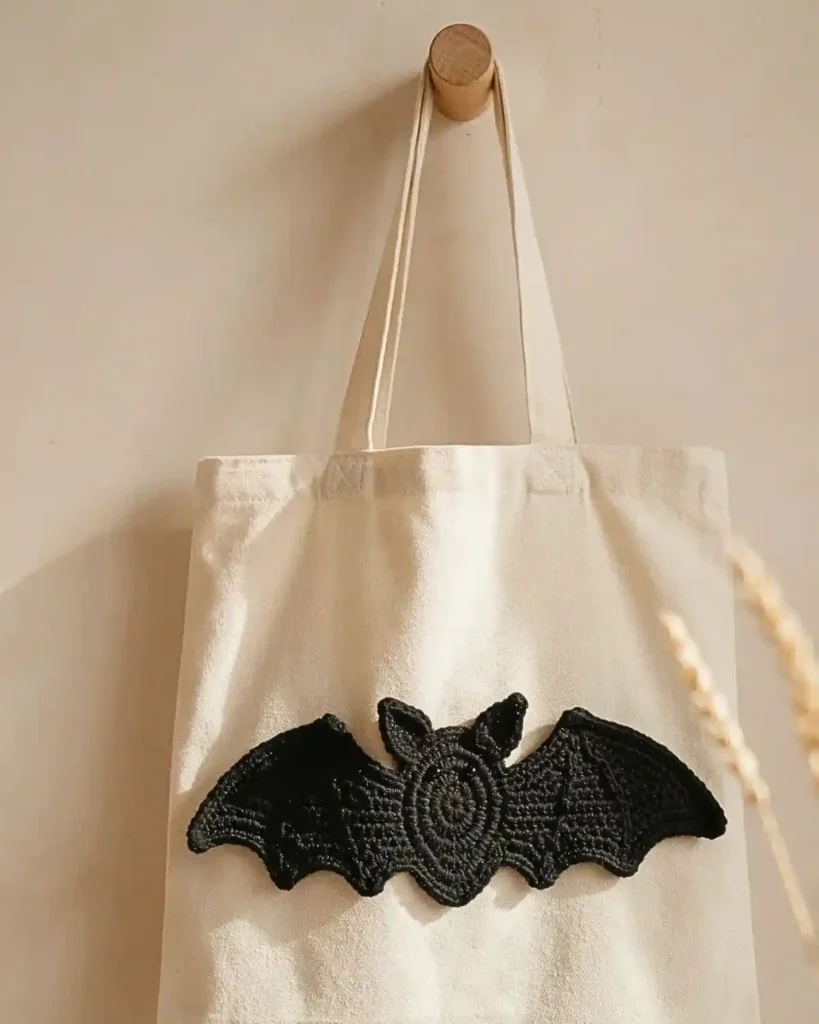
A crochet bat applique gives you the bat shape without stuffing, making it one of the most versatile ideas in this list. Unlike amigurumi, the flat construction can be stitched onto hats, tote bags, blankets, costumes, or bunting without adding much bulk. I would use a set of small appliques to update plain fall accessories without committing to an entire Halloween project. This is the best option when you want fast, repeatable bats that can be used almost anywhere.
Special Tip: Lightly block the applique before attaching it if the wing points want to curl.
6. Crochet Bat Garland
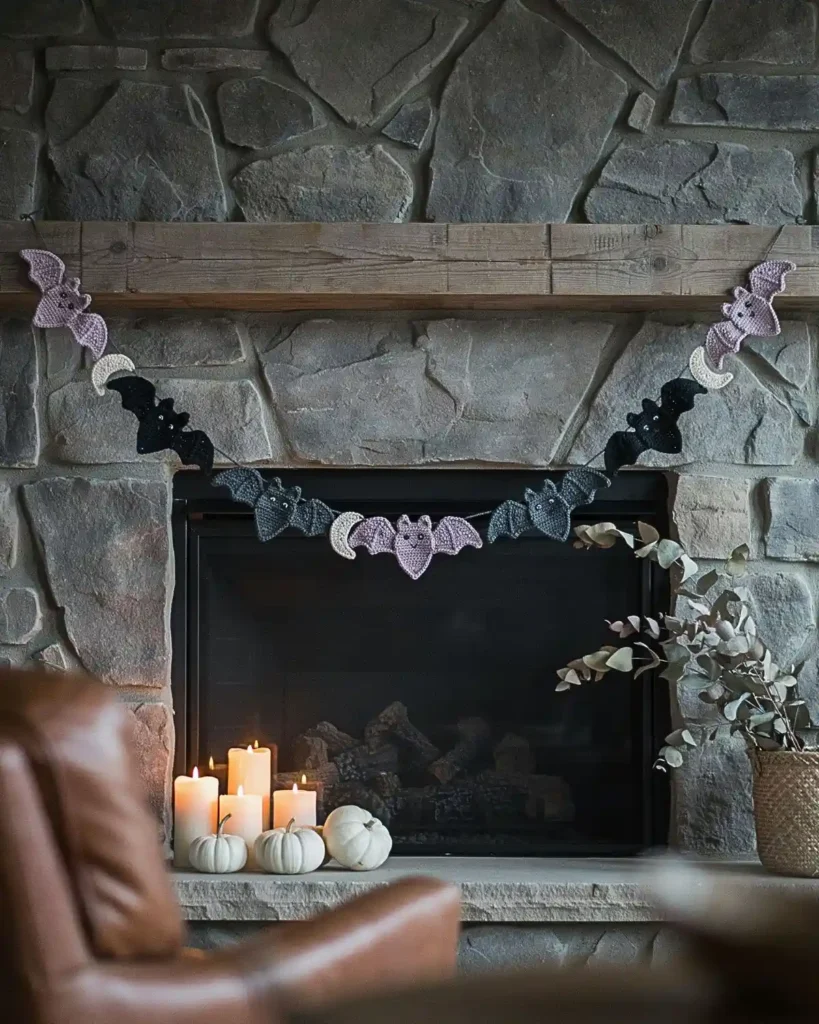
A crochet bat garland takes a few small bats and turns them into a complete piece of Halloween decor. One standalone bat is cute, but a repeated row creates much more visual impact across a mantel, doorway, shelf, or party table. I like alternating wing positions so the bats do not look copied and pasted along the strand. Make this one if you want a project that uses scraps and fills a larger space without requiring one giant crochet piece.
Mix bats with simple chains, moons, stars, or tiny pumpkins if you want a fuller garland.
7. No-Sew Crochet Bat
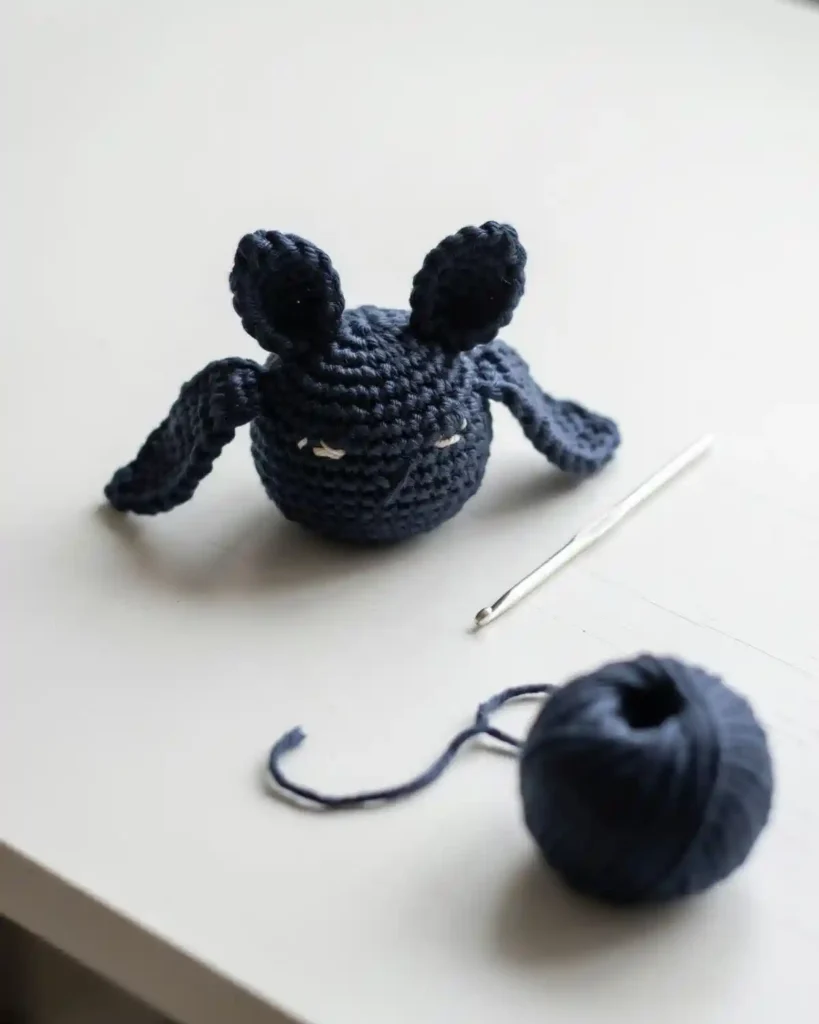
A no-sew crochet bat is satisfying because the ears, body details, or wing elements are incorporated with as little separate assembly as possible. Traditional amigurumi can slow down at the finishing stage, so reducing sewn-on parts makes the project feel much faster. This is the style I would reach for when I want to crochet several bats in one evening and do not want a pile of pieces waiting for assembly. It suits makers who love the crocheting part more than the sewing part.
Look for constructions that join parts as you work rather than attaching everything at the end.
8. Crochet Bat Keychain
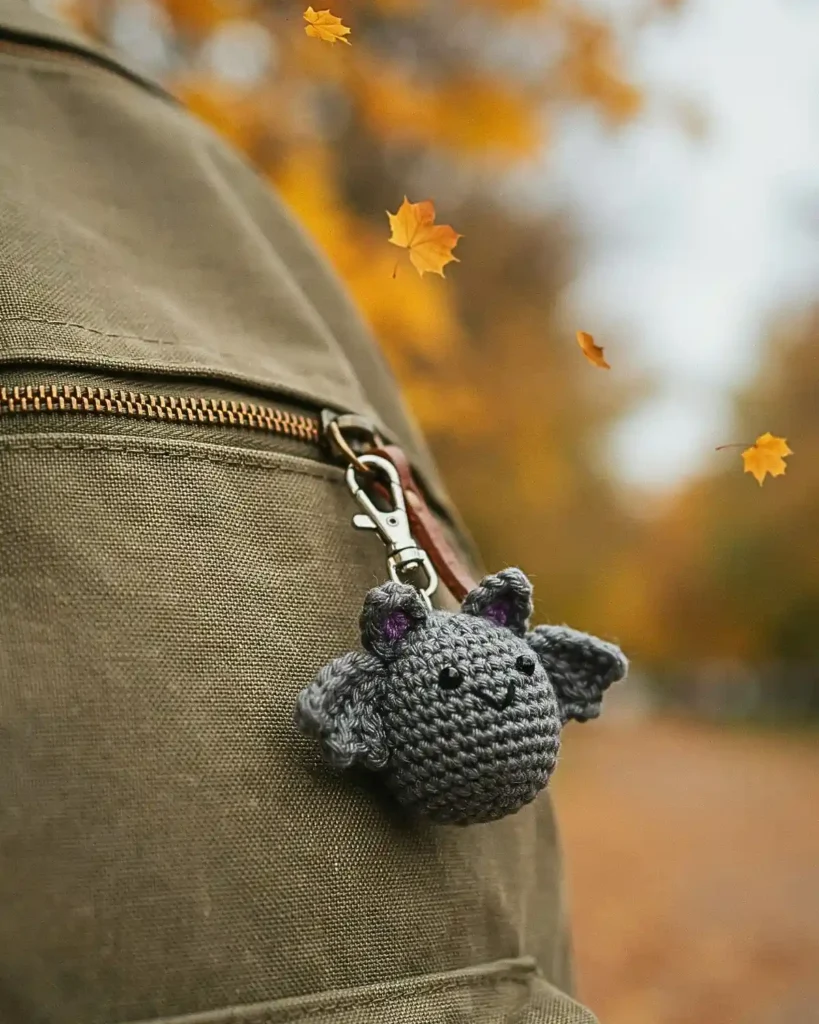
A crochet bat keychain shrinks the design into a portable charm for bags, keys, backpacks, or zipper pulls. A full plush bat is too bulky for everyday carrying, but a firm mini version keeps the character while staying practical. I think this looks especially good in dark gray with one bright accent such as purple ears or a tiny orange bow. Choose it when you want a handmade gift that is small, useful, and easy to personalize.
For durability, secure the hanging loop through the crocheted fabric itself rather than relying on a loose yarn tail.
9. Hanging Upside-Down Crochet Bat
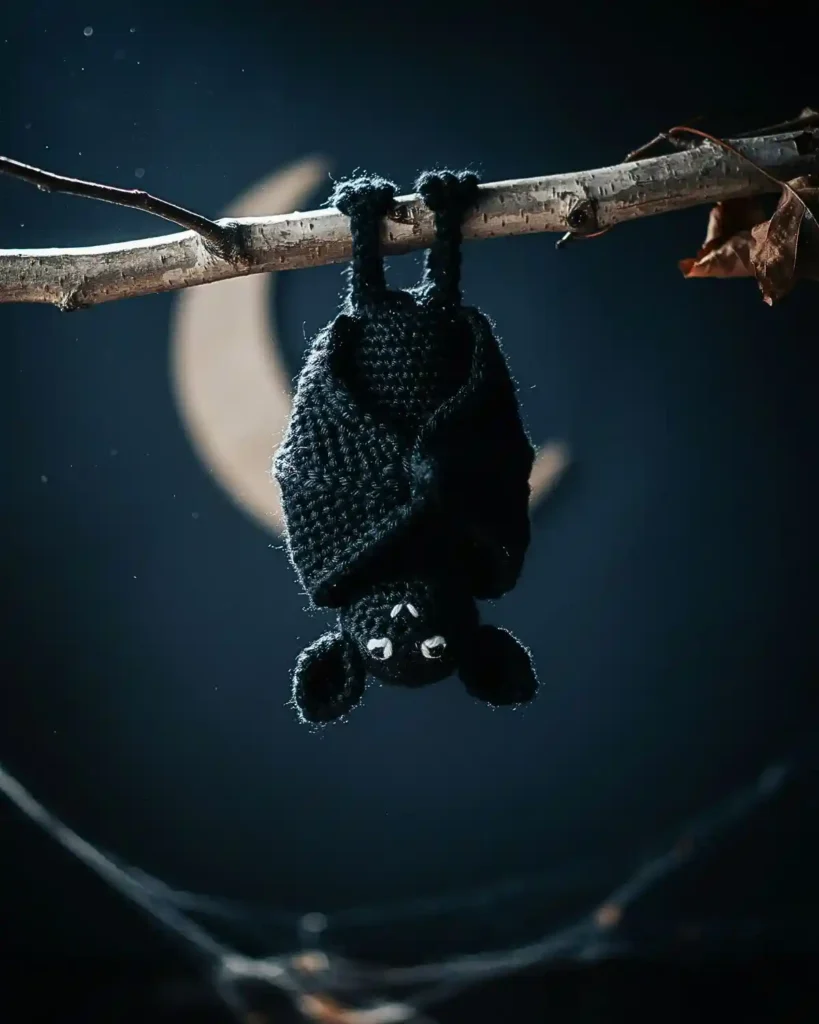
The upside-down crochet bat leans into the pose people instantly associate with bats and makes the display more playful. Most amigurumi sits upright, so simply changing the orientation makes the finished piece feel surprisingly different. I love this idea hanging from a shelf edge, Halloween branch display, or decorative hoop. It is for anyone who wants a crochet bat that looks animated even though the construction can stay fairly simple.
Add tiny crocheted feet or loops at the top so the hanging point feels intentional.
10. Crochet Bat Ornament
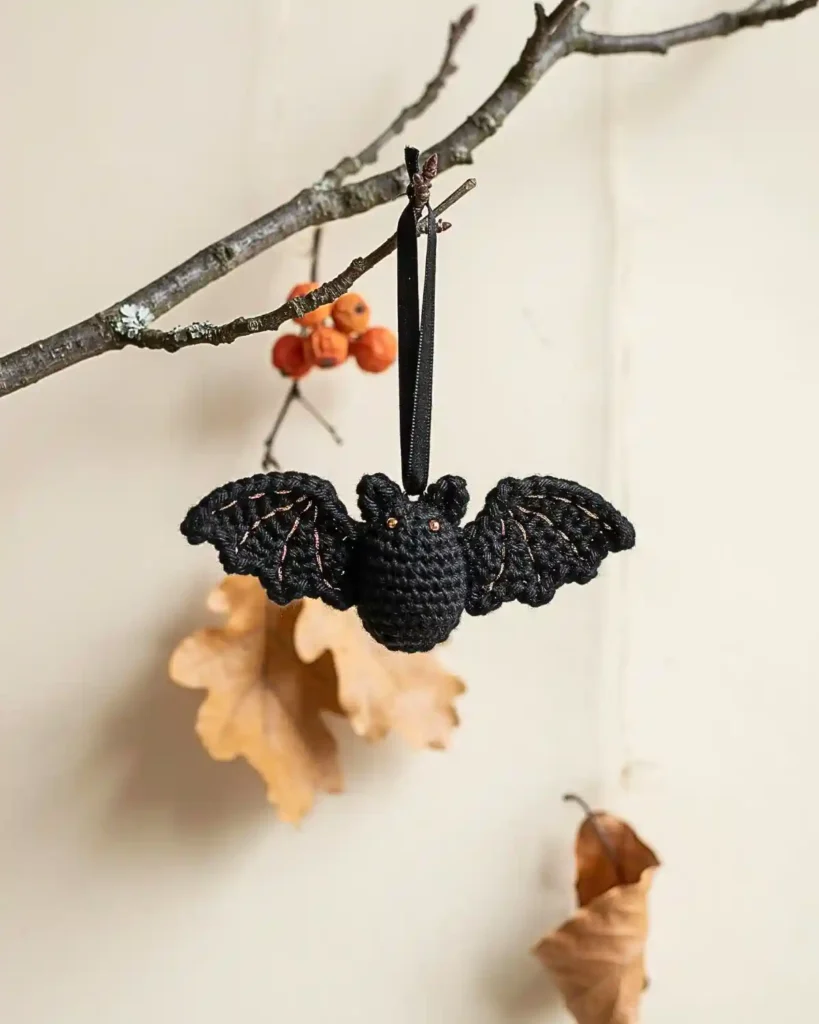
A crochet bat ornament is a neat middle ground between a toy and a flat applique. It has enough shape to feel special, but it stays light enough to hang from a Halloween tree, twig arrangement, doorknob, or seasonal wreath. I would make these in a coordinated set of three or five so the colors repeat around the display. This version is perfect when you want reusable decor that stores easily after the season.
Use ribbon, cord, or a crocheted loop that matches the weight of the finished bat.
11. Pastel Crochet Bat
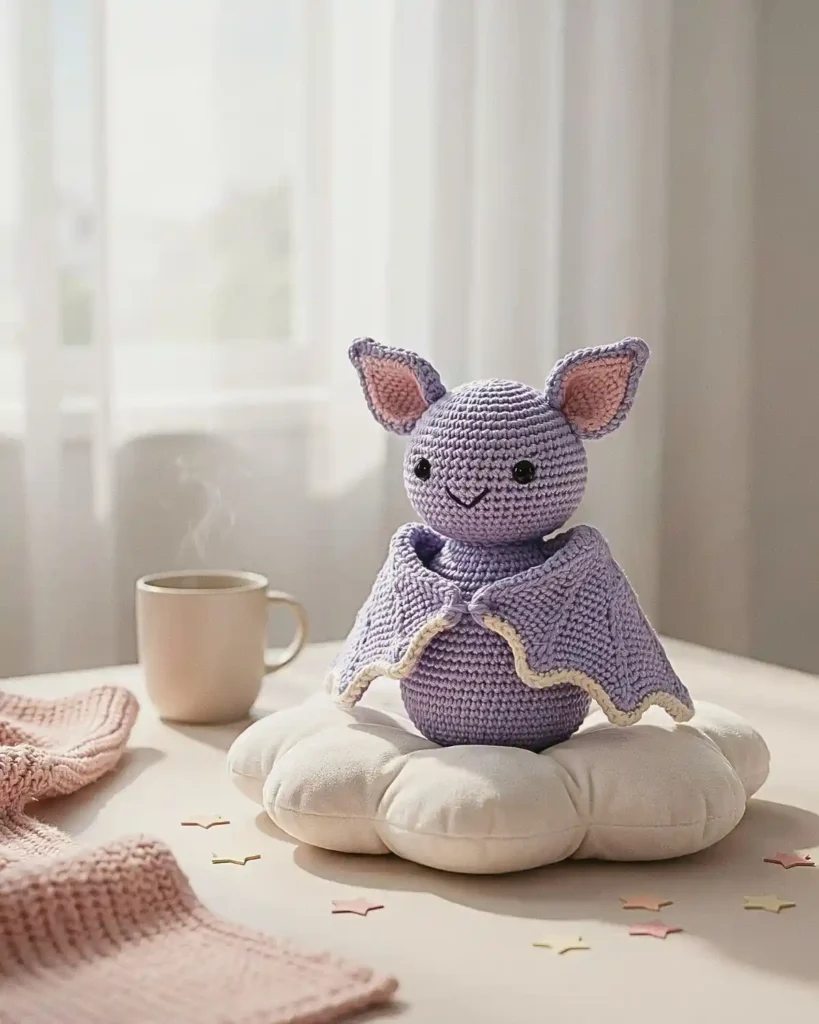
A pastel crochet bat proves that Halloween crochet does not need to stay black and orange. The familiar shape still reads as a bat, but lavender, blush, mint, cream, or powder blue gives it a sweet storybook feel instead of a spooky one. This is the project I would use in a nursery-inspired Halloween setup or a softer seasonal shelf display. Pick it if you love cute crochet and want the bat theme without the dark color palette.
Try contrasting inner ears or wing edging for just enough definition between the soft colors.
12. Black and Purple Halloween Bat
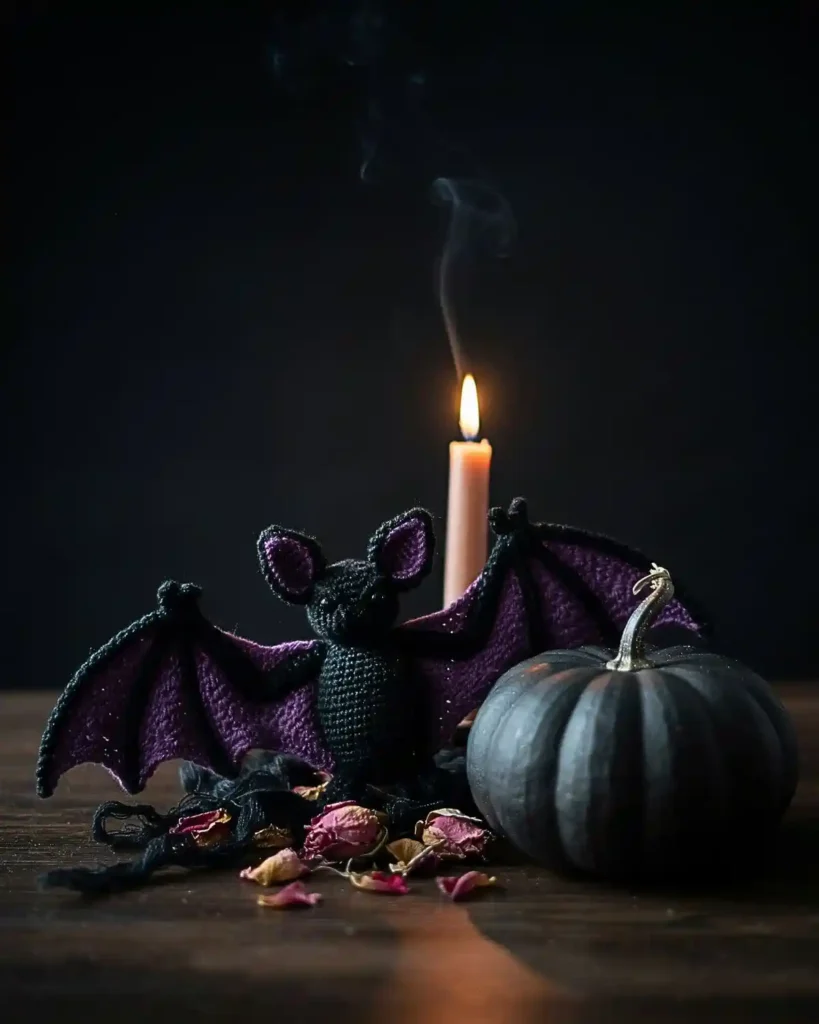
A black and purple crochet bat keeps the classic Halloween mood but adds more depth than solid black alone. The second color can define the inner ears, wing lines, feet, or belly, which helps small details stand out in photos and displays. I like this combination for party decor because it coordinates easily with pumpkins, candles, and other spooky accessories. It works best for anyone who wants traditional Halloween energy with a little more visual contrast.
A deep charcoal main yarn can also photograph more clearly than true black while keeping the same overall mood.
13. Fuzzy Crochet Bat
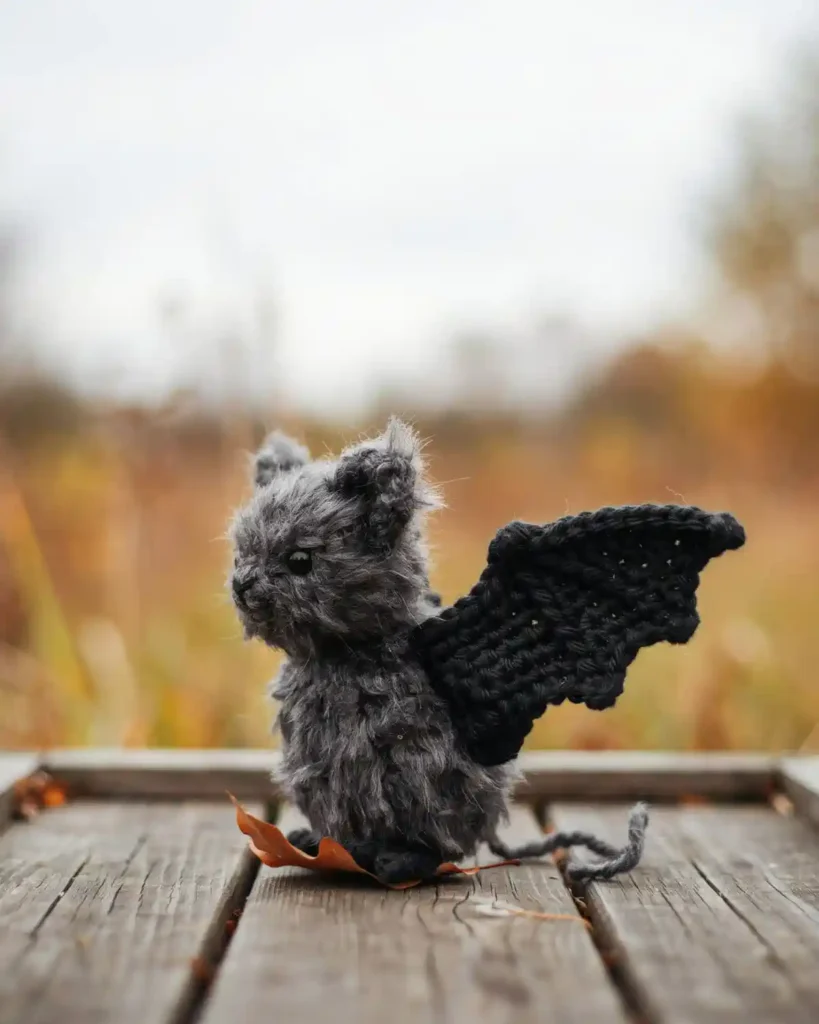
A fuzzy crochet bat looks wonderfully creature-like because the yarn softens the stitch definition and creates a slightly wild texture. Smooth yarn is easier to count, but faux-fur or brushed effects can make a simple shape look much more elaborate than it really is. I would save this version for a second or third bat, once the construction already makes sense. It is especially good for display pieces where touchable texture is the main feature.
If fuzzy yarn hides your stitches, pair it with smooth yarn on the wings or use stitch markers more frequently.
14. Tiny Crochet Bat with Big Ears
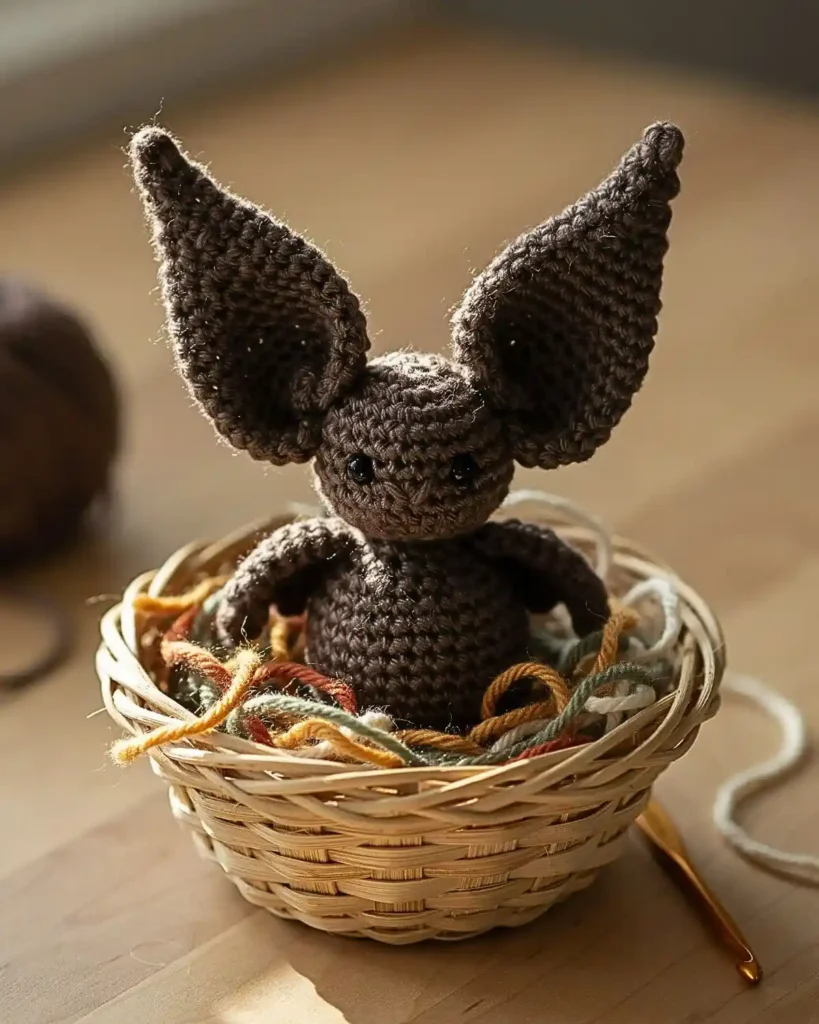
A tiny body with oversized ears gives a crochet bat an exaggerated, almost cartoon-like personality. Realistic proportions can look elegant, but a bigger ear-to-body ratio makes a small amigurumi read as cute from the first glance. I would use this style for shelf decor, a keychain, or a small gift because the silhouette stays interesting even at miniature scale. Choose it if you prefer expressive characters over realistic animal shaping.
Keep the wings slightly smaller so the ears remain the feature that catches the eye.
15. Crochet Bat with Wrapped Wings
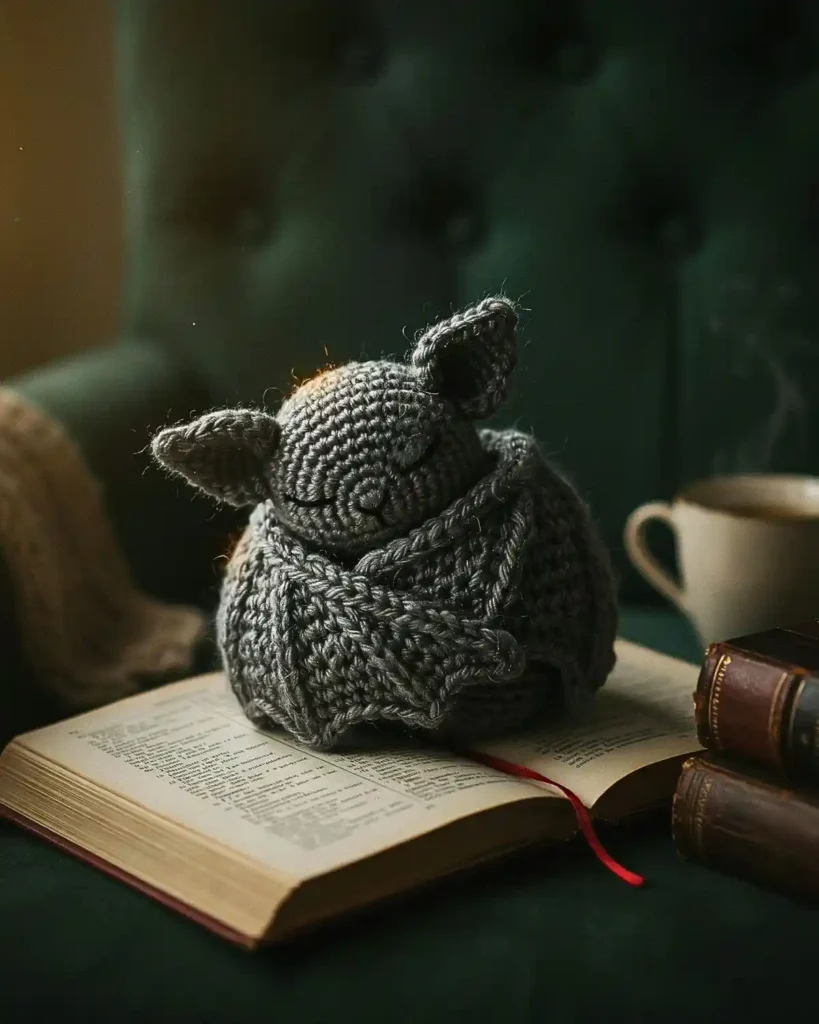
A bat with wrapped wings looks cozy and slightly shy, as though it has tucked itself in for a nap. Fully spread crochet bat wings create a dramatic silhouette, while folded or wrapped wings make the body feel rounder and more character-driven. This is one of my favorite poses for a bedside or bookshelf amigurumi because it feels calm rather than spooky. Make it when you want your bat to look like a tiny companion instead of Halloween scenery.
Special Tip: Test the wing placement with pins before stitching; even a small change in angle can completely change the expression.
16. Wide-Wing Crochet Bat
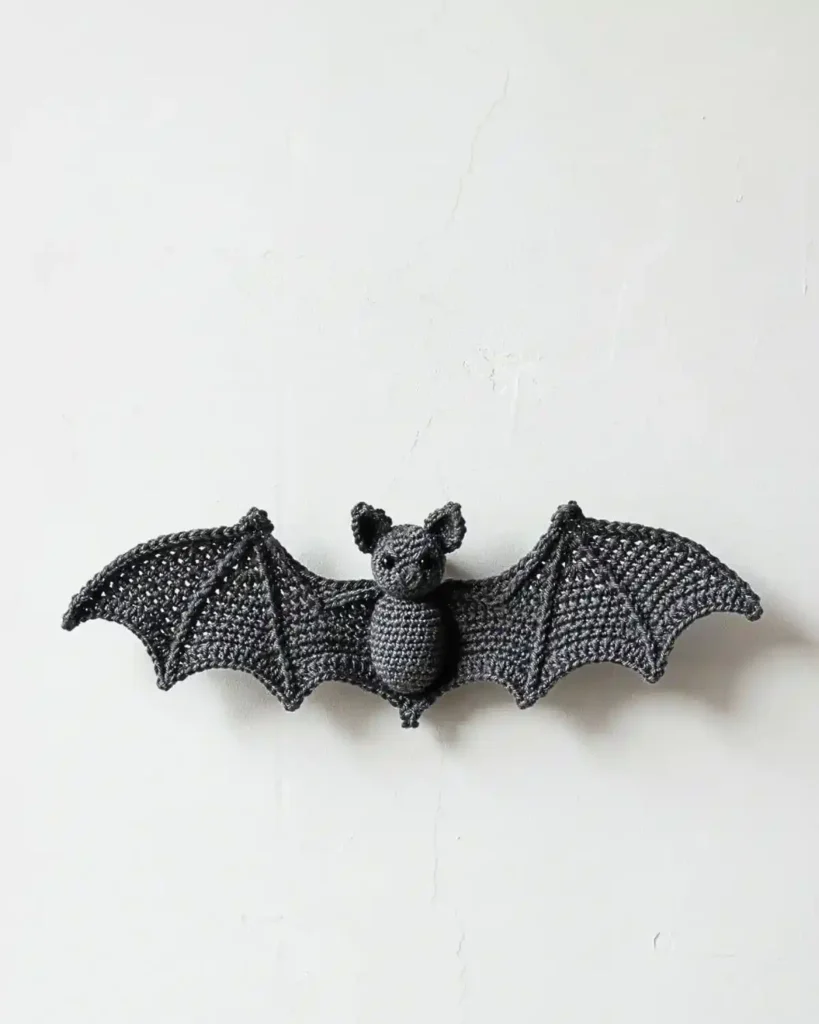
The wide-wing crochet bat puts the silhouette first, with wings stretching farther than the body is tall. Compared with a compact plush bat, this shape gives you more room for scallops, points, surface embroidery, and color changes. I would use it as a centerpiece on a Halloween wreath or wall hanging where the wings can spread without being squashed. This is the version to choose if your favorite part of the project is designing crochet bat wings.
Work both wings from the same notes and count carefully so the final span stays balanced.
17. Embroidered-Wing Crochet Bat
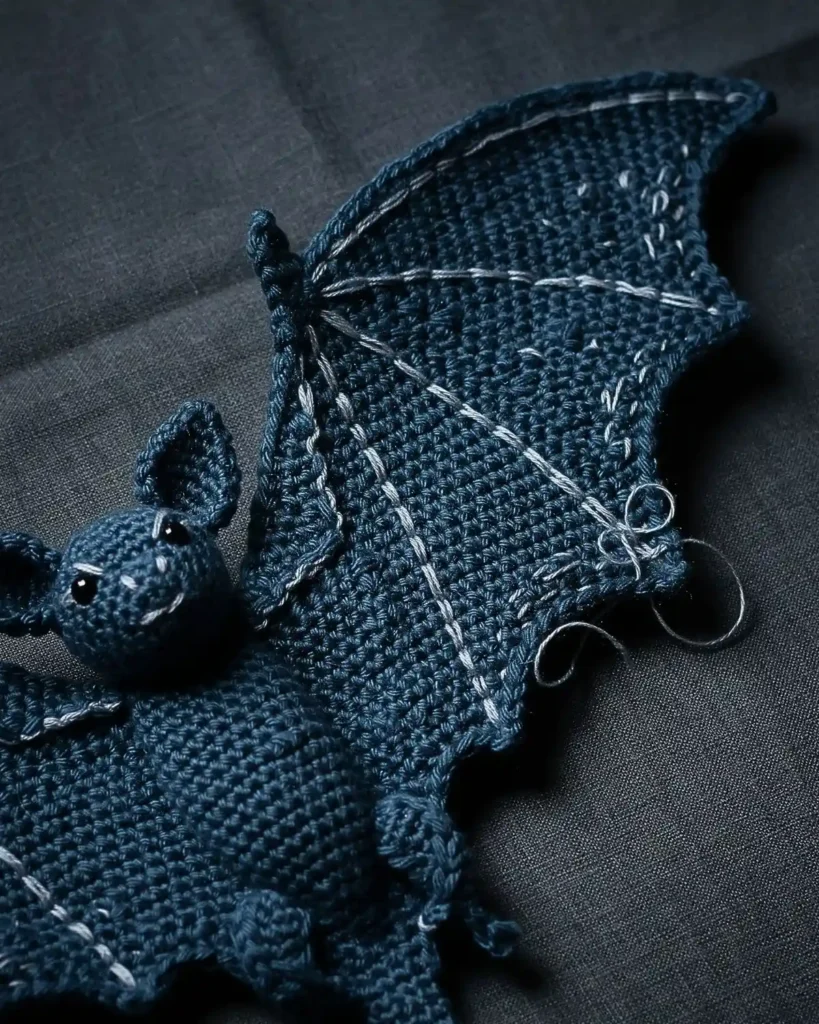
An embroidered-wing bat adds definition after the crochet is finished, which is a clever way to get detail without making the wing construction harder. Plain wings can disappear into a dark body, while a few stitched lines suggest the structure of a bat wing and make the shape easier to read. I like using a slightly lighter or shinier thread so the detail appears only when you look closely. This suits makers who enjoy simple crochet with a little decorative finishing.
Keep the embroidery loose enough that it does not pull or curl the wing fabric.
18. Crochet Bat with Tiny Fangs
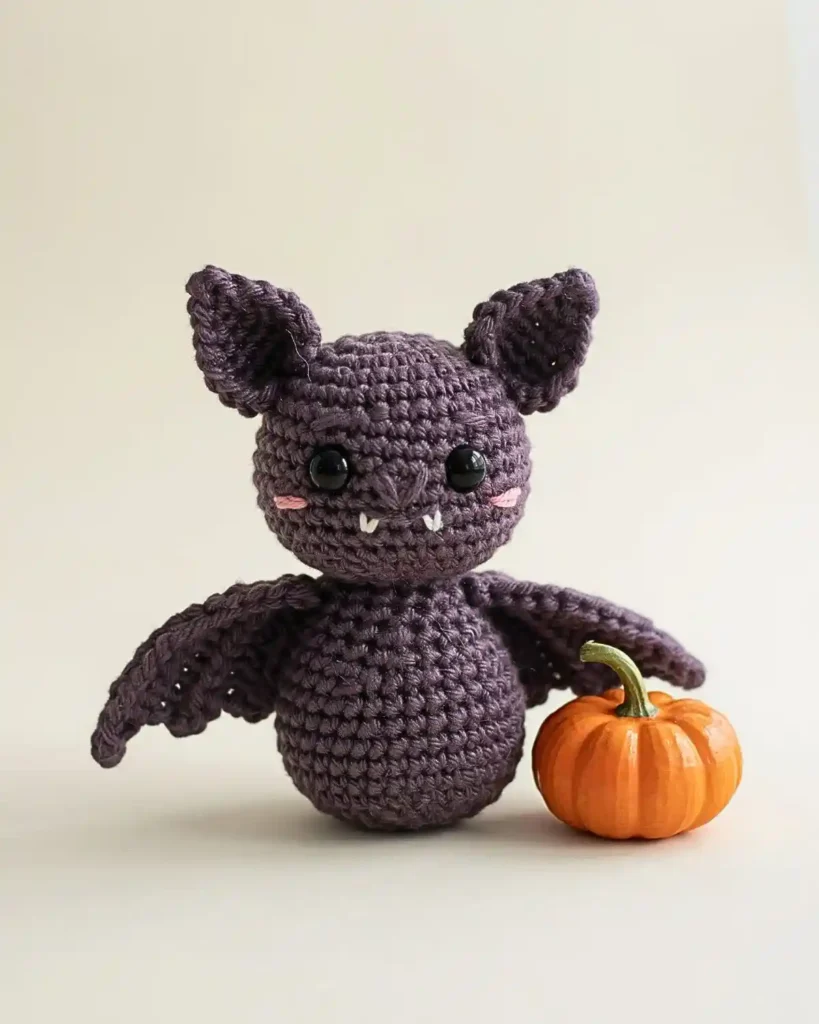
A pair of tiny fangs can turn the sweetest crochet bat into a playful Halloween character. Instead of building a complicated mouth, two short embroidered or crocheted points give the face an instant theme without making it scary. I would use this detail on a purple, gray, or black bat with a simple smile and tiny cheeks, then pair it with a crochet pumpkin pattern for an easy handmade Halloween display. Choose it when you want something that feels festive for Halloween but still childlike and fun.
For a soft finish, embroidered facial details are often easier to control than attaching very small separate pieces.
19. Crochet Bat with a Witch Hat
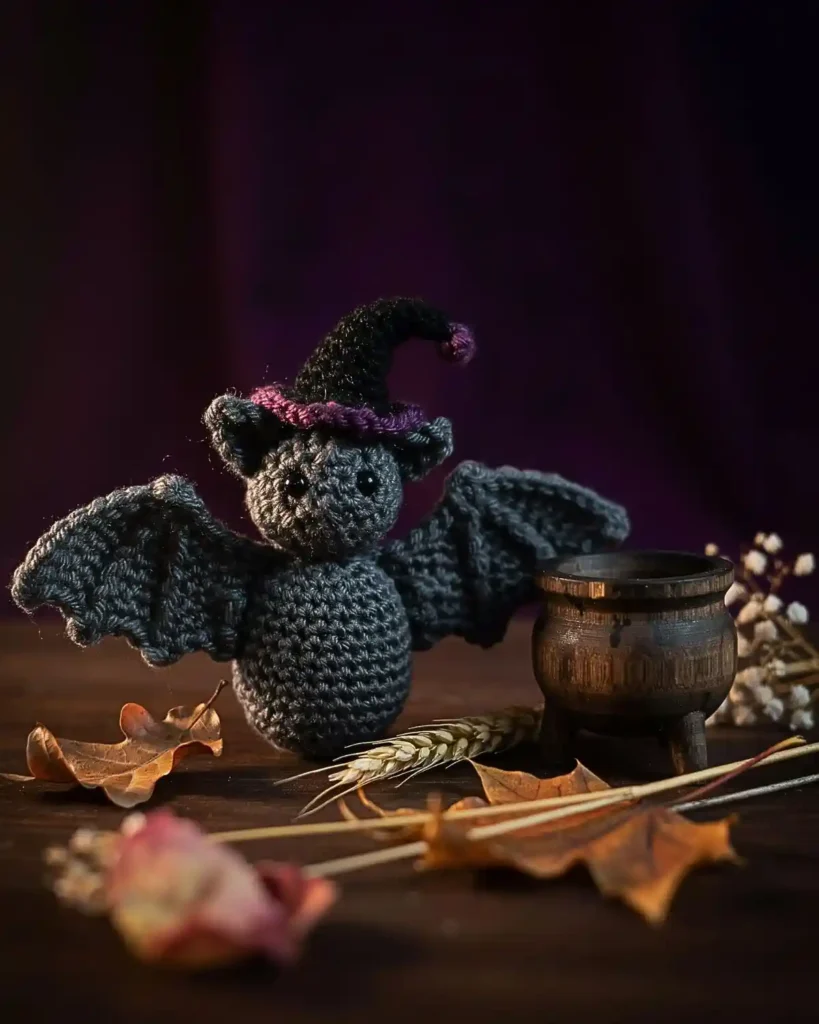
A crochet witch hat gives a basic crochet bat a whole second layer of personality. The bat on its own is already seasonal, but the hat adds height, color, and a clear costume feel that makes the finished piece more decorative. I would place this one beside pumpkins or a tiny cauldron in a Halloween shelf scene. It is a good pick when you want to revisit a familiar bat body but make the finished project look completely new.
Use a removable hat if you want the same bat to work beyond Halloween.
20. Crochet Bat Lovey
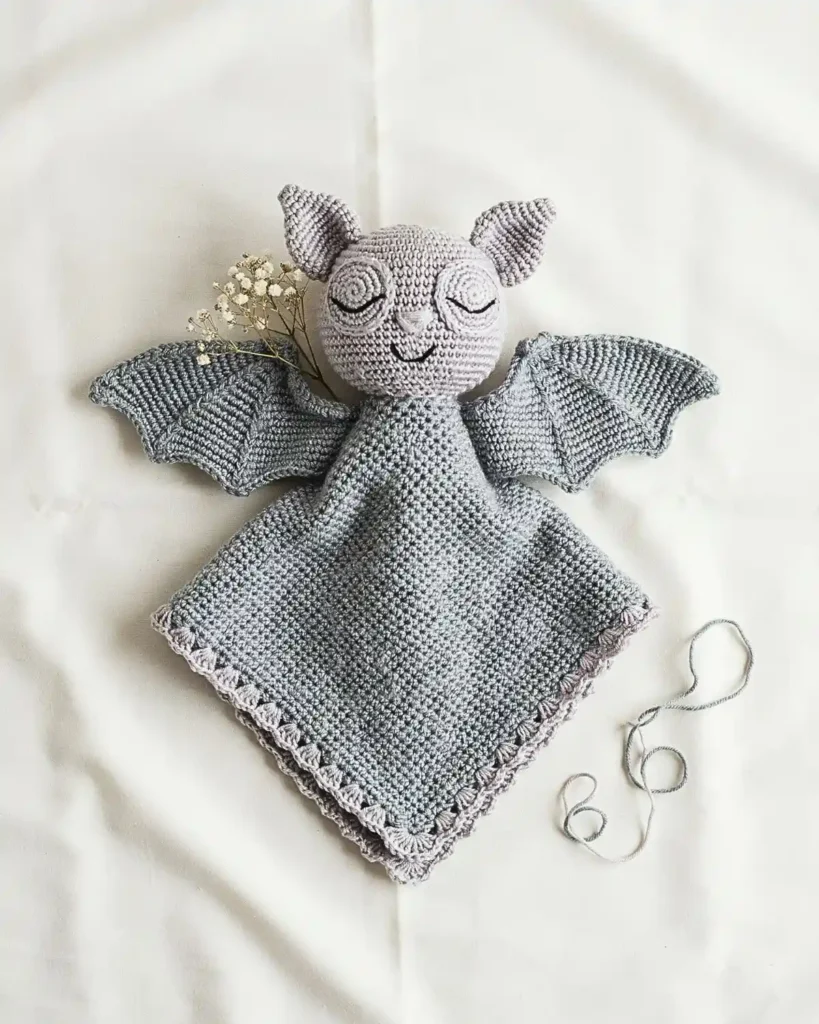
A crochet bat lovey combines a small character head or upper body with a soft blanket-style base. A full stuffed toy has one shape, while a lovey gives you a larger fabric area for stripes, textures, or a contrasting border. This idea works beautifully when you want the bat motif to feel gentle and comforting rather than spooky. It is best for a handmade keepsake where softness and easy handling matter more than detailed wing shaping.
For anything intended for a baby or toddler, avoid loose or detachable small parts. The U.S. Consumer Product Safety Commission regulates small parts in children’s products because they can present choking hazards, and the American Academy of Pediatrics similarly advises avoiding toys with small or detachable pieces for young children.
21. Crochet Bat Baby Rattle Style
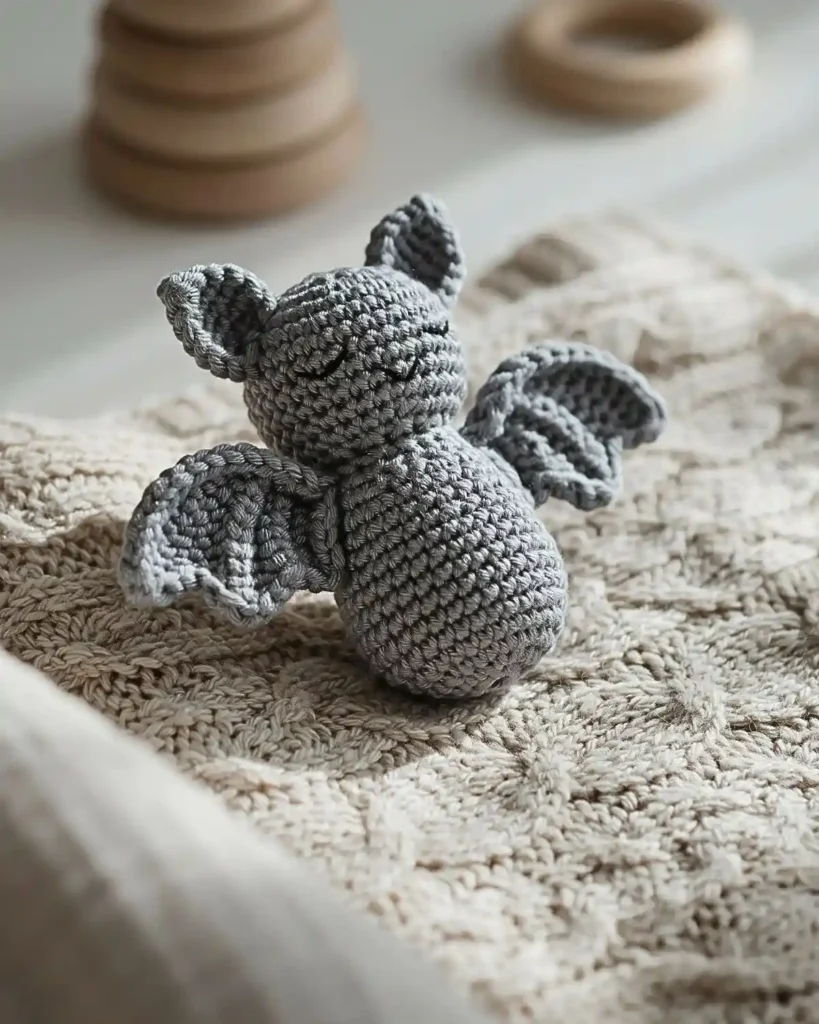
A bat-shaped rattle style can be adorable when the shape is simplified into a round body, little ears, and soft wings. Compared with decorative bats covered in tiny details, this approach looks cleaner and is easier to grip. I would keep the face fully embroidered and the wing edges smooth so the design feels soft from every angle. Choose this idea only when you are comfortable adapting crochet specifically for a young-child context and can follow appropriate product-safety guidance.
If the finished item will be used by a child rather than displayed, treat safety as part of the design, not as a final add-on.
22. Crochet Bat Pillow
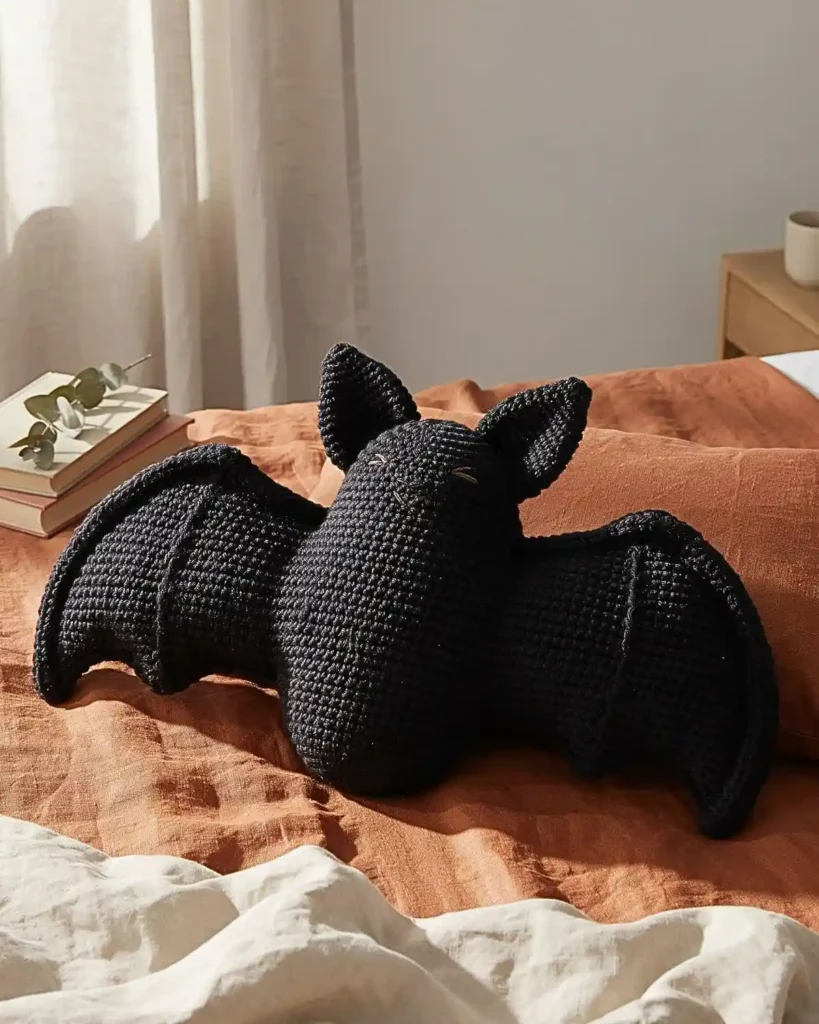
A crochet bat pillow scales the motif up so the wings become part of the cushion silhouette. Small amigurumi highlights tiny details, but a pillow lets bold curves, simple color blocks, and oversized ears do the work instead. I like this idea for seasonal bedroom decor because one piece can change the whole mood of a chair or bed. It is best for anyone who wants a larger project that still uses straightforward shapes.
Bulky yarn will make the project faster, while worsted yarn gives you more control over crisp wing points.
23. Crochet Bat Wall Hanging
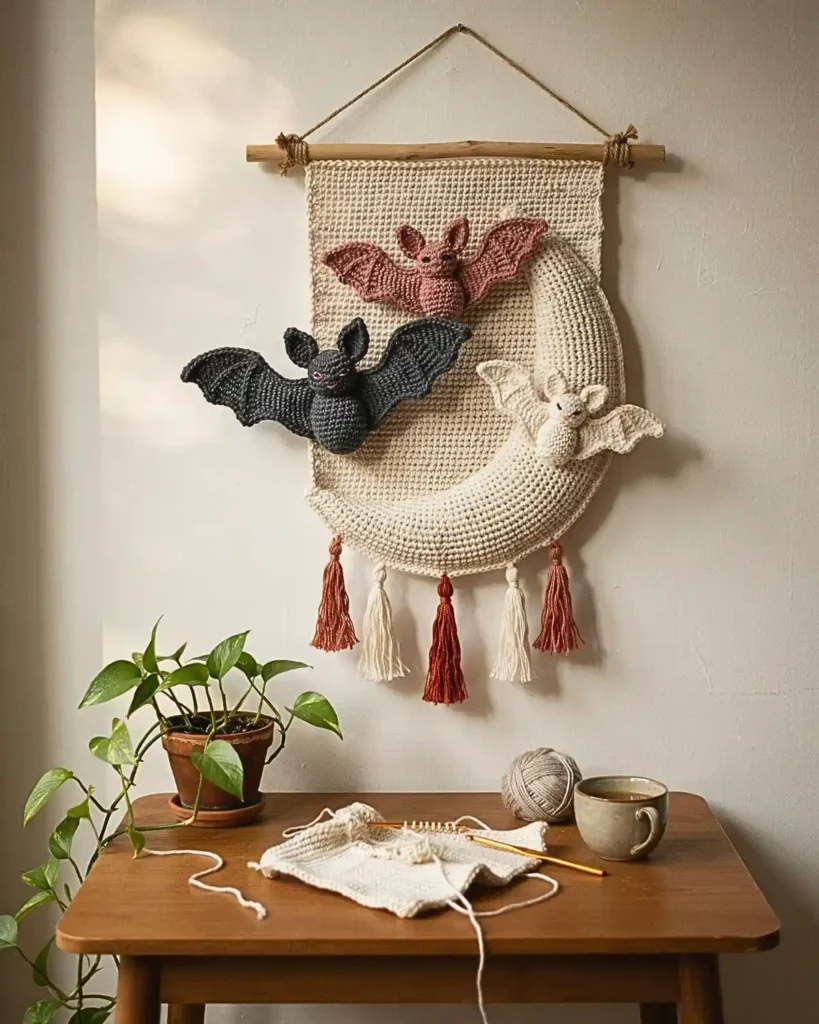
A crochet bat wall hanging uses flat or lightly stuffed bats as part of a bigger vertical arrangement. Rather than making every bat a standalone object, you can combine several sizes with moons, stars, tassels, branches, or a crocheted background. I would use this above a craft desk or on a narrow wall where a garland does not fit as naturally. Choose it when you want your crochet to read like seasonal fiber art rather than a toy.
Vary the bat sizes and spacing so the arrangement feels like movement instead of a rigid grid.
24. Crochet Bat Hair Clip or Brooch
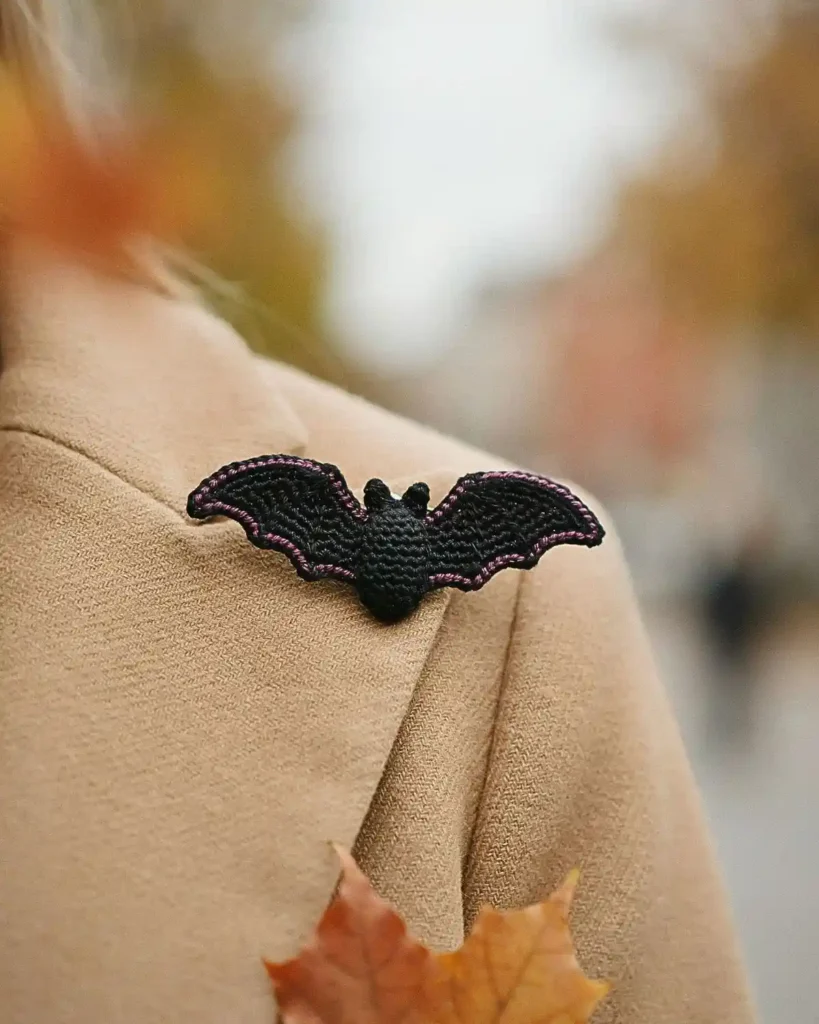
A small flat bat becomes surprisingly wearable when attached to a hair clip, pin back, or brooch base. A stuffed version would feel too heavy, but a firm crochet bat applique adds just enough texture to a costume, jacket, scarf, or Halloween outfit. I like making this one in a single dark color and letting the wing shape carry the design. It is ideal for a quick accessory when you want handmade Halloween detail without making a full costume.
Stiffen or block the applique lightly if you want the wing tips to stay crisp.
25. Scrap-Yarn Rainbow Crochet Bat Set
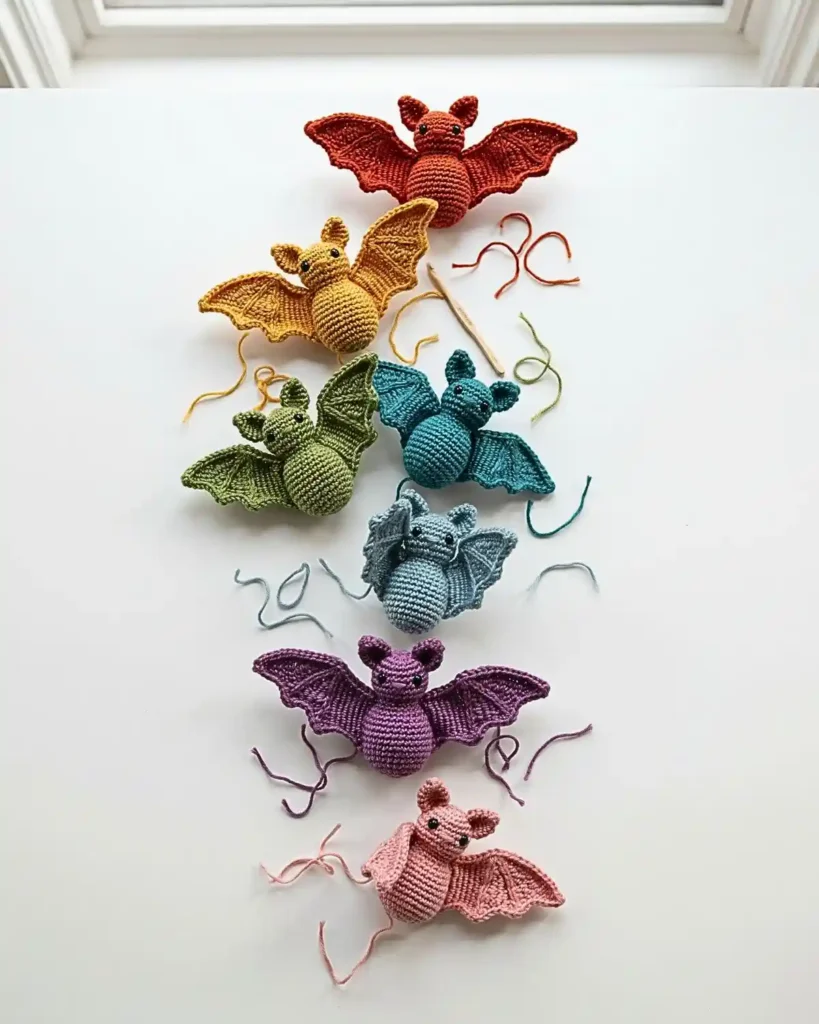
A rainbow bat set is the easiest way to turn leftover yarn into a collection that looks planned. Making every bat identical in black can feel formal, while changing the color on each one makes even a simple pattern feel playful and fresh. I would line them up on a shelf or join them into a garland so the color progression becomes part of the display. This is the best finale for a stash-busting project because every small leftover can become a different little character.
For the cleanest set, keep the yarn weight similar even when the colors and fibers vary, then adjust only when you intentionally want different-sized bats.
How Do You Make Crochet Bat Wings Look Better?
Crochet bat wings look cleaner when the points are evenly shaped, both sides match, and the wings are positioned symmetrically before sewing.
At a Glance:
- Count both wings carefully.
- Pin before attaching.
- Block flat wings when needed.
- Add embroidery for extra definition.
- Adjust the angle to change the pose.
Crochet bat wings look best when the outer edge has a clear rhythm of points and curves rather than one straight triangle. You can create that shape with increases and decreases, short sections of taller stitches, or a shaped border after the main wing is complete.
The most important part is symmetry. Make both wings from the same written notes, count each row or round, and pin them to the body before sewing.
For a more finished look:
- Add simple embroidered wing lines.
- Block flat wings before assembly.
- Keep both top attachment points at the same height.
- Use contrast edging when the body and wings are the same dark color.
- Wrap the wings forward for a cozy pose or spread them outward for a dramatic silhouette.
Can You Change the Yarn in a Crochet Bat Pattern?
Yes, but changing the yarn can alter the finished bat’s size, firmness, texture, and how well the wings hold their shape.
At a Glance:
- Compare yarn weight before substituting.
- Check the recommended hook size.
- Watch for changes in finished size.
- Keep amigurumi fabric firm enough for stuffing.
Yes, but changing yarn can change the finished size, firmness, texture, and drape. The Craft Yarn Council specifically cautions that yarns in the same weight category are not automatically interchangeable, so a gauge swatch is useful when finished dimensions matter.
For amigurumi, a tighter fabric generally helps keep stuffing from showing. If you move to thicker yarn, you may also need a different hook size and more stuffing, while the finished bat will usually become larger.
How Can You Make an Easy Crochet Bat Look More Unique?
Personalize a simple bat by changing its ears, wings, yarn texture, facial details, accessories, colors, or finished pose.
At a Glance:
- Enlarge the ears for a cuter look.
- Add fangs or rosy cheeks.
- Experiment with folded or wide wings.
- Try pastel or fuzzy yarn.
- Add removable seasonal accessories.
Small changes make a big difference. Once you have a basic crochet bat pattern you like, change one or two design details instead of rebuilding the entire construction.
Try:
- Oversized ears
- Extra-wide crochet bat wings
- Embroidered fangs
- A bow or tiny witch hat
- Pastel yarn
- Fuzzy yarn
- Contrasting inner ears
- Rosy cheeks
- Folded wings
- A hanging upside-down pose
That is also why a free crochet bat pattern can be such a useful starting point: the base shape stays familiar while the colors, face, wing treatment, and final use make the project your own. You can browse more crochet bat patterns when you want to experiment with different shapes and construction styles.
Frequently Asked Questions About Crochet Bats
Is a crochet bat suitable for beginners?
Yes. A flat crochet bat applique or a simple stuffed bat with separately made wings can be beginner-friendly. Start with smooth yarn, clear stitch counts, and a pattern that uses basic stitches and simple shaping.
What yarn is best for an easy crochet bat?
DK or worsted-weight smooth yarn is a practical starting choice because the stitches are usually easier to see than with fuzzy yarn. If you change the suggested yarn, remember that even yarns in the same weight category can behave differently.
How do I find a bat crochet pattern free to use?
Look for a designer who clearly labels the instructions as a free crochet bat pattern and check the usage terms on that page before reusing any written instructions, photographs, or other material.
Can I make crochet bat wings separately?
Yes. Separate crochet bat wings are useful because you can position them after stuffing the body and adjust the angle before sewing. They are also easier to remake if you want a wider, more scalloped, or more dramatic shape.
Can I make a crochet bat without safety eyes?
Absolutely. Embroidered eyes can create anything from sleepy expressions to tiny smiling faces, and they avoid adding hard plastic pieces. For items intended for young children, avoiding detachable small parts is especially important because of choking risk, as outlined in the U.S. Consumer Product Safety Commission’s small-parts guidance.
Final Thoughts on Crochet Bat Ideas
There is no single right way to make a crochet bat. You can keep it tiny and flat, make it chunky and cuddly, wrap the wings around a sleepy amigurumi, or turn a handful of bats into garlands, ornaments, wall decor, and wearable Halloween pieces.
If you are making your first one, begin with an easy crochet bat in smooth yarn and simple colors. Once you understand the body and wing construction, try changing the ears, wing shape, texture, pose, and accessories until the finished bat feels completely yours.
For more crochet inspiration, pattern ideas, and seasonal projects, explore more on CrochetMind’s website.

![The Best 30+ Free Crochet Cat Patterns [Beginner-Friendly Guide]](https://crochetmind.com/wp-content/uploads/2025/04/1-The-Best-30-Free-Crochet-Cat-Patterns-Beginner-Friendly-Guide.webp)