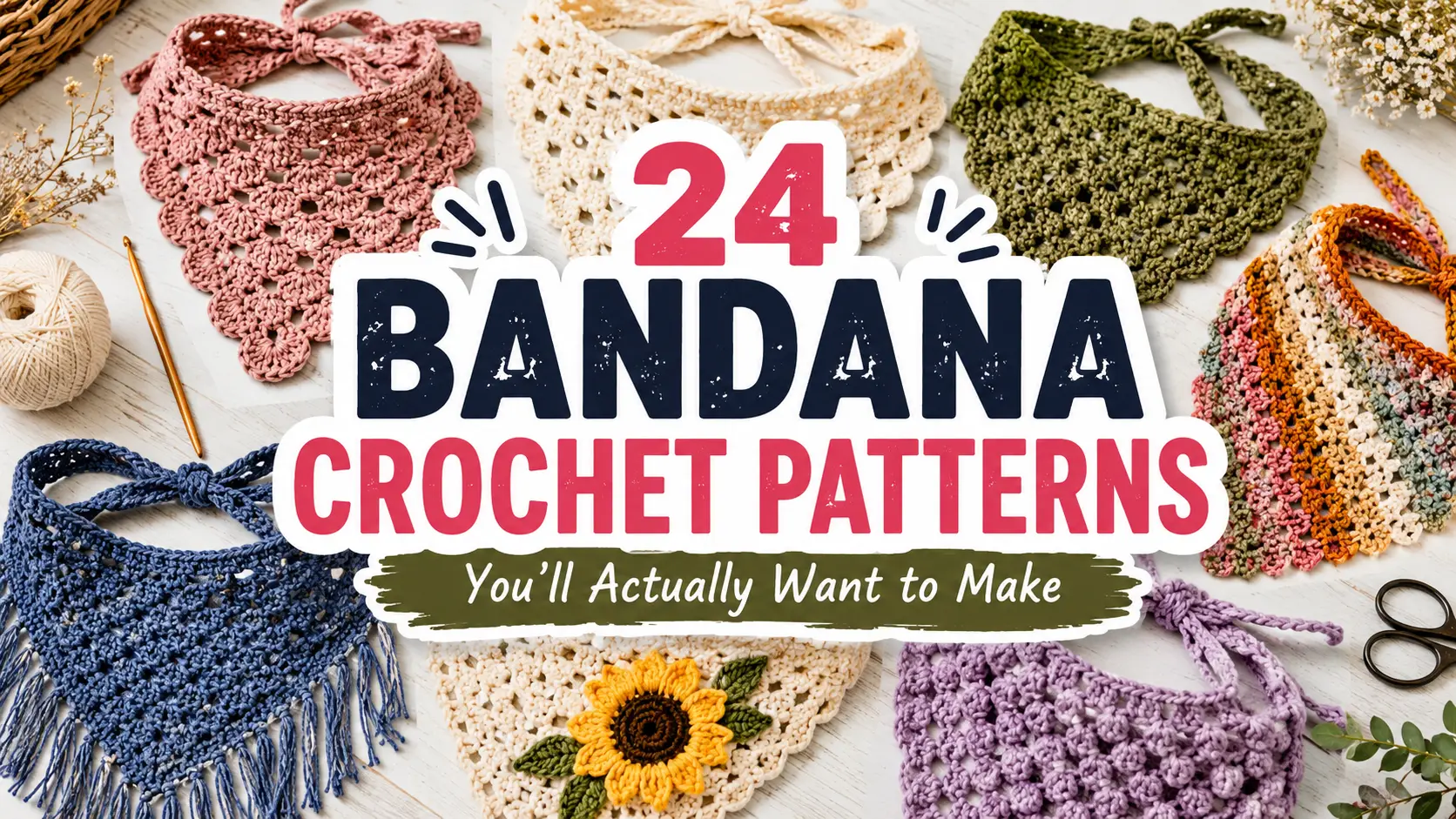
Bandana crochet is having a full-blown moment right now, and honestly? I get it. A crochet bandana takes a fraction of the yarn and time of a sweater or blanket; it works up in an afternoon, and it’s one of those projects that looks way more impressive than the effort it actually takes. Below you’ll find 24 bandana crochet patterns and pattern styles, from beginner-friendly granny triangles to scalloped, ombre, and textured versions, plus the yarn, hook, and gauge info you need to get a good fit every time.
Most bandana crochet patterns use a triangle worked in double crochet rows or granny clusters, finished with an edging and two crocheted ties. A light or medium weight yarn with a 3.5mm–5mm hook is the sweet spot for drape, and a basic triangle takes most confident beginners 2–4 hours to finish, ties included.
Bandana Crochet Pattern Comparison Table
| Pattern Style | Skill Level | Best For | Approx. Time |
| Classic Granny Triangle | Beginner | First-timers, gift-making | 2–3 hrs |
| Scalloped Edge | Beginner–Intermediate | Feminine, vintage look | 3–4 hrs |
| Lacy Filet | Intermediate | Warm-weather wear | 3–5 hrs |
| Corner-to-Corner (C2C) | Intermediate | Custom color designs | 4–6 hrs |
| Toddler-Size Mini | Beginner | Kids (with safety notes) | 1–2 hrs |
What Is Bandana Crochet?
Bandana crochet is the practice of crocheting a triangular (or sometimes rectangular) head scarf, usually worked flat in rows or in the round from a center point, then finished with an edging and two long ties that knot behind the head or neck. It’s one of the most forgiving accessory shapes in crochet because a slightly “off” gauge just changes the finished size a little instead of ruining the fit, which makes it a favorite starter project for anyone easing into garment-adjacent crochet.
Most bandana crochet patterns fall into two camps: top-down triangles, which start at a point (often a magic ring) and grow outward, and row-based triangles, which are built more like a scarf that happens to taper. Both are covered in the list below, so you can pick whichever construction matches the look you’re going for.
What Yarn and Hook Size Should I Use for a Crochet Bandana?
For most crochet bandana patterns, choosing the right crochet yarn for beginners helps achieve better drape, since bulky yarn tends to stand away from the scalp instead of hugging it. The Craft Yarn Council’s Standard Yarn Weight System groups yarn into eight numbered categories from lace to jumbo, each paired with a recommended hook range, and most bandana designs sit in the “Fine” (Size 2) to “Medium” (Size 4) categories, worked on hooks between roughly <cite index=”6-1,9-1″>a 2.75mm and 5.5mm depending on the specific yarn label</cite>. If you’re using a yarn without a label, the Craft Yarn Council also recommends swatching and checking your stitch count over a 4-inch square before committing to a full-size project, since gauge (not just yarn weight) is what ultimately determines the fit.
24 Bandana Crochet Patterns to Try
1. Classic Granny Triangle Bandana
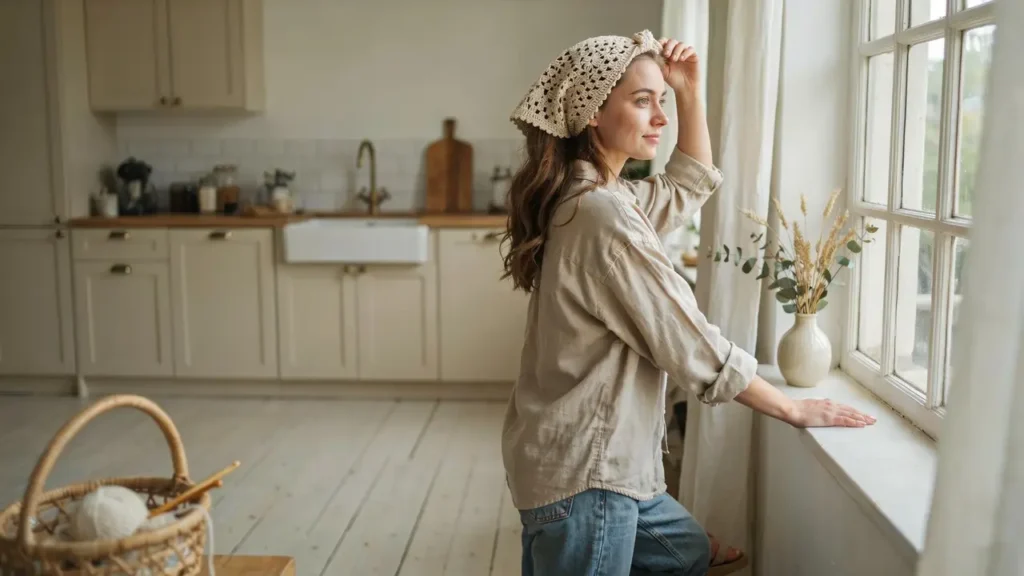
This is the bandana crochet pattern almost everyone learns first, and for good reason. IIt starts from a magic ring, grows by double crochet clusters on either side of a center chain space, and turns into a perfect triangle without any shaping math. If you’re new to this technique, it’s worth learning first because it creates a neat, secure center for triangle projects. The two side edges taper naturally as you add rows, so you never have to count decreases.
It’s the pattern I hand to anyone who says “I want to try garment crochet but I’m scared of sizing” you really can’t get the fit wrong here, and it only takes a handful of yarn to finish.
2. Scalloped Edge Bandana
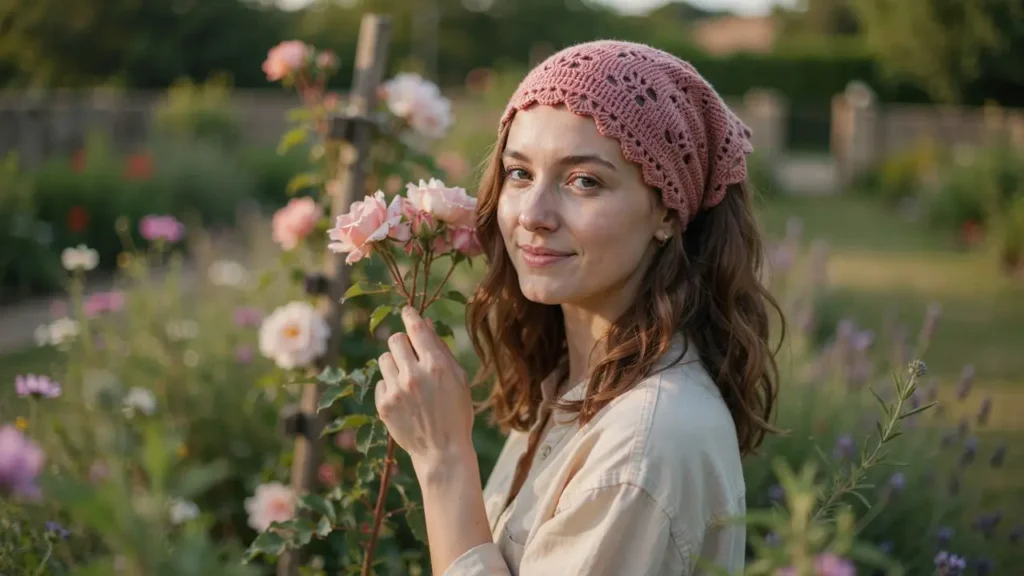
Instead of a plain straight border, this version finishes the two angled sides with a row of shell scallops worked into the spaces between granny clusters. The scallops catch light in a way a flat edge just doesn’t, and they add a soft, almost lacy movement along the front hairline.
I like this one for anyone who wants their bandana to read as “finished garment” rather than “craft project.” It photographs beautifully for Pinterest too, since the scalloped texture shows up clearly even in a small thumbnail image.
3. Picot Trim Bandana
Picots are those tiny three-chain loops that pop up along an edge like little bumps, and they’re one of the easiest ways to dress up a plain triangle without learning a new stitch. Work a row of single crochet along your finished edge, then chain 3 and slip stitch back into the third chain every few stitches. It reads delicate but takes almost no extra time compared to a scalloped border.
Special Tip: keep your picots evenly spaced by counting stitches between them rather than eyeballing it, or they’ll bunch up on one side.
4. Boho Fringe Bandana
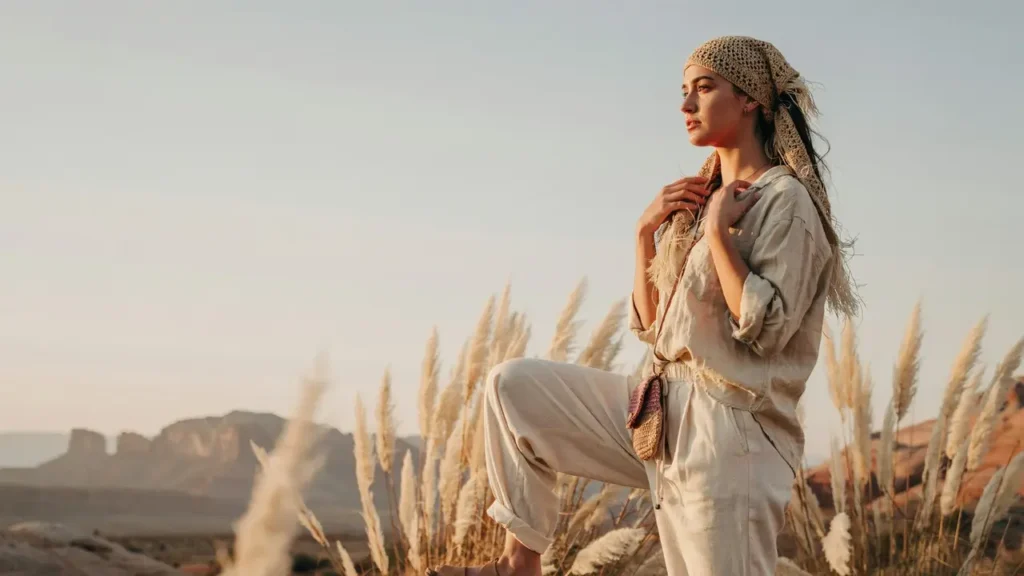
Skip the ties altogether on this one and instead attach loose fringe along the back edge, similar to a poncho or shawl hem. It leans into the free-spirited, festival-adjacent aesthetic that’s been trending in bandana crochet ideas lately. Braided or knotted fringe both work; braided holds its shape longer through wear and washing.
This is a fun one for anyone who wants a bandana that doubles as a statement accessory rather than something purely functional for keeping hair back.
5. Reversible Two-Tone Bandana
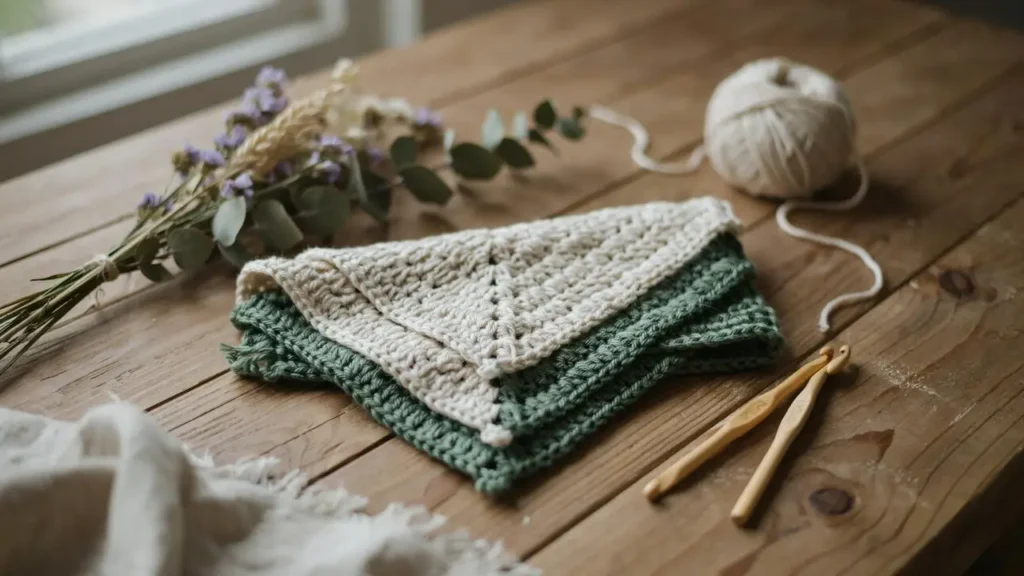
Worked with two strands of contrasting color held loosely at the edges (or crocheted as two thin layers joined at the border), this bandana lets you flip it inside out for a completely different look. It’s more of a construction technique than a single stitch pattern, so you can apply it to almost any of the triangle bases in this list. If you’re someone who likes to get more mileage out of fewer handmade pieces, this is the one project on the list that basically gives you two bandanas in one.
6. Chunky Weekend Bandana
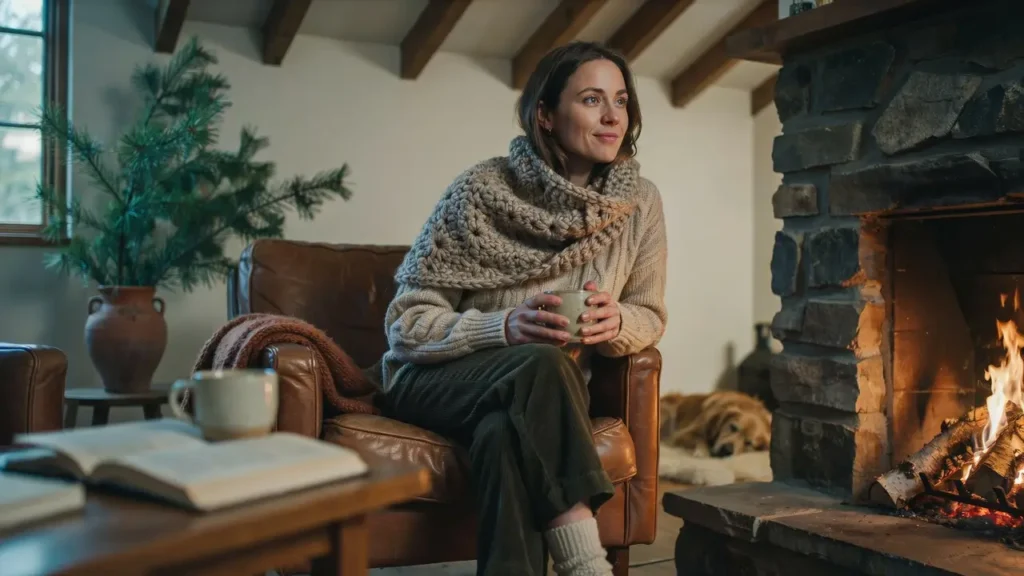
Most bandana crochet patterns lean toward thinner yarn for drape, but a bulky-weight version worked on a larger hook has its own appeal, it works up in under an hour and reads more like a cozy headband-scarf hybrid than a delicate accessory.
It won’t lay quite as flat against the head as a fine-yarn version, but for cold-weather wear or a quick last-minute gift, that’s honestly a feature, not a bug.
7. Lacy Filet Bandana
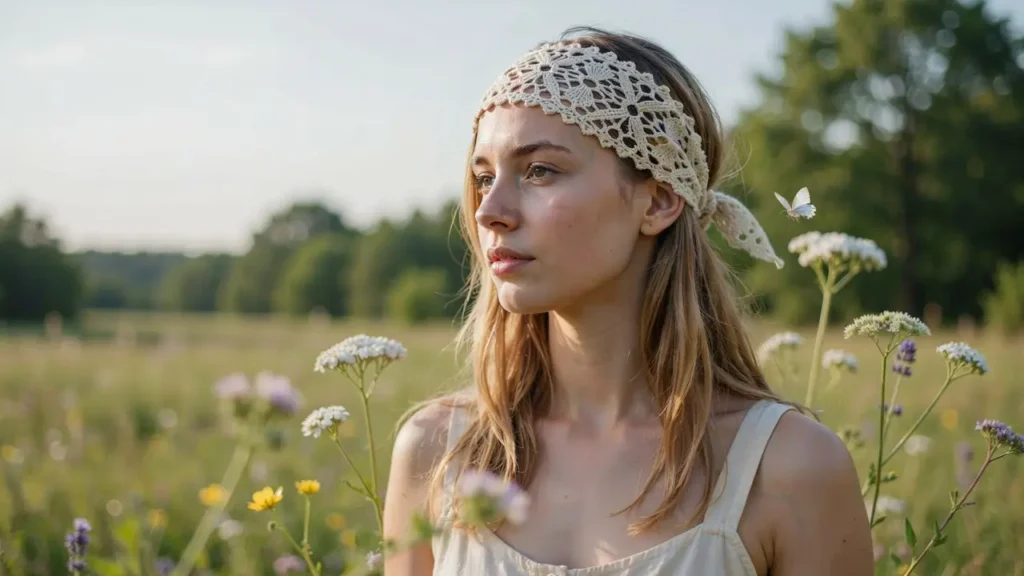
Filet crochet uses a grid of chain spaces and double crochet blocks to create an openwork pattern, and it translates surprisingly well onto a bandana shape. You can keep it simple with an all-over mesh or chart a small motif like a diamond or heart into the center panel.
It’s a great next-step project if you already know filet from doilies or table runners and want to try it on something wearable.
8. Sunflower Applique Bandana
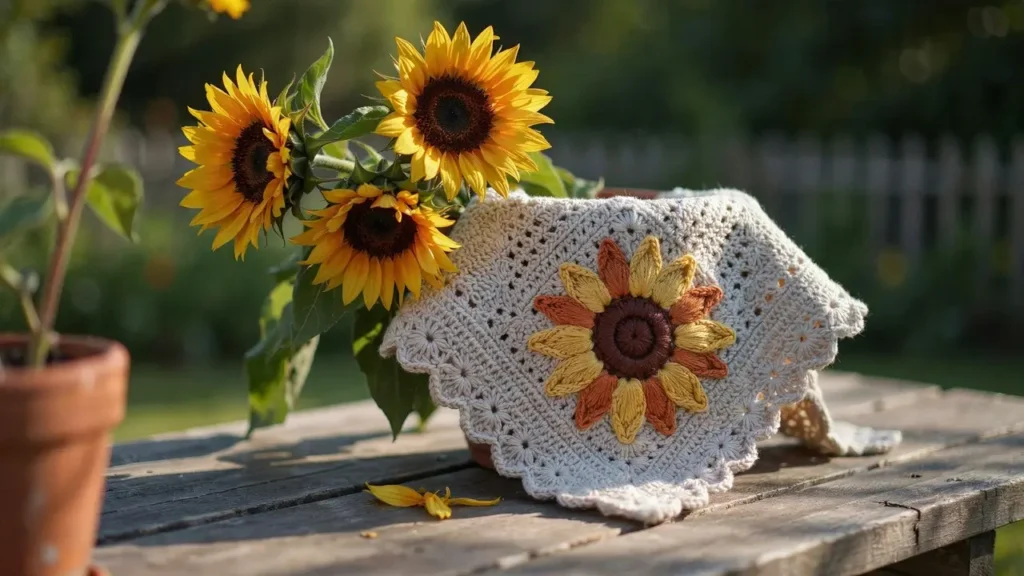
A plain triangle base gets a small crocheted sunflower (or any flower motif) stitched onto one corner, near where the tie meets the body of the bandana. This is one of the easiest ways to personalize a basic pattern without learning a new construction method, you’re essentially making two small projects and joining them. It’s also a great stash-buster for leftover yellow and green scraps.
9. Rainbow Striped Bandana
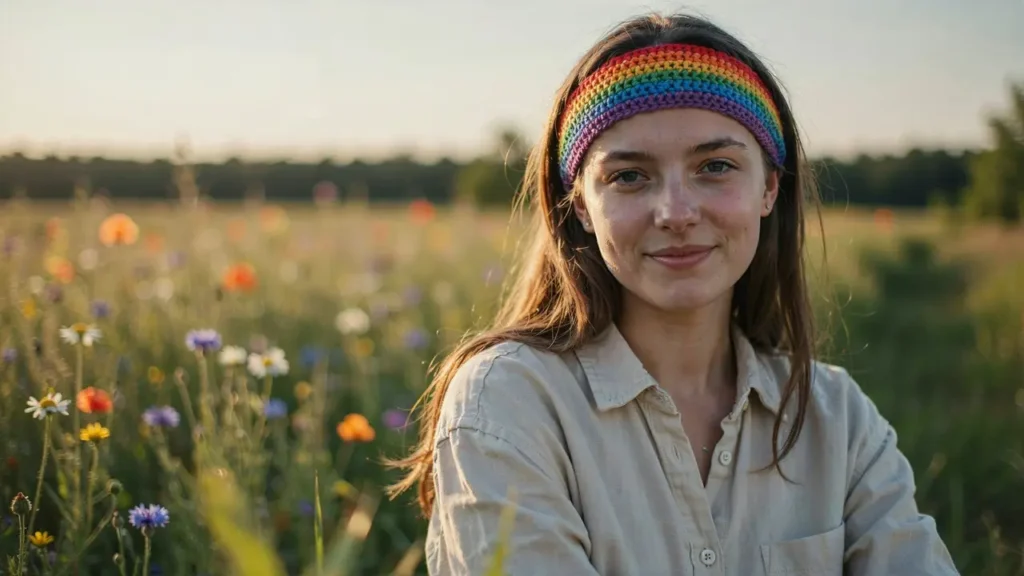
Working color changes every row or every other row turns the humble granny triangle into a genuinely eye-catching piece. Carrying your unused colors up the side (rather than cutting and rejoining each time) keeps the back neat and avoids a mountain of ends to weave in later.
This version tends to be the most-repinned style in my experience, since the stripes read clearly even at a glance.
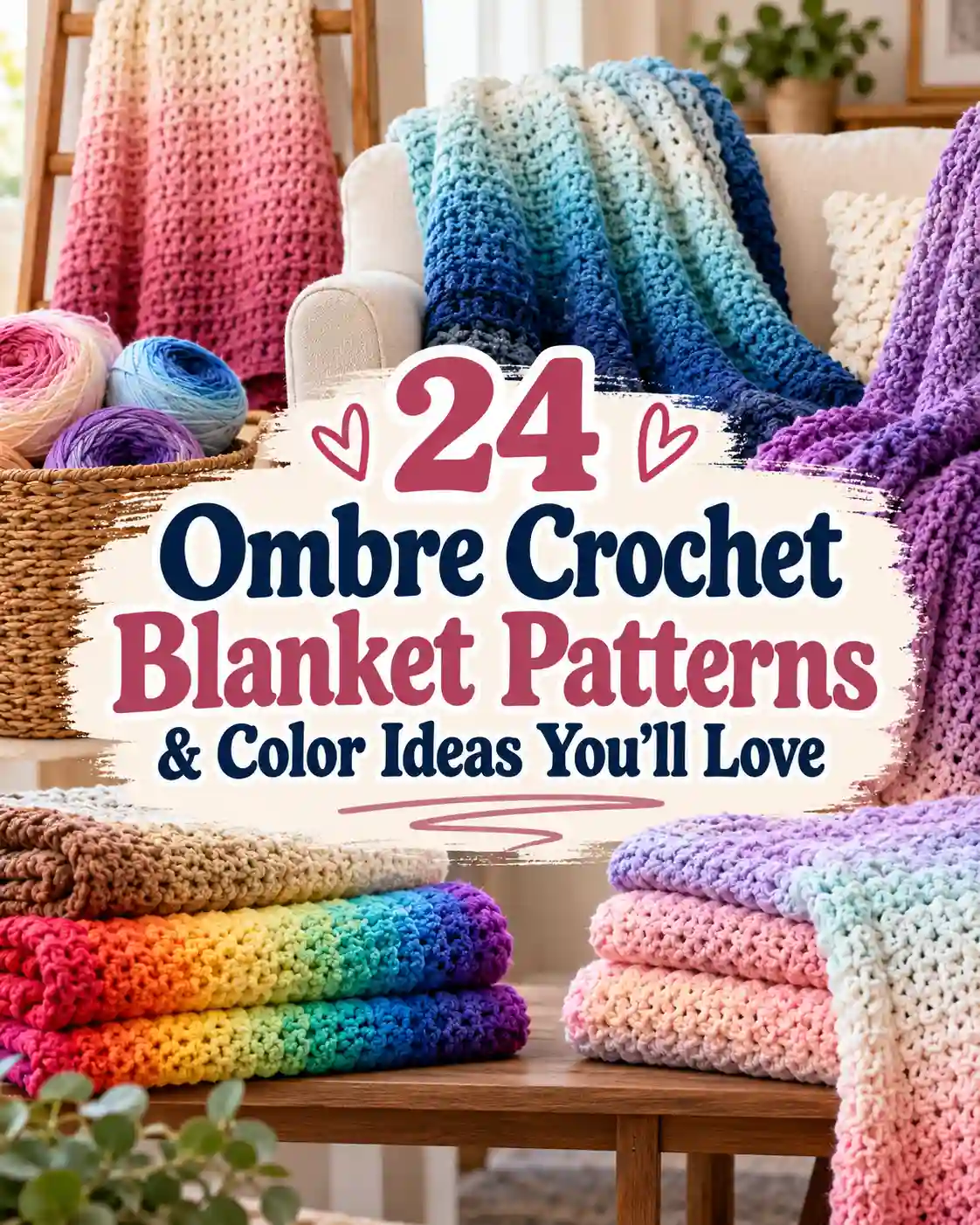
10. Ombre Gradient Bandana
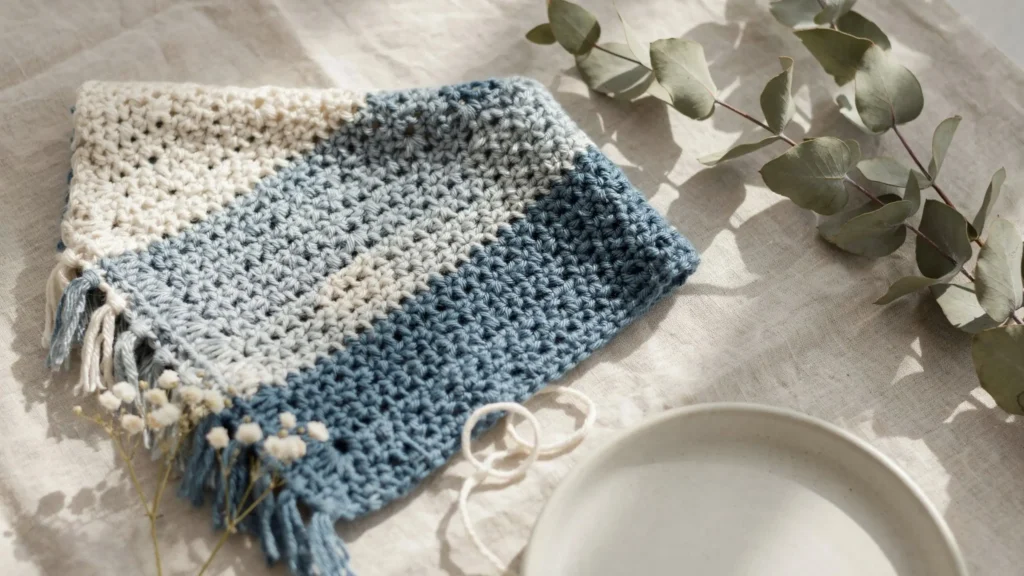
Instead of hard color blocks, an ombre bandana fades gradually from light to dark (or one hue to another) using a gradient cake yarn or hand-planned color changes.
It has a much softer, more sophisticated look than stripes, and gradient cake yarns do most of the color-planning work for you, which makes this deceptively easy for how impressive the result looks.
11. Waffle Stitch Bandana
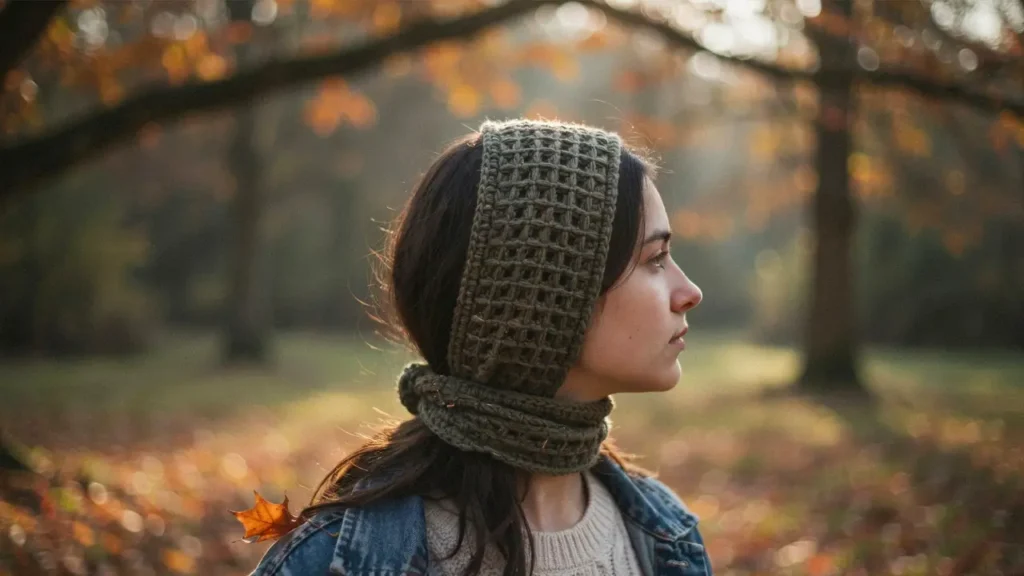
The waffle stitch alternates front post and back post double crochets to create a raised, grid-like texture that looks almost woven. It’s thicker and more structured than a standard granny bandana, so it holds its shape a little better against wind.
This one takes slightly more yarn than the classic triangle because of the extra post stitches, so budget a bit more than you would for a basic version.
12. Shell Stitch Bandana
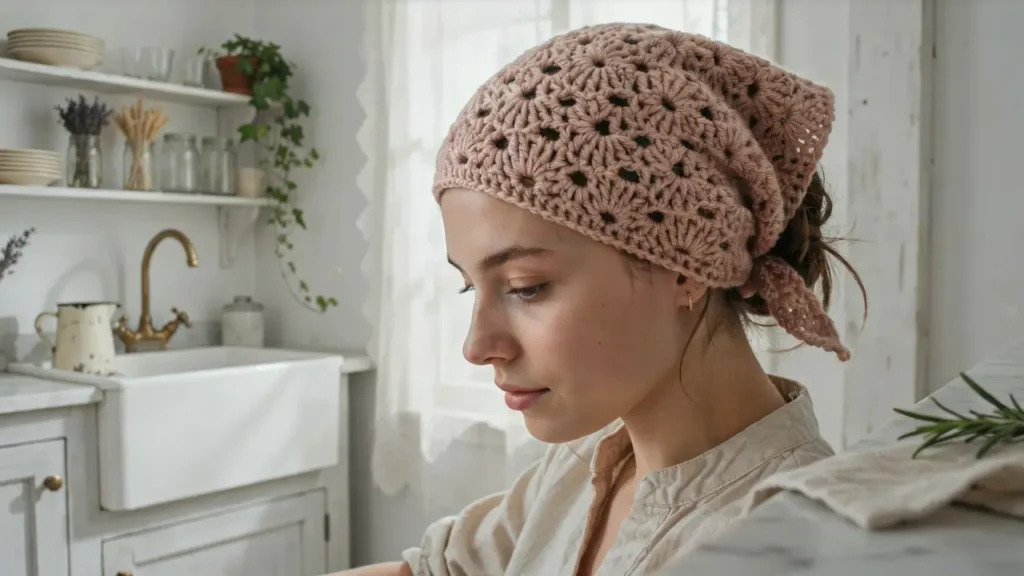
Shell stitch (a cluster of 5 or so double crochets worked into one stitch) creates a soft, scalloped texture across the whole body of the bandana rather than just the edge. It has a vintage, almost 1970s crochet-blanket feel that’s been resurging in home and accessory crochet alike.
Because the shells create natural stretch, this version also tends to sit a little looser and more relaxed than a tightly packed granny cluster base.
13. Corner-to-Corner (C2C) Bandana
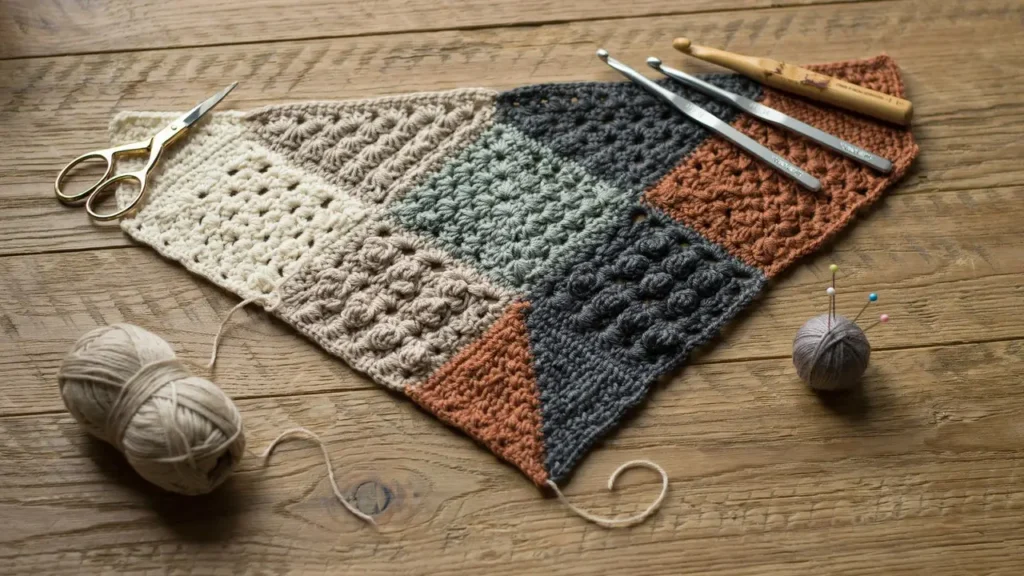
C2C crochet builds a project diagonally from one corner, using blocks of double crochet that can each represent a “pixel” in a graphed design. It’s an excellent technique if you enjoy creating custom graphic designs. That makes it the go-to construction if you want to crochet a specific image, word, or logo onto your bandana rather than an abstract stitch texture.
It’s more time-intensive than a plain triangle, but if you’ve ever wanted a truly custom, one-of-a-kind bandana, this is the technique that gets you there.
14. Mini Granny Square Patchwork Bandana
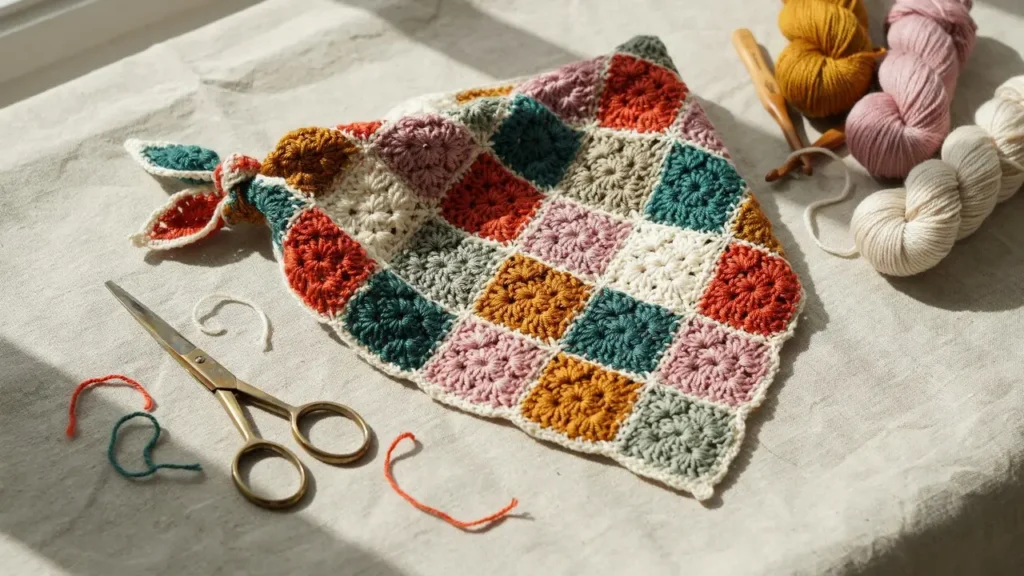
Rather than working the bandana as one continuous piece, this version joins several small granny squares (or half-square triangles) into a bandana shape. It’s an excellent scrap-yarn project since each square can be a different leftover color, and joining as you go means there’s very little separate seaming at the end.
Special Tip: lay your squares out flat before joining to make sure your color placement actually reads the way you picture it.
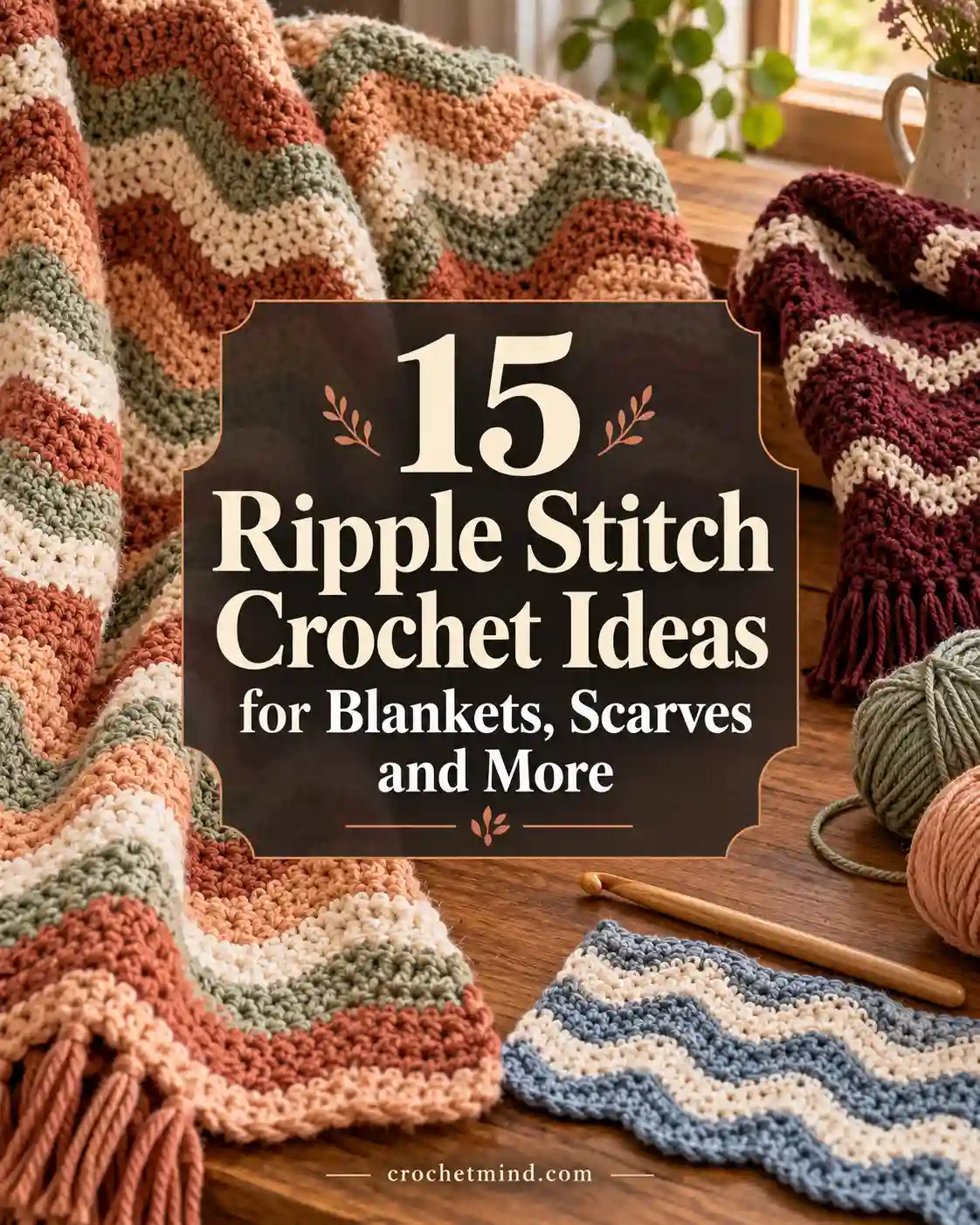
15. Ripple Stitch Bandana
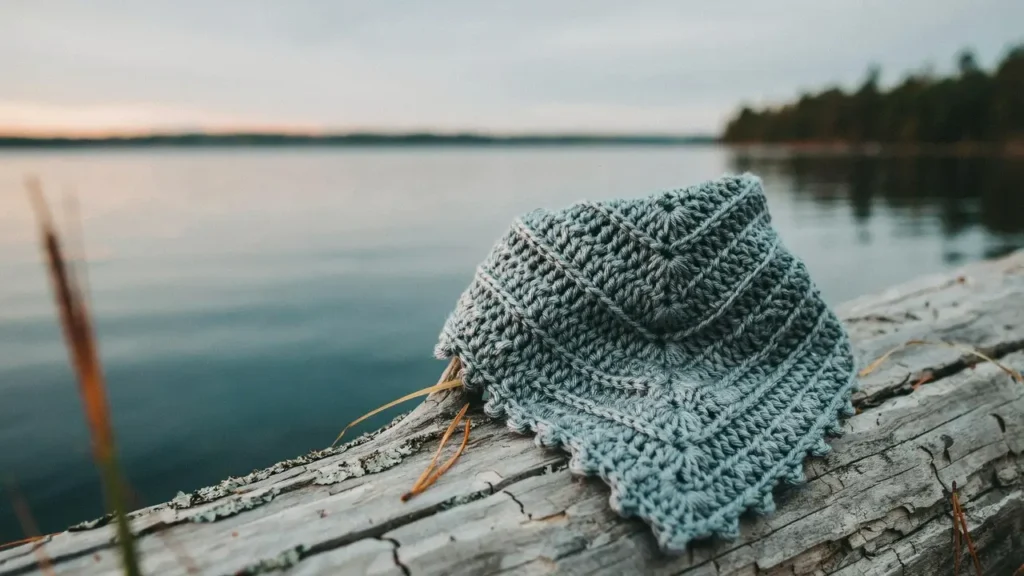
The classic ripple (or chevron) stitch, usually seen on blankets, scales down nicely onto a bandana shape when you taper the row width as you go. The peaks and valleys create a wave-like texture that looks great in either a single color or a multi-color stripe combo.
It’s a slightly more advanced stitch pattern than a plain granny cluster, so I’d recommend this one once you’re comfortable with basic increases and decreases.
16. Cottagecore Floral Trim Bandana
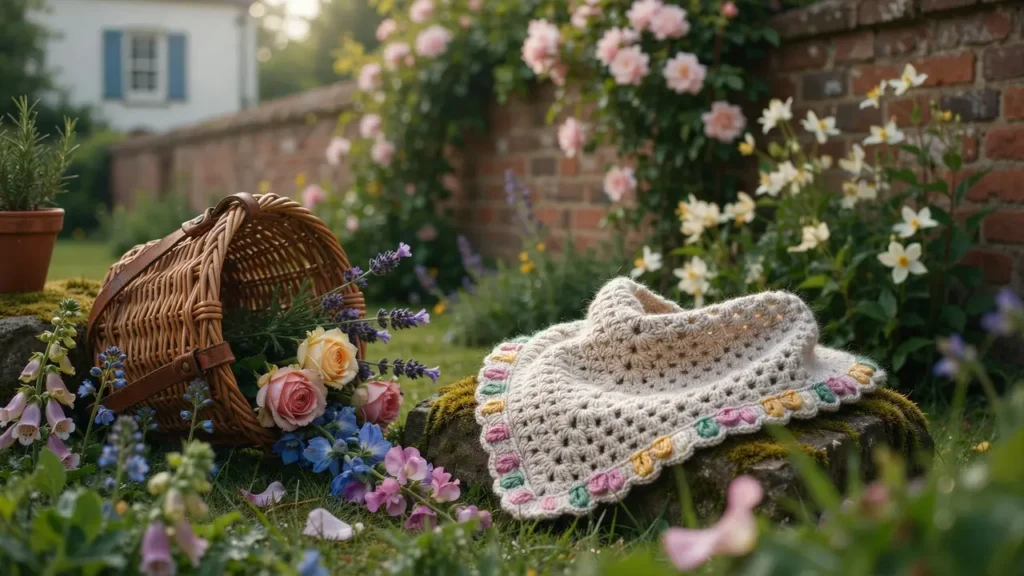
This style pairs a simple, undecorated triangle body with a border of small crocheted flowers instead of a scalloped or picot edge. The contrast between the plain center and the busy floral trim is what makes it feel intentional rather than fussy.
It leans hard into the cottagecore aesthetic that’s been popular across home decor and accessory crochet alike, and it photographs especially well against natural light and greenery for Pinterest pins.
17. Western Fringe Bandana
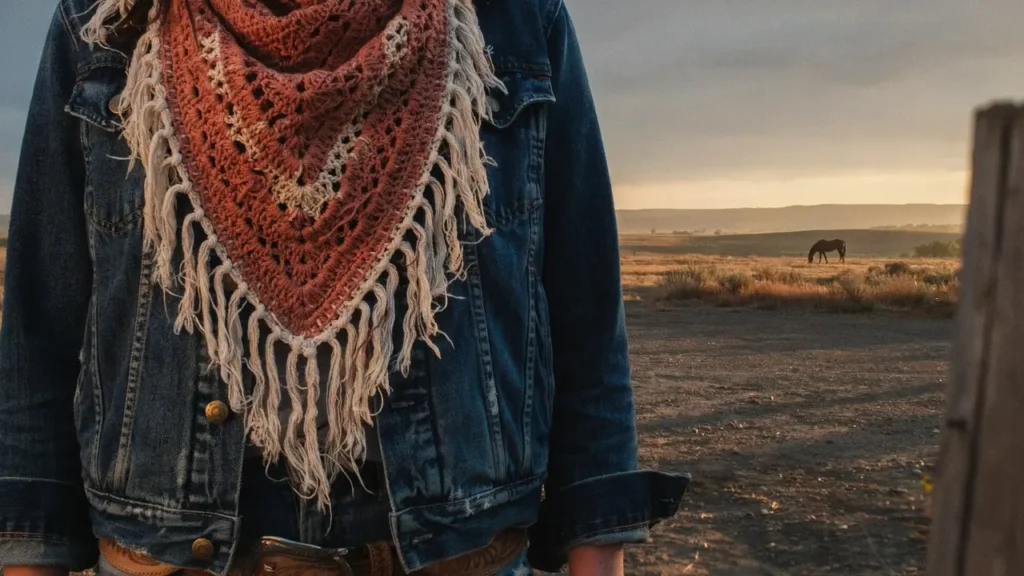
Worked in a rust, cream, or denim-blue color palette with long knotted fringe along the back edge, this version pulls inspiration from western and rodeo-core styling.
A simple granny triangle base keeps the technique approachable; the personality here comes entirely from color choice and the fringe treatment rather than a complicated stitch pattern.
18. Festival Tie-Dye Yarn Bandana
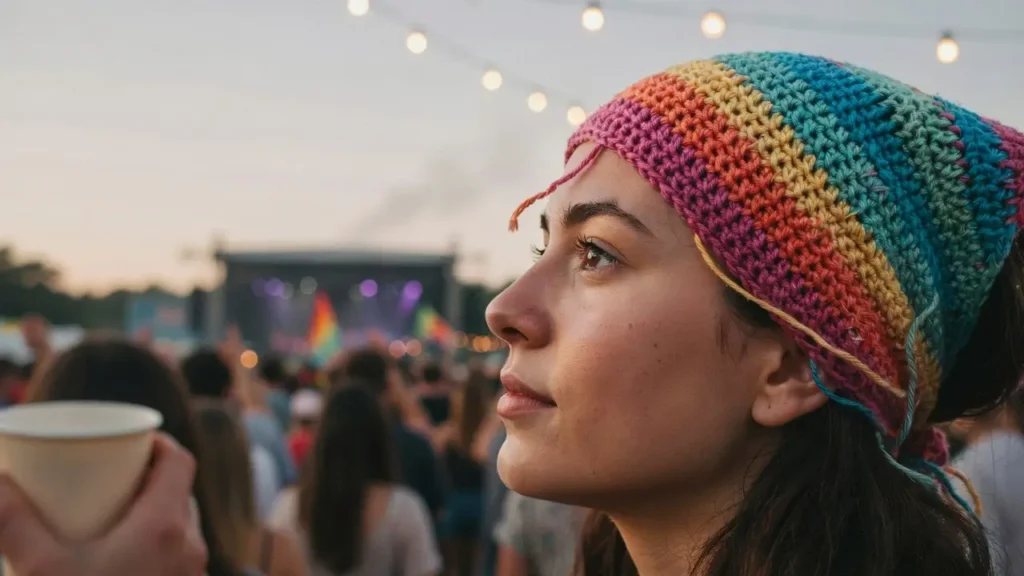
Space-dyed or self-striping “tie-dye” yarns do most of the visual work in this pattern, so a plain single crochet or half double crochet base is often all you need.
Because the color changes happen inside the yarn itself, you avoid the extra ends and color-planning that a manually striped bandana requires, which makes this one of the fastest patterns on this list to actually finish.
19. No-Sew One-Piece Bandana
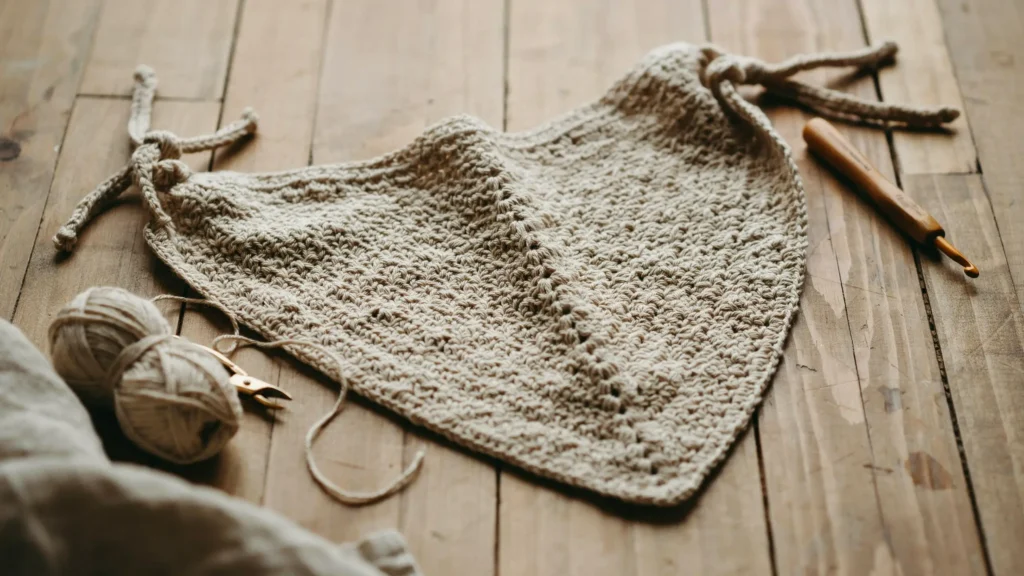
This construction crochets the ties directly out of the same working yarn as the body, in one continuous piece, so there’s no separate strap to attach or sew on afterward.
It’s a small structural detail, but it noticeably speeds up finishing time and eliminates one of the most common weak points (the strap-to-body join) where seams tend to fray with wear.
20. Puff Stitch Textured Bandana

Puff stitches (several loops pulled up into one stitch, then closed together) create a soft, bobbled texture across the surface of the bandana. It’s bulkier than a smooth double crochet base, so it works best in a fine or light-weight yarn to avoid the finished piece feeling stiff. This is a nice option if you want visible texture without committing to a full stitch-pattern repeat like waffle or shell stitch.
21. Color-Block Bandana
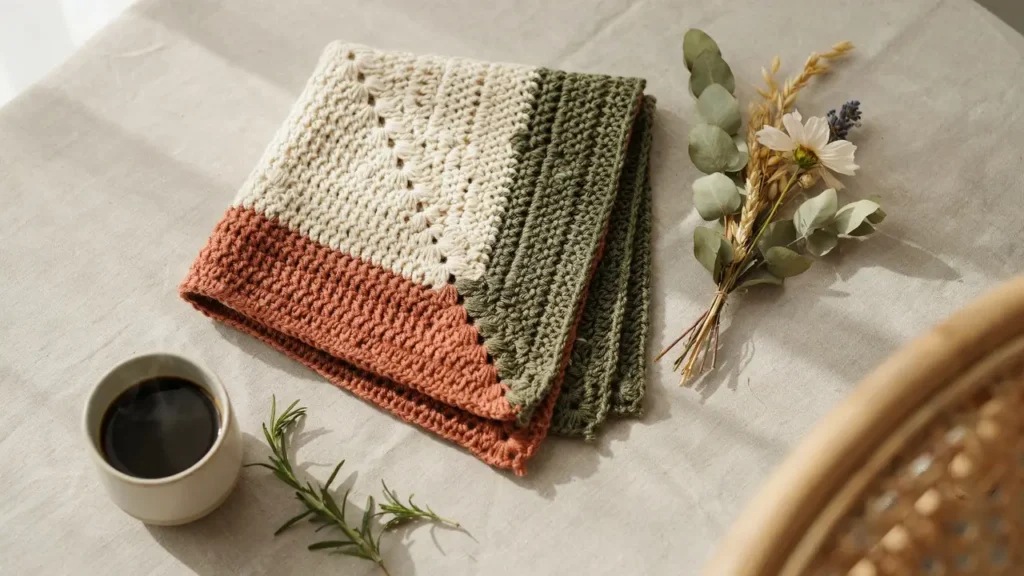
Rather than stripes or gradients, this version splits the triangle into two or three solid color sections with clean diagonal or horizontal breaks. It reads more modern and graphic than a striped bandana, and it’s a great way to use up two or three larger yarn scraps instead of the small amounts a multi-stripe design needs.
22. Beaded Edge Bandana
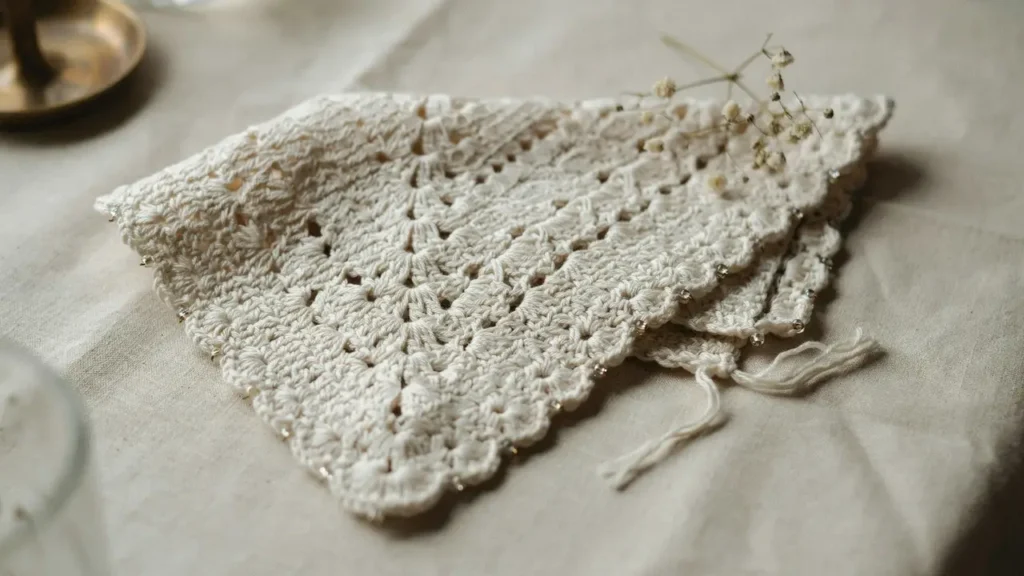
Pre-strung beads worked into the stitches of your final edging row add subtle sparkle and weight to the border, which also helps the bandana lay flatter against the head. String your beads onto the yarn before you begin the edging round, since there’s no way to add them mid-row once you’ve started.
This is a nice option for a bandana meant for a special occasion rather than everyday wear.
23. Toddler-Size Mini Bandana
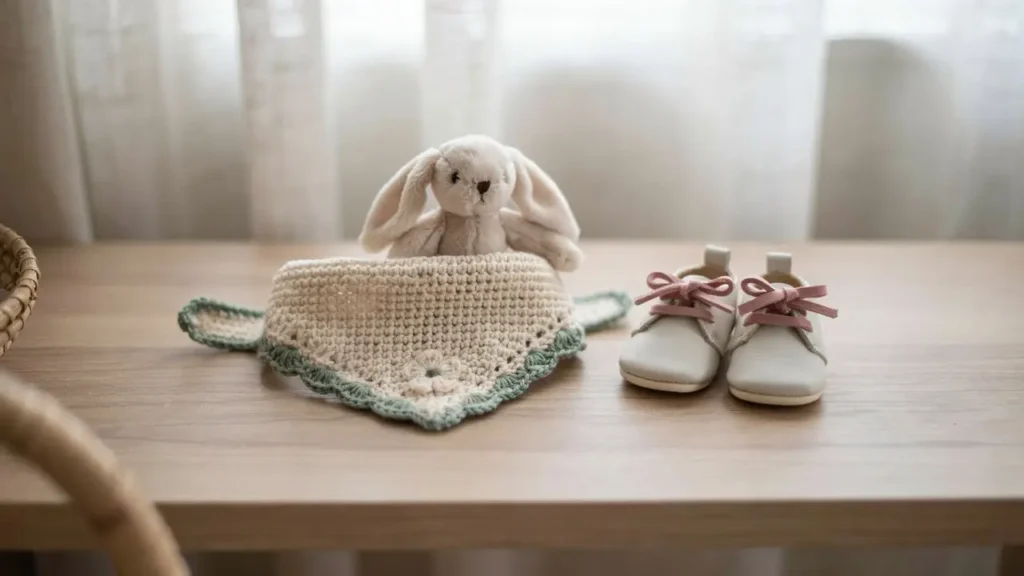
Scaling any of the triangle patterns above down to 6–8 rows instead of 12–15 creates a toddler or baby-sized version, and it’s a genuinely popular request in the crochet bandana pattern space.
One important safety note: the U.S. Consumer Product Safety Commission warns that hood and neck drawstrings on children’s upper outerwear can present a strangulation hazard, so keep the ties short and always supervise wear. </cite>, So if you’re crocheting a bandana for a young child, keep the ties short, avoid leaving long trailing ends, and always supervise wear rather than leaving it on unattended, especially near play equipment.
24. Extra-Long Wrap-Style Bandana
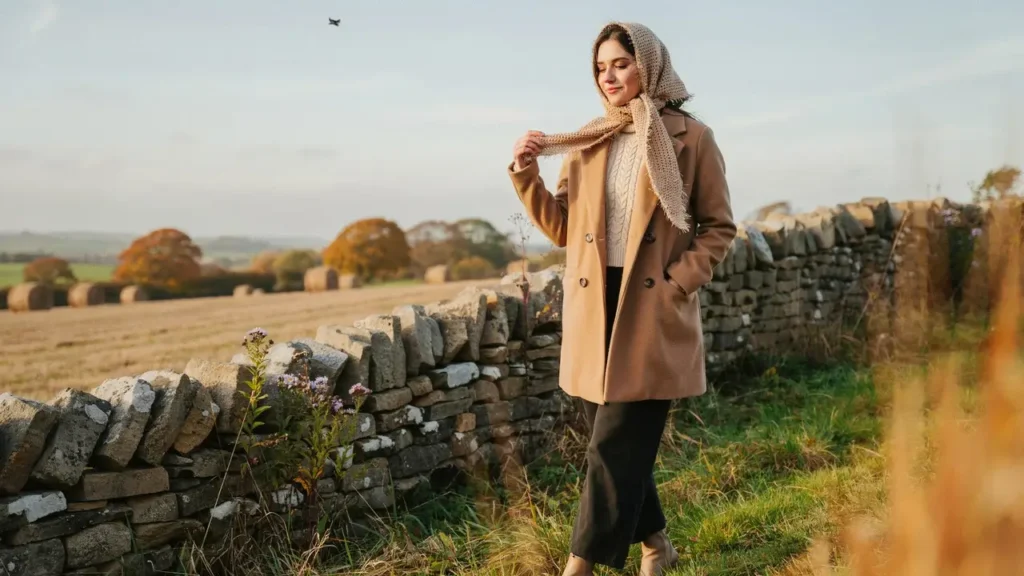
By adding several extra rows to a standard granny triangle, you get a larger piece that can wrap further around the head or double as a small kerchief-style neck scarf.
It’s a simple adaptation of pattern #1 above rather than a new technique, but the extra coverage makes it a versatile option for anyone who wants more styling flexibility from one pattern.
Frequently Asked Questions
Is bandana crochet good for beginners?
Yes, a basic granny triangle bandana is one of the most forgiving beginner projects, since minor gauge differences just change the size slightly instead of ruining the fit.
How much yarn do I need for a crochet bandana?
Most adult-sized bandana crochet patterns use well under one full skein of light or medium weight yarn, though textured stitches like waffle or puff stitch use more than a plain granny triangle.
What’s the easiest bandana crochet pattern for a first project?
The classic granny triangle bandana (pattern #1) is typically the easiest starting point, since it uses only chains and double crochet clusters with no shaping or decreases required.
Can I follow a bandana crochet pattern diagram instead of written instructions?
Yes, many designers publish a stitch diagram alongside the written pattern, which can be easier to follow visually if you’re a spatial learner or working in a different crochet terminology than the pattern was written in.
How do I make a crochet bandana pattern easy to resize?
Add or remove full rows (rather than partial rows) to change the size, and try the bandana on periodically as you work rather than waiting until the end to check the fit.
Final Thoughts
A crochet bandana is one of those projects that delivers a lot of satisfaction for very little yarn or time. Whether you prefer a classic granny triangle, a textured waffle stitch, or a colorful ombre design, there’s a pattern here to match every skill level and personal style. Start with a simple design if you’re new to crochet, then experiment with different stitches, borders, and color combinations as your confidence grows. Before you know it, you’ll have a collection of handmade bandanas that are perfect for everyday wear, thoughtful gifts, or selling at craft fairs. Grab your favorite yarn, pick a pattern, and enjoy creating something that’s both practical and uniquely yours.

![The Best 30+ Free Crochet Cat Patterns [Beginner-Friendly Guide]](https://crochetmind.com/wp-content/uploads/2025/04/1-The-Best-30-Free-Crochet-Cat-Patterns-Beginner-Friendly-Guide.webp)