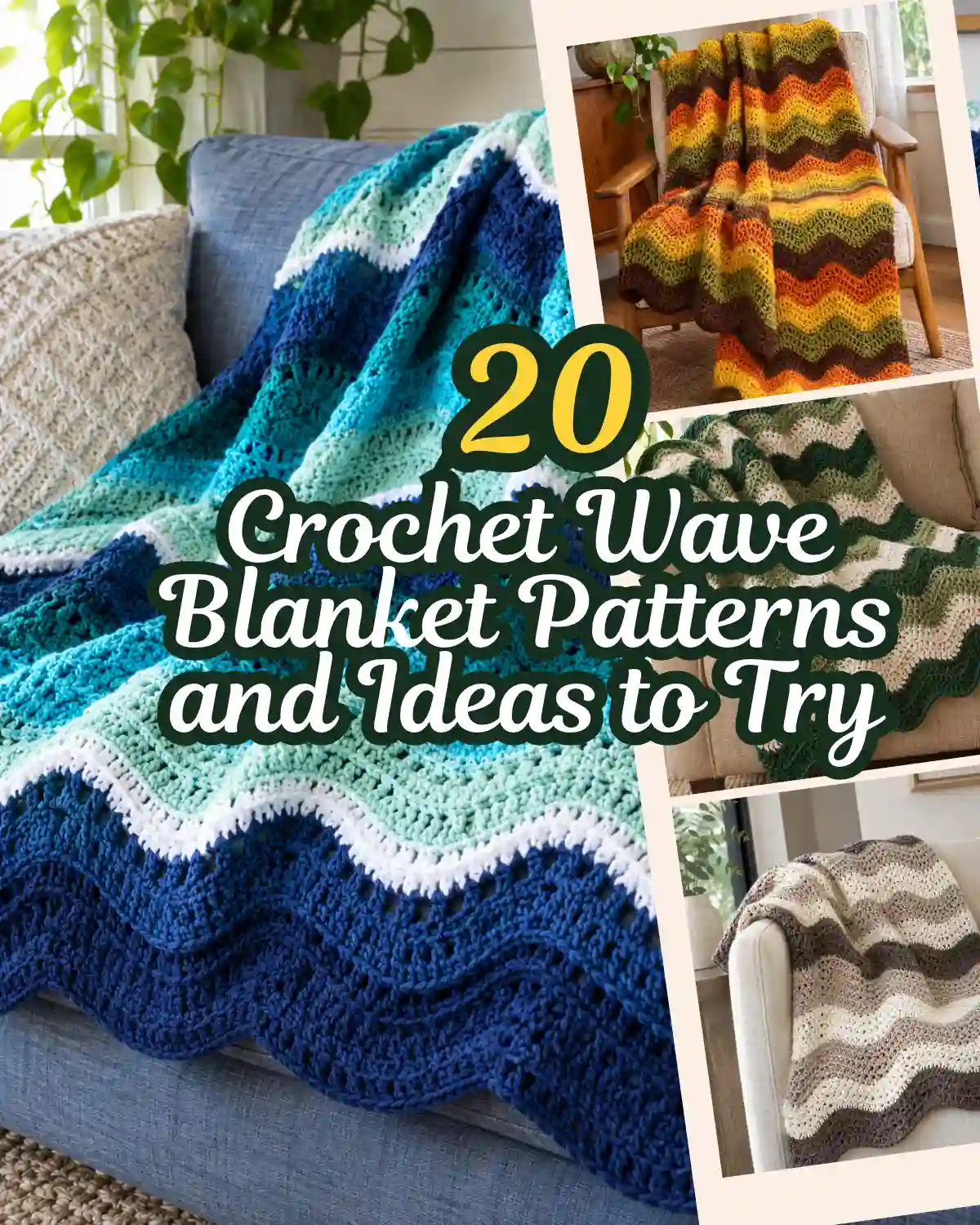

A crochet wave blanket combines flowing peaks, soft curves, and beautiful color changes to create a blanket that looks more detailed than a basic stitch pattern. Whether you want a crochet wave blanket free pattern, a beginner-friendly ripple design, or a colorful ocean-inspired throw, there are plenty of styles to explore.
Some designs use simple repeating stitches, while others create longer waves, raised textures, or delicate openwork found in many crochet blanket patterns. This guide explores 20 crochet wave blanket ideas, along with practical tips for choosing yarn, planning colors, adjusting blanket sizes, and keeping your ripple edges even.
Key Takeaways
- Explore 20 crochet wave blanket styles and designs.
- Choose a pattern that matches your crochet experience.
- Compare yarn weights before starting your project.
- Plan colors for attractive ripple and ocean effects.
- Check stitch counts to maintain even waves.
- Find a crochet wave blanket free pattern that fits your needs.
Crochet Wave Blanket: 20 Beautiful Patterns and Ideas
A crochet wave blanket uses repeating stitch combinations, increases, and decreases to create flowing peaks and valleys. You can make it with different yarn weights, colors, and stitch textures to create classic ripple blankets, ocean-inspired throws, chunky designs, and lightweight decorative blankets.
At a Glance:
- Classic ripple designs create traditional peaks and valleys.
- Ocean-inspired blankets use flowing shades of blue.
- Chunky yarn produces thicker, more noticeable textures.
- Lacy patterns create lightweight and open fabric.
- Colorful stripes give traditional wave designs a fresh look.
A crochet wave blanket is made by repeating increases and decreases, or other stitch combinations, to create peaks and valleys across the fabric. The finished look can change dramatically depending on the yarn, stitch height, color sequence, and spacing of the waves.
Before choosing a design, compare these popular styles:
| Blanket Style | Best For | Visual Appearance | Skill Level |
|---|---|---|---|
| Classic ripple | Everyday blankets | Regular peaks and valleys | Beginner to Easy |
| Ocean waves | Coastal home decor | Flowing blue shades | Easy |
| Striped wave | Colorful projects | Alternating color bands | Easy |
| Chunky wave | Cozy winter throws | Thick, pronounced texture | Easy |
| Lacy wave | Lightweight blankets | Open and airy stitches | Intermediate |
| Baby wave | Handmade baby gifts | Soft colors and gentle texture | Beginner to Easy |
| Retro wave | Vintage-inspired rooms | Bold contrasting stripes | Easy |
| Textured wave | Decorative blankets | Raised stitch details | Intermediate |
20 Crochet Wave Blanket Patterns and Ideas to Try
Actual difficulty depends on the stitch repeat and finishing techniques used in each pattern.
1. Classic Crochet Ripple Wave Blanket
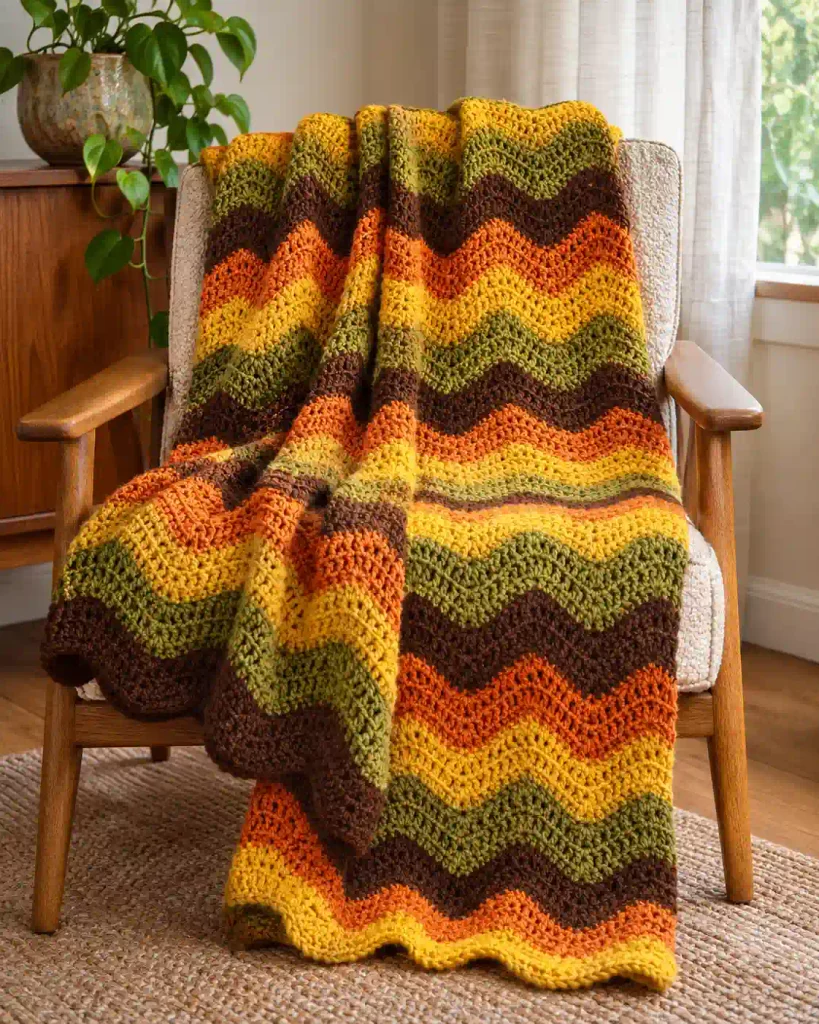
The classic crochet ripple blanket is a wonderful place to start if you love traditional wave designs. Its repeated peaks and valleys create a familiar zigzag effect without requiring complicated decorative stitches.
The beauty of this design comes from its simplicity. Instead of changing stitches constantly, you repeat a planned sequence of increases and decreases to create consistent waves, a technique commonly associated with ripple stitch crochet. It works especially well as a living room throw or a full-size everyday blanket.
Try using three or four complementary colors if you want the ripples to stand out. A single-color version also looks beautiful because the stitch pattern creates its own visual movement.
2. Beginner-Friendly Easy Wave Stitch Blanket
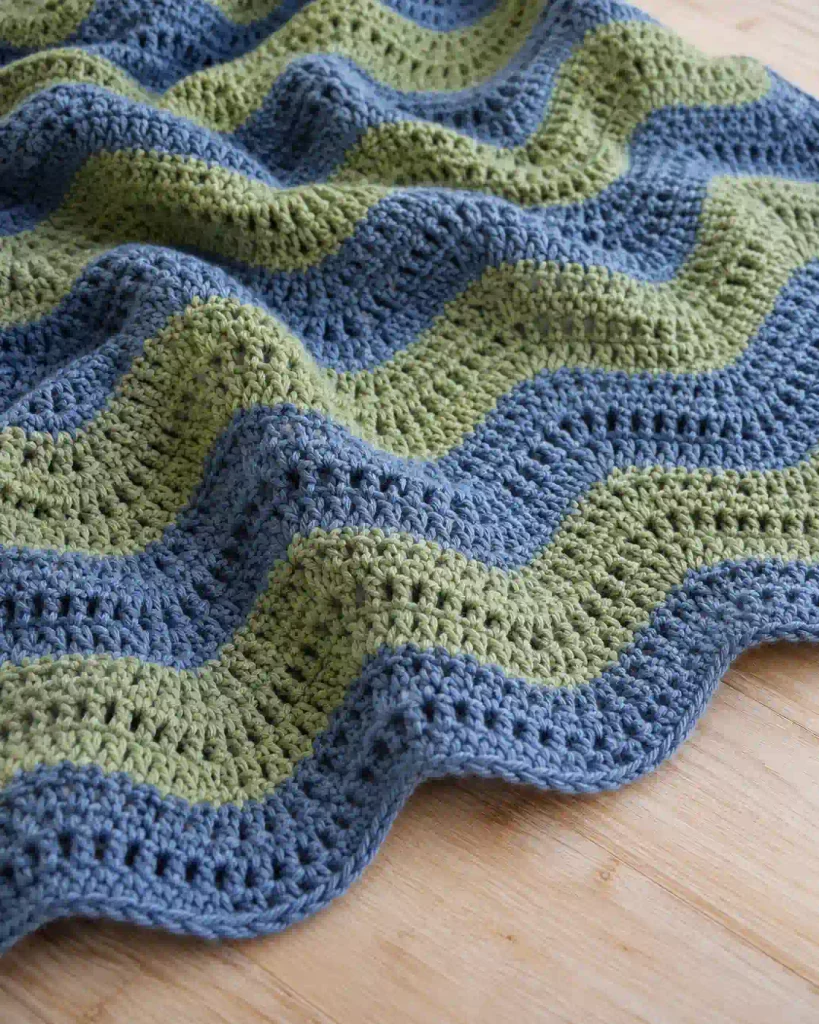
Want a wave blanket without spending hours learning complicated stitch combinations? An easy wave stitch blanket is a practical starting point.
Choose a pattern with a short, repeating row sequence. Once you understand where the increases and decreases belong, you can continue working without constantly checking every instruction.
Start with a small swatch before making the full blanket. The Crochet Guild of America provides beginner crochet resources covering basic stitches, hook handling, and essential techniques, which are useful if you are still learning the foundations of crochet.
Special Tip: Place a stitch marker near the beginning and end of a repeat. It makes counting much easier when you return to your project.
3. Ocean Waves Crochet Blanket
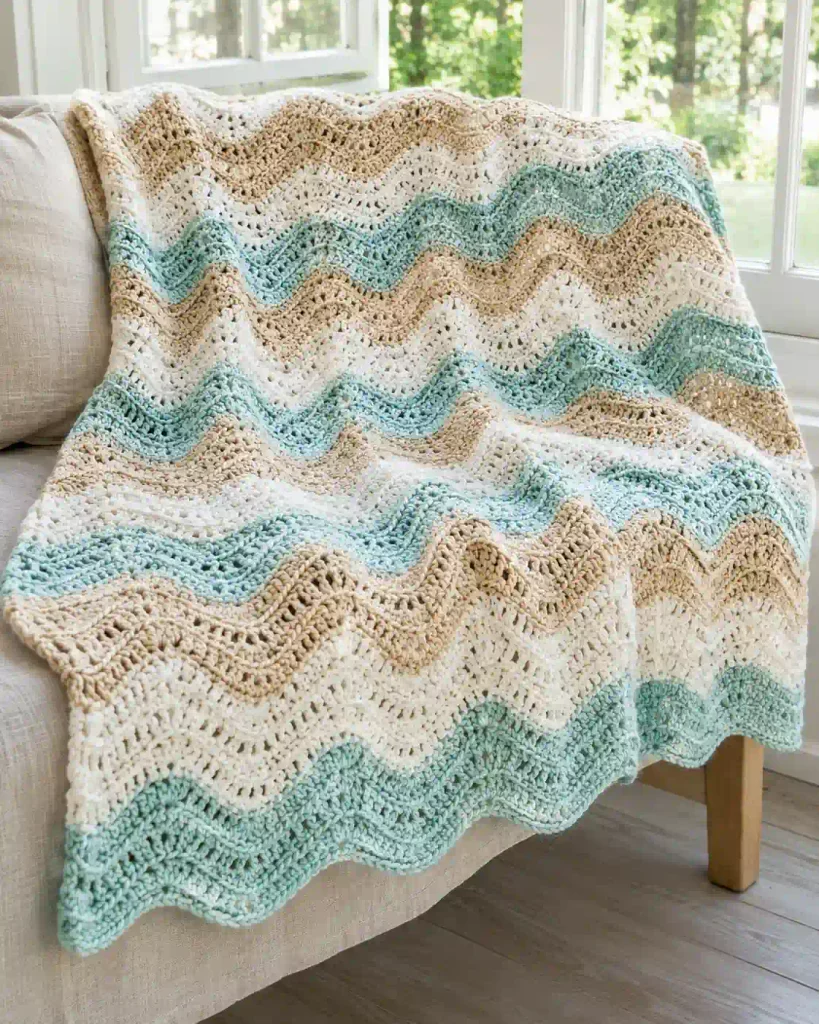
Imagine bringing the colors of the ocean into your living room. An ocean waves crochet blanket uses shades of blue, turquoise, aqua, and white to create a peaceful coastal appearance.
The main difference between this style and a traditional ripple blanket is the color story. Rather than relying on contrasting stripes, you can gradually move from deep navy to lighter ocean shades.
This design looks especially attractive over a neutral sofa or at the end of a bed. Add a few cream or seafoam rows to soften the transitions between stronger blues.
4. Long Wave Stitch Crochet Blanket
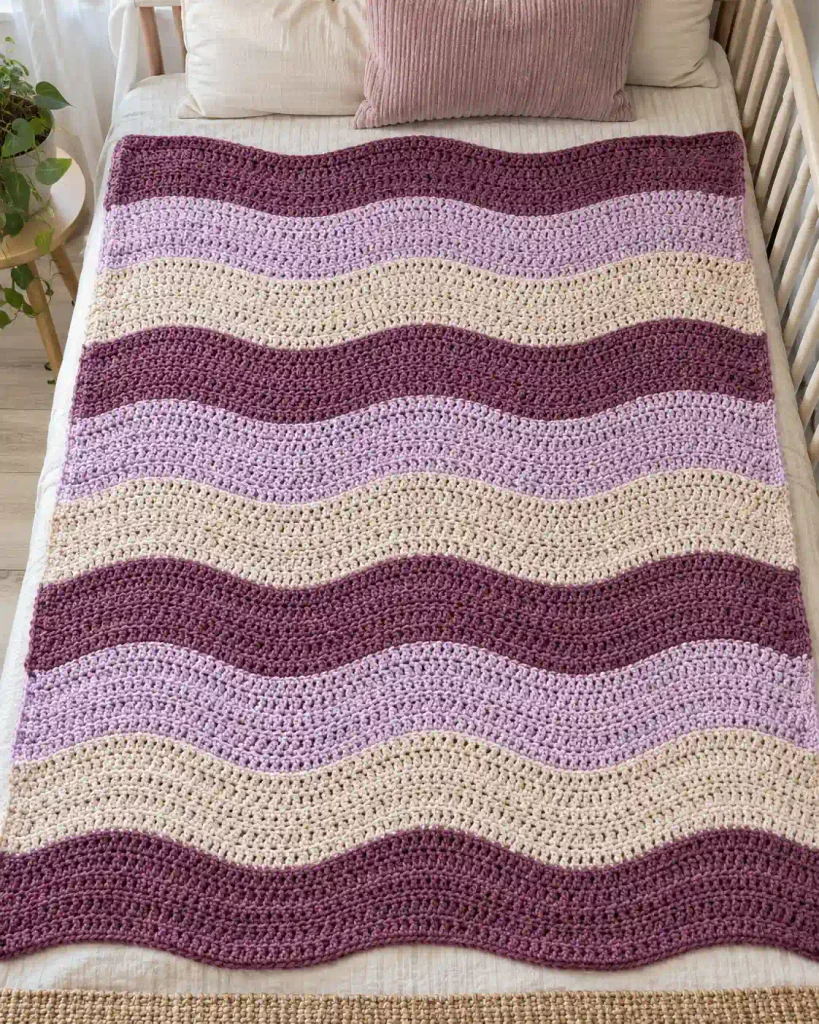
A long wave crochet blanket creates a more relaxed appearance through elongated curves and extended stitch patterns. The waves feel less compact than those in a traditional ripple design.
This option is worth considering when you want the blanket to have a flowing, decorative appearance. The longer stitch sections can also make individual color bands more noticeable.
Use a limited palette of two or three shades to keep the design balanced. A close-up photograph of the finished stitches will help readers see the difference between long waves and ordinary ripple rows.
5. Striped Crochet Wave Blanket
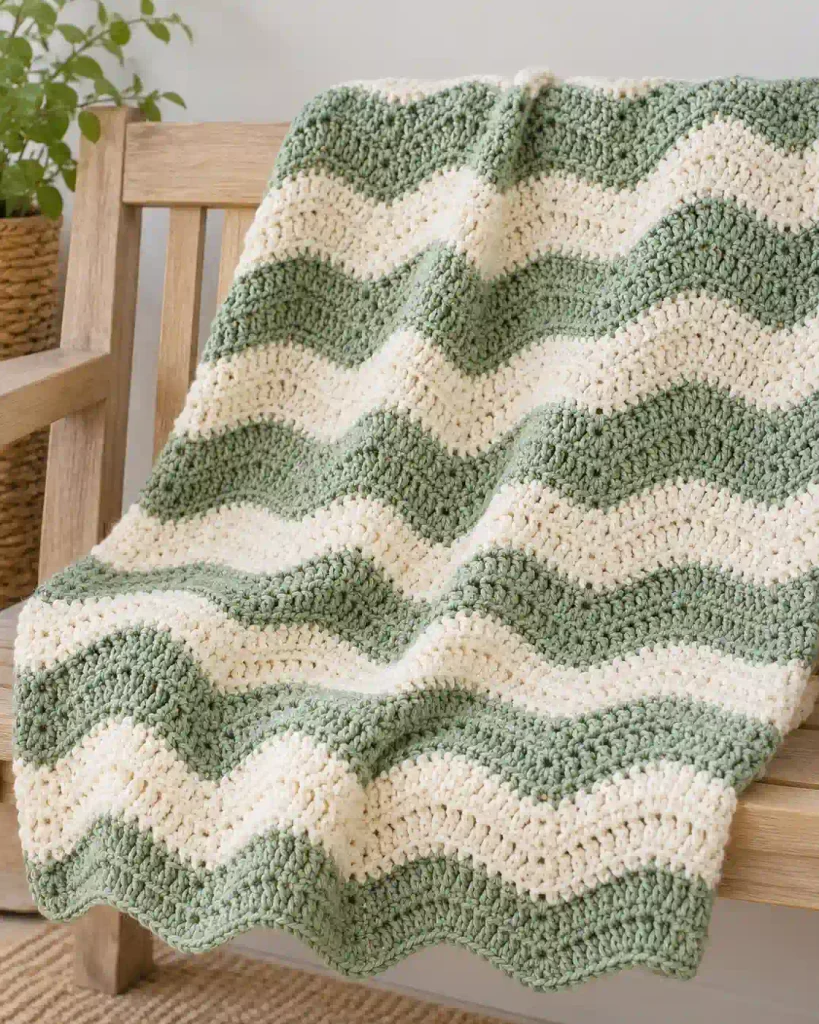
A striped crochet wave blanket is perfect for using leftover yarn or combining several favorite colors. Each stripe follows the same wave structure, but the color changes make the finished blanket feel completely different.
You can use alternating light and dark shades for strong contrast, or choose similar colors for a softer appearance. The most important part is planning the stripe order and deciding where to change colors in crochet before starting.
Some attractive combinations include:
- Cream, sage, and dusty pink.
- Navy, aqua, and white.
- Mustard, rust, and warm beige.
- Lavender, pale blue, and soft gray.
This is a particularly good option for crocheters who enjoy experimenting with color without learning a new stitch pattern.
6. Chunky Crochet Wave Blanket
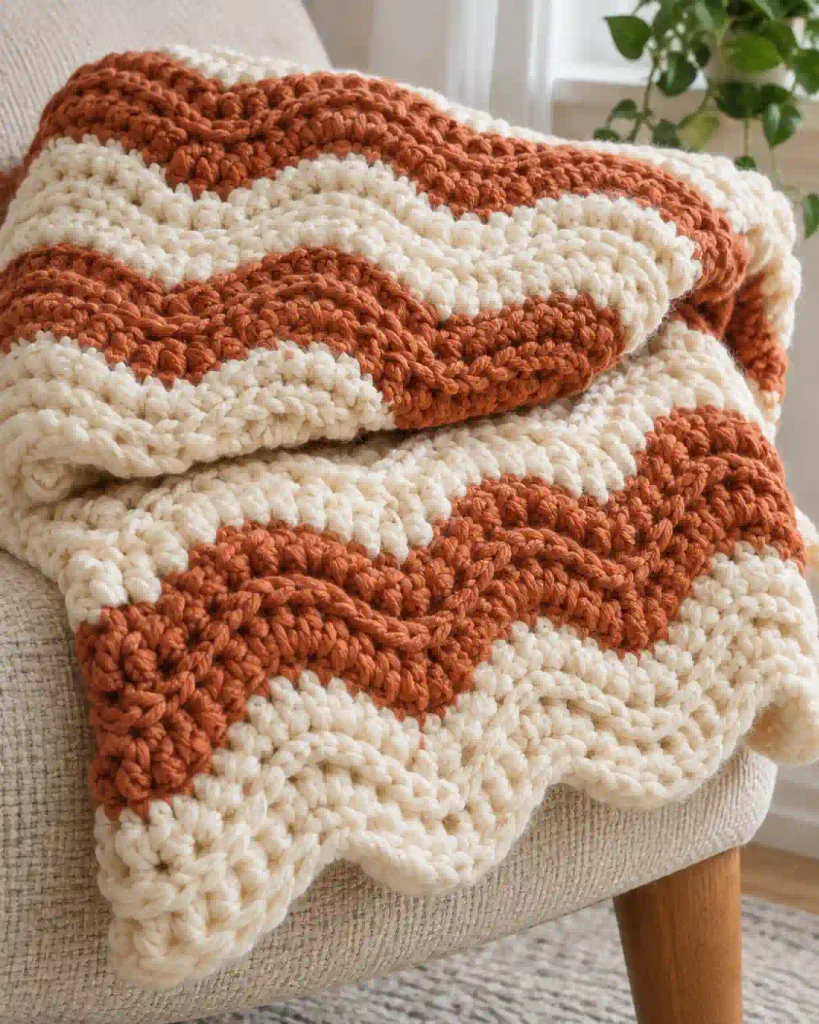
A chunky crochet wave blanket brings together thick yarn and pronounced wave shapes. It creates a substantial, cozy throw that looks beautiful on an armchair or sofa.
Compared with a lightweight ripple blanket, bulky yarn makes the stitch texture more noticeable. It can also produce a heavier finished fabric, so think about the intended use before choosing your materials.
Try a simple wave repeat rather than an intricate stitch combination. Thick yarn already provides plenty of visual interest, so an uncomplicated pattern can produce a cleaner result.
7. Worsted Weight Crochet Wave Blanket
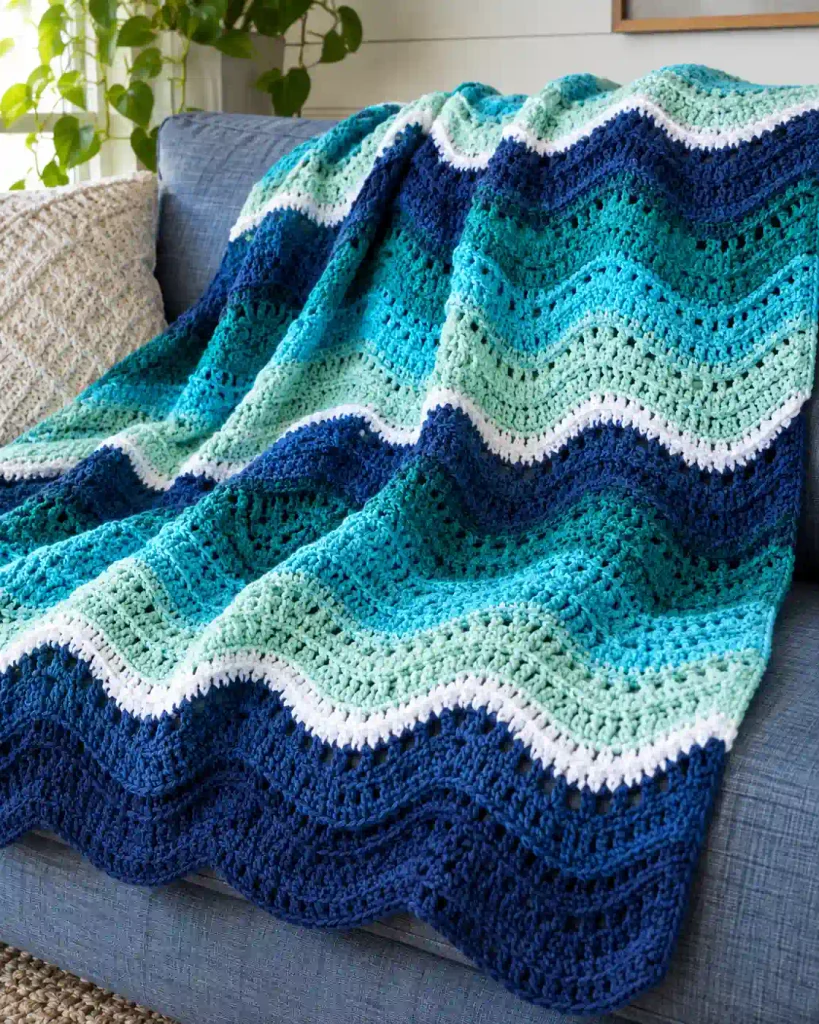
Choosing the right crochet yarn is important because its weight affects stitch definition and the finished fabric.
It is also a flexible option for different blanket sizes. You can use it for a baby blanket, a sofa throw, or a larger bed cover, depending on the pattern and your available yarn.
The Craft Yarn Council classifies worsted, afghan, and aran yarn under Category 4 (Medium). Its recommended crochet hook range is 5.5–6.5 mm, although these are guidelines rather than fixed requirements. Always follow the pattern’s gauge and the yarn manufacturer’s recommendations.
8. Beach Wave Crochet Blanket
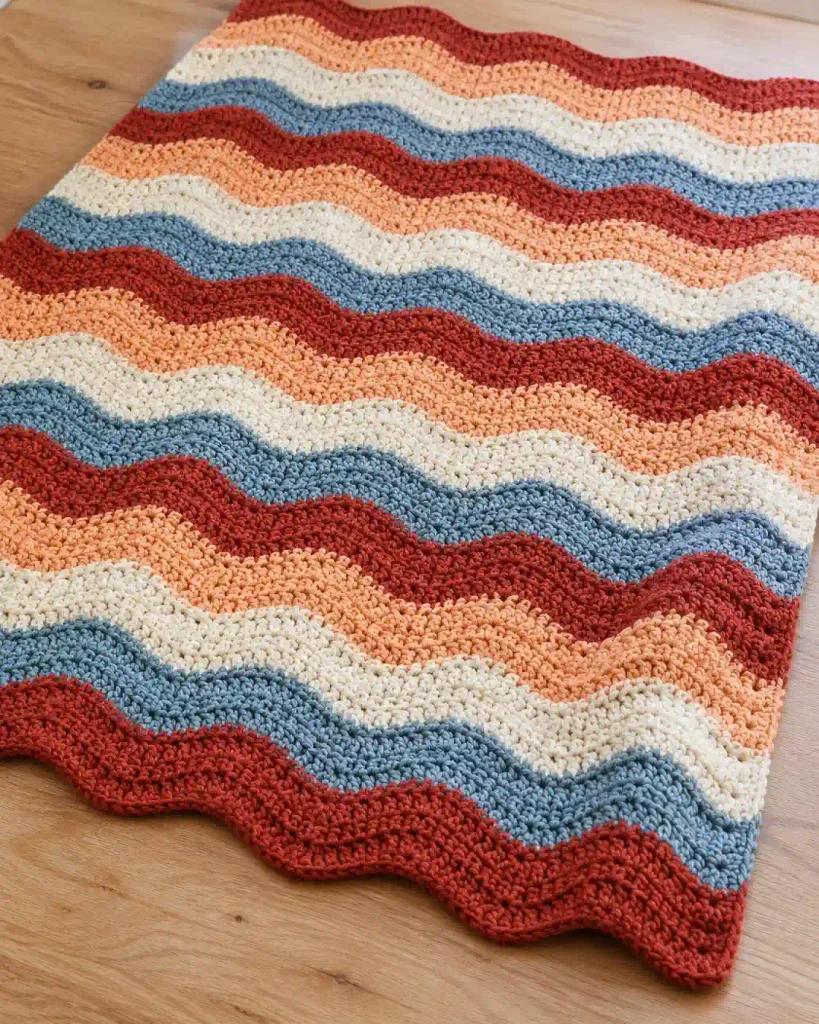
A beach wave crochet blanket takes inspiration from sandy beaches and gentle ocean colors. Think muted aqua, sandy beige, cream, and pale blue.
Unlike a bright ocean-themed blanket, this version uses softer transitions to create a relaxed coastal atmosphere. It works beautifully in beach houses, guest rooms, and minimalist interiors.
Try alternating two neutral shades with one ocean-inspired color. The result feels decorative without making the blanket too visually busy.
9. Modern Neutral Crochet Wave Blanket
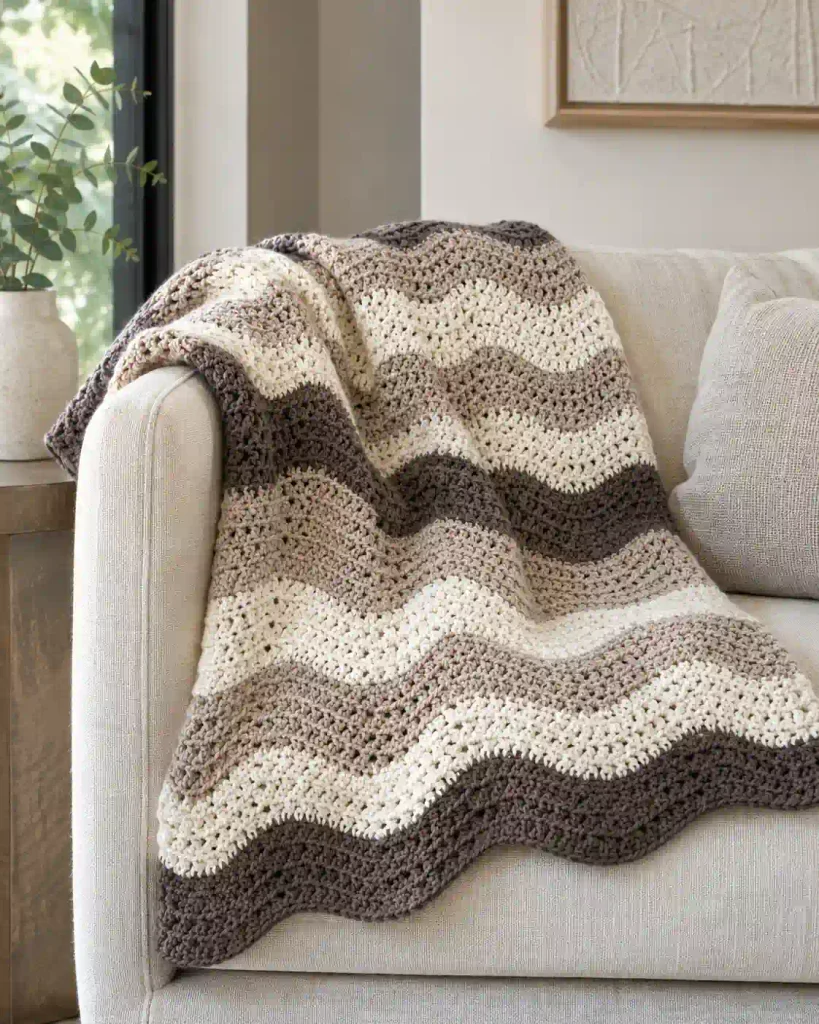
Not every crochet wave blanket needs bright stripes. A modern neutral design uses shades such as ivory, taupe, oatmeal, beige, and warm gray.
The wave pattern becomes the main decorative feature because there are fewer color changes to distract the eye. This makes the blanket a good match for contemporary bedrooms and neutral living spaces.
Choose yarn with a consistent texture so the peaks and valleys remain visible. A slightly contrasting border can also help define the finished edges.
10. Retro Crochet Wave Afghan
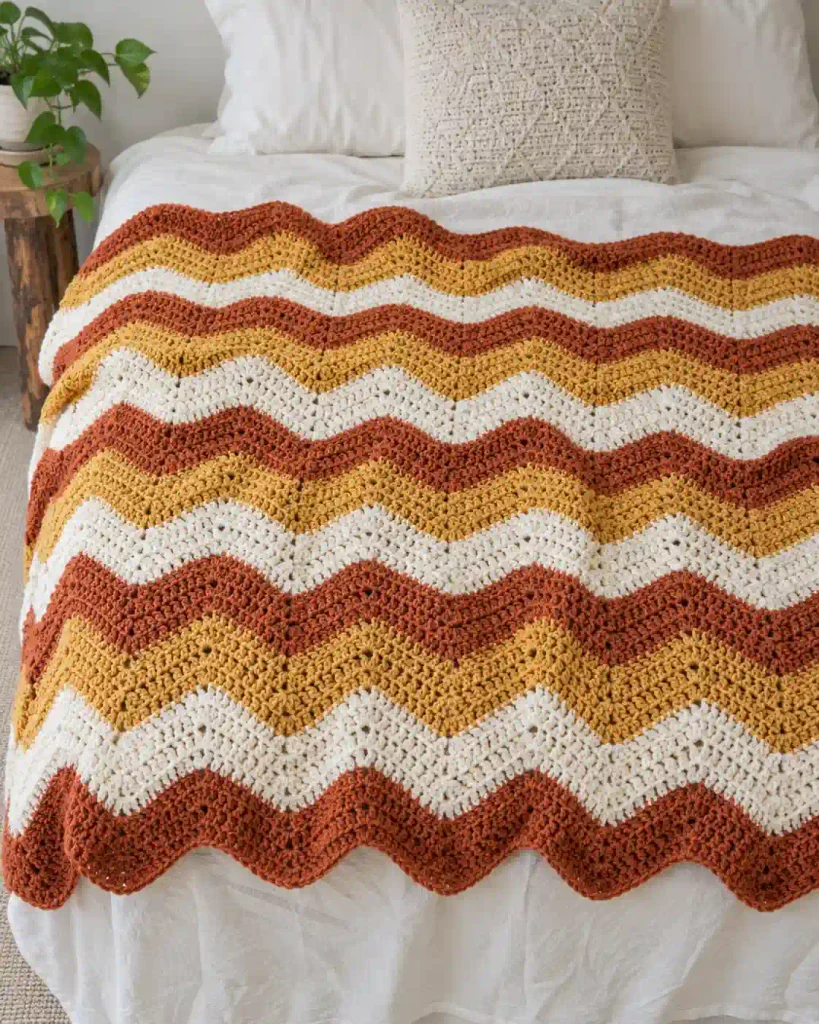
Love vintage-inspired colors? A retro crochet wave afghan can bring a nostalgic look to your home without requiring an authentic vintage pattern.
Try combinations such as mustard, burnt orange, cream, brown, and muted teal. Wider stripes can make the color arrangement feel more traditional, while smaller stripes produce a busier appearance.
This design is especially attractive when displayed over a wooden chair or a simple neutral sofa. The key is to balance the stronger colors with a few softer shades.
11. Baby Crochet Wave Blanket
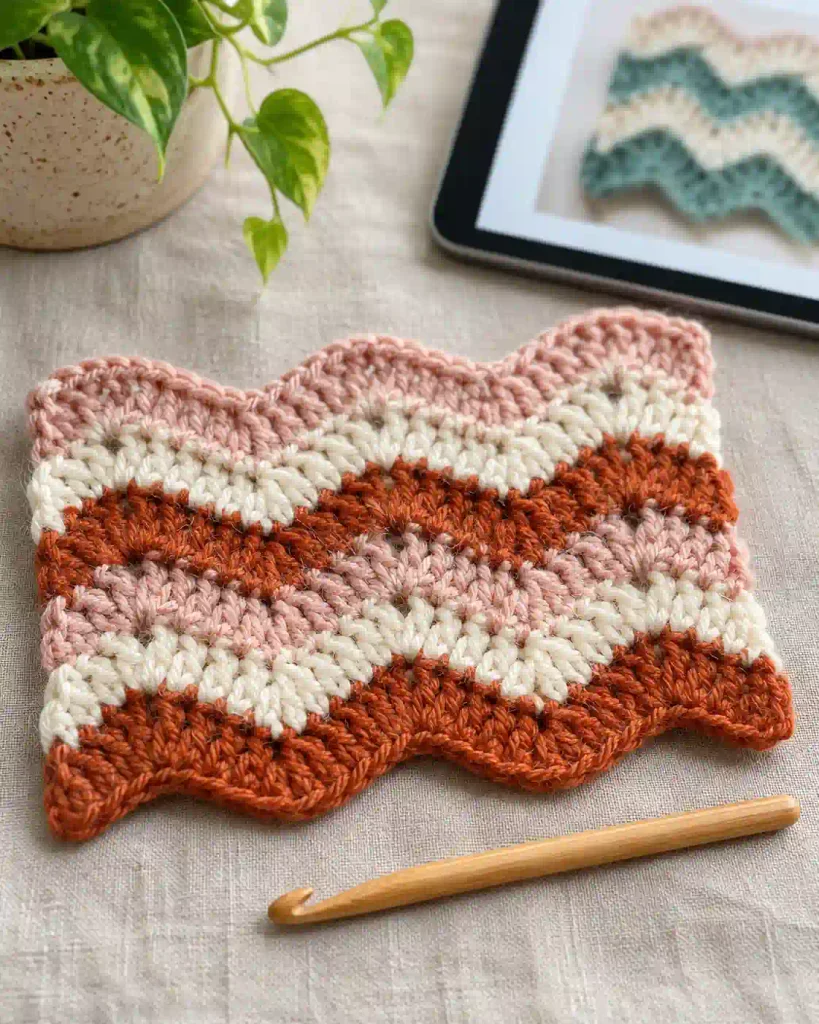
An easy crochet baby blanket with a wave design makes a thoughtful handmade gift for a baby shower or a new arrival. Its repeating waves create visual interest while keeping the overall design gentle.
Pastel pink, pale blue, mint, lavender, and cream are popular color directions. You can also choose a single soft shade for a more minimal appearance.
When selecting yarn, check its fiber content, care instructions, and suitability for the intended project. A washable yarn can be particularly practical for a frequently used blanket.
12. Crochet Wave Throw for a Sofa
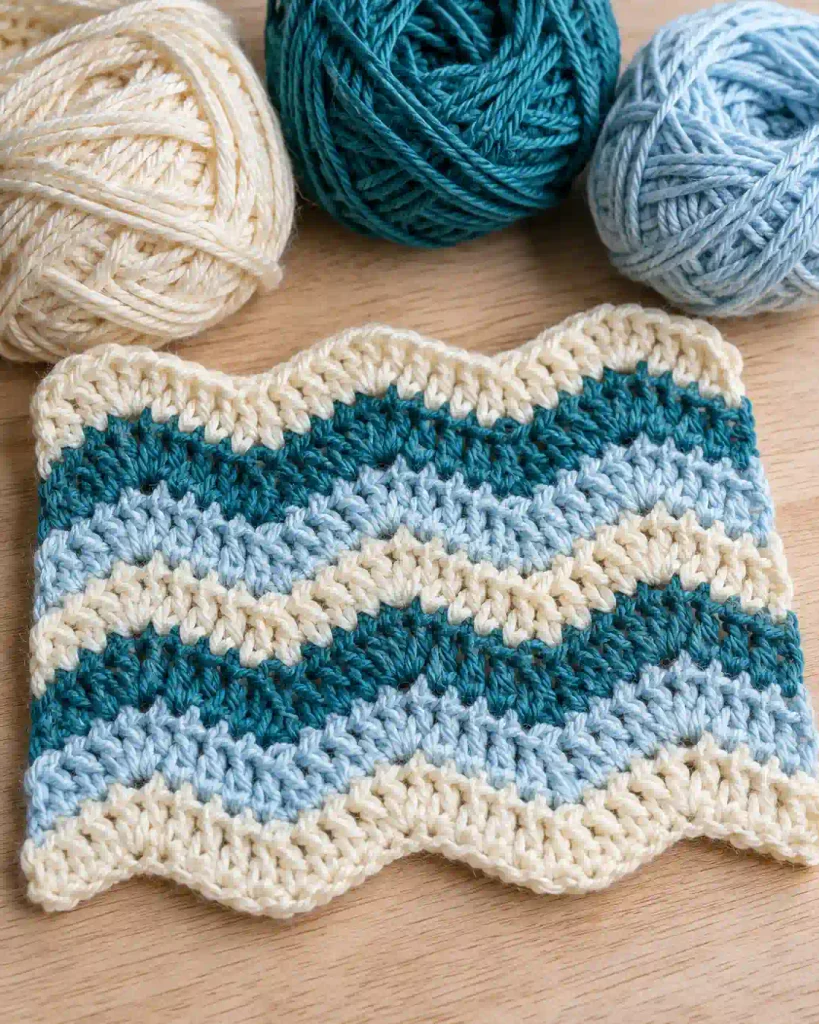
A crochet wave throw is a useful project when you want something smaller than a full bed blanket. It can sit across the back of a sofa, cover an armchair, or provide an extra layer while relaxing.
The advantage of making a throw is that you can experiment with a new stitch without committing to a very large project. You can also adjust the width and length to suit your furniture.
Choose colors that complement your room rather than matching every accessory. A simple combination of two or three shades usually looks polished.
13. Crochet Wave Blanket With a Simple Repeating Row
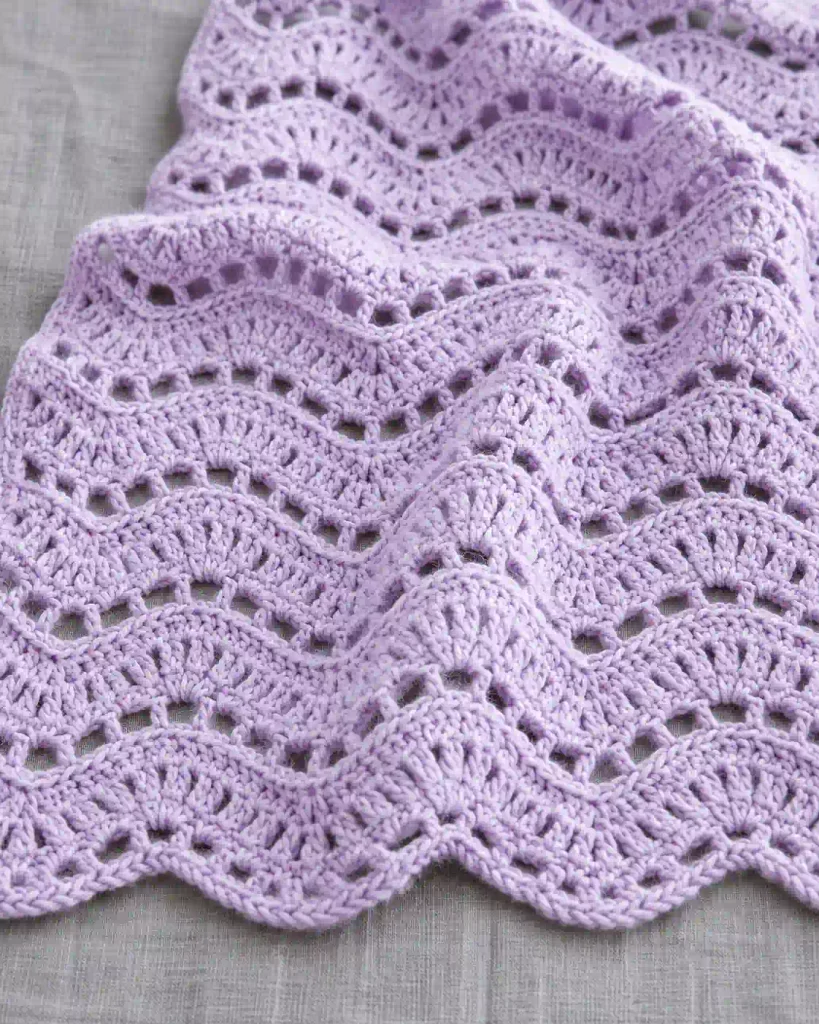
A repeating-row wave blanket is ideal for anyone who enjoys relaxing crochet projects. Once you understand the pattern sequence, the same row instructions can be repeated throughout most of the blanket.
The important part is maintaining the correct stitch count. Missing an increase or decrease can gradually change the shape of the waves.
Keep your pattern nearby and check the first few rows carefully. Once the repeat becomes familiar, the project should feel much easier to manage.
14. Textured Crochet Wave Blanket
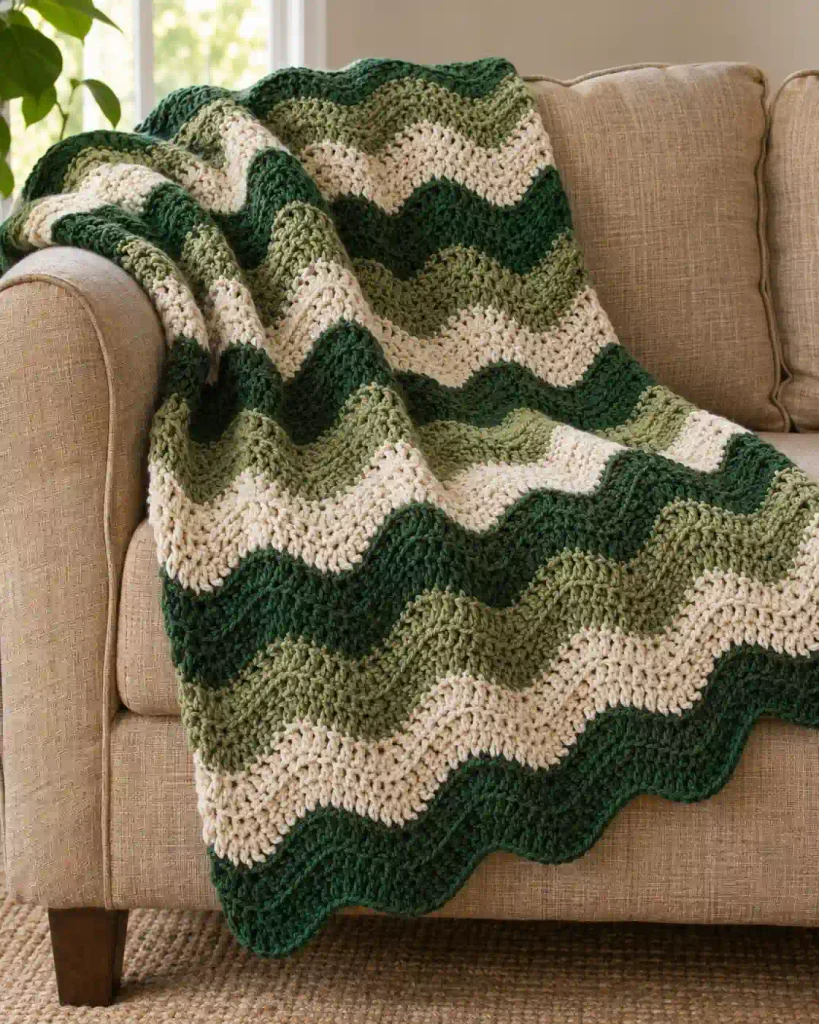
If ordinary ripple stitches feel too simple, try a textured crochet wave blanket. Different stitch placements can create raised lines, deeper ridges, and more noticeable patterns.
This design works particularly well with solid-colored yarn because the texture becomes the main visual feature. Soft lighting can also help show the depth of the stitches in project photographs.
Choose a yarn that does not hide the stitch details. A very fuzzy texture may make some decorative patterns harder to see.
15. Lacy or Open Wave Crochet Blanket
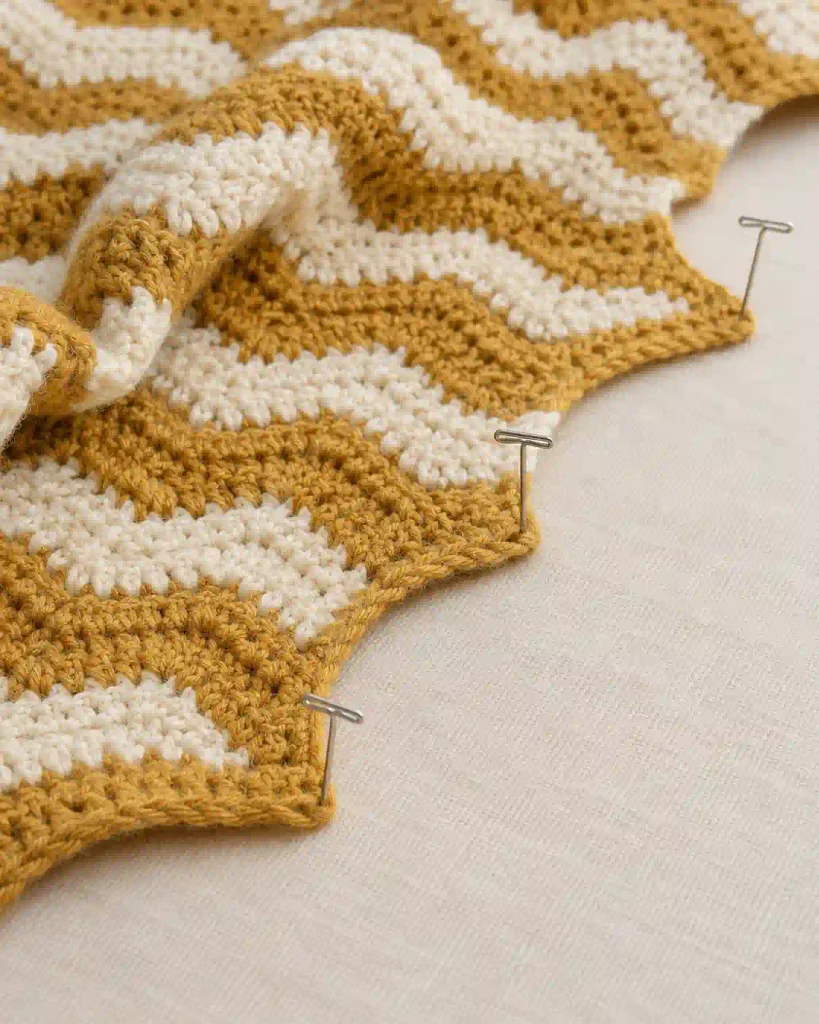
A lacy wave crochet blanket is a lighter alternative to thick, closely worked ripple designs. Open spaces between stitches create a delicate appearance and allow more of the background to show through.
This style is suitable for decorative throws and lightweight blankets. It can also work well with softer shades such as white, pale pink, and light blue.
Because openwork patterns depend on stitch spacing, make a sample before deciding on your final dimensions. Check how the fabric drapes and whether the finished design provides the coverage you want.
16. Crochet Wave Blanket Border and Edging
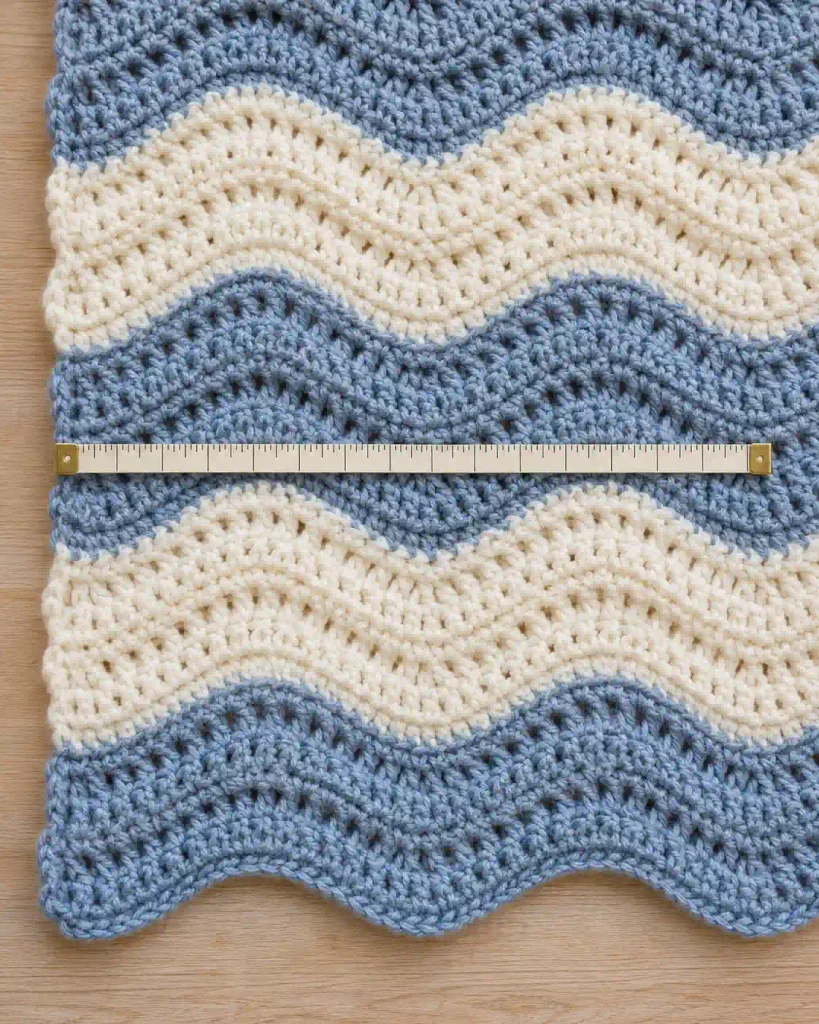
A wave blanket does not always need a complicated border. In many designs, the natural ripple edges already provide an attractive finish.
However, adding crochet blanket borders can give the sides a more defined appearance. A simple single crochet edging is one option, while a decorative border can create a stronger finishing detail.
Consider these approaches:
- Natural wave edge: Keep the original peaks and valleys visible.
- Simple single crochet border: Add a neat finish along the sides.
- Decorative edging: Use a complementary stitch to create additional detail.
Make sure the border does not pull the fabric out of shape. Test it on a small section before working around the entire blanket.
17. Choosing Yarn for a Crochet Wave Blanket
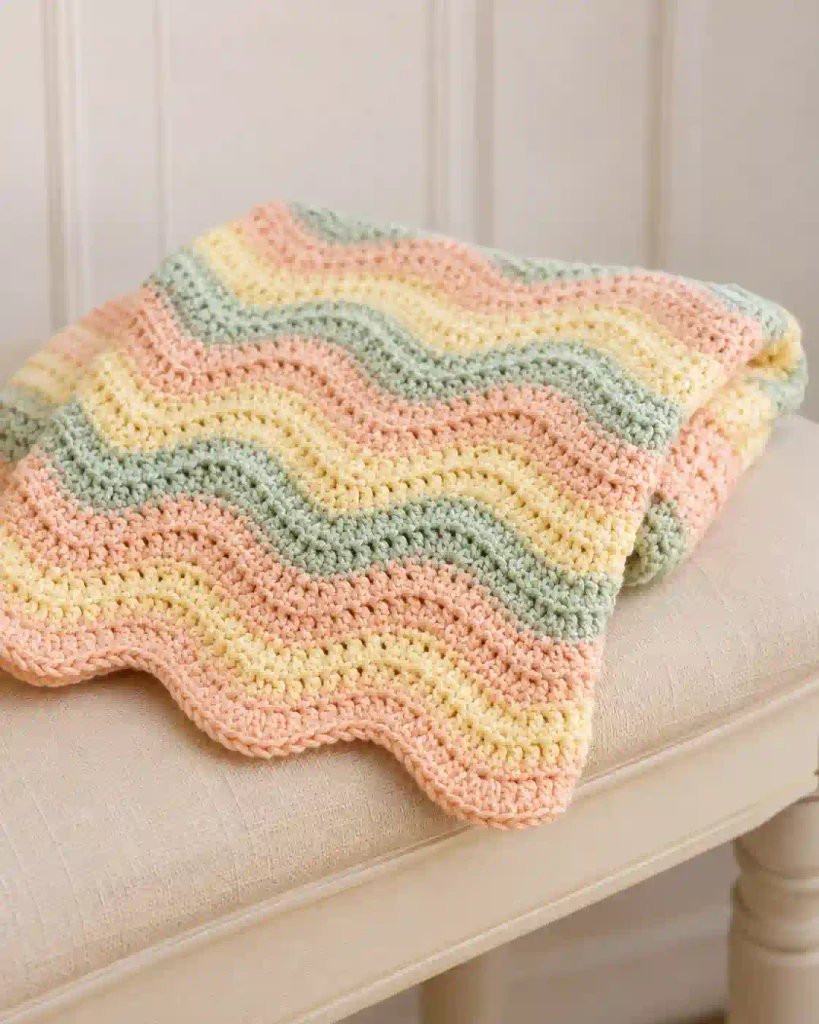
The right yarn can change the appearance, softness, and weight of your finished crochet wave blanket. It is worth comparing a few options before buying enough material for a large project.
Consider these factors:
- Fiber: Check whether you prefer acrylic, cotton, wool, or a blend.
- Weight: Choose a yarn category that matches the pattern.
- Texture: Smooth yarn usually makes stitch details easier to see.
- Care: Check washing and drying instructions.
- Color: Consider how different shades will work together.
The Craft Yarn Council explains that yarn labels provide useful information about weight, fiber content, yardage, gauge, and care. It also provides care symbols for washing, bleaching, drying, ironing, and professional textile care.
If you are buying several skeins, check the dye lot where applicable. This helps reduce noticeable color differences between skeins.
18. Crochet Wave Blanket Sizes and Measurements
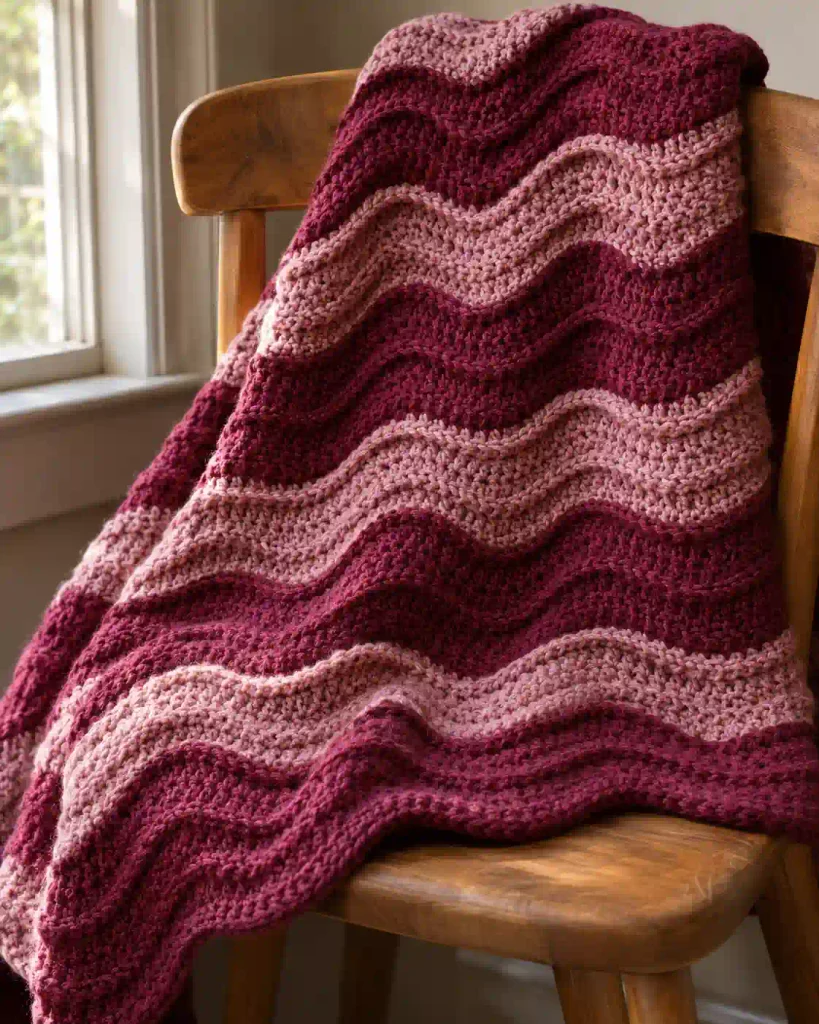
The right blanket size depends on who will use it and where it will be placed. A small lap blanket needs less yarn and time than a large bed cover.
Before starting, decide on the finished width and length. Then check whether the pattern allows you to adjust the starting chain or repeat count without changing the wave structure.
| Blanket Type | Planning Consideration |
|---|---|
| Baby blanket | Choose dimensions appropriate for the intended use |
| Lap blanket | Make it comfortable to cover the lap |
| Sofa throw | Check the sofa width and desired drape |
| Bed blanket | Measure the mattress and desired overhang |
| Decorative throw | Consider the furniture and display area |
These are planning categories, not fixed standard measurements. Always check the finished dimensions supplied with your chosen pattern.
19. Fixing Uneven Waves and Ripple Edges
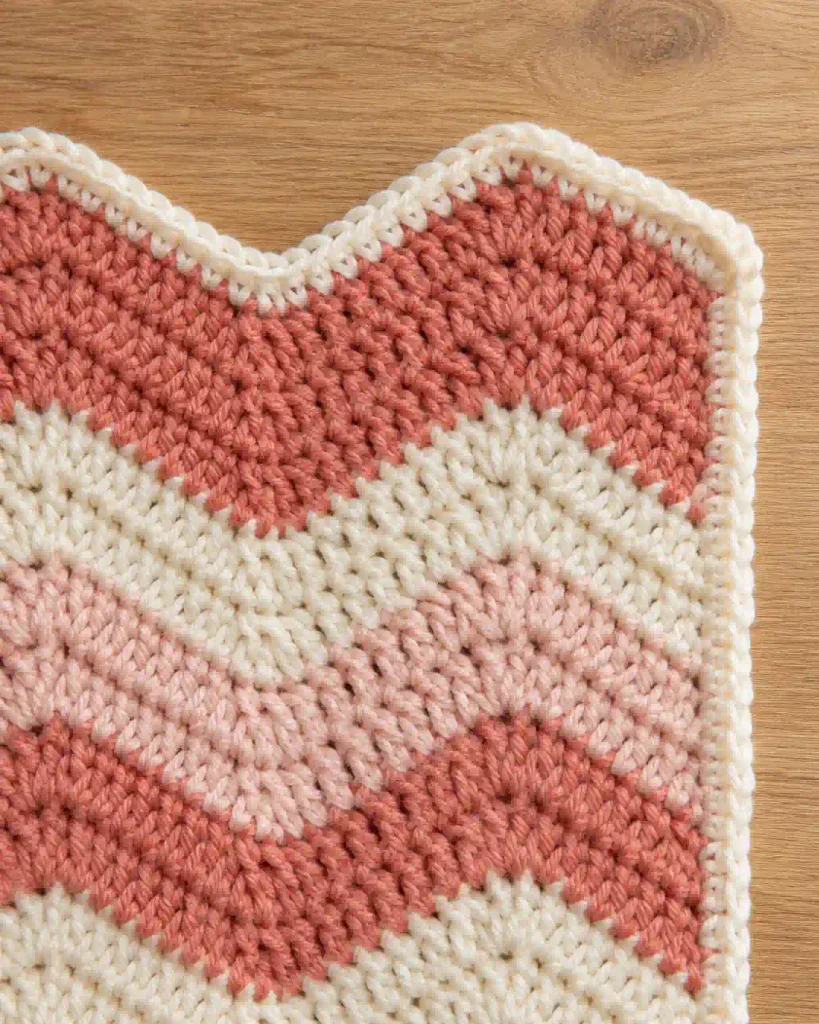
Uneven waves can be frustrating, especially when the blanket looks perfect for the first few rows and then starts changing shape.
The problem often comes from incorrect stitch counts, missed increases or decreases, or inconsistent tension. Sometimes the turning chain is also overlooked.
Check these things before continuing:
- Count the stitches at the end of each row.
- Confirm that every peak and valley follows the correct sequence.
- Check whether the turning chain counts as a stitch in your pattern.
- Compare your work with the original stitch repeat.
- Maintain consistent tension throughout the project.
The Craft Yarn Council’s crochet abbreviation guide explains common terms such as dc, dc2tog, inc, dec, and rep. Learning these abbreviations makes written instructions easier to follow.
20. Free Crochet Wave Blanket Pattern Resources
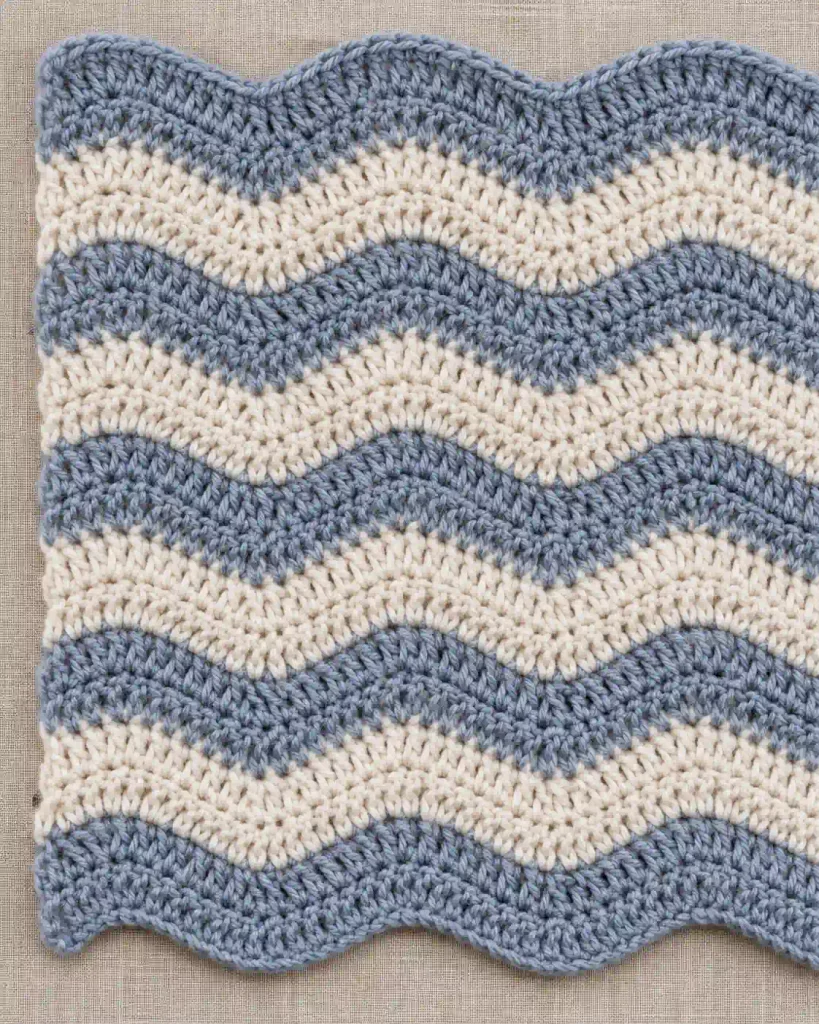
Finding a crochet wave blanket free pattern is a great way to explore different stitch styles before investing in a paid pattern.
However, not every free resource provides the same level of instruction. Some include written row-by-row directions, while others rely on video demonstrations or stitch diagrams.
Before choosing a pattern, check:
- Whether the instructions are complete.
- Whether the skill level is clearly explained.
- Which yarn weight and hook size are recommended.
- Whether the finished blanket dimensions are provided.
- Whether a video or stitch diagram is available.
- Whether the pattern includes finishing instructions.
You can also explore wave and zigzag blanket collections from The Crochet Crowd. Its collection includes textured waves, ocean-inspired designs, striped blankets, and ripple patterns.
For a straightforward written example, Daisy Cottage Designs also shares a wavy crochet blanket pattern with a sample swatch, materials list, stitch instructions, and stripe sequence.
How Do You Choose the Right Crochet Wave Blanket Pattern?
Choose a crochet wave blanket pattern based on your skill level, preferred yarn, finished dimensions, and intended use. Beginners may prefer simple repeating stitches, while experienced crocheters can explore textured, lacy, or more decorative wave designs.
At a Glance:
- Match the pattern difficulty to your experience.
- Check yarn weight and hook recommendations.
- Decide on the finished blanket dimensions.
- Compare colors and stitch textures.
- Review border and finishing requirements.
Choosing a pattern becomes easier when you consider your experience, available yarn, and intended use.
Here are a few things to check before starting:
- Your skill level: Beginners may prefer a short repeating stitch pattern. More experienced crocheters can explore textured and openwork designs.
- Your available time: A smaller throw may be more manageable than a full bed blanket.
- Your yarn: Check the pattern’s recommended yarn weight, hook size, and gauge.
- Your preferred appearance: Decide whether you want colorful stripes, ocean-inspired shades, or a simple neutral design.
- Your finishing preference: Check whether the pattern requires a border or has naturally finished edges.
The Craft Yarn Council describes four broad crochet project levels: Basic, Easy, Intermediate, and Complex. These classifications consider the stitches, colorwork, shaping, and techniques used in a project.
What Should You Know Before Starting a Crochet Wave Blanket?
Before starting a crochet wave blanket, prepare your yarn, check the pattern instructions, make a small stitch swatch, and plan your color changes. These steps help you understand the repeat, estimate material requirements, and maintain consistent waves throughout the project.
At a Glance:
- Make a swatch to check stitch tension.
- Read the pattern notes before beginning.
- Estimate yarn using the pattern’s requirements.
- Plan your stripe sequence in advance.
- Keep yarn labels for future care instructions.
A little preparation can prevent many common problems later.
Make a Small Stitch Swatch
A swatch gives you a chance to practice the wave repeat before making the full blanket. It also helps you check the fabric’s appearance and tension.
Read the Pattern Notes
Pay attention to turning chains, stitch counts, repeated instructions, and special stitches. Different patterns may use different methods to create similar wave shapes.
Check Your Yarn Quantity
Calculate your material needs from the pattern’s yardage and intended dimensions. If you plan to make the blanket larger, allow for additional yarn.
Plan Your Color Changes
Decide how many rows each color should cover. A planned stripe sequence helps create a consistent appearance.
Keep the Yarn Labels
Save the labels until the project is complete. They contain useful fiber and care information that may be needed later.
Frequently Asked Questions About Crochet Wave Blanket
1. Is a crochet wave blanket suitable for beginners?
Yes. Many crochet wave blanket patterns use basic stitches and repeating increases and decreases. Choose a pattern with clear instructions and practice the repeat with a small swatch first.
2. What is the difference between a crochet wave blanket and a ripple blanket?
The terms often describe similar designs with repeating peaks and valleys. However, individual patterns can use different stitch combinations, spacing, and wave shapes. A wave crochet blanket pattern may use longer curves or different stitch placements to create a distinct appearance.
3. What yarn is best for a crochet wave blanket?
Worsted weight yarn is a practical option for many blanket projects. However, the best choice depends on the pattern, desired softness, fabric weight, and care requirements.
4. How do I stop my crochet wave blanket from becoming uneven?
Check the stitch count at the end of every row and follow the increase and decrease sequence carefully. Consistent tension and correct turning-chain placement also help maintain even waves.
5. Can I make a crochet wave blanket using one color?
Absolutely. A single-color wave blanket can look elegant because the stitch texture creates the decorative effect. Choose a yarn that shows the peaks and valleys clearly.
6. How many chains do I need for a crochet wave blanket?
The starting chain depends on the pattern’s stitch repeat and edge stitches. Always follow the pattern’s foundation-chain instructions rather than using a universal number.
7. Can I add a border to a crochet wave blanket?
Yes. You can keep the natural ripple edges or add a simple border for a more defined finish. Test the edging first to make sure it does not distort the blanket.
8. How can I make my crochet wave blanket larger?
Check whether the pattern provides a repeat multiple for adjusting the starting chain. You can usually increase the number of repeats or add rows, but preserve the original stitch sequence.
Final Thoughts
A crochet wave blanket is a rewarding project because you can create so many different looks using a repeating stitch structure. From colorful ripple afghans and ocean-inspired designs to chunky throws and delicate openwork blankets, there is an option for almost every style and skill level.
Start with a pattern that matches your experience. Choose yarn carefully, make a small swatch, and check your stitch count as you work.
If you are looking for a crochet wave blanket free pattern, compare a few designs before choosing one. Save your favorite ideas, prepare your yarn, and enjoy creating a handmade blanket one wave at a time.
Explore more crochet patterns and project inspiration on Crochetmind.com.