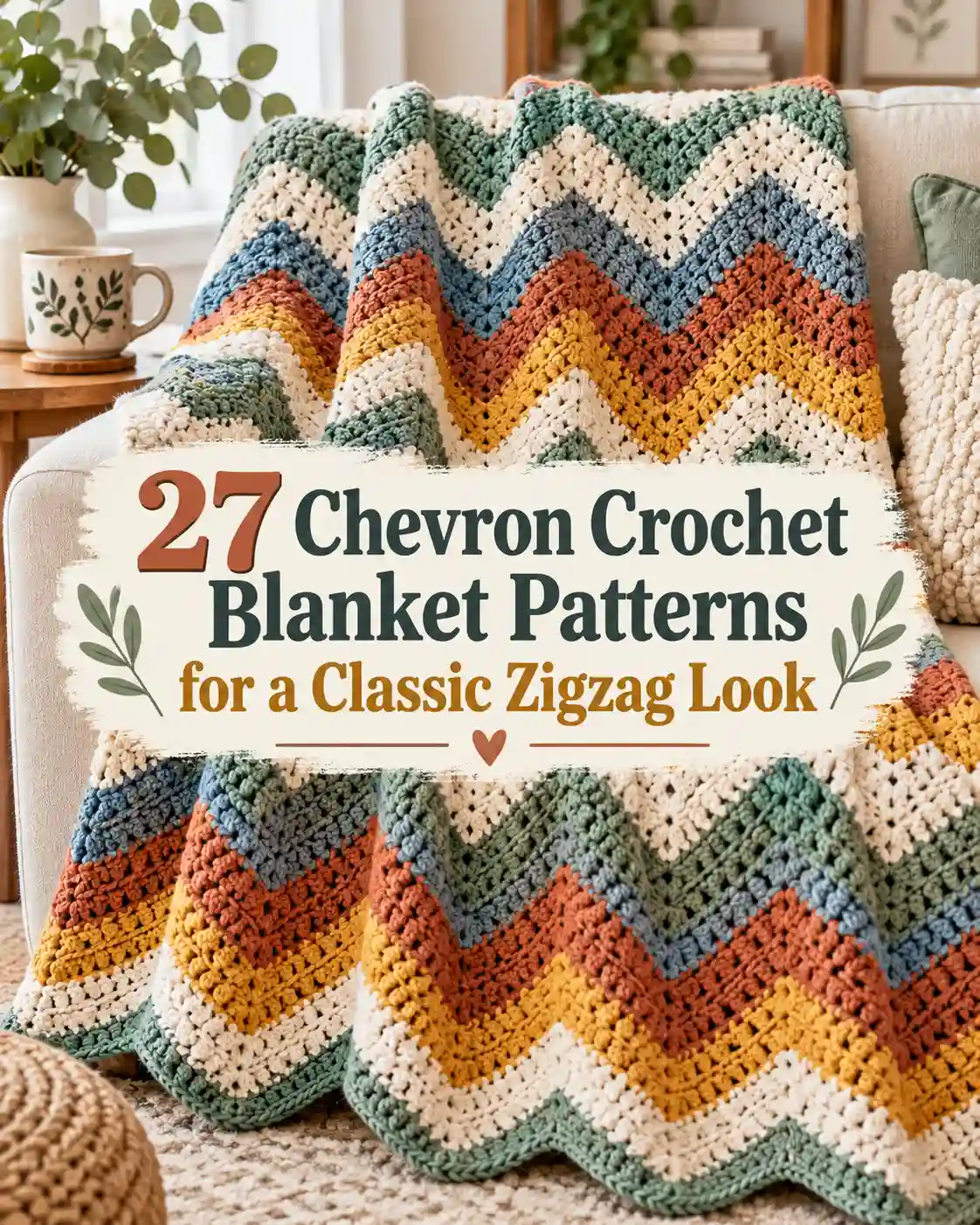
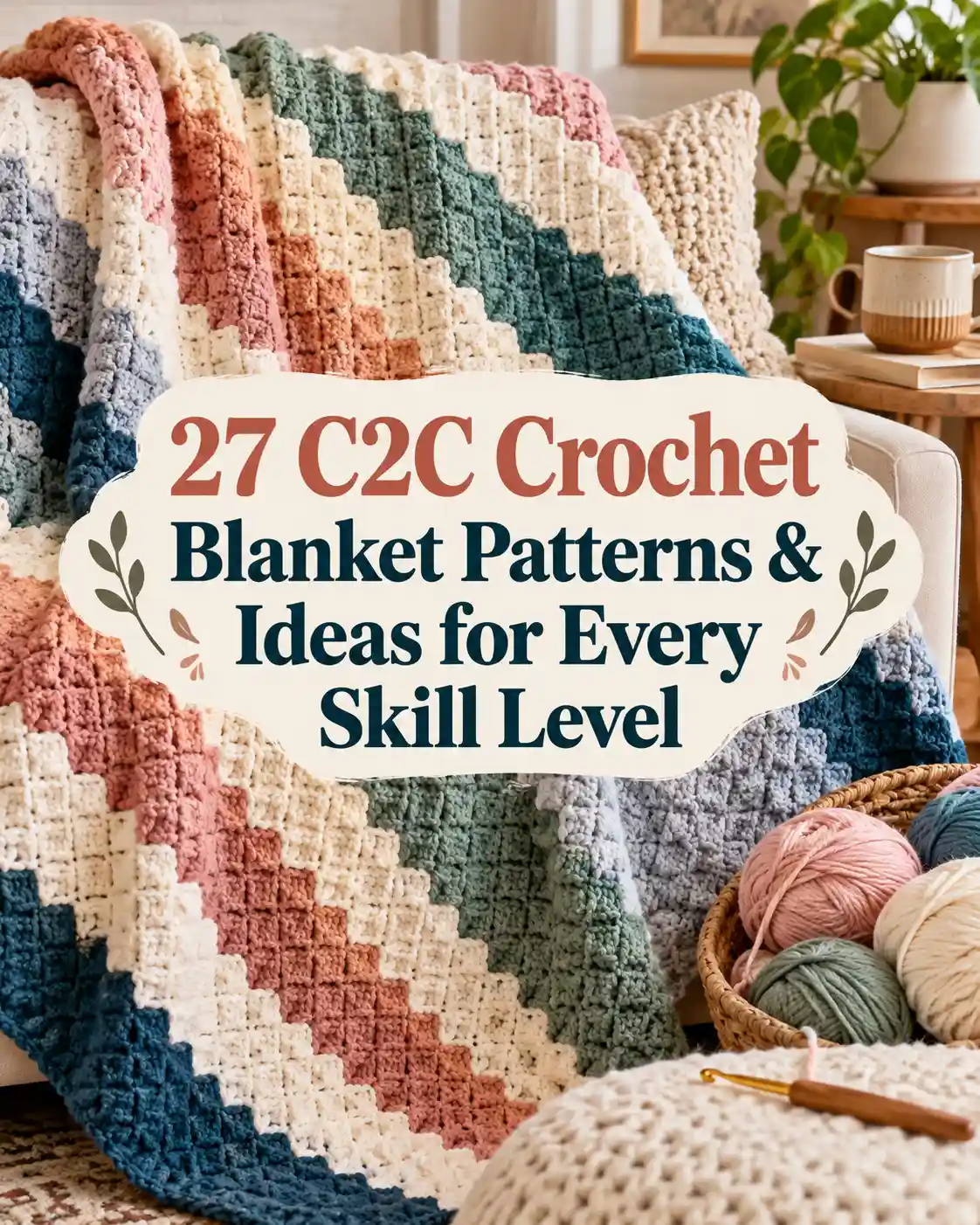
A chevron crochet blanket pattern turns simple increases and decreases into repeating peaks and valleys, giving even basic crochet stitches a strong zigzag shape. You can make the same basic idea feel completely different by changing the stitch, yarn weight, stripe width, texture, color sequence, or finished blanket size.
If you are searching for a free chevron crochet pattern, an easy first project, a baby blanket, or a modern throw, the biggest decision is not simply “chevron or no chevron.” It is choosing the version that fits your skill level, yarn, color plan, and the amount of counting you want to do.
I’ve grouped these 27 ideas so you can quickly compare beginner-friendly repeats, classic ripple styles, modern colorways, baby blankets, chunky throws, and more before choosing the version that feels right for your next project.
Key Takeaways
- Match the chevron style to your crochet skill level.
- Swatch before committing yarn to a full blanket.
- Count peaks and valleys carefully on every row.
- Start with Free crochet chevron patterns for beginners when learning shaping.
- Choose colors that make the zigzag structure easy to see.
Which Chevron Crochet Blanket Pattern Should You Choose?
Choose a chevron pattern based on your crochet experience, preferred stitch texture, yarn weight, finished blanket size, and how much color changing or stitch counting you want to manage.
At a Glance:
- Beginners: single, half double, or double crochet.
- Faster projects: bulky yarn and wider chevrons.
- Baby blankets: soft yarn and manageable repeats.
- Modern décor: neutrals, wide stripes, or one color.
- Advanced texture: granny, herringbone, or raised stitches.
For beginners, start with a simple single, half double, or double crochet repeat using two colors. If you already feel comfortable counting stitches and shaping rows, textured, granny, herringbone, and motif-based chevrons give you more room to experiment.
The Craft Yarn Council classifies projects using basic stitches with basic increases and decreases as Basic, while Easy projects may add simple stitch patterns, colorwork, and shaping. That makes many straightforward chevron constructions approachable once you are comfortable maintaining your stitch count.
| Chevron Style | Best For | Visual Effect | Yarn Direction | Skill Focus |
|---|---|---|---|---|
| Double crochet chevron | First full-size throw | Classic, open zigzags | Medium/worsted | Peaks and valleys |
| Single crochet chevron | Dense blankets | Crisp, compact points | Medium yarn | Accurate counting |
| Ripple afghan | Traditional blankets | Softer waves | Medium yarn | Repeat consistency |
| Modern neutral chevron | Home décor | Clean, understated | Smooth yarn | Color planning |
| Chunky chevron | Quick projects | Bold, oversized pattern | Bulky yarn | Tension |
| Baby chevron | Handmade gifts | Soft, small-scale zigzags | Washable soft yarn | Neat finishing |
| Granny chevron | Color lovers | Open, vintage-inspired | Multiple colors | Cluster placement |
| Textured chevron | Cozy throws | Raised, dimensional ridges | Defined yarn | Advanced stitch texture |
One point worth remembering: there is no universal hook, chain count, or gauge for every chevron pattern. The Craft Yarn Council specifically recommends making a gauge swatch and following the gauge stated by the individual pattern rather than assuming yarns in the same weight category will behave identically.
27 Chevron Crochet Blanket Patterns for a Classic Zigzag Look
These 27 variations show how the same chevron foundation can become a beginner throw, baby blanket, ripple afghan, modern neutral blanket, granny design, chunky project, or textured statement piece.
At a Glance:
- Begin with simple repeats before adding texture.
- Use color changes to emphasize each zigzag.
- Choose yarn weight based on speed and drape.
- Compare a Free Chevron crochet pattern before committing to a project.
- Scale complete repeats when changing blanket width.
27 Chevron Crochet Blanket Patterns for a Classic Zigzag Look
1. Why Start With a Classic Double Crochet Chevron Blanket?
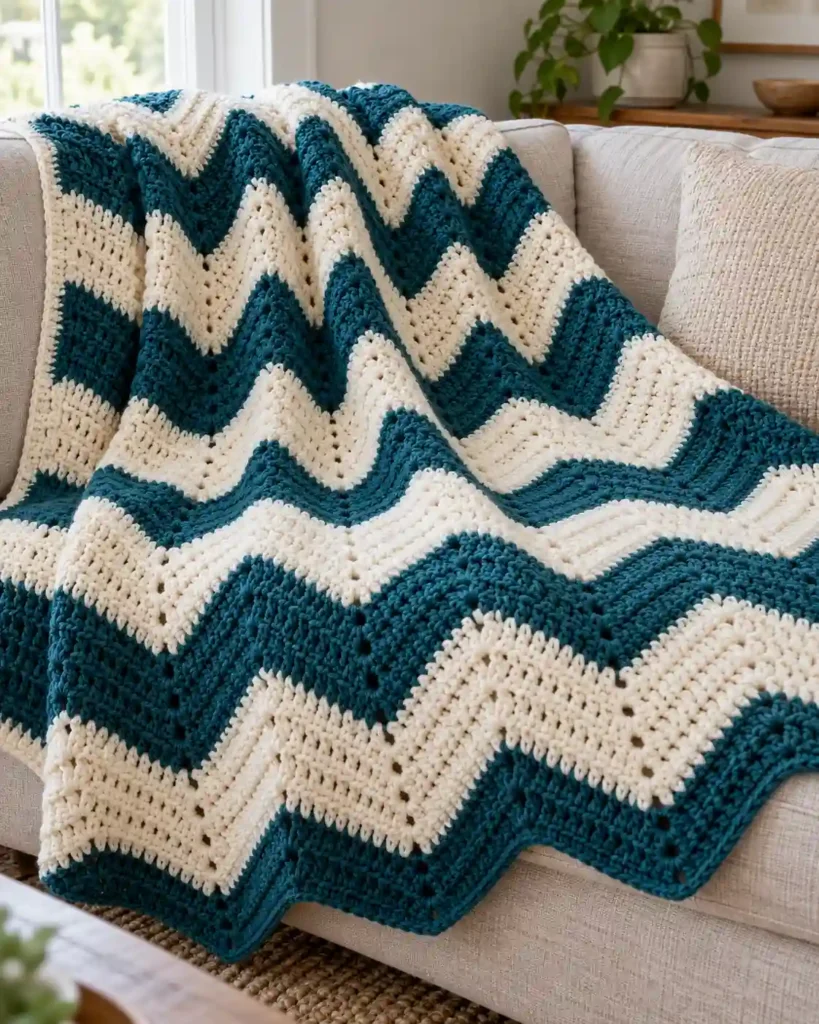
A classic double crochet chevron pattern is one of the easiest ways to see exactly how a chevron is built. Taller double crochet stitches let a double crochet blanket grow faster than a dense single crochet version, while increases form the peaks and decreases pull the fabric into valleys.
It is especially satisfying when you want a couch throw with clearly visible stripes rather than tiny, subtle waves. Start with medium-weight yarn and a simple repeating color sequence so you can focus on counting instead of complicated colorwork.
When comparing search results for “Double crochet chevron pattern free,” choose a pattern that clearly identifies its stitch repeat, peak increases, valley decreases, and row-end instructions.
Special Tip: Put a stitch marker near each outer edge until you are comfortable identifying the first and last working stitches.
2. Is an Easy Beginner Chevron Throw Your Best First Project?
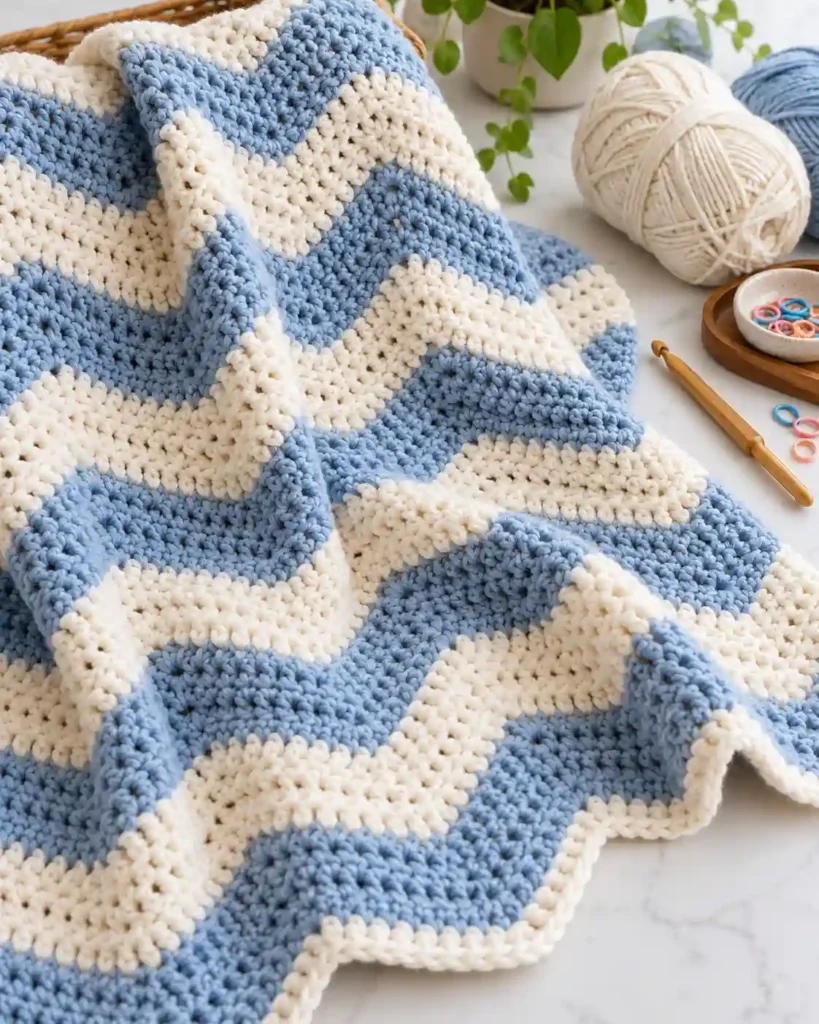
An easy chevron crochet blanket pattern strips the design down to a predictable repeat, making it a smart introduction to shaped blanket rows. The pattern looks more complicated than a basic straight-row blanket, but the repeating peaks and valleys quickly become familiar.
This is where a free crochet chevron pattern for beginners can be especially useful: choose one that clearly states its stitch multiple, turning-chain rules, and placement of increases and decreases. A simple two-color throw keeps the visual result interesting without giving you too many yarn ends to manage.
The Craft Yarn Council’s Easy project level allows basic stitches, repetitive stitch patterns, simple color changes, and simple shaping, the same core skills used in many beginner-friendly chevrons.
3. When Does a Single Crochet Chevron Blanket Work Best?
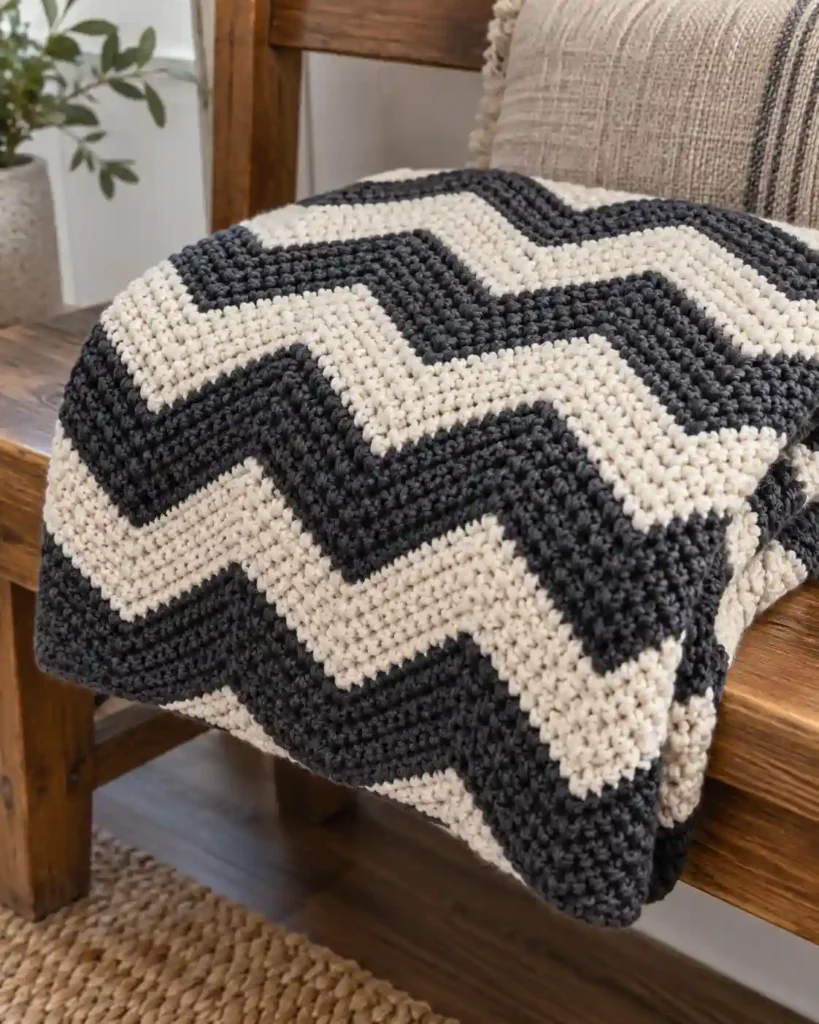
Single crochet creates a compact fabric with beautifully crisp zigzag lines. Compared with double crochet, it takes longer to build height, but the denser surface makes every peak feel sharp and controlled.
This version works particularly well when you want a warm lap blanket or a smaller project where durability matters more than speed. Working through the back loop can also create subtle horizontal ridges without changing the basic chevron construction.
Daisy Farm Crafts uses back-loop single crochet to emphasize ridges in one of its well-known chevron blanket designs, showing how a small stitch-placement change can noticeably alter the finished texture.
4. Why Choose a Half Double Crochet Wave Blanket?
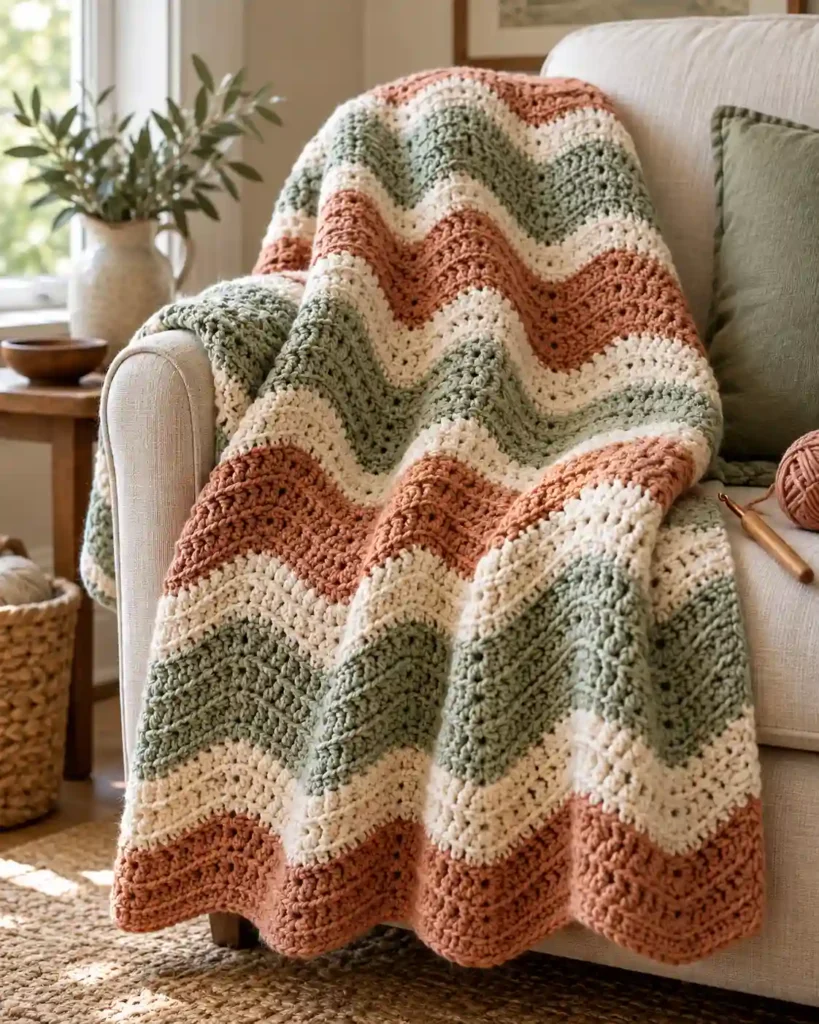
Half double crochet sits comfortably between single and double crochet. You get more height than single crochet but a slightly denser, softer-looking fabric than a traditional double crochet chevron.
Its rounded stitch profile works beautifully when you want the zigzag to read more like a gentle wave. Try muted sage, cream, terracotta, dusty blue, or similar shades for a relaxed throw that looks at home on an armchair.
5. Want Straighter Edges? Try a Squared-Off Chevron Blanket
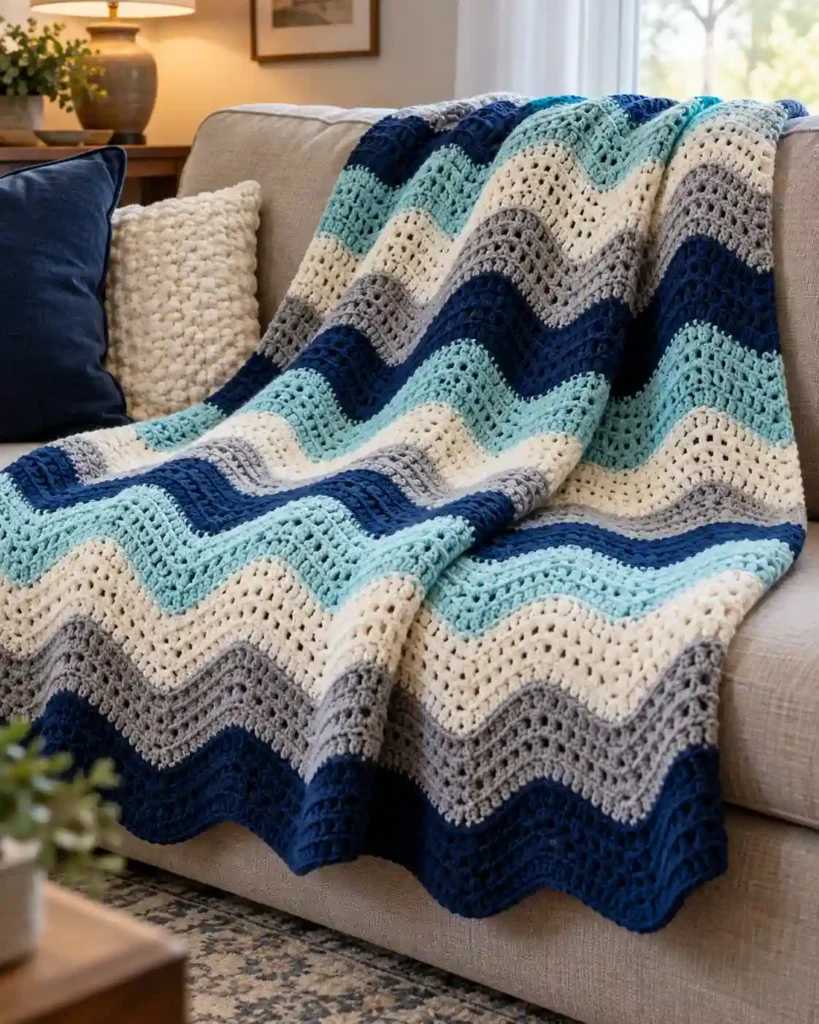
Traditional chevrons naturally produce points along the top and bottom. A squared-off version keeps the zigzag inside the blanket while using filling rows or finishing techniques to create straighter outer edges.
That small change makes the blanket feel more geometric and contemporary. It is useful if you love the chevron movement but want a cleaner rectangle for a bed, sofa, or folded display.
6. How Does a Chevron Ripple Afghan Create Softer Waves?
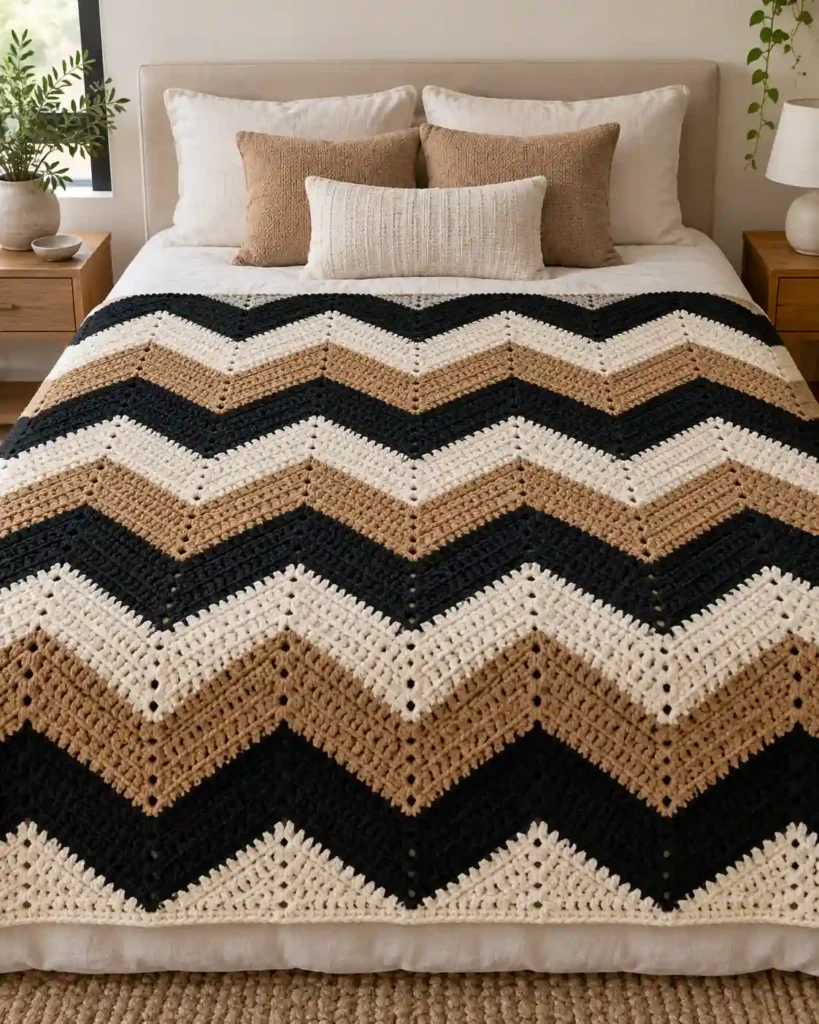
A crochet ripple afghan pattern often softens the sharp V shape into smoother flowing waves. “Ripple” and “chevron” frequently overlap in crochet terminology, although chevrons usually suggest a sharper point and ripple designs often look more rounded.
Long rows of repeated color bands give this style its traditional afghan feel. Keep your row count consistent, because even one misplaced increase or decrease can gradually shift the entire wave.
7. Do You Prefer Sharp Points? Choose a Zigzag Crochet Blanket
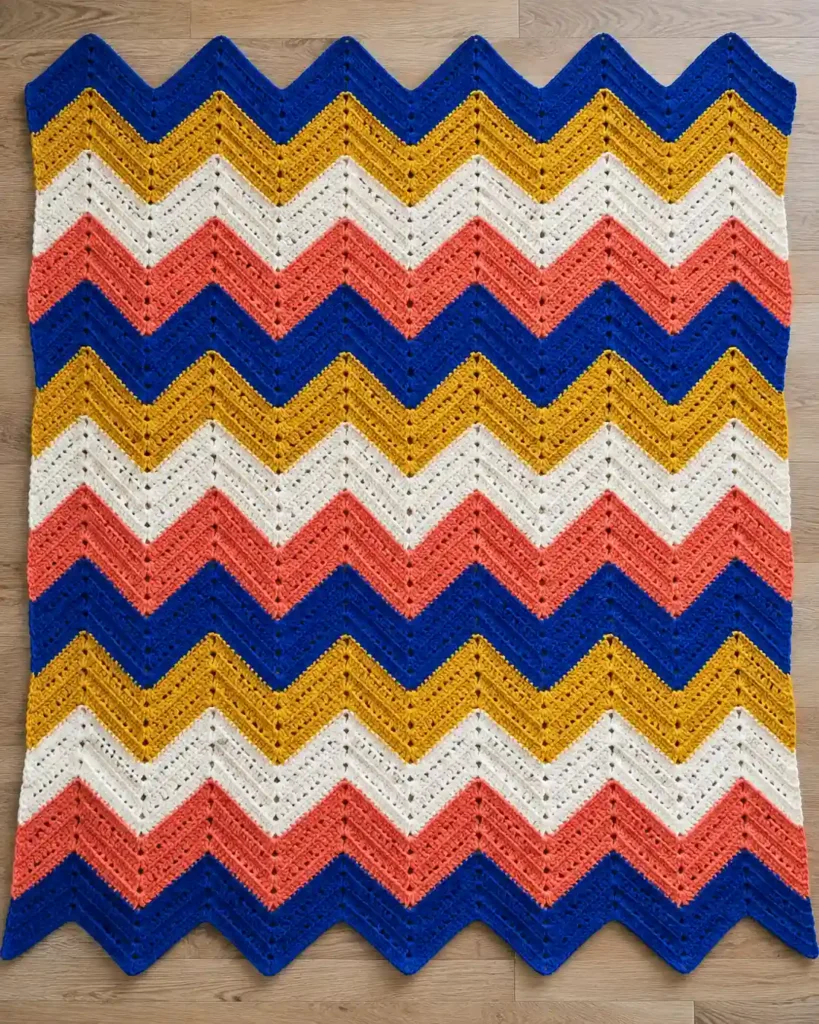
A sharp zig zag crochet pattern pushes the geometry further than a gentle ripple. Strong increases, decreases, and contrasting colors make each point stand out instead of blending into a soft wave.
This is the design I would reach for when the blanket itself needs to become the visual statement in a room. Black and cream feels graphic, while cobalt, mustard, coral, and white can make the same construction feel playful.
8. Why Does a Modern Neutral Chevron Blanket Look So Fresh?
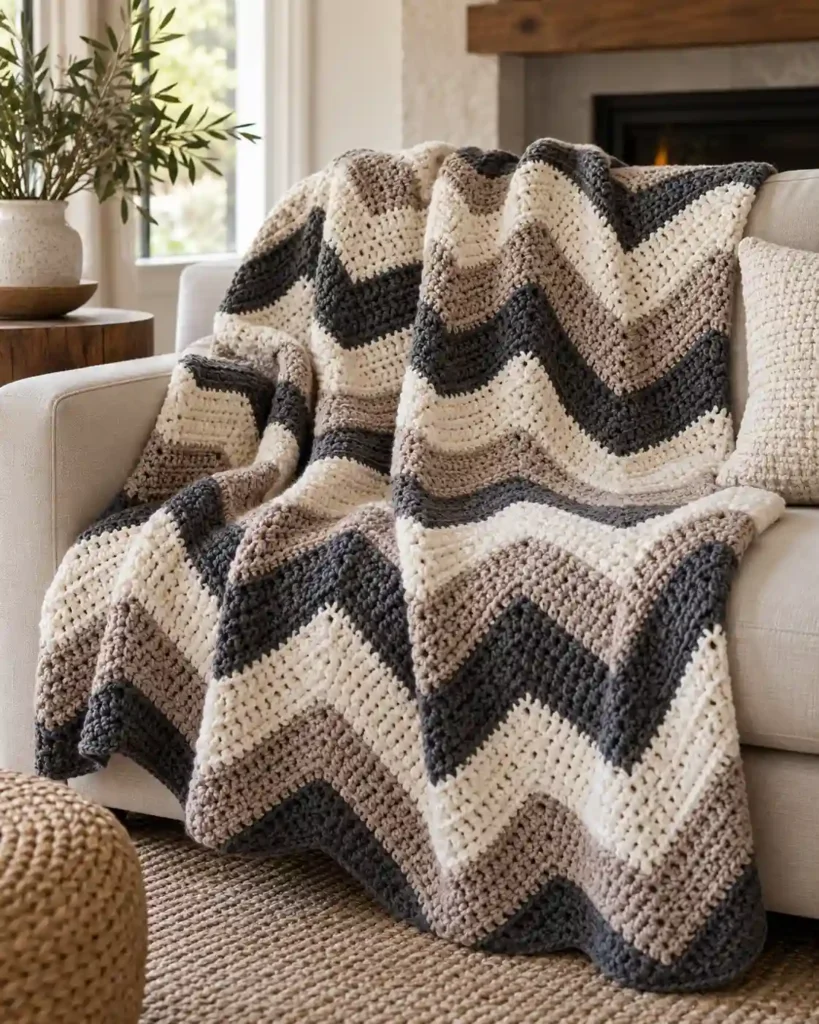
Chevron does not need bright stripes to get attention. Wide bands of ivory, oatmeal, taupe, camel, charcoal, or soft gray turn a familiar pattern into a much more modern crochet blanket.
The restrained palette lets the zigzag structure do the work. On a neutral sofa or bed, you get enough movement to keep the blanket interesting without making the room feel busy.
9. Is a Two-Color Chevron Blanket the Easiest Color Plan?
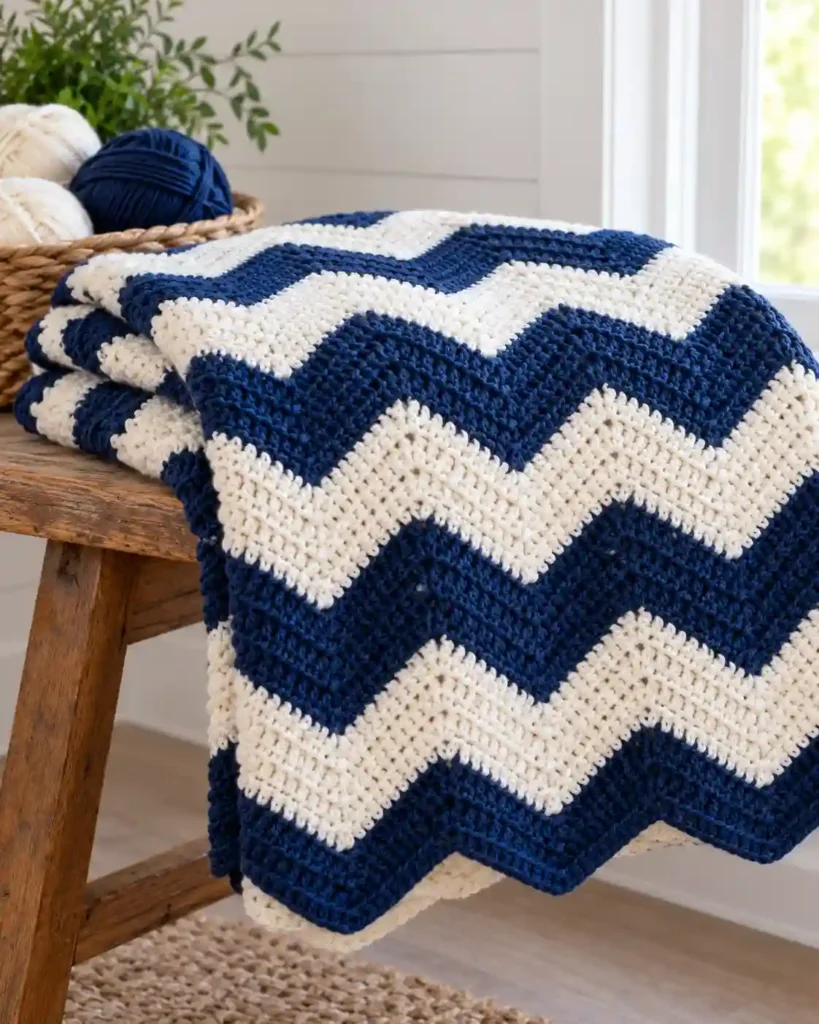
A two-color design gives you strong contrast without constantly juggling yarn. Alternating navy and cream, sage and white, charcoal and oatmeal, or two shades of the same color keeps the stripe rhythm easy to follow.
It is also one of the best options when you are learning a simple chevron crochet pattern because incorrect shaping becomes easier to spot. Once a peak starts moving out of alignment, the contrasting rows usually expose the problem quickly.
10. How Can Three Colors Change the Chevron Effect?
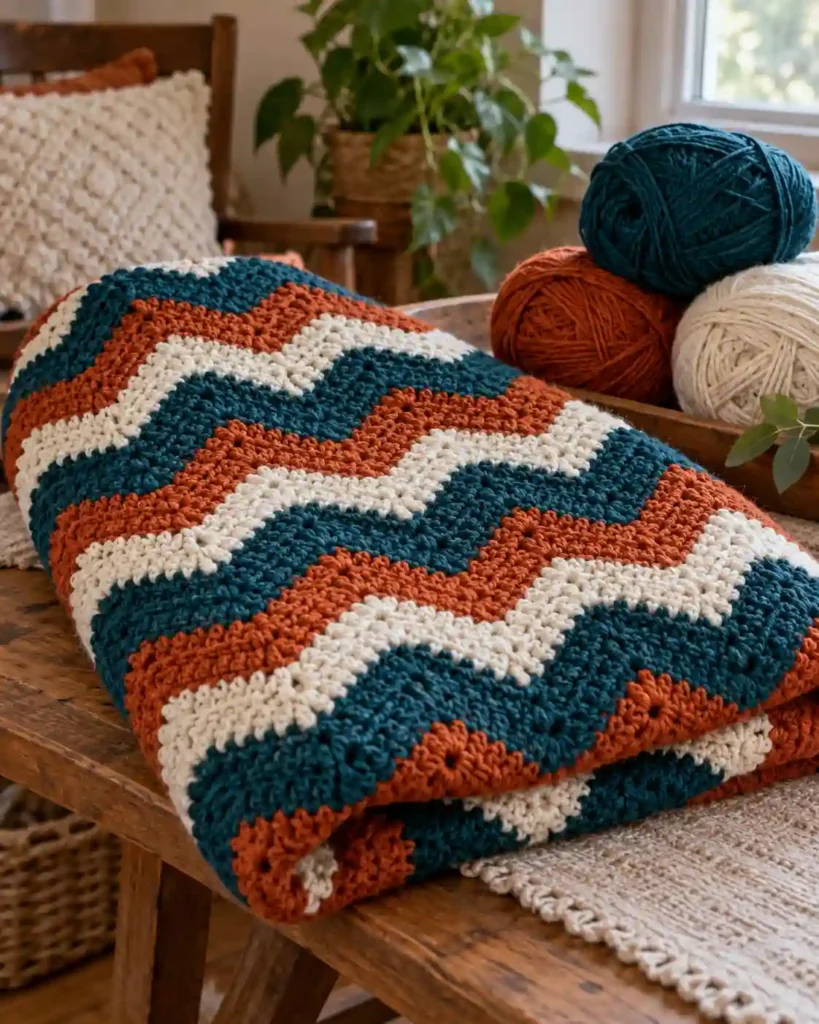
Adding a third shade opens up far more possibilities without turning the project into a rainbow. You might repeat A-B-C evenly, use one dominant color between the other two, or vary stripe width to create a less predictable rhythm.
Before beginning, arrange the skeins in their planned order. A five-minute color check can save you from discovering fifteen rows later that two neighboring shades do not have enough contrast.
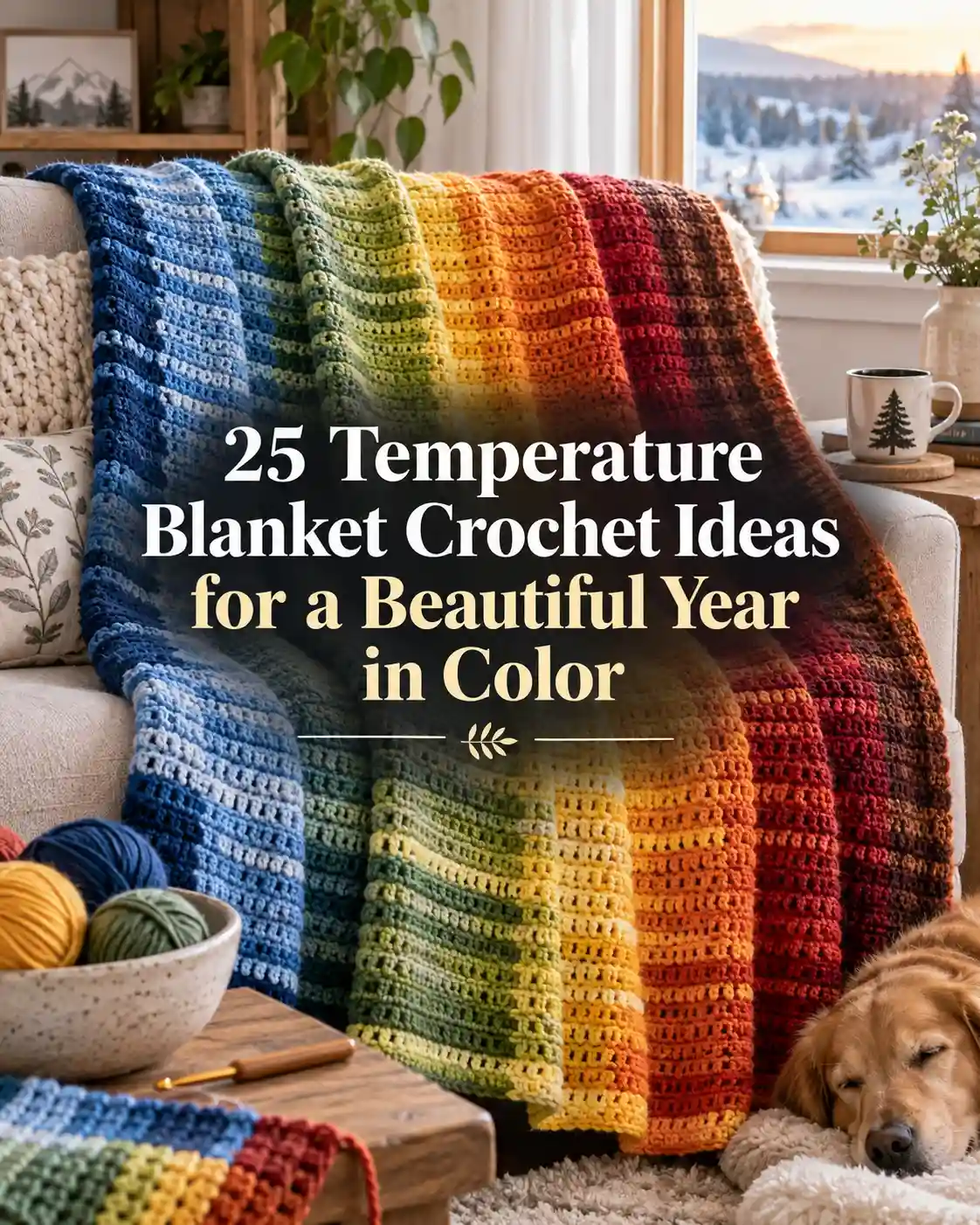
11. Want More Energy? Try a Rainbow Chevron Blanket
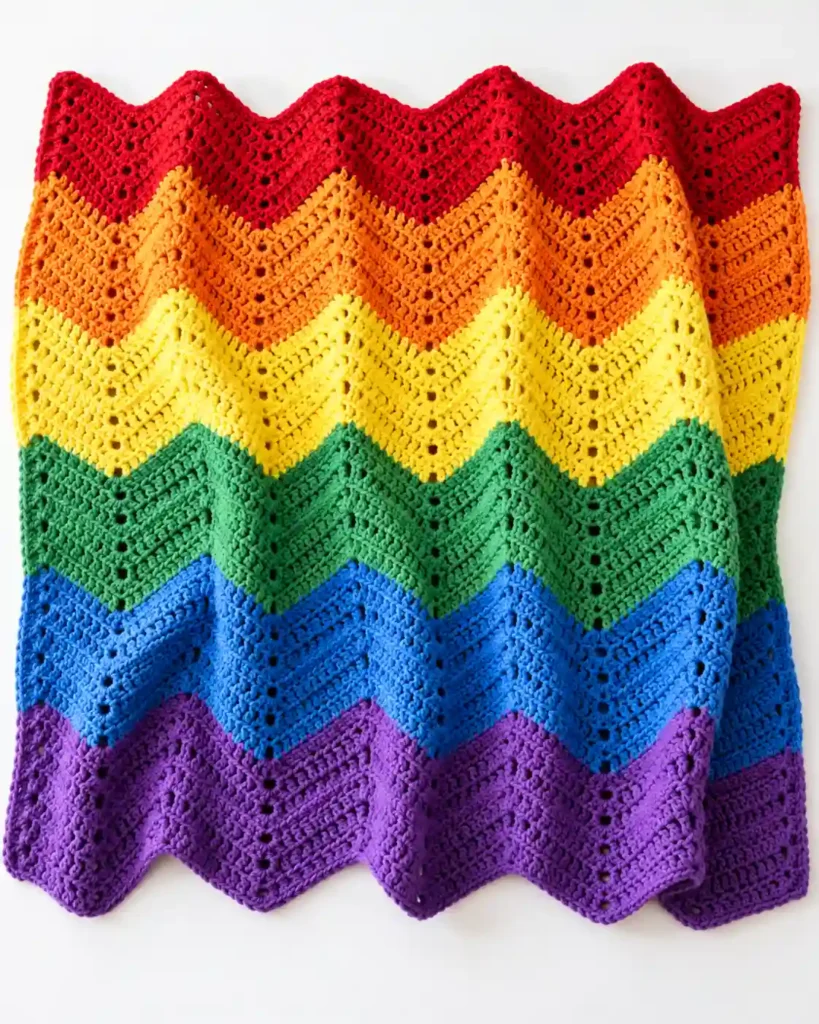
Few patterns show off multiple yarn colors as naturally as chevron. Every zigzag becomes another opportunity to move through red, orange, yellow, green, blue, violet, or whatever palette is sitting in your stash.
Unlike random stripes, repeating the same chevron width gives all those colors a shared structure. It is an excellent scrap-yarn direction when you want variety but still want the finished blanket to look intentional.
12. Can One Color Still Make a Strong Chevron?
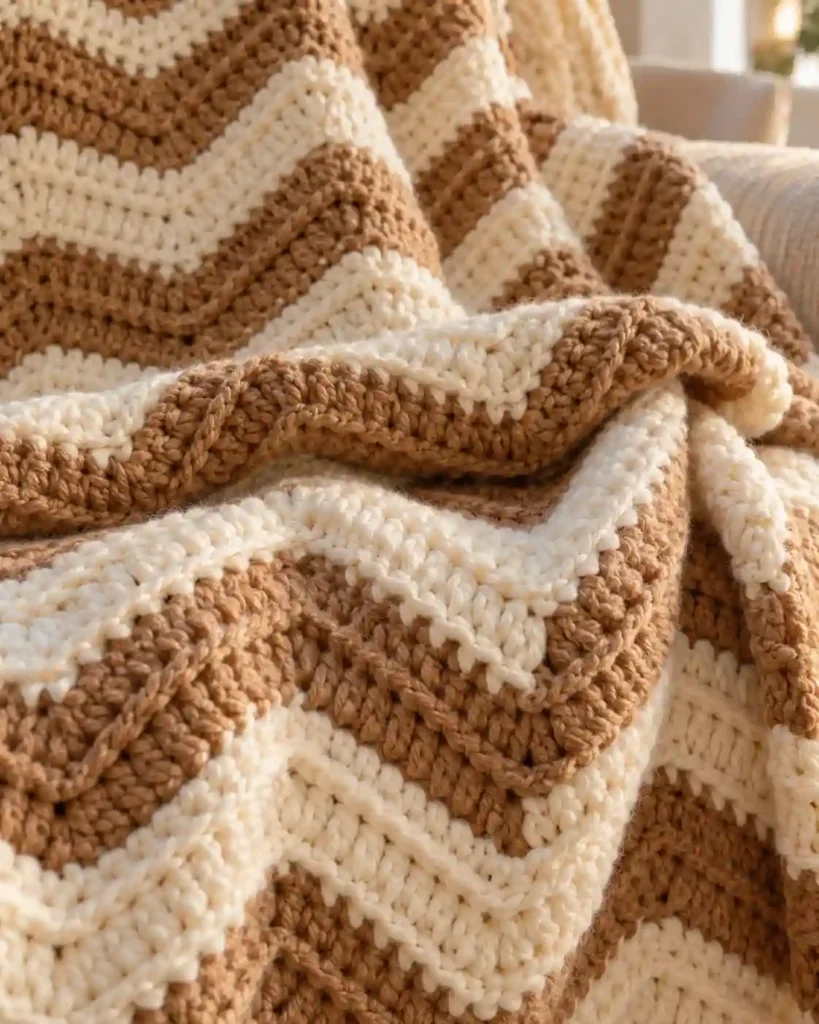
Absolutely. A one-color chevron relies on light, shadow, stitch direction, and texture instead of stripe changes.
Choose a yarn with clean stitch definition, and the peaks and valleys will remain visible even in cream, beige, gray, or another solid shade. Raised stitches or back-loop work can strengthen that effect when plain rows feel too flat.
For minimalist rooms, this is often the version that looks the most polished.
13. What Makes a Raised Textured Chevron Blanket Extra Cozy?
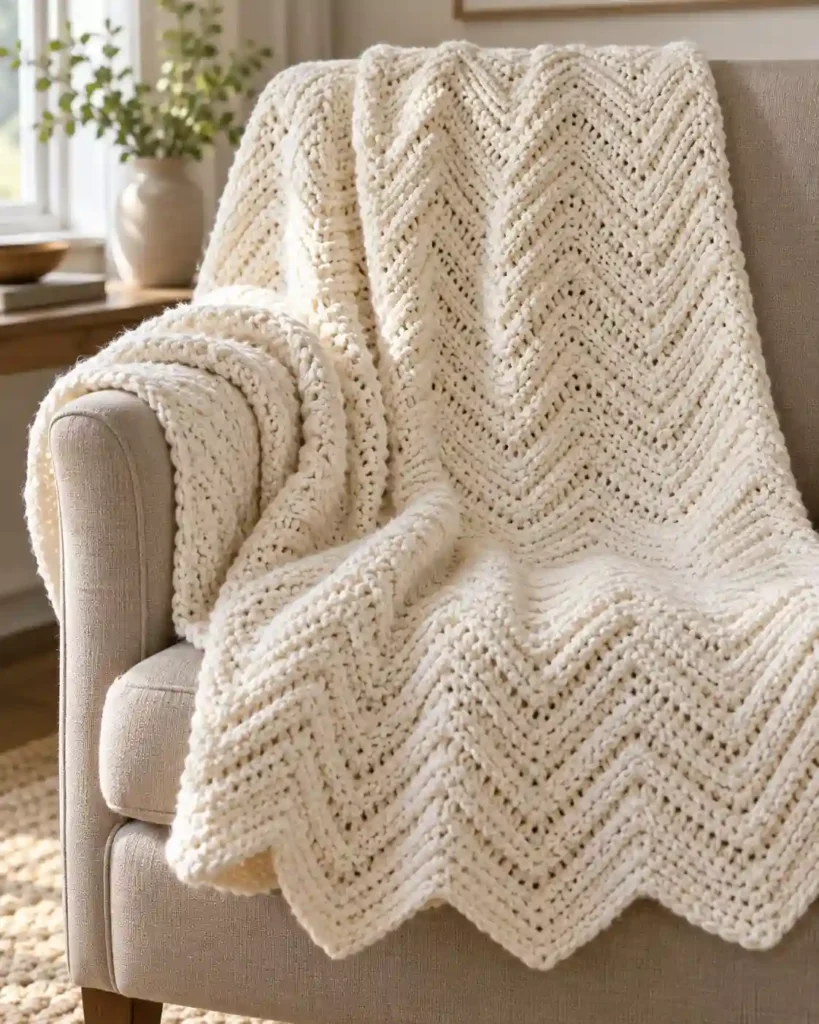
A textured chevron adds ribbing, post stitches, raised ridges, or other relief directly into the zigzag structure. Instead of seeing the pattern only through color, you can feel it when you run your hand across the blanket.
That extra dimension usually means more yarn and a heavier fabric, but the payoff is a substantial, cozy throw. Solid or limited-color palettes work especially well because they give the texture room to show.
14. Need a Faster Project? Try a Chunky Chevron Throw
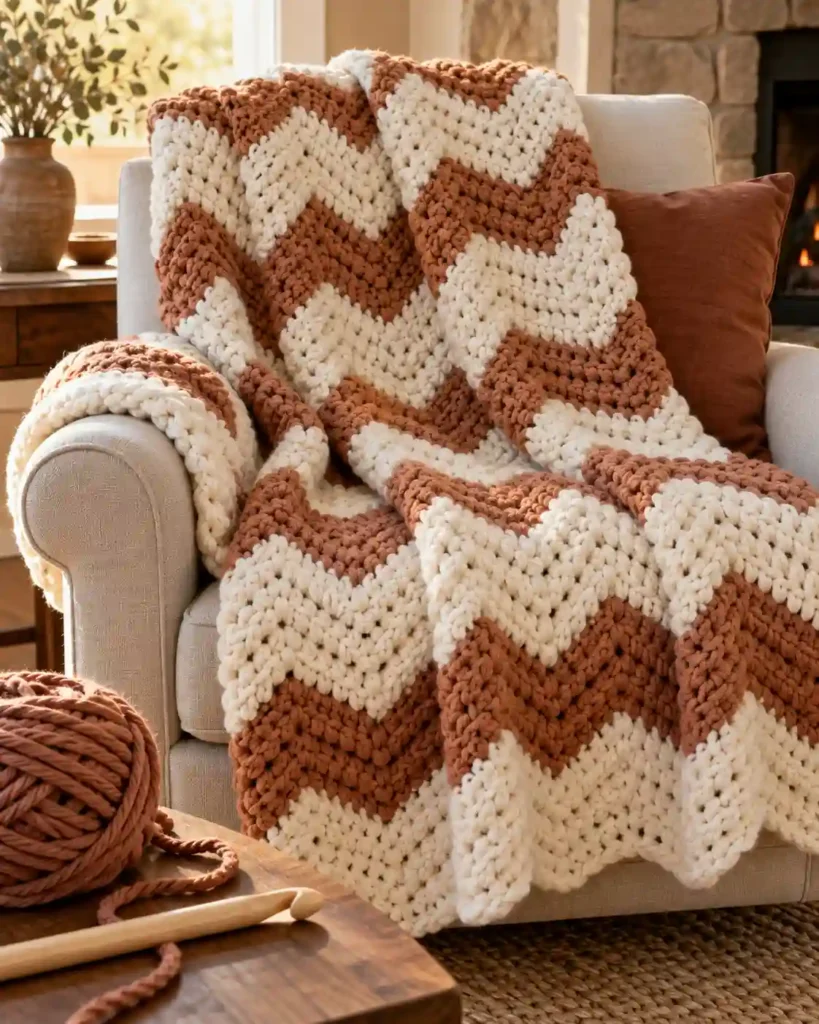
Bulky yarn transforms small chevrons into broad graphic waves and can make a throw grow surprisingly quickly. The oversized stitches also give the finished blanket the thick, soft look people tend to associate with cold-weather projects.
The tradeoff is definition: very thick yarn can soften sharp points. Use a simple repeat and pay close attention to tension so the chevron does not disappear into the bulk.
The Craft Yarn Council places bulky yarn in category 5 and lists approximately 6.5–9 mm as a common crochet-hook range, while stressing that these figures are guidelines and the pattern gauge should take priority.
15. Why Pick a Soft Plush Chevron Blanket?
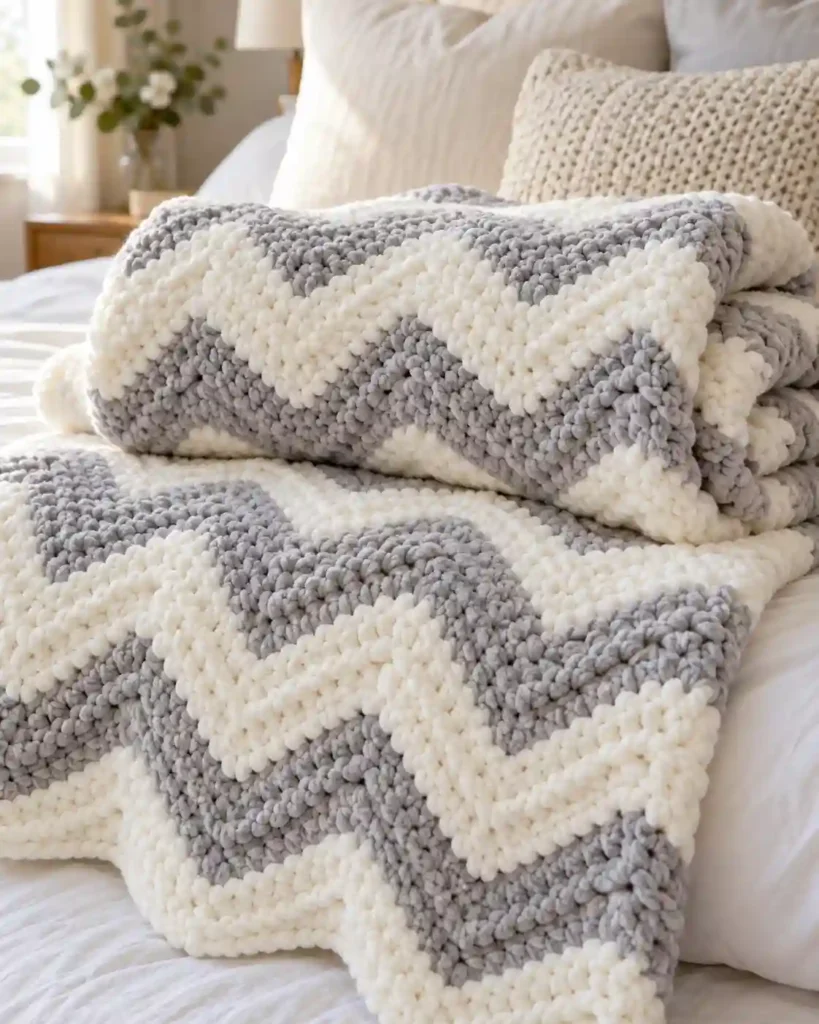
Plush or blanket-style yarn makes an ordinary chevron feel almost oversized even without complicated stitches. Broad waves are better than tiny repeats here because fuzzy fibers can hide fine stitch details.
This is the blanket to make when softness matters more than razor-sharp geometry. Keep the shaping uncomplicated, and let the yarn provide most of the visual weight.
16. Classic Chevron Baby Blanket
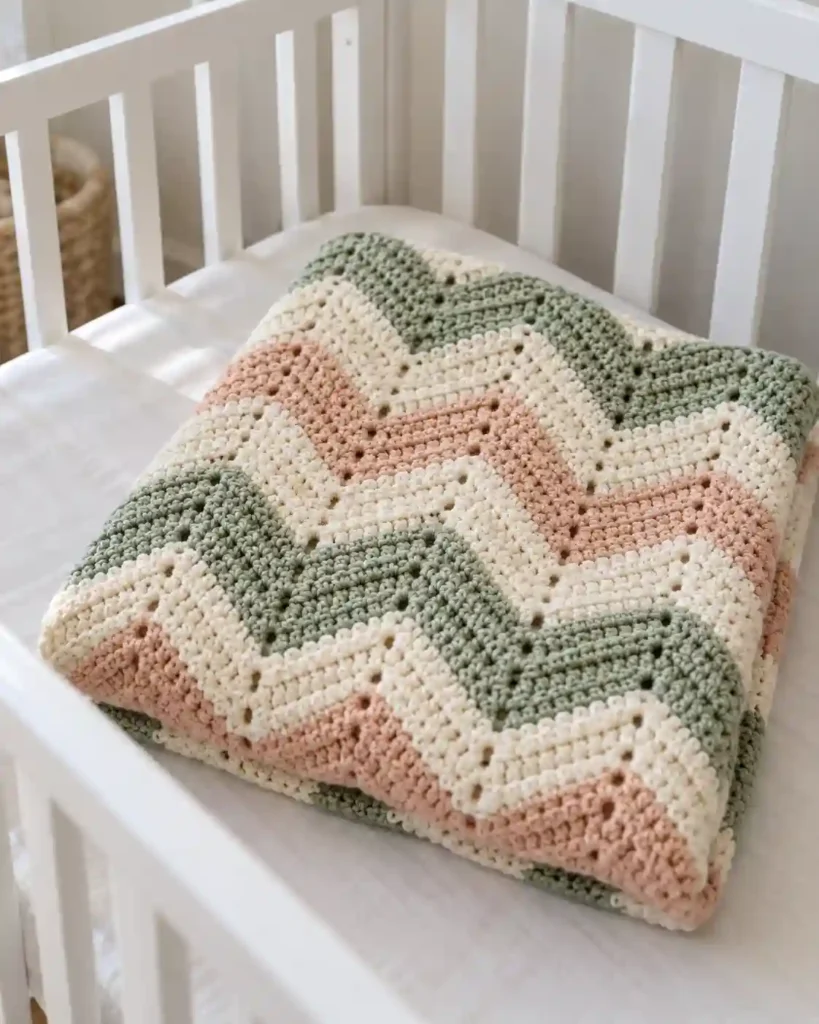
A small chevron version makes an easy crochet baby blanket because you get the classic pattern without committing to dozens of long throw-sized rows. Soft stripes also make an easy handmade gift because the same design can move from pastel and nursery-friendly to bright and playful simply through color.
Choose yarn according to the care requirements you need, not color alone. The Craft Yarn Council recommends keeping a yarn label with a handmade gift because its care symbols tell the recipient how the finished item should be washed and dried.
17. Modern Nursery Chevron Baby Blanket
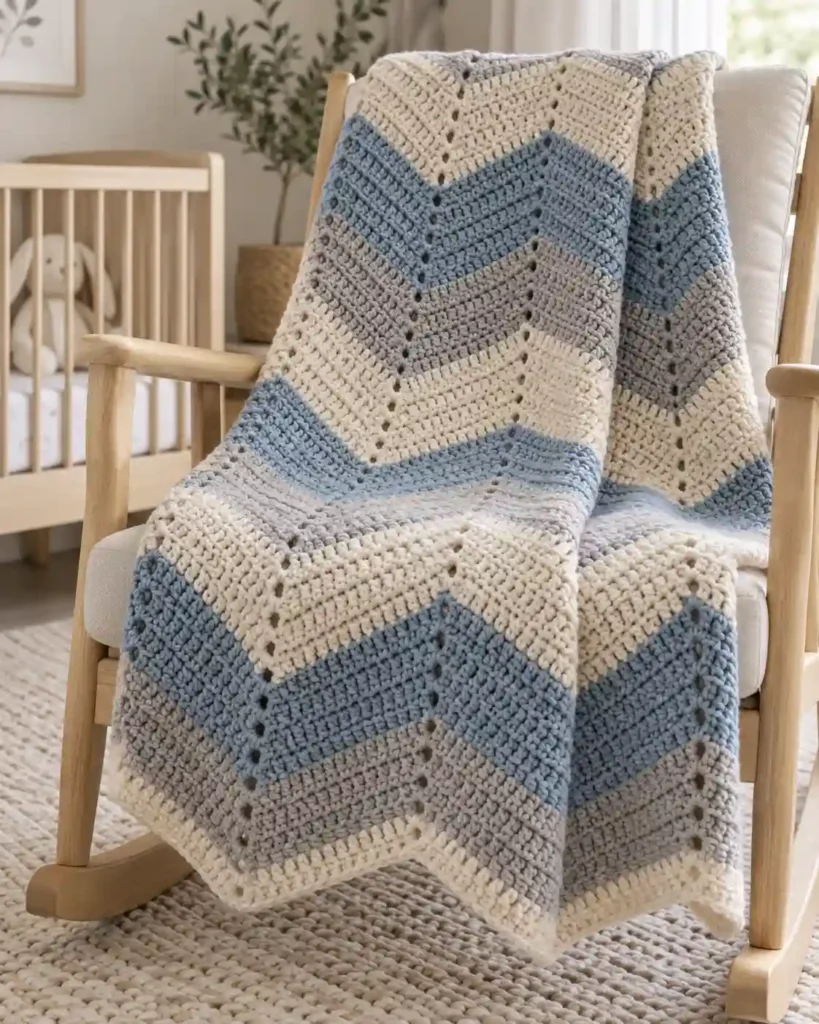
For a contemporary nursery, make the chevrons wider and simplify the palette. Oatmeal, dusty blue, sage, muted peach, soft gray, or warm white can turn a traditional ripple into something much more understated.
Fewer color changes also mean fewer ends to weave in. That makes this style a practical choice when you want a handmade baby gift that looks carefully designed without requiring elaborate crochet techniques.
18. Quick Baby Chevron Blanket
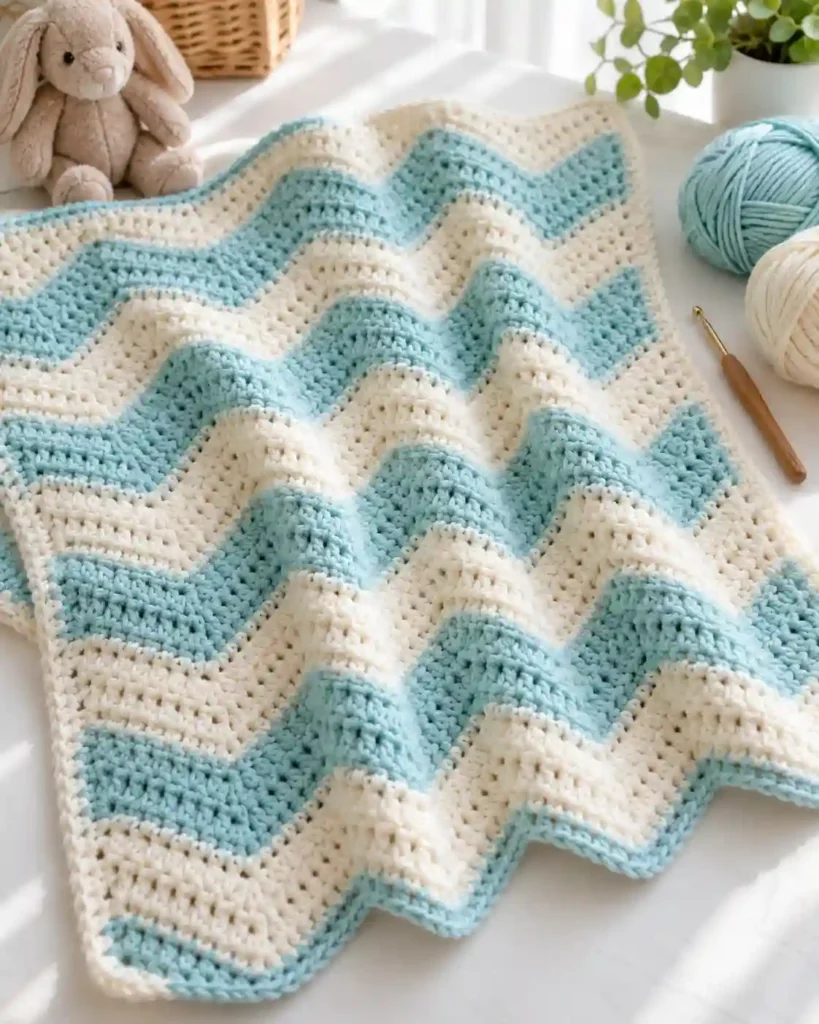
Need something you can finish without taking over the sofa for weeks? A compact chevron with a straightforward repeat and slightly thicker yarn keeps the project moving.
The smaller dimensions let you enjoy the zigzag effect while repeating fewer stitches per row than a large afghan. It is especially useful when your priority is practicing the shaping rather than producing a full bed-size blanket.
19. Granny Chevron Blanket
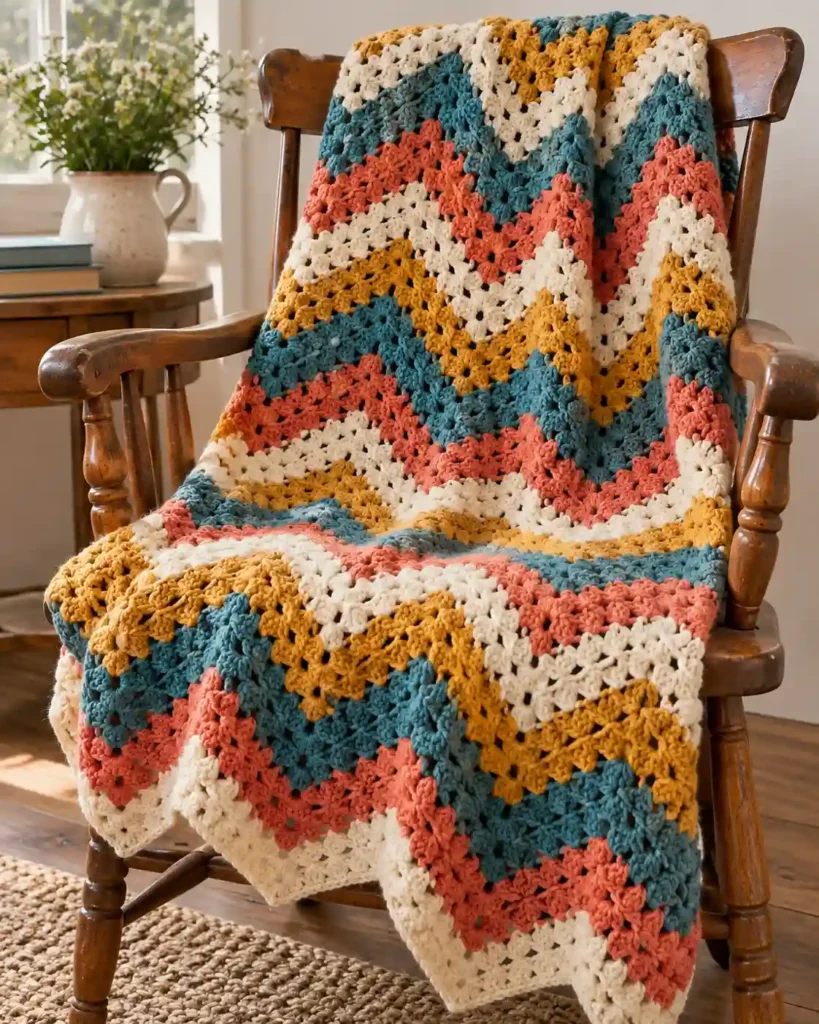
A granny chevron replaces solid rows with groups or clusters, creating more space between stitches. The result feels lighter, more colorful, and slightly vintage compared with a dense double crochet chevron.
Those open clusters are perfect for frequent stripe changes. Try retro colors for an old-school afghan look or use a restrained modern palette to make the same construction feel completely different.
20. Granny Stripe Chevron Blanket
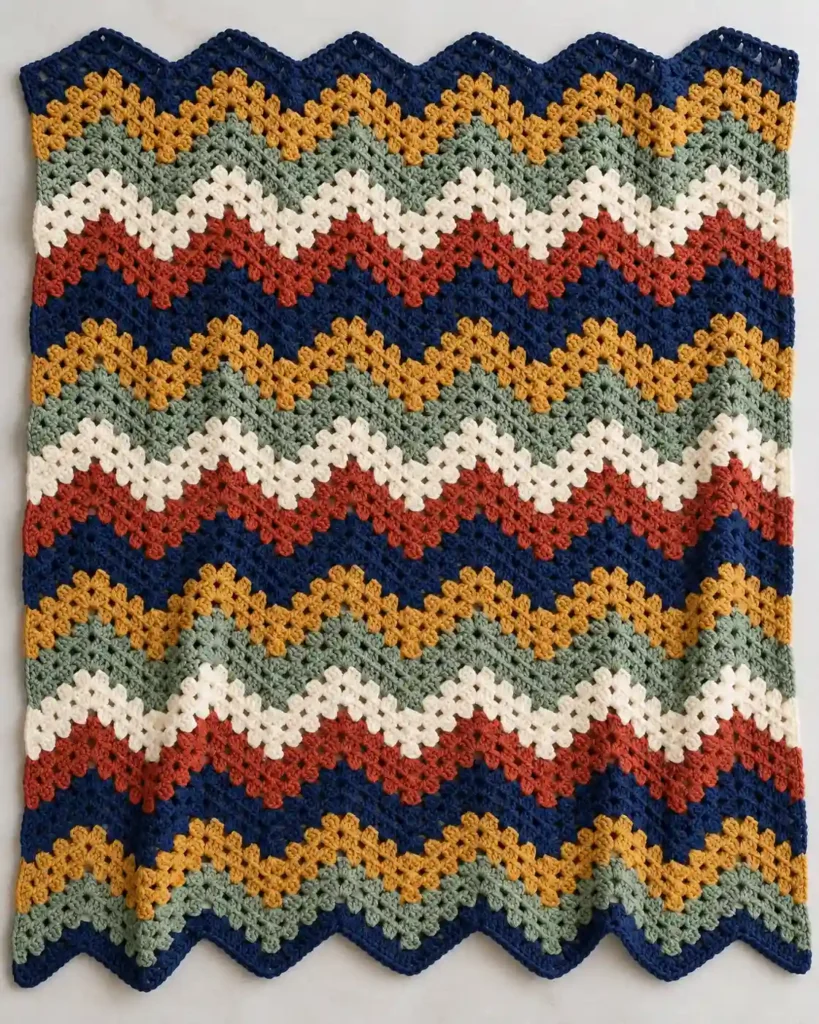
This variation keeps the cluster look but runs the granny-style groups continuously across each chevron row. The repeating holes and color bands give you plenty of visual interest without individual motifs to join.
It is also a good stash project because narrow stripes can absorb smaller amounts of leftover yarn. Keep the valley spacing consistent so the open fabric stays flat rather than bunching.
21. Vintage Retro Chevron Afghan
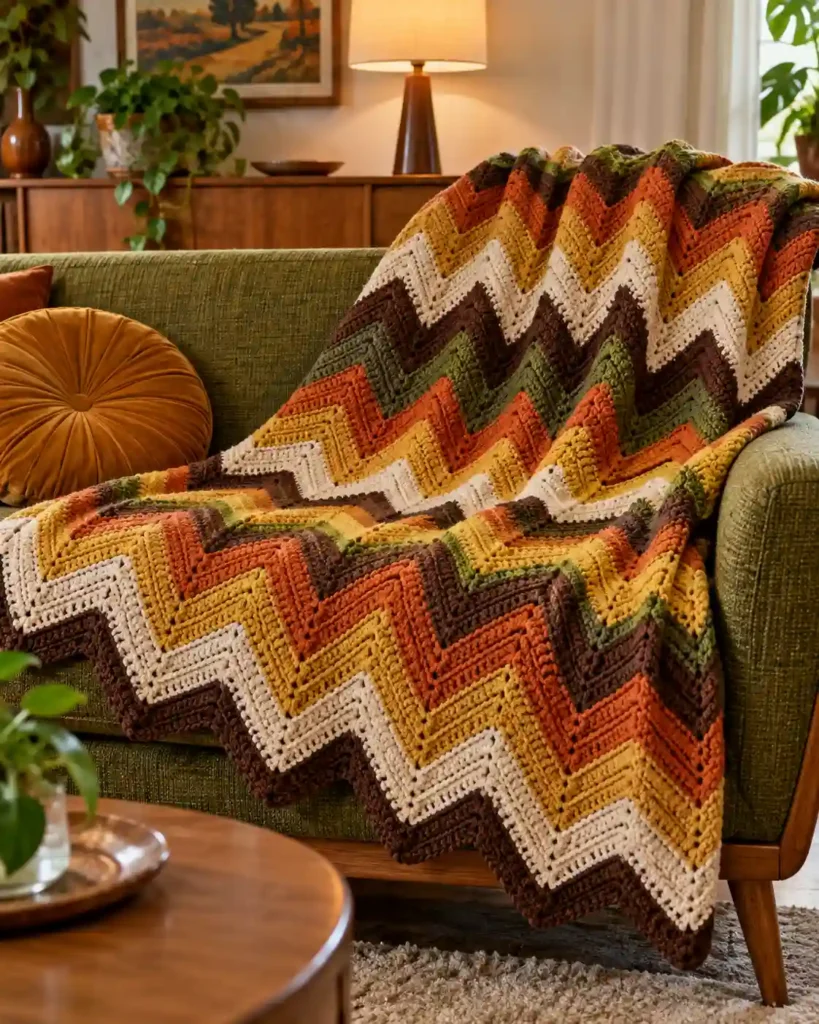
Chevron and retro color palettes are almost impossible to separate. Burnt orange, avocado, mustard, cream, rust, and brown immediately give narrow repeated zigzags the character of a classic afghan.
What keeps the design from feeling dated is restraint. Use two or three retro colors with a modern neutral, or widen the bands so the palette has more breathing room.
22. Herringbone Chevron Blanket
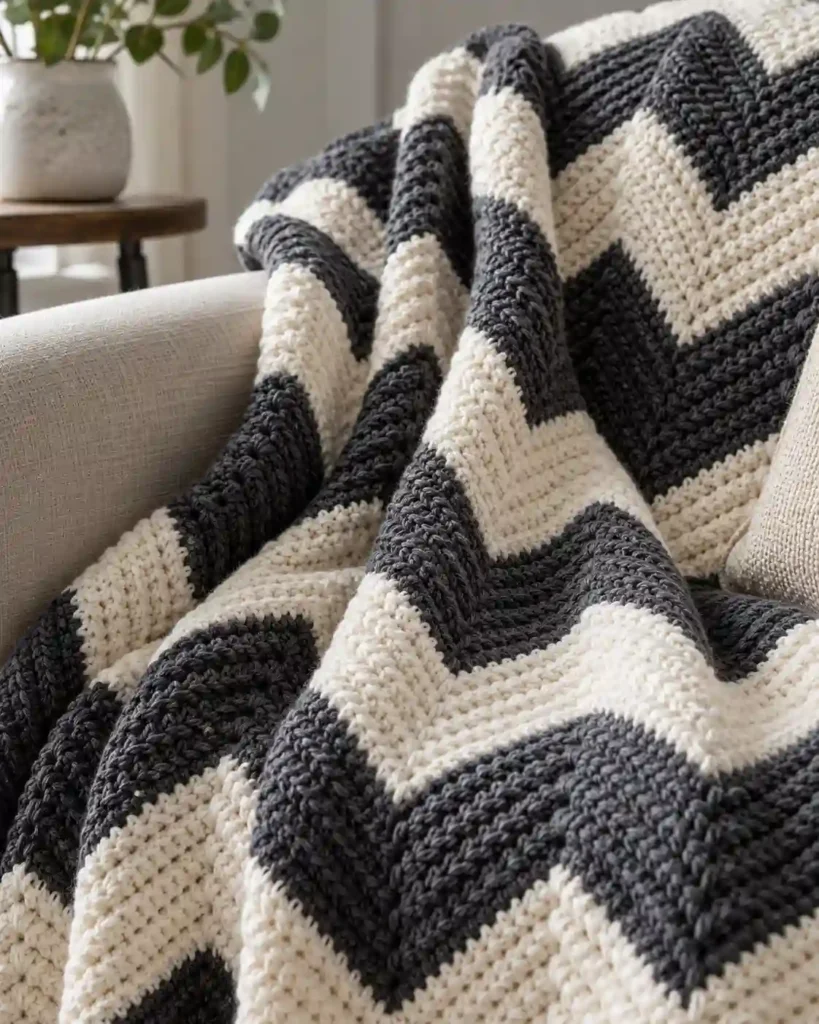
Combining herringbone-style texture with chevron shaping gives the surface a more directional look. The diagonal stitch grain and repeating V shapes reinforce each other, making the blanket feel much more intricate than a standard stripe.
This is better suited to crocheters who already feel comfortable maintaining chevron shaping while concentrating on another stitch technique. A solid shade or two-color palette makes that extra structure easier to see.
23. Chevron Bed Scarf
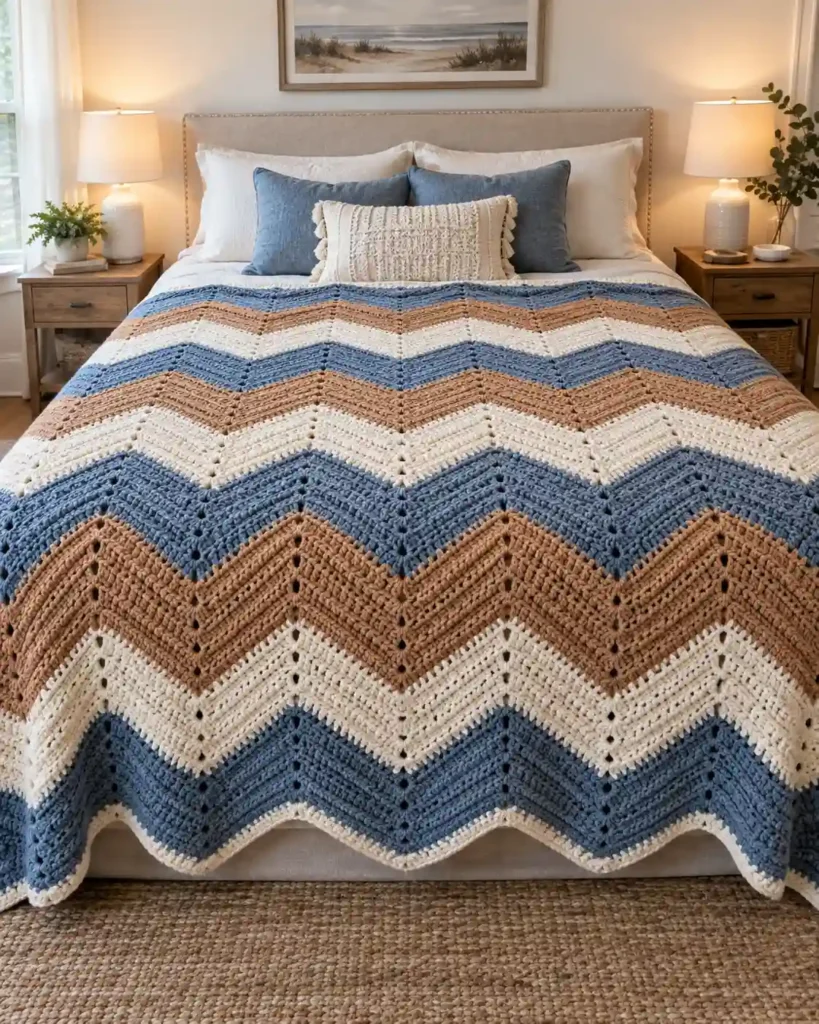
You do not need to crochet an entire queen-size blanket to use chevron on a bed. A narrow bed scarf placed across the foot gives you the same graphic impact with fewer stitches, less yarn, and a much shorter project.
Coordinate the yarn with your bedding rather than treating the scarf as a separate color experiment. That is where a charcoal, camel, ivory, navy, or muted green zigzag can look especially intentional.
24. Large Bed-Size Chevron Blanket
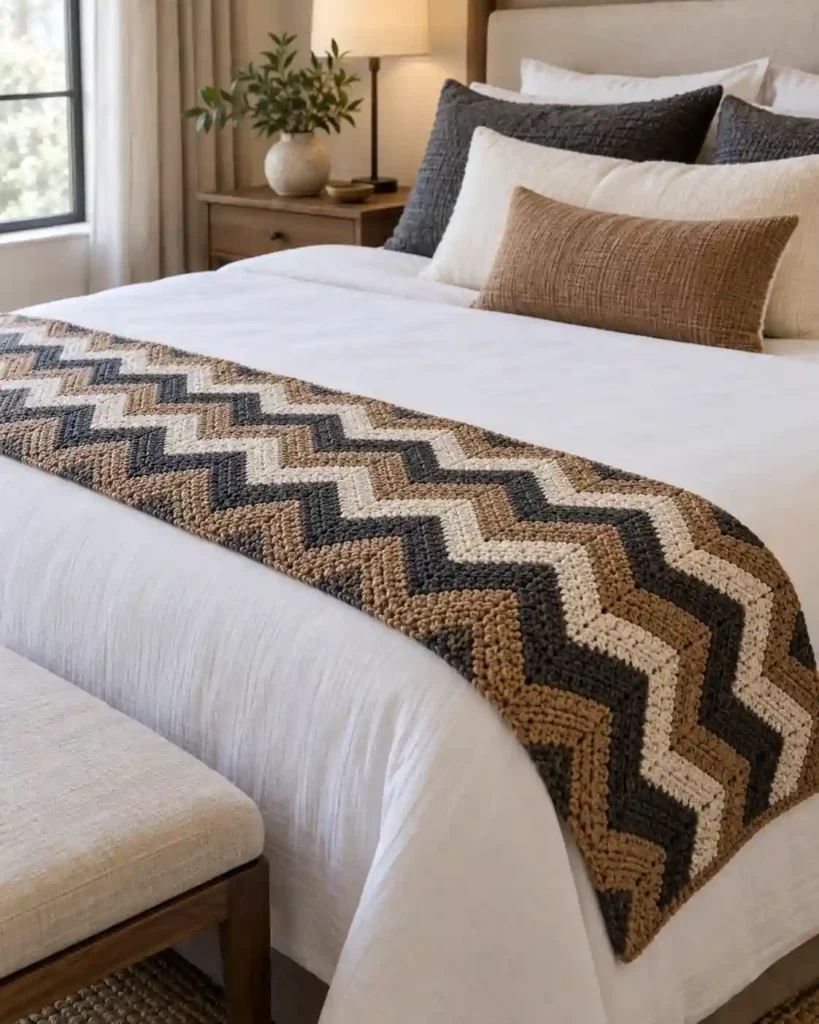
A large chevron is the project where planning matters most. Before buying piles of yarn, determine the stitch multiple for your chosen pattern, make a swatch, and calculate how many complete repeats are needed for the width.
Do not add random stitches to make the blanket wider. Chevron shaping depends on keeping the correct relationship between peaks, valleys, and straight sections.
Published patterns also show why measuring matters: Yarnspirations lists one Caron chevron blanket at approximately 48 × 60 inches, while a Bernat example is approximately 46 × 56 inches. Those are individual pattern dimensions, not universal “throw” measurements.
25. Chevron Lap Blanket or Lapghan
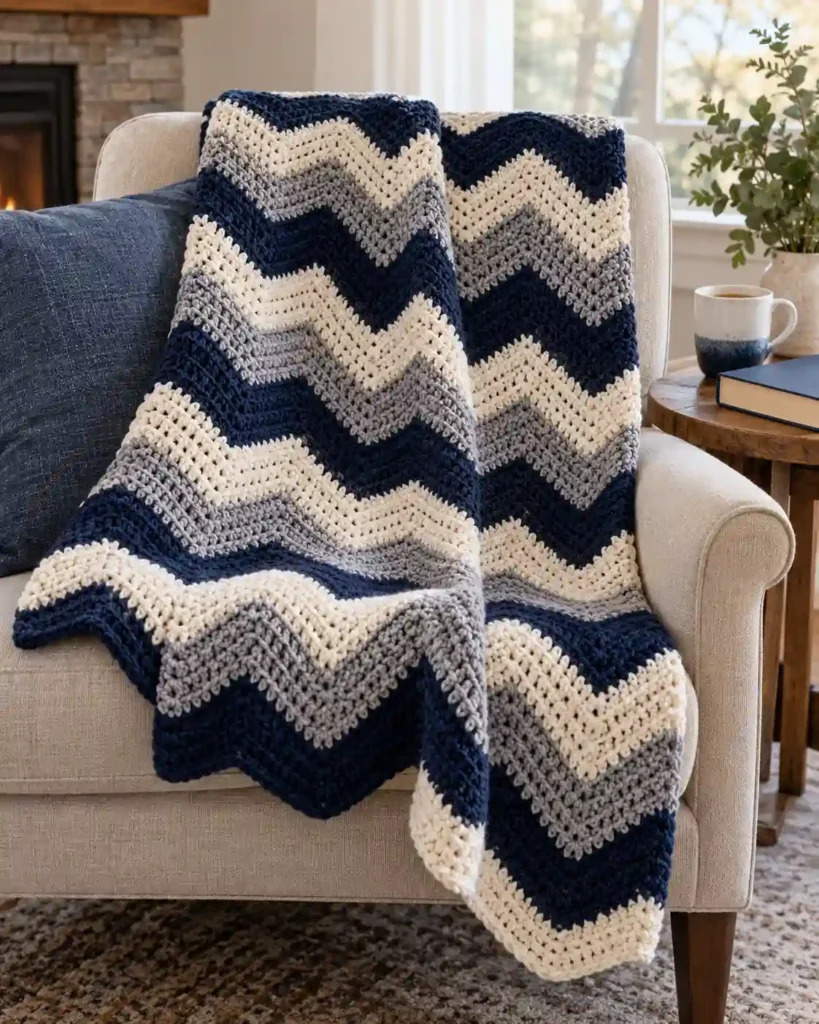
A lapghan gives you enough rows to enjoy the full chevron rhythm without the yarn requirements of a bed blanket. The smaller size is easy to move around and works naturally over a reading chair, sofa, or wheelchair.
Keep the repeat uncomplicated and choose a washable yarn if the blanket will be used frequently. Navy, gray, and cream make a practical combination that still shows the zigzag clearly.
26. Chevron Motif Blanket
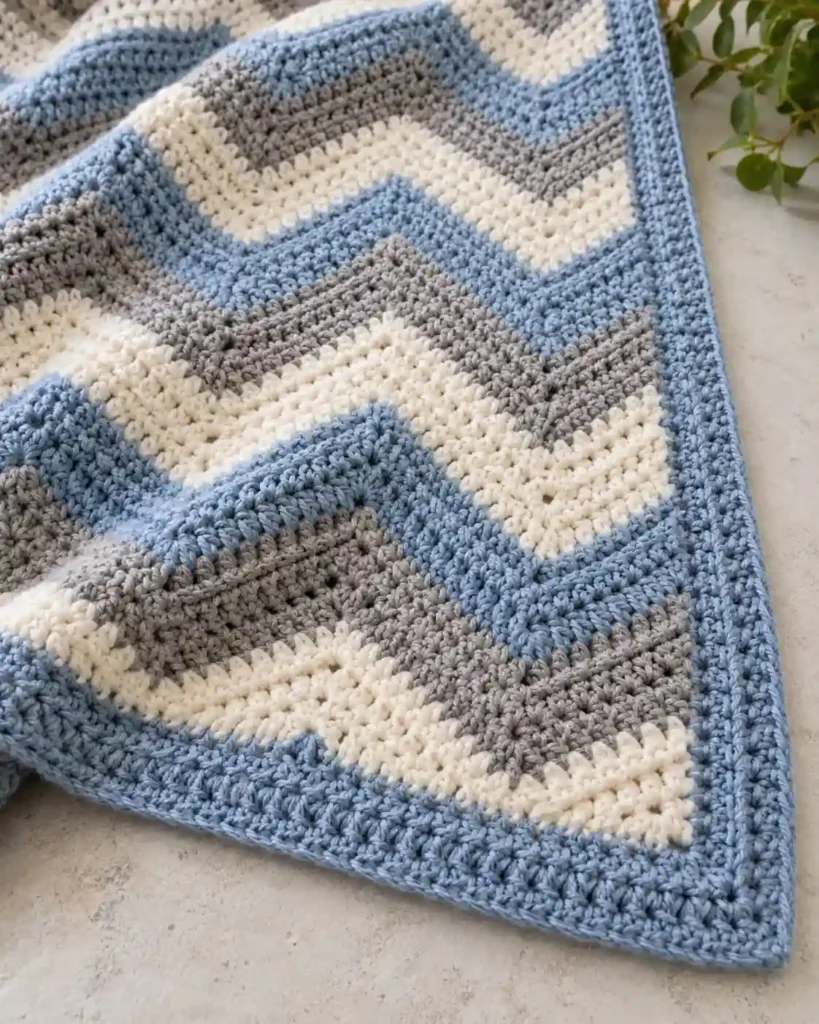
Instead of forming the entire zigzag row by row, a motif version builds smaller crochet units and arranges them into larger chevron bands. This gives you the freedom to work in portable pieces instead of carrying a growing blanket everywhere.
The challenge comes during assembly. Consistent motif size and careful layout planning matter more here than they do in a continuous ripple blanket.
It is a fun direction when traditional free chevron crochet patterns start to feel too familiar and you want something more modular.
27. Chevron Blanket With a Straight Border
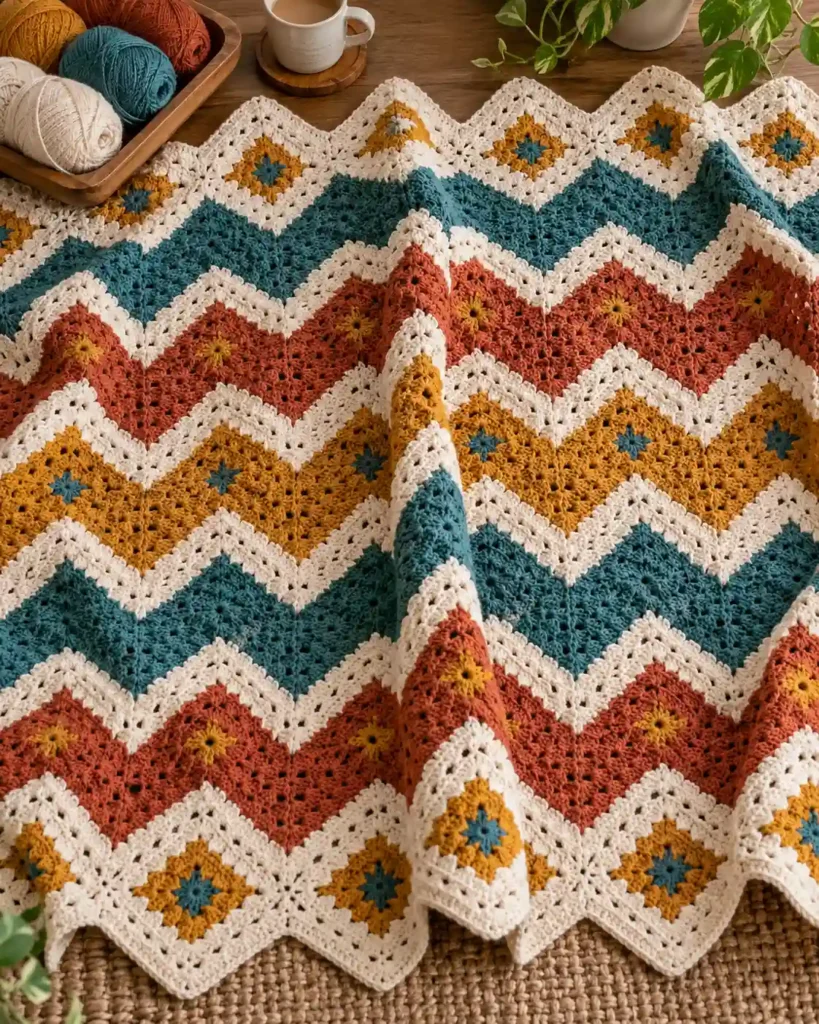
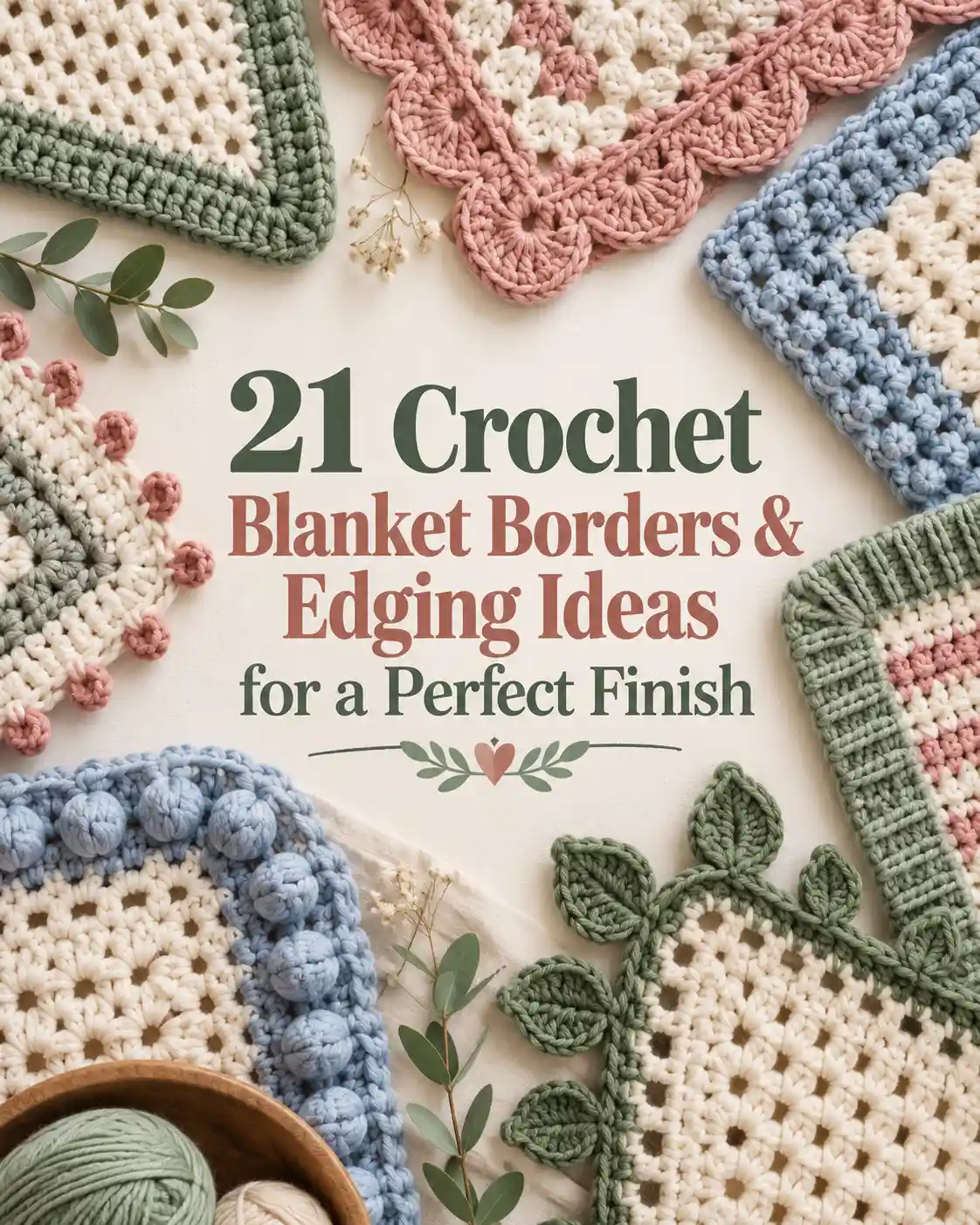
The right crochet blanket borders can either celebrate the pointed edge or visually tame it. If you prefer a rectangle, filling the valleys with progressively taller stitches before adding the final border can help straighten the end.
Keep the border simpler than the center pattern. An ornate edge competing with strong zigzags often makes the blanket look busier rather than more finished.
A Daisy Cottage Designs chevron example uses an optional border specifically to create a straighter edge, which is a useful reminder that borders can change both the finish and overall silhouette.
How Does the Chevron Crochet Stitch Work?
A chevron crochet stitch forms repeating peaks and valleys by placing increases and decreases at consistent points across each row while maintaining the pattern’s required stitch count.
At a Glance:
- Increases create the upward peaks.
- Decreases form the downward valleys.
- Straight stitches separate shaping points.
- Consistent stitch counts keep rows aligned.
- Pattern multiples determine the starting width.
The basic mechanism is surprisingly simple: stitches are added around a peak and removed around a valley. Repeat that shaping at consistent intervals, and a straight row begins moving up and down.
The exact numbers vary by pattern. One published Daisy Cottage Designs version, for example, uses a starting-chain formula based on multiples of 15 plus additional chains, but that number belongs to that particular construction and should not be treated as a universal chevron formula.
That is why you should always check four things before beginning:
- Stitch multiple
- Peak increase
- Valley decrease
- Edge-stitch instructions
Once those four pieces make sense, the rest of the blanket is mostly repetition.
What Yarn and Hook Size Should You Use?
Use the yarn weight and hook size specified by your pattern whenever possible, then make a gauge swatch if finished blanket dimensions or stitch definition matter.
At a Glance:
- Worsted yarn suits versatile everyday blankets.
- Bulky yarn builds faster, heavier throws.
- Soft washable yarn works well for baby projects.
- Smooth yarn shows chevron points more clearly.
- Pattern gauge matters more than general hook charts.
Medium or worsted-weight yarn is a versatile place to begin because it gives you visible stitches without making the blanket excessively heavy. The Craft Yarn Council’s standard system classifies worsted, afghan, and aran yarns as category 4 medium and lists 5.5–6.5 mm as a commonly used crochet-hook range for that category. Those are guidelines, not replacements for a specific pattern’s instructions.
A crochet hook size chart is also worth checking when you need to compare metric and letter or number sizing. The Craft Yarn Council notes that letter and number hook sizing can vary among manufacturers, while millimeter sizing gives the actual hook measurement.
For an exact-size blanket, make the swatch. Yarnspirations likewise tells crocheters to match pattern gauge before relying on the published finished dimensions of its chevron patterns.
How Should You Plan Chevron Blanket Colors?
Plan chevron colors by deciding how many shades you want, testing their contrast, and repeating a consistent stripe sequence so the zigzag remains easy to read.
At a Glance:
- Two colors create simple, clear contrast.
- Three colors allow flexible repeating sequences.
- Rainbow palettes suit scrap-yarn projects.
- Neutrals create a modern home-décor look.
- One color emphasizes texture and stitch structure.
Start with the number of colors rather than individual shades.
Two colors: clean, graphic, beginner-friendly.
Three colors: more variety while keeping an obvious repeat.
Rainbow: energetic and useful for leftover yarn.
Neutral palette: modern and easier to coordinate with home décor.
One color: puts the emphasis on stitch texture rather than stripes.
Wrap a little of each yarn around a piece of cardboard in the planned sequence before starting. It is a quick way to see whether neighboring colors have enough contrast.
How Do You Size a Chevron Crochet Blanket?
Size a chevron blanket by measuring a swatch, identifying the pattern’s stitch multiple, and adding or removing complete repeats until the starting width matches your target.
At a Glance:
- Swatch before calculating the foundation chain.
- Measure one complete chevron repeat.
- Add only complete pattern repeats.
- Recheck width after several rows.
- Follow pattern gauge for precise sizing.
Never assume another chevron’s foundation-chain count will work for yours. First identify the pattern’s stitch multiple, then add or remove complete repeats until the width is close to what you need.
Make a swatch if finished dimensions matter. Different yarns, hooks, and personal tension can change the width of each repeat significantly.
The approach is simple:
- Crochet and measure a sample repeat.
- Decide your target blanket width.
- Calculate how many full repeats will fit.
- Build the foundation chain using the pattern’s required multiple.
- Crochet several rows and recheck the actual width before continuing.
That small test is much easier than discovering the blanket is six inches too narrow after thirty rows.
How Do You Keep Chevron Blanket Edges Straight?
Keep side edges straight by identifying the correct first and last stitches, using markers, maintaining the required row count, and checking turning-chain instructions throughout the project.
At a Glance:
- Mark the first and last stitches.
- Count rows before mistakes accumulate.
- Follow turning-chain instructions exactly.
- Check peak and valley placement regularly.
- Add a border only when needed.
The sides usually become uneven because an edge stitch disappears or an accidental increase sneaks into a row.
Place stitch markers in the first and last working stitches. Count frequently, especially during the first several repeats, and learn whether the turning chain counts as a stitch in your chosen pattern.
The pointed top and bottom are different. Those points may be intentional parts of the chevron structure and can be left alone, filled, or framed with a border.
What Chevron Crochet Mistakes Should Beginners Avoid?
Most chevron problems come from incorrect stitch counts, misplaced increases or decreases, inconsistent edge stitches, uneven tension, or skipping a width and gauge check before starting a large blanket.
At a Glance:
- Count stitches before continuing long rows.
- Check every peak and valley position.
- Keep turning edges consistent.
- Maintain similar tension after color changes.
- Verify blanket width early.
The most common problem is losing the stitch count.
Other trouble spots include:
- Placing an increase one stitch away from the true peak
- Missing part of a valley decrease
- Accidentally crocheting into a turning chain
- Changing tension between color sections
- Starting a large blanket without checking its width
- Using a yarn that hides the stitch definition of a detailed pattern
Do not be afraid to undo a row when the zigzag starts drifting. Fixing one misplaced stitch immediately is much quicker than trying to disguise a crooked peak ten rows later.
FAQs About Chevron Crochet Blanket Pattern
Is a chevron crochet blanket easy for beginners?
Yes, a basic chevron can be beginner-friendly when it uses familiar stitches and a repetitive shaping sequence. Counting stitches and correctly placing the increases and decreases are usually the main learning curve.
What is the difference between a chevron blanket and a ripple blanket?
The terms often overlap. Chevron commonly describes more defined V-shaped peaks, while ripple may refer to softer waves, but crochet pattern designers do not use the terms according to one universal naming standard.
How many stitches do I chain for a chevron crochet blanket?
There is no universal chain count. Use the stitch multiple given in your chosen chevron crochet blanket pattern, then add complete repeats until you reach the required width.
What is the easiest free chevron crochet pattern for beginners?
Look for a free chevron crochet pattern using basic single, half double, or double crochet stitches, a short repeat, clearly explained increases and decreases, and minimal color changes. A two-color double crochet version is an especially practical starting point.
When comparing a Free chevron Crochet blanket pattern, check that it clearly explains the stitch multiple, turning chain, increases, decreases, and edge stitches before you begin.
Can I crochet a chevron blanket in one color?
Yes. A single-color blanket can show the zigzag through stitch direction, raised texture, shadows, or back-loop work instead of contrasting stripes.
People Also Ask
What stitch works best for a chevron crochet blanket?
Double crochet is a practical choice when you want visible peaks, quicker growth, and an easy-to-read stitch structure. Single crochet produces a denser fabric, while half double crochet creates a softer middle ground. A Simple Chevron crochet pattern usually works best when the stitch repeat and shaping points are easy to identify.
How much yarn do I need for a chevron crochet blanket?
The amount of yarn depends on blanket size, yarn weight, stitch density, stripe plan, and individual tension. Check the yarn estimate supplied with your chosen pattern, then allow for swatching and finishing. If a Chevron crochet blanket pattern free resource gives yardage, confirm that its dimensions match the size you intend to make.
Why is my chevron crochet blanket getting wider or narrower?
A chevron blanket usually changes width when stitches are accidentally added or lost at row ends, peaks, or valleys. Count your stitches regularly and use markers at the edges and shaping points. Catching the mistake within one row is much easier than correcting distorted zigzags several rows later.
Should I block a chevron crochet blanket before adding a border?
Blocking can help even out stitch tension and sharpen the overall zigzag shape before finishing, especially when the yarn and fiber care instructions allow it. It is not a substitute for incorrect stitch counts, but it can improve the appearance of a correctly worked blanket before a border is added.
Can I use bulky yarn for a chevron crochet blanket?
Yes, bulky yarn can create a warm chevron blanket with large, dramatic zigzags and faster row growth. Use a simple repeat because thick or fuzzy yarn may hide small stitch details. A wider chevron often shows the pattern more clearly than a narrow repeat when working with bulky yarn.
Final Thoughts
The best chevron blanket is not necessarily the most complicated one. A simple double crochet repeat can look just as striking as an elaborate textured design when the stitch count is clean and the colors work together.
Start with the version that matches the way you actually like to crochet. Choose a two-color beginner throw if you want an easy rhythm, a granny chevron if you love color changes, a chunky blanket when speed matters, or a neutral textured version when you want something more modern.
Whichever chevron crochet blanket pattern you choose, make a small swatch first. Check the peaks, valleys, width, tension, and color sequence before committing your yarn to the full blanket. Then the fun part is simply watching that classic zigzag grow across every row.
On CrochetMind, this 27-pattern collection can also serve as a starting point for exploring beginner crochet stitches, blanket color combinations, yarn choices, and other crochet blanket ideas.

![The Best 30+ Free Crochet Cat Patterns [Beginner-Friendly Guide]](https://crochetmind.com/wp-content/uploads/2025/04/1-The-Best-30-Free-Crochet-Cat-Patterns-Beginner-Friendly-Guide.webp)