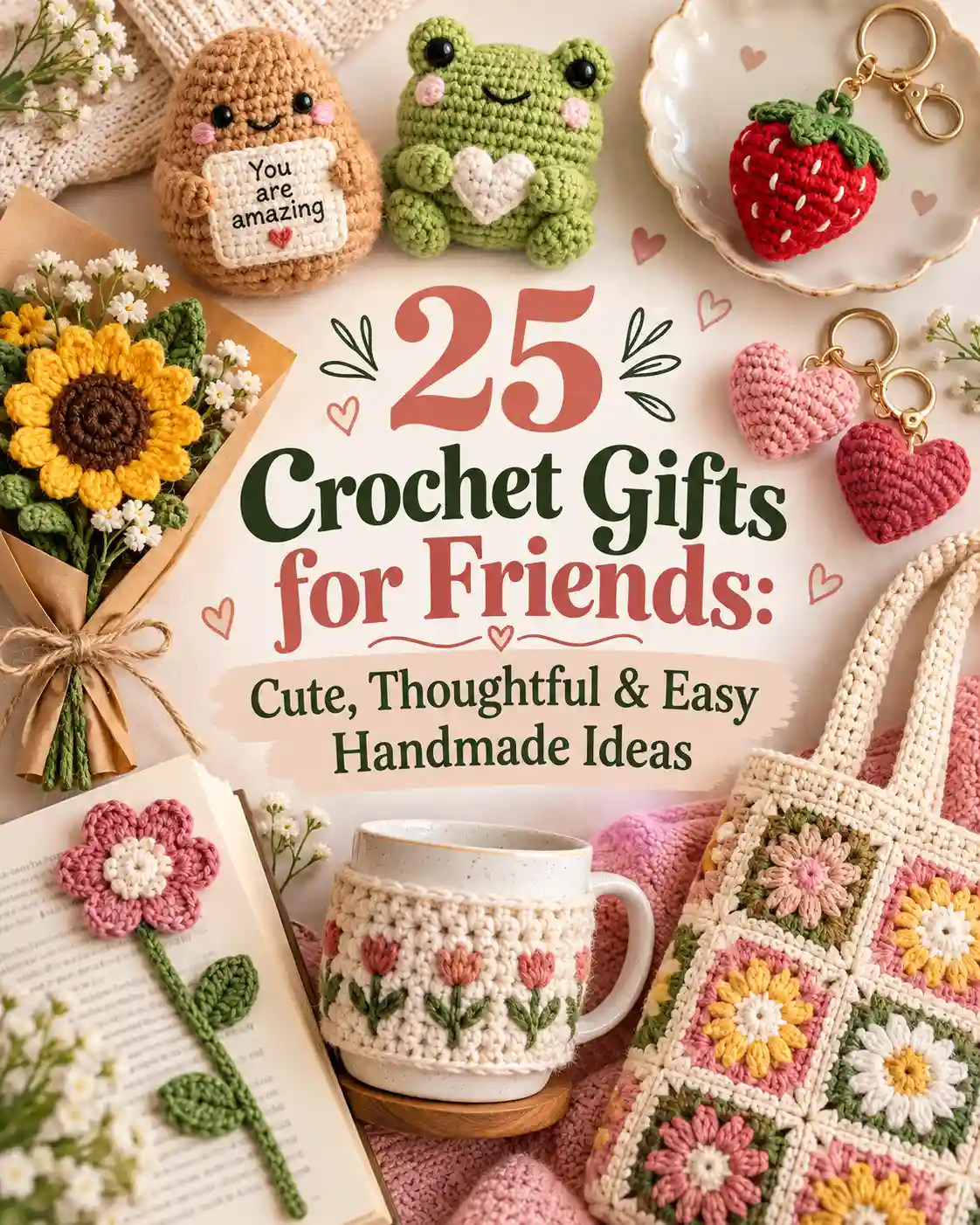
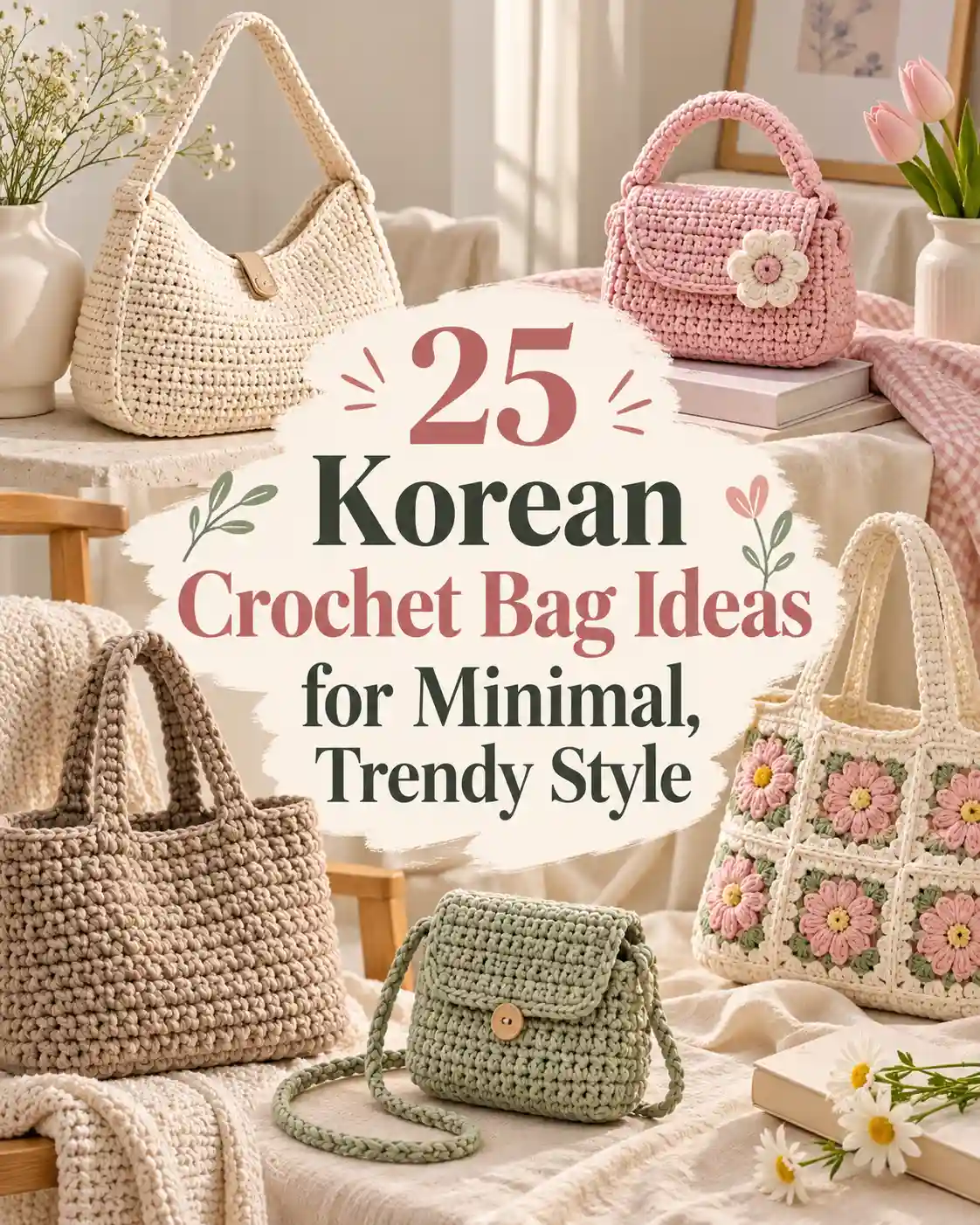
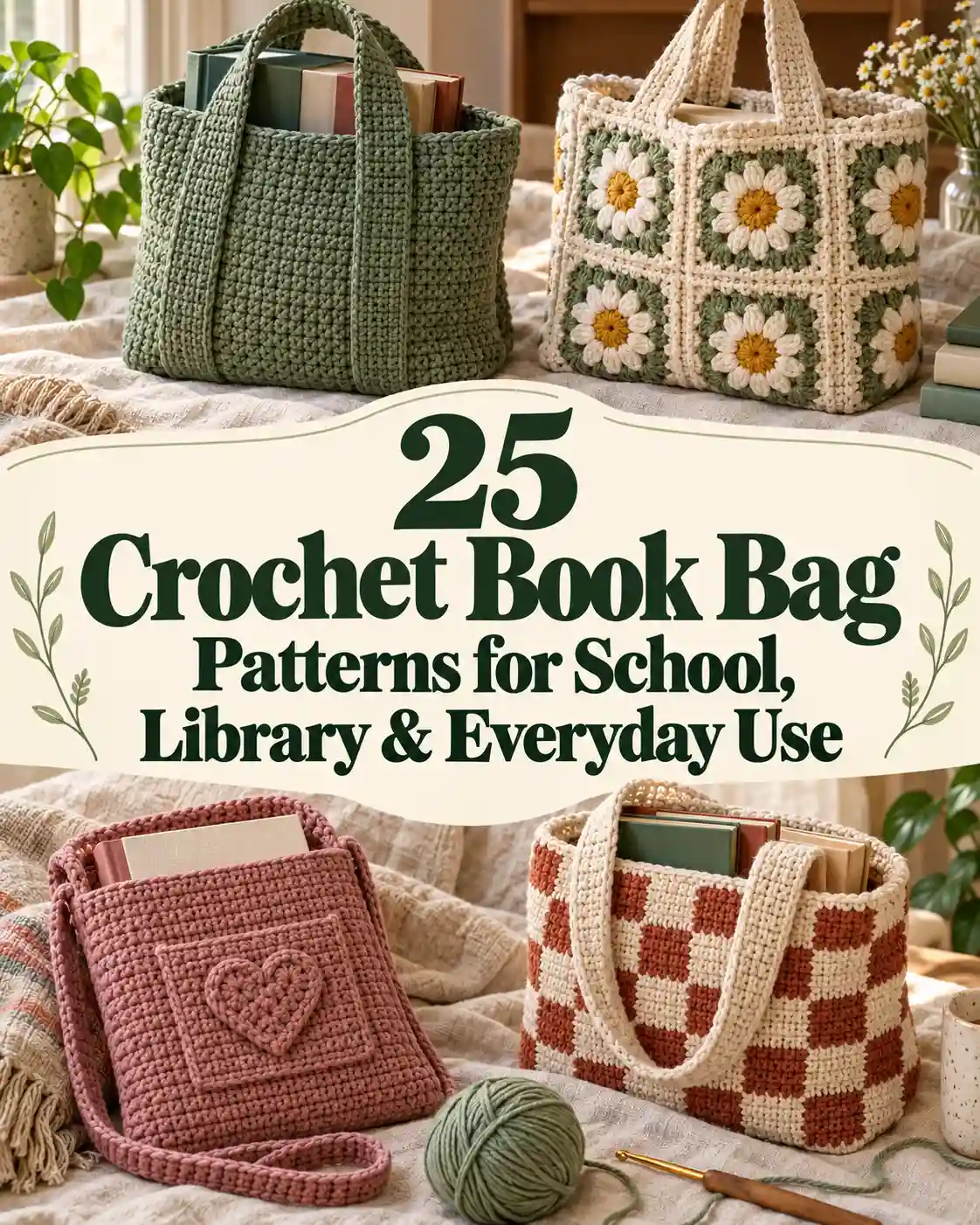
A crochet book bag is a handmade carrier designed around the size, weight, and way you carry your books. Some readers need a snug sleeve for one paperback, while others need a roomy tote or crochet school bag with stronger handles, pockets, and enough structure for everyday use. The right design depends less on decoration and more on fit, yarn, stitch density, strap construction, and the number of books you expect to carry. The ideas below give you 25 practical ways to combine those details without making every project look the same.
A practical crochet book bag should fit what you actually carry, use stitches dense enough to support the load, and put extra strength into the base, handles, and strap joins. Medium #4 yarn is a flexible starting point for many everyday bags, but the best gauge, hook, and finished size depend on the pattern and the book or device you plan to carry.
Books are awkward little passengers. A paperback wants a close-fitting sleeve, a library haul needs a sturdy tote, and a school bag has to handle notebooks, pens, and daily movement without stretching into a long hammock.
The 25 crochet book bag patterns and pattern ideas below cover fitted sleeves, removable straps, pockets, backpacks, library totes, school and college bags, Bible carriers, Kindle sleeves, and plenty of bookish styles.
Key Takeaways
- Measure your book before choosing a bag size.
- Match bag structure to the books you carry.
- Reinforce handles, straps, bases, and attachment points.
- Add lining when the crochet fabric needs support.
- Keep a crochet school bag organized with practical pockets.
- Choose decoration after the basic structure works.
What Makes a Crochet Book Bag Work for Real Life?
A useful crochet book bag combines accurate sizing, dense enough fabric, secure straps or handles, and a structure suited to the weight of the books inside.
At a Glance
- Measure before starting.
- Choose structure for the expected load.
- Reinforce high-stress areas.
- Keep closures away from book covers.
- Add lining when extra support helps.
The best crochet book bag is not simply the prettiest one. It matches the size and weight of the books, keeps corners from rubbing, and uses a shape that stays comfortable once the bag is loaded.
For yarn sizing, the Craft Yarn Council classifies medium yarn as category #4 and lists 5.5–6.5 mm as a common crochet-hook range, with about 11–14 single crochet stitches per 4 inches as a general gauge range. Those figures are guidelines rather than rules, so the gauge in a specific pattern should always win.
| Bag Style | Best For | Feature to Prioritize | Starting Skill Level |
|---|---|---|---|
| Fitted sleeve | One paperback or hardcover | Accurate sizing | Beginner |
| Crossbody carrier | One book on the go | Reinforced strap joins | Beginner–Intermediate |
| Library tote | Several books | Firm base and wide handles | Intermediate |
| Crochet school bag | Books, notes, small essentials | Structure and pockets | Intermediate |
| Drawstring backpack | School or casual use | Strong base and strap width | Intermediate |
| Lined motif bag | Heavier or frequent use | Fabric lining | Intermediate |
A protective bag should support rather than squeeze the book. The Library of Congress notes that protective enclosures can provide structural support for fragile books and advises against overstuffing folders or storage containers. A crochet bag is not an archival enclosure, but the same practical principle is useful here: give your book enough room to slide in and out without bending the cover.
Which Crochet Book Bag Pattern Should You Make?
Choose the pattern according to what you carry most often: sleeves and crossbody bags suit one book, while totes, messenger bags, and backpacks work better for multiple books or school essentials.
At a Glance
- Choose sleeves for single books.
- Use totes for larger book loads.
- Pick crossbody styles for hands-free carrying.
- Add pockets for study accessories.
- Consider lining for frequent everyday use.
25 Crochet Book Bag Patterns for School, Library & Everyday Use
Start with how the bag will actually be used. If it is mostly for one current read, choose a sleeve, pouch, or crossbody shape. If it will carry several books, a crochet tote bag, backpack, or messenger bag with lining and wider handles is a better direction.
1. Why Make a Convertible Crochet Book Sleeve Bag With a Removable Strap?
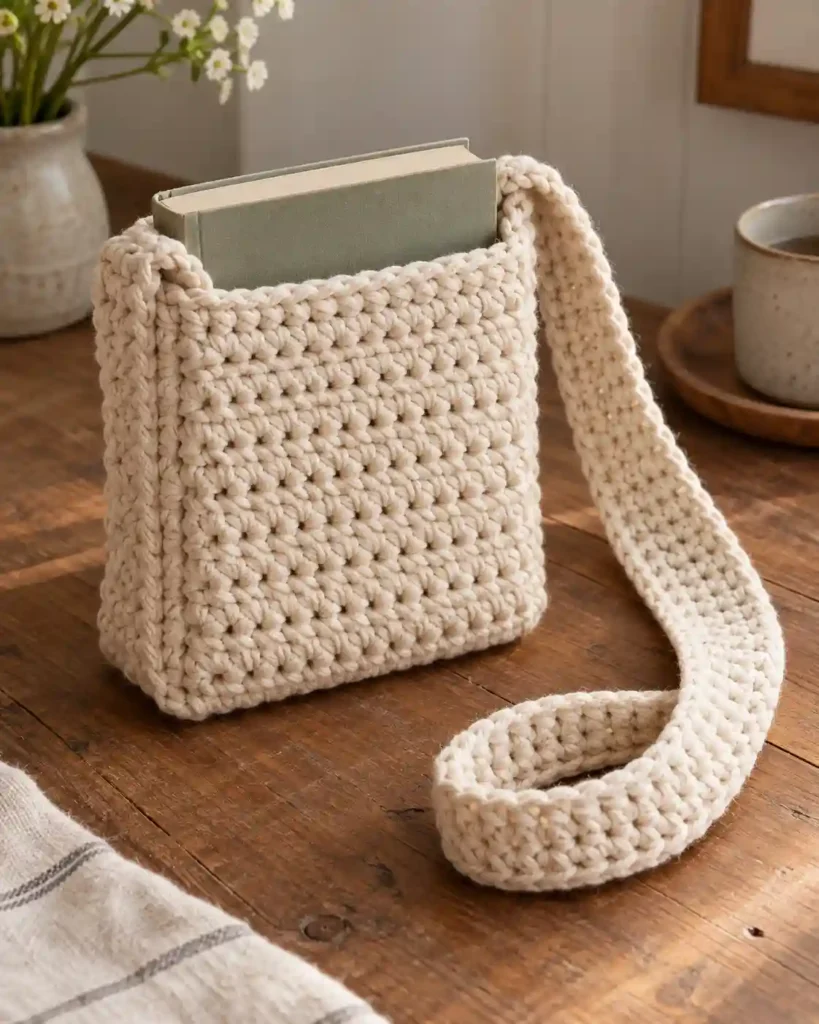
A convertible crochet book sleeve bag gives you two projects in one: a cozy sleeve at home and a small shoulder carrier when you leave. A fixed strap can feel bulky when the bag is sitting on a nightstand, while a removable strap keeps the sleeve neat until you need it.
This is especially handy for readers who take one paperback to a café, appointment, or book club. Choose it when you want protection first and hands-free carrying second.
Use dense stitches around the sleeve and reinforce the strap loops with extra rounds or sewn backing. If you use rings or clips, place them where the book’s corners will not press against the hardware.
2. How Do You Crochet a Fitted Paperback Book Bag?
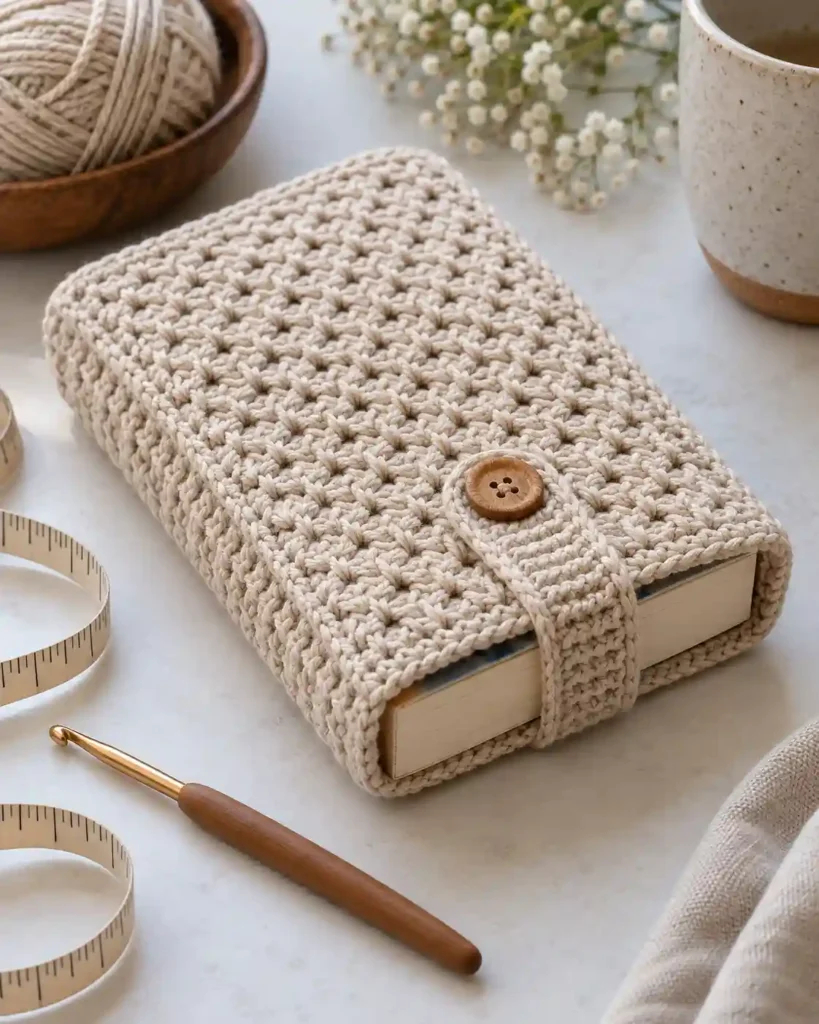
A fitted paperback crochet book bag is the cleanest choice when you carry one favorite novel at a time. Oversized totes leave a small book sliding around, but a measured sleeve keeps the cover close to the fabric and makes the whole project feel intentional.
It works beautifully for commuting, lunch-break reading, or keeping a paperback protected inside a larger handbag. This is one of the easiest places for a beginner to start because the construction can be little more than a rectangle, fold, seam, and closure.
Measure the book’s height, width, and spine depth before you chain. Crochet a small gauge swatch, then allow a little ease for stretch without making the sleeve so tight that it bows the cover.
3. Roomy Hardcover Crochet Book Bag
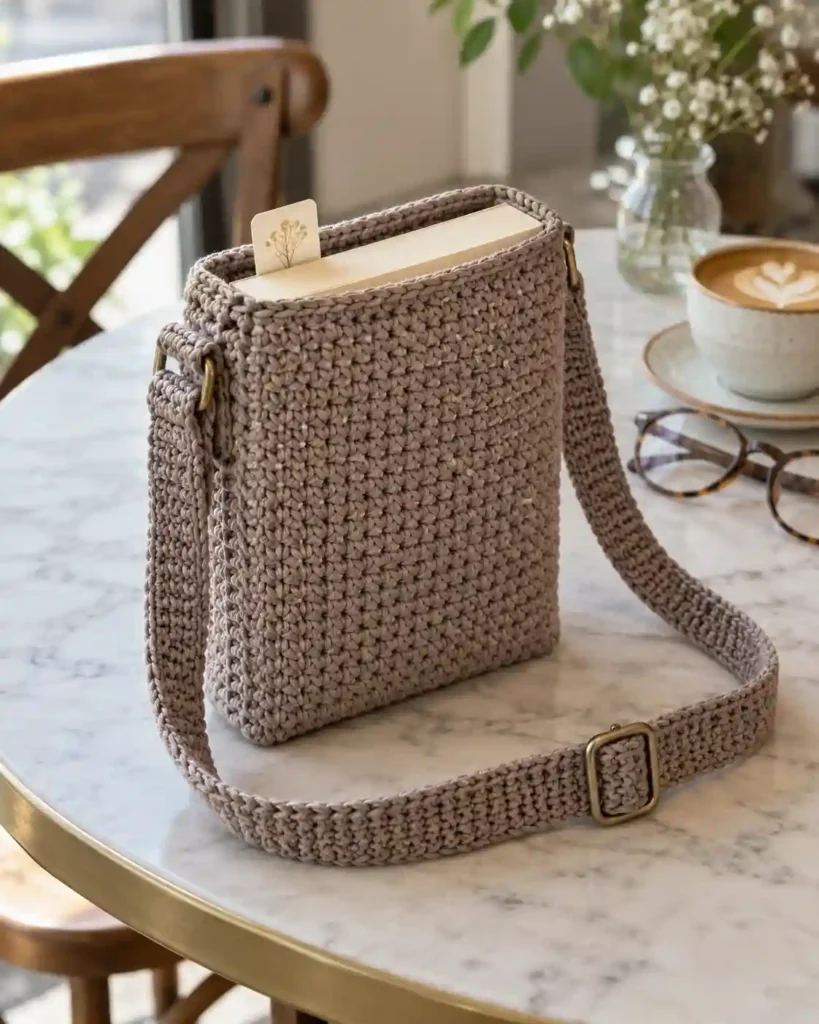
A hardcover needs more depth than a paperback, and that extra thickness changes the whole feel of the bag. Instead of forcing a chunky book into a flat sleeve, build a gusset or wider base so the corners sit naturally.
This style makes sense for collectors, book-club hardcovers, or anyone who carries a thick journal alongside a novel. Its best feature is structure: the bag should feel like it was made for the book rather than stretched around it.
Work the base in a dense stitch and consider a flap or soft button tab for security. Keep hard buttons and bulky seams away from the book’s face.
4. What Makes a Double-Pocket Crochet Book Bag So Useful?
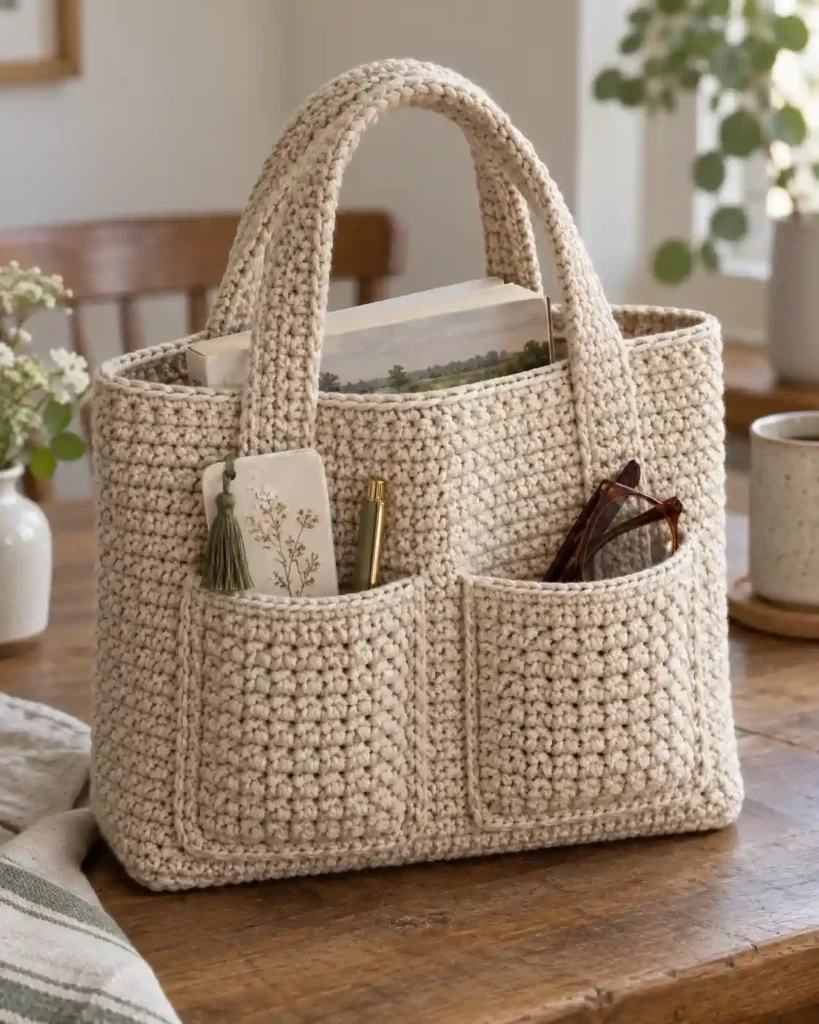
A double-pocket book bag separates the tiny things that usually disappear around a book. One pocket can hold a bookmark or pen while the other takes reading glasses, sticky notes, or a phone.
Compared with one oversized pocket, two flatter compartments keep the front of the bag tidier and reduce lumpiness. It is a strong choice for students, annotators, and readers who always travel with a little reading kit.
Place the pockets before attaching straps so you can check balance. Keep them shallow enough that heavy objects do not pull the front panel forward.
5. Crochet Book Cover Bag With a Heart Pocket
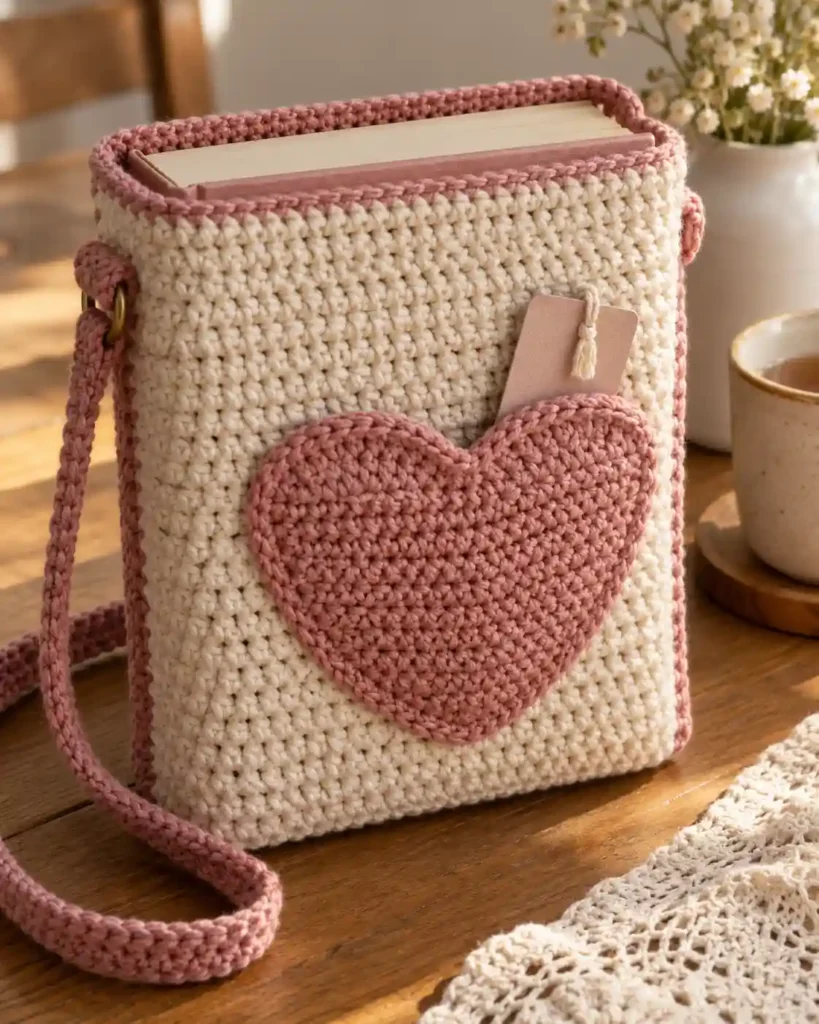
A heart pocket turns a simple book cover bag into a gift without making the construction complicated. Rather than covering the entire surface with decoration, one shaped pocket creates a focal point and still earns its place by holding a crochet flower bookmark or note.
It suits Valentine gifts, book-club swaps, birthdays, or a personal reading journal. The payoff is a cute finish that remains useful instead of purely decorative.
Make the base sleeve first, then crochet or sew on the heart pocket. A cream base with rose, red, or dusty pink works well, but high contrast makes the shape easier to see.
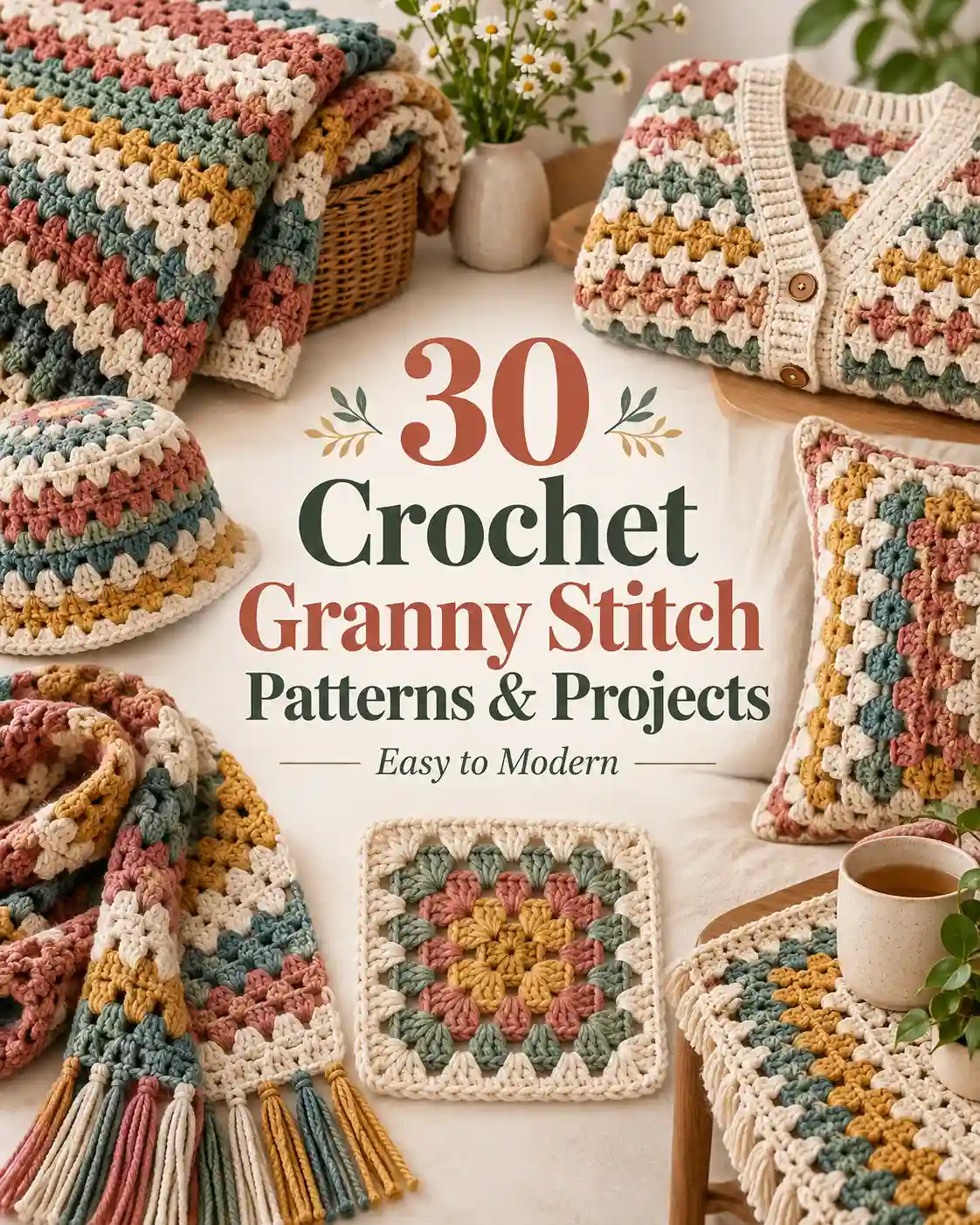
6. Why Try a Granny Square Crochet Book Bag?
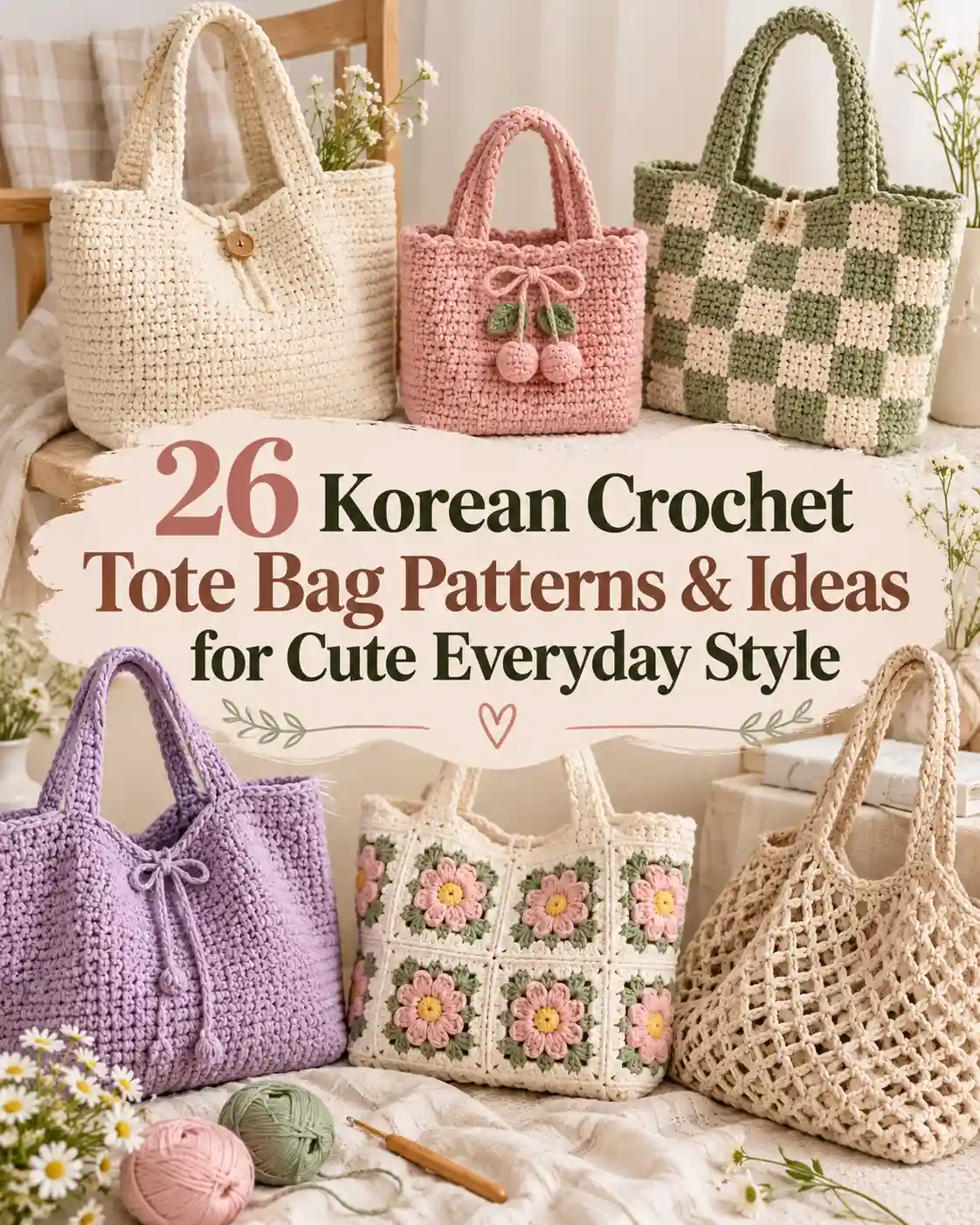
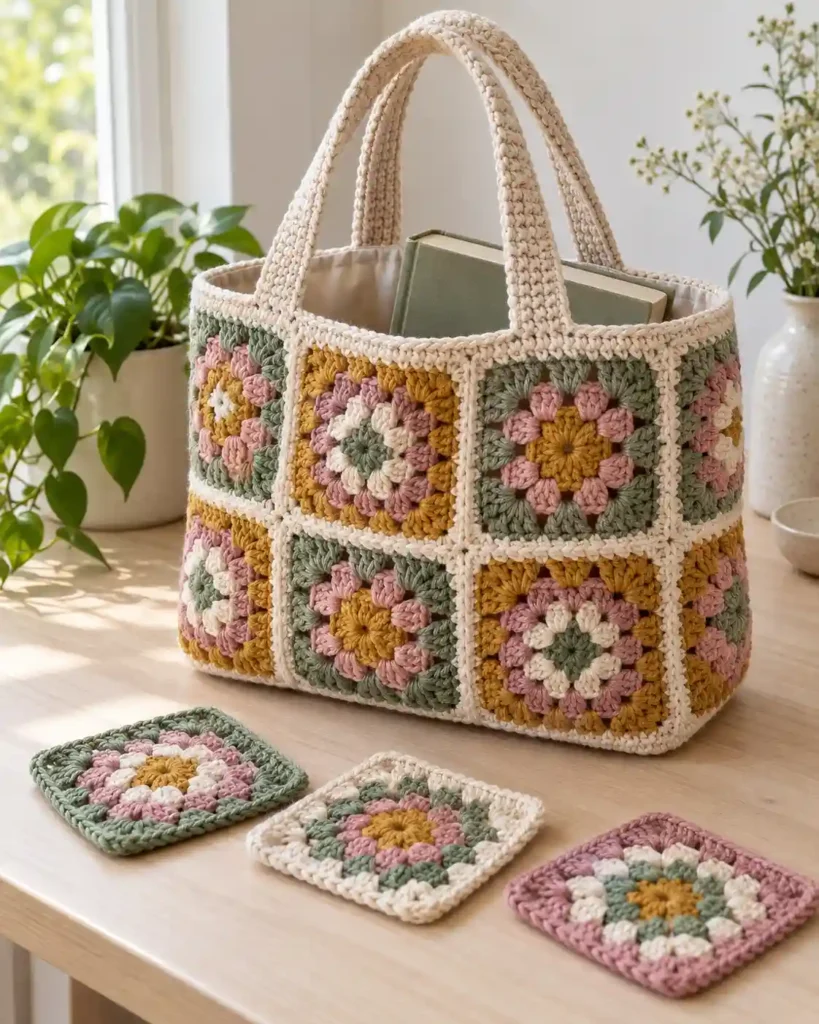
A granny square crochet book bag is perfect when you want color without committing to complicated shaping. A plain rectangular tote can look flat, while joined squares build texture, rhythm, and endless palette options into the fabric.
It is a natural weekend project for anyone with leftover yarn or a stack of motifs waiting for a purpose. Pick this design when the visual impact matters as much as the carrying function.
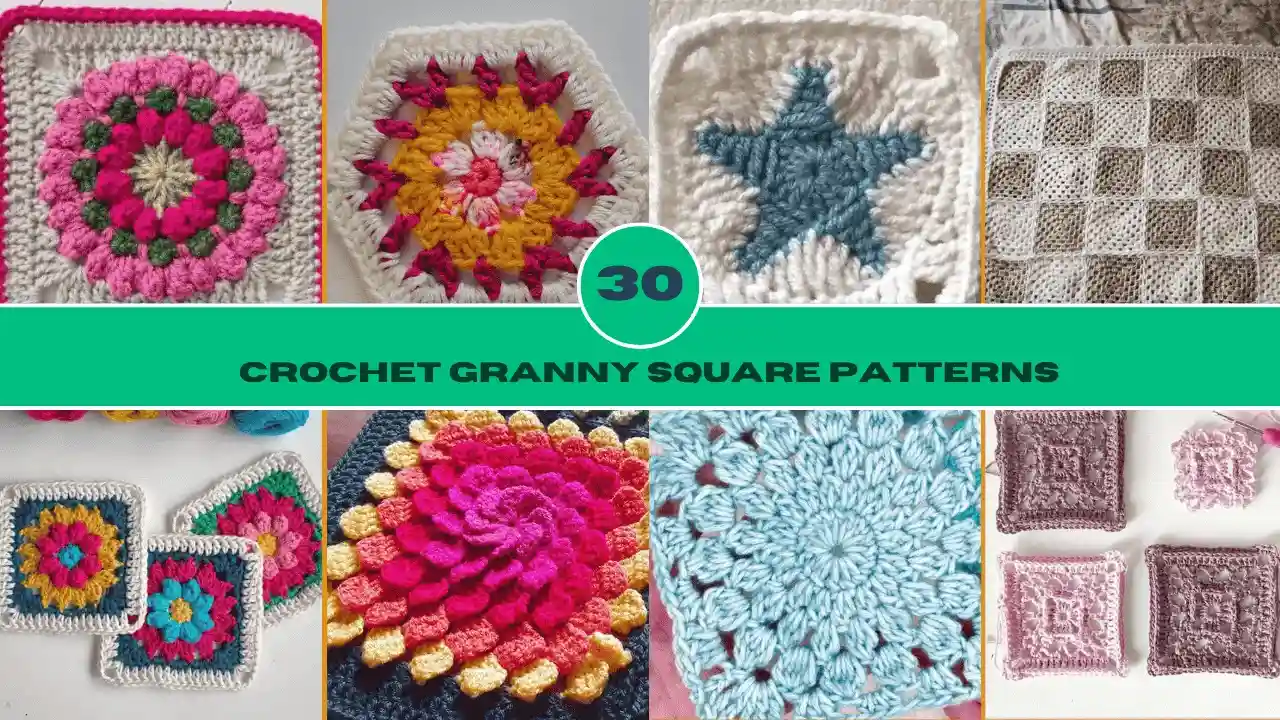
Plan the finished bag around the size of your squares rather than forcing extra rows at the end; crochet granny square patterns can also help you compare motif sizes before choosing a layout. Join firmly, weave in every end, and reinforce handles at more than one stitch line.
7. Daisy and Flower Crochet Book Bag
A floral crochet book bag brings a soft, cheerful look to a basic carrier without changing its core construction. You can work daisies directly into granny squares or add flat appliqués after the bag is finished, which gives you more control than a heavily textured flower surface.
This style fits spring reading, gifts, cottage-inspired outfits, and anyone who likes handmade accessories that feel playful. Its best feature is flexibility: one flower is subtle, while a field of small motifs feels bold.
Keep petals low-profile near the opening so book corners do not catch. If the motifs have exposed joins on the inside, a lightweight lining can make loading books smoother.
8. How Can You Make a Cottagecore Butterfly and Mushroom Book Sleeve?
A butterfly-and-mushroom sleeve leans fully into the cozy, storybook side of crochet. Generic floral bags are everywhere, but earthy mushrooms, tiny butterflies, and woodland colors create a more specific cottagecore mood.
It looks right beside vintage novels, nature journals, or a quiet reading chair rather than feeling like just another tote. Make this one if you enjoy colorwork and motifs and want the bag itself to feel like part of the reading ritual.
Use olive, cream, rust, brown, and muted gold for an earthy palette. A fabric lining is worth considering if the motif joins create ridges inside the sleeve.
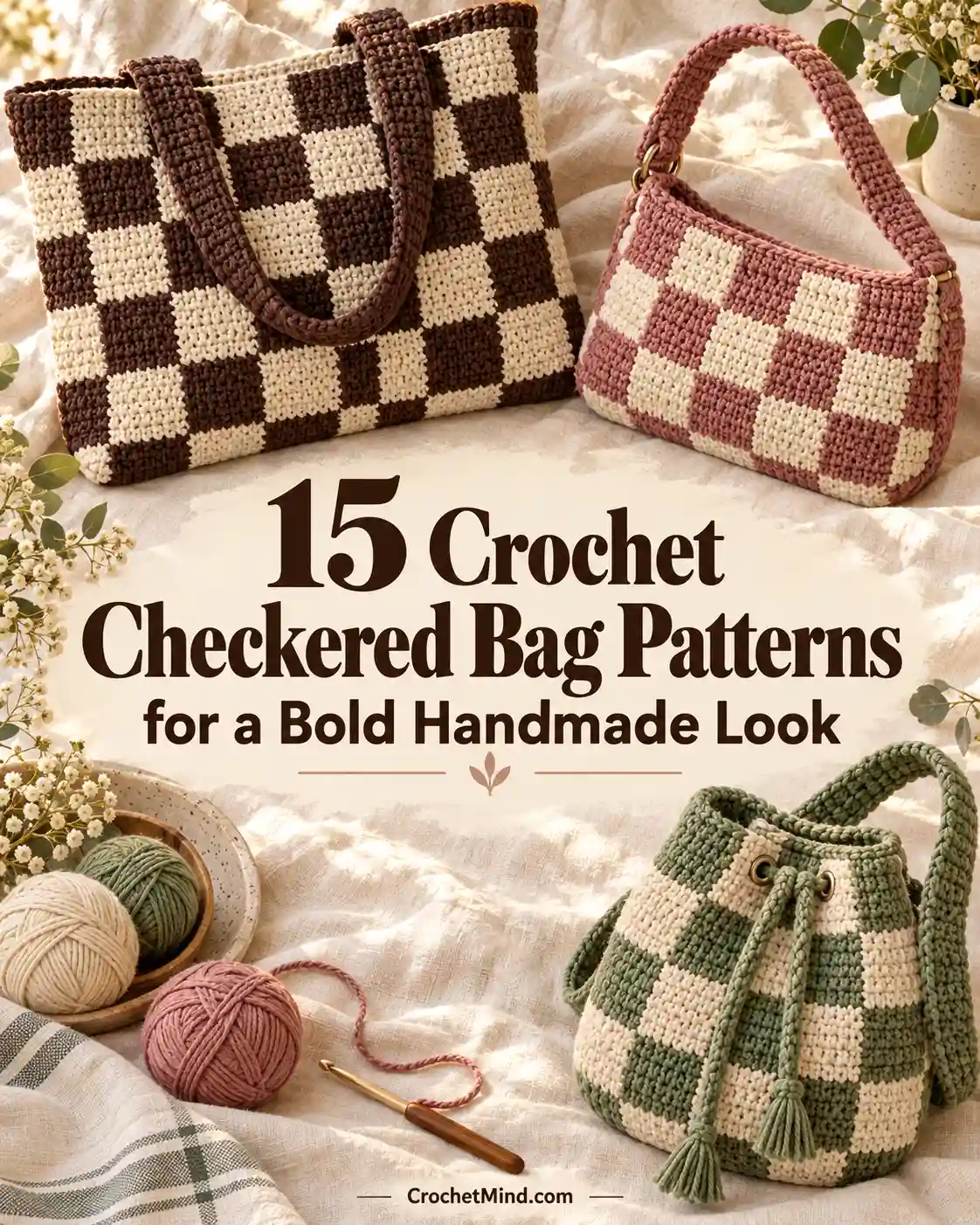
9. Checkered or Gingham Crochet Book Bag
A checkered crochet book bag gives you a graphic look with only two or three colors. Unlike scattered motifs, repeated squares make the fabric feel organized and modern, even when the bag shape is very simple.
It works for school, everyday errands, or as a bold book tote that still pairs easily with casual clothes. The strongest part of this design is that the color pattern does most of the styling work.
Choose a dense stitch so heavy books do not distort the checks. Keep each color block the same stitch count and height, especially across the base and side seams.
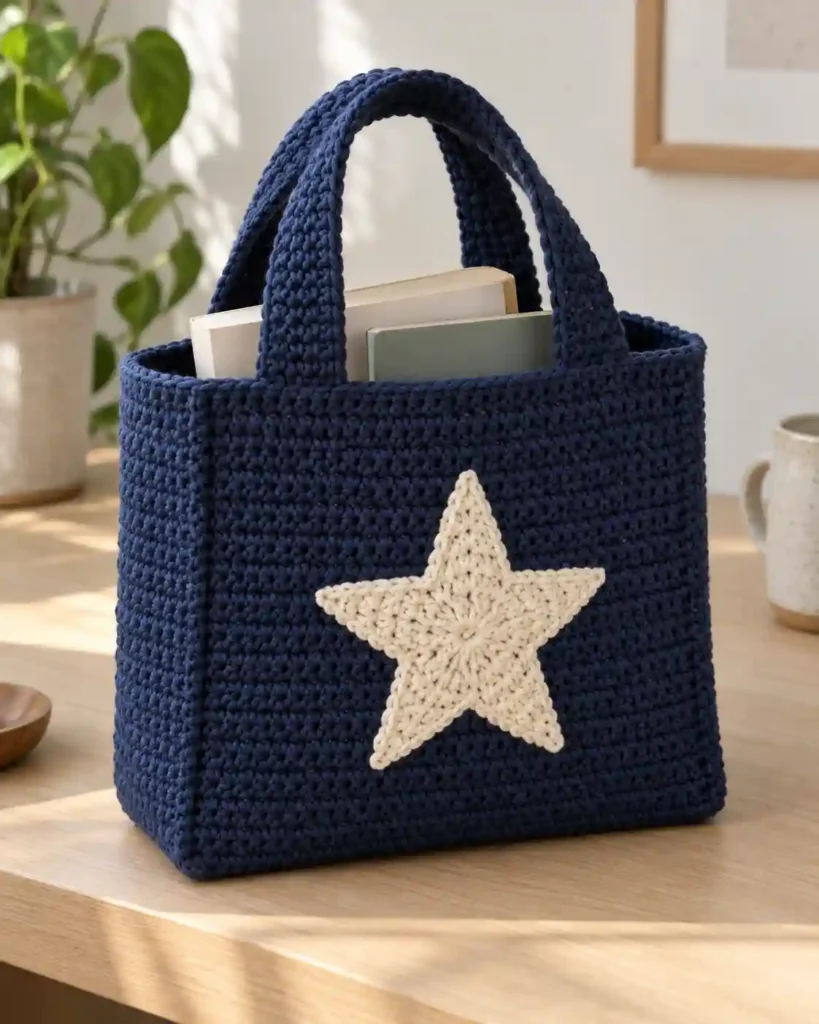
10. Why Add a Star Motif to a Crochet Book Bag?
A star motif is a quick way to make a plain crochet book bag feel finished. Instead of building an entire multicolor fabric, you can let one large star or a few small stars sit on a solid background.
That makes it easy to personalize a bag for a child, teen, teacher gift, or nighttime-reading theme. Choose this route when you want a decorative project that stays beginner-friendly.
Crochet the bag first and audition the star placement before sewing. Keep the motif away from bottom corners and high-friction strap joins.
11. Striped Crochet Book Tote
Stripes can make a basic book tote look planned even when the stitch pattern is simple. Wide bands feel calm and modern, while narrow stripes make the bag busier and more playful than a one-color version.
This is an easy choice for library days because you can scale the tote up without redesigning a motif layout. Its best feature is control: changing stripe width or color order creates a completely different result from the same construction.
Reinforce the top edge before adding handles. For heavier books, wide straps distribute the load better than thin cords.
12. Would a Drawstring Crochet Book Backpack Work for School?
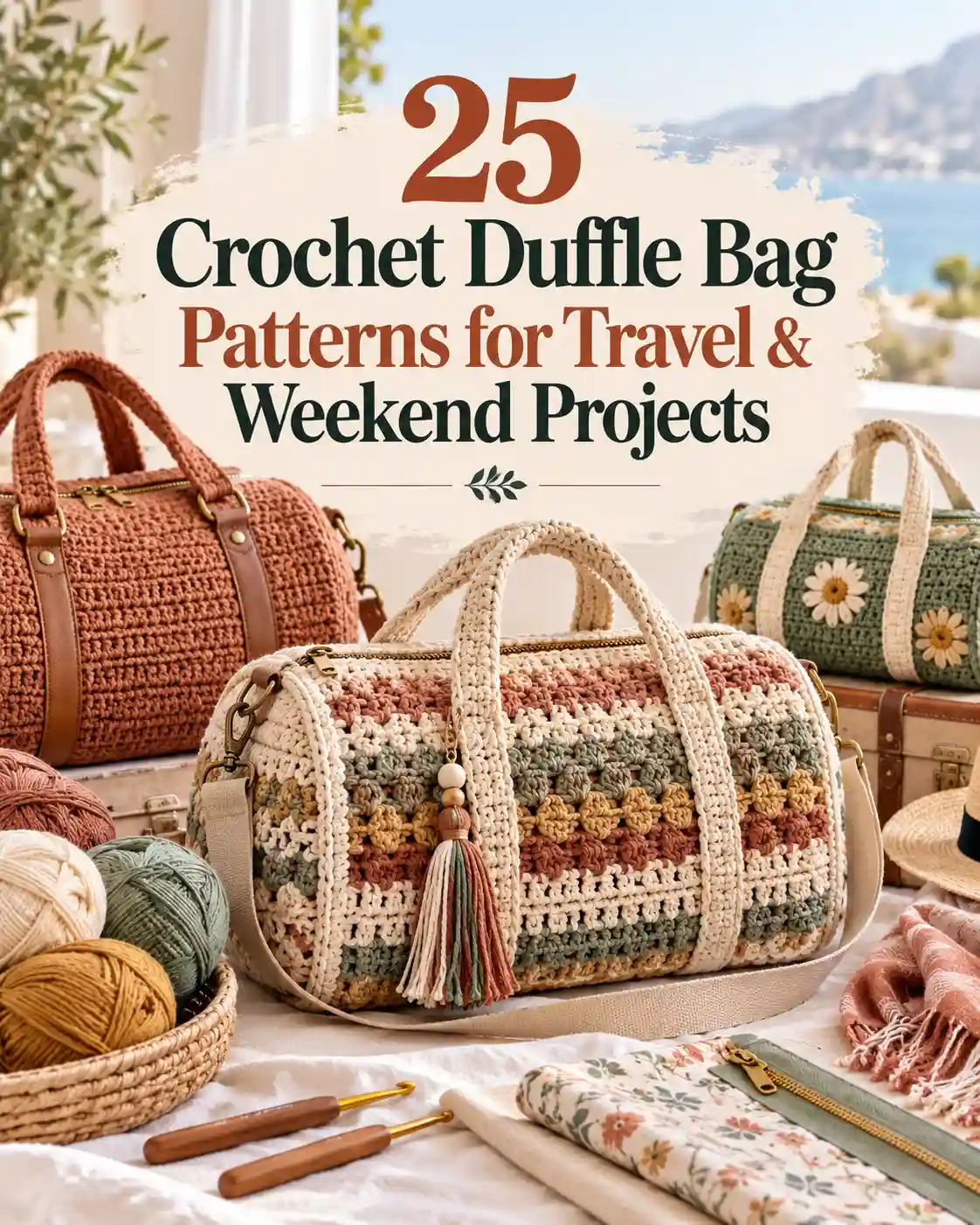
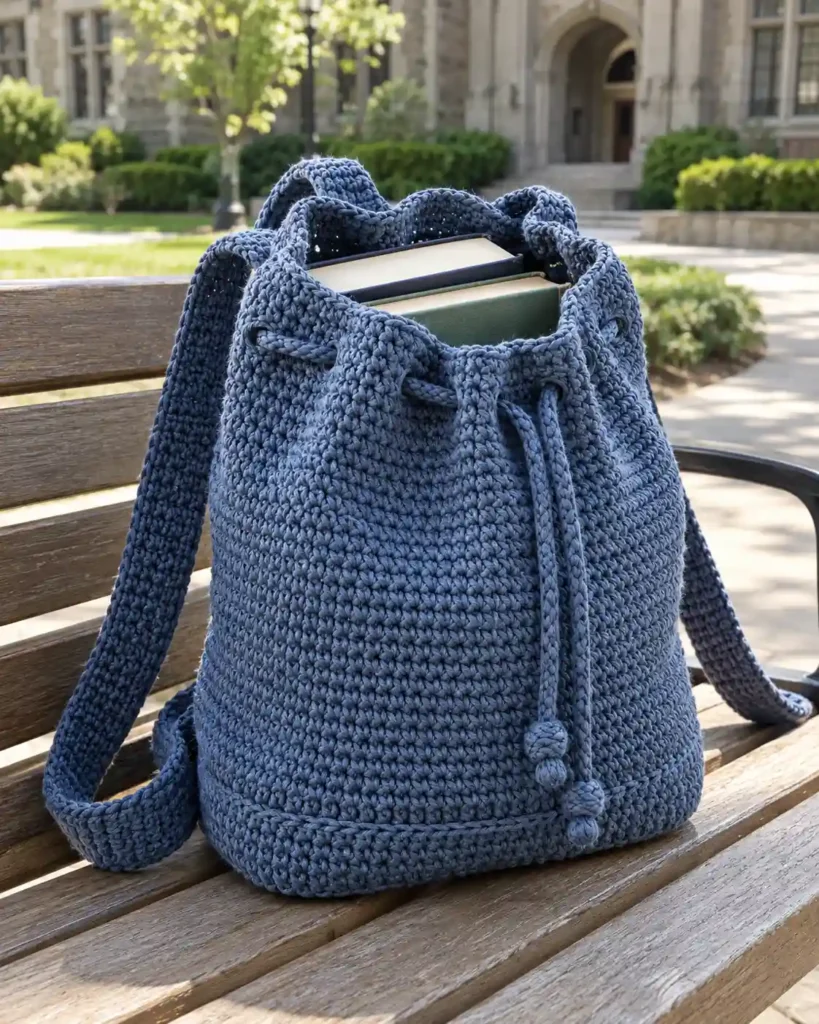
A drawstring crochet book backpack is a useful middle ground between a tote and a fully structured backpack. The drawstring closes the top without the extra work of a zipper, while two straps keep your hands free.
It can work as a crochet school bag for a textbook, notebook, and a few light essentials when the base and straps are properly reinforced. Choose it if you want casual school-day function without building a complicated bag.
Use a dense base, broad straps, and a firm drawstring channel. If the books are heavy or the stitches are open, add a lining before regular use.
13. Crochet Messenger Book Bag
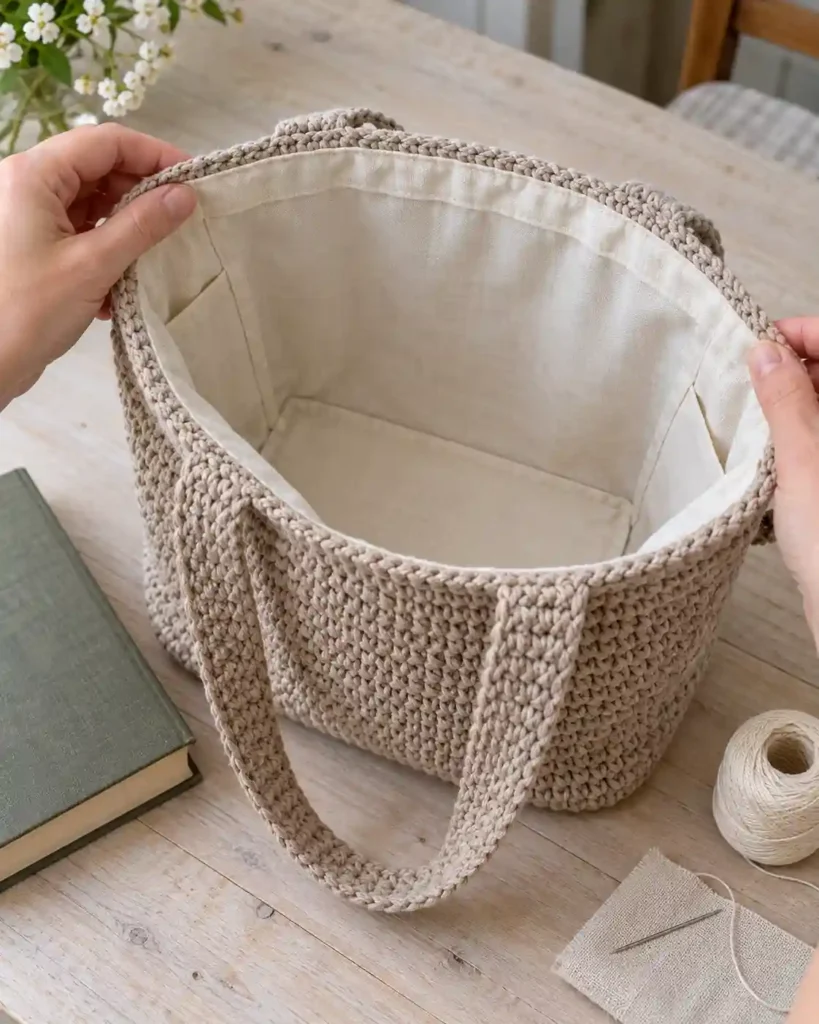
A messenger bag suits readers who want a flap, shoulder strap, and enough room for one or two books plus notes. A tote is open and vertical, but the rectangular messenger shape keeps everything closer to the body and gives you a natural place for pockets.
It is especially useful for campus walks, tutoring, journaling sessions, or carrying a slim tablet with a book. The payoff is a book bag that feels more like an everyday satchel.
Make the strap wider than you think you need and reinforce it at the side seams. A flat front pocket under the flap is a smart place for pens and paper.
14. How Do You Build a Comfortable Crochet Crossbody Book Bag?
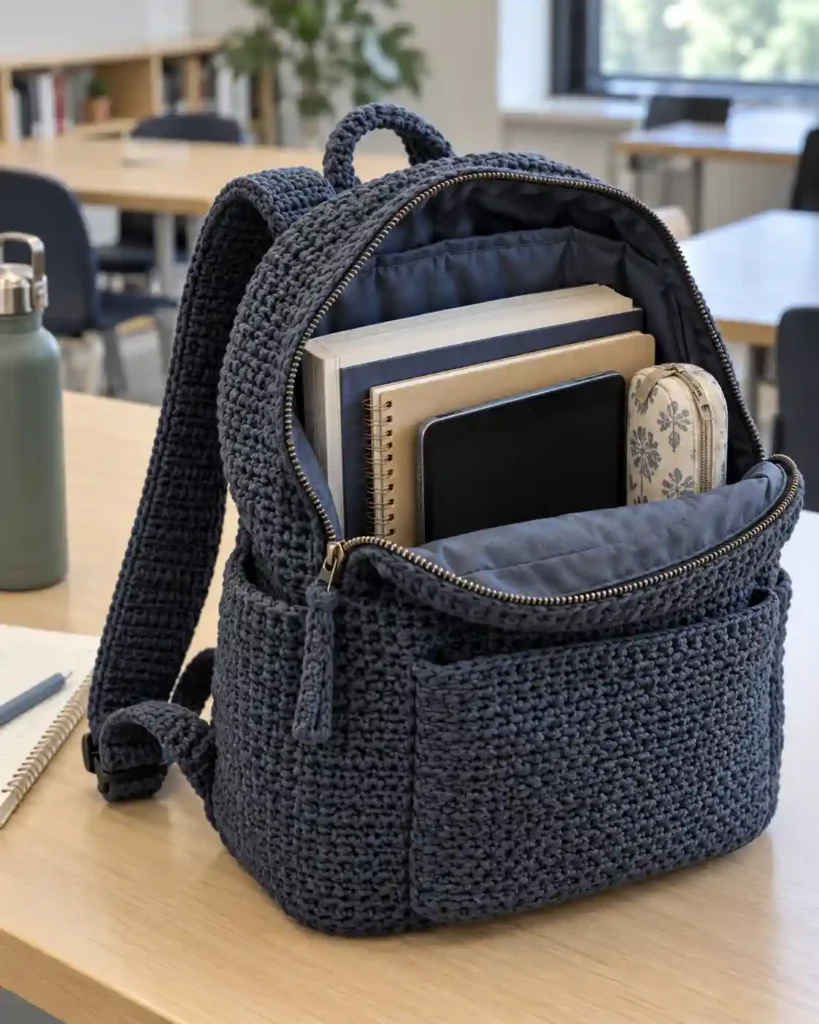
A crochet crossbody book bag is ideal when one paperback is all you need. A large tote can feel excessive for a single book, while a narrow crossbody keeps the load close and leaves both hands free.
It shines on bookstore trips, public transport, or a coffee run where you plan to read for half an hour. The best part is portability, provided the strap does not stretch until the bag hangs at your knees.
Measure the strap while the bag contains the book you plan to carry. Dense strap stitches, a shorter starting length, or a nonstretch lining inside the strap can help control sagging.
15. Roomy Crochet Library Tote for Book Hauls
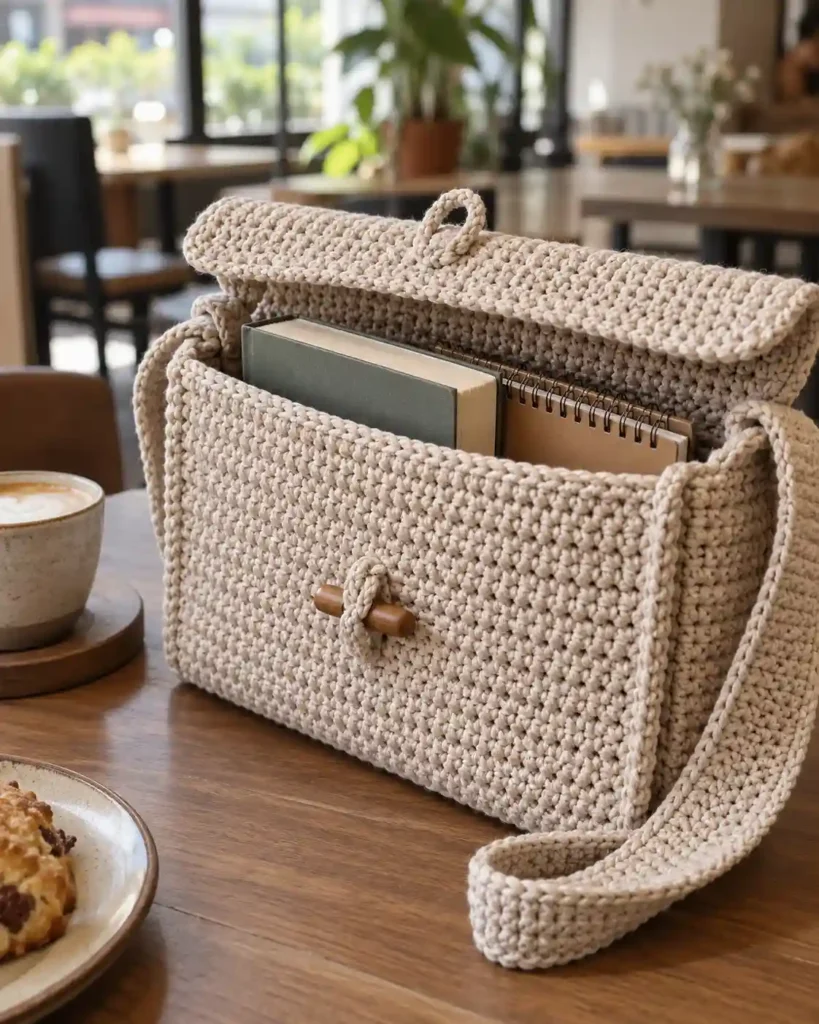
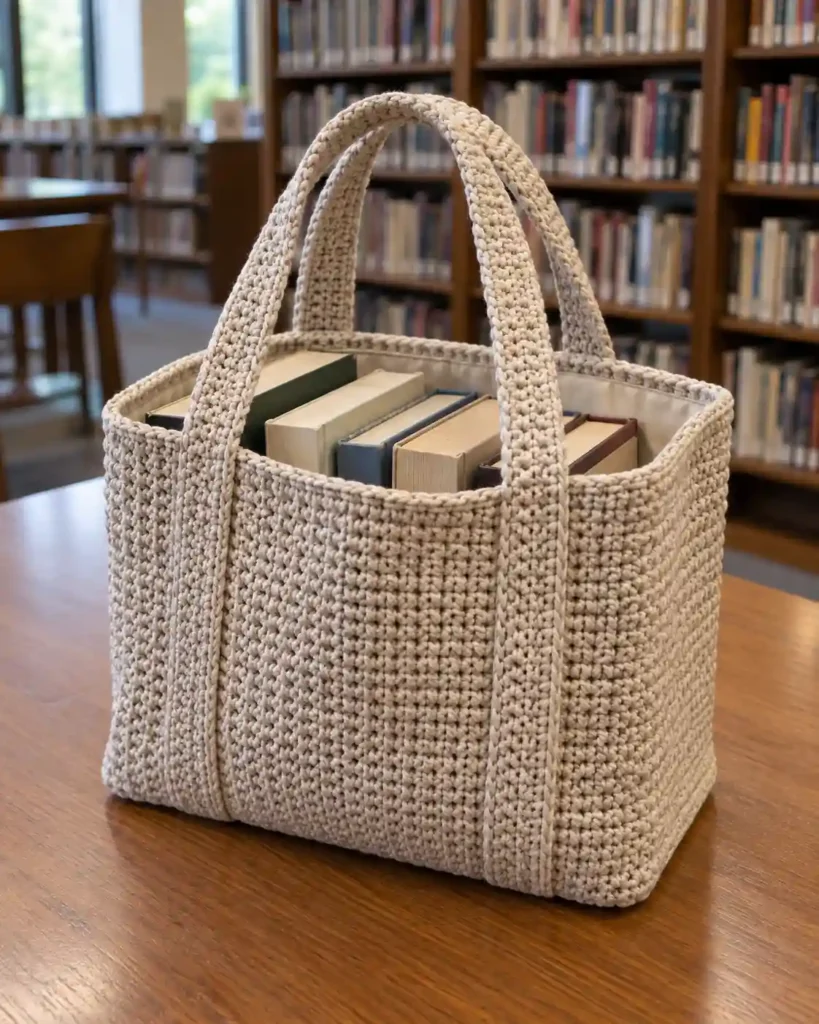
A crochet library book bag should be built for weight first and decoration second. Several hardcovers can turn a soft market bag into a stretched net, so a firm base, dense body, and broad handles matter more here than airy stitchwork.
This is the bag for weekly library trips, book sales, or households where “just one book” never happens. Make it when you need capacity without giving up the handmade look.
The Library of Congress recommends avoiding overpacked book containers and centering weight when packing books for handling or transport. For a crochet tote, translate that into a sensible load, balanced packing, and strong handle attachment points rather than filling the bag until the fabric distorts.
16. What Should a Crochet School Bag Carry?
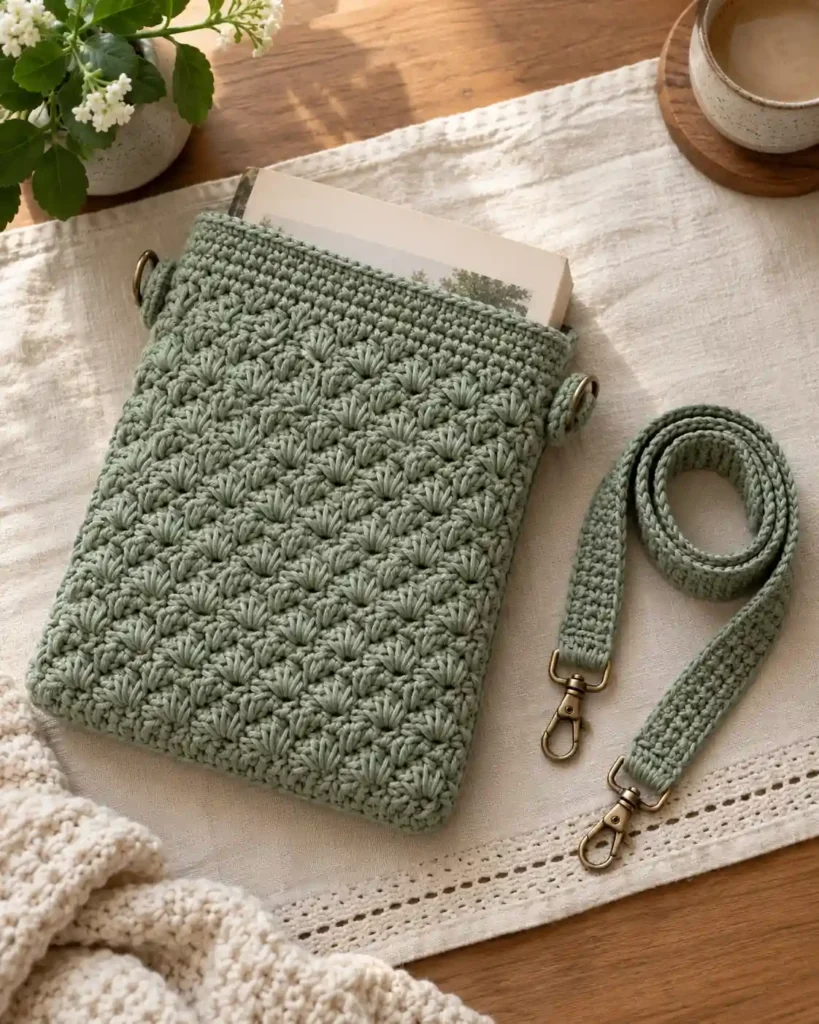
A practical crochet school bag needs enough structure for a textbook, notebook, pencil pouch, and perhaps a small tablet without becoming a catch-all for everything in the day. A decorative tote may look good empty, but school use exposes weak straps and stretchy bases quickly. For a coordinated organizer, crochet pencil case patterns can give you a matching place to carry pens and small tools.
This pattern style makes the most sense for light-to-moderate daily loads, study groups, or classes where only a few materials are needed. Its best feature is organization when you add one outside pocket and a stable main compartment.
Keep water bottles and other heavy items separate unless the bag is designed for them. For a crochet school bag that sees daily use, lining the body and reinforcing the shoulder straps is a worthwhile upgrade.
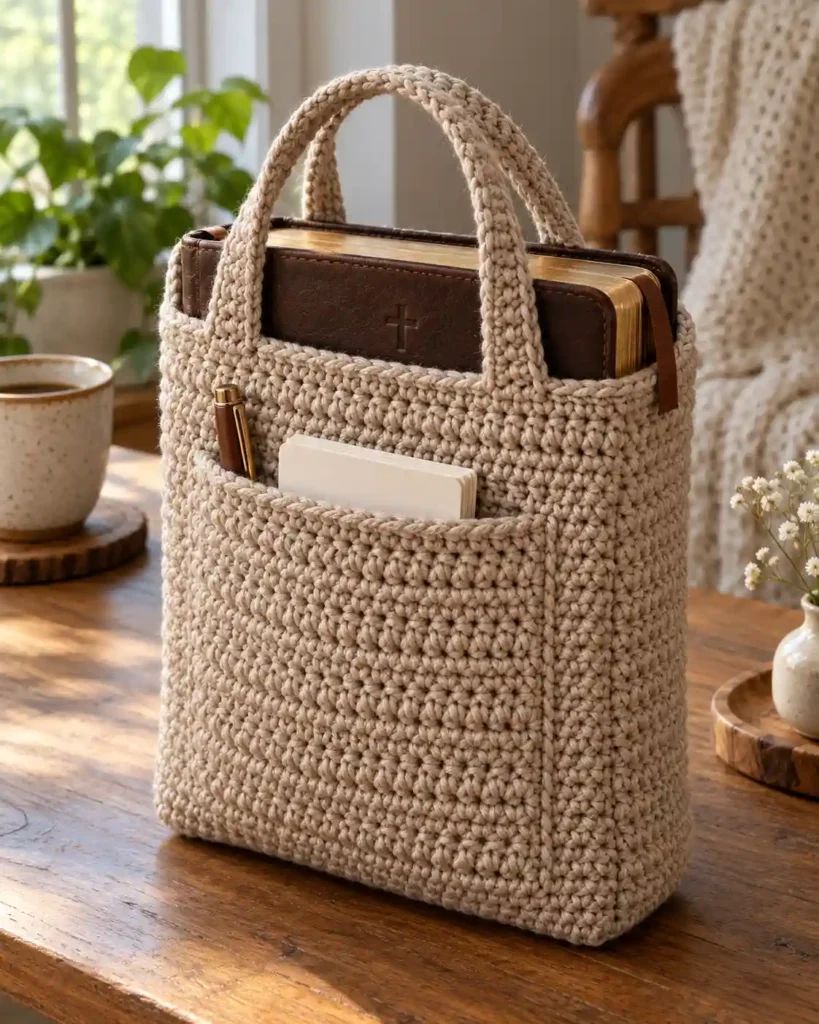
17. Crochet Bible Bag With Handles and a Pocket
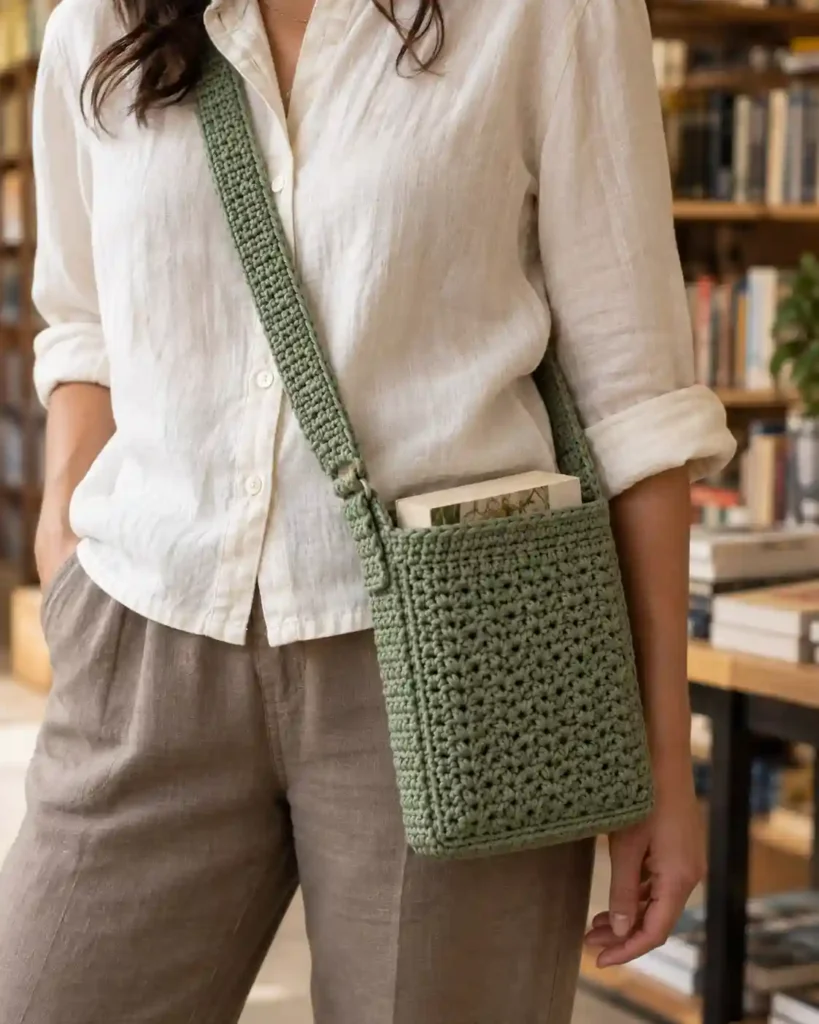
A fitted Bible bag is more useful when it is sized to the exact book instead of copied from a generic tote. Short handles keep the carrier compact, while a flat pocket can hold a pen, notes, or a slim reading plan.
It works well as a gift because you can coordinate colors with the cover without adding bulky decoration. The strongest feature is the close, purposeful fit.
Measure the Bible before starting because editions vary widely in thickness and height. If you add a button or flap, position it so the hardware does not press into the cover.
18. Can One Crochet Sleeve Work for a Kindle and a Book?
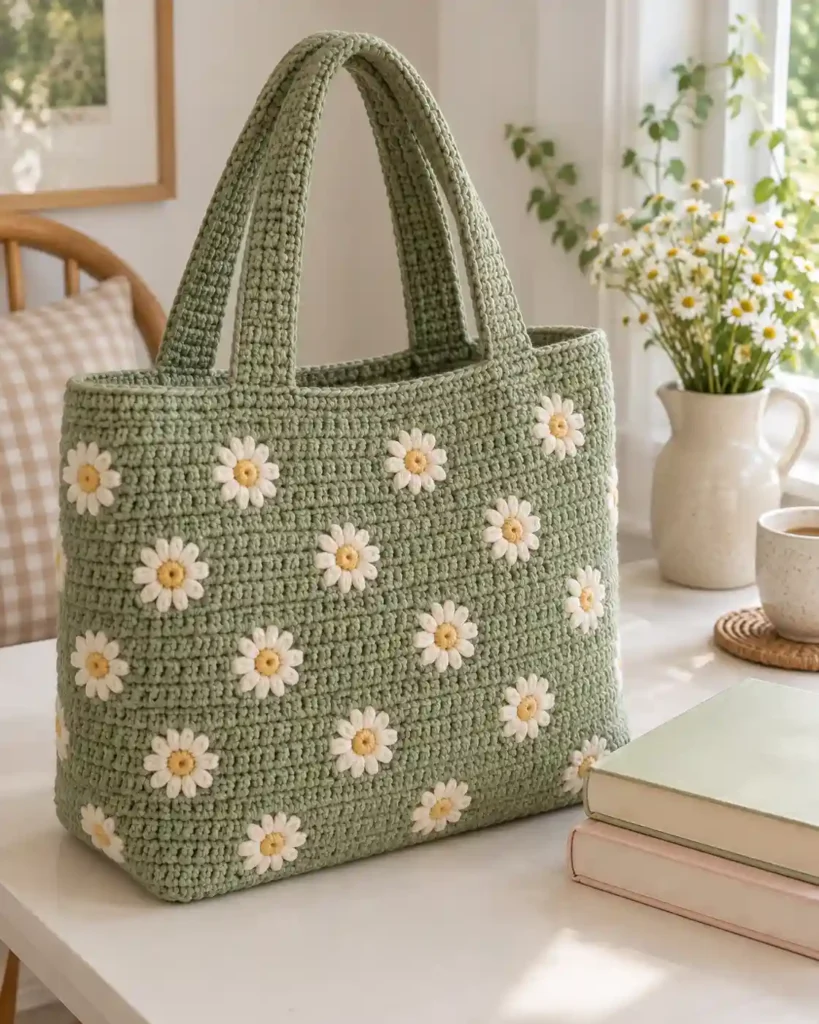
A Kindle-and-book sleeve combo is less about one magical universal size and more about one adaptable construction. A finished sleeve that fits a paperback perfectly may be too loose for an e-reader, but the same stitch pattern can be resized by changing width and height.
This is useful for readers who want matching accessories for a Kindle, paperback, and small tablet. Choose it when you value a coordinated set more than a one-size-fits-all pouch.
Measure each device or book separately and make notes on your starting chain and row count. A soft flap or button loop can add security without bulky hardware.
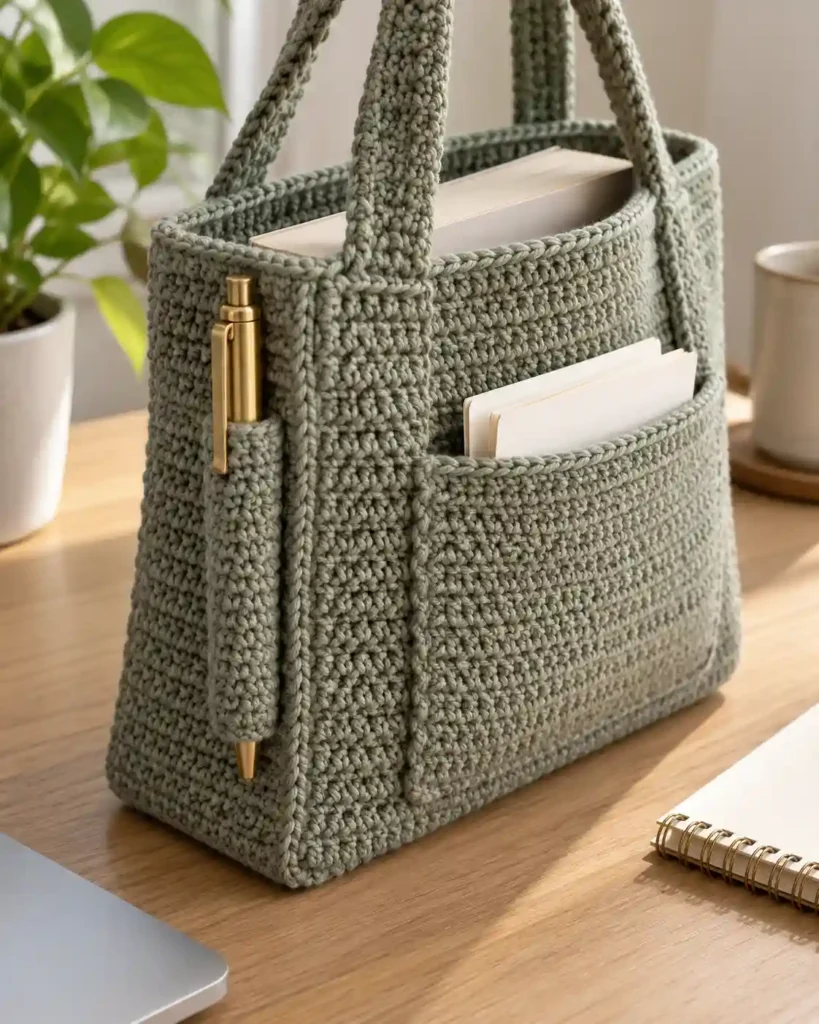
19. Crochet Book Bag With a Pen Holder
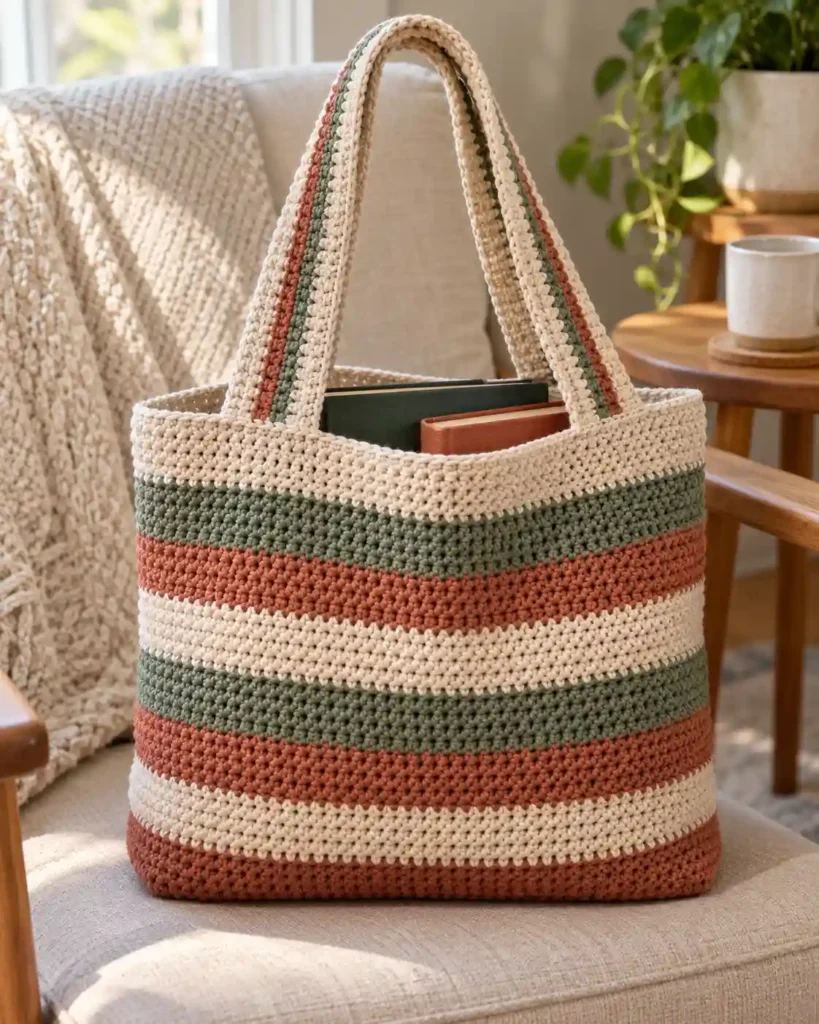
A narrow pen holder is one of those small details that makes a book bag noticeably easier to use. Tossing a pen into the main compartment risks it disappearing under the book, while a dedicated loop keeps it ready for notes or annotations.
This works especially well for journaling, study, Bible reading, or book-club discussion notes. The payoff is simple organization without adding a full pocket panel.
Attach the loop where the pen will sit beside the book rather than on top of it. Test with your thickest pen before securing the final stitches.
20. Which Closure Is Best: Button, Flap, or Loop?
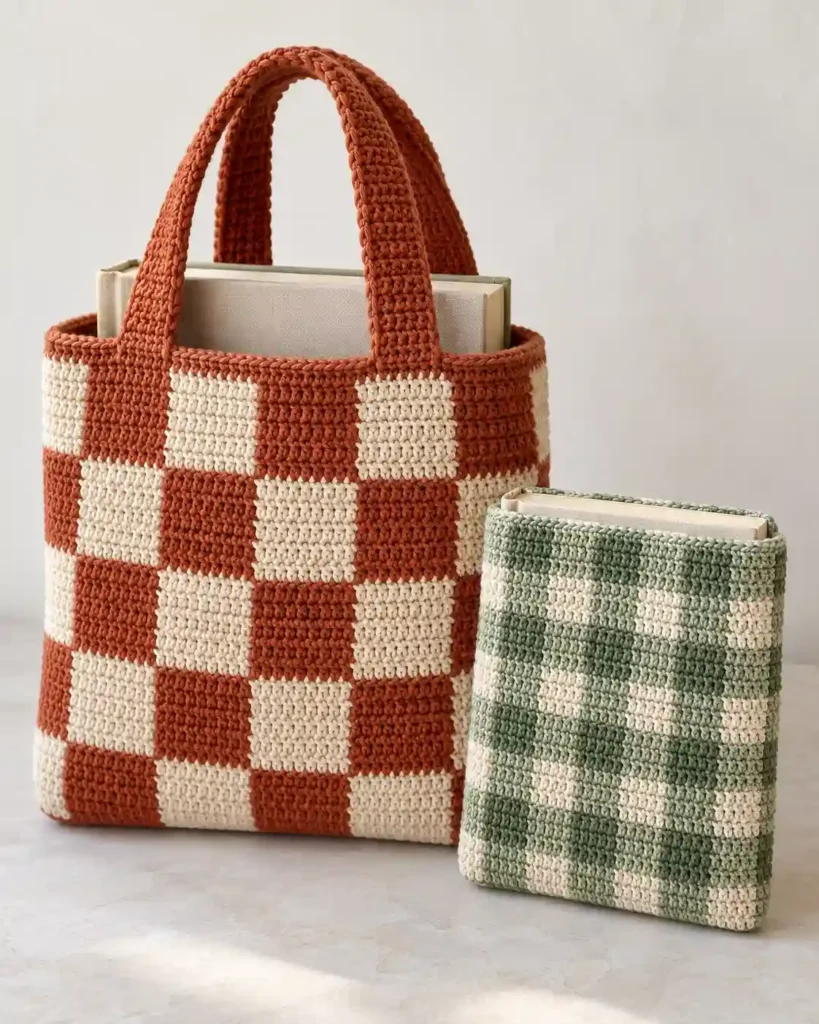
A button tab, full flap, or loop closure can make a crochet book bag feel much more secure in transit. An open tote is fastest to use, but a closure helps when the bag tips sideways in a car, backpack, or café chair.
A small button tab is minimal, a flap gives more coverage, and a loop works well on compact pouches. Pick the one that matches how much security you actually need rather than adding hardware by default.
Special Tip: Place the closure with the book inside the bag. That prevents you from sewing it too tight and pressing a button into the cover.
21. Lined Crochet Book Bag for Extra Structure
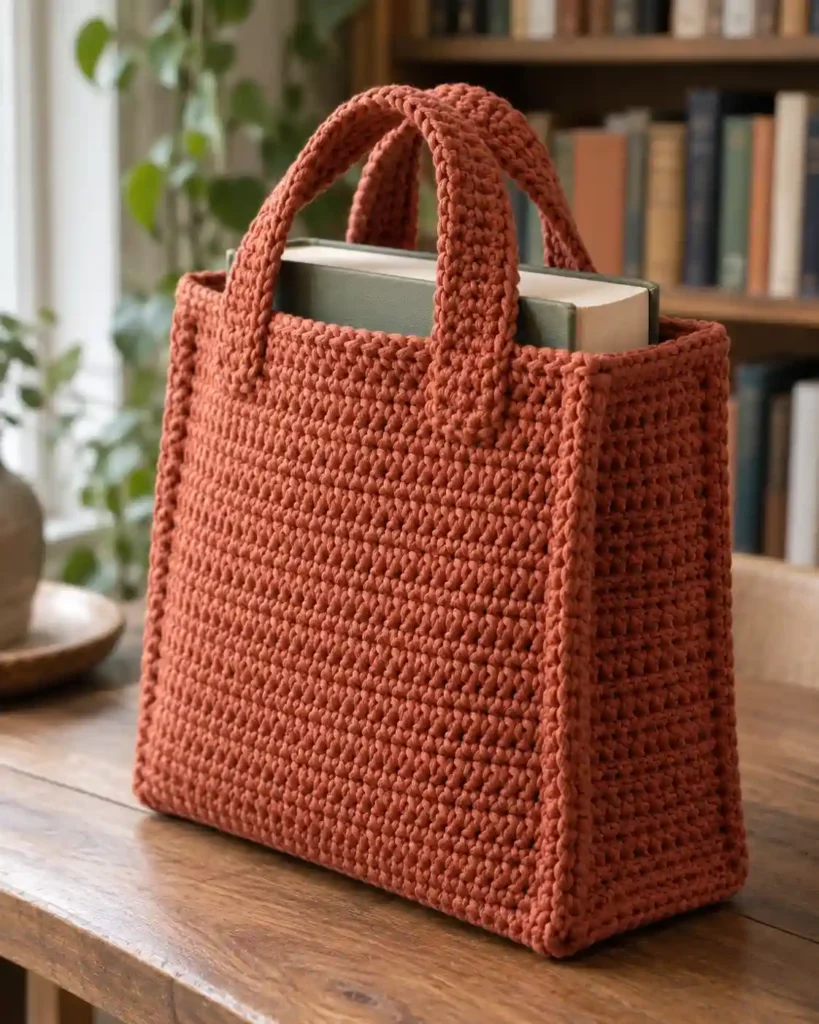
A fabric lining can turn a soft crochet shell into a much more controlled book bag. Open motifs and loose stitches may look beautiful, but book corners can push through gaps and repeated weight can distort the fabric.
Lining is especially useful for granny-square bags, college totes, messenger bags, and any project that will be used often. The biggest benefit is not appearance; it is keeping the crochet from doing all the structural work alone.
Cut the lining from the finished bag measurements instead of relying only on the pattern’s theoretical size. Hand-stitch it to the top edge without pulling the crochet tighter.
22. Is a Chunky Yarn Crochet Book Bag a Good Beginner Project?
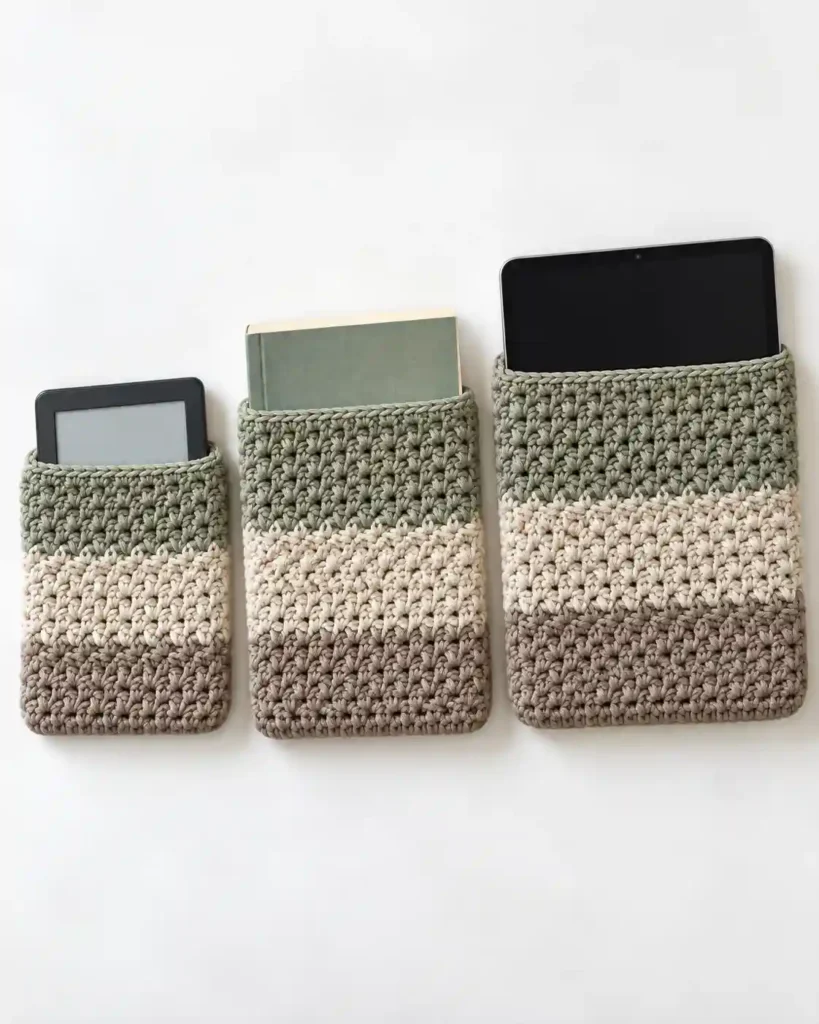
Chunky yarn makes a crochet book bag grow quickly, which is satisfying when you want a weekend project. The tradeoff is bulk: a giant chunky tote can become heavy before you even add books.
A compact one-book shoulder bag or sleeve uses the texture to its advantage without creating an oversized load. Choose it if speed and visible stitches matter more than a slim profile.
Keep the shape simple and reinforce the strap joins carefully. If the fabric feels too loose around the book, go down a hook size only if your yarn and pattern can handle the denser fabric comfortably.
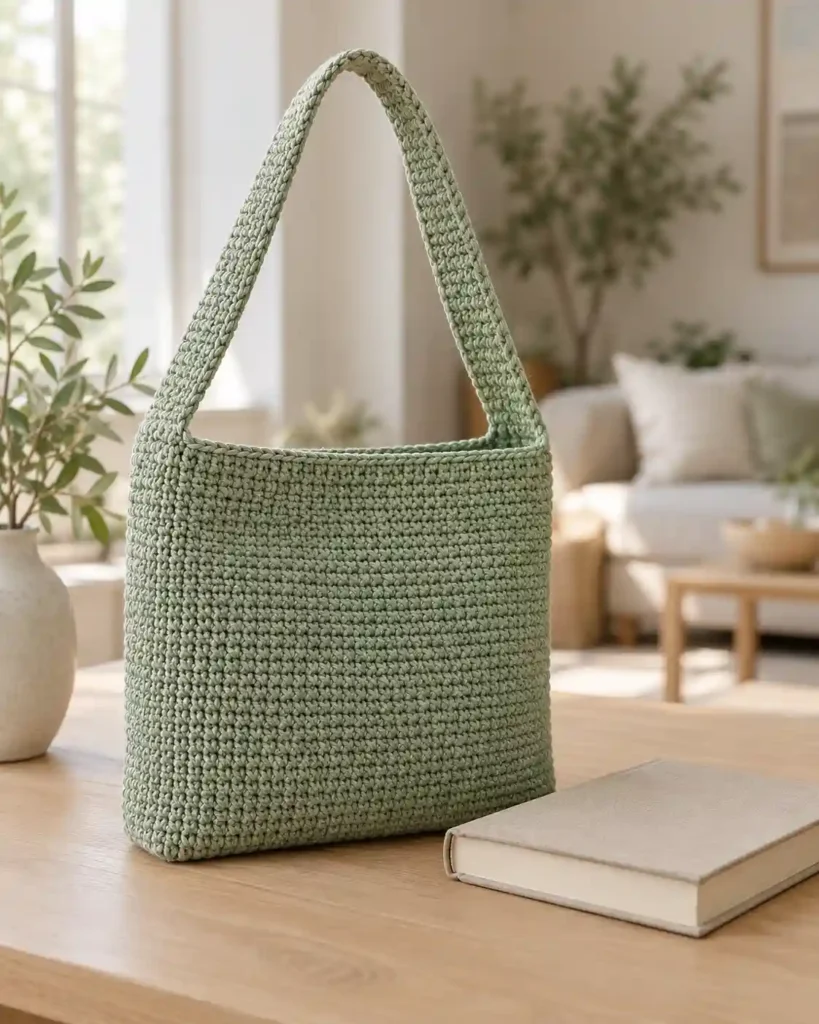
23. Minimalist One-Color Crochet Book Bag
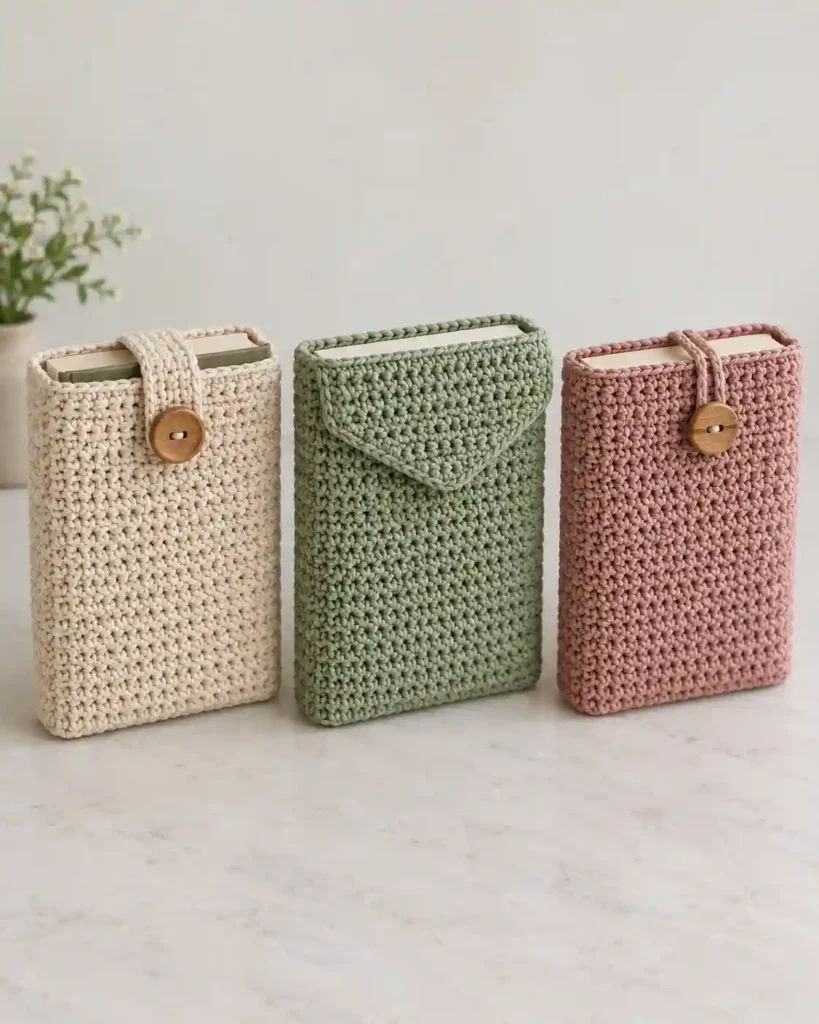
A one-color crochet book bag proves that you do not need motifs to make a handmade project look finished. When color changes disappear, stitch texture, proportion, edging, and strap placement become the design.
This style suits neutral wardrobes, simple gifts, and readers who want something quiet enough to use every day. Its best feature is longevity: a clean cream, charcoal, navy, or sage bag rarely feels tied to one season.
Add only one functional detail, such as a pocket, button tab, or removable strap. Let clean edges and even tension do the rest.
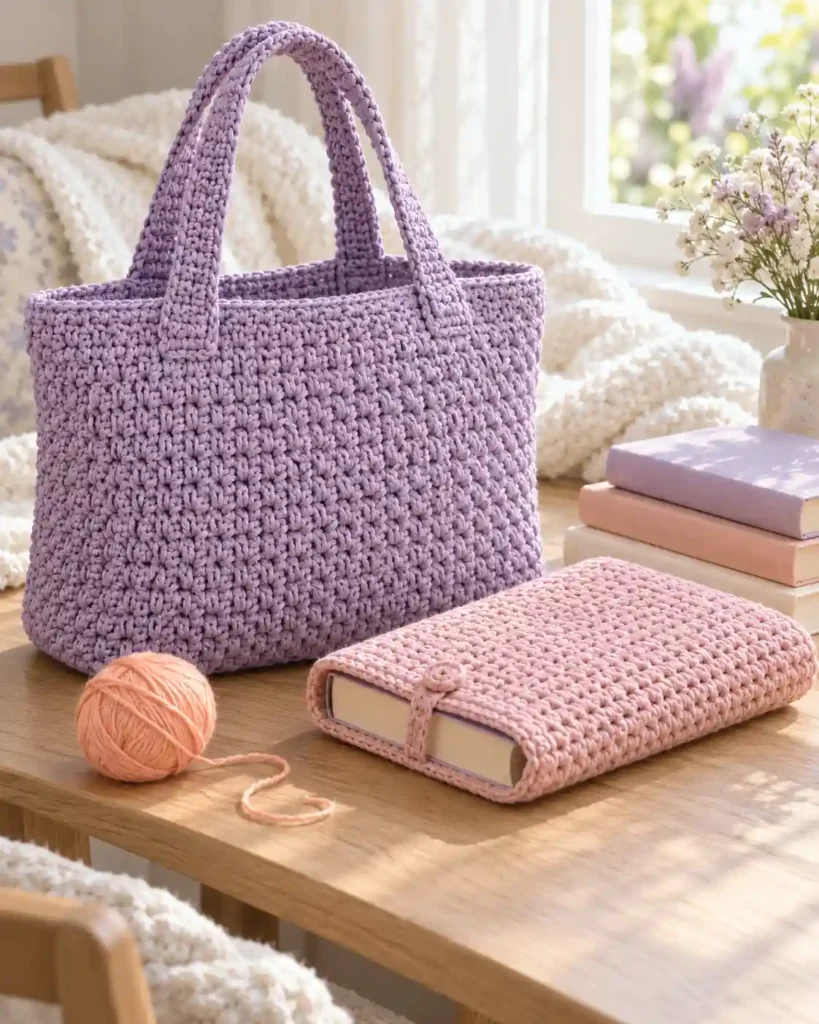
24. How Do You Plan a Pink and Purple Pastel Crochet Book Bag?
A pastel crochet book bag works best when the palette feels intentional rather than random. Blush, lavender, peach, and cream can turn the same basic tote or sleeve from earlier in the list into a softer, more playful accessory.
It is a strong choice for gifts, spring styling, dorm rooms, or readers who build their accessories around color. The best part is that you can get a completely new look without learning a new construction method.
Try a lavender body with blush edging, or use tonal stripes from deep purple to pale lilac. Limit the palette to a few related shades so the book bag stays cohesive.
25. Small Crochet Book Bag for One Paperback or Journal
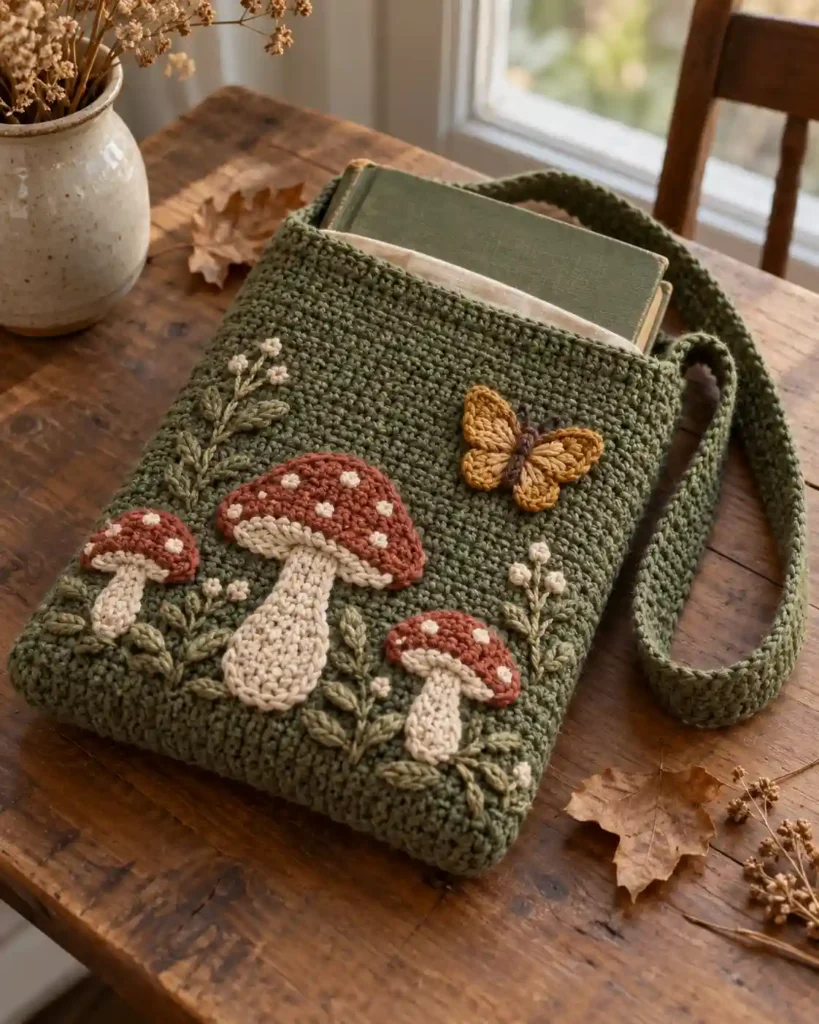
A small crochet book bag is for the days when you do not want to carry your whole life. It holds one paperback or journal, a bookmark, and perhaps a phone, which makes it lighter and easier to wear than a full tote.
This size works for a quick café visit, waiting room, commute, or handmade gift where you want a project that finishes quickly. Its best feature is restraint: everything has a purpose, and there is no extra bag flapping around.
Add a short shoulder strap for a pouch feel or a longer adjustable strap for crossbody use. Measure around the actual book first, then keep the depth deliberately slim.
How Do You Measure a Book for the Right Crochet Bag Size?
Measure the book’s height, cover width, and spine depth, then use your actual crochet gauge to build a bag that allows enough ease for insertion without leaving excessive empty space.
At a Glance
- Measure the exact book.
- Include spine depth.
- Crochet a gauge swatch.
- Check fit before finishing.
- Allow only modest ease.
Measure the book’s height, front-cover width, and spine depth. For a flat sleeve, the spine depth still matters because the crochet fabric must travel around the book rather than just match the cover measurements.
Work a gauge swatch in the stitch you plan to use. Then calculate the starting width and height from your real gauge, checking the fit before adding handles, pockets, or closures. If you change yarn or hook size, a crochet hook size chart can help you compare standard hook sizing before recalculating your gauge.
Different editions of the same title can have different dimensions, so measuring the actual book is safer than relying on a generic “paperback size.”
What Yarn Is Best for Crochet Book Bags?
Choose yarn that creates stable fabric at the required gauge; cotton, cotton blends, and acrylic can all work depending on the bag’s structure, expected load, and washing needs.
At a Glance
- Prioritize stable fabric.
- Follow the pattern gauge.
- Use denser fabric for heavier loads.
- Consider yarn weight and stretch.
- Keep natural-fiber bags dry in storage.
Cotton and cotton blends are popular for book bags because they can produce a crisp fabric with clear stitch definition, while acrylic can be lighter and budget-friendly. The more important question is whether the finished fabric is dense enough for the load and whether the strap will stretch under weight.
The Craft Yarn Council’s yarn-weight chart is useful for comparing categories, but it also explicitly treats its hook and gauge numbers as guidelines. If a tested pattern gives you a specific gauge, follow that gauge rather than choosing a hook only from the yarn label.
For bags that may get damp, let them dry completely before storing books inside. The Smithsonian Museum Conservation Institute notes that natural-fiber textiles are hygroscopic and that stagnant air above about 80% relative humidity can support mold growth on cellulosic fibers such as cotton or linen.
How Do You Keep a Crochet Book Bag From Stretching?
Reduce stretching by combining dense stitches, reinforced handles and attachment points, a firm base, sensible loading, and lining where the crochet fabric needs additional support.
At a Glance
- Reinforce strap joins.
- Use a firm base.
- Choose dense stitches.
- Add lining when useful.
- Test the loaded bag before regular use.
Stretch usually shows up first at the handles, strap joins, base, and open-stitch sections. You can reduce it by choosing dense stitches, reinforcing attachment points, working a firm base, adding a lining, and keeping the load appropriate for the bag’s size.
For a heavily used library or school bag, do a simple load test at home before you trust it on a full day out. Put in the books you expect to carry, hang or hold the bag for a while, and check whether the handles lengthen or the base sags.
Adjusting the strap or adding lining before regular use is easier than repairing a stretched bag later.
FAQs About Crochet Book Bag
What Is the Best Yarn for a Crochet Book Bag?
Medium cotton, cotton blends, and durable acrylics can all work. Prioritize a fabric that holds its shape, gives you the gauge your pattern needs, and feels comfortable at the handles.
How Big Should a Crochet Book Bag Be?
Measure the exact book or group of books you plan to carry, then add only enough ease for the item to slide in without stretching the cover. A single-book sleeve should be snug; a library tote needs extra width and depth.
Can Beginners Crochet a Book Bag?
Yes. A one-color sleeve, simple rectangle tote, or small medium-weight-yarn bag can be beginner-friendly, especially when it uses basic chains, single crochet, double crochet, and simple seaming.
Should a Crochet Book Sleeve Be Tight or Loose?
Aim for snug, not compressive. The book should slide in without forcing the corners, and the sleeve should stay close enough that the book does not move around excessively.
Do Crochet Book Bags Need a Fabric Lining?
Not always. Dense sleeves can work well without one, but lining is useful for granny-square bags, open stitches, heavier books, and bags that will be used frequently.
Final Thoughts
A good crochet book bag should be more than a pretty handmade accessory. The best design fits the books you actually carry, uses a sturdy construction, and includes practical details such as reinforced straps, pockets, closures, or lining when needed.
From compact book sleeves and crossbody carriers to roomy library totes and a practical crochet school bag, there are plenty of ways to match the project to your reading routine. Start by measuring your book, choose yarn and crochet stitches that suit the expected weight, and build the structure before adding decorative details.
Whether you prefer granny squares, florals, checkered patterns, pastel colors, or a simple one-color design, choose the idea that feels most useful to you and make it your own. A well-planned crochet book bag can protect your books, carry your everyday reading essentials, and become a handmade project you will actually enjoy using.

![The Best 30+ Free Crochet Cat Patterns [Beginner-Friendly Guide]](https://crochetmind.com/wp-content/uploads/2025/04/1-The-Best-30-Free-Crochet-Cat-Patterns-Beginner-Friendly-Guide.webp)