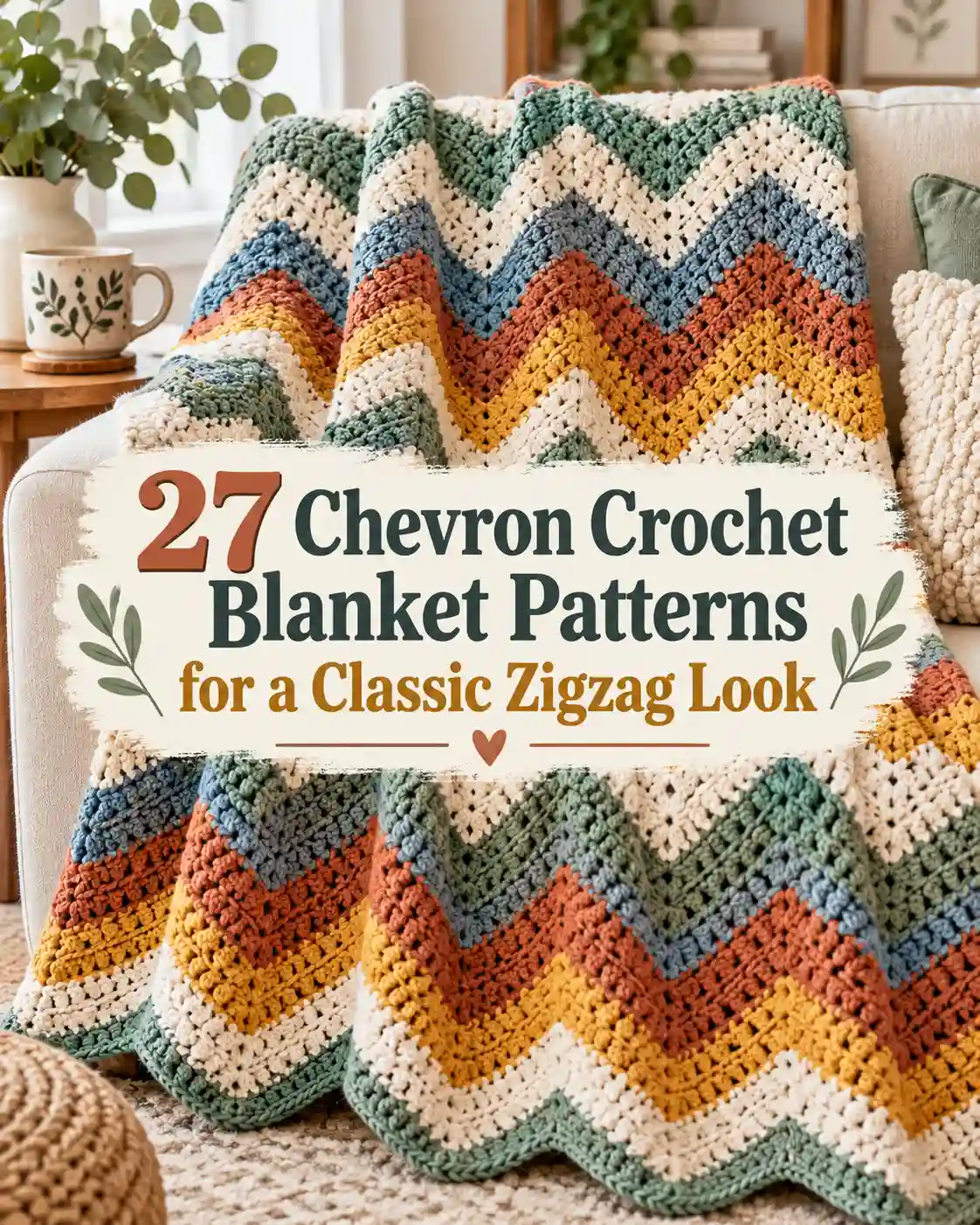
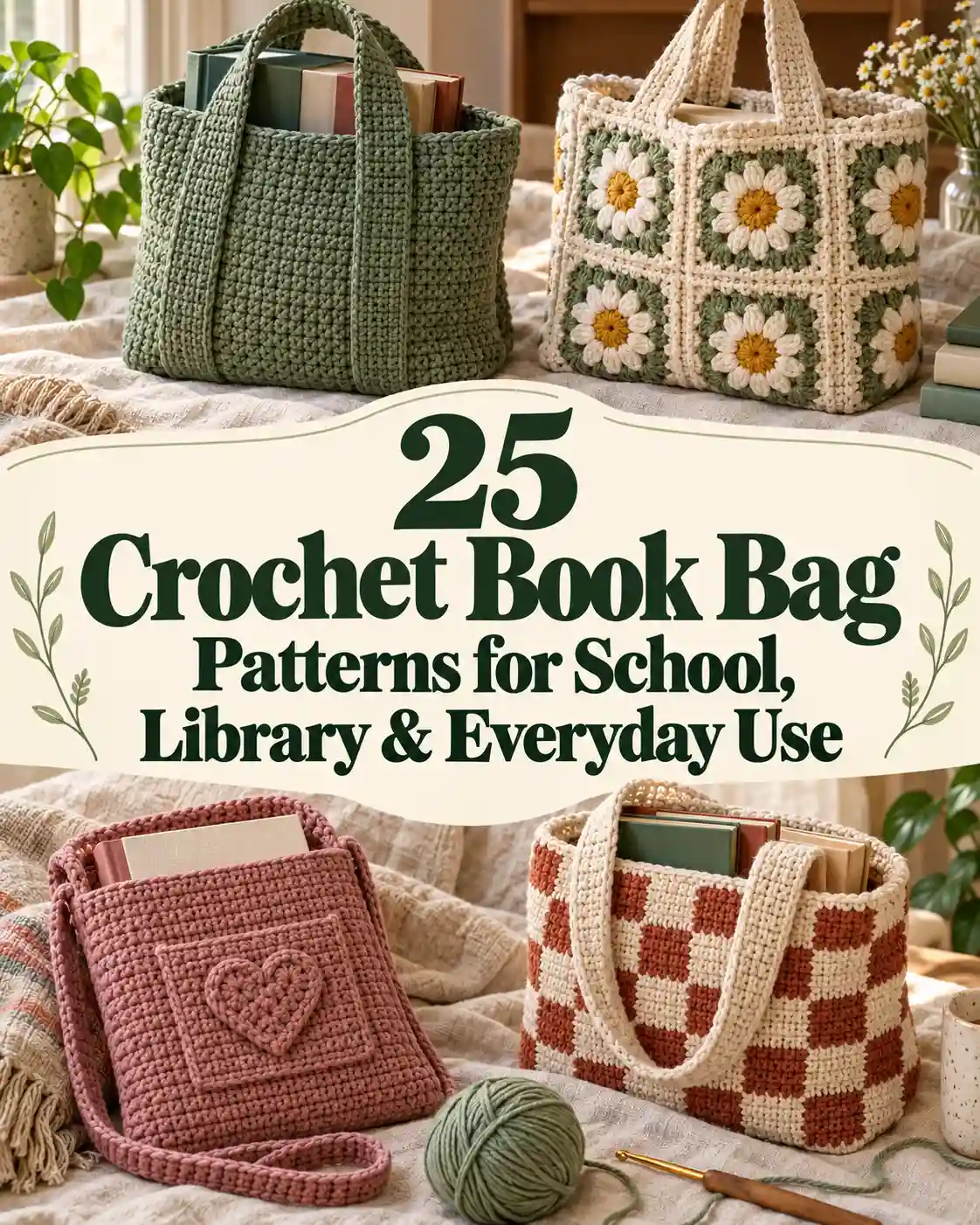
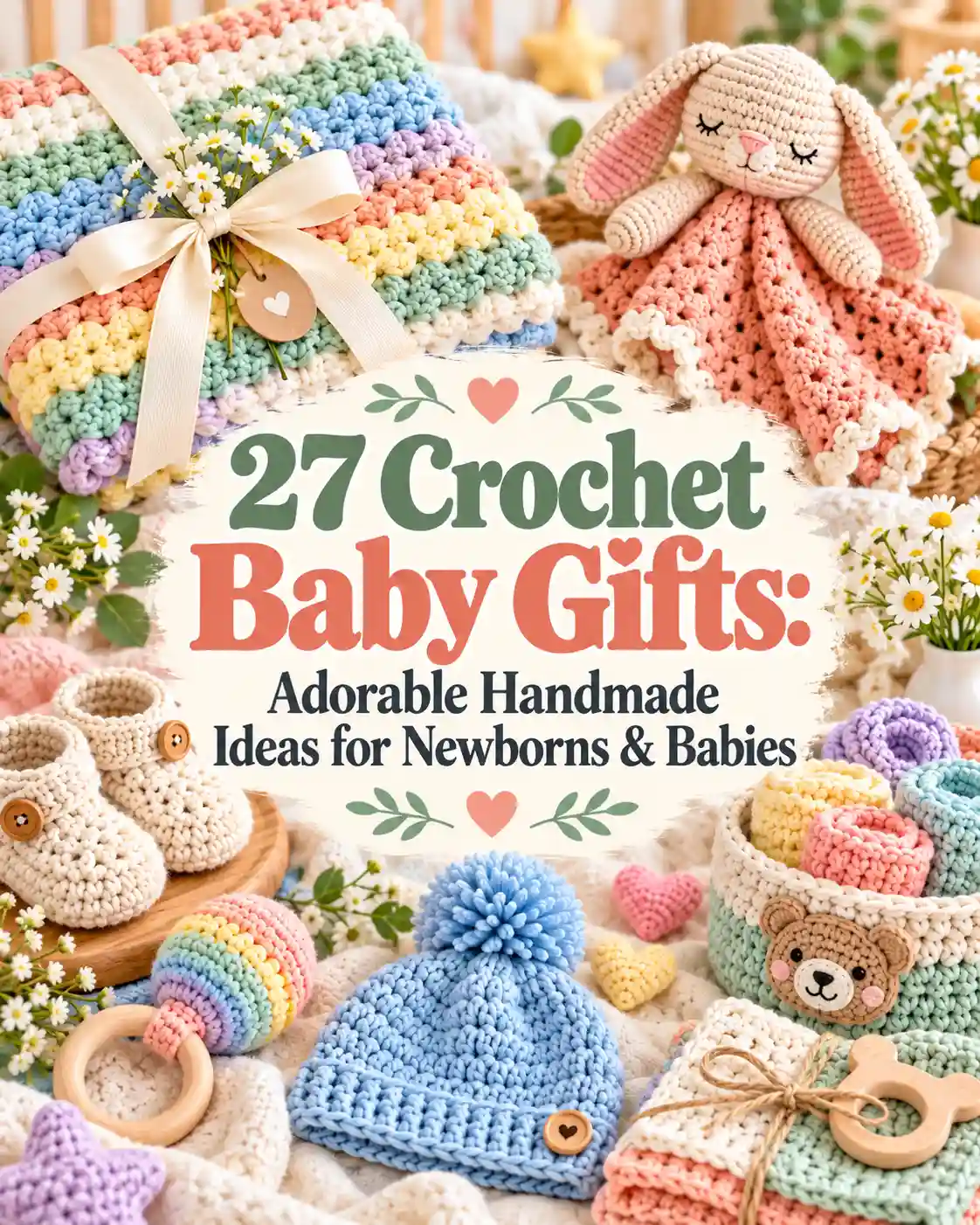
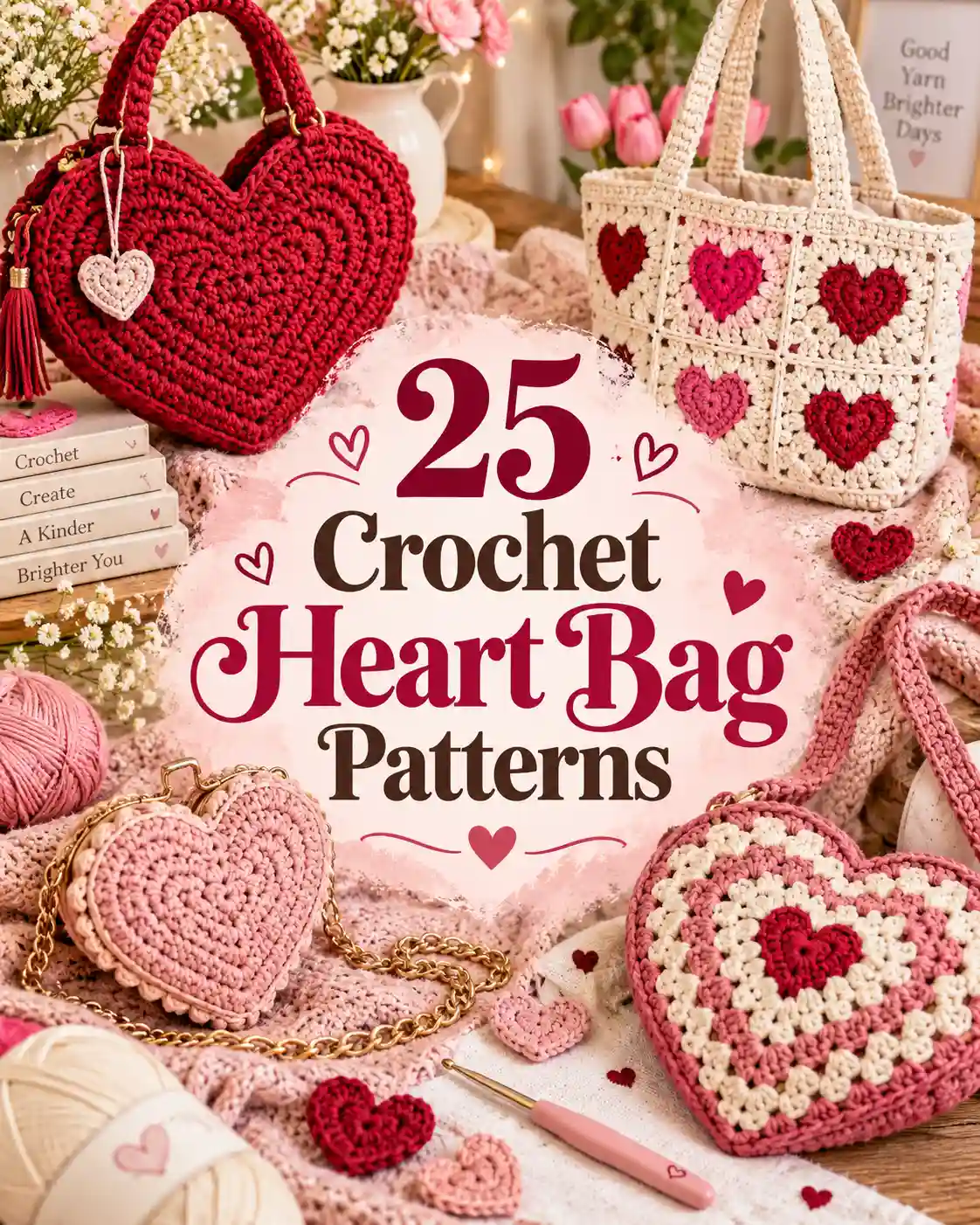
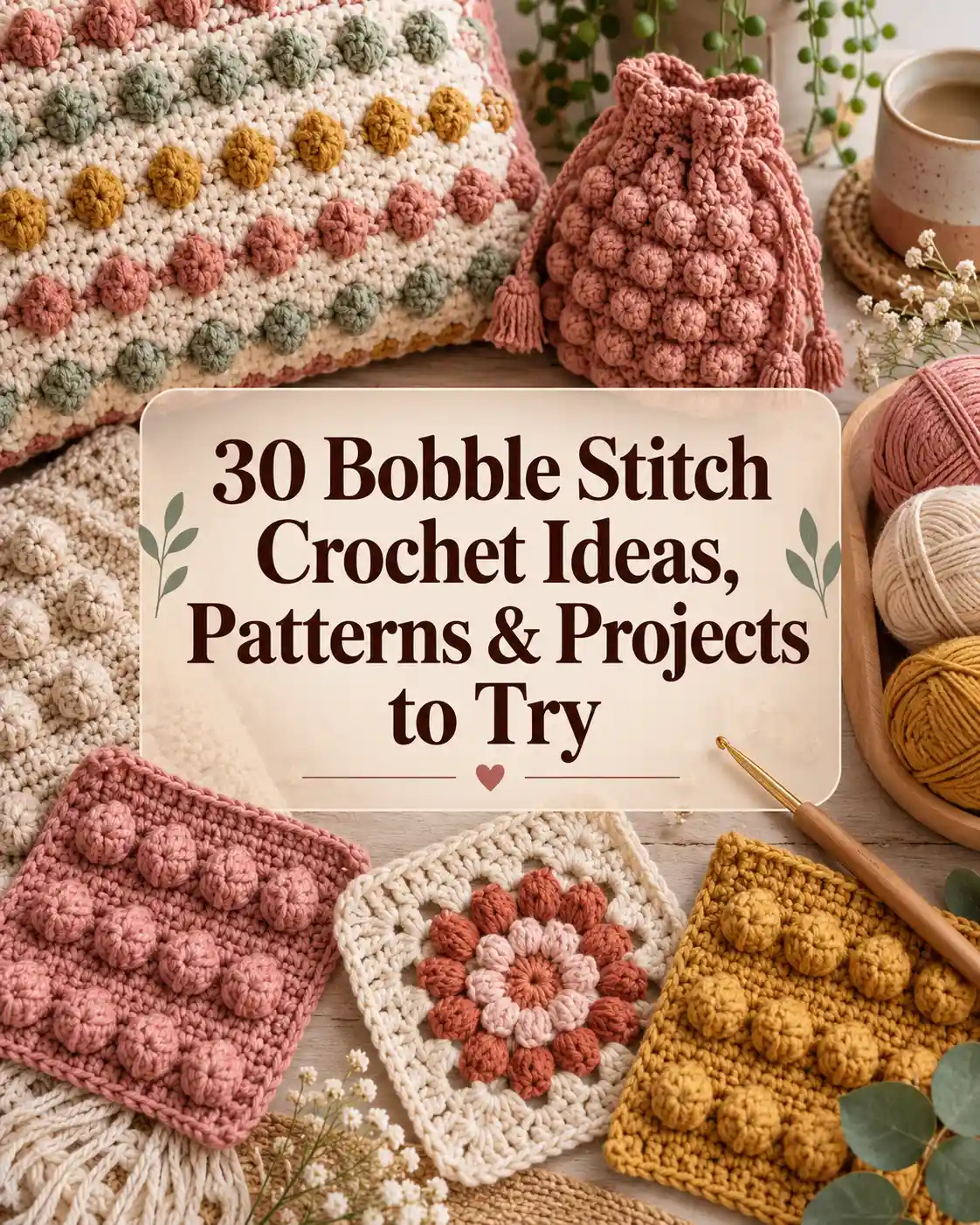
Bobble stitch crochet is a textured crochet technique that creates soft, raised bumps by working several partial stitches together into one cluster. I love how one simple stitch can completely change the look of an otherwise basic project, whether you are making a cozy blanket, a personalized cushion, or a practical crochet bobble stitch bag. If you are just learning, start with a small swatch or granny square so you can get comfortable with tension and placement before moving to larger patterns. This guide brings together 30 ideas so you can learn the technique, compare project types, and choose a bobble stitch project that genuinely fits your skill level and the yarn you already have.
Bobble stitch crochet creates raised, three-dimensional texture by grouping several partially completed stitches into one compact cluster. It works especially well for blankets, bags, graph designs, home decor, amigurumi, seasonal makes, and wearables, so this guide gives you 30 practical ideas ranging from beginner-friendly swatches to more involved charted projects.
If you love the look of a crochet bobble stitch but are not sure where to begin, start small and build consistency before moving into a large blanket or garment. Once you understand the basics, exploring crochet granny square patterns can be a great next step for practicing texture and placement. The Craft Yarn Council lists bo as a standard abbreviation for bobble, while special stitch instructions can still vary by pattern, so always read the pattern key before assuming every bobble is made the same way.
Key Takeaways
- Start with a small bobble stitch practice swatch.
- Keep bobble tension and spacing consistent.
- Match yarn and texture to the finished project.
- Use Bobble stitch crochet patterns as construction guides.
- Check chart keys before reading bobble symbols.
- Swatch garments, blankets, and structured bags first.
30 Bobble Stitch Crochet Ideas and Patterns Worth Trying
Bobble stitch crochet can be used for everything from beginner swatches and blankets to bags, graph designs, amigurumi, seasonal decor, and garments.
At a Glance
- Beginners can start with swatches, squares, and pouches.
- Blankets showcase bobbles without complicated shaping.
- Bags benefit from controlled, structured bobble placement.
- Charts turn bobbles into letters, shapes, and pictures.
- Wearables require careful gauge and texture placement.
The easiest way to choose a project is to match the amount of texture to the job. Dense bobbles suit sturdy accessories and statement motifs, while widely spaced bobbles keep blankets, scarves, and garments softer and more flexible.
| Idea | Skill level | Best use | What to focus on |
|---|---|---|---|
| Practice swatch | Beginner | Learning the stitch | Even tension and clean closure |
| Granny square | Beginner | Blankets, bags, cushions | Placement and color changes |
| Blanket | Beginner–Intermediate | Cozy home project | Spacing, drape, yarn amount |
| Tote or pouch | Intermediate | Practical accessory | Dense fabric and structure |
| Graph or letters | Intermediate | Personalized gifts | Counting and row tracking |
| Amigurumi | Intermediate | Toys and soft sculpture | Compact texture and secure finishing |
| Cardigan or sweater | Intermediate–Advanced | Wearables | Gauge, weight, placement |
| Seasonal motifs | Beginner–Intermediate | Decor and gifts | Shape, blocking, finishing |
30 Bobble Stitch Crochet Ideas, Patterns & Projects to Try
1. How Do You Make a Classic 5-DC Bobble Stitch Swatch?
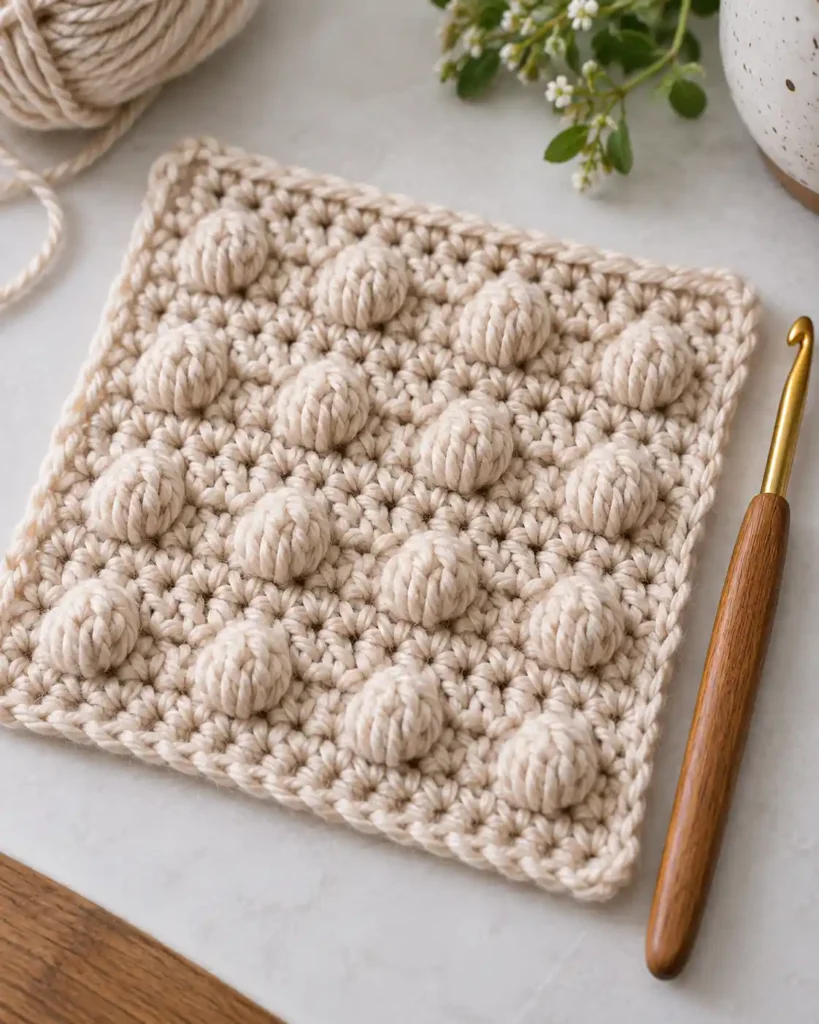
A classic 5-DC bobble swatch is the best place to learn what makes this texture feel so satisfying: one small bump carries a surprising amount of structure. A flat sample beats jumping straight into a blanket because you can see tension problems immediately instead of discovering them twenty rows later. I’d make a palm-sized swatch first, especially when trying unfamiliar yarn, because it gives you room to test spacing without wasting much material. Choose this project if you want the basic motion to become automatic; the payoff is cleaner bobbles in every project that follows.
A common version uses five partially completed double crochets joined at the top, although patterns can use other stitch counts; Yarnspirations specifically shows a 5-dc bobble and notes that variations exist. If you are searching for Bobble stitch crochet written instructions, this is the technique to master before worrying about motifs or charts.
Special tip: Keep the closing pull-through snug, then work the pattern’s next stabilizing stitch without yanking the fabric tight.
2. When Should You Use a Single Crochet Bobble Stitch?
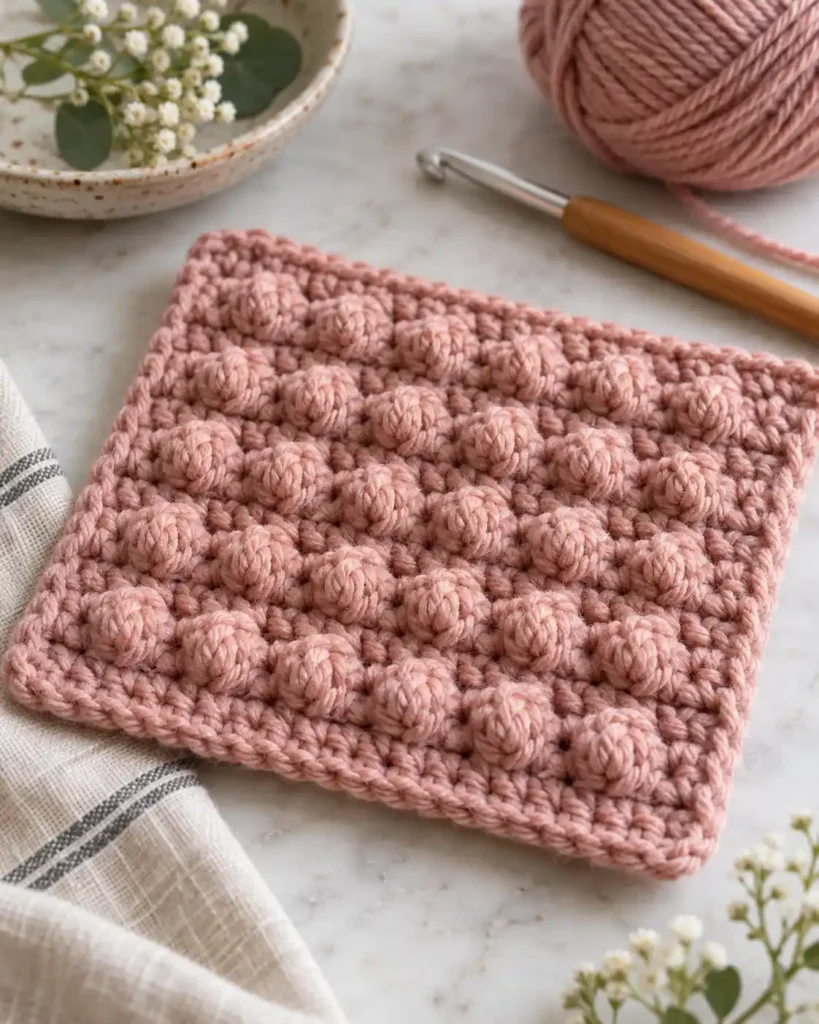
A single crochet bobble stitch works beautifully when you want texture inside a firm, compact fabric instead of a loose drapey one. Compared with tall background stitches, single crochet keeps the spaces around each bump controlled, which is useful for pouches, baskets, and small toys. I’d choose it for anything that gets handled often because the dense base feels tidy and practical. It is a smart option for beginners who want a small project with obvious stitch definition, and the best part is that mistakes are easier to spot.
Space the bobbles consistently and check that each one is pushed to the intended side. A smaller bobble can also keep dense fabric from becoming too bulky.
3. What Makes a Double Crochet Bobble Stitch Look Full?
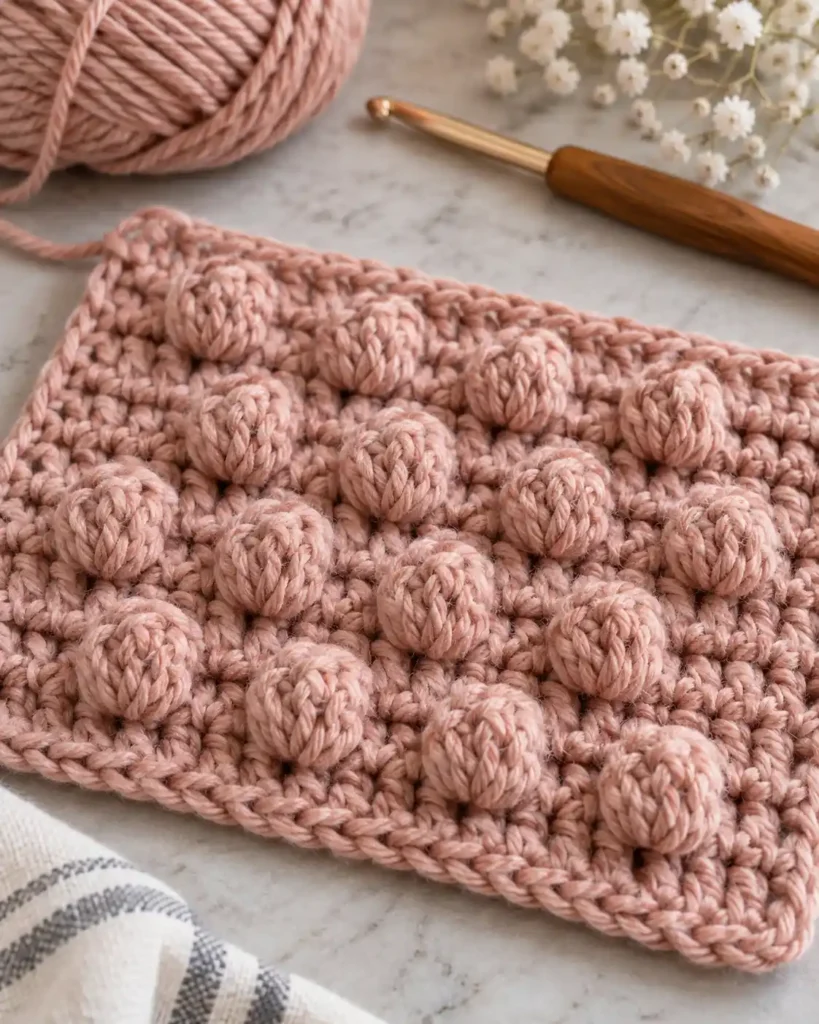
The double crochet bobble stitch gives you the classic round pop most people picture when they hear “bobble stitch.” A fuller cluster stands out more clearly than a mini bobble, but too-loose loops can make it look floppy rather than sculpted. I’d use this version on a simple background where the raised texture gets to be the star instead of competing with other stitches. It is especially useful when you want strong visual texture, and the payoff is a bold surface without needing complicated colorwork.
Changing the number of partial double crochets changes the fullness, so do not assume every pattern uses the same count. Keep the height of your partial stitches consistent before closing the group.
4. Mini Bobble Stitch
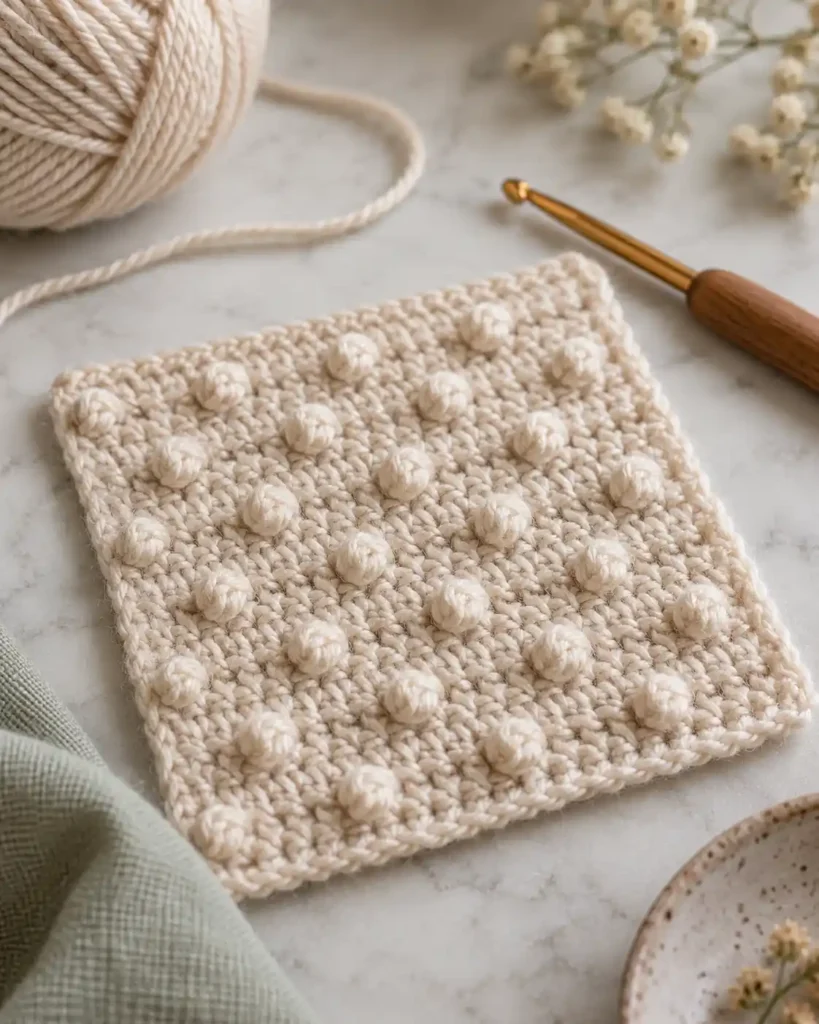
Mini bobbles add texture without making the whole project feel heavy or overly chunky. They are more subtle than full-size clusters, which makes them easier to use in edging, small motifs, baby garments, and fine-gauge accessories. I’d reach for them when the fabric already has plenty going on and only needs a dotted accent. This idea works best for makers who want detail rather than drama, and its strongest feature is how neatly it fits into smaller spaces.
Try mini bobbles in a lighter yarn or with slightly wider spacing. They are also useful when a full bobble would distort a narrow panel.
5. Can You Work Bobble Stitch in the Round?
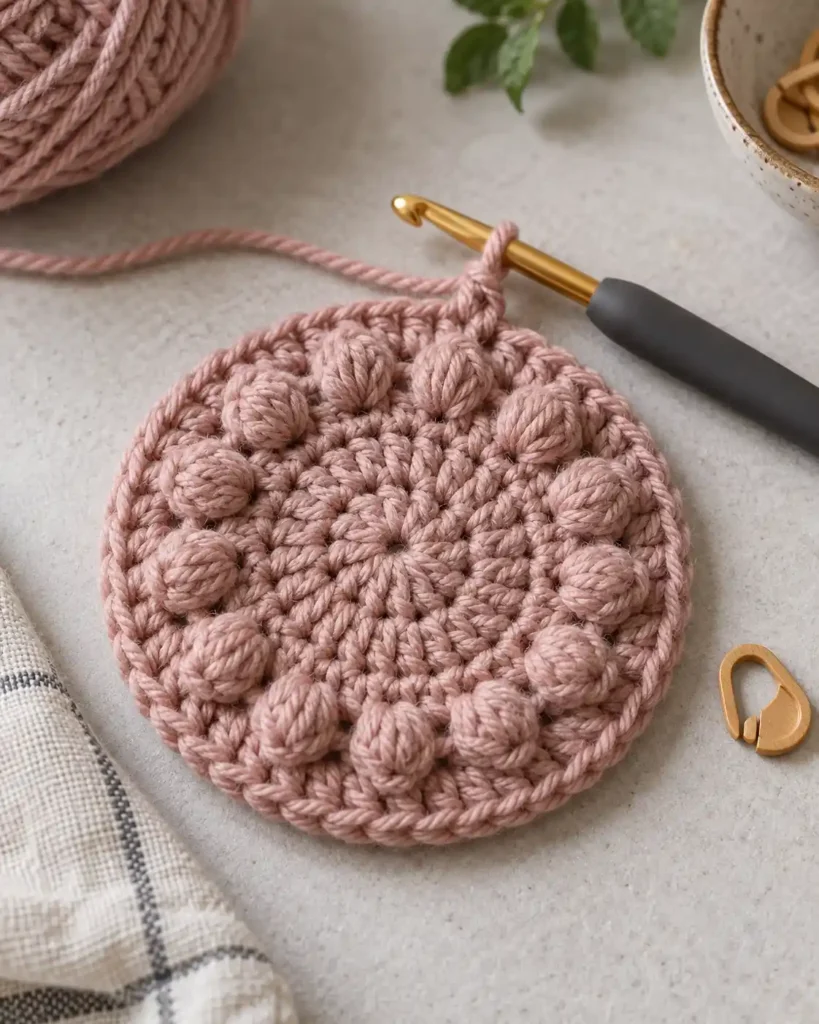
Yes, bobble stitch can be worked in joined or continuous rounds, which opens the door to baskets, hats, cushions, pumpkins, and amigurumi. Working in the round differs from a flat swatch because increases and stitch counts must stay balanced while the bobbles add bulk. I’d practice on a small circle before starting a fitted hat, just to see how the texture affects the shape. Choose this method when you want seamless dimensional projects; the payoff is texture that wraps naturally around the object.
Mark the beginning of each round and count before adding the next bobble repeat. On flat circles, distribute increases evenly so the piece does not cup or ripple.
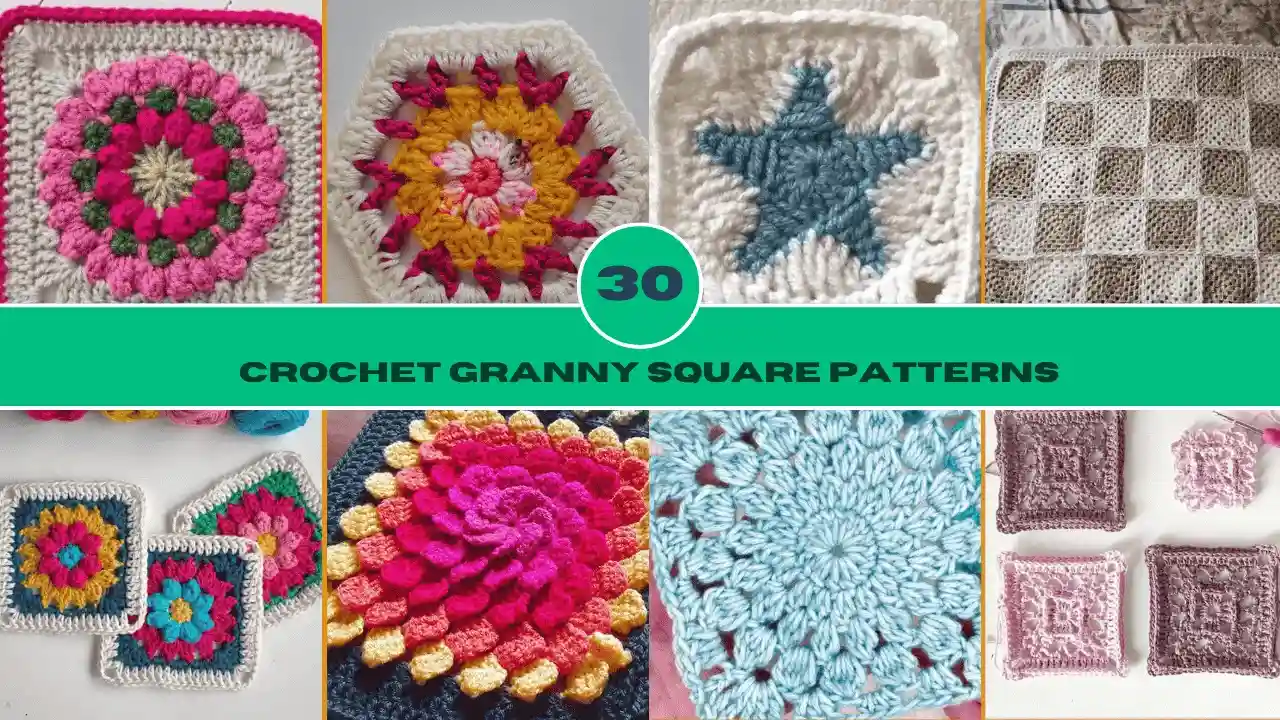
6. Bobble Stitch Granny Square
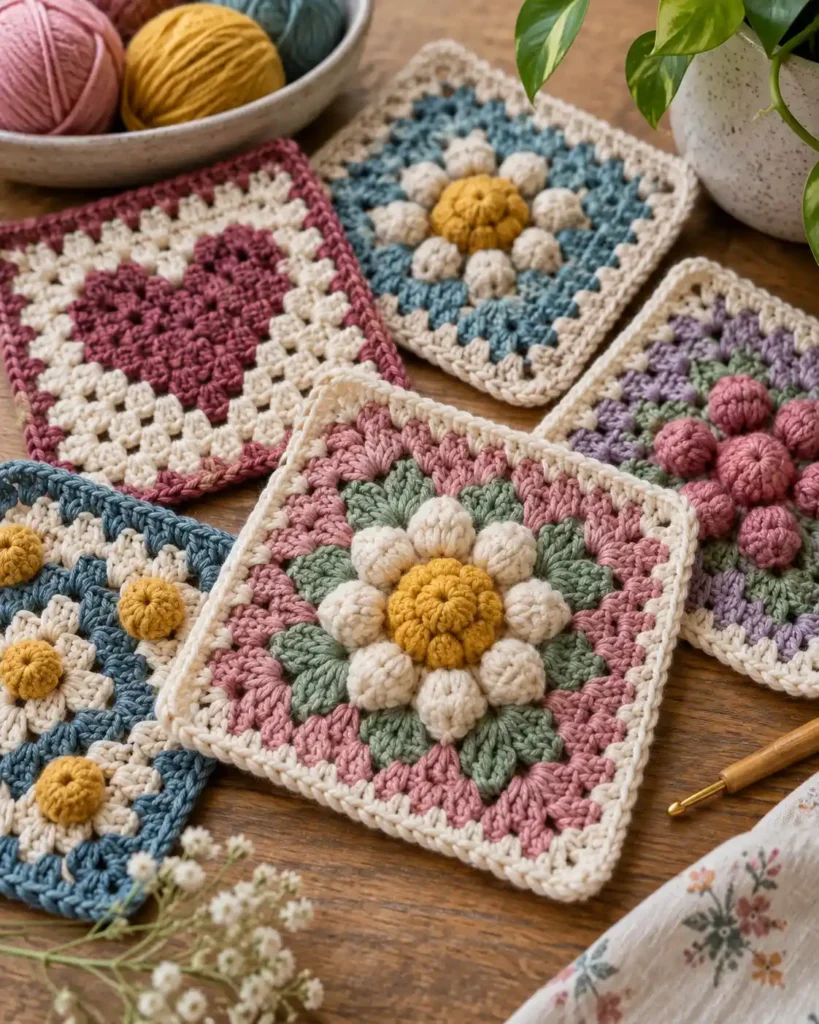
A bobble stitch granny square turns a familiar modular shape into something much more tactile. Plain granny squares rely heavily on color, while bobble versions can create centers, dots, hearts, or geometric details even in one shade. I’d make a few different squares before committing to a full blanket because the small format makes color and spacing experiments easy. This is ideal for crocheters who like mix-and-match projects, and the best part is that the same square can become a blanket, tote, or cushion.
Keep the corners flexible enough to lie flat and use the bobbles as accents rather than crowding every round. Joining several textured squares with a simpler seam usually keeps the finished piece from looking too busy.
7. How Can You Make a Bobble Stitch Heart Motif?
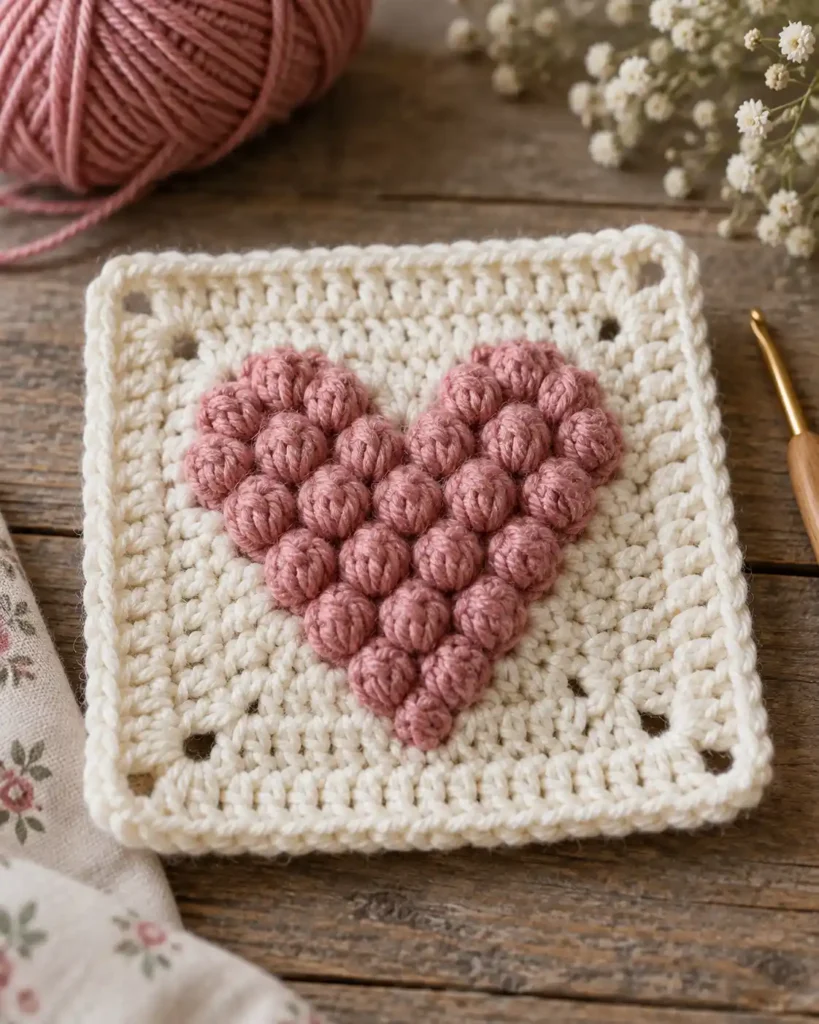
A bobble stitch heart is one of the easiest ways to turn texture into a recognizable picture. Unlike a colorwork heart, the design can stay monochrome because the raised stitches create the contrast. I’d center one on a cushion panel, baby blanket square, or handmade gift where the shape can be seen at a glance. It suits anyone who wants a simple introduction to charted motifs, and the payoff is a personalized look without complicated tapestry crochet.
Sketch the heart on graph paper first, with one cell representing either a background stitch or a bobble placement. Count from the center outward so both sides stay balanced.
8. Bobble Stitch Letters & Alphabet
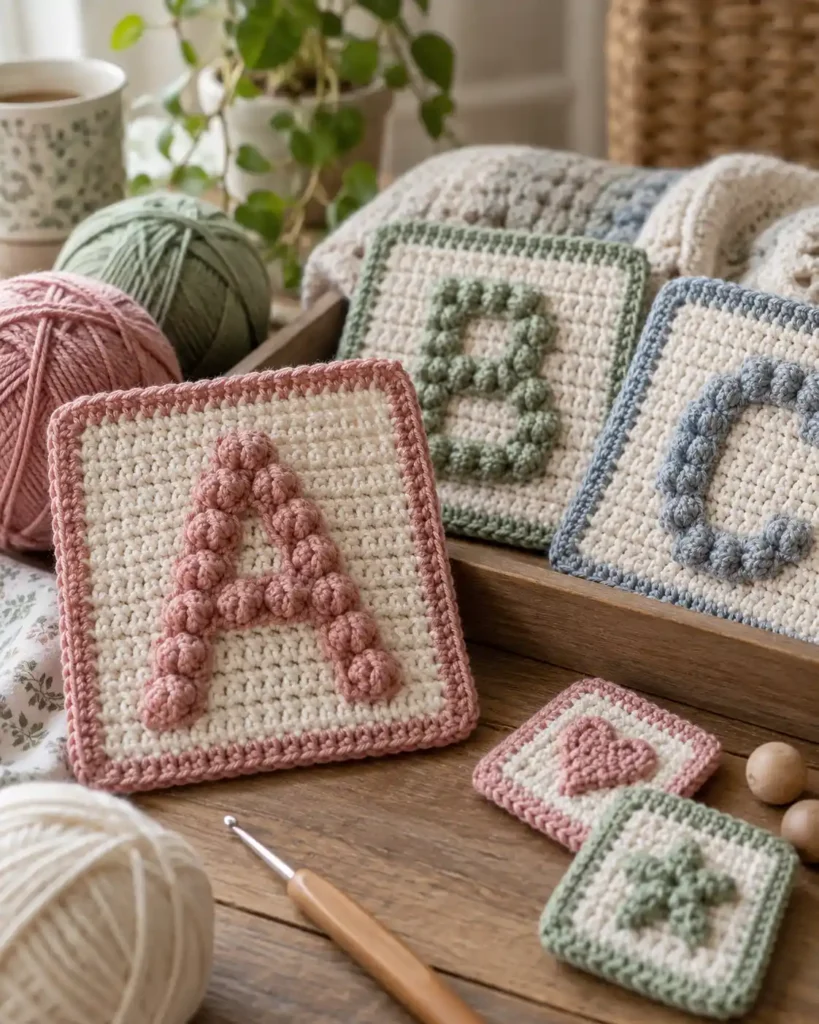
Bobble stitch letters let you spell names, initials, short words, or dates directly into the fabric. They feel more dimensional than surface embroidery and can be easier to plan than multicolor lettering because the background yarn can remain unchanged. I’d use them on a baby blanket, pillow, stocking, or wall hanging where personalization is part of the gift. This project is best for patient counters, and its strongest feature is how custom the finished piece can look.
Plan every letter on a grid before crocheting and keep letter width and spacing consistent. For longer names, test the full word on paper first so it fits your intended panel.
9. How Do Bobble Stitch Graphs and Pixel Designs Work?
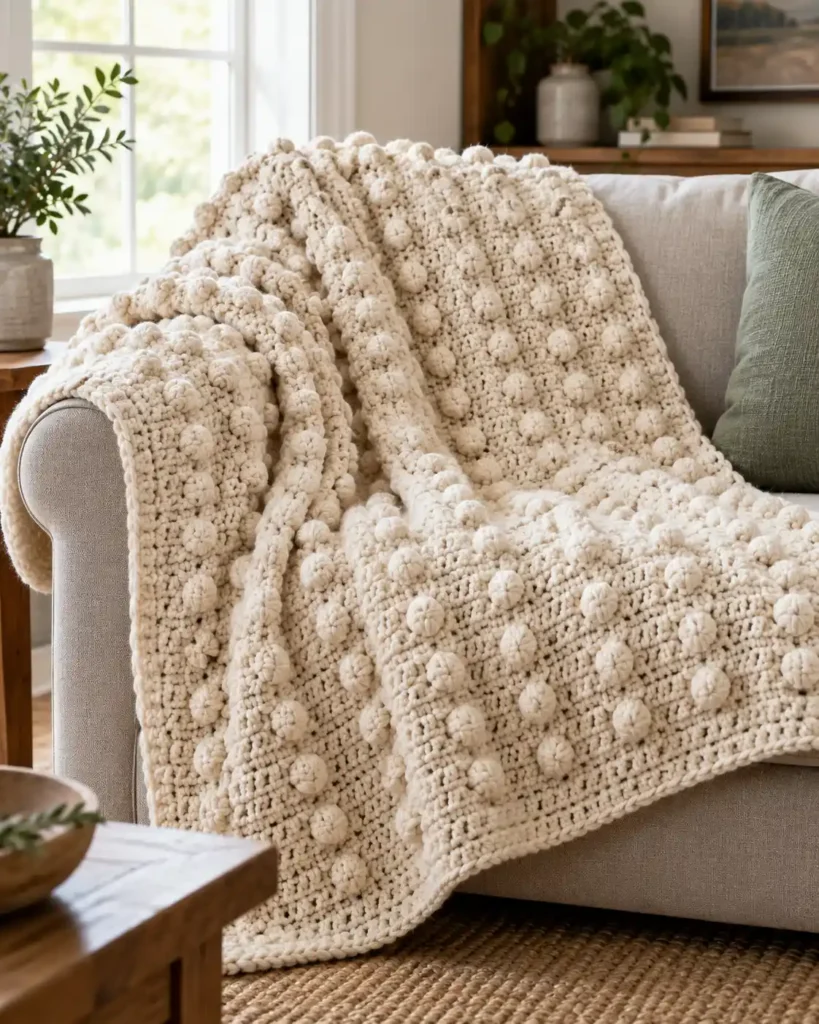
Bobble stitch graphs translate a simple grid into raised pixels, turning animals, words, symbols, and geometric shapes into textured crochet. Compared with improvising a motif row by row, a graph gives you a visual map and makes repeats much easier to track. I’d mark off each completed row as I go because one missed bobble can shift an entire design. This format suits intermediate crocheters who enjoy structured patterns, and the payoff is a graphic result that looks much more complex than the individual stitches actually are.
Treat each grid cell as either background or bobble placement, and pay attention to the direction in which each row is read. If the chart uses symbols, always check its key rather than guessing.
10. Classic Bobble Stitch Blanket
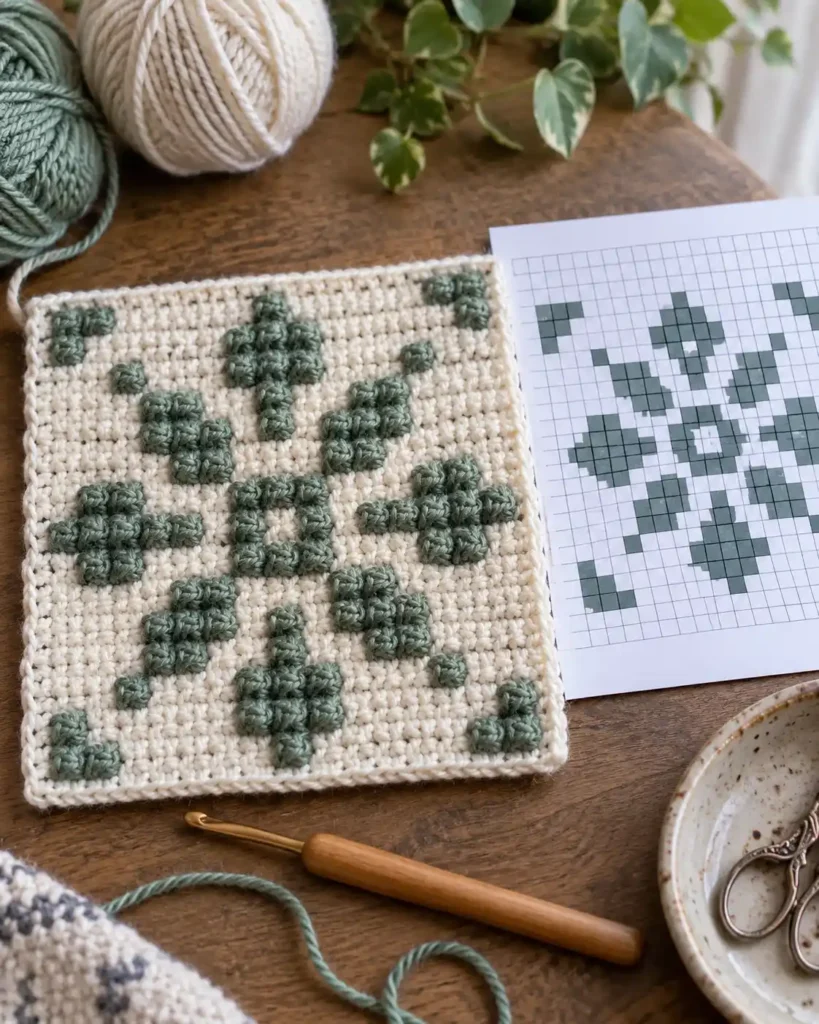
A classic bobble stitch blanket is where this texture really gets room to shine. An all-over field of dense bobbles can become heavy, so repeated rows, scattered dots, or spaced motifs often give better drape than covering every possible stitch. For more blanket inspiration, explore different crochet blanket pattern ideas before choosing your final design. I’d choose a simple background and let one repeat pattern carry the whole throw instead of stacking multiple textures together. This is a strong project for anyone ready to scale up from swatches, and the payoff is a cozy blanket that still has a clear, intentional design.
If you arrived here by searching Bobble stitch crochet pattern free, use this roundup as an idea map, then check the exact pattern you choose for yarn quantity, gauge, and repeat counts. Bobbles consume more yarn than flat basic stitches because multiple stitch elements are worked into one location, so buying a sensible buffer for a large blanket is practical.
11. What Makes a Good Bobble Stitch Baby Blanket?
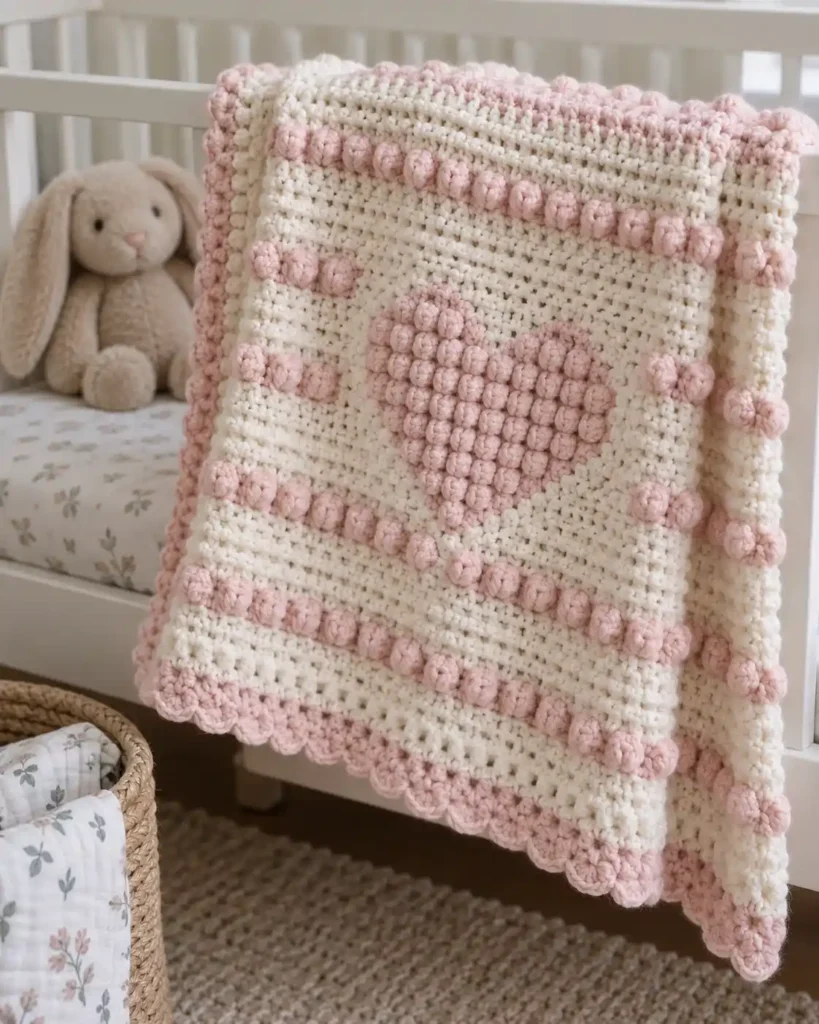
A baby blanket looks lovely with soft rows of small bobbles, hearts, initials, or gentle dot patterns. Compared with a heavily textured adult throw, a nursery blanket benefits from lighter yarn, flatter borders, and restrained bobble placement. I’d keep the reverse side simple and smooth so the blanket feels neat from both directions. This idea is best for makers who want a gift with personality, and the strongest feature is the option to personalize without making the design fussy.
Choose a washable yarn that feels soft in the hand and swatch the motif before sizing the whole blanket. Keep any added embellishments appropriate for the intended use and recipient.
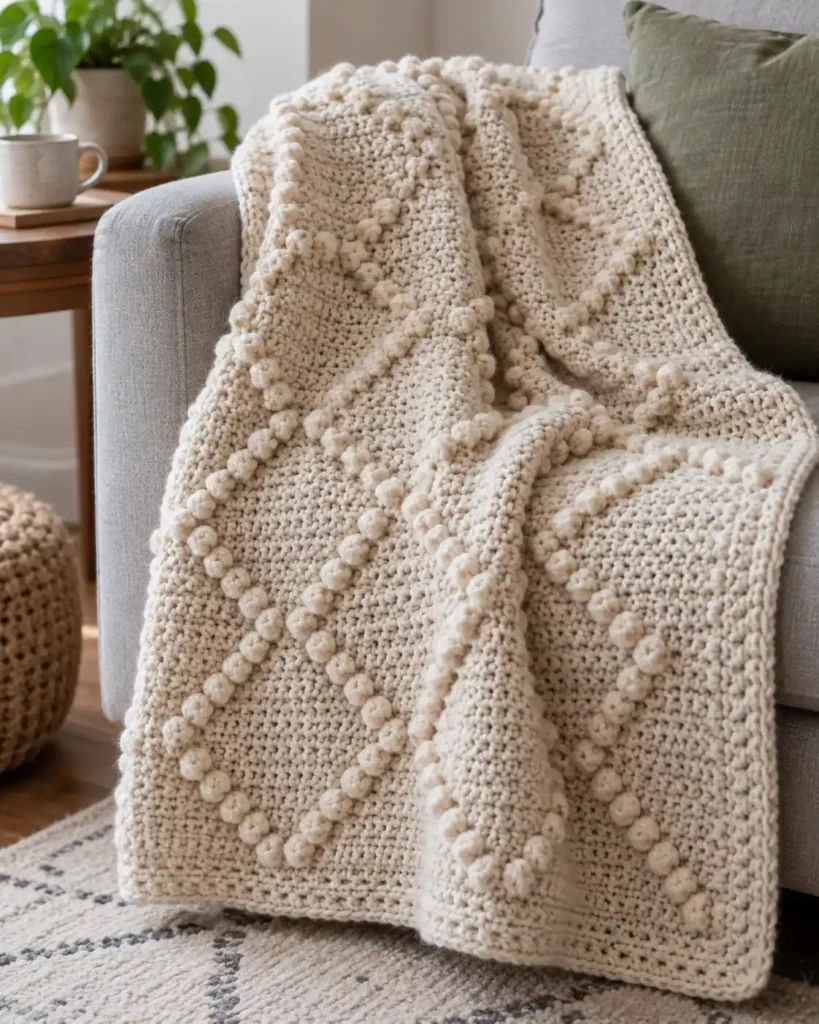
12. Diamond Bobble Stitch Blanket
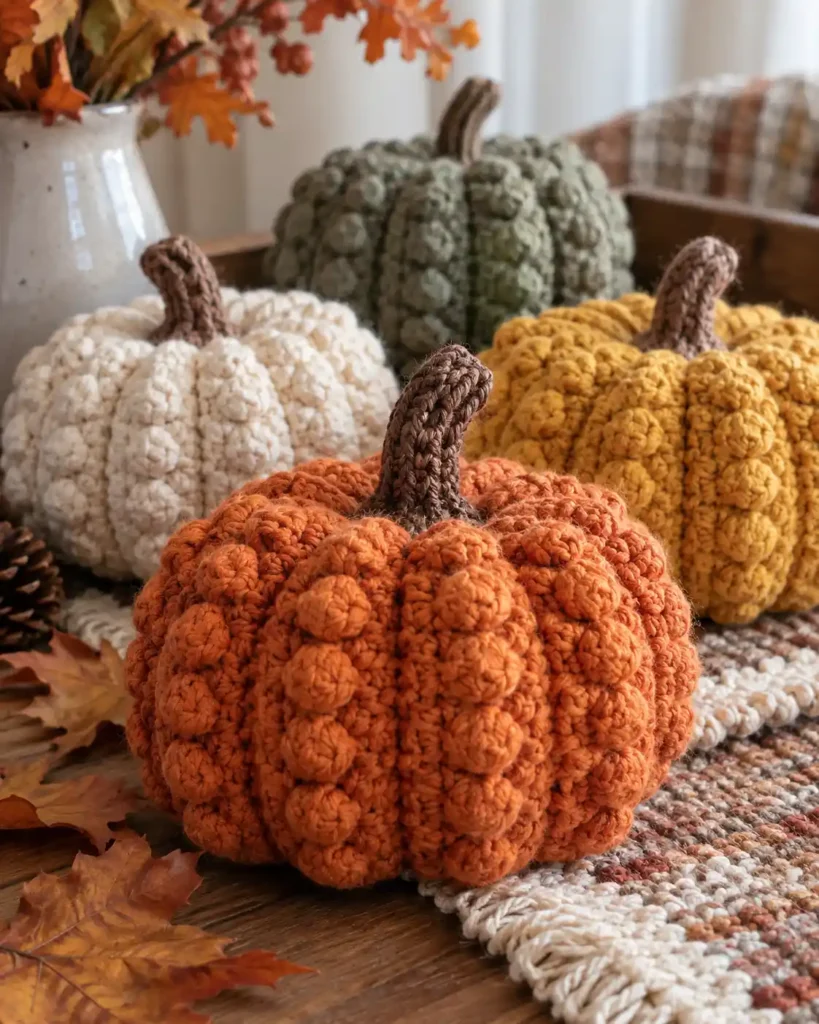
A diamond bobble stitch blanket uses repeated raised points to create crisp geometry without changing yarn color. The effect feels more structured than random bobbles and can make a single solid shade look surprisingly detailed. I’d use stitch markers at the center and repeat boundaries because symmetry is what makes the diamonds read clearly. This design is ideal for crocheters who enjoy counting and repeating charts, and the payoff is a modern blanket with strong visual rhythm.
Work from a written repeat or graph and check the diamond width every few rows. A smooth yarn helps the raised lines stay easy to see.
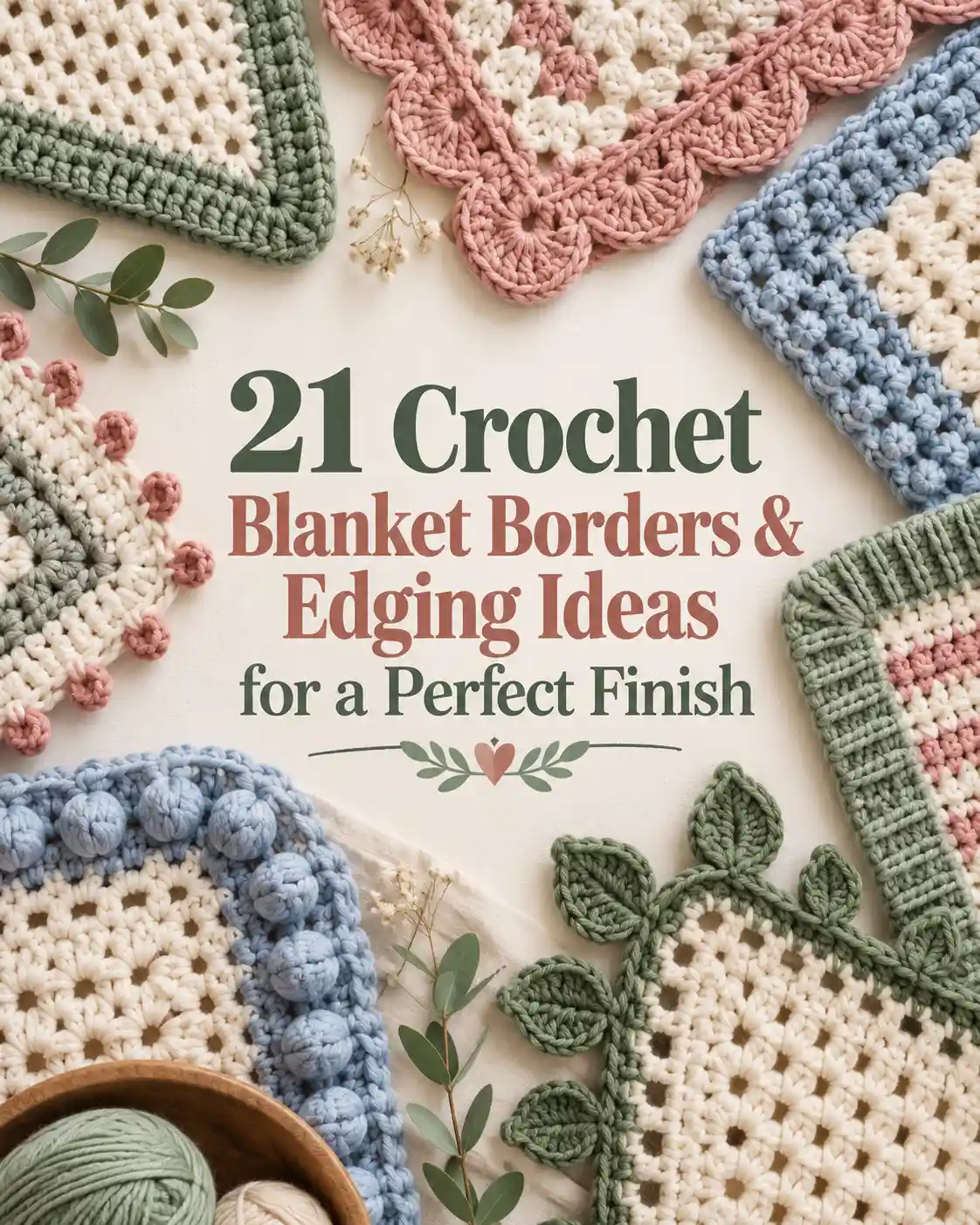
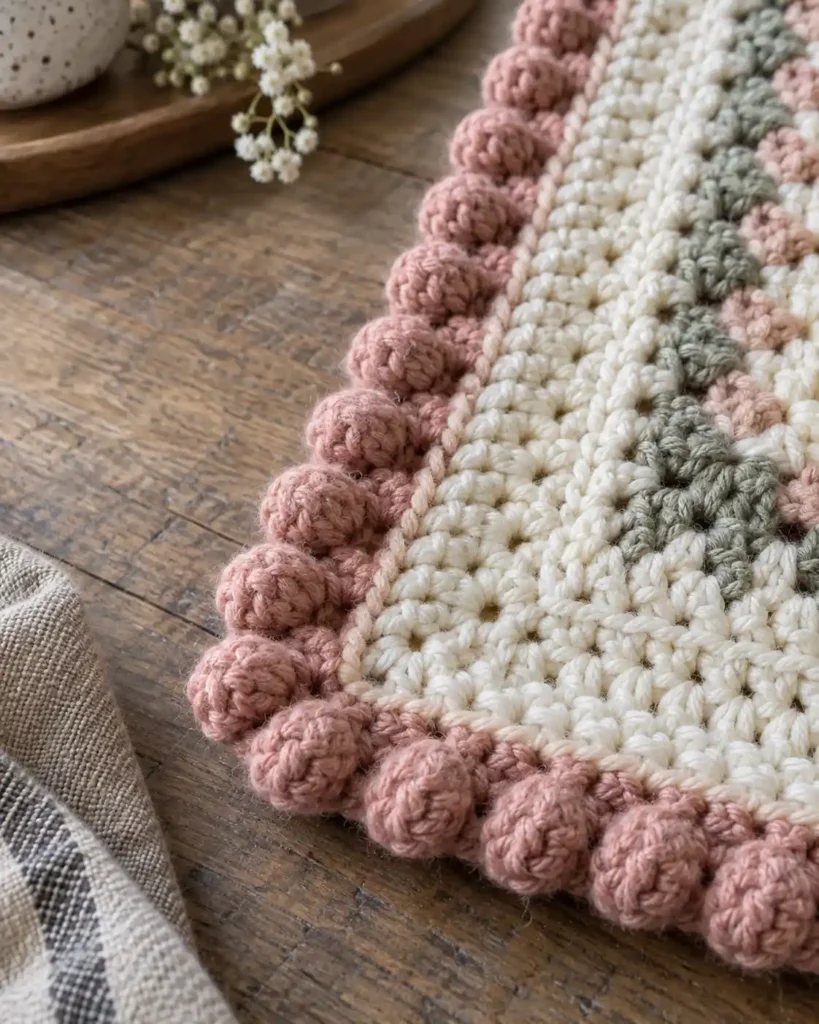
13. How Do You Add a Bobble Stitch Border or Edging?
A bobble border can make a plain blanket look finished without changing the entire body of the project. A sparse trim feels playful and light, while a dense edging creates a stronger frame and uses noticeably more yarn. I’d test one side first before committing to the whole perimeter because corner spacing determines whether the border lies flat. This idea suits anyone upgrading a simple blanket, and the payoff is a decorative edge that feels intentional rather than added as an afterthought.
Keep the stitch count even on long sides and allow enough stitches around corners to prevent pulling. If the edge starts ruffling, reduce the number of stitches or bobbles before continuing.
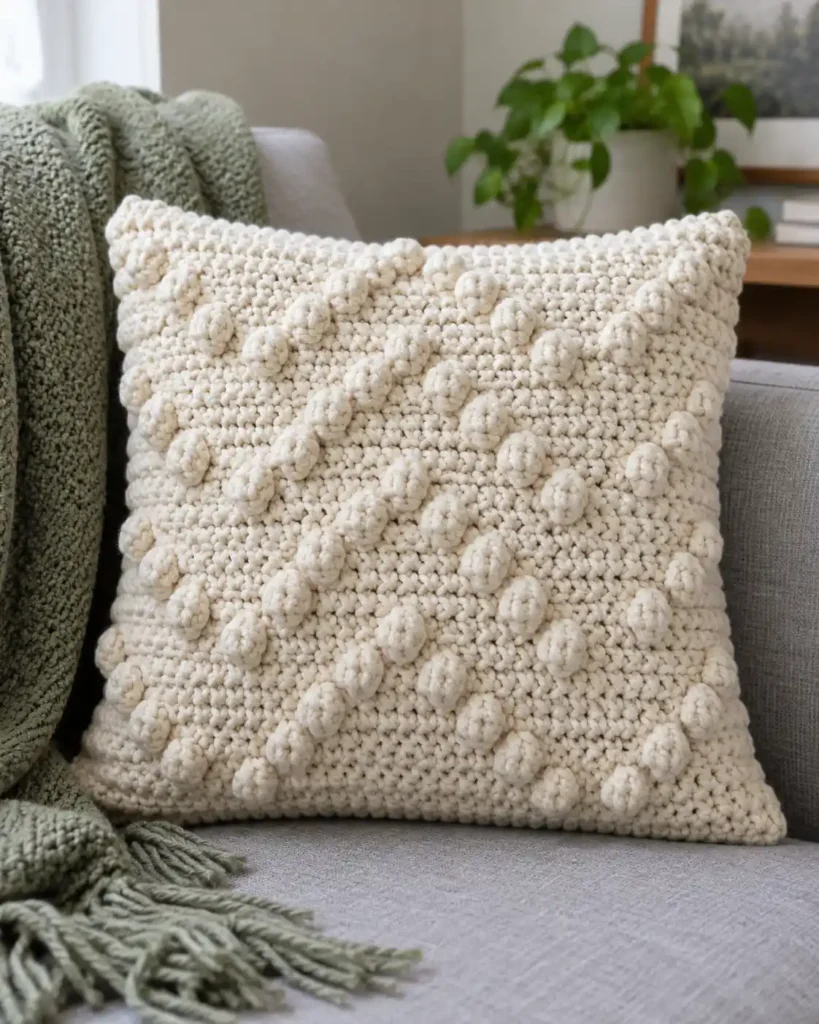
14. Bobble Stitch Pillow & Cushion
A bobble stitch pillow gives you the visual impact of a textured blanket without the yarn commitment. Compared with covering both sides in bobbles, a textured front and smooth back keep the cushion lighter and easier to assemble. I’d use a bold heart, diamond, word, or all-over dot pattern on the front, then let the reverse stay quiet. This is a great home-decor project for intermediate beginners, and the payoff is a small piece that can change the feel of a sofa or bed quickly.
Match the finished cover to the insert size and decide early whether you want an envelope, button, or zipper closure. Block the front panel before assembly if the motif needs squaring.
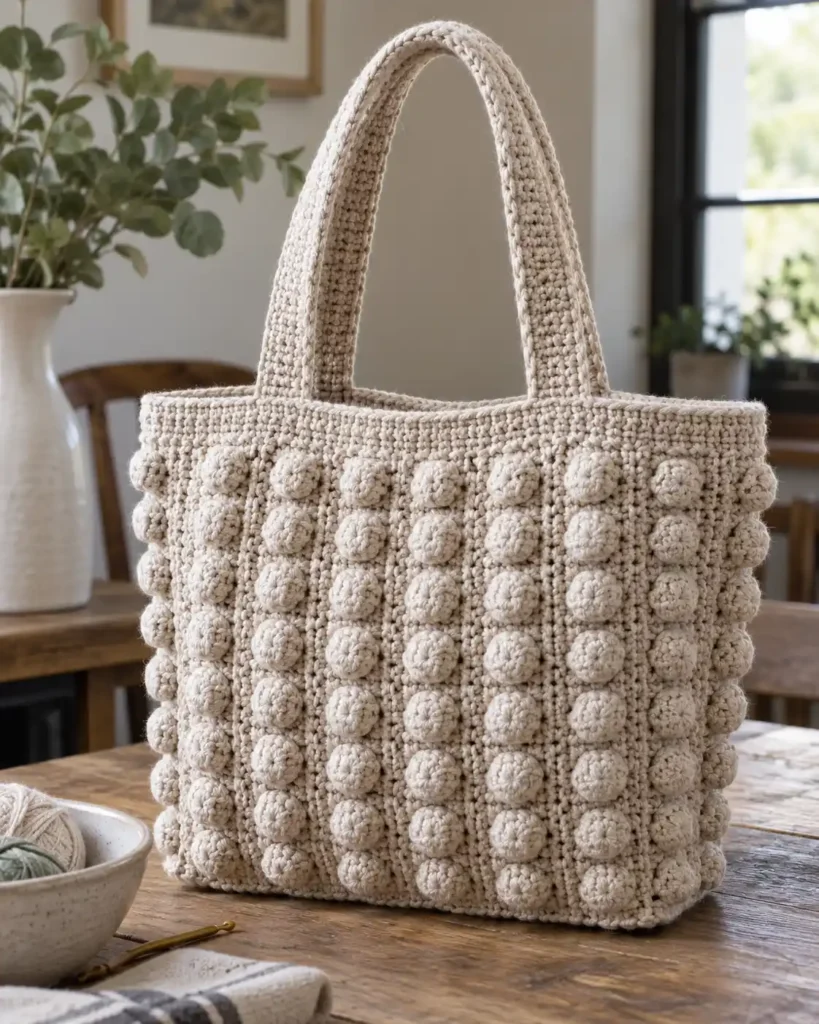
15. Can You Make a Structured Bobble Stitch Tote Bag?
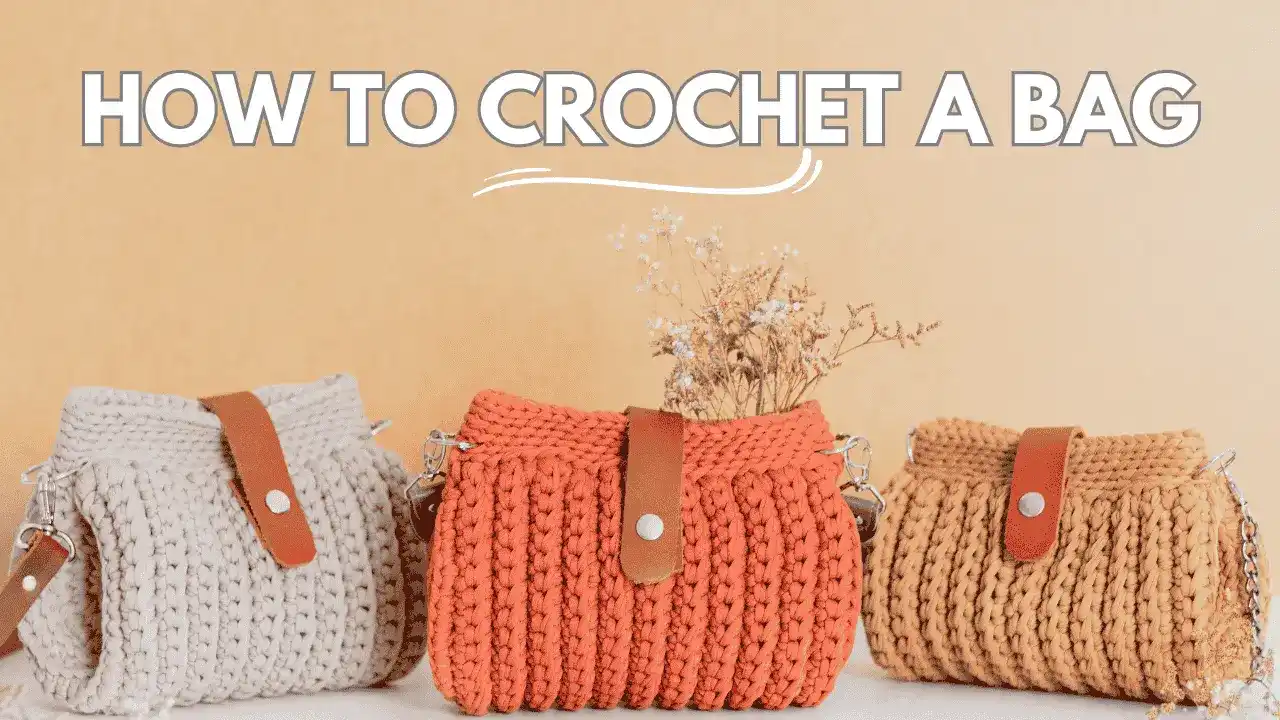
A bobble stitch tote turns decorative texture into something practical enough for everyday use. Unlike a loose market bag, a structured tote needs a firm base, strong handles, and controlled stretch so the bobbles do not pull the body out of shape. Beginners can also review how to crochet a bag techniques before starting a textured tote. I’d place the texture in panels or bands rather than on every stitch, especially if the bag will carry weight. This project works well for crocheters ready to combine construction with decoration, and the best part is that the raised texture makes even a simple silhouette look special.
The phrase Bobble stitch crochet bag covers everything from soft totes to lined handbags, so choose your construction before choosing your stitch density. Cotton or another firm yarn can help a tote hold its shape, and lining can reduce stretch.
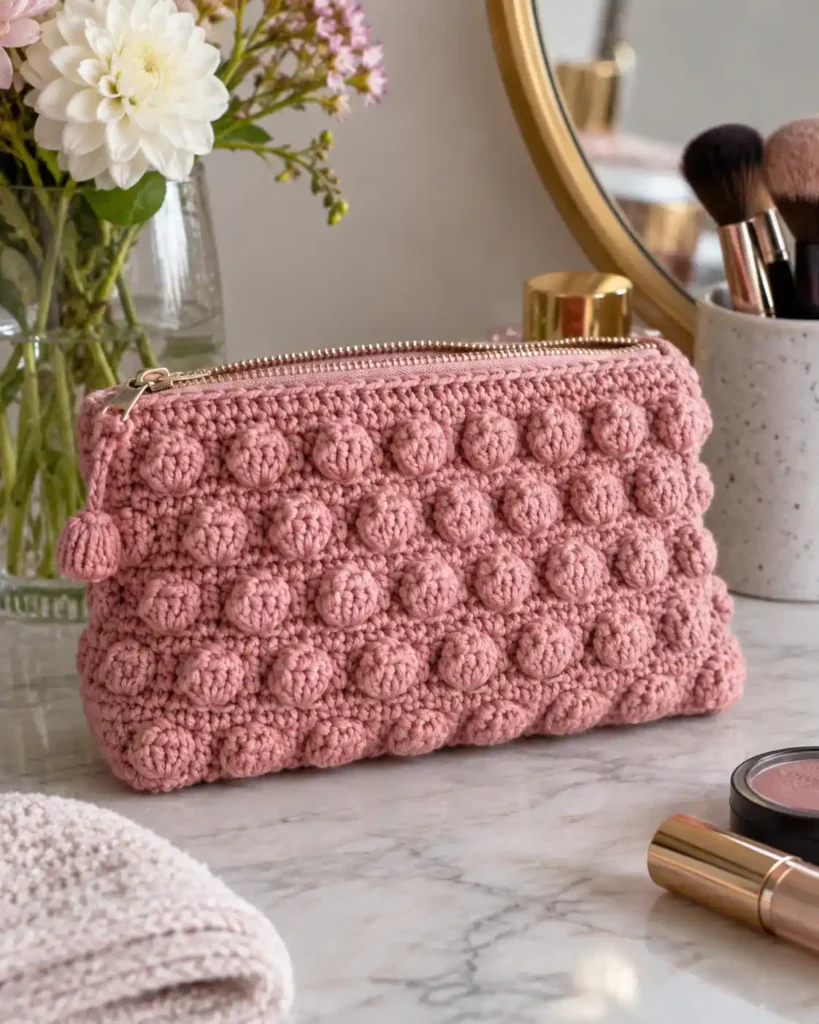
16. Bobble Stitch Pouch & Makeup Bag
A small pouch is one of the most forgiving ways to turn practice bobbles into a finished object. It requires less yarn than a tote and gives you a chance to learn zipper, drawstring, or lining techniques without committing to a large piece. I’d use compact bobbles on dense single crochet so small items are less likely to poke through the fabric. This project is perfect for beginners who want something useful after a swatch, and the payoff is a quick accessory that also sharpens tension control.
A flat pouch keeps construction simple; a boxed base adds extra room. If you add a zipper, install it after checking that the top edge is stable and even.
17. What Works Best for a Bobble Stitch Purse?
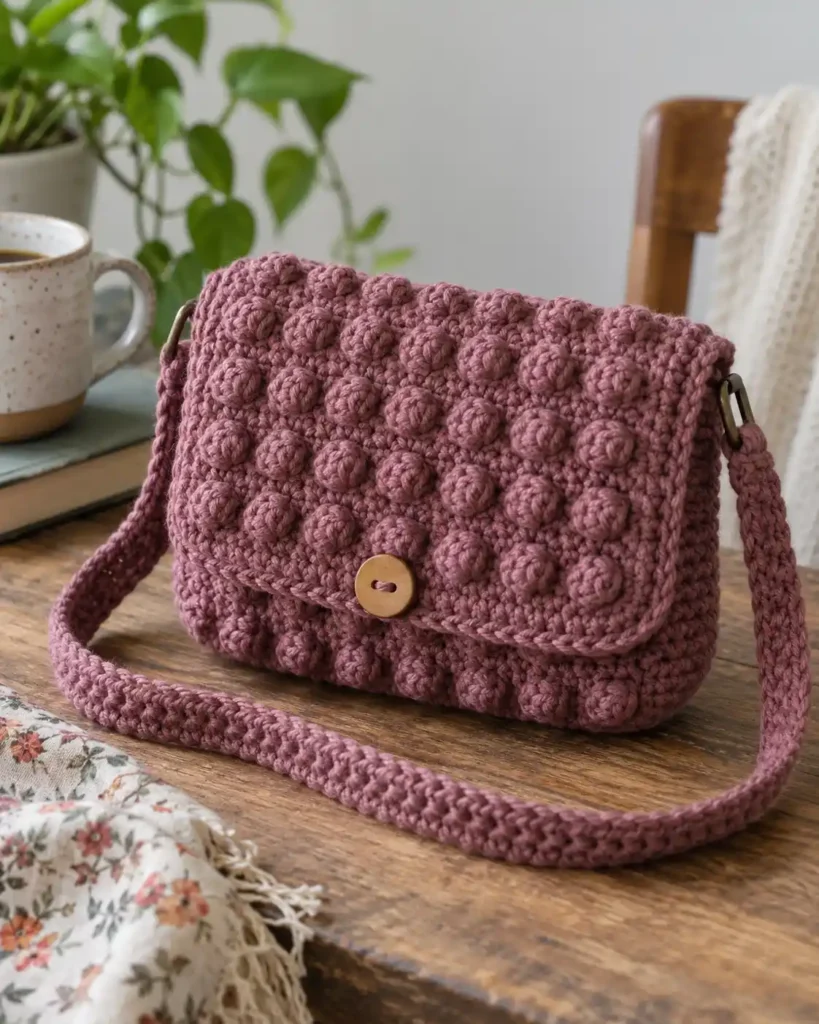
A bobble stitch purse looks best when the raised texture is concentrated where it can be seen without making the bag uncomfortable to carry. A fully bobbled strap can feel bulky, so a smooth strap paired with a textured front panel is often the cleaner choice. I’d try a clutch or small crossbody first because the proportions are easy to control. This idea suits crocheters who enjoy adding hardware and finishing details, and the payoff is a handmade bag that feels more polished than a basic pouch.
Plan the closure, lining, strap, and attachment points before finishing the body. Select hardware that matches the weight of the completed purse rather than choosing it only for appearance.
18. Bobble Stitch Basket
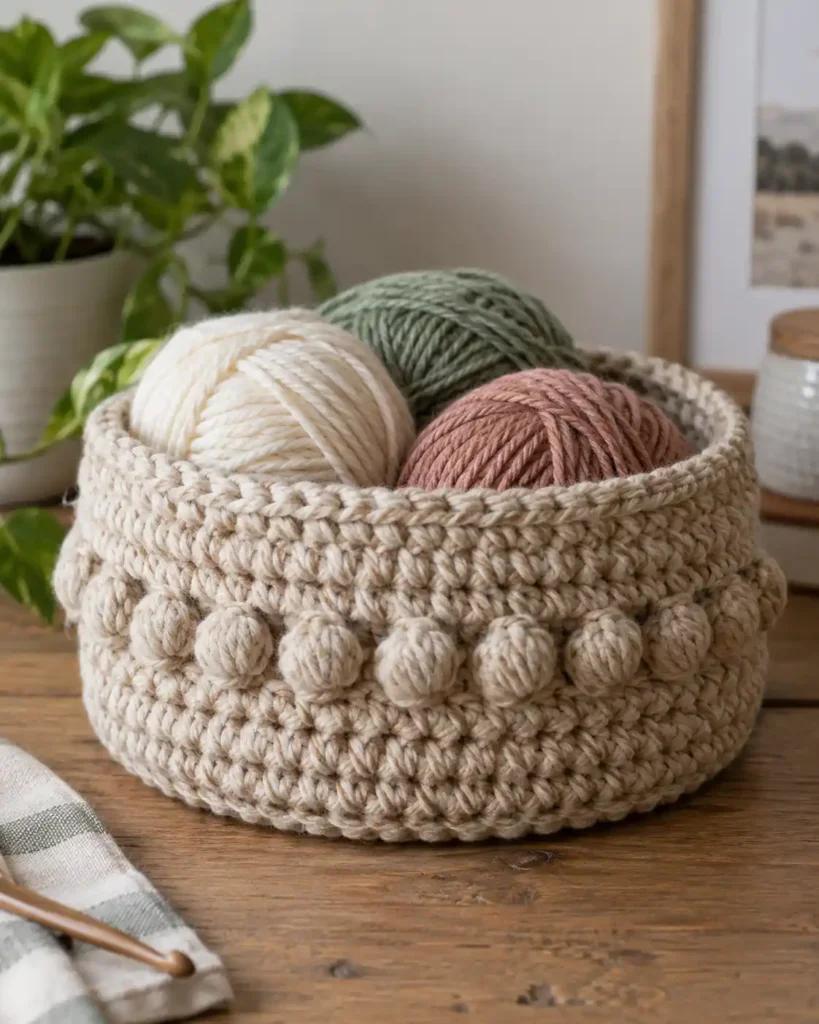
A bobble stitch basket combines the sturdiness of dense crochet with just enough texture to make storage look decorative. Compared with a soft bag, a basket needs a flat base, tight gauge, and firm walls that can stand without collapsing. I’d add one or two bobble bands around the sides instead of covering the full basket, which helps preserve structure. This works well for yarn storage, small household items, or nursery organization, and the payoff is useful decor that still shows off the stitch.
Hold yarn double or use a bulkier yarn if your chosen pattern calls for extra firmness. Check the base after each increase round so it stays flat before you build the sides.
19. How Should You Crochet a Bobble Stitch Potholder or Hot Pad?
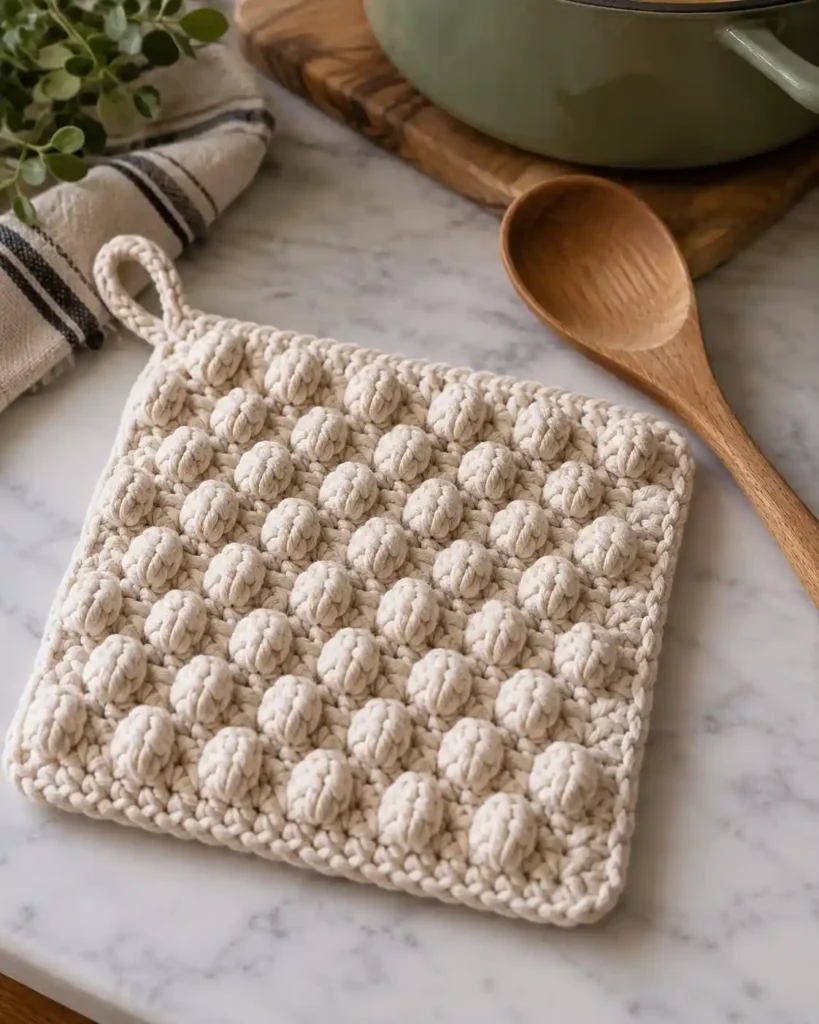
A bobble stitch potholder turns thick texture into a compact kitchen project that feels substantial in the hand. Unlike a decorative coaster, a hot pad needs dense construction and material suitable for its intended heat-contact use. I’d keep the shape simple and use the bobbles as surface texture rather than adding loose embellishments. This is best for crocheters who want a quick functional project, and the payoff is a small make that is excellent for practicing even, closely spaced bobbles.
Use the fiber and layer construction specified by a reliable potholder pattern. Avoid assuming that every yarn is suitable for high-heat contact just because it can be crocheted.
20. Bobble Stitch Pumpkin
A bobble stitch pumpkin is a wonderfully forgiving fall project because the texture naturally exaggerates the rounded shape. You can also explore a crochet pumpkin pattern for more seasonal project inspiration and shaping ideas. Smooth pumpkins rely on ribbing or shaping alone, while bobbles add an extra layer of dimension that makes even a simple rectangle feel decorative. I’d make a small cluster in different sizes and warm shades rather than trying to make every pumpkin identical. This is ideal for seasonal decorating or gifting, and the payoff is a soft sculpture that looks detailed without needing advanced construction.
A rectangle can be seamed and gathered into a pumpkin, or the project can be worked in the round. Add stuffing gradually so the bobble texture stays visible rather than being stretched flat.
21. How Can You Crochet a Bobble Stitch Christmas Tree?
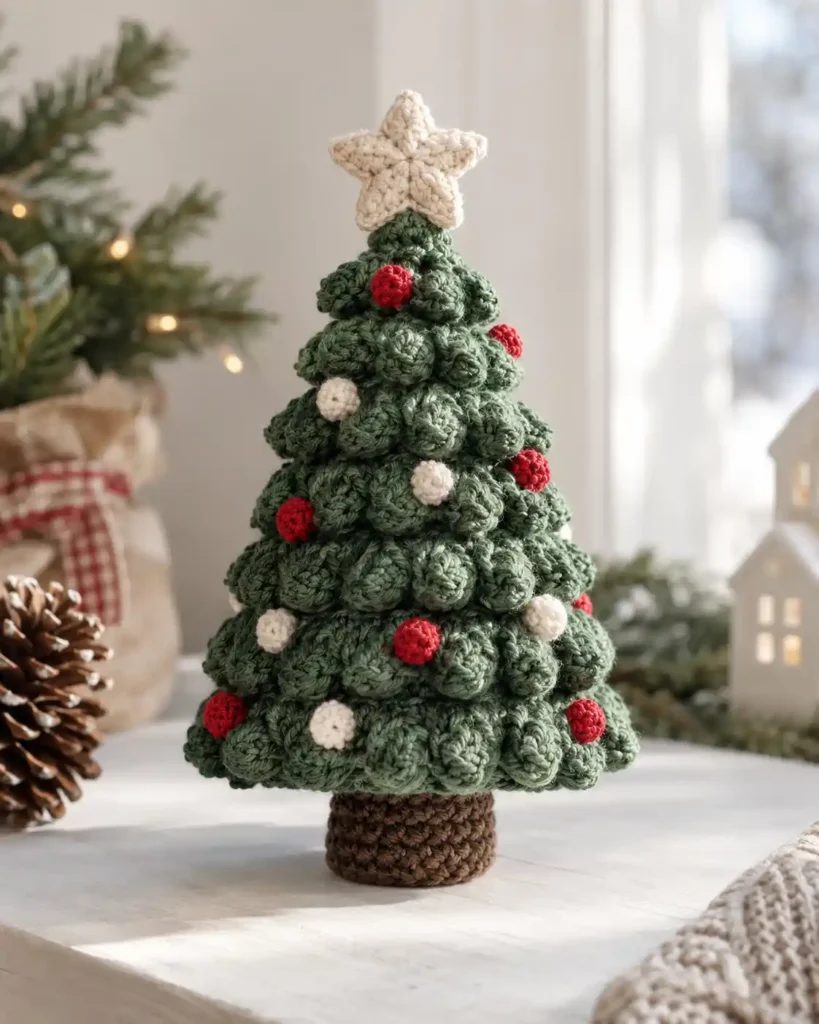
A bobble stitch Christmas tree uses texture exactly where it makes sense: bobbles can read as ornaments, snow, berries, or layered branches. Compared with sewing on many separate decorations, raised stitches can build the detail directly into the crochet fabric. I’d make a flat applique for cards and gifts or a stuffed version for a tabletop display. This idea works well for quick holiday projects, and the payoff is a festive motif with plenty of texture but very little finishing.
Keep color changes simple so the tree shape remains readable. A few contrasting bobbles usually stand out more clearly than covering every row.
22. Bobble Stitch Christmas Stocking
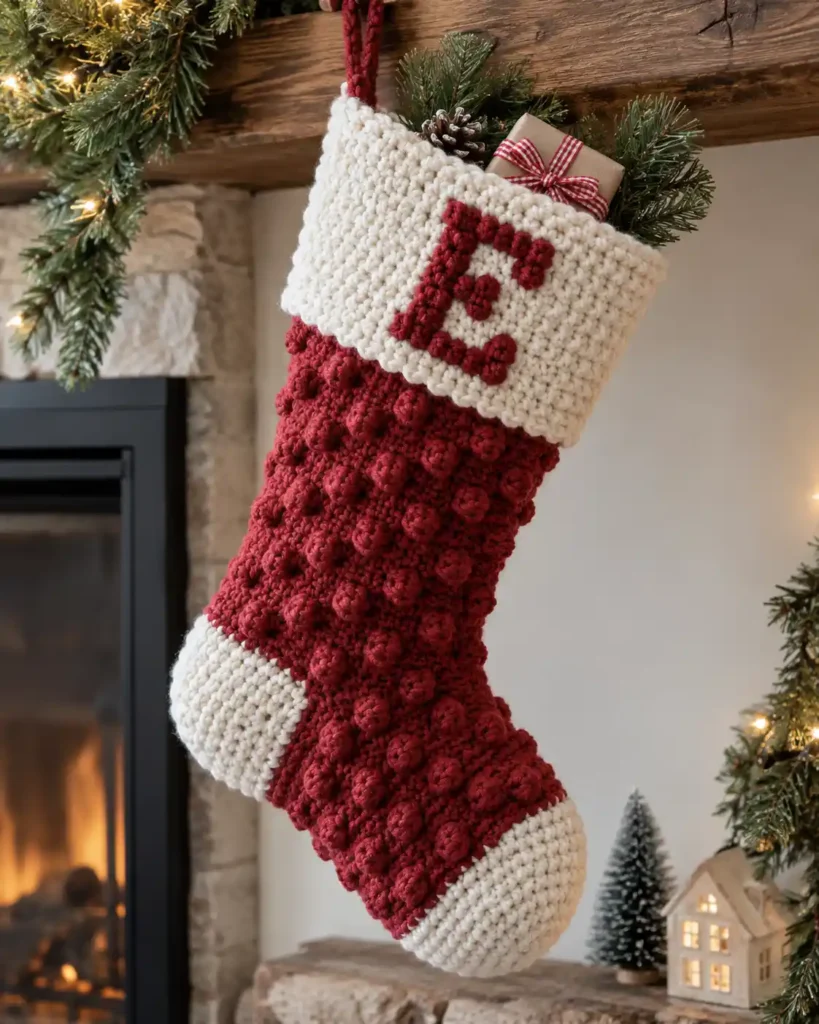
A bobble stitch stocking gives you enough surface area for initials, names, stripes, or geometric motifs without becoming a full blanket-sized chart project. A smooth stocking can look traditional, while bobble bands and letters add a handmade, personalized finish. I’d place the boldest texture on the leg and keep the heel and toe simpler so shaping stays easy to follow. This is a great family-gift project, and the payoff is a piece you can customize differently for every person.
Plan the name or initial before you reach the placement row. A sturdy hanging loop matters just as much as the decorative cuff once the stocking is filled.
23. What Makes a Bobble Stitch Snowflake Work?
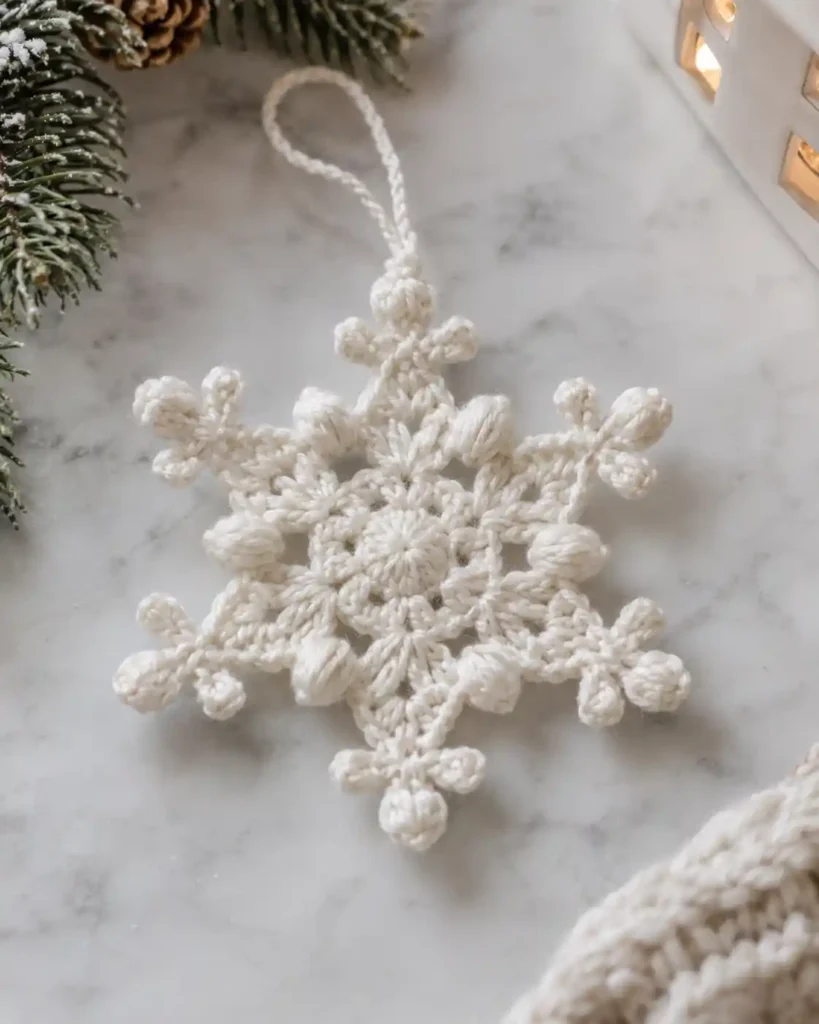
A bobble stitch snowflake uses tiny raised points to give a flat motif more depth. Compared with a very lacy snowflake, a bobble version feels more graphic and can work well as an applique, gift topper, or ornament. I’d use a smooth yarn that shows the shape clearly and block the finished motif before judging its symmetry. This project suits crocheters who like small seasonal makes, and the payoff is a quick piece that can be repeated in a whole set.
Use bobbles sparingly at the center or tips so the snowflake does not lose its shape. Add the hanging loop only after blocking if you want the motif to sit neatly.
24. Bobble Stitch Hat & Beanie
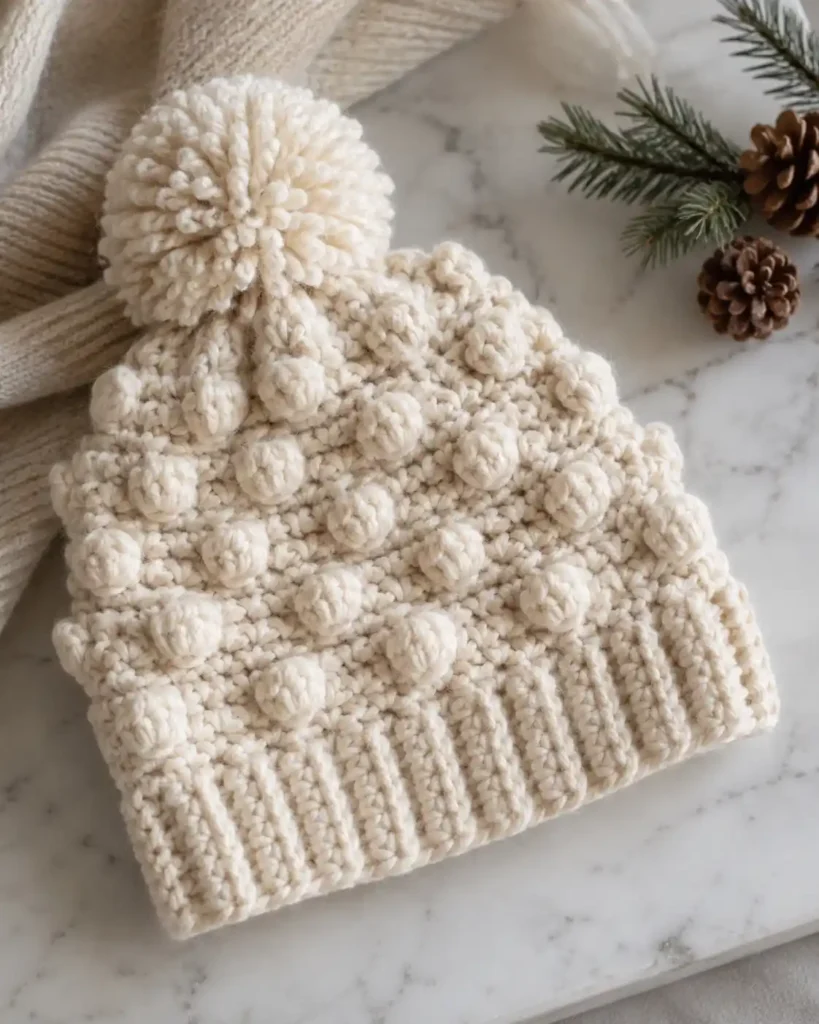
A bobble stitch hat gives winter texture without requiring a large amount of yarn. Compared with an all-over bobble fabric, a ribbed brim plus one or two bobble bands usually keeps the hat stretchy and comfortable. If you want to build hat-making skills, how to crochet a hat guides can help with sizing and shaping. I’d put the most texture on the body and keep the crown shaping relatively simple so decreases remain easy to track. This is a useful intermediate project, and the payoff is a wearable piece that looks detailed even in a single color.
Swatch for circumference and stretch, not just stitch appearance. When bobbles are dense, check that the fabric still bends comfortably around the head.
25. How Do You Keep a Bobble Stitch Scarf or Cowl Flexible?
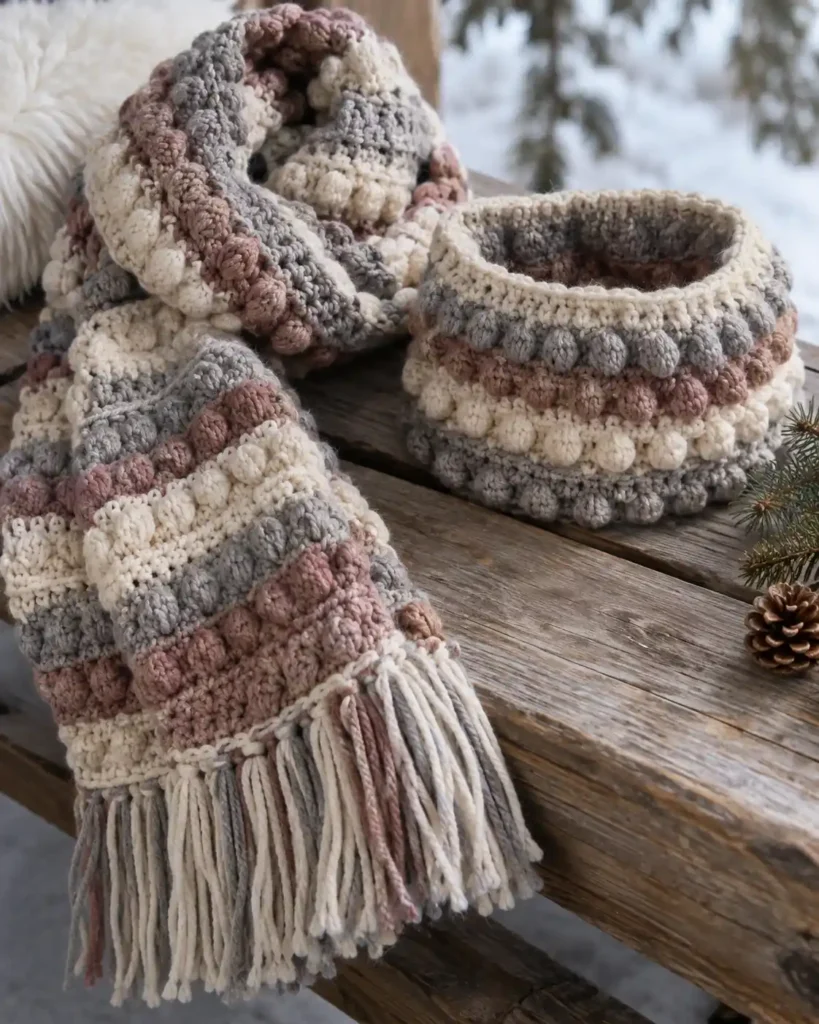
A bobble stitch scarf or cowl works best when the texture adds interest without turning the fabric stiff. Dense clusters can reduce drape, so spaced rows or mini bobbles are usually more comfortable around the neck than a fully packed surface. I’d test the fabric by folding and wrapping the swatch before committing to the full length. This idea is best for makers who want a wearable beginner project, and the payoff is a scarf with tactile detail that still moves naturally.
Choose a soft yarn and let the background stitches create breathing room between bobble rows. Fringe or a plain border can finish the piece without adding more bulk.
26. Bobble Stitch Cardigan & Sweater
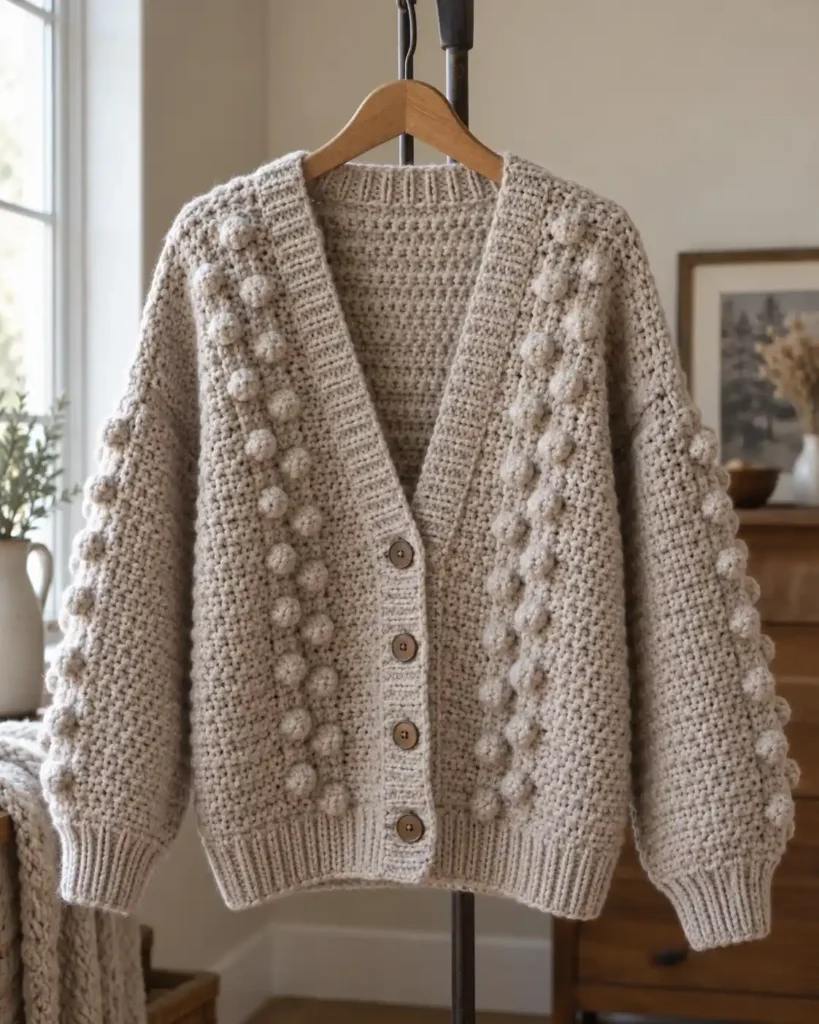
A bobble stitch cardigan makes the biggest impact when the texture is placed deliberately on sleeves, yokes, or front panels. Covering an entire garment in bobbles can add weight and change drape, so selective texture often looks cleaner and feels easier to wear. I’d swatch a full motif repeat and wash it the way the finished garment will be washed before choosing a size. This project is best for confident intermediate crocheters, and the payoff is a statement garment that still feels balanced.
Gauge matters more here than on a scarf or cushion. The Craft Yarn Council recommends making a gauge swatch and adjusting hook size if your sample is larger or smaller than the pattern gauge.
27. What Should You Consider for a Bobble Stitch Baby Cardigan?
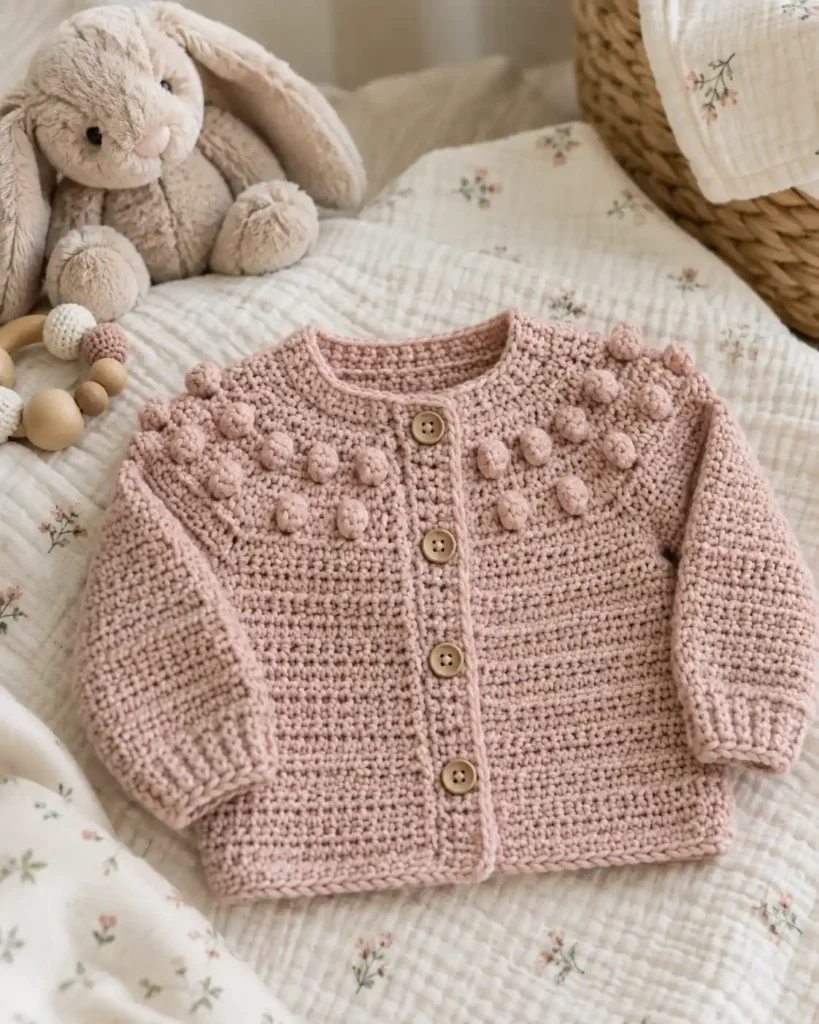
A baby cardigan needs the charm of bobble texture without the weight or stiffness that can come from overusing it. Small clusters on the yoke or sleeves usually feel lighter than an all-over pattern and leave the main fabric flexible. I’d keep button bands, cuffs, and underarm areas relatively smooth so the garment is easier to fasten and move in. This idea is best for careful makers who enjoy small-scale garments, and the payoff is a sweet textured piece that does not rely on complicated colorwork.
Choose soft, washable yarn and follow the pattern’s sizing and gauge carefully. Keep decorative additions secure and appropriate for the child’s age and use.
28. Bobble Stitch Sheep & Amigurumi
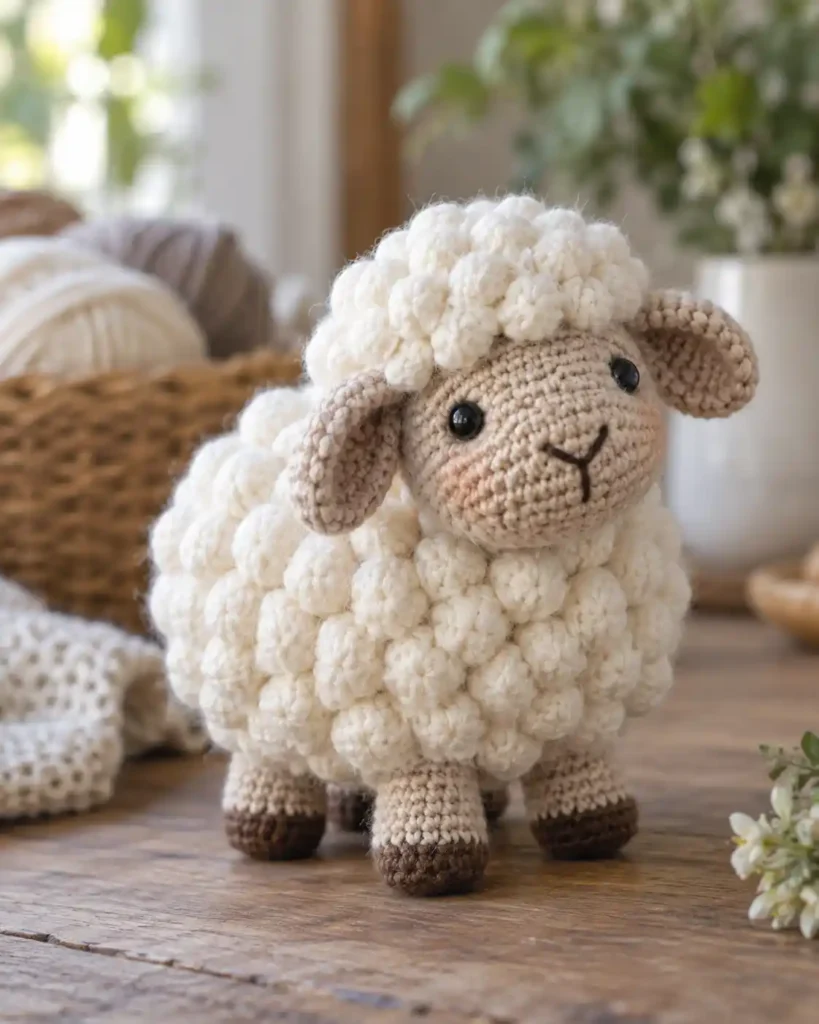
Bobble stitches are almost made for sheep because one cluster instantly suggests fluffy fleece. Unlike sewing on many separate textured pieces, bobbles can be built directly into the body and used for wool, paws, noses, or other raised features. If you enjoy textured toys, free amigurumi crochet patterns can provide more project ideas. I’d start with a small sheep before trying a whole collection of textured animals because it teaches shaping and bobble placement at the same time. Bobble stitch crochet amigurumi is ideal for makers who enjoy sculptural crochet, and the payoff is a toy with texture that feels integral rather than added later.
For items intended for very young children, finishing choices matter: the U.S. Consumer Product Safety Commission says products intended for children under three are subject to small-parts requirements, and a component that fits completely inside the specified small-parts test cylinder can present a choking hazard. Embroidered features can be worth considering when loose or detachable pieces would be inappropriate.
29. How Can You Use Bobble Stitch for Butterflies & Small Motifs?
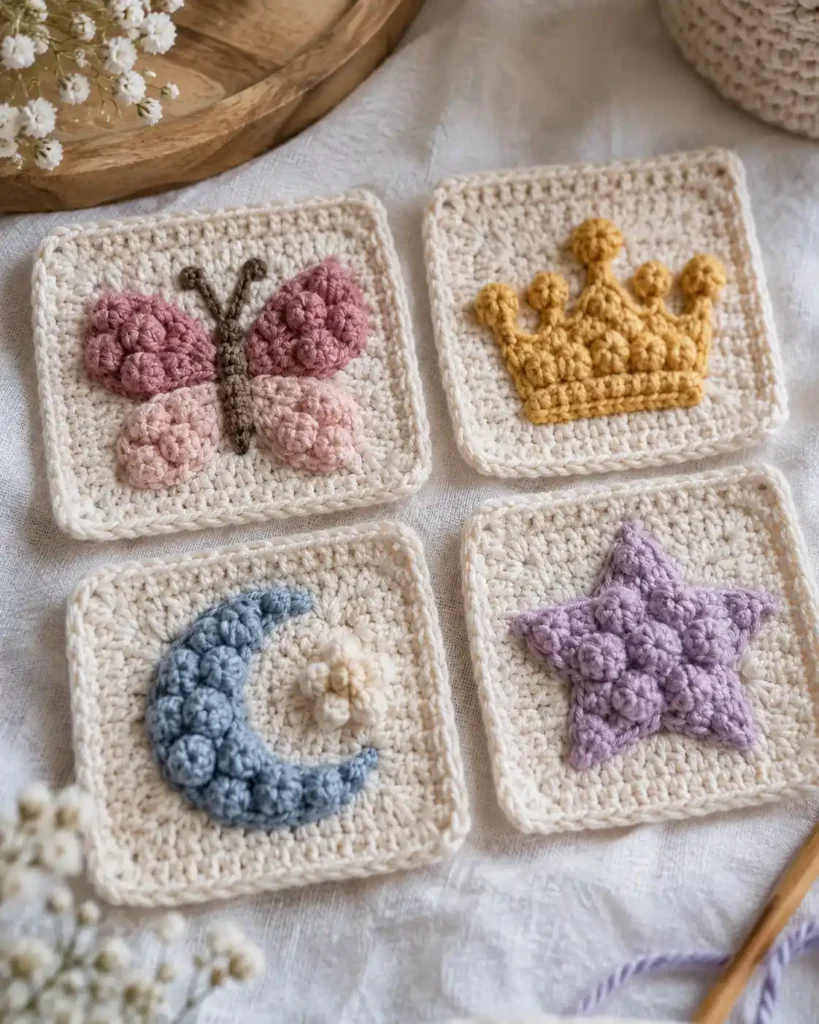
Small bobble motifs let you experiment with butterflies, crowns, moons, stars, flowers, and other shapes without committing to a full graphghan. Compared with a large chart, a compact motif is faster to correct if the proportions do not read clearly. I’d make these as separate panels first, then decide whether they belong on a bag, blanket, hat, or square. This idea suits anyone who enjoys playful details, and the payoff is a reusable motif library for future projects.
Keep the number of bobbles limited enough that the outline of the shape remains easy to recognize. Blocking can help straighten the background and make the raised motif look sharper.
30. Bobble Stitch Strawberry & Berry Motifs
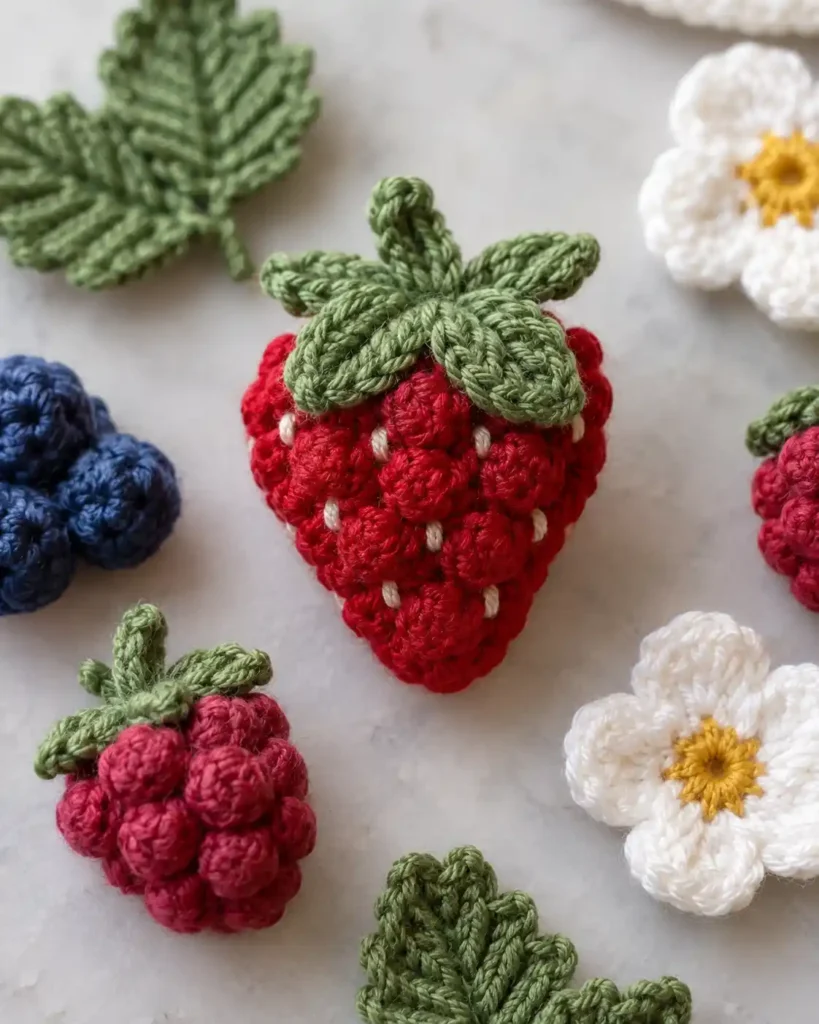
A strawberry is a natural match for bobble texture because each raised stitch can suggest seeds, berries, or a bumpy fruit surface. Compared with flat applique, the extra dimension makes a tiny motif feel more lively even when the shape is simple. I’d use red and green for an obvious strawberry first, then borrow the same technique for cherries, flowers, or other botanical accents. This project is best for crocheters who like small decorative details, and the payoff is a cheerful motif that works on bags, blankets, garlands, and gifts.
Color changes can happen between bobbles or within detailed stitch sequences, depending on the pattern. Keep leaf details simple so the texture remains the focal point.
What Is the Difference Between Bobble, Puff, and Popcorn Stitch?
A bobble joins partially completed stitches, a puff builds elongated loops, and a popcorn joins a group of completed stitches.
At a Glance
- Bobbles create compact raised clusters.
- Puffs usually look softer and fuller.
- Popcorns use completed stitches.
- Always follow the pattern’s stitch definition.
These stitches can look similar in a finished photo, but their construction is different. Yarnspirations explains that a bobble is commonly formed from partially completed stitches held on the hook and joined at the top, while a popcorn uses completed stitches that are later joined; a puff is constructed with elongated or half-double-crochet-style loops depending on the pattern.
The practical rule is simple: do not identify the stitch by appearance alone. Read the special-stitch instructions in the pattern, because designers may use different counts, heights, or terminology.
| Texture | Basic construction | Typical look |
|---|---|---|
| Bobble | Partial stitches closed together | Rounded, compact bump |
| Puff | Repeated loops/partial hdc-style construction | Softer, puffier texture |
| Popcorn | Completed stitches joined afterward | Strong, rounded projection |
What Yarn and Hook Work Best for Bobble Stitch Crochet?
Smooth yarn with clear stitch definition and a hook size that meets the pattern gauge usually gives the most reliable bobble stitch results.
At a Glance
- Use smooth yarn to show bobbles clearly.
- Choose cotton for firmer structured projects.
- Use softer fibers for blankets and wearables.
- Follow pattern gauge before relying on yarn-label suggestions.
Smooth yarn is easiest when you want the stitch definition to show clearly. Cotton can work well for structured items such as baskets and pouches, while soft acrylic, wool, or blends are common choices for blankets and wearables depending on the pattern and care needs.
The Craft Yarn Council’s standard yarn weight system runs from 0 (lace) through 7 (jumbo) and gives recommended hook ranges as guidelines, but it also stresses following the gauge stated in the pattern. You can review the official yarn weight standards for additional guidance when selecting materials. For example, its current chart places medium/worsted weight yarn in category 4 with a commonly recommended crochet-hook range of about 5.5–6.5 mm, though your pattern gauge takes priority.
Because bobbles pack several stitch elements into one spot, a swatch tells you more than the yarn label alone. Check three things before a large project: how clearly the bobble pops, how much the fabric bends, and whether your row width matches the pattern.
How Do You Read Bobble Stitch Charts, Letters, and Symbols?
Read bobble charts by matching each grid cell or stitch symbol to the chart key, following row direction carefully, and marking completed rows as you work.
At a Glance
- Check the pattern key first.
- Track the direction of every row.
- Count bobble placements carefully.
- Mark finished chart rows.
- Never guess an unfamiliar symbol.
A graph for letters or pictures usually treats each square as a placement decision: background stitch or bobble. Follow the row direction, count carefully, and mark every completed row so you do not shift the image by one stitch.
The Craft Yarn Council publishes standardized crochet chart symbols and specifically advises readers to refer to the pattern key for additional symbol definitions. Its abbreviation list includes bo = bobble, but designers can still define special abbreviations differently.
If you searched Bobble stitch crochet symbol, the important point is that there is not one universal-looking mark you should guess from context; use the symbol key supplied with the chart. Likewise, Bobble stitch crochet patterns may use written repeats, grids, standard stitch symbols, or designer-specific notation.
What Are the Most Common Bobble Stitch Problems?
Uneven tension, incorrect stitch placement, wrong-side bobbles, rippling, and counting mistakes are the most common problems when learning bobble stitch crochet.
At a Glance
- Keep partial stitches the same height.
- Check right-side and wrong-side orientation.
- Recount repeats when fabric starts rippling.
- Use markers for charts and long repeats.
Uneven bobbles usually come from changing tension while building the partial stitches. Slow down, keep each loop similar in height, and make the final closing loop firm without strangling the surrounding fabric.
Bobbles appearing on the wrong side are often an orientation issue. Many tutorials work them so the cluster pushes toward the opposite face of the fabric, which is why right-side and wrong-side instructions matter.
Rippling often points to spacing or stitch-count problems rather than the bobble itself. Count each repeat, check corner increases, and compare the fabric against a flat surface every few rows.
Loose graphs are usually counting problems. Use stitch markers at repeat boundaries and physically mark completed chart rows.
How Do You Choose the Right Bobble Stitch Project?
Choose a bobble stitch project according to your skill level, desired fabric structure, available yarn, and how much texture the finished item needs.
At a Glance
- Beginners: swatches, squares, pouches, simple scarves.
- Intermediate: blankets, totes, letters, and graphs.
- Advanced: garments and complex charted motifs.
- Match stitch density to the project’s function.
Start with a swatch, granny square, pouch, or simple scarf if you are new to the technique. Move to bags, blankets, letters, and graph designs once your bobbles stay consistent, then try garments or complex charted motifs when you are comfortable managing gauge and shaping.
Think about the finished object before choosing density. A basket needs firmness, a scarf needs flexibility, a blanket needs manageable weight, and a cardigan needs reliable gauge.
For Bobble stitch crochet pattern free searches, check whether a free pattern includes stitch definitions, yarn requirements, gauge, finished measurements, and any chart key you need before you start. Free does not automatically mean beginner-friendly, so match the instructions to your current skill level.
Frequently Asked Questions
What is a bobble stitch in crochet?
A bobble stitch is a raised cluster made by partially completing several stitches into the same location and then closing them together. Exact stitch count and construction can vary by pattern.
How many double crochets are used in a bobble stitch?
Five partial double crochets are a common version, but three, four, or other counts can be used to change the size and fullness. Follow the special-stitch definition in your pattern rather than assuming one fixed number.
Why do my bobbles pop to the wrong side?
Check whether the pattern expects the bobble to be made on a right-side or wrong-side row, and make sure you are pushing the cluster toward the intended face. The surrounding stitch height and the next stabilizing stitch can also affect how strongly it pops.
Does bobble stitch use more yarn?
Usually, yes. Bobbles concentrate multiple stitch elements into one spot, so they generally consume more yarn than a flatter background made from basic stitches; swatching and leaving a yarn buffer are sensible for large projects.
Can you crochet bobble stitch in the round?
Yes. Keep your round count, increases, and bobble spacing consistent, and use a marker if you are working continuous rounds.
Are Bobble stitch crochet written instructions easier than charts?
Bobble stitch crochet written instructions can be easier for crocheters who prefer following row-by-row directions instead of visual symbols. Charts may be more useful for letters, motifs, and repeated designs because they show bobble placement visually, so the better format depends on how you prefer to follow a pattern.
Can Bobble stitch crochet amigurumi use the same bobble as blankets?
Yes, Bobble stitch crochet amigurumi can use the same basic bobble construction found in blankets, but smaller toys often use tighter gauge and more compact placement. Always follow the individual amigurumi pattern because stitch count, shaping, and bobble size affect the finished form.
Final Thoughts
Bobble stitch crochet is a simple technique with the power to transform ordinary projects into textured, eye-catching creations. From small practice swatches and decorative motifs to blankets, bags, home accessories, and wearable pieces, bobbles offer endless ways to add dimension and personality to your crochet work.
The key to successful bobble stitch projects is not rushing into the largest design. Start with a small sample, learn how the stitch behaves with your chosen yarn, and focus on keeping your tension, spacing, and stitch placement consistent. Once you feel comfortable, you can confidently explore more detailed designs such as graph patterns, personalized letters, seasonal decorations, or textured garments.
Remember that every project has different needs. A blanket requires comfortable drape, a bag needs structure, and a garment depends on accurate sizing and gauge. Choosing the right yarn, hook, and bobble density will help your finished piece look beautiful and function well.
Whether you are a beginner discovering texture for the first time or an experienced crocheter looking for a new creative challenge, bobble stitch crochet gives you plenty of opportunities to experiment. Pick a project that matches your skill level, enjoy the process, and let each raised stitch add its own handmade character to your work.

![The Best 30+ Free Crochet Cat Patterns [Beginner-Friendly Guide]](https://crochetmind.com/wp-content/uploads/2025/04/1-The-Best-30-Free-Crochet-Cat-Patterns-Beginner-Friendly-Guide.webp)