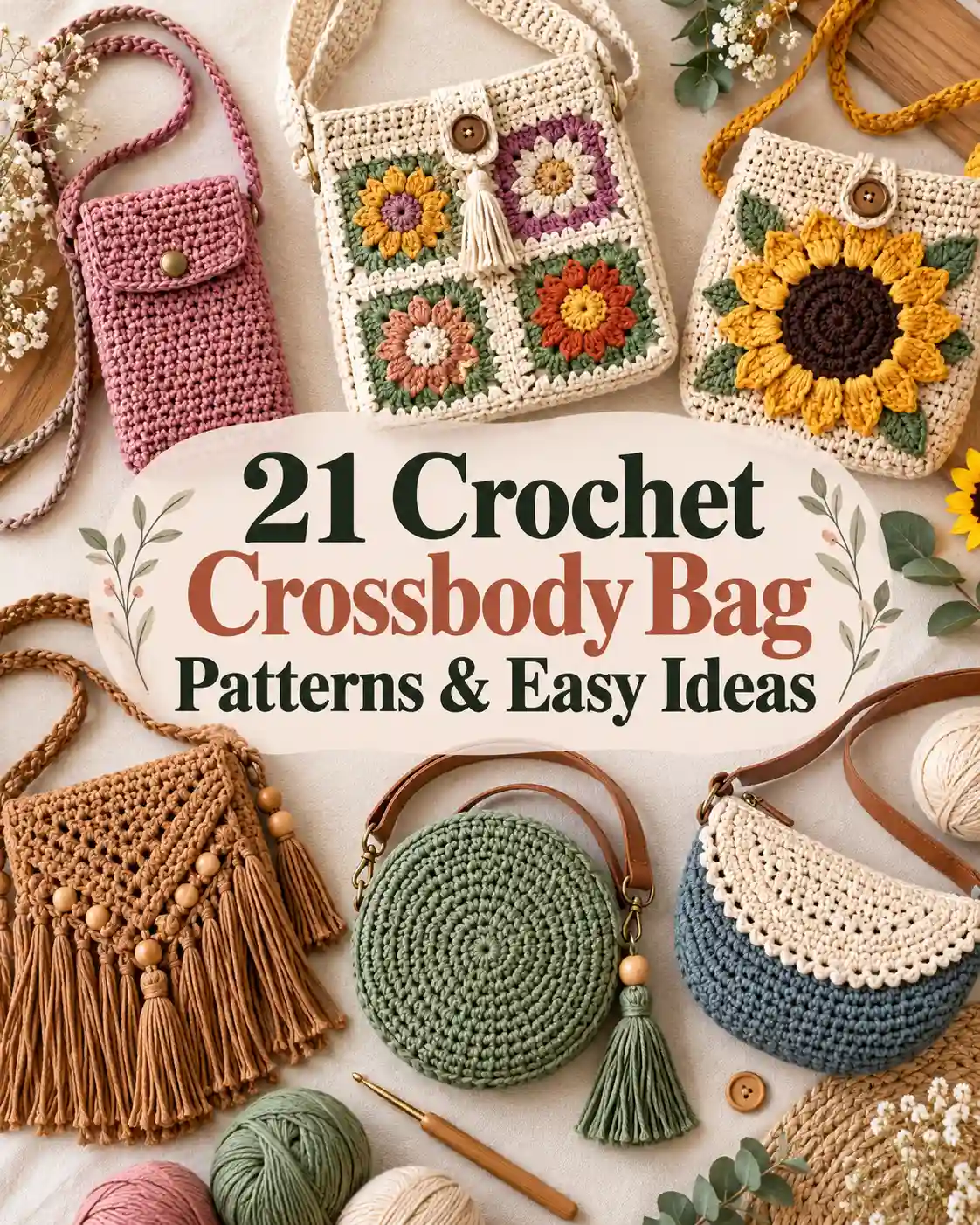
A crochet crossbody bag is one of those projects that can be as simple or as detailed as you want it to be. You can make a tiny phone pouch from a basic rectangle, join colorful granny squares into a statement purse, or work textured stitches into a structured everyday bag.
These 21 crochet crossbody bag patterns and design ideas cover different shapes, capacities, textures, closures, and skill levels. Before choosing one, think about what you actually want to carry, where you want the bag to sit, and whether you are comfortable adding details such as lining, zippers, adjustable straps, or joined motifs.
Key Takeaways
- Choose bag size around what you actually carry.
- Match construction difficulty to your current crochet skills.
- Swatch before committing to structured or textured designs.
- Reinforce straps and attachment points for everyday use.
- Add lining when openness or structure makes it useful.
- Verify complete pattern instructions before buying materials.
Quick Guide to Choosing a Crochet Crossbody Bag
| Bag Style | Skill Level | Best For | Main Feature |
|---|---|---|---|
| Folded Rectangle | Beginner | Everyday essentials | Simple construction |
| Mini Phone Bag | Beginner | Phone and cards | Compact size |
| Granny Square | Confident beginner | Everyday styling | Joined motifs |
| Sunflower Bag | Confident beginner | Summer outfits | Floral detail |
| Boho Fringe | Intermediate | Festivals and casual wear | Fringe texture |
| Chunky Bag | Confident beginner | Small essentials | Bold stitches |
| Sling Bag | Intermediate | Hands-free days | Close body fit |
| Messenger Bag | Intermediate | Notebook and essentials | Extra capacity |
| Round Bag | Intermediate | Statement styling | Circular shape |
| Half Moon Bag | Intermediate | Everyday fashion | Curved silhouette |
| Bucket Bag | Intermediate | Flexible capacity | Drawstring closure |
21 Crochet Crossbody Bag Patterns You’ll Want to Make
The Craft Yarn Council organizes yarn into weight categories from 0 lace through 7 jumbo, but it also notes that those categories are guidelines rather than guarantees that two yarns will behave the same way. Gauge, drape, fiber, and the requirements of your chosen pattern still matter.
1. Folded Rectangle Crochet Crossbody Bag
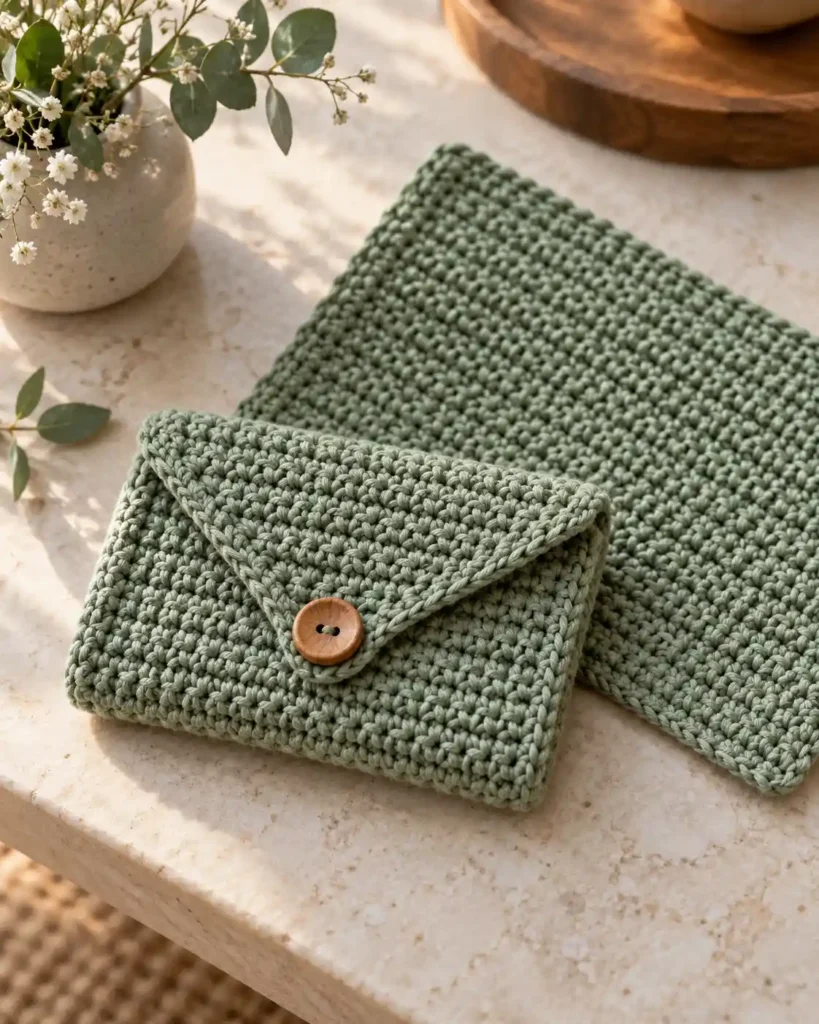
If you want an easy crochet crossbody bag without complicated shaping, begin with a folded rectangle. One long crocheted panel can form the front, back, and flap, while the sides are joined with simple seams.
The real advantage is that you can understand the construction before you start. Lay your phone, wallet, and other essentials against a paper template or gauge swatch to decide how wide and deep the finished bag should be.
Firm yarn and a fairly dense stitch can help the bag hold its shape. A broad strap also works well because it spreads the weight more comfortably than a very narrow crocheted cord.
Finish the design with a button, snap, or simple flap closure. For a first bag project, this is one of the most approachable shapes to explore.
Best for: Beginners who want straightforward construction with minimal shaping.
2. Mini Phone Crossbody Bag
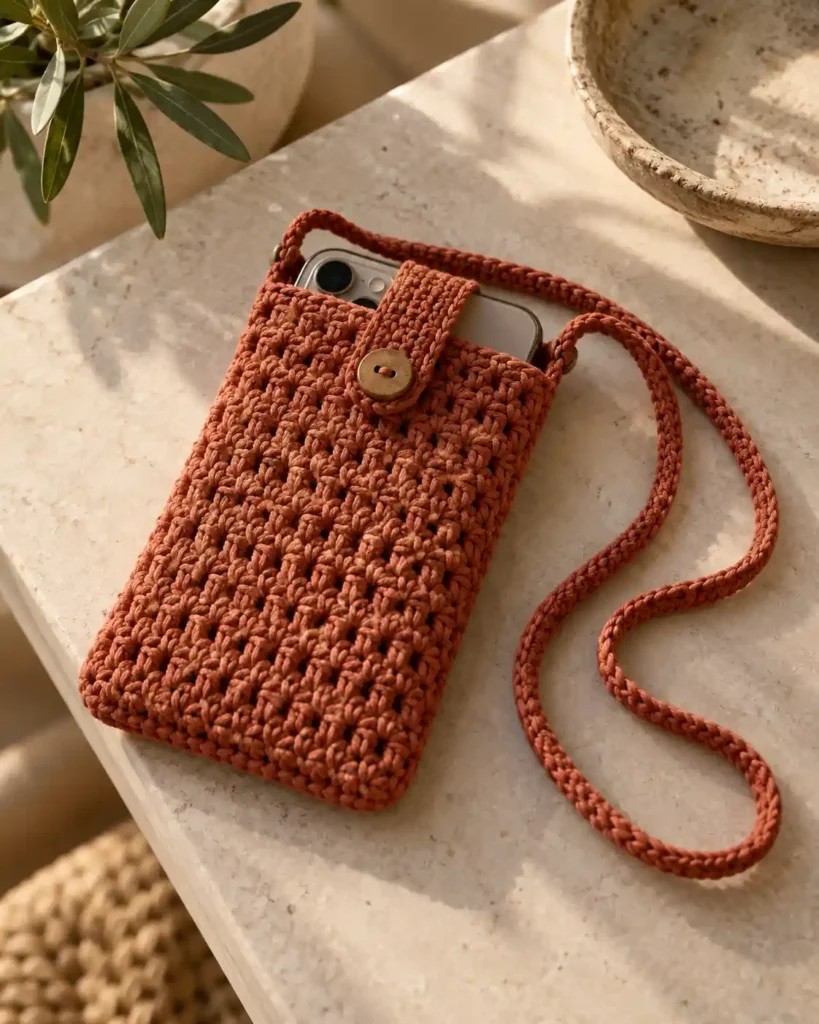
A crochet phone bag worn crossbody is perfect when you only need your phone, a card, and perhaps a key.
Measure the phone with its case on before choosing your finished size. You need enough ease to slide the phone in and out comfortably, but not so much that it moves around inside a loose pouch.
Use a relatively dense stitch around the lower corners so the phone stays contained. A small flap or secure closure can make the pouch more practical when you are walking or travelling.
Pay particular attention to the strap attachment points. Even a tiny bag can pull out of shape if a thin strap is attached to only one or two weak stitches.
Best for: Quick outings, markets, walks, and anyone who prefers carrying only the essentials.
3. Granny Square Crossbody Bag
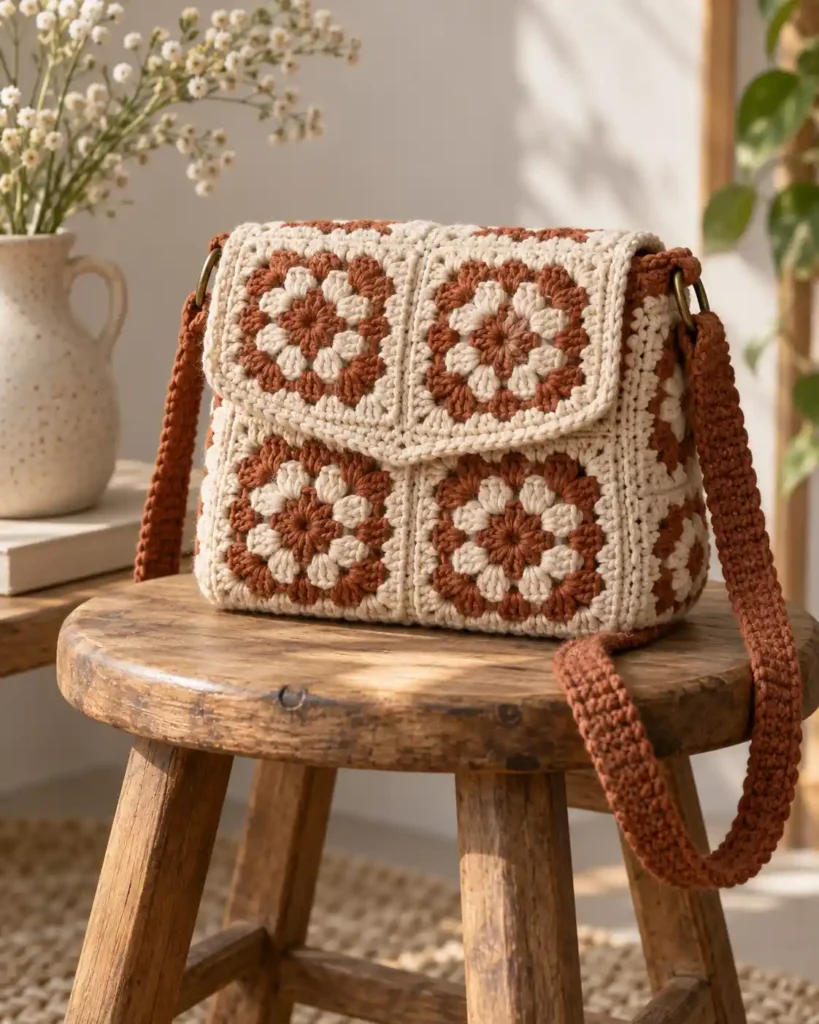
Few designs make color as easy to play with as a granny square crochet crossbody bag.
You can keep the look restrained with cream and one accent color, or use several shades for a brighter patchwork effect. The motifs give you small, manageable pieces to work before the final assembly begins.
Joining is where the bag really takes shape. Keep your squares consistent in size, decide which seams you want visible, and reinforce the areas where the strap meets the body.
Traditional granny motifs can leave small open spaces, so a fabric lining is worth considering if you plan to carry coins, keys, cosmetics, or other small items.
Best for: Makers who enjoy motifs, color planning, and a bag with handmade character.
4. Sunflower Crossbody Bag
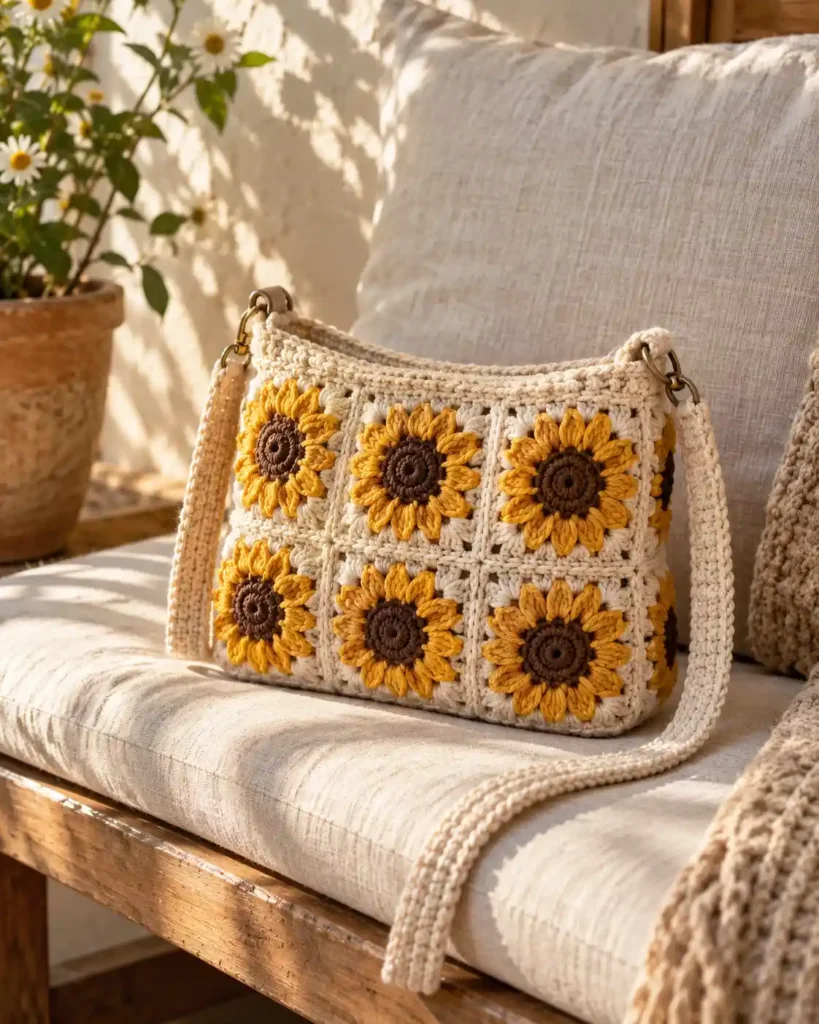
A sunflower crochet crossbody bag takes the granny-square idea in a more decorative direction.
Golden petals, darker centers, and a neutral border can create an instantly recognizable floral design without requiring the entire bag to be covered in flowers. One option is to use sunflower motifs on the front and a simpler solid panel on the back.
Because flower motifs often contain open spaces, lining becomes especially useful. It can keep small belongings inside while allowing the crochet detail to remain visible.
Pair this design with a simple strap so the floral work stays at the center of attention.
Best for: Summer outfits, handmade gifts, and crocheters who enjoy floral motifs.
5. Boho Fringe Crossbody Bag
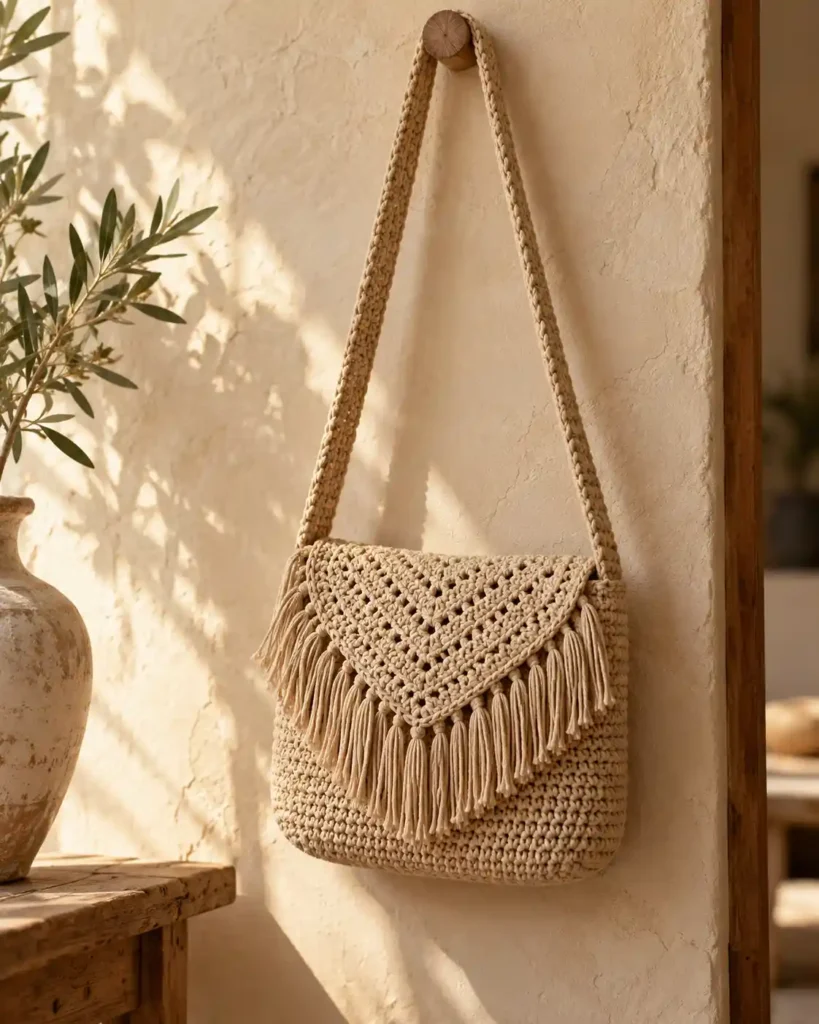
A crochet boho crossbody bag is all about movement and texture.
Start with a functional bag body first. A flap, lining, and secure closure matter much more than long decorative fringe if you intend to carry the bag regularly.
Then add fringe in a length that suits the scale of the purse. Trim it after attachment so the ends look deliberate rather than uneven.
A woven or reinforced strap can balance the softer look of the fringe and prevent the whole bag from becoming too stretchy.
Special Tip: Test the bag while loaded before deciding on your final fringe length. Long fringe can look very different once the purse is hanging at hip level.
Best for: Festival styling, casual summer outfits, and texture-focused projects.
6. Chunky Crochet Crossbody Bag
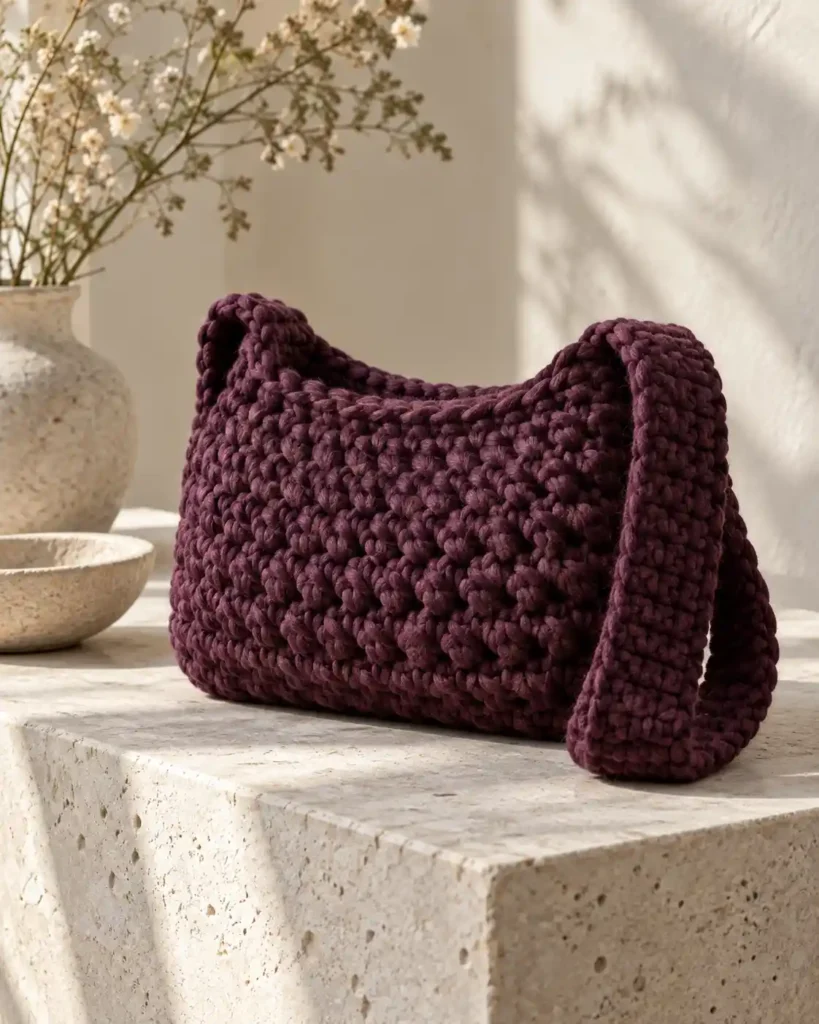
A chunky crochet crossbody bag gives you large, visible stitches and plenty of texture in a compact shape.
The important thing is balance. Thick yarn can make even a small purse feel substantial, so increasing both the dimensions and the strap size too much can produce a heavier finished bag than expected.
Keep the body relatively compact and make the strap attachment points sturdy. A very long crocheted strap may also stretch noticeably once the bag is filled.
The Craft Yarn Council classifies bulky yarn as category 5, super bulky as 6, and jumbo as 7, while emphasizing that recommended hook sizes and gauges are guidelines. Follow the actual gauge of the pattern you select rather than assuming every chunky yarn behaves identically.
Best for: Makers who want bold texture without complicated motif work.
7. Crossbody Sling Bag
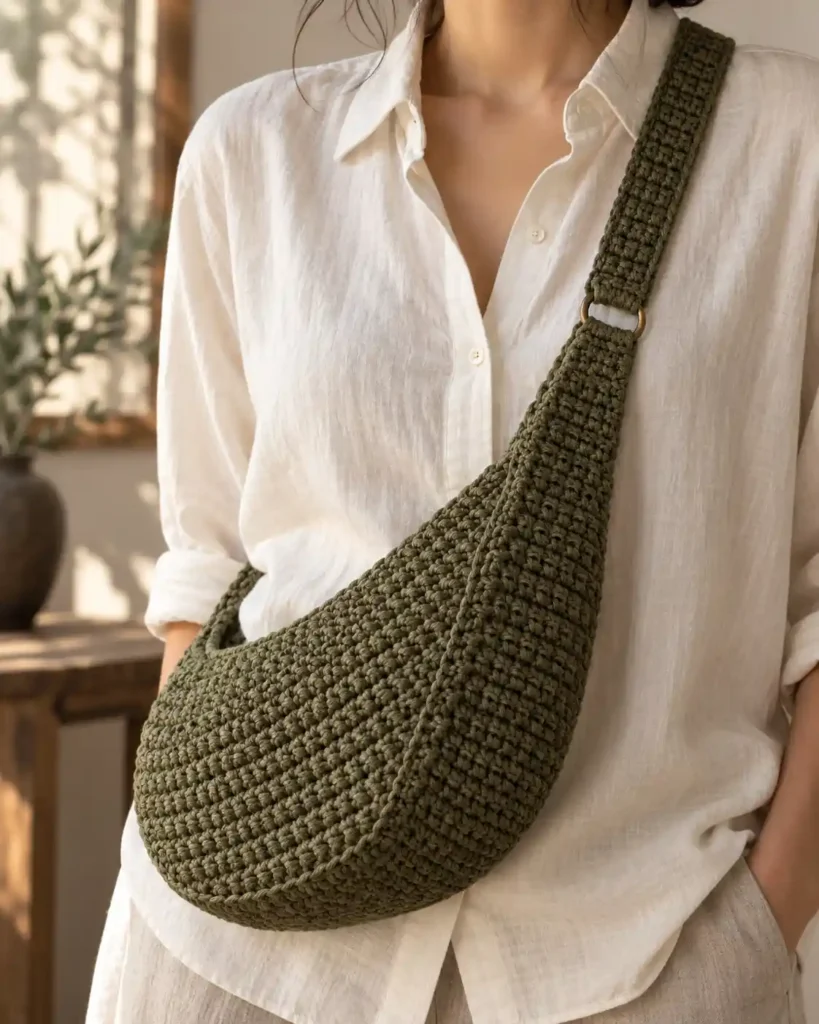
A crochet sling bag worn crossbody sits closer to the body than a traditional rectangular purse.
Its tapered or slightly curved shape makes it useful for walking, sightseeing, errands, and other hands-free activities. Instead of hanging only at the hip, it can be positioned diagonally across the torso.
An adjustable strap makes this design much more versatile. Check the fit while the bag contains a phone, keys, and the other items you expect to carry.
Keep the main compartment simple and secure. With a sling design, comfort and fit usually matter more than decorative extras.
Best for: Active days when you want your essentials close to your body.
8. Convertible Belt and Crossbody Bag
Why make a bag that can only be worn one way?
A convertible crochet belt bag can work at the waist and then switch to a crossbody style when you want a longer fit. The key is planning the attachment points before finishing the body.
Waist circumference and crossbody strap length are very different measurements, so an adjustable buckle, slider, or removable strap system can make the conversion easier.
Keep the body small enough to sit comfortably in both positions. A bulky purse that works at the hip may become awkward when worn around the waist.
Best for: Travel, sightseeing, events, and makers who like adaptable accessories.
9. Everyday Crochet Crossbody Messenger Bag
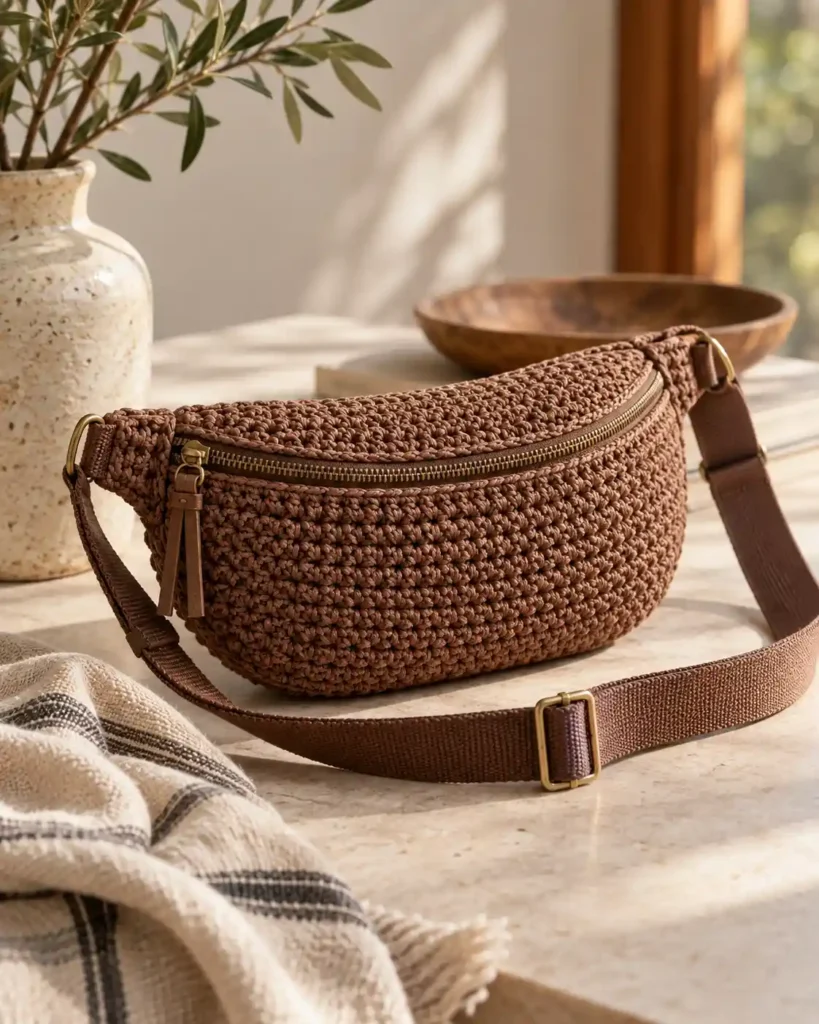
When a phone pouch feels too small, a crochet messenger bag worn crossbody gives you useful extra capacity.
Think notebook-sized rather than laptop-sized. A little extra width and base depth can create space for a small notebook, wallet, phone, and other everyday items without turning the project into an oversized shoulder bag.
A generous flap helps protect the opening, while a broad reinforced strap spreads the load. Lining can also help the finished bag maintain a cleaner structure.
Use a simple color and stitch if you want an all-gender design that works with many outfits.
Best for: Commuting, cafés, classes, and everyday carrying.
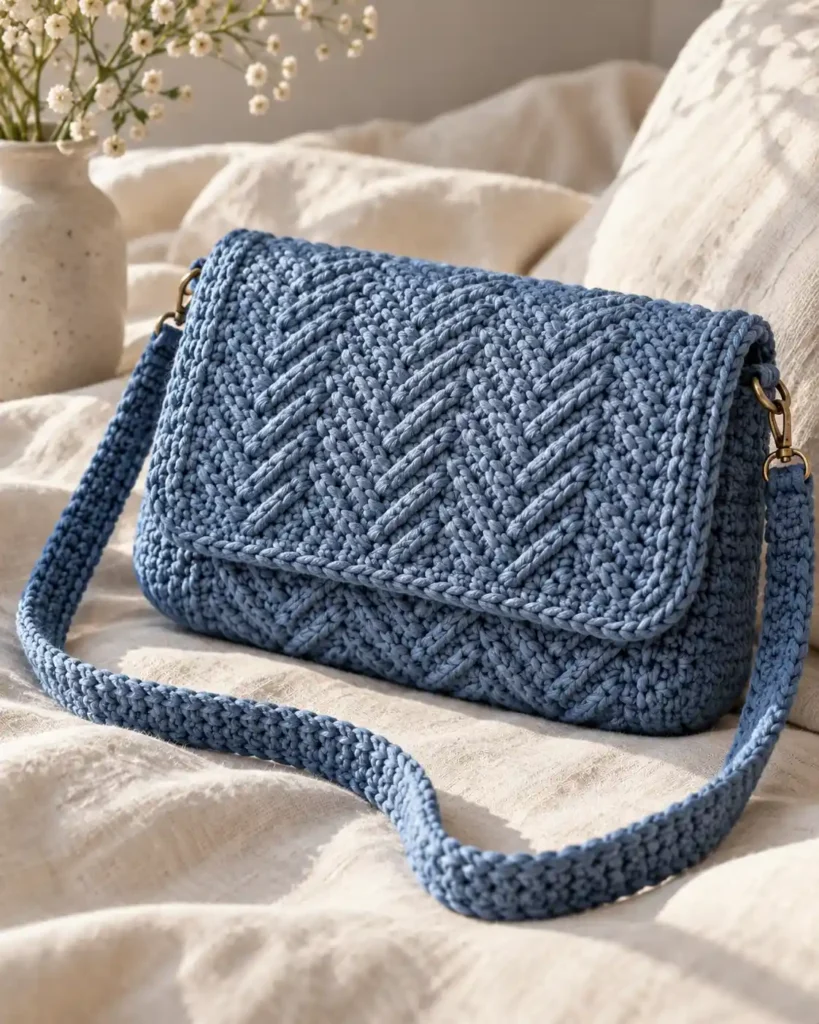
10. Herringbone Crossbody Bag
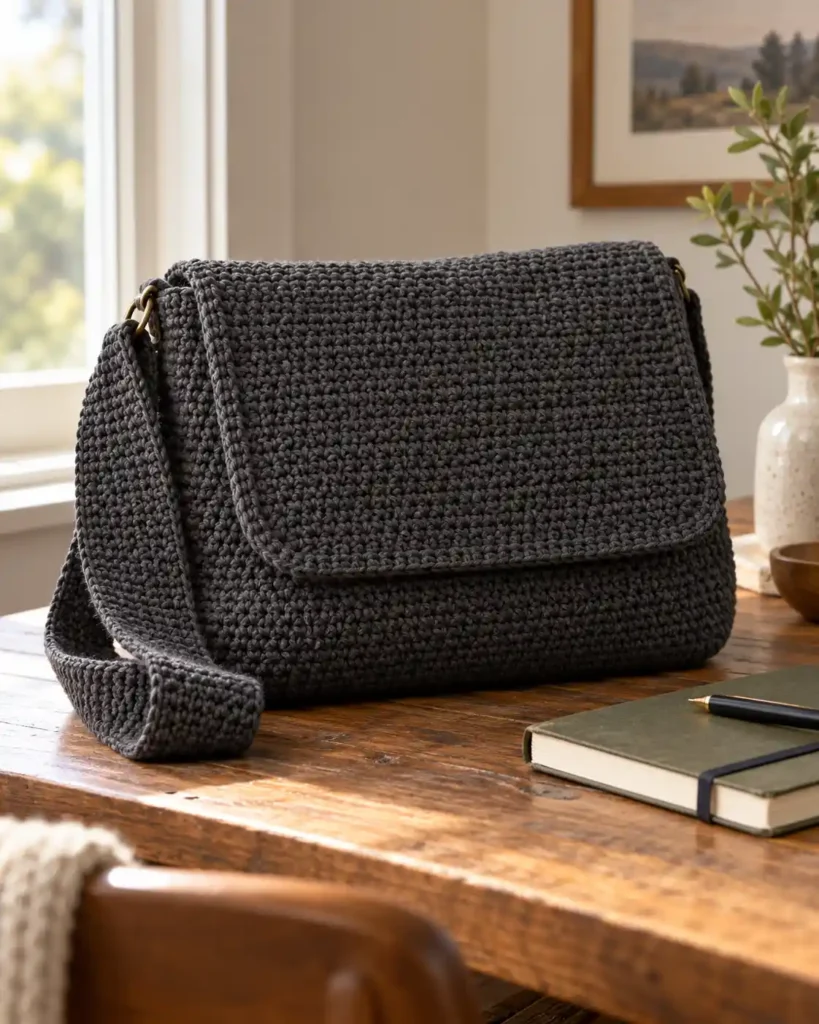
Sometimes the stitch itself should be the design.
A crochet herringbone stitch crossbody bag uses diagonal-looking texture to make a simple shape feel much more refined. Choose the specific herringbone stitch variation called for in your pattern, because different crochet techniques can produce different textures.
Swatching is particularly useful here. You want enough stitch definition for the herringbone effect to show without creating a fabric that is too loose for a bag.
A plain lining and understated strap keep attention on the textured surface.
Best for: Crocheters who prefer sophisticated texture over motifs or bright colorwork.
11. Star Stitch Crossbody Bag
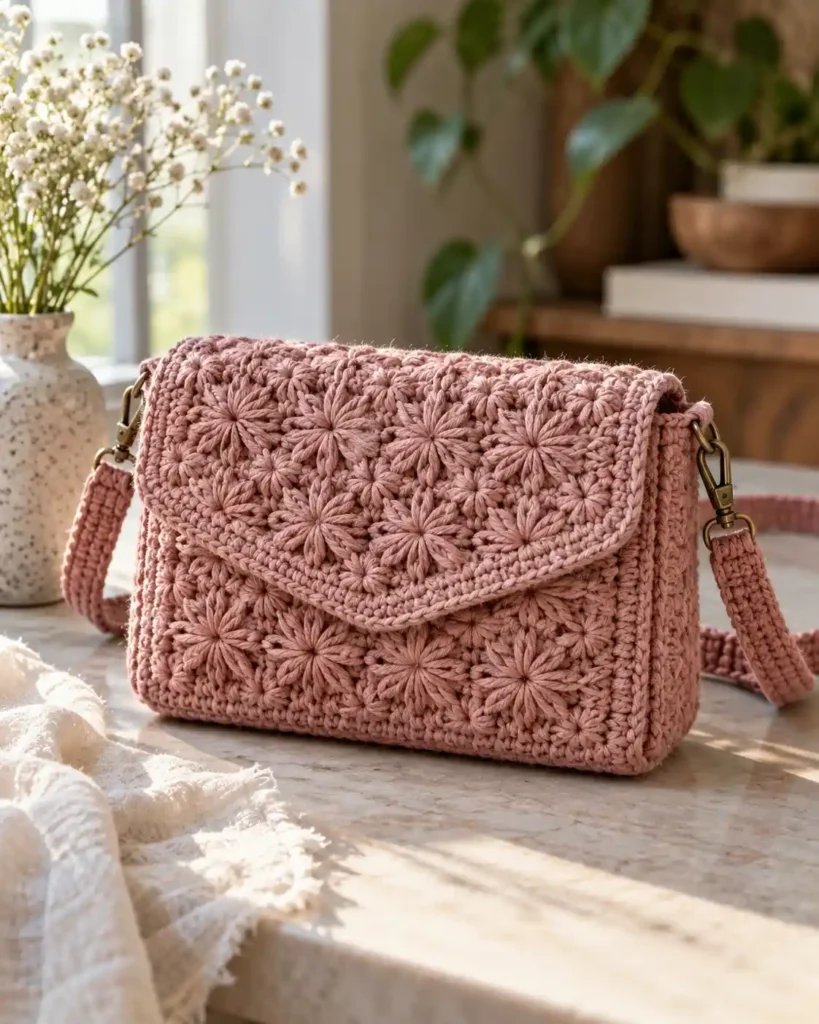
A crochet star bag worked in star stitch creates texture through repeated clustered stitches rather than a star-shaped silhouette.
That distinction matters when choosing your pattern. Look closely at the stitch instructions and repeat before committing to the whole bag.
The Crochet Guild of America includes maintaining gauge, selecting an appropriate hook, and producing even stitches among the core skills it evaluates in its Masters program. Those habits are particularly useful when working a strongly textured stitch where inconsistent tension becomes easy to see.
Keep the bag shape straightforward so the star texture remains the focal point.
Best for: Intermediate makers who want to practice a more distinctive stitch pattern.
12. Round Crochet Crossbody Bag
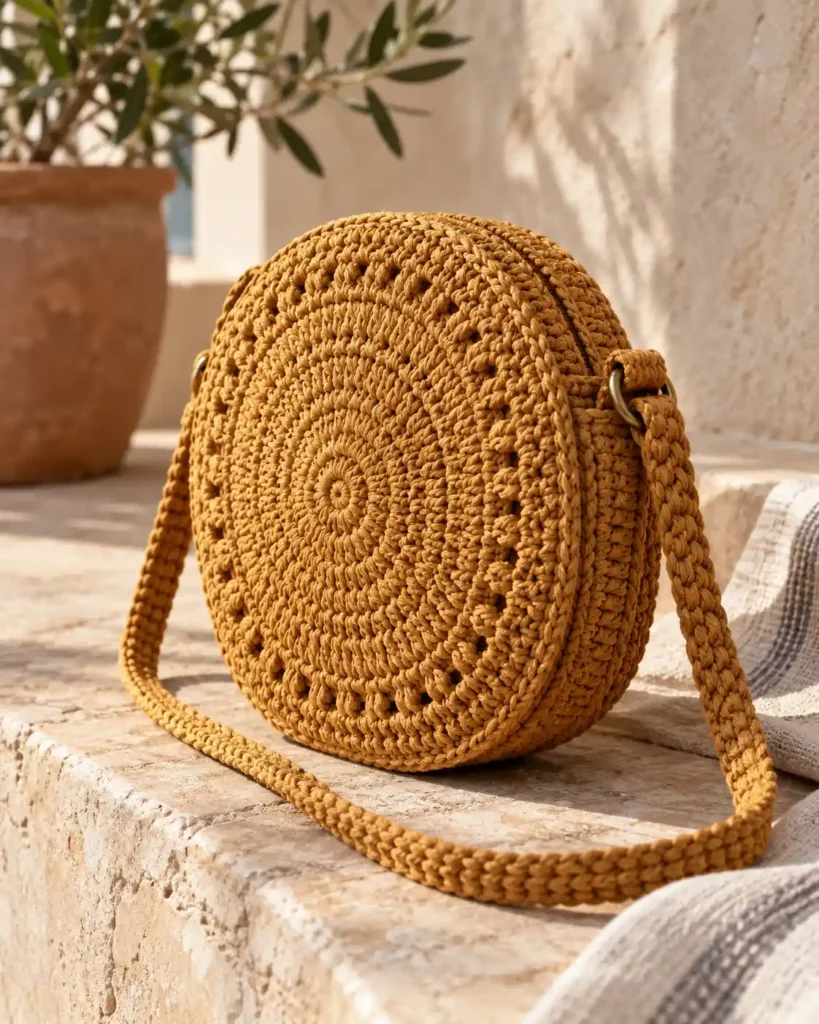
A crochet circle crossbody bag changes the entire look of the project without requiring excessive decoration.
Many round designs use two circular panels connected by a side gusset. That gusset determines much of the finished depth, so decide whether you want a slim purse or something that can hold bulkier essentials.
The challenge is keeping both circles flat and consistent. Check the diameter as you work instead of waiting until the final assembly.
Place the opening carefully at the top so the bag remains easy to use once the strap is attached.
Best for: Statement accessories and makers ready to practice circular shaping.
13. Half Moon Crochet Crossbody Bag
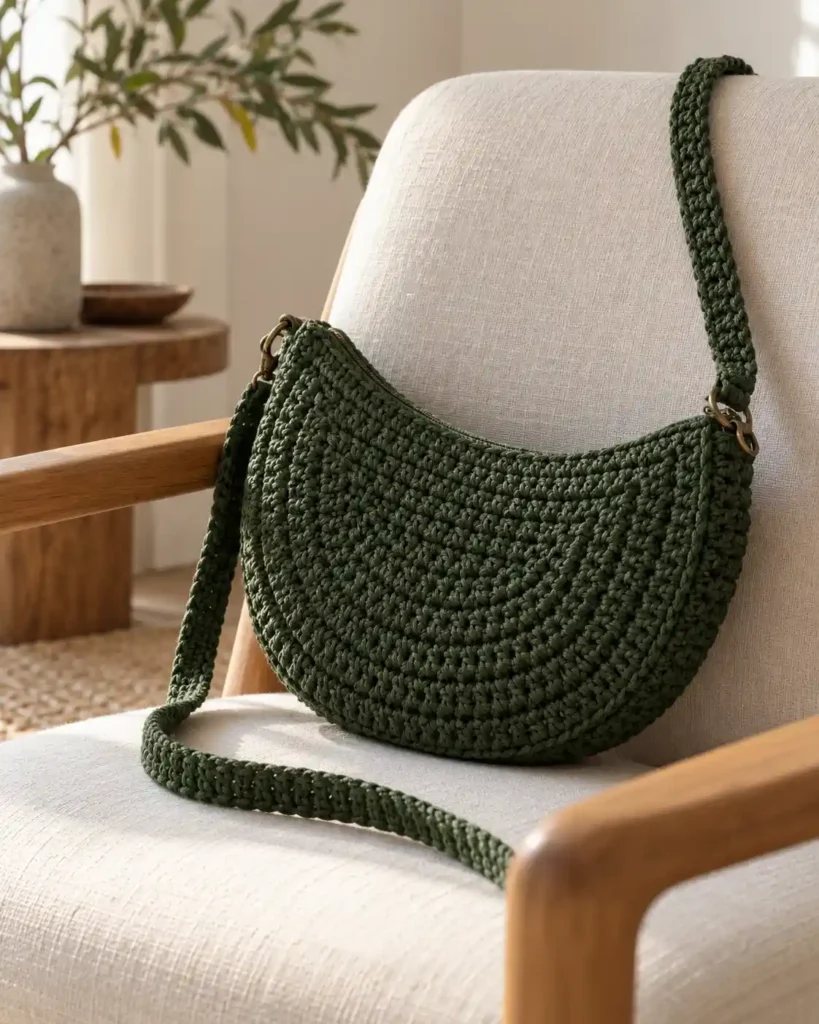
For a softer silhouette, try a half moon crochet crossbody bag.
The curved lower edge gives the bag a modern shape without needing a lot of embellishment. That curve, however, also means shaping and gauge deserve more attention than they would on a basic rectangle.
A test swatch can help you predict how firm or flexible the fabric will be. If you add a lining, shape it to fit the crochet rather than forcing a rectangular lining into a crescent body.
Keep the top opening generous enough to reach your belongings comfortably.
Best for: Everyday styling with a cleaner, more contemporary silhouette.
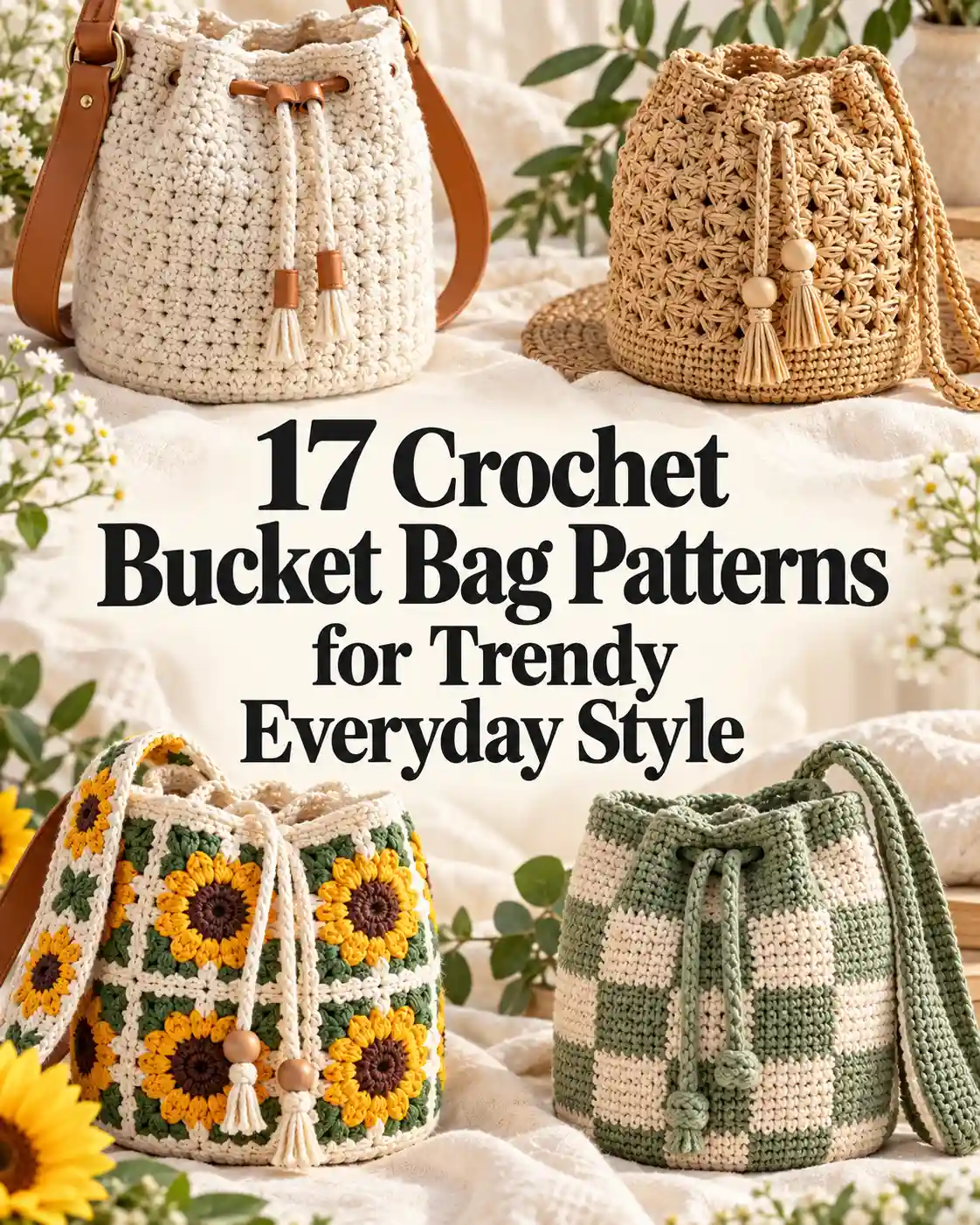
14. Drawstring Bucket Crossbody Bag
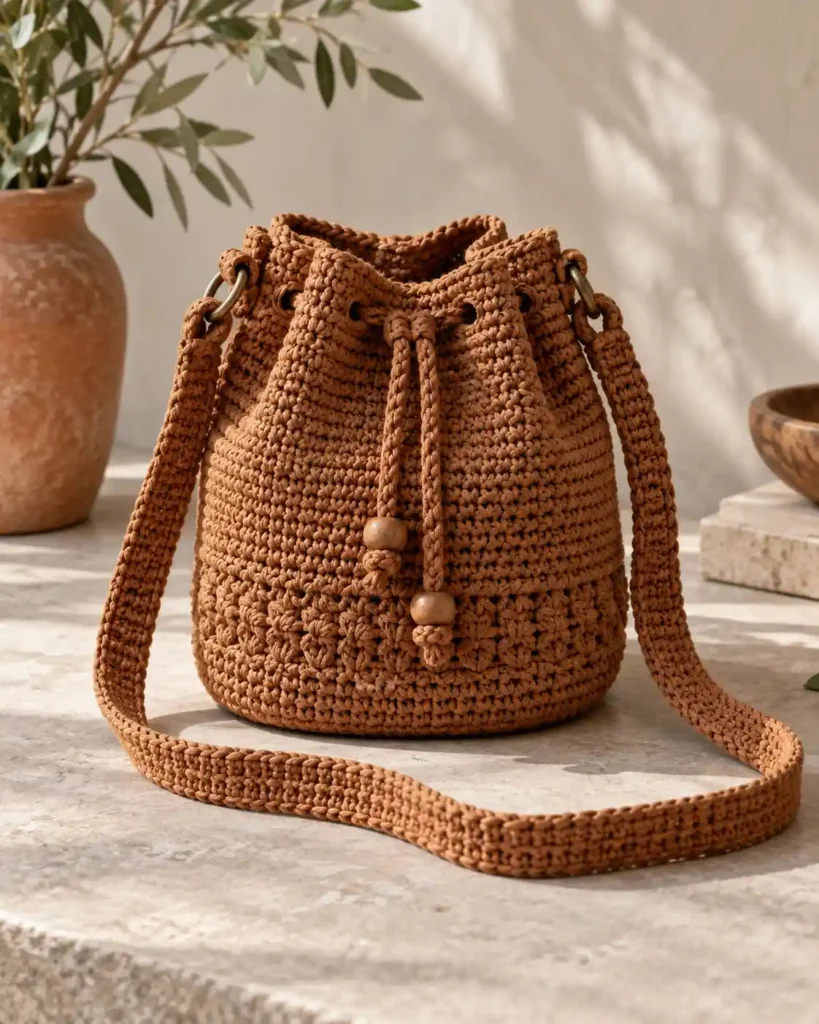
A bucket bag gives you a little more room while keeping the opening compact.
Begin with a round base, build the walls upward, and create a channel for the drawstring near the top. The finished shape should stand or hang naturally without the base collapsing under normal contents.
If you line the bag, make sure the lining does not interfere with the drawcord. The shoulder strap should also carry the load independently rather than relying on the drawstring channel.
This retro crochet crossbody bucket bag works particularly well in earthy or warm neutral shades.
Best for: Makers who want a casual bag with flexible capacity.
15. Relaxed Hobo Crossbody Bag
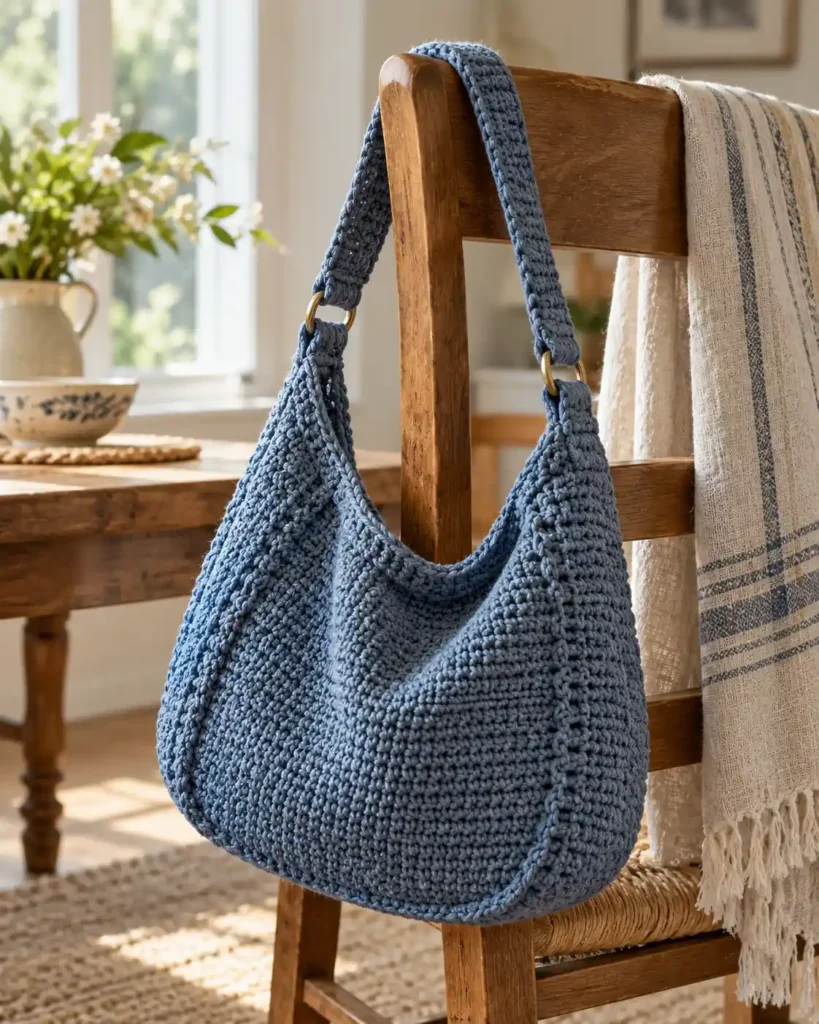
Not every crochet bag needs crisp structure.
A crochet crossbody hobo bag looks best when the body has some natural drape. The goal is relaxed rather than shapeless, so the upper edge and strap attachments still need support.
An unlined version can feel lighter and more casual. Adding lining creates a little more stability and keeps smaller belongings from catching in the stitches.
Before finishing the strap, load the bag with realistic contents and wear it for a few minutes. That simple test can reveal more about the final length than measuring an empty bag on a table.
Best for: Casual everyday outfits and crocheters who prefer soft silhouettes.
16. Raffia-Style Summer Crossbody Bag
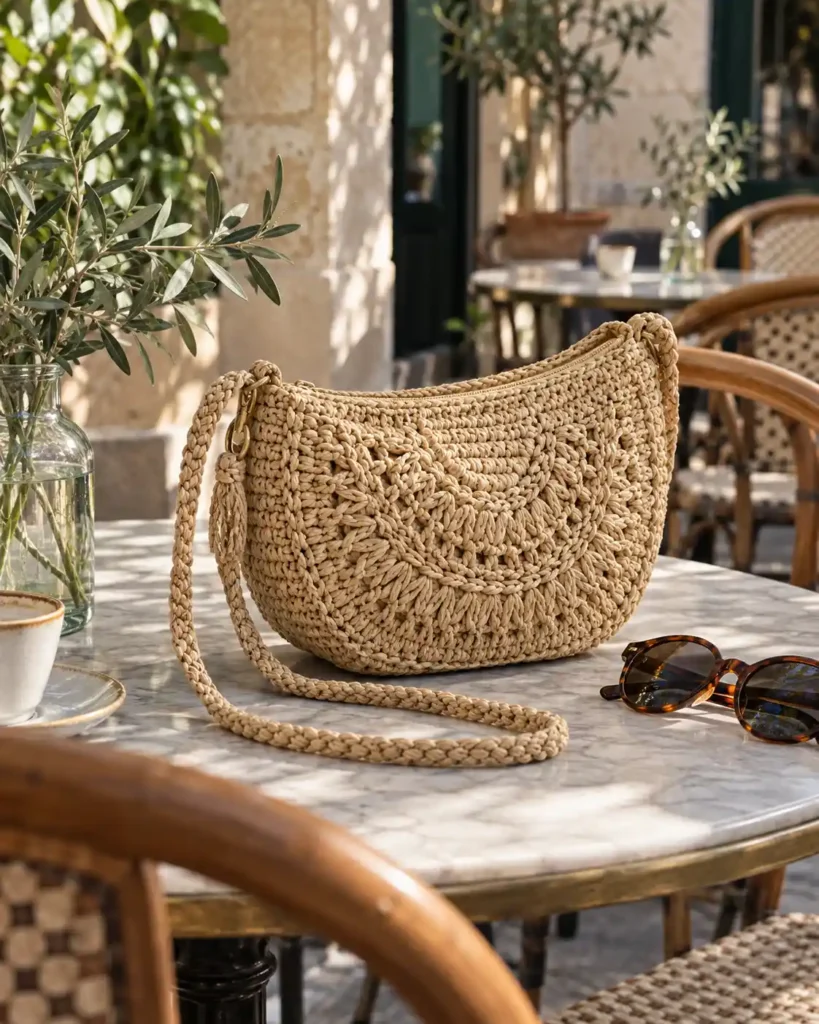
For warm-weather styling, a crochet raffia straw crossbody bag brings a completely different texture.
Raffia-type yarns can feel firmer than conventional soft yarn, which can help a bag maintain its shape. However, materials marketed as raffia can vary, so follow the information on the actual yarn label and the pattern you choose.
Craft Yarn Council guidance notes that yarn labels can provide fiber content, yardage, yarn weight, care information, and recommended hook or needle details. Checking those specifications before substituting materials can prevent unpleasant surprises halfway through a project.
Keep the design relatively simple and let the natural texture do most of the visual work.
Best for: Summer outfits, vacations, and lightweight-looking accessories.
17. Lace Panel Crossbody Bag
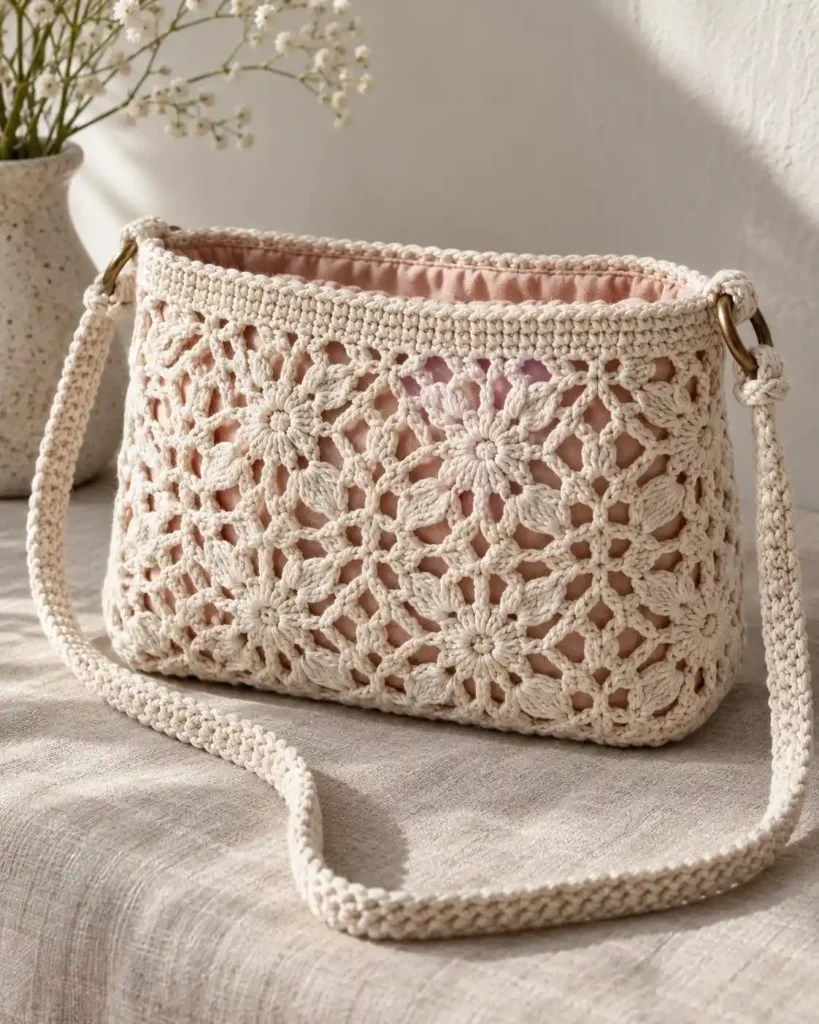
Crochet lace can make a beautiful bag, but openwork needs a little planning.
An ivory or neutral crochet lace crossbody bag becomes much more practical when the open front is backed with fabric. A contrasting lining can even become part of the design by showing subtly through the stitches.
Stabilize the upper edge before adding the closure, especially if the lace pattern stretches easily.
A simple strap works best here. Too much extra texture can compete with the openwork.
Best for: Summer styling and crocheters who want delicate texture without sacrificing practicality.
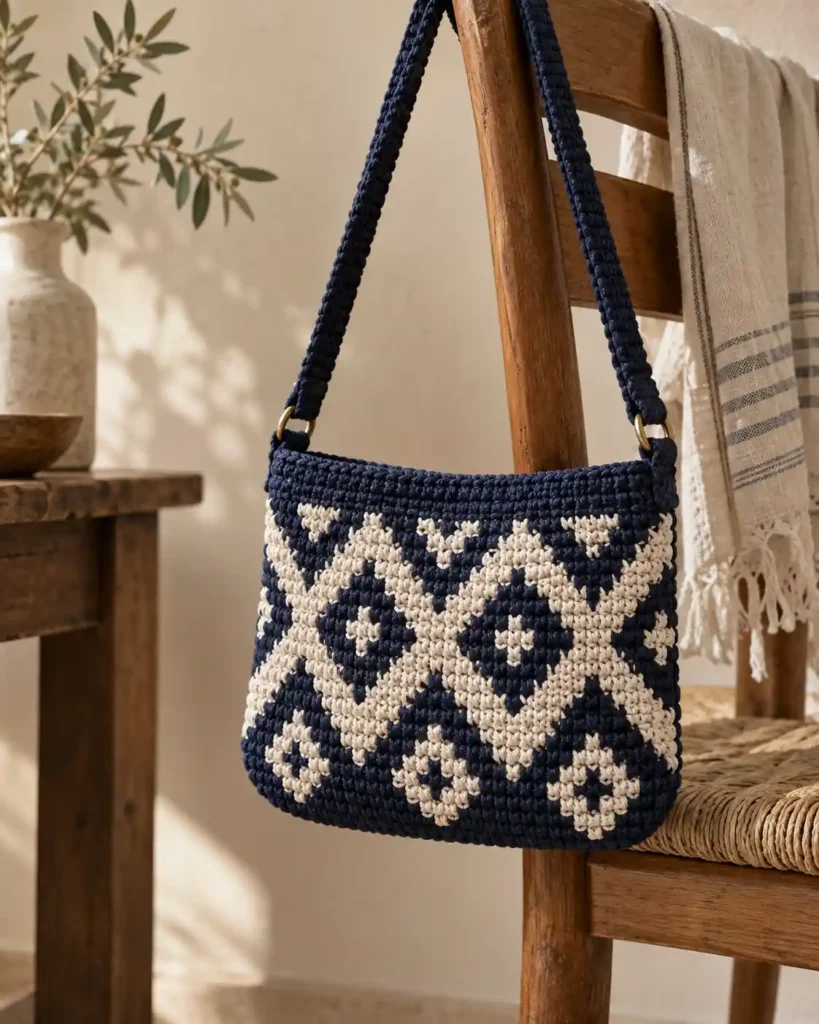
18. Tapestry Crochet Crossbody Bag
A tapestry crochet crossbody bag lets you build the design directly into the fabric with colorwork.
Geometric diamonds, stripes, or another original motif can transform an otherwise simple rectangular purse. The challenge is maintaining even tension while carrying or changing colors.
Keep the bag silhouette and strap uncomplicated. That gives the graphic pattern enough visual space to stand out.
Before starting the full body, work a small colorwork sample. It gives you a chance to check whether the motif looks compressed, stretched, or balanced at your natural tension.
Best for: Crocheters who enjoy controlled color changes and graphic patterns.
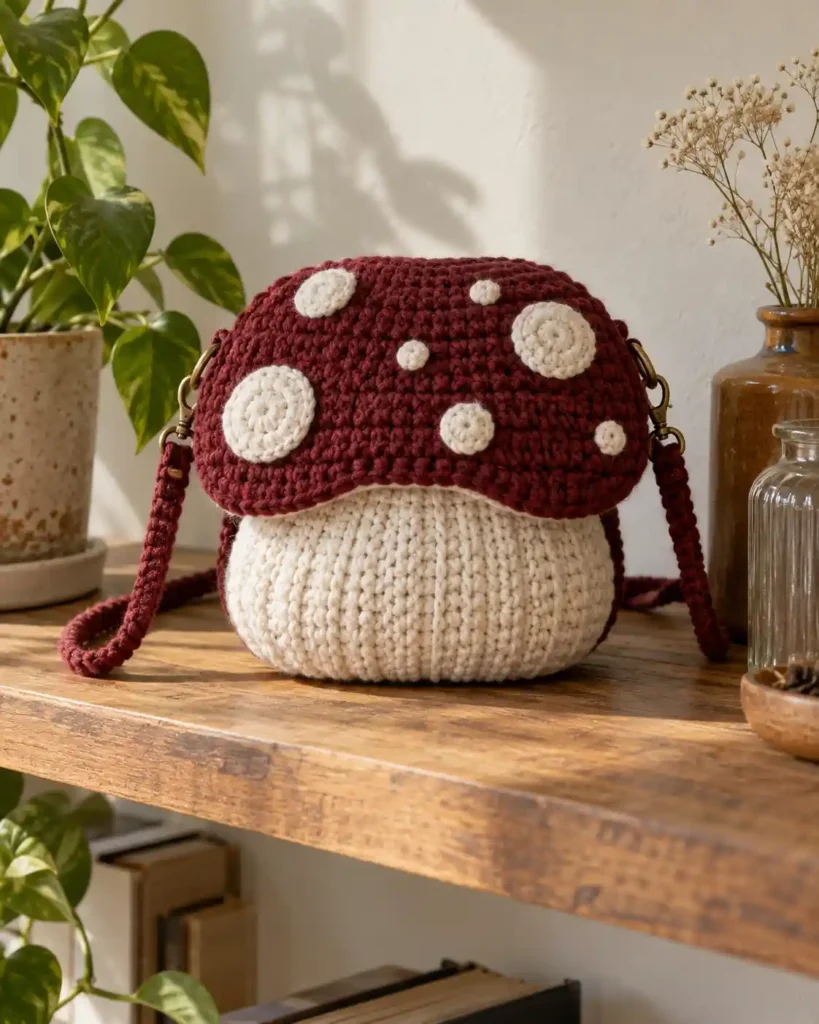
19. Mushroom Crossbody Bag
A crochet mushroom crossbody bag is proof that a practical project can still be playful.
The mushroom cap can become the flap, while the lighter stem-shaped section forms the main body. That makes the novelty shape functional instead of purely decorative.
Keep the closure secure beneath the cap and consider lining the interior so the unusual silhouette does not allow smaller contents to escape.
Capacity will usually be more limited than in a rectangular messenger bag, so think phone, cards, and keys rather than a full day’s belongings.
Best for: Woodland-inspired styling, gifts, and makers who enjoy novelty projects.
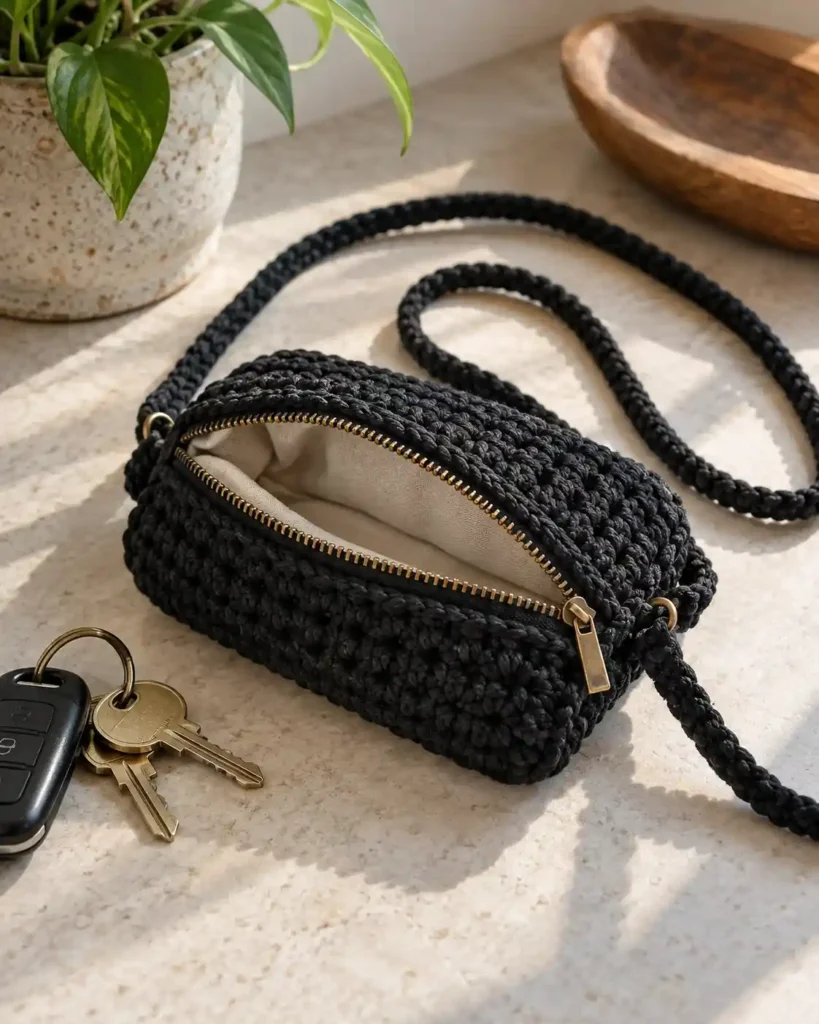
20. Mini Crochet Crossbody Bag With Zipper
A zipper can turn a crochet mini bag into one of the most secure designs in the roundup.
Before sewing anything in place, check the finished opening width against the zipper. Stabilize the crochet edge enough that attaching the zipper will not distort the stitches.
A fabric lining can conceal the zipper tape and create a cleaner interior. It also gives cards, keys, and small objects a smoother surface.
This project is still approachable for a confident beginner, but basic sewing skills make the finishing process much easier.
Best for: Small essentials when security matters more than extra capacity.
21. Pocketed Phone and Bottle Crossbody Bag
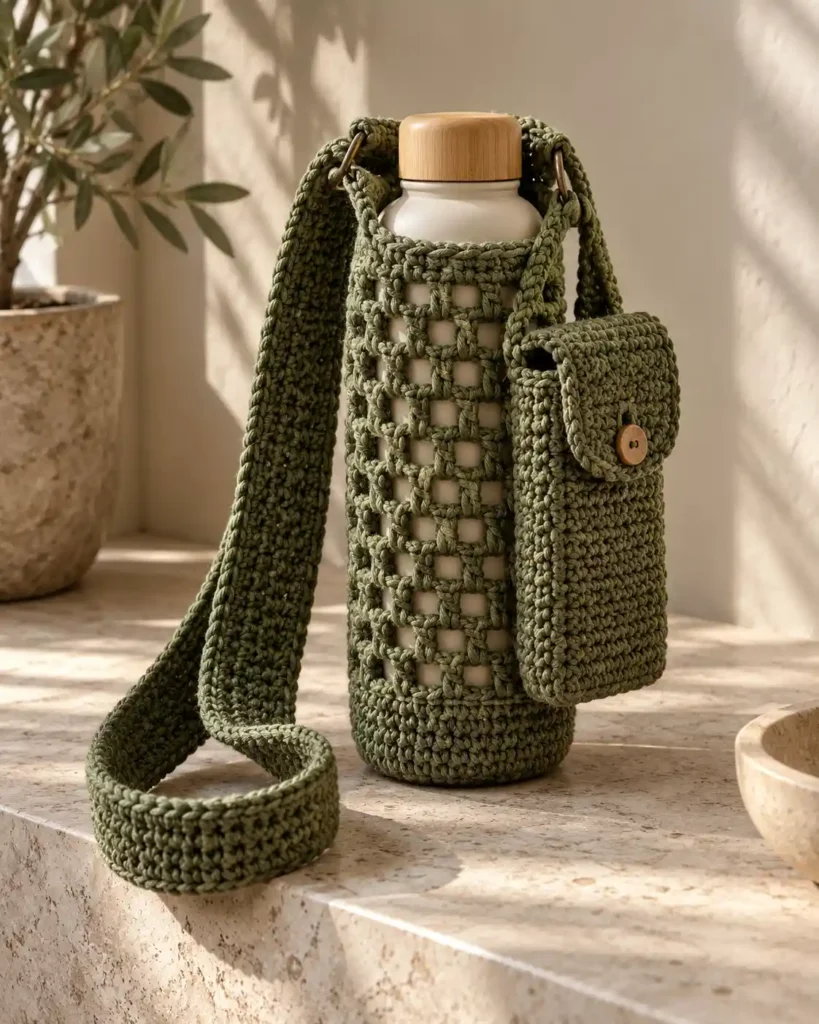
This design is for the days when you want a bottle and phone without carrying a larger bag.
Create a supported bottle sleeve with a separate closed phone pocket rather than putting both objects in the same compartment. Keeping them separate can protect the phone from condensation or small leaks.
Measure the bottle diameter before committing to the body size, reinforce the base, and test the strap with the bottle filled. Water adds significant load compared with an empty container.
A broad strap is especially useful here because the bag is likely to carry more weight than a standard phone pouch.
Best for: Walks, festivals, sightseeing, and light everyday outings.
How Do You Choose the Right Crochet Crossbody Bag?
Choose a crochet crossbody bag by matching its size, shape, construction, and difficulty to what you plan to carry and the techniques you are comfortable using.
At a Glance:
- Measure the items you plan to carry.
- Match construction to your current skill level.
- Compare structured and relaxed silhouettes.
- Test size before committing to the full project.
- Choose a shape you will actually wear.
The right design depends less on which bag looks best in a photograph and more on how you intend to use it.
What Size and Capacity Do You Need?
Start with your actual belongings.
For a phone-only bag, measure your phone with its case attached. For a compact essentials bag, group your phone, wallet, keys, and other regular items together. For a messenger-style bag, use the notebook or planner you intend to carry as your starting point.
Planning around real objects is more reliable than choosing dimensions because a bag merely looks “small,” “medium,” or “large.”
What Construction Matches Your Skill Level?
Beginners can start with folded rectangles and simple phone pouches.
If you are comfortable joining pieces, granny square designs open up more possibilities. Circular shapes, tapestry crochet, structured gussets, zippers, and shaped sling bags introduce additional techniques.
Choose a project that teaches you one or two new skills rather than five unfamiliar techniques at once.
Which Shape Works With Your Style?
Rectangular bags feel classic and practical. Round and half-moon purses look more decorative, while sling bags feel sporty and functional.
Bucket and hobo styles have softer silhouettes. Granny squares, sunflower motifs, tapestry work, and fringe create stronger visual statements.
There is no universally best shape. The useful question is which one you will actually wear.
What Should You Know About Yarn, Straps, Lining, and Closures?
Good finishing starts with suitable yarn, consistent gauge, secure strap construction, and closures or lining that match how the bag will be used.
At a Glance:
- Check the yarn label before substituting materials.
- Swatch when size or structure matters.
- Reinforce strap attachment points.
- Test straps with realistic bag contents.
- Use lining when openness or structure requires support.
Finishing decisions often determine whether a handmade bag becomes something you use regularly or something that stays in a drawer.
Why Do Yarn and Gauge Matter?
Yarn of the same general weight does not automatically create identical fabric.
The Craft Yarn Council specifically cautions that its yarn-weight system is not an interchangeability chart. Two yarns in the same weight category may still differ in gauge, softness, and drape.
Work a swatch when finished dimensions or structural firmness matter. The Crochet Guild of America likewise treats maintaining consistent gauge as a foundational crochet skill.
How Can You Make a Crochet Bag Strap More Practical?
Consider width, attachment points, length, and stretch together.
A narrow strap may feel comfortable on an empty purse but less comfortable once the bag is loaded. Reinforcing attachment areas and testing the finished strap with realistic contents can help you catch problems before final finishing.
Adjustable or removable straps are especially useful for sling, belt, and convertible designs.
When Should You Add Lining or a Closure?
Lining is particularly helpful when the crochet fabric is open, the bag needs extra structure, or you plan to carry small items.
Closures serve different purposes. A button flap keeps a casual design simple, a drawstring suits bucket bags, and a zipper provides more complete security.
Choose the finishing method around how the bag will actually be used.
How Can You Find a Crochet Crossbody Bag Pattern You Can Follow?
Choose a crochet bag pattern designed for crossbody wear from its original source and confirm that it includes enough information to complete the project before you begin.
At a Glance:
- Check the designer’s original pattern page.
- Confirm finished measurements before starting.
- Review materials, gauge, and stitch information.
- Identify whether U.S. or U.K. terminology is used.
- Separate free web instructions from paid PDF options.
A pretty finished photo does not tell you whether the instructions are complete.
Is the Pattern Really Free?
Check the designer’s original page.
Some designers provide complete instructions on a webpage and sell an optional ad-free PDF. Others provide only a preview and require a purchase for the complete pattern.
Do not rely on a social media image or repost that labels something “free” without checking the original source.
Does the Pattern Give Enough Information?
Before starting, look for finished measurements, material information, gauge where relevant, stitch counts, construction notes, and clear attribution to the designer.
Also check which crochet terminology is being used. The Craft Yarn Council notes important differences between U.S. and U.K. terms: for example, U.S. single crochet corresponds to U.K. double crochet, while U.S. double crochet corresponds to U.K. treble crochet.
That one check can prevent an entire project from coming out differently than expected.
Frequently Asked Questions
Which crochet crossbody bag is easiest for a beginner?
A folded rectangle or simple phone pouch is usually a good starting shape because it reduces complicated shaping. The actual difficulty still depends on the stitches, finishing, and instructions in the specific pattern you choose.
What yarn should I choose for a crochet bag?
Choose yarn based on the pattern, desired structure, weight, texture, and care requirements. Check the yarn label and make a swatch rather than assuming one fiber or yarn weight works for every bag.
How can I reduce stretching in a crochet strap?
Use a dense construction, consider a wider or reinforced strap, secure the attachment points, and test it while the bag is loaded. Crochet fabric can still stretch, so avoid assuming any handmade strap will remain completely unchanged.
How long should a crossbody strap be?
Measure the strap on the person who will wear the bag while positioning the bag where they want it to sit. Account for attachment points and possible stretch after the bag is loaded.
Does a crochet crossbody bag need a lining?
Not always. Lining becomes more useful when stitches are open, small items could escape, or the bag needs additional support.
Can I add a zipper to a crochet bag?
Yes. Check the opening width, stabilize the crochet edge, and attach the zipper carefully so the stitches are not stretched or distorted.
How do I find a genuinely free crochet crossbody bag pattern?
Go to the original designer’s website and confirm that the full instructions are accessible there. A free web version may exist alongside an optional paid PDF, but a photograph or abbreviated post is not necessarily a complete free pattern.
How should I wash my finished crochet bag?
Follow the care instructions for the yarn, lining, and any added hardware. The Craft Yarn Council notes that yarn labels commonly include fiber and care information, making the label an important reference before washing.
Final Thoughts
Crochet crossbody bags are a great way to combine creativity with everyday practicality. From simple folded rectangles and compact phone pouches to granny square, sling, bucket, and textured designs, there is a style for almost every skill level and purpose.
The best project is not necessarily the most complicated or decorative one. Choose a bag based on what you actually plan to carry, the techniques you are comfortable with, and how you want the finished bag to fit and feel. Paying attention to gauge, yarn choice, strap strength, lining, and closures can also make a big difference in how useful your finished bag becomes.
Most importantly, start with a pattern that gives you clear measurements, materials, construction details, and stitch information. Whether you choose a beginner-friendly phone bag or a more detailed tapestry or half-moon design, take your time, enjoy the process, and create a crossbody bag that you will actually love wearing.

![The Best 30+ Free Crochet Cat Patterns [Beginner-Friendly Guide]](https://crochetmind.com/wp-content/uploads/2025/04/1-The-Best-30-Free-Crochet-Cat-Patterns-Beginner-Friendly-Guide.webp)