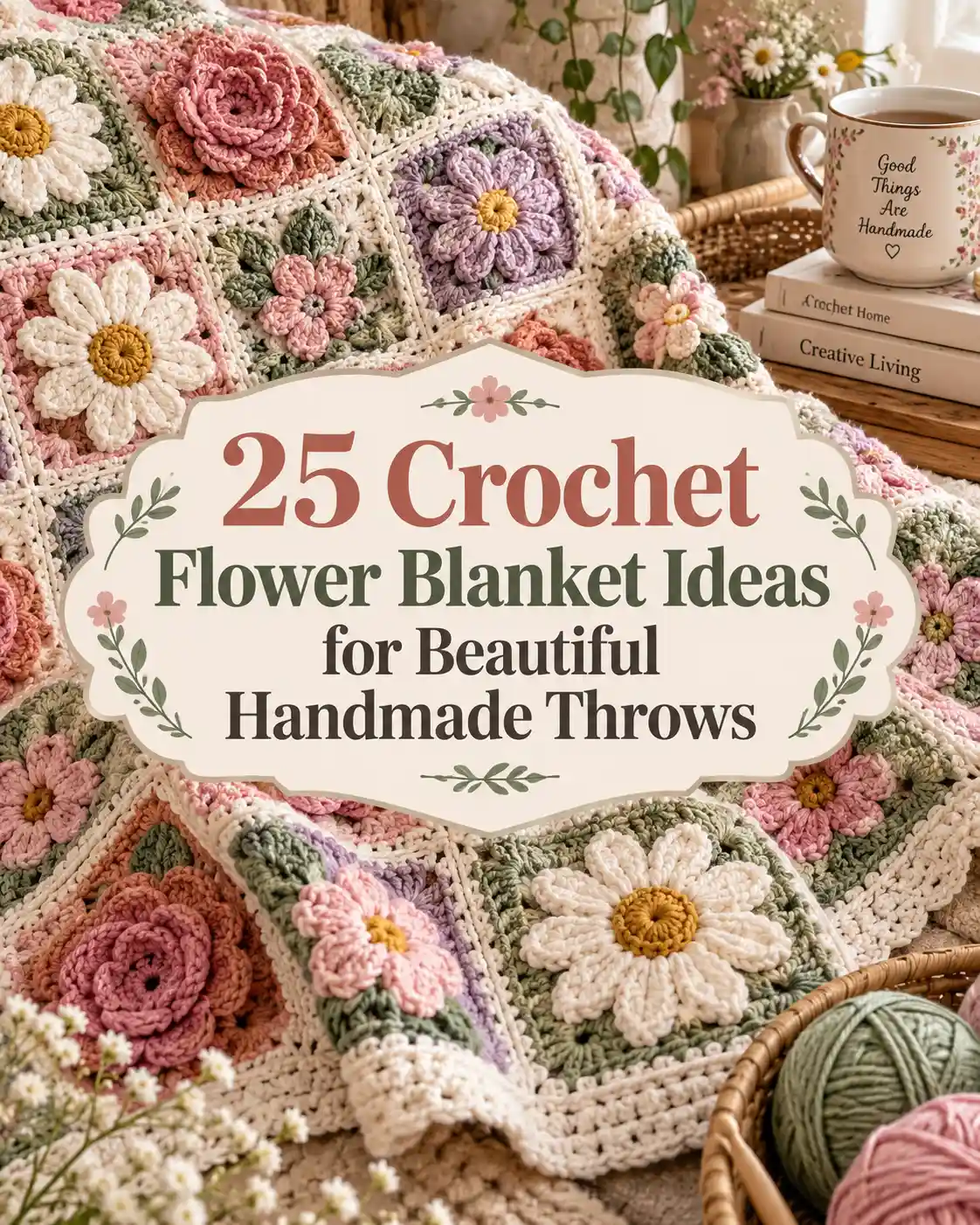
A crochet flower blanket can be as simple as joined daisy granny squares or as dramatic as a dimensional bouquet blanket that folds into a bunch of roses. The best design depends on how much texture you want, how comfortable you are with joining motifs, and whether the finished piece will be a practical throw, baby gift, or decorative statement.
I always think the easiest way to choose is to picture where the finished blanket will actually live. A lightweight floral throw for a spring sofa needs something very different from a thick puff-flower blanket made for cold evenings, so use the ideas below to match the technique, texture, yarn, and overall style to the project you genuinely want to finish.
Key Takeaways
- Start with simple motifs if you are new to crochet.
- Swatch textured flowers before committing to a full blanket.
- Match yarn choice to texture, drape, and washability.
- Plan flower blanket crochet colors before joining motifs.
- Use repeated colors to keep mixed flowers visually cohesive.
- Choose dimensional flowers mainly for decorative statement pieces.
Which Crochet Flower Blanket Style Should You Choose?
Choose a crochet flower blanket style based on your skill level, preferred construction method, desired texture, and how the finished blanket will be used.
At a Glance:
- Choose granny squares for easy modular construction.
- Pick puff flowers when you want plush texture.
- Use bouquet designs for statement handmade gifts.
- Try continuous flower stitches to reduce joining.
- Choose filet or lace styles for lighter blankets.
There is no single “best” flower blanket crochet style. For an easier first project, I would start with granny squares, daisies, tulip rows, or a simple continuous flower stitch. If you already enjoy textured crochet, puff flowers, bobbles, bouquet blankets, and layered 3D petals give you much more room to play.
Yarn choice matters, too. The Craft Yarn Council classifies yarn from weight 0 through 7 and notes that hook recommendations are guidelines rather than fixed rules; your pattern gauge should still decide the final hook choice.
| Style | Typical Skill Level | Best Feature | Good For |
|---|---|---|---|
| Flower granny squares | Beginner–Intermediate | Easy modular construction | Throws, baby blankets |
| Daisy or tulip motifs | Beginner–Intermediate | Fresh, simple floral look | Spring decor, gifts |
| Puff or bobble flowers | Intermediate | Plush raised texture | Cozy throws |
| Bouquet blanket | Intermediate | Folds into a floral bouquet | Weddings, Mother’s Day |
| African flower hexagons | Intermediate | Strong colorwork potential | Scrap yarn projects |
| Jasmine or 3D flowers | Intermediate–Advanced | Dense dimensional texture | Statement blankets |
| Filet or lacy flowers | Intermediate | Light open fabric | Summer and heirloom throws |
One thing I recommend before committing to any large blanket is making one full motif or a decent-size swatch. The Craft Yarn Council specifically recommends checking gauge against the pattern and changing hook size when necessary, and it notes that metric hook measurements are more dependable than letter or number labels that can vary between manufacturers.
Now for the fun part.
What Are the Best Crochet Flower Blanket Ideas to Make?
The best crochet flower blanket ideas range from beginner-friendly daisy and granny-square designs to textured puff flowers, bouquet blankets, floral C2C graphics, and elaborate 3D motifs.
At a Glance:
- Use granny squares for flexible sizing.
- Try daisies for a fresh spring look.
- Choose roses for romantic handmade gifts.
- Explore textured stitches for extra dimension.
- Use garden motifs for mixed botanical designs.
25 Crochet Flower Blanket Ideas for Beautiful Handmade Throws
1. Crochet Flower Bouquet Blanket
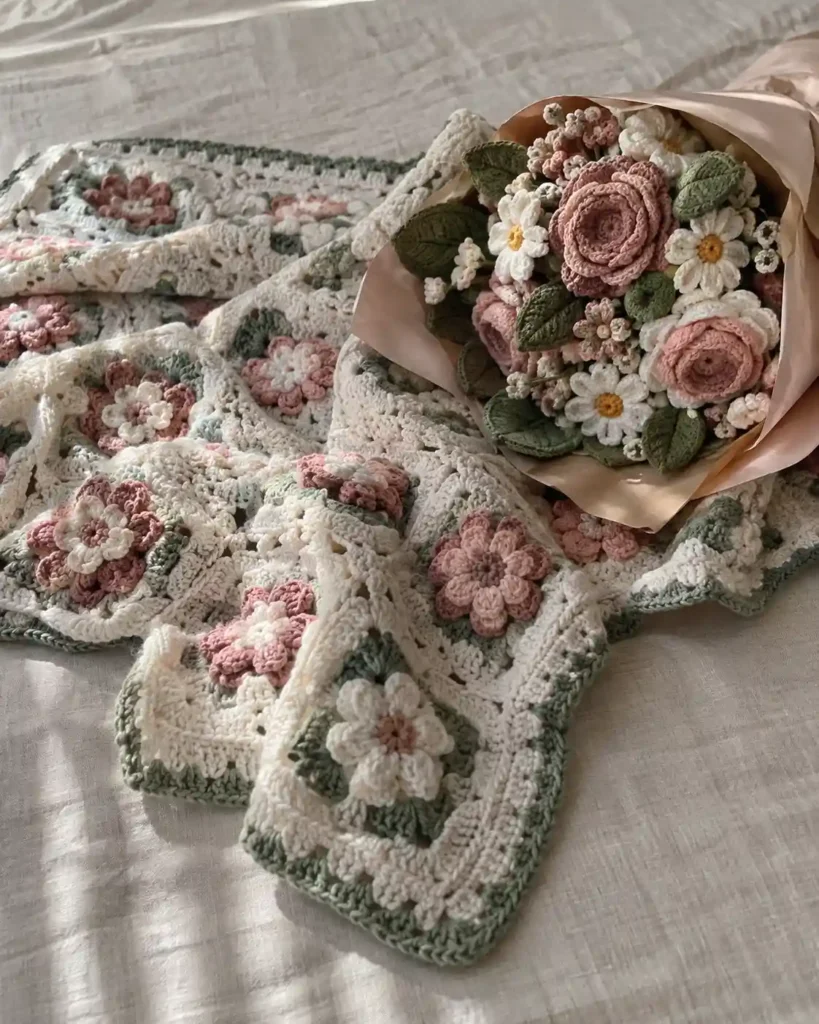
A crochet flower bouquet pattern can create one of the most dramatic designs in this list because the finished blanket looks like a regular cozy blanket when opened and a bouquet when folded. Instead of simply placing flowers across the surface, the border, leaves, stems, and dimensional blooms all work together to create the illusion.
I like this style for a handmade gift because the reveal is part of the charm. A normal floral throw is beautiful on a sofa, but this one can actually be gathered into something that looks gift-ready before the recipient even unfolds it.
Use a smooth worsted yarn if you want the flowers to keep their shape. Roses, daisies, leaves, and a neutral blanket base make an especially pretty combination.
Special Tip: Lay the finished blanket out and practice the fold before permanently positioning decorative leaves or flowers. Their placement can change how convincing the bouquet looks.
2. Why Make a Puff Flower Crochet Blanket?
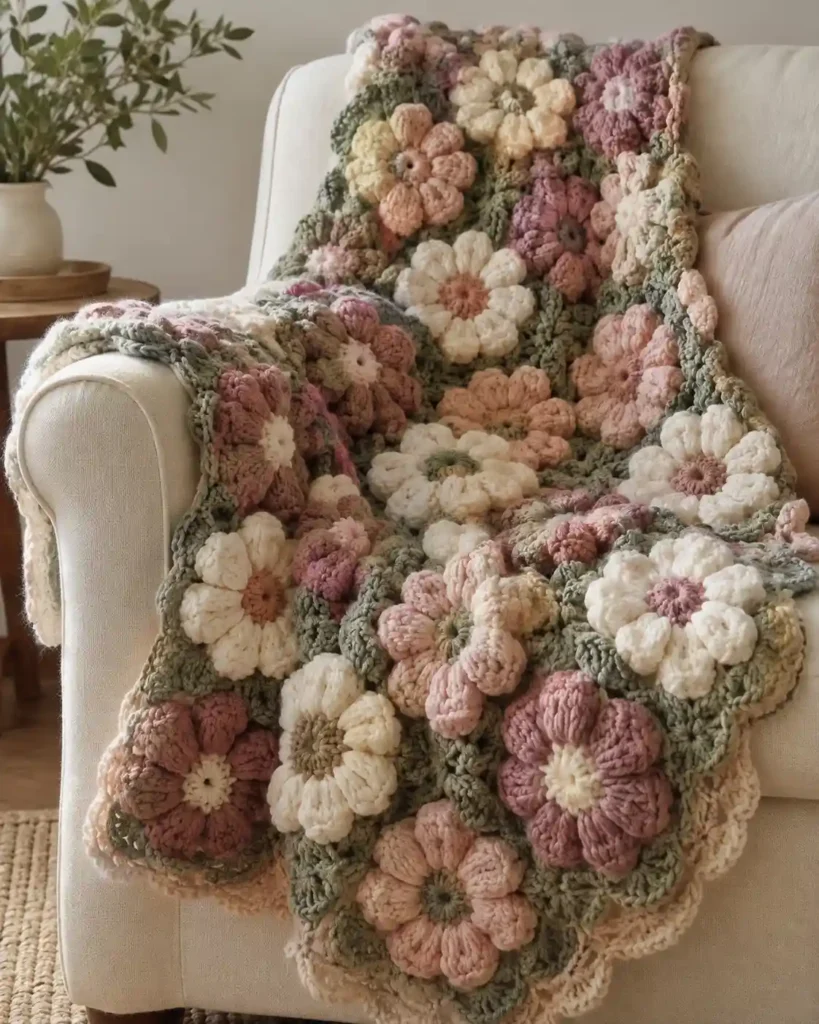
A puff flower crochet blanket is all about texture. Every little flower rises from the surface, which gives the blanket that soft, almost cushion-like look you simply cannot get from a flat floral print.
The trade-off is weight. Puff stitches use more yarn than simple flat stitches, so a full blanket can become substantial rather quickly.
I would use this one for a sofa or lap throw where that extra thickness feels cozy rather than cumbersome. Dusty rose, cream, peach, sage, and muted lavender work beautifully when you want the texture to do most of the talking.
Keep your tension consistent from flower to flower. Even a small difference becomes noticeable once dozens of motifs are joined together.
3. Flower Granny Square Blanket
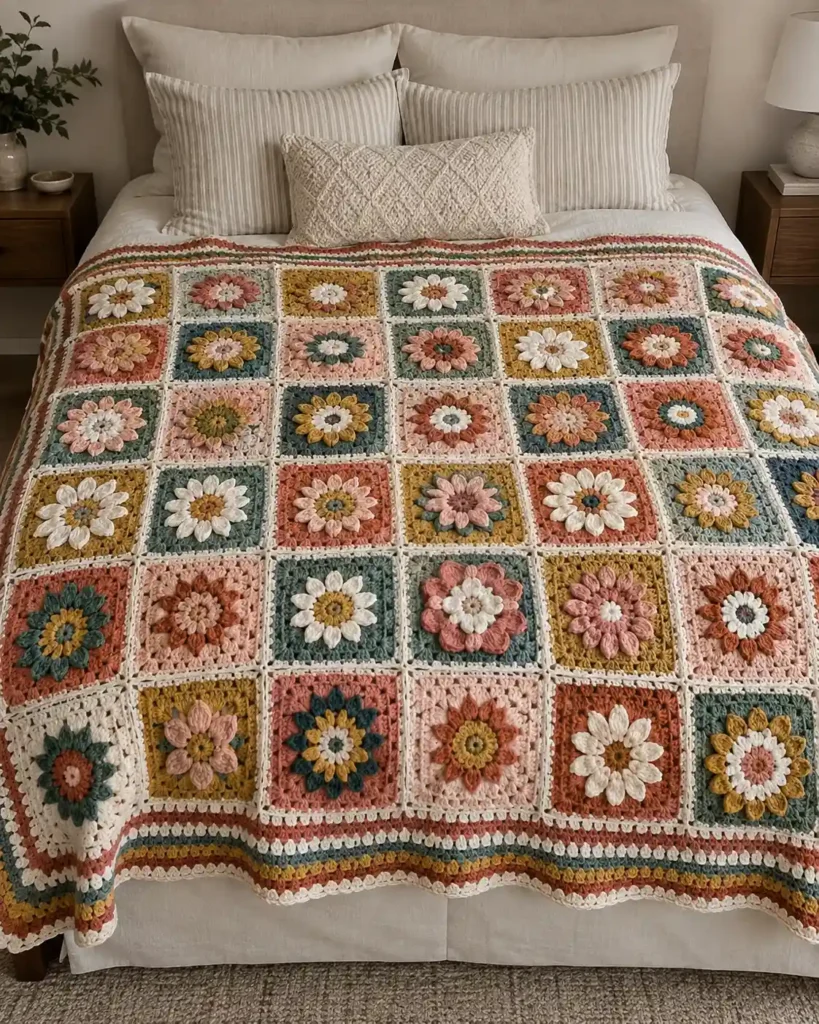
If you want a flower blanket that is easy to customize, start with a crochet granny square blanket built around floral motifs. You can make the squares one at a time, carry a few in your project bag, and decide on the final layout much later.
That modular construction is what makes this style so forgiving. Unlike a large one-piece blanket, a mistake in one square does not mean undoing several rows of your whole project.
Try repeating one flower center color through the design while changing the petals and square backgrounds. That little bit of repetition keeps a scrap-yarn blanket from looking random.
A floral granny square blanket can also grow from baby size to bed size simply by adding more squares.
4. Is a Daisy Crochet Blanket Beginner-Friendly?
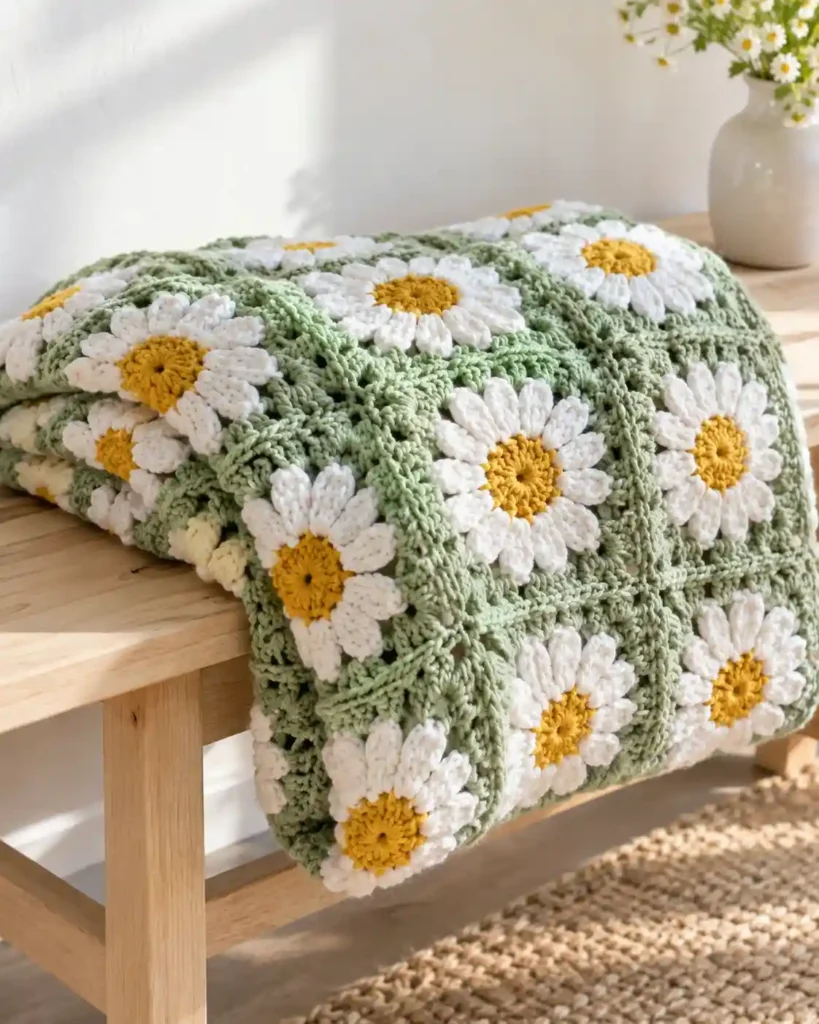
A crochet daisy blanket can be surprisingly approachable because the flower shape is easy to recognize even when the stitch construction is simple. White petals and yellow centers give you the classic look, but pink, lavender, peach, or blue daisies can feel softer and more modern.
What I like about daisies is that they do not need heavy texture to look floral. Even fairly flat motifs read clearly from across the room.
Use them for a spring throw, picnic blanket, or cheerful nursery piece. If the blanket will get frequent use, choose a washable yarn and keep the flower edges well secured.
For a cleaner finish, use the same background color around every daisy before joining the squares.
5. Rose Flower Crochet Blanket
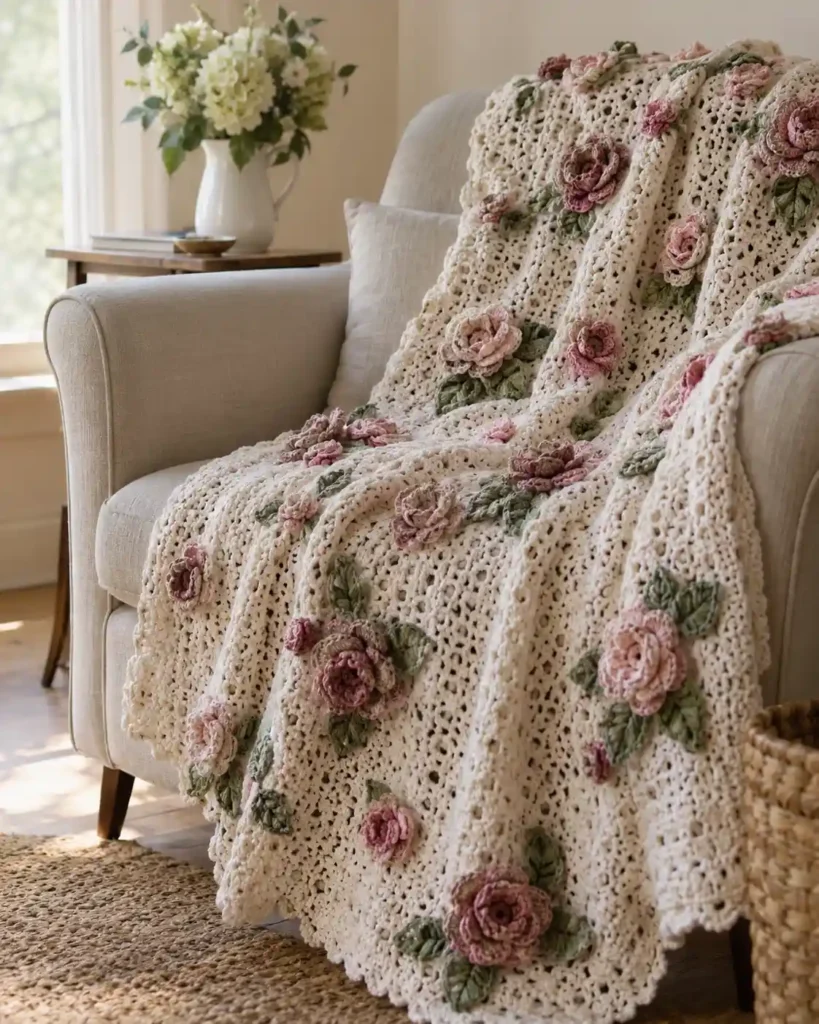
Nothing says romantic crochet quite like a crochet rose blanket. Raised roses instantly make a plain base feel special, especially when a few green leaves are tucked between the blooms.
I would not cover every inch with chunky roses unless the blanket is mostly decorative. Strategically placing them around the border, corners, or one feature panel gives you the drama without making the blanket uncomfortable to sit under.
This style works especially well for weddings, anniversaries, Mother’s Day gifts, and feminine bedroom decor.
Blush, dusty rose, burgundy, ivory, and sage are hard to beat here, although one-color cream roses can look surprisingly elegant.
6. Why Try an African Flower Hexagon Blanket?
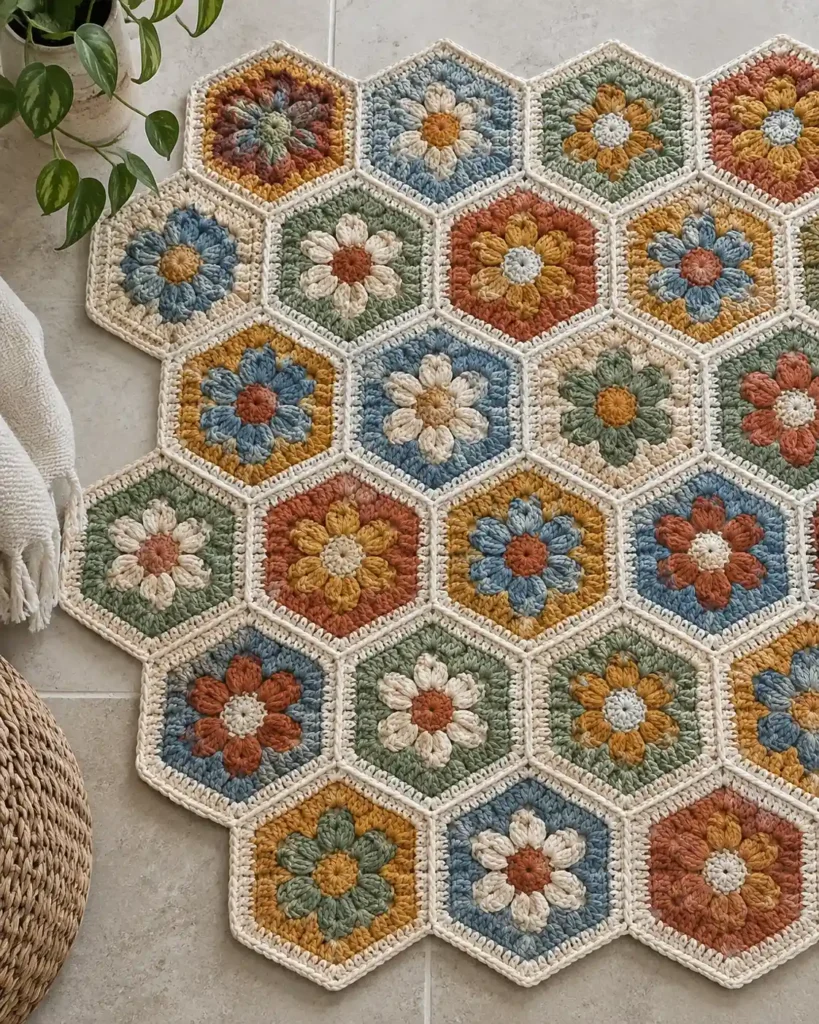
An African flower crochet blanket is a wonderful choice when choosing colors is half the fun for you. Each hexagon gives you several rounds to change shades, so even a small yarn palette can create dozens of combinations.
The hexagonal shape feels more intricate than an ordinary square, but the repeated construction becomes rhythmic once you understand the motif.
This is also one of my favorite approaches for leftover yarn. Keep one or two anchor colors consistent, then rotate the remaining colors through the petals and outer rounds.
Before joining everything, arrange the hexagons on the floor. You will spot accidental color clusters much faster that way.
7. Lotus Flower Circle Blanket
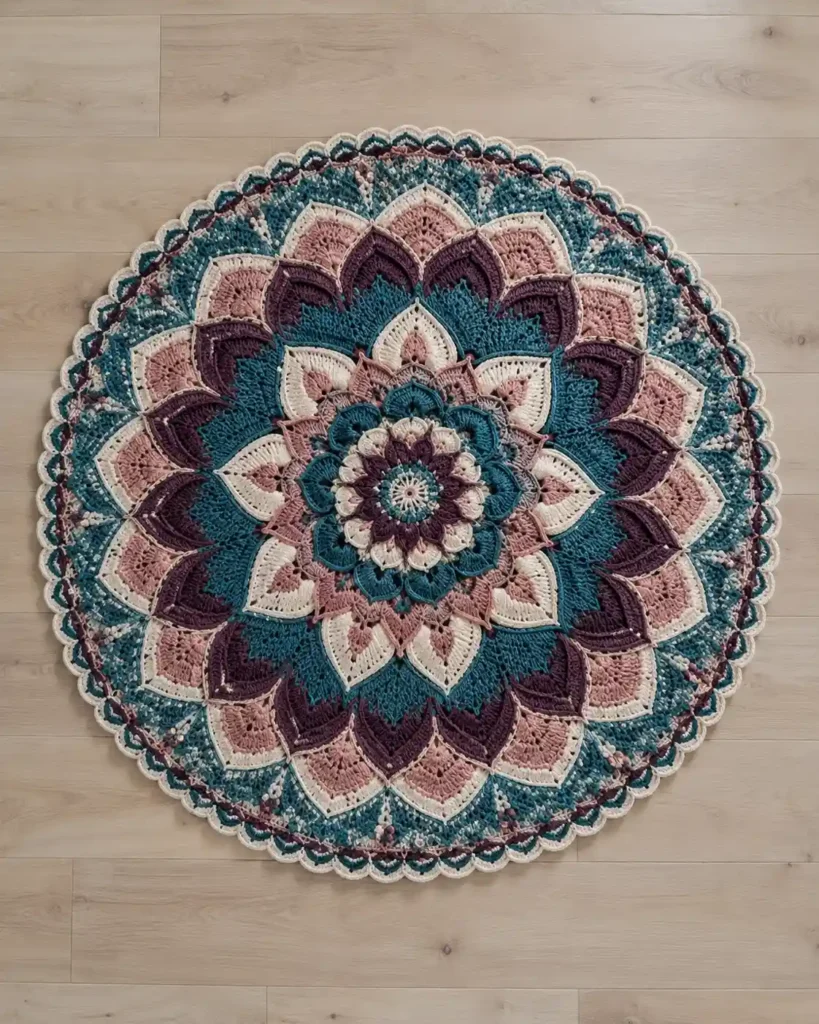
A lotus flower blanket crochet pattern usually works from the center outward, with color bands radiating like layered petals. The result sits somewhere between a floral blanket and a crochet mandala.
This is a completely different look from granny squares because your eye is pulled toward one large central flower rather than dozens of repeated motifs.
It works particularly well as a lap blanket, baby play mat, or decorative piece placed across the back of a chair.
Watch your increases carefully. If you add too many, the blanket can ripple; too few, and the edges may cup.
8. Is a 3D Flower Crochet Blanket Worth the Extra Work?
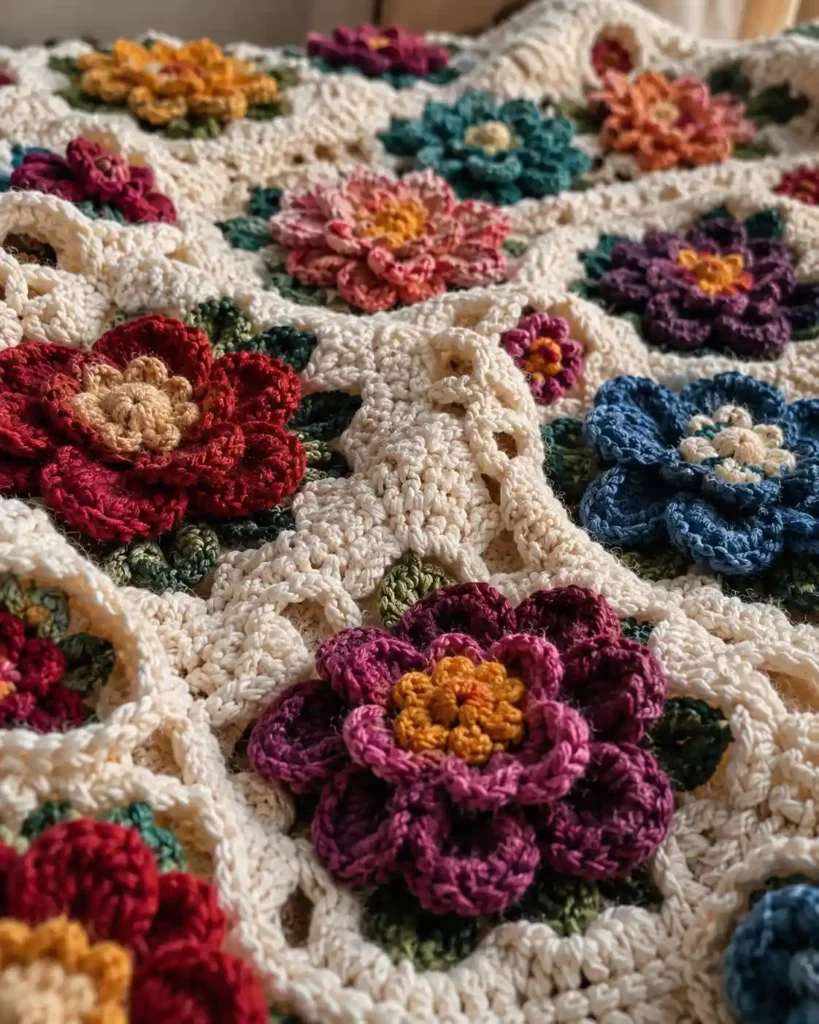
A 3D flower crochet blanket makes texture the star. Layered petals, raised centers, and appliqué flowers turn the fabric into something that almost looks like a crochet garden.
The effect is gorgeous, but I would use dimensional flowers thoughtfully. A flat base with concentrated 3D sections is usually more practical than covering the entire blanket in deep petals.
Choose a smooth yarn with enough body to hold the flower shape. Very fuzzy yarn can hide all the stitch work you spent hours creating.
This is the style I would choose when the blanket is meant to be noticed first and cuddled second.
9. Flower Garden Crochet Blanket
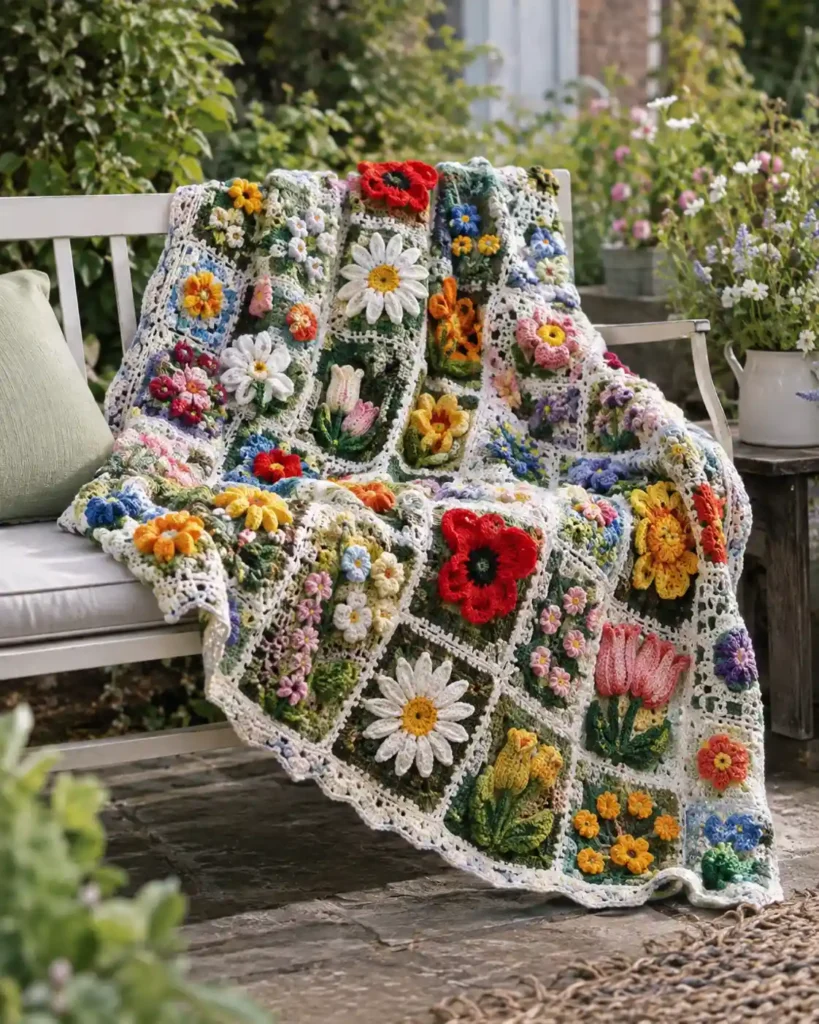
A flower garden crochet blanket lets you stop worrying about making every flower identical. Daisies, poppies, tulips, little leaves, and wildflower motifs can sit together and create that slightly untamed meadow look.
The secret is restraint somewhere else. If every motif shape and every color changes at once, the blanket can get visually busy.
Pick four to six main yarn colors and repeat them throughout the design. Then let the flower shapes provide the variety.
This blanket is especially pretty for spring and summer, although warmer rust, plum, and mustard tones can turn the same idea into an autumn garden.
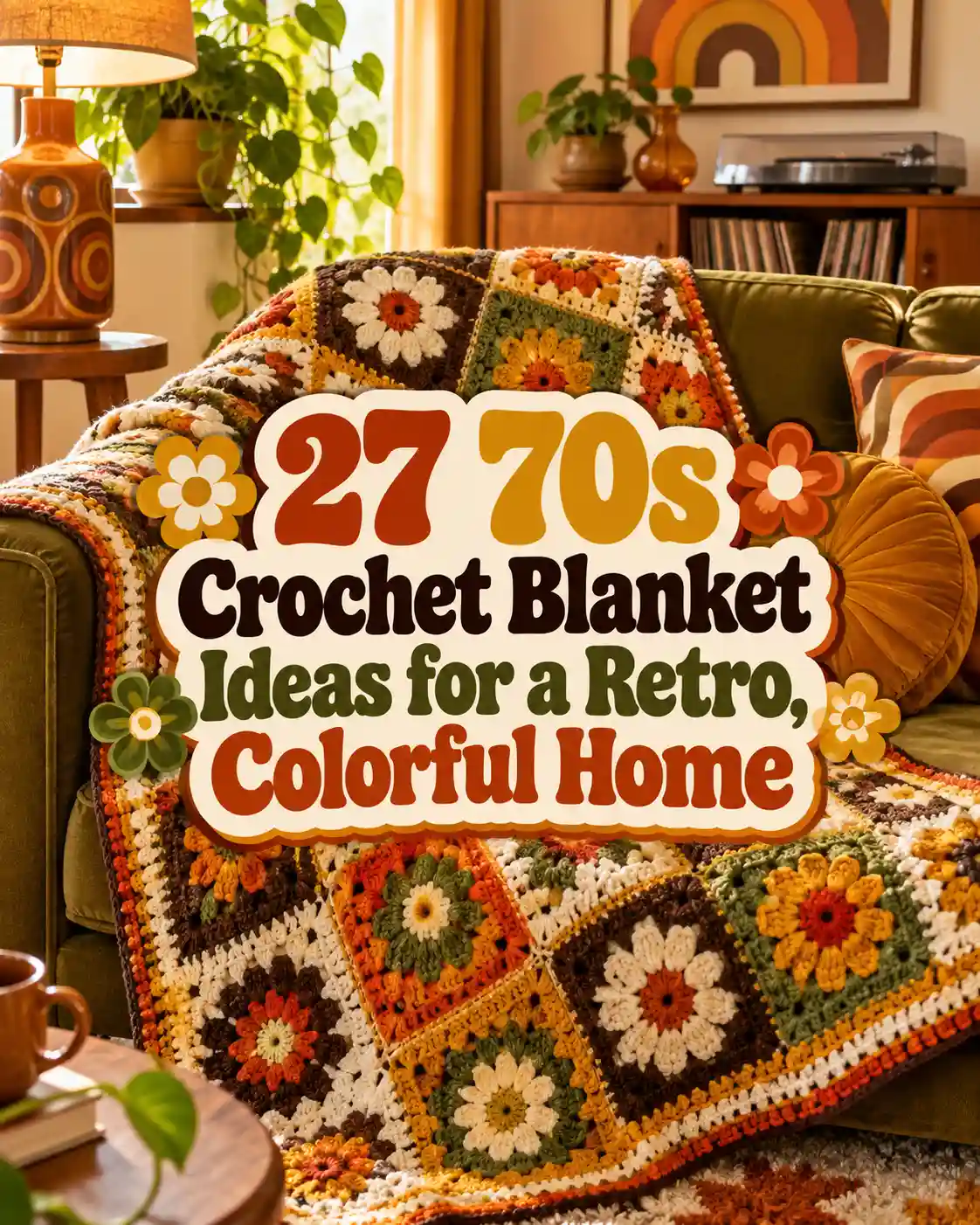
10. How Do You Give a Crochet Blanket a Retro 70s Look?
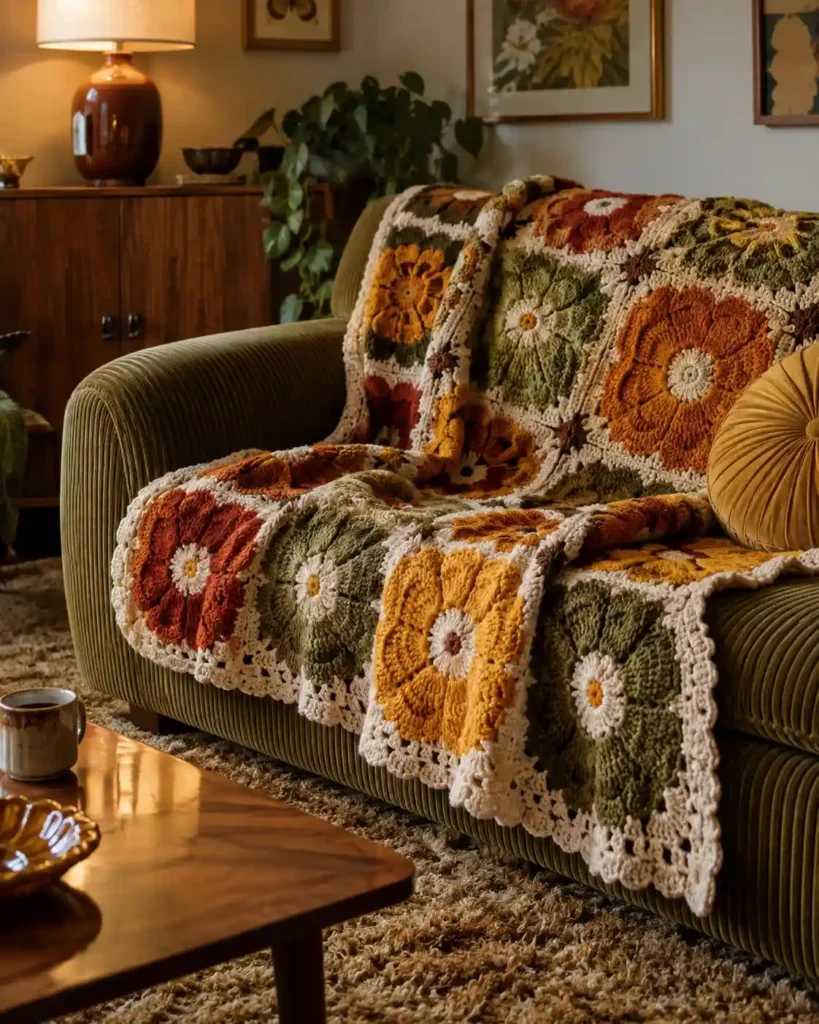
For a retro flower crochet blanket, make the flowers bigger and the color choices bolder. Burnt orange, avocado green, mustard, rust, brown, and cream instantly push the blanket toward a 1970s feel.
Oversized graphic flowers work better here than tiny delicate blossoms. You want the pattern to be readable from the other side of the room.
I would pair the blanket with a fairly simple border so the finished piece feels intentionally retro rather than overly busy.
Want a modern version? Keep the orange and mustard, but swap the dark brown for warm cream or muted charcoal.
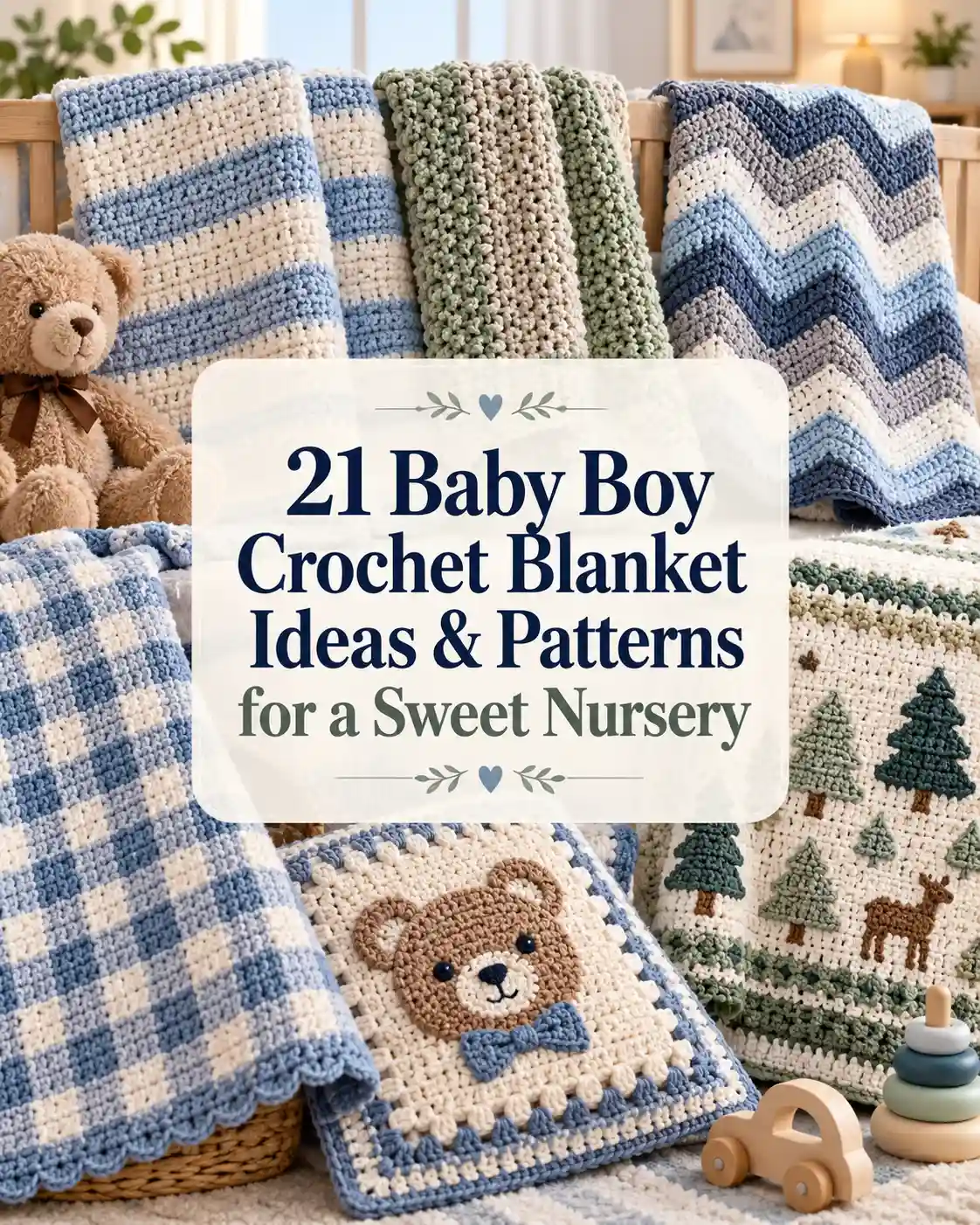
11. Floral Baby Blanket
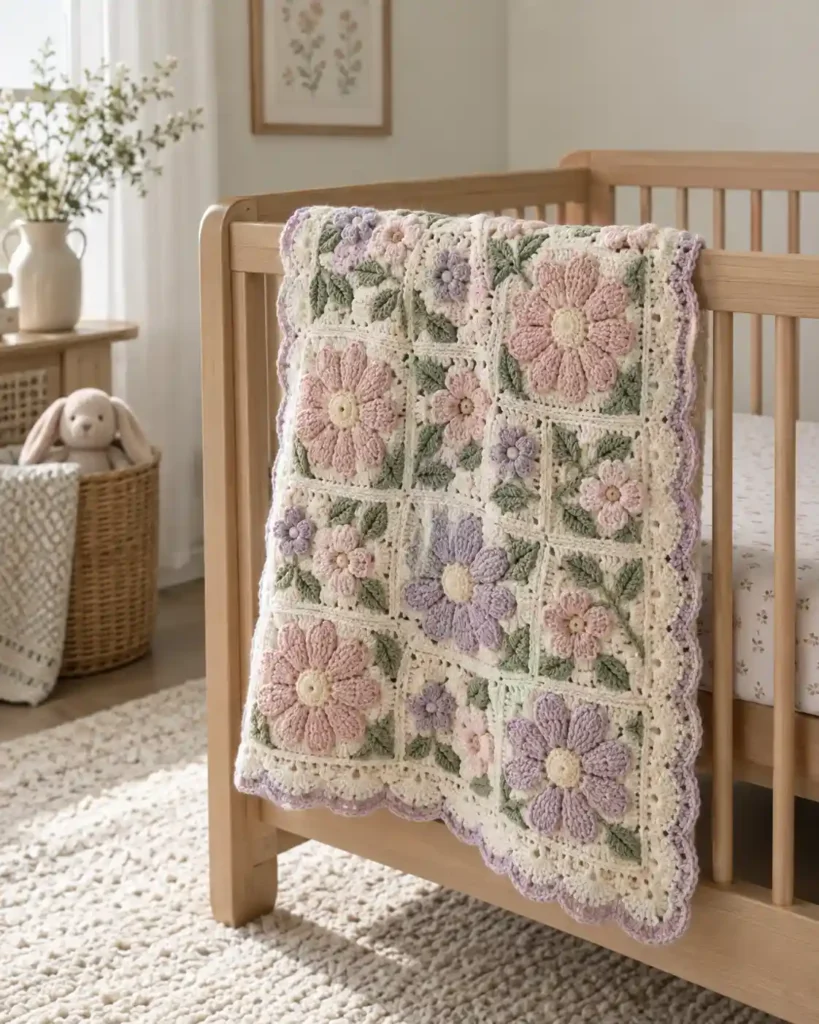
A flower baby blanket crochet design should feel soft first and decorative second. Flatter daisies, small granny-square flowers, or gentle flower stitches are much more practical than heavy detachable embellishments.
Choose a yarn that feels pleasant against skin and can handle frequent cleaning. Secure every yarn end carefully, especially when the blanket contains joined motifs or appliqué.
There is also an important safety distinction between a baby blanket as a handmade gift and a blanket used during infant sleep. The U.S. Consumer Product Safety Commission says an infant sleep space should remain bare except for a fitted sheet and specifically advises against placing loose blankets in cribs, bassinets, or play yards.
So think of a crocheted baby blanket for supervised cuddles, stroller use where appropriate, photos, floor play, or later use—not as loose crib bedding for a sleeping infant.
12. Can You Crochet Flowers Without Joining Separate Motifs?
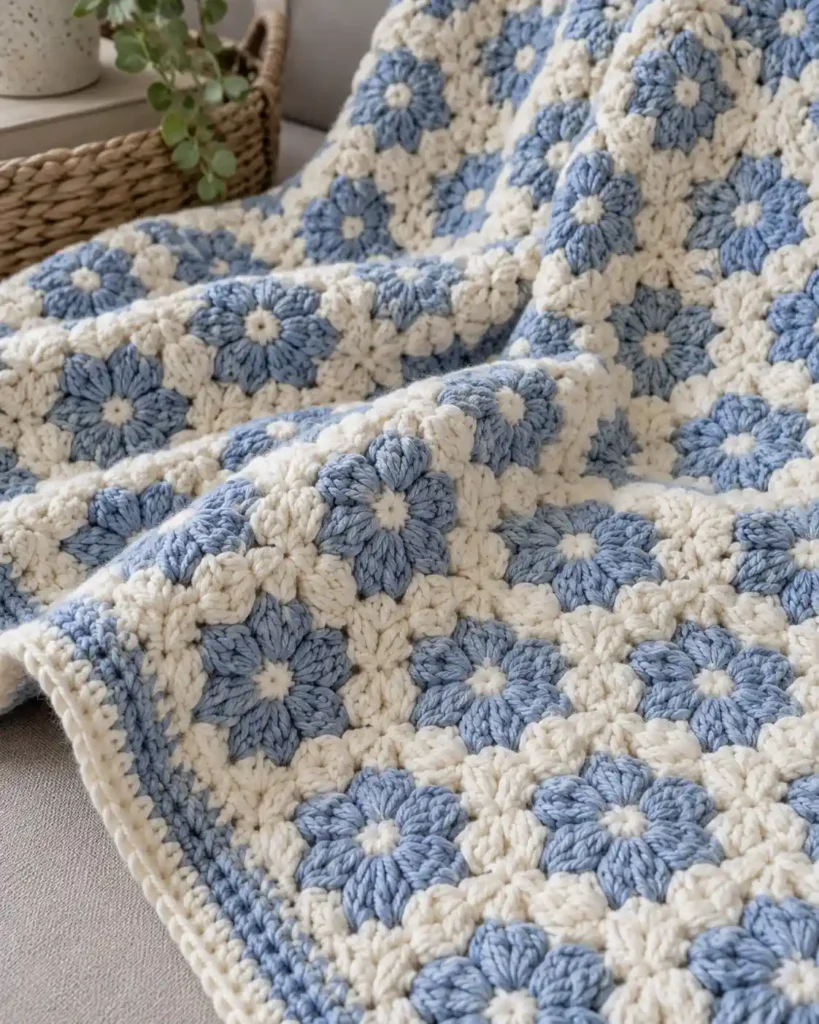
Yes. A flower stitch crochet blanket is perfect if sewing or joining dozens of motifs sounds like the least enjoyable part of the project.
Continuous flower stitches build the floral pattern directly into rows of fabric. Some are open and lacy; others use clusters that create a denser surface.
I like this option for an everyday throw because the blanket often has fewer seams and fewer yarn ends than a highly modular design.
Make a swatch before choosing your final yarn. Some flower stitches disappear in fuzzy fibers but look crisp and beautiful in smooth cotton or acrylic blends.
13. Bobble Flower Crochet Blanket
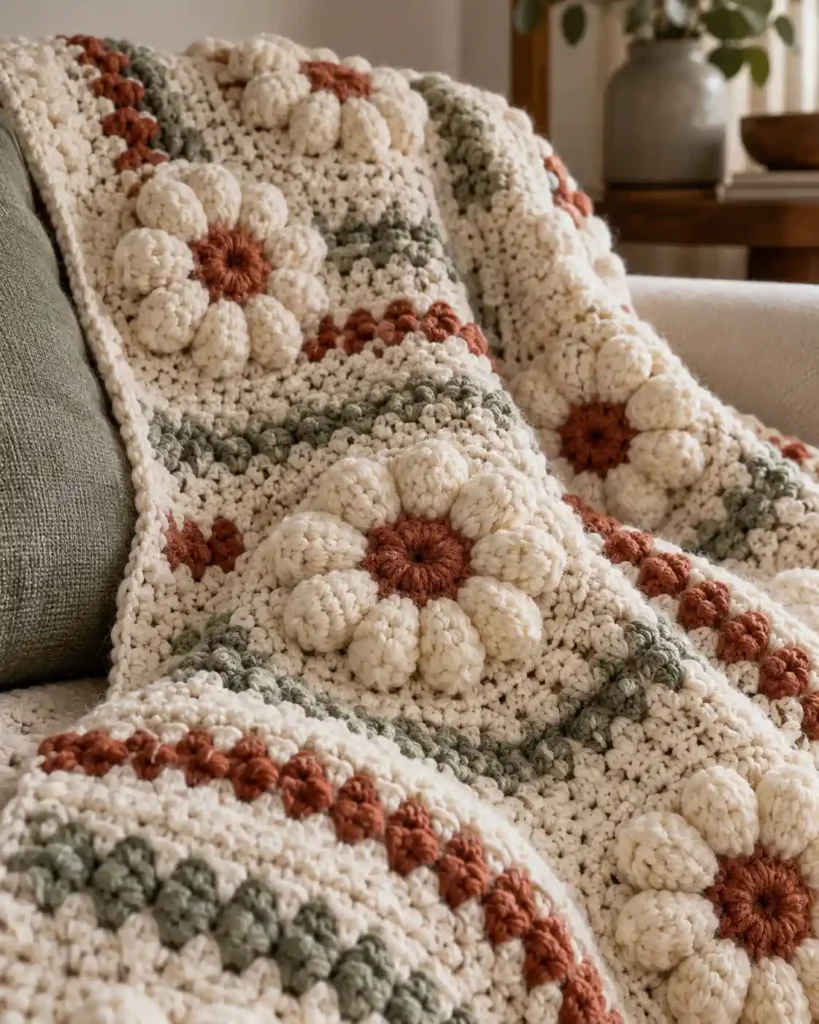
A bobble flower crochet blanket uses raised stitches almost like pixels, building petals and flower centers out of rounded bumps.
It gives you texture without having to sew individual flowers onto a finished blanket. That makes it a nice middle ground between a flat stitch pattern and full 3D appliqué.
Use a solid or mostly solid background so the bobble shapes remain easy to see. Cream with rust flowers, sage with ivory flowers, or dusty blue with white can all work beautifully.
Count carefully on bobble rows. One misplaced bobble can turn a neat flower into a very mysterious shape.
14. Why Does a Sunflower Crochet Blanket Stand Out?
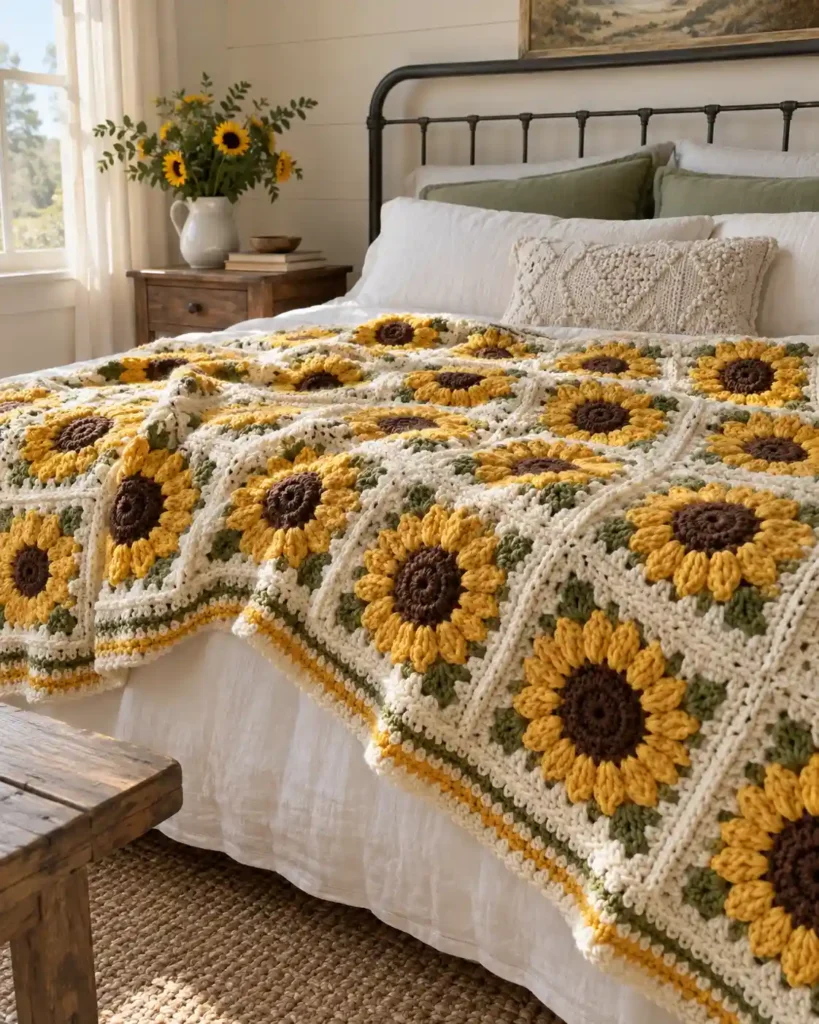
A sunflower crochet blanket gives you built-in contrast: dark centers, bright petals, and usually a softer neutral or green background. That strong color structure means the flower remains recognizable even in a simple granny-square design.
I particularly like sunflowers against cream instead of pure white. The warmer neutral makes the yellow feel richer.
This design fits summer decorating, farmhouse interiors, and cheerful handmade gifts.
For a more subtle version, replace bright lemon yellow with mustard or golden ochre.
15. Poppy Flower Crochet Blanket
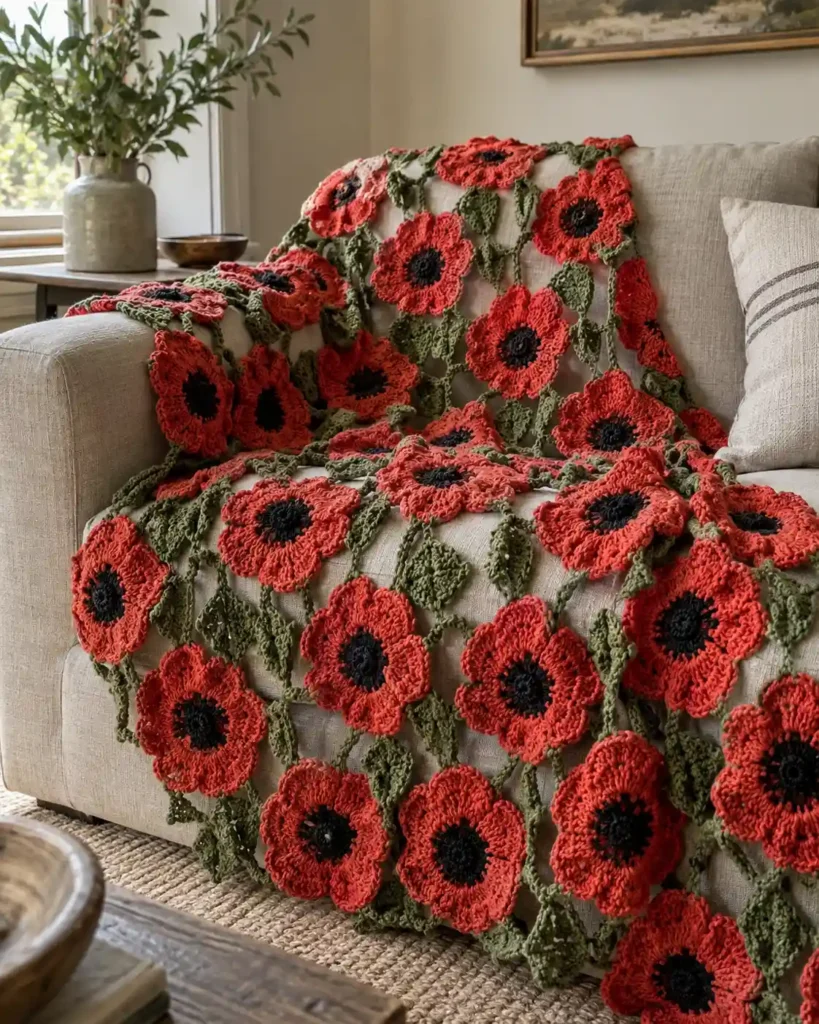
A crochet poppy flower blanket feels slightly more artistic than the usual daisy design because the petals can be irregular and the centers create dramatic contrast.
Instead of filling every square, try spacing the poppies across an open neutral background. The negative space helps each flower read clearly.
Coral, deep red, dusty pink, and even soft peach can all work, depending on whether you want botanical realism or a gentler decorative look.
Poppies also combine beautifully with smaller meadow flowers when you want a mixed garden blanket.
16. How Do You Crochet a Tulip Flower Blanket?
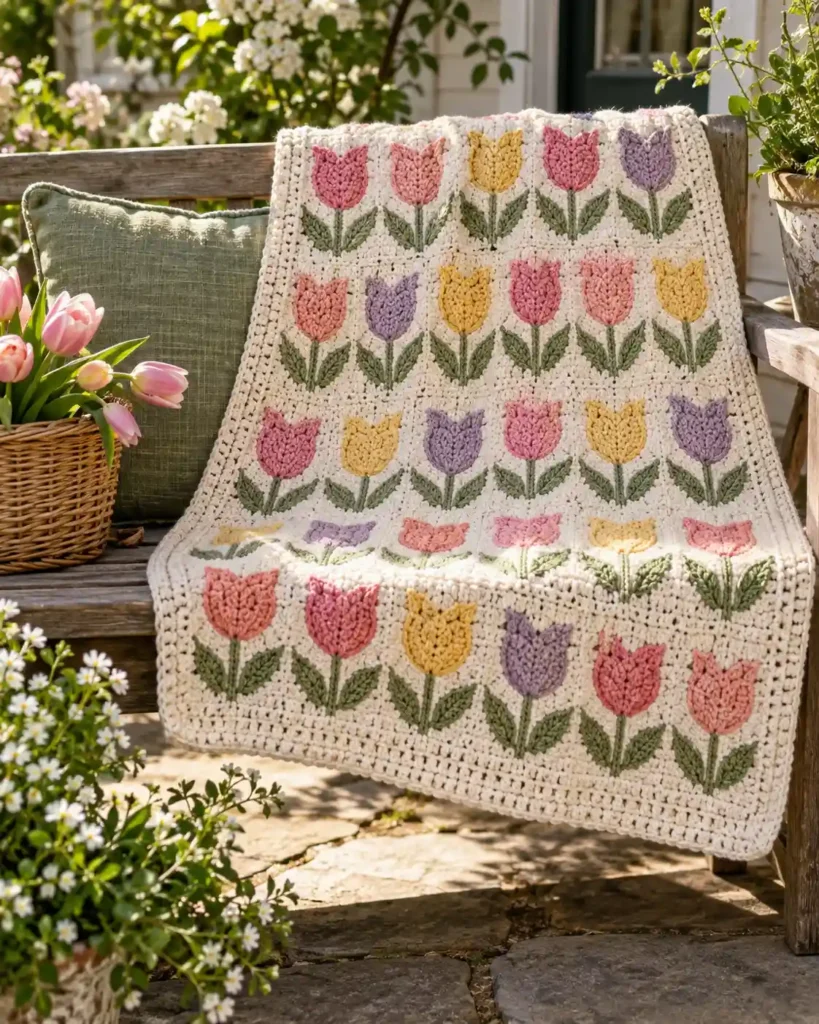
A tulip crochet blanket often uses rows of little blooms attached to green stems or a repeating tulip-style stitch. The vertical shape makes the pattern feel neat even when every flower uses a different color.
Keep the stems consistent and change only the blooms if you want a multicolor design that still looks organized.
This is one of the styles I would suggest to someone who loves seasonal crochet but does not want to join dozens of squares.
Pink, lavender, coral, yellow, and white bulbs against soft green give you instant spring.
17. Jasmine Flower Stitch Blanket
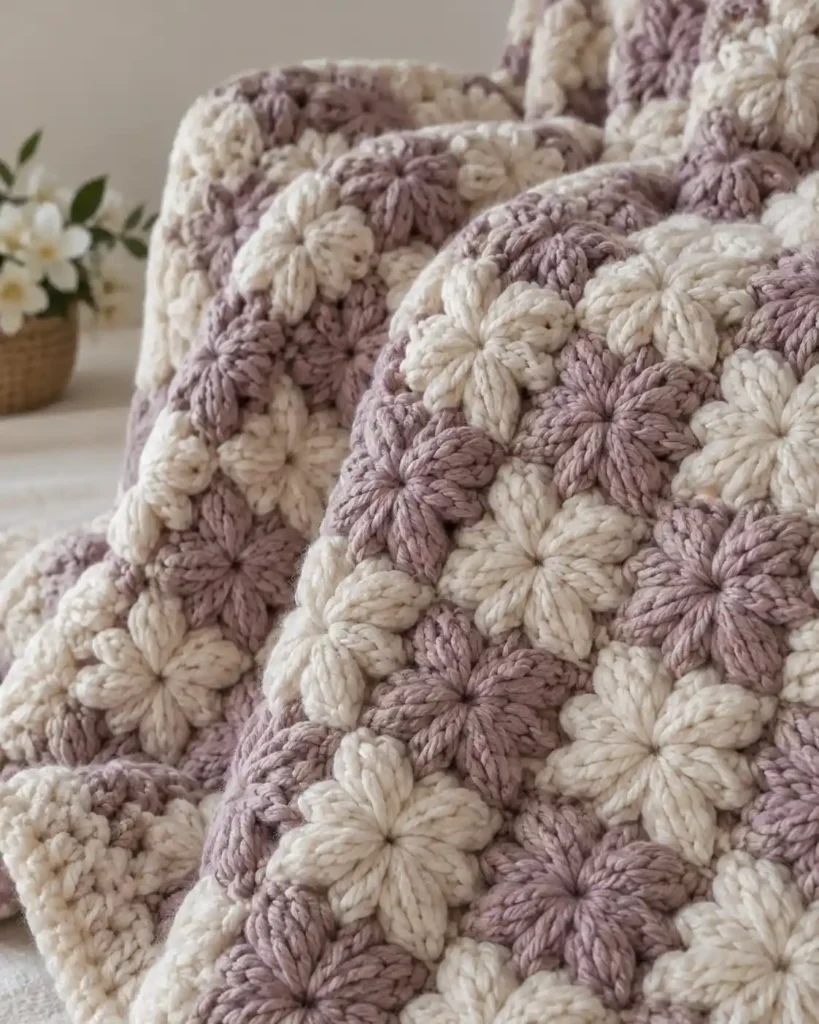
The jasmine flower stitch crochet blanket is for anyone who wants the stitch itself to look like the flower. Interlocking clusters form dense star-like blooms with an almost padded appearance.
It is beautiful, but it asks more from your hands, your tension, and your yarn supply than a basic granny stitch.
The Craft Yarn Council classifies projects involving more involved stitch patterns, colorwork, or shaping above basic beginner level, so a swatch is especially useful before committing to a large textured blanket.
I would start with a lap blanket if jasmine stitch is new to you. You get the full effect without signing yourself up for a king-size endurance test.
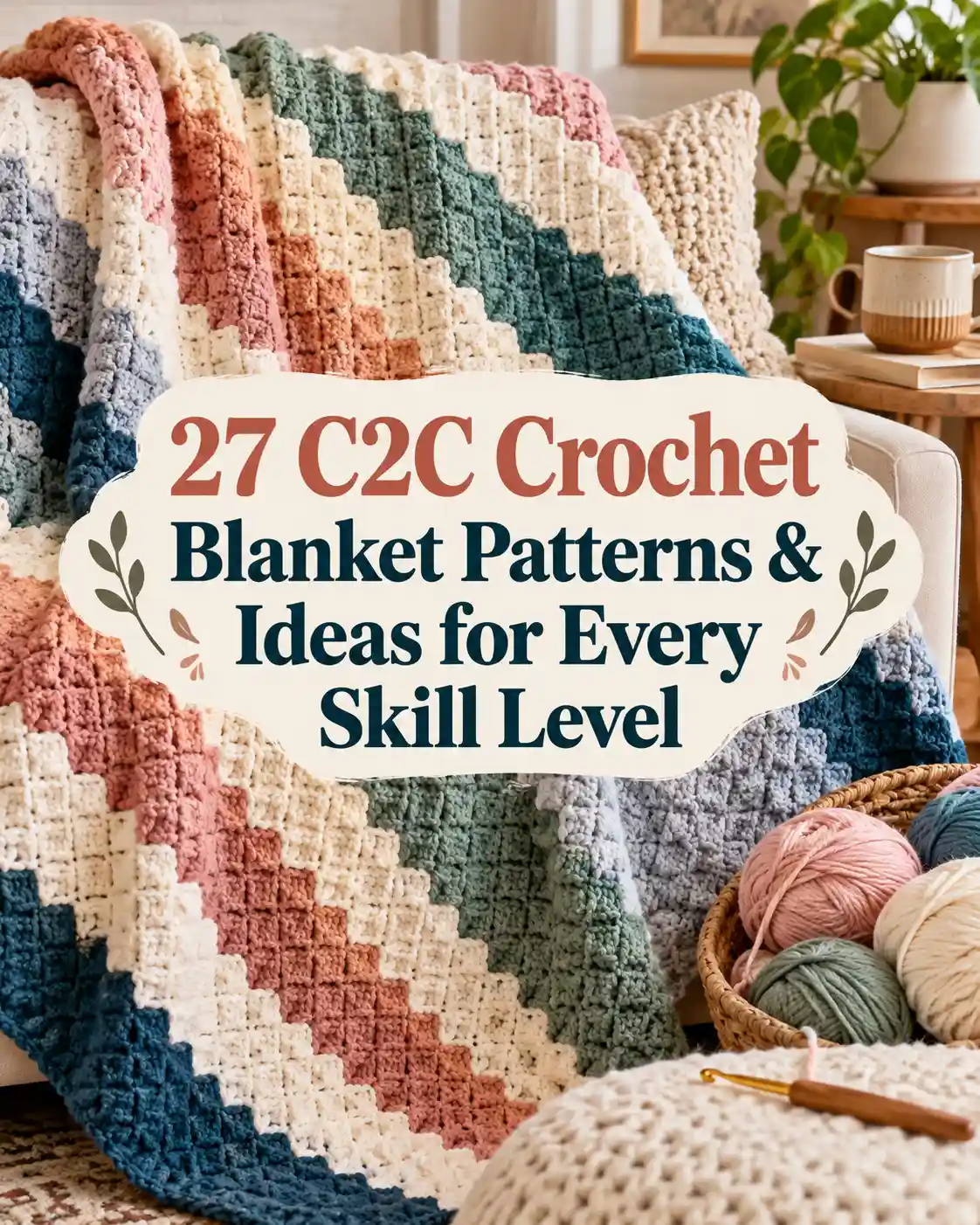
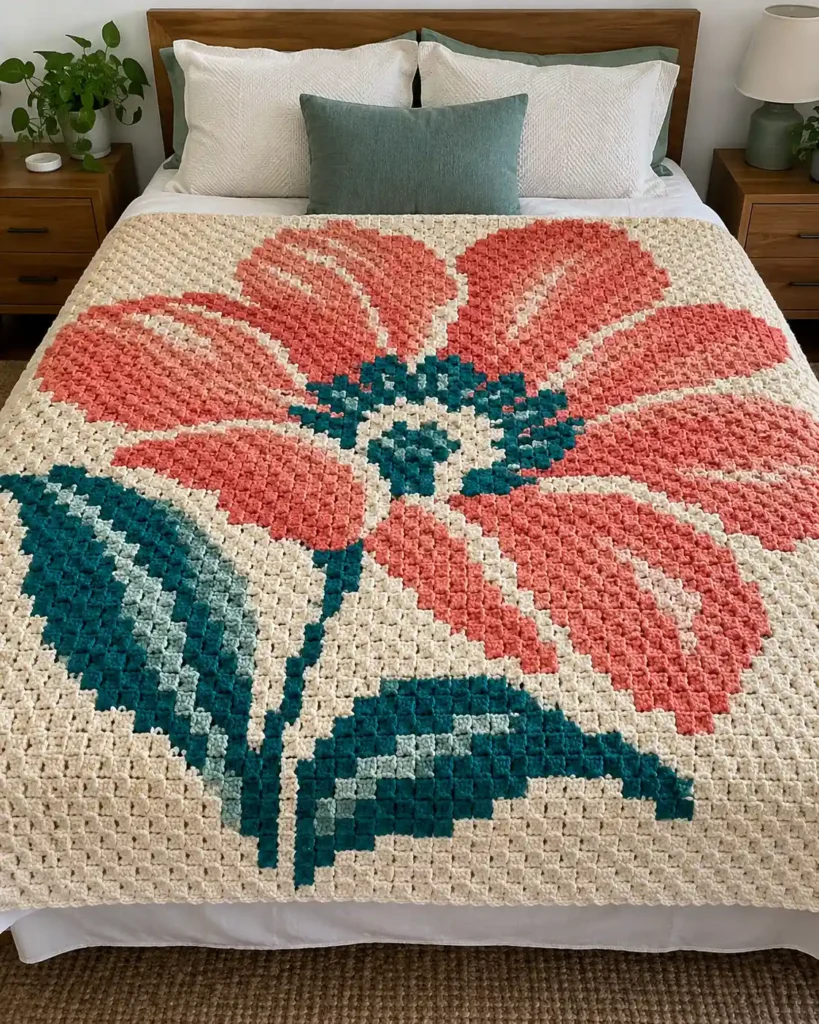
18. Can C2C Crochet Create a Flower Picture?
Absolutely. A flower blanket made with C2C crochet uses corner-to-corner blocks to create a floral picture almost like pixel art.
Instead of repeating separate blooms, you can make one oversized daisy, rose, lotus, or retro flower stretch across the entire blanket.
The main challenge is managing color changes and keeping the chart organized. Small yarn bobbins can save a lot of tangling when several colors appear in one row.
This style is especially good for someone who enjoys following visual charts more than assembling motifs.
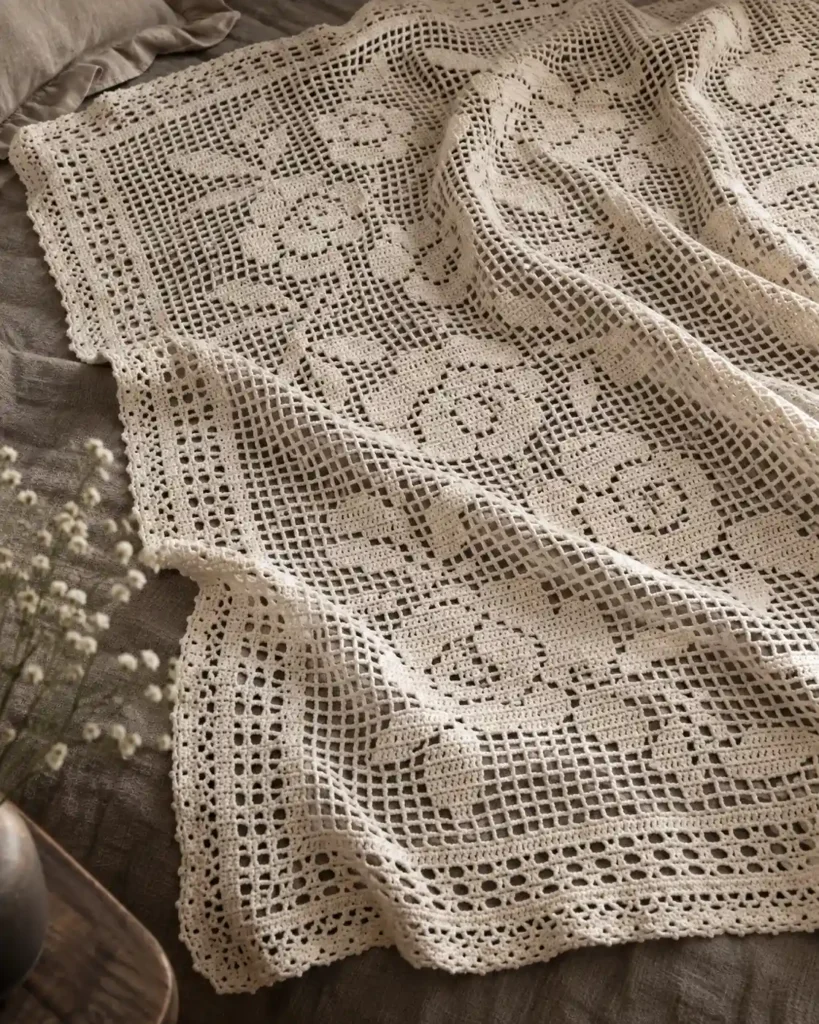
19. Filet Crochet Flower Blanket
A filet crochet flower blanket creates flowers through open and filled mesh spaces rather than heavy color changes. It is subtle, airy, and has that heirloom quality that looks beautiful over a contrasting bedspread or sofa.
Unlike 3D flowers, the design comes from negative space. That means your tension needs to stay steady so the grid remains clean.
Cotton and lighter yarns suit this style especially well when you want crisp stitch definition.
I would choose filet crochet for a decorative spring or summer throw rather than a thick winter blanket.
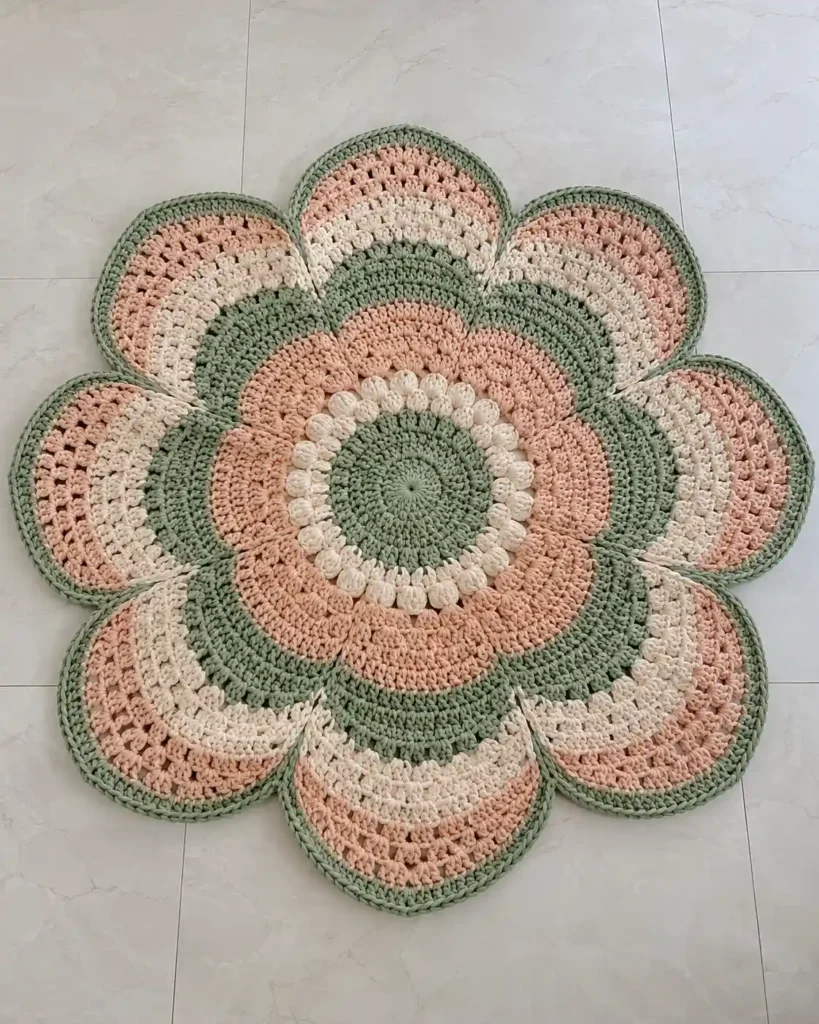
20. What Is a Flower-Shaped Crochet Blanket?
A flower shaped crochet blanket does not simply contain flowers, the entire blanket becomes one giant flower. It is usually worked from the center out with increases that form broad petals or pointed sections around the edge.
That shape makes even a simple stitch pattern feel unusual.
Use it as a lap blanket, decorative throw, or supervised baby play mat where the outline can be seen instead of hidden under other bedding.
Before you go too far, lay the work flat every few rounds. Rippling is easier to correct early than after another thousand stitches.
21. Pastel Crochet Flower Blanket
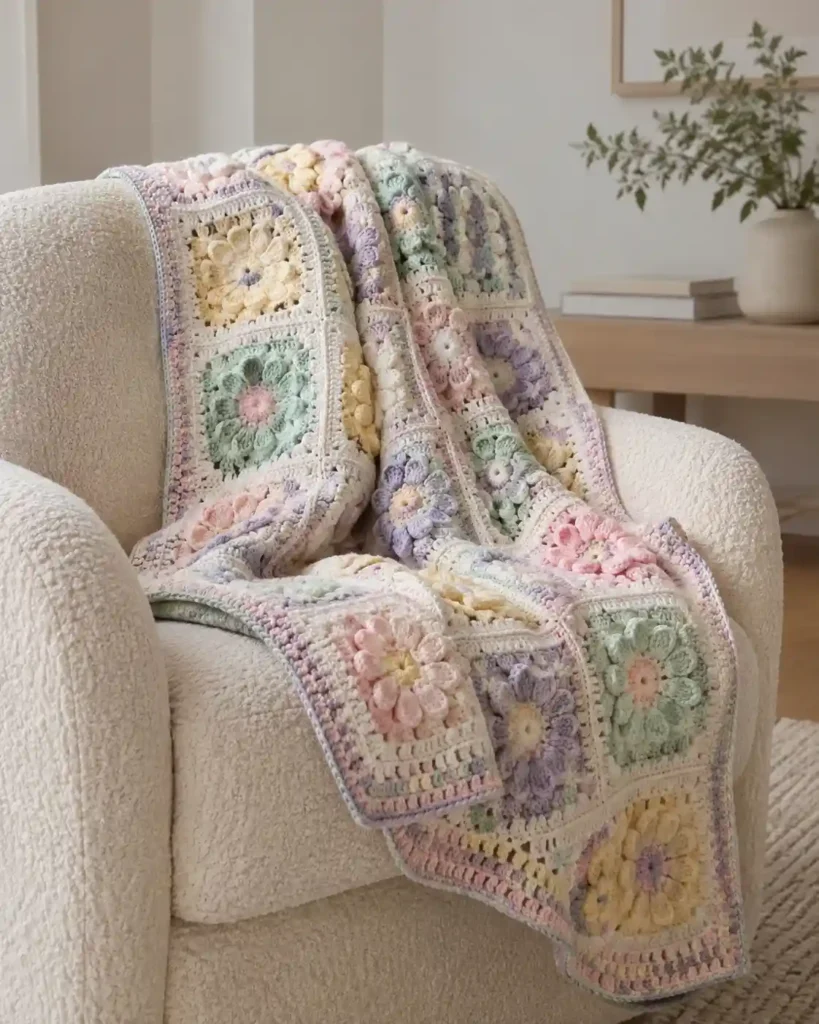
A pastel crochet flower blanket is all about softness: blush pink, lavender, mint, butter yellow, powder blue, and cream.
The challenge is keeping those pale shades from blending into one indistinct wash of color. A repeated neutral border or one slightly deeper accent shade can give the design enough structure.
I love this palette for baby gifts, reading nooks, and light spring decor.
It also works beautifully with daisies, flower granny squares, and puff motifs because the texture creates contrast even when the colors are gentle.
22. How Do You Keep a Multicolor Flower Blanket Cohesive?
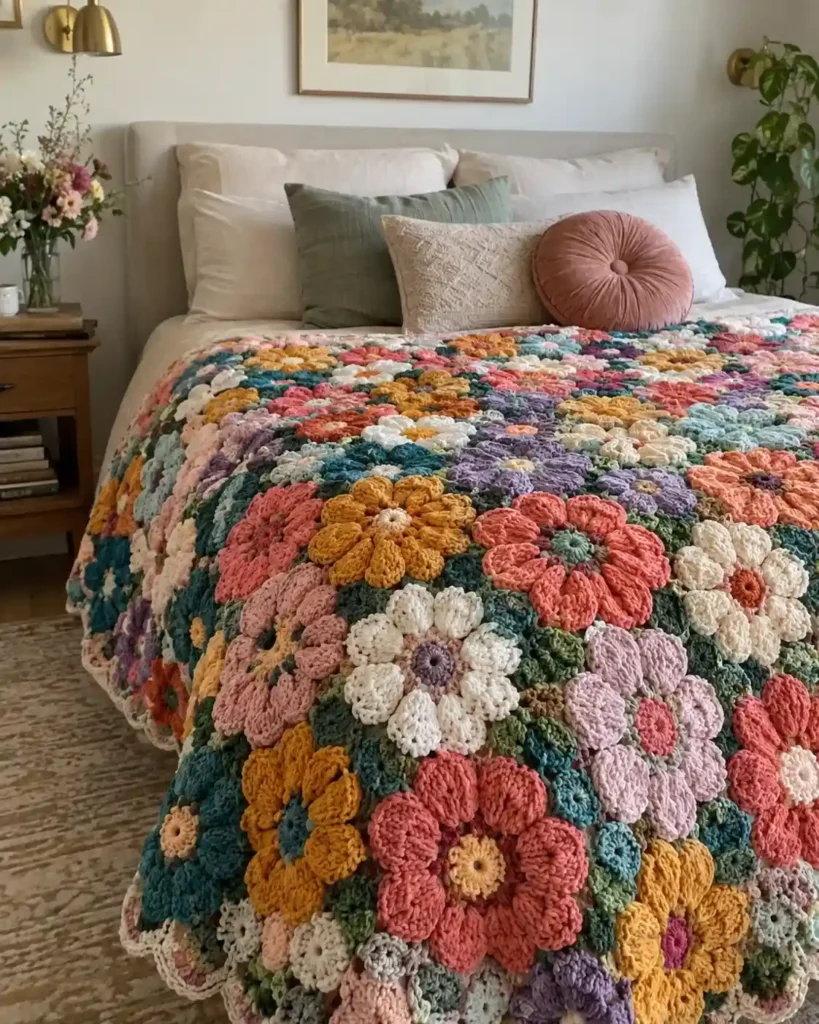
A multicolor crochet flower blanket becomes much easier to plan when you stop treating every square as an isolated color experiment.
Pick one anchor shade cream, charcoal, navy, sage, or another favorite and repeat it across the motifs or joins. Then rotate your brighter colors around it.
That approach creates what looks like happy randomness without actually being random.
Lay the motifs out before joining them, take a phone photo, and look at the photo from a distance. Color imbalance often becomes obvious on a screen.
23. Crochet Flower Throw Blanket
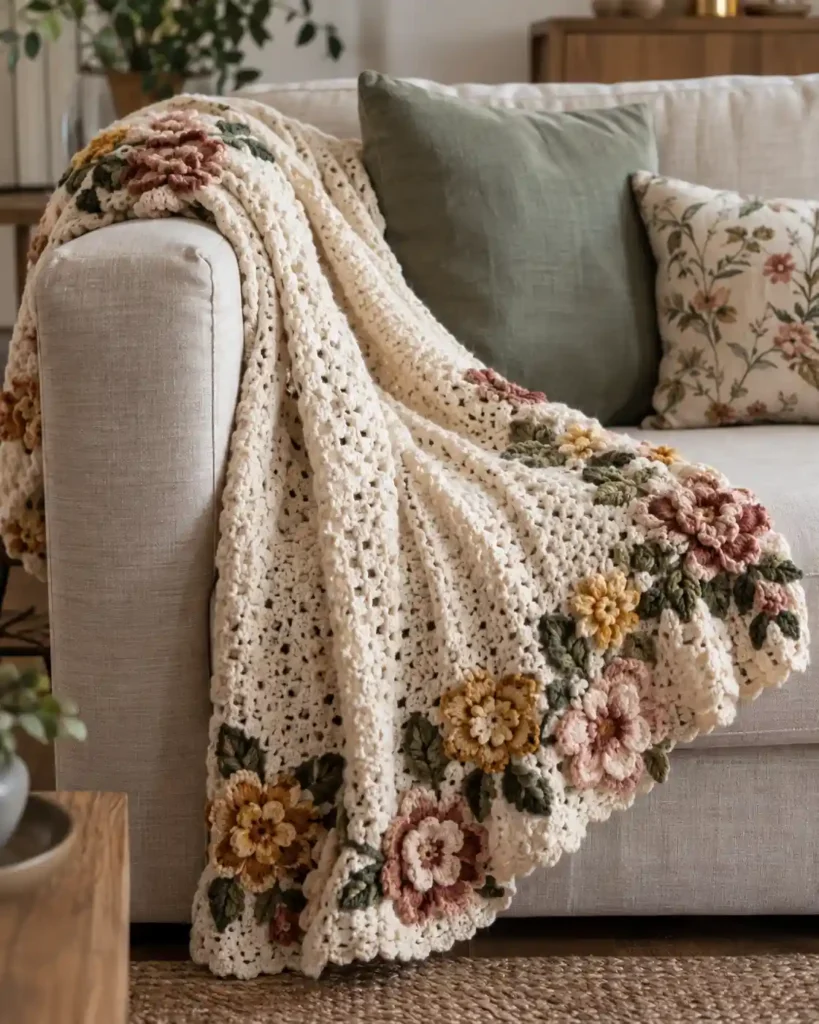
A crochet flower throw blanket pattern should balance looks with everyday use. The flowers need enough detail to feel special, but the fabric still has to drape nicely over a sofa and survive regular handling.
For that reason, I often prefer floral accents over an entire surface covered in bulky appliqué. A row of flowers along one edge or a few feature squares can be enough.
Washable medium-weight yarn is a practical starting point for a household throw, but always check your specific pattern and yarn label rather than assuming yarns in the same weight category behave identically. The Craft Yarn Council specifically warns that yarns sharing a weight number are not automatically interchangeable because drape, softness, and gauge can differ.
Add a simple border and you have a handmade gift that feels decorative without being too precious to use.
24. Can a Lace Border Transform a Flower Blanket?
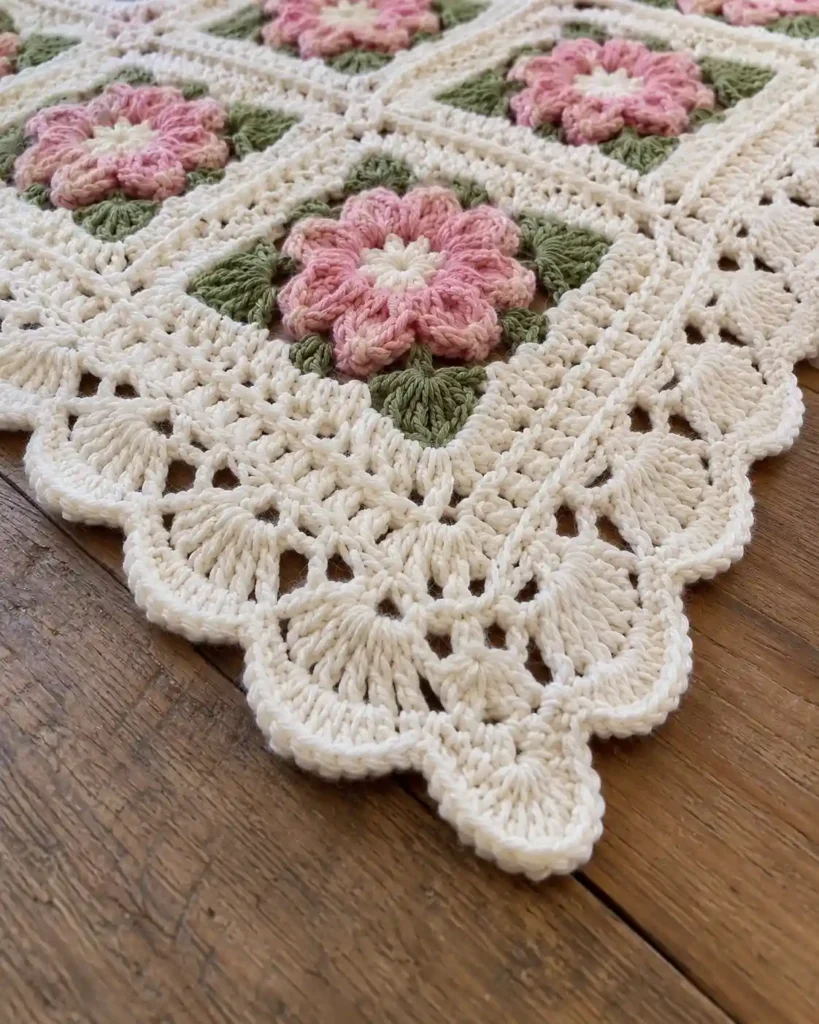
A crochet flower blanket with lace border can look dramatically more finished, especially when the crochet blanket edging complements the simple motifs in the center.
I especially like a lace edge when the blanket contains several flower colors. One consistent border pulls everything together.
Keep the edging in proportion to the blanket. A wide elaborate lace border can overwhelm tiny daisy squares, while a slightly deeper border can be perfect around a large plain floral panel.
Blocking is worth the effort here because it helps the lace openings, corners, and scallops settle into their intended shape.
25. Crochet Flower Blanket and Matching Pillow Set
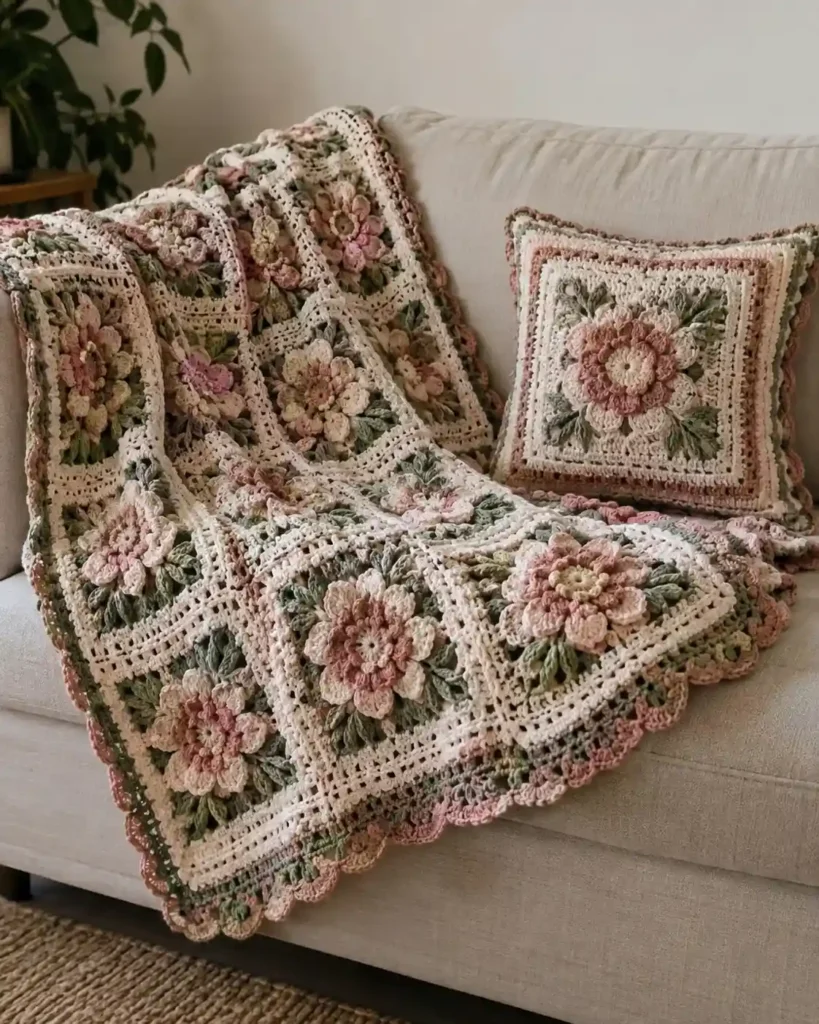
If you already made twenty or thirty flower motifs, a crochet flower blanket and pillow set is the perfect excuse to make a few more.
Using the same flowers on a cushion instantly makes the finished blanket feel like part of a room rather than a standalone craft project. You do not need to copy the blanket exactly; repeating just the palette and one signature motif is enough.
For a removable pillow cover, plan the opening and closure before joining the final panels.
This is one of my favorite ways to use leftover blanket yarn because the matching cushion looks intentional instead of like a stash-clearing project.
How Do You Choose the Right Yarn for a Crochet Flower Blanket?
Choose yarn that suits the blanket’s intended use and clearly shows the floral stitch or motif while providing the drape, durability, and care requirements you need.
- Use smooth yarn for visible stitch definition.
- Match fiber choice to expected washing.
- Swatch before buying yarn for large projects.
- Check pattern gauge rather than relying on yarn labels.
- Consider extra yarn for dense textured flowers.
Start with the pattern, then think about how the blanket will actually be used.
A smooth yarn helps flowers, bobbles, puff stitches, and lace show clearly. Fuzzy fibers can look lovely, but they may blur small petals and make it harder to see exactly where your hook should go.
For blankets that will be washed often, easy-care yarn can make life simpler. For more decorative pieces, you may be willing to choose a fiber that needs gentler washing in exchange for drape or texture.
The Craft Yarn Council’s standard system places DK/light worsted in weight 3 and traditional worsted/afghan/Aran yarns in weight 4, but those categories are only a starting point. Your gauge, stitch pattern, and desired drape still matter.
What Is the Best Way to Join Crochet Flower Motifs?
The best joining method depends on the motif shape and whether you want an invisible seam, a decorative ridge, or fewer finishing steps.
- Sew motifs for a flexible, discreet seam.
- Slip-stitch for a neat crocheted join.
- Single-crochet for a stronger visible ridge.
- Join-as-you-go to reduce later finishing.
- Test the join before assembling the entire blanket.
There are several good options:
- Whip stitch: simple and flexible, with a sewn seam.
- Slip-stitch join: gives a visible but neat crochet seam.
- Single-crochet join: creates a stronger, more pronounced ridge.
- Join-as-you-go: connects motifs during the final round and reduces finishing later.
- Continuous joining: useful for some granny-square layouts when you want fewer cut ends.
The right method depends on the flower shape. Squares are easy to line up. Hexagons need a little more planning, while loose individual flowers may need to be sewn at several contact points.
Whatever method you use, secure your yarn ends carefully. The Crochet Guild of America includes maintaining consistent gauge, selecting an appropriate hook, and weaving ends in securely among the standards it evaluates in its Master Crocheter program.
How Do You Plan Crochet Flower Blanket Size?
Measure one finished motif or gauge swatch, calculate how many repeats you need for the desired dimensions, and include joins and borders in the final size estimate.
- Measure motifs after recommended blocking.
- Calculate rows and columns before joining.
- Include border width in your final dimensions.
- Lay motifs out to verify proportions.
- Use pattern stitch multiples for one-piece blankets.
Make one finished motif first and measure it after any blocking the pattern recommends.
If one square measures 6 inches and you want a blanket roughly 48 inches wide, eight squares give you about 48 inches before accounting for joining and borders. The same approach works for hexagons, although you will need to consider their staggered layout.
Always calculate the border separately. A deep decorative edge can add several inches to the final dimensions.
For a one-piece stitch pattern, make a gauge swatch and use the pattern’s stitch multiple to adjust width rather than guessing your foundation chain.
How Can You Make Flower Motifs Look More Professional?
Consistent tension, uniform motif sizing, secure ends, thoughtful blocking, and a controlled color plan make crochet flower motifs look cleaner and more polished.
- Keep hook size consistent.
- Check motif measurements as you work.
- Repeat key colors across the design.
- Use one joining method throughout.
- Block motifs when crisp shaping matters.
Consistency makes a bigger difference than complicated crochet stitches.
Keep the following in mind:
- Use the same hook unless the pattern tells you to change.
- Measure a few motifs as you work.
- Weave in ends regularly instead of saving hundreds for the final evening.
- Block motifs when the design benefits from crisp edges.
- Repeat key colors across the blanket.
- Keep joins consistent.
- Check that raised flowers are firmly attached.
A beautifully executed simple daisy square will usually look better than an elaborate flower made with uneven tension.
How Should You Finish and Care for a Floral Crochet Blanket?
Finish and wash a floral crochet blanket according to the yarn’s fiber content and care label, and give dimensional motifs, joins, and lace edges extra attention after cleaning.
- Follow the yarn manufacturer’s care instructions.
- Check mixed fibers for compatible washing requirements.
- Inspect dimensional flowers after cleaning.
- Reshape lace when appropriate for the fiber.
- Include care instructions when gifting the blanket.
Finish according to the fiber and yarn label rather than using one washing method for every blanket.
Cotton, acrylic, wool, and blended yarns can behave very differently when washed, dried, stretched, or blocked. If you are using multiple yarns in one blanket, make sure their care requirements are compatible before you commit to dozens of motifs.
For dimensional flowers, check attachments after washing. For open lace, reshape gently if the yarn’s care instructions permit it.
And if the blanket is a gift, include a small care card. It takes two minutes and saves the recipient from wondering whether their beautiful handmade throw belongs in a washing machine.
Frequently Asked Questions
What is the easiest crochet flower blanket for beginners?
A flower granny square blanket, simple daisy motif, or repeating tulip/flower stitch is usually a friendly starting point. Practice one motif first so you can fix tension or color-change problems before multiplying them across the blanket.
How do you join crochet flowers to make a blanket?
You can sew motifs together, slip-stitch them, single-crochet them together, or use a join-as-you-go technique. Squares are usually easiest to join, while individual flowers and hexagons may need more careful placement.
How much yarn do I need for a crochet flower blanket?
It depends on blanket size, yarn weight, gauge, and how much texture the pattern contains. Dense puff, bobble, and 3D flower designs generally use more yarn than airy filet or simple flat motifs, so use the specific pattern estimate whenever possible.
Can a crochet flower bouquet blanket really fold into a bouquet?
Yes. The effect usually comes from a circular or shaped blanket combined with roses, leaves, or floral edging positioned so the blanket resembles a bouquet when gathered or folded.
Are puff flower crochet blankets heavy?
They can be. Puff motifs are dense and use considerably more yarn than many flat motifs, so yarn weight and finished blanket size make a noticeable difference.
What yarn is best for a crochet baby blanket with flowers?
Choose a soft, easy-care yarn that works well with the pattern and keeps any motifs secure. Avoid loose decorative pieces, and remember that the CPSC recommends keeping loose blankets out of infant sleep spaces.
What is the difference between a puff flower and a bobble flower?
Both create raised texture, but their construction and appearance differ. Puff stitches usually gather several partially completed loops into one soft cluster, while bobble stitches create a more defined bump that can be arranged to form petals or flower centers.
How do you make a multicolor flower blanket look cohesive?
Repeat one neutral or anchor color, limit the main palette, and distribute strong shades across the entire layout. Planned randomness nearly always looks more balanced than choosing every motif completely independently.
Final Thoughts
A crochet flower blanket can be as simple, colorful, textured, or detailed as you want it to be. From easy daisy and granny-square designs to puff flowers, bouquet blankets, 3D motifs, and delicate lace styles, there is plenty of room to choose a project that matches both your skill level and your personal style.
If you are new to this type of project, start with a smaller motif, test your yarn and tension, and build from there. More experienced crocheters can experiment with layered flowers, unusual shapes, mixed motifs, and bold color combinations.
Most importantly, choose the design that makes you excited to pick up your hook. A beautiful flower blanket crochet project takes time, so the best pattern is usually the one you will genuinely enjoy making from the first flower to the final border.
Save your favorite ideas, plan your colors, and enjoy turning simple yarn into a handmade floral blanket you will be proud to use, gift, or display.

![The Best 30+ Free Crochet Cat Patterns [Beginner-Friendly Guide]](https://crochetmind.com/wp-content/uploads/2025/04/1-The-Best-30-Free-Crochet-Cat-Patterns-Beginner-Friendly-Guide.webp)