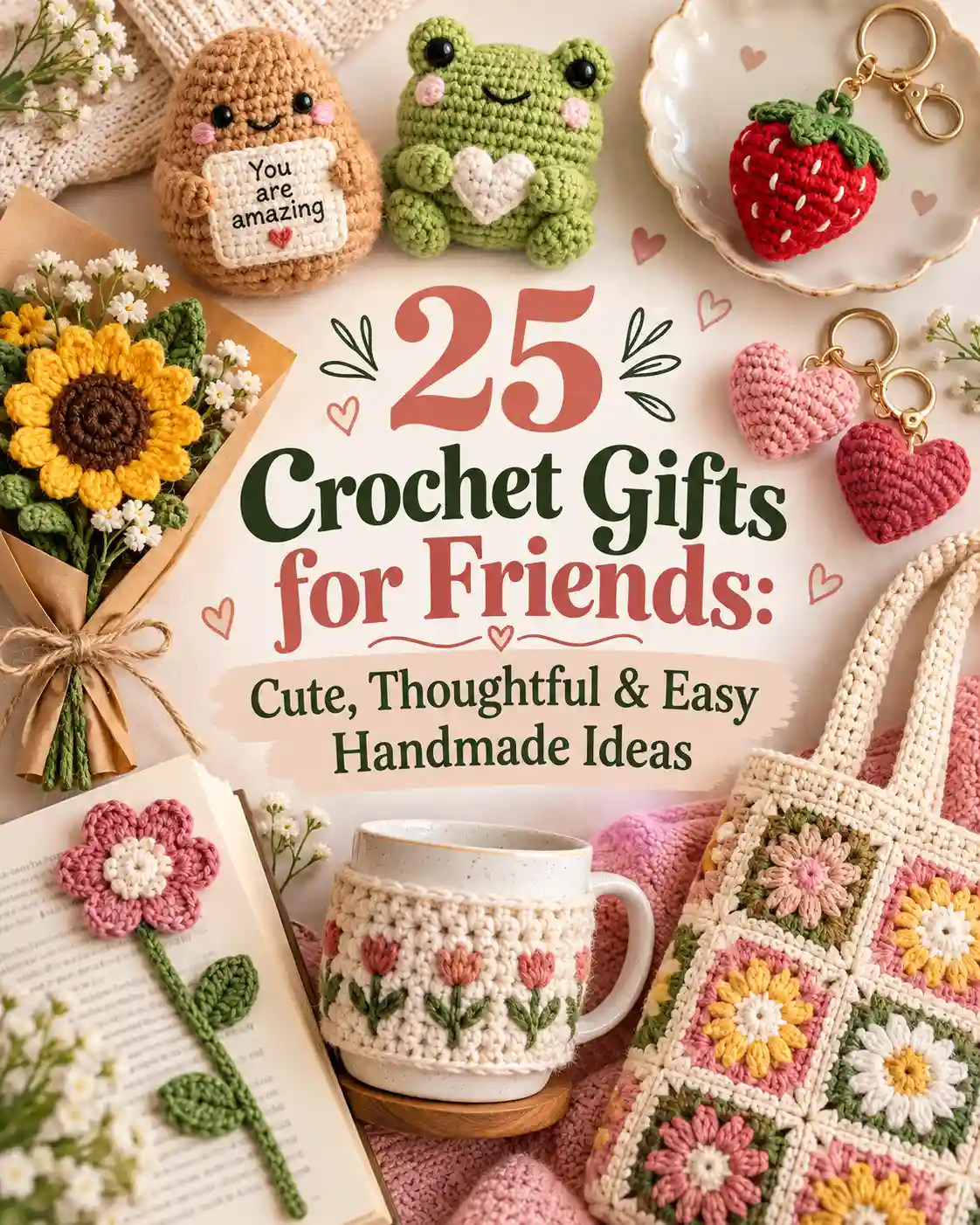
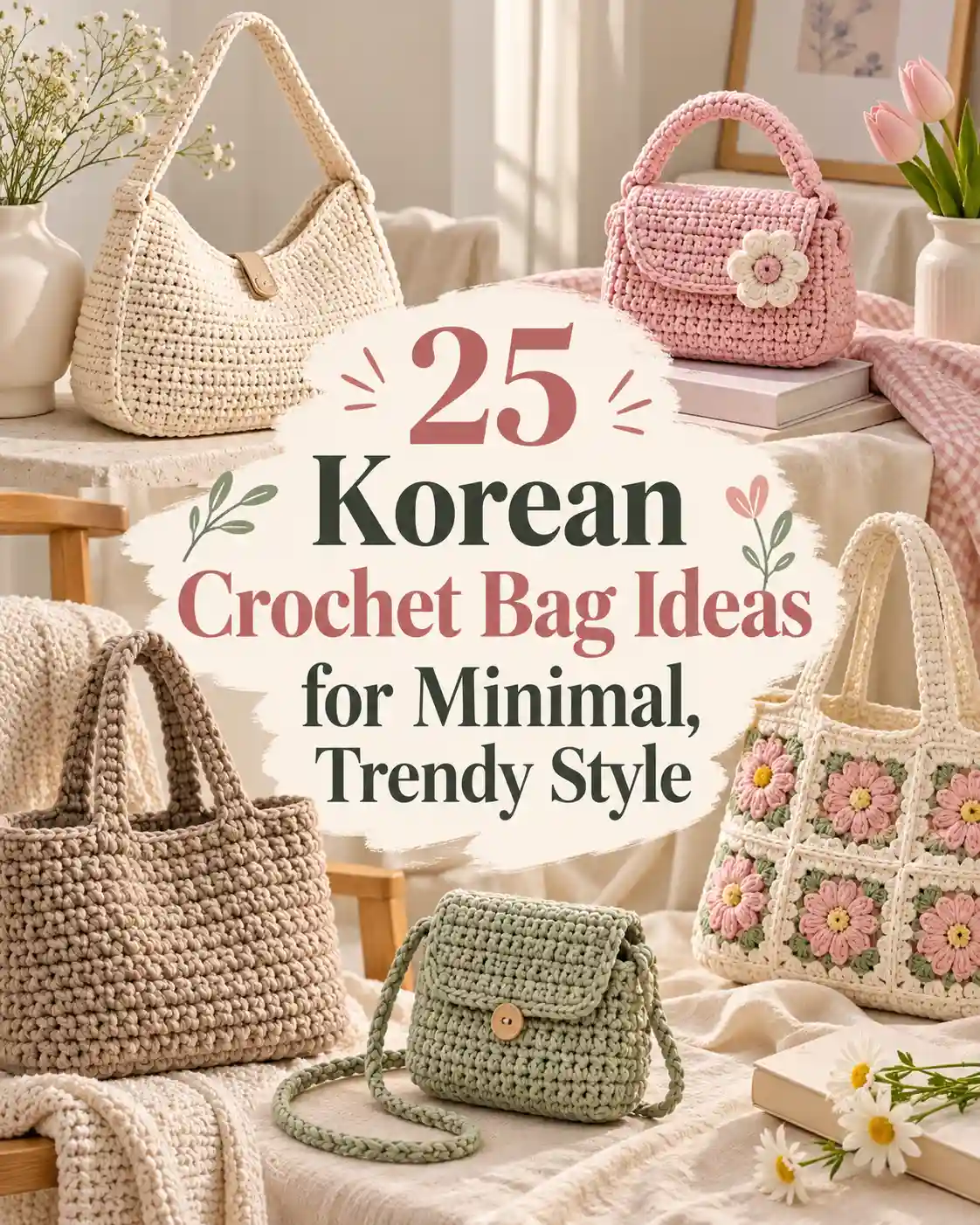
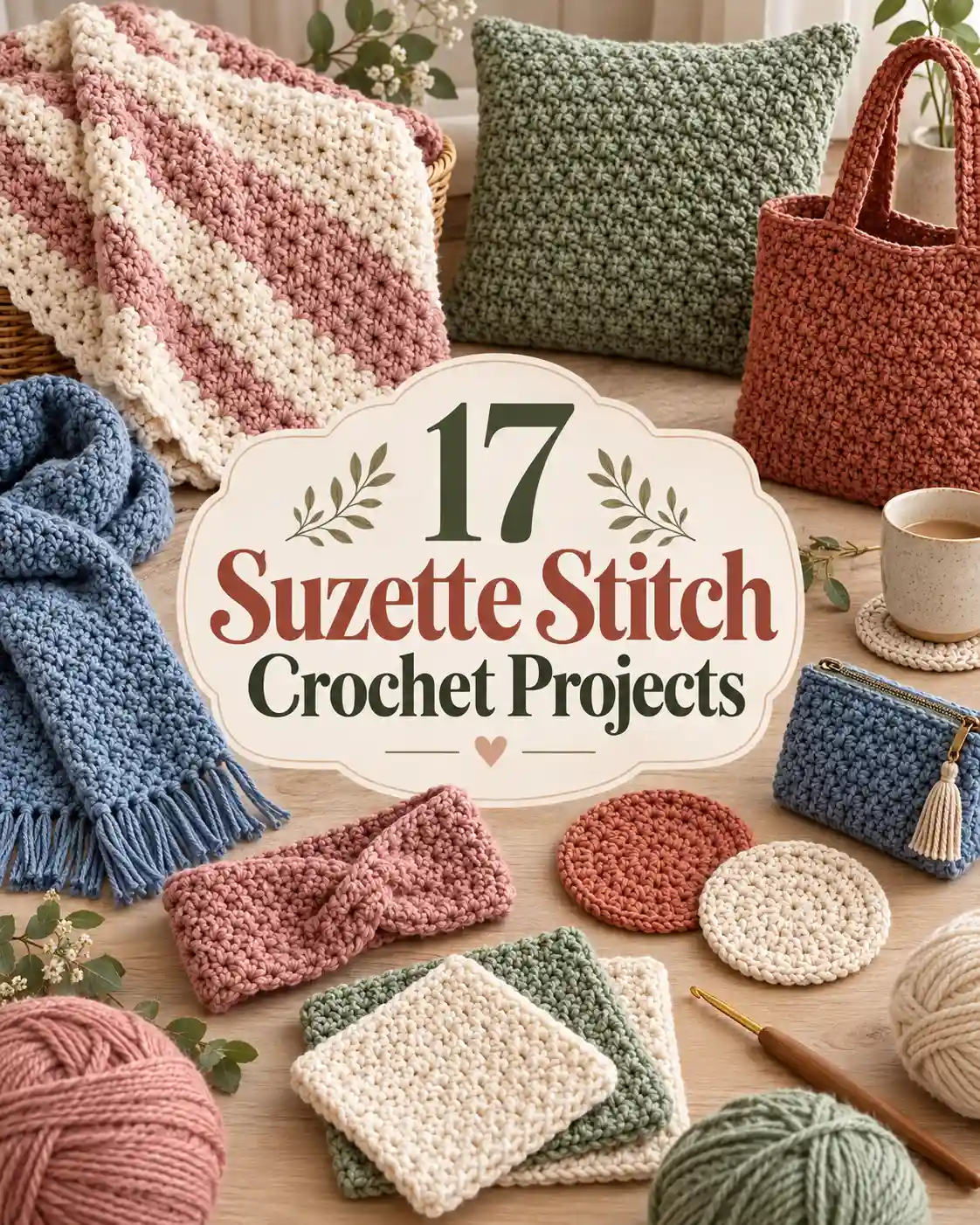
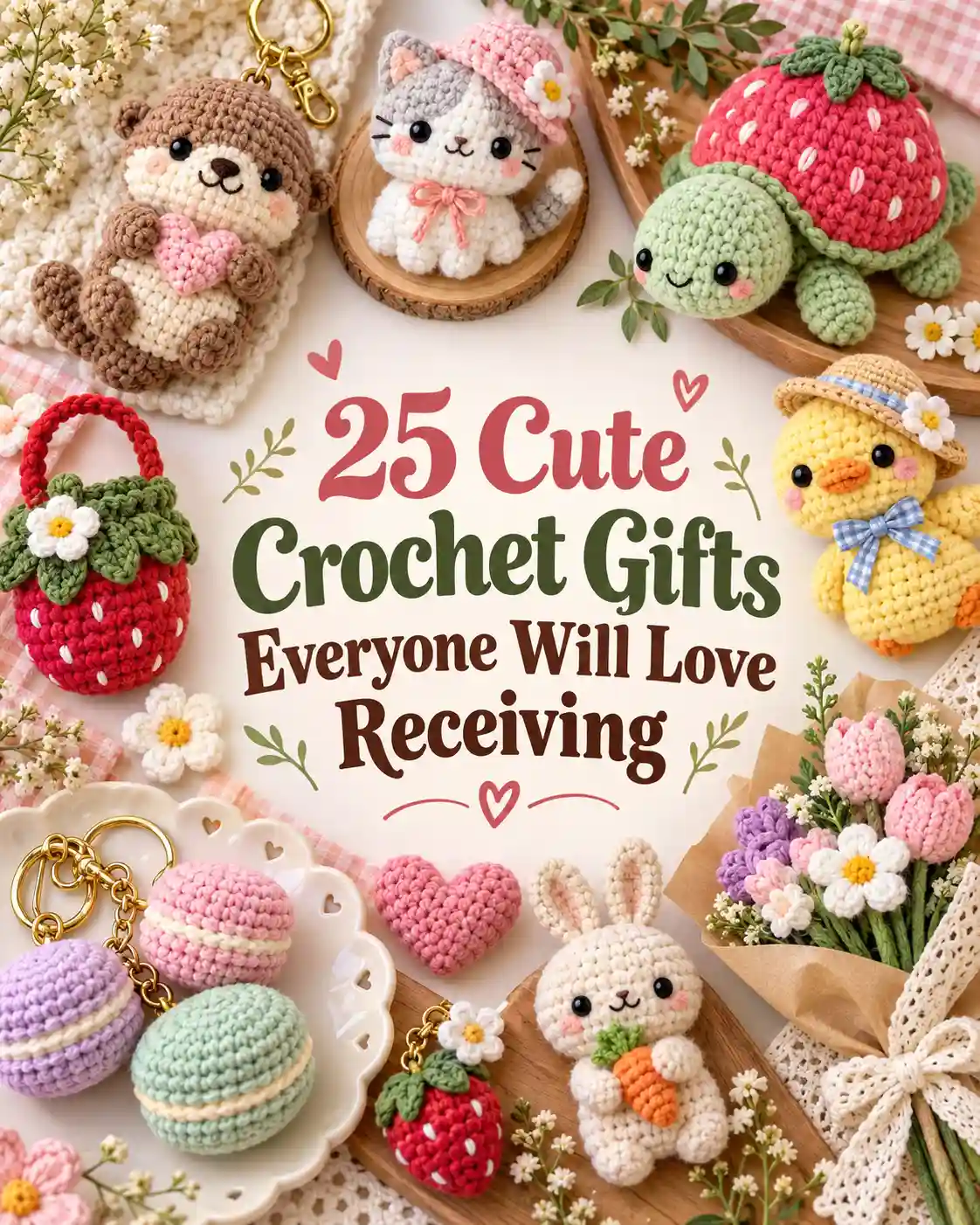
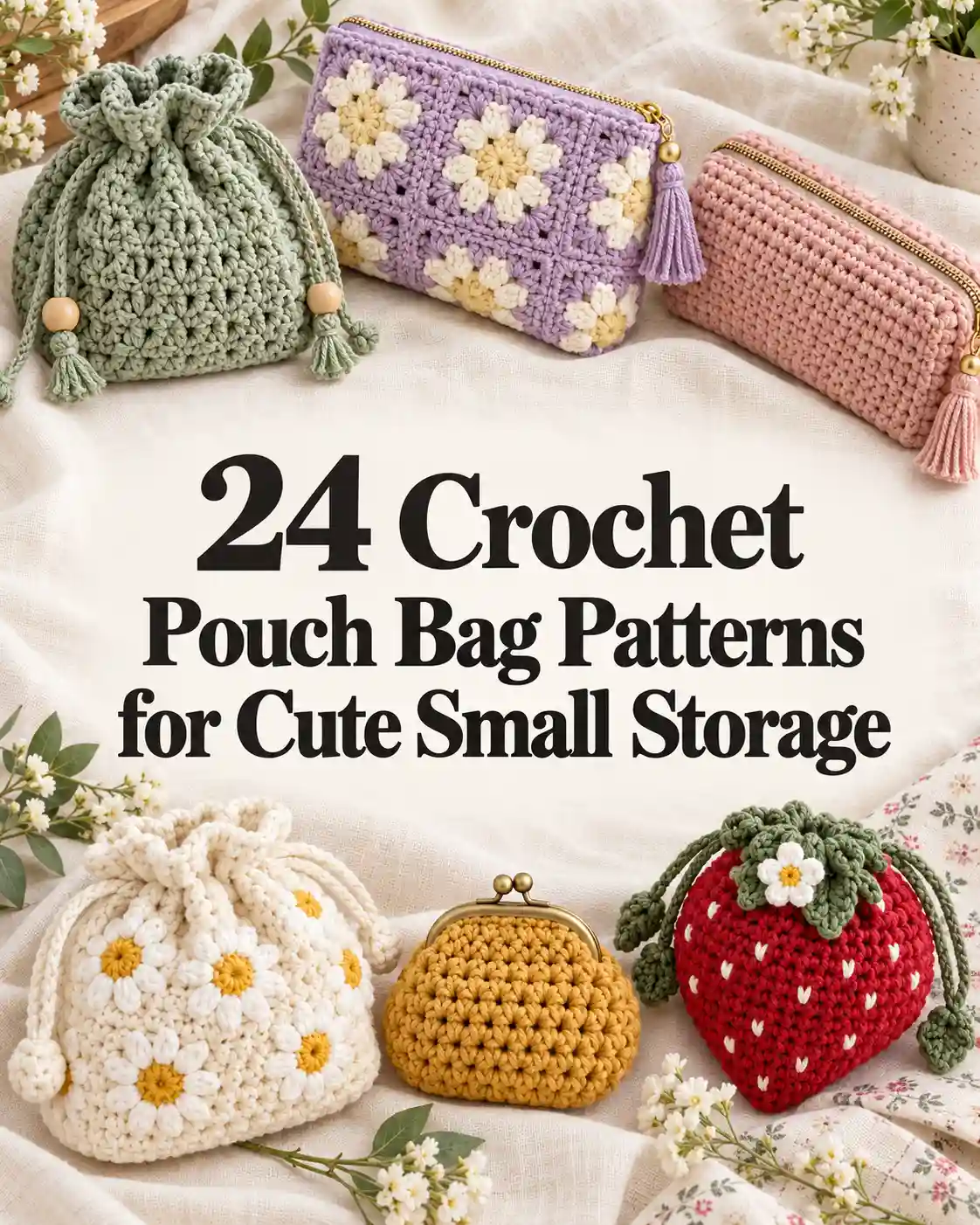
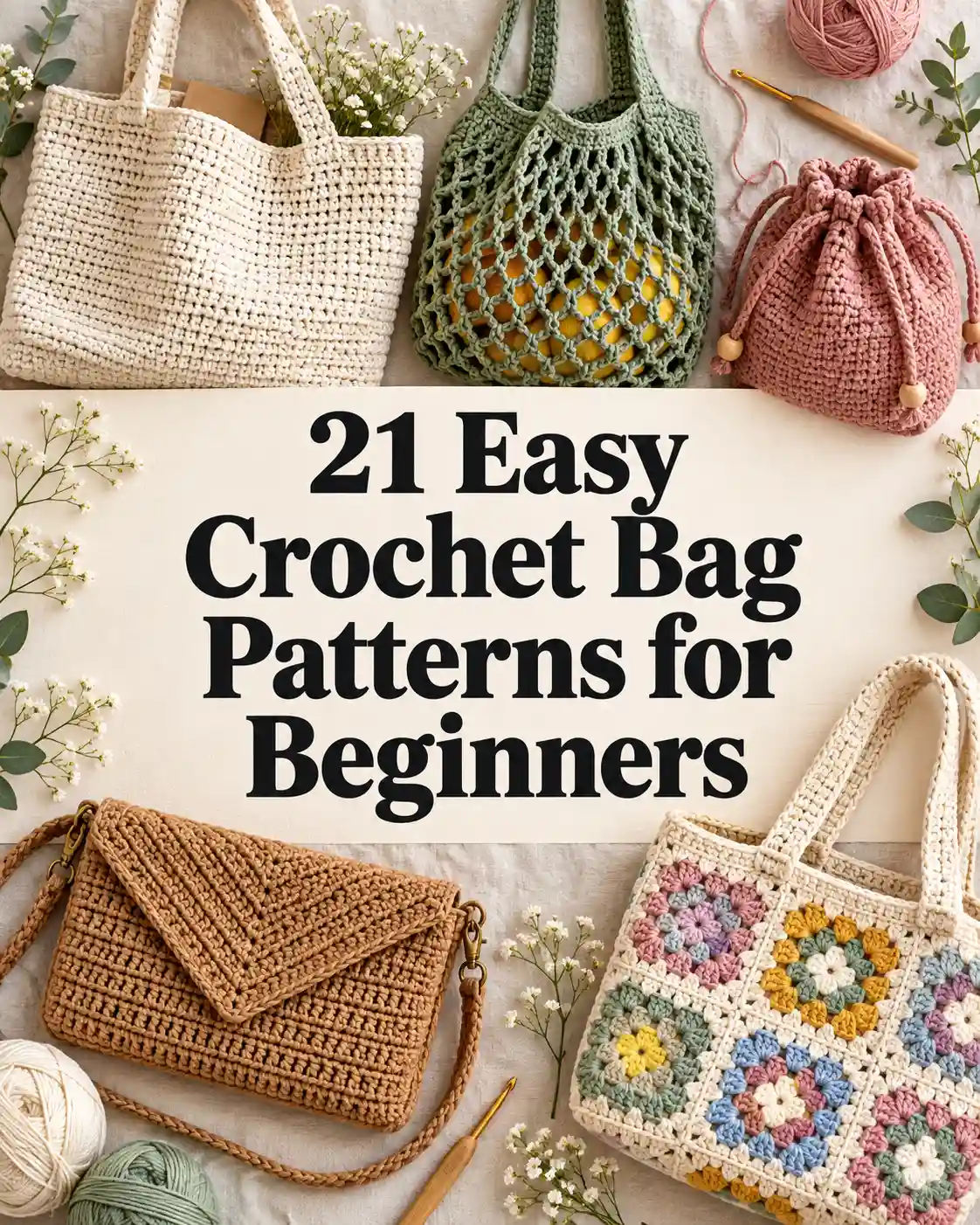
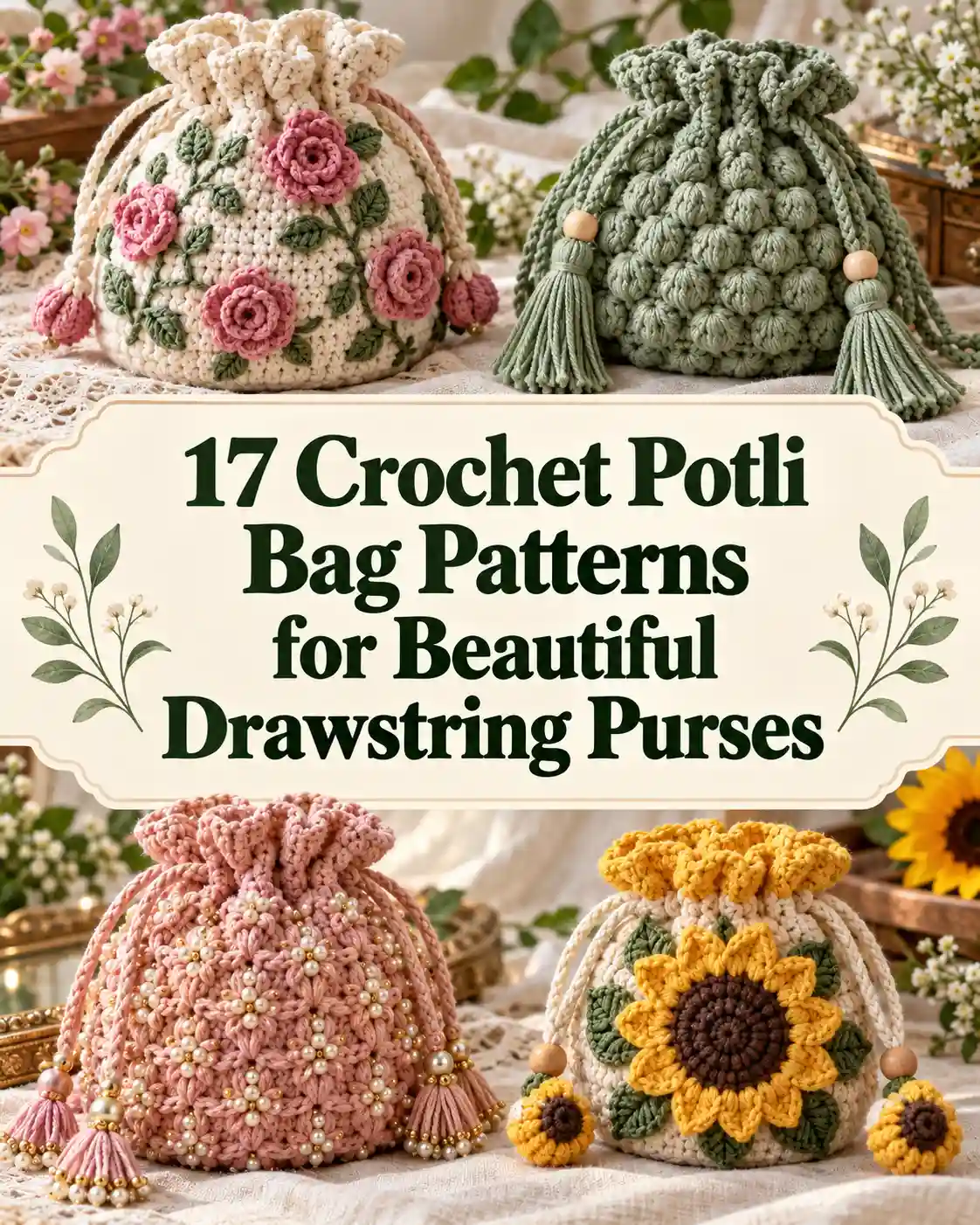
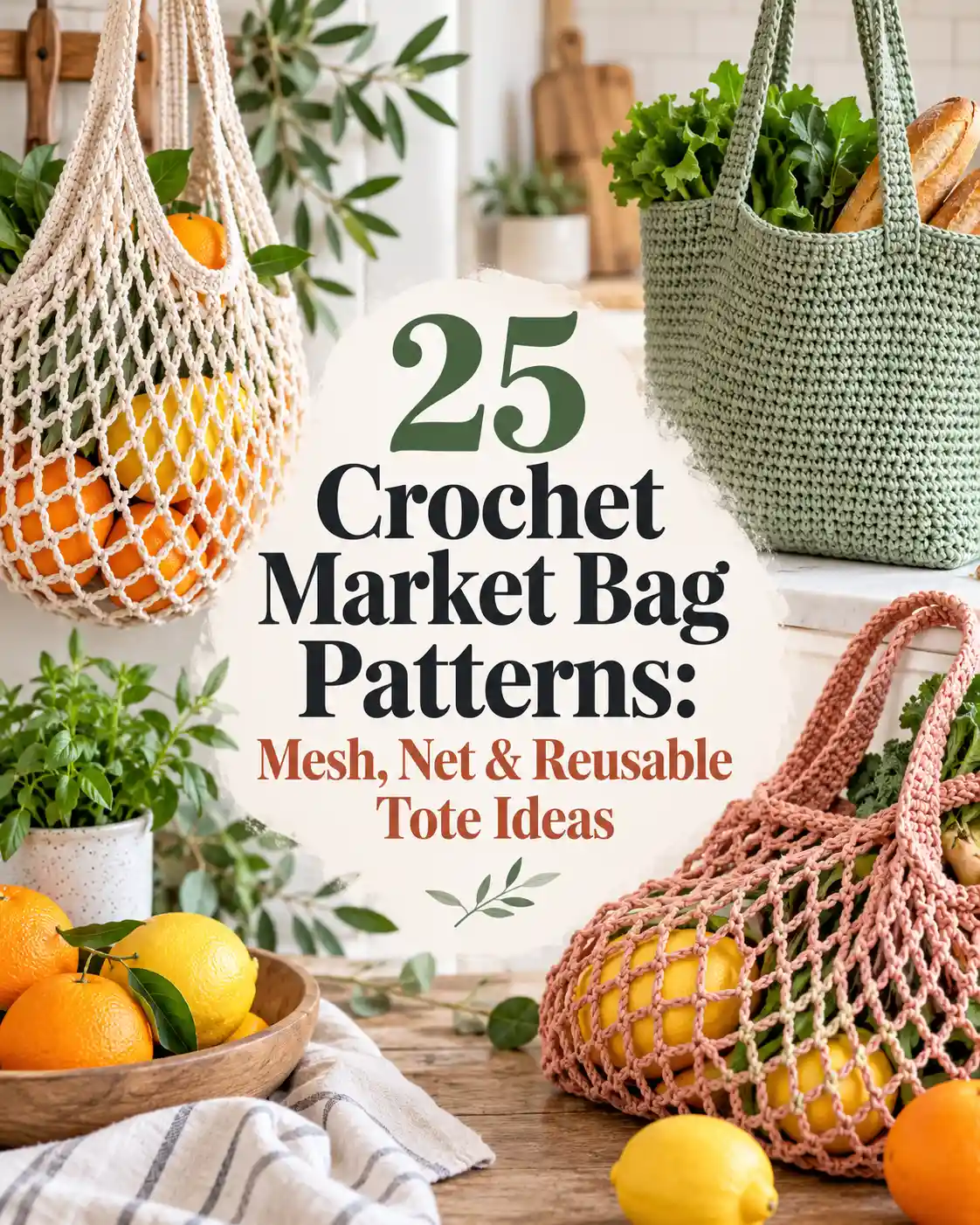
A handmade crochet market bag is one of those projects that feels rewarding long after the final stitch. You can carry it to the farmers market, tuck it into your everyday tote, use it for groceries, or turn it into a thoughtful handmade gift. I especially like how one basic bag idea can become a lightweight crochet mesh bag, an expandable crochet net bag, or a sturdier reusable tote simply by changing the stitches, yarn, and construction. This guide brings together 25 practical styles so you can choose a bag that matches how you actually shop, carry, and crochet.
Key Takeaways
- Match the bag style to what you carry.
- Use dense stitches for stronger bases and handles.
- Choose a crochet mesh bag for lightweight flexibility.
- Keep foldable bags thin, simple, and easy to pack.
- Check yarn labels before changing fiber or hook size.
- Use reinforced construction for heavier grocery loads.
A crochet market bag is one of those projects that can be pretty, practical, and surprisingly simple at the same time. For most everyday market bags, cotton or a cotton blend works especially well, while mesh and net stitches keep the bag lightweight and expandable; denser crochet is better around the bottom and handles where you need more structure.
The 25 ideas below cover everything from a classic crochet mesh bag and roomy crochet net bag to foldable shoppers, granny-square totes, produce bags, and sturdier grocery designs. They are pattern ideas and construction directions rather than 25 complete written patterns, so you can use them to choose the style you want before following or designing a specific pattern.
What Makes a Good Crochet Market Bag?
A good crochet market bag balances flexibility, strength, washable materials, and comfortable handles so it can expand without becoming difficult to carry.
At a Glance:
- Keep the body flexible for useful expansion.
- Strengthen the base for better load support.
- Reinforce handles to control stretching.
- Choose washable yarn for repeated market use.
- Match stitch openness to what you plan to carry.
A good crochet market bag balances three things: stretch, strength, and carrying comfort. Open stitches let a bag expand around groceries, but the bottom, top edge, and handles usually benefit from tighter stitches so the bag does not become one giant stretchy net.
Cotton is a favorite for market bags for a practical reason. Cotton Incorporated notes that cotton fiber actually becomes stronger when wet, while its natural absorbency also makes it suitable for items that may need regular washing.
The exact yarn and hook still depend on the pattern. The Craft Yarn Council recommends checking the yarn label for fiber content, yarn weight, yardage, care directions, recommended hook size, and gauge information rather than choosing materials by appearance alone.
| Bag Style | Best For | Structure | Typical Skill Level |
|---|---|---|---|
| Open mesh | Produce, beach trips, light shopping | Very stretchy | Beginner–Intermediate |
| French/net bag | Fruit, vegetables, bread | Expandable | Beginner–Intermediate |
| Solid-bottom tote | Groceries and heavier items | More structured | Intermediate |
| Foldable bag | Purse, travel, backup shopping | Lightweight | Beginner–Intermediate |
| Granny-square bag | Colorful everyday carry | Medium structure | Intermediate |
| Produce bag | Fruit and vegetables | Light and breathable | Beginner |
| Reinforced tote | Larger grocery loads | Firm | Intermediate |
For reference, a current Yarnspirations Lily Sugar’n Cream market-bag pattern is listed as Easy and finishes at about 15 inches (38 cm) long, excluding the handles, which gives you a useful real-world starting point when thinking about proportions.
Which Crochet Market Bag Style Should You Make?
Choose your crochet market bag by deciding what you need to carry, how much stretch you want, and whether portability, style, or strength matters most.
At a Glance:
- Pick mesh for light, expandable carrying.
- Choose a solid base for heavier groceries.
- Use foldable designs for travel or backup shopping.
- Try motifs or colorwork for decorative totes.
- Reinforce handles when carrying substantial weight.
The best choice depends on what you actually plan to carry. A loose mesh bag makes sense for apples, bread, towels, or yarn, while cans, bottles, and heavier groceries deserve a denser base and stronger handles.
25 Crochet Market Bag Patterns: Mesh, Net & Reusable Tote Ideas
Here are 25 ways to take the basic market-bag idea in completely different directions.
1. Why Start With a Classic Open-Mesh Crochet Market Bag?
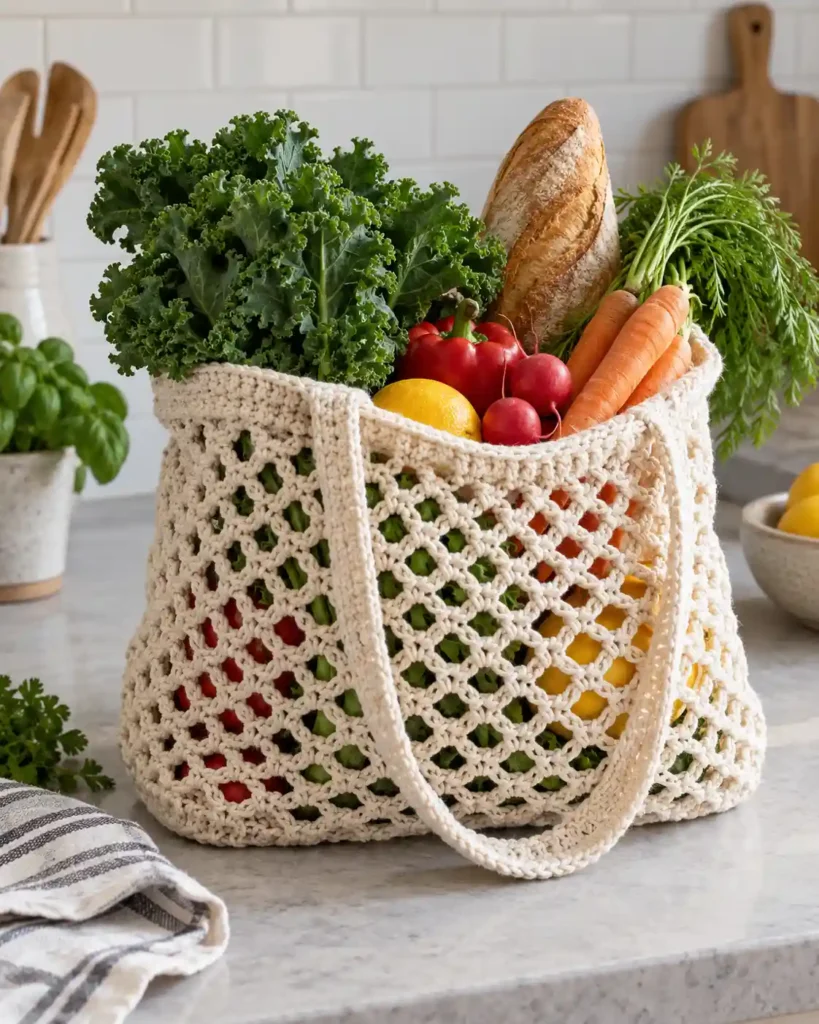
The classic open-mesh crochet market bag is the design that explains why these totes are so popular: it looks small when empty, then stretches around whatever you put inside. Instead of crocheting a thick wall of fabric, chain spaces do much of the work, keeping the finished project lighter and faster to make.
I would use this style for fruit, vegetables, bread, yarn, or casual farmers-market shopping rather than tiny loose items. The smartest version pairs the airy body with a denser base, top border, and handle area.
Best for: An all-purpose first market bag with that unmistakable slouchy handmade look.
Special Tip: Keep the bottom more solid than the body. It gives the bag a visual anchor and helps distribute the load.
2. Is an Easy Beginner Crochet Market Bag Worth Making First?
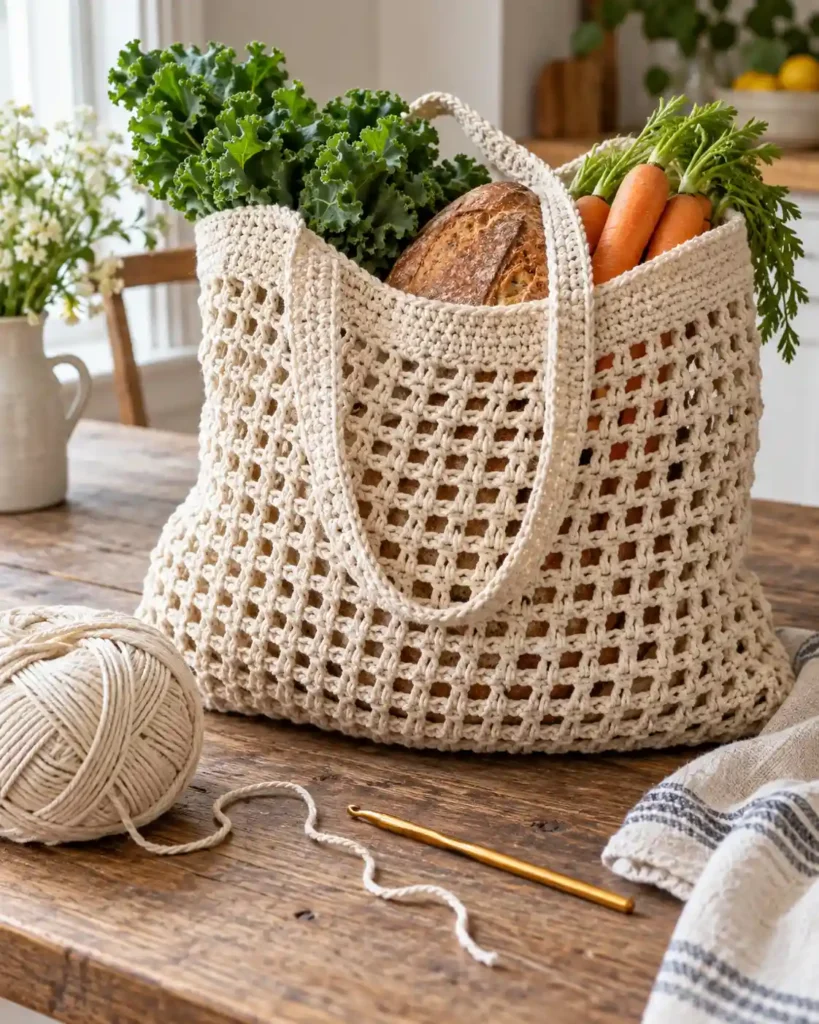
If this is your first bag, simplicity beats an elaborate stitch pattern every time. A beginner-friendly version built from chains, single crochet, double crochet, and a simple mesh repeat lets you concentrate on working evenly instead of constantly checking complicated instructions. If you are still learning the basics, our how to crochet for beginners guide is a useful place to start.
That makes it more forgiving than a fitted garment, too. If your tension changes slightly, the bag can still function perfectly because a small difference in finished size is rarely disastrous.
Crochetpedia similarly highlights simple mesh designs as beginner-friendly and notes that some use very basic stitches such as chains.
Best for: Someone who wants a useful first project after learning basic crochet stitches.
3. How Can You Make a Quick Crochet Market Bag?
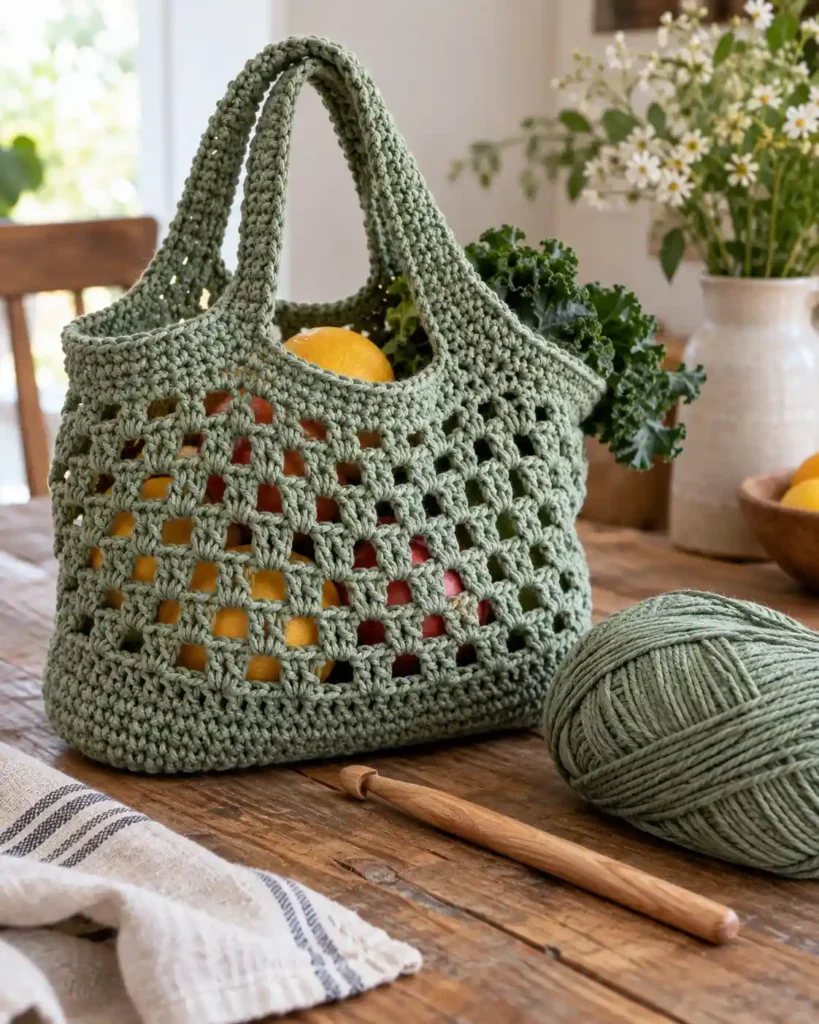
A quick market bag keeps the construction uncomplicated: open stitches, minimal shaping, one continuous body, and as little seaming as possible. It is the kind of project you reach for when you want the satisfaction of finishing something useful without committing to weeks of work.
A larger hook can create a looser fabric more quickly, but there is a tradeoff. Go too open around the handles and the bag may stretch more than you want, so save the loosest stitch pattern for the body.
Best for: Weekend crafting, last-minute handmade gifts, or using a spare skein before starting a bigger project.
Keep it fast by using:
- A repeated mesh stitch
- Bottom-up construction
- Integrated handles
- Minimal color changes
4. Why Make a Foldable Crochet Market Bag?
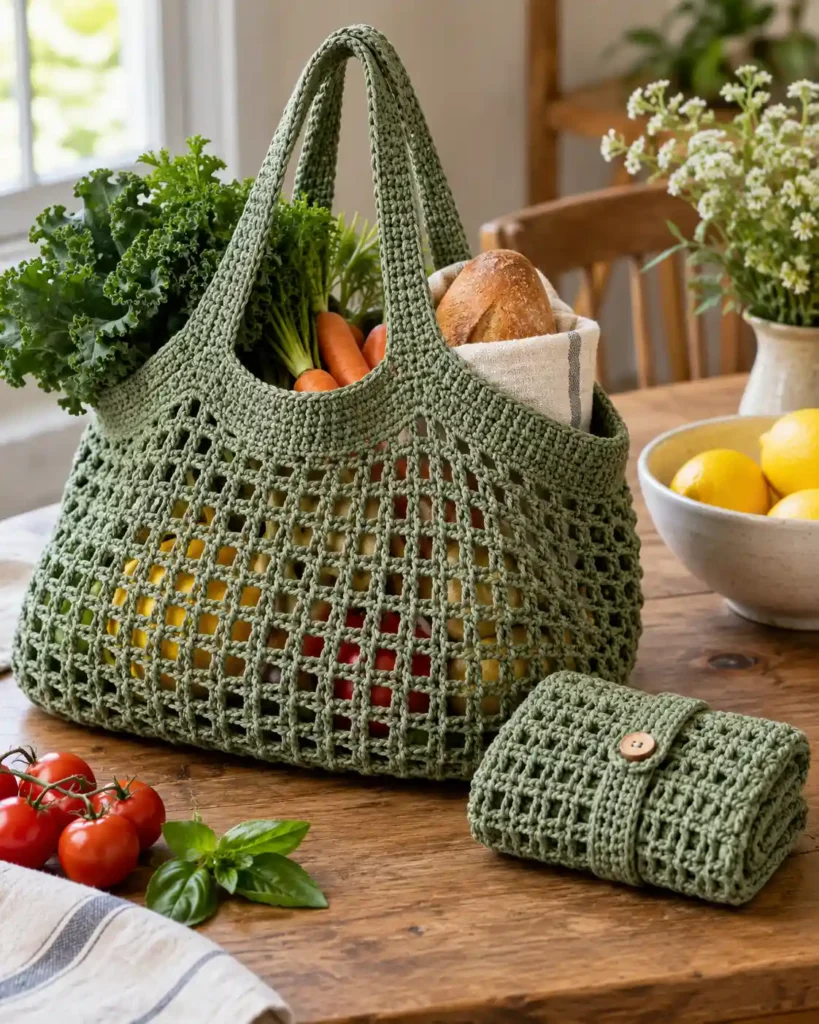
A foldable market bag earns its place in your purse because it solves the one problem reusable bags always seem to have: remembering to bring one. Crochet it in a lighter cotton yarn with flexible openwork and it can flatten, roll, or fold into a surprisingly small bundle.
A bulky solid tote may look beautiful, but it cannot compete with this one for portability. I would keep a foldable version near the door, in a travel bag, or tucked beside my wallet so it is actually there when needed.
Best for: Travel, spontaneous shopping, and anyone who wants a reusable bag without carrying a full-size tote all day.
5. Could a Pocket Market Bag Fold Into Itself?
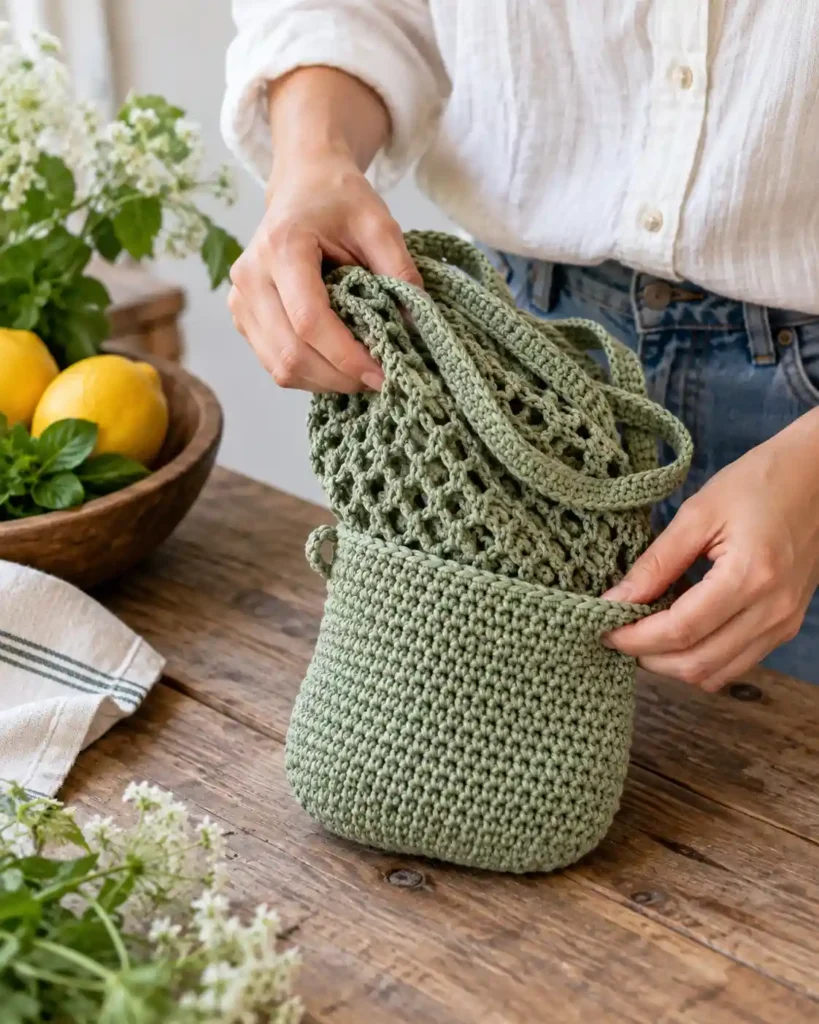
Take the foldable idea one step further by building a storage pocket directly into the bag. When the shopping is done, you push or fold the body into that attached pouch so the entire bag becomes its own little package.
The trick is avoiding an oversized pocket that creates a thick lump while you are using the bag. A simple button, loop, drawstring, or flap can help keep the packed bag closed without adding much hardware.
Best for: Keeping a crochet shopping bag permanently inside a handbag, backpack, or car organizer.
Special Tip: Decide how the bag will fold before attaching the pocket. A few minutes of testing can save a lot of awkward bulk.
6. What Makes a Farmers Market Crochet Bag Different?
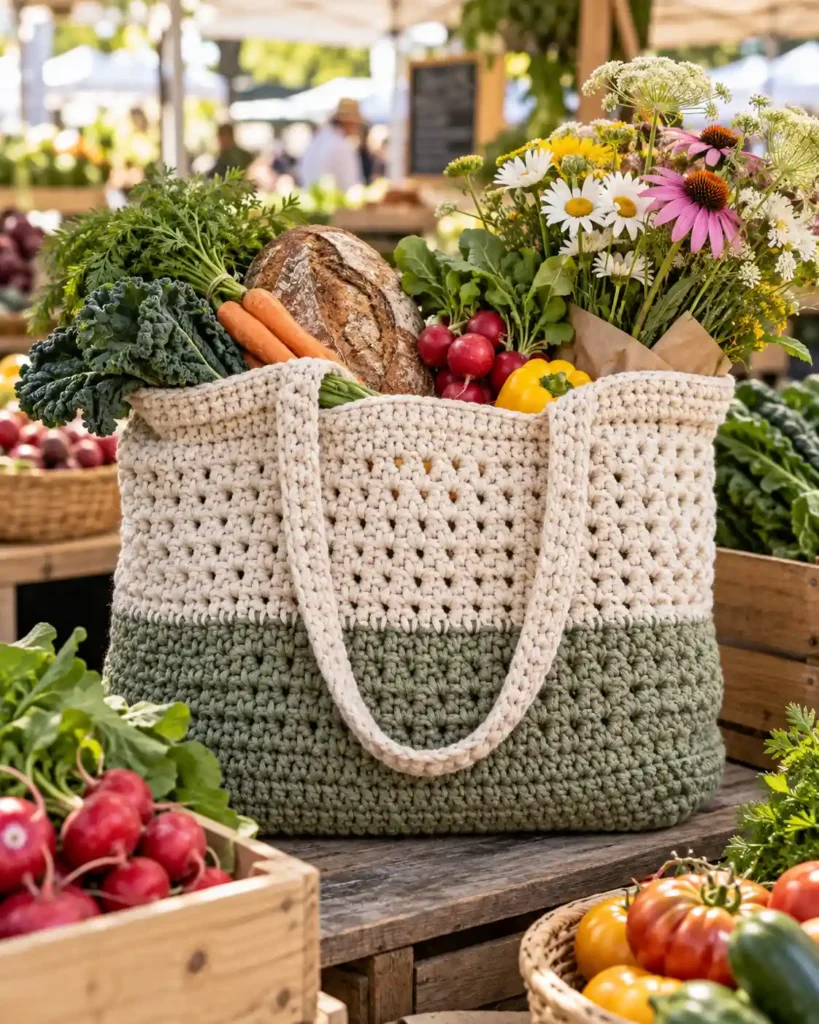
A proper farmers-market bag needs room for all the oddly shaped things you never intended to buy: leafy greens, a loaf of bread, flowers, peaches, maybe a jar of something you sampled five minutes earlier. That means a wide opening and flexible body matter just as much as total volume.
I prefer a combination of mesh sides and a sturdy bottom here. It gives produce room to settle without letting the bag feel completely shapeless.
Best for: Vegetables, bread, flowers, fruit, and everything else that mysteriously follows you home from a weekend market.
7. Why Is the French Crochet Net Bag So Popular?
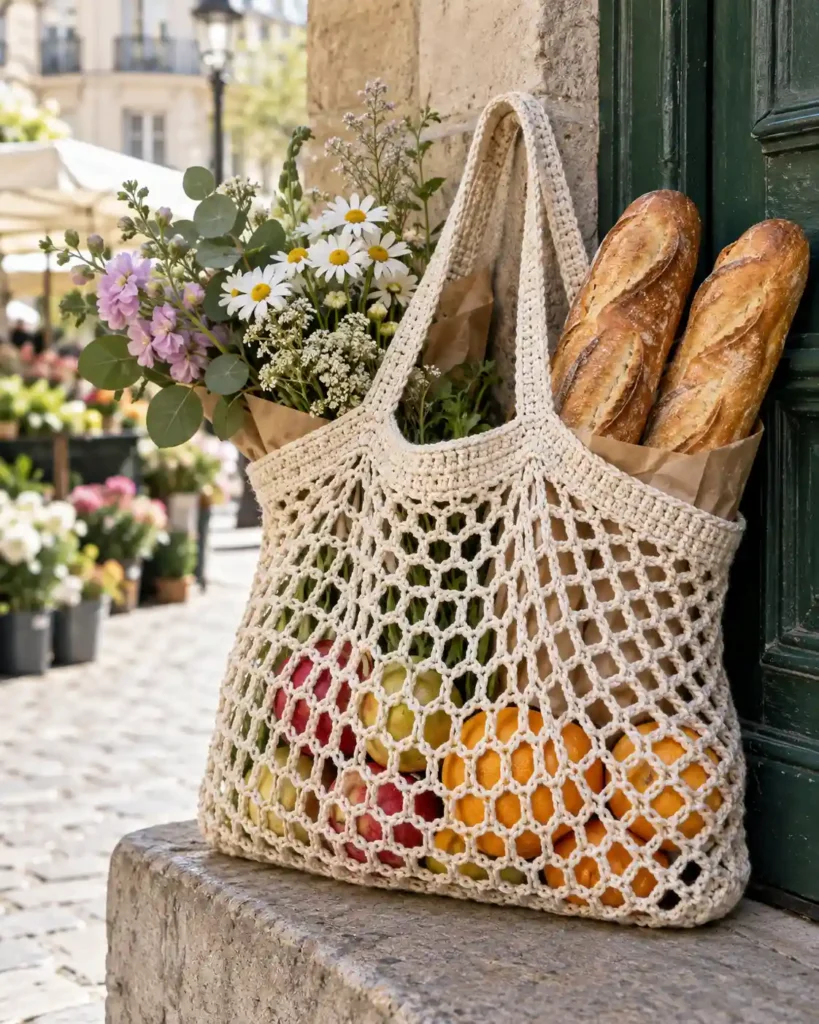
The French-market silhouette proves that a simple crochet net bag can look almost effortless and still carry a surprising amount. Traditionally inspired versions use a wide mesh section that gathers toward stronger upper edges and handles, creating that relaxed, elongated shape.
It is less structured than a standard tote, and that is exactly the attraction. Empty, it looks tiny; filled with baguettes, fruit, or flowers, it becomes beautifully dramatic.
Crochetpedia describes the familiar French-market construction as essentially a mesh section combined with handles, emphasizing its simplicity and capacity.
Best for: Lightweight market trips, beach days, and anyone who loves the classic French-market aesthetic.
8. When Should You Choose a Lightweight Crochet Mesh Bag?
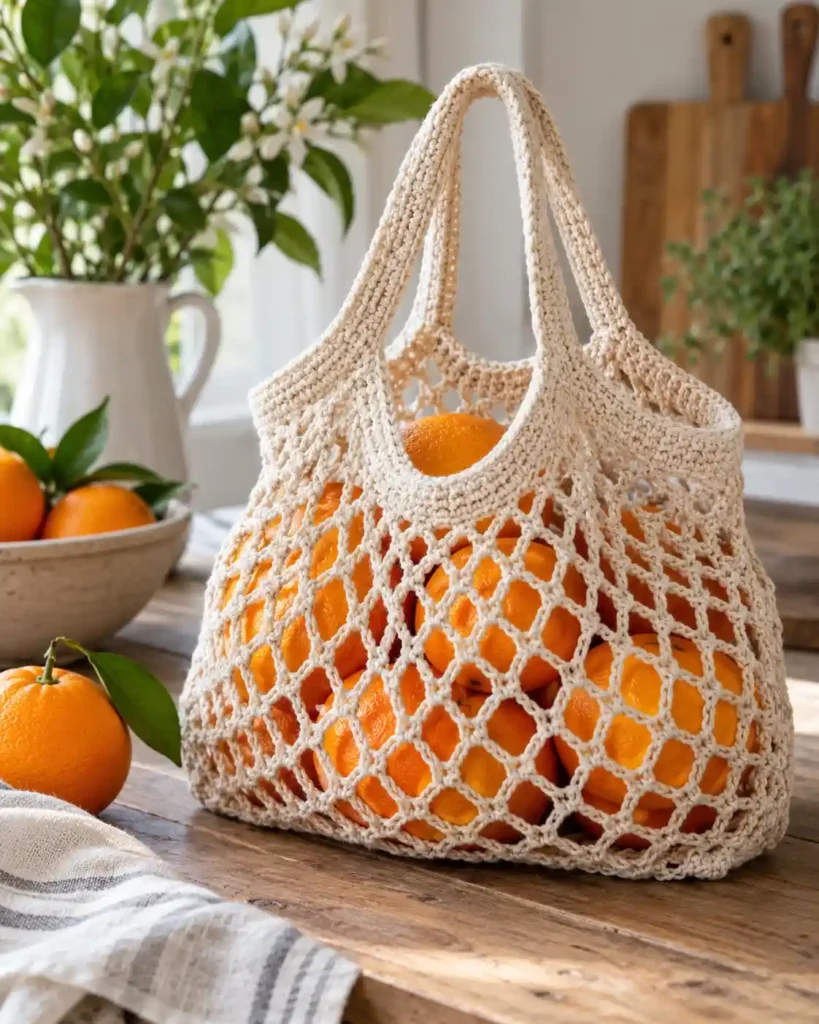
A crochet mesh bag makes sense when low weight matters more than rigid structure. Wide chain spaces let the bag breathe, reduce yarn consumption, and allow the fabric to expand naturally around irregular shapes.
The downside is predictable: open crochet stretches under weight. Briana K Designs notes that loaded mesh bags can lengthen noticeably because gravity opens the lace structure, which is why a solid base and firmer top edge can make such a difference.
I would use this one for produce, yarn, towels, or a few everyday purchases, not a bag packed with canned goods.
Best for: Light, flexible carrying with maximum stretch.
9. How Do You Make a Crochet Grocery Shopping Bag More Practical?
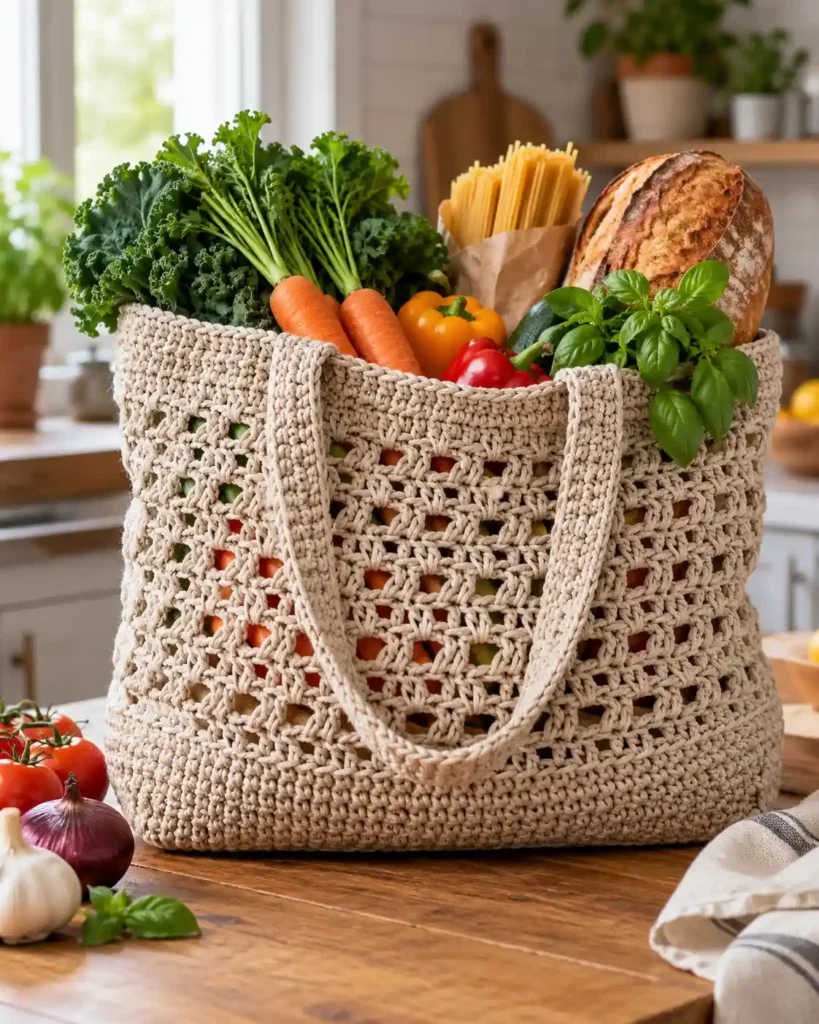
A grocery bag should be designed around what happens after you leave the checkout, not just how good it looks hanging on a hook. A denser base helps support cartons and pantry goods, while broader or reinforced handles spread the pressure across your hand or shoulder. If you want the basic construction process first, see how to crochet a bag before choosing your market-bag variation.
Compared with an ultra-open net bag, this one trades some lightness for control. That is a good trade when you regularly carry heavier items.
Best for: Weekly grocery runs and repeated everyday use.
Practical details worth adding:
- Solid or semi-solid bottom
- Reinforced strap attachment
- Washable yarn
- Medium-depth body
- Comfortable handle width
10. Are Crochet Produce Bags Better With a Drawstring?
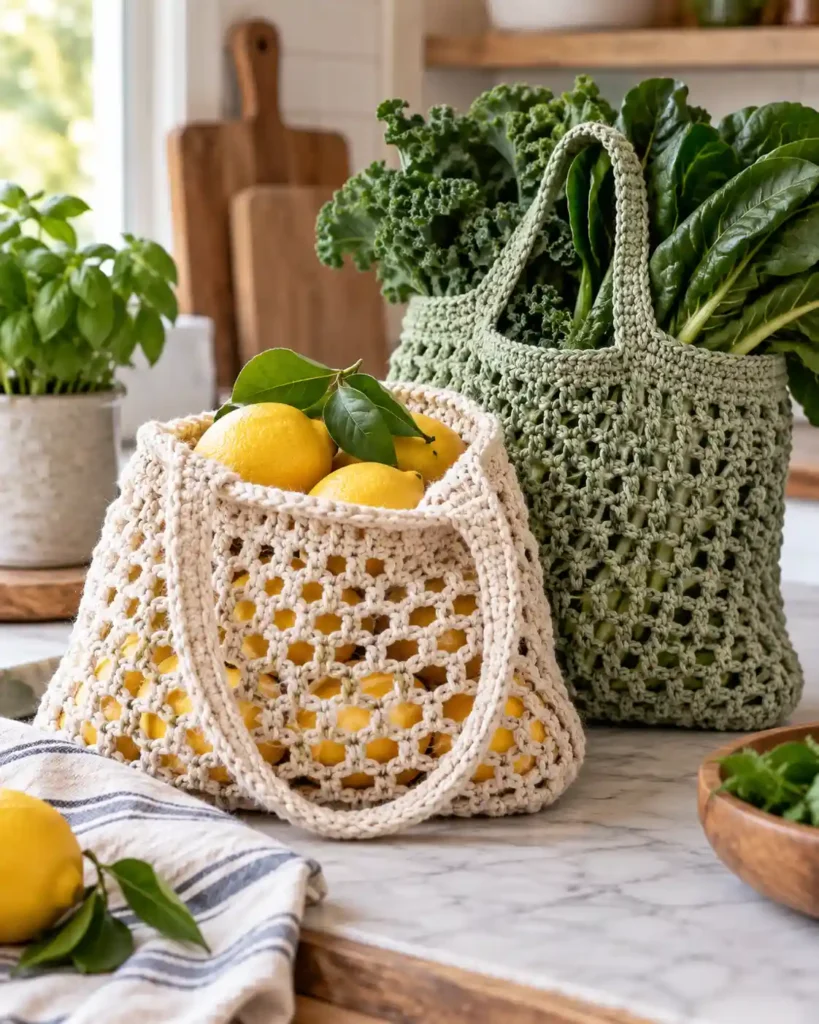
Small produce bags are a different animal from full grocery totes. They need to stay light so you are not adding a heavy bag around three lemons, and an open stitch makes it easy to see what is inside.
A drawstring can be useful because potatoes, onions, limes, or apples do not always stay where you want them. Instead of building long tote handles, add a simple cinch top or short carrying loop.
Best for: Fruit, vegetables, bulk produce, and organizing market purchases inside a larger bag.
11. Why Make a Small Crochet Market Bag?
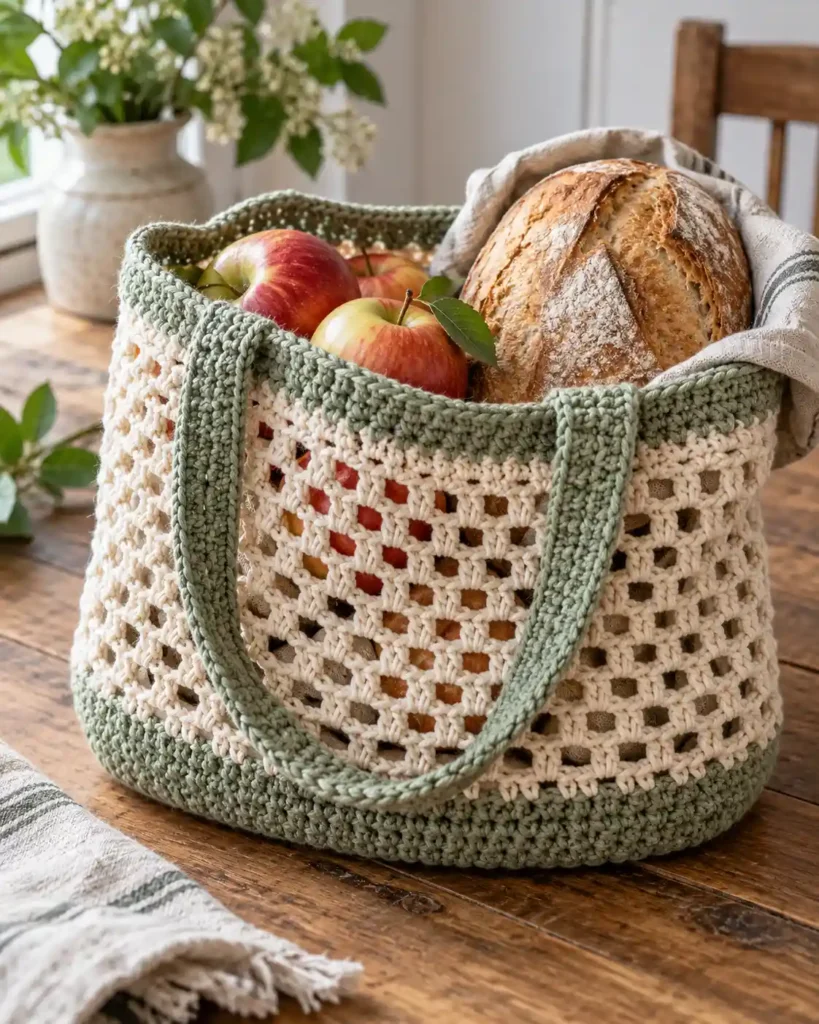
Not every shopping trip requires a huge expanding tote. A small crochet market bag feels more balanced when you are picking up a loaf of bread, lunch, a book, or a few pieces of fruit.
It also finishes faster than a full grocery bag, making it a nice testing ground for a new stitch. If the pattern turns out beautifully, you can simply scale the next one up.
Best for: Quick errands, gifting, lunch, or a compact everyday tote.
12. What Is the Benefit of a Solid-Bottom Crochet Market Tote?
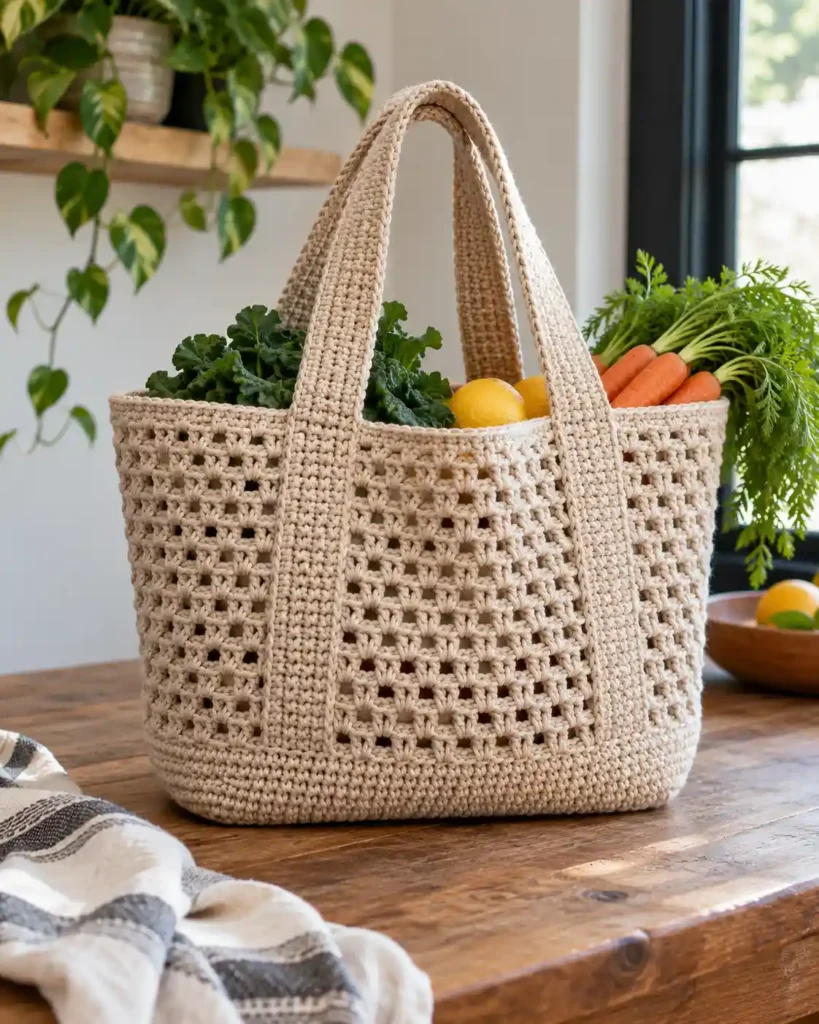
A solid bottom changes the personality of a market bag immediately. Instead of everything dropping into one stretchy point, a denser oval, circle, square, or rectangle gives the contents a more stable platform.
That makes this construction especially useful if the body is mesh. You still get the lightweight expansion of open crochet without sacrificing all the structure where the weight sits.
RaffamusaDesigns likewise notes that open stitches are popular for keeping market bags lightweight while solid crochet is often used specifically for a sturdier bottom.
Best for: Anyone who likes mesh but wants the bag to feel more dependable when loaded.
13. Why Try a Granny Square Crochet Market Bag?
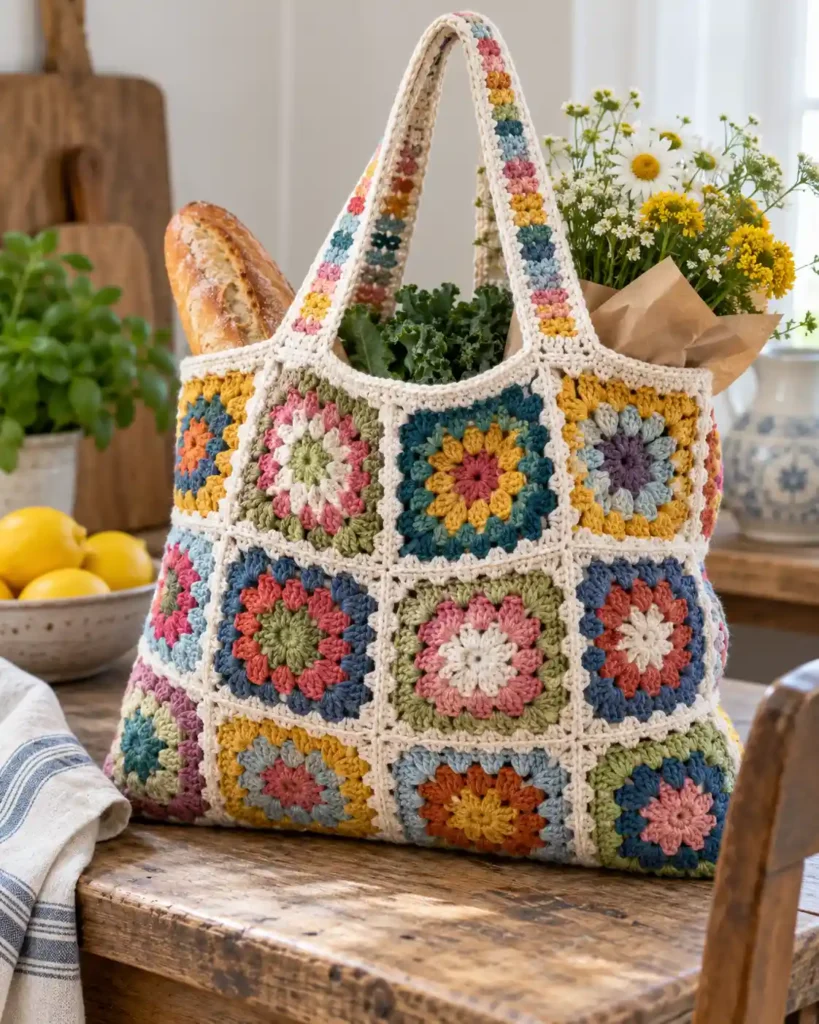
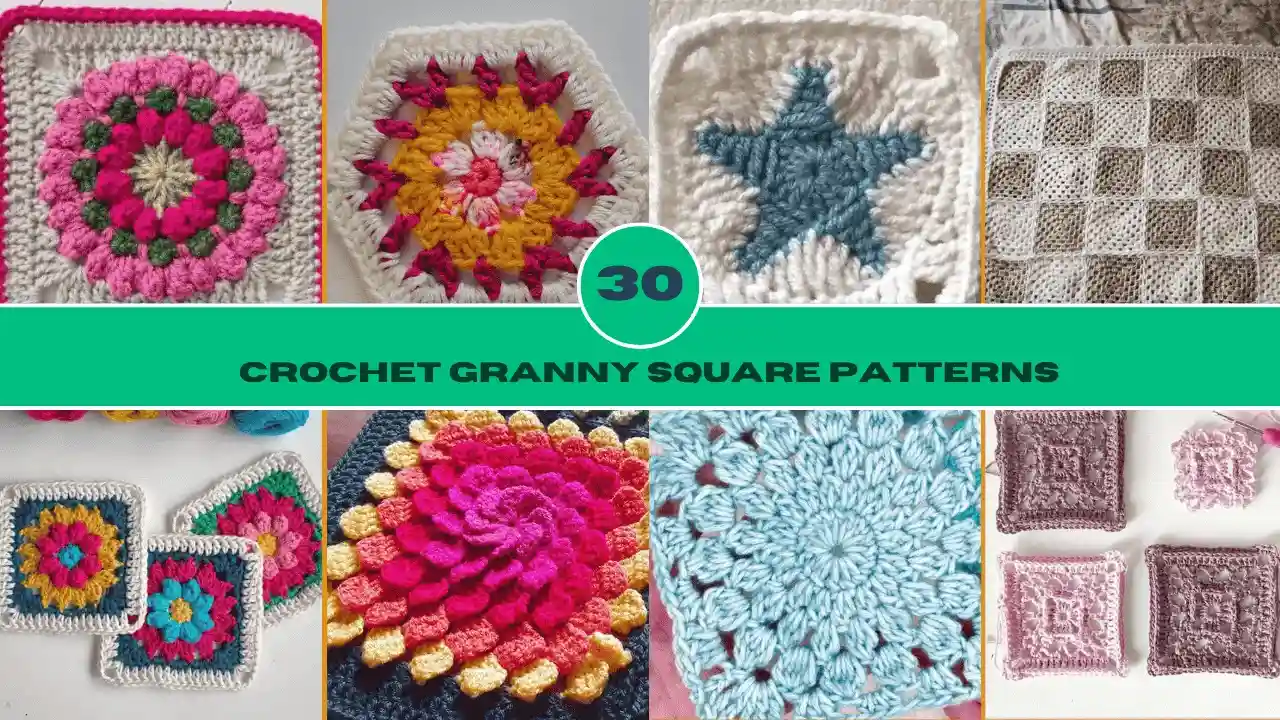
A granny-square market bag is the obvious answer when you want the project to feel more decorative than utilitarian. The motifs give you endless room for color combinations, scraps, floral centers, retro palettes, or clean monochrome blocks. For more motif inspiration, explore these crochet granny square patterns before planning your bag layout.
Unlike continuous mesh, the construction happens in manageable pieces. That makes it fun for portable crocheting, although joining and finishing add a little more work at the end.
Best for: Scrap yarn, color lovers, gift bags, and anyone who wants the tote itself to be the outfit accessory.
Special Tip: Reinforce the upper border after joining the motifs. It helps the bag hold its shape and gives you a stronger place to attach handles.
14. Can Color Blocking Make a Market Bag Look More Modern?
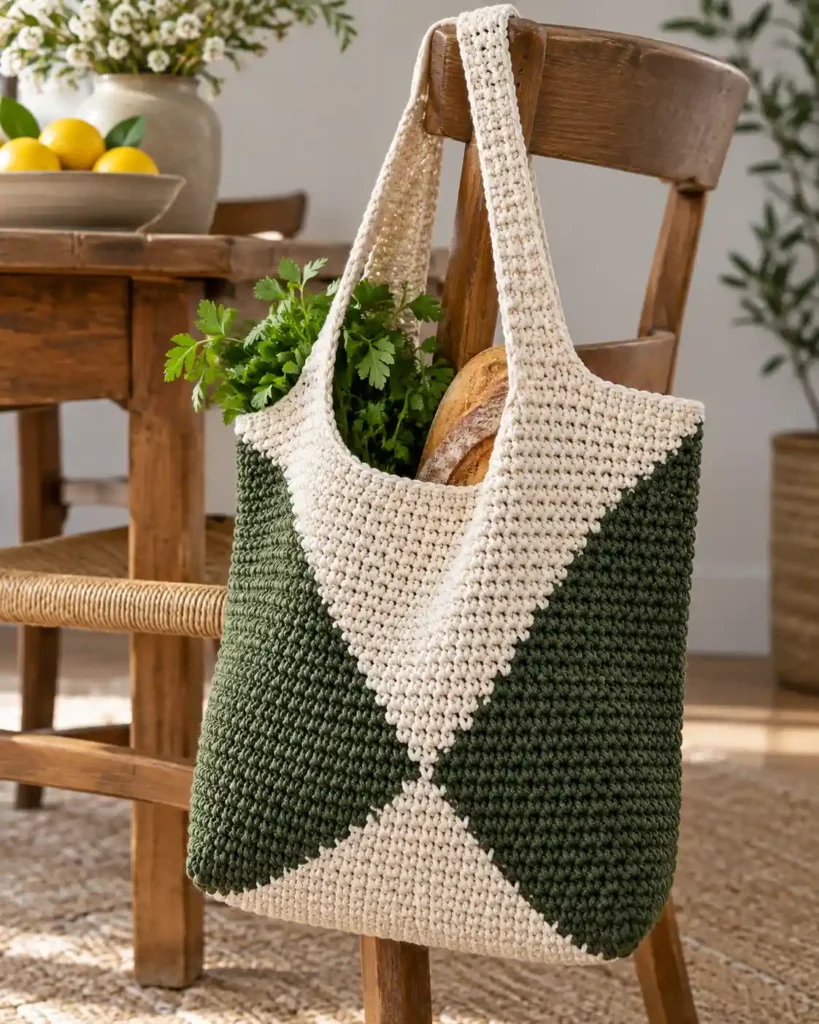
Absolutely. Two or three intentional blocks of color can make a basic crochet tote feel graphic and contemporary without requiring a complicated stitch pattern.
The key is proportion. One bold lower section with a contrasting top often looks cleaner than changing colors every few rows.
I would choose yarns of the same fiber and weight so the sections behave similarly after washing and use.
Best for: Minimalist wardrobes, modern gift projects, and crocheters who prefer color to texture.
15. What Gives a Boho Crochet Market Bag Its Character?
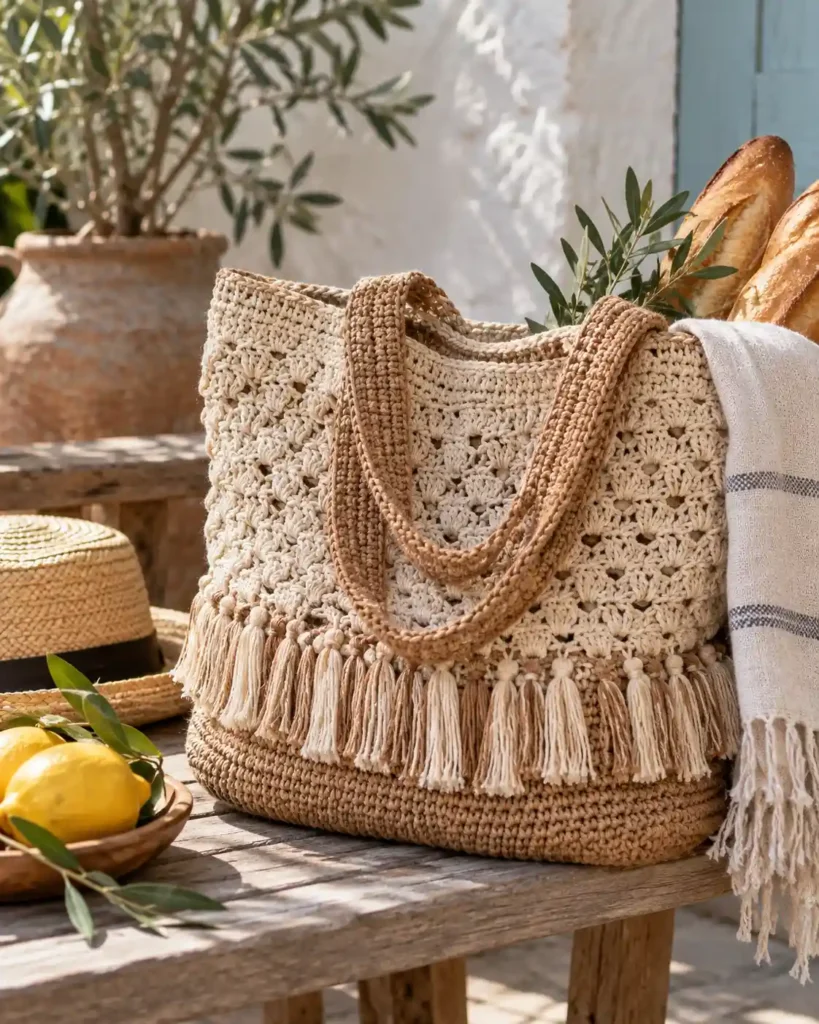
A boho bag works because it is allowed to look relaxed. Think textured stitches, soft openwork, tassels, subtle fringe, wooden details, or earthy color combinations rather than perfectly rigid geometry.
The mistake is adding every decorative idea at once. Keep the functional parts clean, then choose one or two details that create personality without getting in the way of carrying the bag.
Best for: Summer outfits, festivals, beach days, and casual everyday styling.
16. Why Choose a Rustic Natural-Fiber Market Bag?
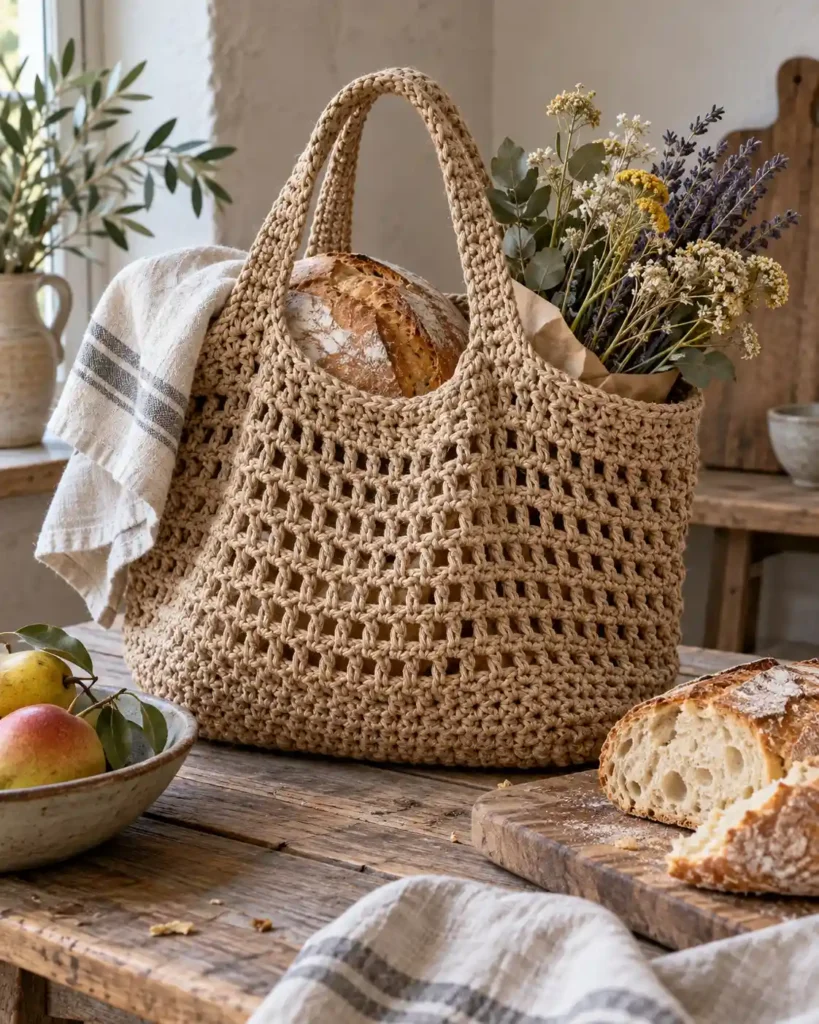
There is something about a neutral crochet bag beside bread, flowers, and linen that just looks right. Cotton, linen blends, and other natural-looking fibers can give the simplest stitch pattern a warm, handmade finish.
Texture matters here more than bright color. A bag in oatmeal, cream, tan, olive, or muted brown can feel interesting even when the construction is straightforward.
Best for: Farmhouse-inspired styling, neutral wardrobes, and gift projects with an understated handmade feel.
17. Is Cotton the Best Yarn for a Summer Market Bag?
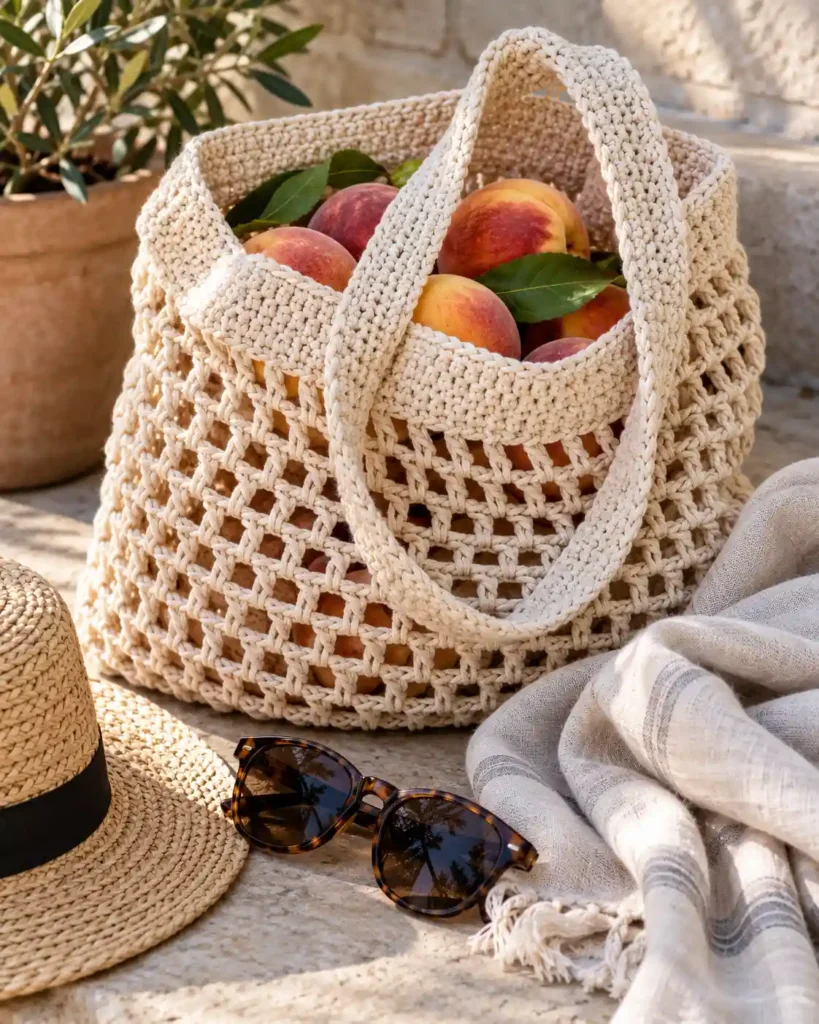
Cotton is a very practical starting point because it handles repeated use well and does not need fuzzy texture to look attractive. Cotton Incorporated reports that cotton fiber becomes about 10–20% stronger when wet, one reason the fiber performs well in products that may be washed regularly.
Still, “cotton” does not describe every yarn equally. Soft cotton, mercerized cotton, cotton blends, and tightly spun utility cottons can behave quite differently, so check the label before assuming one can substitute perfectly for another.
The Craft Yarn Council’s standardized yarn labels include fiber content, yardage, yarn weight, gauge guidance, and care information, all useful when comparing options.
Best for: Warm-weather bags, washable totes, and clean stitch definition.
18. Can You Really Make a One-Skein Crochet Market Bag?
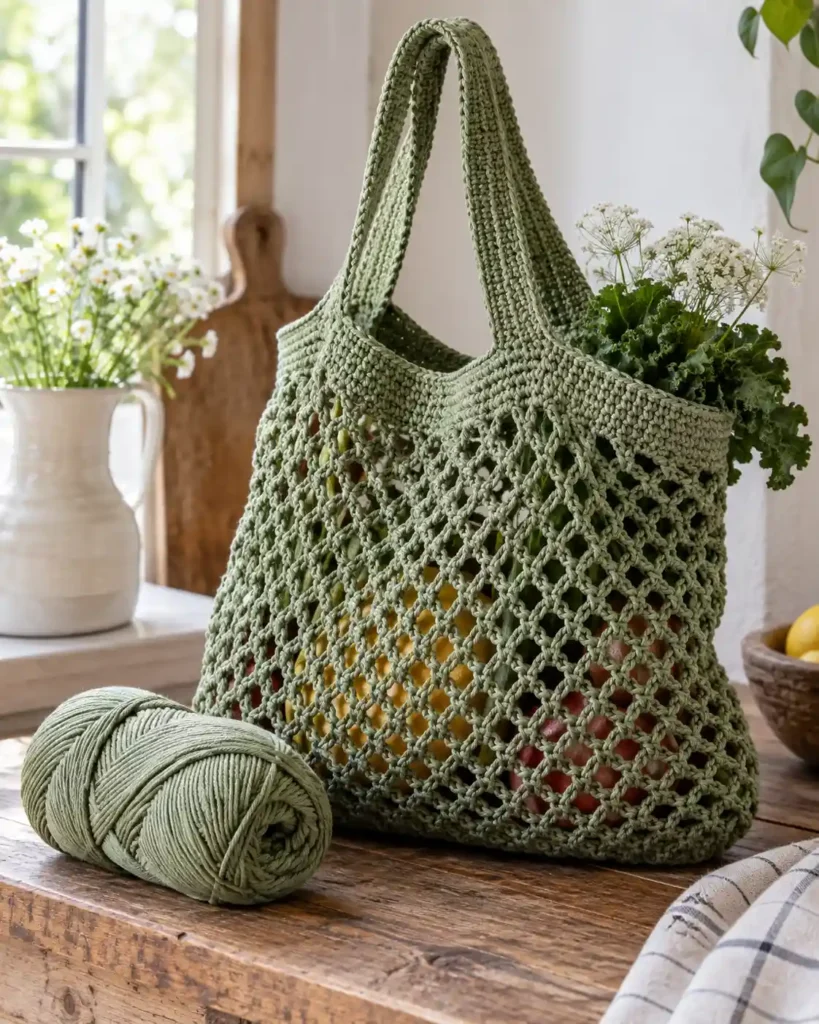
Sometimes, yes, but yardage planning matters more than the phrase “one skein.” Two skeins that look identical in size can contain very different yardages depending on the yarn weight and construction.
The best one-skein design uses open stitches and modest dimensions. I would also reserve yarn for the handles early rather than discovering at the final round that the bag body ate every last yard.
Best for: Stash busting, gift projects, and those lone skeins that have been waiting for a purpose.
Special Tip: Weigh your yarn before starting and again before the handles. It is an easy way to see how quickly your supply is disappearing.
19. Are Striped Crochet Market Bags Good for Leftover Yarn?
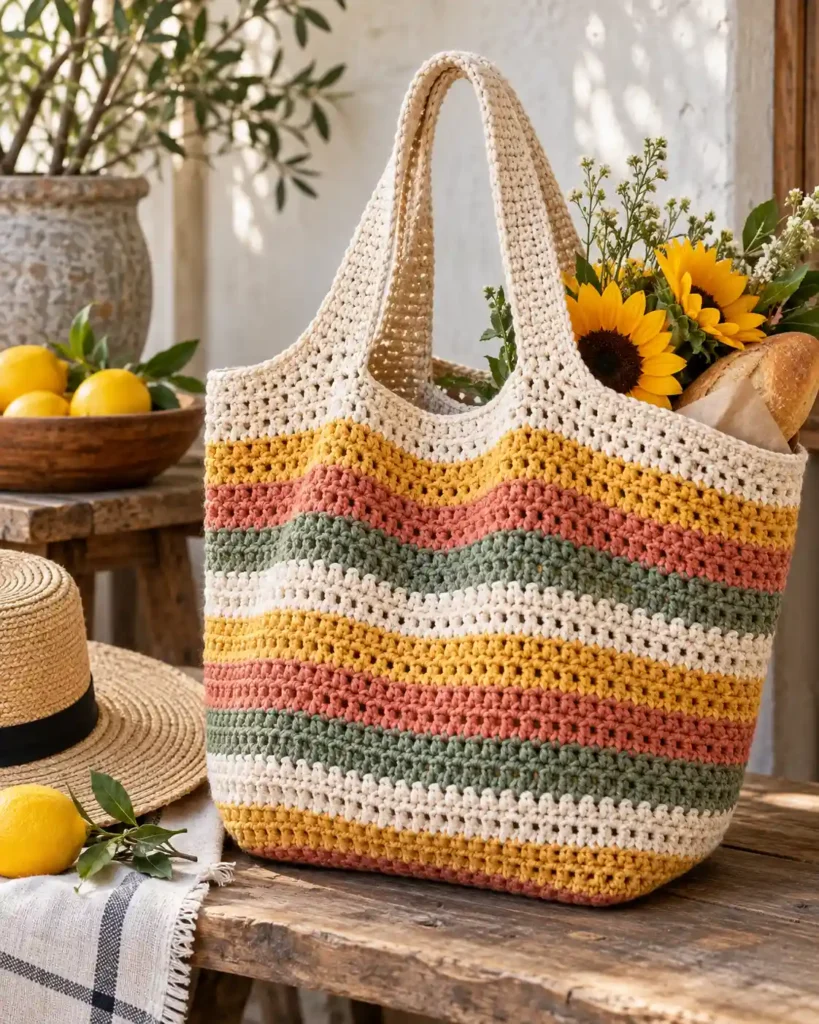
Stripes are one of the easiest ways to turn partial skeins into a design that looks intentional. Wide bands feel cleaner and more modern; narrow stripes create a livelier, almost vintage effect.
Unlike granny squares, you do not have to assemble separate pieces. The color changes happen as you work the same body construction, which makes this a friendly option for crocheters who love scrap projects but dislike joining motifs.
Best for: Yarn leftovers, summer colors, and simple patterns that need a little more visual energy.
20. Should You Add a Drawstring to a Full-Size Market Bag?
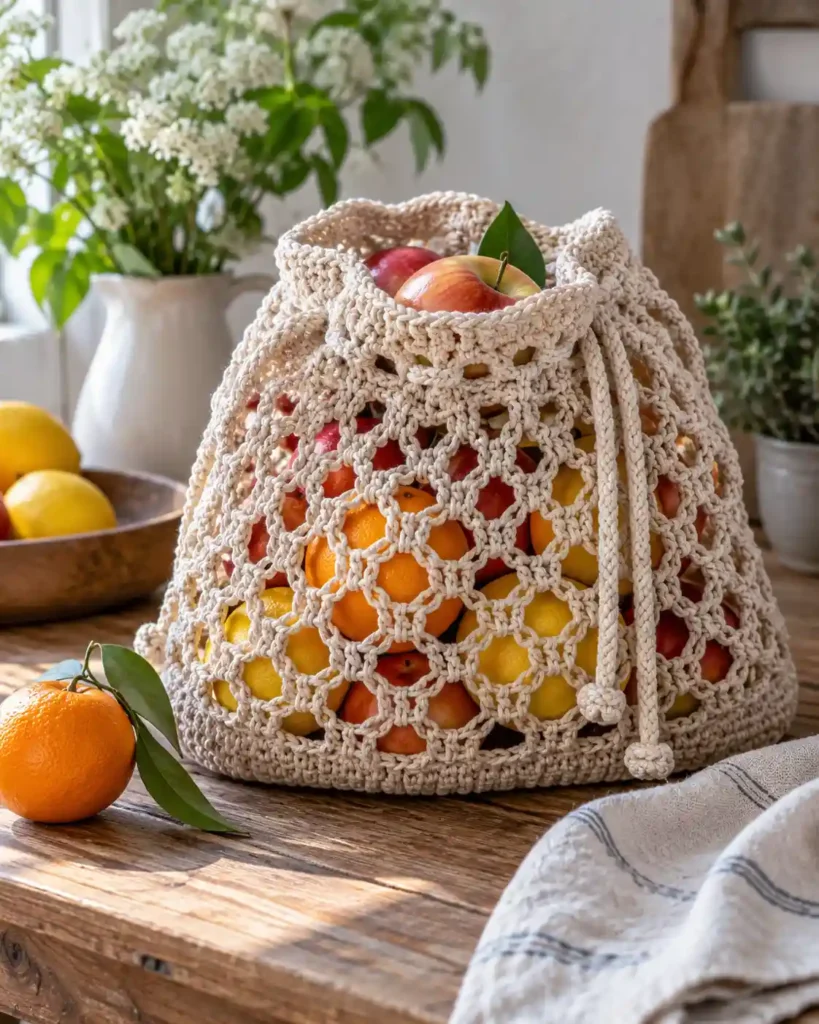
A drawstring is useful when you carry objects that could slip through a wide opening or when you simply prefer a more enclosed bag. You can work a row of chain spaces near the top and thread in a crocheted cord, fabric tape, or other flexible tie.
Just remember that a market tote still needs to open wide enough to load comfortably. A narrow opening may look tidy but becomes annoying when you are trying to fit in lettuce, bread, or a bulky package.
Best for: Produce, travel items, smaller groceries, or anyone who wants a little more security than an open tote provides.
21. How Long Should Crochet Market Bag Shoulder Handles Be?
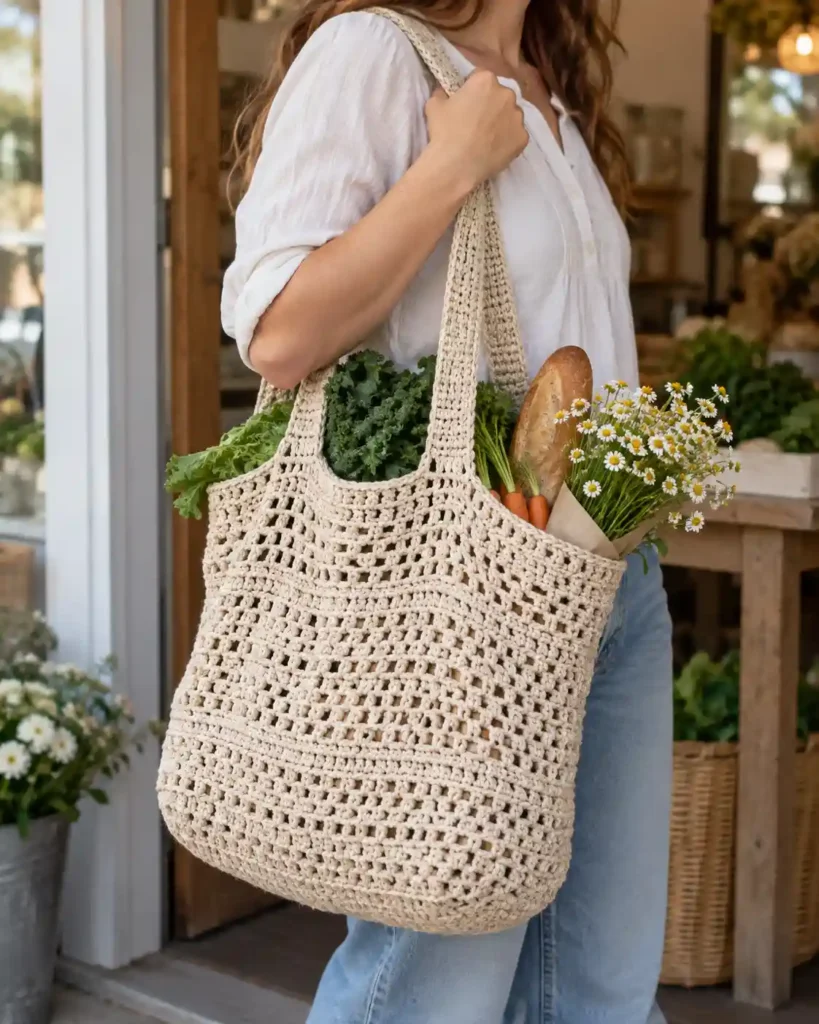
Shoulder handles should feel comfortable before the bag is loaded, because crochet fabric often relaxes once weight is added. If the straps already hang very low when empty, a full bag may end up much lower than expected.
Mesh-bag designers see this stretch in practice. Briana K Designs reports that its Willow Mesh bag can gain roughly 2–4 inches of length when loaded, depending on contents and size, demonstrating why finished dimensions are not the whole story.
For long handles, reinforce the attachment area and consider working the final strap rounds more densely than the body.
Best for: Hands-free shoulder carrying and larger everyday totes.
22. When Are Short Handles Better Than Shoulder Straps?
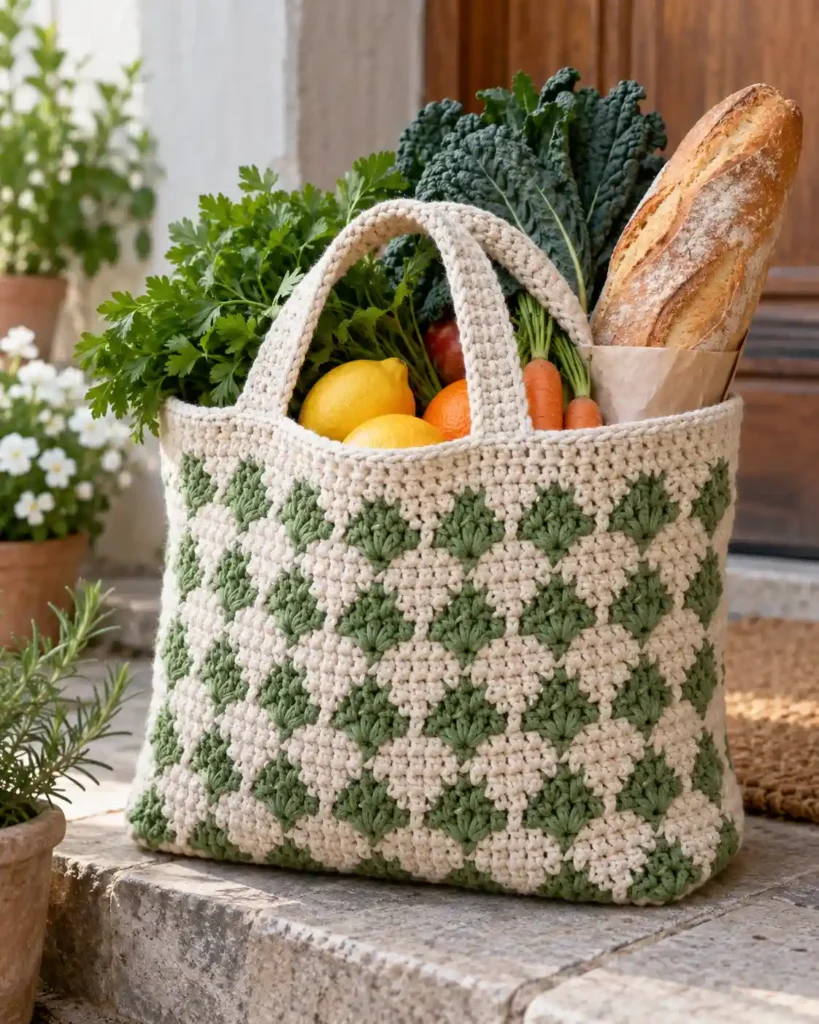
Short handles make sense when you prefer carrying groceries by hand and want better control over the load. They also reduce the amount of stretch simply because there is less strap length available to elongate.
Work them densely, and pay special attention to where the handles meet the bag. That junction experiences repeated pulling every time you pick the tote up.
Best for: Heavier loads, compact totes, and people who prefer hand-carry shopping bags.
23. Why Use an Oval Bottom for a Crochet Market Bag?
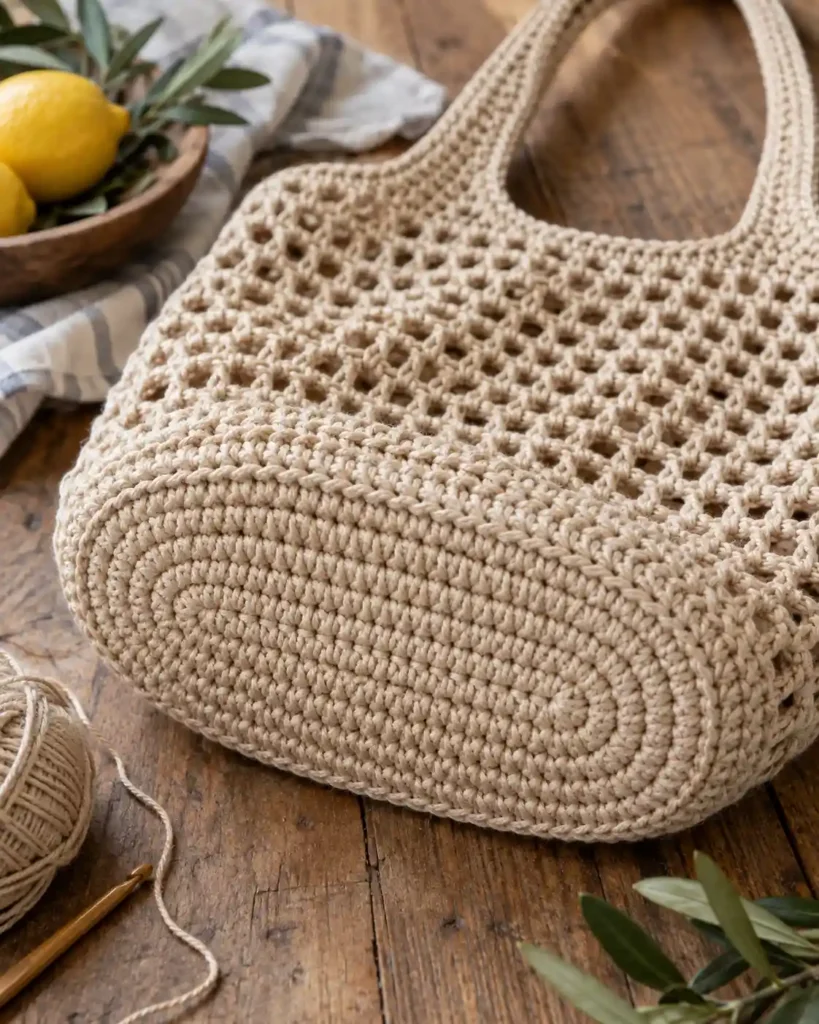
An oval base gives you width without making the bag perfectly round. You begin around a foundation chain, work increases at both ends, then build upward once the base reaches the size you want.
The result looks more like a conventional tote than a bucket. It also gives bread, produce, books, or packaged groceries a broader place to sit.
Best for: Everyday shopping bags that need a recognizable tote shape.
24. When Does a Round-Bottom Market Bag Work Best?
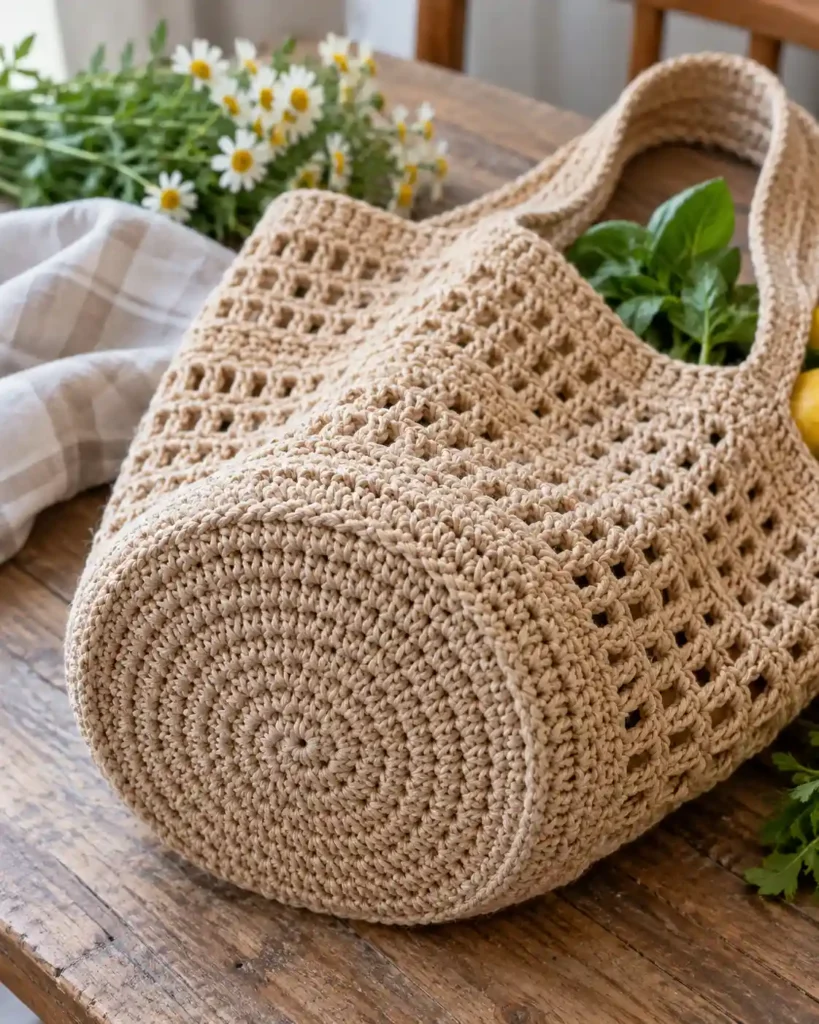
A round base creates a softer bucket-like silhouette. If you need a refresher on how to crochet a circle, start there, then space your increases evenly and stop increasing when the bottom reaches the desired diameter before transitioning into the sides.
This shape pairs beautifully with mesh because the solid center can support the load while the upper body expands around it. It also looks especially good in striped or color-blocked designs.
Best for: Produce, beach items, yarn, and slouchy bucket-style market totes.
The Craft Yarn Council recommends relying on metric hook sizes when comparing hooks because letter and number systems can vary by manufacturer, and it advises checking gauge against the pattern when finished size matters.
25. How Do You Reinforce a Crochet Market Bag for Heavier Loads?
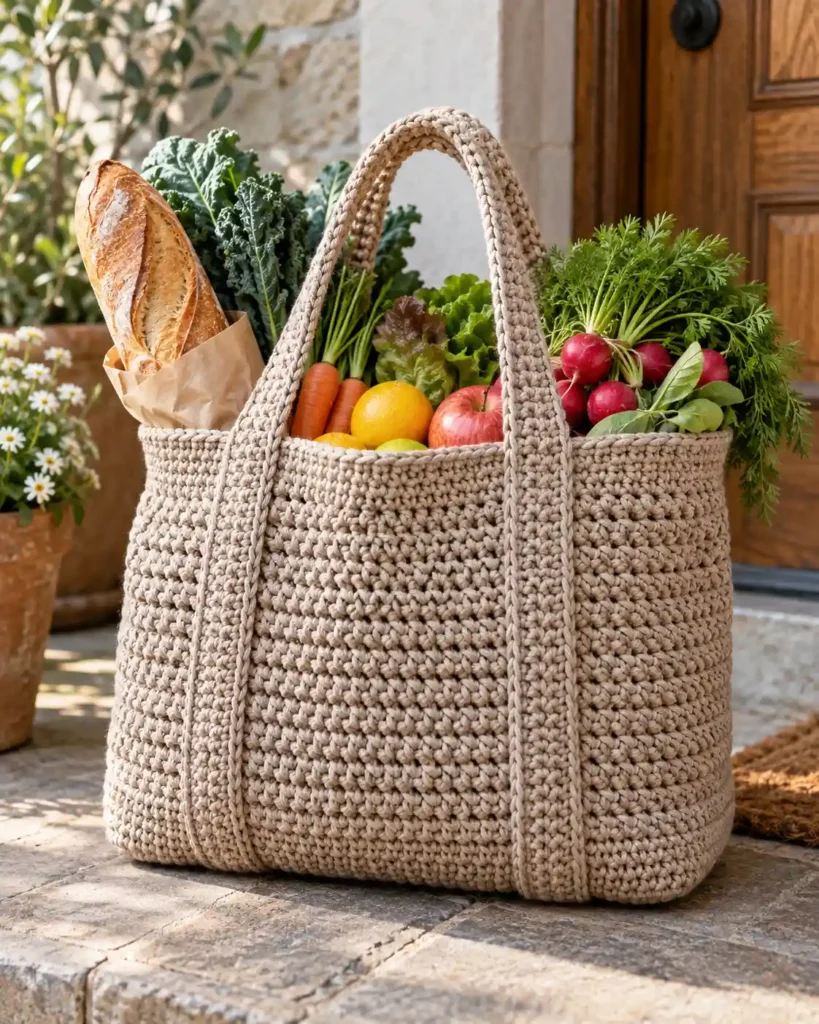
This is the market bag for people who actually intend to use it hard. Instead of making every part equally stretchy, concentrate structure where the stress happens: the bottom, upper border, handle itself, and the points where the handle attaches to the bag.
Dense single crochet, surface crochet, doubled straps, cord reinforcement, or a lining can all help, depending on the design. The important distinction is that “strong yarn” alone will not rescue weak construction.
A reinforced tote may take longer than a simple crochet net bag, but the payoff is a bag that feels far more controlled when it is carrying jars, packaged food, or heavier groceries.
Best for: Regular grocery shopping and makers who care more about durability than the lightest possible finished bag.
What Is the Best Yarn for a Crochet Market Bag?
Cotton and cotton blends are strong starting choices for market bags because they offer clear stitch definition and suit practical projects, but the exact fiber should match the pattern and intended use.
- Check fiber content before substituting yarn.
- Compare yarn weight and total yardage.
- Follow the recommended hook range.
- Review washing and drying instructions.
- Consider stretch before choosing a soft yarn.
For most crocheters, cotton or a cotton blend is the easiest place to start. It gives stitches clear definition, suits both solid and openwork designs, and is available in many yarn weights.
Do not buy based only on the fiber name, though. Check the label for:
- Fiber content
- Yarn weight
- Yardage or meterage
- Recommended hook
- Gauge
- Washing instructions
- Drying instructions
The Craft Yarn Council explains that yarn labels are specifically designed to carry this information, including laundering guidance and standardized yarn-weight classifications.
If you are following a crochet market bag free pattern, use the recommended yarn characteristics as your baseline before substituting. You do not always need the same brand, but changing fiber, weight, or hook size can change the bag’s size, drape, and stretch.
How Do You Keep a Crochet Market Bag From Stretching Too Much?
Control market-bag stretch by using denser crochet at the base, upper edge, and handles while keeping open mesh mainly in the body.
- Use tighter stitches around high-stress areas.
- Reinforce long handles before regular use.
- Avoid overly stretchy yarn for heavy loads.
- Add a lining when extra stability matters.
- Keep open mesh away from critical attachment points.
You probably cannot eliminate stretch completely, and with mesh, you should not want to. The expandable fabric is part of what makes a crochet mesh bag useful.
Instead, control the stretch.
Use denser stitches for the base and handles, strengthen the top border, shorten very long straps, and avoid making every section of the bag equally open. Briana K Designs’ mesh-market-bag guidance emphasizes the stabilizing role of a solid base under an expandable mesh body.
A lining is another option for bags that need to hold their dimensions more firmly, although it changes the airy character of a traditional market tote.
What Crochet Stitches Work Best for Market Bags?
Open stitches work well for flexible bag bodies, while denser stitches are better for the base, handles, and other areas that carry most of the load.
- Use mesh stitches for lightweight expansion.
- Choose single crochet for firmer sections.
- Try granny stitch for decorative texture.
- Combine open and dense crochet strategically.
- Reinforce handles regardless of body stitch.
There is no single best stitch because different parts of the bag have different jobs. If you want more texture and stitch inspiration before choosing one, browse our most trendy crochet stitches.
For the body: mesh, net stitches, granny stitch, filet crochet, lace, double crochet, and other openwork patterns keep the bag lighter.
For the base: single crochet, half double crochet, or other denser fabrics can provide additional support.
For the handles: compact stitches generally offer more control than large open chain spaces.
RaffamusaDesigns also identifies granny stitches, net/mesh stitches, filet crochet, and lace among popular market-bag choices, while noting that solid crochet is commonly used when a sturdier bottom is desired.
What Size Should a Crochet Market Bag Be?
The right market-bag size depends on whether you are carrying produce, groceries, beach items, or quick-errand essentials rather than one universal measurement.
- Choose shallow bags for smaller errands.
- Add depth for grocery and market use.
- Expect mesh bags to lengthen when loaded.
- Match handle length to the final loaded size.
- Compare finished dimensions before starting.
There is no universal perfect size because a produce bag and a weekly-grocery tote have completely different jobs. Instead of chasing one measurement, decide what you want the bag to carry and how you want to carry it.
A smaller market bag can work for a few pieces of produce or quick errands. A medium tote handles general shopping. A deeper mesh bag gives you more expansion but may hang considerably lower once filled.
For comparison, Briana K Designs lists unstretched Willow Mesh bag sizes of 20 × 12 inches, 22 × 14 inches, and 24 × 16 inches before loading.
That range is not a rule, but it is a useful reminder that “market bag” can mean several different finished sizes.
How Should You Wash a Crochet Market Bag?
Wash a crochet market bag according to the exact yarn label or pattern instructions because fiber blends and finishes can require different temperatures and drying methods.
At a Glance:
- Save the yarn label after finishing.
- Follow the listed washing temperature.
- Check whether tumble drying is allowed.
- Reshape the bag when necessary.
- Avoid assuming all cotton yarns wash identically.
Follow the care instructions for the exact yarn you used rather than assuming every cotton bag can be washed the same way. The Craft Yarn Council’s care system covers washing, bleaching, drying, ironing, and professional textile care, and those instructions can differ from yarn to yarn.
For example, Yarnspirations’ Lily Sugar’n Cream market-bag pattern currently specifies washing at no more than 86°F / 30°C on a delicate setting, with low-temperature tumble drying for the yarn/project instructions shown on that pattern page.
That does not mean every crochet market bag should use those settings. Keep or photograph the yarn label so you can refer to the correct care directions later.
How Can You Customize a Crochet Market Bag?
Customize a market bag by changing color, stitch texture, handles, pockets, closures, bag depth, or the balance between solid and mesh crochet.
At a Glance:
- Add stripes for easy visual interest.
- Adjust handle length for your carrying style.
- Include a pocket for added function.
- Mix solid and mesh sections.
- Use motifs for more decorative designs.
Once the construction works, customization is the fun part.
Try changing:
- Color blocks
- Stripes
- Granny-square motifs
- Handle length
- Bag depth
- Drawstrings
- Attached storage pockets
- Fringe or tassels
- Decorative labels
- Solid versus mesh sections
For CrochetMind readers, I would choose the functional construction first and decorate second. A beautiful bag that digs into your shoulder or stretches to your knees will spend more time in a drawer than at the market.
Frequently Asked Questions
What is the best yarn for a crochet market bag?
Cotton and cotton blends are popular because they provide clear stitch definition and work well for practical, washable projects. Always check the yarn label for the exact care instructions, weight, and recommended hook.
How much yarn do I need for a crochet market bag?
It depends on the bag size, yarn weight, stitch density, and handle construction. Open mesh generally uses less yarn than a solid tote, while large or reinforced designs need more; use the yardage listed in the specific pattern whenever possible.
Are crochet market bags strong enough for groceries?
Yes, when the design matches the load. A solid base, dense handles, secure attachment points, and suitable yarn make a major difference; extremely open mesh is better for lighter groceries than cans or other heavy items.
Can beginners make a crochet market bag?
Yes. Look for a design using chains, single crochet, double crochet, a repetitive mesh pattern, and limited shaping. Beginner-oriented patterns often work well because small differences in finished bag size are less critical than they would be in fitted clothing.
What is the difference between a crochet mesh bag and a crochet net bag?
The terms often overlap. Both usually describe bags with intentionally open stitch structures, although “net bag” tends to suggest larger, simpler openings while “mesh” can describe a wider variety of decorative openwork stitches.
Final Thoughts
There is no single “best” crochet market bag because the right design depends on what you carry. Choose an open crochet mesh bag or crochet net bag when you want something light and expandable, a foldable or pocket version when portability matters, and a solid-bottom or reinforced tote when the load will be heavier. For another structured option, explore our crochet tote bag pattern and instructions.
If you are searching for a crochet market bag free pattern, use these 25 styles as your shortlist first. Decide on the shape, handle length, yarn, and level of structure you actually want, then choose a verified pattern that matches those needs.
The best part is that even the simplest bag leaves room for your own choices, one color or five, airy mesh or solid stitches, tiny produce pouch or oversized farmers-market tote. Pick the version you can imagine using every week, grab the yarn, and make that one first.

![The Best 30+ Free Crochet Cat Patterns [Beginner-Friendly Guide]](https://crochetmind.com/wp-content/uploads/2025/04/1-The-Best-30-Free-Crochet-Cat-Patterns-Beginner-Friendly-Guide.webp)