

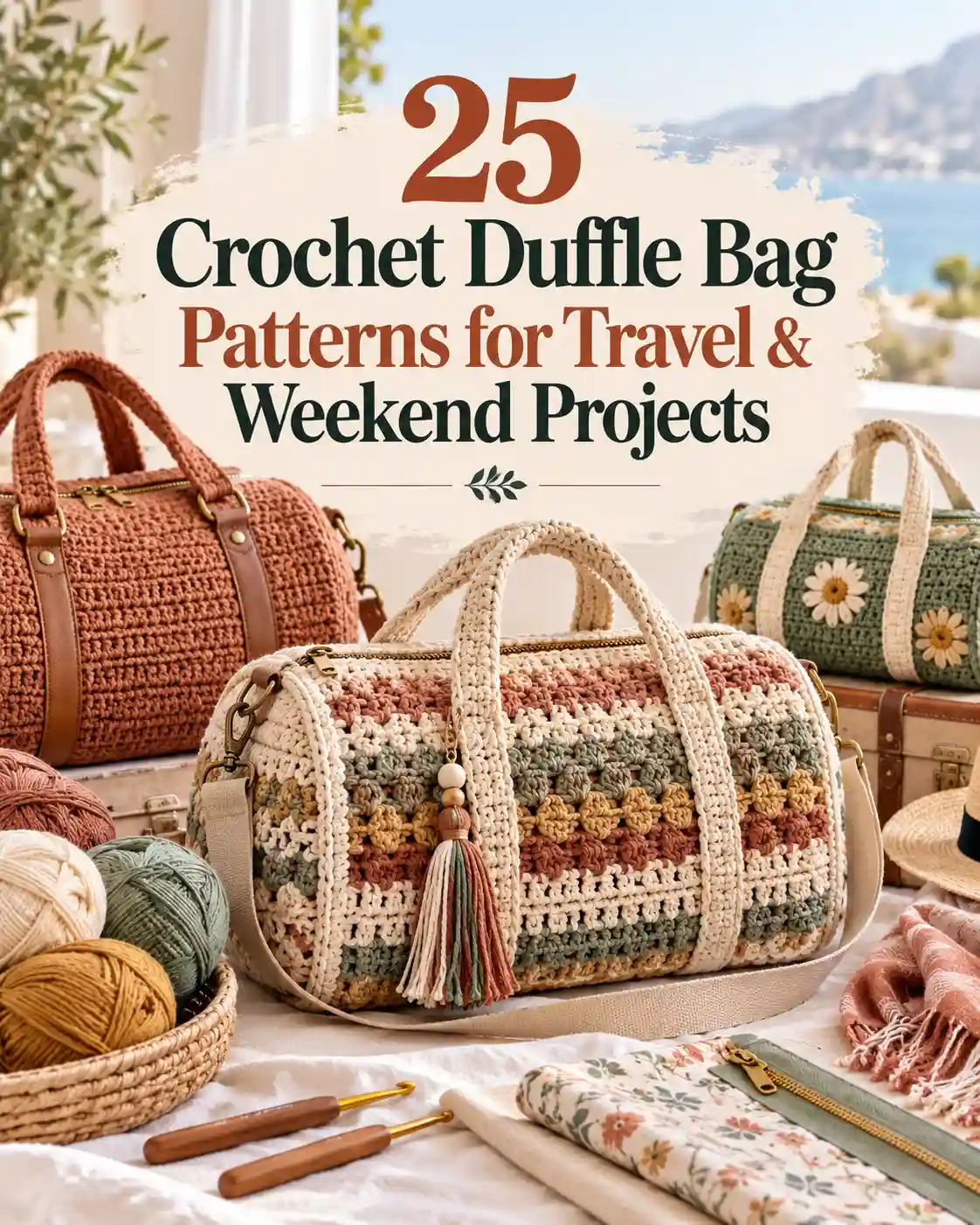
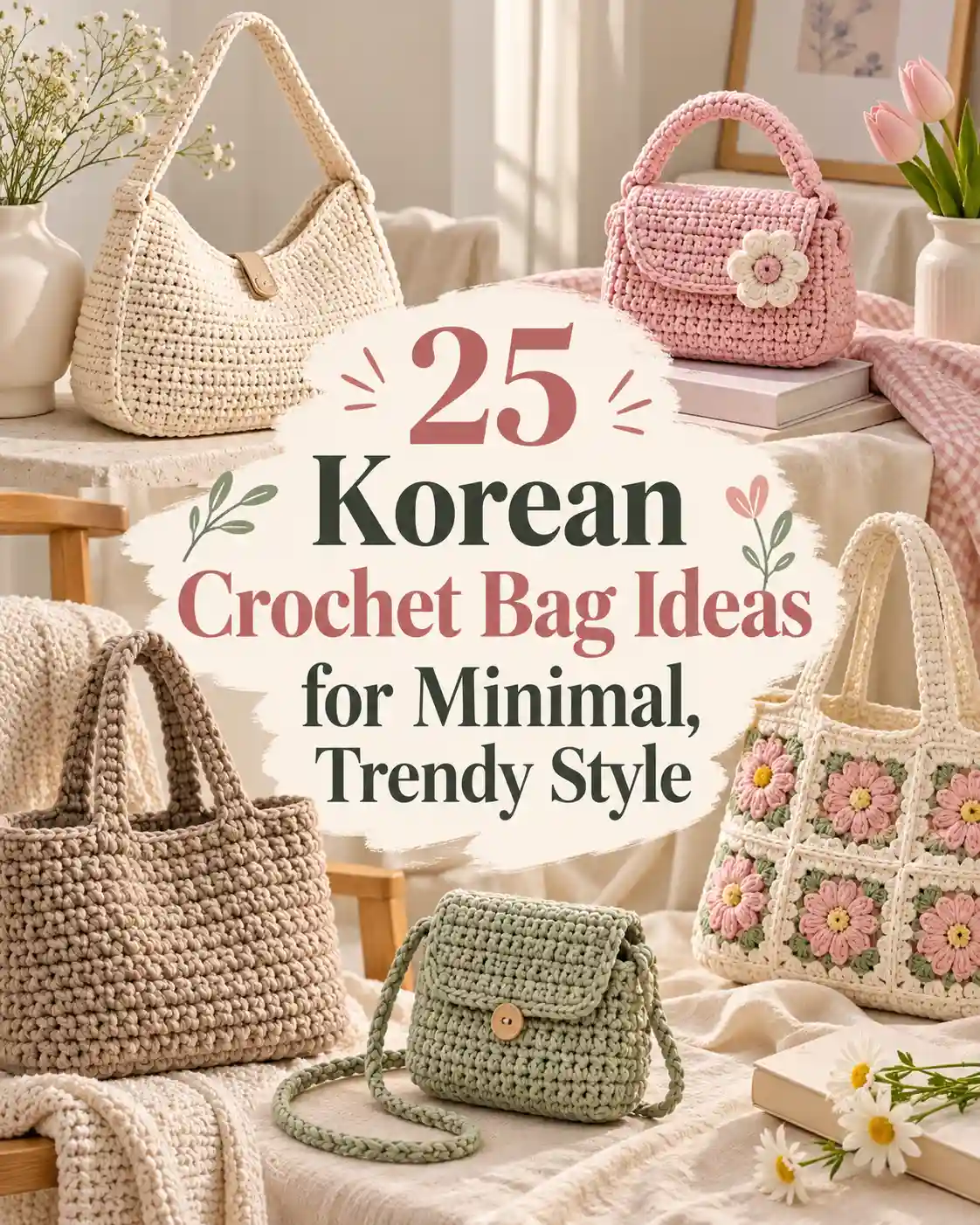
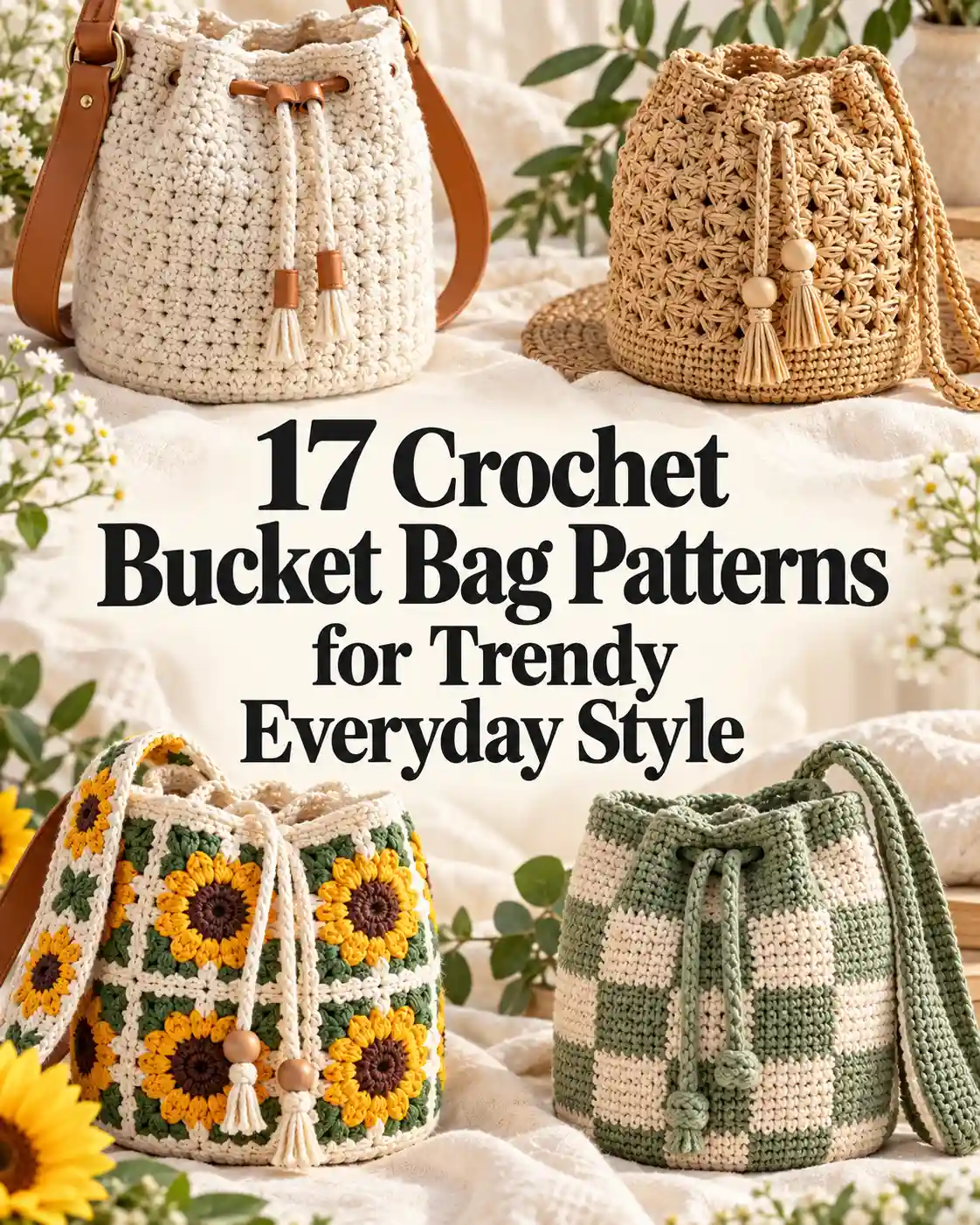
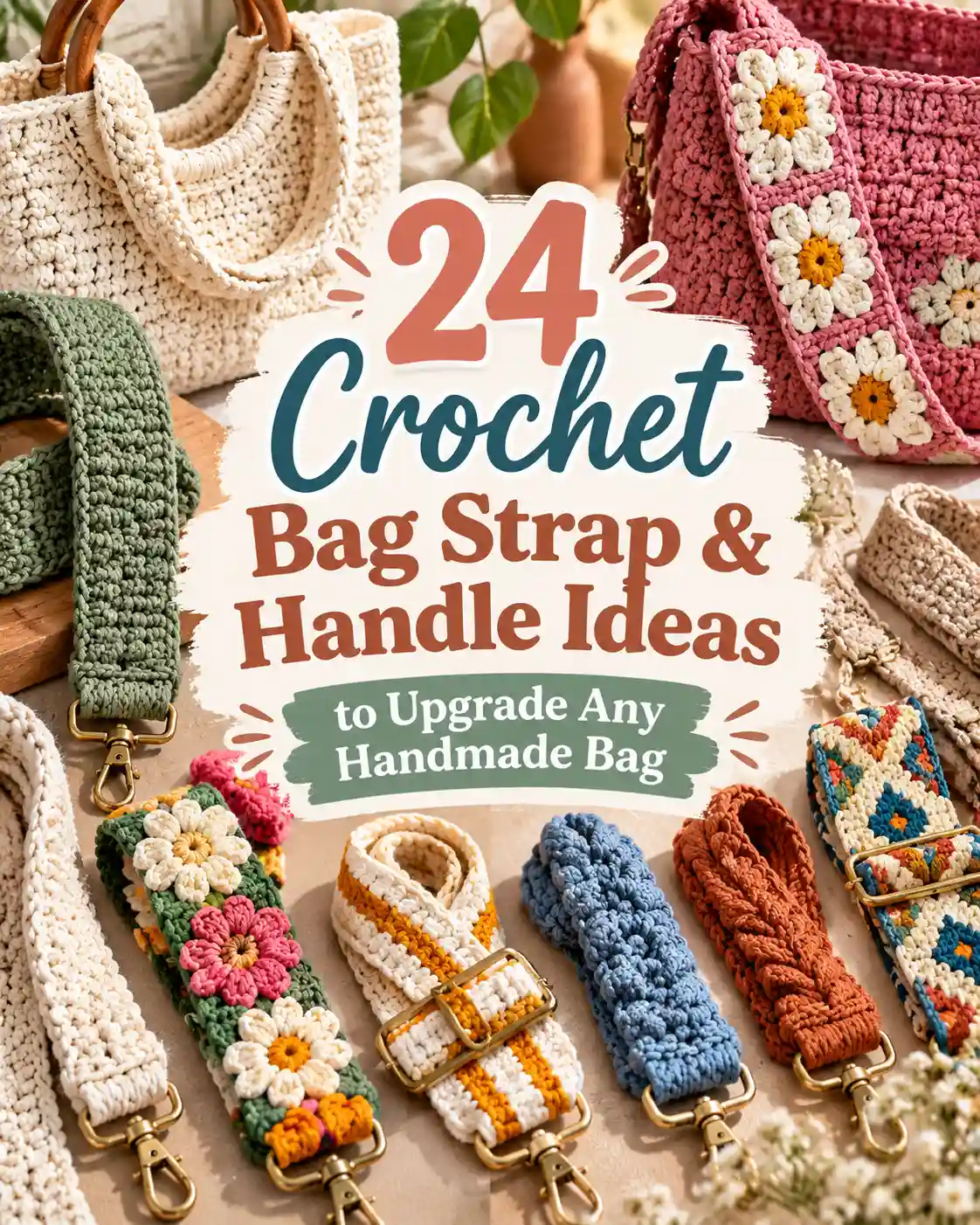
Making the bag is only half the fun; the strap is often what decides whether I actually enjoy carrying it. A well-planned crochet bag strap can make a handmade tote feel sturdier, turn a simple purse into something special, or add the comfort you wish you had thought about before finishing the bag. I’ve gathered these ideas so you can compare practical handles, colorful statement straps, adjustable options, and useful crochet bag accessories without feeling locked into one construction method. Whether you need simple crochet bag handles for a first project or a decorative crossbody strap that becomes the main feature, there is plenty here to inspire your next bag.
A good crochet bag strap needs to do more than match the bag. It should feel comfortable, hold its shape, handle the expected weight, and look intentional beside the stitches used in the bag itself.
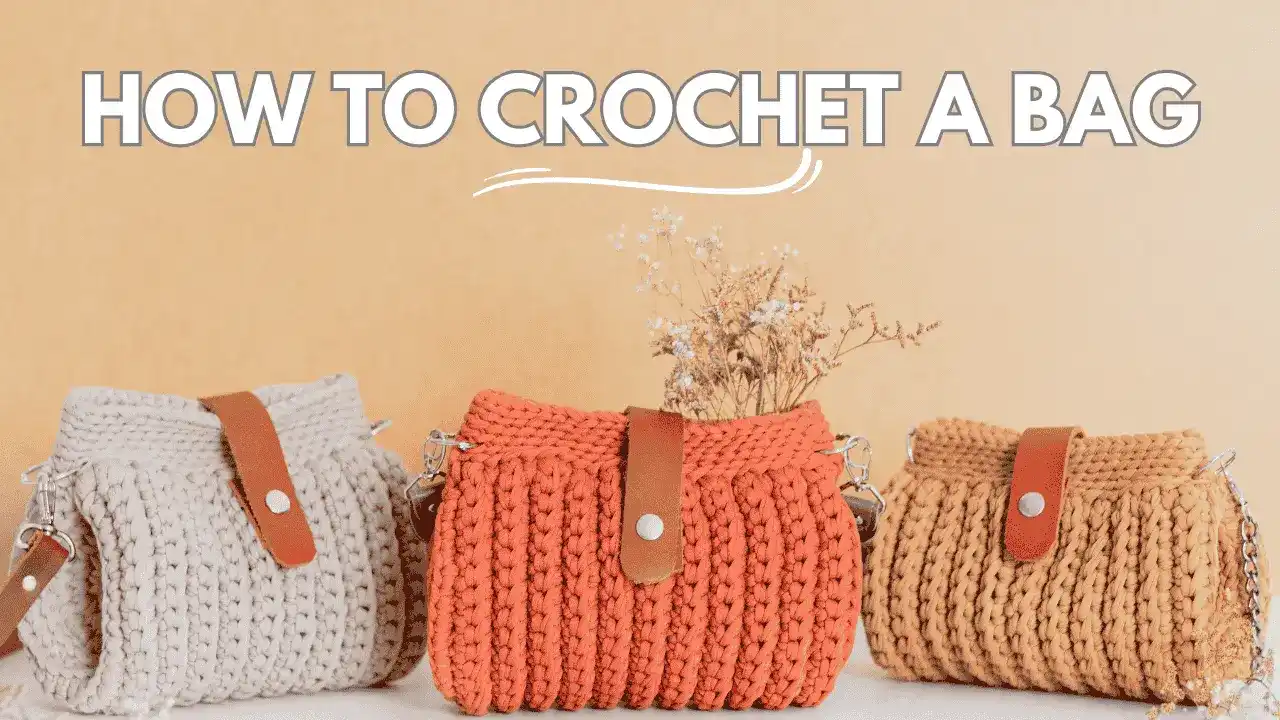
This guide brings together 24 crochet bag strap and handle ideas, from dense no-stretch straps and simple crochet bag handles to colorful motifs, adjustable crossbody straps, chain details, leather handles, and other crochet bag accessories. Use it as an idea library: choose the construction that fits your bag, yarn, skill level, and the way you actually plan to carry it. If you are still working on the bag itself, learning how to crochet a bag is a helpful place to start before choosing the final strap.
Key Takeaways
- Match strap construction to the bag’s expected weight.
- Choose wider handles when shoulder comfort matters.
- Test crochet bag handles before permanent attachment.
- Reinforce hardware and high-stress attachment points.
- Use crochet bag accessories for adjustability and customization.
- Swatch unfamiliar stitches before making a full strap.
What Makes a Crochet Bag Strap Strong, Comfortable, and Practical?
A practical crochet bag strap combines a dense enough construction, appropriate width, secure attachment, and yarn that behaves predictably under the bag’s expected load.
At a Glance
- Dense stitches help control unwanted stretching.
- Wider straps can distribute pressure more comfortably.
- Reinforced attachment points matter on heavier bags.
- Yarn and stitch construction should be tested together.
- Decorative straps still need a dependable structural base.
The best crochet bag strap is usually one that balances four things: stretch resistance, width, secure attachment, and comfort.
A narrow decorative cord can look beautiful on a phone pouch, for example, but it may not be the right choice for a market tote filled with groceries. A wider, denser strap spreads the load over more of your shoulder and gives you more fabric to reinforce at the attachment points.
Yarn choice matters too. The Craft Yarn Council classifies yarn from category 0 through category 7 and notes that its recommended hook sizes and gauges are guidelines rather than guarantees; the pattern gauge and characteristics of the individual yarn still matter.
Cotton is especially useful to consider for functional straps. Cotton Incorporated reports a breaking elongation of roughly 3%–9.5% for cotton fiber and describes cotton as having moderate-to-high strength, although finished yarn behavior depends on yarn construction as well as the fiber itself.
| Strap style | Best for | Stretch control | Skill level | Main advantage |
|---|---|---|---|---|
| Thermal stitch | Totes, heavy bags | Excellent | Intermediate | Dense and firm |
| Reinforced single crochet | Everyday bags | Very good | Beginner | Simple construction |
| Romanian cord | Small purses | Moderate | Beginner–Intermediate | Slim, polished look |
| Braided cord | Shoulder bags | Good | Beginner | Strong with color options |
| Tunisian crochet | Structured bags | Very good | Intermediate | Firm texture |
| Wide strap | Shoulder/market bags | Good | Beginner | Better comfort |
| Adjustable strap | Crossbody bags | Depends on the stitch | Intermediate | Custom fit |
| Chain/leather strap | Fashion bags | Excellent in strap material | Beginner–Intermediate | Professional finish |
One useful habit is to make a short swatch of your intended strap construction, measure it, pull it firmly or hang a little weight from it, then measure it again. That gives you a much better idea of how your yarn, hook, tension, and stitch combination behaves before you commit to a long strap.
Which Crochet Bag Strap Ideas Work Best for Strong Everyday Bags?
Dense thermal crochet, reinforced single crochet, braided cords, and structured Tunisian crochet are strong starting points when an everyday bag needs more support.
At a Glance
- Use dense stitches for frequently loaded bags.
- Reinforce simple stitches instead of overcomplicating them.
- Reserve thin cords for lighter bags.
- Test strap length after applying realistic weight.
24 Crochet Bag Strap & Handle Ideas to Upgrade Any Handmade Bag
The first group focuses on structure. These are the options I would look at first when the bag will actually carry more than a phone and a few small items.
1. Thermal Stitch No-Stretch Strap
The thermal stitch strap is the one to consider when stretching is the problem you want to solve first. Instead of creating the lighter fabric you get from ordinary rows of single crochet, thermal crochet connects stitches through layers of the fabric, producing a noticeably thicker strap. If the technique is new to you, reviewing thermal stitch crochet first can make the strap easier to plan.
That extra density is especially useful on a tote that regularly carries a water bottle, book, or other heavier items. Zamiguz documents using thermal single crochet specifically for bag straps and describes the result as double-thick with minimal stretch; in that example, two strands of category-4 yarn were held together.
It takes longer than a basic flat strap, but the payoff is a handle that feels much more structural. Choose this when durability matters more than making the strap as quickly as possible.
Special Tip: Work a small thermal-stitch sample first. Dense stitches can become difficult to work if your tension is excessively tight.
2. Reinforced Single Crochet Strap
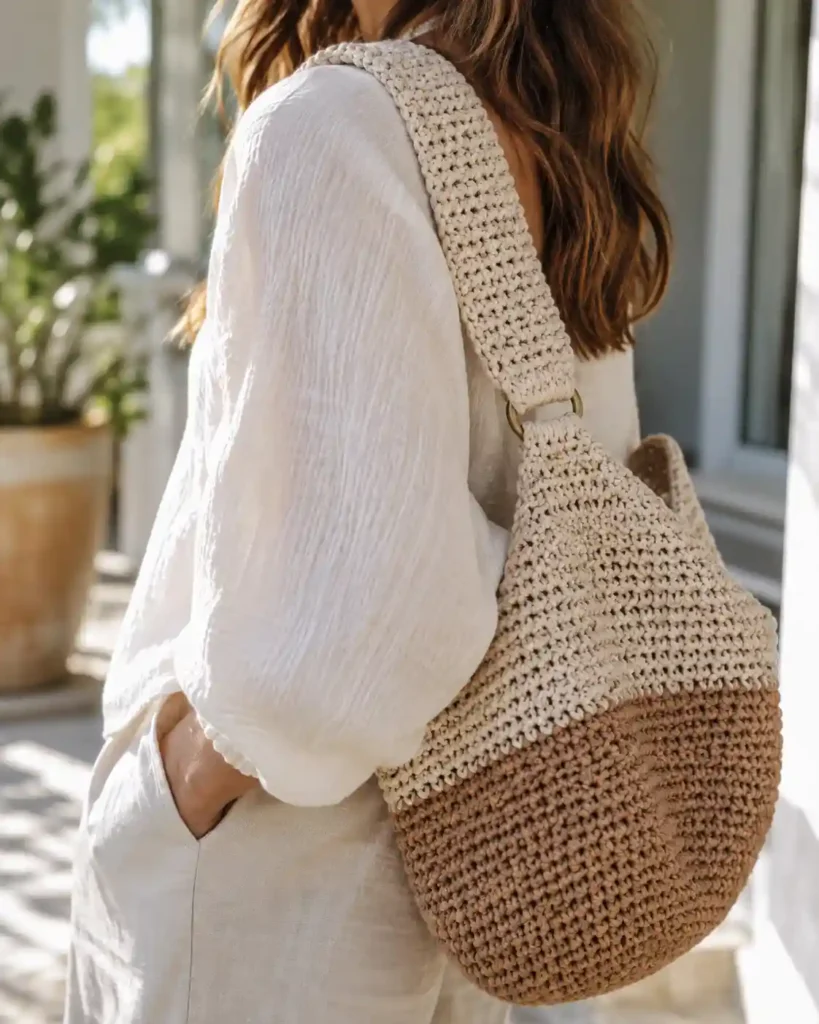
A reinforced single crochet strap is much friendlier when you want strength without learning an entirely new stitch. Start with a firm strip of single crochet, then improve the structure with additional rows, sturdy edging, a doubled layer, or an inner cord.
The advantage over a loose decorative strap is control. You can adjust the width, length, edging, and reinforcement without changing the basic stitch you already know.
This is the kind of handle I like for an everyday tote where simple construction matters more than fancy texture. For beginners building their first handmade bag, it is one of the most approachable places to start.
Keep your stitches even and pay special attention to the ends. A strong middle section will not help much if the attachment area is weak.
3. Romanian Cord Crochet Strap
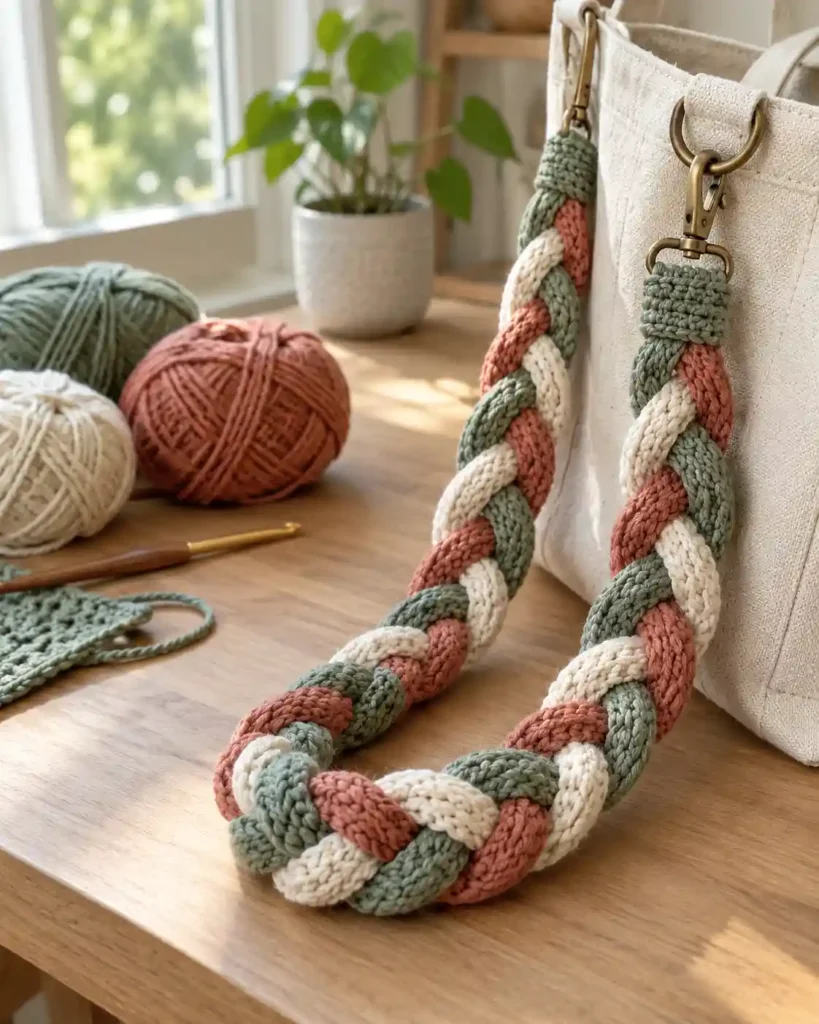
Romanian cord gives a small crochet purse a clean, almost rope-like strap without the bulk of a wide handle. Its narrow, rounded shape makes it especially attractive on phone pouches, mini bags, and lightweight purses.
A flat strap usually dominates a small bag visually; Romanian cord does the opposite and keeps the silhouette delicate. That makes it useful when the bag body is already highly textured or colorful.
I would save this style for lighter contents unless you plan to double, braid, or otherwise reinforce the cord. Its best feature is how polished a very small amount of crochet can look.
You can also make a separate cord first and decide later whether the finished bag needs one strand, two parallel cords, or a braided version.
4. Braided Multi-Cord Strap
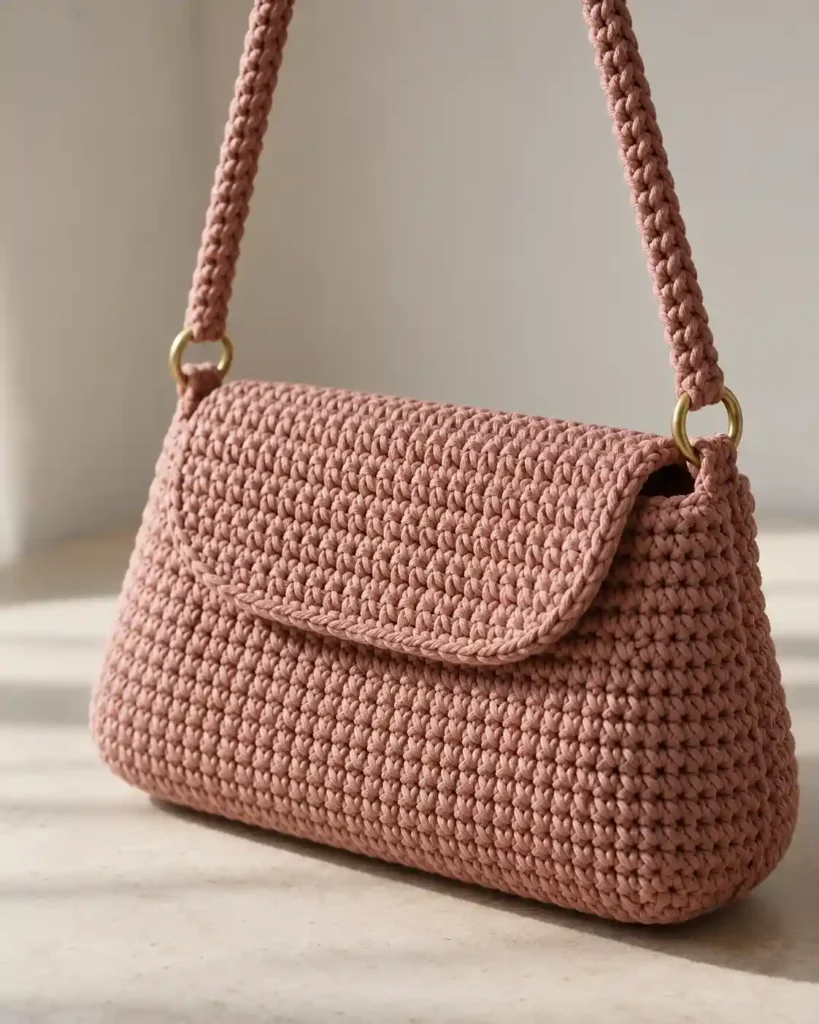
A braided strap turns several simple crochet cords into something thicker, more decorative, and potentially more supportive. Three cords are enough for a classic braid, while additional strands can create a chunkier statement handle.
This method has a practical advantage over making one thick cord: you can distribute several colors through the braid without complicated colorwork. It is perfect when you finish a plain tote and suddenly realize the strap is where you want the personality to live.
Try one solid color for a subtle finish or three coordinated colors for a much more visible upgrade. This option works particularly well for makers who enjoy simple crochet but still want the finished bag to look detailed.
Special Tip: Make each cord slightly longer than the final strap measurement because braiding shortens the usable length.
5. Spiral Rope Crochet Strap
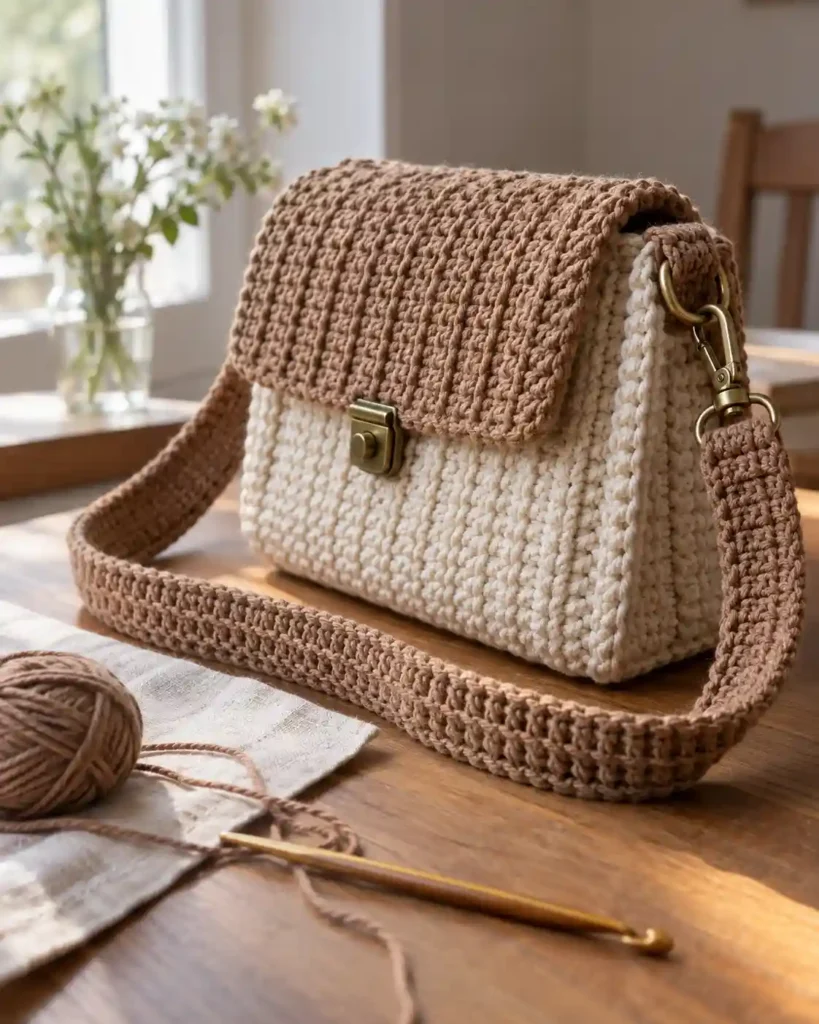
A spiral rope strap adds dimensional texture without turning the handle into a wide piece of fabric. The twisting structure feels more decorative than an ordinary cord, so even a solid-colored yarn can produce an interesting result.
Where a flat strap creates a broad visual line, a spiral cord looks compact and sculptural. I like this approach on bucket bags, small shoulder bags, and projects where a chunky rounded handle makes sense.
The yarn thickness changes the personality quickly: finer cotton gives you a neat cord, while heavier yarn creates a bold rope effect. Pick this when the strap itself should become part of the design.
Before attaching it permanently, hold the finished cord against the loaded bag to check whether the rounded shape still feels comfortable in your hand or on your shoulder.
6. Tunisian Crochet Strap
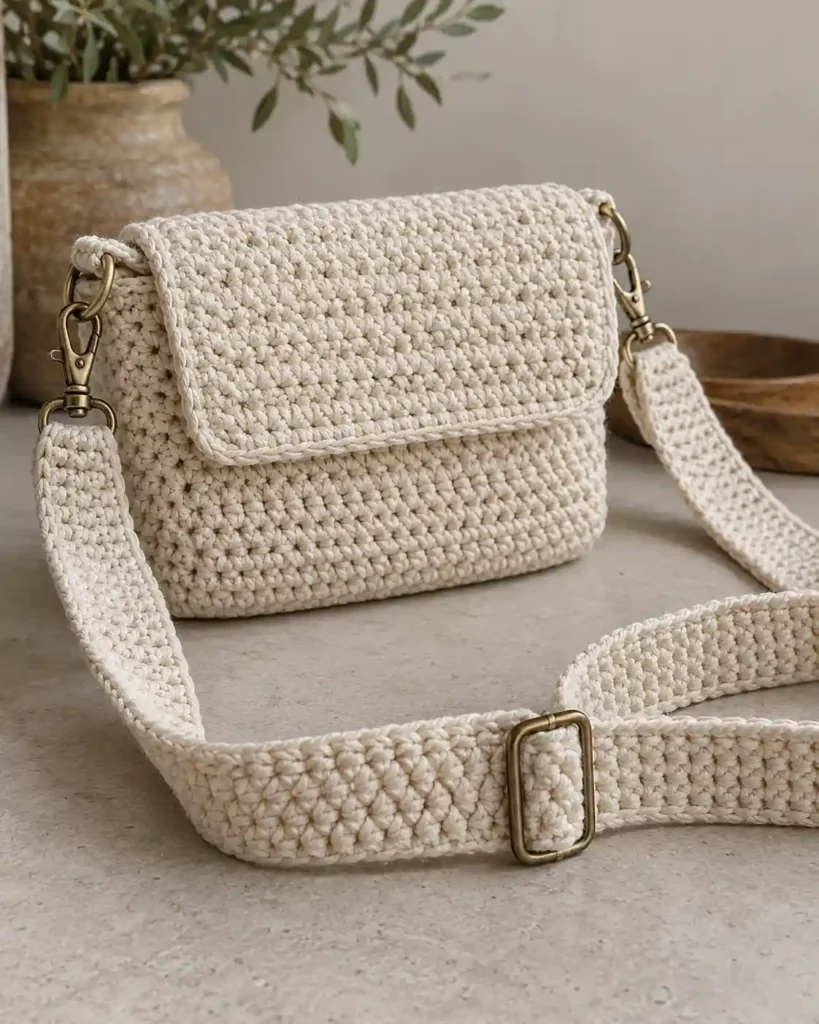
A Tunisian crochet strap gives you a structured fabric with a distinctive surface that immediately looks different from standard crochet. Because Tunisian techniques keep multiple loops on the hook during part of the process, the resulting texture can be dense and beautifully defined.
That structure makes it an interesting alternative to a basic single-crochet strip when you want firmness and visible stitch character. I especially like it on minimalist bags where the strap can provide the main texture.
Curling can occur with some Tunisian stitch patterns, so edging the strap can help it sit flatter and give the sides a more finished appearance. Choose this style if you are comfortable moving beyond basic crochet and want a strap that feels deliberately designed.
A small swatch is worthwhile here because different Tunisian stitches can behave very differently in thickness, curl, and stretch. Exploring a few tunisian crochet patterns can also help you compare textures before choosing one for your strap.
Which Crochet Bag Handles Feel Most Comfortable on the Shoulder?
Wider, adjustable, and padded crochet bag handles are usually the most useful options when comfort and fit matter more than keeping the strap extremely slim.
At a Glance
- Increase width for bags carrying more weight.
- Add adjustability for crossbody flexibility.
- Consider padding for longer carrying periods.
- Check finished drop with the bag loaded.
Strength is only half of the story. If you carry a bag for an hour rather than five minutes, strap width and shape suddenly become much more noticeable.
7. Adjustable Crossbody Strap
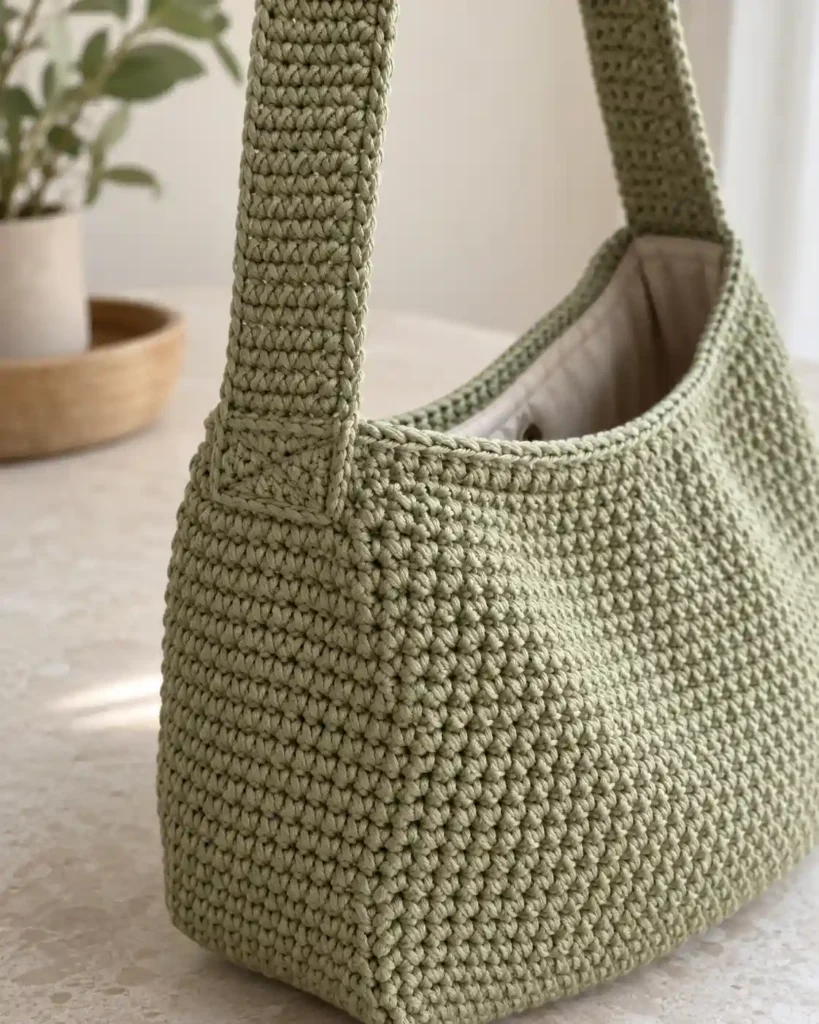
An adjustable crochet strap solves one of the biggest problems with fixed crossbody bags: the perfect drop length is different for everyone. Crochet the strap longer than the minimum you need, then pair it with suitable sliders, rings, and reinforced ends.
Compared with a permanently fixed strap, this lets the same bag sit higher or lower depending on the wearer, clothing, or situation. It is especially useful when you are making a bag as a gift and cannot measure the recipient precisely.
For a crossbody bag I plan to use regularly, adjustability is often worth the extra hardware. The biggest advantage is not decoration it is fit.
Make sure the strap can move through the slider without folding awkwardly, and reinforce the section that connects to the swivel hook or ring.
8. Wide Shoulder Strap
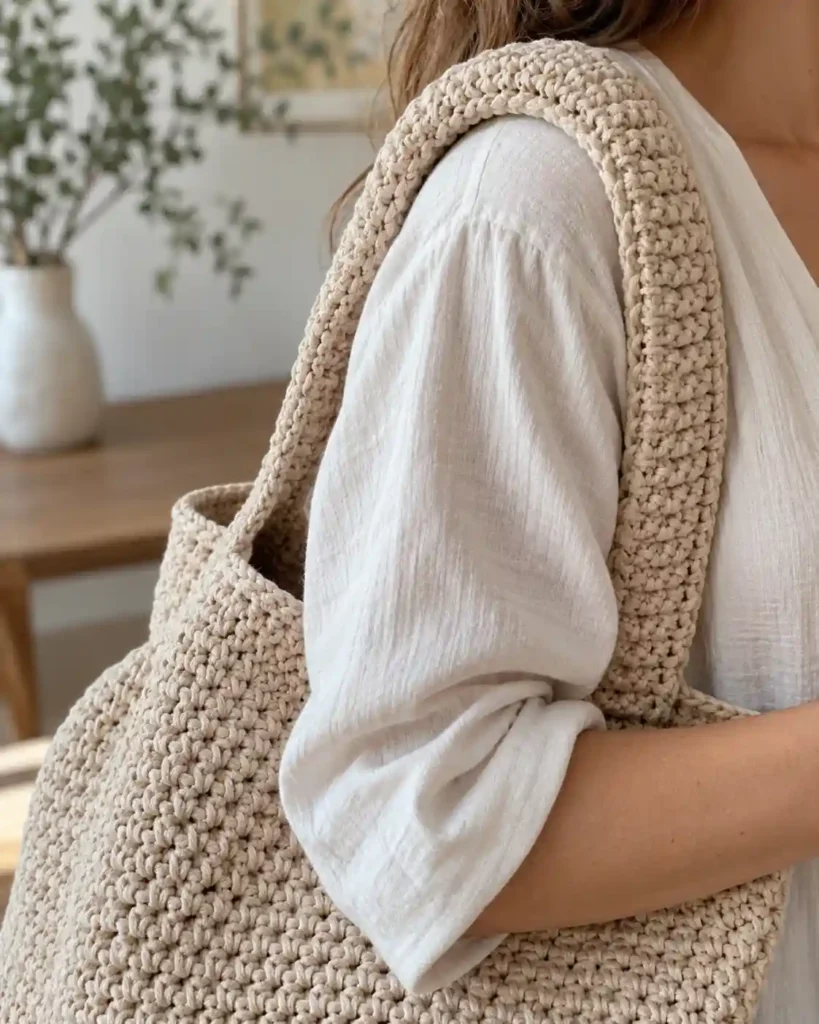
A wide strap is one of the easiest ways to make a crochet shoulder bag feel more substantial. Instead of concentrating the load on a thin cord, the wider surface spreads the pressure across more of the shoulder.
That difference becomes obvious on market bags and roomy purses. A narrow strap might look delicate when the bag is empty, but once you add everyday contents, a broader handle can feel far more comfortable.
You can keep the stitches simple because the width itself creates visual presence. This is a great choice when comfort matters more than showing off an intricate technique.
For heavier bags, combine width with dense stitching rather than assuming width alone will prevent stretching.
9. Padded Crochet Shoulder Strap
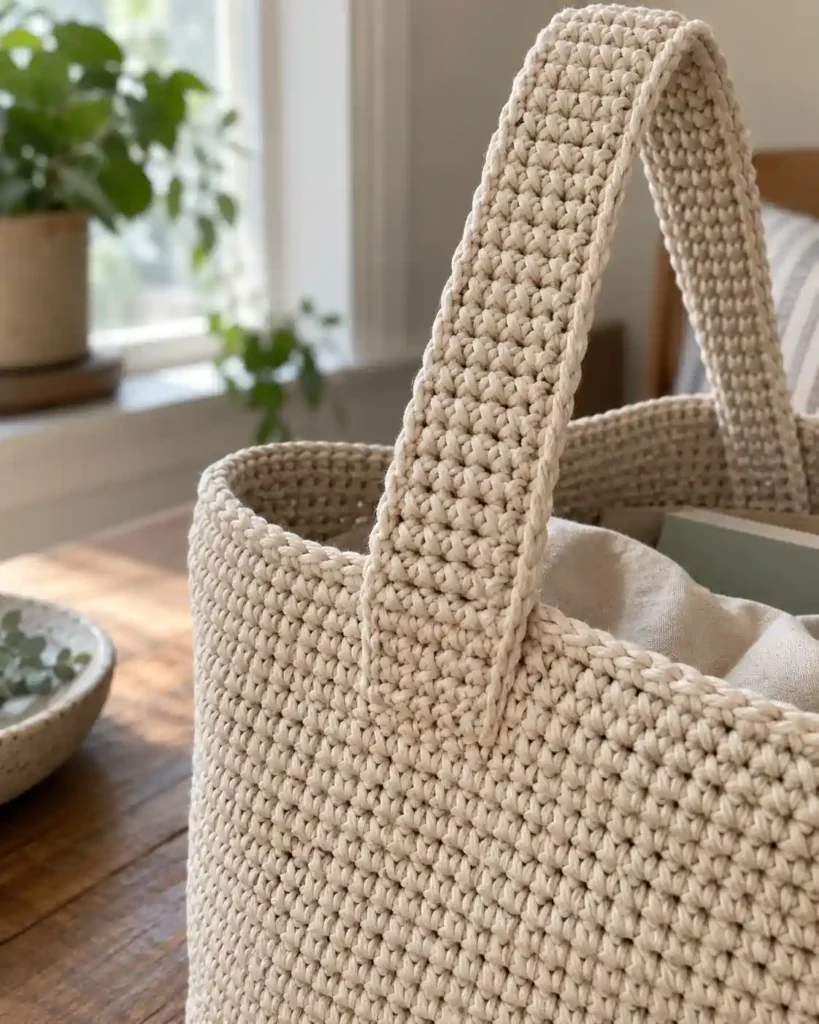
Sometimes width still is not enough, especially when a bag is carried for long periods. A padded crochet strap adds a softer center through a double layer, inner cord, or cushioned construction.
Unlike a normal flat strap, the goal here is not only structural strength but how the strap feels against your shoulder. Think of a project bag you carry to class, a roomy travel tote, or a bag that tends to get filled far beyond what you originally intended.
A padded section can make those bags noticeably nicer to use. Choose this when comfort is your first priority and a slightly thicker strap suits the design.
Keep the padding consistent from end to end so you do not create bulky sections that twist while being worn.
How Can You Make a Crochet Bag Strap More Decorative?
Add color, motifs, flowers, stripes, or tapestry crochet to a structurally dependable strap so decoration enhances the bag without becoming its weakest point.
At a Glance
- Repeat colors already used in the bag.
- Reinforce joined motifs when necessary.
- Keep shoulder-area embellishments relatively flat.
- Use simple bags to showcase statement straps.
A strap does not have to disappear into the bag. Once the basic structure is sound, it can become one of the easiest places to add color, pattern, motifs, and texture.
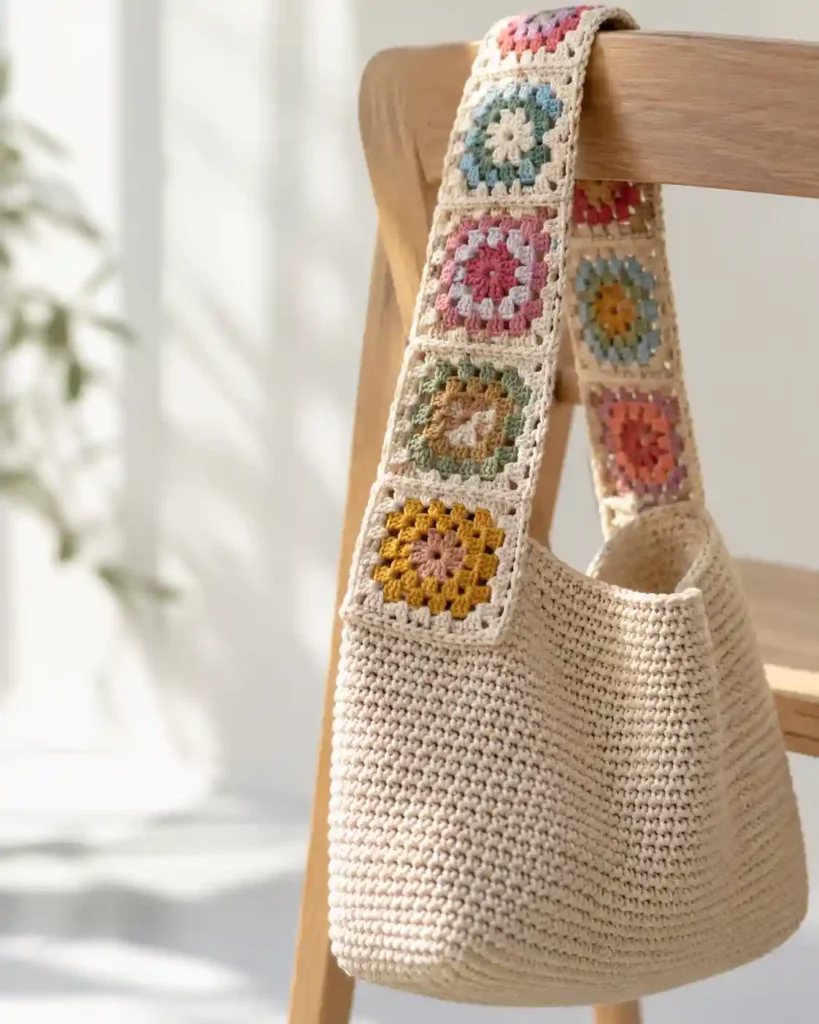
10. Granny Square Motif Strap
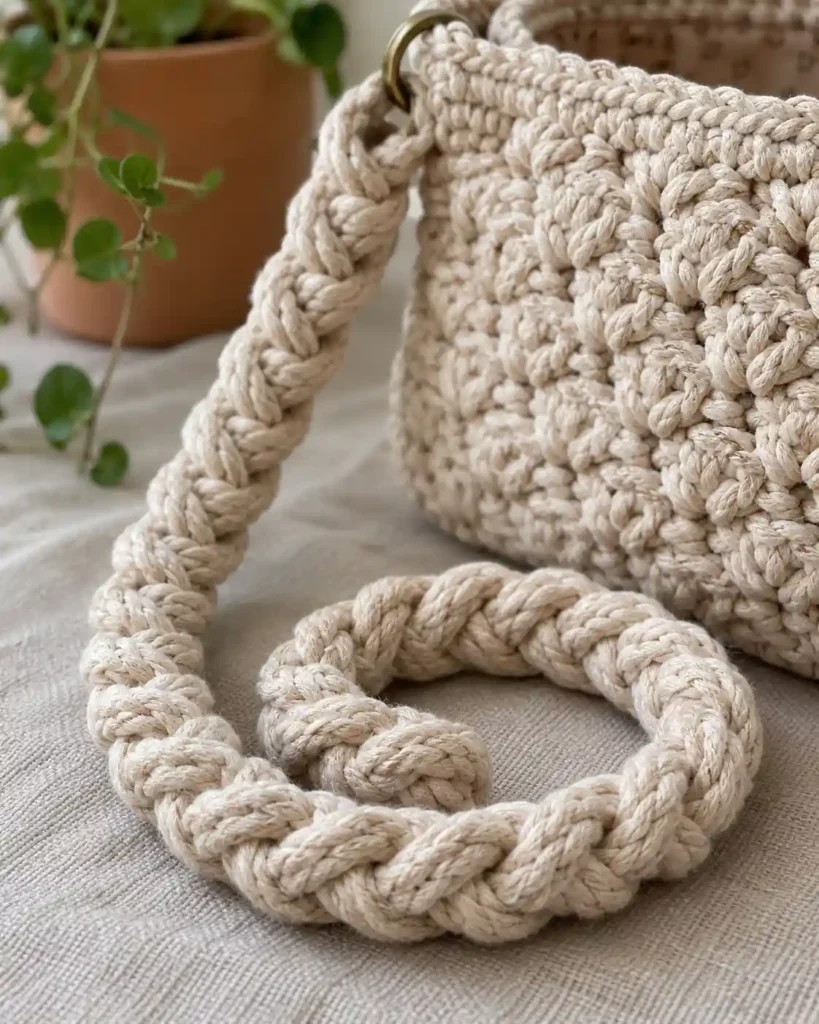
A granny-inspired strap is perfect when you want the handle to continue the story of a granny-square bag. Small squares or square-inspired motifs can be joined into a long strip, creating color changes that feel intentional rather than random.
A plain strap would certainly be faster, but it would miss the opportunity to repeat the bag’s most recognizable design element. I love this idea for colorful shoulder bags where leftover yarn from the main motifs is still sitting in the project basket.
Back or reinforce the motifs when the bag needs to carry more weight. That way, the pretty side does not have to do all the structural work.
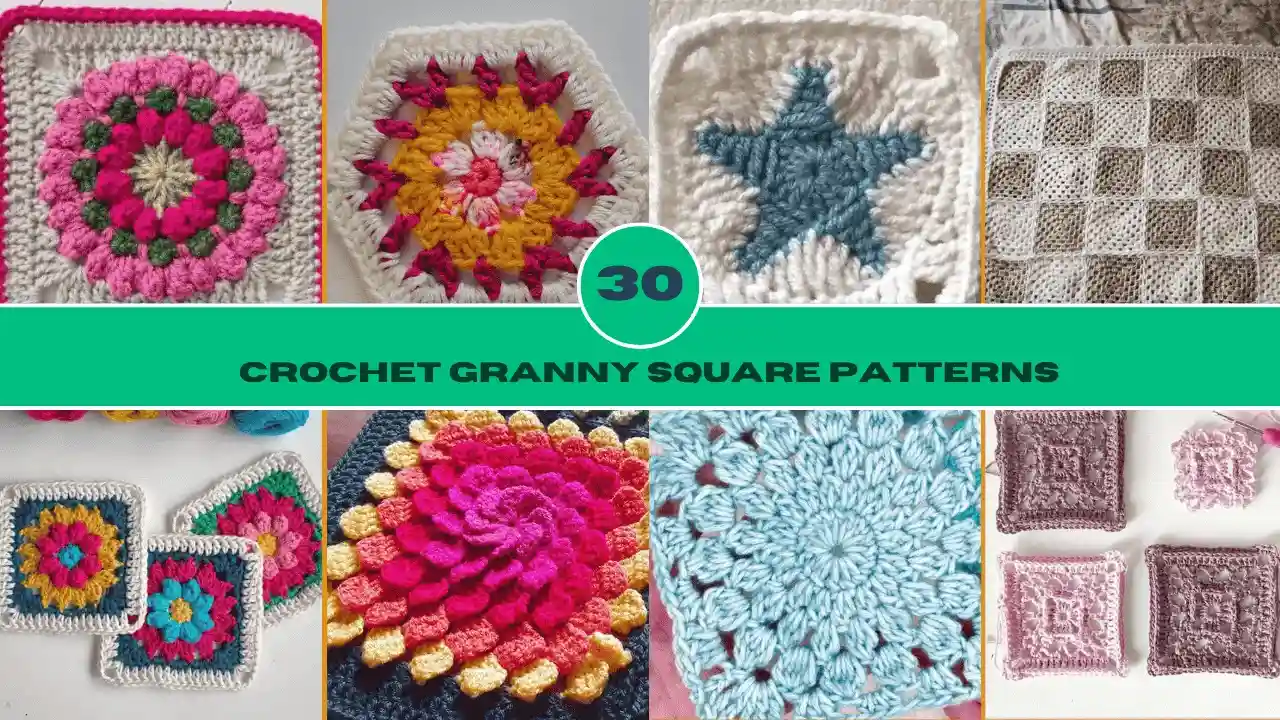
The best part is customization: changing only the color order can make the same motif layout look completely different. If you want more motif inspiration, crochet granny square patterns can give you plenty of color and layout ideas to adapt for the strap.
11. Floral Crochet Strap
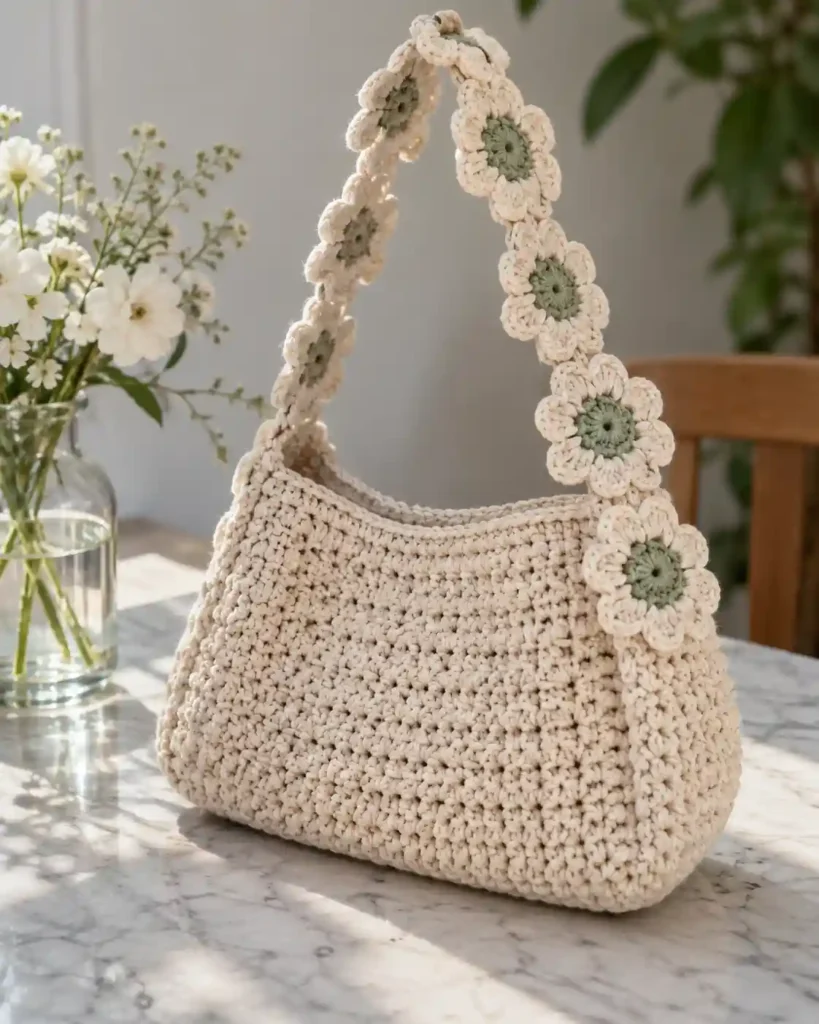
A floral strap turns a basic bag into something much more playful without requiring you to cover the entire bag in flowers. You can work flat motifs directly into the strap design or sew secure appliqués onto a firm structural base.
That second option is often more practical than asking delicate flower motifs to carry the bag’s full weight. It lets you separate decoration from structure.
This works beautifully on spring bags, small purses, festival pieces, or gifts for someone who already loves floral crochet. Use flatter flowers around the shoulder area so the embellishments do not become uncomfortable.
A strong base plus decorative flowers gives you the best of both worlds: dependable construction underneath and personality on top.
12. Striped and Color-Block Strap
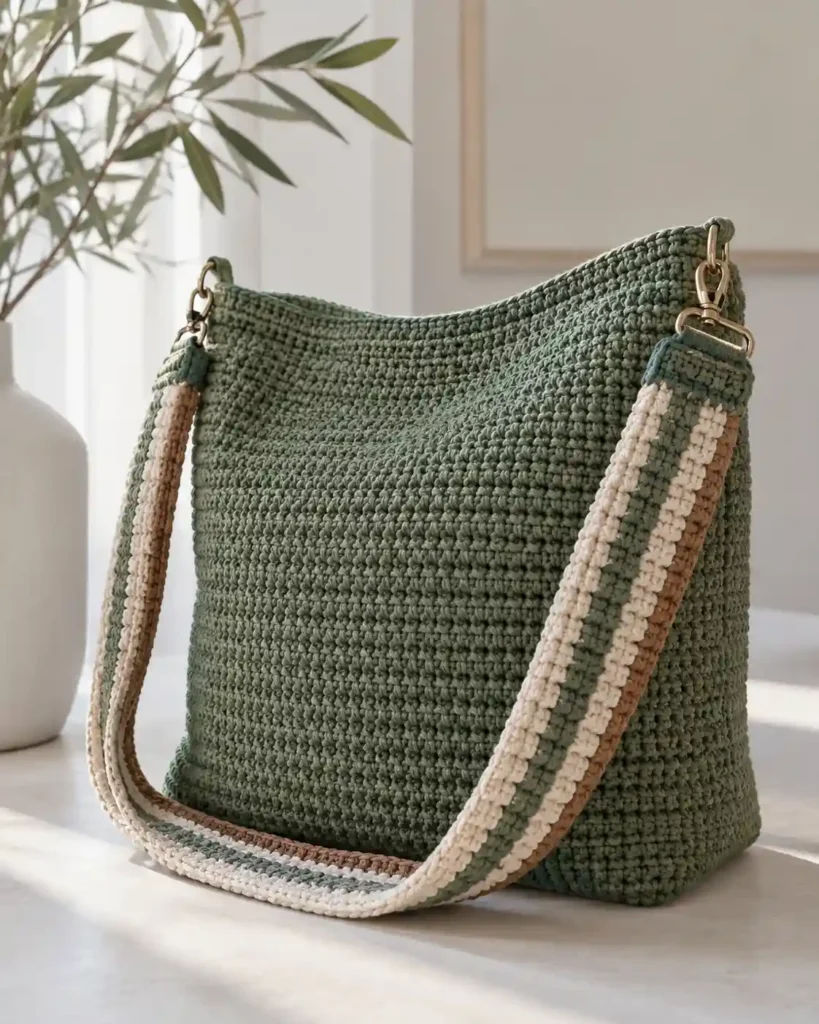
Stripes are one of the simplest ways to make a plain bag look coordinated. Repeat a color from the bag body, add a contrasting shade, or create larger color blocks for a modern look.
You get much of the visual effect of complicated colorwork without needing to follow a detailed motif chart. That makes this one especially useful when you have several small quantities of matching yarn left after completing the bag.
Keep your color changes neat along the edge that will be least visible. The finished strap can look surprisingly intentional even when it began as a scrap-yarn solution.
For a calmer result, use two shades; for something more playful, rotate three or four.
13. Geometric Tapestry Strap
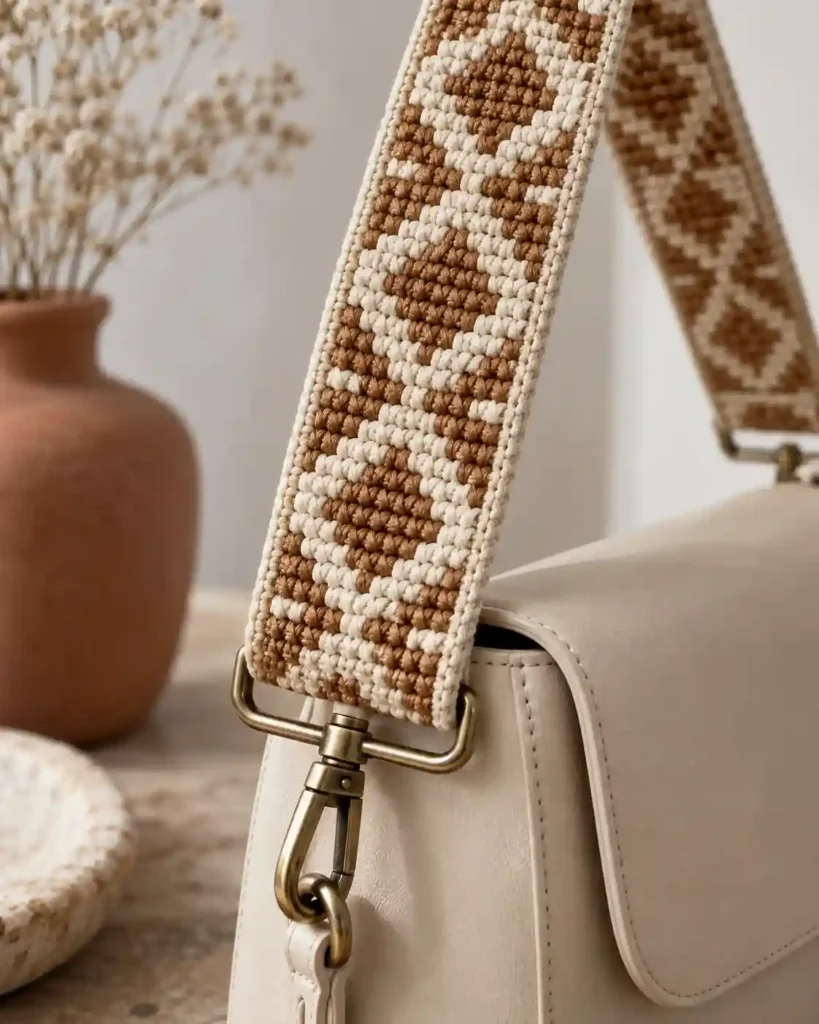
A tapestry crochet strap is where the handle becomes a genuine design feature. Diamonds, arrows, checks, and repeating geometric motifs can turn a simple solid bag into something that feels custom-made.
Compared with ordinary stripes, tapestry work gives you much more control over the pattern, although it also asks for better tension and cleaner color management. I would use it on a bag with a relatively simple body so the strap has room to stand out.
A firm backing or dense construction can help the colorwork hold its shape. Choose this if you enjoy charted motifs and want your strap to look almost woven.
Special Tip: Start with a small repeating motif. Large complicated charts are harder to keep visually centered on a narrow strap.
Which Crochet Bag Accessories Can Give a Handmade Bag a Professional Finish?
Rings, swivel hooks, sliders, chains, and leather components can add adjustability, removability, contrast, and a more structured finish to handmade crochet bags.
At a Glance
- Reinforce crochet before adding metal hardware.
- Match hardware dimensions to strap width.
- Use swivel hooks for removable straps.
- Combine chain or leather with sturdy connector tabs.
- Test every attachment before carrying valuables.
Hardware changes the personality of crochet quickly. Rings, hooks, sliders, chain, and leather can make a soft handmade bag feel more structured and can also make straps removable or adjustable.
14. Chain-and-Crochet Strap
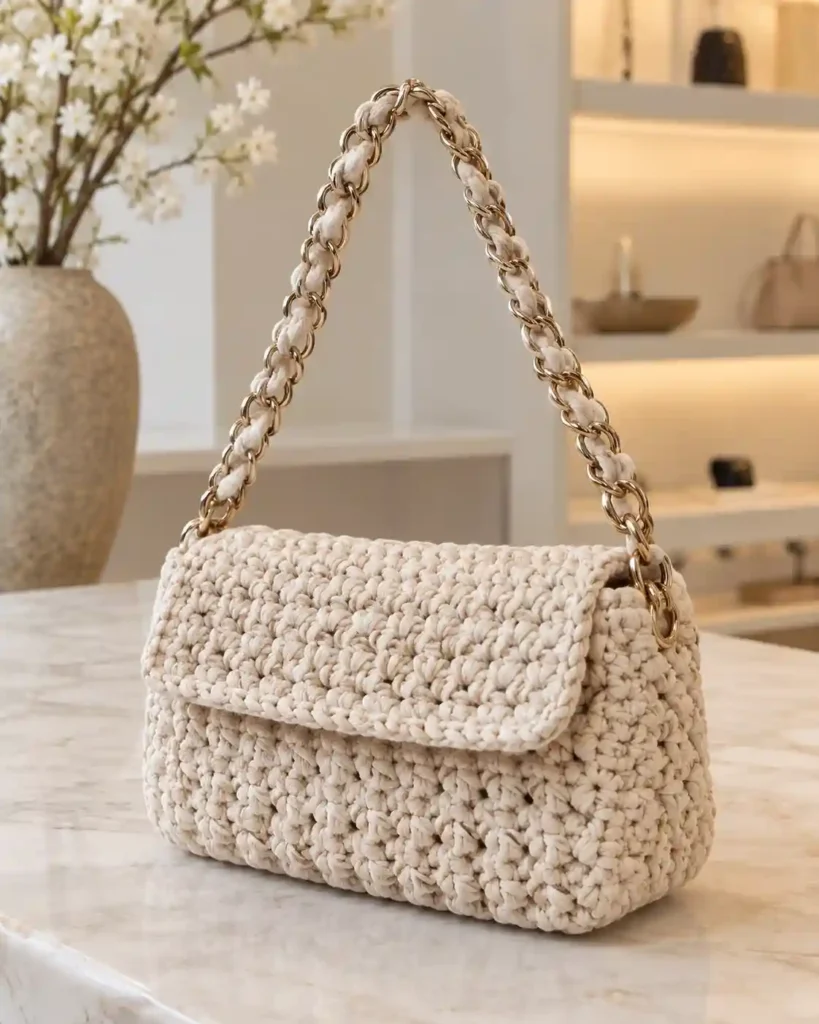
A metal chain creates instant contrast against soft crochet stitches. Leave the chain exposed for a sharper fashion look, weave yarn through the links, or crochet around sections of it to connect the hardware visually to the bag.
The result feels very different from an all-yarn strap because the chain contributes both shine and structure. I like it most on small shoulder bags and evening-style purses where a heavy fabric strap would overwhelm the shape.
Check the chain links and attachment rings carefully before trusting them with the finished bag. The strongest strap in the world still depends on the weakest connector.
Use this option when you want the bag to feel a little less “craft project” and a little more like a finished accessory.
15. Leather-and-Crochet Strap
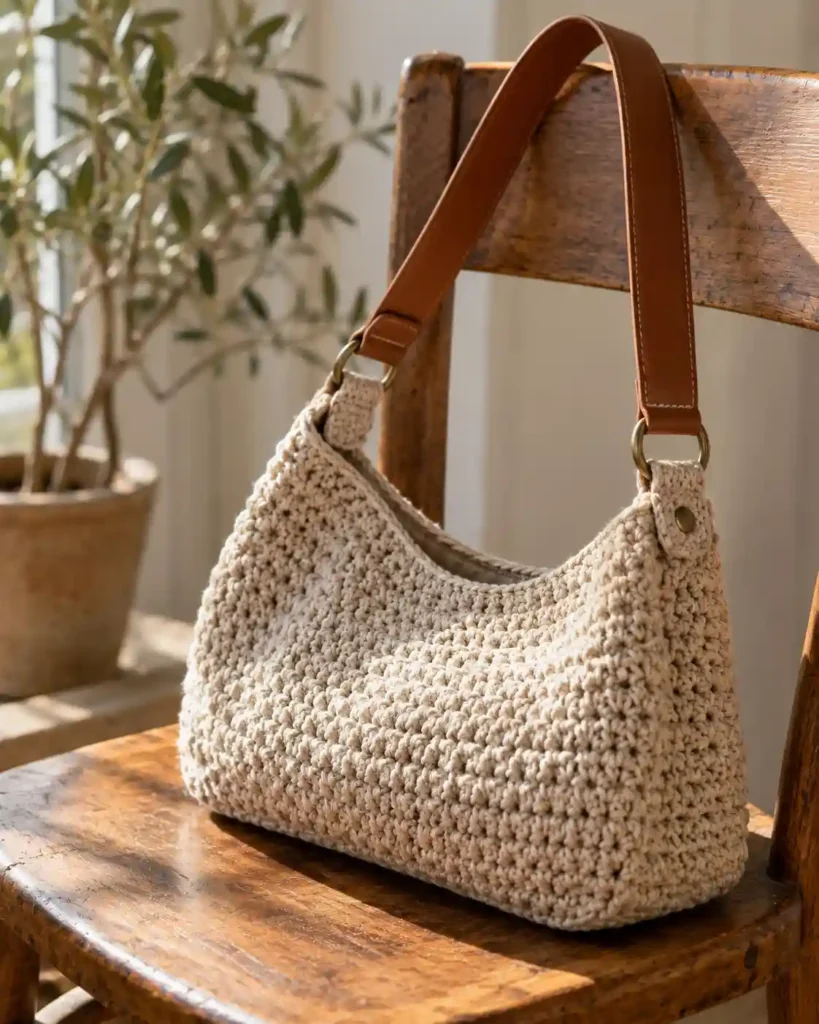
Leather handles beside crochet fabric create a clean mixed-material look that works especially well with neutral yarns. You can attach ready-made leather straps to rings, use pre-punched handles, or make crochet tabs that connect the bag to the hardware.
Unlike a crochet-only handle, leather gives you a firm surface that will not stretch in the same way as yarn. That makes it useful when you love a soft crochet bag body but want a more structured carrying point.
A cream, tan, black, or earthy-toned bag can look completely different after this one change. Choose leather when you want contrast in both texture and structure.
Make sure the crochet fabric around each attachment point is reinforced, because the leather may remain firm while the surrounding stitches take the stress.
16. Removable Strap With Swivel Hooks
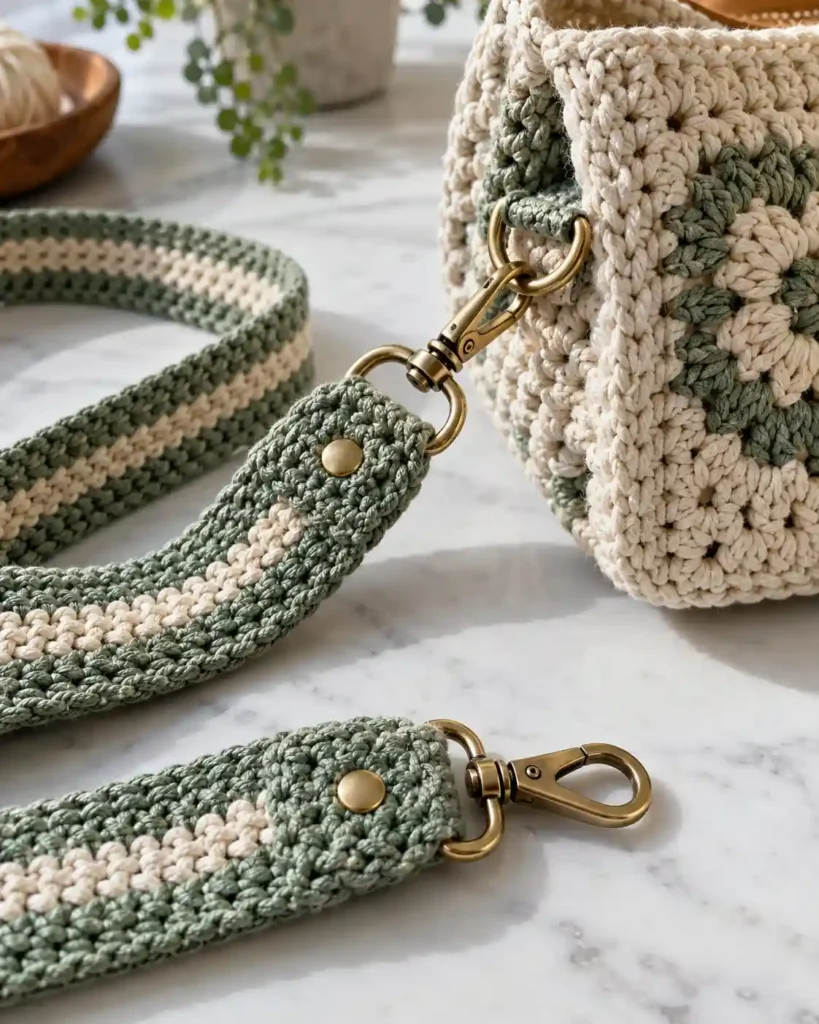
Swivel hooks are small crochet bag accessories that make a surprisingly big difference. Add reinforced tabs or rings to the bag, finish the strap with compatible hooks, and suddenly one bag can accept multiple straps.
That flexibility beats permanently sewing every handle in place when you enjoy changing styles. I use this concept mentally as a “one bag, several moods” solution: a plain strap for everyday use, then a colorful or chain-detailed version when you want something different.
It also makes replacing a worn strap much easier. If versatility is important, this may be the most useful hardware upgrade in the entire list.
Match the hook size to the ring and strap width, and test the hardware under the kind of load the bag will actually carry.
Which Easy Crochet Bag Handles Are Good for Beginners?
Short tote handles, simple long straps, wristlets, and lightweight phone-bag straps are approachable beginner choices because their construction can stay simple while still teaching good finishing and attachment.
At a Glance
- Start with familiar stitches and even tension.
- Count rows to keep paired handles equal.
- Test long straps for stretch before finishing.
- Reinforce wristlets at their single attachment point.
You do not need complicated stitches to make a useful handle. Simple shapes become much more successful when you focus on proportion, placement, reinforcement, and even tension.
17. Short Tote Handles
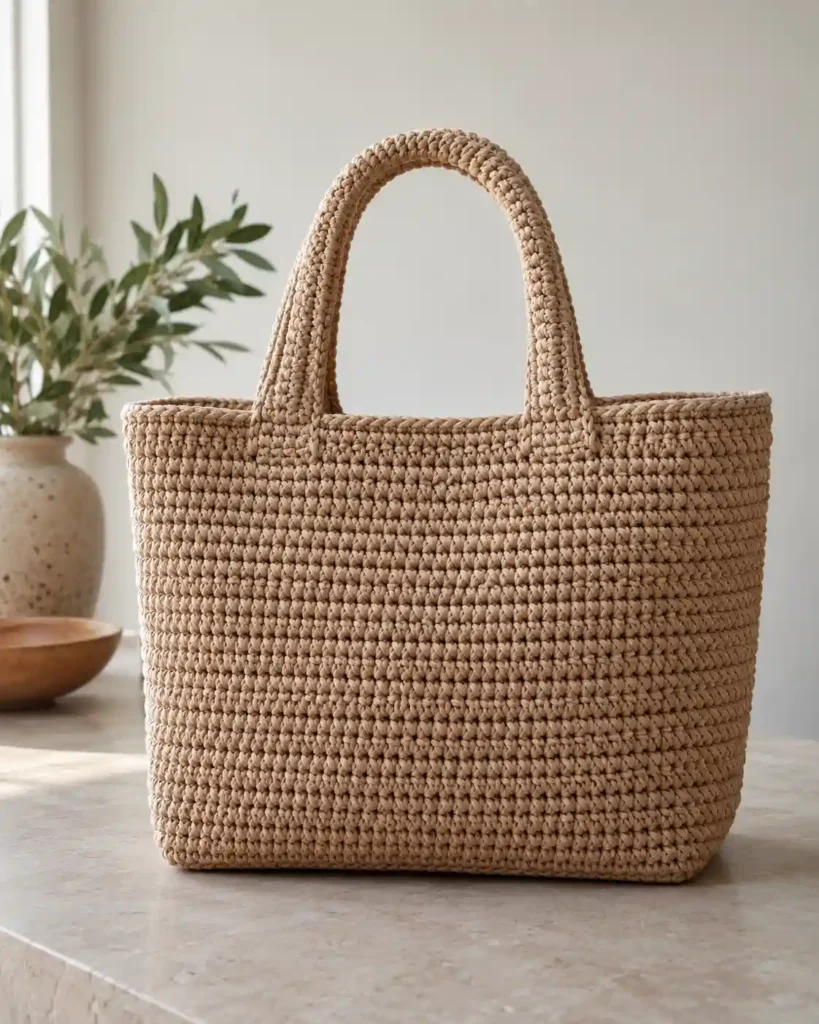
Short matching handles are a classic choice because they keep the construction straightforward. Crochet two equal handles, position them symmetrically, and reinforce the points where they meet the tote.
Compared with a long shoulder strap, short handles require less yarn and give you fewer inches in which stretching can become noticeable. They work especially well on structured totes that are usually carried by hand or over the forearm.
For a first bag project, this is a comfortable place to practice neat attachment. The real payoff is simplicity: there is very little hardware or fitting to worry about.
Count your rows carefully so both handles finish at the same length.
18. Long Shoulder Strap
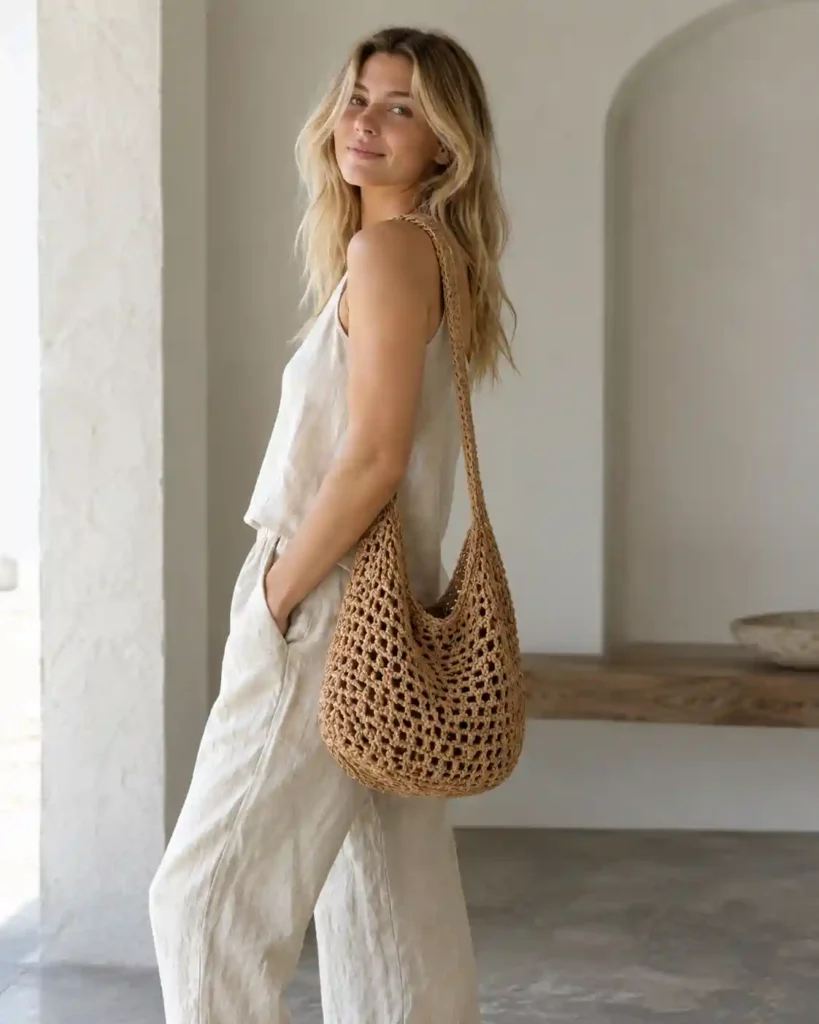
A fixed long shoulder strap keeps the clean handmade look of an all-crochet bag without introducing sliders or extra hardware. The key is deciding the drop before you finish and remembering that some constructions may lengthen under use.
Made by Gootie published one useful real-world example: a diagonally worked crochet strap measured 66 inches when finished and 72 inches after use, an increase the designer described as about 10%. That is one specific yarn-and-stitch example rather than a universal rule, but it shows why testing matters.
I would choose a fixed shoulder strap when the bag is primarily for one wearer and you already know the preferred length. Its biggest strength is the clean silhouette.
Measure while wearing the bag with a little weight inside before completing the final attachment.
19. Wristlet Strap
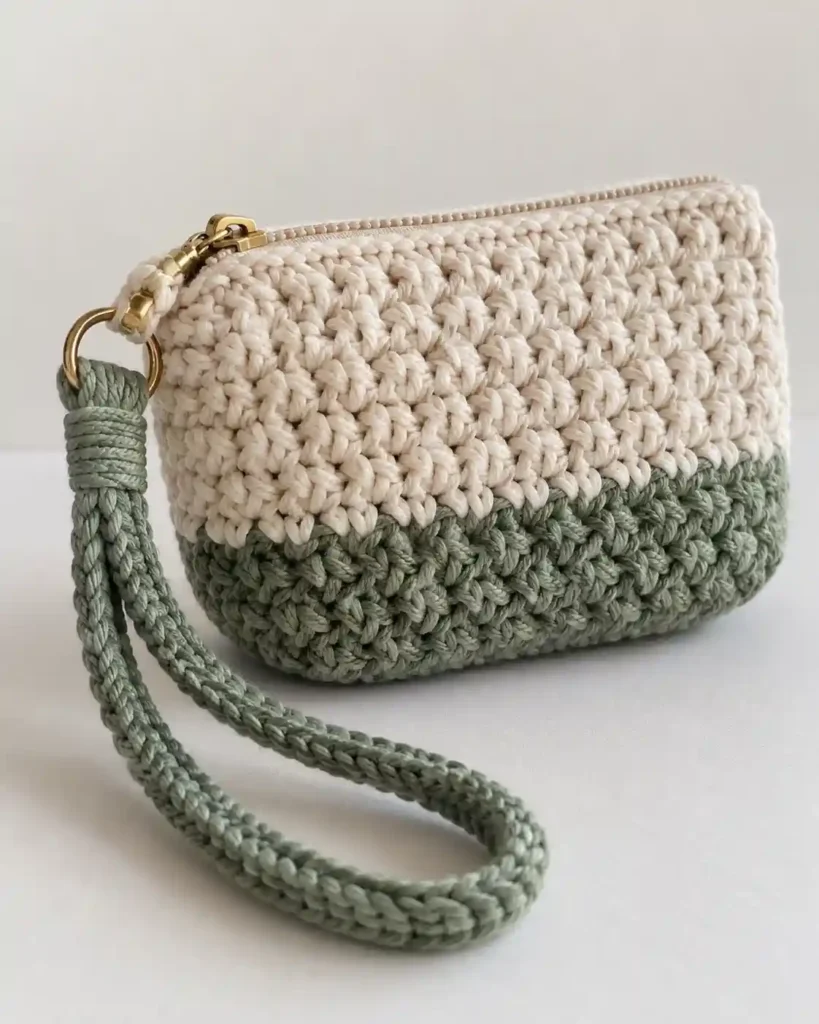
A wristlet is small, quick, and genuinely useful. It gives a clutch, zipper pouch, or mini bag a secure loop without committing you to a full shoulder strap.
Because the strap is short, you can experiment with cord, dense single crochet, or a decorative stitch without turning the idea into a major project. This is one of my favorite uses for leftover yarn after the main pouch is complete.
Make the loop large enough to slide over the hand comfortably but not so large that the bag hangs awkwardly. Choose it when you want a fast finishing detail that changes how the pouch can be carried.
Reinforce the single attachment point especially well because all the force is concentrated there.
20. Phone Bag Strap
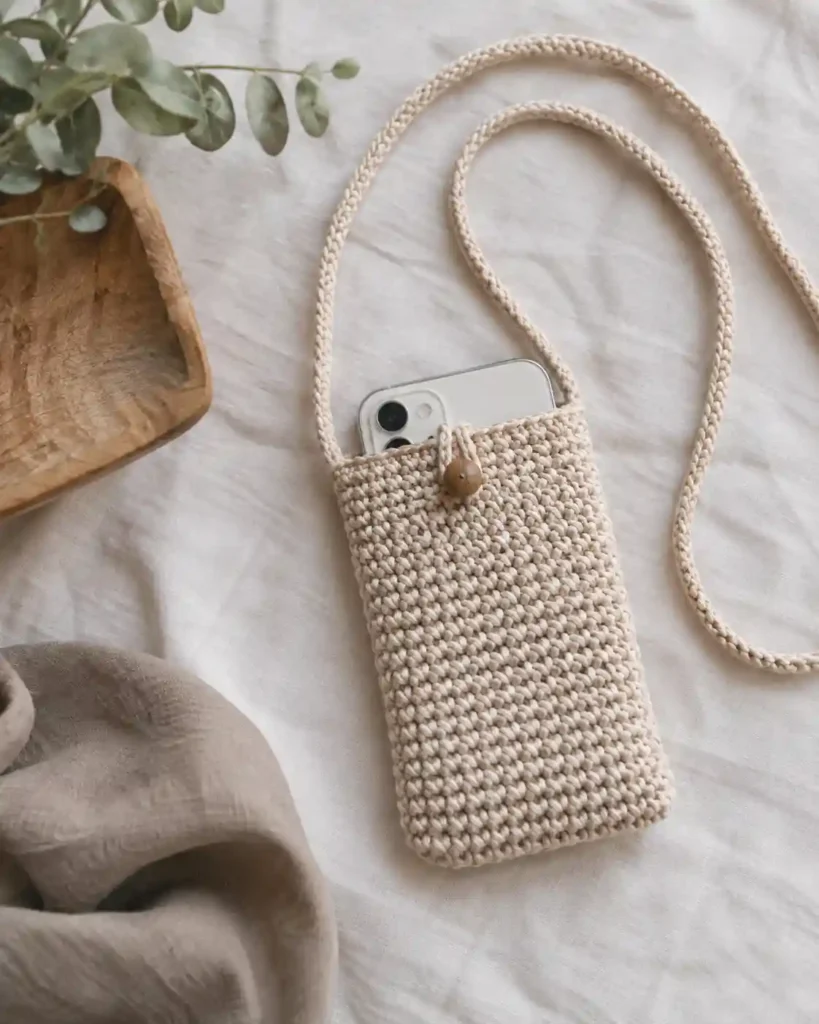
A phone pouch does not need the same strap as a grocery tote. A slim cord or narrow flat strip keeps the proportions balanced while still allowing the pouch to be worn crossbody.
That lighter construction is usually more visually appropriate than a thick padded handle. For a small everyday phone bag, I would focus on smooth edges and the correct finished length before worrying about elaborate stitches.
Add a slider if several people might use the bag or if you want to switch between high crossbody and longer wear. This style is ideal when you want a practical project without using much yarn.
Because phones vary in weight and pouches often carry keys as well, test the completed strap with the actual contents before finishing the ends.
Which Crochet Bag Strap Works for Different Bag Shapes?
Match the strap to the bag’s structure: bucket bags need clear openings, mesh bags benefit from denser handles, waist bags need stable adjustment, and interchangeable bags need reinforced hardware.
At a Glance
- Keep bucket-bag straps clear of drawstrings.
- Give mesh bags denser attachment areas.
- Keep waist-bag straps firm and adjustable.
- Standardize hardware for interchangeable straps.
Sometimes the bag itself decides what the strap needs to do. An open mesh market bag, for example, puts different stress on the attachment area than a small dense phone pouch.
21. Bucket Bag Strap
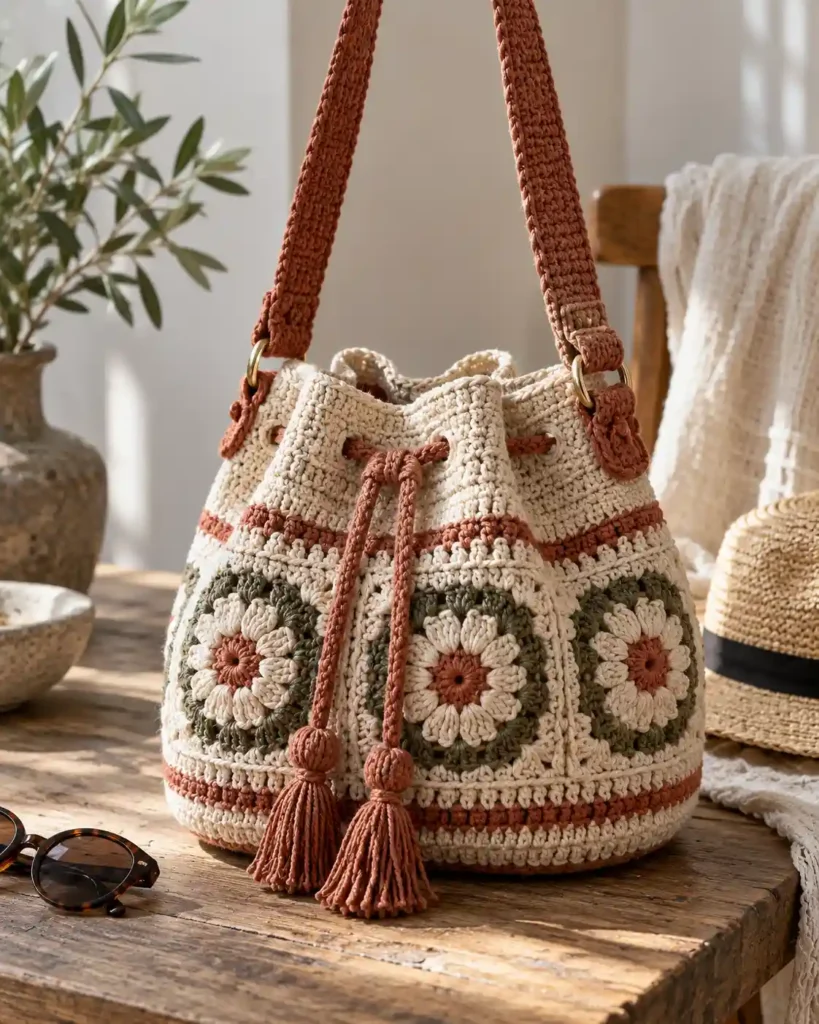
A bucket bag gives you plenty of strap choices: crochet, leather, chain, or a removable mixed-material version. The important part is placing the attachment so it does not interfere with the drawstring or collapse the opening.
A standard tote handle can look awkward on this rounded silhouette, while side tabs naturally support a shoulder or crossbody strap. I like reinforced side attachments because they keep the top edge free to open and close.
This is also a good bag for experimenting with hardware because rings can become part of the design. Choose the strap material according to whether you want the finished bucket bag to look casual, boho, or more polished.
Before sewing anything permanently, pull the drawstring closed and check that the strap hardware stays out of its path.
22. Mesh and Market Bag Strap
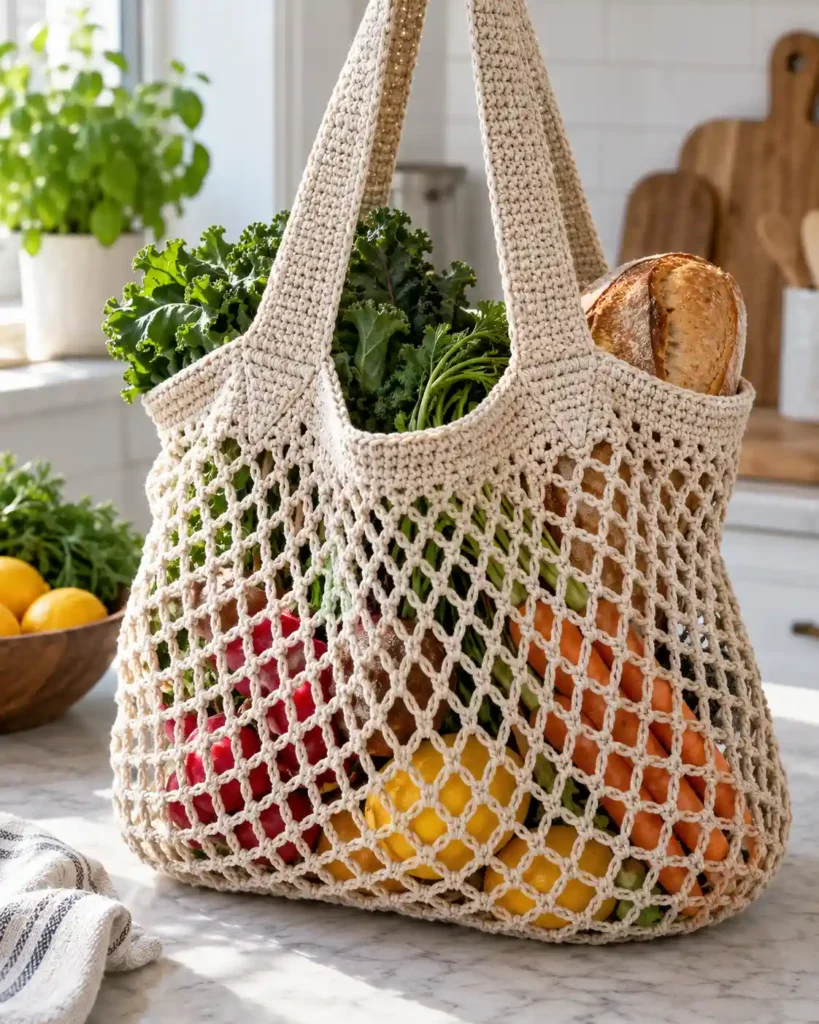
An open mesh body may stretch dramatically when filled, so the crochet bag handles need more structure than the airy body itself. Dense handles create a stable transition from flexible mesh to the part you actually grip.
Using the same open stitch for both bag and strap might look consistent, but it can also let the handle lengthen along with the body. A solid single-crochet, thermal, or reinforced wide strap gives you a more functional contrast.
This is the strap I would pay extra attention to before taking a handmade bag grocery shopping. If your market bag tends to come home heavier than it left, strong attachment points and a comfortable width matter.
The USDA notes that fiber strength and length are meaningful cotton properties and that moisture can affect measured cotton-fiber behavior, another reminder that material performance involves more than simply choosing a fiber name.
23. Waist and Belt Bag Strap
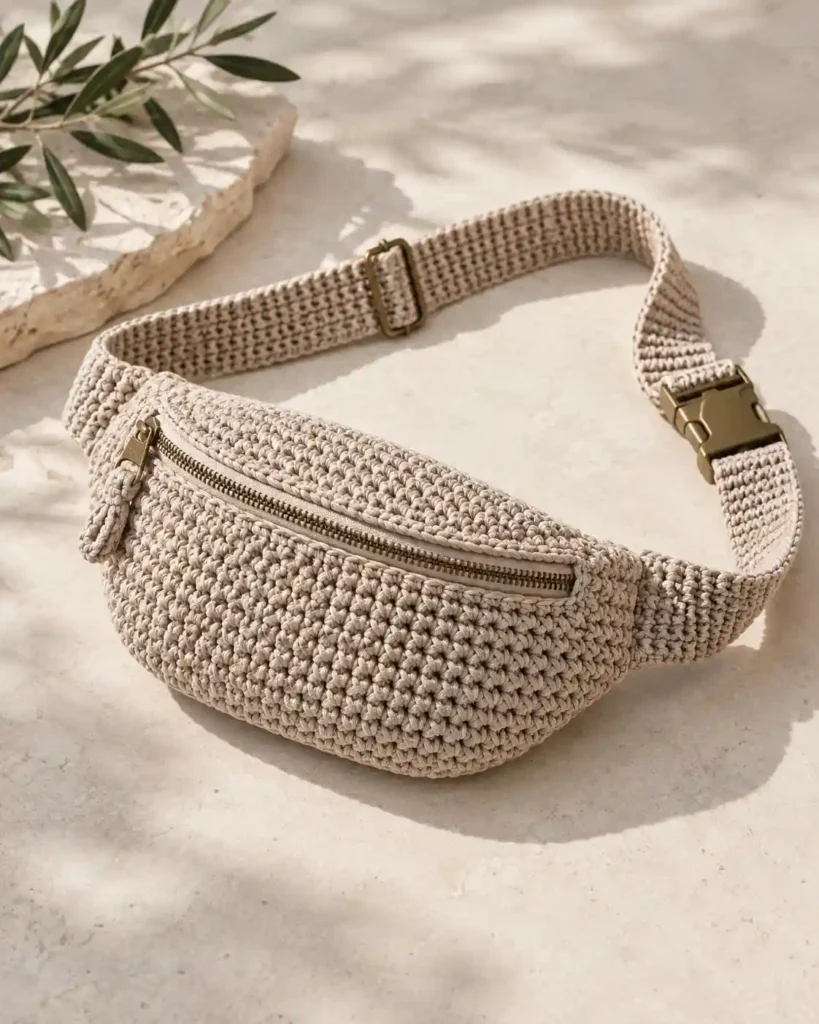
A crochet waist bag needs a firm strap that adjusts without becoming bulky around the body. A buckle or clip makes the bag easy to remove, while an adjustable section helps it fit at the waist or hips.
This is one place where a very soft stretchy strap can become frustrating because the bag position changes as you move. I prefer the idea of a dense narrow-to-medium-width strap with reinforced hardware ends.
Keep the construction flatter than a padded shoulder strap so it sits comfortably against clothing. Choose this for hands-free bags where fit and stability matter more than decorative drape.
Test the buckle orientation before finishing the second end, an accidentally twisted strap is much easier to fix before everything is sewn down.
24. Interchangeable Decorative Strap
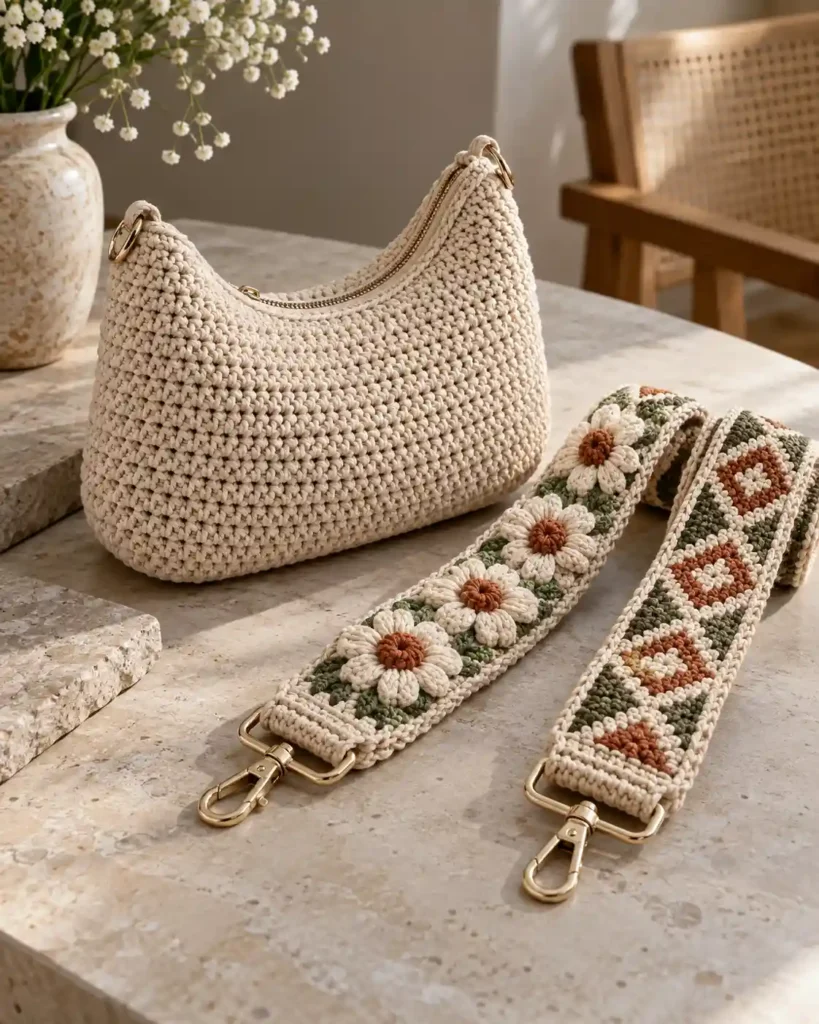
An interchangeable strap lets one crochet bag have several completely different looks. Make a dependable base bag with reinforced rings, then create removable floral, striped, granny-inspired, braided, or geometric straps as separate accessories.
That is much more flexible than permanently attaching your most decorative option. On days when the bag needs to be practical, use the simple strap; when the strap is the outfit detail, clip on the statement version.
It is also a clever way to use small yarn leftovers without making another full bag. For anyone who enjoys customization, the best thing about this idea is that finishing the bag does not mean you have finished designing it.
Start with one strong everyday strap, then build your decorative collection around the same hardware dimensions.
How Do You Choose the Best Crochet Bag Strap?
Choose the strap according to the bag’s normal load, carrying position, comfort needs, desired adjustability, and attachment method before choosing purely for appearance.
At a Glance
- Start with the bag’s intended use.
- Match strap width to expected load.
- Decide whether adjustability is necessary.
- Separate decorative details from structural requirements.
- Reinforce every high-stress attachment area.
Start with the bag’s job rather than the stitch you happen to like most. If you are choosing a new crochet bag pattern, think about how the finished bag will be carried before deciding on its strap.
For a light phone pouch, wristlet, or mini purse, a cord or narrow strap can be enough. For a tote, project bag, or market bag, look toward denser stitches, wider handles, reinforcement, or non-crochet hardware.
Ask yourself:
- How much weight will the bag normally carry?
- Will it be carried by hand, on one shoulder, crossbody, or around the waist?
- Does the strap need to adjust?
- Will the strap itself be decorative?
- Does the attachment area need reinforcement?
- Can the strap be removed for washing or replacement?
The prettiest option is not automatically the best one. A successful strap is the one you still enjoy using after the bag is full.
What Yarn Is Best for Crochet Bag Straps?
Choose yarn by how the finished strap needs to behave, then consider fiber, yarn weight, stitch density, abrasion, comfort, and how the yarn performs under load.
At a Glance
- Check the yarn label before choosing a hook.
- Prioritize firm stitch definition for structural straps.
- Test substitutions instead of relying on weight alone.
- Consider comfort where the strap touches skin.
Cotton and cotton-rich yarns are popular choices when you want a firm handmade strap, but fiber alone does not determine performance. Yarn construction, thickness, stitch choice, hook size, tension, strap width, and reinforcement all influence the finished result.
The Craft Yarn Council’s standardized system places yarns into eight categories numbered 0–7 and provides common hook and gauge ranges for each category. It specifically describes these as guidelines and advises following the gauge specified for the project.
That is why two category-4 yarns should not automatically be treated as identical. The Council also advises considering gauge when choosing yarn because yarns within the same broad weight category can still behave differently in a finished project.
For a strap, I would prioritize:
- Firm stitch definition
- Good abrasion resistance
- Appropriate yarn thickness
- Comfortable texture against skin
- Predictable behavior under load
- Compatibility with the bag body
If you are uncertain, crochet a sample and load-test it before making the full strap. A crochet hook size chart can also help when comparing hook sizes for different yarn weights and strap constructions.
How Do You Keep a Crochet Bag Strap From Stretching?
Control stretch with a dense construction, appropriate yarn, firm but workable tension, reinforced edges or cores, and strong attachment points, then test the finished strap under realistic weight.
At a Glance
- Choose dense stitches before decorative openwork.
- Reinforce long straps where needed.
- Avoid excessively loose tension.
- Test before permanent attachment.
- Treat “no stretch” as a design goal, not a guarantee.
Start by reducing opportunities for the fabric to lengthen.
Dense constructions such as thermal stitch are useful because they create more substantial fabric. Reinforced single crochet, doubled layers, internal cords, firm edging, and carefully chosen yarn can also help.
Simply Hooked by Janet demonstrates another no-stretch approach by working double crochet into a foundation, folding that fabric, and single crocheting through the layers.
A practical anti-stretch checklist is:
- Choose a dense strap construction.
- Avoid unnecessarily loose tension.
- Test the yarn and stitch combination.
- Reinforce the ends.
- Use a wider strap for heavier loads when appropriate.
- Load-test the strap before permanently attaching it.
There is no need to promise “zero stretch” for every yarn and pattern. A better goal is controlled, predictable stretch that still leaves the bag comfortable to use.
How Long and Wide Should a Crochet Bag Strap Be?
Strap measurements should be based on the wearer, bag size, carrying position, hardware, and expected stretch rather than one universal measurement.
At a Glance
- Measure the intended wearer whenever possible.
- Include hardware in the final length.
- Test the bag at the desired drop.
- Allow for the behavior of your chosen stitch.
- Use adjustability when sizing is uncertain.
There is no single perfect measurement because body size, bag size, carrying style, hardware, and stretch all change the fit.
One crochet designer’s published guidance for a thermal-stitch bag strap suggests roughly 14–18 inches for tote handles, 20–24 inches for shoulder straps, and 40–50 inches for crossbody straps, with a suggested width of about 1.5–2 inches for sturdy straps carrying heavier items. Treat those as starting points from that specific tutorial, not universal sizing standards.
The more reliable method is to measure the person who will use the bag.
Clip, pin, or temporarily hold a measuring tape where the strap will attach. Adjust it until the bag sits where you want it, then account for the hardware and any expected stretch before crocheting the final length.
For gifts, an adjustable strap removes much of the guesswork.
How Do You Attach Crochet Straps Securely?
Secure a crochet strap through reinforced fabric using a suitable sewn, crocheted, or hardware-based connection that distributes stress instead of concentrating it on a few stitches.
At a Glance
- Reinforce the bag around attachment points.
- Match hooks and rings to strap dimensions.
- Secure yarn ends thoroughly.
- Check closures before regular use.
- Load-test finished connections.
The attachment should be designed around the expected load.
You can sew a crochet strap directly to the bag, crochet it continuously from the bag edge, or connect it through D-rings, O-rings, sliders, swivel hooks, leather tabs, or other suitable bag hardware.
Whichever method you choose, reinforce the surrounding crochet fabric. Do not attach a heavy crossbody strap to only a few loose stitches and expect the hardware to solve the problem.
For removable hardware:
- Make the end tabs dense.
- Match the strap width to the hook or ring.
- Secure yarn ends thoroughly.
- Check that metal components close correctly.
- Test the connection with weight before regular use.
This is one of those finishing steps worth slowing down for. A neat, strong attachment makes the entire handmade bag feel more professional.
How Should You Finish and Care for Crochet Bag Handles?
Secure the ends carefully, follow the yarn manufacturer’s care instructions, remove detachable hardware when appropriate, and inspect high-stress areas periodically.
At a Glance
- Weave strap ends in securely.
- Follow the specific yarn’s care label.
- Check hardware before washing.
- Inspect joins for wear.
- Repair loosening areas early.
Weave in strap ends more securely than you might on a purely decorative item because handles experience repeated movement and tension.
Check the yarn label before washing. The Craft Yarn Council includes care information among the details commonly found on yarn labels, but the manufacturer’s instructions for your specific yarn should remain your first reference.
If the bag has leather, chain, buckles, or removable hardware, consider whether those pieces should be detached before cleaning.
Every so often, inspect:
- Strap-to-bag joins
- D-rings and swivel hooks
- Loose yarn ends
- Areas rubbing against hardware
- Sections beginning to lengthen or thin
A two-minute inspection can catch a small problem before it becomes a broken handle.
Frequently Asked Questions About Crochet Bag Straps
What is the best crochet stitch for a bag strap?
Dense stitches are usually the most useful when strength and stretch control matter. Thermal single crochet is a popular option because it creates thick fabric, while reinforced single crochet can be easier for beginners.
How do you crochet a bag strap that does not stretch?
Use a dense stitch, firm tension, appropriate yarn, reinforced edges or an inner support, and strong attachment points. Always test the finished construction under load because no single technique behaves identically with every yarn.
How wide should a crochet bag strap be?
The ideal width depends on the bag and load. One published thermal-stitch tutorial recommends roughly 1.5–2 inches for a sturdy strap on heavier bags, but you should adjust the measurement for your bag and comfort.
How long should a crochet crossbody strap be?
Measure the intended wearer whenever possible. A published starting range of around 40–50 inches can be useful for crossbody straps, but body size, desired bag position, hardware, and crochet stretch can all change the final measurement.
Can you add chain or leather handles to a crochet bag?
Yes. Chain and leather can work beautifully with crochet, but reinforce the bag around the rings, tabs, or other attachment points so the crochet fabric can handle the load transferred by the hardware.
Final Thoughts
The right crochet bag strap can completely change a handmade bag. Thermal and reinforced straps focus on strength, wide and padded handles improve comfort, while granny motifs, tapestry work, flowers, chain, and leather turn the strap into part of the design.
Start with the way you plan to use the bag. Then choose the width, construction, yarn, hardware, and attachment method that support that job.
And remember: you do not have to settle for the first handle that technically works. A few thoughtful crochet bag accessories or a better pair of crochet bag handles can turn a project you like into a bag you actually reach for every day.
For more crochet project inspiration, tutorials, and handmade-bag ideas, explore CrochetMind.

![The Best 30+ Free Crochet Cat Patterns [Beginner-Friendly Guide]](https://crochetmind.com/wp-content/uploads/2025/04/1-The-Best-30-Free-Crochet-Cat-Patterns-Beginner-Friendly-Guide.webp)