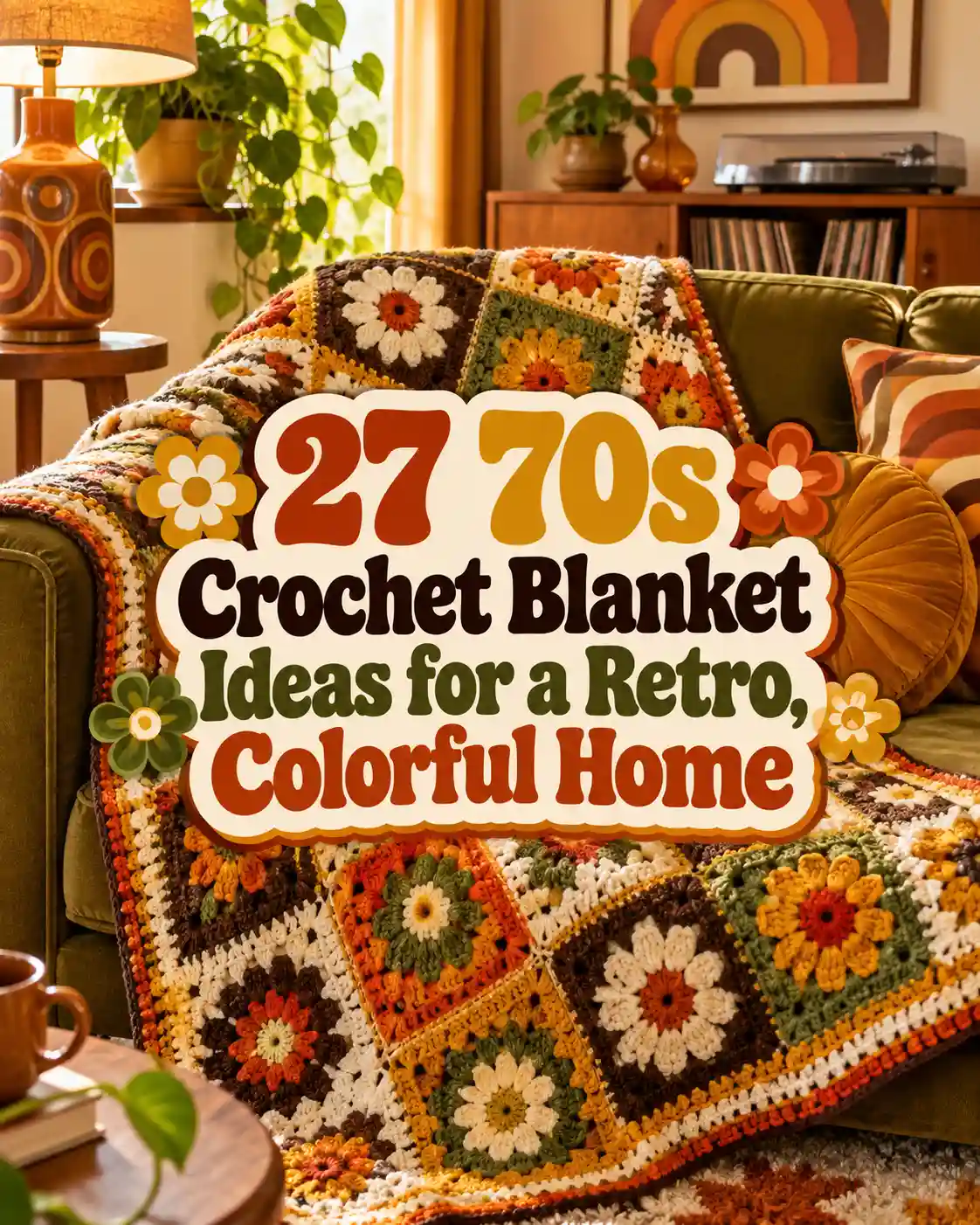
A great 70s crochet blanket usually gets its retro character from two things: a recognizable crochet structure and a deliberate vintage color palette. Think granny squares, ripples, flowers, textured stitches, and shades like burnt orange, mustard, avocado green, rust, brown, cream, and muted brights. You do not have to recreate one exact vintage blanket to get the look.
You can go bold and groovy, soft and earthy, bright and floral, or clean and modern-retro. The 27 ideas below give you genuinely different directions instead of 27 versions of the same orange-and-brown granny square.
Key Takeaways
- Choose one recognizable retro crochet structure first.
- Build around three to five coordinated vintage colors.
- Use a retro crochet blanket palette without overcomplicating stitches.
- Repeat anchor colors to unify mixed motifs.
- Match blanket size and construction to its intended use.
- Keep modern rooms simple around colorful crochet.
What Makes a Retro Crochet Blanket Look Authentically 70s?
A 70s-style crochet blanket usually combines recognizable vintage constructions such as granny squares, ripples, flowers, stripes, or textured stitches with earthy or saturated retro colors.
At a Glance:
- Granny squares create the most recognizable vintage look.
- Ripples and chevrons add strong graphic movement.
- Flower motifs bring classic flower-power energy.
- Orange, mustard, green, brown, and cream work naturally.
- Repeated colors help mixed designs stay cohesive.
Retro crochet is less about following one “correct” pattern and more about combining familiar structures with the right visual language. Granny squares, chevrons, ripples, stripes, flower motifs, shell stitches, and textured afghans all work naturally for vintage-inspired crochet.
Annie Design Crochet’s retro blanket collection follows that same broad approach, combining granny squares, chevrons, ripples, floral motifs, stripes, geometric designs, and textured patterns instead of treating one construction as the only retro option.
Here is a quick way to choose your direction:
| Retro direction | Best visual feature | Good choice for | Easy way to make it feel 70s |
|---|---|---|---|
| Granny squares | Strong color blocking | Classic vintage look | Orange, mustard, olive, cream, and brown |
| Flower motifs | Flower-power focal points | Cheerful statement blankets | Daisies, sunbursts, or bold floral centers |
| Chevron/ripple | Graphic movement | Sofas and bed throws | Alternate warm earth tones with cream |
| Stripes | Simple repetition | Beginners | Use uneven stripe widths and 4–5 retro colors |
| Textured stitches | Raised handmade feel | Cozy afghans | Bobbles, shells, clusters, or lace |
| Modern-retro | Cleaner geometry | Contemporary homes | Keep the palette retro but simplify the layout |
If you want a practical yarn starting point, medium-weight yarn is especially useful for throws and afghans. The Craft Yarn Council classifies category 4 yarn as Medium, including worsted, afghan, and aran yarns, and lists a typical crochet-hook range of 5.5–6.5 mm for this yarn category. Those are guidelines, though, so always follow the gauge and hook requirements of your chosen pattern.
Which 70s Crochet Blanket Idea Should You Make First?
Start with the construction that matches your skill level and the room where you will use the blanket, then choose a 70s-inspired palette that gives the design its retro identity.
At a Glance:
- Choose granny squares for classic vintage appeal.
- Pick ripples for fewer joins and long rows.
- Use flowers for a playful statement.
- Try stripes for an easier beginner project.
- Choose modern-retro designs for contemporary interiors.
27 70s Crochet Blanket Ideas for a Retro, Colorful Home
1. Why Start with a Classic Orange, Mustard & Brown Granny Square Blanket?
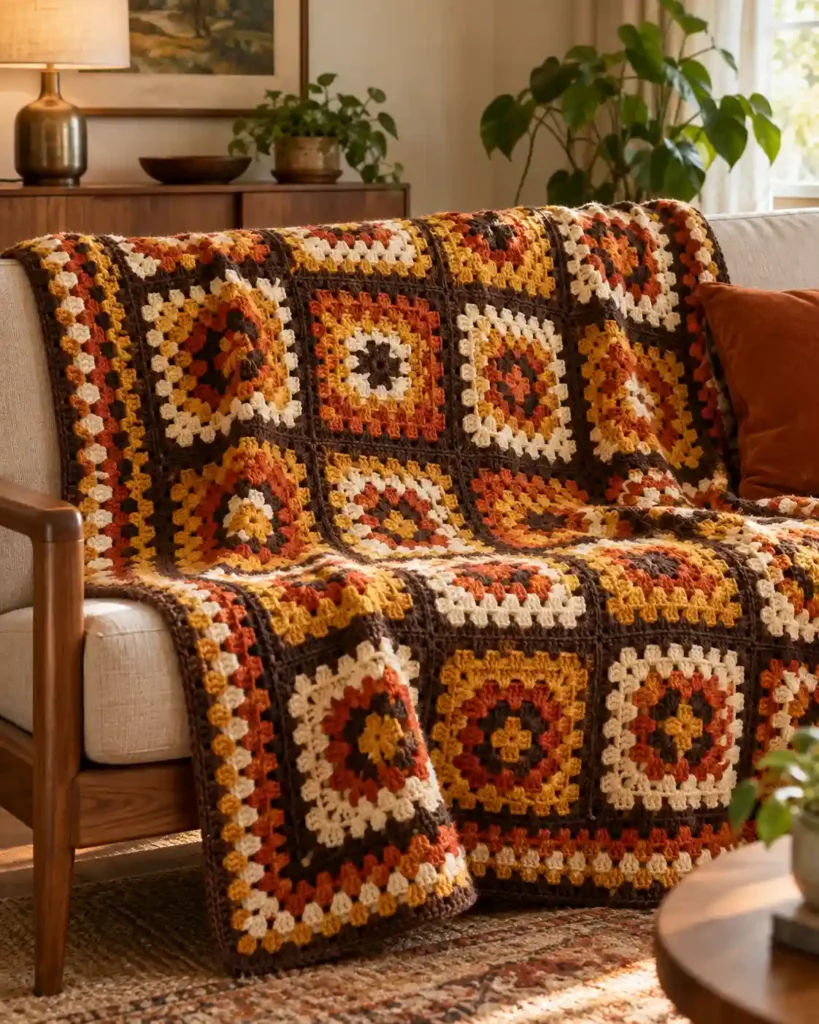
This is the blanket many people picture when they hear “70s crochet blanket,” and that is exactly why it works. A crochet granny square blanket in burnt orange, mustard, cream, and chocolate brown gets an instant vintage identity without requiring complicated stitches.
On a sofa, reading chair, or guest bed, the blanket still looks intentional even when the construction is simple. Choose this one if you want the safest route to a strong retro look with plenty of room to personalize the square size and border.
For a more balanced result, repeat two or three anchor colors across every few squares instead of making each one completely random. A cream or dark-brown joining color can pull the whole design together.
2. Want Flower Power? Try a Retro Daisy Flower Granny Square Blanket
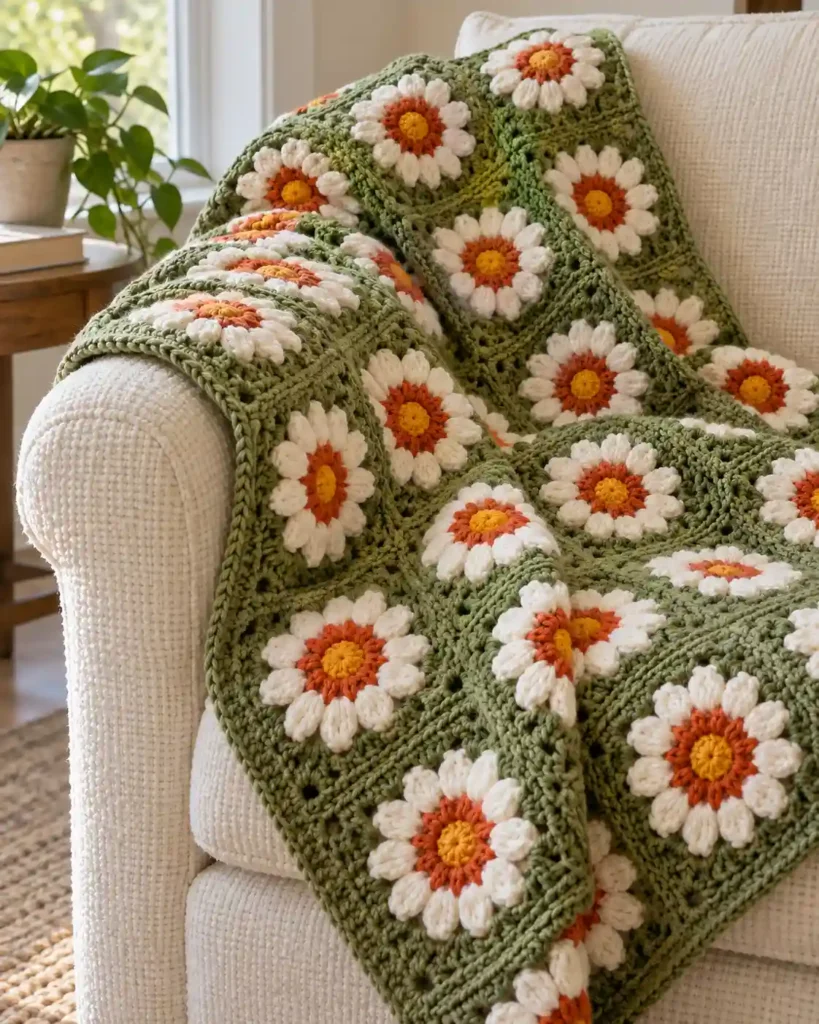
A daisy granny square blanket feels cheerful before you even notice the color palette. White or cream petals with orange, yellow, or rust centers create that flower-power mood, while green or brown joins keep the design from becoming overly sweet.
This direction is especially good for a bedroom or sunny reading corner because the motifs are decorative enough to act almost like textile art. It is a great pick if you want your blanket to feel playful rather than heavy.
Keep the flower centers consistent, then rotate background colors around them. That small repeat gives the eye somewhere to rest.
3. Green & Gold Flower-Power Blanket
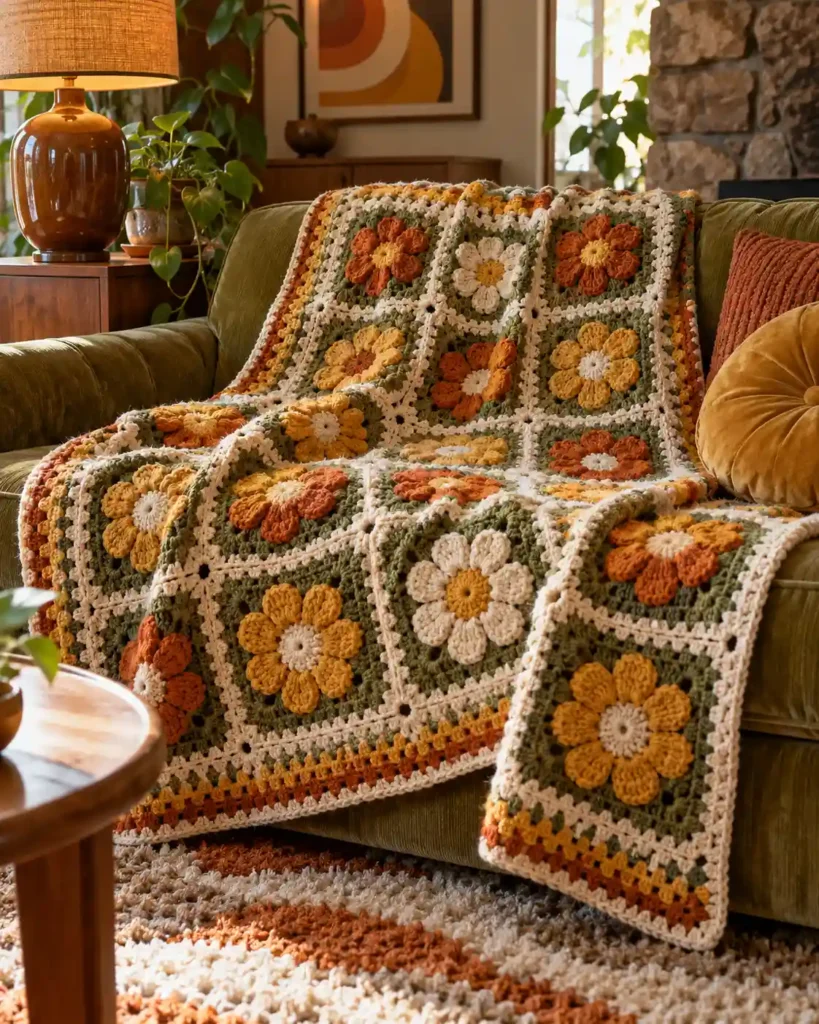
Avocado green and harvest gold do most of the visual work here, and that is the point. Large floral motifs can get busy fast, but those two colors give the blanket a strong 70s identity even when you use a straightforward repeating flower square.
This style looks especially good with wood furniture, rattan, cream upholstery, or warm neutral walls. It suits anyone who wants a bolder floral blanket without going full rainbow.
Special Tip: Use dark brown or deep olive around the outer edge of each flower motif. The darker outline makes the floral shape easier to read from across the room.
4. How Do You Make a Sunburst Granny Square Afghan Feel Retro?
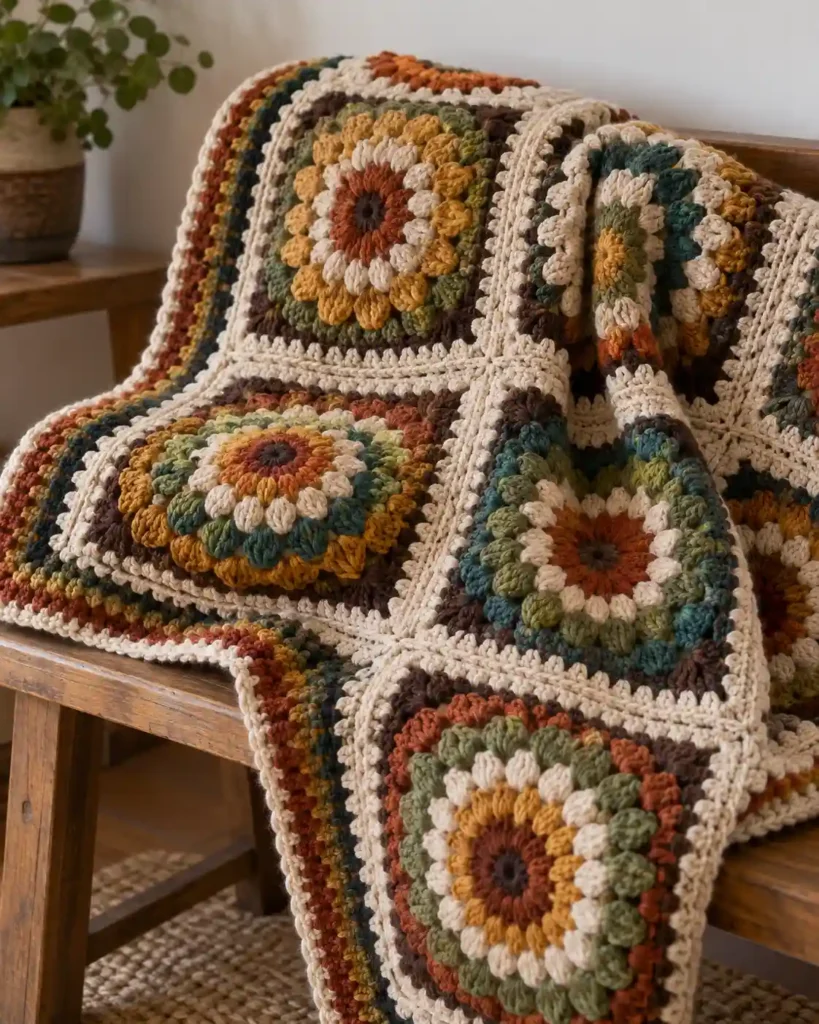
Sunburst squares give you the best of two worlds: the soft circular energy of a flower and the tidy geometry of a granny square. Instead of using every bright yarn in the basket, build each center through rust, mustard, olive, teal, cream, and brown, then frame the square with one repeated outer color.
The result feels vintage but more polished than fully random patchwork. Choose it if you love floral crochet but still want the finished blanket to look structured.
A consistent final round is the trick. It makes different center colors feel like one collection rather than unrelated squares.
5. Bold Multicolor Groovyghan
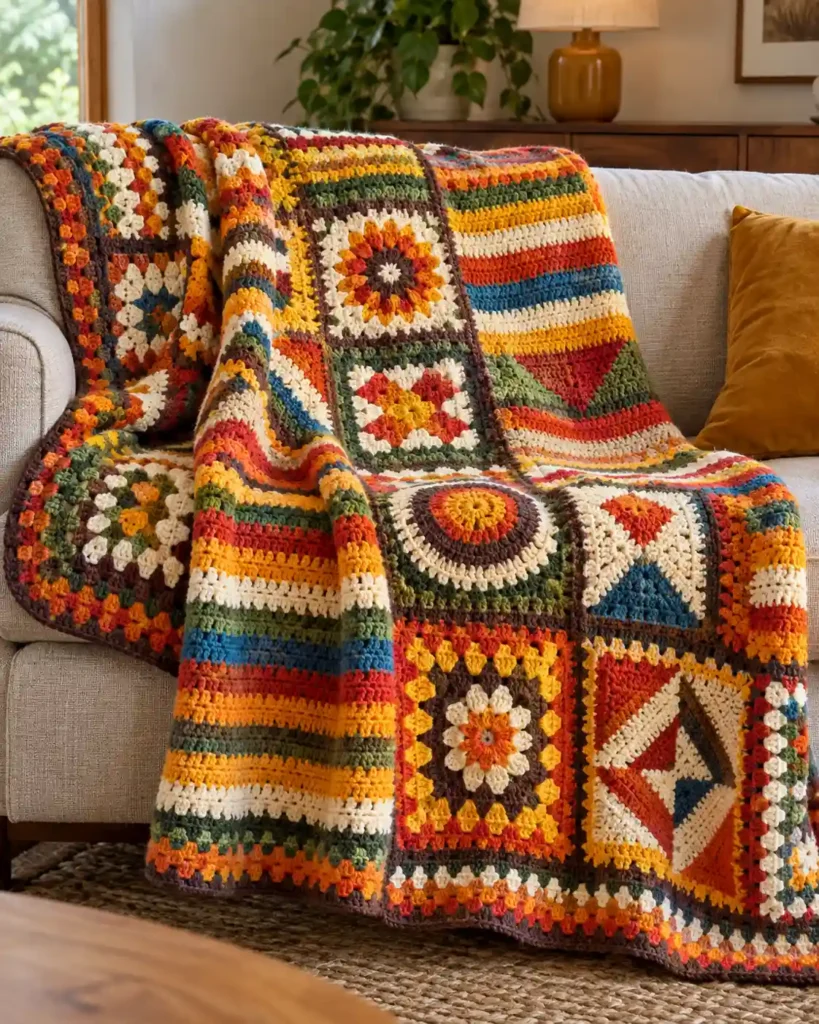
This one is for the crocheter who gets bored making the same motif twenty times. Mix squares, stripes, geometric blocks, flowers, and textured sections, but repeat a handful of anchor colors so the blanket still feels planned.
A neutral sofa is almost perfect for it because the blanket can take over as the main color story in the room. If your favorite part of 70s style is the fearless mixing, this is where to have fun.
You do not need every section to match. You only need a few things to repeat—perhaps one border color, one yarn weight, and three colors that appear throughout.
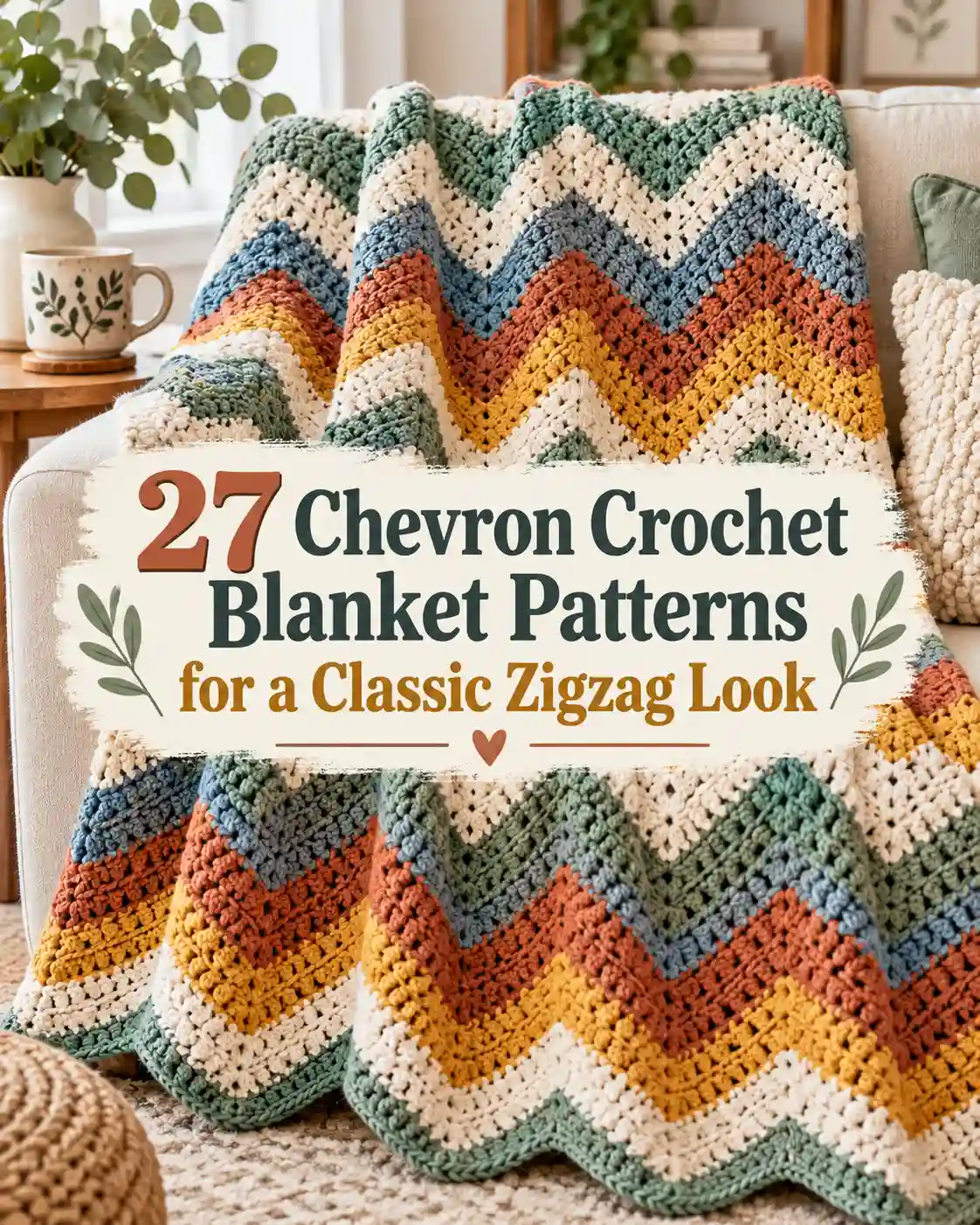
6. Why Does a Chevron Ripple Blanket Work So Well in 70s Colors?
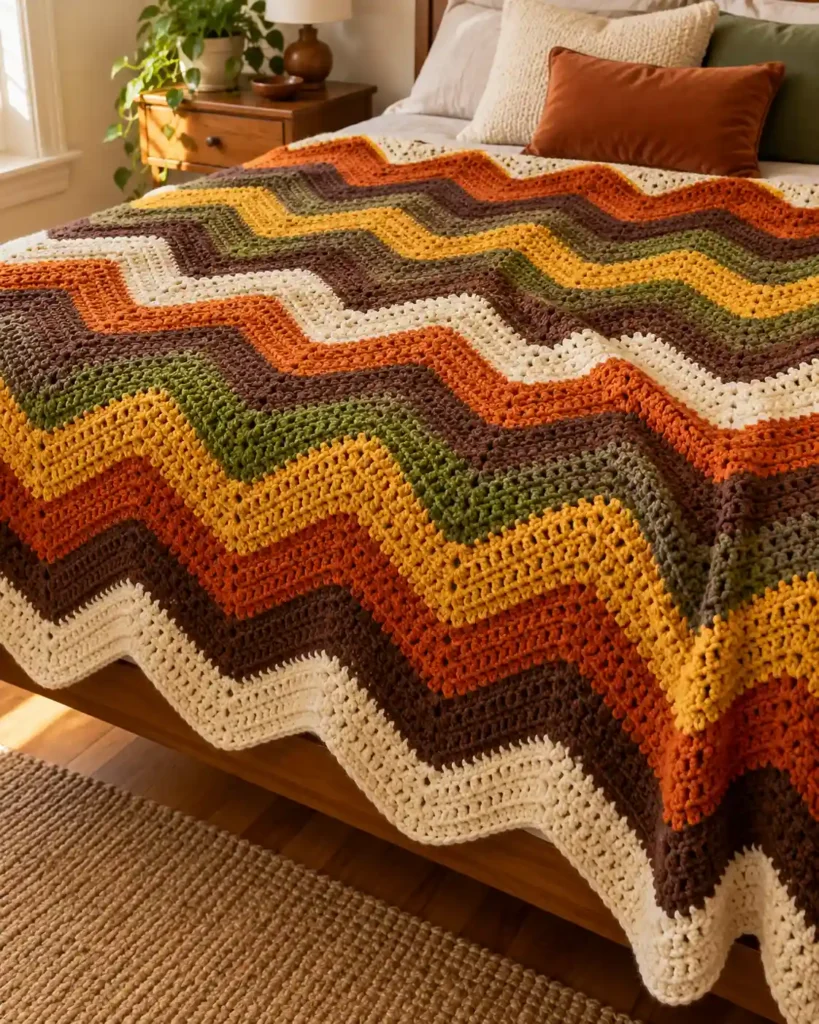
A chevron crochet blanket creates movement before color even enters the picture. Add burnt orange, harvest yellow, olive green, brown, and cream, and the peaks and valleys suddenly feel like they belong in a vintage den.
Compared with a granny-square blanket, this design has fewer joins and gives you long, relaxing rows once the repeat is established. It is ideal if you want a retro crochet blanket without sewing dozens of motifs together.
Annie Design Crochet’s retro chevron blanket is a useful real-world example: it combines 70s-inspired shades with a repeating chevron construction that settles into a one-row repeat after setup.
7. Zigzag Afghan with Burnt Orange Accents
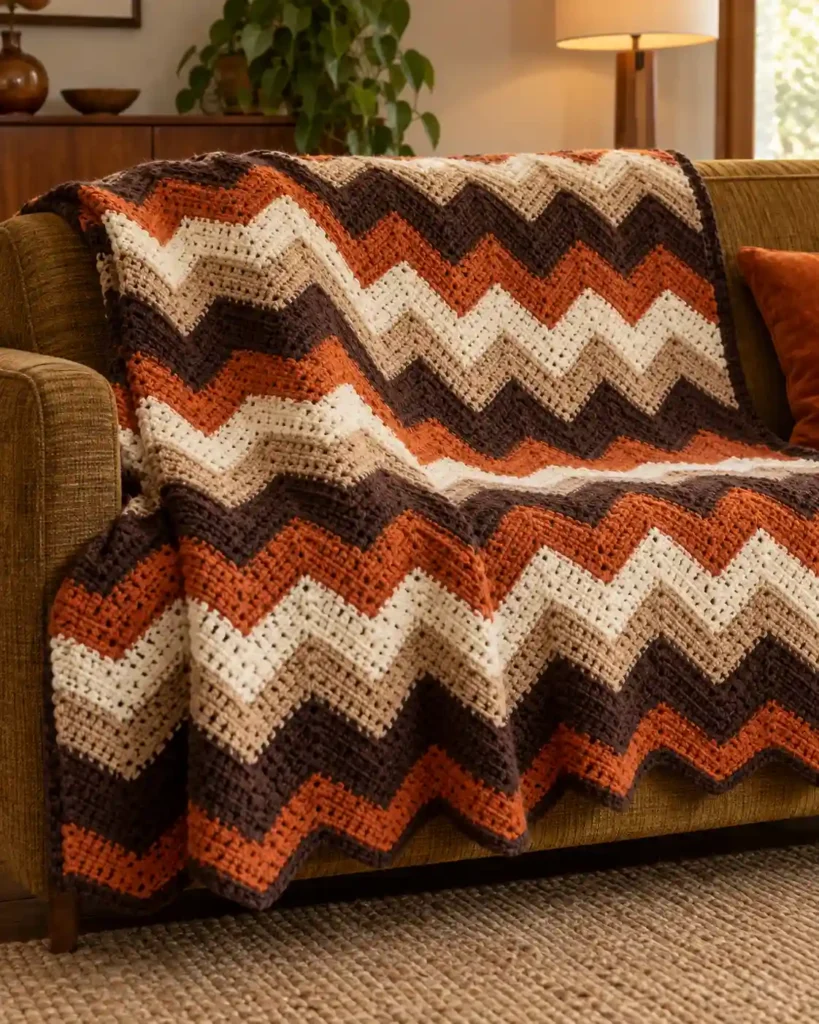
A darker zigzag afghan feels moodier than a bright ripple blanket, especially when burnt orange appears as an accent rather than the main color.
Start with brown, cream, tan, or another deep neutral, then drop orange into selected zigzag bands for contrast. This design works beautifully over the back of a low sofa because the geometry remains visible even when the blanket is folded.
Pick it when you want vintage energy without a loud overall palette.
Try spacing the orange bands irregularly. Perfect repetition can look very modern; slightly varied spacing gives the design more personality.
8. Can a Hexagon Ombre Blanket Look Like the 70s?
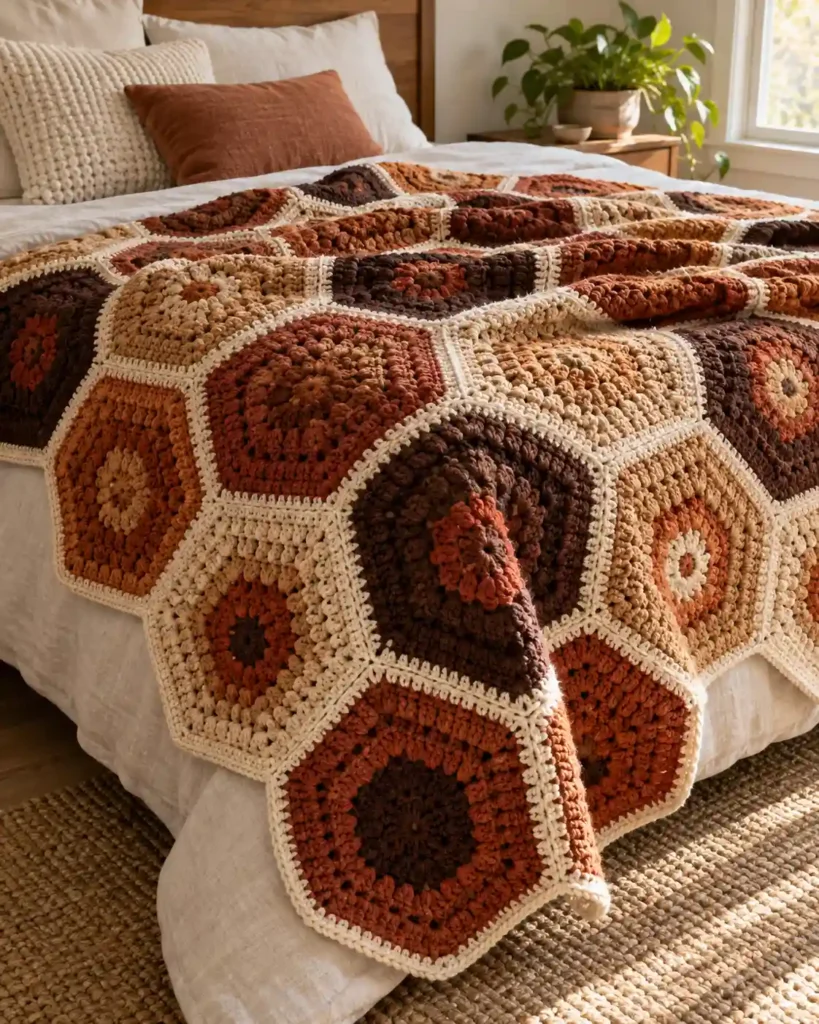
Absolutely. Hexagons are also a smart way to move beyond the standard granny square.
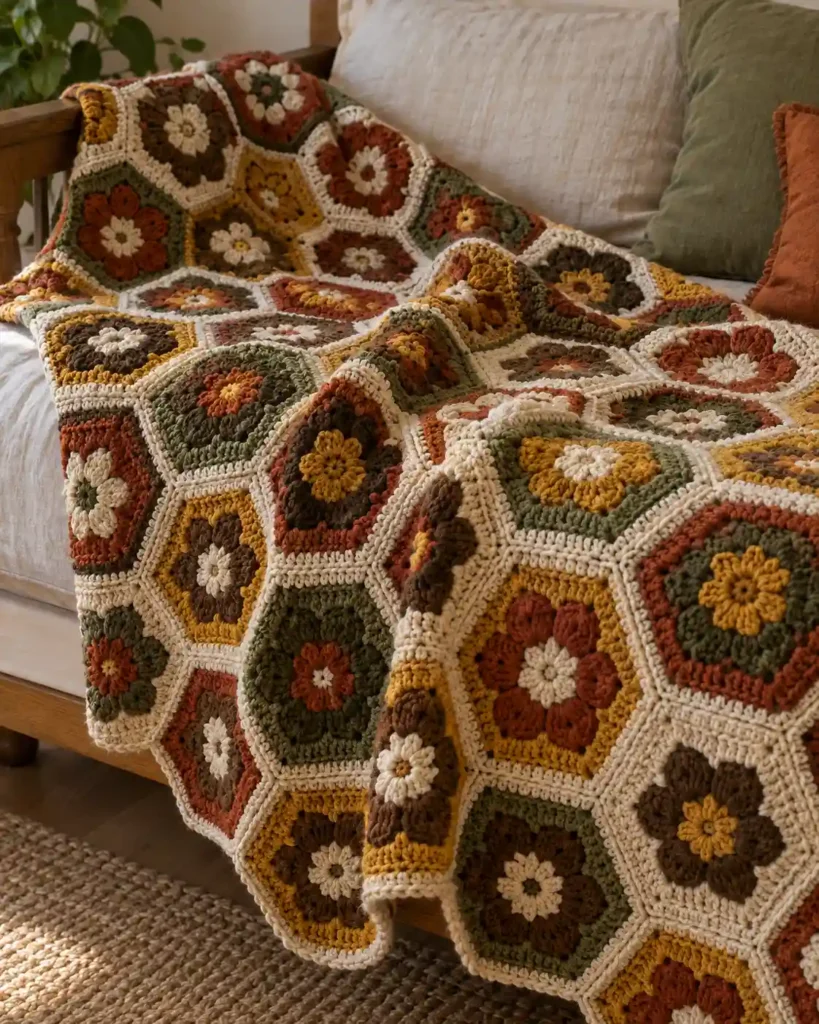
Work the motifs from deep brown or rust through terracotta, camel, mustard, and cream, then arrange them in an ombre flow before joining. The honeycomb geometry makes the blanket feel graphic, while the color movement keeps it soft and organic.
This is a strong option if you want a retro blanket that still looks unusual.
Lay the motifs on the floor before joining anything. Ombre works best when the transitions feel gradual rather than accidental.
9. African Flower Motif Blanket
African-flower-style motifs bring curved petals into a hexagonal framework, so they sit nicely between floral and geometric crochet.
In rust, mustard, olive, cream, and brown, the motif can read as distinctly retro without novelty yarn or extra embellishment. I would use this one as a bed or daybed blanket where the individual flowers can be seen across a larger surface.
It is best for makers who enjoy motif work and color planning more than long rows.
Keep one outline shade consistent around every motif. That single choice can make a colorful blanket look dramatically more cohesive.
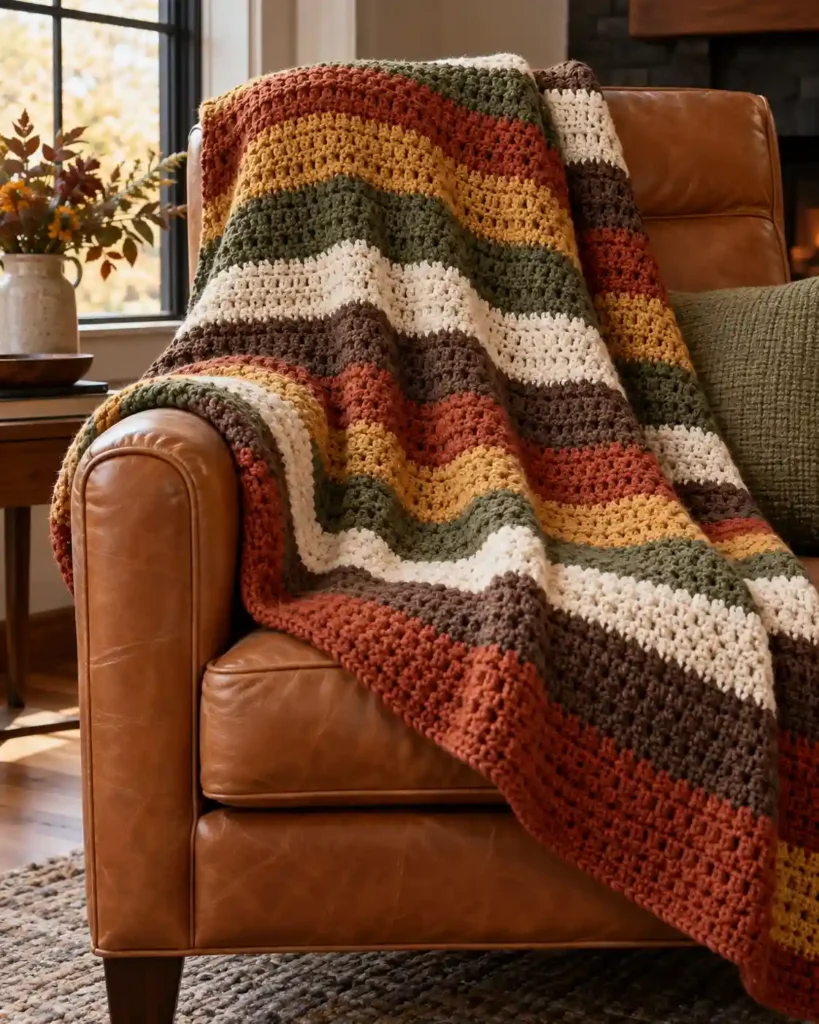
10. Striped Harvest-Color Throw
A striped throw is one of the easiest ways to get the retro palette without committing to complicated motifs. Rust, mustard, moss, cream, and brown already tell the story; the stitch pattern can stay calm and repetitive.
Uneven stripe widths make it feel more collected and less like a perfectly manufactured modern blanket. This is the one I would recommend when you want a practical sofa throw that is relaxing to make.
Lion Brand’s 70s Throw is a useful reference for this kind of beginner-friendly color-change project. The published version uses category 4 medium/worsted acrylic, a 5.5 mm hook, and repeated row-by-row color changes; its listed finished size is 42 × 46 inches.
11. Why Add Bobble Stitch to a Retro Afghan?
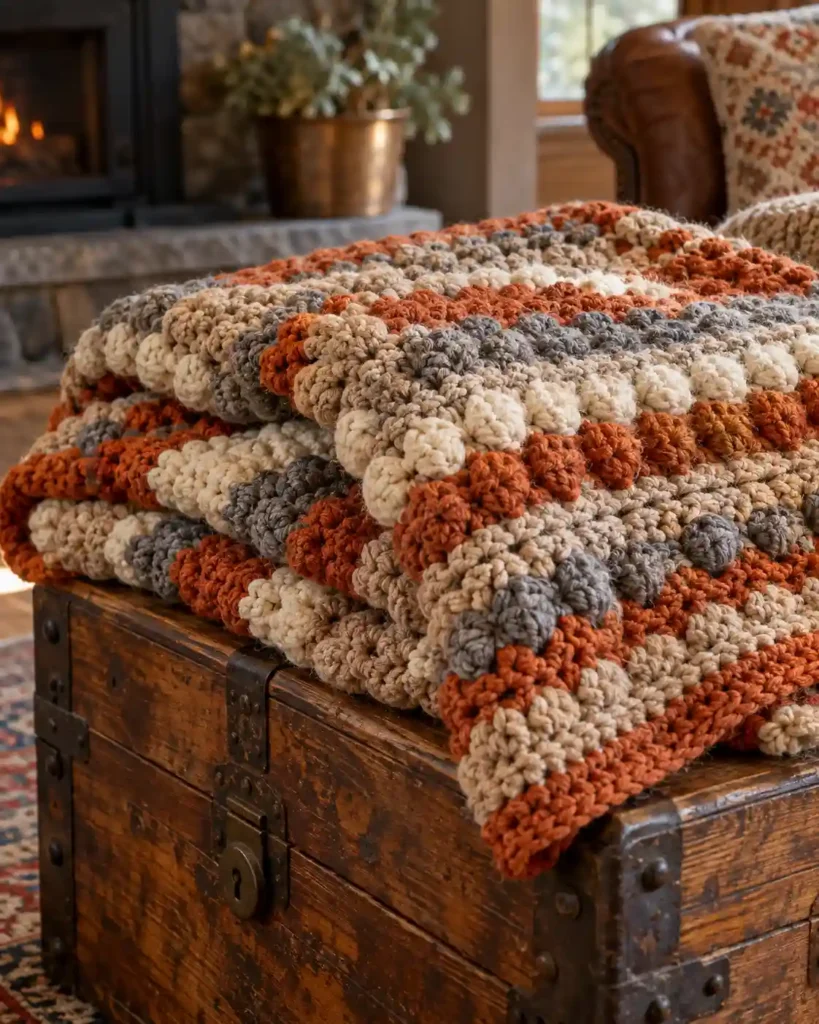
Bobbles give a blanket that thick, tactile handmade look that flat stripes cannot. Use them as spaced accents, geometric panels, or horizontal bands so the surface gains texture without becoming unnecessarily heavy.
A warm palette, burnt orange, tan, cream, soft gray, or brown—lets the texture stay visible while keeping the whole piece cozy. Choose this idea if you want people to notice the stitches as much as the colors.
The Craft Yarn Council describes Easy projects as potentially including simple stitch patterns and color work, while more involved stitch patterns and color work move toward Intermediate territory. That is useful when deciding how elaborate you want your bobble layout to become.
12. Ripple-and-Lace Vintage Blanket
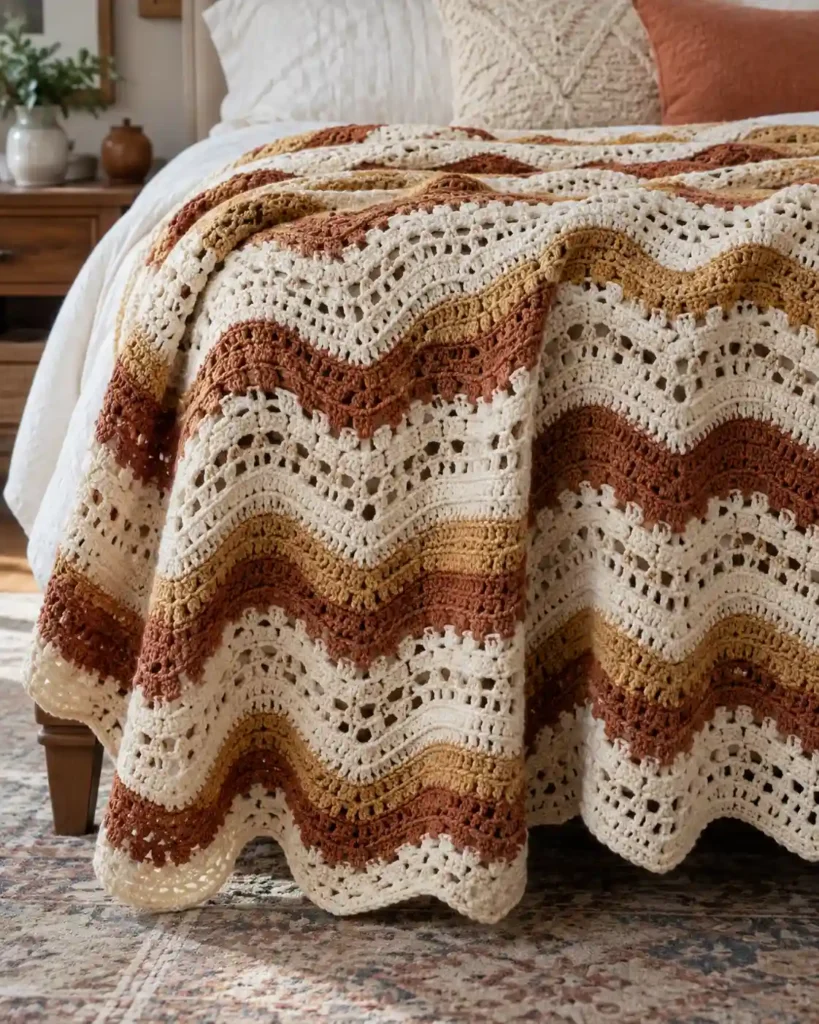
Ripple movement gets a completely different personality when you open sections of the fabric with lace. Solid rust or gold bands can carry the color, while cream openwork rows lighten the blanket and keep it from feeling dense.
On the foot of a bed, this looks softer and more delicate than the heavier zigzag afghans above. It is a good match if you want vintage style with a little more air and drape.
Before committing to a full blanket, swatch the lace and solid rows together. Openwork can change the fabric differently from dense stitches, so the sample will show whether your edges stay straight.
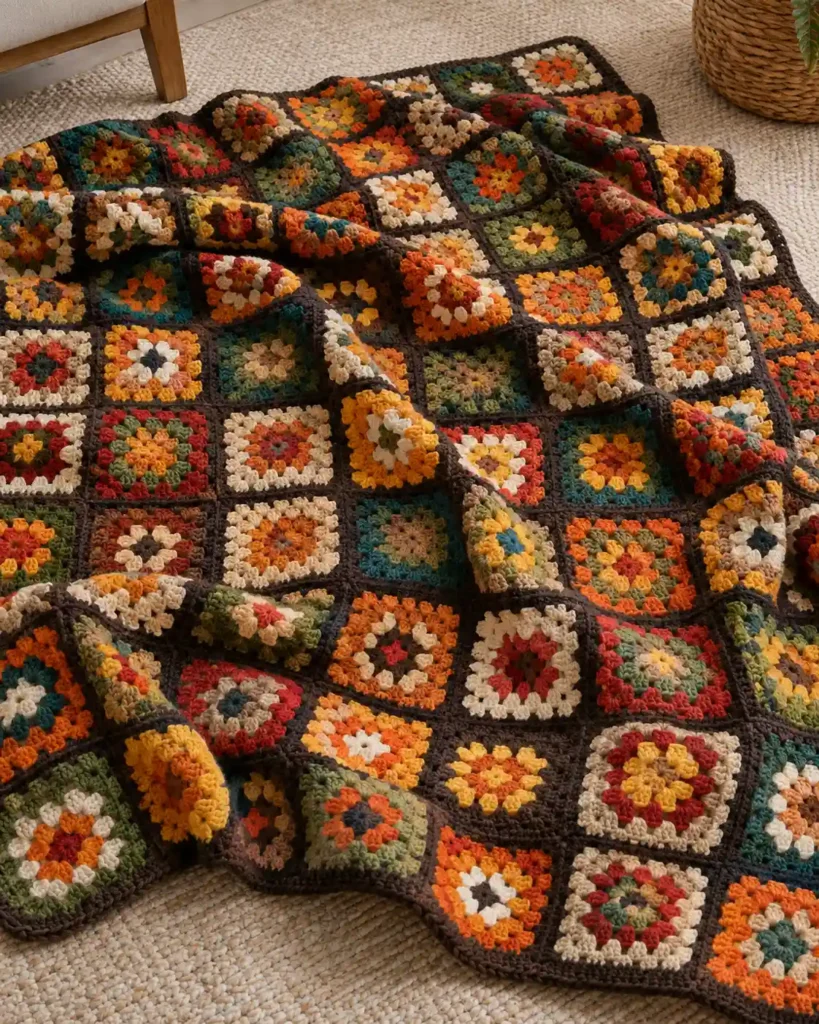
13. What Can You Do with Leftover Yarn? Make a Patchwork Granny Blanket
A scrap-yarn granny blanket is where small leftover balls suddenly become an advantage. Mix orange, green, yellow, teal, brown, cream, red, or whatever fits comfortably inside your retro palette, then repeat one joining or border shade to calm the chaos.
This kind of blanket looks especially right in casual rooms because the irregular color placement feels lived-in rather than staged. Make it if you enjoy using what you already have more than buying a perfectly matched yarn set.
A simple rule helps: every square should share at least one color with several other squares nearby.
14. Mandala-Inspired Circular Throw
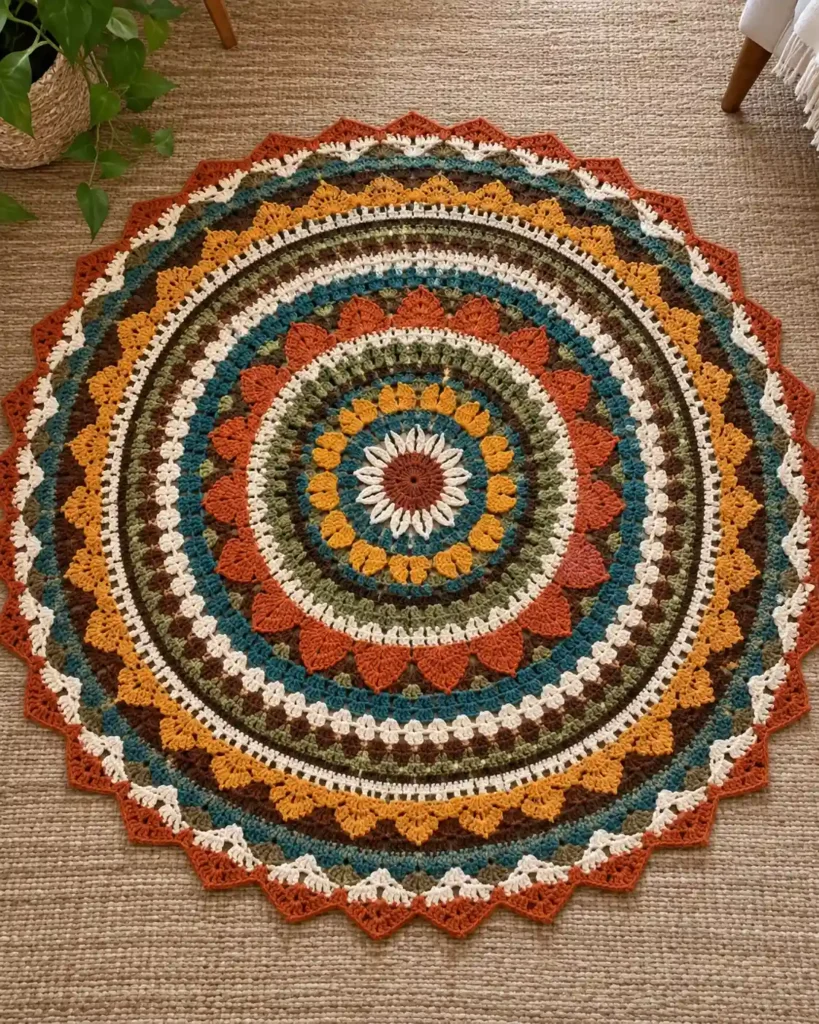
Not every blanket needs four corners. A round mandala throw with concentric rings of mustard, rust, teal, olive, cream, and brown gives you a floor accent, chair throw, or dramatic lap blanket that feels very different from a standard afghan.
Because the shape itself is the focal point, you can use simpler stitches and let the color changes create the interest. This idea is perfect if you want one distinctive retro piece rather than another rectangular throw.
Special Tip: Watch how the circle lies as you work. If the edge starts cupping or ruffling, check the pattern’s increase placement before continuing.
15. Would a Star-Shaped Crochet Blanket Feel Too Playful?
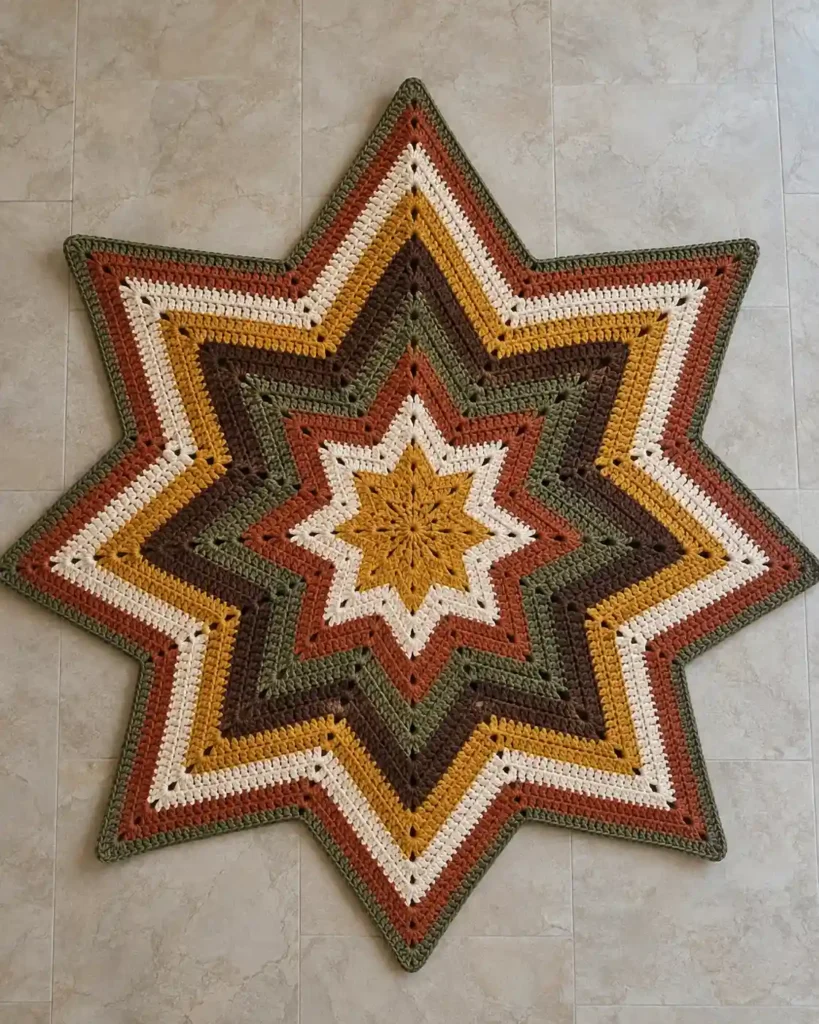
Not if the palette keeps it grounded. A crochet star blanket with broad bands of mustard, rust, cream, olive, and brown can turn a novelty shape into a strong retro accent.
The points make it great for draping over a chair or using as a lap throw where the shape remains visible. Choose it if you like unusual silhouettes but still want the color story to do most of the styling.
The technical goal is a clean, flat shape. Follow the pattern’s increases carefully so the points stay crisp instead of twisting.
16. Cream & Orange Minimal Retro Throw
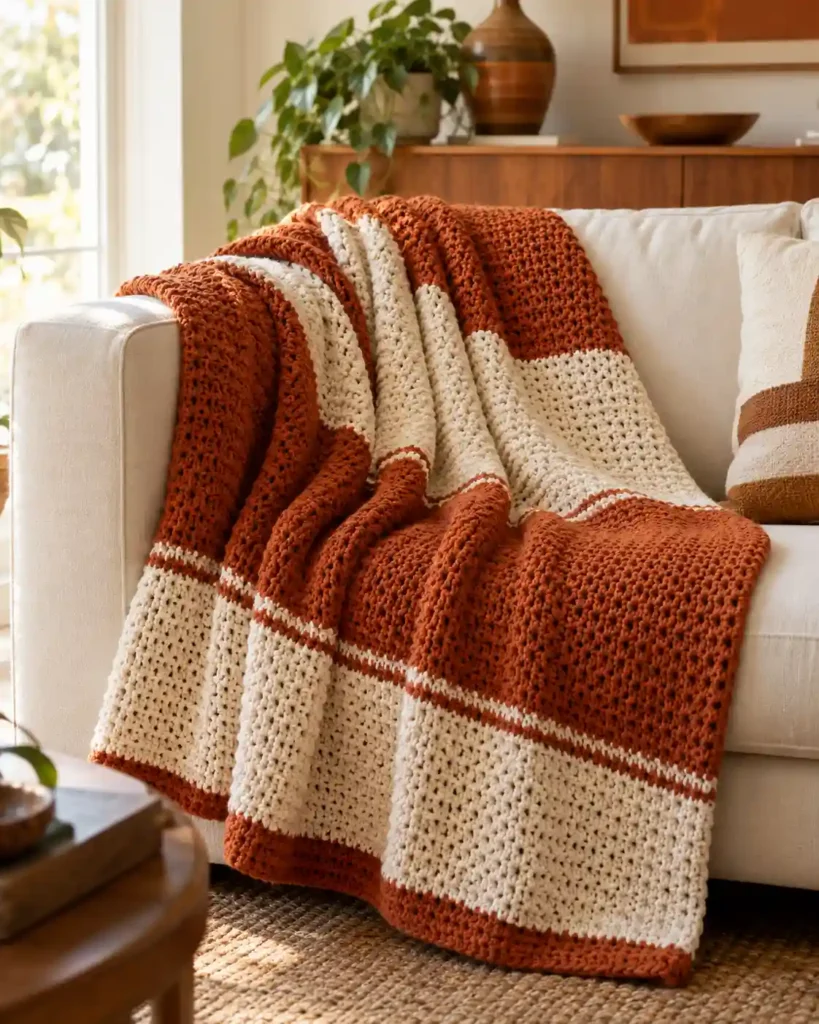
Sometimes two colors are enough. Warm burnt orange against soft cream gives you a clear 70s signal, while a simple stripe-block pattern keeps the finished blanket comfortable in a modern room.
This is quieter than a flower-power afghan, but the limited palette lets the stitch texture stand out beautifully. Use it when you love retro warmth but do not want every object in the room competing for attention.
Add interest through stitch texture rather than extra shades—granny clusters, subtle ribs, or alternating dense and open rows can all work.
17. Brown, Tan & Rust Neutral 70s Blanket
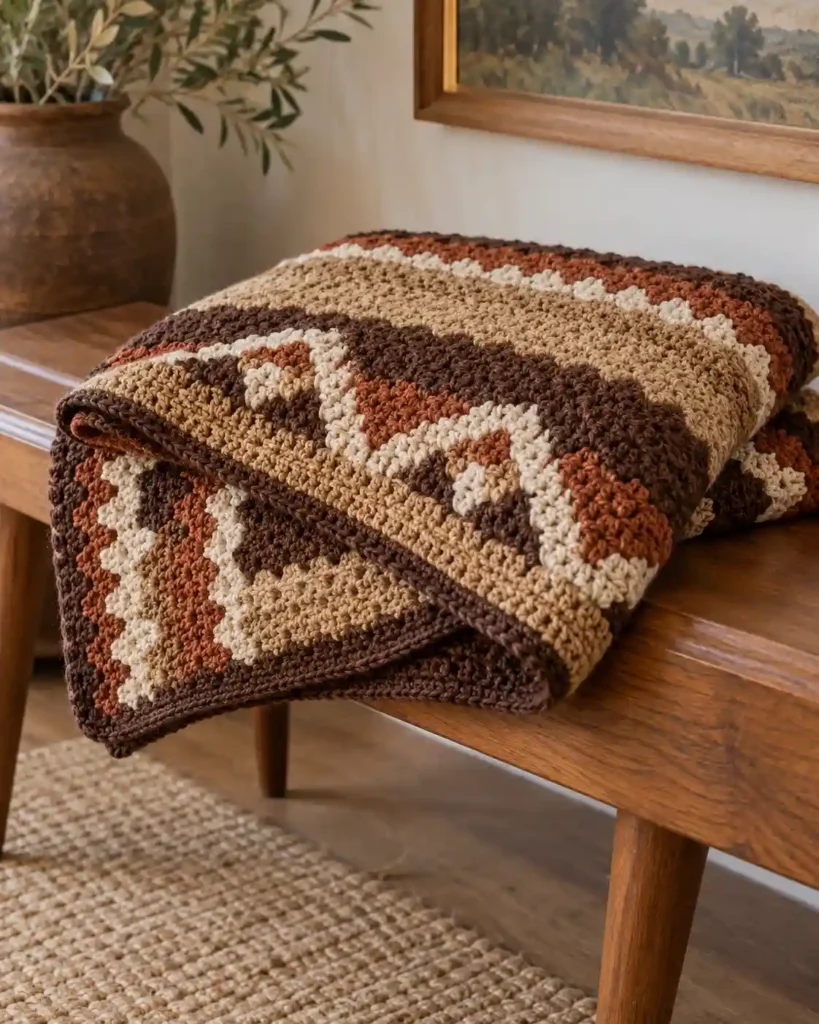
This is the earthy option for anyone who wants vintage style without bright yellow or avocado green.
Chocolate brown, camel, tan, rust, and cream create enough contrast to show the stitch pattern while staying calm and grounded. It works especially well in bedrooms, cabins, or spaces with lots of natural wood because it supports the room instead of dominating it.
It is also a smart choice if you know you will still love the blanket after a bold-color phase passes.
Use cream as a light break between deeper shades. Too little contrast can make beautiful stitch work disappear.
18. Why Do Yellow & Avocado Green Feel So 70s Together?
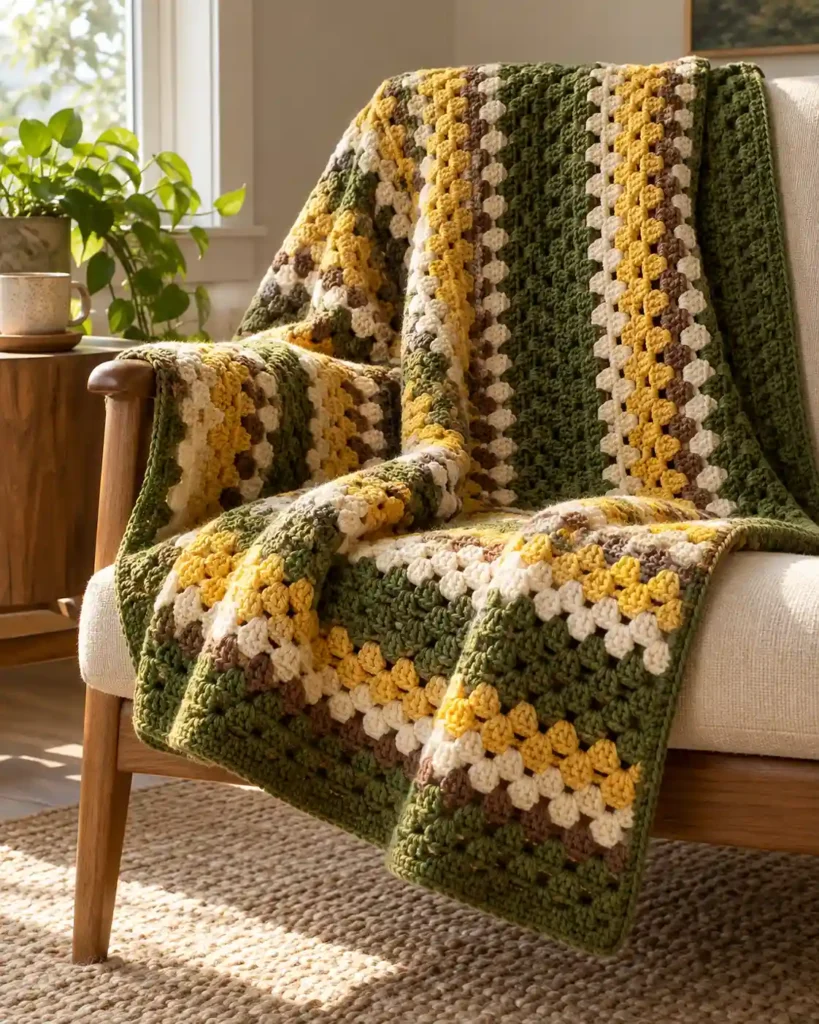
The combination is bold, unmistakable, and surprisingly flexible once you add cream or brown.
Use avocado as the base, harvest yellow or mustard as the highlight, and a neutral shade to give those stronger colors some breathing room. Granny stripes, geometric blocks, and floral motifs all handle the palette well.
If you want a blanket that reads “retro” from across the room, this pairing gets you there quickly.
Keep the yarn undertones compatible. A muted mustard usually blends more naturally with avocado green than a very cool lemon yellow.
19. Rainbow Retro Granny Square Blanket
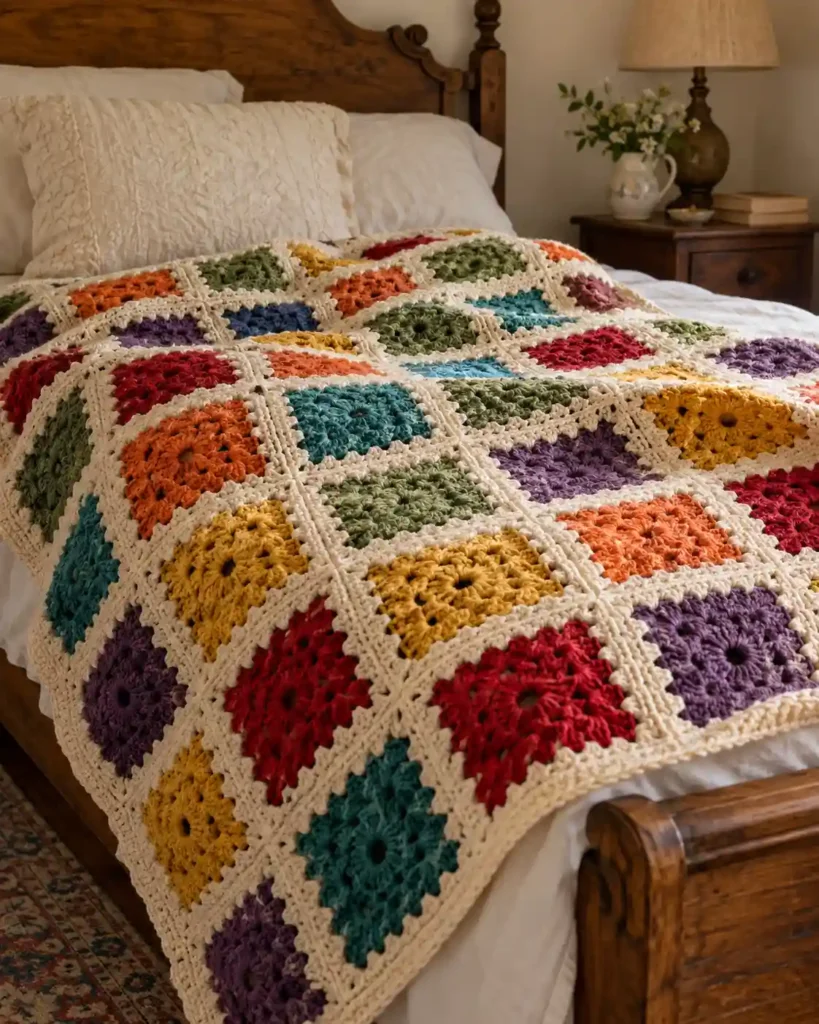
A rainbow granny blanket can still feel vintage when the colors are slightly muted rather than neon-clean.
Think tomato red, pumpkin orange, mustard yellow, olive or moss green, teal, and dusty purple, then frame the squares with cream or brown. That repeated frame is what prevents the blanket from looking like a completely contemporary rainbow craft project.
Choose it if you want maximum color but still care about a clear 70s mood.
Repeat the same palette in different orders rather than making every square identical. You get variety without losing the visual connection.
20. How Do You Style a Retro Couch Throw for a 70s Living Room?
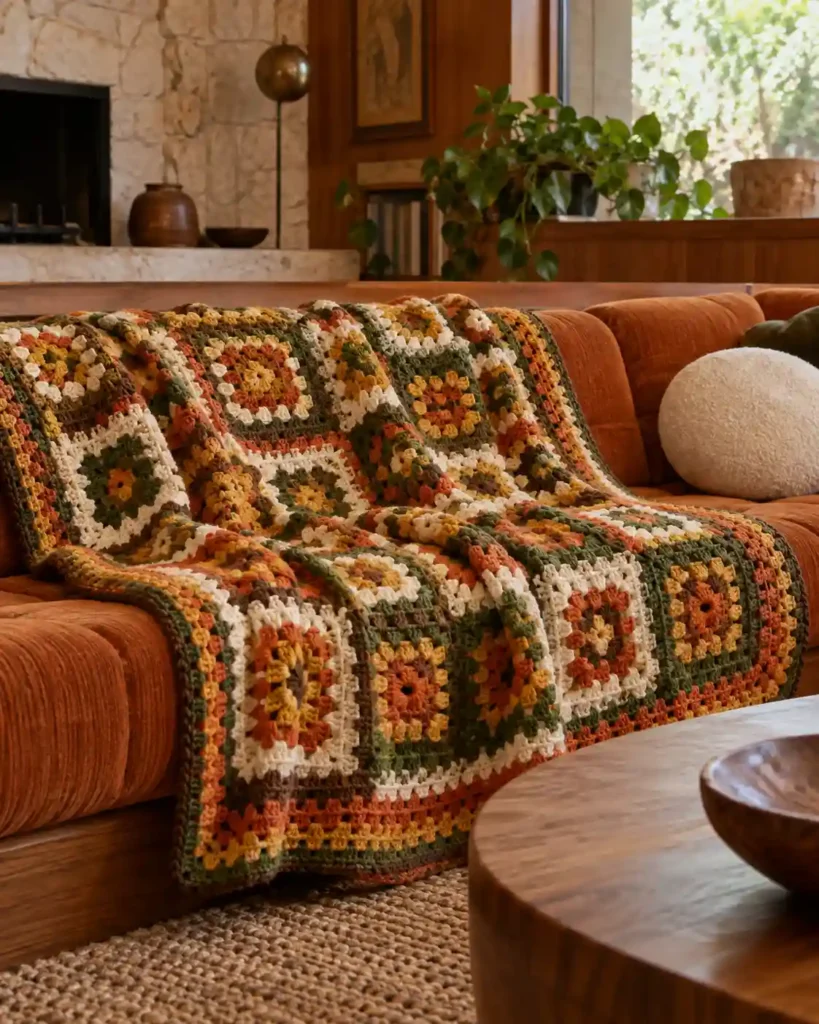
Start with function. The throw needs enough drape to sit naturally over the arm or back of the sofa without swallowing the furniture.
Then bring in the fun orange, green, mustard, brown, and cream through granny squares, stripes, or ripples. Wood, rattan, warm neutrals, and simple upholstery make a strong background because they let the crochet texture stand out.
This is the right idea when your blanket is as much a decor piece as something you plan to curl up under.
For a sitcom-inspired room, borrow general era colors and textures instead of trying to reproduce a recognizable television prop exactly.
21. Retro Bedspread with Large Granny Squares
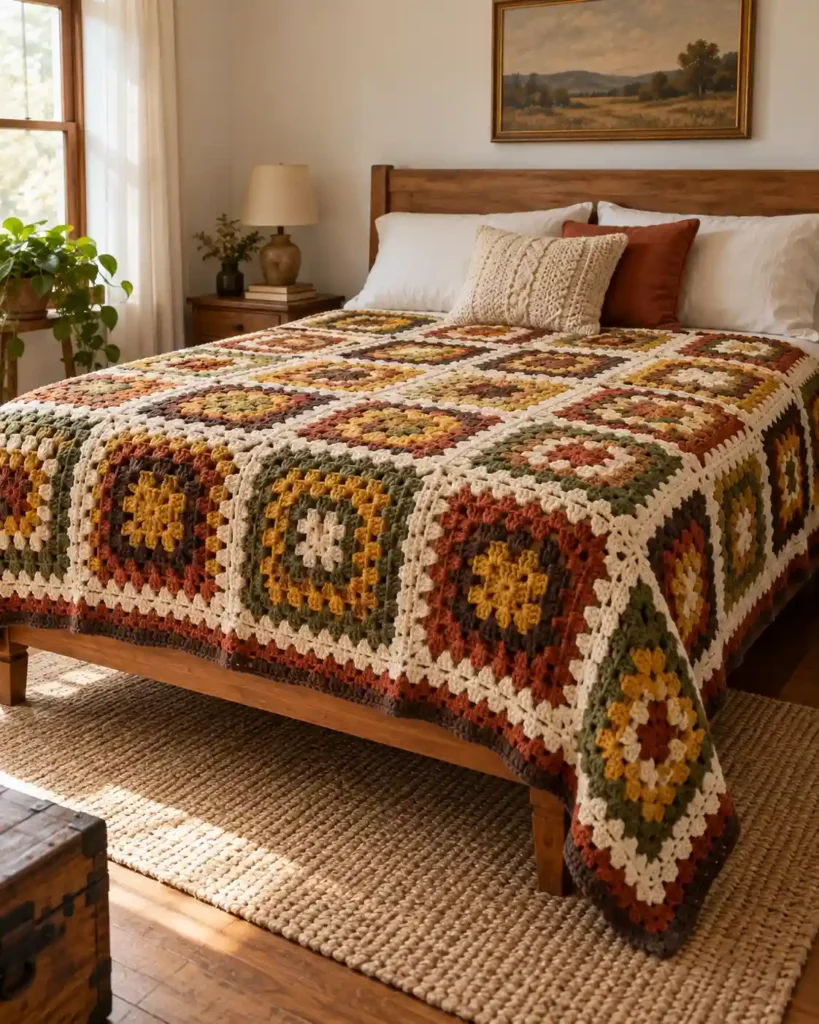
A bedspread gives granny squares room to become architecture. Larger motifs reduce the number of joins, and a deeper border can make the finished piece look deliberately sized for the mattress instead of like a sofa throw that happened to land on a bed.
Rust, mustard, olive, cream, and brown work especially well because the larger surface can carry several strong colors. Pick this one when you want the blanket to anchor the entire bedroom.
Measure the mattress and decide how much drop you want before crocheting dozens of squares. The planning becomes much easier when you know the finished target.
22. Small Lap Afghan with Vintage Colors
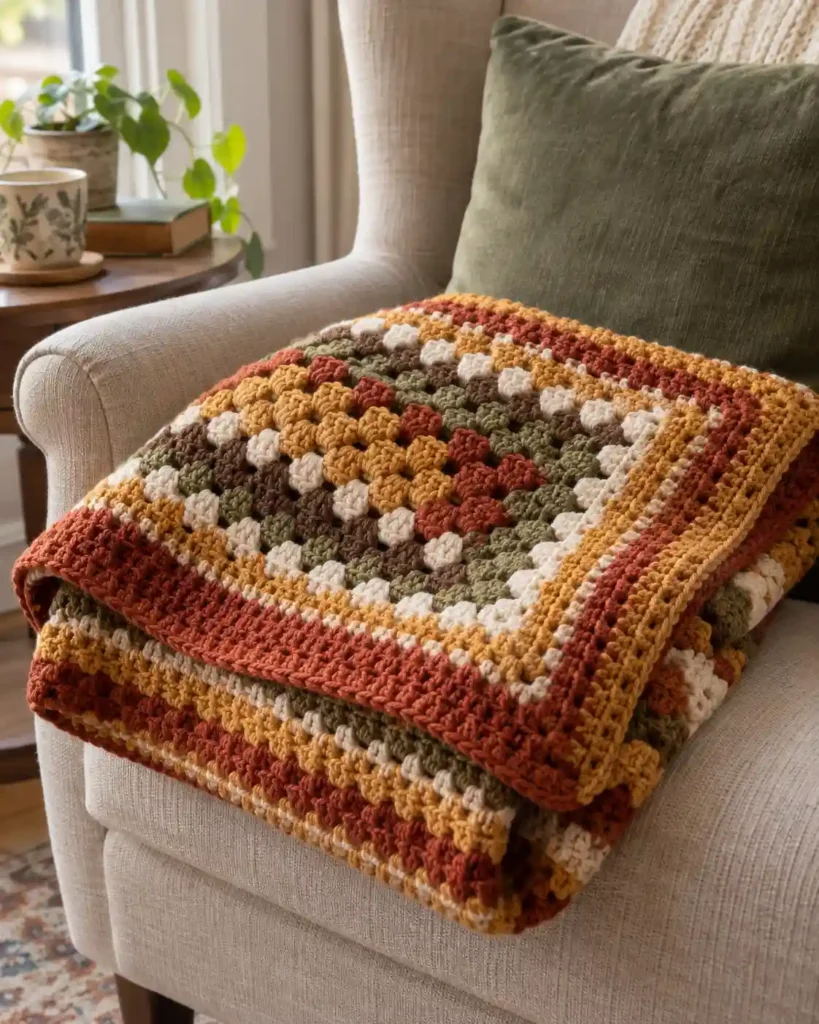
A lap afghan gives you the 70s look without the time or yarn commitment of a full bed blanket.
Concentrate rust, gold, olive, cream, and brown into a smaller field, then use medium-scale motifs or stripes so the design does not feel crowded. It is practical for a reading chair, office chair, or gift because the finished piece is easier to handle.
Choose this when you want a satisfying retro crochet blanket project you can finish sooner.
One published 70s-inspired example from CJ Design and Lion Brand measures 42 × 46 inches, showing how a relatively compact blanket can still carry a complete retro color story.
23. Does Fringe Make a Crochet Throw Look More Retro?
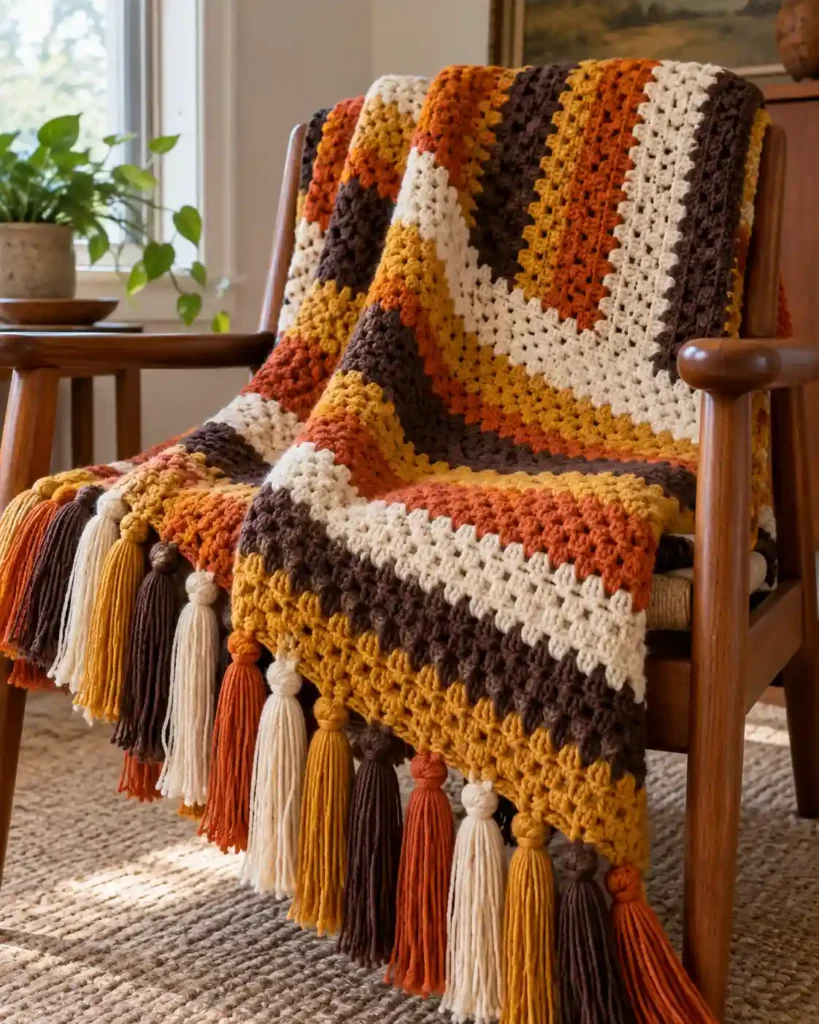
Fringe adds movement and gives even a simple striped throw a finished, slightly boho edge.
Use generous hand-tied bundles in the same palette as the blanket, or choose one neutral fringe shade to calm a busier body. It looks especially good over wood chairs, benches, and sofa arms where the ends can hang freely.
Add it when your blanket feels visually complete but still needs one tactile finishing detail.
Before attaching fringe, check the yarn’s care instructions. The Craft Yarn Council recommends keeping a yarn label with a handmade gift because standardized care symbols communicate washing, drying, ironing, bleaching, and other textile-care instructions.
24. Textured Shell-Stitch Retro Blanket
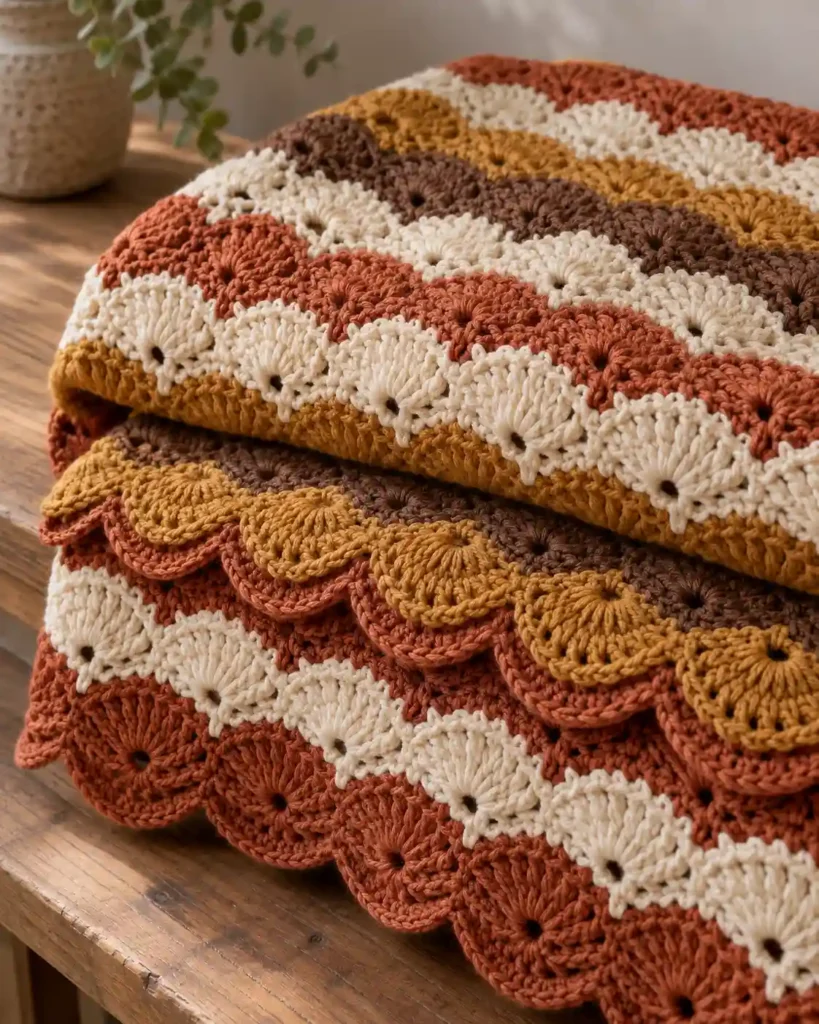
Shell stitches create rows of small fans, and warm earthy colors make that texture look even richer.
Terracotta, cream, mustard, and brown can change by row so every shell band stays visible without requiring a huge palette. Compared with granny squares, the fabric has a softer, more continuous rhythm that feels elegant rather than patchwork-heavy.
This is a lovely choice if you want vintage character with a slightly dressier finish.
For blog or Pinterest photography, side lighting can help the raised shells cast small shadows so readers can actually see the stitch definition.
25. What Is the Easiest 70s Crochet Blanket for a Beginner?
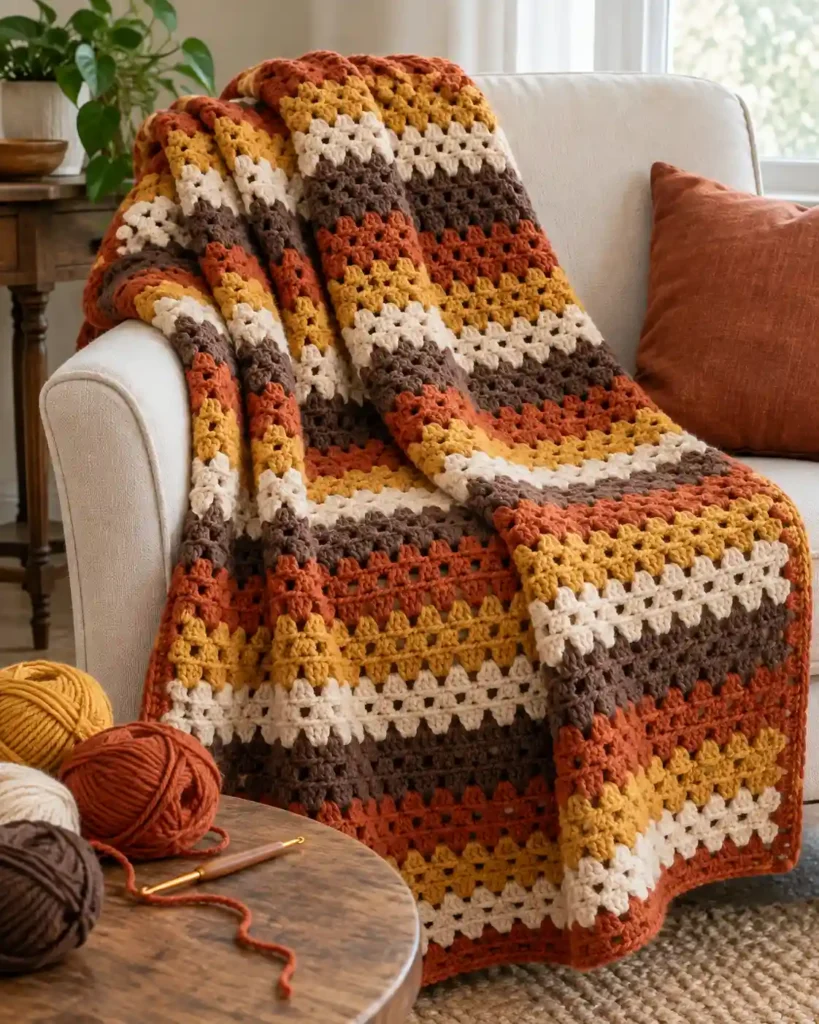
For a first crochet blanket pattern, a simple granny-stitch stripe, repeated basic stripe, or large granny-square throw is one of the easiest places to start.
Keep the palette limited to four or five shades and choose a repeat you can recognize without checking the instructions every minute. You will get most of the retro effect from color even if the stitches remain basic.
This is the best choice if you want the finished blanket to look impressive without turning your first large project into a test of patience.
The Craft Yarn Council describes Basic projects as using basic stitches with minimal shaping, while Easy projects can introduce simple stitch patterns and color work. Repetitive stripes and simple color changes therefore fit naturally into a beginner-friendly direction.
26. Modern Granny Square Blanket with a 70s Palette
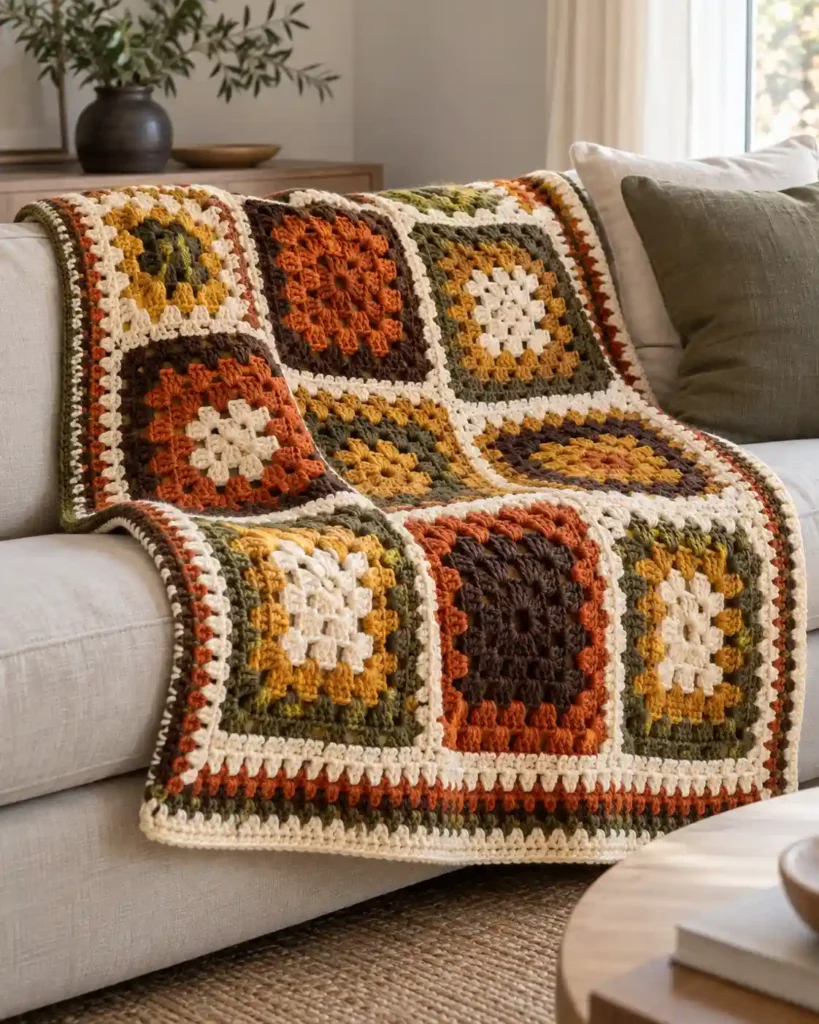
This is how you keep the nostalgia but clean up the silhouette.
Use oversized squares, fewer colors, flatter joins, and a simple border, then let burnt orange, olive, mustard, cream, and deep brown carry the vintage reference. On a contemporary neutral sofa, the result feels deliberate instead of themed.
Choose this version if you love retro color more than literal vintage reproduction.
Annie Design Crochet’s retro roundup also demonstrates how classic structures can be updated with newer colors or techniques while retaining vintage character.
27. How Do You Make a Boho Retro Crochet Blanket for a Reading Nook?
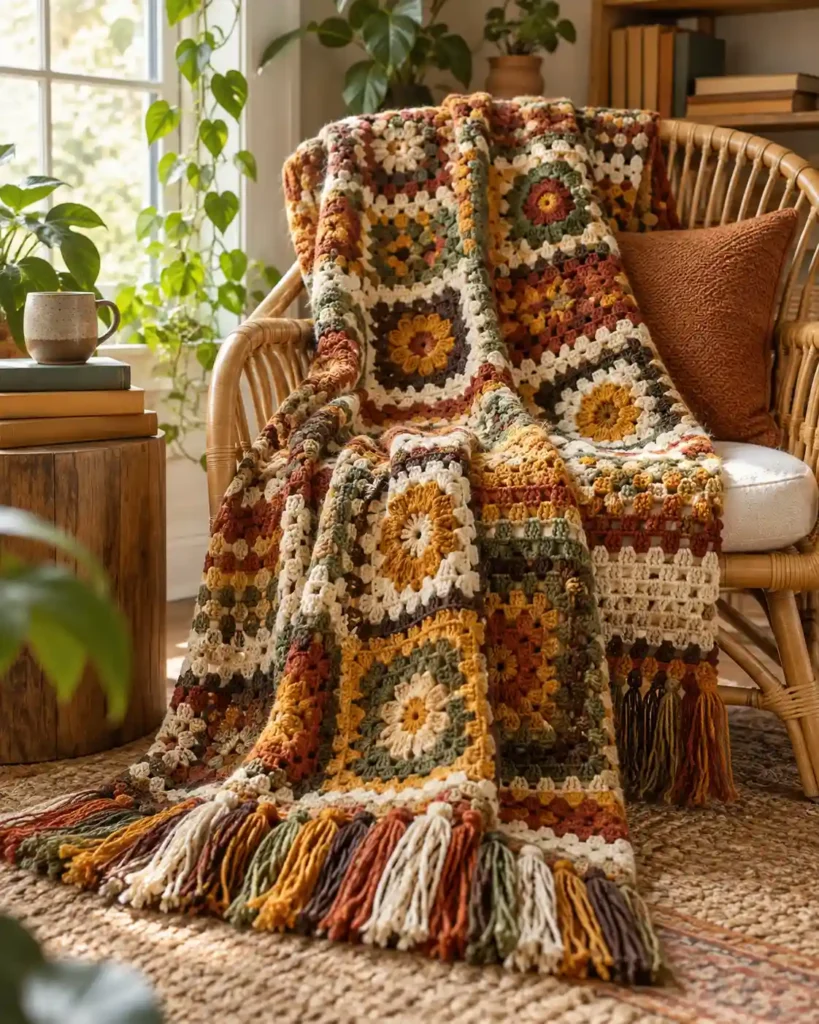
Mix granny and floral motifs, soften the palette with cream, and add fringe or tassels only where they improve the drape.
Rust, olive, mustard, brown, and muted teal look especially good beside rattan, plants, books, and natural wood. Unlike stricter geometric blankets, this one can be a little relaxed and mismatched without looking unfinished.
Make it if you want your 70s blanket to feel cozy first and styled second.
A reading-nook blanket should be easy to grab, fold, and care for. Let comfort guide the yarn and size, then build the 70s look through color and motif.
How Do You Choose an Authentic 70s Crochet Color Palette?
Choose three to five complementary retro shades, then use one dark or light anchor color to keep the palette balanced and intentional.
- Start with one dominant retro color.
- Add two or three supporting shades.
- Use cream or brown as an anchor.
- Avoid using every 70s color at once.
- Repeat key colors throughout the blanket.
You do not need every famous 70s color in one blanket. In fact, many projects look stronger when you choose three to five shades and give each one a job.
Try one of these formulas:
- Classic earth: burnt orange + mustard + chocolate brown + cream
- Flower power: avocado green + harvest gold + orange + cream + brown
- Soft retro: peach + muted pink + mustard + dark brown + cream
- Groovy bright: orange + teal + yellow + olive + cream
- Neutral vintage: rust + camel + tan + brown + cream
The key is contrast. A dark anchor or light neutral gives stronger colors boundaries, so the design feels deliberate rather than muddy.
What Yarn Works Best for a Retro Crochet Blanket?
Medium/worsted yarn is a practical starting point for many retro blankets because it provides visible stitch definition, manageable project speed, and enough substance for throws and afghans.
- Match yarn weight to your chosen pattern.
- Swatch before buying a blanket-sized quantity.
- Check fiber care instructions carefully.
- Consider drape, warmth, durability, and texture.
- Keep yarn weight consistent across mixed motifs.
For an everyday throw, medium/worsted yarn is an easy place to begin because it balances stitch definition, warmth, and manageable project speed. The Craft Yarn Council places worsted, afghan, and aran yarns in its category 4 Medium group.
Acrylic is practical for many blankets because it is widely available and can be easy to care for, but wool blends and cotton blends can also work depending on the drape, warmth, and texture you want.
Always check the yarn label instead of assuming care instructions, especially if you mix fibers. The Craft Yarn Council’s care-symbol guidance covers washing, bleaching, drying, ironing, and professional textile-care symbols used on yarn labels.
If you are following a pattern, match the yarn weight and check gauge before buying a blanket-sized quantity. A swatch tells you much more about your actual fabric than the yarn label alone.
How Can You Mix Retro Motifs Without Making the Blanket Look Busy?
Repeat at least one visual element, such as a joining color, motif size, border treatment, or small set of anchor shades to connect varied crochet motifs.
- Pick one consistent joining color.
- Limit the main palette.
- Repeat motif sizes where possible.
- Distribute bright shades evenly.
- Preview the layout before joining.
Give the eye something to repeat. That can be a consistent final round on every square, one joining color, one motif size, or three anchor shades that appear across the whole blanket.
A simple system works well:
- Choose one dominant neutral or dark anchor.
- Choose two or three main retro colors.
- Add one accent color sparingly.
- Repeat the same border or joining treatment.
- Lay motifs out before joining so bright colors are distributed evenly.
This is especially useful for scrap-yarn blankets, groovyghans, and mixed flower motifs where each block already has a lot going on.
What Should Beginners Know About Granny Squares, Ripples & Joining?
Beginners should learn one repeat at a time, make a small swatch first, count stitches carefully, and keep tension consistent before scaling the project into a full blanket.
- Practice the repeat before starting full size.
- Count peaks and valleys carefully in ripples.
- Keep motif tension consistent.
- Check abbreviations before beginning.
- Plan joining and borders early.
Start by learning the repeat, not by racing toward blanket size. Make a sample square or short ripple swatch, check your tension, and see how the yarn behaves in your hands.
If the pattern uses abbreviations, keep the key nearby. The Craft Yarn Council’s standardized U.S. crochet terminology includes familiar abbreviations such as ch for chain, sc for single crochet, hdc for half double crochet, dc for double crochet, sl st for slip stitch, and rep for repeat.
For motifs, learning how to block crochet can help you flatten the pieces before final joining when your pattern recommends it. For ripples, count carefully around peaks and valleys because missed increases or decreases can change the edges.
How Do You Style a 70s Crochet Blanket in a Modern Home?
Let the blanket act as the main retro statement, then surround it with quieter furniture, neutral textiles, wood, rattan, or other simple materials.
- Use one strong retro textile as the focal point.
- Keep surrounding patterns restrained.
- Repeat only one or two blanket colors nearby.
- Style throws where they will actually be used.
- Let texture add warmth without overcrowding the room.
Let the blanket be the loudest retro element in the room.
A colorful granny-square throw often looks more intentional against a simple cream sofa than beside five other competing vintage patterns. Try the blanket over a sofa arm, across the foot of a bed, on the back of a reading chair, or inside a basket beside the seat where you actually use it.
If the blanket already contains strong orange, green, yellow, and brown, repeat only one or two of those shades elsewhere in the room.
At CrochetMind.com, the approach behind this collection is simple: start with the crochet itself, then let the blanket guide the surrounding color choices rather than forcing it to match every decor trend.
FAQs About 70s Crochet Blanket
What colors make a crochet blanket look authentically 70s?
Burnt orange, mustard, harvest gold, avocado green, olive, rust, brown, tan, cream, and muted brighter shades all work well. You do not need every color at once; a balanced three-to-five-color palette is often easier to coordinate.
Are granny squares especially suitable for a 70s crochet blanket?
Yes. Granny squares work particularly well because they adapt easily to classic, flower, sunburst, patchwork, rainbow, and oversized modern-retro arrangements.
What crochet stitches work best for a retro blanket?
Granny stitch, ripple or chevron, shell or fan stitch, bobbles, stripes, clusters, and motif-based construction can all support the look. Choose based on the texture you want and the difficulty level you enjoy.
Can a beginner make a 70s-style crochet blanket?
Yes. Repeated granny stitch, simple stripes, or large granny squares are sensible starting points, especially when the color palette supplies most of the visual interest. The Craft Yarn Council’s Basic and Easy project descriptions emphasize basic stitches, repetitive patterns, and manageable color work.
How much yarn do I need for a 70s crochet blanket?
It depends on the finished dimensions, yarn weight, stitch density, motif count, and border. Use your chosen pattern’s yardage or calculate from a representative swatch rather than relying on one universal quantity.
Final Thoughts
The strongest 70s crochet blanket ideas do not come from copying one vintage afghan exactly. They come from choosing one recognizable construction, granny squares, flowers, ripples, stripes, textured stitches, or unusual motifs and pairing it with a controlled retro palette.
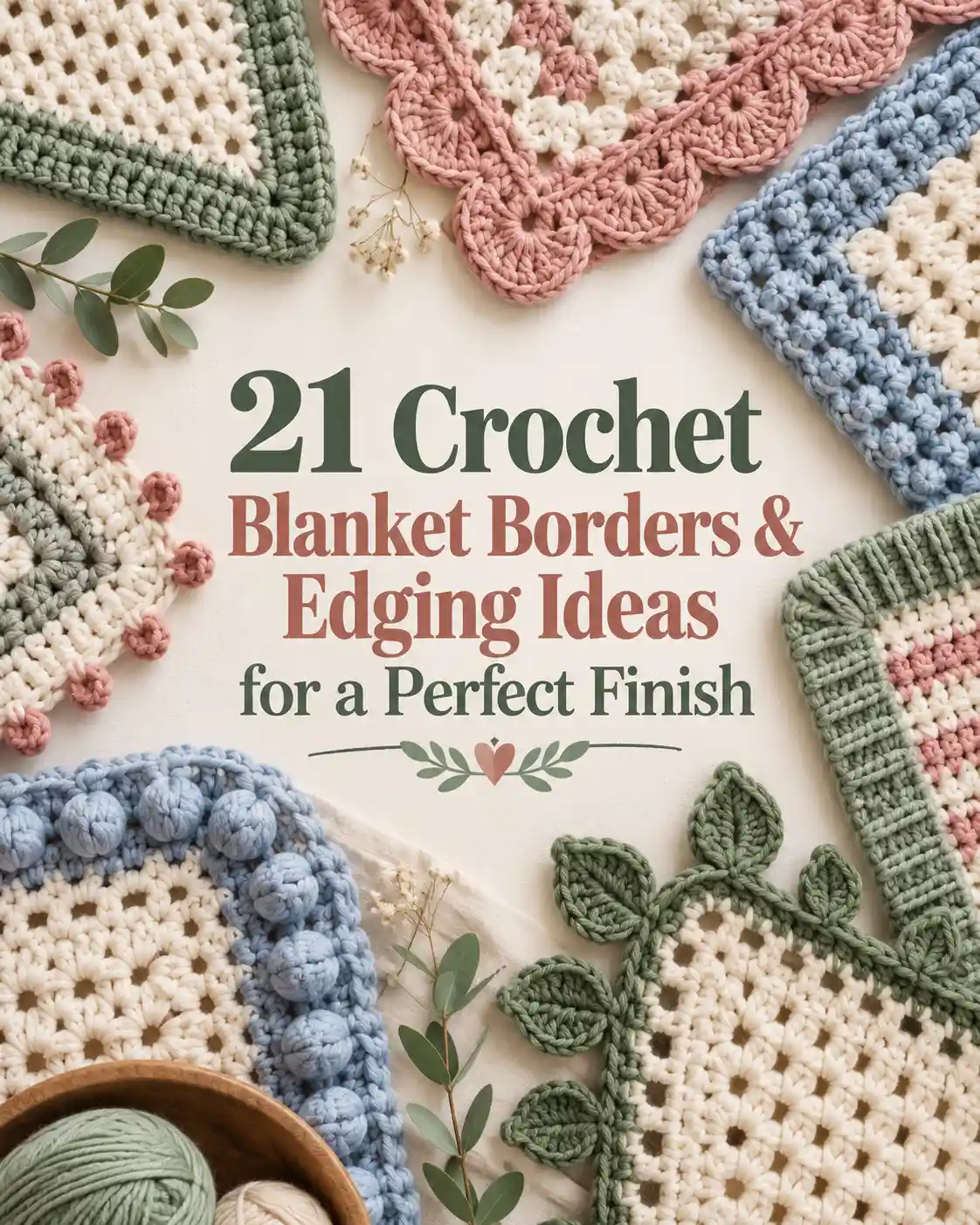
Start with the version you can already picture in your room. Save the color combination, choose the stitch or motif, make a swatch, and finish with crochet blanket borders that suit the design.
Whether you go with a full flower-power statement or a quieter retro crochet blanket in cream and burnt orange, the goal is the same: make something cozy enough to use and distinctive enough to remember.

![The Best 30+ Free Crochet Cat Patterns [Beginner-Friendly Guide]](https://crochetmind.com/wp-content/uploads/2025/04/1-The-Best-30-Free-Crochet-Cat-Patterns-Beginner-Friendly-Guide.webp)