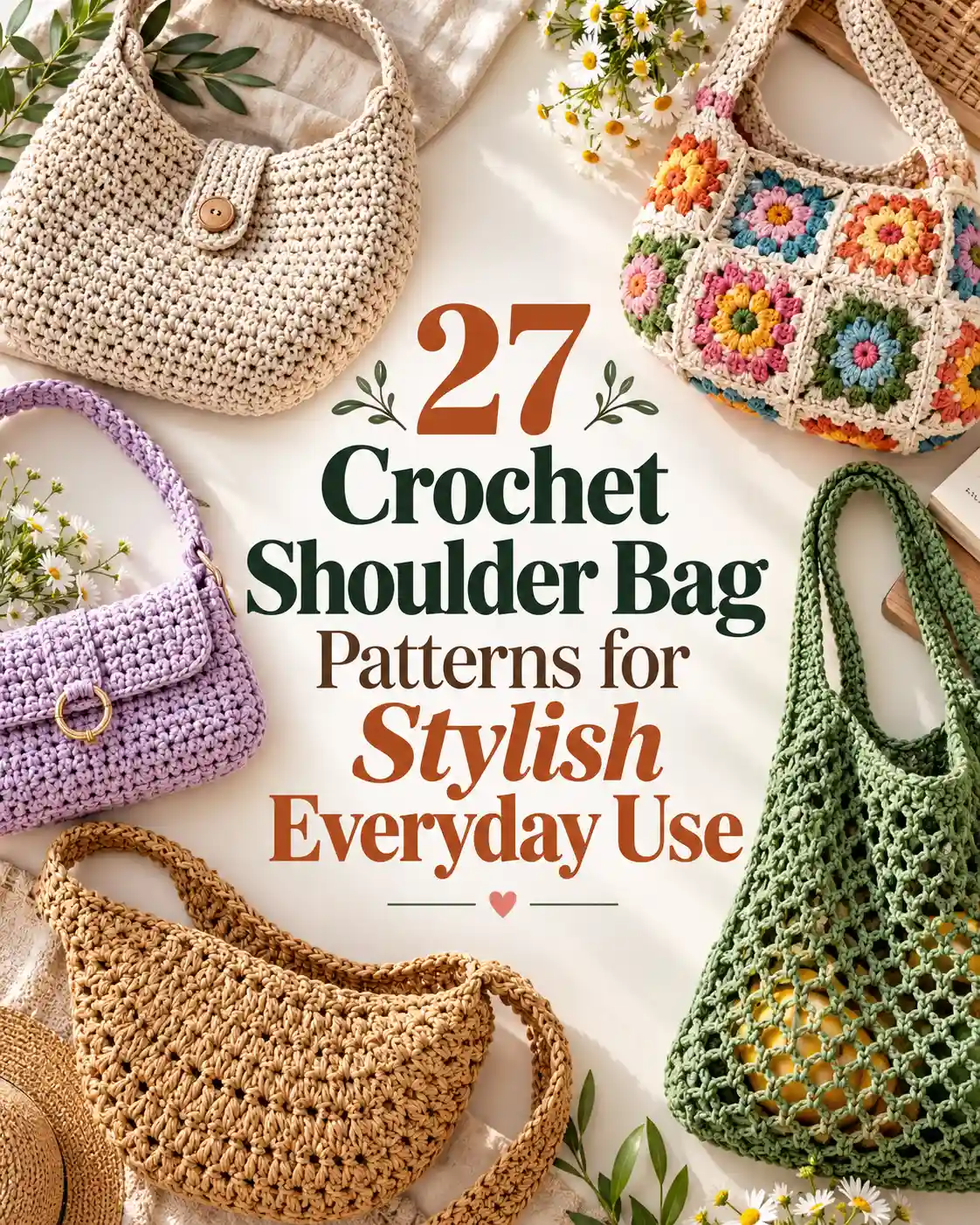
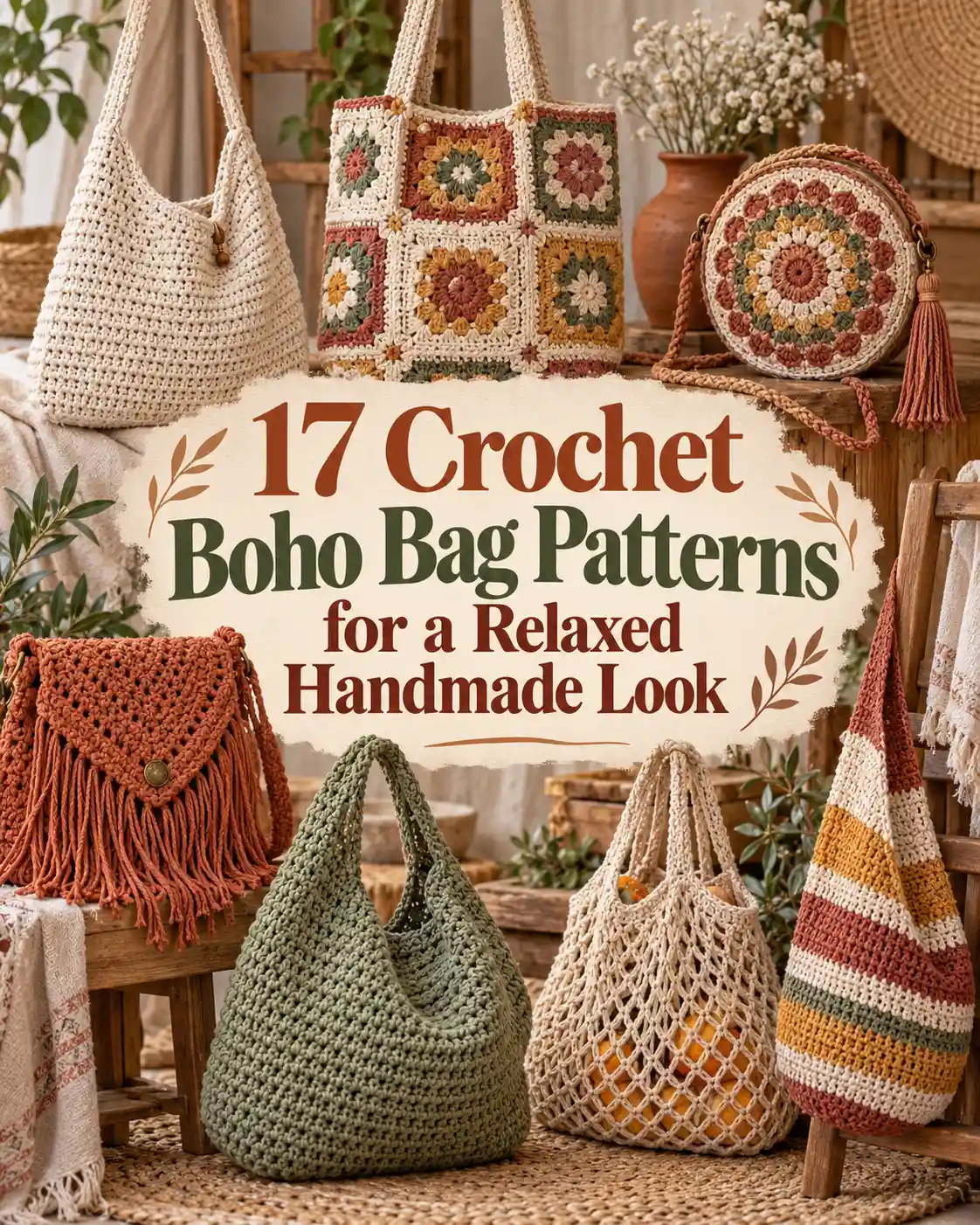
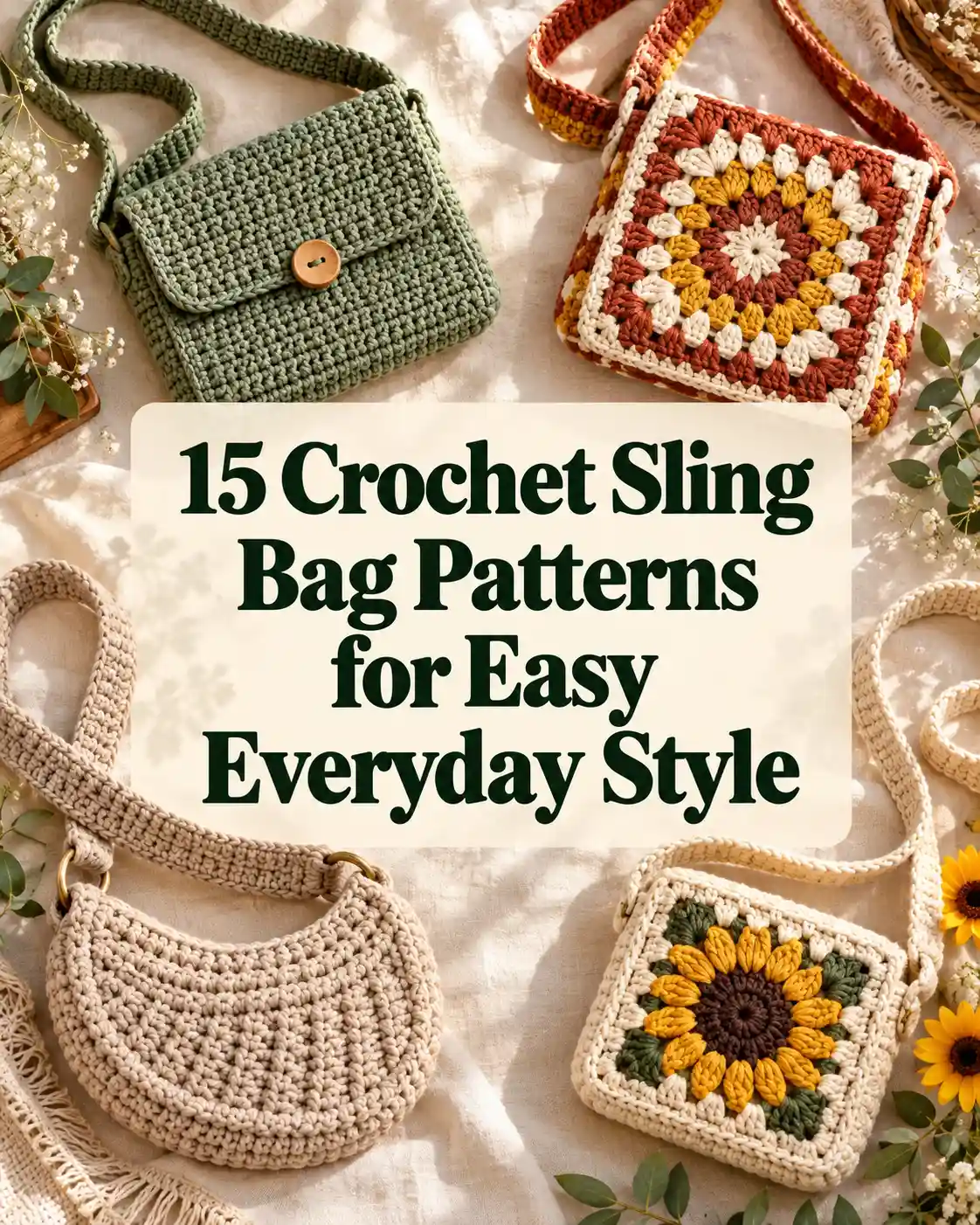
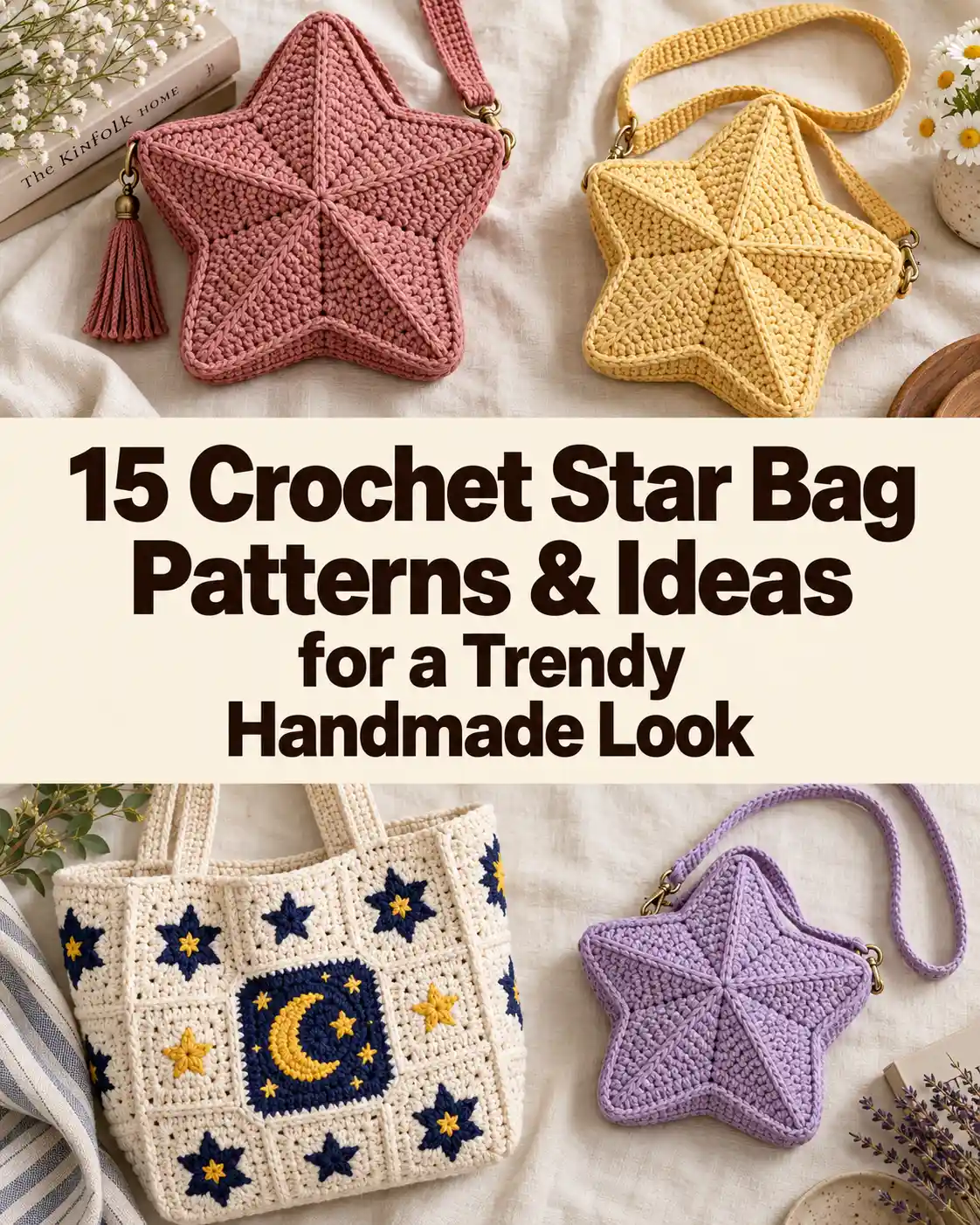
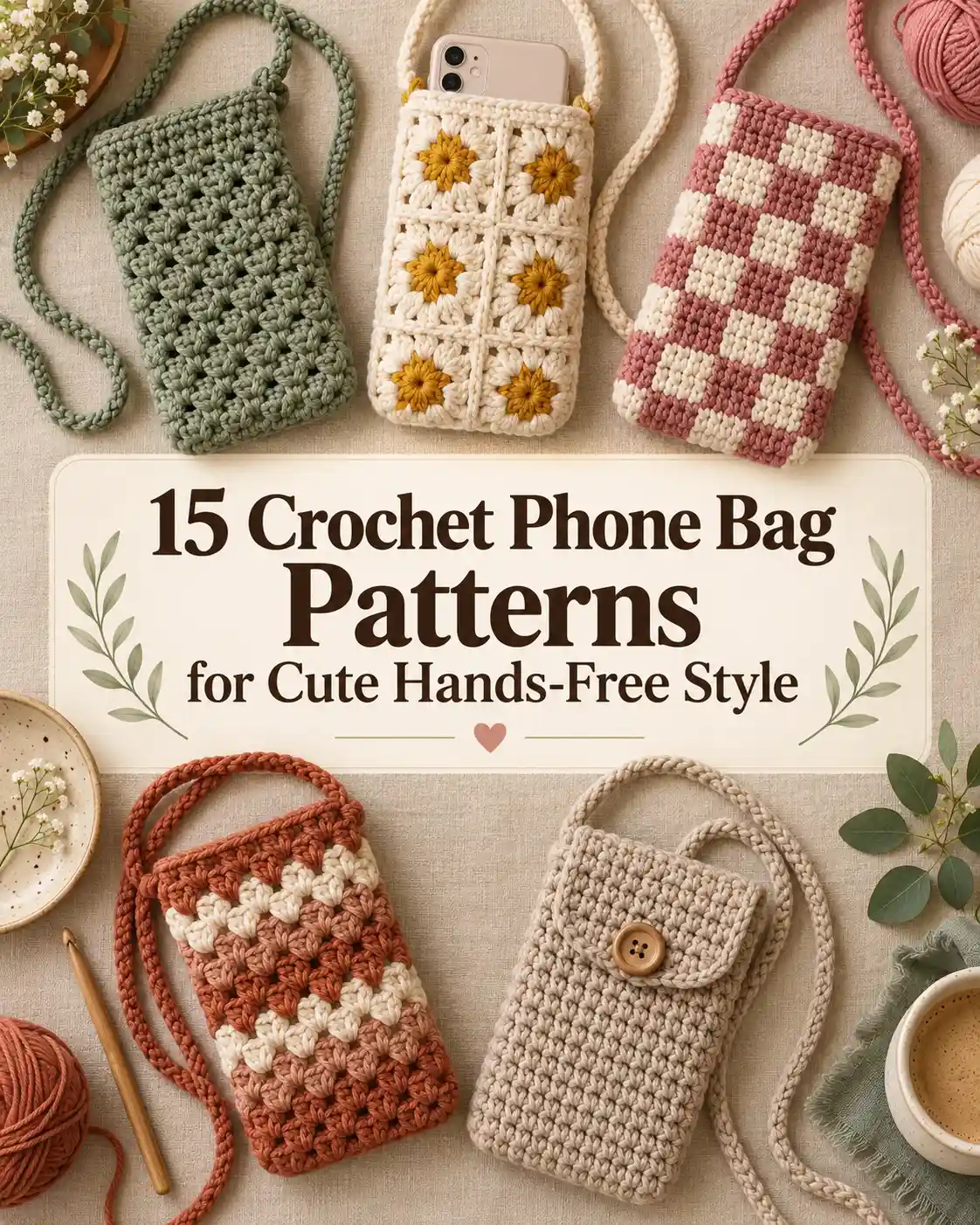
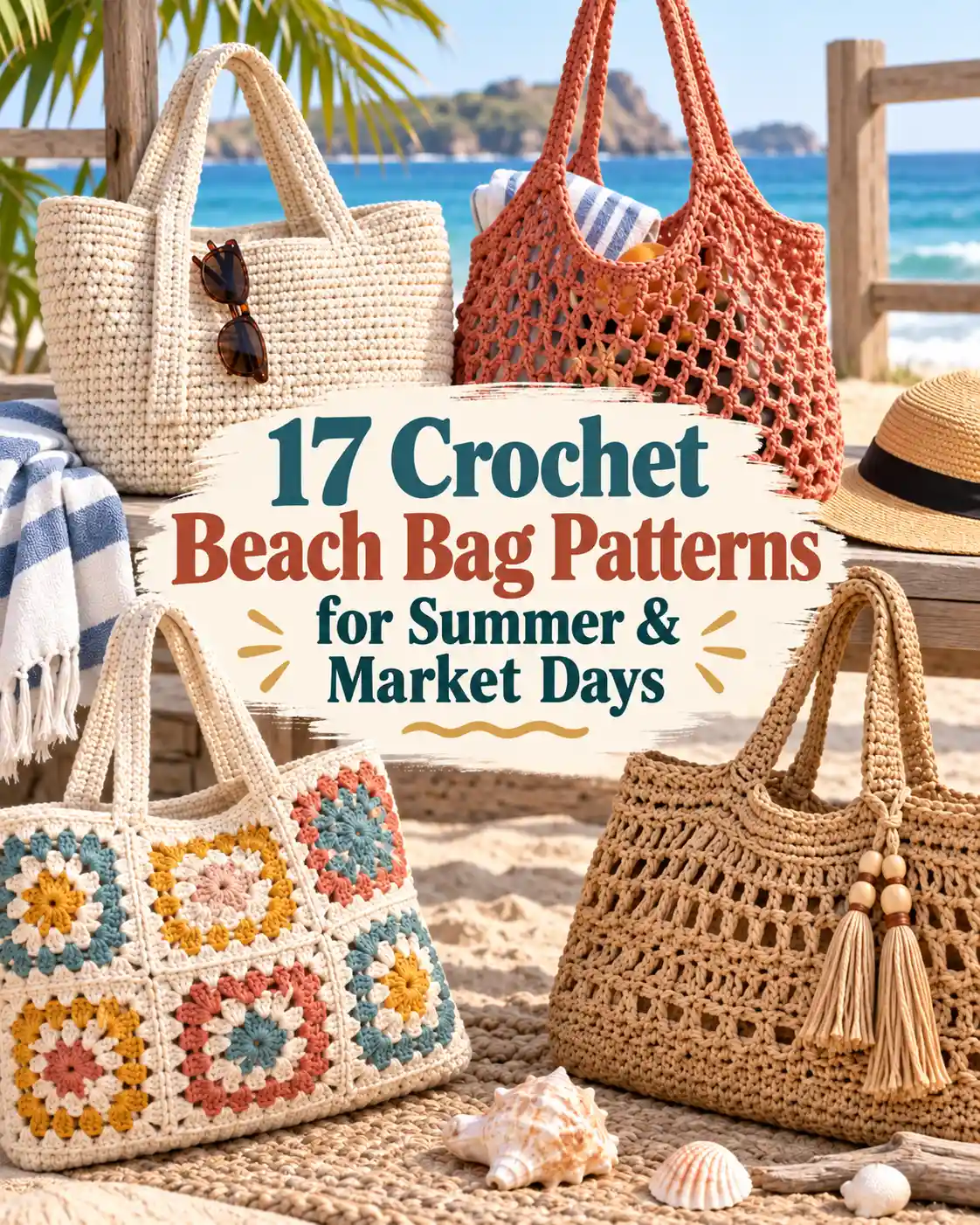
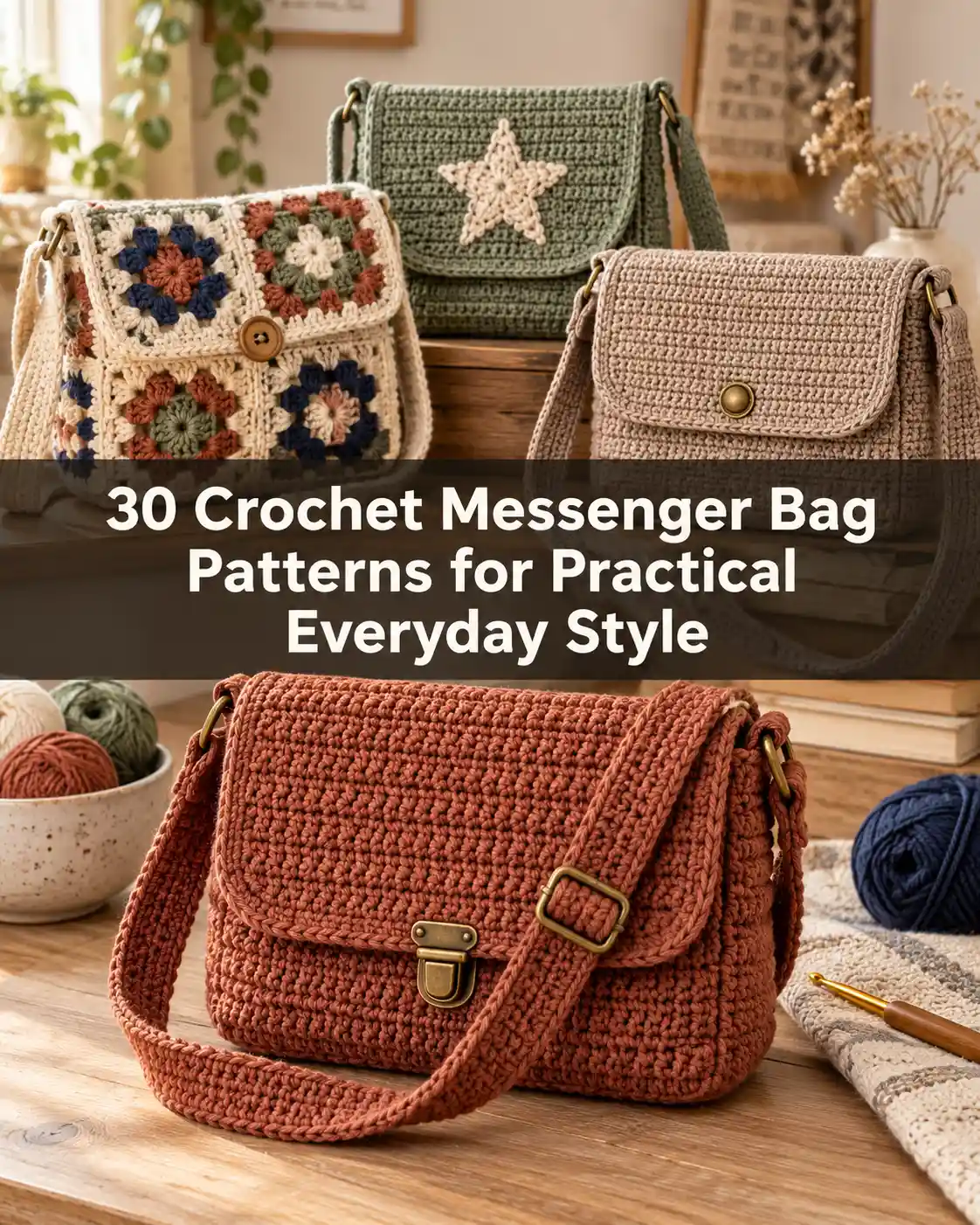
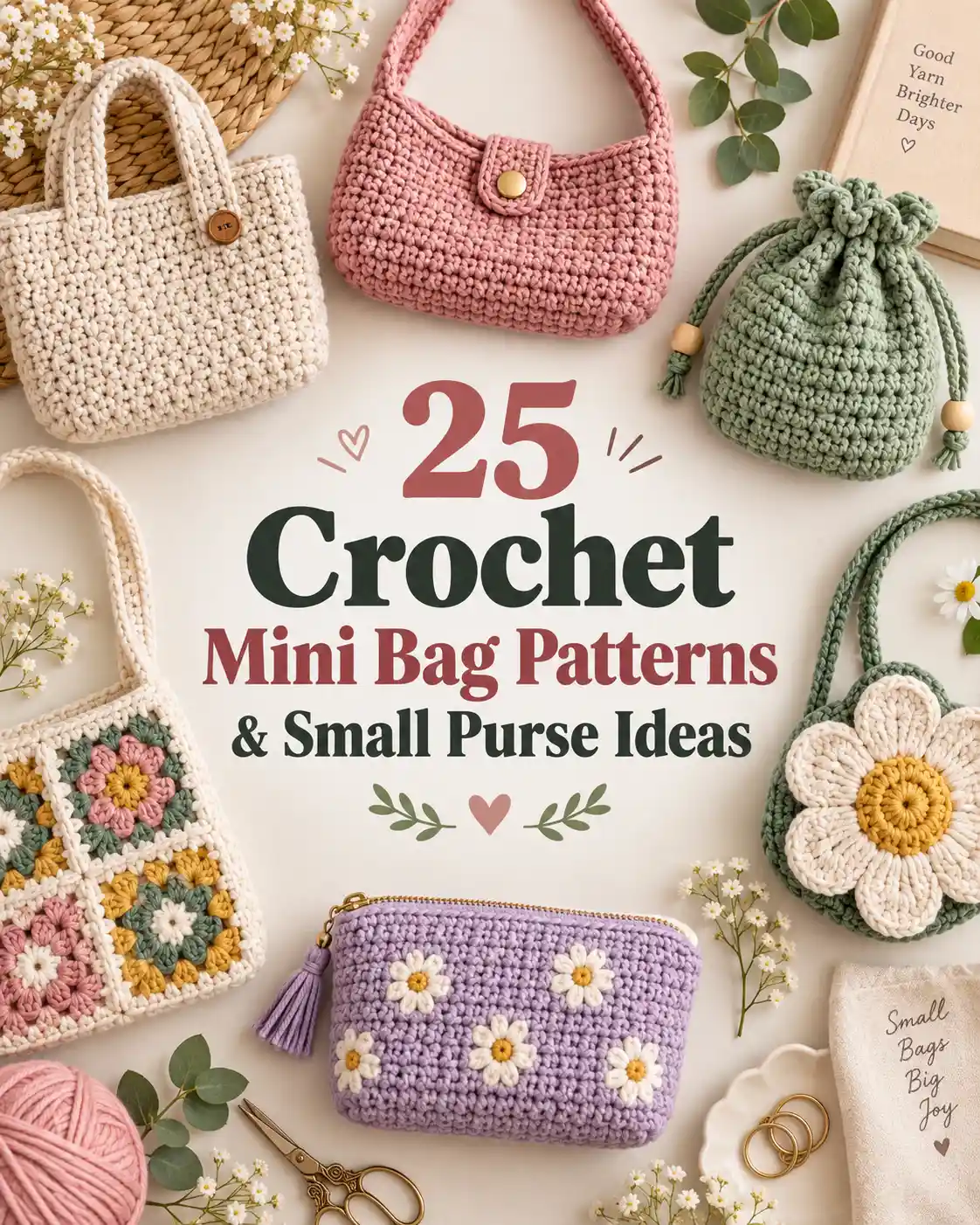
If you love handmade bags that are practical enough for everyday use but still feel personal, a crochet shoulder bag is one of the most satisfying projects to try. You can keep the construction simple, experiment with color and texture, or turn a basic shape into something completely different with granny squares, mesh stitches, t-shirt yarn, lining, or a statement strap. This guide brings together 27 styles so you can compare them and find a design that matches your skill level, wardrobe, and daily routine.
A crochet shoulder bag is one of those projects that can be as simple or as detailed as you want it to be. You can make a tiny phone-size bag, a soft hobo, a floral granny-square purse, or a structured everyday bag with lining and hardware.
The 27 ideas below cover easy constructions, free-pattern inspiration, t-shirt yarn, mesh, granny squares, different straps, practical closures, and color-driven styles. They are designed to help you choose a bag based on how you actually want to use it, not just how pretty it looks in a photo.
Key Takeaways
- Choose yarn based on structure, stretch, and daily use.
- Start simple with an easy Crochet shoulder bag pattern.
- Reinforce straps before carrying heavier everyday items.
- Add lining when you need more security and shape.
- Try Crochet Shoulder Bag Small designs for quick projects.
- Match color and texture to your personal style.
What Should You Know Before Choosing a Crochet Shoulder Bag Pattern?
Choose your yarn, finished size, strap style, and desired structure before starting a crochet shoulder bag.
At a Glance
- Firmer yarn creates better structure.
- Softer yarn gives more drape.
- Gauge controls finished dimensions.
- Strap construction affects comfort.
- Lining adds stability and security.
Start with three things: yarn structure, bag size, and strap design. A tightly crocheted body usually holds its shape better for daily use, while mesh, lace, and softer yarns create more drape.
The Craft Yarn Council groups yarn into standardized weight categories from 0 through 7 and publishes typical crochet hook and gauge ranges for each category. Those ranges are guidelines rather than fixed rules, so the hook and gauge given in your chosen pattern should still take priority.
| Bag style | Good yarn direction | Best for | Skill focus |
|---|---|---|---|
| Classic everyday bag | Cotton or firm medium-weight yarn | Daily essentials | Even stitches, sturdy strap |
| Small shoulder bag | Light/medium yarn | Phone, cards, keys | Compact shaping |
| T-shirt yarn bag | Thick recycled-style yarn | Structured statement bag | Large hook, tension |
| Granny square bag | Cotton or acrylic | Colorful casual wear | Motifs and joining |
| Mesh bag | Cotton or blended yarn | Summer, beach, light items | Openwork stitches |
| Hobo bag | Softer yarn | Relaxed everyday styling | Drape and shaping |
| Raffia bag | Raffia-style yarn | Vacation and summer outfits | Firm tension |
| Lined bag | Almost any bag yarn | More secure everyday use | Sewing and finishing |
Gauge still matters even for accessories. The Craft Yarn Council defines crochet gauge by the number of stitches and rows over a measured area and recommends matching the pattern gauge because it controls the finished dimensions.
27 Crochet Shoulder Bag Patterns and Ideas
These 27 crochet shoulder bag ideas cover beginner, mini, granny-square, mesh, hobo, chunky, floral, raffia, lined, and hardware-accented styles.
At a Glance
- Begin with simple panel construction.
- Explore motifs for colorful designs.
- Use chunky yarn for bold texture.
- Add hardware for a polished finish.
- Choose compact styles for lighter carrying.
27 Crochet Shoulder Bag Patterns for Stylish Everyday Use
1. Why Start With a Classic Everyday Crochet Shoulder Bag?
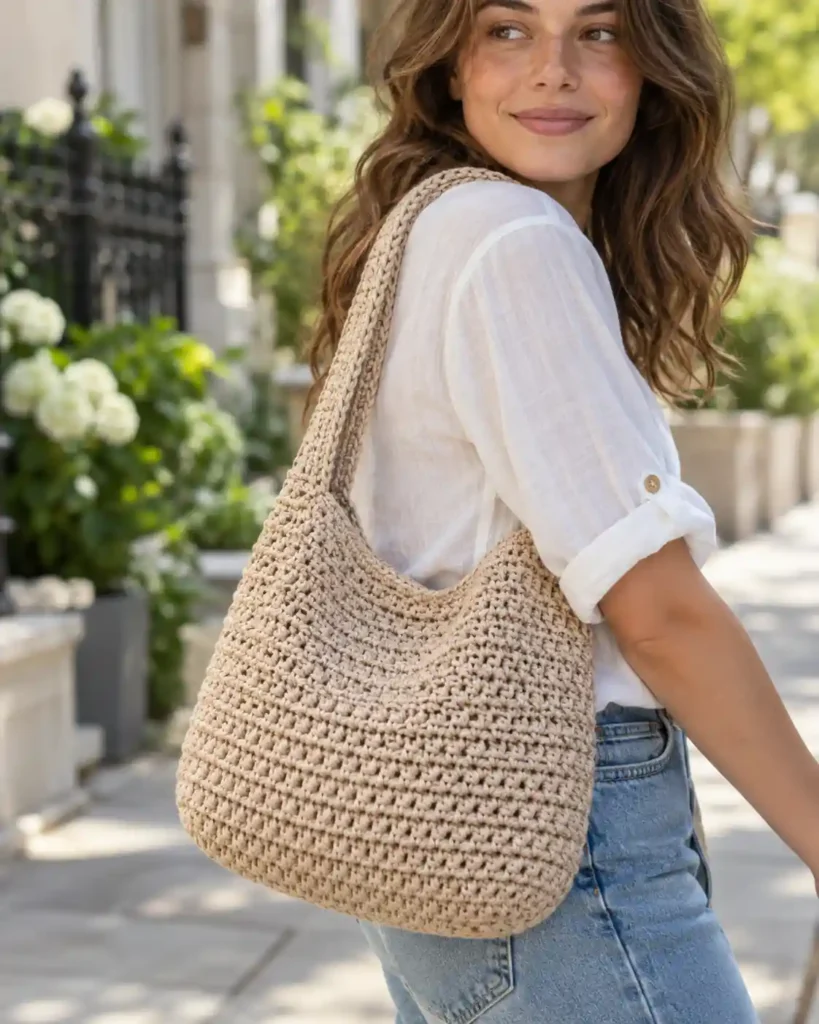
A classic crochet shoulder bag is the easiest style to imagine yourself actually carrying three months after you finish it. Instead of relying on dramatic fringe or complicated motifs, it gets its personality from clean stitches, a useful size, and a comfortable strap.
I like this direction for a first “real” bag because you can wear it with jeans, dresses, or a simple work outfit without having to style around it. A rectangular or gently rounded body also makes it easier to judge your dimensions while you crochet.
Keep the fabric fairly dense so pens, keys, and smaller items are less likely to poke through.
Special Tip: Make the strap a little shorter than your ideal finished length if your yarn is prone to stretching.
2. Is an Easy Beginner Crochet Shoulder Bag Worth Making First?
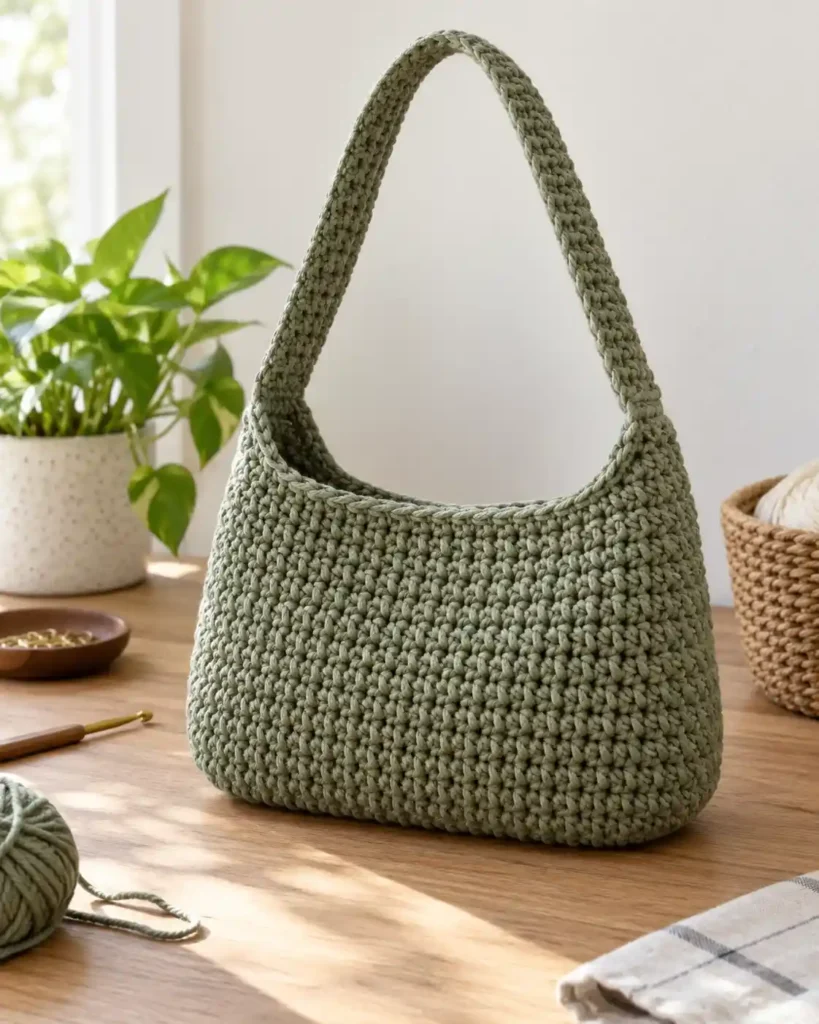
Absolutely. A beginner bag built from simple panels lets you focus on tension and neat edges rather than complicated shaping.
That matters because the Crochet Guild of America teaches core beginner skills such as the foundation chain, single crochet, double crochet, yarn handling, and consistent tension before moving into more complicated construction.
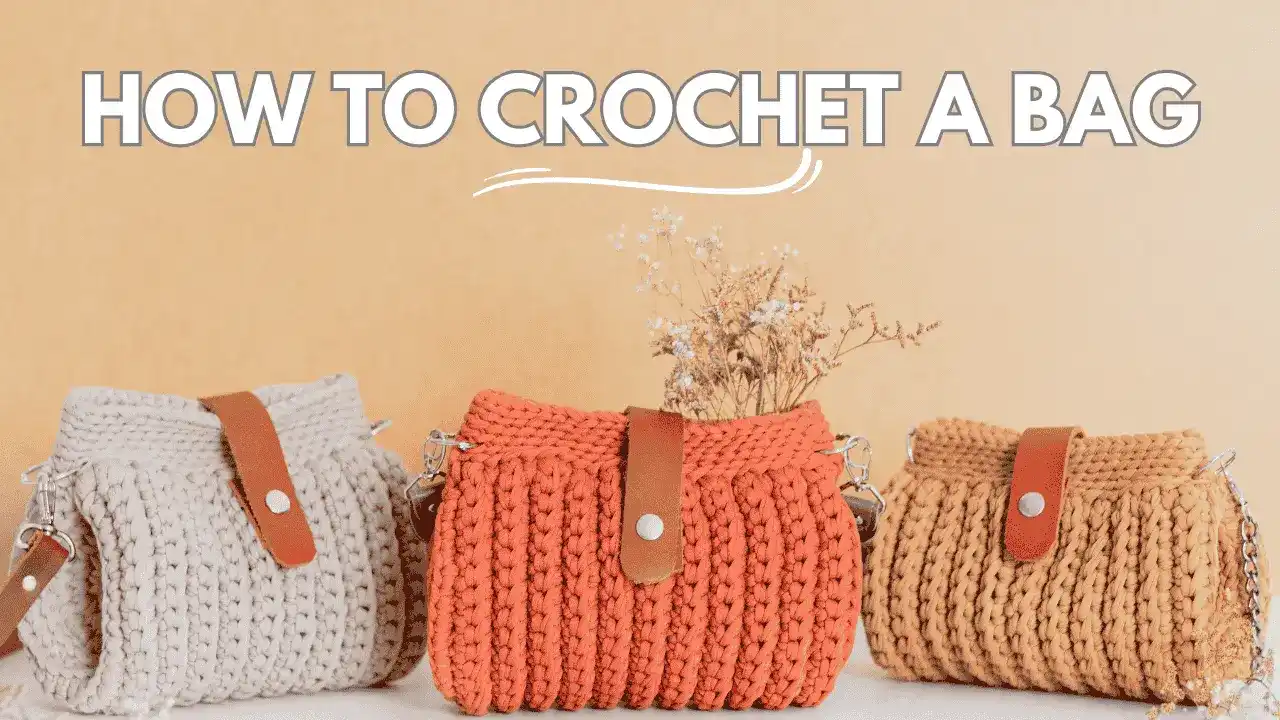
Try a simple rectangle-based crochet shoulder bag pattern if you are still learning. If you want to understand the basic construction first, this how to crochet a bag guide can help you see how body panels, seams, and straps come together without turning the project into a week-long puzzle.
This is also a good place to use a light color because it is much easier to see where your hook enters each stitch.
3. What Makes a Good Crochet Shoulder Bag Free Pattern?
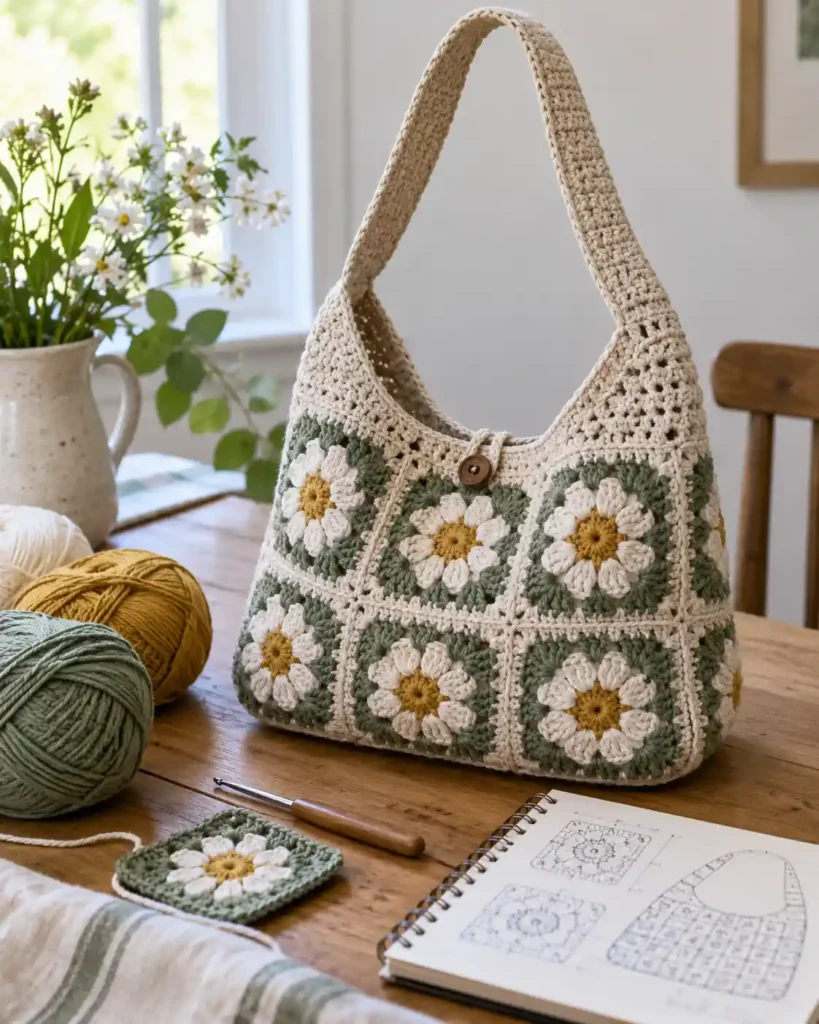
A useful Crochet shoulder bag Free Pattern should tell you more than the stitch repeat. Look for materials, hook size, gauge, finished measurements, construction notes, strap instructions, and finishing details.
VivCrochets, for example, presents its simple shoulder bag with dimensions, gauge, materials, construction steps, strap shaping, and adjustment notes. That kind of organization is much easier to follow than a pattern that drops you straight into Row 1.
Before committing, scan the whole pattern once. If you understand roughly how the body becomes a bag and how the strap connects, you are far less likely to get stuck halfway through.
The Craft Yarn Council also recommends reading through the relevant instructions and checking gauge rather than relying only on the suggested hook size.
4. Mini Crochet Shoulder Bag
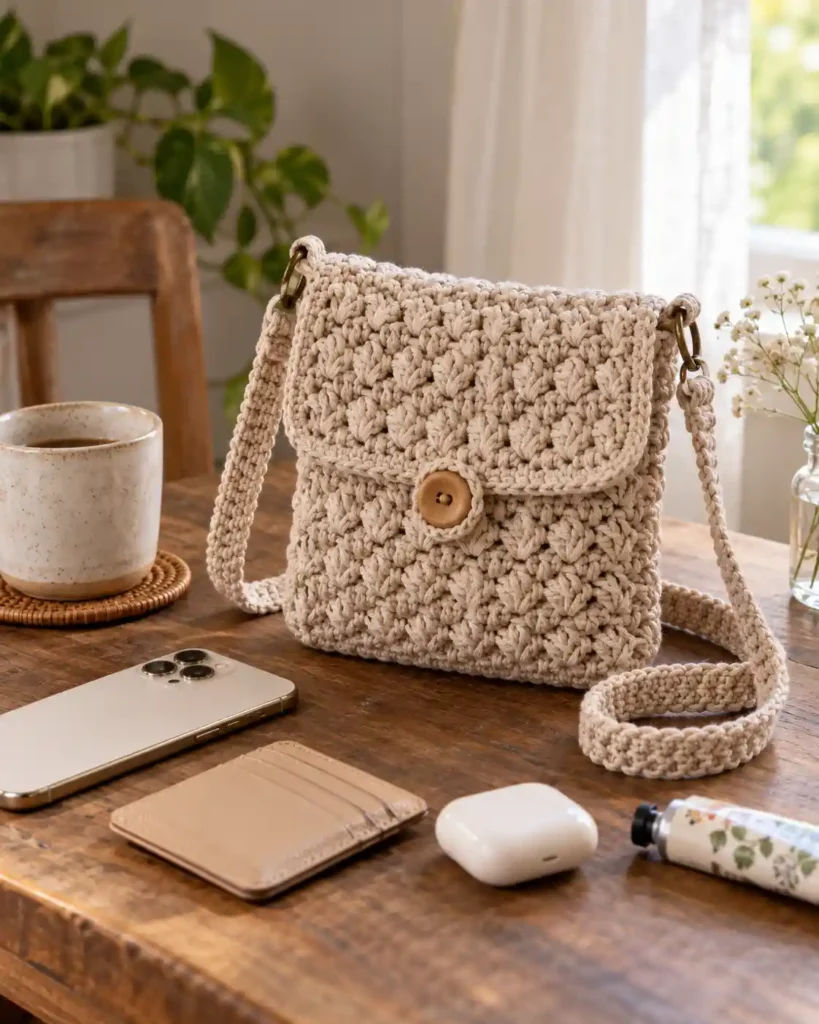
A mini bag is tiny, but that is exactly the appeal. It holds the things you actually reach for—phone, card holder, lip balm, maybe your keys, without turning into a portable junk drawer.
Compared with a full tote, a Crochet Shoulder Bag Small design is quicker to finish and easier to experiment with. You can also explore a crochet mini bag for more compact construction ideas before trying a bold color or unusual strap.
For daily use, I would add either:
- A button or magnetic-style closure
- A small fabric lining
- A firm top edge
- A strap reinforced at both attachment points
It is an especially fun project when you want something you can finish over a weekend.
5. Why Does a Granny Square Crochet Shoulder Bag Work So Well?
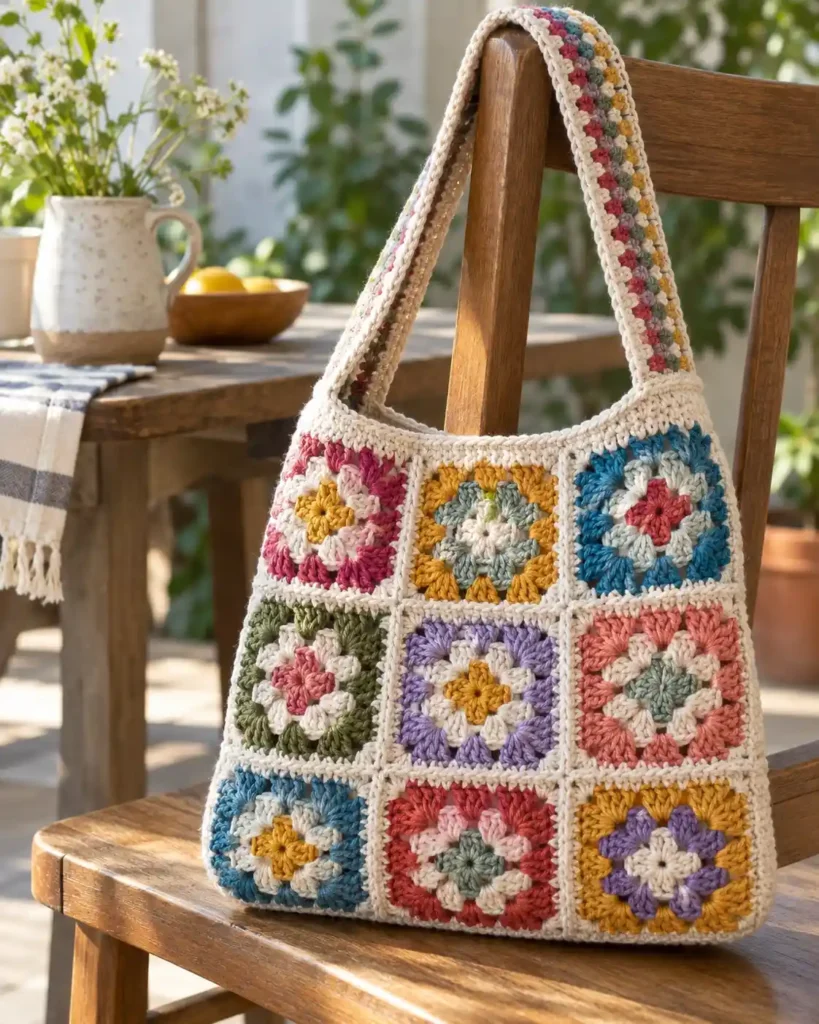
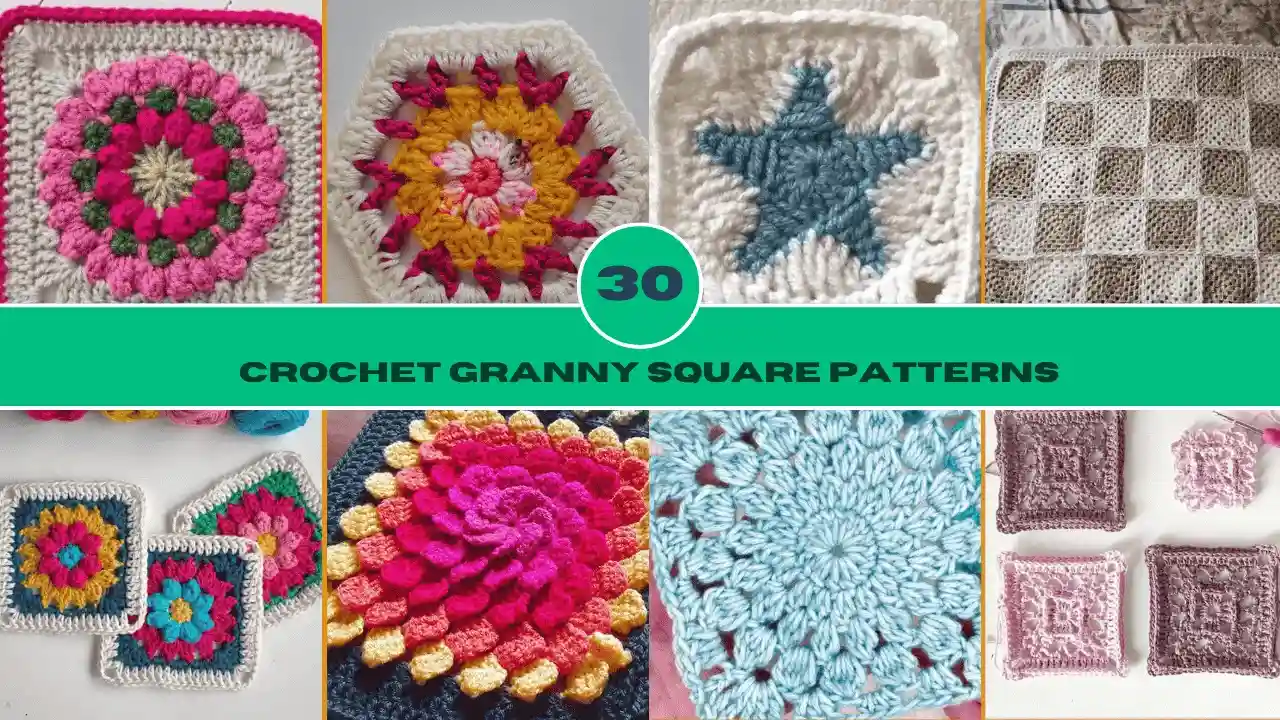
Granny squares turn the bag into a little color project before it becomes a sewing project. Each square gives you a chance to change the palette, so leftover yarn suddenly becomes useful rather than annoying.
The big advantage over a plain solid bag is flexibility. You can make something bright and retro with four or five colors, or keep the same motif in cream, tan, and brown for a softer everyday look.
Spend time on the joins. Beautiful squares with bulky seams can make the finished bag feel stiff in all the wrong places.
A fabric lining is also worth considering if your granny motifs leave noticeable openings.
6. Is a Mesh Crochet Shoulder Bag Practical?
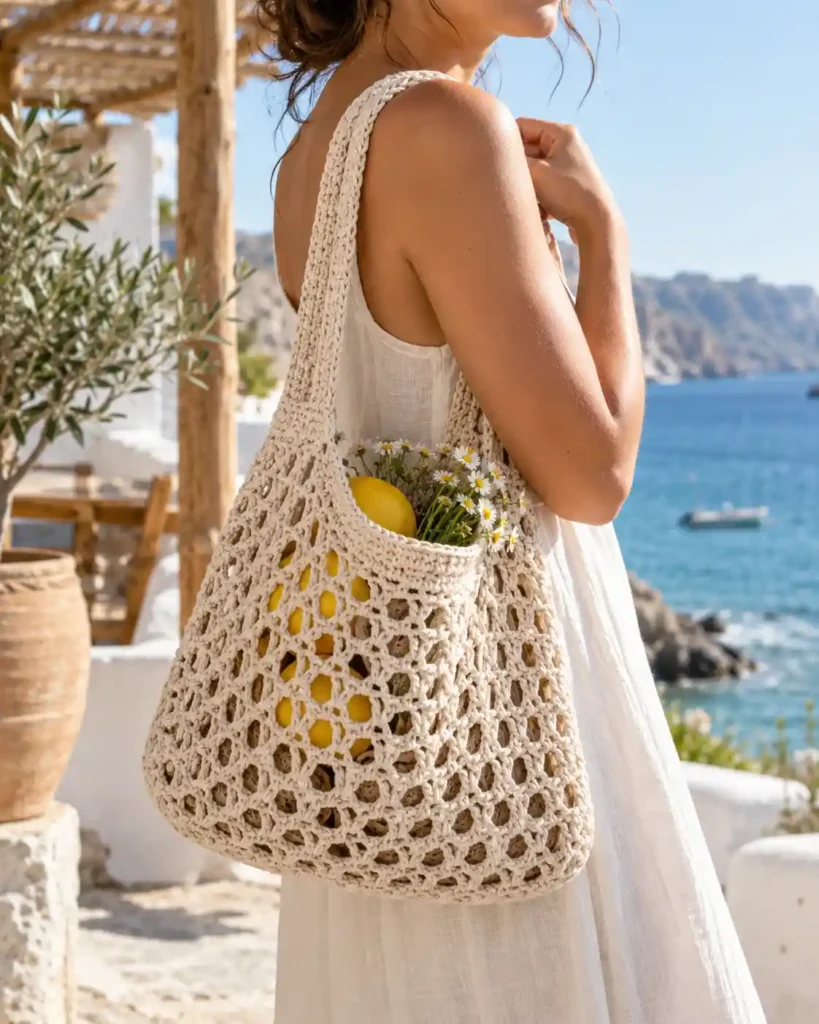
It can be, as long as you choose what goes inside it carefully. Mesh feels light and summery, and it gives a shoulder bag far more movement than dense single crochet.
For beach days, folded scarves, a water bottle, or larger essentials, the openness is part of the charm. For coins and tiny makeup products, not so much.
A neat way to make mesh more practical is to crochet the base and top edge in solid stitches, then keep the openwork in the middle.
That gives you a bag that still feels airy without making every section equally stretchy.
7. Checkered Crochet Shoulder Bag
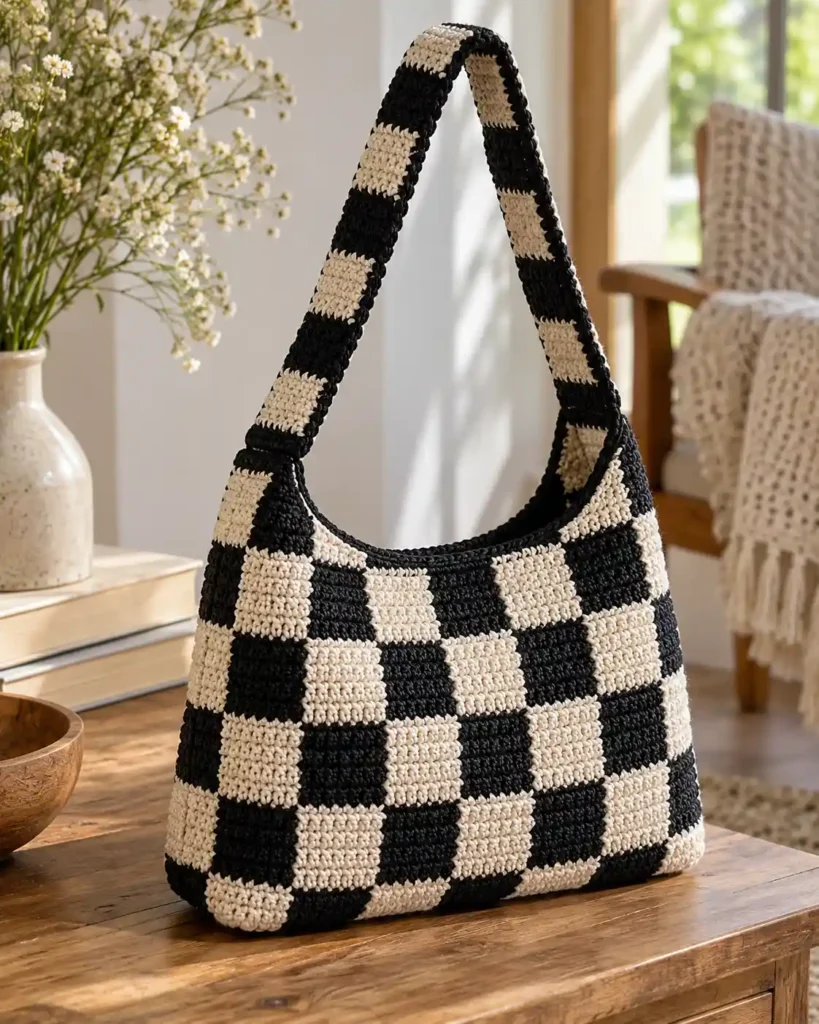
Checkerboard crochet has enough graphic contrast to make a simple bag shape look intentional. You do not need fancy hardware because the pattern itself is doing most of the visual work.
The trick is keeping your color changes tidy. Carry yarn carefully, watch the edges of every block, and make sure your squares remain the same width from bottom to top.
Black and cream give you the sharpest contrast, but softer pairings can be easier to wear:
- Sage + cream
- Dusty pink + burgundy
- Tan + chocolate
- Blue + off-white
If your Crochet Shoulder Bag Pinterest inspiration board is full of checkerboard bags, this is probably the style you are already itching to make.
8. Why Choose a Slouchy Hobo Crochet Shoulder Bag?
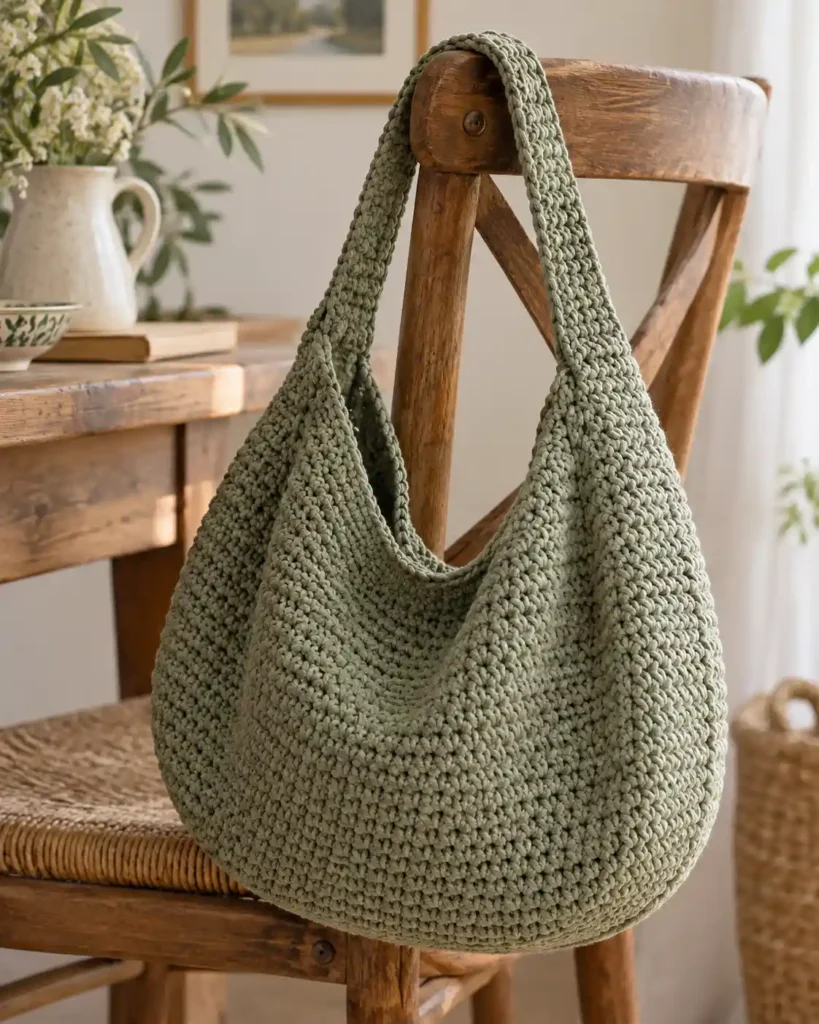
A crochet hobo bag looks better when it relaxes a little. Instead of fighting stretch, the design uses drape to create that soft curved silhouette.
That makes it different from a boxy tote or structured purse. You can tuck it under your arm, let the bottom round naturally, and carry more than the shape initially suggests.
Use a wider strap so the bag feels balanced when it is full.
The best version is roomy without becoming shapeless, soft enough to fold against your body, but stable enough that you can still find your keys.
9. Chunky Crochet Shoulder Bag
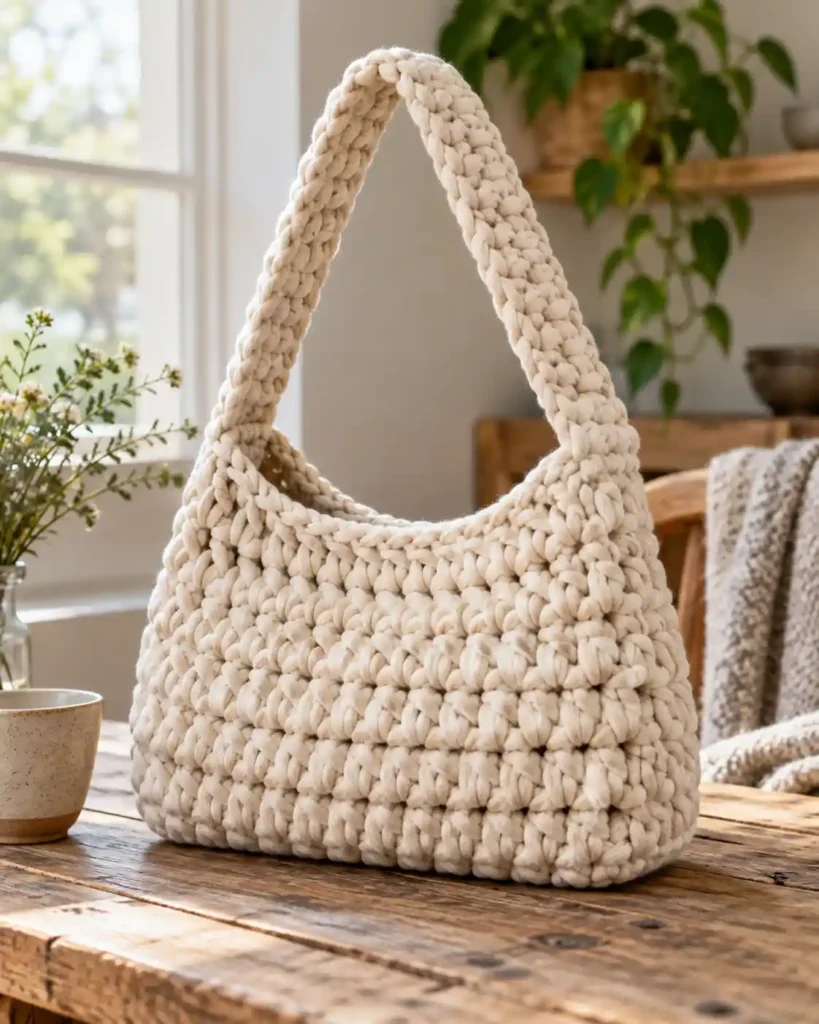
Chunky yarn gives a shoulder bag instant personality. Even a very basic stitch looks sculptural when the yarn is thick enough.
It is also satisfying when you want a project that grows quickly. A few rounds can make visible progress, which is a nice break after working on tiny stitches or a large blanket.
The Craft Yarn Council places bulky, super-bulky, and jumbo yarns in weights 5, 6, and 7, with progressively larger typical hook ranges as yarn thickness increases. Always use the millimeter hook size and gauge that suit your actual yarn and pattern rather than assuming every “chunky” yarn behaves the same way.
Keep the strap attachment strong because a thick bag can become surprisingly heavy.
10. Can You Make a Crochet Shoulder Bag With T-Shirt Yarn?
Yes, and a crochet shoulder bag t-shirt yarn project is one of the easiest ways to get a thick, structured finish. The flat, substantial yarn gives even simple stitches a bold texture.
T-shirt yarn is especially good for compact handbags and chunky shoulder bags that are supposed to keep their shape. It is less appealing for an oversized bag because the finished piece can become heavy before you even put anything inside.
Use a hook that moves comfortably through the yarn without forcing your wrist.
For the neatest result, keep the tension firm but not painfully tight. You want structure, not a workout.
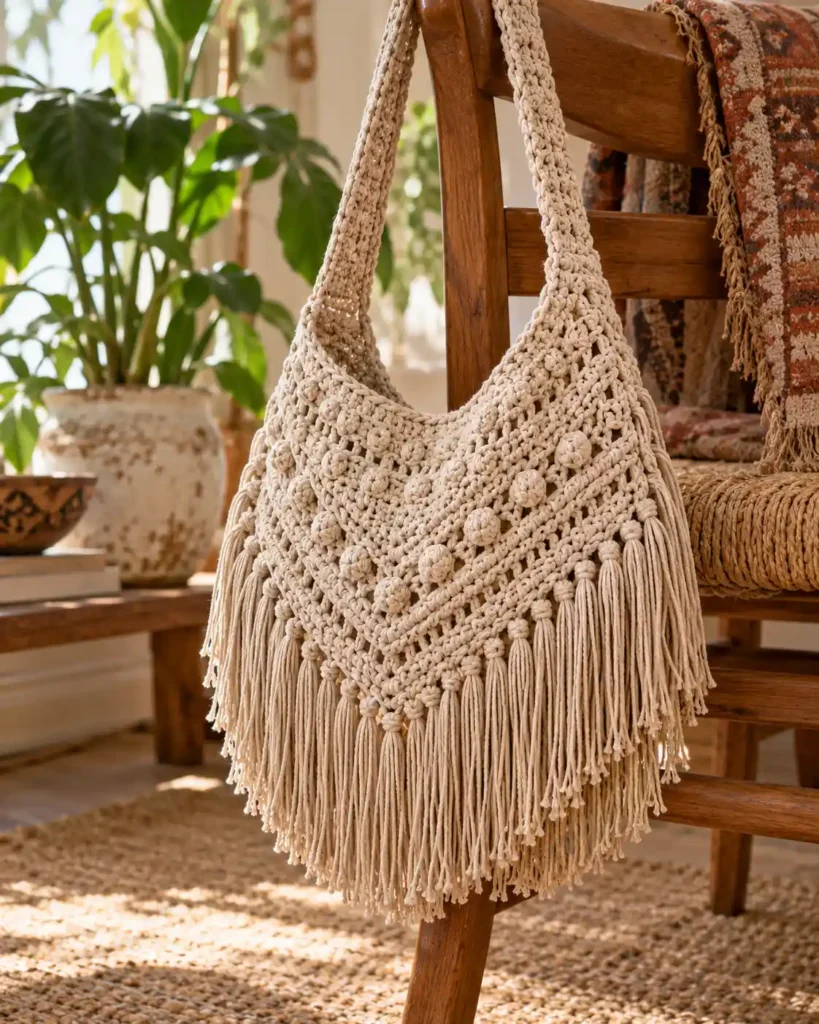
11. Why Add Fringe to a Boho Crochet Shoulder Bag?
Fringe turns a basic crocheted body into a bag that feels deliberately bohemian. A crochet boho bag works especially well with textured stitches, warm neutrals, rust, olive, or cream because the movement of the fringe becomes part of the design.
The difference between “boho” and “craft explosion” is restraint. One row of clean fringe can look better than tassels, beads, flowers, and five colors competing at once.
I would keep the actual bag shape simple and let the edge detail do the talking.
Special Tip: Cut all fringe strands using one cardboard template so the finished edge looks even before trimming.
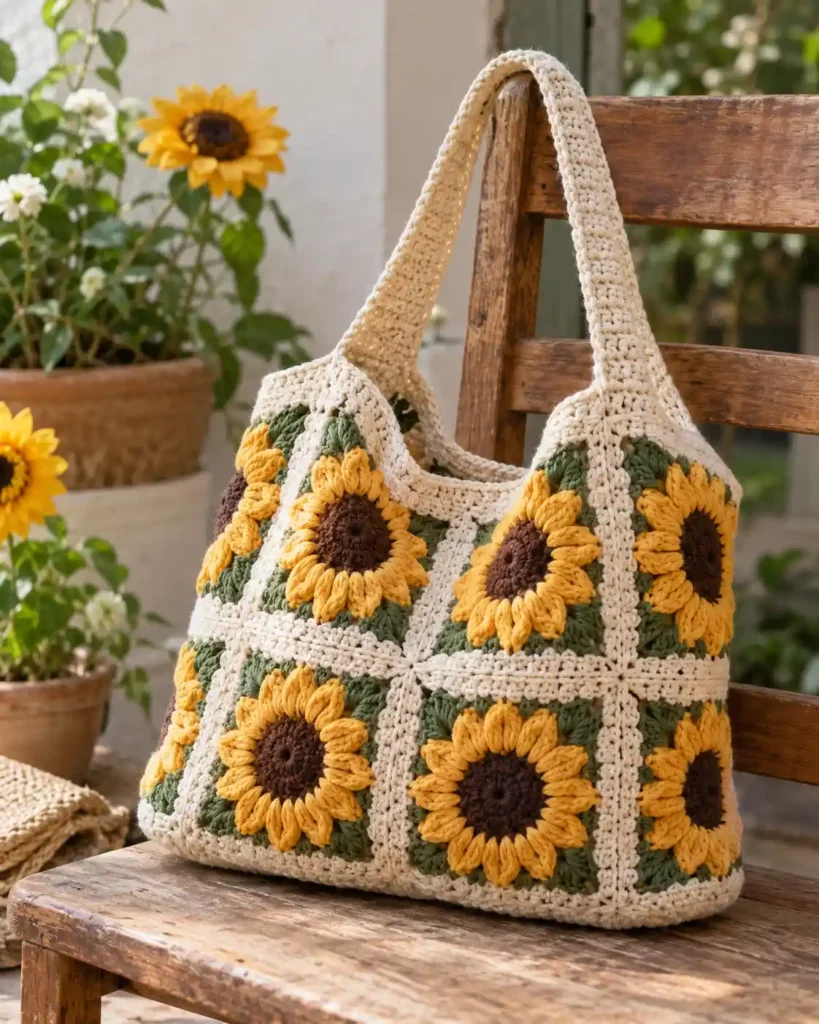
12. Sunflower Crochet Shoulder Bag
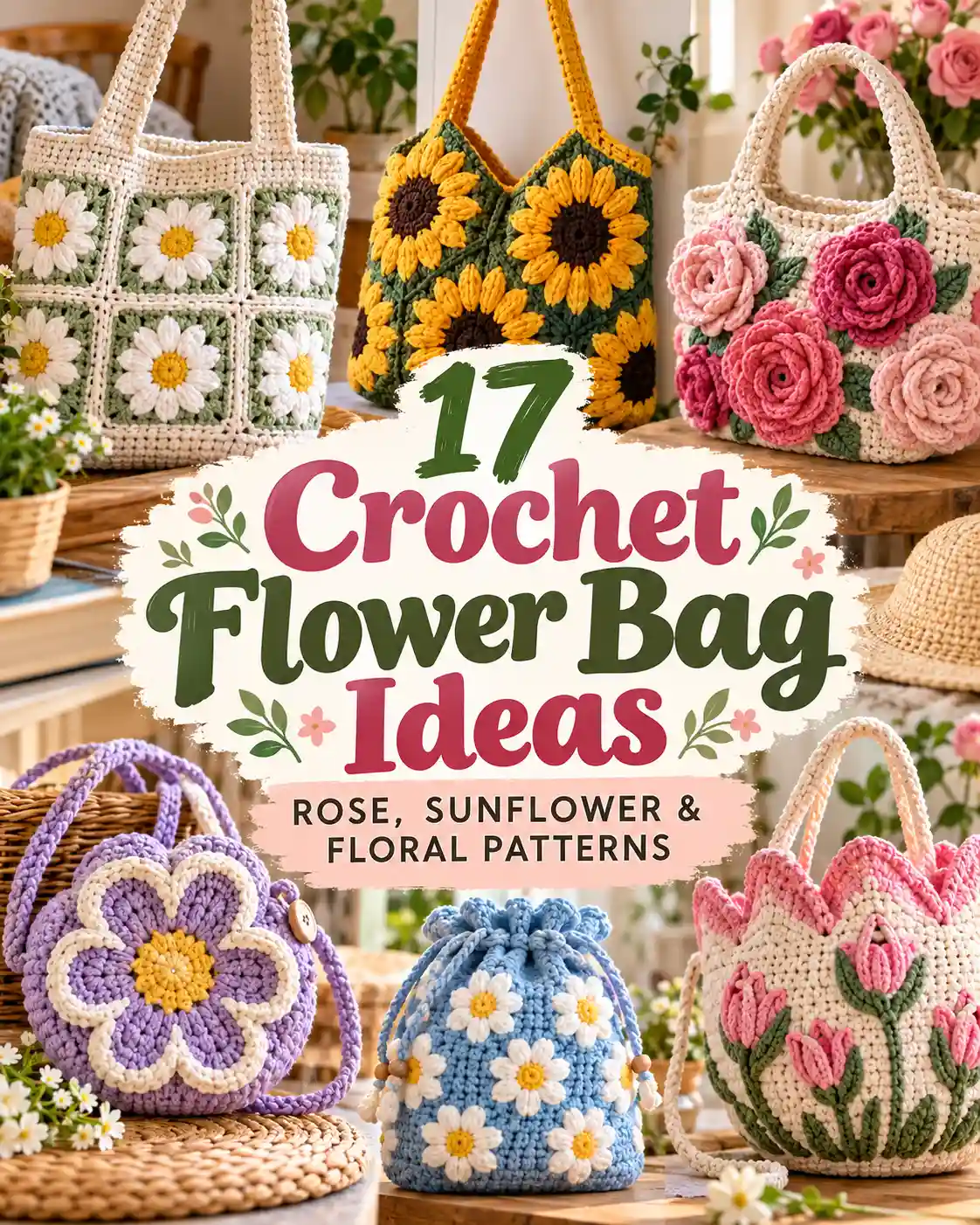
A sunflower bag is cheerful without needing an unusual silhouette. If you want to explore more motif variations, a crochet flower bag can use granny-style flowers, dimensional appliques, or repeated floral panels while keeping the bag shape simple.
This style is especially fun for spring and summer because the yellow centers and petals pop against green, cream, brown, or black.
If several flowers appear on the same bag, repeat their size and spacing. That keeps the design looking planned rather than scattered.
A sunflower motif can also be a clever way to use small yarn leftovers from other projects.
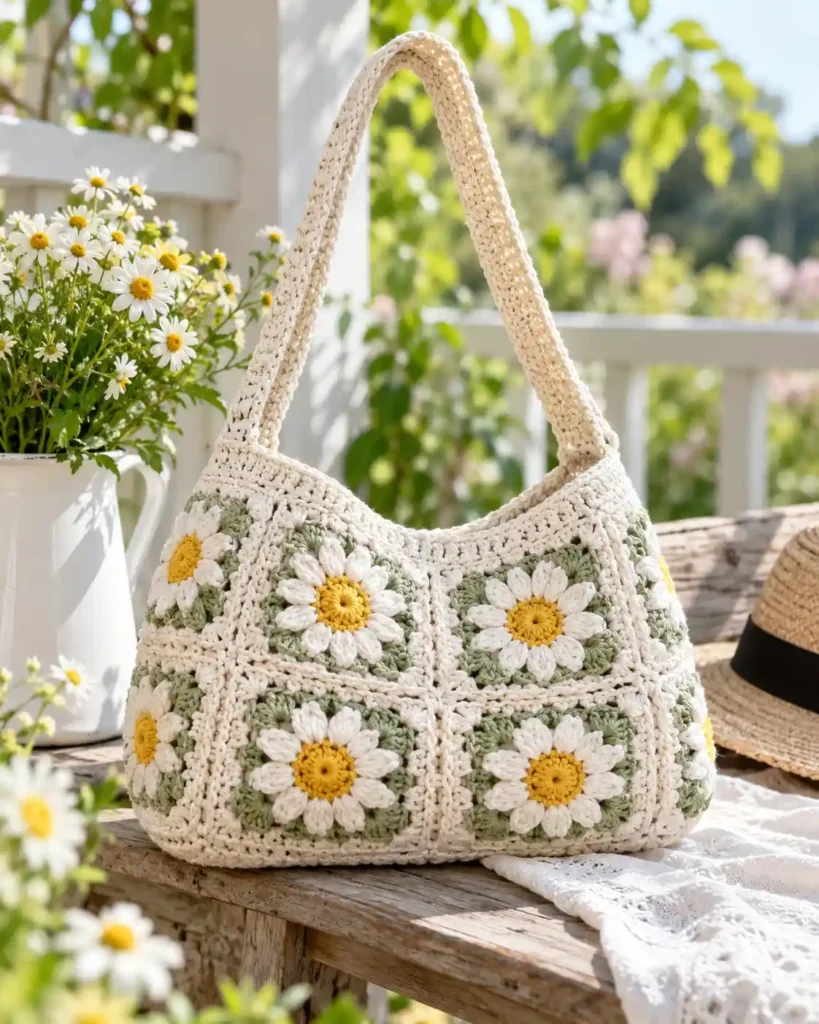
13. Can a Daisy Crochet Shoulder Bag Still Look Grown-Up?
Definitely. The secret is using the floral motif as a pattern, not necessarily as a novelty decoration.
Small white daisies on sage, navy, dusty blue, or brown can feel completely different from a bright rainbow flower bag. You can also limit the motifs to the front panel while leaving the back and strap solid.
That makes the bag easier to coordinate with everyday clothes.
For something softer, try cream petals with muted yellow centers instead of stark white.
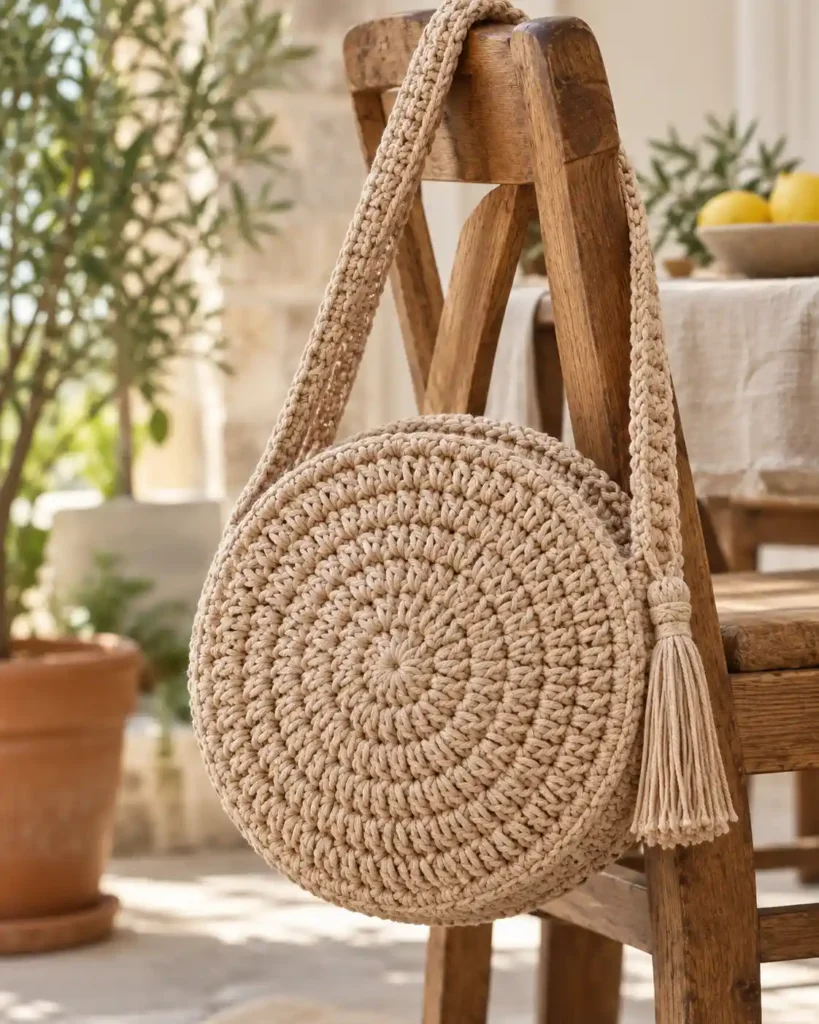
14. Circle Crochet Shoulder Bag
A circle bag changes the whole mood without demanding an elaborate stitch pattern. Two round panels, a side section, and a strap are enough to give it a clean modern shape.
The challenge is keeping each circle flat. Too many increases can create waves; too few can make the panel cup.
This is one place where counting matters more than guessing.
Once both circles match, the assembly is surprisingly straightforward, and the finished bag looks far more complicated than the construction really is.
15. Why Use Raffia for a Crochet Shoulder Bag?
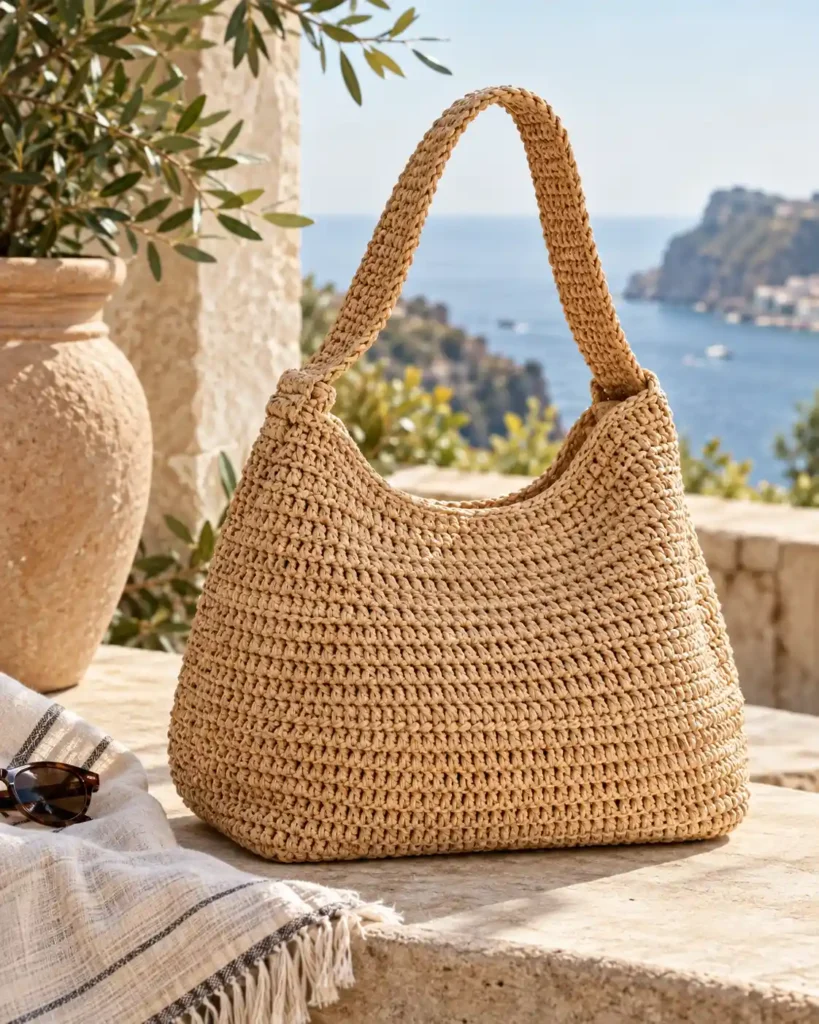
Raffia-style yarn gives a bag the dry, structured texture people usually associate with summer accessories. The same warm-weather approach also works beautifully for a crochet beach bag, especially in beige, straw, cream, tan, and black.
Compared with a soft acrylic yarn, raffia tends to make the silhouette feel more architectural. That is exactly why it works for vacation outfits, linen dresses, and warm-weather styling.
Keep the body relatively simple because the fiber already provides plenty of texture.
Add a clean strap or minimal hardware and you have a bag that does not need much decoration to look finished.
16. Striped Crochet Shoulder Bag
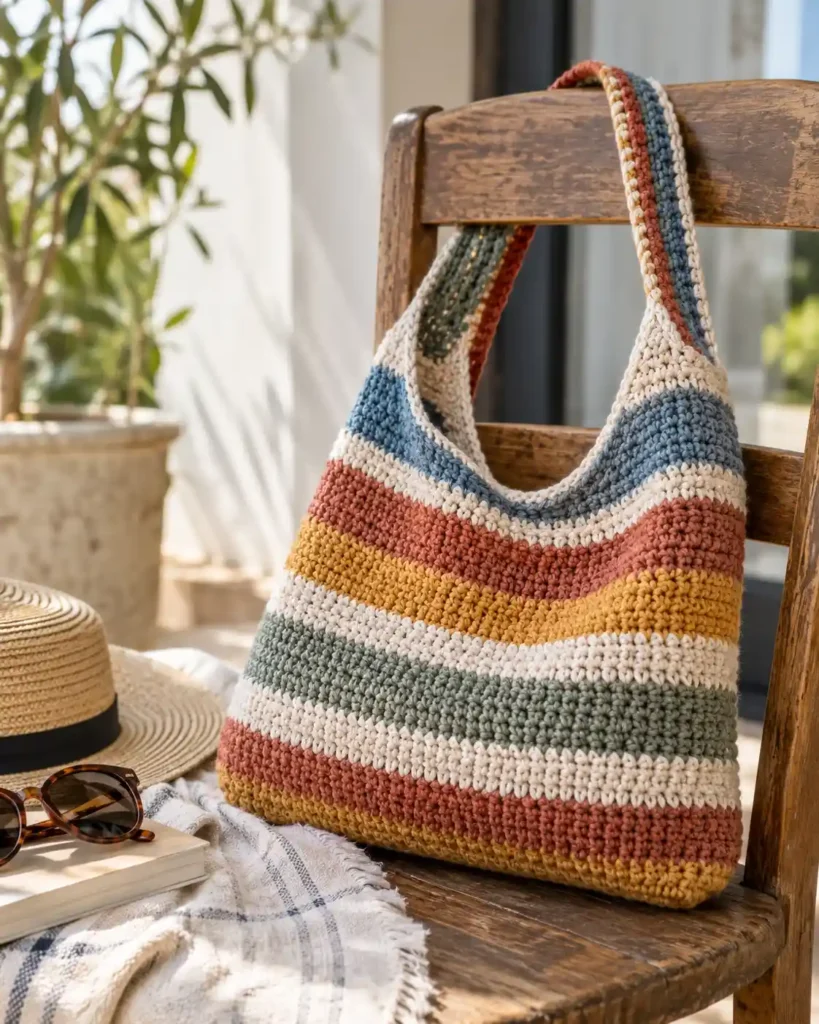
Stripes are one of the simplest ways to make an ordinary shape feel fresh. The fun is deciding whether the bag should look playful or controlled.
Thin high-contrast stripes feel energetic, while wider tonal bands make the same construction look calmer. You can also continue the stripe sequence into the strap for a more polished finish.
Before starting, decide where color changes will happen.
That tiny bit of planning stops you from reaching the top of the bag with one awkward half-stripe left over.
17. How Do You Make a Wavy Crochet Shoulder Bag Stand Out?
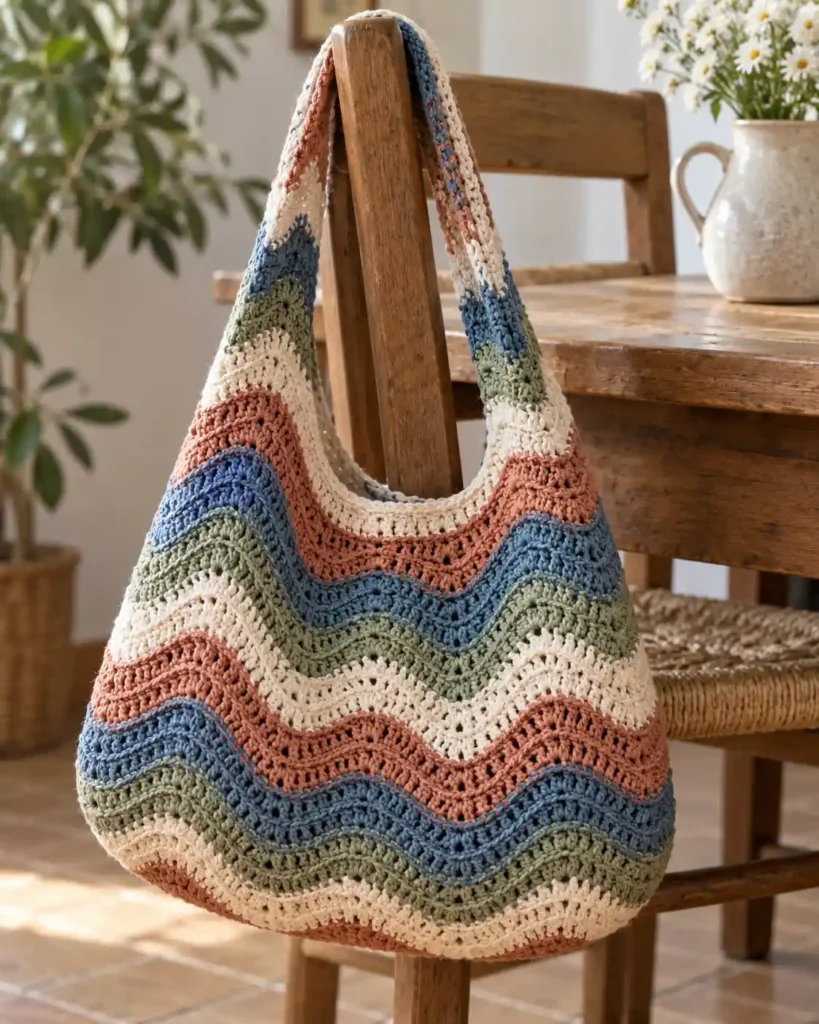
Use the wave as the main feature. Ripple or chevron-style rows already create movement, so piling on extra embellishments usually weakens the effect.
This is a great place for three or four colors that look good beside each other. Blues and creams feel coastal; oranges and browns go more retro; pink with red gives the pattern a bolder fashion look.
Pay attention to the sides as your stitch count rises and falls.
The payoff is a bag that looks almost illustrated, even though the design comes entirely from the crochet structure.
18. Heart Pattern Crochet Shoulder Bag
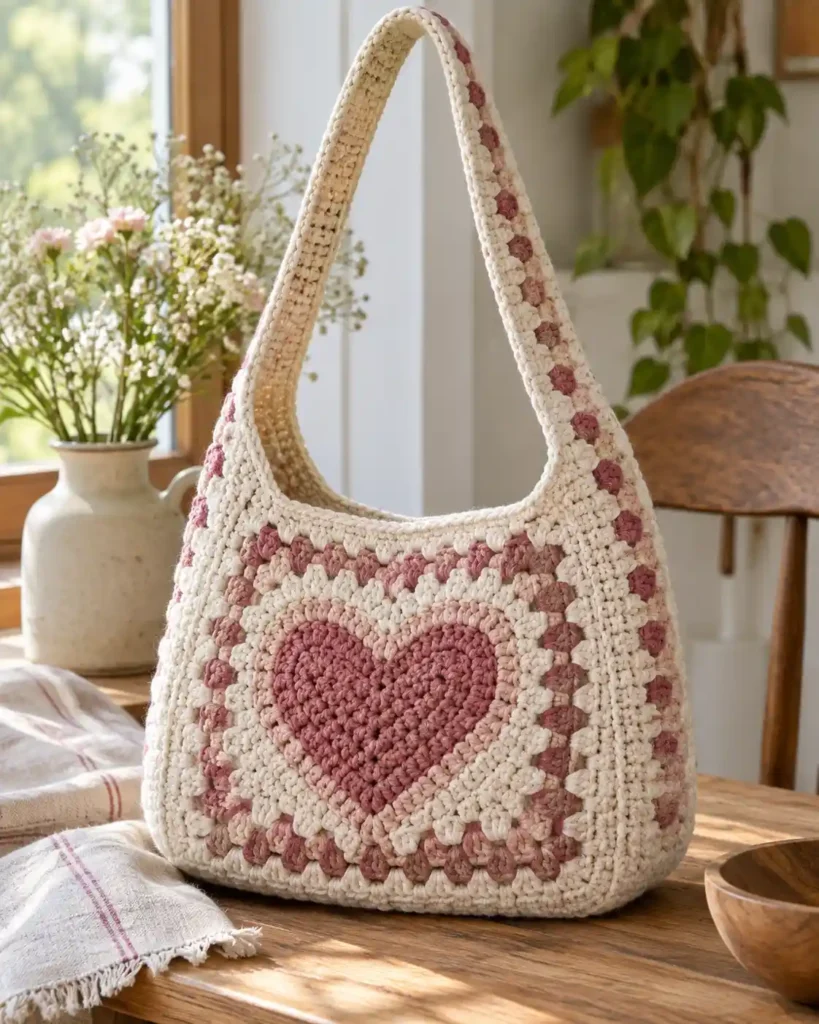
A heart motif works beautifully on a small or medium bag because there is enough room for the shape to read clearly. Use tapestry crochet, granny motifs, or a separate applique depending on how graphic you want it to feel.
Compared with an all-over heart pattern, one centered motif often looks cleaner for everyday wear.
This is an easy project to personalize as a handmade gift, especially in the recipient’s favorite colors.
Pink is the obvious choice, but cream hearts on red, black hearts on beige, or burgundy on dusty pink can feel much more modern.
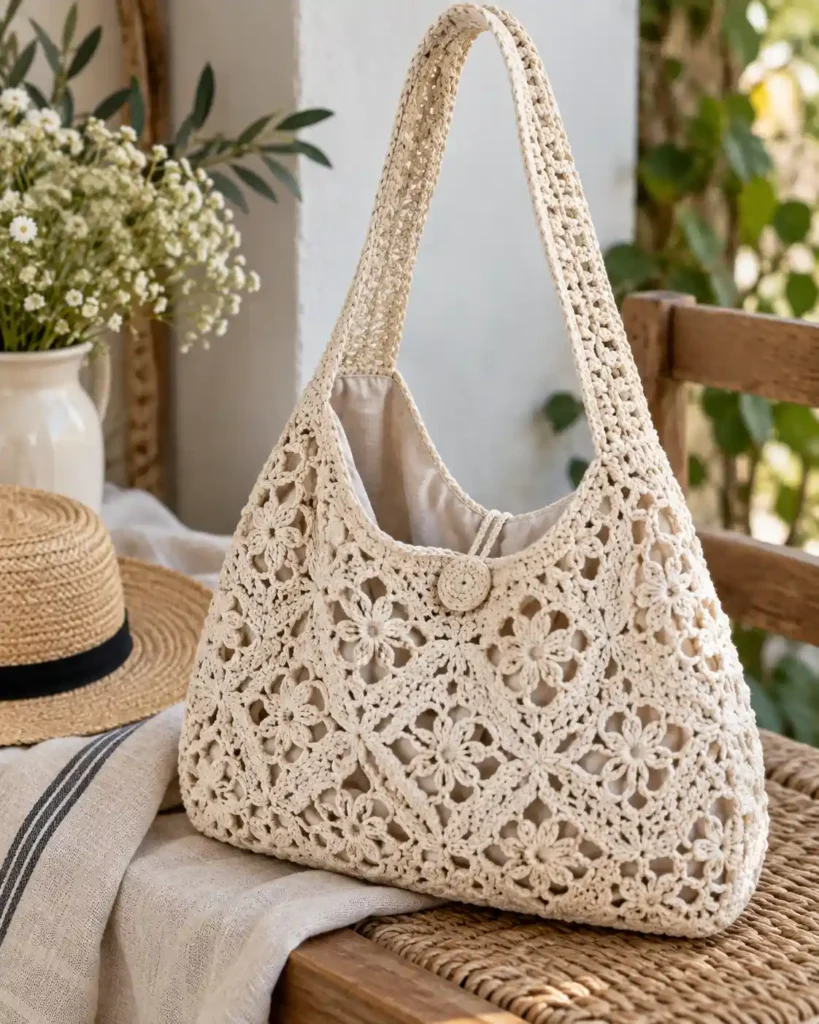
19. Is a Lace Crochet Shoulder Bag Too Delicate for Everyday Use?
Not necessarily. Open lace can work beautifully when you support the parts that take the most stress.
Reinforce the top edge, make the strap denser than the body, and consider adding lining. That preserves the delicate appearance while giving your belongings a more secure interior.
Lace bags are especially good when you want something dressier than a market bag.
I would keep the contents light and let the stitch pattern remain visible rather than stuffing the bag until it loses its shape.
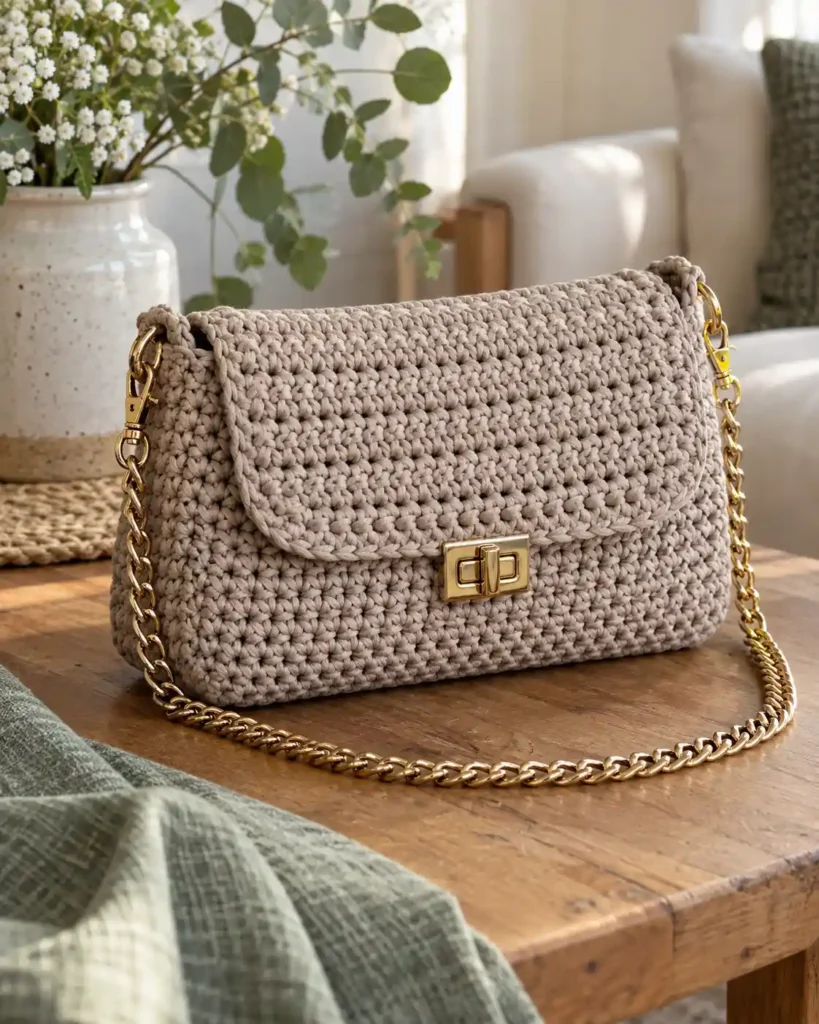
20. Chain-Strap Crochet Shoulder Bag
A chain strap creates an instant contrast: soft yarn against polished metal. That little change can make a simple crocheted body feel closer to a handbag than a craft tote.
The important part is not the chain itself, it is how you attach it. Reinforce the connection area so a small metal ring is not pulling against one lonely crochet stitch.
This style works particularly well for compact bags.
Try a solid body in black, cream, burgundy, or olive and let the hardware provide the detail.
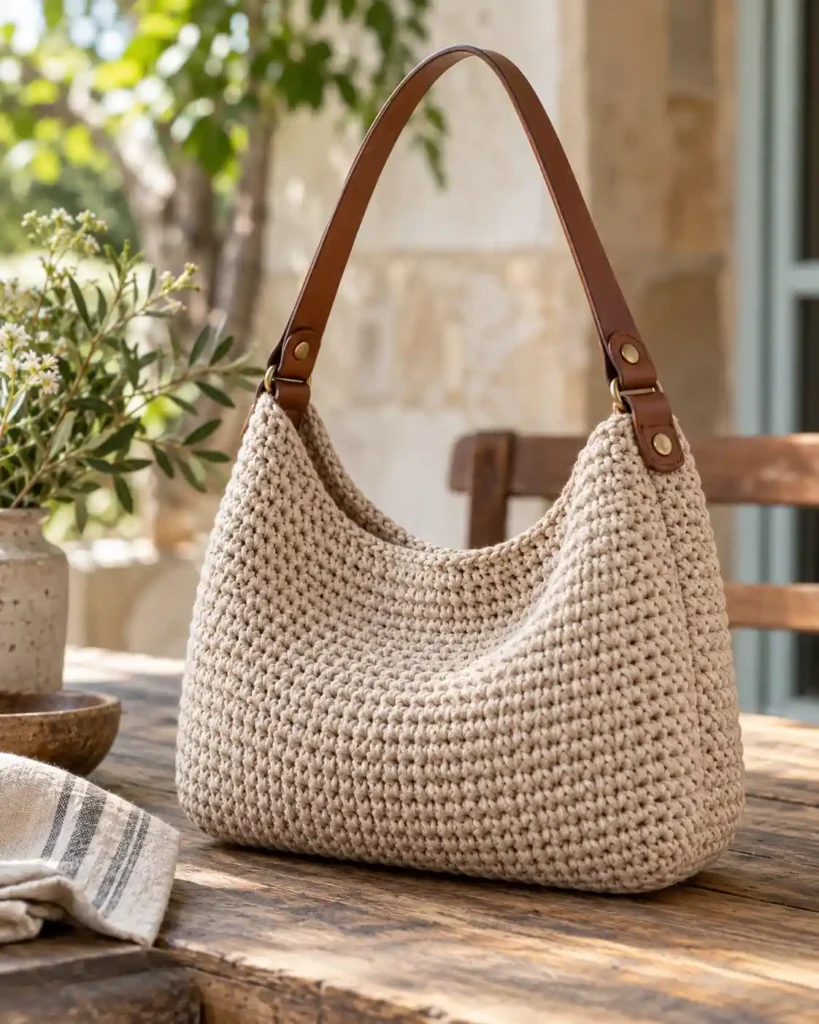
21. Why Pair a Leather Strap With Crochet?
A leather strap adds structure where crochet naturally has some give. It also gives your bag a mixed-material look that can feel more polished than an all-yarn strap.
You do not need complicated leatherwork. Pre-punched straps or hardware-based attachments can keep the project approachable.
Use reinforcement inside the bag where the strap connects, especially if you plan to carry more than a phone and wallet.
Neutral leather looks beautiful against textured cream, charcoal, forest green, or deep brown crochet.
22. Long-Strap Over-the-Shoulder Crochet Bag
A longer strap makes the bag easier to grab and go, especially if you prefer it to hang near the hip instead of directly under your arm.
This is where measuring yourself beats copying a number from a photo. Height, shoulder width, bag size, yarn stretch, and how you like to wear the bag all change the ideal length.
Crochet the strap gradually and test it before permanently joining the ends.
If the pattern allows it, build in reinforcement so the strap does not slowly become longer every time you load the bag.
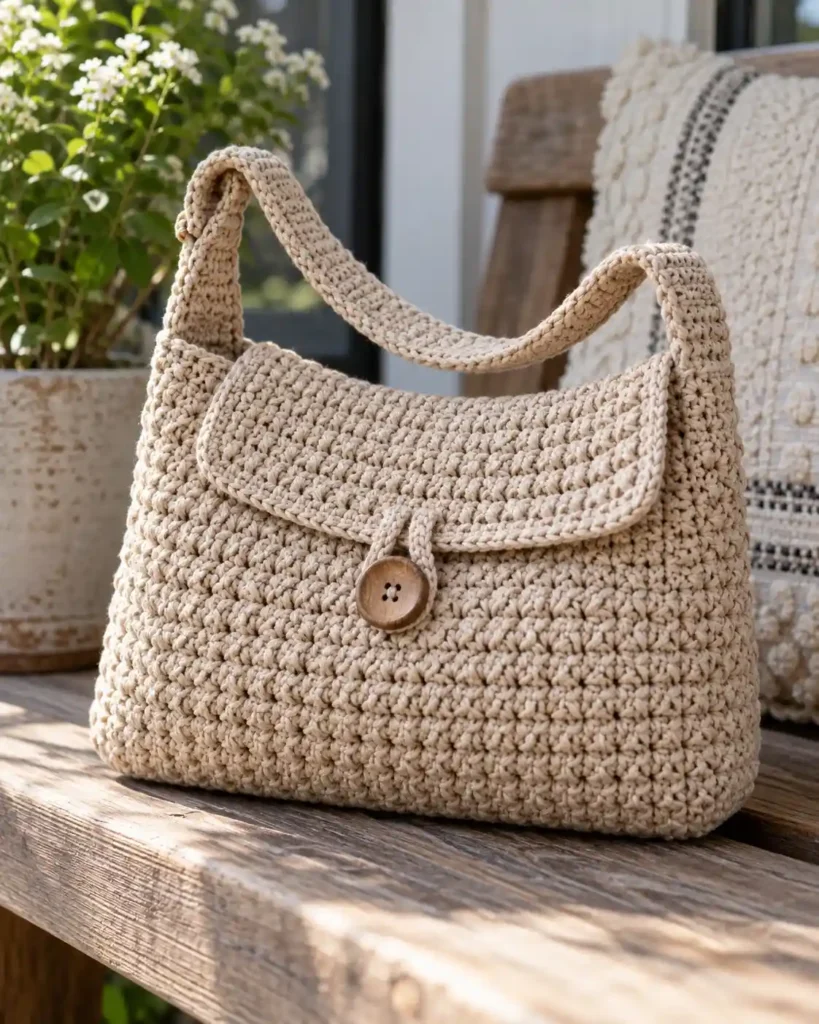
23. How Useful Is a Button-Closure Crochet Shoulder Bag?
Very. A button is one of the simplest ways to make an open bag feel more secure without adding a zipper.
A wooden button gives a handmade or rustic look, while a tonal button keeps the focus on the crochet. You can use a flap, a small chain loop, or a crocheted tab depending on the shape of the bag.
Place the button after the bag body is complete so you can test where the closure actually sits.
That five-minute adjustment can make the difference between a neat top edge and one that pulls awkwardly.
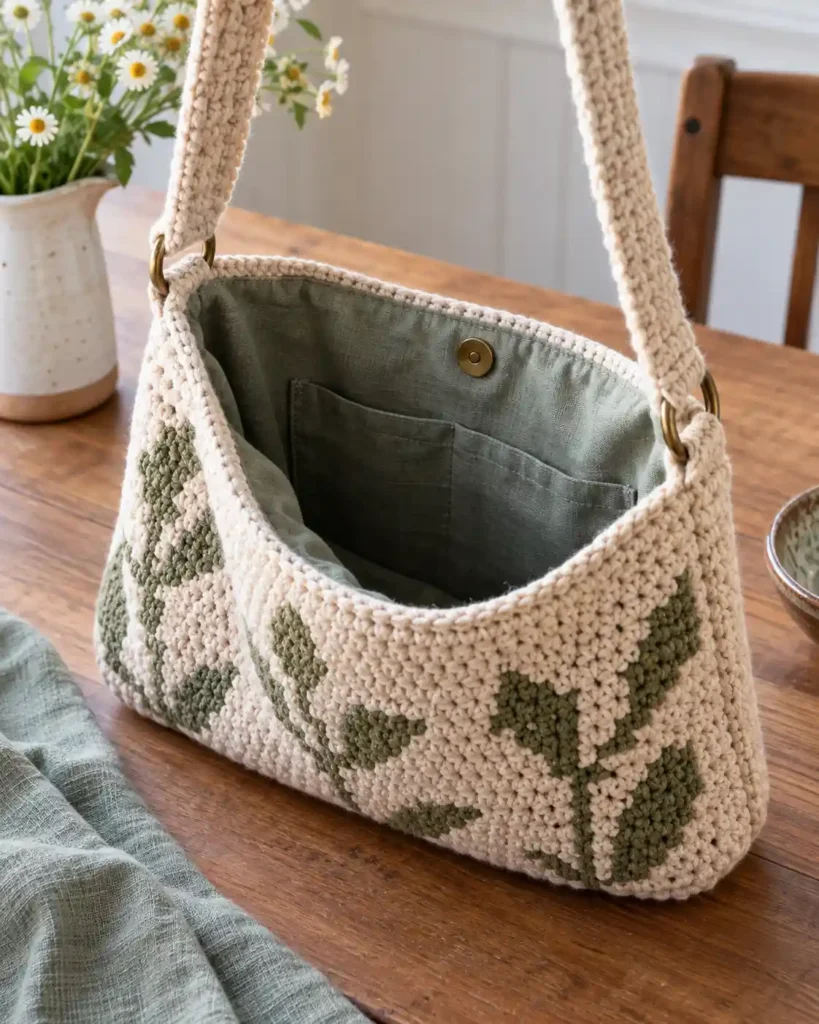
24. Lined Crochet Shoulder Bag
Lining makes a handmade bag feel finished the moment you open it. It hides the reverse side of your stitches, keeps little objects from escaping, and can reduce how much the crochet fabric stretches under everyday use.
It is especially helpful with granny squares, lace, mesh, and softer yarns.
You do not need to be an expert sewer. A simple rectangular lining, folded to fit the inside dimensions and hand-stitched neatly around the top edge, is enough for many designs.
Want an extra useful detail? Add a tiny interior pocket before sewing the lining into the bag.
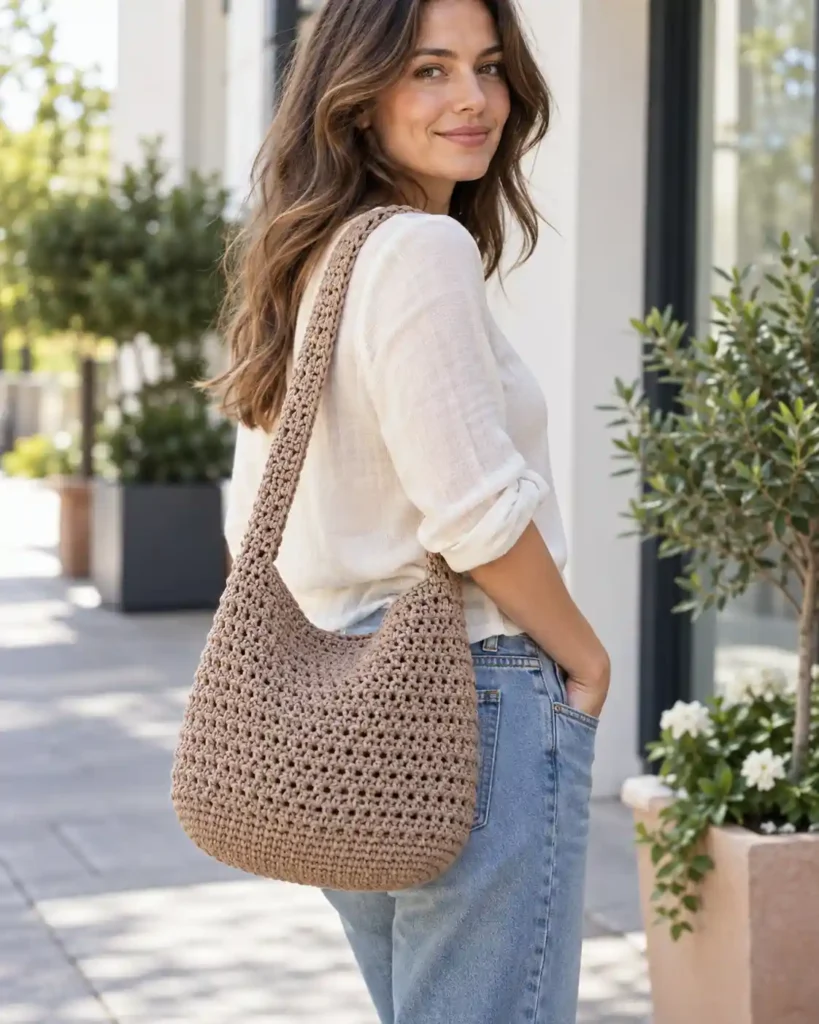
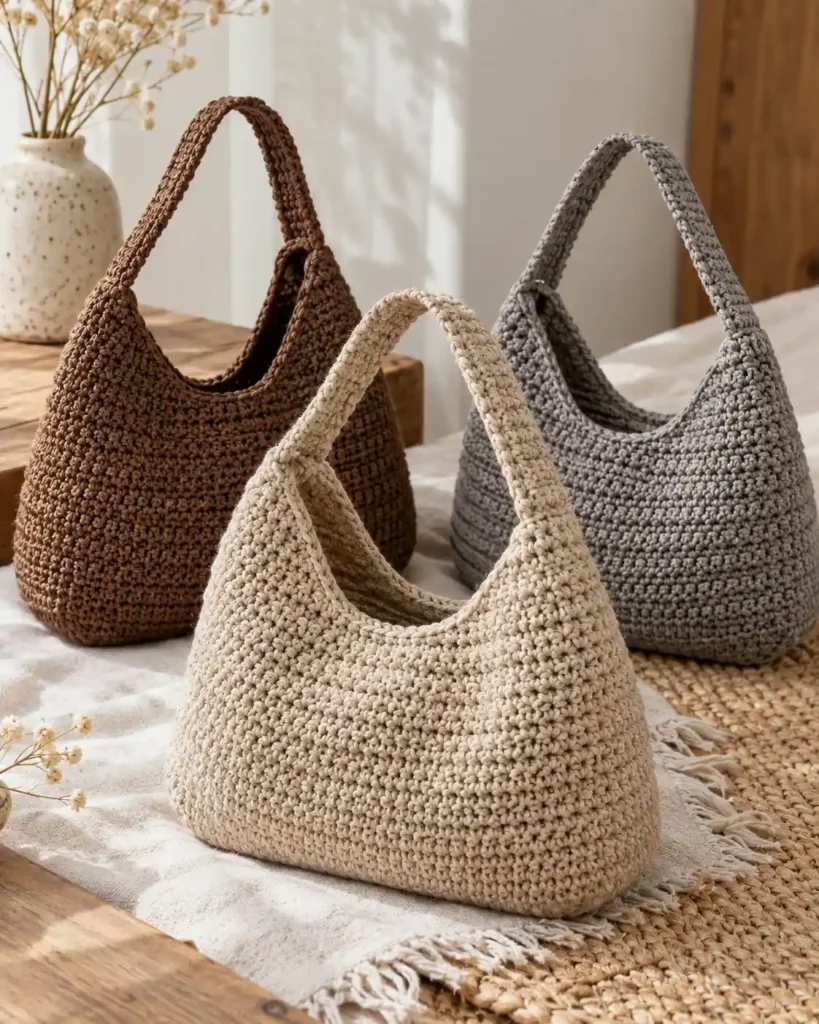
25. Why Do Brown, Beige, and Grey Crochet Bags Look So Versatile?
Neutral colors let the stitch texture become the decoration. A brown or beige bag can have a beautifully complex surface without competing with whatever you are wearing.
These shades also work well for crochet patterns you want to carry beyond one season.
Try changing the mood through texture rather than color: tight stitches for a structured look, chunky loops for something cozy, or subtle openwork for summer.
A grey crochet shoulder bag pattern can look just as striking as a brightly colored one when the shape and finishing are clean.
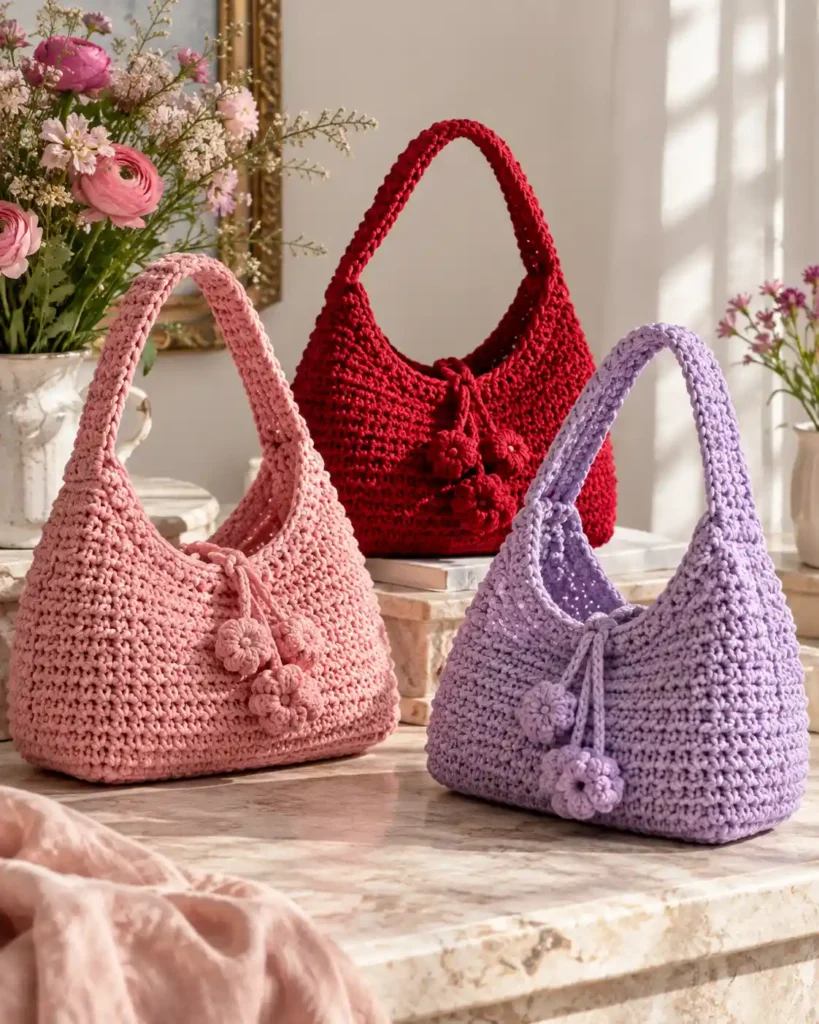
26. Pink, Red, and Lavender Crochet Shoulder Bags
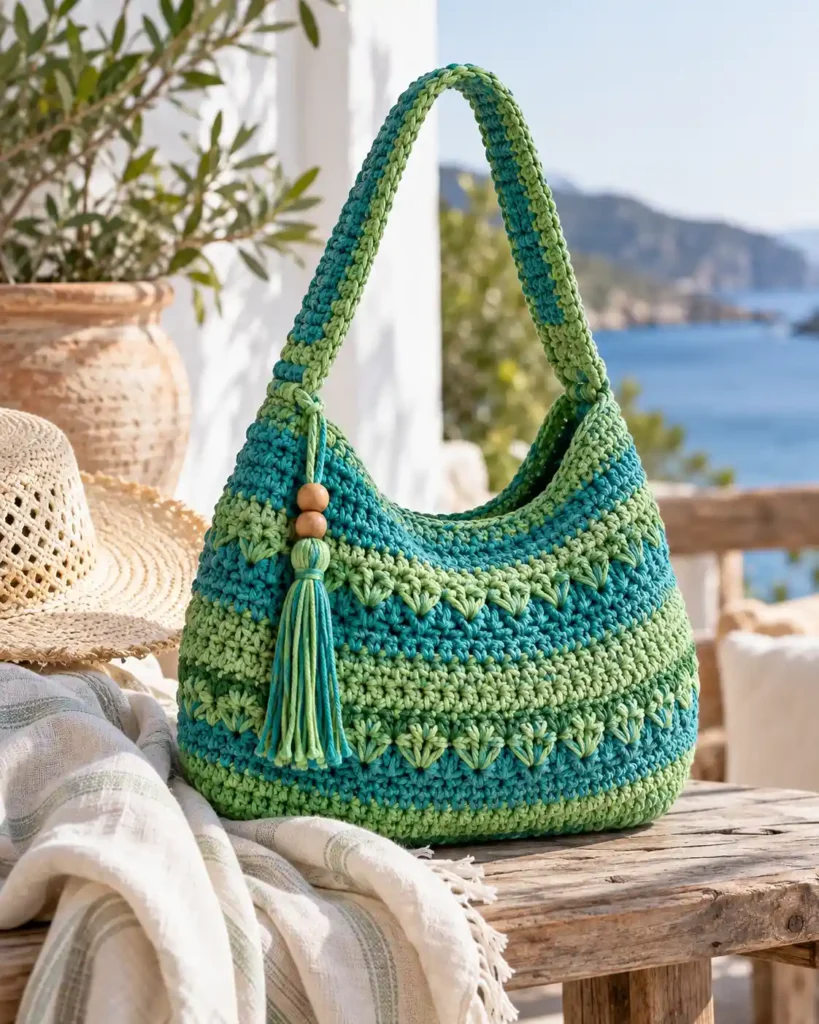
This is where color gets to have fun. Pink can feel sweet, red can look bold, and lavender lands somewhere softer and slightly unexpected.
Instead of combining all three automatically, treat each as its own design direction. A small red bag with a compact strap has a very different personality from a plush lavender hobo.
You can also use these shades as accents on a neutral body.
For a Crochet Shoulder Bag Small project, a stronger color often works particularly well because the size keeps the look from becoming overwhelming.
27. What Makes a Green, Teal, or Ocean-Inspired Shoulder Bag Special?
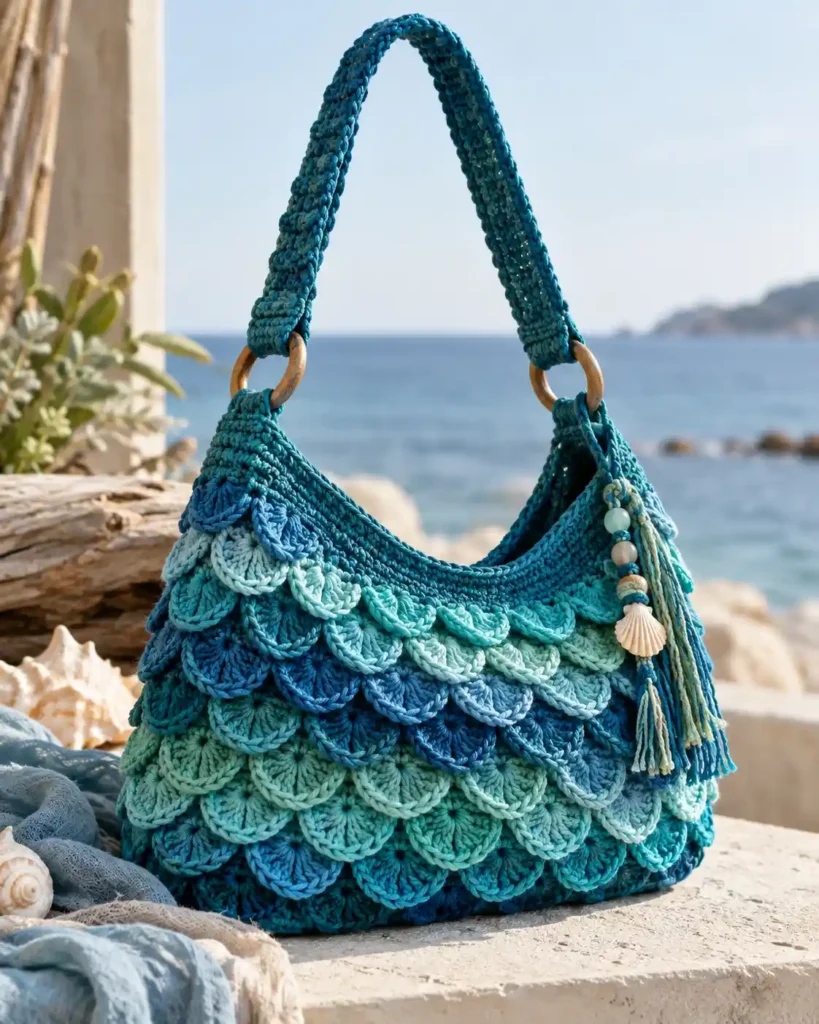
Green and teal are excellent when you want color without going straight to pink or red. They feel especially natural in mesh, wave, floral, and warm-weather designs.
For an ocean-style bag, use blue-green shades with subtle ripple or scale-like texture instead of adding every possible shell and mermaid detail. The result feels more wearable and less costume-like.
A turquoise or deep teal bag also photographs beautifully, which helps if you are collecting Crochet Shoulder Bag Pinterest inspiration or sharing your finished projects online.
This last style is for the maker who wants the bag itself to bring the color to an otherwise simple outfit.
Which Yarn Is Best for a Crochet Shoulder Bag?
The best yarn depends on whether you want a structured, soft, lightweight, or chunky finished bag.
At a Glance
- Cotton gives bags firmer structure.
- Softer yarn creates more drape.
- T-shirt yarn suits compact structured bags.
- Raffia works well for summer styles.
- Gauge matters regardless of fiber choice.
There is no single yarn that wins for every bag. The better question is what you want the finished fabric to do.
Use a firmer yarn when you want structure. Choose something softer when drape is part of the design. Thick t-shirt yarn works beautifully for compact sculptural bags, while open mesh and lace usually feel better with lighter yarns.
According to the Craft Yarn Council’s Standard Yarn Weight System, yarn weights cover eight numbered categories, 0 through 7, with corresponding typical hook and gauge ranges. Treat those numbers as a starting point, then follow the actual gauge requirements of your chosen pattern.
Yarn labels can also provide fiber content, yardage, care information, and recommended hook sizes, so check the label before buying multiple skeins for one bag.
How Do You Keep a Crochet Shoulder Bag Strap From Stretching?
Use dense stitches, reinforce the strap, and strengthen the points where it connects to the bag.
At a Glance
- Crochet straps with tighter stitches.
- Reinforce long straps when possible.
- Strengthen attachment points.
- Test gauge before final sizing.
- Avoid unnecessary weight in delicate bags.
Start with a strap that is denser than the softest part of the bag. Tight stitches, a wider strap, or a reinforced inner strip can all help.
Also pay attention to attachment points. A strong strap still fails if all its weight is concentrated on a tiny section of the bag edge.
If your pattern gives a specific gauge, swatch before committing to a long strap. The Craft Yarn Council notes that crocheters may need to move to a smaller or larger hook to match a pattern’s stated gauge because individual tension varies.
For frequently used bags, you can also sew non-stretch tape or fabric reinforcement along the inside of the strap.
When Should You Add a Lining?
Add a lining when the bag needs more privacy, shape support, or protection against stretching and small items slipping through.
At a Glance
- Line mesh and lace bags.
- Support granny-square constructions.
- Add pockets before installing lining.
- Measure the finished crochet shell.
- Keep lining slightly smaller than the bag.
Add one whenever you want more privacy, less stretch, or a cleaner interior. It is particularly valuable for mesh, granny-square, lace, and loosely crocheted bags.
A lining can also give a Crochet shoulder bag pattern a more professional final appearance without changing the outer crochet at all.
Measure the finished bag rather than relying entirely on the original pattern measurements. Your personal gauge can make the final dimensions slightly different.
Keep the lining just a little smaller than the crochet shell so it sits smoothly instead of bunching.
What Size Should an Everyday Crochet Shoulder Bag Be?
Choose the bag size by measuring the items you carry most often, then add enough space for comfortable access.
At a Glance
- Mini bags suit phones and cards.
- Medium bags handle daily essentials.
- Measure belongings before choosing dimensions.
- Allow room for easy access.
- Test strap length on your body.
Think about what you carry before deciding dimensions. A mini bag only needs room for a phone and cards, while an everyday shoulder bag may need a wallet, sunglasses, keys, charger, and small personal items.
The smartest method is to place those objects on a table before you start. Arrange them loosely, measure the space they occupy, then add a little room for movement.
This gives you a far more useful bag than picking a random width because it looked nice in someone else’s photo.
For straps, test the length against your own body before final assembly.
What Makes a Crochet Shoulder Bag Look More Professional?
Consistent tension, neat finishing, secure strap joins, centered hardware, and an optional lining can make a simple crochet bag look polished.
At a Glance
- Weave in ends carefully.
- Keep tension consistent.
- Reinforce straps and hardware.
- Block when appropriate.
- Center closures before finishing.
Clean finishing matters more than complicated stitches. Even a simple bag can look polished when the tension is consistent and the small details are handled carefully.
The Crochet Guild of America’s crochet standards and teaching resources emphasize even stitches, appropriate hook choice, secure end finishing, consistent gauge, and good finishing technique.
Before calling your bag finished:
- Weave ends securely
- Check the top edge
- Reinforce strap joins
- Block if the yarn allows it
- Add lining when useful
- Trim fringe evenly
- Center buttons and hardware
- Remove loose fibers or uneven tails
Those details are what make handmade look intentional.
Frequently Asked Questions
What is the easiest crochet shoulder bag for beginners?
A simple rectangular or one-piece bag using basic stitches is usually the easiest place to start. Choose a Crochet shoulder bag pattern with minimal shaping and clear strap instructions so you can focus on even tension, straight edges, and neat finishing.
Can I find a good crochet shoulder bag free pattern?
Yes. A good Crochet shoulder bag Free Pattern should include materials, gauge, measurements, construction notes, and finishing instructions, not just row-by-row stitch directions. Large pattern libraries such as Yarnspirations also maintain dedicated free crochet bag and purse collections.
Is t-shirt yarn good for crochet shoulder bags?
Yes, especially for small or structured designs. crochet shoulder bag t-shirt yarn projects tend to be thick and sturdy, although the finished bag can become heavy if you make it very large.
Should a crochet shoulder bag be lined?
Not always. Dense crochet can work without lining, but mesh, lace, granny-square, or heavily used bags usually benefit from the extra support and security.
How long should a crochet shoulder bag strap be?
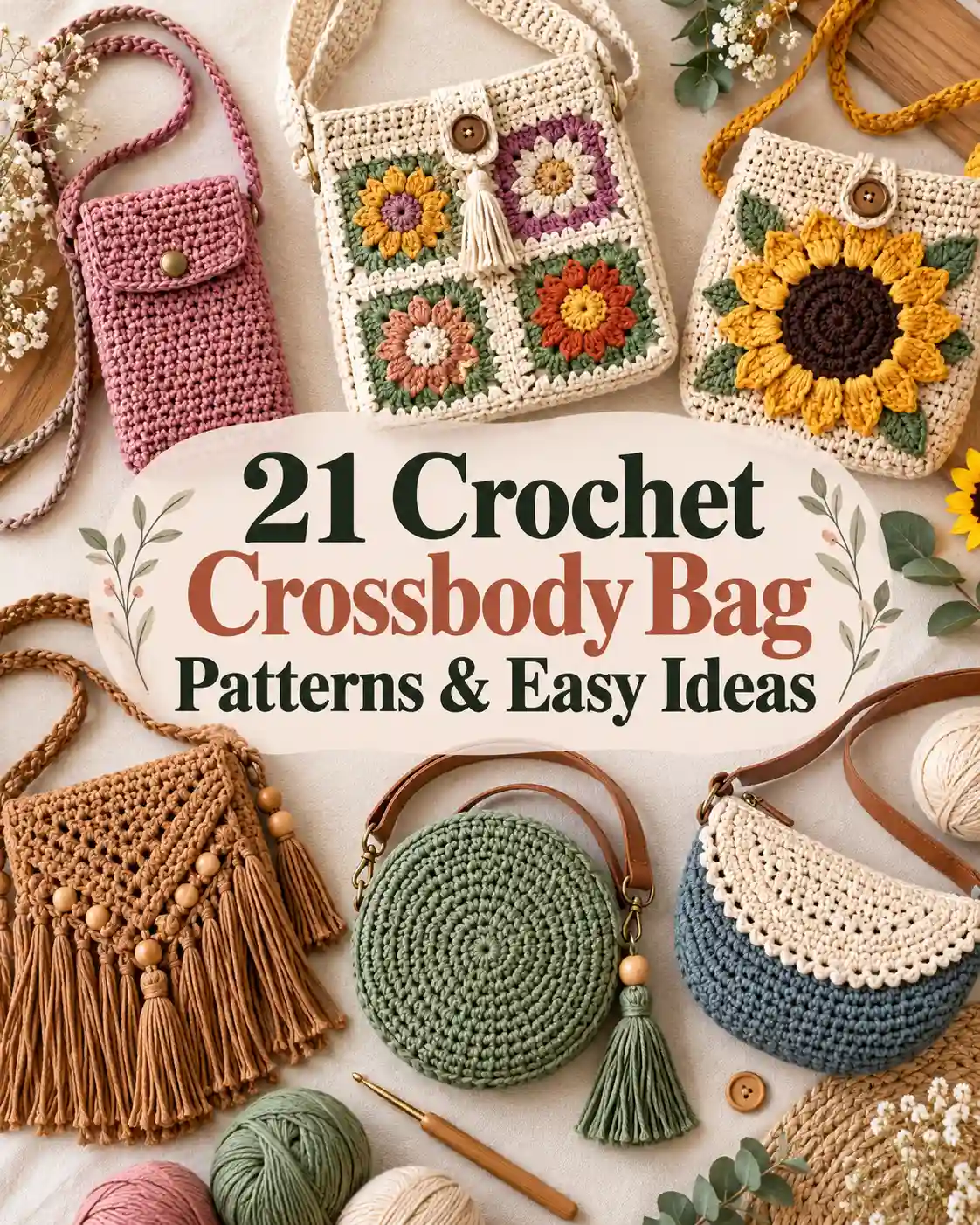
There is no universal perfect length because it depends on the bag size and where you want it to sit on your body. If you prefer the bag to sit lower across the torso, compare the strap construction with a crochet crossbody bag, then test the length on yourself before the final join.
Final Thoughts
The best crochet shoulder bag is not necessarily the most complicated one. It is the one that matches what you want to carry, the clothes you actually wear, and the amount of detail you enjoy crocheting.
Start simple if you are new. Play with granny squares or waves if color is your favorite part. Try t-shirt yarn, raffia, hardware, or lining when you want more structure and a more finished handbag feel.
At crochetmind.com, this roundup is organized so you can move from broad inspiration to a specific bag direction instead of scrolling through dozens of nearly identical ideas. Pick one of the 27 styles, choose your yarn and strap plan first, and then make the color, closure, and finishing details your own.

![The Best 30+ Free Crochet Cat Patterns [Beginner-Friendly Guide]](https://crochetmind.com/wp-content/uploads/2025/04/1-The-Best-30-Free-Crochet-Cat-Patterns-Beginner-Friendly-Guide.webp)