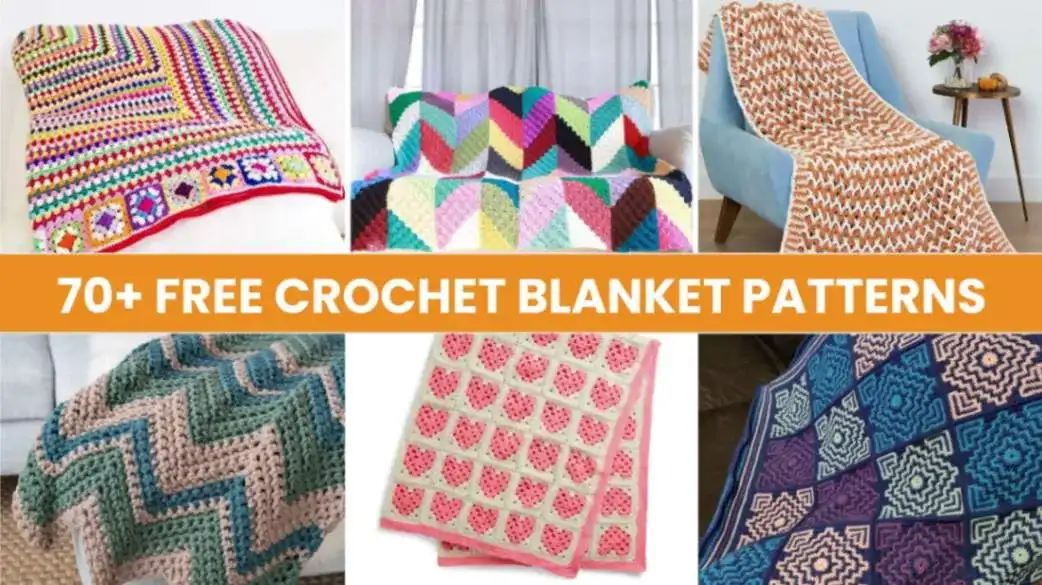
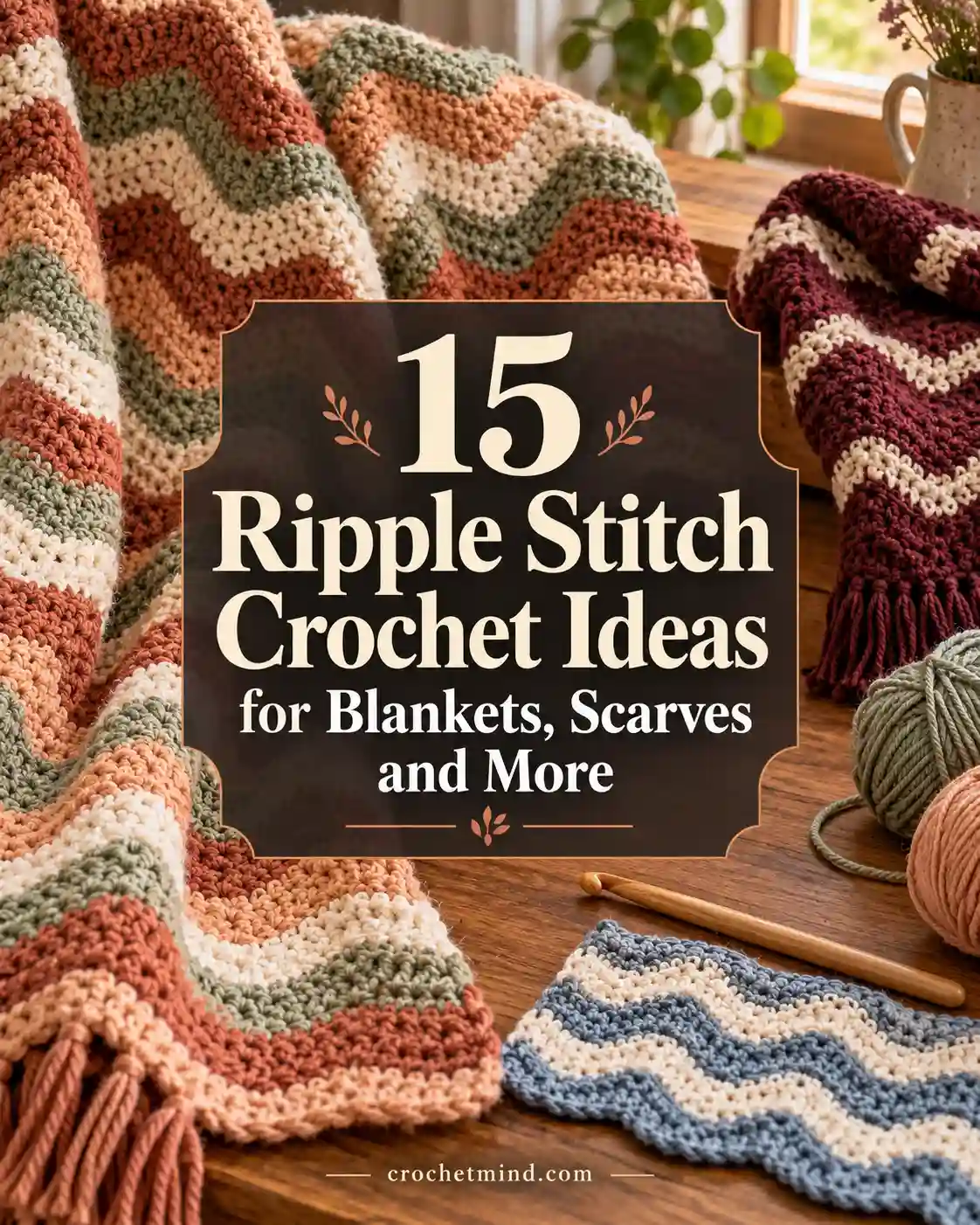

Ripple stitch crochet creates waves by placing increases and decreases at repeating points across a row. These 15 ideas cover eight stitch variations and seven projects, with classic double crochet providing a practical starting point for confident beginners.
A few stripes can make a simple repeat look surprisingly detailed. Start with a small sample, find a rhythm you enjoy, and let the colors do some of the decorating.
Key Takeaways
- Practice Single crochet ripple stitch before choosing a larger project.
- Follow the starting multiple in your chosen pattern.
- Count peaks, valleys and row ends regularly.
- Match yarn, drape and construction to the finished project.
- Check garment gauge before making sweater or top panels.
Which Ripple Stitch Crochet Idea Should You Try First?
Start with a classic double crochet swatch to practice wave shaping, then choose a project that suits the fabric.
Choose your first ripple by the fabric you want to make. A compact bag panel needs a different approach from a light wrap, even when both have wavy stripes.
| Your goal | A useful starting point | What to check |
|---|---|---|
| Learn the basic wave | Classic double crochet ripple | Peaks, valleys and row ends |
| Make crisp zigzags | Single crochet chevron | Count and edge shaping |
| Try open clusters | Granny ripple | Cluster placement and spaces |
| Explore finer texture | Moss stitch ripple | Pattern-specific repeat |
| Make a small gift | Ripple scarf | Softness and finished width |
| Crochet clothing | Ripple wrap or sweater | Gauge, drape and shaping |
15 Ripple Stitch Crochet Ideas for Blankets, Scarves and More
The difficulty depends on the actual pattern, not just its stitch name. Explore different crochet stitches to find a technique that suits your skill level. Think of the following as ideas to explore, with linked instructions where noted, rather than 15 complete written patterns.
1. Why Start with a Classic Double Crochet Ripple?
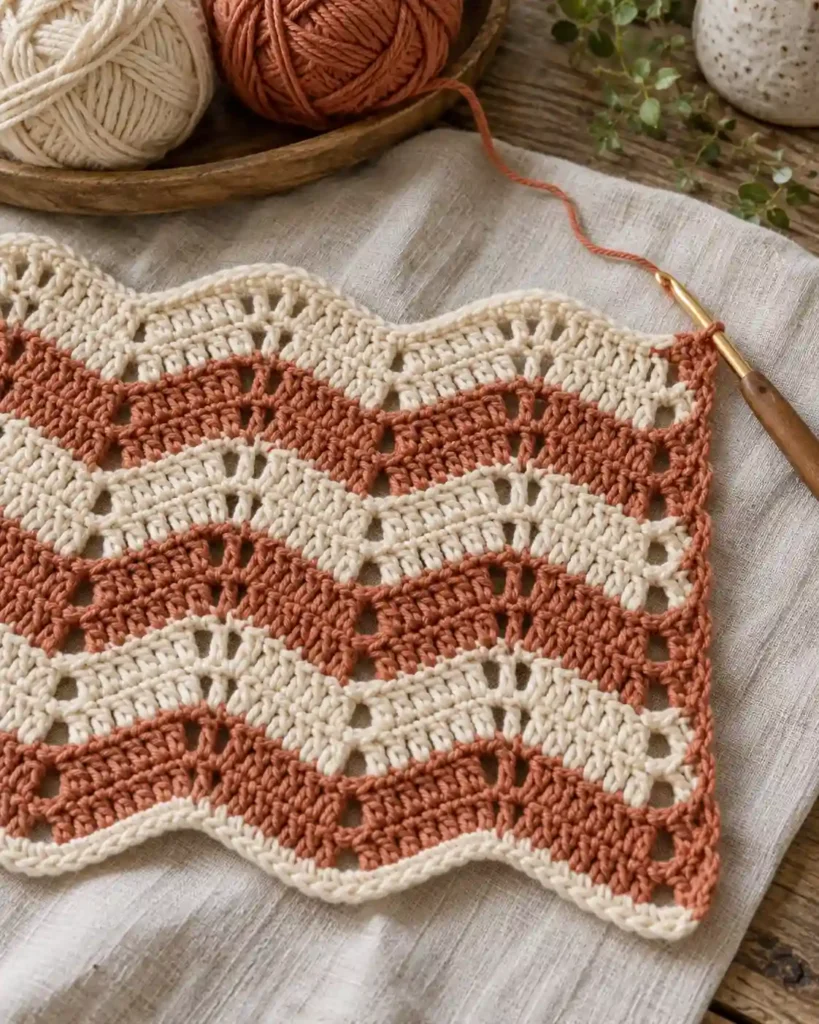
Classic double crochet ripple gives you recognizable waves without adding a second decorative stitch to learn. Its taller stitches make the rise and fall easier to inspect than a heavily textured fabric. For a quiet practice session, a cream-and-terracotta swatch is plenty to work with. Choose this version when you want to understand the construction before committing to a blanket.
Looking for a free crochet ripple stitch written pattern? Daisy Farm Crafts’ Simple Ripple Stitch provides one and recommends a practice foundation of 39 chains, calculated as three repeats of 12 plus 3 extra chains.
Use that number only with its matching instructions. As you work:
- Locate each increase that forms a peak.
- Find the decreases that shape a valley.
- Check the first and last stitch before turning.
The goal is a repeat you can recognize, not a race to finish the sample.
2. When Does Single Crochet Ripple Stitch Work Best?
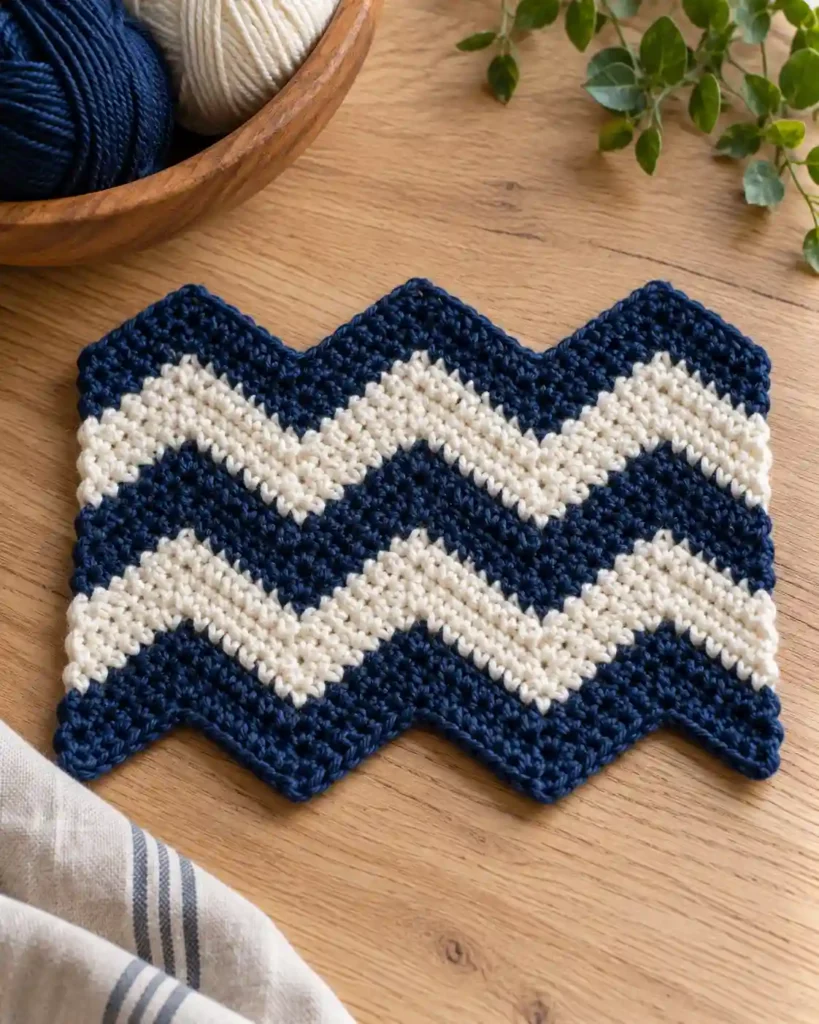
Single crochet ripple stitch makes a compact fabric with small stitches and a clear zigzag outline. Compared with a taller double crochet version, it can give a project a firmer, more closely worked appearance. Picture navy-and-ivory stripes on a tote panel or a narrow decorative throw. This is a useful option when crisp pattern definition matters more than an airy finish.
Choose instructions written specifically for single crochet. Replacing every double crochet in another pattern with a single crochet does not automatically preserve its proportions or shaping.
Mark the peaks on your first few rows. They provide reference points when the closely packed stitches become harder to count.
3. Could Granny Ripple Clusters Be Your Next Color Project?
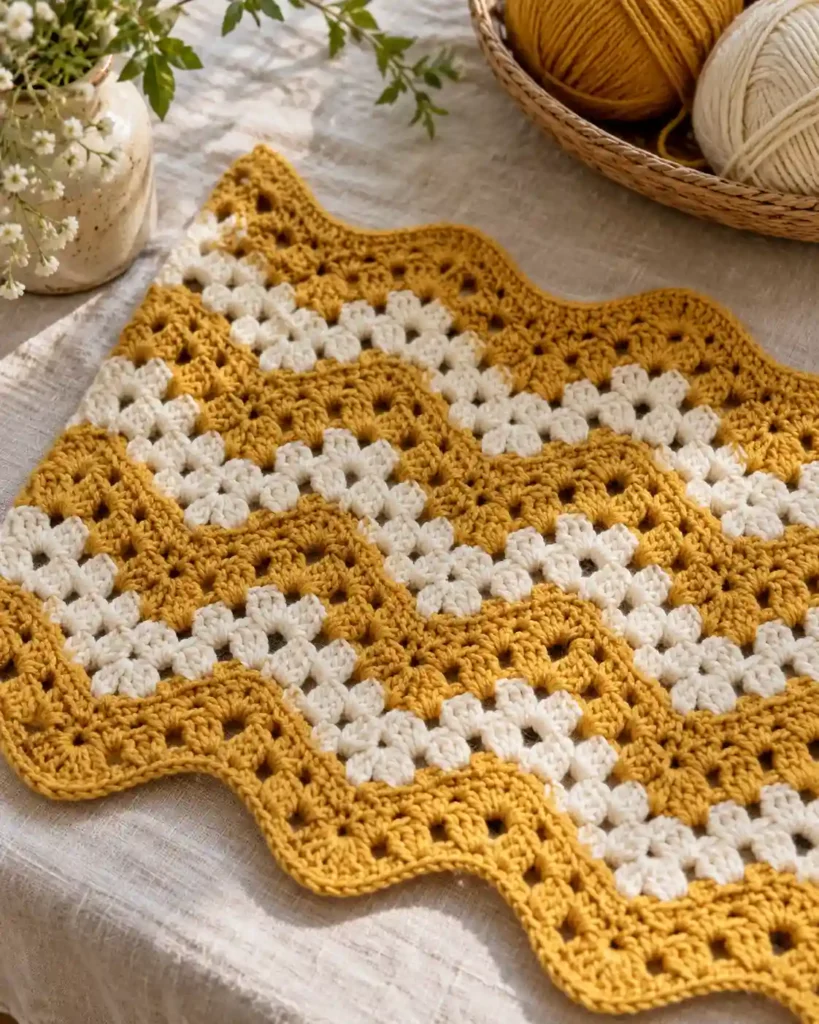
Granny ripple clusters bring familiar grouped stitches into a continuous wave. The spaces between the groups create a different look from a closely worked ripple, without requiring separate squares to join. Mustard and cream would make a cheerful sample beside a basket of leftover yarn. Try this construction when you enjoy visible clusters and want stripes with a little breathing room.
Keep the cluster placement consistent at the peaks and valleys. Those shaping points deserve more attention than the straightforward spaces between them.
For a documented starting project, explore the Caron Granny Ripple Blanket from Yarnspirations. Follow its materials and repeat rather than borrowing the foundation count from a different ripple tutorial.
4. What Makes Moss Stitch Ripple Crochet Different?
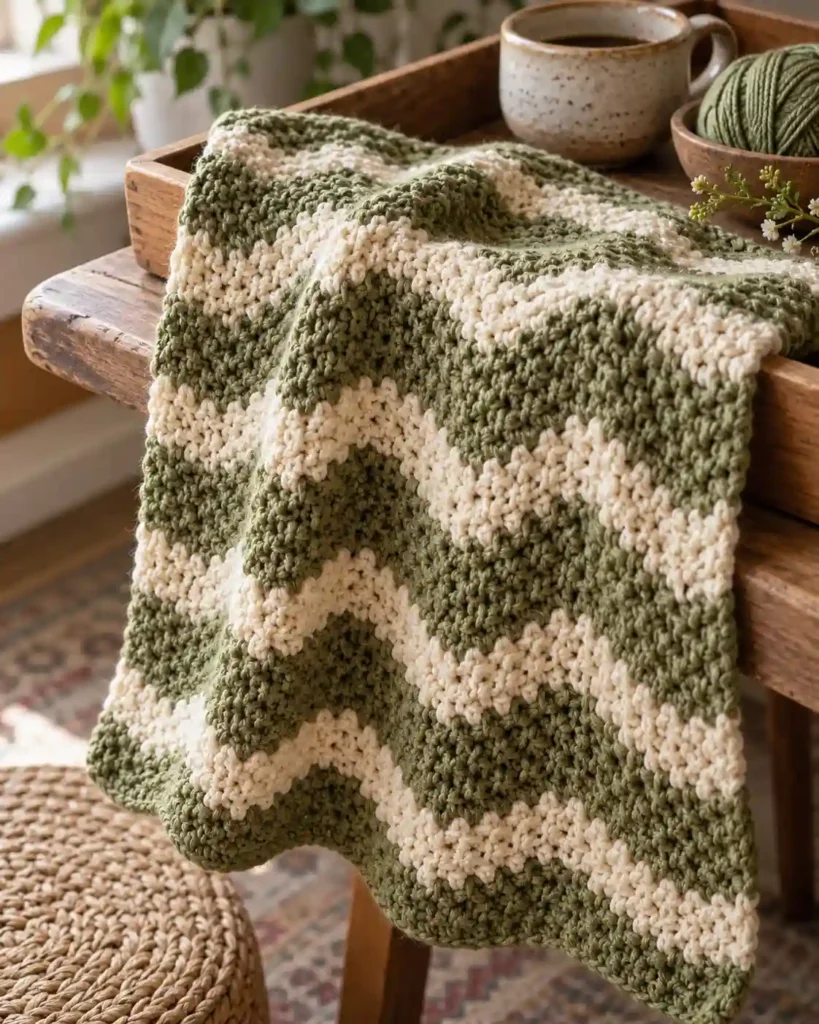
Moss stitch ripple combines the wave outline with smaller stitches and chain spaces. Its woven-looking surface feels quieter than large granny clusters, especially in two closely related colors. Olive and vanilla would suit a blanket folded across the end of a neutral sofa. This variation rewards crocheters who enjoy subtle texture and careful counting.
Do not assume it uses the same foundation as a basic ripple. Julie at I Can Crochet That classifies the Riley moss ripple pattern as intermediate and specifies a starting multiple of 19 plus 18.
That is a different construction, not an alternative number for the classic double crochet version. Make the designer’s practice sample before scaling up.
5. How Can Ridged Ripple Texture Make Plain Yarn Interesting?
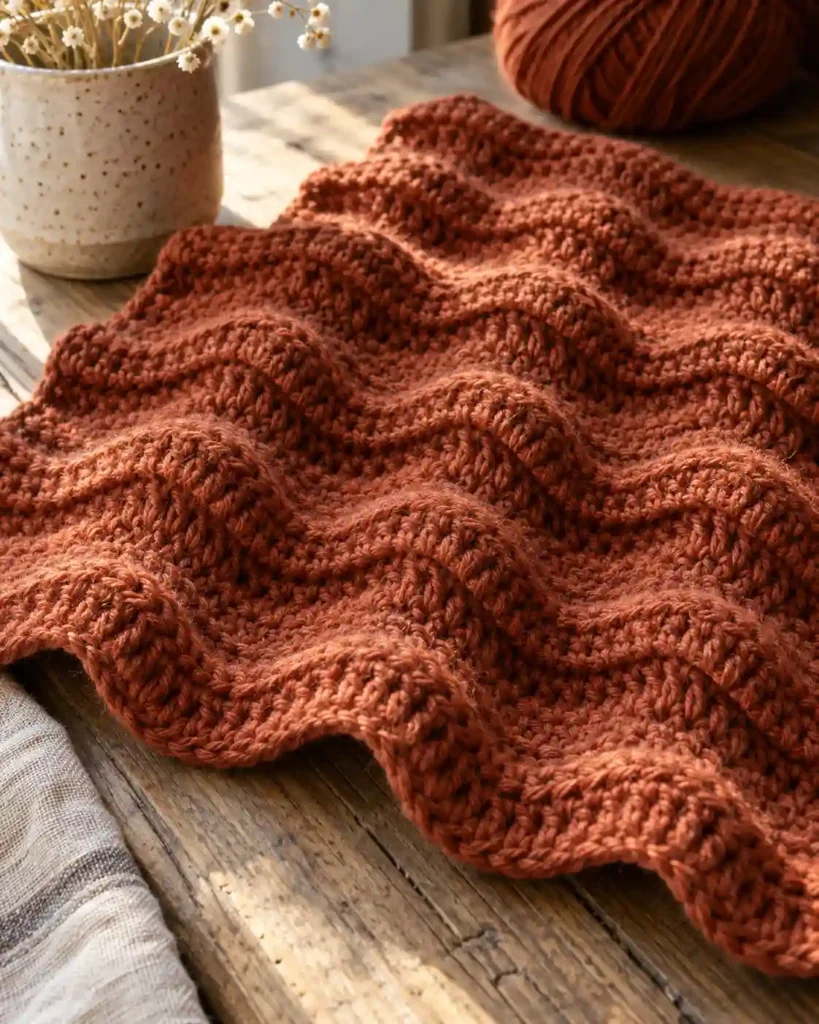
Ridged ripple texture lets light pick out the waves even when every row uses the same color. A back-loop construction can add raised lines that a flat ripple does not have. Rust, oatmeal or deep green would work nicely when the finished piece needs to sit comfortably among patterned cushions. Consider this option when your yarn is plain but you still want visible detail.
Use a pattern that identifies exactly how the ridges are formed. “Raised ripple” can describe more than one technique.
Special tip: Look at your swatch from the side as well as from above. That angle makes the relief easier to judge before you buy yarn for a larger project.
6. Why Choose a Vintage Fan Ripple?
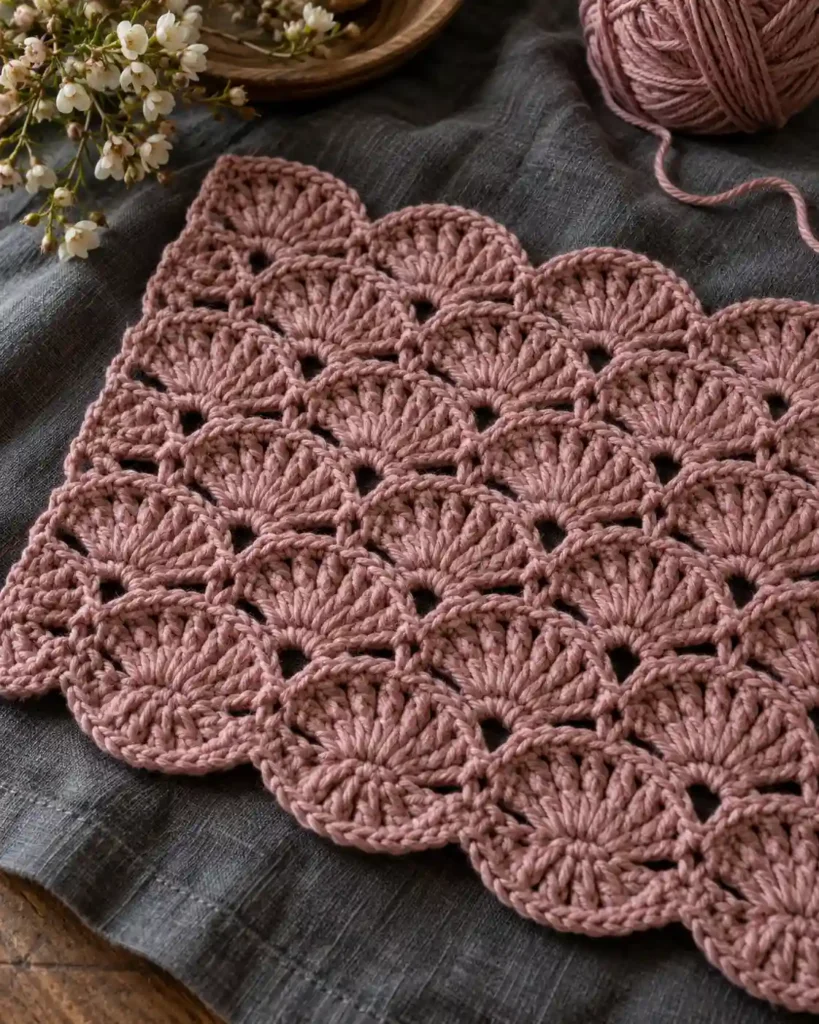
Vintage fan ripple has a scalloped character that softens the usual zigzag effect. Grouped taller stitches give the fabric a more decorative rhythm than straightforward rows of double crochet. A dusty-rose sample would feel at home beside a linen chair or an old wooden sewing box. It is a lovely direction for someone who enjoys a repeat with more detail to follow.
Fan and shell names can overlap, so examine the pattern photograph and instructions together. The name alone will not tell you how the groups connect.
Choose yarn with enough stitch definition to show the fans. Very fuzzy fibers can hide the detail you are working to create.
7. Would Puff Stitch Ripple Give Your Project More Texture?
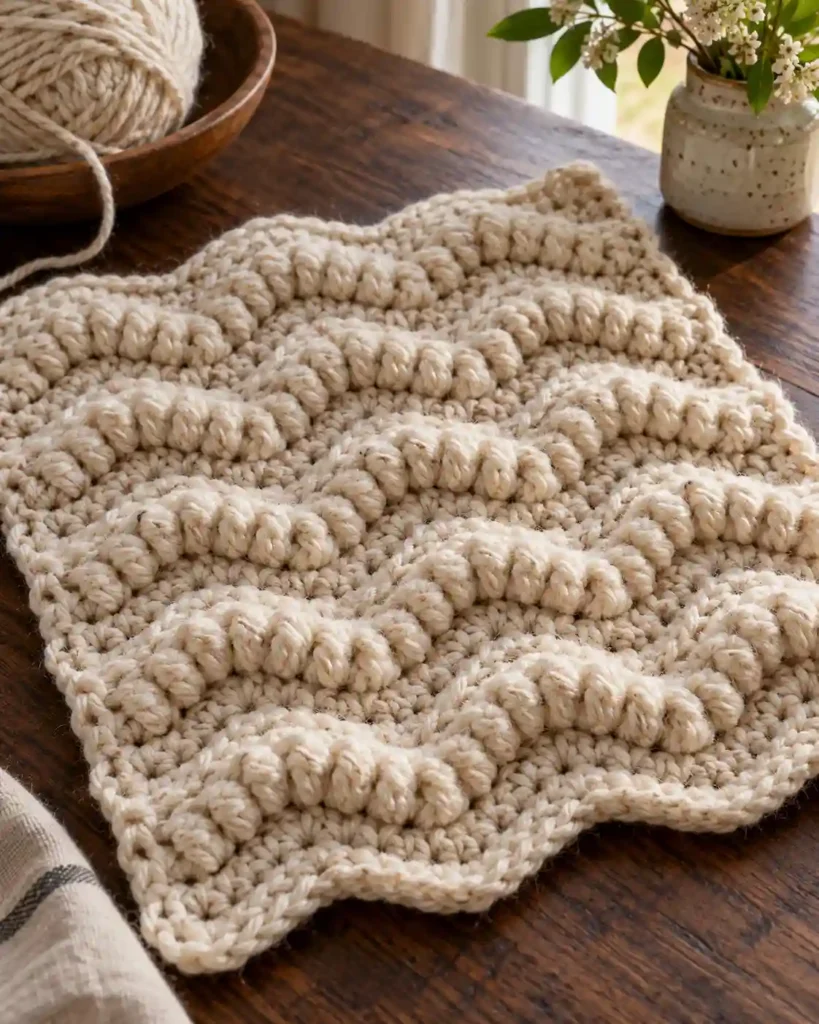
Puff stitch ripple adds rounded, raised details to the wave. Those small bundles create a more tactile surface than flat stripes, making a single color feel less plain. An oatmeal practice strip is a good way to see the texture without color changes competing for attention. Try it when you want a decorative fabric and do not mind a slower rhythm.
Read the pattern’s puff-stitch definition before starting; designers may use different numbers of loops. Keep those loops reasonably consistent so the finished puffs look balanced.
Check the sample’s weight and flexibility, too. A texture that feels appealing in a small square may feel heavier than expected across a whole blanket.
8. When Should You Try Crossed Ripple Lace?
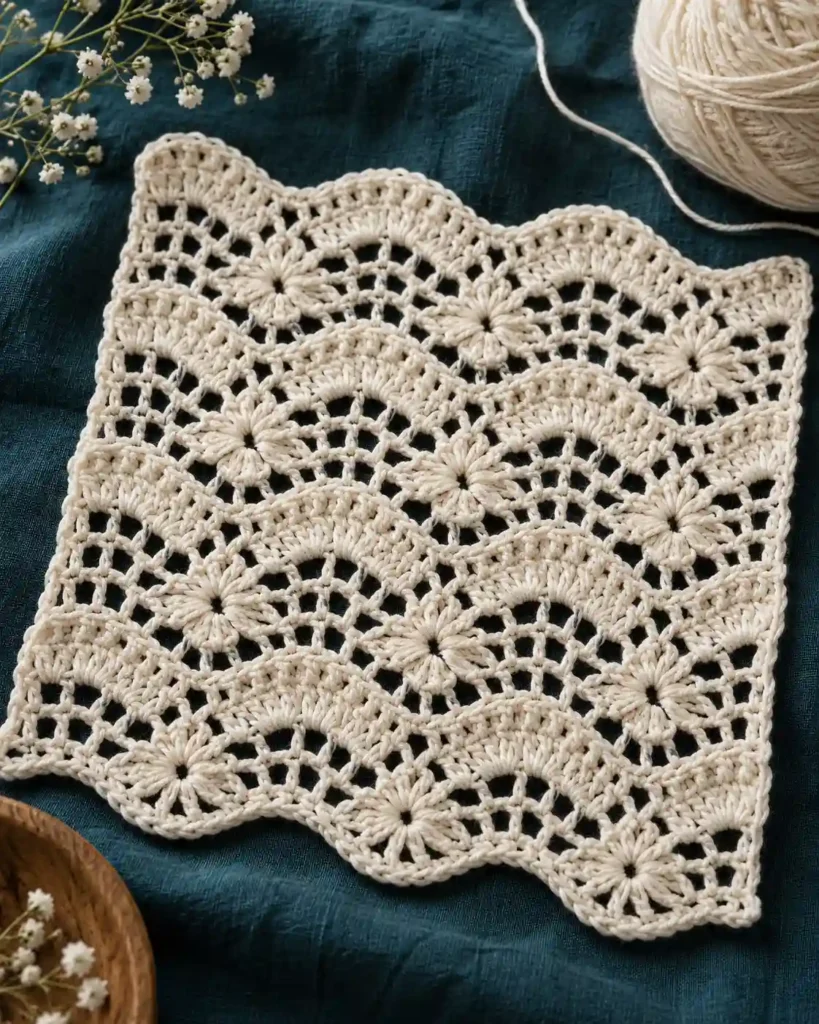
Crossed ripple lace combines open spaces with stitches that cross within the design. It offers a more delicate effect than solid ripple rows, particularly when the fabric catches light. Imagine a pale wrap worn over a simple dress rather than another thick winter blanket. This is an appealing choice for crocheters comfortable following a more involved repeat.
Select a pattern with clear written instructions or a checked stitch chart. Study how its crossed stitches fit around the shaping points.
A smooth yarn helps reveal the construction. Wash and block your sample according to its fiber care instructions before deciding whether the openness and drape suit your project.
9. How Do You Plan a Soft Ripple Baby Blanket?
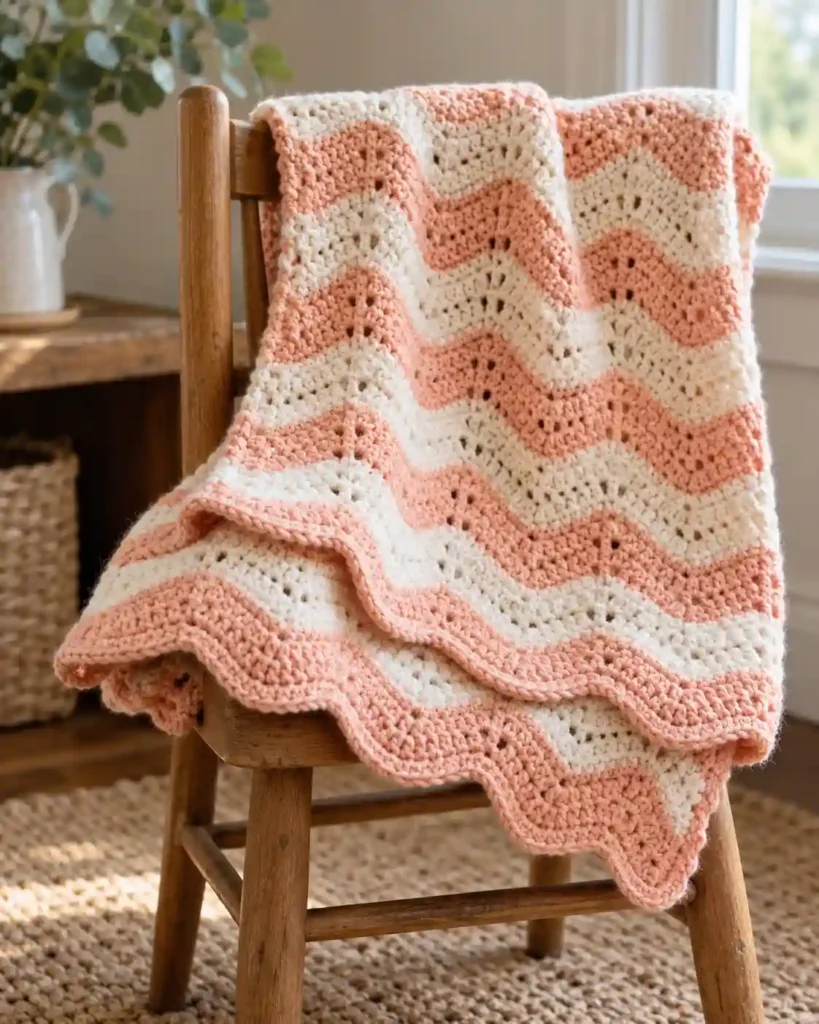
A ripple baby blanket makes the color pattern easy to appreciate on a smaller project. Explore easy crochet baby blanket ideas if you want more inspiration for a manageable handmade gift. Peach and cream make a gentle combination, especially with a simple edge. Choose this project when you want a practical reason to repeat the same stitch until it feels familiar.
Lauren Brown’s Daisy Cottage Designs ripple blanket provides one concrete reference: approximately 28 × 30 inches, using about 720 yards of worsted-weight yarn and a 5.5 mm hook.
Those figures belong to that design. A different yarn, size or tension can change the amount needed.
Check the care label and give the recipient washing instructions with the finished gift.
10. Which Colors Suit a Living Room Ripple Throw?
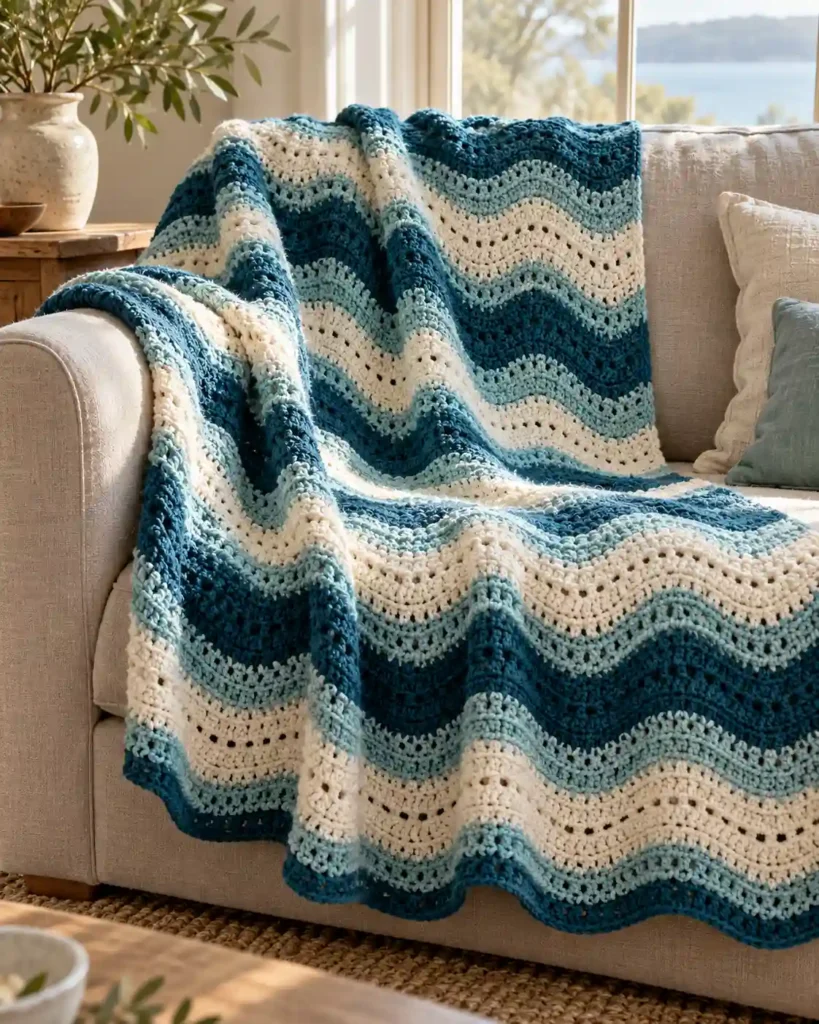
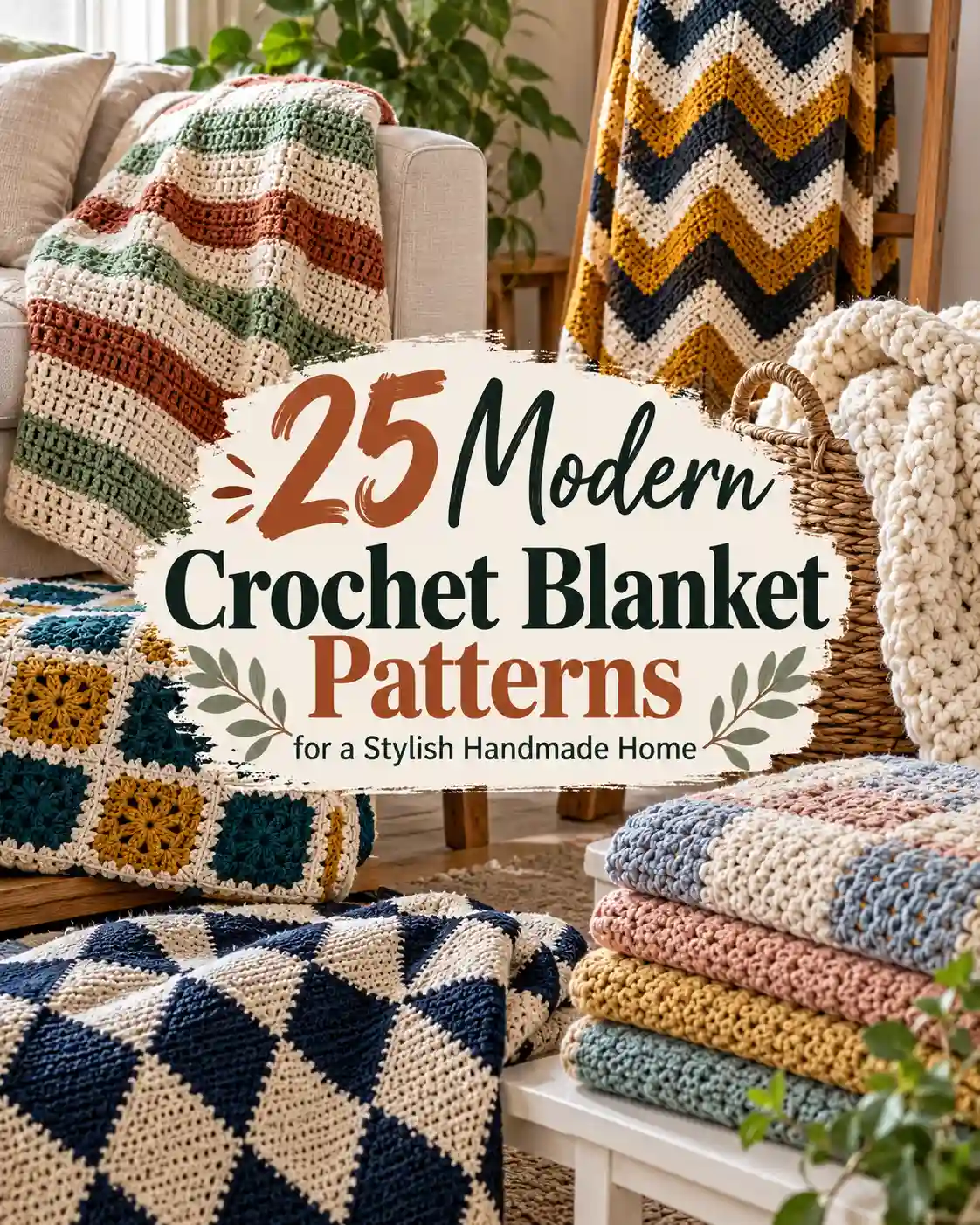
A living room ripple throw turns a useful blanket into a broad display of color. The wave breaks up horizontal stripes, giving them more movement than straight rows. Blue, teal and cream would suit a calm corner, while rust and gold bring warmth to a brown chair. Pick this project when you want the stitch to become part of the room’s everyday look.
Before making a full ripple stitch crochet blanket, choose the main color and two supporting shades. Work a sample that includes the intended stripe widths.
Try these combinations:
- Ocean blue, teal and cream for a cool palette.
- Rust, gold and oatmeal for autumn warmth.
- Navy, soft gray and ivory for restrained contrast.
Keep the construction the same while testing colors. That makes the comparison much easier.
11. Can Scrap Yarn Become a Cohesive Ripple Afghan?
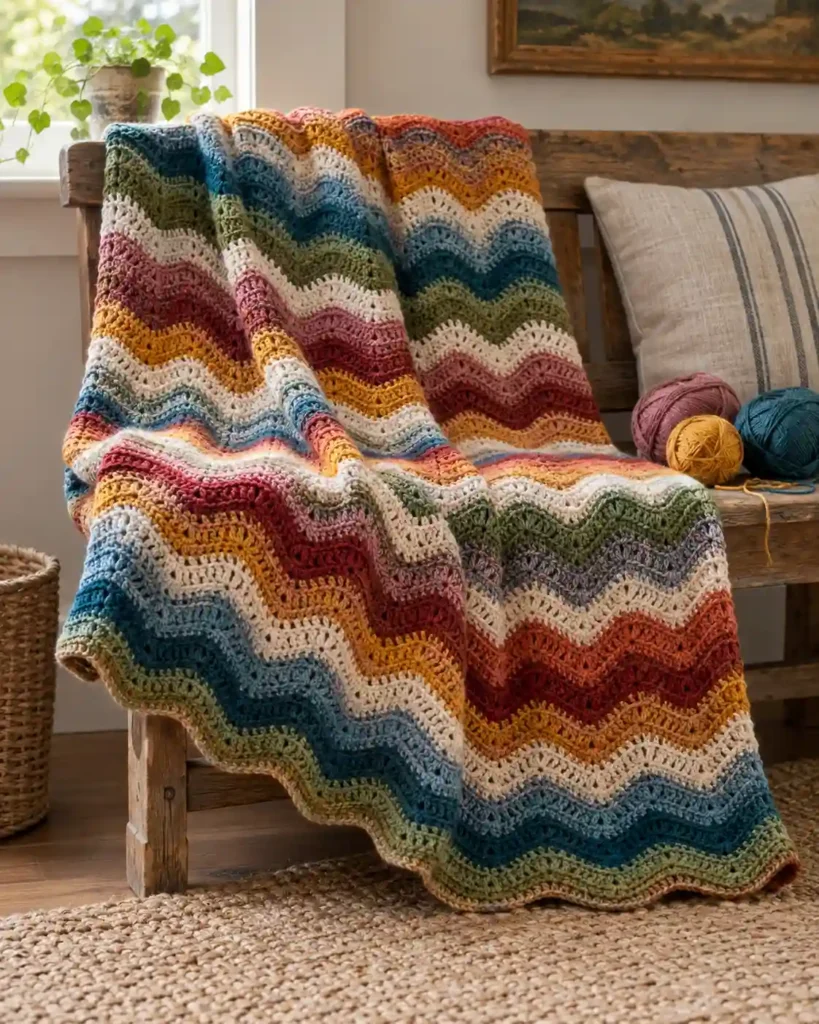
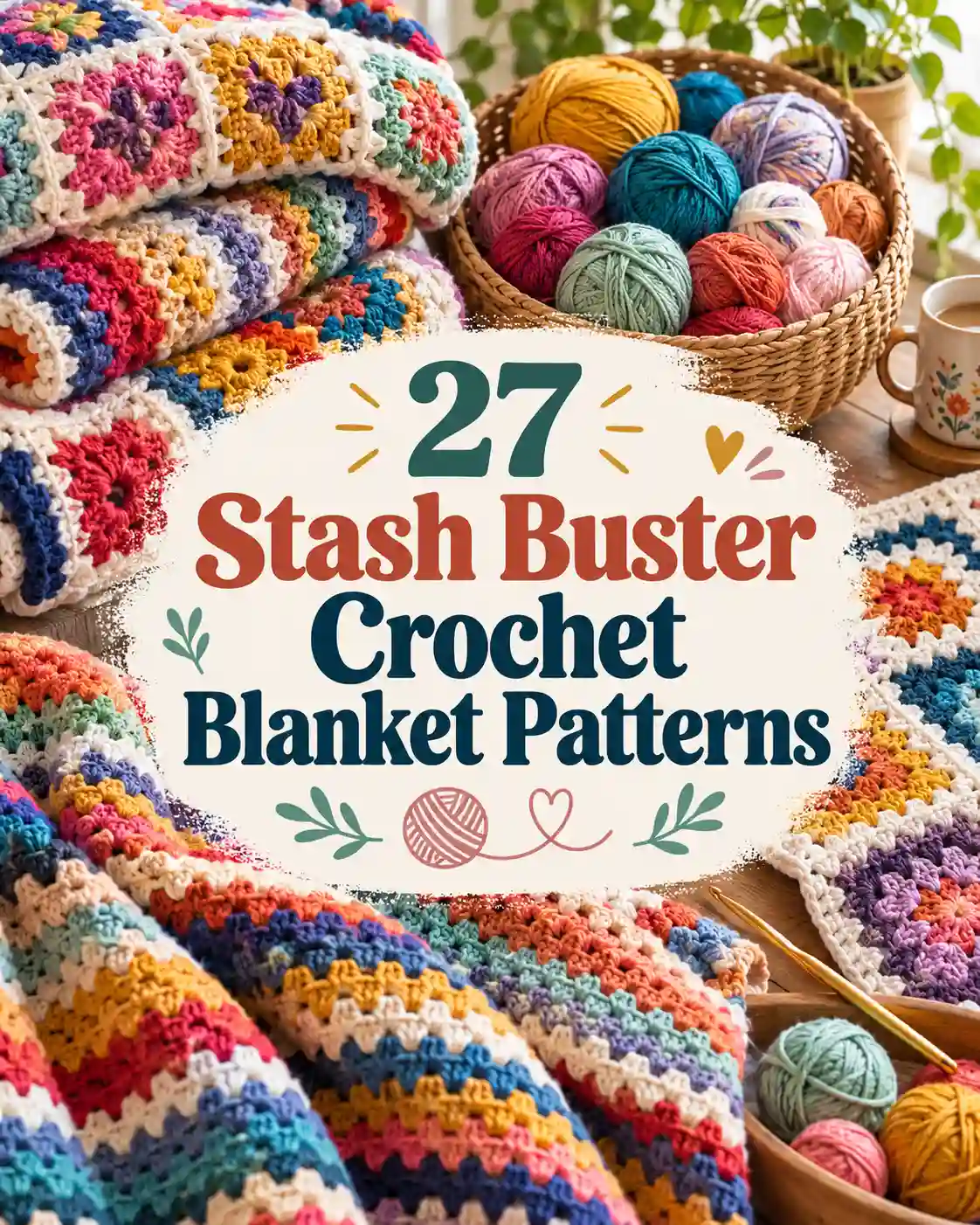
A stash buster crochet blanket gives small leftovers a shared structure. Repeating waves help connect changing colors, while a planned sequence looks more intentional than choosing each ball at random. This is the project for the basket of partial skeins that never seems to empty. Start here when using what you already own matters as much as the finished color scheme.
Sort yarns by compatible thickness, fiber behavior and care needs. Similar-looking balls can still produce noticeably different fabric.
Lay out a possible stripe order before crocheting. For rainbow effects, move through a deliberate sequence; for a quieter blanket, repeat a neutral shade between the brighter leftovers.
Weave in ends regularly so they do not become one enormous finishing job.
12. Why Is a Ripple Stitch Scarf a Useful Smaller Project?
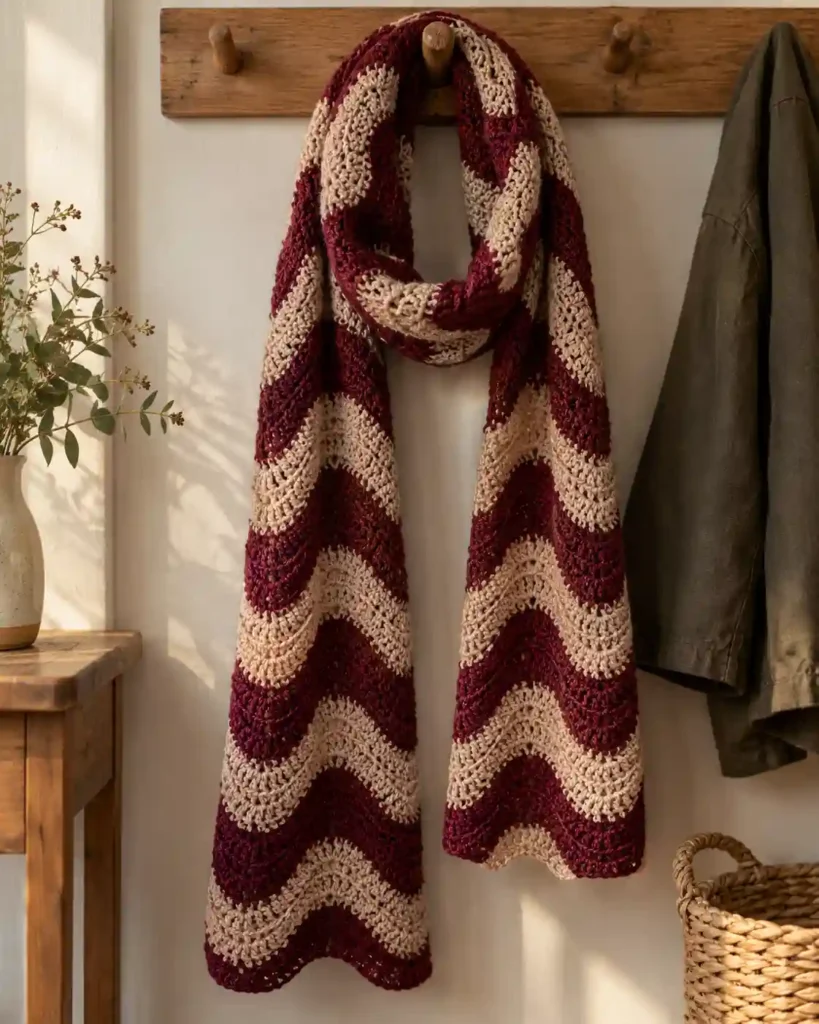
A ripple stitch scarf puts the wave where you can see it without spreading a blanket across your lap. For more inspiration, explore quick easy crochet scarf patterns that suit a manageable project. Burgundy and sand would make an easy color pairing for a winter coat that gets worn almost every day.
Decide whether the rows will run across the width or along the length; the selected pattern should establish that direction. It changes both the starting chain and the way the stripes appear.
Hold the yarn against your neck before committing. Softness matters more here than it might in a decorative cushion.
13. What Makes a Lightweight Ripple Wrap Work?
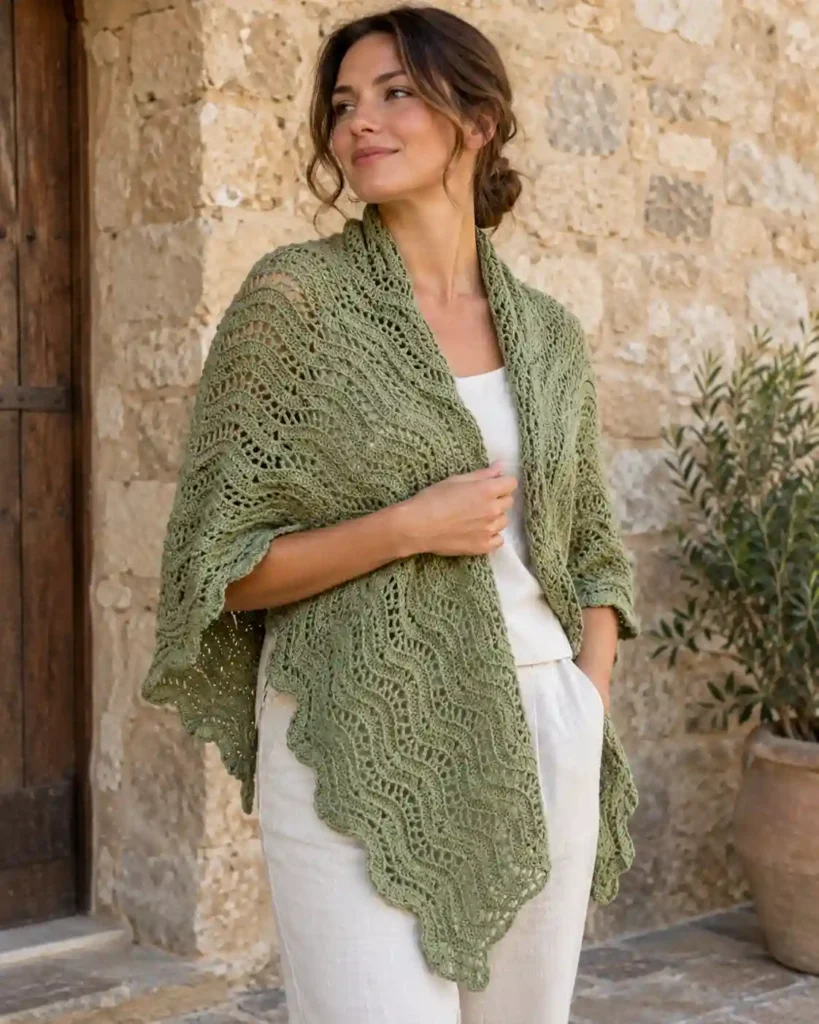
A lightweight ripple wrap shows off the waves through movement and drape. Compared with a narrow scarf, its broader surface lets an open stitch pattern spread across the shoulders. A sage-green rectangle would be useful for a cool evening when a sweater feels too much. Consider this project when you want a wearable layer with minimal garment shaping.
A rectangular wrap and a triangular shawl are different constructions. Do not expect a blanket repeat to produce a triangle without additional shaping.
Make a generous sample, then wash and dry it as you will the finished wrap. Assess whether it falls softly or holds its shape too firmly for comfortable wear.
14. How Do You Turn Ripple Stripes into a Sweater or Top?
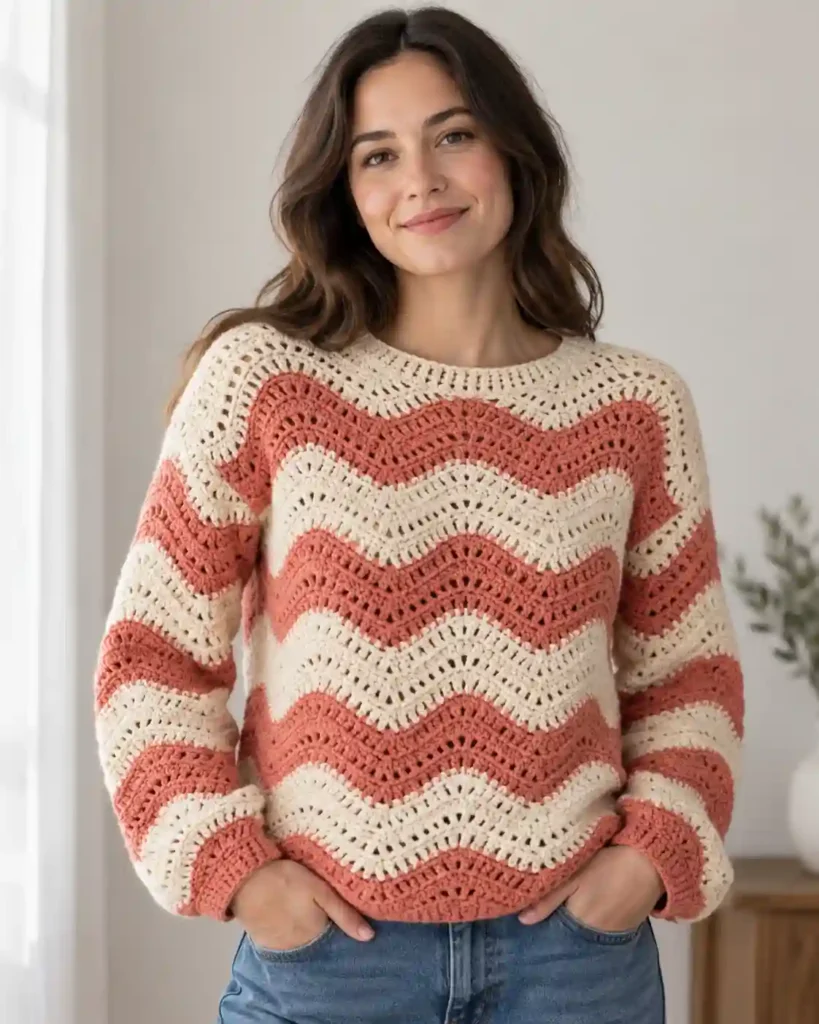
A ripple panel sweater brings the stripe pattern into clothing, where fit becomes part of the design. Explore crochet pullover sweater patterns for more garment inspiration. Cream-and-coral panels could make an everyday layer with enough interest to wear over plain trousers. Choose this route when you are ready to follow garment measurements as carefully as stitch counts.
For a ripple stitch crochet sweater, use a sized pattern with neckline, sleeve and armhole instructions. Check gauge, the number of stitches and rows within a measured area—before making the panels.
A ripple stitch crochet top can be a lighter alternative, but removing sleeves does not remove the need for fit. Follow a pattern designed for that garment.
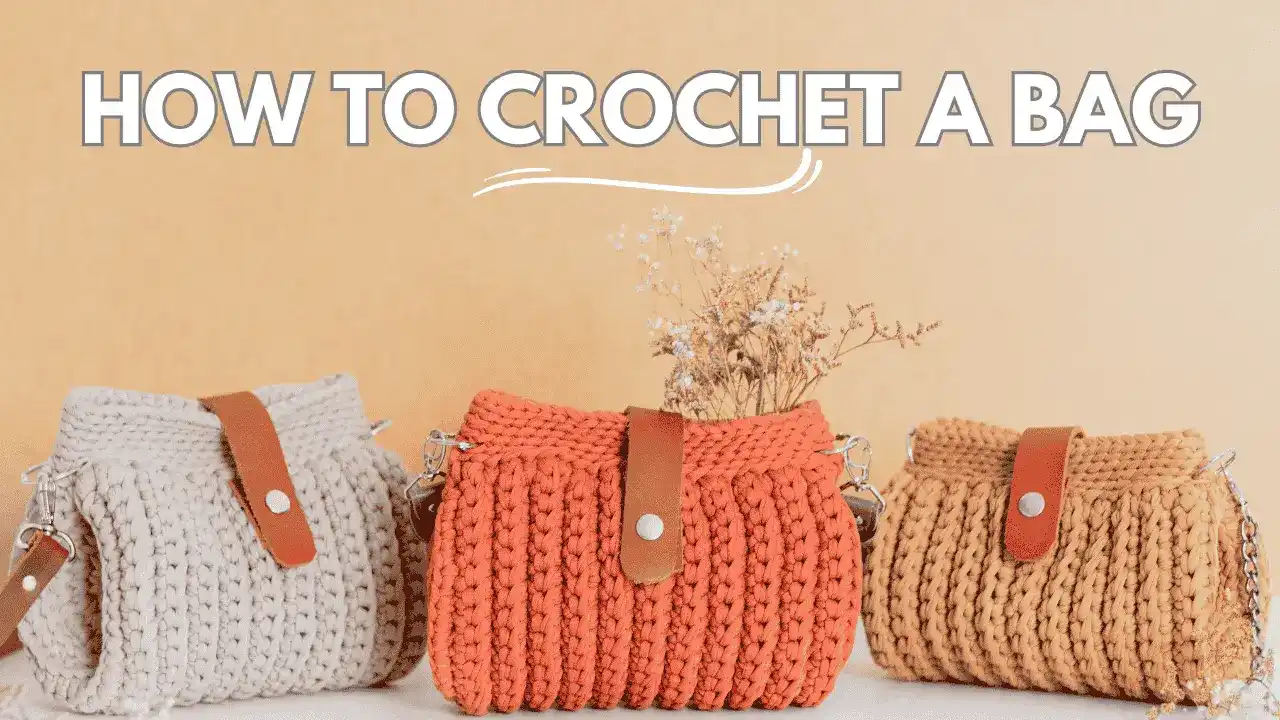
15. What Should a Ripple Crochet Tote Bag Include?
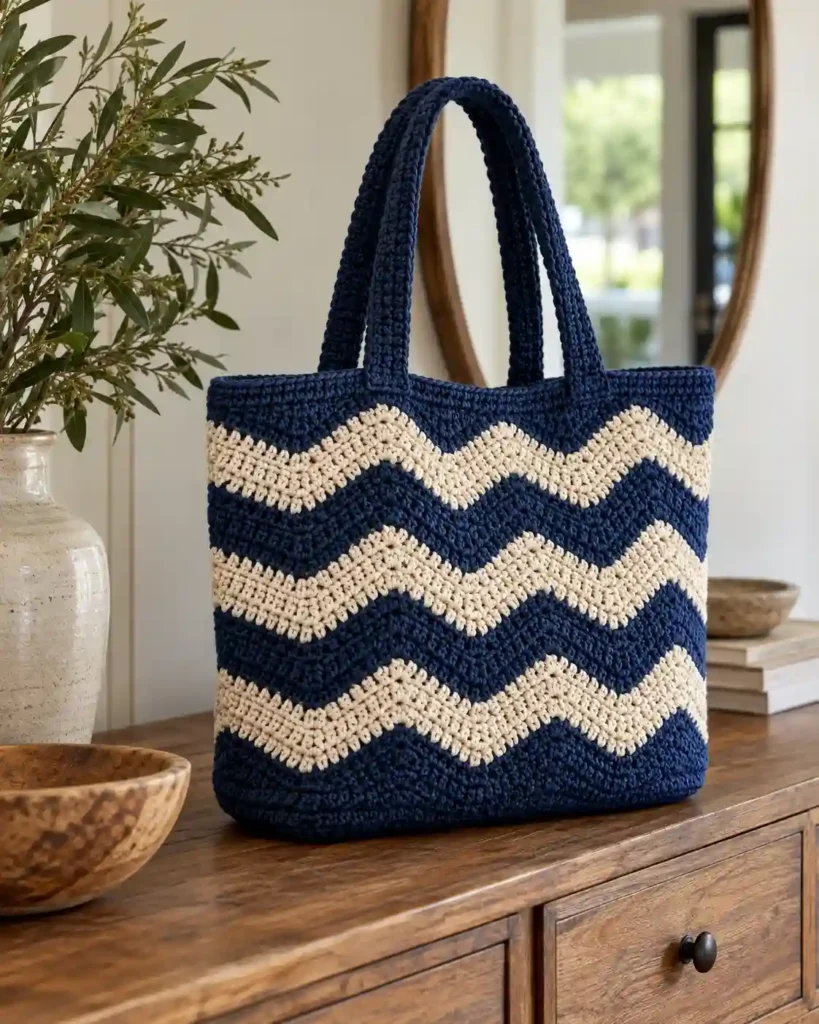
A ripple crochet tote gives bold zigzags a practical job. Its fabric needs more support than an airy wrap, so a dense construction can be more useful than decorative gaps. Navy-and-natural cotton would make a clear stripe pattern for an everyday carry bag. Explore this idea when you want an accessory that keeps the waves visible while hanging from a shoulder.
Choose a construction that explains the base, panel joins and handle attachment. Explore crochet tote bag pattern and instructions for more guidance on constructing a functional bag. A pretty rectangle alone is not a complete bag pattern.
Consider an optional lining and reinforced handles. Check the finished fabric for stretching before deciding what the bag can comfortably carry.
How Do You Choose Yarn for Ripple Stitch Crochet Patterns?
Choose yarn that matches the pattern’s requirements, then check whether the resulting fabric has the right softness, structure and drape.
Start with the pattern’s yarn category and gauge, then consider how the project will be used. The Craft Yarn Council places DK yarn in category 3 and worsted yarn in category 4; its hook ranges are guidelines, and it advises following the gauge specified by the pattern.
For practice, smooth, light-colored yarn makes individual stitches easier to inspect. For garments, pay closer attention to drape and how the washed sample behaves.
At CrochetMind, this guide groups ideas by construction and use so you can make that choice before committing to a larger project.
Why Are Your Ripple Edges Uneven?
Check for missing or extra stitches at row ends and shaping points before changing your hook or trying to block the fabric straight.
An edge that slowly grows or shrinks needs a stitch-count check. Adding or missing a stitch at the row ends can move the shaping points out of alignment.
Work through these checks:
- Count the stitches in a complete repeat.
- Confirm that each increase and decrease matches the pattern.
- Check whether the turning chain counts as a stitch.
- Inspect where the last stitch of each row is worked.
For example, OkieGirlBling’n’Things specifies a three-chain turning chain that counts as a stitch in its ripple tutorial. Its row-end instructions depend on that convention.
Follow one pattern consistently instead of combining row instructions from different tutorials.
Should You Add a Border to a Ripple Blanket?
At a Glance
- Keep the waves visible for a simple finish.
- Use compatible border instructions for a more defined edge.
- Treat straightening a wavy edge as a separate shaping task.
A border is optional. Leaving the wavy edge visible can make the ripple the main feature, while a suitable border can give the project a more defined finish.
Preserving the waves and filling them to create a straight edge require different approaches. Choose instructions that match your blanket’s construction rather than guessing stitch counts.
Finish the loose ends and assess the fabric before deciding. A restrained edge is often enough when the stripes already provide plenty of detail.
Frequently Asked Questions About ripple stitch crochet
Is There an Easy Crochet Ripple Stitch for Beginners?
A classic double crochet ripple is a useful choice once you are comfortable with chains, double crochet and decreases. Start with a practice swatch rather than a full blanket so you can check the repeat and row ends.
How Many Chains Do I Need for Ripple Crochet?
Use the multiple specified by your chosen pattern. Daisy Farm Crafts uses 12 plus 3, while the Daisy Cottage Designs blanket uses 14 plus 2; those numbers are not interchangeable.
Are Ripple and Chevron Crochet the Same?
The names overlap, although chevron often describes sharper zigzags and ripple often suggests softer waves. Check the actual fabric and instructions rather than relying on the name.
Can I Learn Ripple Crochet Left-Handed?
Yes. Bella Coco’s ripple tutorial includes separate right-handed and left-handed video demonstrations, which can help you follow the working direction without mentally reversing every movement.
Are US Double Crochet and UK Double Crochet the Same?
No. The Craft Yarn Council’s crochet terminology comparison identifies US double crochet as UK treble crochet, while US single crochet corresponds to UK double crochet. Check which terminology a pattern uses before following its abbreviations.
Can I Use a Blanket Pattern to Make a Ripple Top?
Ripple stitch crochet top projects need garment-specific sizing and shaping, so a blanket pattern alone is not enough. Choose a top pattern that explains fit, neckline, armholes and gauge, even if its decorative stitch resembles your favorite blanket.
Final Thoughts
Ripple stitch crochet projects are a wonderful way to create beautiful waves, colorful stripes, and eye-catching textures in handmade pieces. Whether you prefer a cozy blanket, a baby afghan, a scarf, or a wearable design, there are plenty of ways to adapt the ripple pattern to your style and skill level. Experiment with different yarn colors, choose a pattern that matches your experience, and take your time with stitch counts to keep those waves looking neat and consistent. Pick your favorite ripple stitch crochet idea, gather your yarn, and enjoy creating something unique and useful.