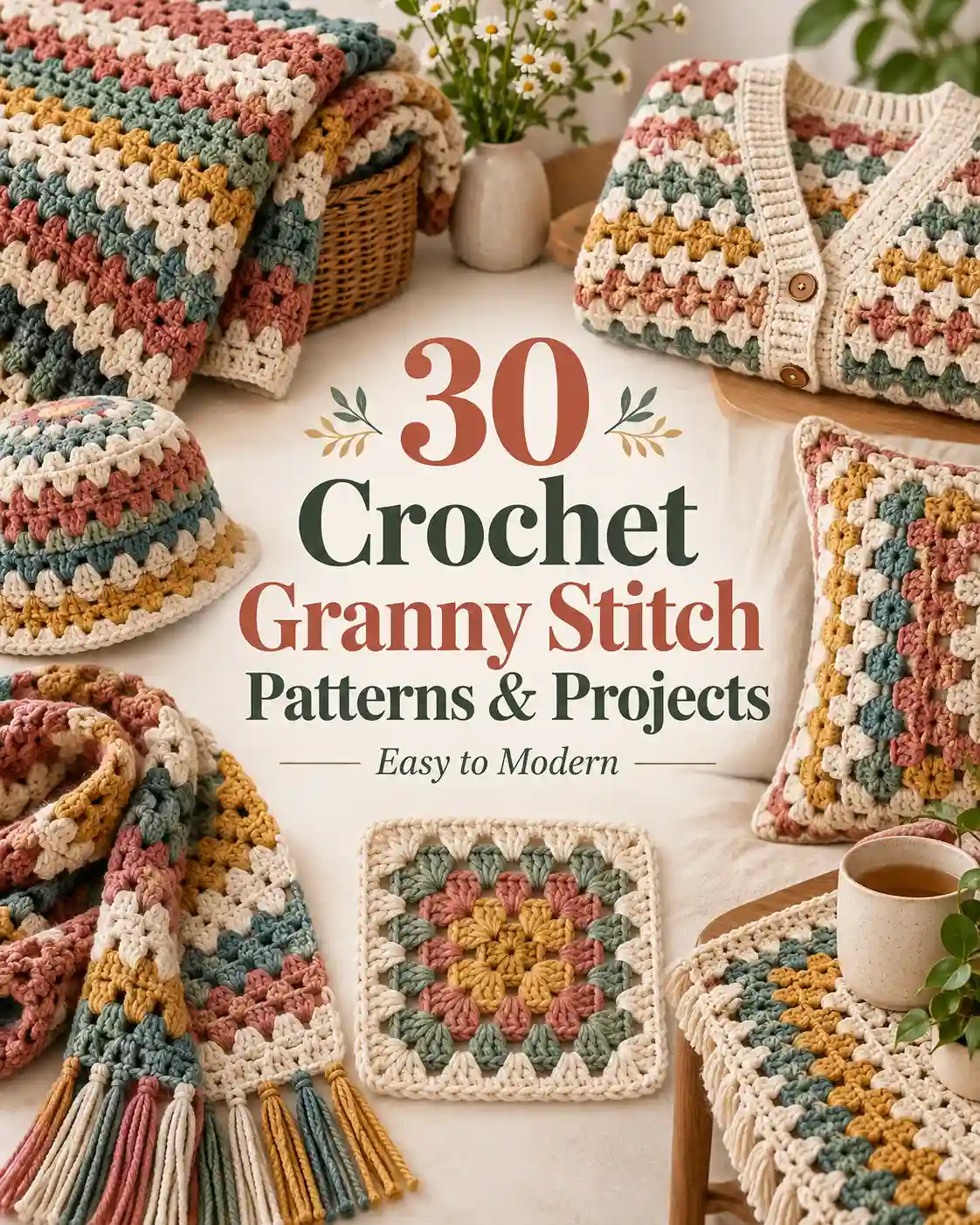
The crochet granny stitch is a beginner-friendly technique that uses groups of three double crochet stitches to create an airy, textured fabric. You can work these clusters in straight rows, build traditional granny squares, or explore creative variations for blankets, sweaters, accessories, and home decor. This guide includes a free beginner granny stripe swatch tutorial and 30 beautiful stitch variations and project ideas to inspire your next crochet creation.
There is something wonderfully satisfying about watching granny stitch rows grow. The repeating clusters are easy to recognize, the small spaces give the fabric a lovely drape, and changing yarn colors can completely transform the finished look. Explore more most trendy crochet stitches to discover additional textures for your next project.
Perhaps you want a cozy blanket for your living room, a lightweight summer top, or a quick handmade gift. Once you understand how the granny stitch works, you’ll discover just how many possibilities it offers.
If you’re new to crochet, you don’t have to begin with an ambitious project. A simple practice swatch can help you recognize the stitch pattern, build confidence, and discover which yarn colors you enjoy working with. And if you already know the basics, there are plenty of modern variations here to make your next project feel fresh and exciting.
Let’s start with the basics before exploring the projects.
Key Takeaways
- Practice Simple crochet granny stitch with a small swatch first.
- Learn the three-double-crochet cluster and consistent edge placement.
- Explore Modern Granny stitch variations for distinctive textures.
- Choose easy scarves or blankets for your first projects.
- Check yarn, gauge, and shaping before making garments.
- Discover 30 crochet patterns and project ideas for every season.
How Do You Crochet Granny Stitch in Rows?
The classic granny stitch is worked with groups of three double crochet stitches, usually placed into the spaces between groups from the previous row. This creates an open, slightly stretchy fabric with neat repeating clusters.
If you already know how to chain and make a double crochet, you’re ready to give it a try.
What Materials Do You Need?
For a simple crochet granny stitch practice swatch, gather:
- Medium-weight yarn in your favorite color
- An appropriately sized crochet hook
- Scissors
- A yarn needle for weaving in ends
- Stitch markers, if you find them helpful
Medium or worsted-weight yarn is a comfortable starting choice because the stitches are easy to see. The Craft Yarn Council’s Standard Yarn Weight System identifies medium yarn as category 4 and gives a general crochet hook guideline of 5.5–6.5 mm, although your yarn label and preferred fabric should guide the final choice.
Free Granny Stripe Crochet Pattern: Beginner Swatch
This small sample uses US crochet terminology.
Abbreviations
- ch: Chain
- dc: Double crochet
- sk: Skip
- sp: Space
- st: Stitch
A granny group in this tutorial means three separately completed double crochet stitches worked into the same spot.
Foundation: Chain 16, following a foundation multiple of 3 plus 1.
Row 1: Work 2 double crochet stitches into the fourth chain from your hook. The three skipped chains form the first double crochet. Skip the next two chains and work 3 double crochet stitches into the following chain. Continue this sequence until one chain remains, then work one double crochet into that final chain.
Row 2: Chain 2 and turn, counting the turning chain as your first double crochet. Make 2 double crochets in the space between the edge stitch and the nearest granny group. Work 3 double crochets into each following gap between groups, finishing with one double crochet in the top of the previous row’s starting chain.
Row 3 and beyond: Repeat the second row, placing your granny groups in the gaps rather than into individual stitches.
Continue until the swatch reaches your preferred length. Fasten off and weave in the yarn tails.
Special Tip: Watch the first and last stitches carefully. Missing an edge stitch is one of the easiest ways to accidentally make your crochet fabric narrower.
Different granny stripe patterns use different foundation multiples and edge treatments. For alternative photographed instructions, see Knotions’ flat granny stitch tutorial and Mama in a Stitch’s granny stitch guide. Follow one complete version consistently instead of combining the turning instructions from different tutorials.
Which Granny Stitch Patterns Should You Try First?
Beginners should start with classic granny stitch in rows before exploring textured variations such as drunken granny, diamond, spike, ripple, and V-stitch designs.
At a Glance
- Easiest starting point: Classic straight granny stitch
- Best for colorful motifs: Granny stitch in the round
- Best for textured designs: Drunken granny or spike stitch
- Best for geometric effects: Diamond granny or ripple stitch
- Best for lightweight fabric: Granny V-stitch variations
Before choosing a project, it helps to understand how the different granny stitch constructions behave.
| Granny Stitch Style | Skill Level | Best For |
|---|---|---|
| Classic granny stitch in rows | Beginner | Scarves, blankets, simple panels |
| Granny stitch in the round | Beginner | Squares, motifs, patchwork |
| Drunken granny stitch | Confident beginner | Decorative textures |
| Diamond granny stitch | Intermediate | Geometric projects |
| Granny spike stitch | Confident beginner | Colorful textured fabric |
| Granny ripple stitch | Intermediate | Chevron blankets |
| Granny V-stitch variation | Confident beginner | Airy accessories |
30 Crochet Granny Stitch Patterns & Projects (Easy to Modern)
The classic stitch is the easiest place to begin. Once you feel comfortable with the basic cluster, you can experiment with new shapes, colors, and textures.
1. How Can You Crochet the Classic Granny Stitch in Rows?
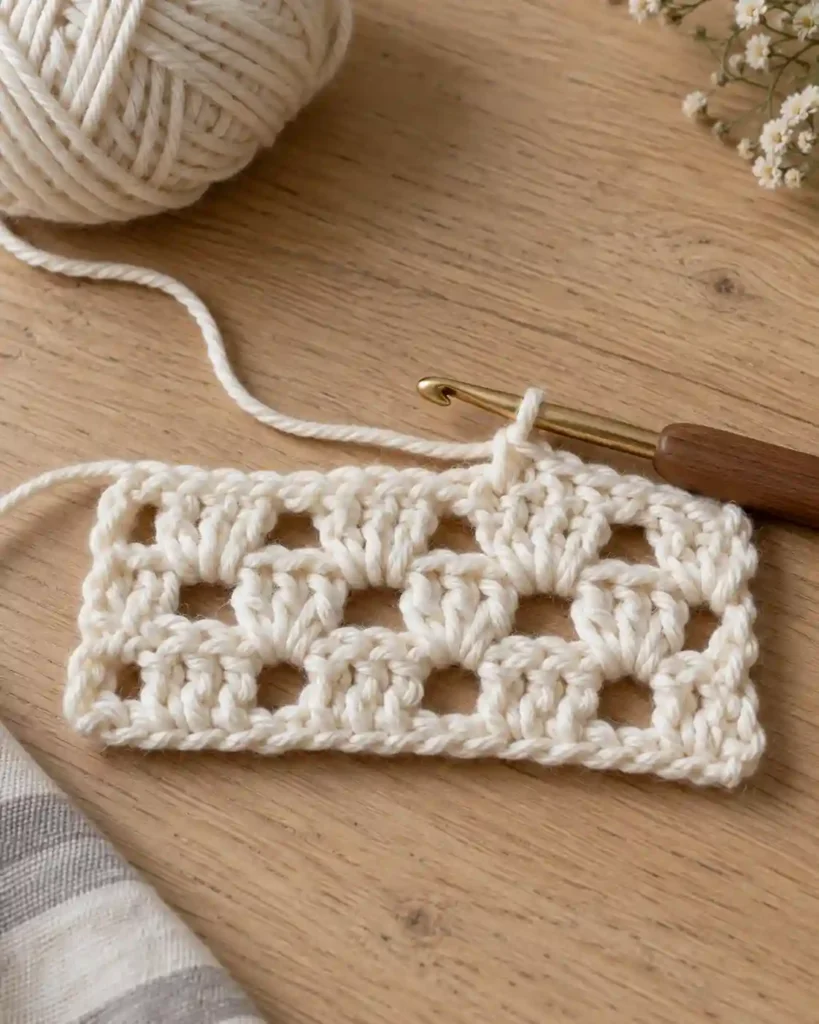
The classic granny stitch in rows is a lovely first project because its rhythm becomes familiar surprisingly quickly. Instead of working complicated stitch combinations, you simply build clusters across the row and place new groups into the gaps below.
A small practice strip is more useful than jumping straight into a large blanket, especially when you’re still learning to recognize the turning stitches. Once your edges look even, extend the strip into a scarf or a simple rectangular panel.
Best for: Beginners who want a versatile stitch they can use in many different projects.
2. What Changes When Granny Stitch Is Worked in the Round?
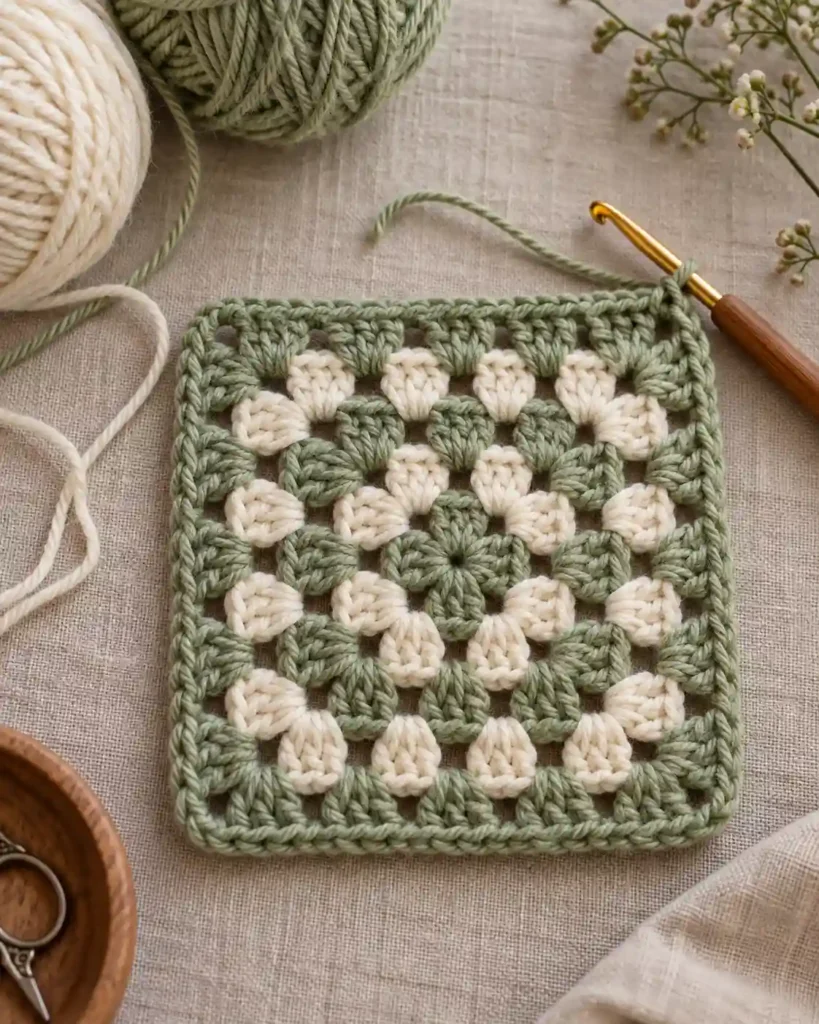
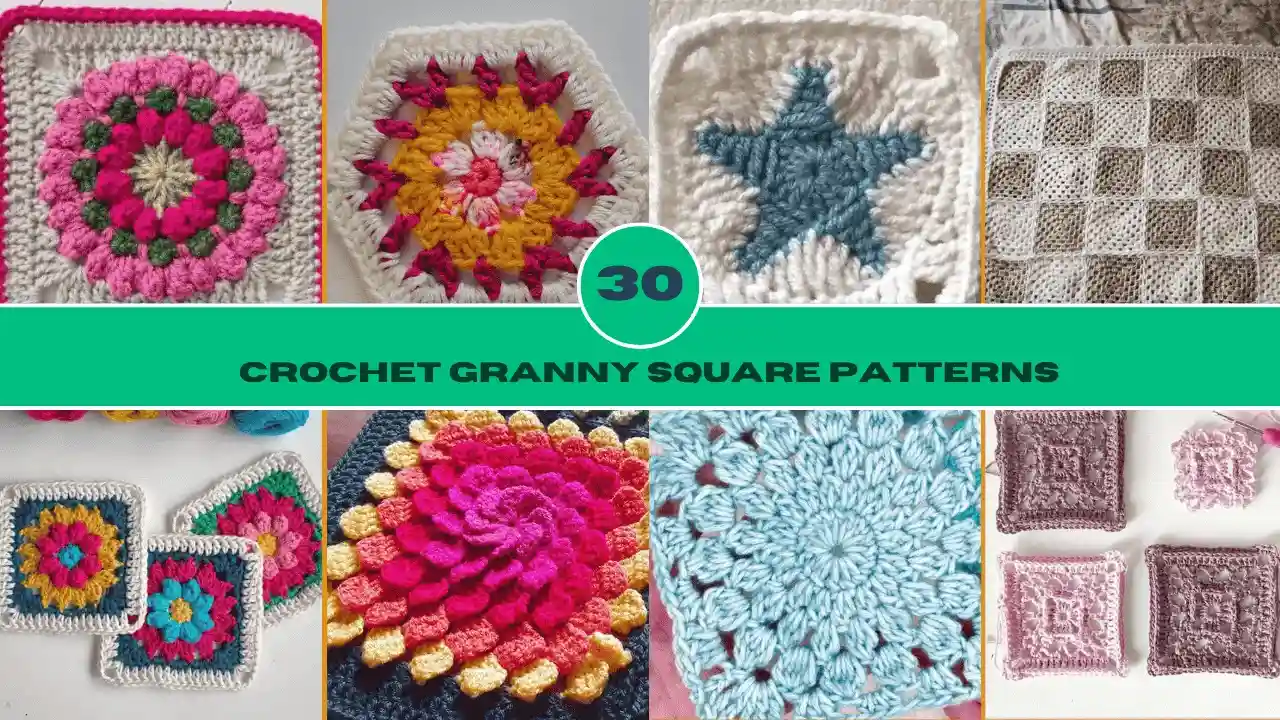
Working granny-style clusters in the round creates an entirely different construction from straight granny stripes. Traditional granny squares grow outward from a center, with corner spaces and increases allowing the square to expand evenly. Explore these crochet granny square patterns for more motif ideas and creative project inspiration.
This is especially useful when you want modular pieces that can later be joined into something larger. Imagine making a handful of small squares during quiet evenings and eventually turning them into a colorful cushion or blanket.
Best for: Crocheters who enjoy portable projects and mixing colors.
3. What Makes the Drunken Granny Stitch Different?
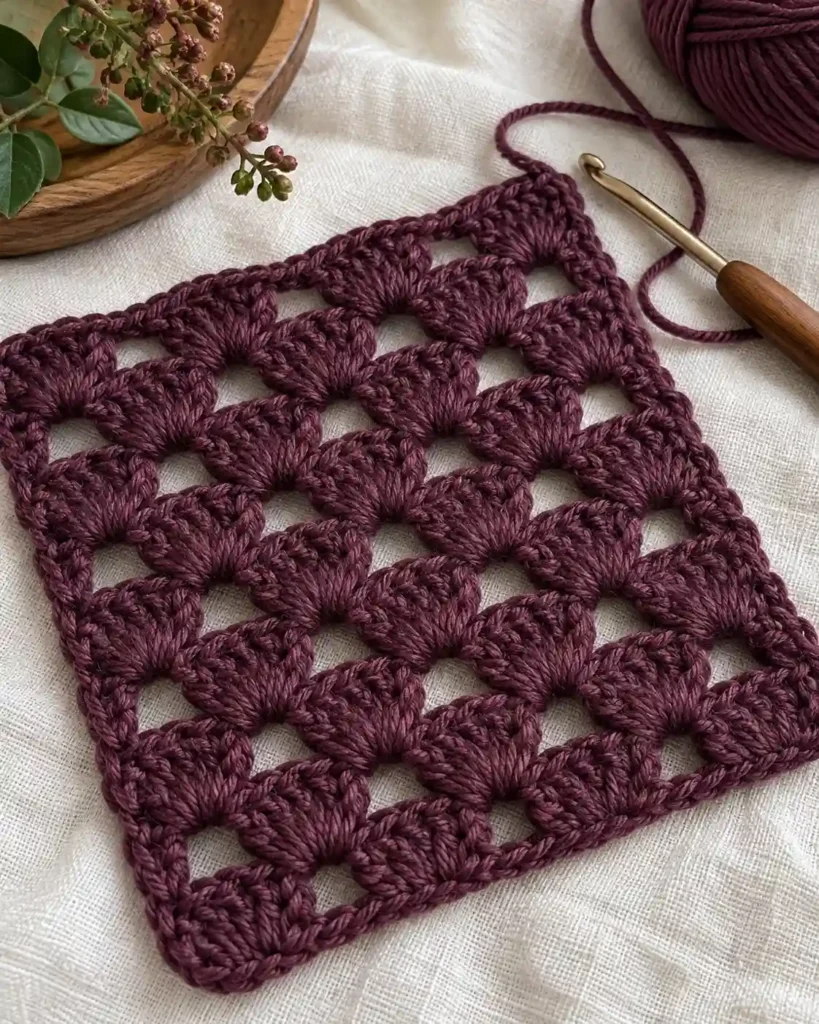
The drunken granny stitch brings a playful, staggered texture to the familiar granny-style look. Its offset, shell-like arrangements feel more decorative than ordinary straight granny rows, which makes the fabric interesting even when you use only one color.
Deep plum, dusty blue, or soft sage can make the texture stand out without requiring busy stripes. Try a small swatch first because the stitch arrangement and starting multiple depend on the particular pattern you’re following.
Best for: Decorative scarves, cushions, and textured blankets.
4. How Does the Diamond Granny Stitch Create Its Pattern?
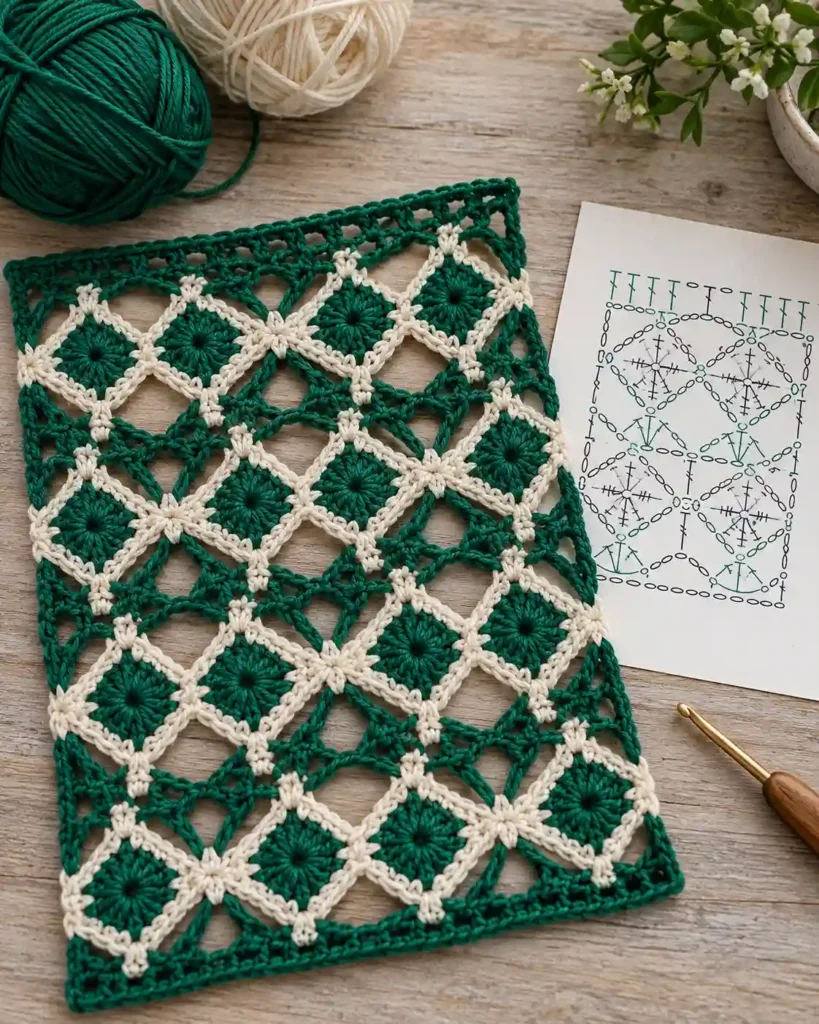
If you enjoy geometric crochet designs, the diamond granny stitch is worth exploring. Its diagonal openings or grouped stitches create a repeating diamond effect that looks especially striking when highlighted with contrasting colors.
A combination of emerald green and cream would make a dramatic blanket, while softer neutrals could create a more understated look. Unlike a simple granny stripe, this design often requires careful attention to the chart and stitch placement.
Best for: Intermediate crocheters who love structured geometric patterns.
5. Where Does Granny Spike Stitch Get Its Texture?
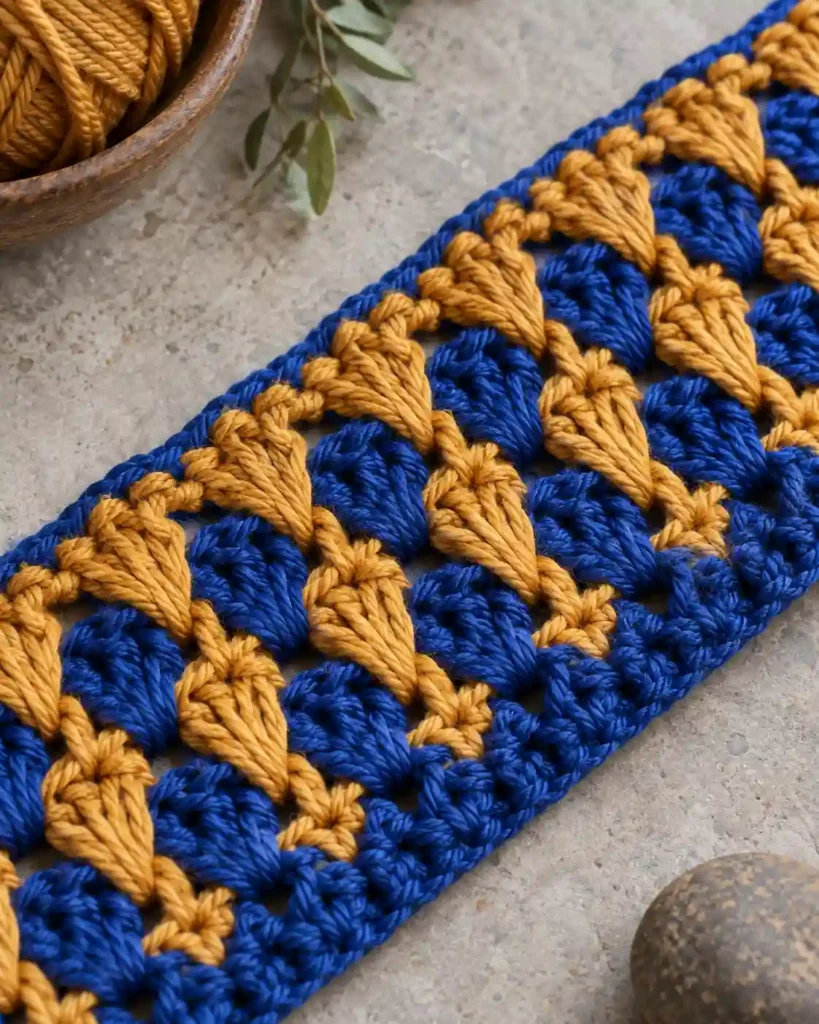
Granny spike stitch introduces longer stitches that reach into lower rows, adding depth and movement to the fabric. The contrast is particularly noticeable when you alternate two yarn colors, allowing the elongated stitches to stand apart from the surrounding clusters.
Consider cobalt blue with warm mustard for a bold piece, or cream with olive green for something softer. Keep your tension relaxed when making the longer stitches so the fabric doesn’t pull inward.
Best for: Colorful blankets and statement accessories.
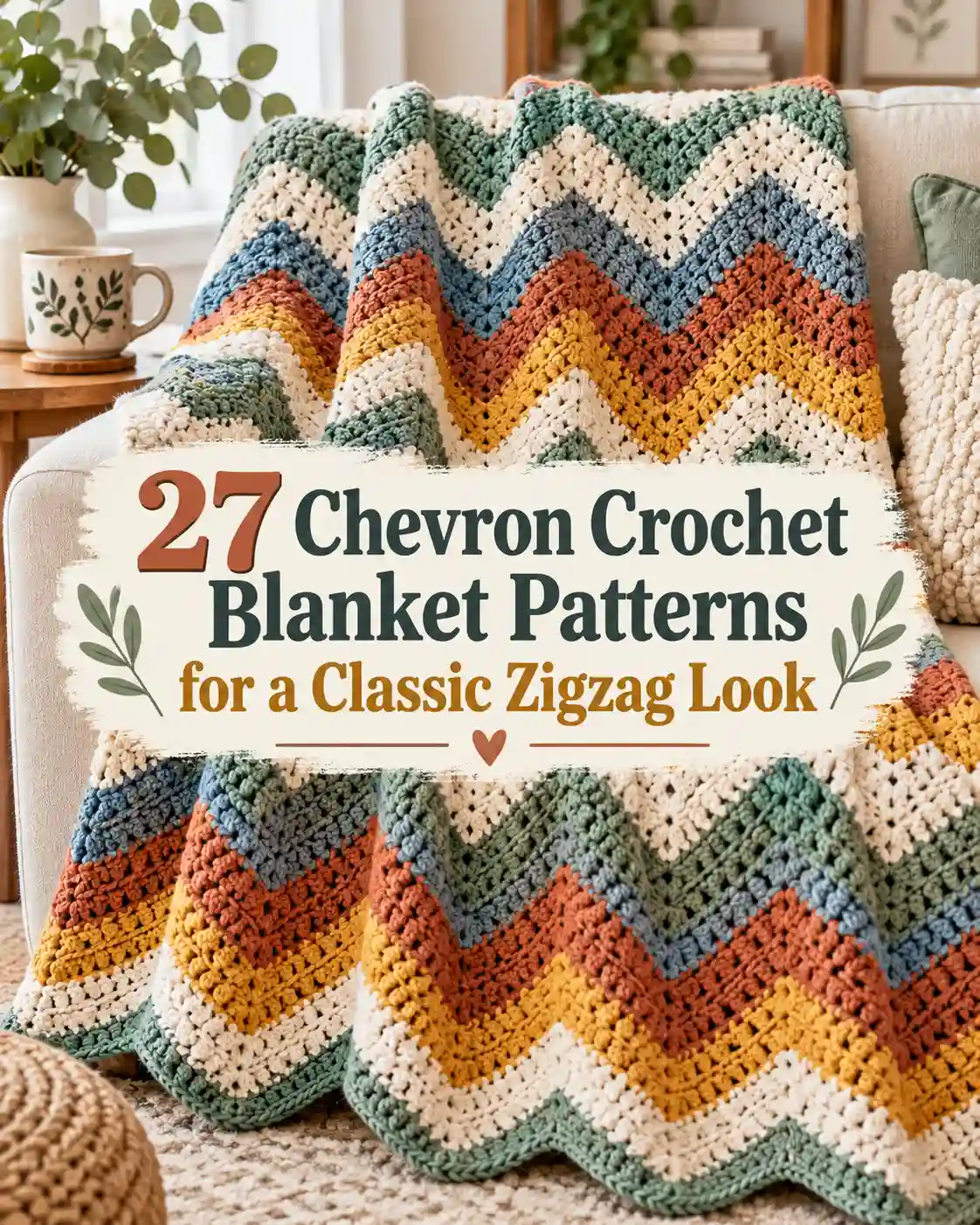
6. How Do Granny Ripple Rows Form Zigzags?
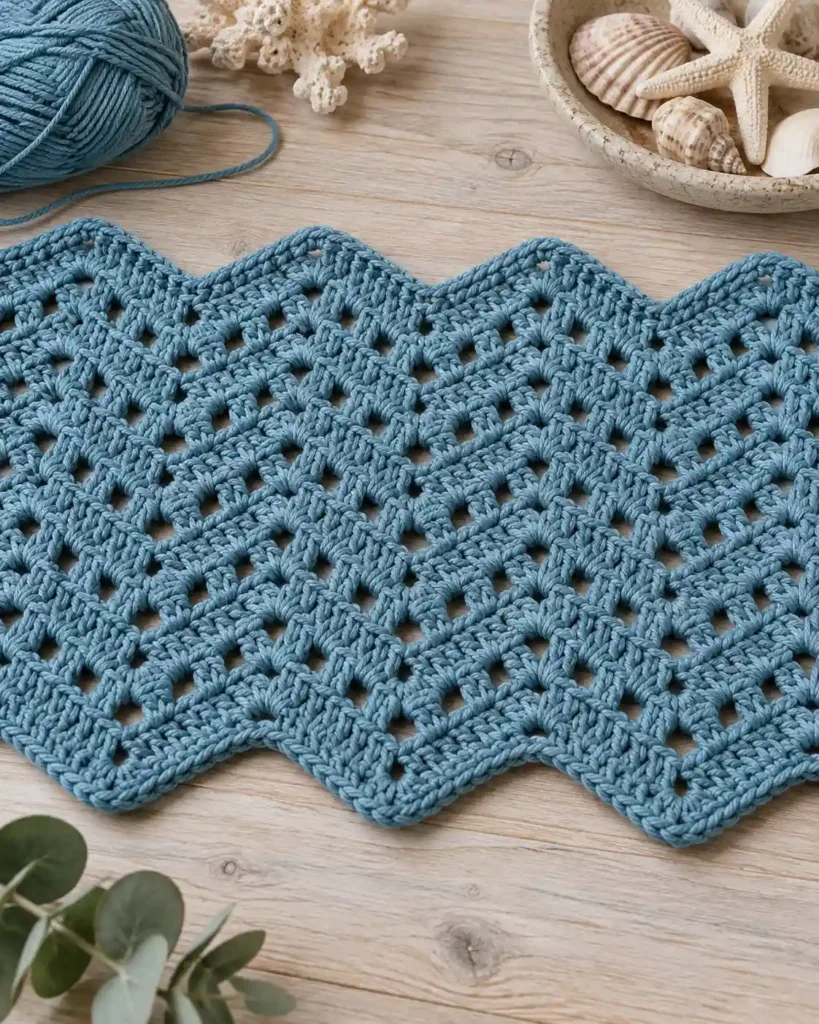
Granny ripple stitch combines the charm of granny-style clusters with the peaks and valleys of a chevron design. Carefully placed increases and decreases guide the fabric into beautiful waves rather than ordinary straight stripes.
For a seaside-inspired blanket, try alternating pale blue, sandy beige, and white. It is more involved than a basic granny stitch because the stitch repeat must remain consistent, but the finished waves make the extra counting worthwhile.
Best for: Intermediate makers who want a colorful, flowing blanket.
7. When Should You Try a Granny V-Stitch Variation?
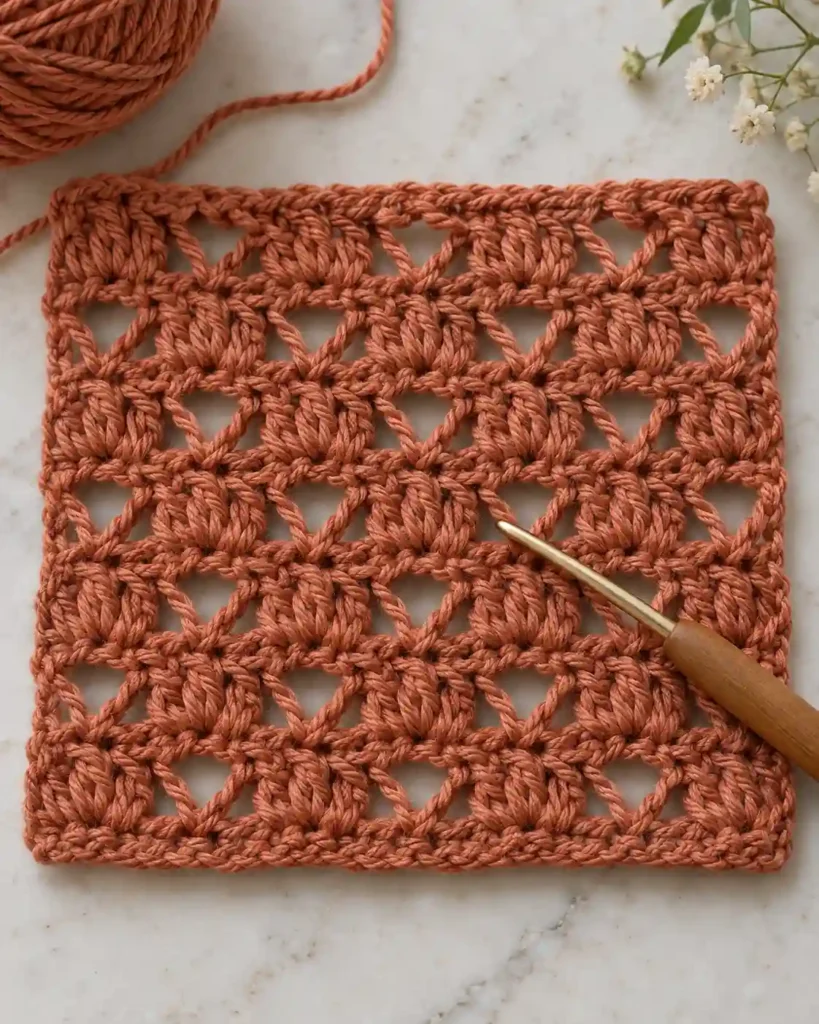
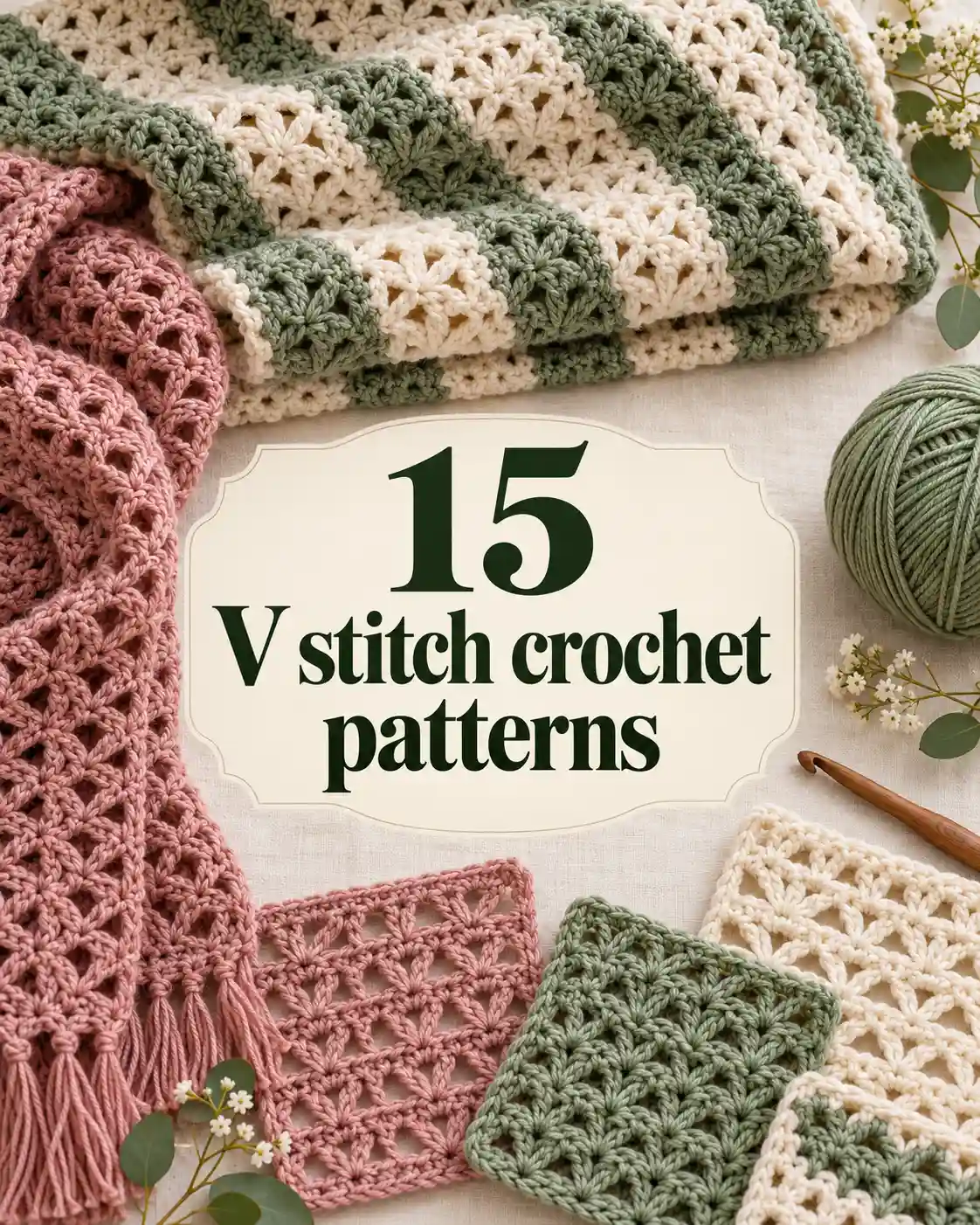
A granny V-stitch variation is a lovely option when you want fabric with more visible openings. Depending on the pattern, V-shaped stitch groups may alternate with granny-style clusters to create a lighter texture.
This can be especially attractive in a spring scarf or breathable shawl where a dense fabric would feel too heavy. Since V-stitch and granny-cluster instructions vary among designers, check the stitch definitions before beginning.
Best for: Lightweight accessories and airy decorative projects.
What Granny Stitch Blanket Ideas Are Best for Beginners?
Rectangular granny stripe blankets are among the easiest granny stitch projects because they use repetitive clusters, require little shaping, and allow flexible color and size choices.
At a Glance
- Classic throw: Simple rectangular rows for everyday use
- Baby blanket: Soft, washable yarn and secure finishing
- Color-block afghan: Wider stripes for a modern appearance
- Granny square blanket: Individual motifs joined into patchwork
Blankets are among the most practical ways to explore crochet granny stitch patterns. Large, uncomplicated surfaces let the repeating clusters shine, and simple color changes can make even a basic design feel special.
8. Everyday Granny Stitch Throw Blanket
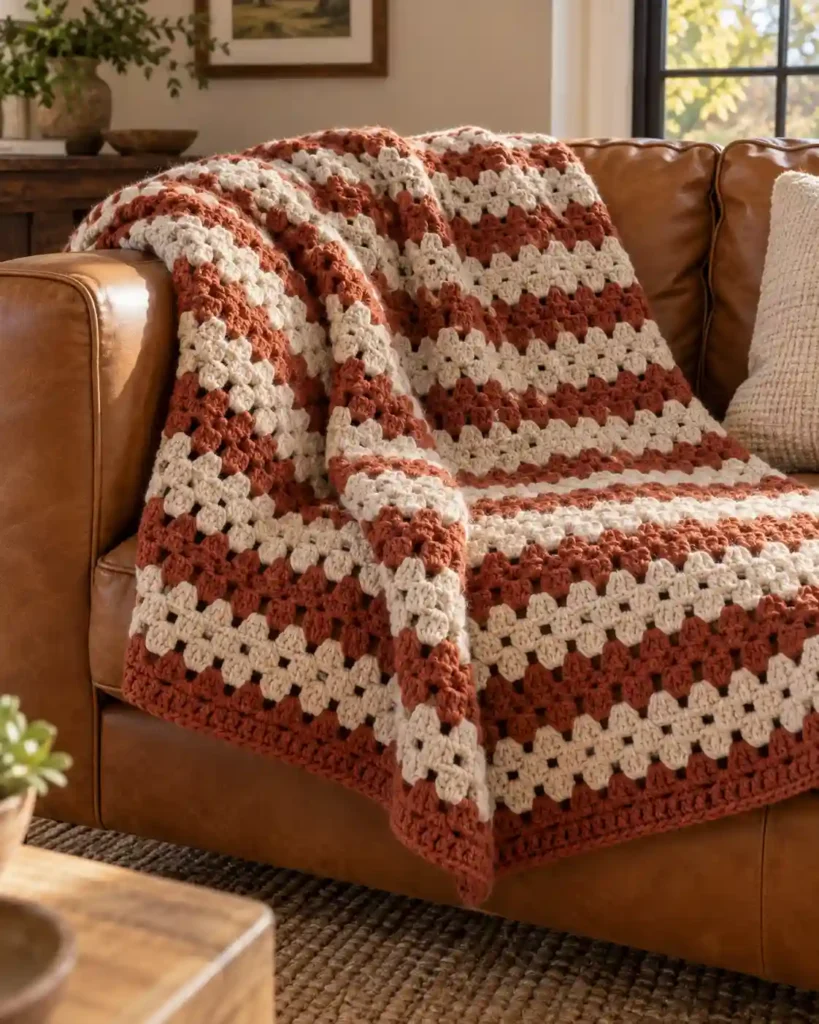
An everyday granny stitch throw blanket brings warmth and handmade texture to a sofa without looking overly complicated. The rectangular shape makes it approachable, while alternating stripes of oatmeal, rust, or muted green can give it a cozy, modern appearance. For more cozy designs and inspiration, explore these crochet throw blanket ideas.
Try choosing soft, washable yarn if the blanket will be used regularly rather than displayed as decoration. A simple border can tidy the edges and make the finished piece look more polished.
Best for: First large crochet projects, living-room decor, and practical handmade gifts.
9. Why Choose a Soft Granny Stitch Baby Blanket?
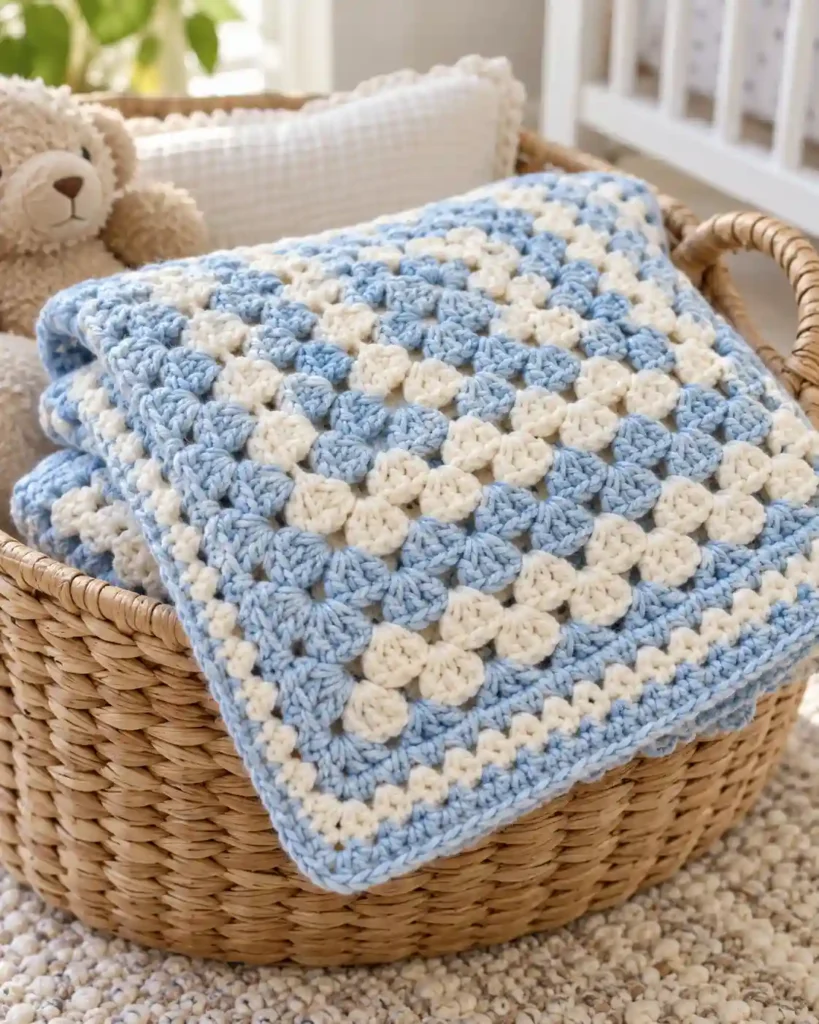
A granny stitch baby blanket is a thoughtful project when you want something personal and easy to customize. Gentle shades of sky blue, cream, blush, or soft yellow pair beautifully with the repeating openwork.
Choose washable yarn that feels comfortable against delicate skin and secure every yarn end carefully. Avoid adding loose buttons, beads, or detachable decorations.
One important safety note: The American Academy of Pediatrics recommends keeping loose blankets and other soft objects out of an infant’s sleep space. A handmade baby blanket is better reserved for uses such as supervised awake-time cuddling rather than an unattended crib.
Best for: Baby shower gifts and supervised family keepsakes.
10. Color-Block Granny Stripe Afghan
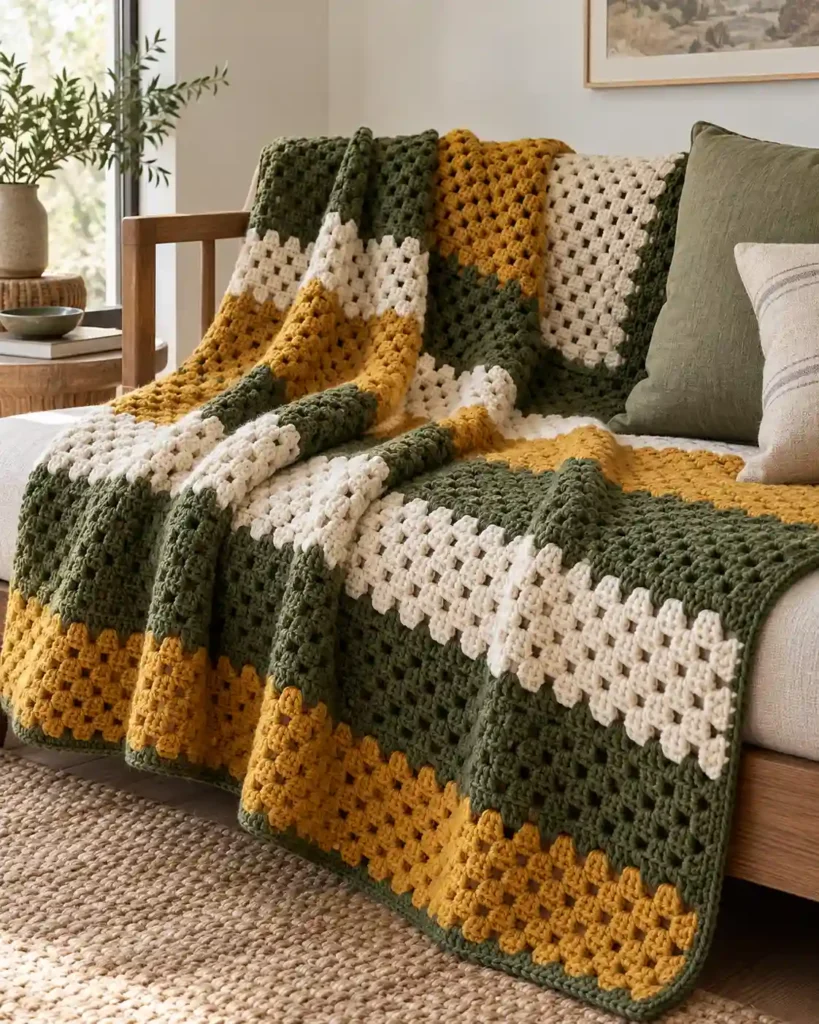
A color-block granny stripe afghan is proof that simple stitches can create a dramatic finished project. Instead of changing color every row, work wider sections in two or three coordinated shades for a clean, contemporary design.
Moss green, mustard, and ecru look especially attractive together, although you could just as easily use leftover yarn from previous projects. Wider color blocks mean fewer transitions, making the work easier to follow while still creating visual interest.
Best for: Modern home decor and crocheters who enjoy planning color palettes.
11. What Makes a Granny Square Cluster Blanket Different?
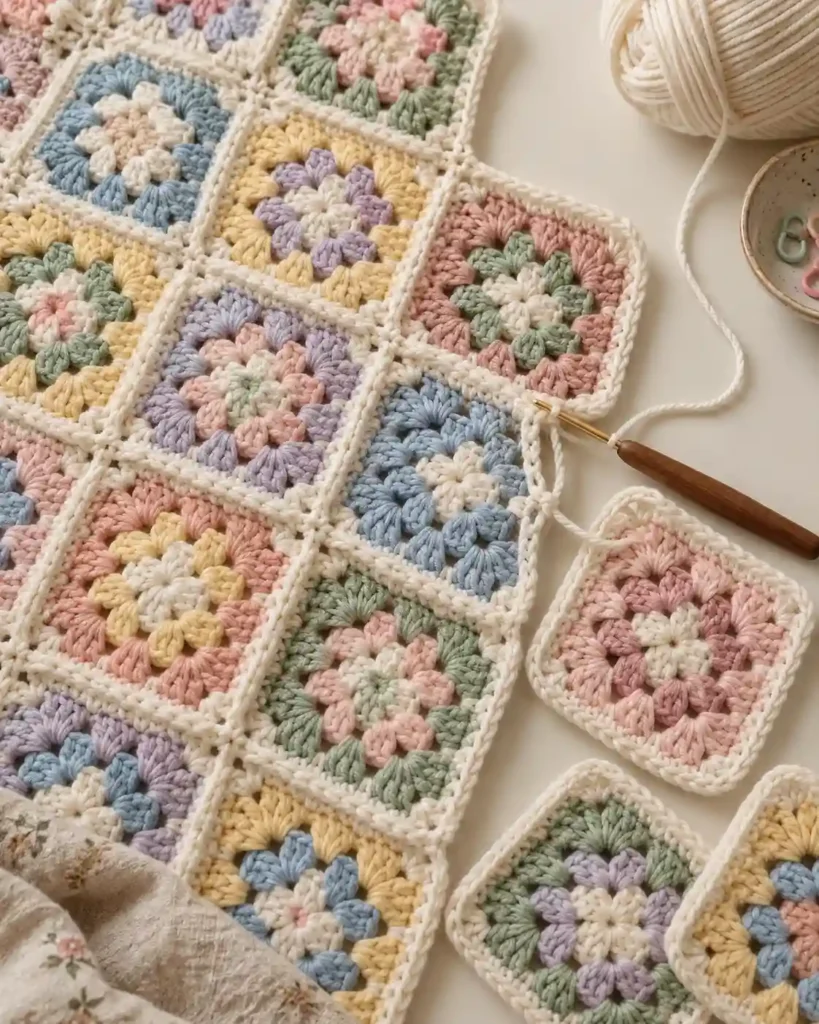
A granny square cluster blanket is assembled from separate motifs instead of one continuous rectangular fabric. Each square can introduce a different color combination, giving the finished blanket a patchwork effect that feels both classic and playful.
This approach is useful when you prefer smaller crochet sessions because you can finish one square at a time. Joining the motifs takes additional work, but it also gives you more freedom to rearrange the design before assembly.
Best for: Scrap-yarn projects, patchwork lovers, and colorful handmade blankets.
Which Modern Granny Stitch Wearables Can You Crochet?
Granny stitch can be used for cardigans, sweaters, summer tops, tank tops, vests, dresses, and skirts when the yarn, garment shaping, and stitch gauge suit the intended fit.
At a Glance
- Cardigans: Relaxed layering with openwork panels
- Sweaters: Cozy textured pullovers
- Tops and tanks: Lightweight warm-weather clothing
- Vests: Versatile layering pieces
- Dresses and skirts: Statement garments requiring careful shaping
Granny stitch isn’t just for blankets anymore. Its open texture can create beautiful garments, especially when you choose yarn with enough drape and take the time to check your measurements.
For fitted garments, make a gauge swatch before committing to full-size panels.
12. Open-Front Granny Stitch Cardigan
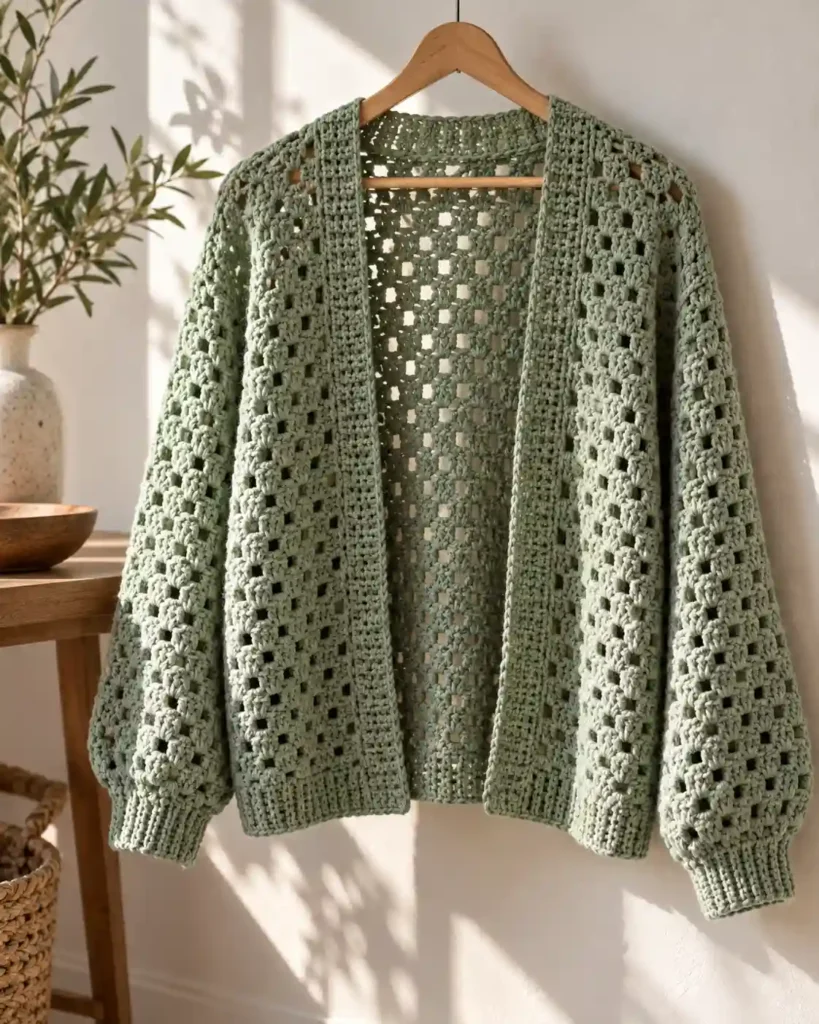
An open-front granny stitch cardigan combines a relaxed silhouette with delicate crochet texture. Simple panels can form the body, while properly shaped sleeves and neat edges make the garment comfortable enough for everyday layering. You can explore more easy crochet cardigan pattern ideas to find a style that suits your skill level.
Imagine a soft sage cardigan over a white T-shirt with jeans, or a cream version worn over a casual dress. Lightweight yarn usually helps prevent the finished cardigan from feeling stiff or overly bulky.
Best for: Intermediate crocheters who want a versatile handmade layer.
13. Relaxed Granny Stitch Pullover Sweater
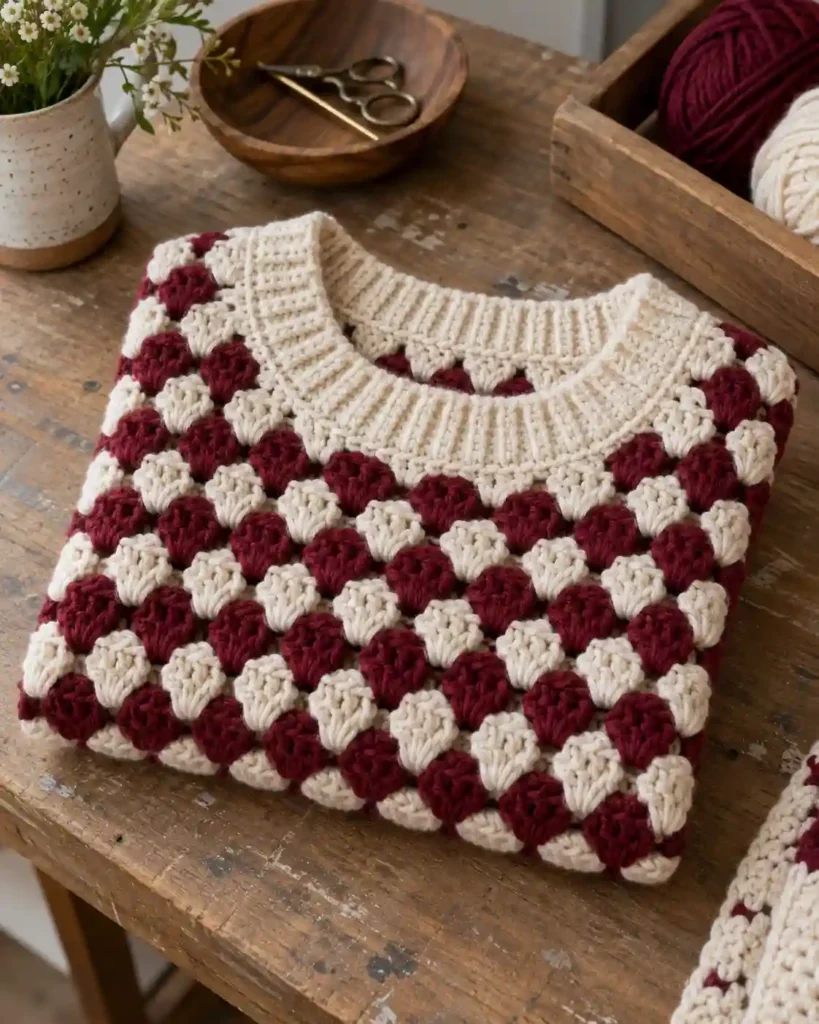
A granny stitch pullover sweater offers a cozy look without requiring a completely solid fabric. The small openings between clusters add texture, while a contrasting neckline or cuff can give the piece a more finished appearance.
Cream and burgundy stripes would work beautifully for colder months, especially with a comfortable amount of ease through the body. Check the neckline, sleeve length, and gauge carefully because sweater proportions matter much more than they do in a blanket.
Best for: Relaxed winter outfits and handmade wardrobe projects.
14. Can a Granny Stitch Summer Top Stay Breezy?
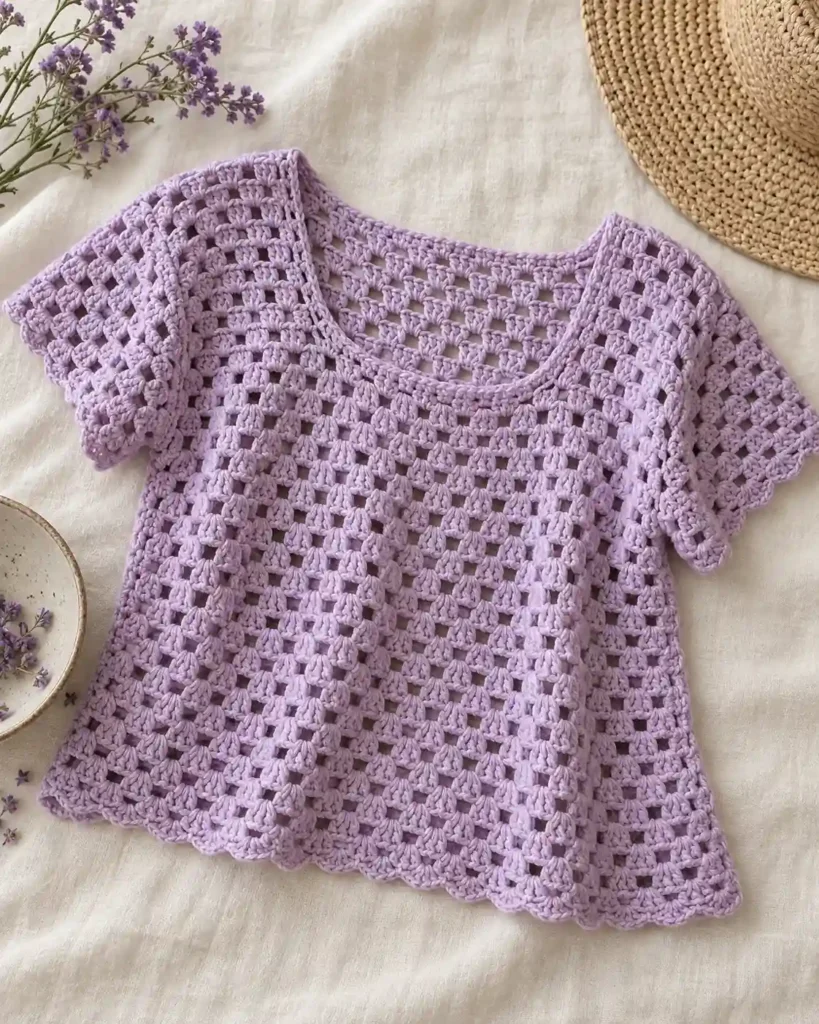
Absolutely. A breezy granny stitch summer top can feel comfortable in warm weather when it is made with suitable lightweight yarn and a relaxed design.
The airy gaps make a boxy short-sleeved top especially appealing over a simple camisole. Try pale lilac, soft ivory, or muted coral for an understated summer look, and pay attention to the openness of the fabric if you prefer additional coverage.
Best for: Warm-weather outfits and confident beginners exploring garments.
15. Simple Granny Stitch Tank Top
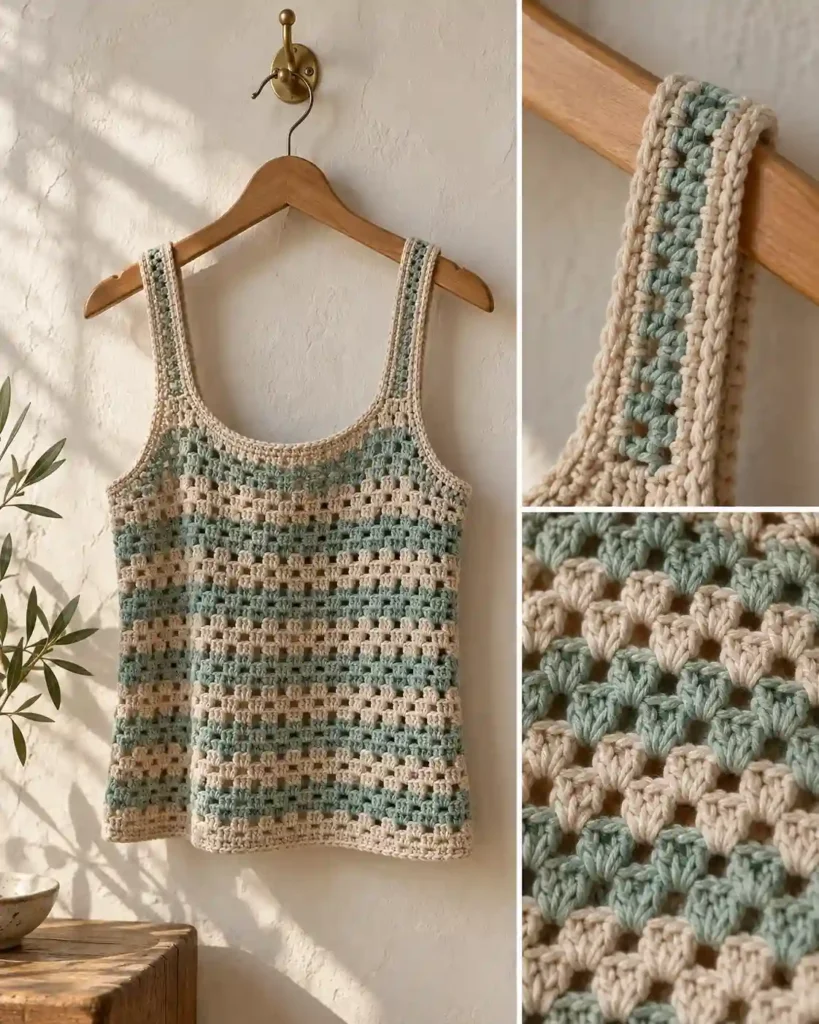
A granny stitch tank top is a stylish choice for summer layering, particularly when you enjoy narrow straps and a clean neckline. Unlike a short-sleeved top, the straps need thoughtful shaping and reinforcement so they can support the garment comfortably. For more warm-weather inspiration, browse these crochet summer tops.
Sand and seafoam stripes would give the tank a fresh coastal feel without overwhelming the stitch pattern. Cotton or an appropriate cotton blend can work well, but always check how the finished swatch hangs before deciding on the final length.
Best for: Intermediate crocheters creating casual summer pieces.
16. Layering Granny Stitch Vest
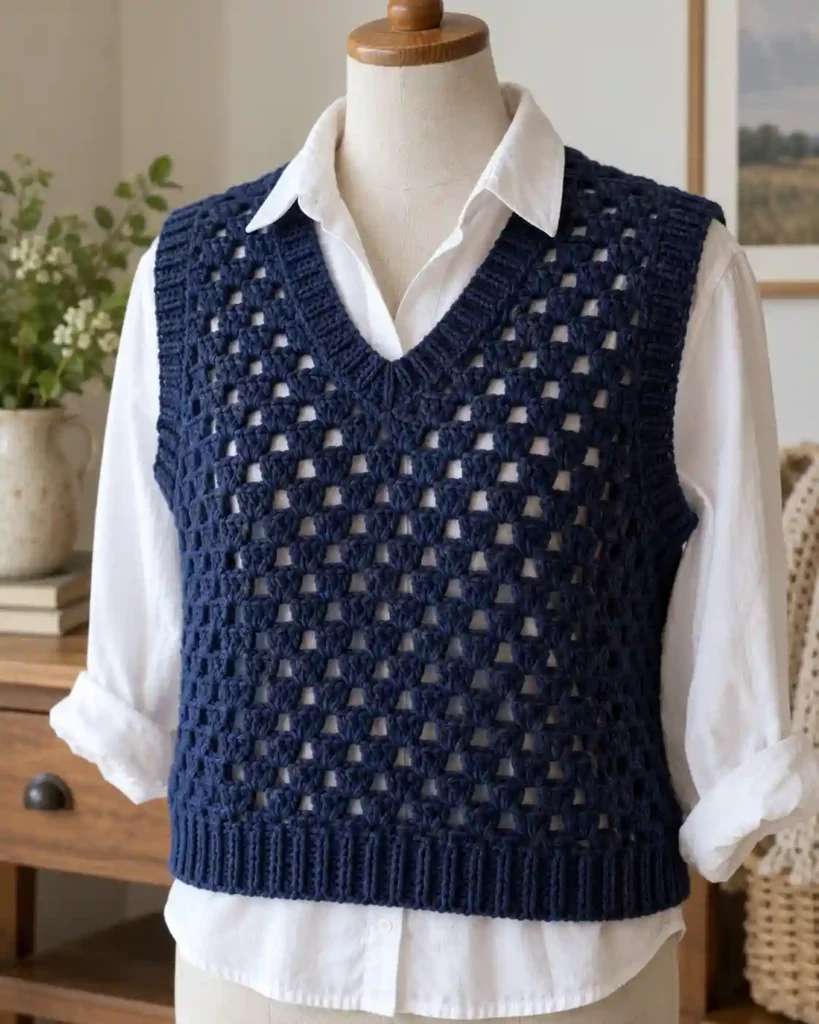
A granny stitch vest is one of those handmade pieces that can transform a simple outfit. Worn over a crisp shirt, fitted top, or lightweight blouse, it adds texture while keeping your arms free.
A navy vest with a neat ribbed hem feels classic, while a multicolored design looks more playful. The most important details are comfortable armholes and a neckline that sits properly without pulling.
Best for: Transitional weather, everyday layering, and modern crochet wardrobes.
17. How Do You Wear a Statement Granny Stitch Dress?
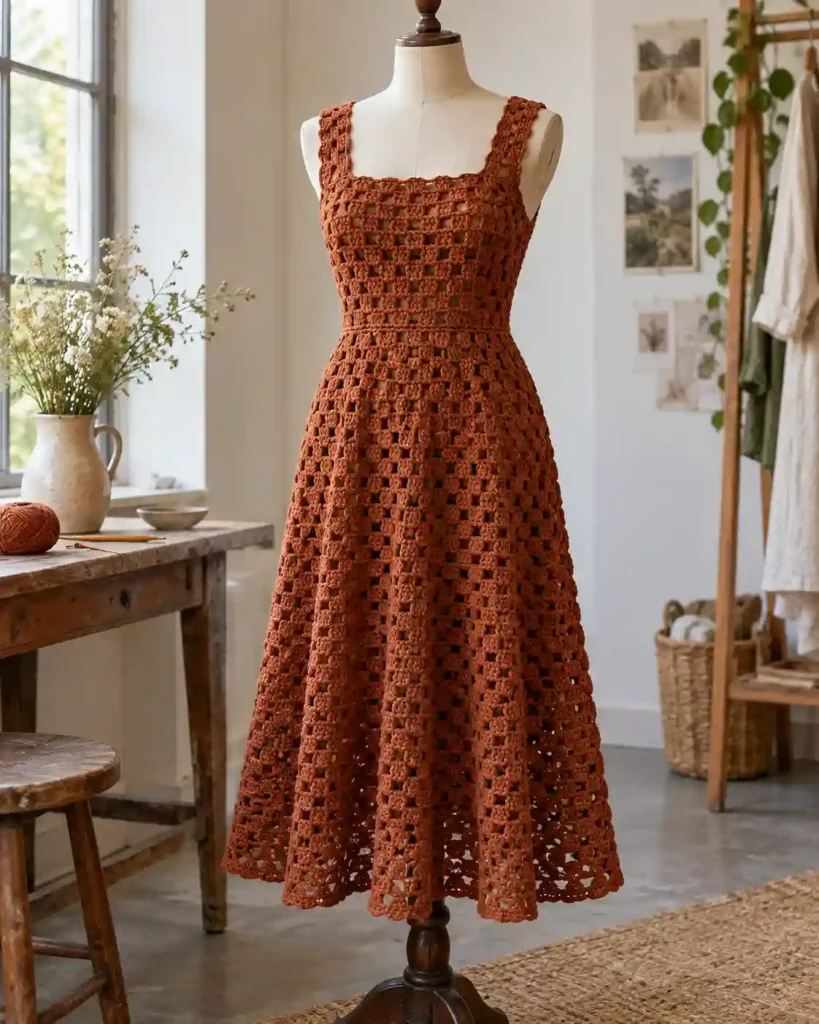
A granny stitch dress makes a beautiful statement because the openwork fabric is decorative on its own. A gently flared silhouette in rust, cream, or earthy green can create a relaxed, vintage-inspired look.
Because dresses involve considerable fabric weight and fit adjustments, they need more planning than small crochet accessories. A lining or slip can also be important for comfort and coverage, especially when the granny clusters create larger openings.
Best for: Experienced crocheters who enjoy ambitious wearable projects.
18. Granny Stitch Midi Skirt
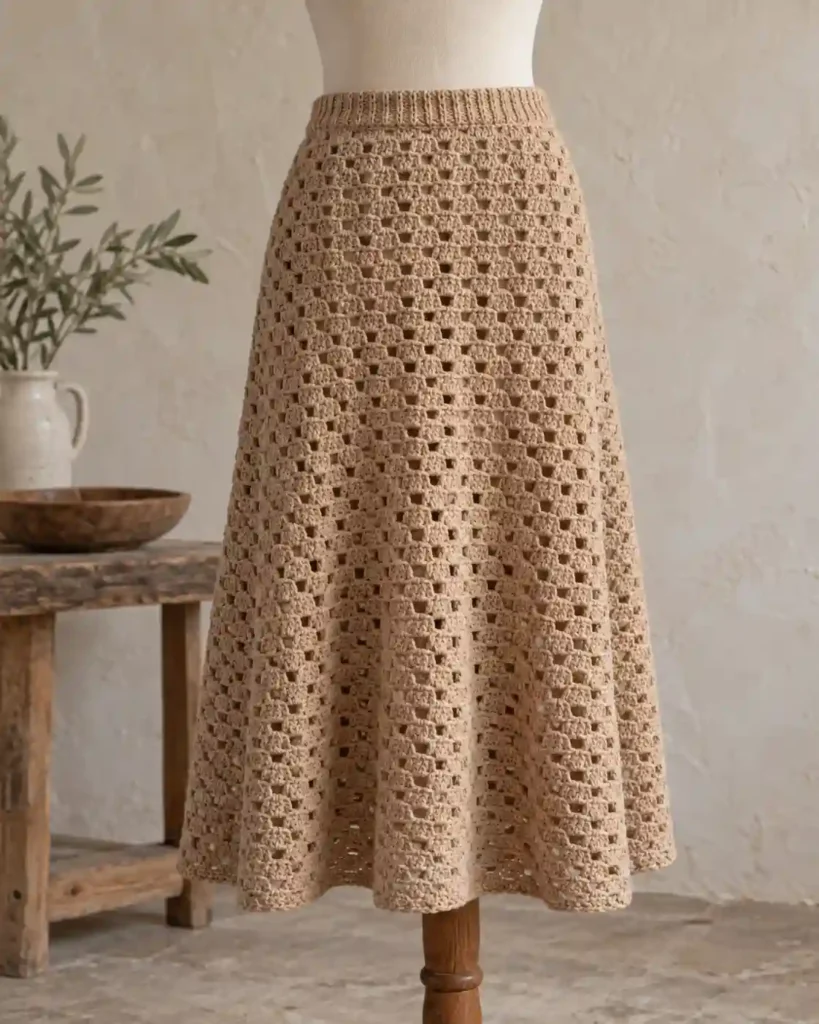
A granny stitch midi skirt is a charming way to include crochet texture in a contemporary outfit. Its repeating clusters add visual interest, while a simple neutral color keeps the skirt easy to style.
A soft tan version paired with a plain blouse and sandals would feel effortless for warmer days. Focus on the waistband, lining, and overall drape, since crochet fabric can stretch under its own weight.
Best for: Intermediate makers who want a distinctive wardrobe piece.
What Granny Stitch Hats and Accessories Can You Make?
Smaller accessories are ideal when you’re short on time or don’t want to begin another large project. They’re also a convenient way to practice shaping and experimenting with color.
19. Is a Granny Stitch Bucket Hat Good for Summer?
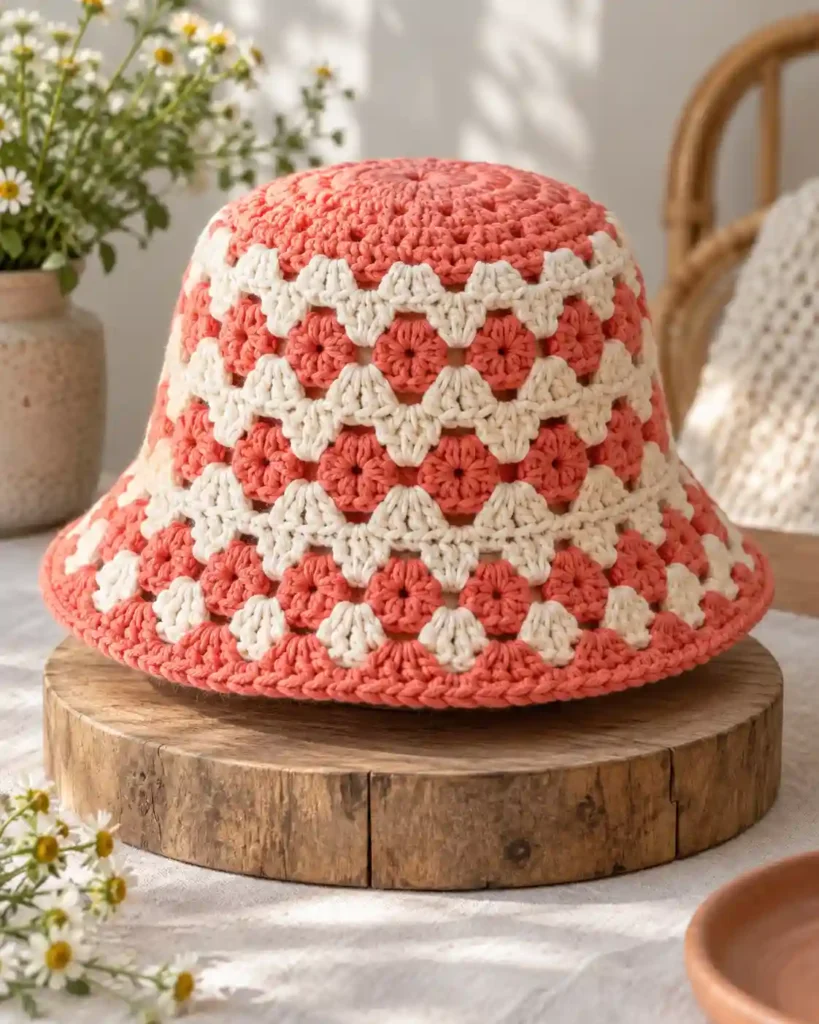
A granny stitch bucket hat adds a playful handmade touch to casual summer outfits. Its rounded crown and softly shaped brim create a different challenge from a flat scarf, making it a useful project for improving crochet shaping.
Coral and cream stripes would look cheerful for a beach-inspired style, while solid olive or beige creates a quieter finish. Remember that airy crochet fabric doesn’t provide reliable sun protection on its own, so choose a denser, suitable construction when shade is important.
Best for: Casual summer styling and intermediate crochet projects.
20. Cozy Granny Stitch Beanie
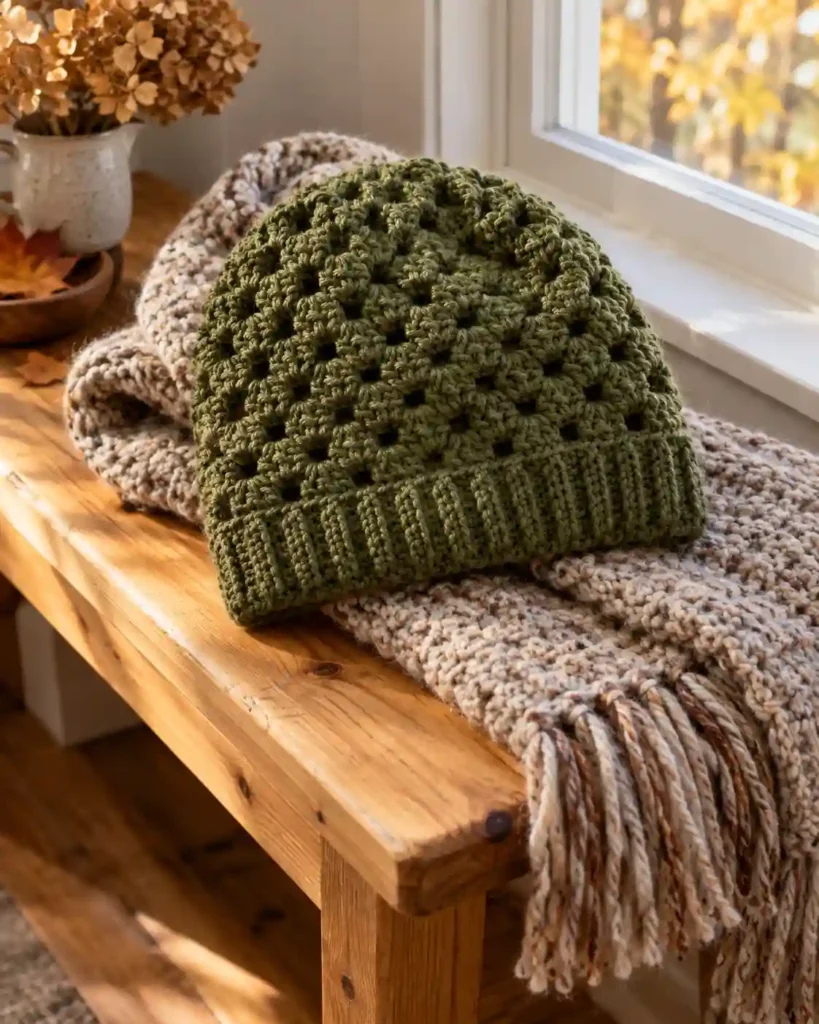
A cozy granny stitch beanie gives traditional crochet clusters a practical cold-weather purpose. Pairing the textured body with a snug ribbed band can help the hat sit more securely around the head.
Olive green, charcoal, or burgundy make lovely winter choices, especially when worked in soft yarn. Compared with a bucket hat, a beanie needs a closer fit, so checking the intended head circumference is essential.
Best for: Winter gifts and quick accessories.
21. Long Granny Stitch Scarf
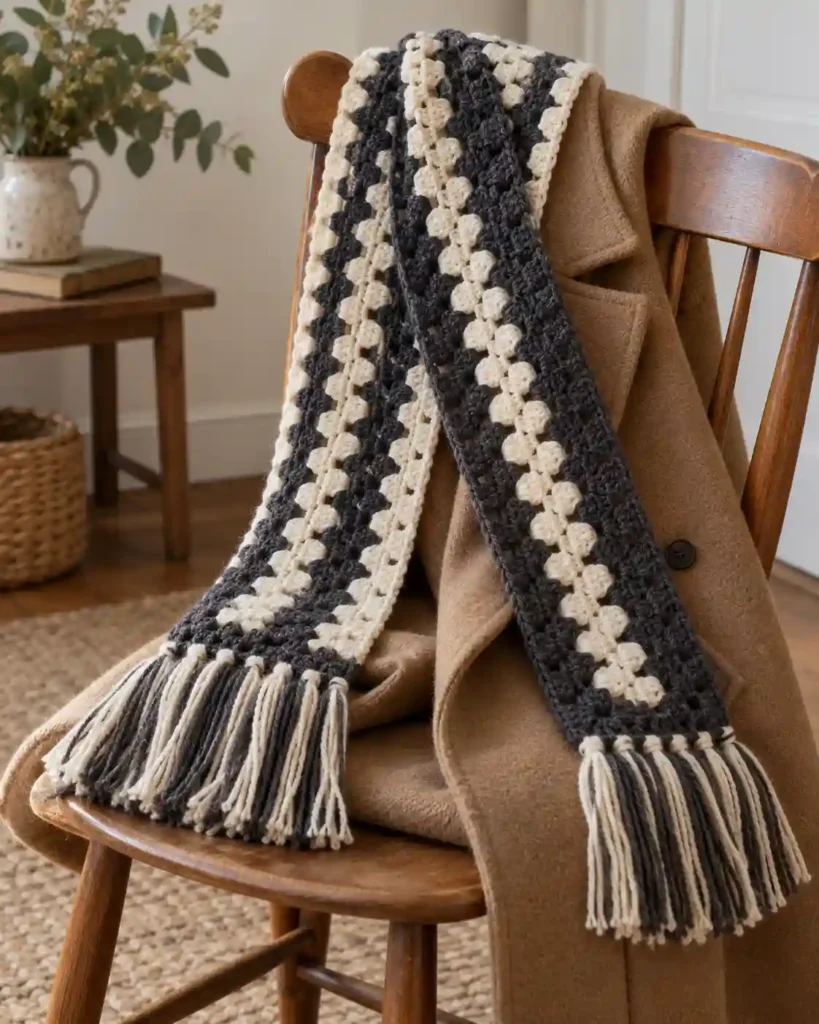
A long granny stitch scarf is one of the simplest wearable projects you can make. Its straight shape gives you plenty of room to practice your clusters, and you can easily adjust the length as you go.
Try charcoal and cream stripes for a timeless winter accessory or use self-striping yarn to create changing colors without frequent yarn joins. A small fringe at either end is optional, but it can make the scarf feel especially cozy.
Best for: Beginners making their first wearable crochet project.
22. How Do You Shape a Triangle Granny Stitch Shawl?
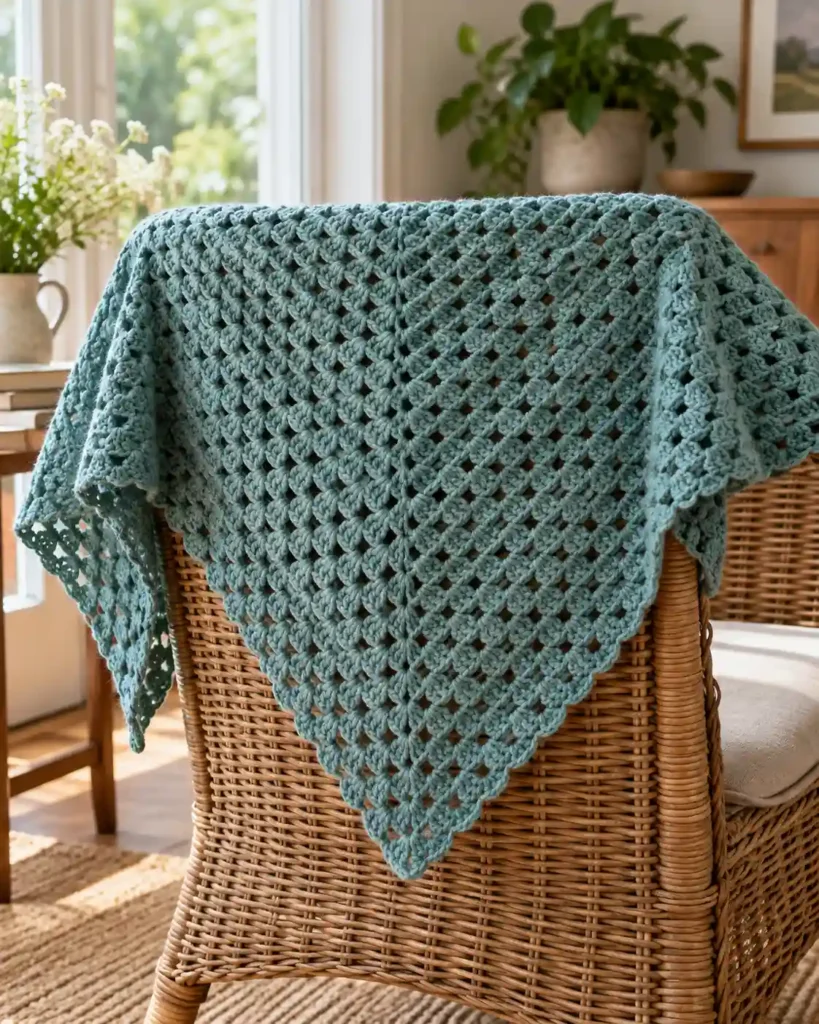
A triangle granny stitch shawl transforms repeating clusters into a graceful, widening shape. Unlike a straight scarf, it uses planned increases to build its triangular silhouette.
Soft teal, dusty rose, or cream can highlight the delicate openings, especially when paired with lightweight yarn. The finished shawl works beautifully over a simple outfit, and its generous width makes it useful for layering during cool evenings.
Best for: Confident beginners who want to practice increases.
23. Relaxed Granny Stitch Poncho
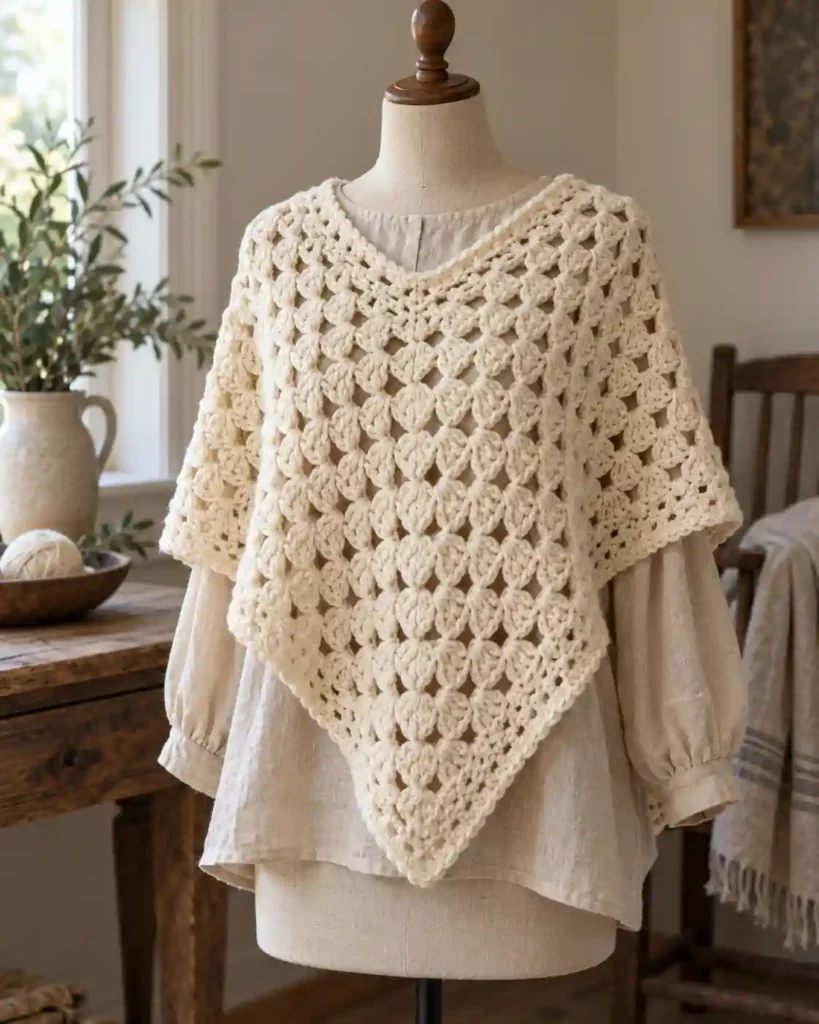
A granny stitch poncho offers a comfortable alternative to a fitted sweater. Its generous shape makes it easy to layer over other clothing, and the repeating stitch clusters create a lovely sense of movement.
You can explore constructions made from joined rectangles or patterns with a more carefully shaped neckline. A cream or soft gray poncho would be easy to pair with everyday clothes, while heavier yarn creates a warmer finish.
Best for: Relaxed layering and intermediate garment practice.
24. Quick Granny Stitch Headband
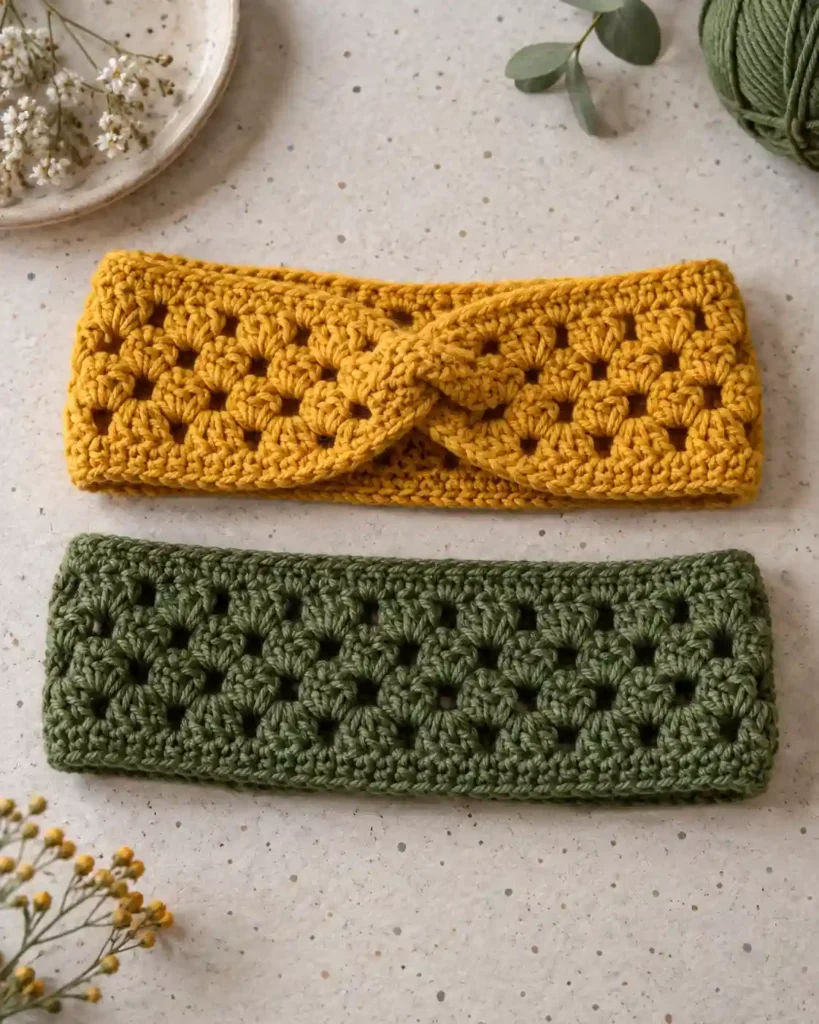
A granny stitch headband is perfect when you want a satisfying project that doesn’t require much yarn. A narrow strip can be joined into a loop, and an optional twist at the front gives it a stylish finish.
This is a useful way to turn leftover yarn into something wearable rather than letting it sit unused. Marigold and moss green would make lovely autumn colors, but a neutral headband can work throughout the year.
Best for: Beginners, small handmade gifts, and scrap-yarn projects.
How Can Granny Stitch Add Texture to Home Decor?
Crochet granny stitch projects don’t have to be large or complicated to make an impact at home. A single handmade accessory can add warmth to an otherwise simple space.
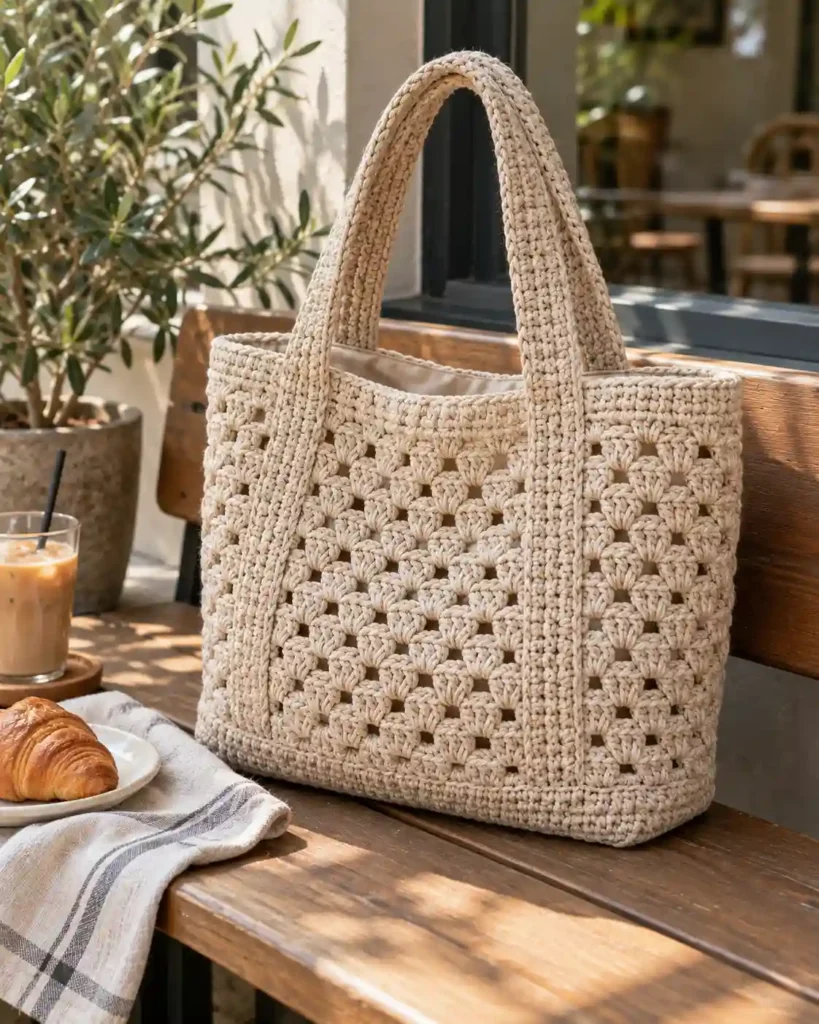
25. How Do You Keep a Granny Stitch Tote Bag Sturdy?
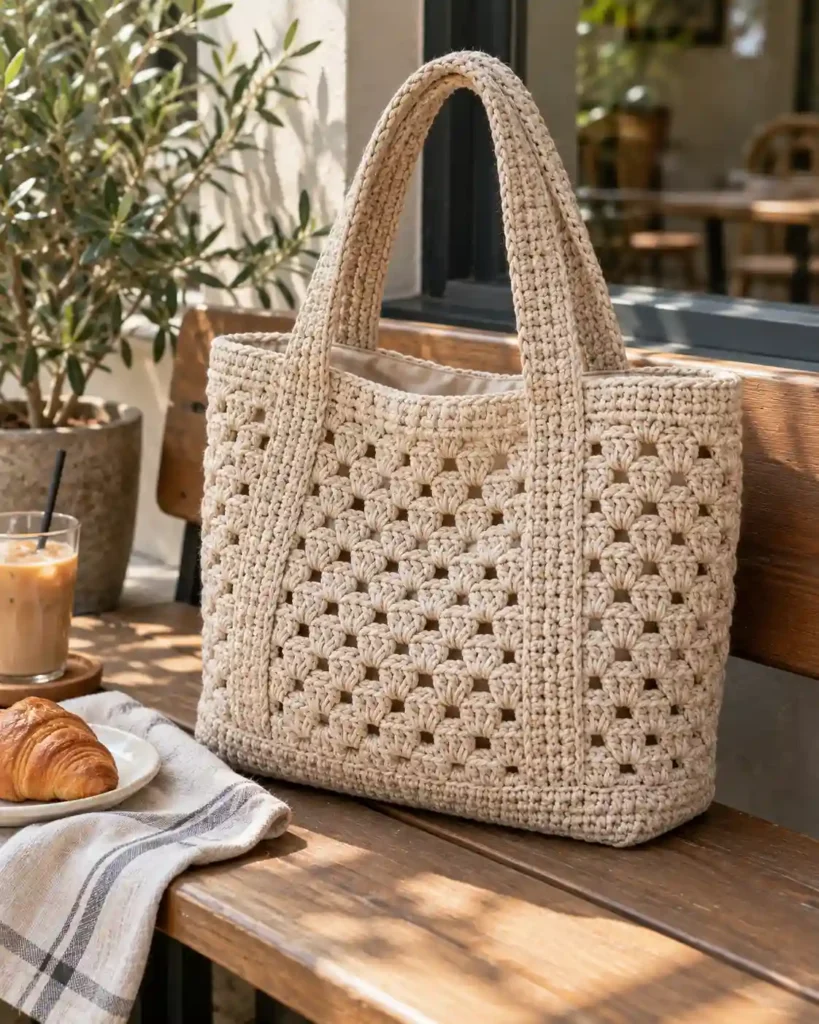
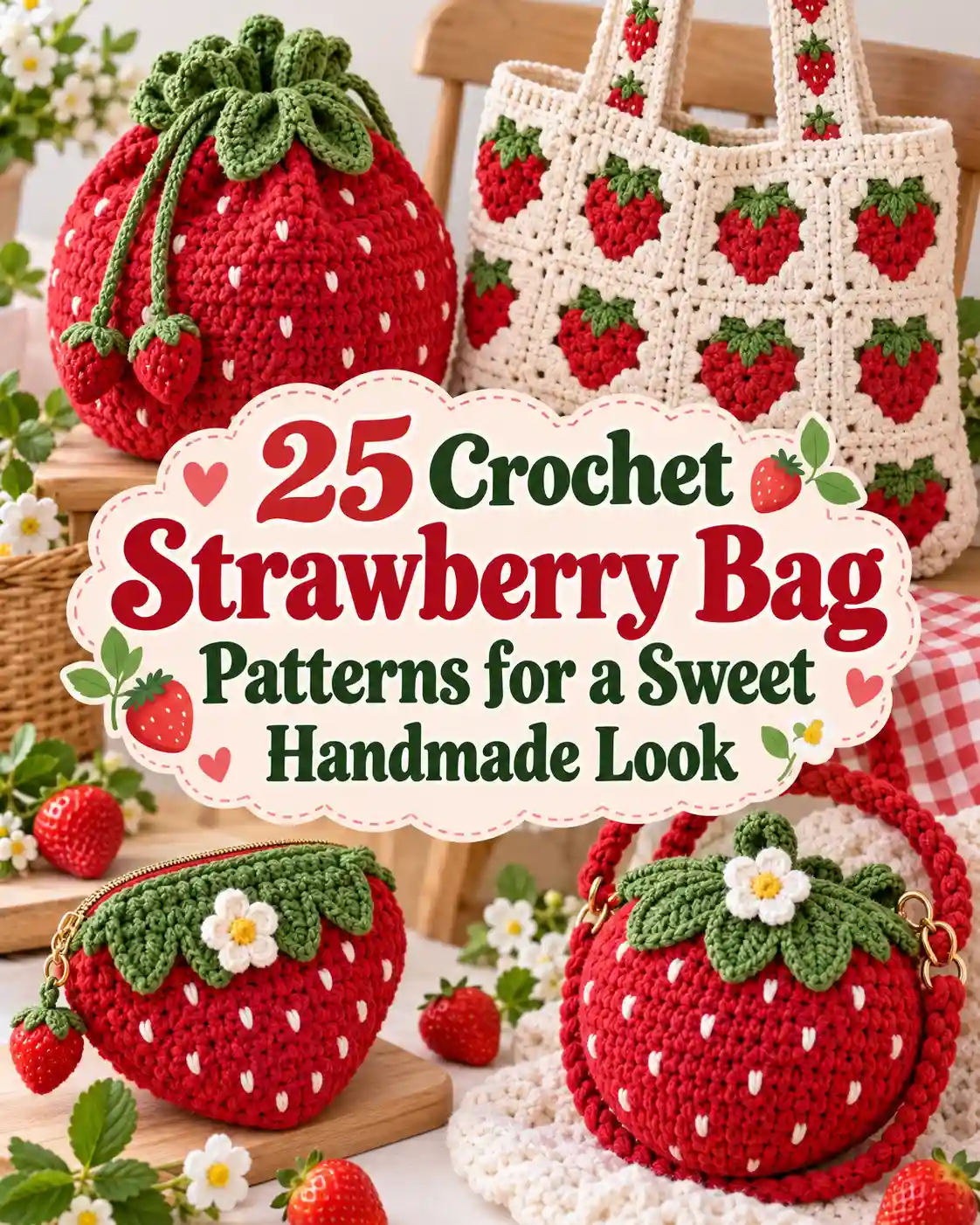
A granny stitch tote bag combines useful storage with a relaxed handmade look. The openwork texture is attractive, but a bag needs more structure than a scarf or decorative blanket. For additional bag designs and construction inspiration, explore these crochet tote bag pattern and instructions.
Try using firm cotton yarn, reinforcing the handles, and adding a lining to prevent smaller belongings from slipping through the gaps. An oatmeal-colored tote with sturdy straps would look lovely for everyday errands or carrying a few lightweight essentials.
Best for: Intermediate crocheters who enjoy practical accessories.
26. Textured Granny Stitch Pillow Cover
A textured granny stitch pillow cover is an easy way to refresh your living room without changing your furniture. The repeating clusters provide decorative detail, particularly when you use a rich color like burnt orange or deep olive.
You can pair a textured front panel with a simpler back for a clean, comfortable finish. Measure your existing pillow insert before starting so the cover fits neatly rather than looking loose or stretched.
Best for: Home-decor enthusiasts and confident beginners.
27. Granny Stitch Table Runner
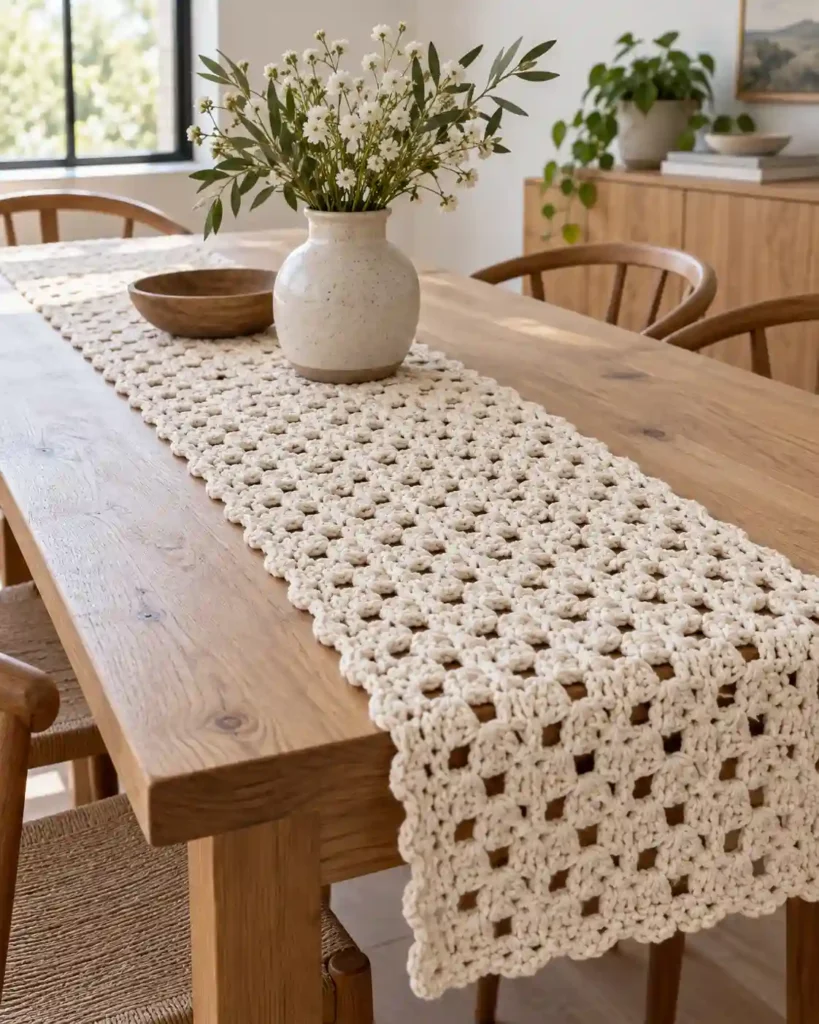
A granny stitch table runner adds soft handmade texture to a dining table, console, or sideboard. Its long rectangular shape makes it approachable, while the openwork looks especially attractive against natural wood.
Try ivory cotton yarn for a timeless style or muted seasonal colors for a festive arrangement. Keep the width proportional to your table and use a neat border to make the edges look intentional.
Best for: Beginner-friendly home decor and thoughtful housewarming gifts.
What Granny Stitch Projects Work for Holidays and Small Gifts?
Seasonal projects are a fun excuse to experiment with colors and smaller designs. They also make it easier to use leftover yarn without committing to another blanket or sweater.
28. Granny Stitch Christmas Stocking
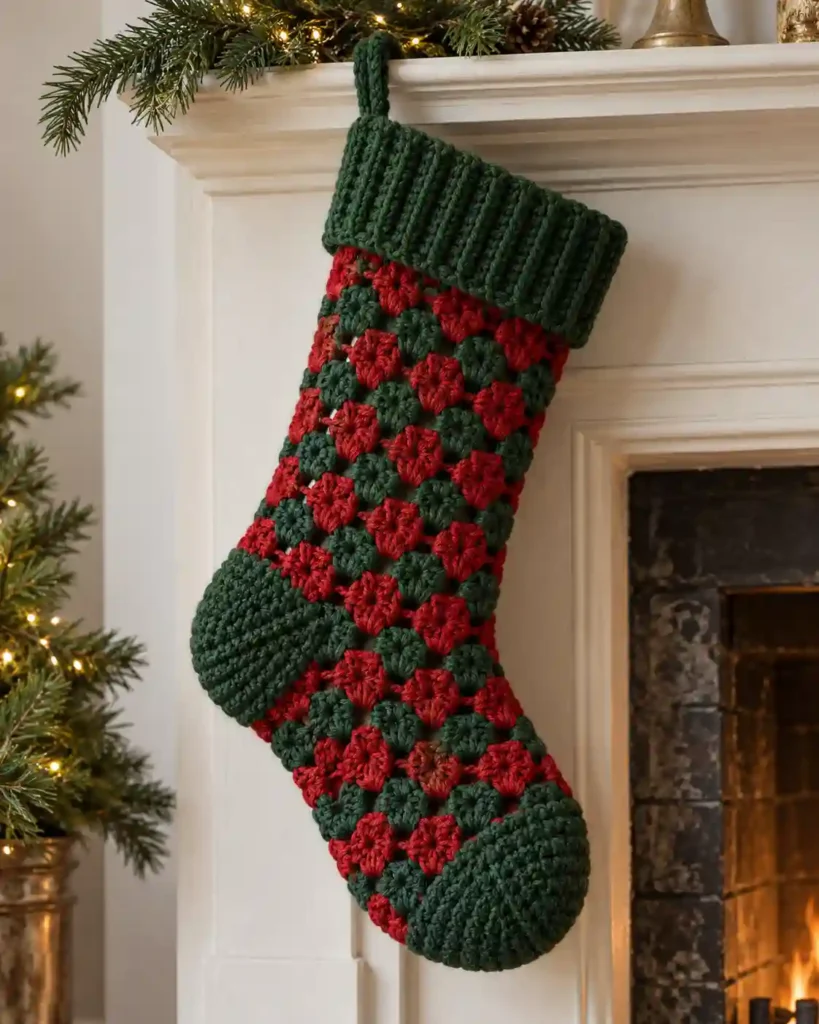
A granny stitch Christmas stocking brings a classic handmade look to holiday decorating. Deep red, forest green, and cream can create a traditional palette, while neutral yarn works beautifully in a minimalist home.
Shaping the toe and heel requires more attention than a simple rectangular project, so a dedicated stocking pattern is helpful. Add a securely attached hanging loop and a firm cuff to keep the stocking looking neat when displayed.
Best for: Holiday decor and personalized Christmas gifts.
29. Mini Granny Stitch Pumpkin
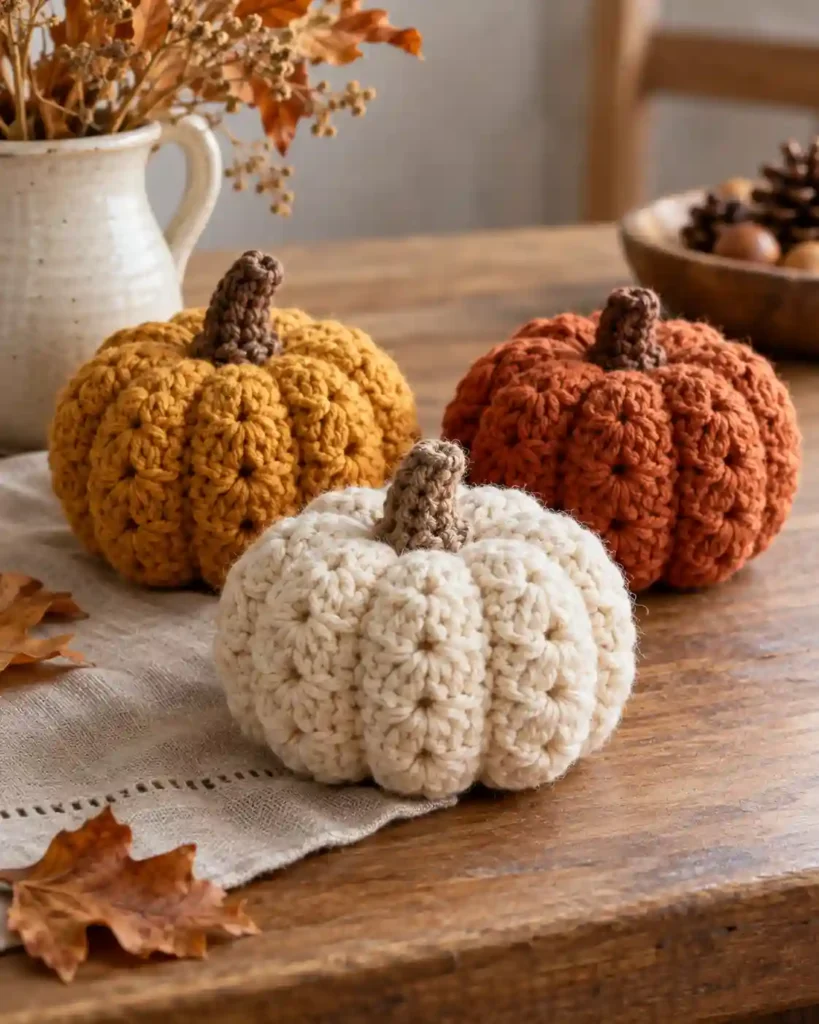
A mini granny stitch pumpkin is a charming autumn decoration with plenty of color possibilities. Small pieces of ochre, rust, or cream granny-cluster fabric can be shaped and assembled into a soft seasonal ornament.
These little pumpkins look particularly sweet arranged in a shallow bowl or alongside other fall decorations. Be sure to close the seams securely, and keep stuffed ornaments with loose parts out of the reach of young children.
Best for: Fall decorating, leftover yarn, and small seasonal projects.
30. Tiny Granny Stitch Heart
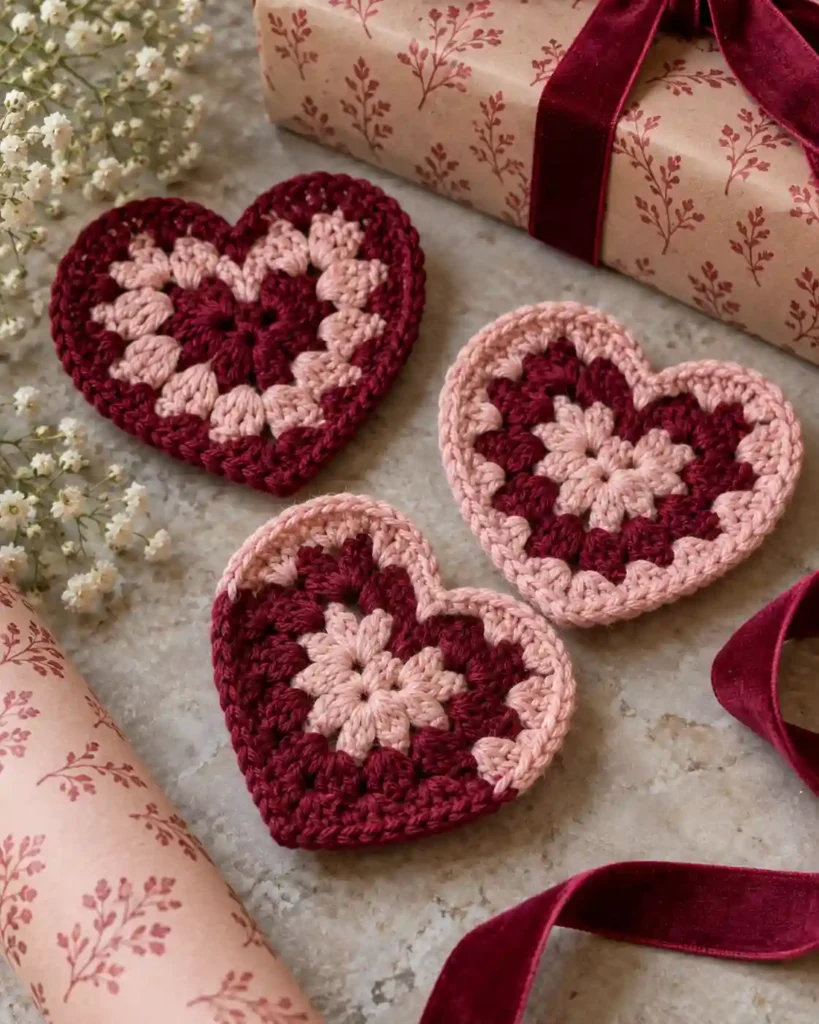
A tiny granny stitch heart is a lovely way to turn a small crochet motif into a personal finishing touch. Unlike a standard granny square, the clusters must be arranged and shaped to form recognizable rounded lobes and a pointed base.
Make several in blush, burgundy, or cream, then use them on handmade gift wrapping or a decorative garland. They’re small enough to experiment with new color combinations without using much yarn.
Best for: Valentine’s Day decorations, handmade cards, and sweet little gifts.
What Is the Difference Between Granny Stitch and Granny Square?
Granny stitch describes a repeating stitch pattern made from clustered double crochets, while a granny square is a motif typically worked in rounds with corner increases.
At a Glance
- Granny stitch: A repeating cluster-based fabric
- Granny stripe: Granny-style clusters worked in straight rows
- Granny square: A motif that grows outward in rounds
- Main difference: Construction and shaping, not just appearance
Although the names sound similar, granny stitch and granny square are not exactly the same thing.
Granny stitch generally describes a fabric pattern made with repeating groups of double crochet stitches. Those groups can be arranged in rows or incorporated into other constructions.
A granny square is a motif commonly worked outward in rounds, using clusters and increases at the corners to create a square shape.
Both belong to the same broad family of crochet techniques, but their construction methods are different. Recognizing this distinction makes it easier to choose the correct tutorial or pattern.
What Yarn Works Best for Modern Granny Stitch Projects?
Choose yarn according to the project’s purpose: soft, easy-care yarn for blankets, drapey fibers for garments, comfortable yarn for accessories, and firmer cotton for structured bags.
At a Glance
- Blankets: Soft, washable yarn
- Garments: Lightweight yarn with suitable drape
- Winter accessories: Warm, comfortable fibers
- Bags: Firm yarn and reinforced handles
- Home decor: Durable yarn suited to regular care
The right yarn depends on what you’re making. A thick, cozy blanket and a lightweight summer garment need very different fabric qualities.
- Blankets: Soft, easy-care yarn that can handle regular use.
- Cardigans and sweaters: Yarn with enough drape to hang comfortably.
- Summer tops: Breathable cotton or suitable lightweight blends.
- Hats and scarves: Comfortable yarn with the right warmth and softness.
- Tote bags: Firmer yarn, often cotton, with reinforced construction.
- Table runners: Washable cotton for a clean decorative finish.
Yarn categories offer a useful starting point, but they don’t tell you everything about how the finished item will behave.
For clothing especially, check your gauge. The Craft Yarn Council’s yarn weight guidelines emphasize that standard hook and gauge ranges are general recommendations; a particular pattern’s gauge should take priority.
How Can You Fix Common Granny Stitch Mistakes?
Most granny stitch problems can be improved by checking edge stitches, counting clusters, maintaining consistent tension, and following the turning instructions for one complete pattern.
At a Glance
- Check turning chains to prevent uneven edges.
- Count granny groups to catch missed spaces.
- Adjust hook size when gaps seem too loose.
- Make a swatch before starting fitted projects.
- Finish yarn ends securely and block when appropriate.
Even an easy granny stitch can look uneven when you’re learning. Fortunately, several common problems have simple explanations.
Uneven edges: Check the first and last stitches of each row. Pay attention to whether the turning chain counts as a stitch in your chosen pattern.
Fabric getting narrower: Make sure you’re not accidentally skipping the spaces near the edges or missing a cluster.
Gaps that look too large: Try a slightly smaller hook or adjust your tension. Remember that some openness is part of the stitch’s charm.
Fabric curling: Check stitch counts and yarn tension first. Blocking may help some finished pieces, depending on their fiber content and construction.
Confusing stitch abbreviations: Keep a reference nearby. The Craft Yarn Council’s Crochet Abbreviations Master List defines standard US terms and explains how common terms differ from UK terminology.
A practice swatch is always useful before beginning a project where dimensions matter.
Frequently Asked Questions About Crochet Granny Stitch
Is the crochet granny stitch easy for beginners?
Yes. Granny stitch is beginner-friendly once you understand chains and double crochet stitches. Its repeating groups are relatively simple to memorize, making it a good choice for scarves and blankets.
How many chains do you need for a granny stitch blanket?
The foundation-chain count depends on the chosen pattern, stitch multiple, yarn, hook, and desired blanket width. Some granny stripe tutorials use a multiple of 3 plus 1, while others use a multiple of 3 plus 2, so follow the instructions for your specific design.
Is granny stitch the same as granny stripe?
Granny stripe usually refers to granny-style clusters worked back and forth in straight rows. Granny stitch is a broader term that can also describe related cluster-based constructions and variations.
Can you make a granny stitch cardigan as a beginner?
A beginner who is comfortable with double crochet, measuring gauge, and joining panels can try a simple cardigan pattern. Garment sizing, sleeve construction, and fit make it more demanding than a flat scarf or blanket.
What is the best granny stitch project for a beginner?
A straight granny stitch scarf or small rectangular blanket is an excellent starting point. Both let you practice consistent clusters without complicated shaping.
Final Thoughts
The beauty of crochet granny stitch is how much you can create from such a simple idea. A few familiar clusters can become a cozy striped blanket, a relaxed cardigan, a colorful hat, or a thoughtful handmade gift.
If you’re just beginning, start with a small swatch and give yourself time to understand the stitch rhythm. Once your rows become comfortable, experiment with colors or try one of the more decorative variations.
You don’t need to tackle the most complicated project first. Sometimes a simple granny stitch scarf or a beautifully striped throw is exactly the kind of relaxing crochet project you need.
Explore more crochet ideas and beginner-friendly inspiration on CrochetMind.com, and save your favorite project for the next time you’re ready to pick up your hook.
![The Best 30+ Free Crochet Cat Patterns [Beginner-Friendly Guide]](https://crochetmind.com/wp-content/uploads/2025/04/1-The-Best-30-Free-Crochet-Cat-Patterns-Beginner-Friendly-Guide.webp)