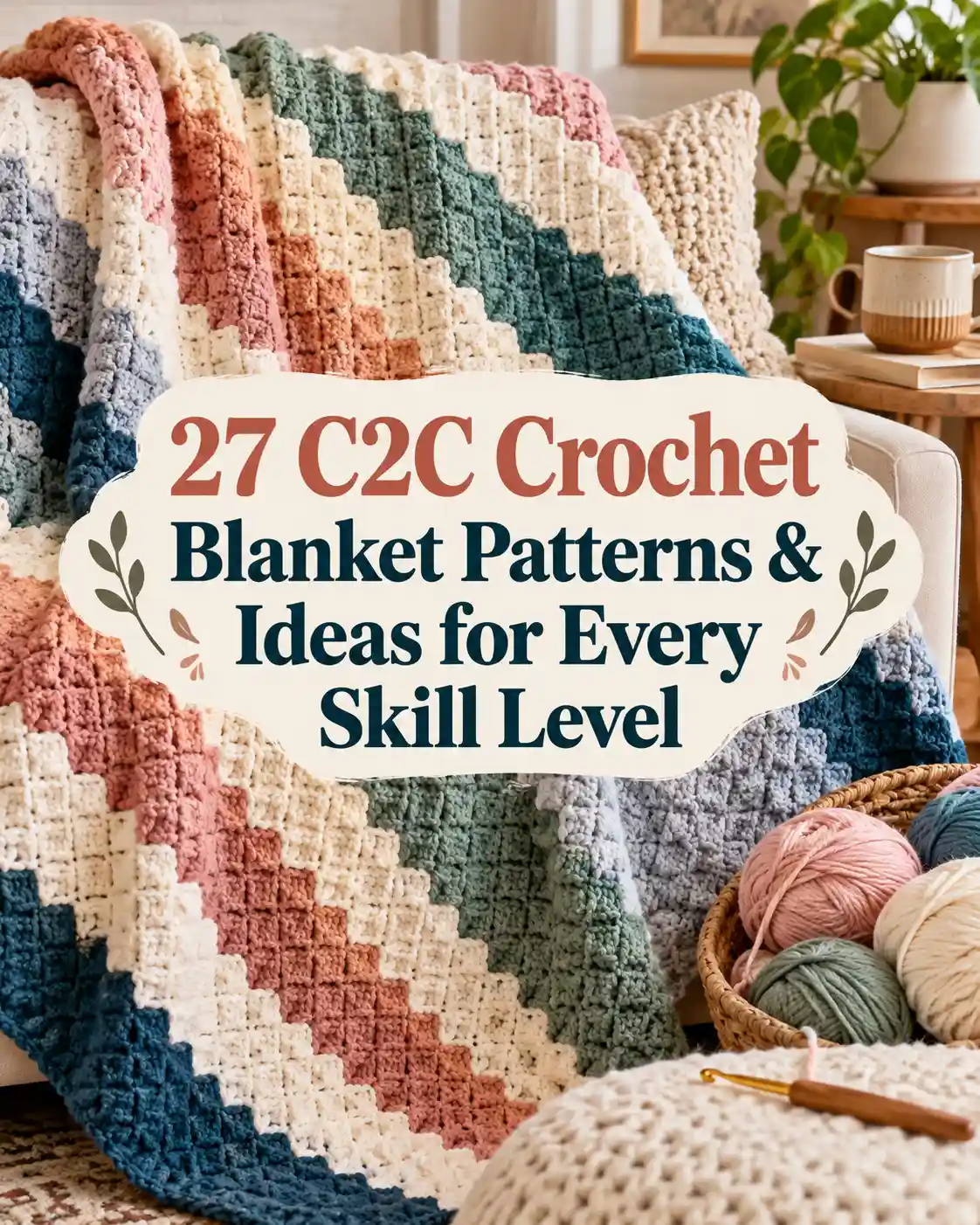
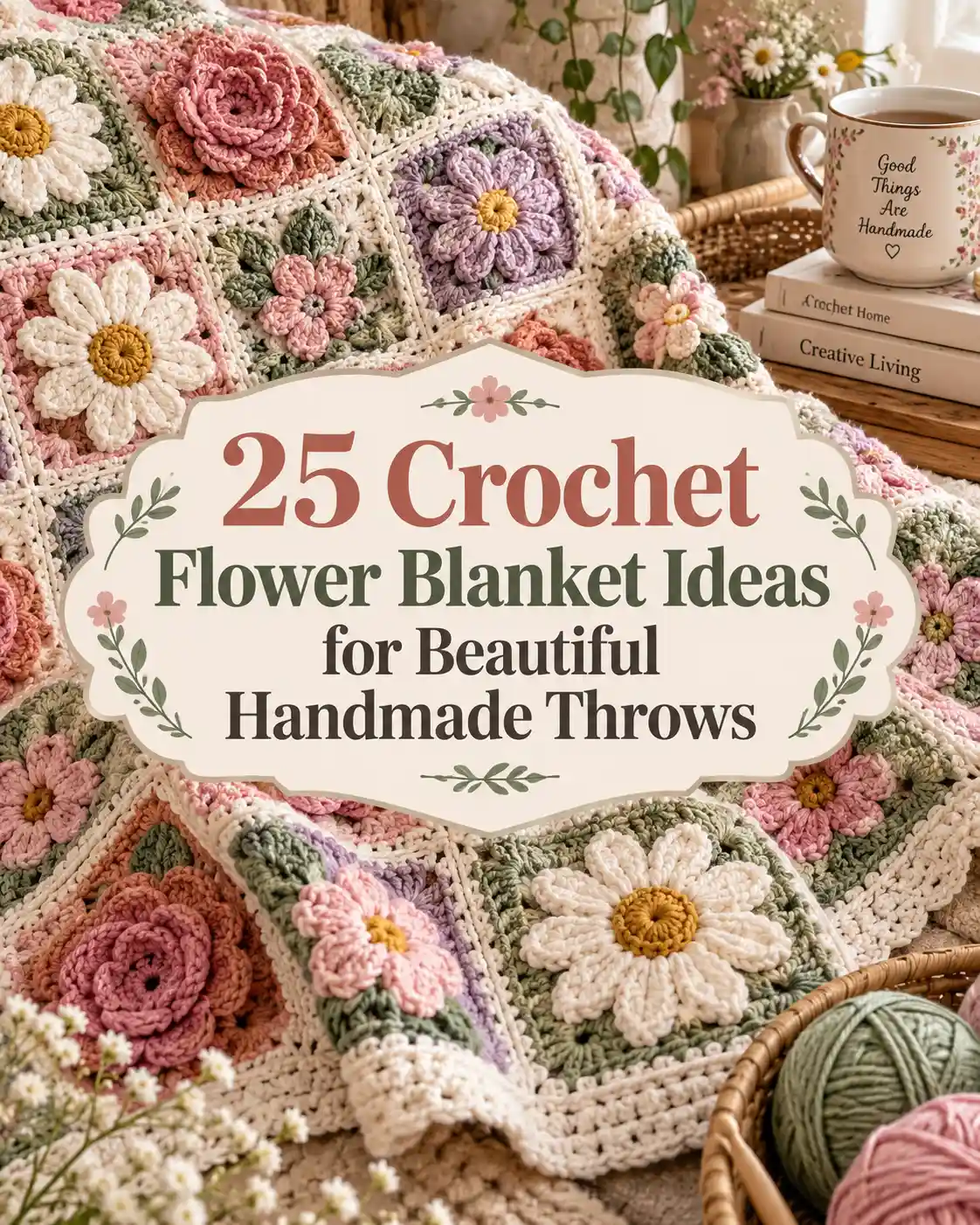
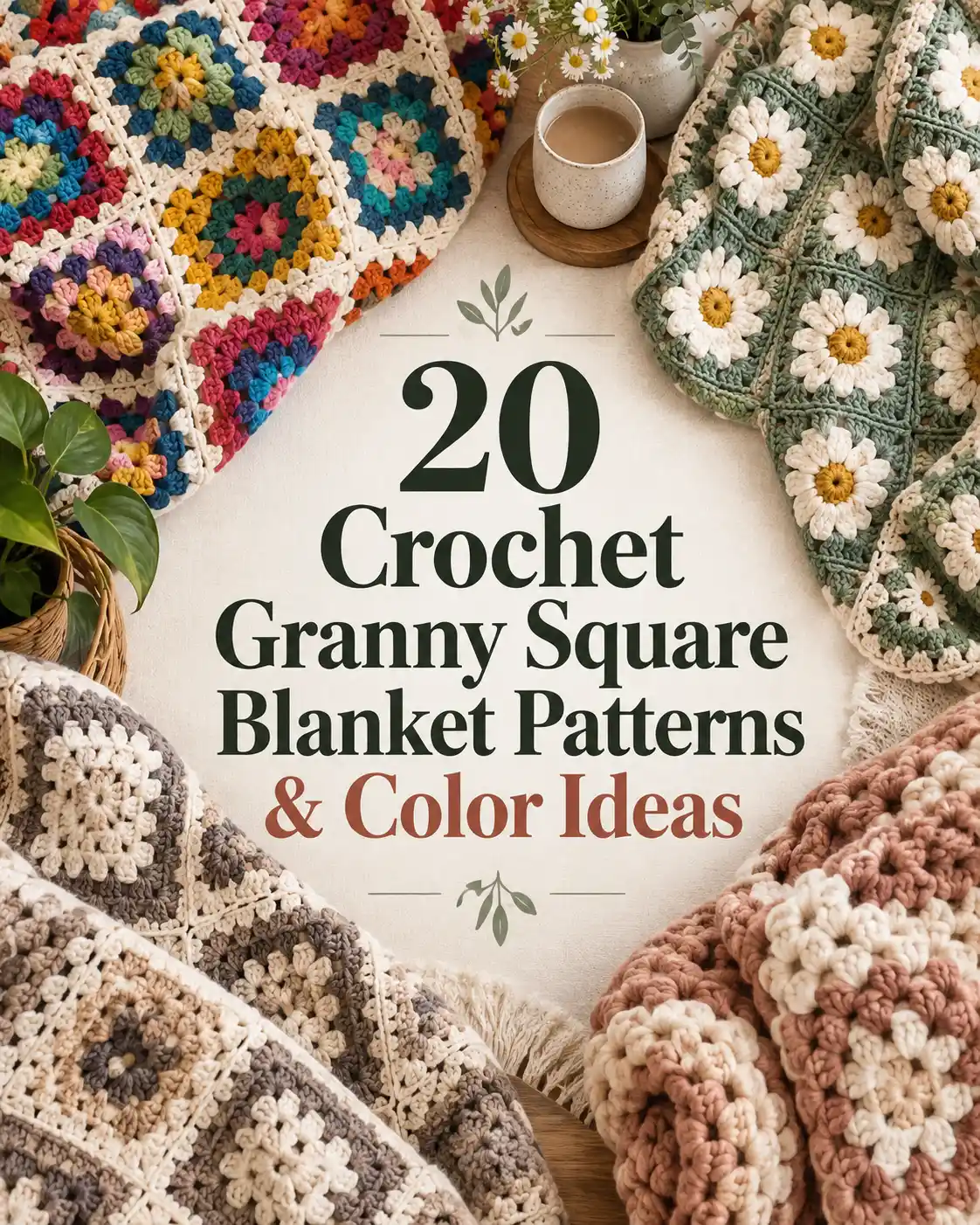
A c2c crochet blanket is one of those projects that can be as simple or creative as you want it to be. You can start with an easy one-color blanket, experiment with texture, or eventually move into detailed graphgans and picture designs. Whether you are searching for a C2C crochet blanket free pattern, a modern stitch idea, or a first beginner project, the diagonal construction gives you plenty of room to experiment without changing the basic concept. This guide brings together 27 patterns, techniques, color ideas, finishing options, and planning tips so you can choose a project that actually matches your skill level and the kind of blanket you want to make.
A C2C crochet blanket is worked diagonally from one corner toward the opposite corner, usually by increasing blocks, working the center or shaping point, and then decreasing. The method is beginner-friendly once the increase-and-decrease rhythm clicks, but it also scales beautifully into textured blankets, graphgans, baby blankets, colorwork, and modern geometric designs.
If you are looking for a C2C crochet blanket free pattern, a simple first project, a modern corner-to-corner idea, or a practical size guide, these 27 ideas give you plenty of directions to explore. Start with a plain one- or two-color blanket if you are new, then move into stitch variations and graph-based designs when you feel comfortable managing color changes.
Key Takeaways
- Start simple before trying detailed graphgan colorwork.
- Swatch first to check size, drape, and tension.
- Try C2c crochet blanket for beginners projects first.
- Use smooth yarn when stitch definition matters.
- Plan colors before starting gingham or picture blankets.
- Add borders after checking the finished edge.
What Should You Know Before Starting a C2C Crochet Blanket?
C2C crochet grows diagonally in blocks, so yarn weight, hook size, gauge, color planning, and increase/decrease shaping all affect the finished blanket.
At a Glance
- Learn basic increases and decreases first.
- Choose smooth yarn for clearer stitches.
- Swatch before planning final dimensions.
- Use simple colors for your first project.
- Save graphgans until block counting feels comfortable.
The classic C2C method builds small blocks diagonally rather than working straight horizontal rows. Craftematics describes the common version as linked blocks made with double crochet and chain spaces, while the Crochet Guild of America lists chain, single crochet, half double crochet, and double crochet among the foundational stitches beginners learn. That means you do not need an advanced stitch vocabulary to get started.
The yarn and hook you choose will change the drape, weight, speed, and finished dimensions. The Craft Yarn Council classifies yarn from 0 lace through 7 jumbo and gives recommended hook-size ranges for each category, but it also stresses that those ranges are guidelines and that you should follow pattern gauge when one is provided.
| If you want… | Try this C2C direction | Good starting point |
|---|---|---|
| The easiest first blanket | Classic C2C blocks | Worsted yarn, 1–2 colors |
| A soft baby project | C2C baby blanket | Washable yarn, simple motif |
| Modern texture | Moss, waffle, or wattle stitch | Solid or muted palette |
| Fast progress | Chunky C2C blanket | Bulky or super-bulky yarn |
| Picture designs | Graphgan/chart C2C | Bobbins + high-contrast colors |
| Easy color impact | Stripes, gingham, or 3-color blocks | Planned color sequence |
| A cleaner finish | C2C border | Single crochet before decorative edging |
Which 27 C2C Crochet Blanket Patterns and Ideas Are Worth Trying?
The best C2C project depends on your skill level, preferred texture, colorwork experience, intended blanket size, and whether you want a simple pattern or a detailed graphgan.
At a Glance
- Beginners: classic blocks, stripes, simple rectangles.
- Texture lovers: moss, waffle, wattle, granny.
- Color fans: gingham, plaid, rainbow, three-color.
- Graphgan fans: animals, flowers, hearts, holiday motifs.
- Practical finishes: borders, sizing, yarn planning.
27 C2C Crochet Blanket Patterns & Ideas for Every Skill Level
1. How Do You Make a C2C Crochet Blanket for Beginners?
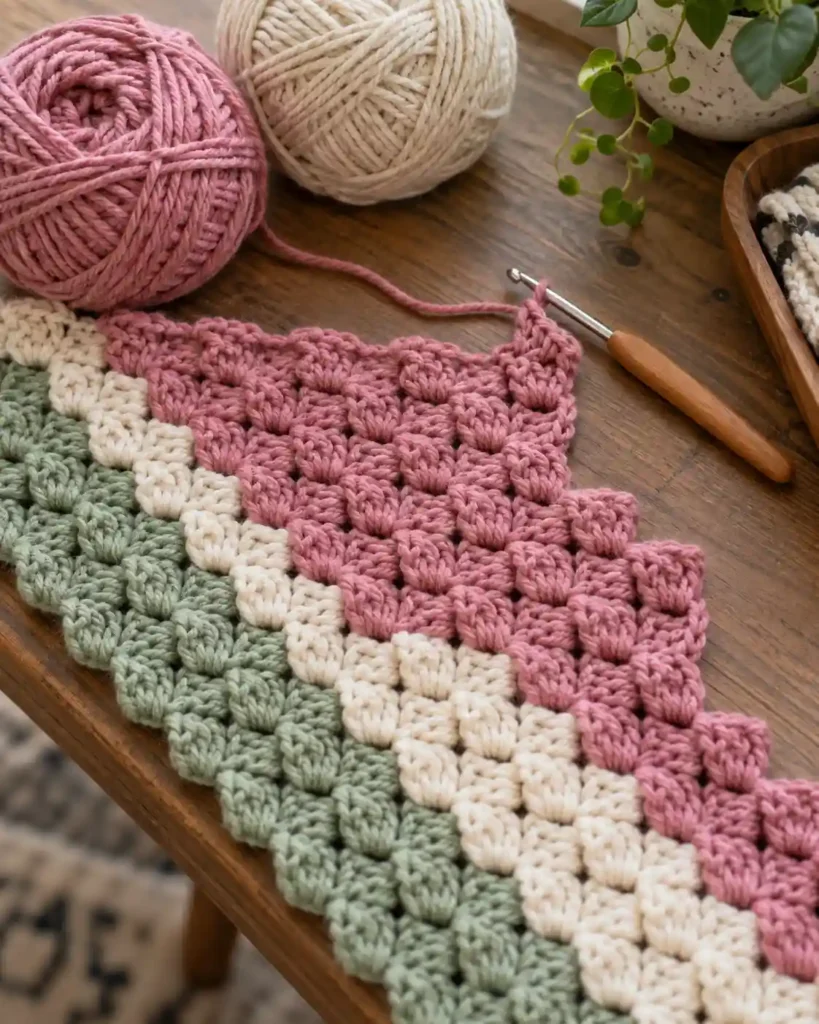
A beginner C2C blanket is the best place to learn the increase-turn-decrease rhythm without juggling extra color changes. Instead of choosing a detailed graphgan right away, work with one solid shade or a self-striping yarn so you can see the diagonal blocks clearly and focus on counting. I like this type of project for quiet evening crochet because once the repeat makes sense, you can settle into a steady pace without checking a chart every few minutes. If you want a C2c crochet blanket for beginners, this is the version to start with because the construction itself becomes the lesson.
Use a smooth medium-weight yarn in a light enough color that the stitches are easy to see. Keep a stitch marker near the turning edge if you tend to lose track of where the increase or decrease begins.
2. What Makes a Simple C2C Crochet Blanket Pattern Free and Easy to Follow?
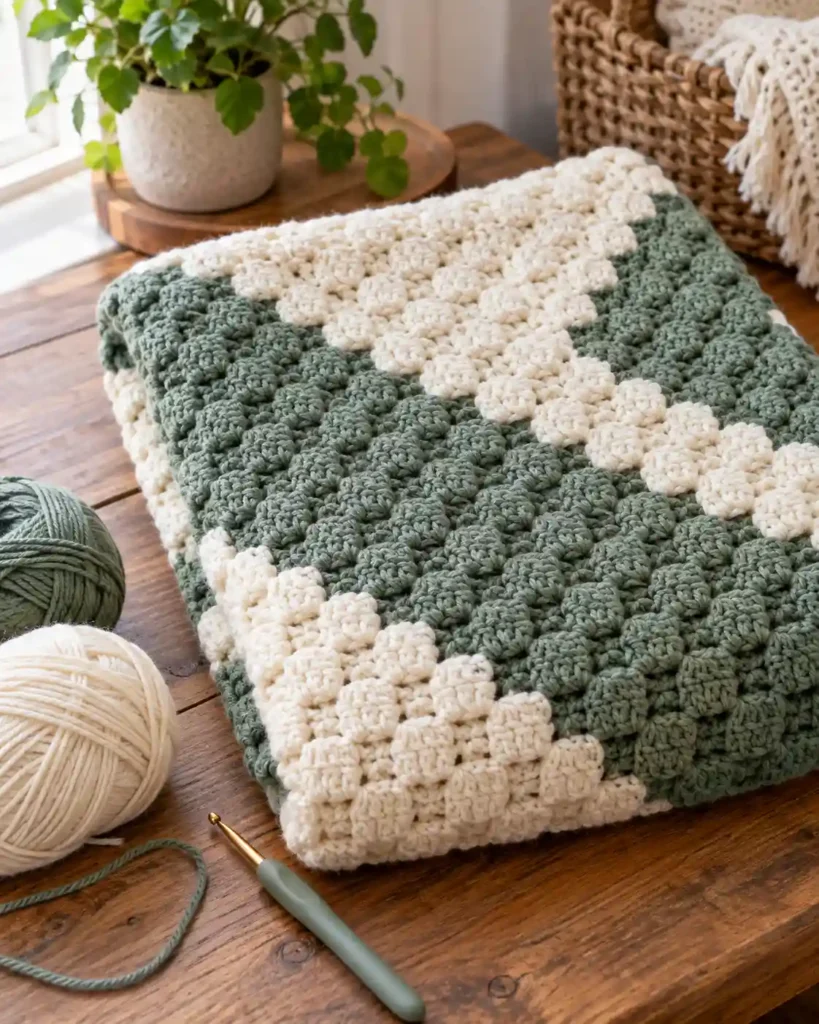
The easiest free-style C2C blanket plan is basically four stages: start small, increase to the target width, transition, then decrease back to one final block. Compared with a motif-heavy blanket, there is almost nothing to distract you from the shaping, so mistakes are easier to spot before they travel several rows. This is the project I would pick when I want the satisfaction of a full blanket without spending half the evening sorting bobbins. A Simple C2C crochet blanket pattern free approach works best for crocheters who want structure without unnecessary complexity.
Before making the full blanket, crochet a small swatch and measure several blocks. The Craft Yarn Council specifically recommends gauge swatching because hook size and personal tension can shift the finished size, even when the same yarn category is used.
3. Is a C2C Baby Blanket a Good Gift Project?
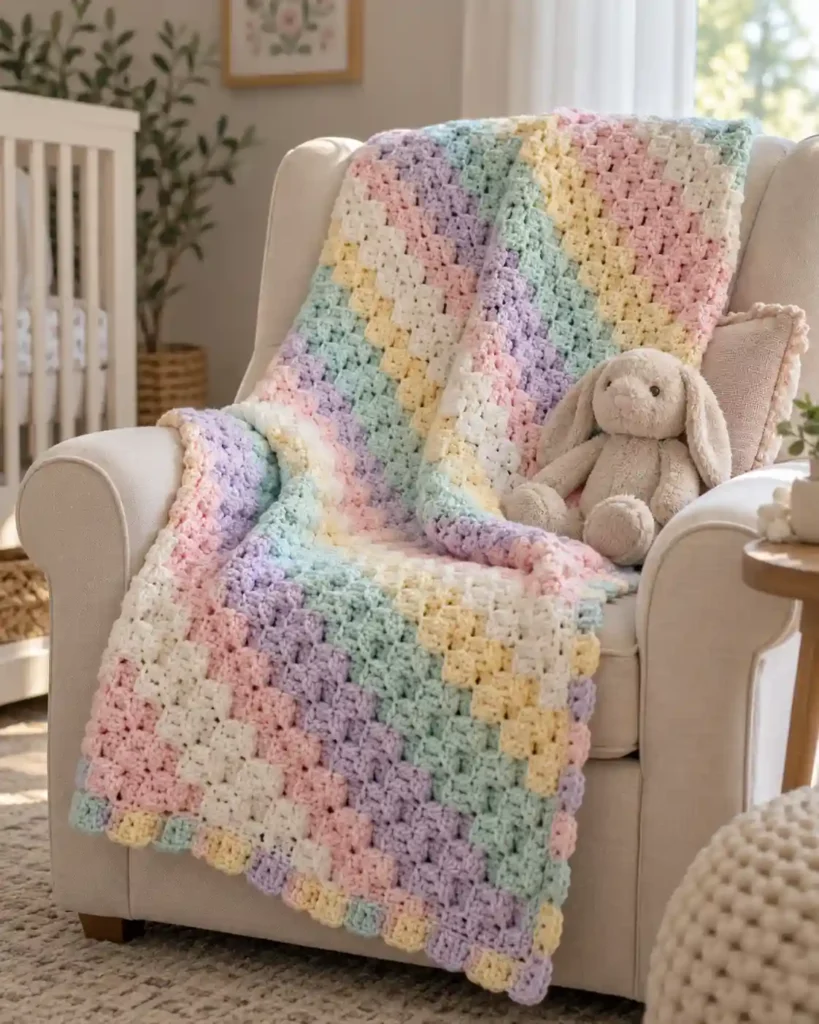
A C2C baby blanket gives you a smaller canvas, so it feels much more manageable than jumping directly into a bed-size afghan. It also gives you room to use soft pastels, subtle stripes, hearts, woodland motifs, or a clean modern palette without the design becoming visually busy. For baby showers, I prefer an easy crochet baby blanket made with washable yarn and a size that is useful for supervised floor play, stroller time, or gifting rather than treating the blanket as crib bedding. It is a sweet project for gift makers because the diagonal construction makes even a simple color plan look intentional.
For infant safety, keep the blanket out of a young baby’s sleep space: the U.S. Consumer Product Safety Commission advises that cribs and bassinets should remain free of loose blankets and other soft items.
4. How Do You Make a Rectangle C2C Crochet Blanket?
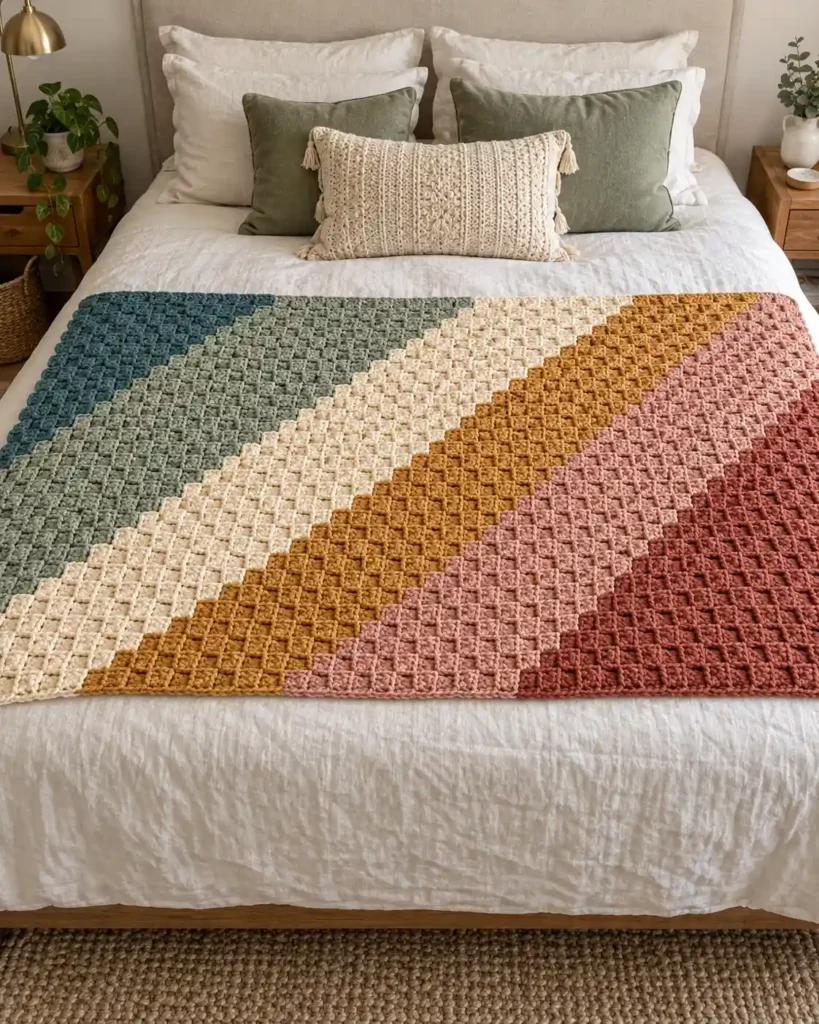
A rectangular C2C blanket uses the same diagonal logic as a square, but the shaping changes once one dimension reaches its target. Rather than increasing both sides until the midpoint, you begin decreasing on one side while continuing to increase on the other, which creates length without adding more width. This is especially useful for throws, lap blankets, and bed runners where a square would feel awkward. If you have made one square C2C swatch, a rectangle is the next shaping skill worth learning.
Mark the side that has stopped increasing until the shape becomes obvious. That tiny step prevents the classic “why is this turning into a square?” moment.
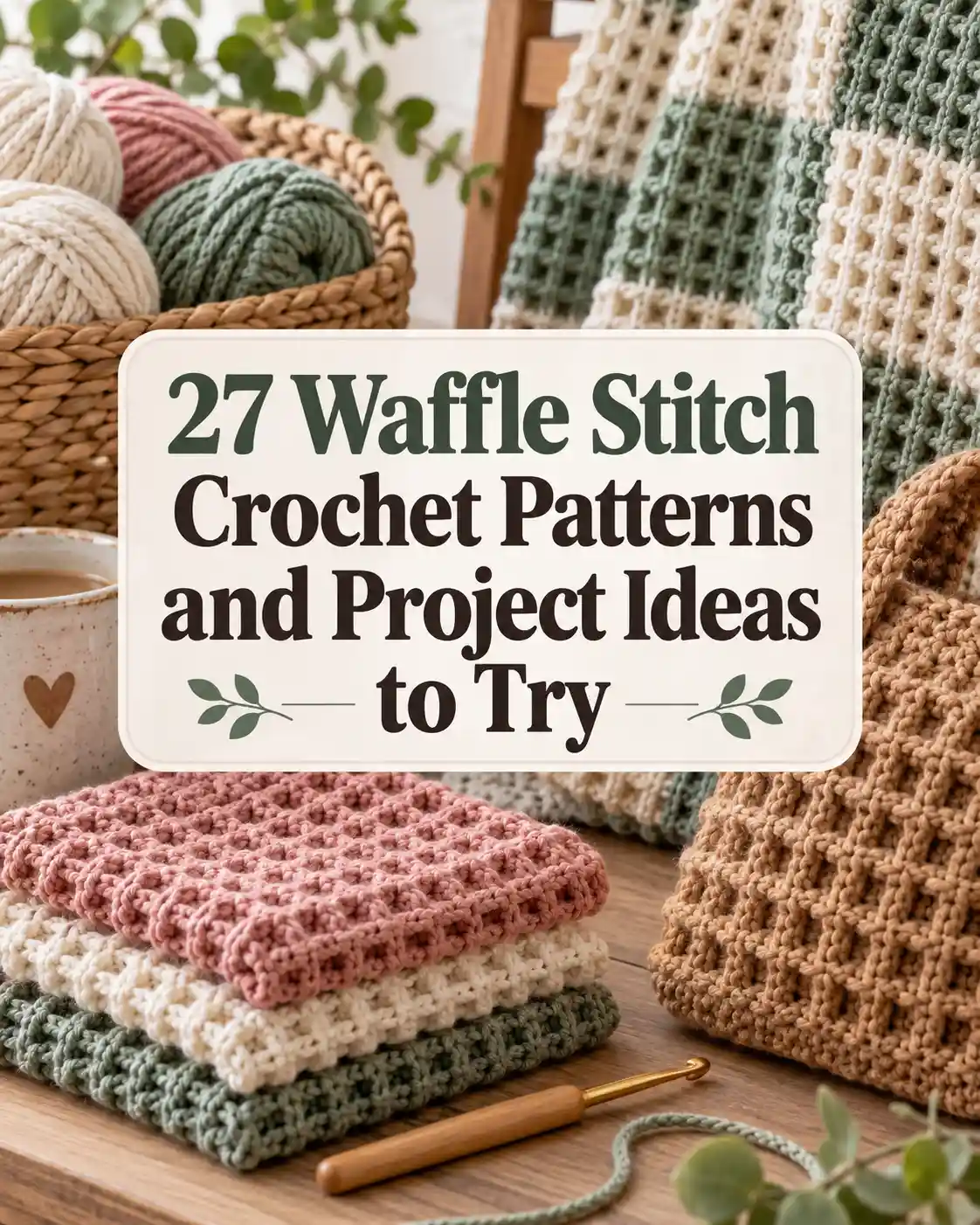
5. Why Try a C2C Waffle Stitch Blanket?
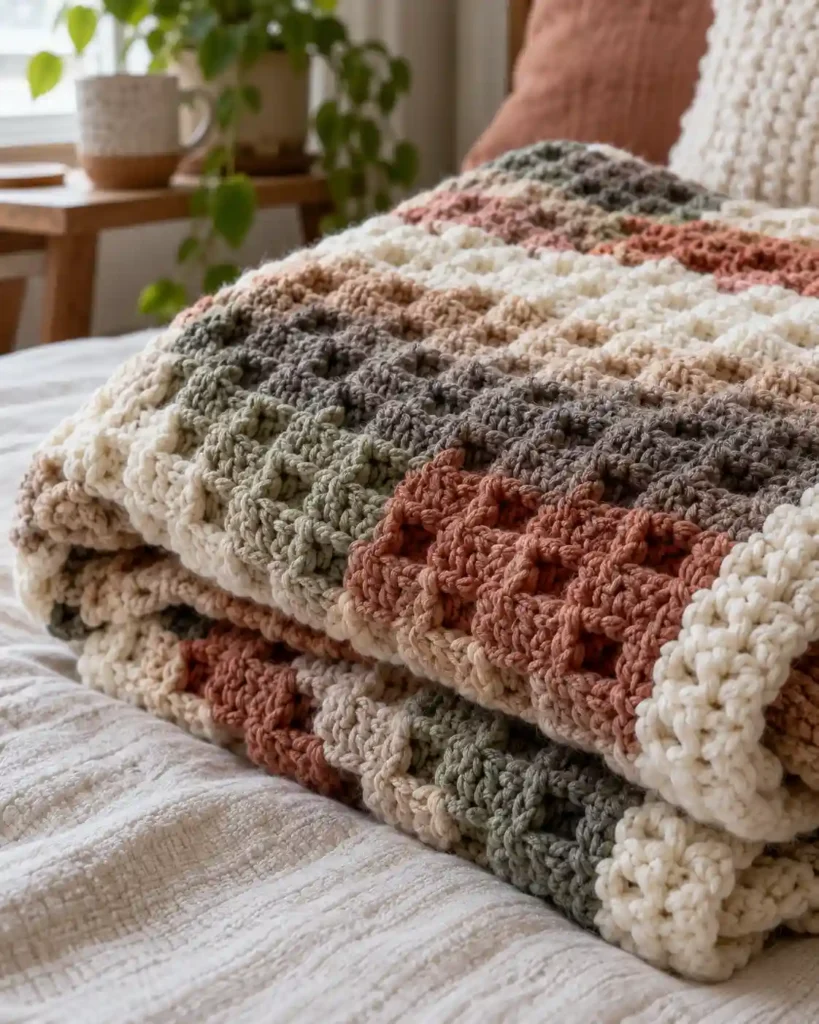
A C2C waffle stitch blanket has deep surface texture that makes an ordinary solid color feel much richer. The raised structure looks more dimensional than classic diagonal box stitch, but that texture usually uses more yarn and can create a heavier fabric. I would save this one for a cozy sofa throw where warmth and tactile detail matter more than light drape. It is a strong choice if you want a blanket that looks impressive without relying on complicated colorwork.
Swatch first and feel the fabric in your hands. If it seems stiff, move up a hook size or choose a slightly lighter yarn rather than forcing dense stitches.
6. What Does a C2C Moss Stitch Blanket Look Like?
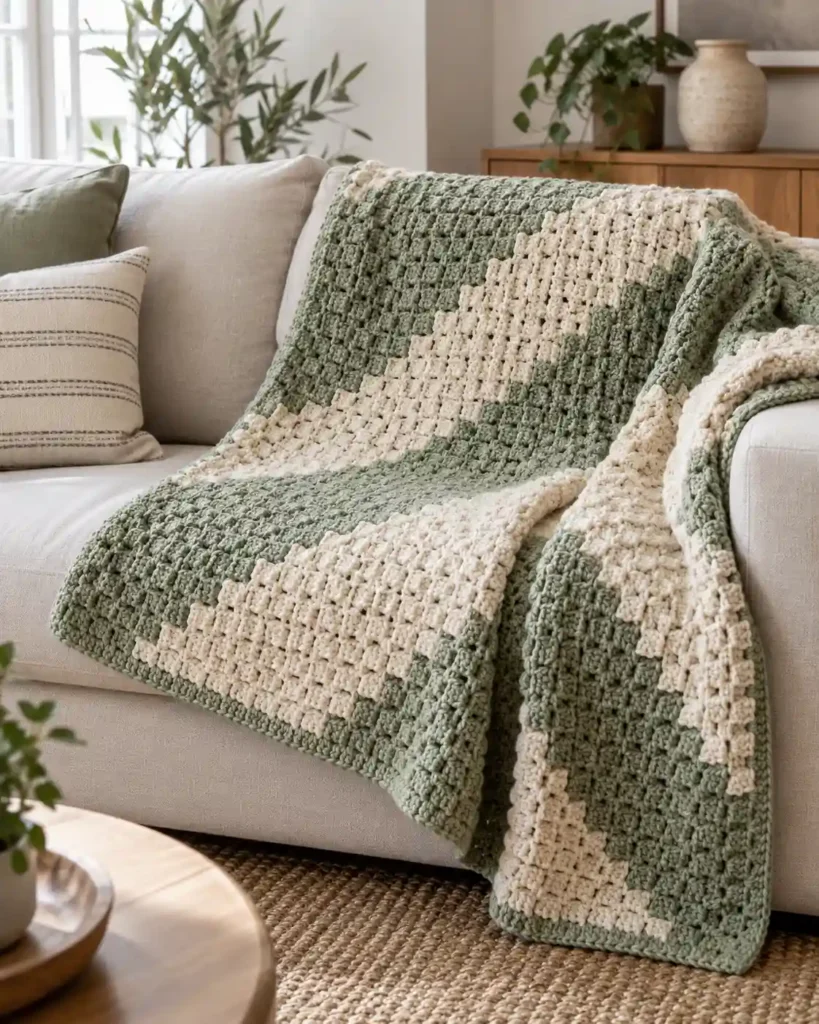
A C2C moss stitch blanket trades chunky block definition for a flatter, cleaner texture that feels especially modern. Compared with traditional C2C clusters, moss stitch can make color transitions look softer and less pixelated, which works beautifully for subtle stripes and muted palettes. I like it in living rooms where a classic graphgan would feel too busy but a plain blanket would feel too basic. This is one of the better Modern corner to corner crochet pattern directions for crocheters who prefer understated texture.
Try cream with sage, clay, charcoal, dusty blue, or another low-contrast palette. The visual calm is part of what makes this variation work.
7. Can You Use Granny Stitch for a C2C Blanket?
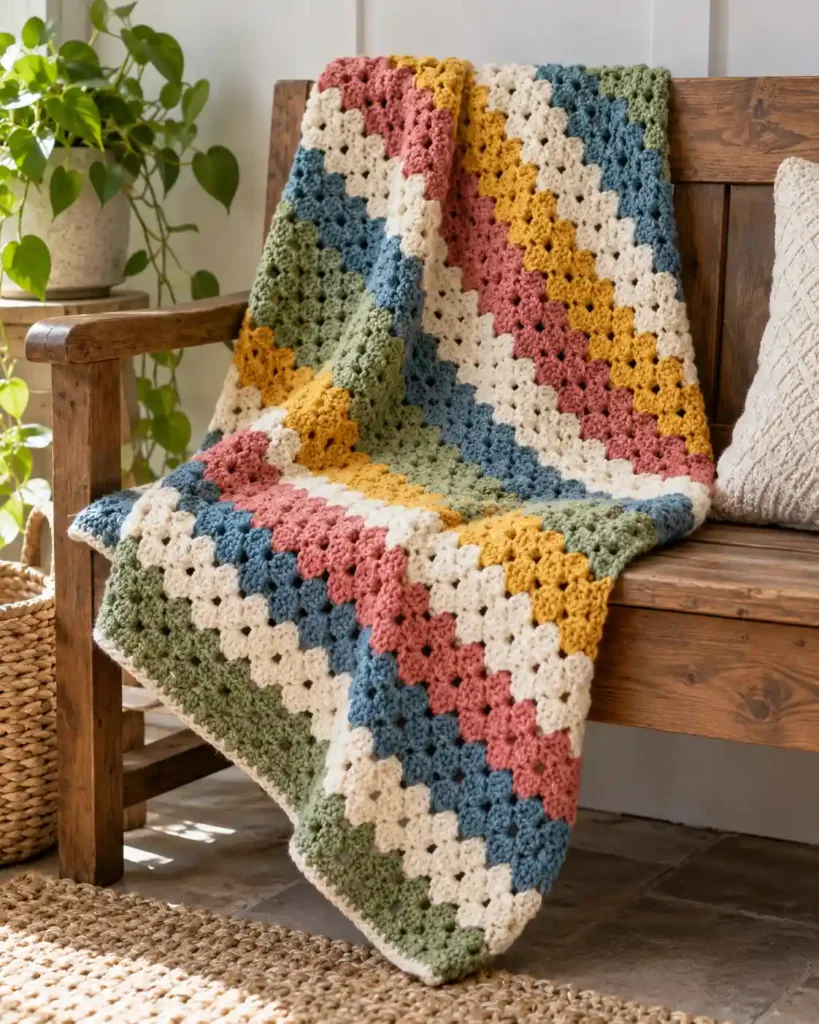
Yes, and the granny-style clusters give the blanket an airier, more familiar crochet look. The open structure grows quickly and is more forgiving with scrap-yarn color changes than a tightly controlled graphgan. This is the one I reach for when I have several leftover skeins that look good together but not enough of any single shade for a full blanket. If you enjoy classic granny projects, a crochet granny square blanket is another construction worth exploring, while the diagonal format keeps C2C feeling fresh.
Plan your color changes by row group rather than randomly if you want the blanket to feel cohesive. A repeating sequence can turn leftover yarn into a deliberate design.
8. Is C2C Wattle Stitch Worth Trying?
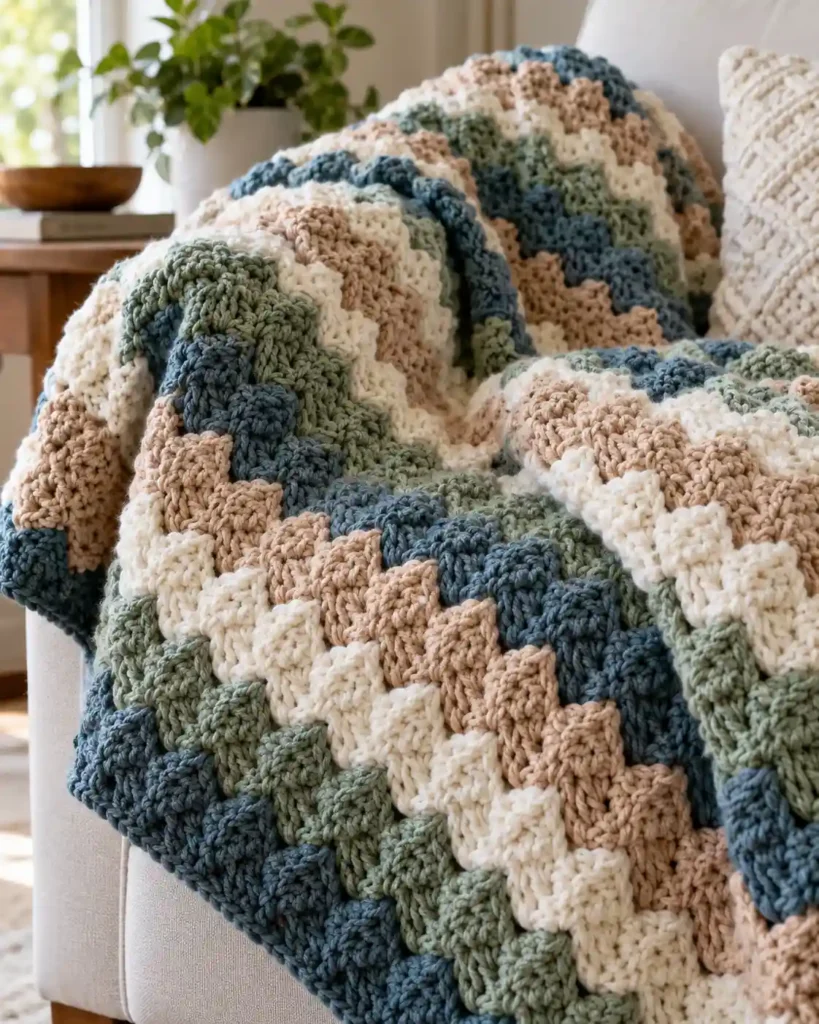
C2C wattle stitch gives you a fine, pebbled texture without the deep ridges of waffle stitch. Because the surface is more delicate, it works nicely for lightweight throws and blankets where you still want visible stitch interest. I would use it when a plain block stitch feels too simple but a heavy textured blanket sounds like too much yarn and too much weight. It suits crocheters who enjoy texture that shows up more when you look closely.
Keep the yarn fairly smooth so the stitch pattern can do the visual work. Fuzzy yarn can blur the detail you are choosing this stitch for.
9. How Do You Plan a C2C Gingham Crochet Blanket?
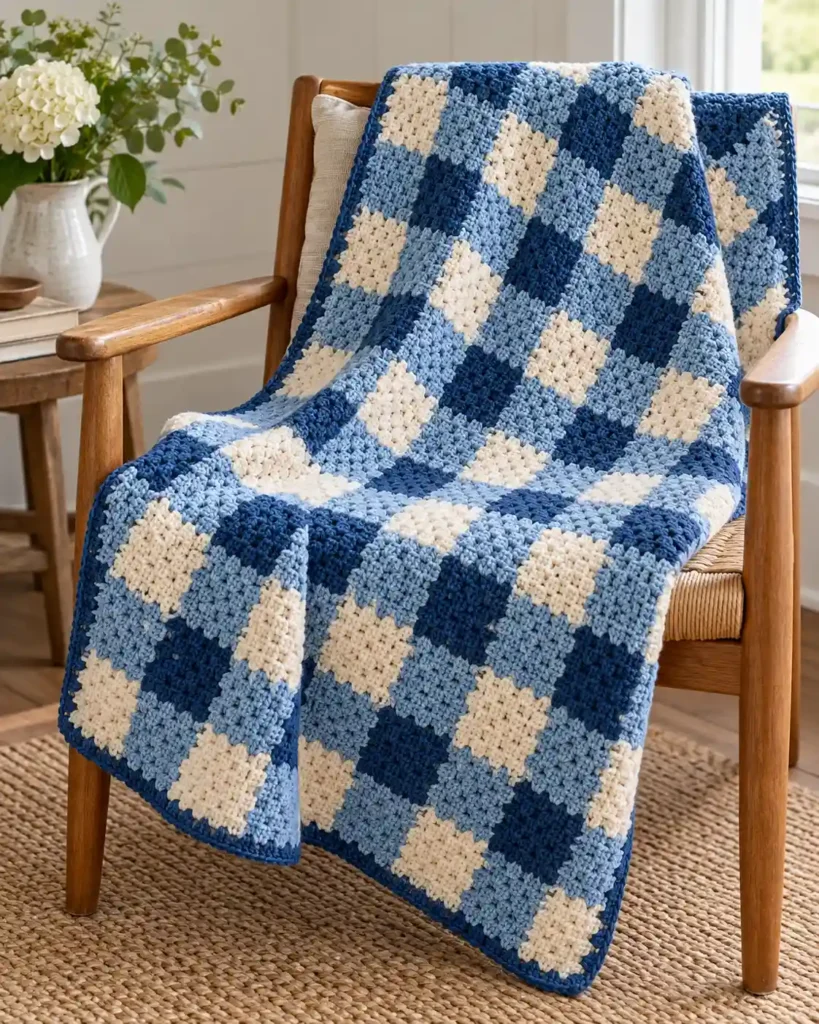
A convincing gingham blanket usually needs three values: a light base, a medium shade, and a deeper shade that creates the overlap effect. Unlike random checks, the color values have to be placed consistently or the gingham illusion disappears. This is a fun project for anyone who loves tidy color planning, especially in baby blue, blush, sage, red, or neutral combinations. The payoff is a blanket that looks graphic from across the room but still feels handmade up close.
Lay the three yarn colors side by side before starting. If the medium and dark shades are too similar, the check pattern may look flat.
10. What Is the Difference Between C2C Plaid and Gingham?
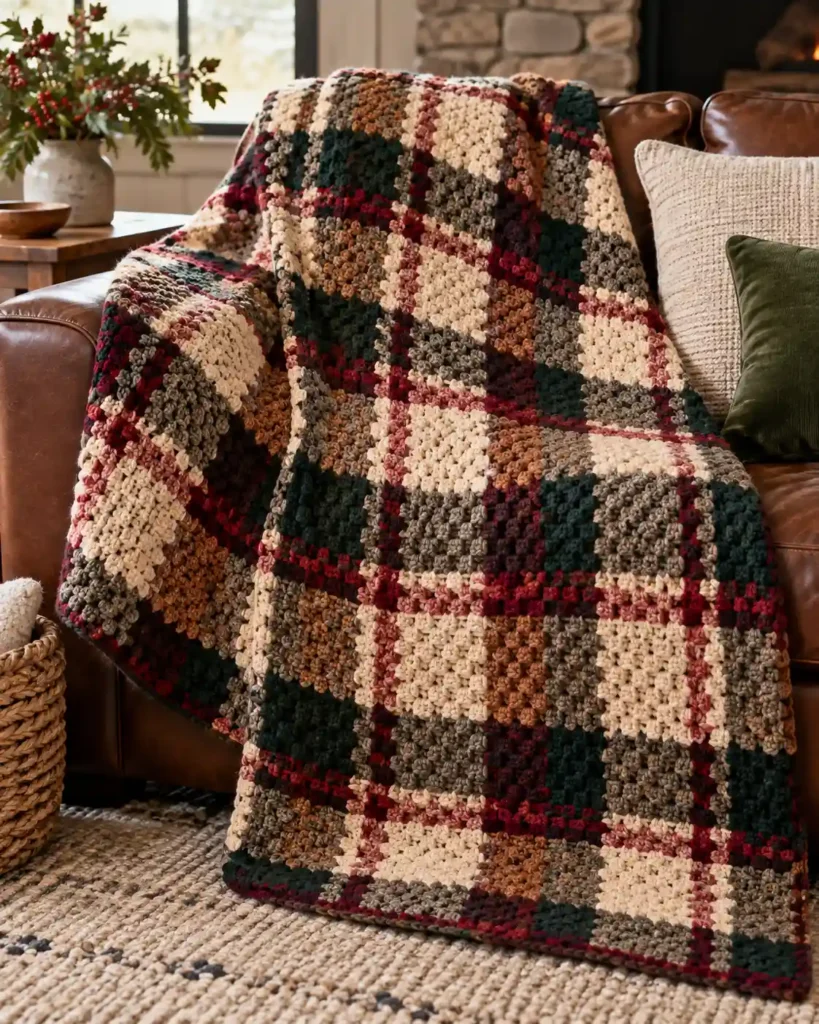
Plaid gives you more freedom with bold bands, extra accent colors, and irregular intersections, while gingham usually depends on a consistent three-value check. That makes plaid feel a little more dramatic and less strict, especially when you use charcoal, rust, forest green, or navy. I like plaid for fall and winter throws because the design already carries a warm, layered feeling before you add any fringe or border. Choose it when you want stronger color impact than a simple striped blanket.
Sketch the color sequence on graph paper first. Even a rough plan can save you from frogging a large section after realizing one band is too dominant.
11. How Can You Make a Striped C2C Crochet Blanket?
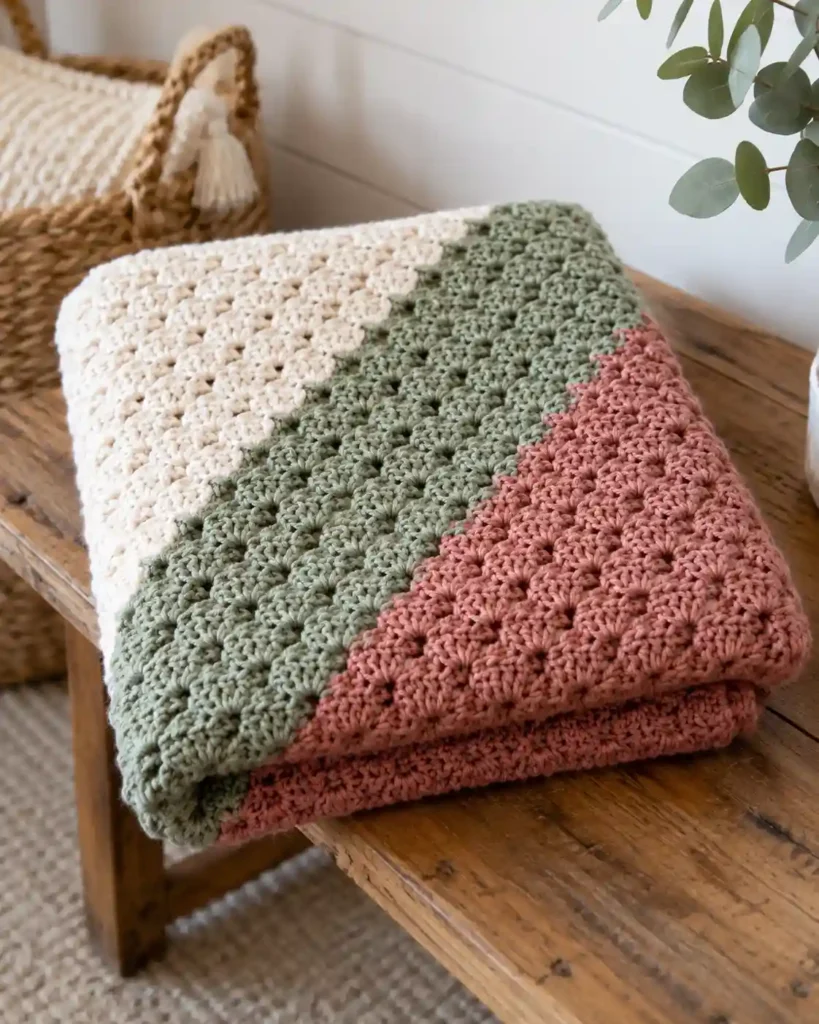
Diagonal stripes are one of the easiest ways to make C2C construction look intentional without learning graphgan colorwork. The stripes naturally slant with the fabric, so even basic two-color changes create movement that straight-row blankets do not have. I use this approach when I want a gift to feel polished but still need a project I can work on while talking or watching something. It is ideal for beginners who are ready to practice clean color changes but not ready for dozens of yarn bobbins.
Try alternating wide and narrow stripes instead of making every band identical. That small change keeps a simple blanket from looking repetitive.
12. Can You Make a Rainbow C2C Crochet Blanket Without It Looking Too Busy?
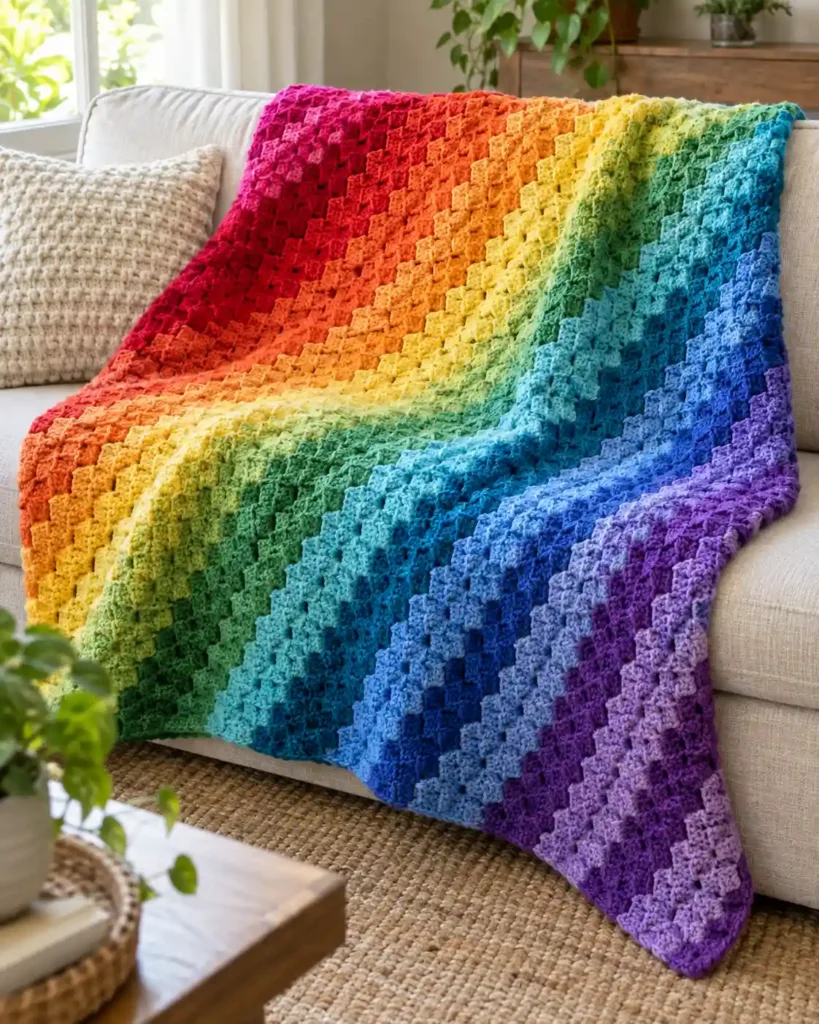
Yes, control the transition rather than using every bright shade at equal intensity. A soft gradient, a rainbow on a neutral background, or a limited six-color sequence will usually look more polished than constant random changes. This blanket works especially well for children’s rooms, cheerful throws, and stash-busting projects where the yarns already share a similar weight. Pick it when you want color to be the main feature and the stitch pattern to stay simple.
Arrange the skeins in order before you crochet the first row. A quick phone photo of the lineup gives you an easy reference later.
13. Why Make a Chunky C2C Crochet Blanket?
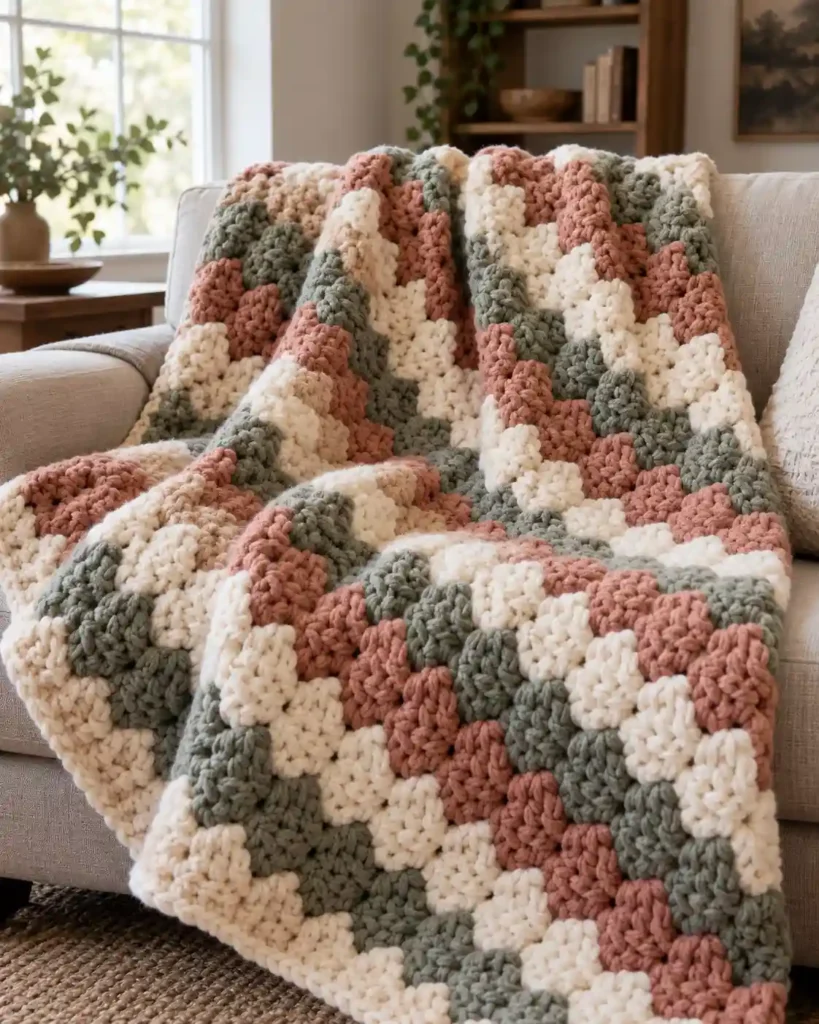
A chunky C2C blanket gives you large, visible progress fast, which is extremely satisfying when you are short on time. Bulky yarn makes each diagonal row grow quickly, but it can also turn stiff or heavy if the hook is too small for your tension. This is my pick for a weekend throw, a last-minute handmade gift, or the project you start when you need something cozy without committing to months of crochet. The best part is that a simple stitch looks dramatic purely because of scale.
The Craft Yarn Council places bulky yarn in weight 5 and super bulky in weight 6, with progressively larger recommended crochet-hook ranges; use those ranges as a starting point, then adjust for the drape you want.
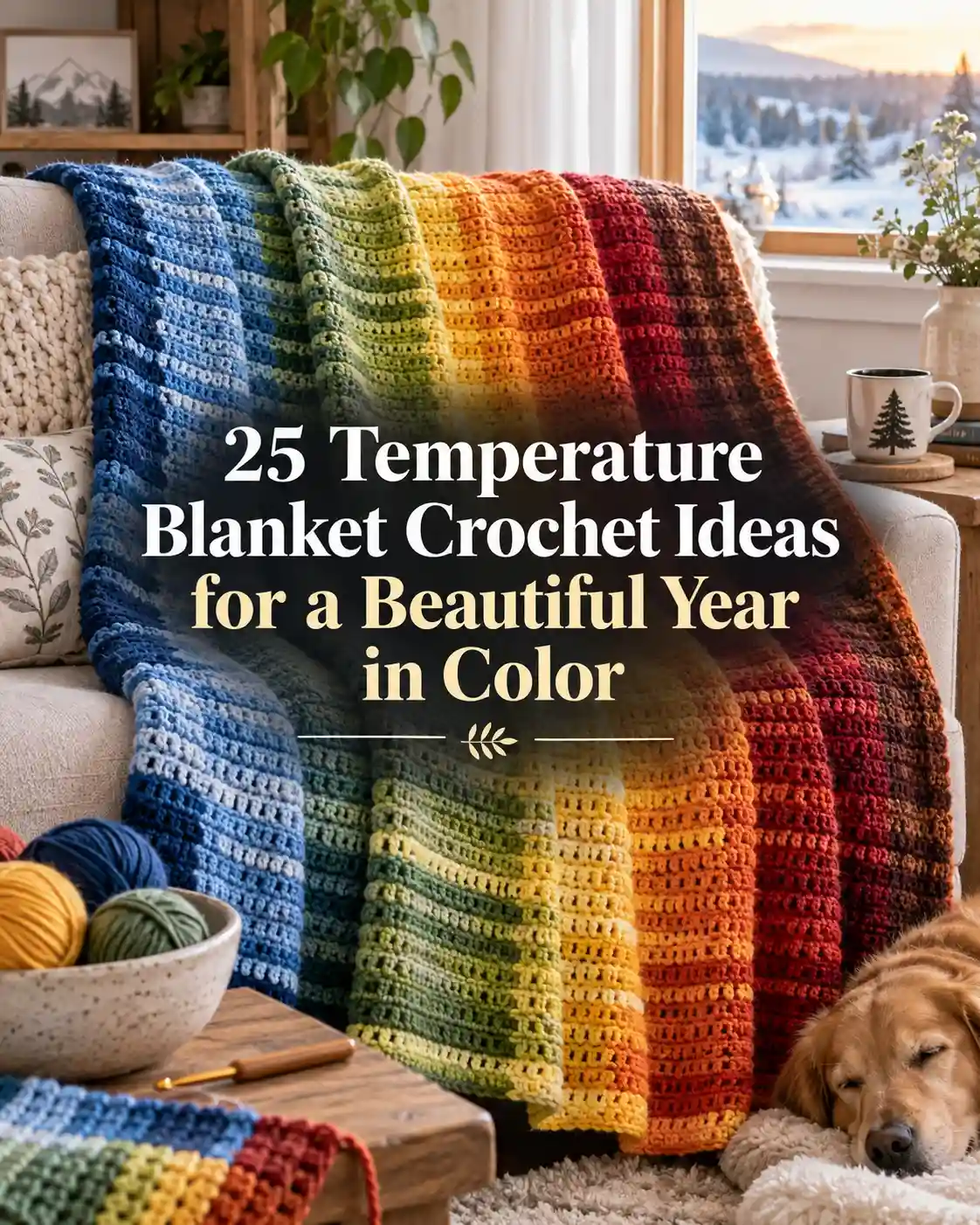
14. How Does a C2C Temperature Blanket Work?
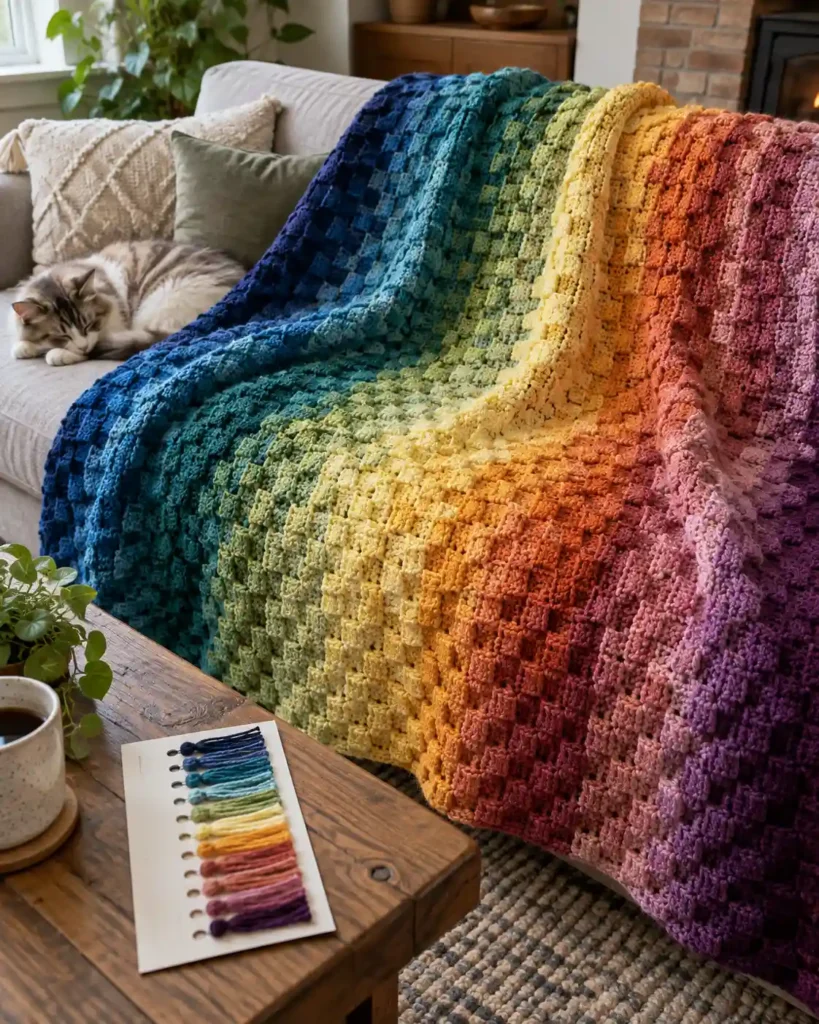
A C2C temperature blanket turns recorded temperatures into color, usually by assigning each temperature range its own yarn shade. Compared with a standard striped temperature blanket, the diagonal C2C layout can produce a more dynamic progression across the finished fabric. I like the idea for milestone years—new homes, weddings, births, graduations—because the finished blanket becomes both textile and record. It is best for patient crocheters who enjoy long-term projects and consistent note keeping.
When planning a temperature blanket crochet project, decide whether one day equals one block, one short row, or another repeat before you begin. Final size can grow unexpectedly if you choose a unit that is too large.
15. How Do You Crochet a C2C Sunflower Blanket?
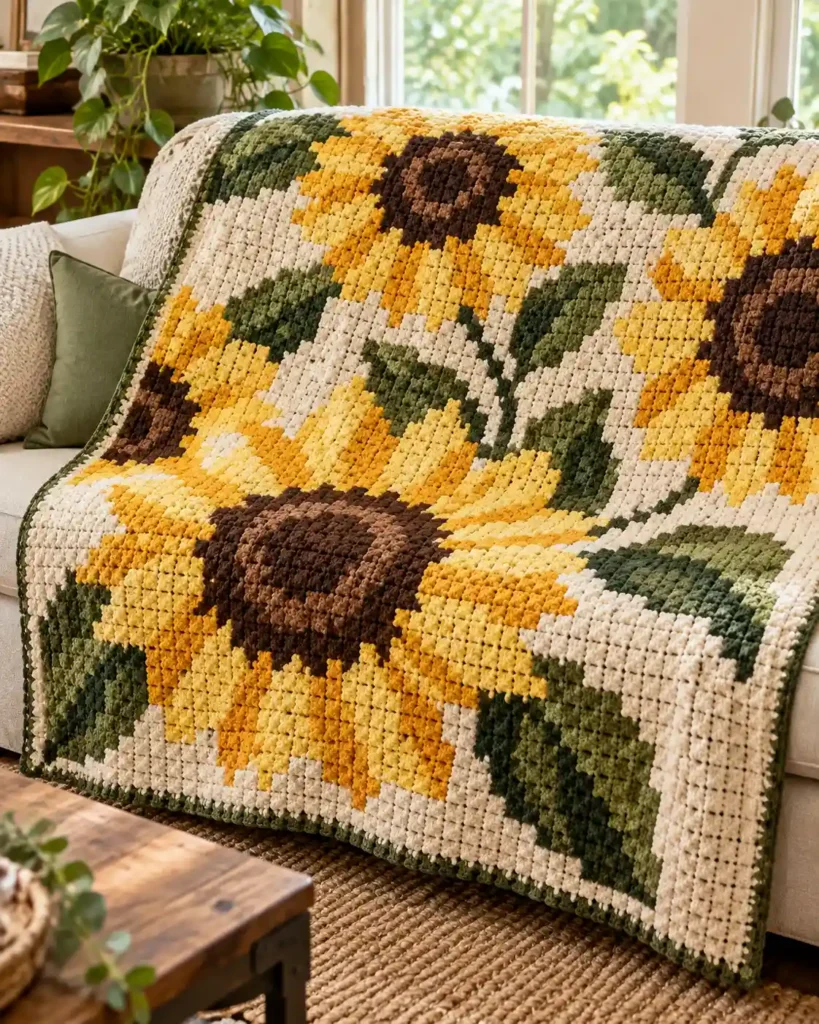
A sunflower graphgan uses the pixel-like nature of C2C blocks to build yellow petals, brown centers, green leaves, and a contrasting background. It is more involved than simple stripes because every color block matters, but the bold flower shape stays readable even from a distance. This design is perfect for bright bedrooms, cottage-style decor, or anyone who wants a cheerful statement blanket. Choose it when you are comfortable reading a chart and want your next project to feel like crochet illustration.
Use small yarn bobbins for isolated color sections instead of dragging long strands across the back. Your fabric will look neater and the yarn will tangle less.
16. Is a C2C Heart Blanket Good for Gifts?
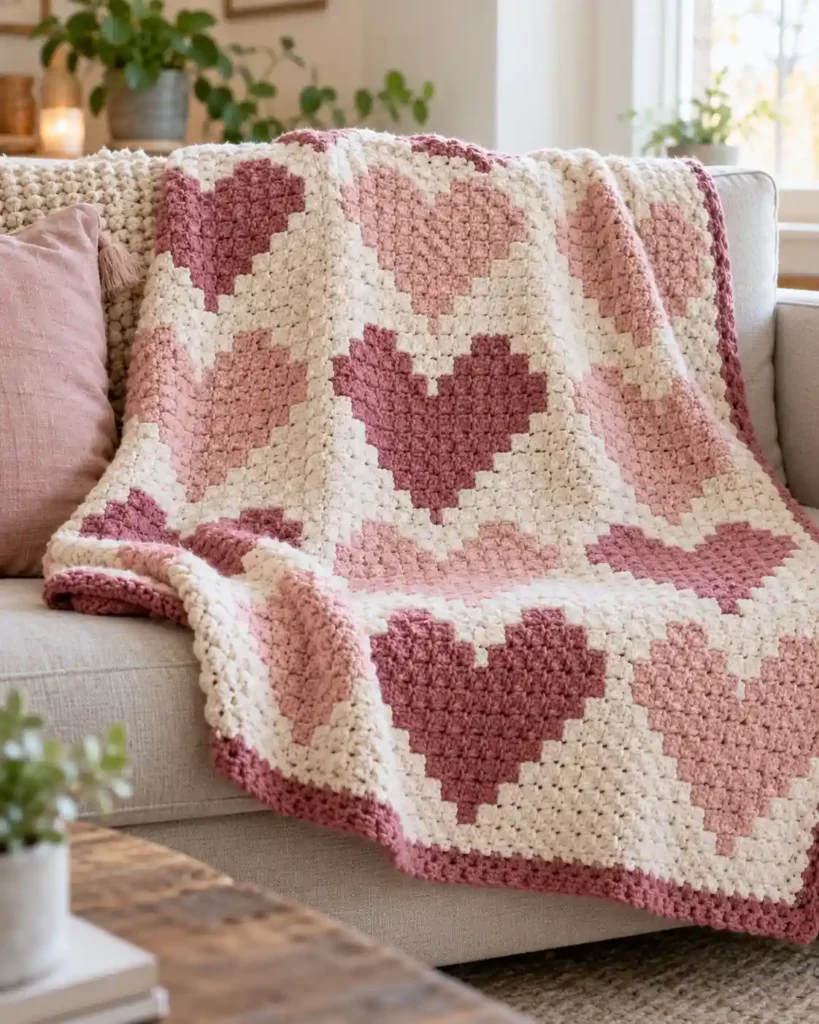
Heart motifs translate naturally into C2C because the block structure can create clean pixel-style curves and points. You can use one oversized center heart, repeat smaller hearts, or combine a neutral background with one accent color for a calmer look. I like this design for baby gifts, anniversaries, Valentine’s Day, or simply for someone who loves romantic handmade decor. The format is flexible enough to be sweet without automatically becoming overly cute.
For a nursery version, try cream with dusty rose, soft terracotta, muted lavender, or pale blue. A restrained palette lets the motif stay clear.
17. How Can You Make a C2C Cow Crochet Blanket?
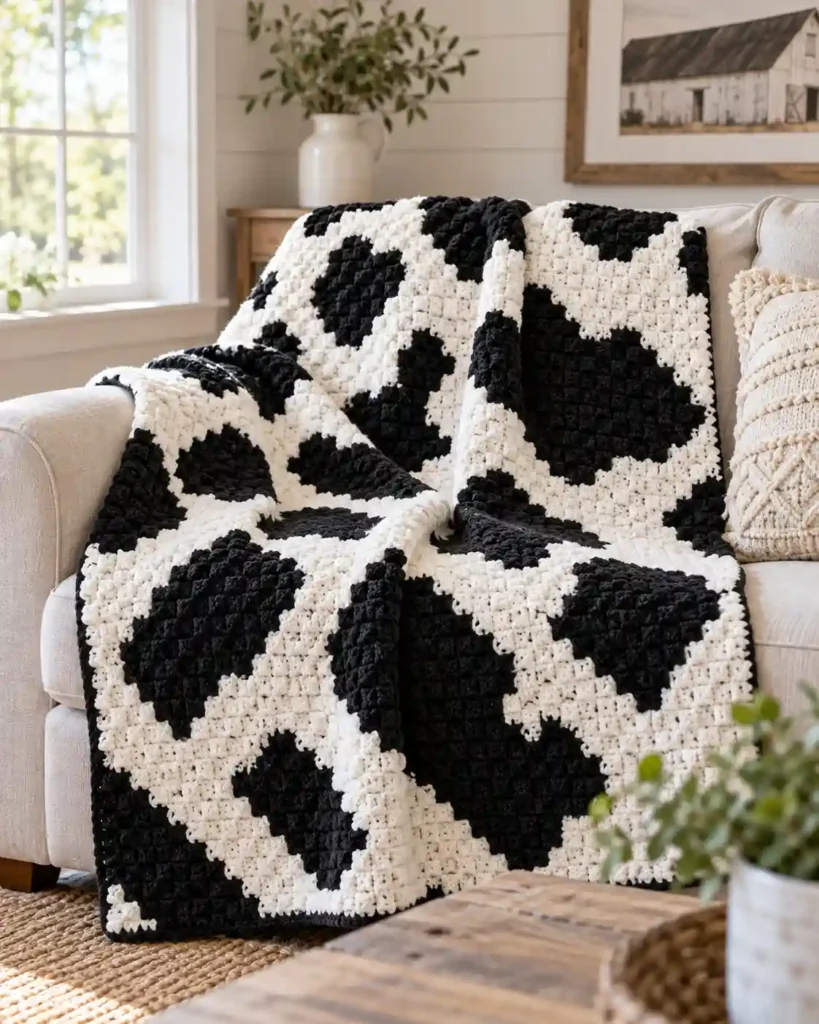
A cow-themed C2C blanket can be as simple as irregular black-and-white patches or as detailed as a full animal portrait. The print-style version is far easier because it lets you improvise larger color areas instead of following dozens of small chart changes. I would use cow print for a playful farmhouse room, while a character-style graph is better for a child who specifically loves animals. This idea works best when the contrast is strong enough for the design to read from several feet away.
If you are creating spots, vary their sizes and avoid making them too symmetrical. Organic shapes look more convincing.
18. What Makes a Highland Cow C2C Blanket More Advanced?
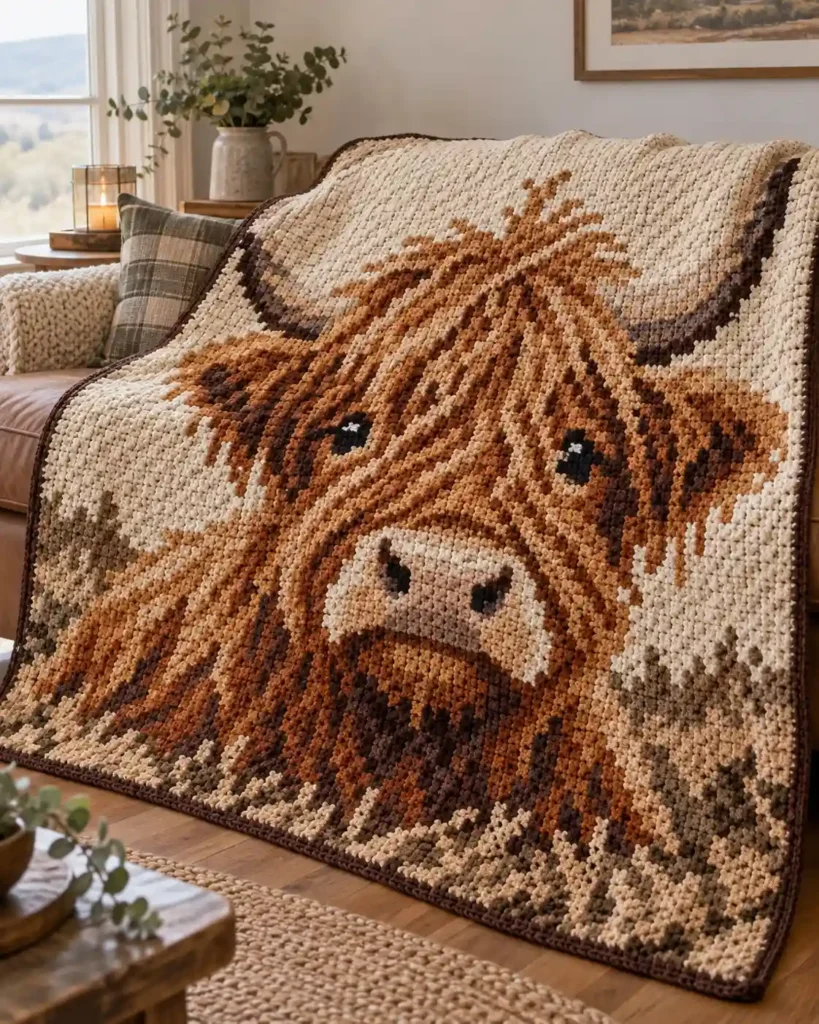
The face, shaggy hair, horns, and layered brown tones create more color changes than a simple two-tone animal graph. That complexity is exactly what makes the finished blanket look so expressive, but it also means you need a chart you can read confidently and a plan for multiple bobbins. I would save this project for after you have completed at least one simpler graphgan. It is worth the extra organization if you want a rustic statement piece with plenty of personality.
Print or enlarge the chart so individual squares are easy to track. Highlight completed rows as you go rather than relying on memory.
19. How Do You Design a Woodland Animal C2C Blanket?
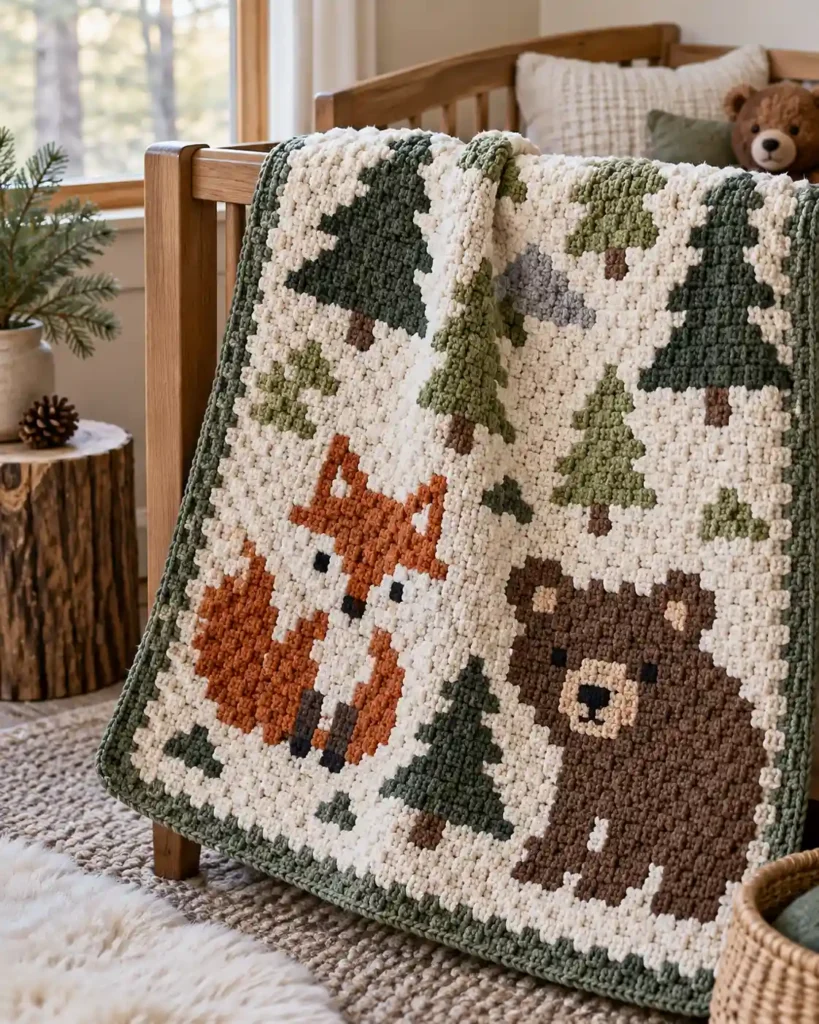
A woodland blanket can combine foxes, bears, deer, trees, mountains, and small forest motifs into one coordinated theme. Instead of forcing every image into a single giant graph, you can make separate charted blocks or visual zones and connect them with a consistent background palette. This works beautifully in nurseries because soft rust, moss, cream, tan, and muted blue already feel cohesive together. Pick it when you want a themed blanket that still gives you room to vary the motifs.
Repeat at least one background or border color throughout the design. That repeated shade is what makes multiple animals feel like one blanket.
20. Can You Crochet Ocean Waves in C2C?
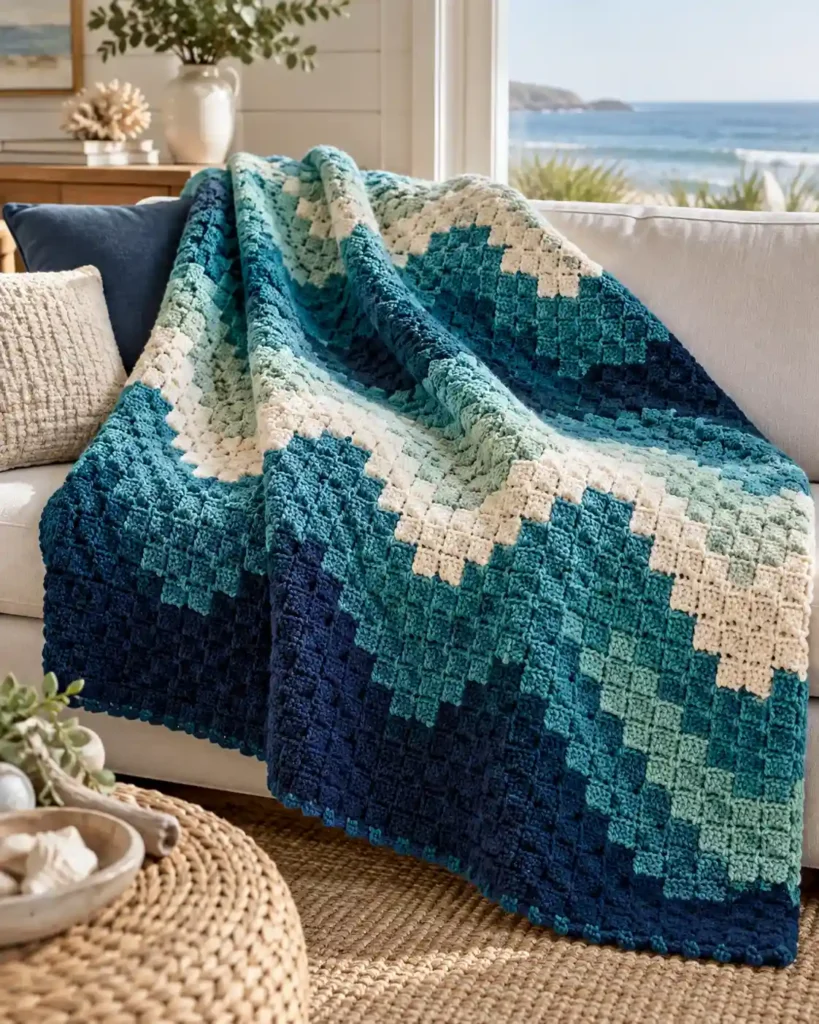
C2C blocks are a natural fit for layered wave shapes, especially when you move from navy through aqua, seafoam, and cream. Compared with literal picture graphgans, waves are forgiving because slight variations in the curve can still look intentional. I love this idea for beach houses, coastal bedrooms, or summer gifts where a heavy traditional afghan feels visually too dark. It is for crocheters who want graph-based colorwork without needing every pixel to form a recognizable object.
Keep one neutral shade between some of the blue bands if the colors start blending together. Contrast helps the wave layers stay distinct.
21. What Is a Southwestern C2C Graphgan?
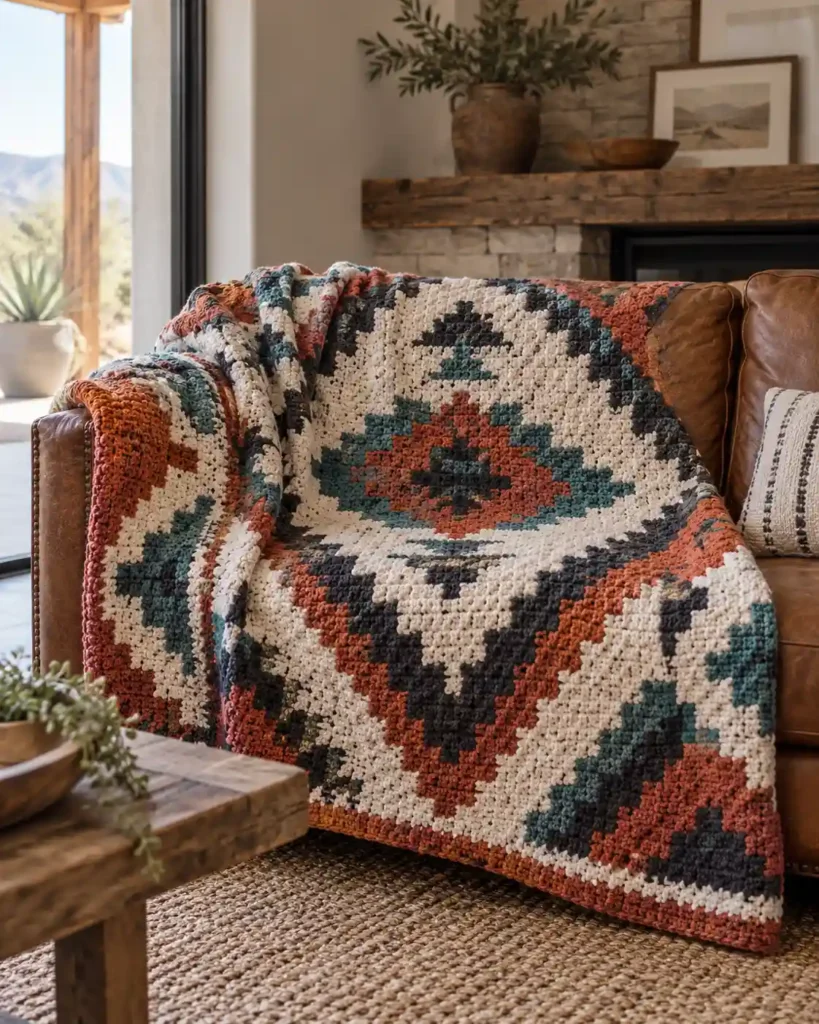
A Southwestern-inspired graphgan uses stepped diamonds, angular stripes, and geometric motifs that fit the C2C grid especially well. The design feels more architectural than floral or animal graphgans, so you can get strong visual impact with fewer tiny color changes. This is a great direction for earthy rooms where terracotta, cream, charcoal, sand, and muted teal already appear in the decor. Choose it if you enjoy chart work but prefer symmetry over illustrated motifs.
Check the center line of the graph every few rows. Small counting errors are much more obvious in symmetrical designs.
22. How Can You Make a Christmas C2C Crochet Blanket?
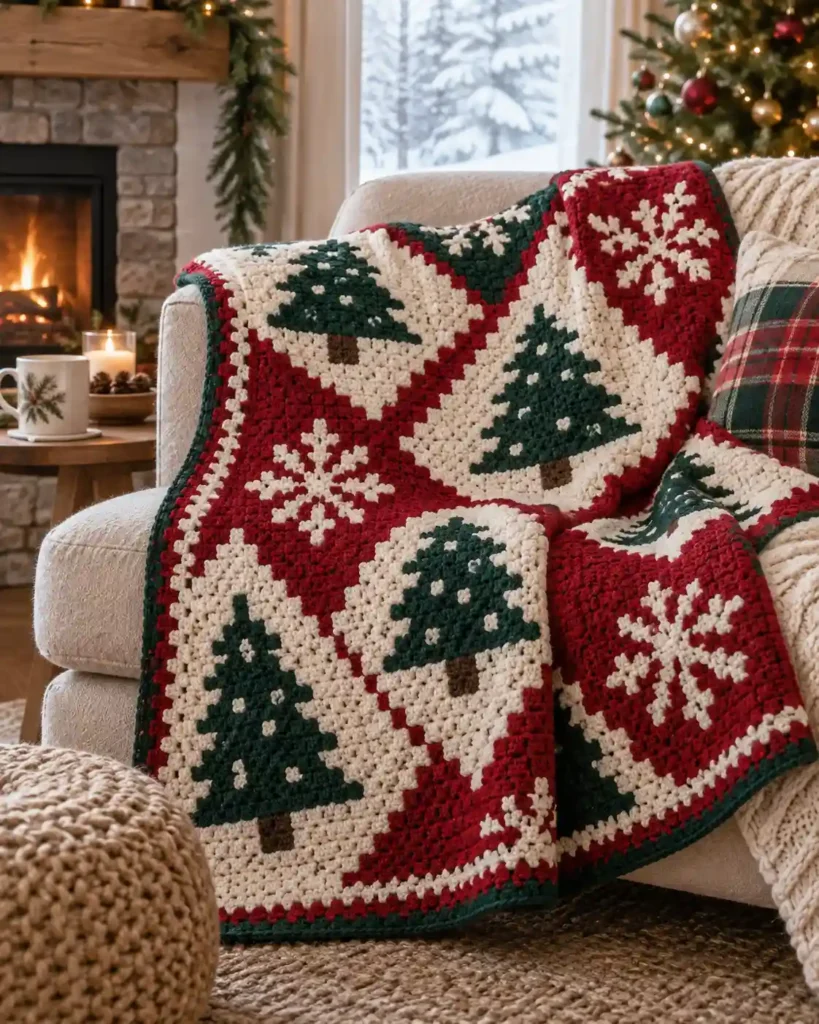
A Christmas crochet blanket can feature trees, snowflakes, ornaments, reindeer, stockings, or simply festive diagonal color blocks. Unlike a one-season novelty piece, a modern palette, cream, pine, burgundy, gold, or dusty red, can make the blanket feel decorative for the whole winter. I would start this project earlier than you think, especially if the graph contains multiple motifs or you plan to give it as a December gift. It is perfect for crocheters who enjoy seasonal projects that become part of the home every year.
For the easiest version, work one large central tree or snowflake instead of many small motifs. Fewer color sections mean less yarn management.
23. How Do You Read a C2C Graph or Chart?
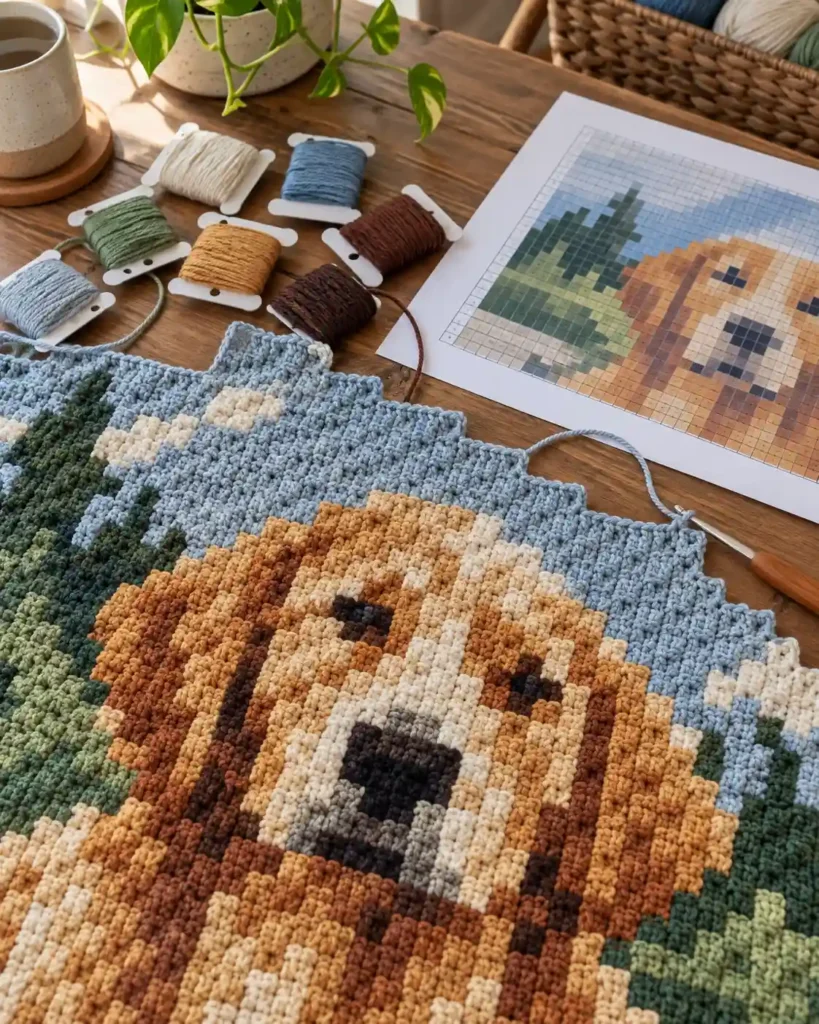
Most C2C graphs treat one chart square as one crochet block, so the image develops like pixel art as you work diagonally across the grid. The challenge is not the stitch itself—it is keeping track of direction, row number, and the exact point where each color begins and ends. I like to mark the chart after every completed diagonal row, especially when several shades repeat in nearby areas. This skill opens the door to almost any graphgan design once the basic C2C construction feels automatic.
Craftematics notes that graphghans are a common C2C application because the technique naturally produces square blocks suited to pixel-style imagery.
24. How Do You Plan a Three-Color C2C Crochet Blanket?
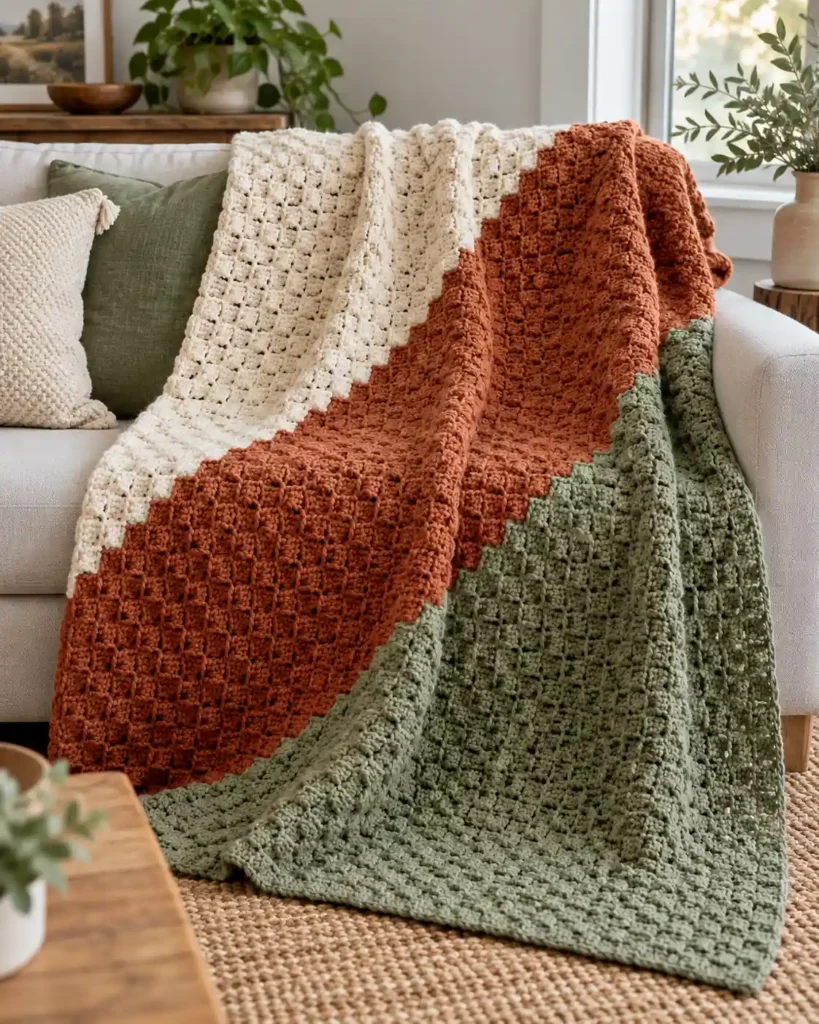
Three colors are enough to create stripes, asymmetrical blocks, borders, or a soft gradient without turning the project into complicated colorwork. Compared with a two-color blanket, the third shade gives you more depth, yet you still have a small enough palette to keep the finished piece coordinated. This is the color plan I would use when I want a blanket to match a room but do not have the patience for a full graph. It is one of the easiest ways to make a simple C2C project look custom.
Try a 60/30/10 balance: one dominant color, one supporting color, and a smaller accent. You do not have to follow the percentages exactly, the idea is simply to avoid giving every shade equal visual weight.
25. What Border Looks Best on a C2C Crochet Blanket?
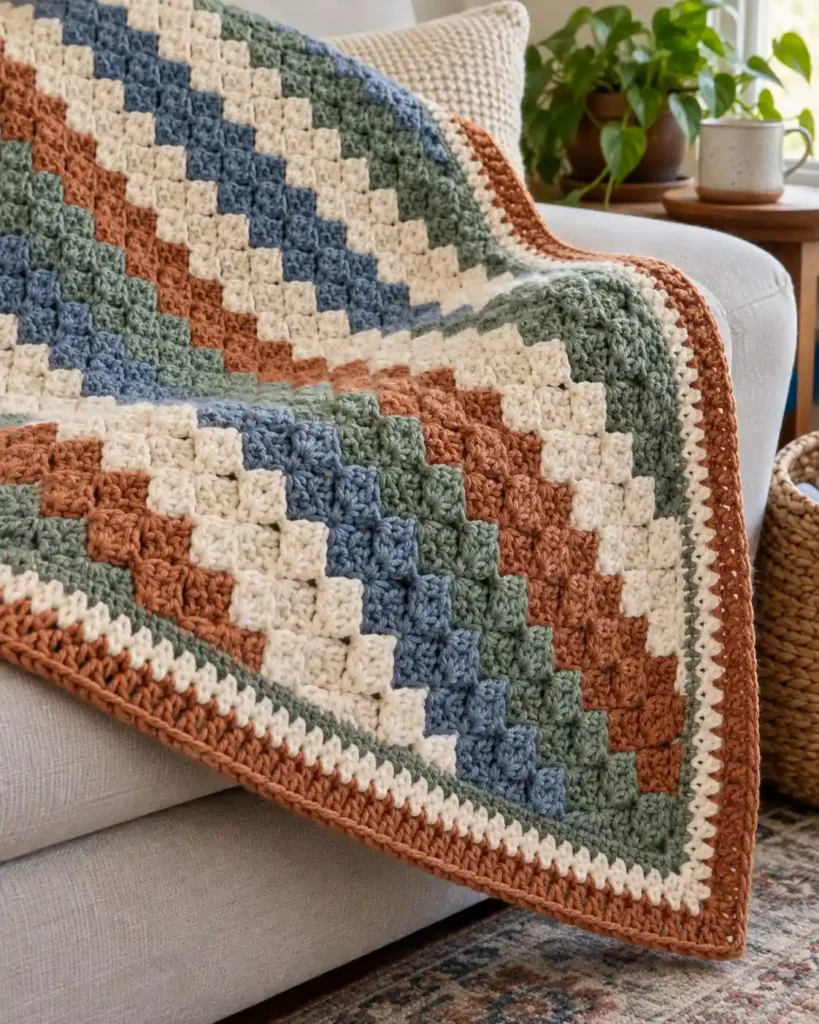
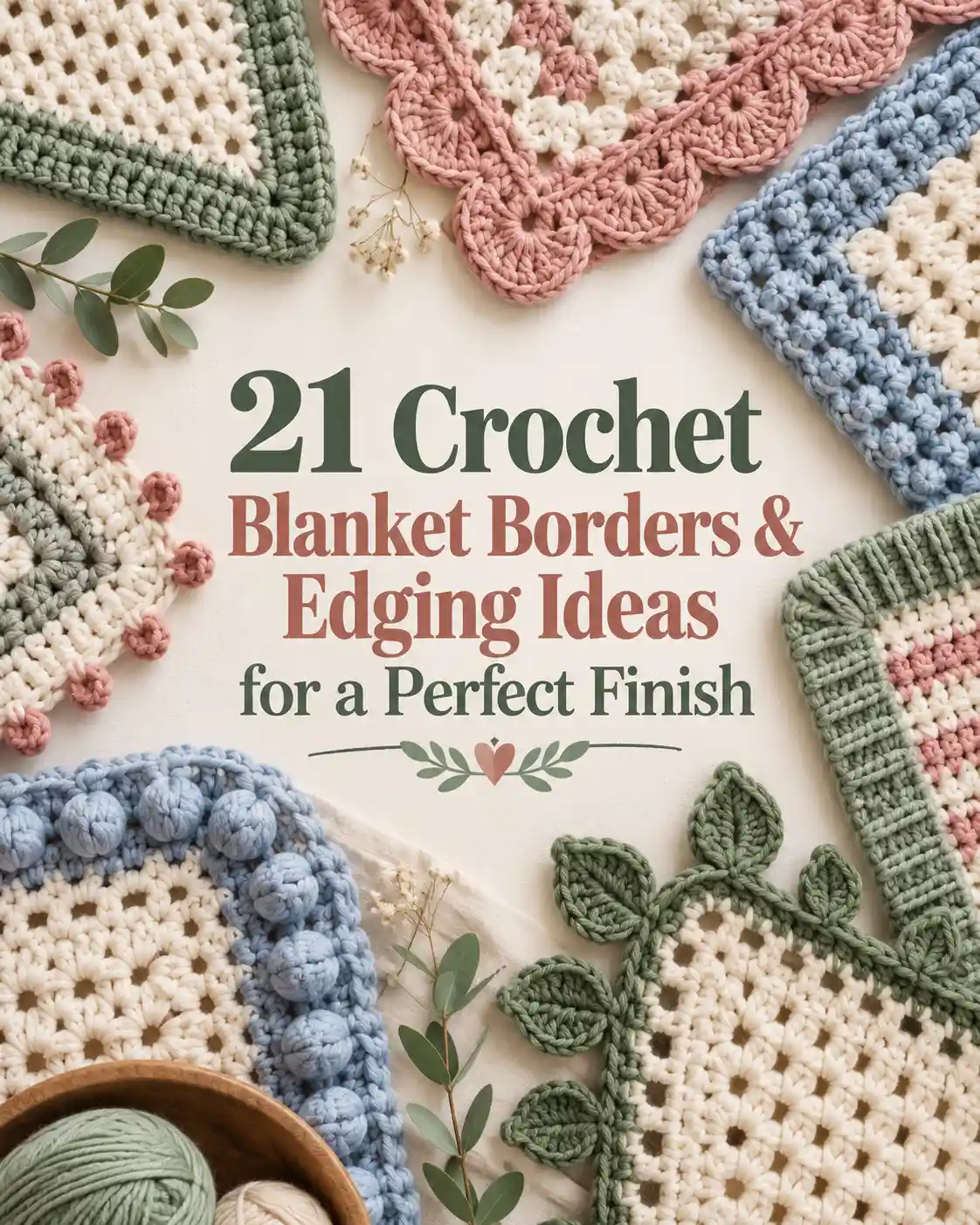
A border can turn the slightly stepped C2C edge into a cleaner frame and give the whole blanket a more finished shape. Start with a simple round that evens out the edge, then decide whether the project needs single crochet, crab stitch, scallops, shells, picots, or just a few quiet rounds of the main color. I prefer simple borders on detailed graphgans and more decorative borders on solid or lightly striped blankets because the two elements should not compete. If your blanket looks almost finished but not quite polished, crochet blanket edging is usually the missing step.
Craftematics also recommends adding a border to tidy C2C edges, while A Crocheted Simplicity shows both prepared edges and simple border options in its beginner-focused C2C blanket tutorial.
26. What Is a Useful Free C2C Crochet Blanket Size Chart?
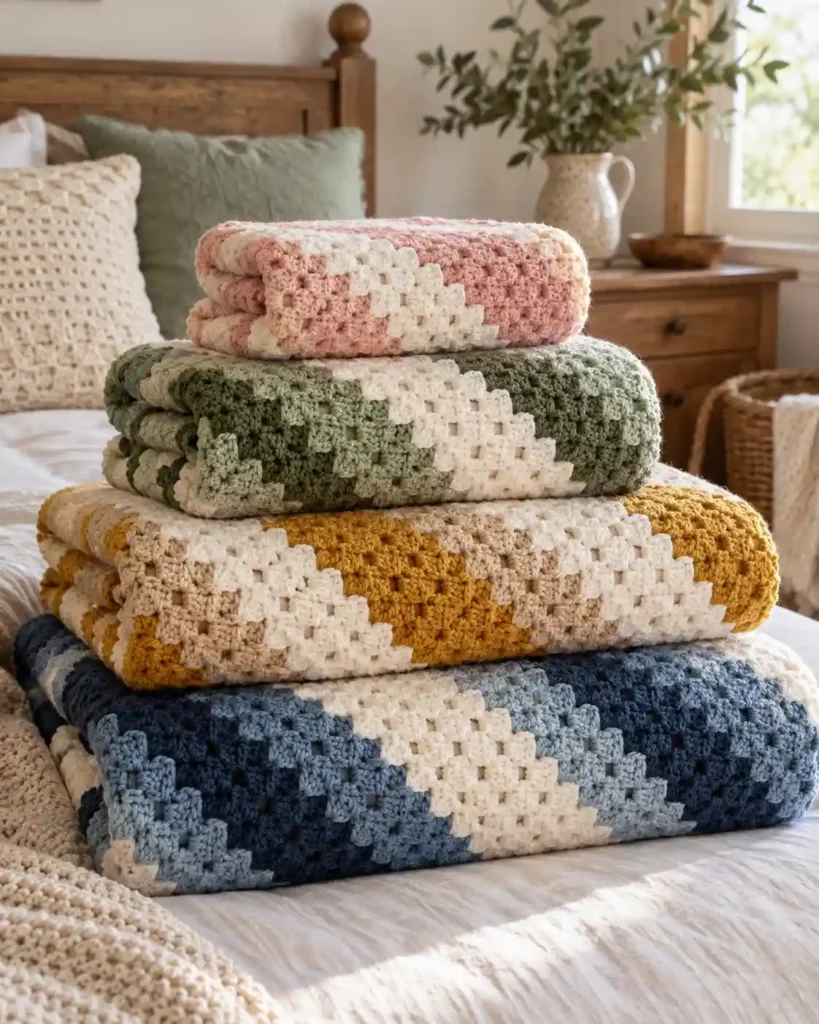
There is no single row count that produces a universal baby, throw, twin, or queen blanket because yarn weight, hook size, stitch variation, and personal tension all change block dimensions. A better Free c2c crochet blanket size chart is one you build from your own measured swatch: decide the target width, calculate how many blocks reach it, then shape the blanket from there. I use that method because it keeps the project tied to real measurements instead of assuming everyone crochets at the same gauge. It is especially helpful when you substitute yarn or use a nonstandard C2C stitch.
Rather than treating one set of measurements as a fixed standard, decide what the blanket needs to cover, make a swatch, and calculate your dimensions from the actual width and height of your blocks. This approach is more reliable when yarn weight, hook size, or stitch style changes.
27. What Yarn and Colors Work Best for a C2C Crochet Blanket?
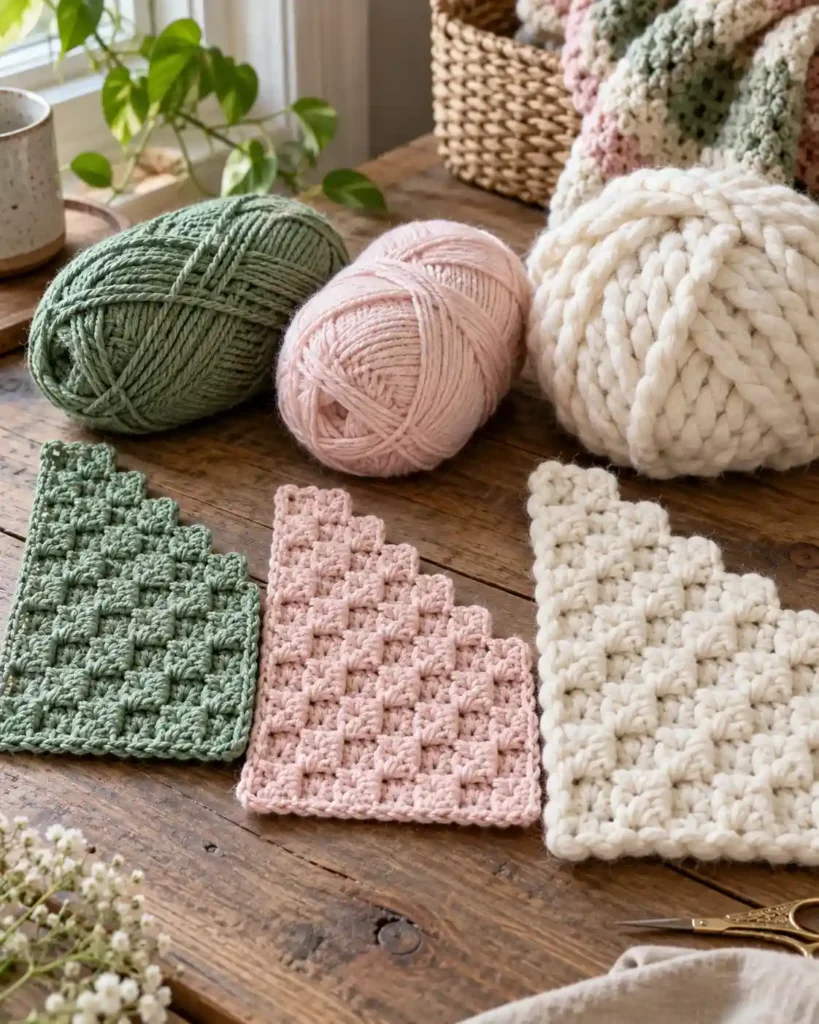
Smooth worsted yarn is a reliable all-purpose choice because it gives graphgans clear block definition without becoming excessively heavy. Baby blankets benefit from soft, washable fibers, while chunky yarn is useful when speed and warmth matter more than fine detail. I tend to choose yarn based on the design first, clean solids for graphs, self-striping yarn for simple patterns, and high-contrast palettes for gingham or pixel motifs. The best yarn is the one that supports the stitch definition, drape, care needs, and color plan of the blanket you actually want to make.
The Craft Yarn Council’s label system identifies yarn categories from 0 to 7, and its standards pair those categories with typical gauge and hook ranges. Use the label and the pattern together rather than choosing a hook from the yarn name alone.
How Does Corner-to-Corner Crochet Actually Work?
Corner-to-corner crochet starts at one corner, increases along diagonal rows, reaches the target width or midpoint, and then decreases toward the opposite corner.
- Begin with one small corner block.
- Add blocks during increase rows.
- Shape a square or rectangle.
- Start decreasing at the planned point.
- Finish with one final corner block.
Classic C2C begins in one corner with a small block, then adds blocks along each diagonal row. Each increase row expands the fabric until you reach the target width or midpoint; after that, decrease rows remove blocks until the opposite corner closes.
For a square, both sides usually increase together and later decrease together. For a rectangle, one side can begin decreasing while the other continues increasing, which extends the length without adding width.
How Do You Change Colors Cleanly in C2C Crochet?
Change yarn during the final pull-through before the new color begins, and use separate bobbins when graphgan sections are too far apart to carry yarn neatly.
- Switch colors before completing the final stitch.
- Use bobbins for isolated color sections.
- Keep yarn arranged in working order.
- Avoid carrying yarn across long distances.
Change color before completing the final pull-through of the stitch that comes just before the new shade. For graphgans, attach separate bobbins to isolated color areas so you do not carry yarn across large sections of the back.
Keep the balls or bobbins arranged in the same left-to-right order as the work. When you turn, rotate the project consistently instead of flipping the yarn pile randomly; it is a surprisingly effective way to reduce tangles.
How Should You Choose Yarn and Hook Size?
Match the yarn and hook to the pattern first, then swatch to confirm that the fabric has the stitch definition, drape, and dimensions you want.
- Follow pattern recommendations when available.
- Check the yarn-label weight category.
- Swatch before making a full blanket.
- Adjust the hook if fabric feels stiff.
- Choose smooth yarn for detailed graphgans.
Start with the pattern recommendation if you are following a written pattern. If you are designing your own blanket, use the yarn label and the Craft Yarn Council’s standardized weight and hook guidance as a baseline, then swatch for the fabric you want.
A graphgan usually benefits from clear stitch definition, so an extremely fuzzy yarn can make the picture less crisp. A cozy solid throw has more flexibility because texture and softness may matter more than pixel clarity.
How Can You Estimate C2C Blanket Size and Yardage?
Measure a representative swatch, calculate how many blocks fit your desired dimensions, and estimate yarn from a measured or weighed sample rather than relying on one universal row count.
- Crochet a representative swatch.
- Measure several blocks together.
- Calculate target width and length.
- Track yarn used in the swatch.
- Add extra yarn for borders and matching dye lots.
Measure a swatch rather than relying on a universal “rows equals inches” formula. If 10 of your blocks measure 8 inches across, for example, you can estimate the number of blocks needed for your target width using your own gauge.
For yardage, weigh or measure the yarn used in a known section and scale cautiously from there, adding extra for borders, swatching, and color matching. Detailed graphgans often need several colors even when the total yardage is similar to a simpler blanket, so buying by total yardage alone can leave you short of one key shade.
What Beginner C2C Mistakes Are Easy to Avoid?
Most beginner C2C problems come from miscounted blocks, inconsistent turning chains, incorrect decrease points, uneven tension, and poorly managed color changes.
- Count blocks every row.
- Mark increase and decrease edges.
- Keep turning chains consistent.
- Correct errors before continuing.
- Watch tension during color changes.
The most common problems are skipped blocks, incorrect turning chains, losing track of which edge is increasing, and starting decreases too early. Use markers, count the blocks in every diagonal row, and fix errors when you spot them rather than hoping the border will hide them.
Also watch tension during color changes. Pulling a new color too tightly can pinch the fabric, while loose joins can leave gaps around graphgan motifs.
How Should You Care for a Handmade C2C Blanket?
Wash and dry the blanket according to the yarn label, reshape it after washing, and store it clean and dry so the fabric and edges keep their shape.
- Follow the yarn label.
- Test uncertain fibers on a swatch.
- Reshape after washing.
- Dry completely before storage.
- Fold instead of hanging heavy blankets.
Follow the care instructions for the yarn you used, especially when the blanket contains wool, delicate fibers, or several yarn types. The Craft Yarn Council explains that yarn care symbols indicate how an item made from the yarn should be washed, dried, or otherwise cared for. Wash a test swatch first if you are uncertain how the colors or fibers will behave.
After washing, reshape the blanket so the edges and corners sit evenly. Store it clean and fully dry, folded rather than hanging, so the weight of the fabric does not stretch the corners. If the blanket is intended for use around a young infant, follow CPSC safe-sleep guidance and keep loose blankets out of the infant’s sleep space.
FAQs About C2C Crochet Blankets
Is C2C crochet good for beginners?
Yes. The basic increase and decrease repeat is approachable once you understand chains, double crochet, turning, and block counting. Start with one color before attempting a graphgan, especially if you are looking for a C2c crochet blanket for beginners project.
What stitch is usually used for a C2C crochet blanket?
The classic version commonly uses small double-crochet blocks joined along diagonal rows. You can also adapt the construction to half double crochet, moss stitch, waffle-style textures, granny clusters, and other repeats.
How do I make a C2C blanket rectangular instead of square?
Increase both sides until the blanket reaches the desired width, then begin decreasing on one edge while continuing to increase on the other. Once the target length is reached, decrease both edges to close the final corner.
How much yarn does a C2C blanket use?
There is no single reliable amount because finished size, yarn weight, stitch type, hook size, tension, and colorwork all affect usage. A measured swatch is the best way to build a realistic estimate for a C2C crochet blanket free pattern or a custom design.
Can I use a picture or graph for a C2C blanket?
Yes. C2C is especially well suited to graphgans because each crochet block can correspond to a square on a pixel-style chart. Keep the chart, row tracking, and yarn bobbins organized as the image becomes more detailed.
Final Thoughts
C2C crochet blankets are a great example of how one simple construction method can lead to dozens of completely different-looking projects. You can keep things easy with a solid-color beginner blanket, play with stripes and texture, or move into detailed graphgans once you feel more confident.
The best place to start is with the idea that matches your current skill level and the kind of blanket you actually want to use or give. Make a small swatch, check your size and yarn choice, then enjoy the process instead of trying to make the project more complicated than it needs to be.
Whether you choose a simple c2c crochet blanket, a textured modern design, or a colorful picture blanket, there is plenty of room to make it feel personal. Save your favorite idea, gather your yarn, and start from that first corner.

![The Best 30+ Free Crochet Cat Patterns [Beginner-Friendly Guide]](https://crochetmind.com/wp-content/uploads/2025/04/1-The-Best-30-Free-Crochet-Cat-Patterns-Beginner-Friendly-Guide.webp)