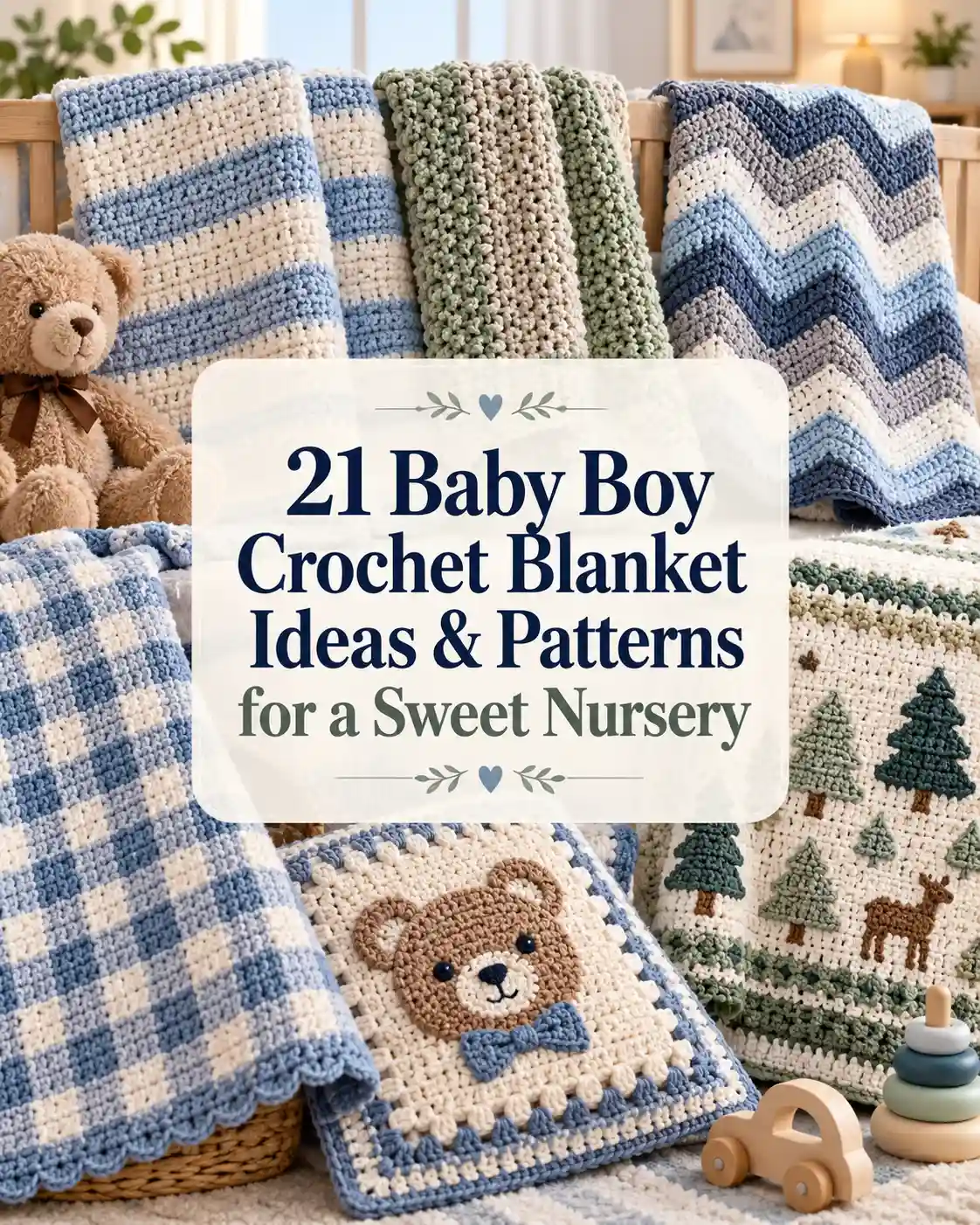
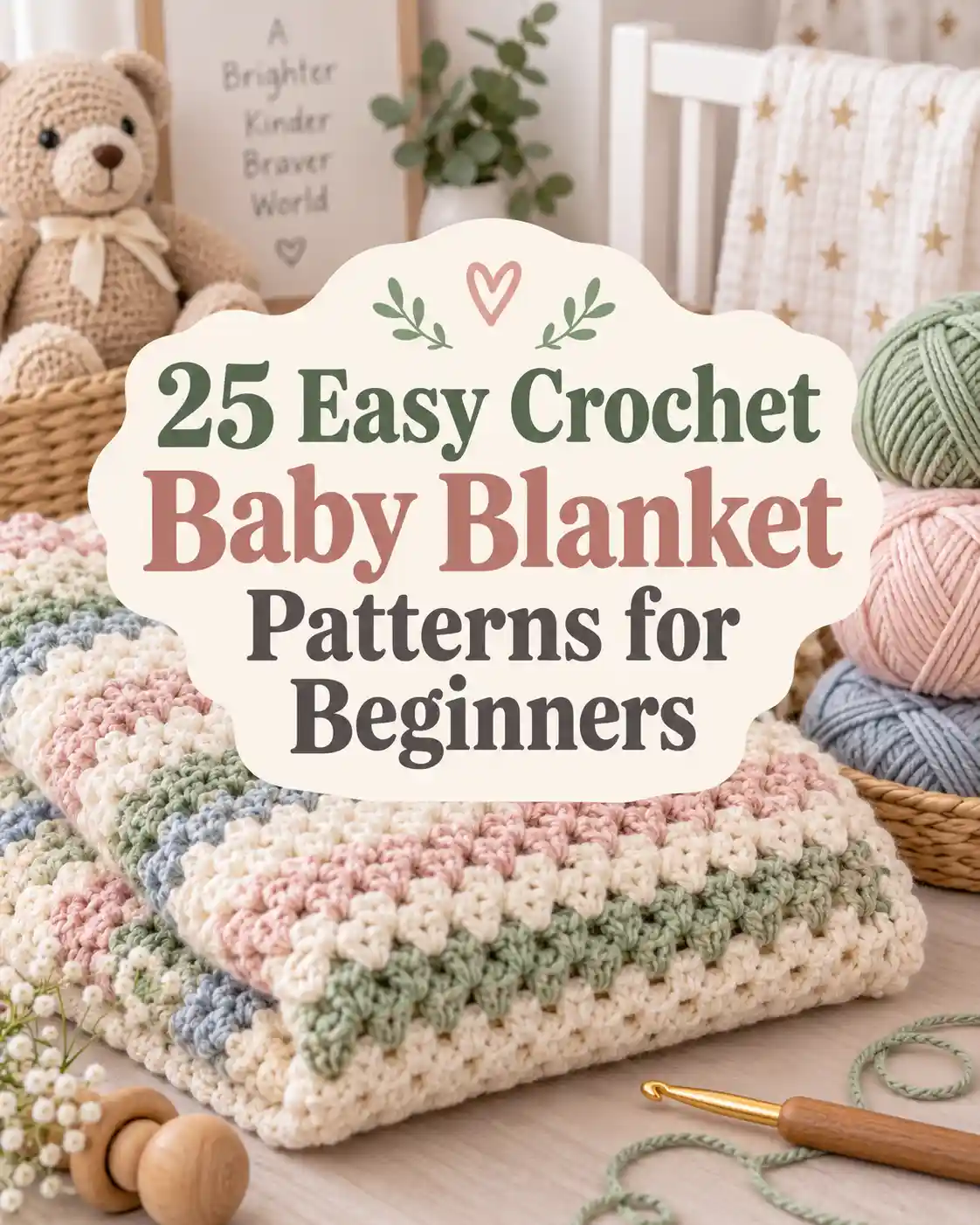
A handmade baby boy crochet blanket can be as simple as a repeating stitch in one soft color or as detailed as gingham, chevrons, teddy bears, or tiny sailboats. The best choice depends on your crochet experience, the yarn you want to use, and whether you prefer a modern, textured, classic, or themed nursery look.
If you are choosing your first baby blanket project, it helps to focus on construction before color or decoration. A simple repeating stitch can be just as beautiful as an elaborate motif blanket, while textured and geometric designs give you plenty of room to build new skills.
Below are 21 baby boy crochet blanket ideas covering beginner-friendly stitches, textured designs, geometric layouts, and playful motifs. Use each idea as inspiration, then follow a complete designer pattern for the exact stitch multiple, gauge, yarn quantity, dimensions, and finishing instructions.
Key Takeaways
- Start with a construction that matches your crochet skills.
- Compare stitch texture before choosing your final design.
- Check pattern gauge, dimensions, yarn, and hook requirements.
- Swatch before changing yarn weight or fiber.
- Use securely finished edges and weave in every end.
- Choose colors that suit the recipient and nursery.
Which Baby Boy Crochet Blanket Style Should You Choose?
Choose your baby boy crochet blanket style by balancing skill level, construction method, texture, colorwork, and the amount of finishing you are comfortable doing.
At a Glance:
- Repeating rows suit newer crocheters.
- Textured stitches add depth without motifs.
- Geometric blankets need more counting.
- Motif designs often require charts or assembly.
- Tunisian crochet introduces a different technique.
Before diving into the designs, here is a quick way to narrow the list.
| Blanket style | Best for | Main feature | Skill consideration |
|---|---|---|---|
| Half double crochet stripes | Beginners | Clean horizontal stripes | Easy row counting |
| Moss stitch | Beginners | Subtle woven texture | Consistent edge tension |
| V-stitch | Confident beginners | Light, open texture | Repeat placement |
| Waffle stitch | Intermediate makers | Deep raised texture | Post stitches |
| Chevron | Intermediate makers | Bold zigzag pattern | Increases and decreases |
| Gingham | Intermediate makers | Classic checked effect | Color management |
| Granny squares | Confident beginners | Modular construction | Joining pieces |
| C2C | Intermediate makers | Diagonal blocks | Increasing and decreasing |
| Motif blankets | Intermediate/advanced | Nursery themes | Charts and color changes |
| Tunisian crochet | Adventurous beginners+ | Woven appearance | Tunisian hook and technique |
21 Baby Boy Crochet Blanket Ideas & Patterns for a Sweet Nursery
Many established crochet designers use the same range of approaches. Daisy Farm Crafts, for example, includes gingham, V-stitch, chevron, ripple, striped, bobble, nautical, and moss-style projects in its modern baby-boy blanket collection.
1. Half Double Crochet Stripe Blanket
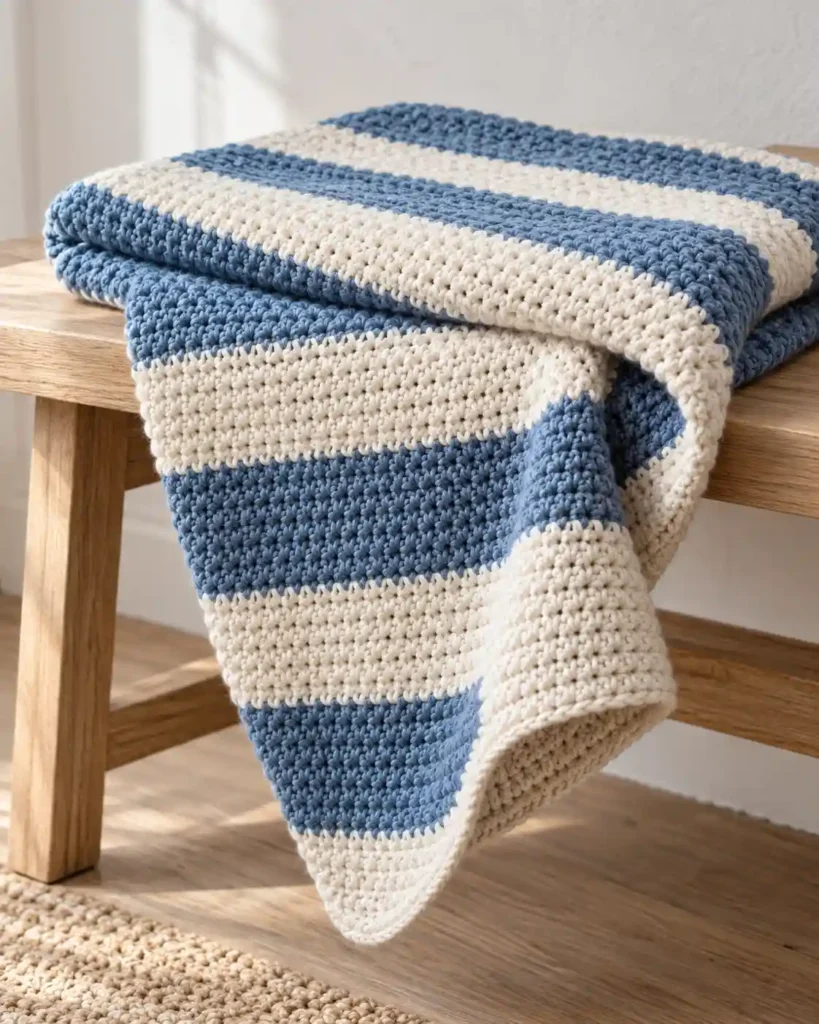
A half double crochet baby blanket is one of the easiest places to start because a simple stitch can look completely different once broad stripes are introduced. Instead of adding complicated texture, you let color placement create most of the design.
Try alternating powder blue, cream, and a slightly darker denim shade, or keep the palette to two colors for fewer yarn changes. I especially like this construction for a practical everyday gift because straight rows make it easier to notice a missed stitch before you have worked too far.
If you want an easy crochet baby blanket that still photographs beautifully in a nursery, broad HDC stripes are hard to beat.
Special Tip: Place a stitch marker in the first and last stitch of each row while you are learning. It makes straight edges much easier to maintain.
2. Moss Stitch Blanket
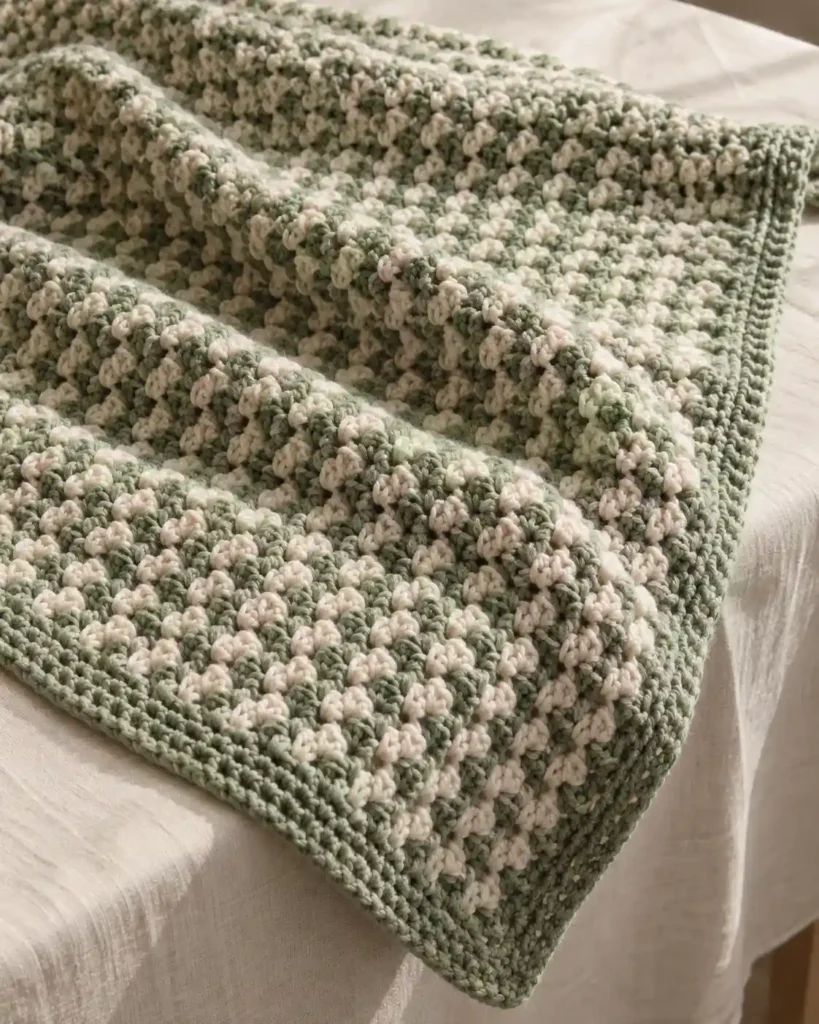
The moss stitch baby blanket has a quiet woven appearance created by alternating stitches and spaces. It feels more detailed than a basic solid fabric without demanding complicated shaping or motifs.
Sage and oatmeal make a particularly soft combination, although muted teal, cream, grey, or dusty blue work just as well. Compared with highly raised stitches such as waffle crochet, moss stitch gives you texture without making the surface feel visually heavy.
Make a small practice swatch first so you can get comfortable placing stitches into the correct spaces. This is a lovely option when you want a modern gender-neutral crochet baby blanket that can move easily between nursery styles.
3. Blanket Stitch Baby Blanket
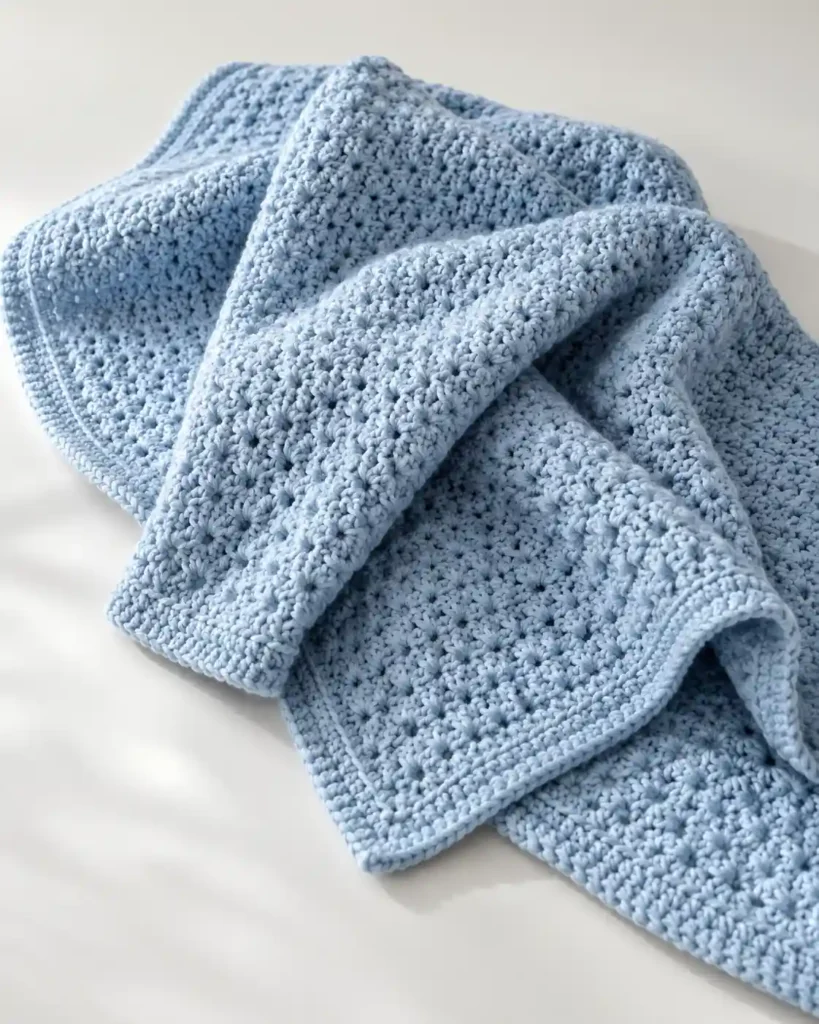
A blanket stitch baby blanket works beautifully when you would rather crochet in one color than manage stripes. The repeating texture gives a solid blue, cream, grey, or teal blanket enough visual interest on its own.
This style is especially useful for new crocheters who want to concentrate on recognizing stitch groups instead of stopping to change yarn every few rows. Once the repeat starts making sense, the project becomes pleasantly rhythmic.
Look for a complete beginner pattern that clearly states its foundation multiple, turning-chain convention, finished dimensions, and border instructions. A narrow matching edge keeps the finished blanket clean and simple.
4. V-Stitch Stripe Blanket
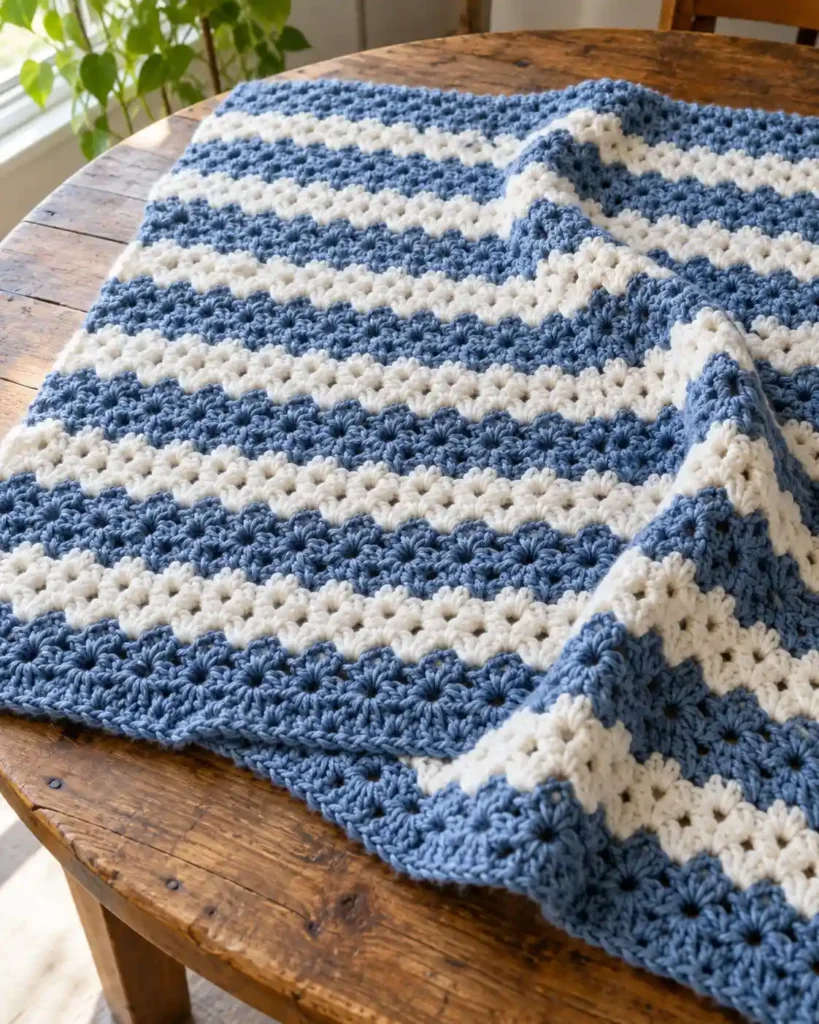
A baby boy V-stitch crochet blanket brings more drape and movement than a dense row of basic stitches. The little V-shaped groups form a repeating rhythm that looks particularly good when worked in blue-and-white stripes.
You can also crochet the entire blanket in one shade if you want the stitch itself to do all the visual work. Because several V-stitch variations exist, follow the exact stitch definition provided in your chosen pattern rather than assuming every tutorial uses the same construction.
This is the design I would reach for when a plain striped blanket feels a little too simple but you still want an approachable repeat. Denim blue paired with warm ivory gives it an easy coastal-nursery feel.
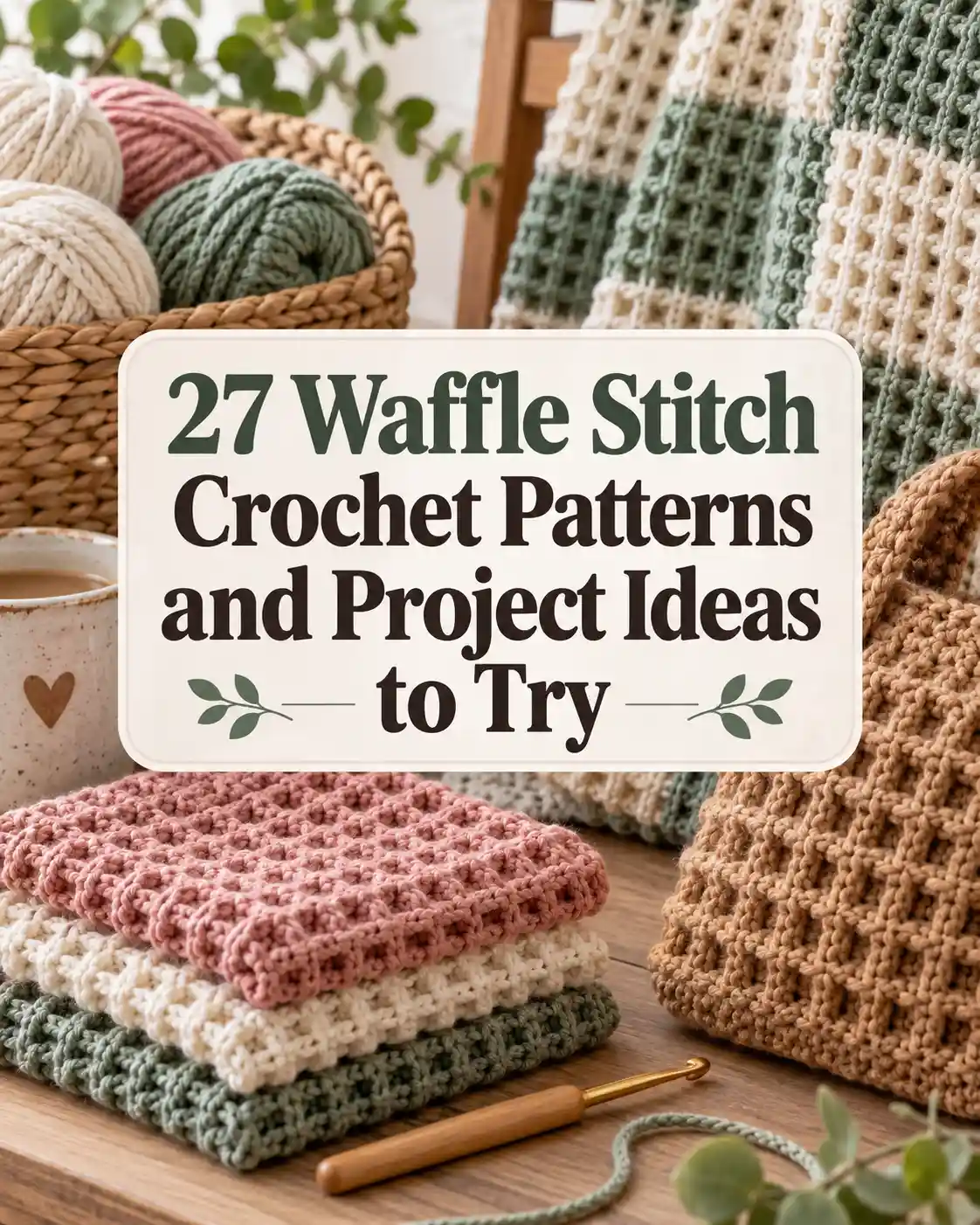
5. Waffle Stitch Crochet Baby Blanket
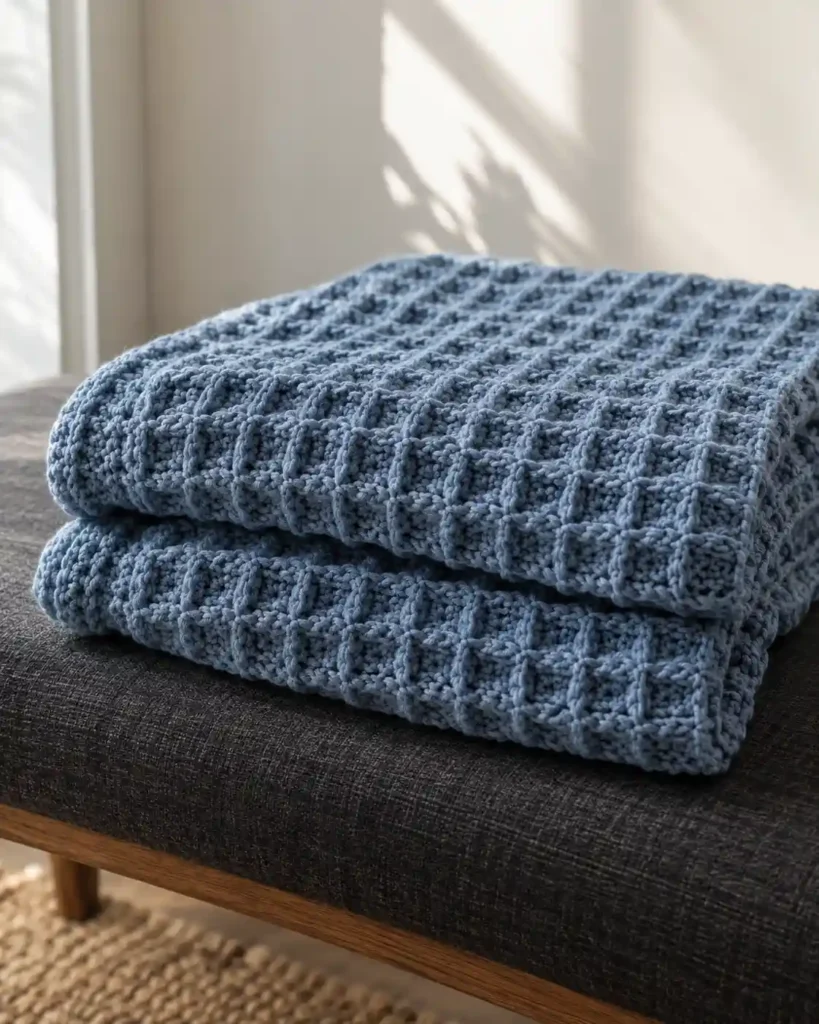
A waffle stitch crochet baby blanket is all about texture. Raised post stitches create a grid of deep little squares that can make even a single-color blanket look wonderfully dimensional.
Dusty blue works beautifully here because shadows naturally settle between the raised sections. Compared with a moss-stitch blanket, however, waffle fabric generally feels denser and can use more yarn, so the quantities from your selected pattern matter.
This is a great next project once you are comfortable with ordinary double crochet and are ready to learn post stitches. Make a swatch before committing to the blanket so you can check the fabric’s weight, drape, and gauge.
6. Basketweave Crochet Baby Blanket
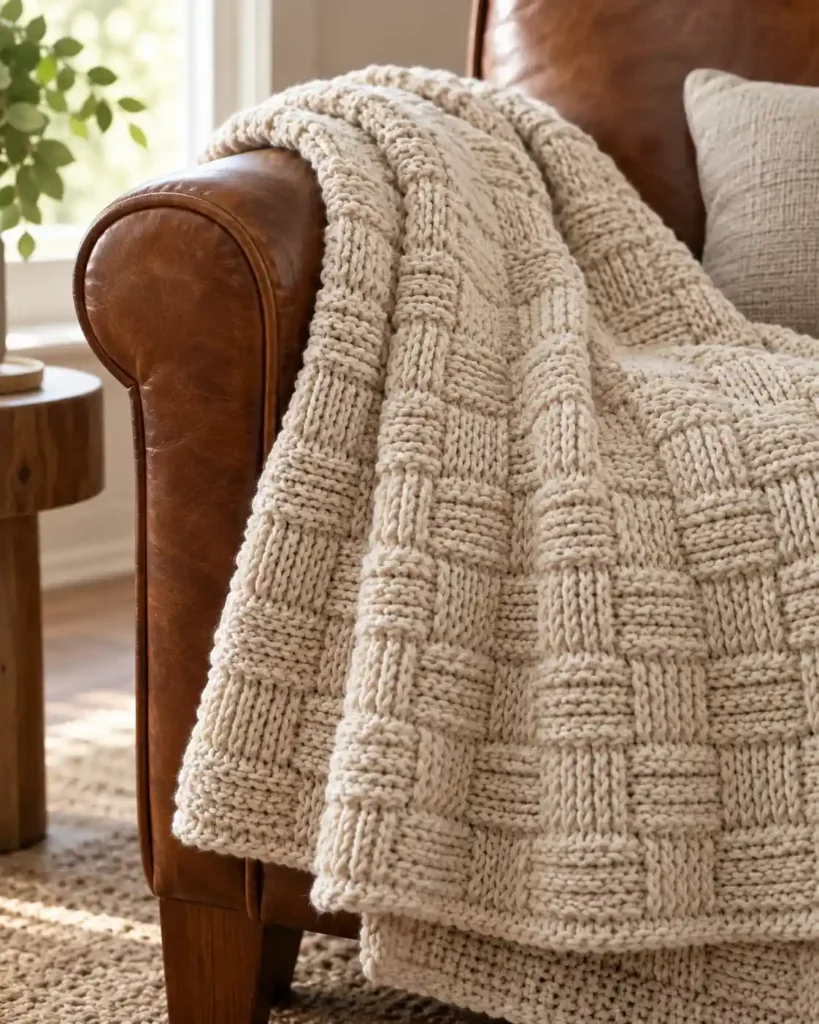
The basketweave crochet baby blanket gives you a woven-block effect without having to join separate squares. Alternating raised sections create rectangular blocks that appear to move over and under one another.
Where waffle stitch produces a regular grid, basketweave feels broader and more architectural. An oatmeal, cream, muted navy, or sage palette keeps that texture from becoming visually overwhelming.
I love this design for a handmade baby shower gift when you want the blanket to feel substantial and classic. Finish it with a plain border so the center texture remains the main attraction.
7. Bobble Stripe Blanket
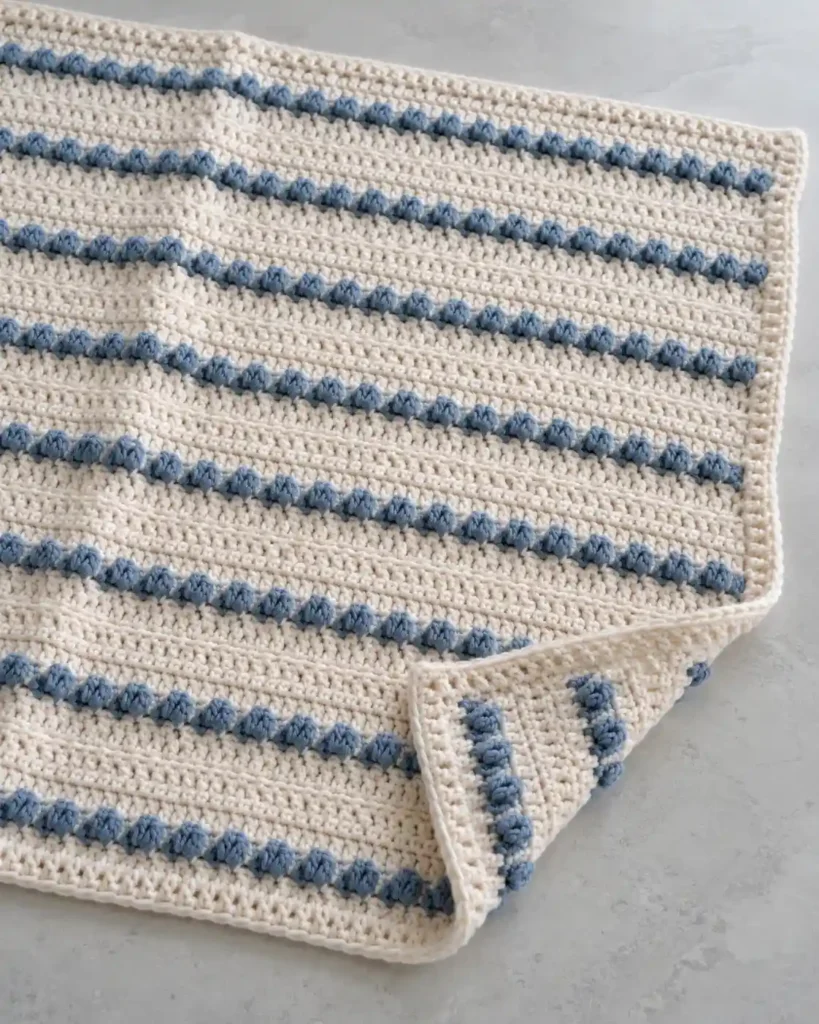
A bobble stitch baby blanket adds texture exactly where you want it instead of covering the entire project in raised stitches. An ivory body with evenly spaced blue bobble rows feels playful while staying fairly restrained.
The trick is spacing the bobbles intentionally so they read like part of the design rather than random bumps. You will also want to look at the reverse side of your swatch because bobbles naturally have a more prominent front-facing side.
For someone who loves texture but finds waffle or basketweave too dense, a few bobble stripes can be the sweet spot. Keep embellishments stitched securely into the fabric rather than adding loose decorative pieces.
8. Shell Stitch Baby Blanket
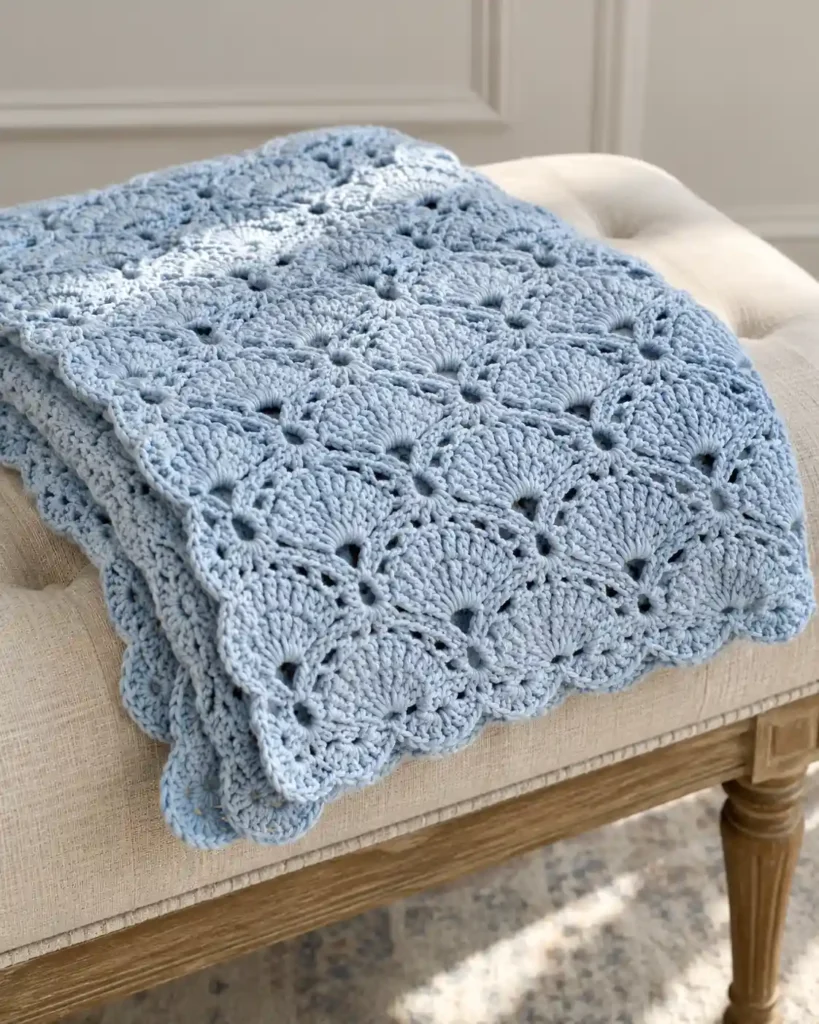
The shell stitch baby blanket uses fan-shaped stitch groups to create a soft, repeating rhythm across the fabric. In pale blue or muted teal, the texture can look delicate without needing a complicated color palette.
Shell fabric and a scalloped border are not necessarily the same thing, so check how your selected pattern uses each technique. Some blankets create shells throughout the body, while others keep the body simple and reserve scallops for the edge.
This style suits a more traditional nursery particularly well. If you enjoy repetitive crochet but want something softer-looking than straight horizontal rows, shells are worth exploring.
9. Chevron Crochet Baby Boy Blanket
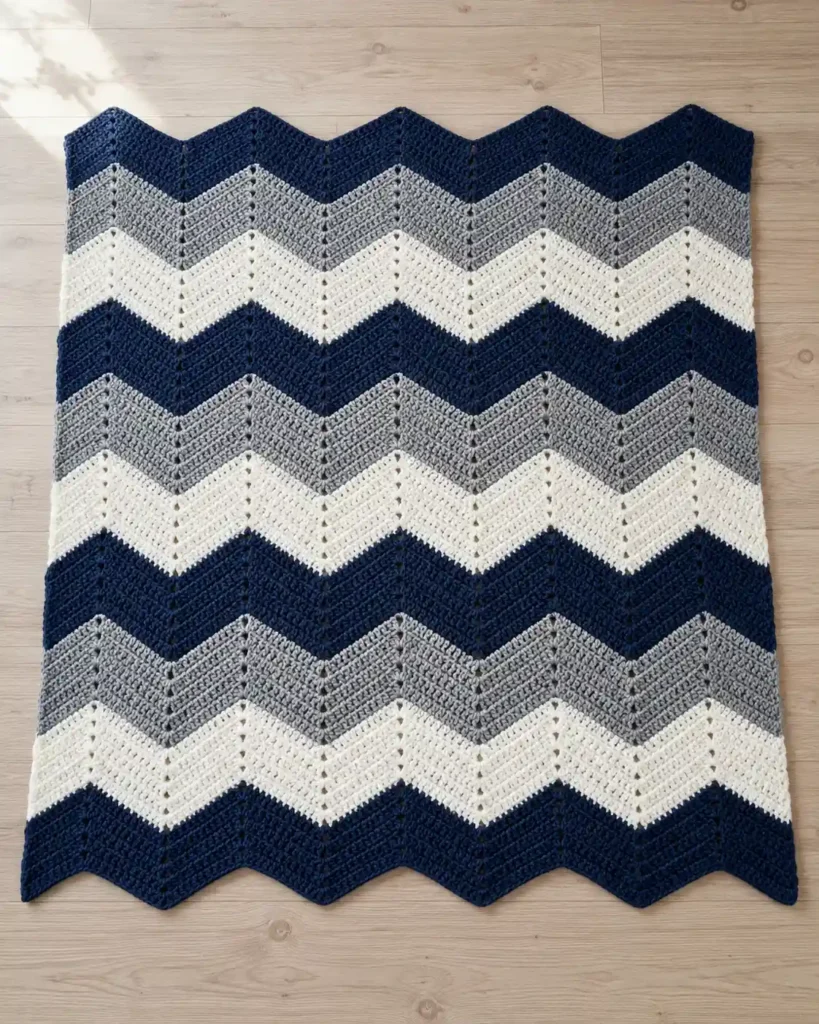
A chevron crochet baby boy blanket creates bold peaks and valleys through carefully positioned increases and decreases. Navy, soft grey, and white can turn the zigzag into a strong modern design without making it overly bright.
The most important habit is counting consistently around every peak and valley. One missed increase or decrease can gradually distort the entire shape.
Chevron is ideal when stripes alone feel too predictable because the color bands become part of the zigzag silhouette. Choose this one if you enjoy repetitive patterns but do not mind paying close attention to stitch placement.
10. Granny Ripple Baby Blanket
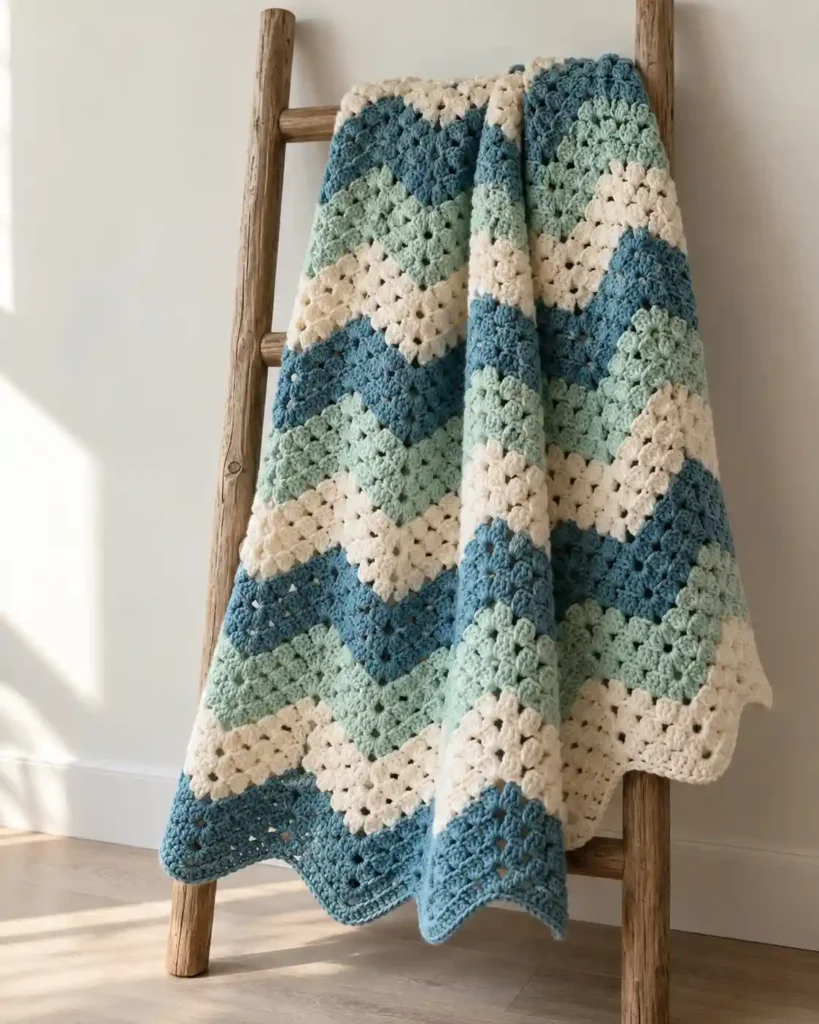
A granny ripple baby blanket gives the familiar granny-cluster look a flowing wave shape. Sea blue, mint, and cream work especially nicely because the changing colors emphasize each ripple.
Unlike a solid chevron, the granny version relies on clusters and spaces, so its texture and visual rhythm are noticeably different. Follow the exact repeat from a full pattern rather than trying to convert an ordinary chevron pattern on the fly.
This one has a relaxed, slightly vintage personality that works beautifully in coastal or soft-color nurseries. It is also a fun choice for crocheters who already enjoy granny squares but want to make something in continuous rows.
11. Blue Gingham Crochet Blanket
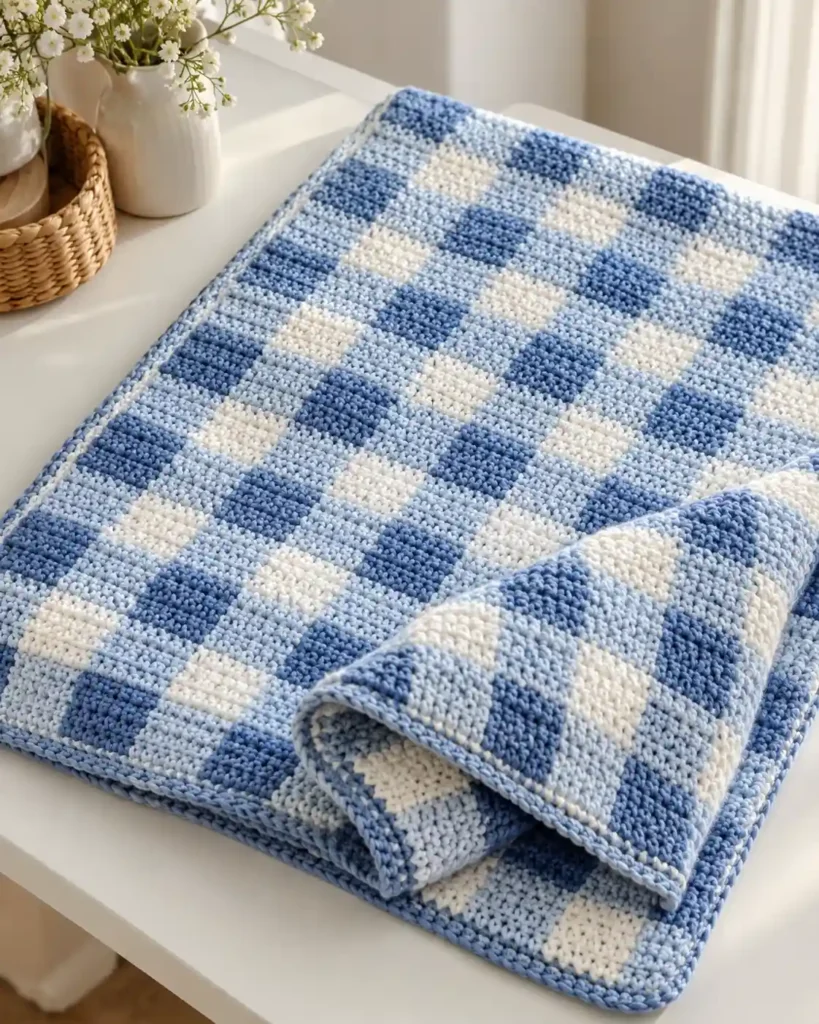
A gingham crochet blanket can make a nursery feel instantly polished. Using light, medium, and darker shades from the same color family creates the familiar checked effect without requiring printed fabric.
Blue, pale blue, and white are an obvious combination, although sage or grey versions can be just as attractive. Gingham does require better color management than a one-color blanket because tension and square proportions need to stay consistent.
Knitting with Chopsticks notes that a classic gingham effect commonly relies on three coordinated shades a light, medium, and darker tone from a similar color family.
Use this design when the blanket itself is meant to become a focal point in the room.
12. Checkerboard Crochet Baby Blanket
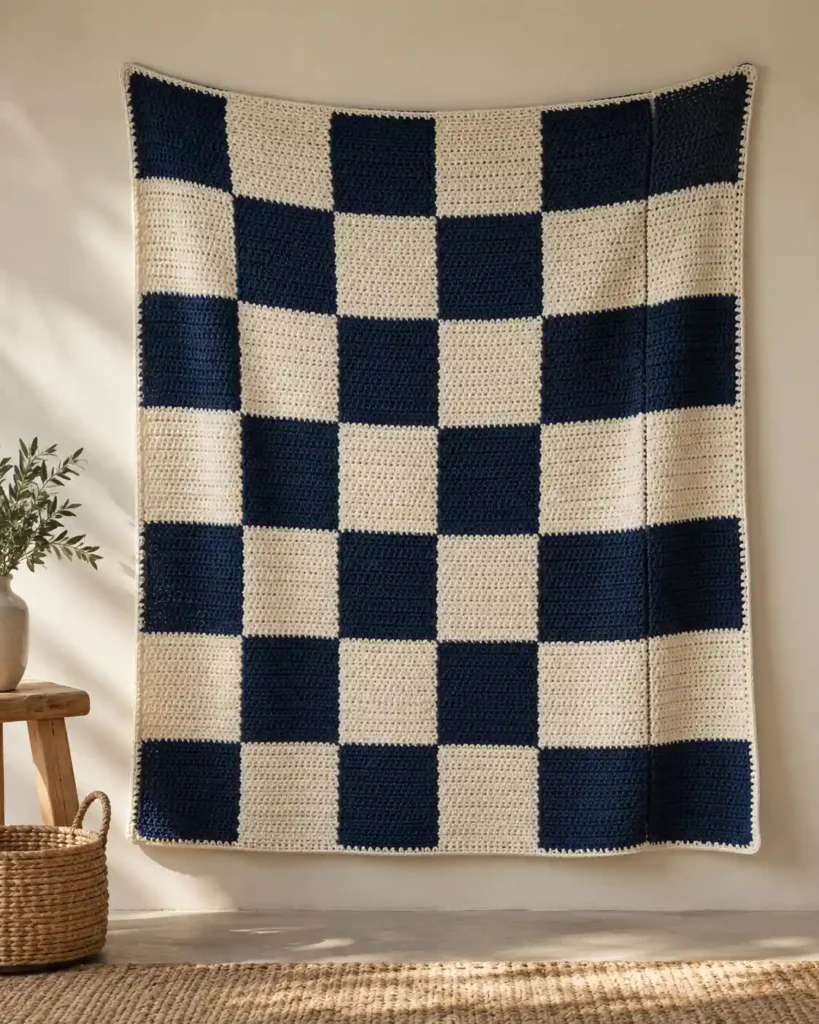
A checkerboard crochet baby blanket takes the checked idea in a bolder direction. Instead of the blended shading of gingham, navy and cream squares create strong, graphic contrast.
You can make the look with individually joined squares or choose a pattern that creates blocks while working in rows. The second method reduces assembly, while separate squares can make the project easier to carry around in small pieces.
Whichever construction you choose, consistent square dimensions matter more than fancy edging. This is a strong choice for a clean, modern nursery where you want the crochet to feel graphic rather than delicate.
13. Baby Boy Granny Square Crochet Blanket
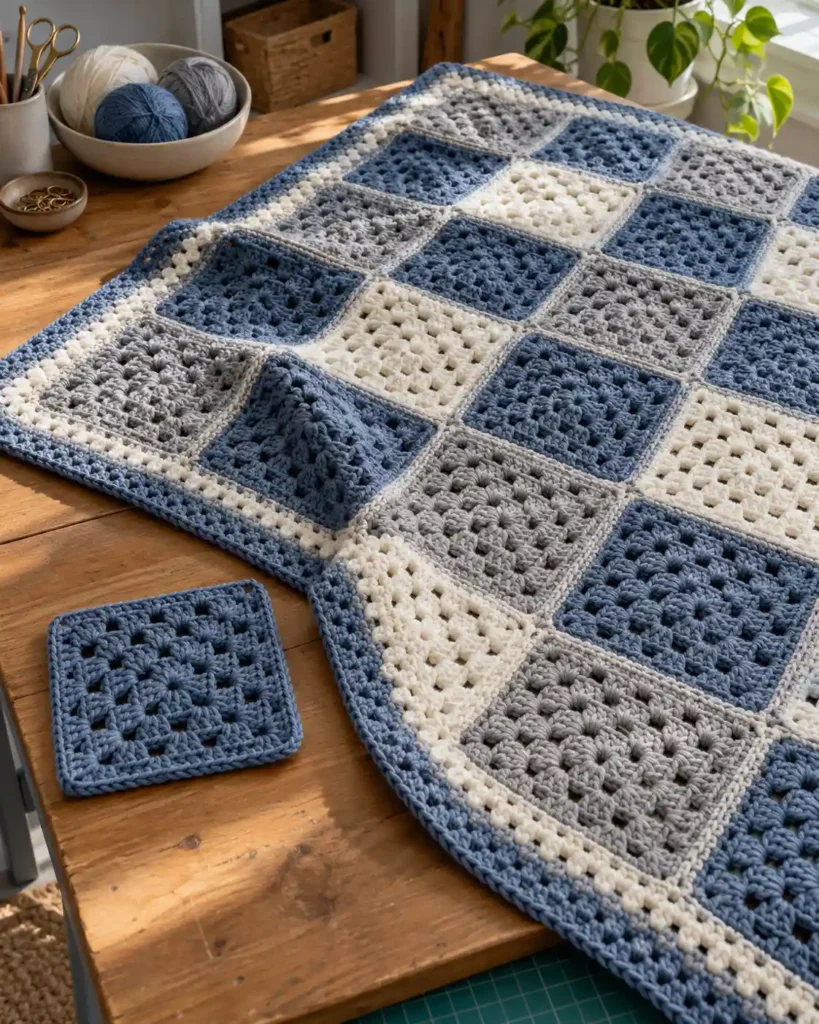
A crochet granny square blanket for a baby boy lets you build the project one manageable piece at a time. Solid granny squares in blue, grey, and ivory look especially neat because the finished surface has fewer open spaces than a traditional granny design.
The biggest advantage is flexibility: you can experiment with the arrangement before permanently joining anything. The trade-off is finishing work, since every square needs to match closely enough for clean assembly.
I would choose this project when you enjoy portable crochet or want to use several coordinated shades without creating horizontal stripes. A simple border around the completed join helps unify the whole design.
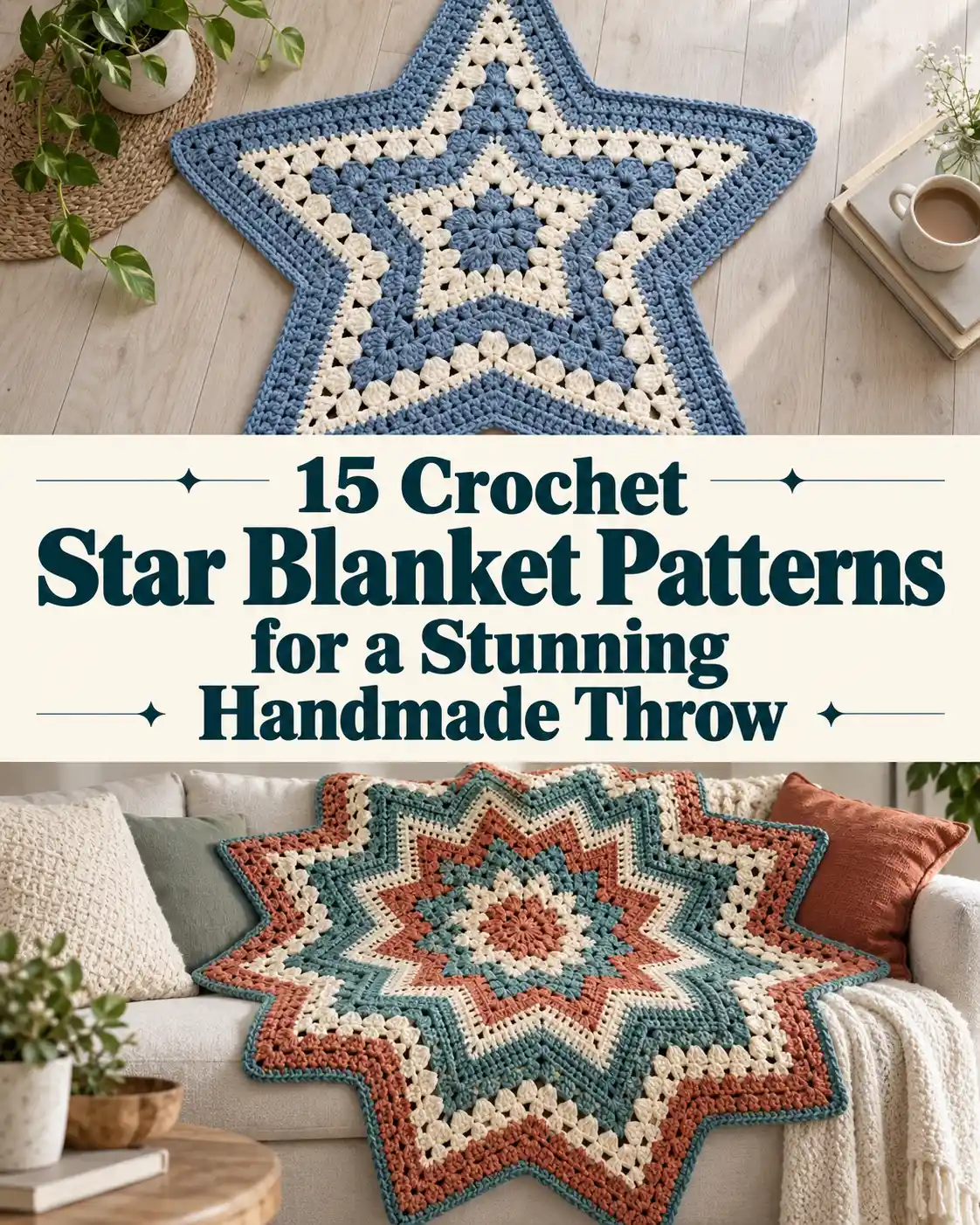
14. Star-Shaped Crochet Blanket
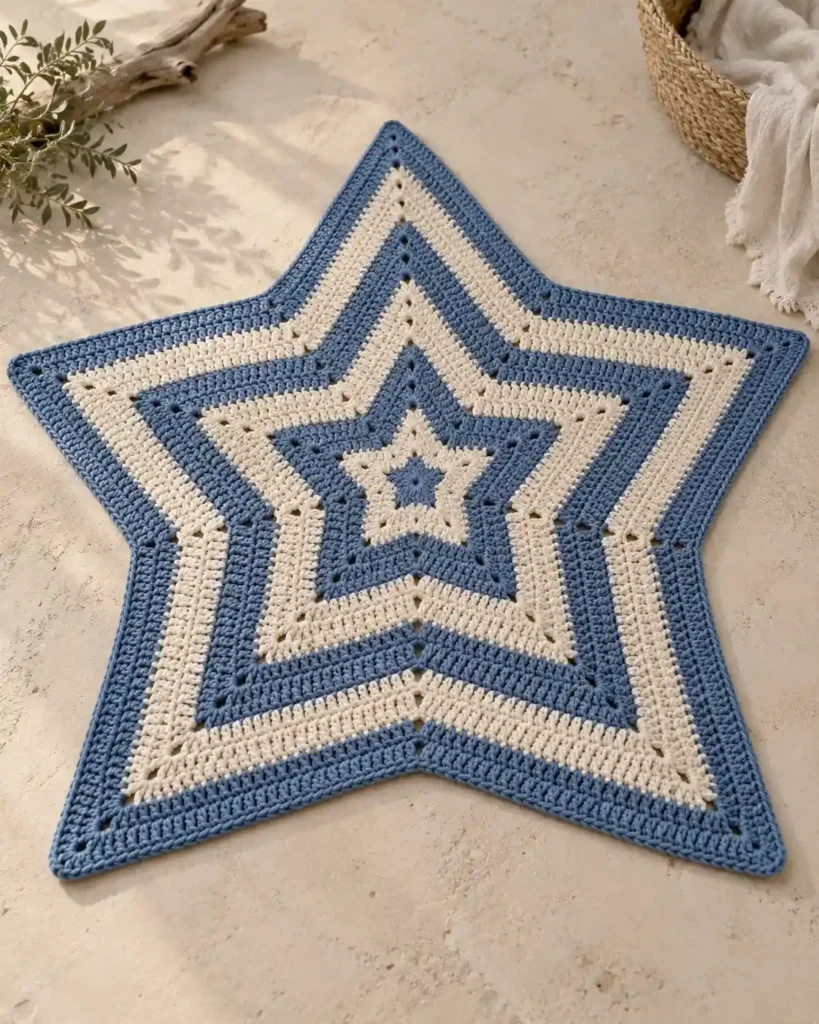
A star blanket crochet pattern instantly feels different because the silhouette becomes part of the design. Instead of building a rectangle, the blanket grows outward in rounds to form distinct points.
Concentric bands of cream, powder blue, navy, or teal emphasize the star shape beautifully. Because every pattern handles increases and point construction differently, verify the required stitch count and increase rhythm from the designer’s instructions.
This makes an especially memorable handmade gift because it looks decorative even when laid completely flat. Measure the project across its widest points when checking the finished size.
15. Corner-to-Corner Colour Block Blanket
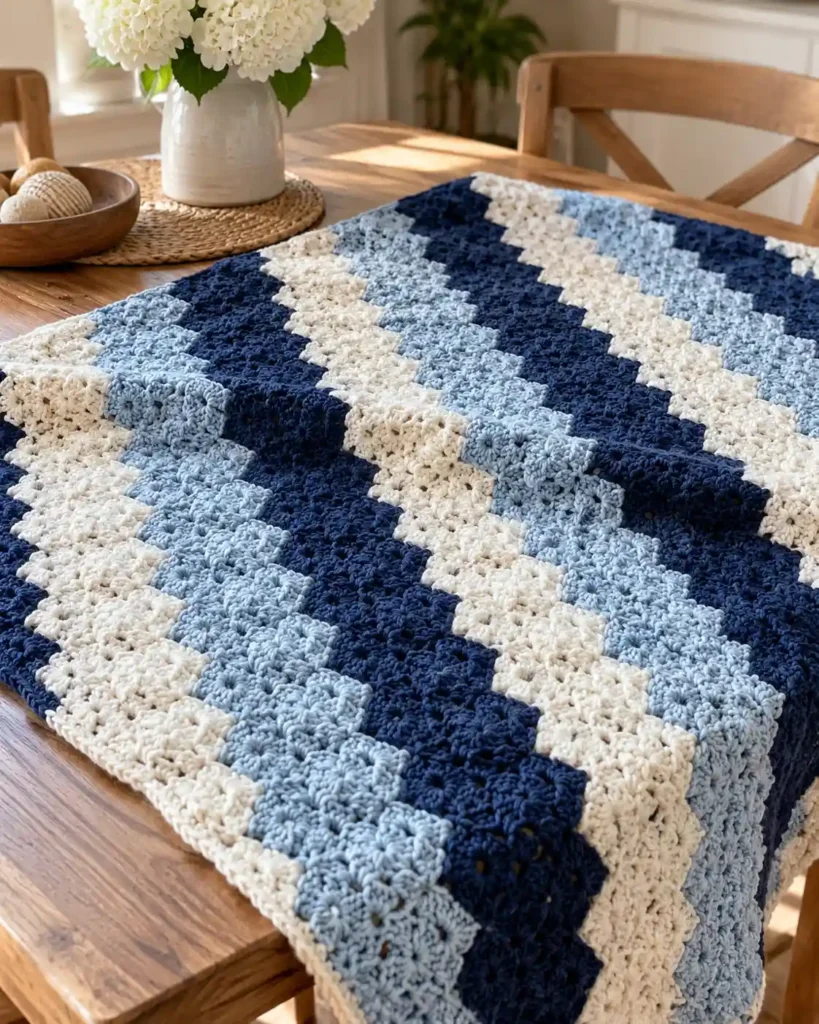
A C2C crochet baby blanket grows diagonally instead of from the bottom edge straight upward. Increasing creates the first half of the blanket, while decreasing brings the opposite corner back in.
That construction naturally lends itself to diagonal color blocks in light blue, navy, ivory, or sage. Compared with ordinary horizontal stripes, the finished piece feels much more geometric without necessarily requiring a complicated motif.
A simple three-color layout is a good introduction before you attempt detailed C2C picture graphs. Choose this design when you want to learn a new construction method while still creating a practical nursery blanket.
16. Teddy Bear Crochet Baby Blanket
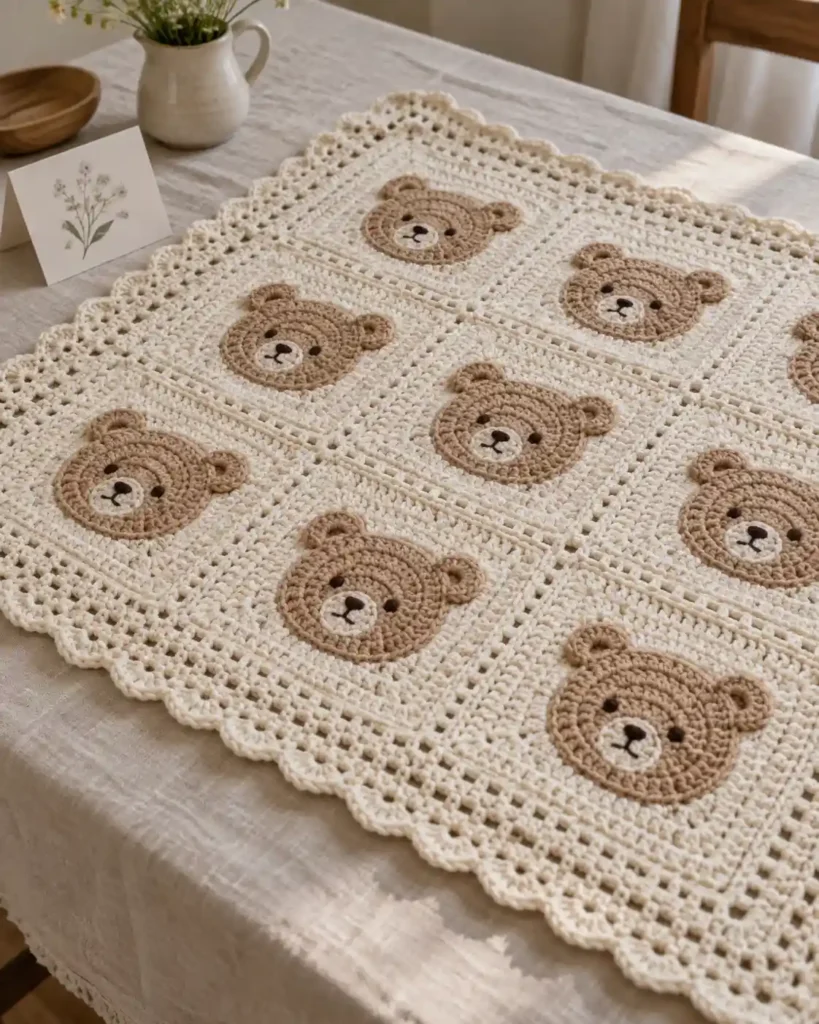
A teddy bear crochet baby blanket adds personality without needing an overly busy theme. Flat tan bear faces on cream blocks can create a sweet nursery design while keeping the color palette soft.
The motifs may be worked directly into blocks or created as flat pieces and joined, depending on the pattern. Stitched facial features generally integrate more cleanly into a blanket than loosely attached decorative pieces.
This is the kind of project I would save for a special baby shower gift because the extra motif work makes it feel genuinely personal. Give yourself more finishing time than you would for a simple striped blanket.
17. Dinosaur Crochet Baby Blanket
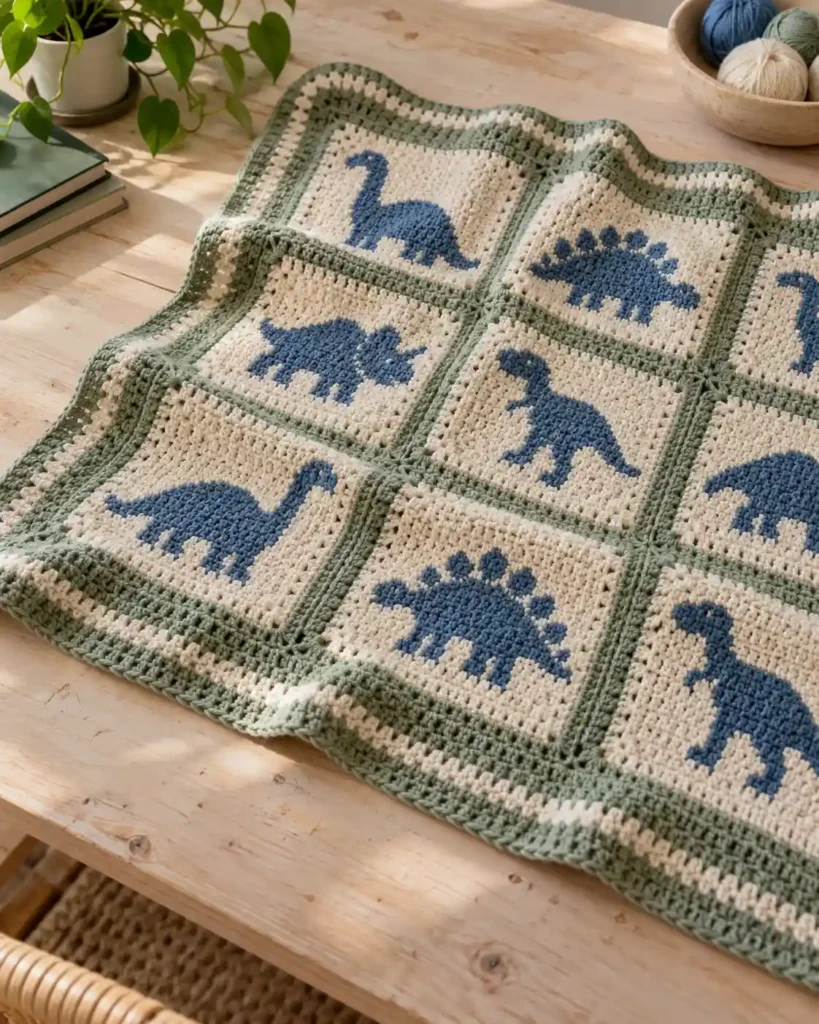
A dinosaur crochet baby blanket is a fun way to introduce a recognizable nursery theme while still keeping the blanket sophisticated. Sage, cream, and muted blue dinosaur silhouettes feel much calmer than a palette of very bright primary colors.
A pattern may create dinosaurs through charted colorwork or use flat motifs added to the blanket construction. Charted colorwork usually demands more attention to yarn changes, while appliqué-style construction shifts more work to the finishing stage.
Choose this idea when the family already loves dinosaurs or when you want something playful without relying on traditional baby motifs. A clean border will keep all the attention on the dinosaur layout.
18. Sailboat Crochet Baby Blanket
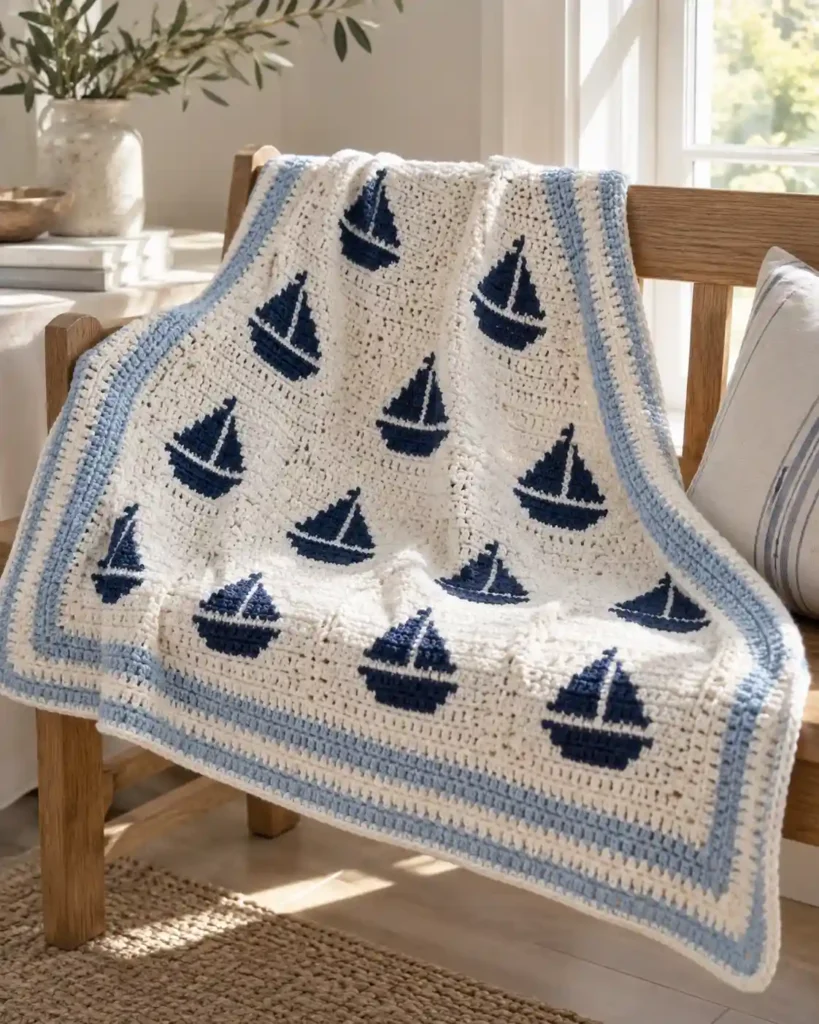
A crochet blanket baby boy sailboat design fits beautifully into nautical nurseries. A white or cream blanket with navy sailboats and pale-blue edging gives you a recognizable theme without requiring extra room décor.
Good color contrast matters because the little boat shapes need to remain readable against the background. Check whether your chosen pattern creates its motifs through colorwork, blocks, or flat additions before buying yarn.
This blanket is particularly charming as a personalized handmade gift for a coastal-loving family. Keep the accessories around it simple and let the crochet motif tell the story.
19. Football Crochet Baby Boy Blanket
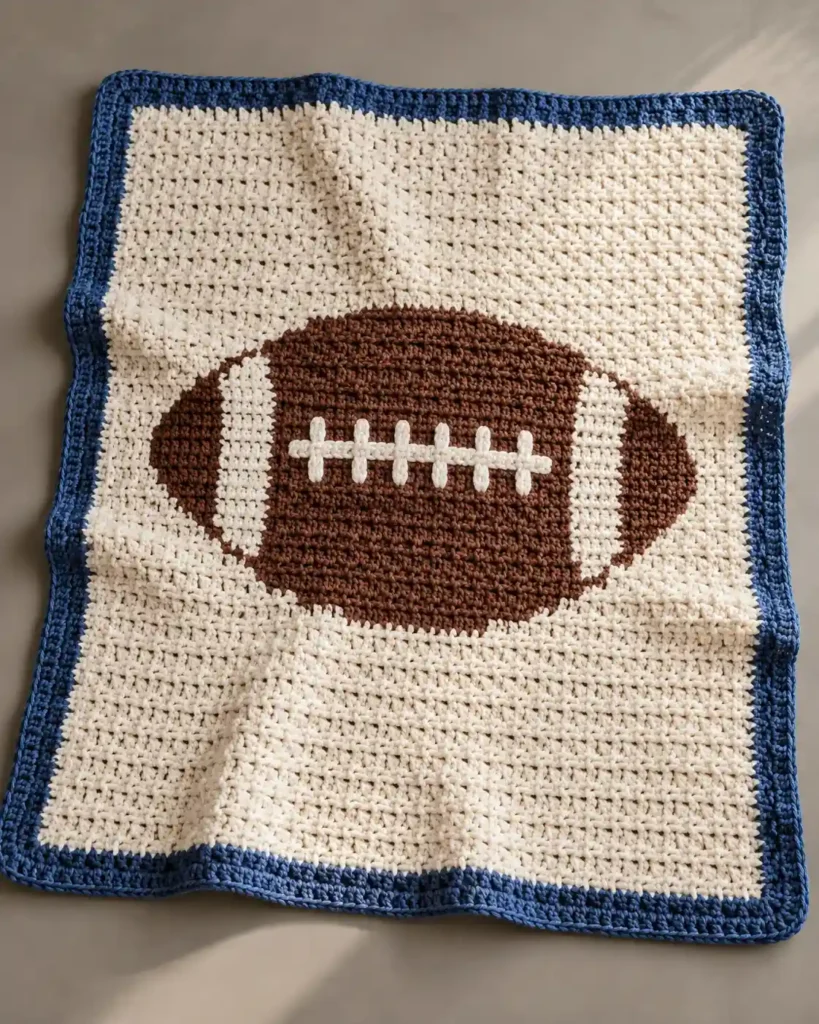
A crochet baby boy football blanket can turn a simple nursery piece into a thoughtful gift for a sports-loving family. A central brown American-football motif against cream with muted blue edging gives the idea enough contrast without needing any team branding.
If you use a charted pattern, count carefully because even a small error can change the outline of the motif. Stitched details can then define the football without relying on separate plastic or decorative pieces.
I like this concept best when the family connection to the sport actually means something. Using a generic football design rather than team logos also makes the finished blanket feel more timeless.
20. Woodland Crochet Baby Blanket
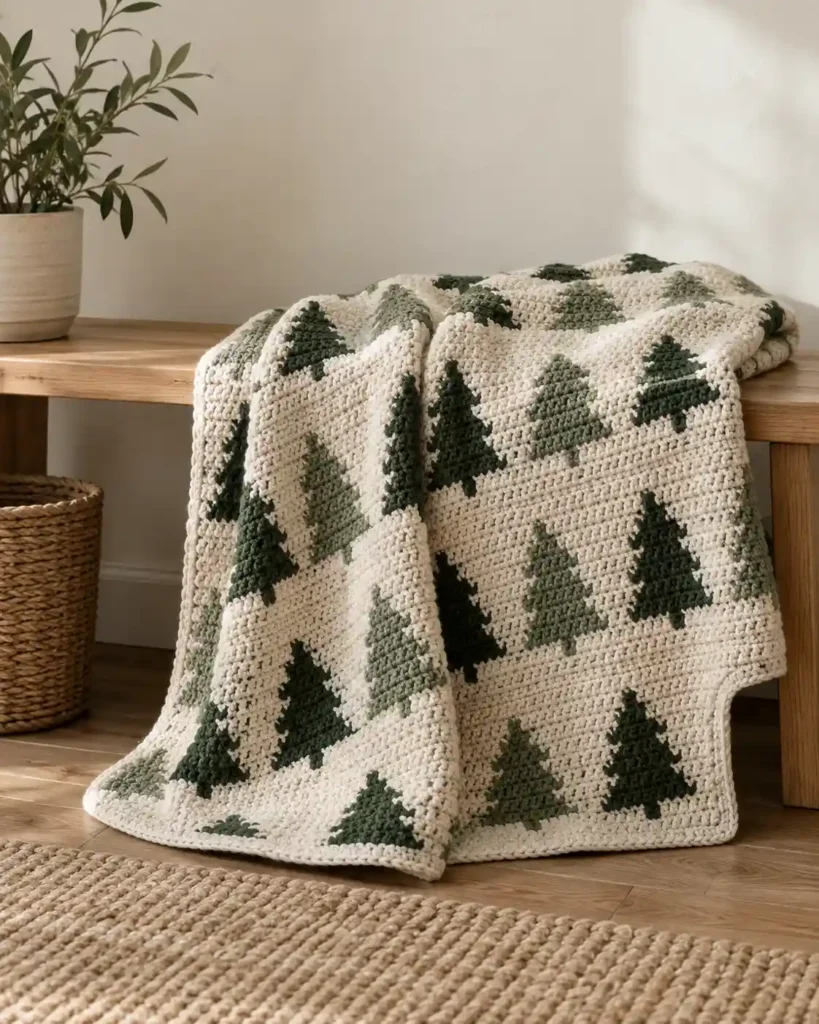
A woodland crochet baby blanket works particularly well in sage, oatmeal, pine green, and cream. Rows of simple tree silhouettes give the project a forest-inspired identity while keeping the overall palette calm.
Not every green blanket is automatically a woodland design—the defining feature should come from actual tree, forest, or nature-inspired motifs. A charted tree repeat can create that theme much more clearly than simply changing the yarn color.
This is one of my favorite directions for a neutral nursery because the colors can stay soft without looking plain. It also makes a lovely autumn baby shower gift without limiting the blanket to one season.
21. Tunisian Simple Stitch Baby Blanket
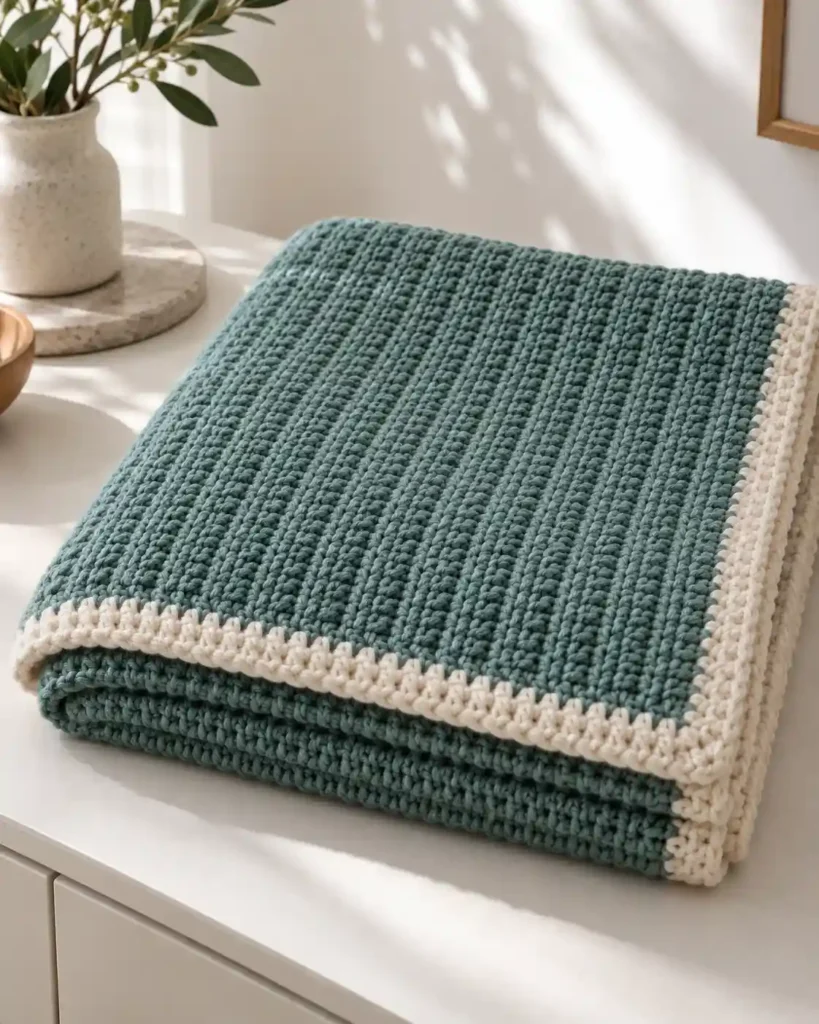
A Tunisian crochet baby blanket gives you an orderly fabric with vertical bars and an almost woven appearance. Muted teal finished with a cream edge can look especially clean and contemporary.
Tunisian crochet uses a different technique and usually different equipment from ordinary crochet, so do not treat it as simply another version of moss stitch. Start with a small practice swatch to learn the forward and return passes and to see how much the fabric wants to curl.
This is the project to choose when you already feel comfortable with ordinary crochet and want your next blanket to teach you something genuinely new. A good border can also help manage curling around the finished edges.
How Do You Choose the Right Baby Boy Crochet Blanket?
Choose a blanket by matching the construction and finishing demands to your current crochet skills, then check the pattern’s size, yarn requirements, and intended use.
At a Glance:
- Beginners can start with repeating rows.
- Motifs usually require more finishing.
- Colorwork adds yarn-management steps.
- Shape affects counting and construction.
- Pattern dimensions matter more than labels.
Start with the technique you genuinely want to crochet, not just the photograph you like most.
For a newer maker, the first four designs, half double crochet, moss stitch, blanket stitch, and V-stitch, give you repeating rows without extensive motif assembly. More experienced crocheters may enjoy chevrons, gingham, charted dinosaurs, C2C construction, or Tunisian crochet instead.
Consider Skill and Construction
Ask yourself whether you would rather:
- Repeat one stitch for many rows.
- Change colors regularly.
- Count increases and decreases.
- Join separate pieces.
- Read a crochet chart.
- Learn post stitches or Tunisian crochet.
Jo to the World similarly recommends absolute beginners begin with a dedicated beginner pattern built around basic stitches before moving into a larger collection of blanket designs.
Think About Size and Use
Do not assume every project labeled “baby blanket” finishes at exactly the same size. Follow the measurements in the pattern you actually choose.
For example, Daisy Cottage Designs publishes one baby blanket sample at 28 × 30 inches, using about 1,000 yards of DK/weight 3 yarn, while also providing instructions for additional sizes. That is one specific pattern, not a universal baby-blanket yardage rule.
Pick Colors for the Recipient, Not a Rule
Blue is classic, but you certainly do not have to use it.
Try combinations such as:
- Sage + oatmeal
- Cream + muted teal
- Navy + ivory
- Dusty blue + grey
- Mint + cream
- Pine green + oatmeal
The blanket should fit the recipient and nursery better than any traditional color convention.
How Can You Find a Free Baby Boy Crochet Blanket Pattern?
Use established designer websites and confirm that the individual pattern includes complete instructions, materials, gauge or sizing information, and finishing details before calling it free.
At a Glance:
- Check the full pattern before starting.
- Confirm yarn weight and hook size.
- Verify finished measurements.
- Distinguish free web instructions from paid PDFs.
- Credit and link the original designer.
Search for a complete designer pattern rather than relying on a photo or short stitch description.
A useful baby boy crochet blanket pattern free resource should clearly provide the starting chain or foundation, stitch repeat, yarn weight, hook size, gauge when necessary, finished measurements, and complete finishing instructions.
Several useful collections already exist:
- Daisy Farm Crafts currently groups 40 modern crochet baby-boy blanket patterns, including gingham, V-stitch, ripple, striped, moss-style, bobble, and nautical designs.
- Jo to the World Creations maintains a collection of more than 30 baby-boy blanket ideas and links readers to individual free patterns and tutorials.
- Knitting with Chopsticks has a separate roundup of 20 baby-boy blanket patterns covering one-color and multicolor approaches.
- Daisy Cottage Designs provides a full example showing yarn, hook size, finished dimensions, abbreviations, rows, and border construction.
Always respect the designer’s copyright. Link to the original pattern rather than copying their full instructions onto another website.
What Yarn Should You Use for a Crochet Baby Blanket?
Start with the yarn weight and fiber specified by your chosen pattern, then make a gauge swatch before substituting a different yarn.
At a Glance:
- Follow the pattern’s recommended yarn weight.
- Compare yardage, not only skein count.
- Swatch before making substitutions.
- Consider finished weight and drape.
- Follow the yarn label’s care instructions.
Start with the yarn weight recommended by your selected pattern.
The Craft Yarn Council’s Standard Yarn Weight System groups yarn from category 0 (lace) through 7 (jumbo) and provides general crochet-gauge and hook-size ranges for each category. Importantly, those ranges are guidelines rather than replacements for the gauge written into an individual pattern.
DK/light-worsted yarn falls in category 3, while worsted/afghan/aran yarn sits in category 4. Changing from one weight to another can alter the dimensions, fabric weight, drape, and amount of yarn required.
Why Should You Make a Gauge Swatch?
Two yarns carrying the same weight number are not automatically interchangeable.
The Craft Yarn Council recommends making a gauge swatch when substituting yarn because yarns within one weight category can still behave differently in softness and drape.
That small swatch can save you from discovering halfway through the blanket that your “baby size” project is turning into a full-size throw.
How Should You Finish a Handmade Baby Blanket?
Finish a handmade baby blanket by securing every yarn end, adding an appropriate border if needed, checking the final shape, and following the yarn manufacturer’s care directions.
At a Glance:
- Secure all yarn ends carefully.
- Match the border to the main fabric.
- Check corners and edges for consistency.
- Follow yarn care instructions.
- Add a care card when gifting.
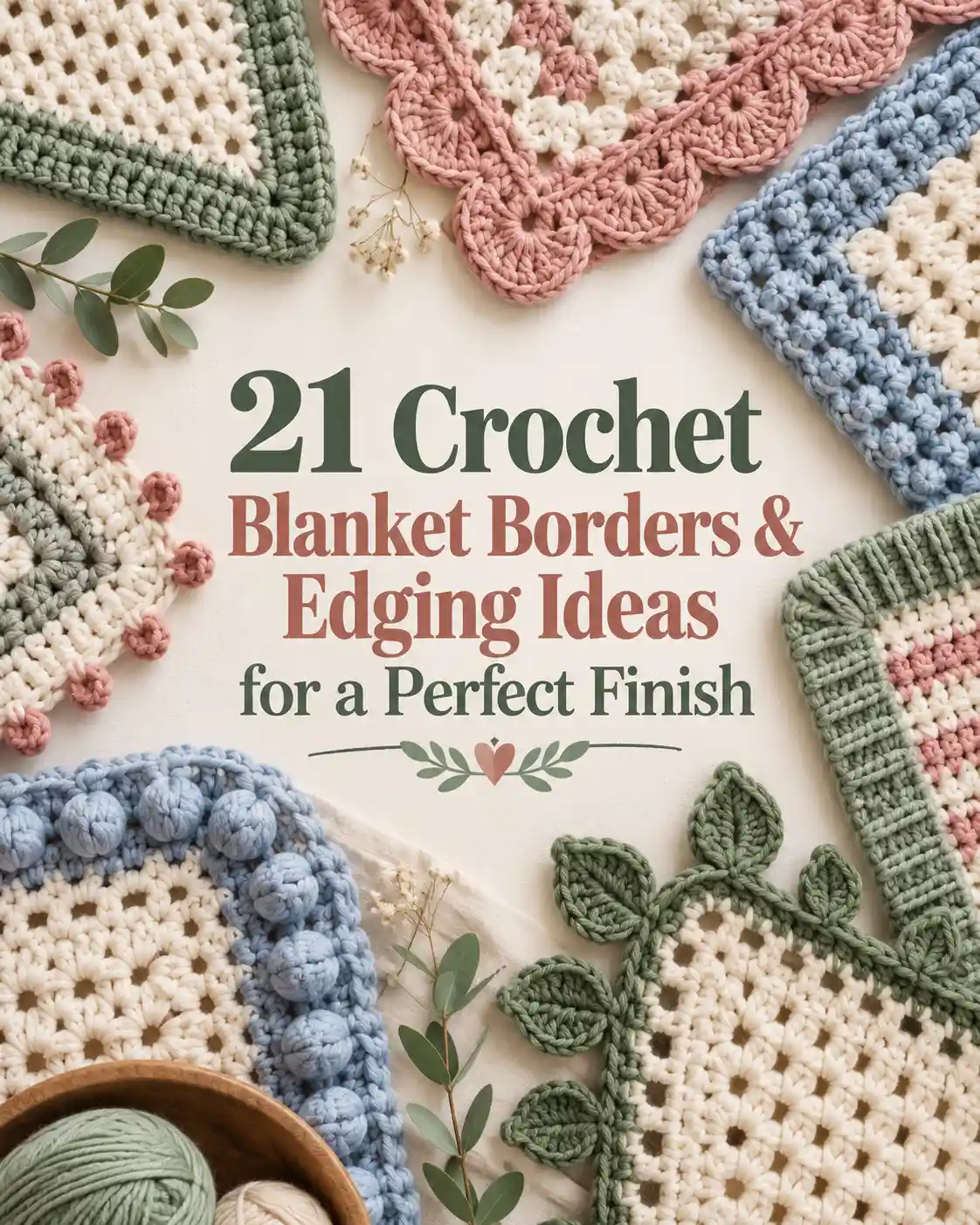
A border is optional, but it can make the finished project look much more intentional.
Match the edge to the body rather than adding detail just because you can. Crochet blanket borders can be kept simple on textured fabrics, while a simpler fabric can handle shells, ribbing, or a contrasting stripe.
Weave in every yarn end securely and follow the yarn manufacturer’s care directions. If the blanket is a gift, adding a small care card is genuinely useful for the recipient.
Frequently Asked Questions
Which baby boy crochet blanket is easiest for a beginner?
A repetitive blanket using half double crochet, moss stitch, blanket stitch, or another basic row repeat is usually easier to manage than motif work or complex shaping. Still, choose a pattern explicitly written and tested for beginners rather than judging difficulty from the finished photograph alone.
Where can I find a free baby boy crochet blanket pattern?
Look for established crochet designers who publish complete web instructions. Daisy Farm Crafts, Jo to the World, Knitting with Chopsticks, and other pattern designers maintain substantial baby-blanket collections; verify that the individual project is actually free before describing it that way.
How much yarn will I need for a baby blanket?
There is no single correct skein count because yarn weight, yardage per skein, stitch pattern, gauge, and finished dimensions all change the requirement. Use the yardage stated in the exact pattern you plan to make, and compare it with the Craft Yarn Council’s yarn weight standards when checking substitutions.
What size should I make a crochet baby blanket?
Choose the intended use first and then follow the pattern’s finished measurements. If you resize a project, make a gauge swatch and calculate from the actual pattern rather than assuming a standard starting-chain count.
Can I use colors other than blue?
Absolutely. Sage, cream, oatmeal, muted teal, grey, mint, navy, and natural shades all work beautifully for baby blankets.
Can I substitute chunky yarn?
Only after checking how the substitution affects gauge and fabric. A heavier yarn can change the blanket’s dimensions, weight, drape, stitch definition, and total yarn requirement.
How long does a crochet baby blanket take?
It depends on the blanket size, stitch complexity, yarn, your crochet speed, and whether the project requires colorwork or assembly. Be cautious with patterns promising a specific number of hours unless the maker actually timed that project under stated conditions.
How do I keep the sides of my crochet blanket straight?
Count stitches regularly and learn how your pattern treats the turning chain. Stitch markers at the first and last stitch are also useful, although chevron, ripple, and star blankets intentionally create shaped edges.
Final Thoughts
A beautiful baby boy crochet blanket does not have to be complicated to feel special. Simple stripes, soft moss stitch, bold chevrons, classic gingham, playful motifs, and textured designs can all create a thoughtful handmade piece when the colors, yarn, and pattern suit the project.
Choose a design that matches your current crochet skills, follow the full pattern carefully, and make a gauge swatch before changing yarn or sizing. Most importantly, enjoy the process. Whether you make a simple blue-and-cream blanket or a detailed teddy bear or woodland design, the time and care stitched into it are what make the finished blanket truly meaningful.

![The Best 30+ Free Crochet Cat Patterns [Beginner-Friendly Guide]](https://crochetmind.com/wp-content/uploads/2025/04/1-The-Best-30-Free-Crochet-Cat-Patterns-Beginner-Friendly-Guide.webp)