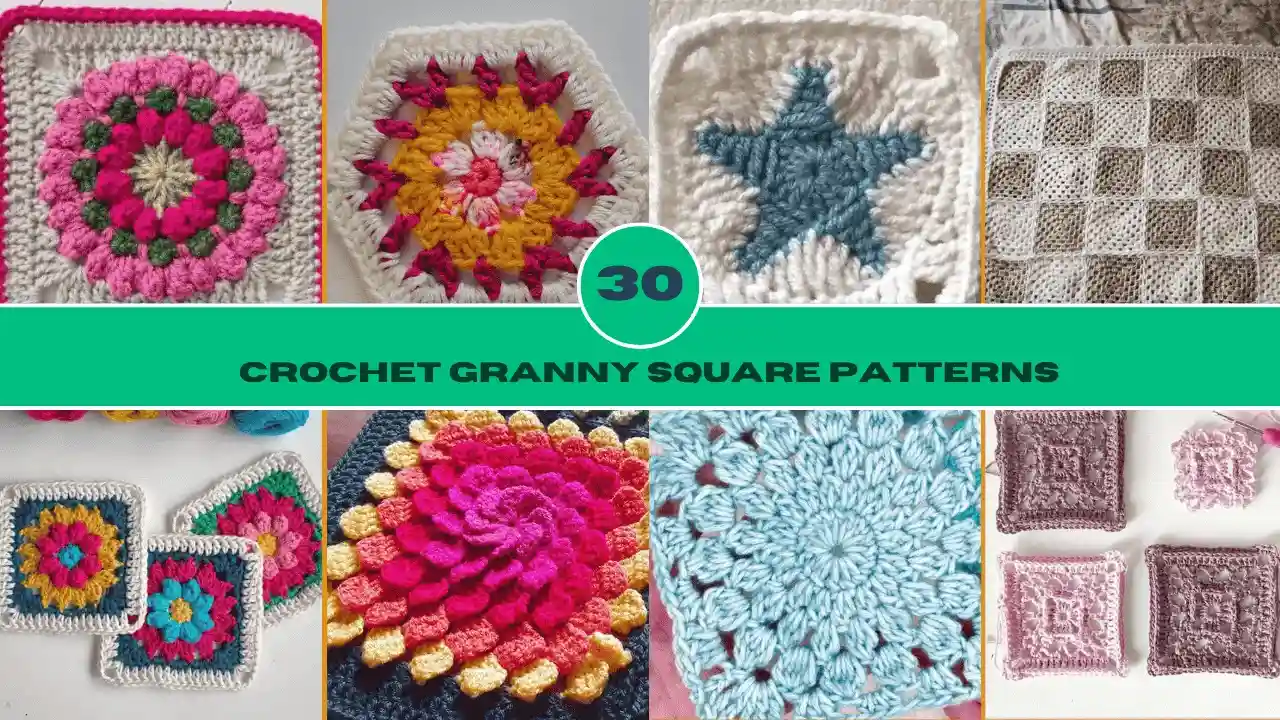
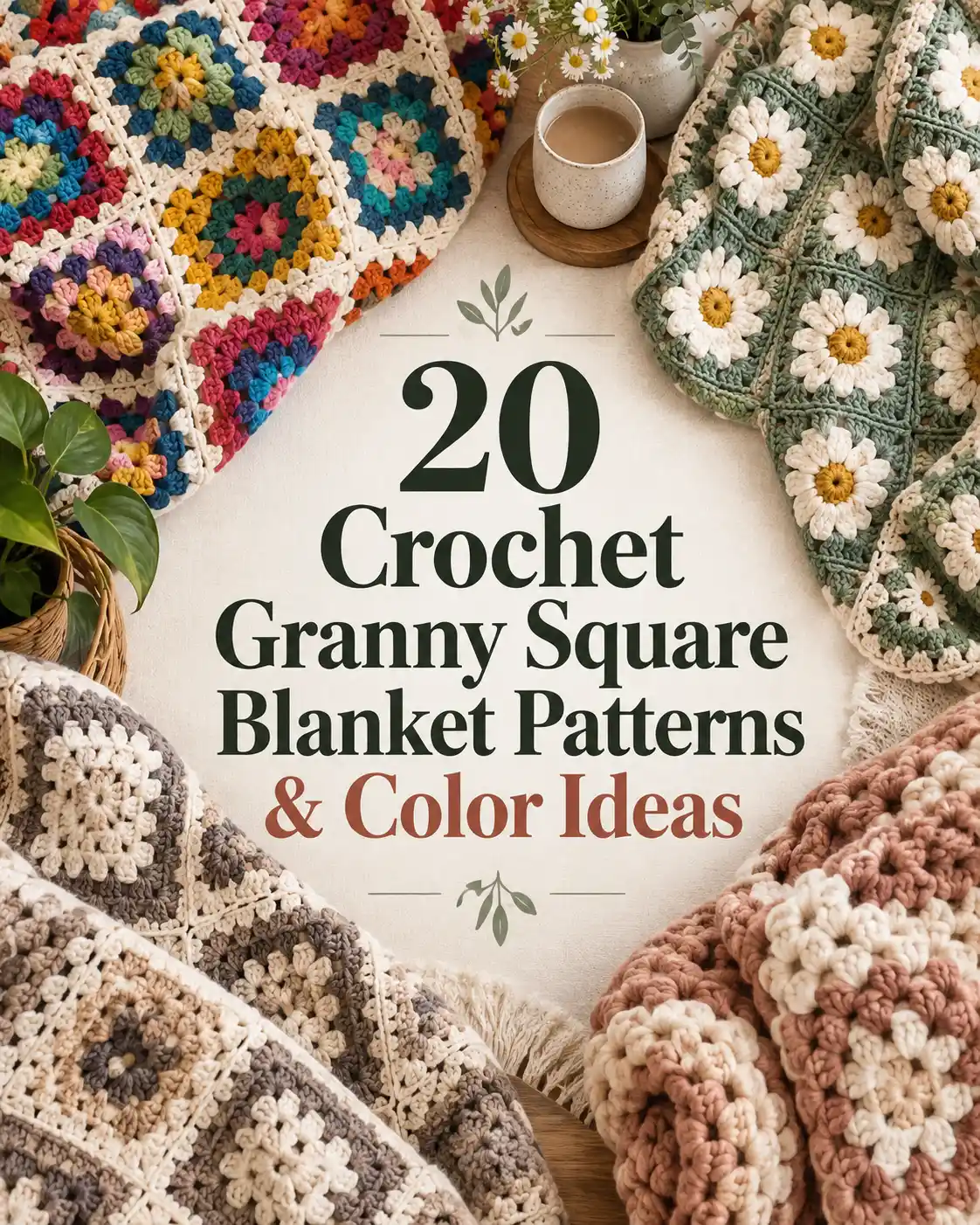


A crochet granny square blanket can be as simple as one oversized square or as detailed as a patchwork of floral, gingham, sunburst, and seasonal motifs. The easiest way to choose a design is to decide four things first: your skill level, finished size, yarn weight, and whether you want to join separate squares or crochet one continuous piece.
If you are unsure where to begin, focus on the kind of project you will actually enjoy making. A granny square crochet blanket can be colorful and playful, soft and neutral, floral and detailed, or wonderfully simple with one continuous motif. Once you choose the construction style and a small color palette, the rest becomes much easier to plan.
Key Takeaways
- Choose your blanket construction before selecting colors.
- Measure one test square before calculating blanket size.
- Plan your granny square crochet blanket layout before joining.
- Repeat colors to create a balanced, intentional design.
- Match yarn, hook size, and gauge to your project.
- Photograph your final layout before assembling the squares.
Which Crochet Granny Square Blanket Style Should You Choose?
Choose separate granny squares for maximum color and motif flexibility, or use one continuous square when you want to minimize joining.
At a Glance:
- Separate motifs offer more layout possibilities.
- Continuous squares reduce assembly work.
- Simple motifs are easier for beginners.
- Floral motifs create more visual detail.
- Color repetition helps unify mixed-square designs.
Granny-square blankets are wonderfully flexible because the basic idea can move in two directions: crochet many small motifs and join them, or keep expanding one square until it reaches blanket size. A basic granny square usually uses chain stitches and groups of double crochet worked into spaces, while crochet granny square patterns can give you more motif options once the repeat feels familiar.
If you are planning your first blanket, start with the construction method before choosing colors. Separate squares give you more freedom to mix motifs and shades; continuous construction removes most of the joining work.
| Blanket Idea | Visual Feel | Skill Level | Best For |
|---|---|---|---|
| Classic patchwork | Colorful, traditional | Beginner | Scrap yarn and first blankets |
| Continuous giant square | Clean, concentric | Beginner | Minimal joining |
| Sunburst squares | Floral, dimensional | Intermediate | Statement throws |
| Daisy squares | Cheerful, soft | Intermediate | Spring and nursery décor |
| Gingham layout | Ordered, graphic | Intermediate | Modern or cottage interiors |
| Chunky squares | Thick, cozy | Beginner–intermediate | Fast winter throws |
| Vintage palette | Retro, warm | Beginner | Heirloom-style afghans |
| Halloween motifs | Playful, seasonal | Intermediate | Autumn décor |
20 Crochet Granny Square Blanket Patterns & Color Ideas
The Craft Yarn Council groups yarn into standardized weight categories from 0, or lace, through 7, or jumbo, and pairs those categories with typical hook ranges. For example, medium-weight yarn is commonly paired with roughly 5.5–6.5 mm crochet hooks, although your pattern gauge should always take priority.
1. Classic Color-Block Granny Square Blanket
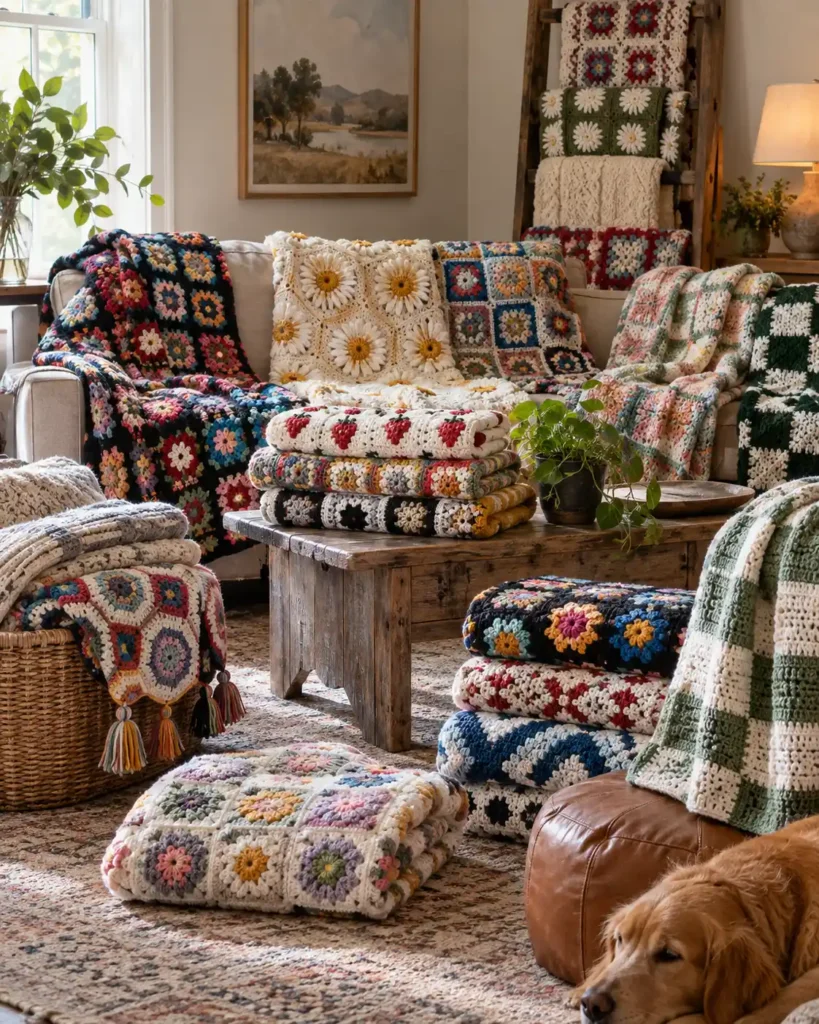
The classic color-block blanket is the design I would choose when I want the squares themselves to do all the work. Use one simple motif, change the color order from square to square, and let repetition create the pattern instead of adding complicated stitches.
A cream or soft neutral joining color can calm a bright palette. For a more graphic look, join the squares in charcoal, navy, or another deep shade.
This is also one of the easiest ways to turn leftover yarn into a granny square crochet blanket that still looks planned rather than random.
Special Tip: Lay every square on the floor before joining. Photograph the arrangement so you do not lose your favorite layout.
2. Which Easy Crochet Granny Square Blanket Is Best for Beginners?
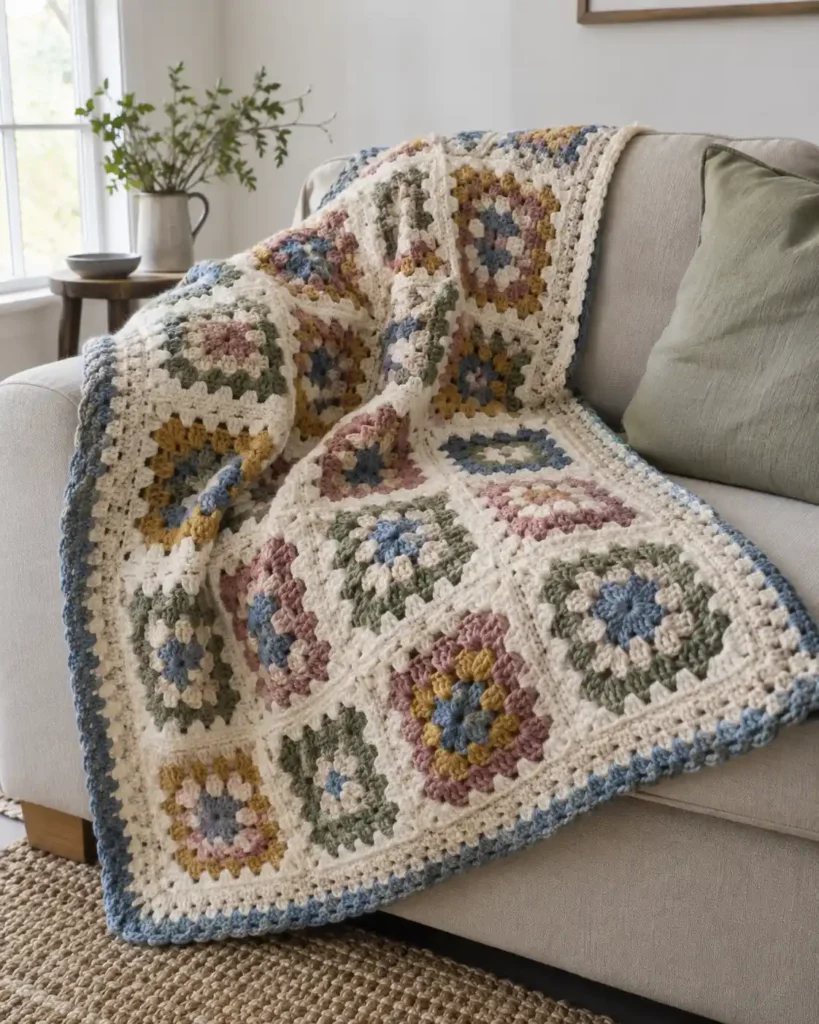
For a first blanket, choose a simple crochet blanket pattern, keep the motif basic, and repeat the same square until the stitch rhythm feels automatic. Two or three colors are enough.
You can change color every round, every two rounds, or keep the center colorful and finish every square with the same outer round.
This approach is easier than juggling several motifs because you learn one construction method well. It also makes tension differences easier to spot before you join dozens of squares.
If you are reading U.S.-style patterns, the Craft Yarn Council standard abbreviations include ch for chain, dc for double crochet, sc for single crochet, and sl st for slip stitch. It also notes that U.S. and U.K. stitch names differ, so always check the terminology used by your pattern.
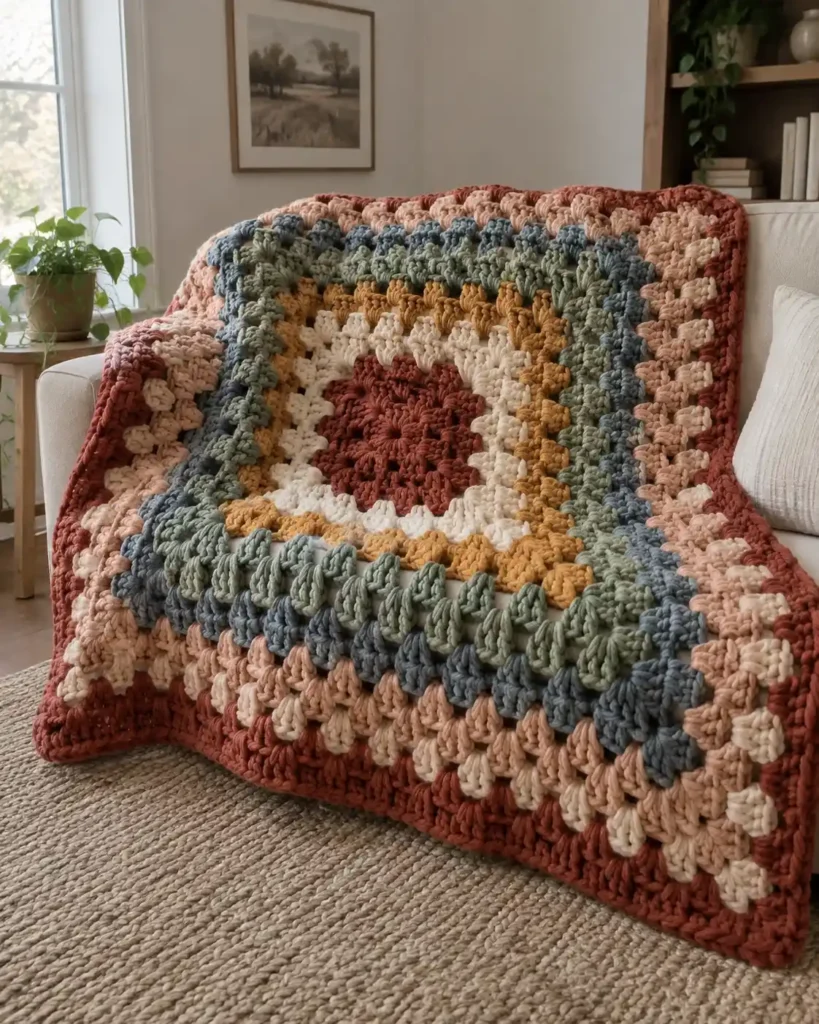
3. Want a Continuous Giant Granny Square Blanket?
A giant granny square blanket skips the pile of separate motifs completely. Start in the center and keep adding rounds until the blanket reaches the dimensions you want.
This is especially satisfying when you enjoy relaxed, repetitive crochet. Stripes become concentric frames, so even a simple three-color palette looks deliberate.
A continuous square is also a smart choice if sewing or joining is the part of blanket making you tend to postpone.
Try cream with sage and terracotta for a modern look, or rotate four brighter shades for a more playful crochet square blanket.
4. Sunburst Granny Square Blanket
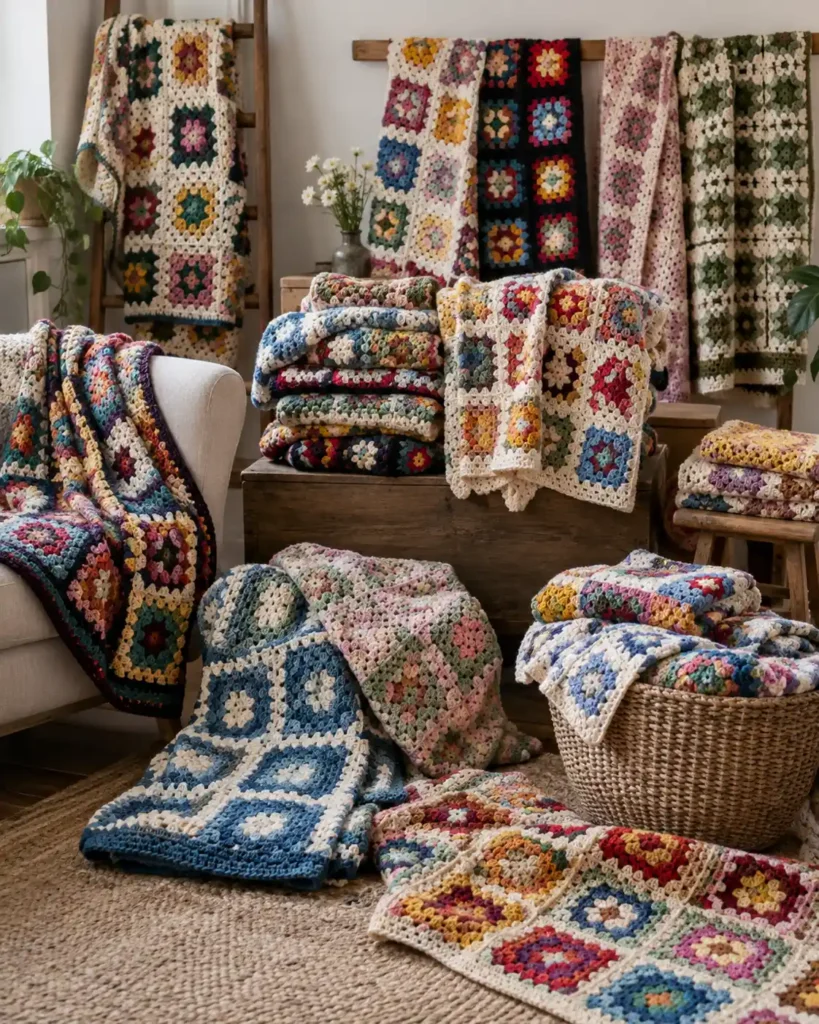
Sunburst squares make the center of each motif look almost like a small flower or burst of light. They have more visual depth than a traditional granny square, which means you can keep the border and joining color quiet without making the blanket feel plain.
I like this design best when the centers vary but the final outer round stays consistent. Think mustard, rust, rose, teal, and plum centers framed by cream.
The repeated border color helps many different shades read as one blanket. Choose this style when you want a statement throw that still feels handmade and warm rather than overly busy.
5. How Can You Make a Daisy Granny Square Blanket?
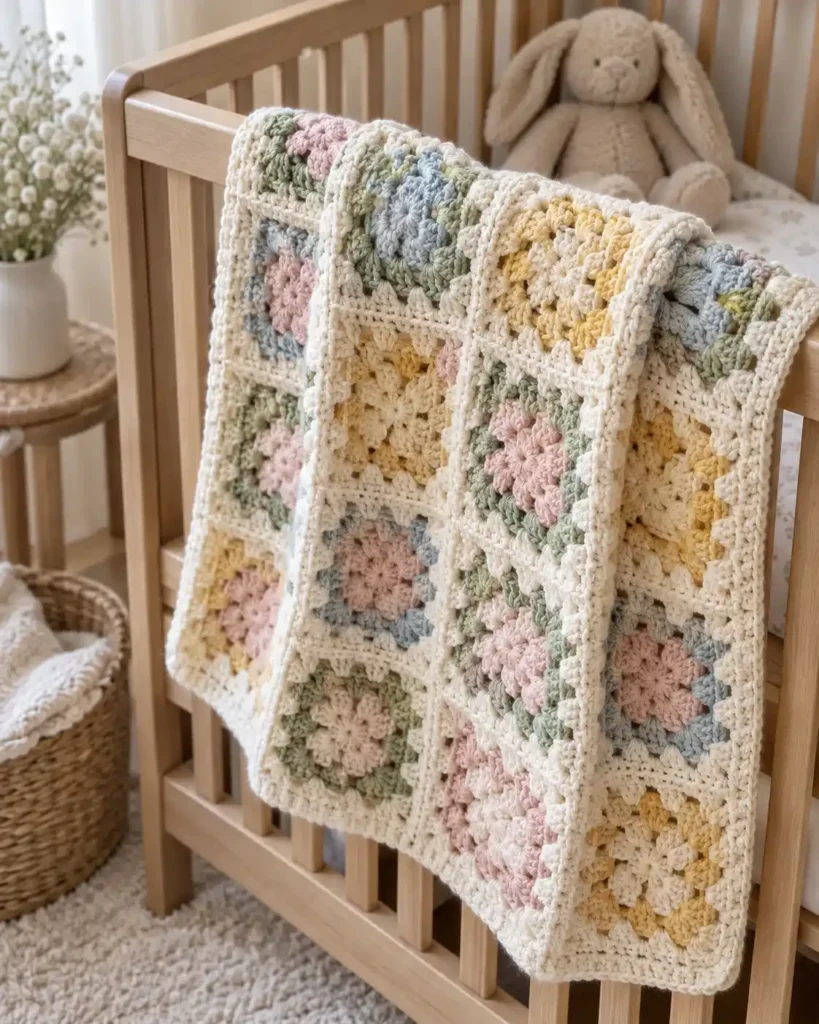
A daisy blanket is cheerful before you even start planning the full layout. Work flower-centered squares in a limited palette, then repeat one background shade around every motif.
Yellow-and-cream daisies are the obvious classic, but you can push the idea further. Try blush centers with off-white petals, lavender centers with cream petals, or tiny multicolor flowers against sage green.
The strongest version usually has clear contrast between the flower and background. If every shade is equally soft, the floral shape can disappear from a distance.
6. Modern Granny Square Blanket Color Combinations
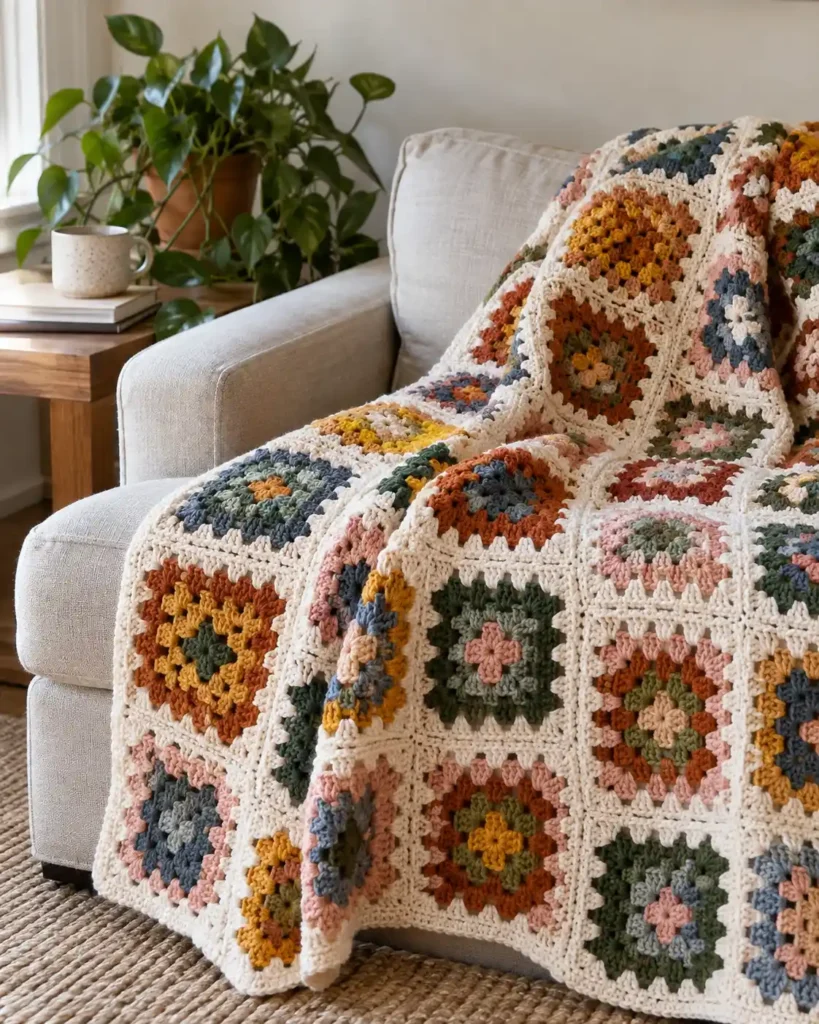
Modern color palettes usually feel intentional because they repeat a small group of shades instead of introducing a new color in every square. A simple formula is one neutral + two supporting colors + one accent.
Try:
- Sage + cream + terracotta + mustard
- Dusty blue + oatmeal + rust + charcoal
- Blush + burgundy + warm beige + olive
- Navy + denim + stone + golden yellow
For a crochet blanket granny square layout with many motifs, repeat at least one color across most squares. That repeated shade becomes the visual thread holding the entire blanket together.
7. Is a Chunky Granny Square Blanket Worth Making?
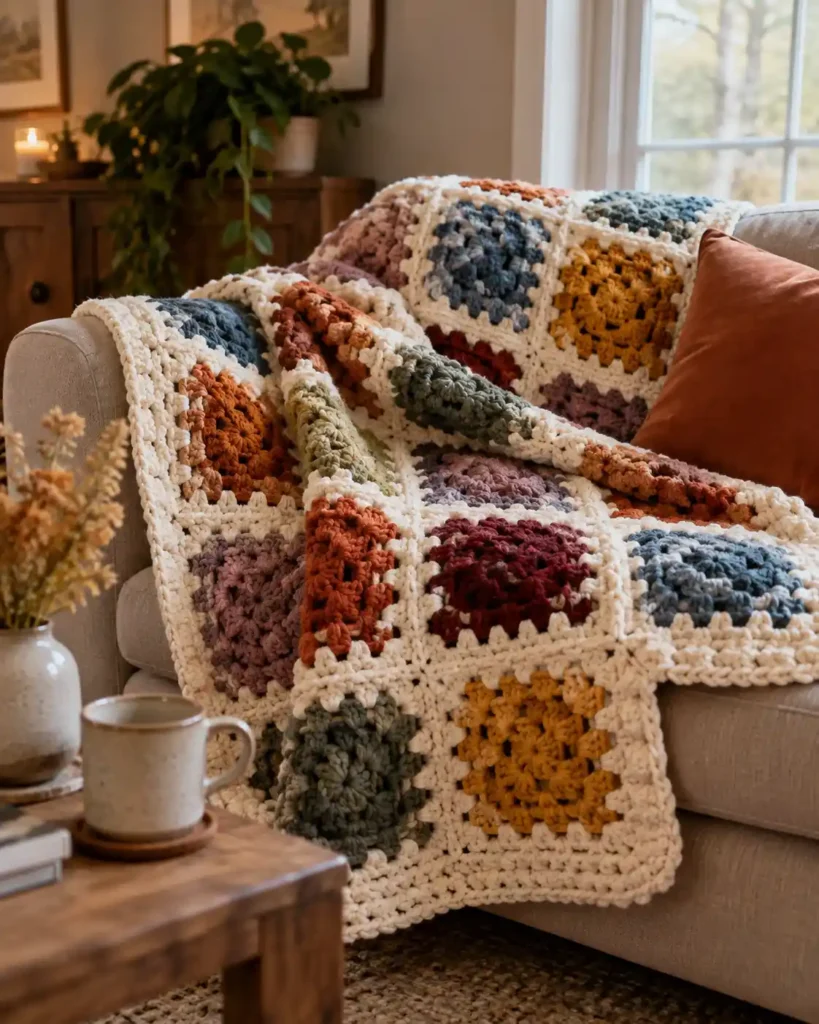
Chunky yarn makes the structure of a granny square look bold and tactile. Chunky crochet blanket patterns are a great direction when you want a cozy sofa throw and do not mind a heavier finished blanket.
The advantage is speed: larger stitches and thicker yarn cover more area quickly. The trade-off is that bulky squares can become stiff if your hook is too small or your tension is tight.
The Craft Yarn Council lists bulky yarn as category 5 and gives a common crochet-hook range of about 6.5–9 mm; super bulky category 6 is typically paired with about 9–15 mm hooks. Treat these as starting points and follow the gauge and fabric feel you want.
8. How Do You Create a Gingham Granny Square Blanket?
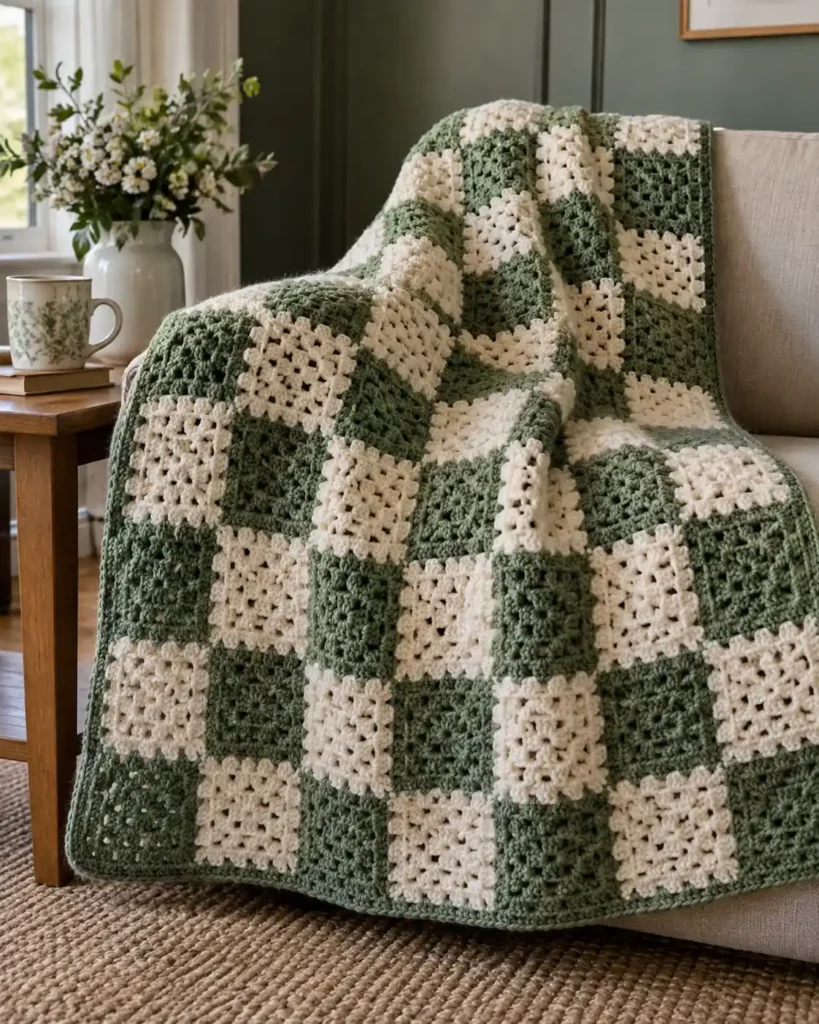
A gingham blanket depends more on color placement than on fancy stitches. Choose three related values: a light shade, a medium shade, and a darker shade.
Then arrange the squares so the colors create a checked effect.
Muted blue, dusty blue, and cream can look crisp without feeling harsh. For a warmer version, try blush, rose, and ivory.
This design rewards planning. Make a quick paper grid or digital layout before joining because one misplaced square can interrupt the check pattern more noticeably than it would in random patchwork.
9. Vintage Granny Square Blanket
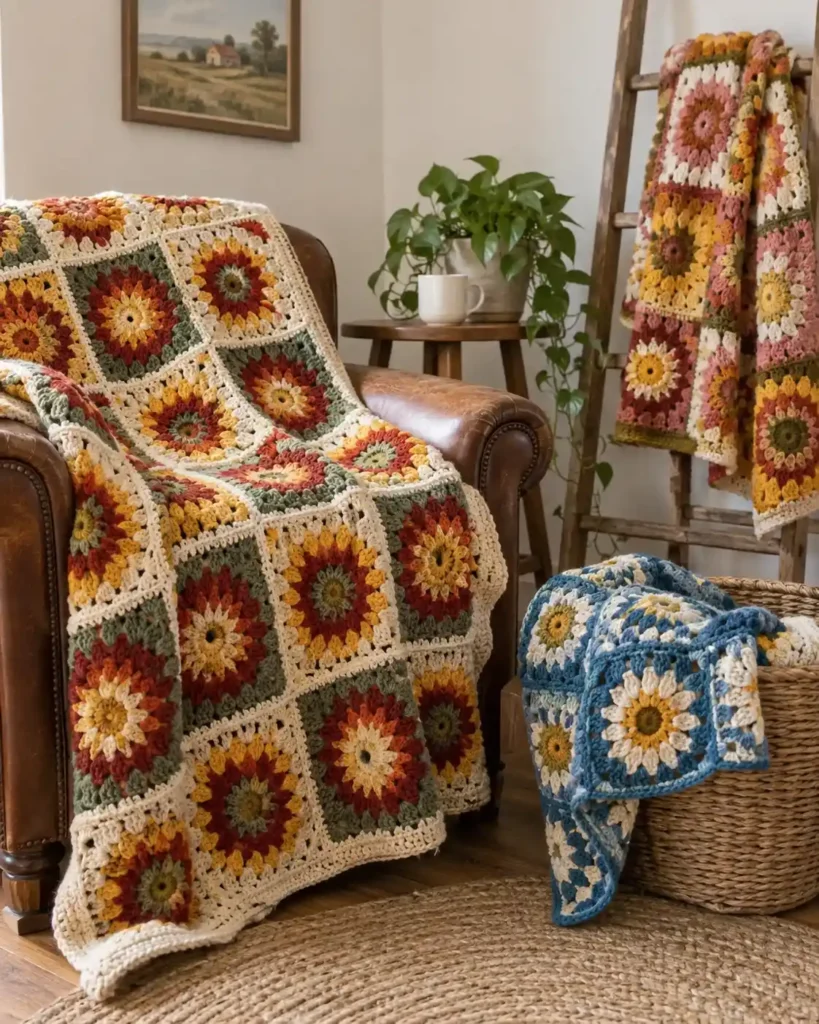
A vintage granny blanket is where slightly unexpected colors start to shine. Think avocado, burnt orange, mustard, brown, burgundy, dusty pink, cream, and deep green.
The goal is not to copy a particular decade perfectly. It is to capture the warm, collected look of an afghan that feels as though it has always lived on the back of a favorite chair.
Use small color changes and a darker joining shade if you want stronger retro contrast. For a softer heirloom effect, use cream or oatmeal around every motif before joining.
10. What Makes a Patchwork Granny Square Blanket Look Balanced?
Patchwork works best when the squares are varied but not completely unrelated. You might change the color order, alternate two motif types, or mix solids with multicolor squares while keeping the same finished size.
Before joining, sort your squares into light, medium, and dark groups. Spread them across the layout so one corner does not become visually heavier than the rest.
If you are using scraps, repeat several colors in different areas of the blanket. That small repetition is often enough to make leftover yarn look like a deliberate palette.
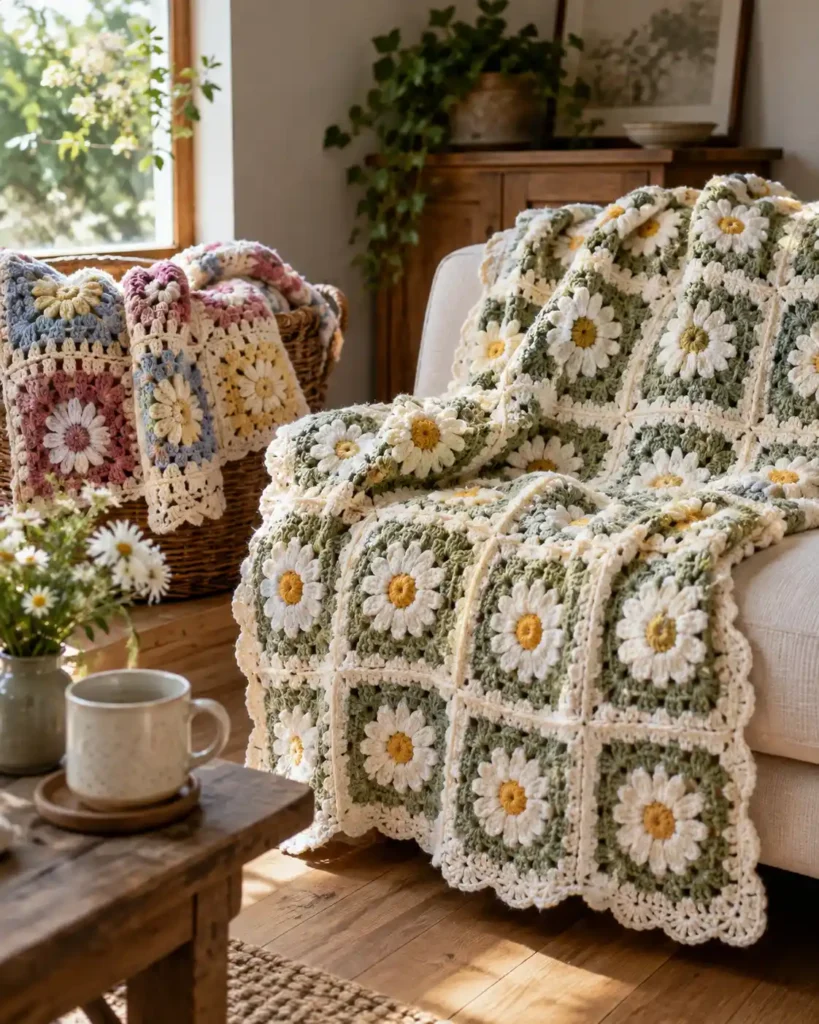
11. Flower Granny Square Blanket
A flower granny square blanket can be subtle or highly dimensional. Flat floral centers create a smoother surface, while raised petals and other crochet flower patterns give the blanket more texture.
For a sofa throw, raised flowers can make the project feel decorative and luxurious. For something that will be folded, washed often, or used by a child, a flatter motif may be easier to care for.
Botanical palettes work beautifully here: cream, leaf green, soft pink, peach, lavender, and muted yellow. Finish each square with the same neutral to keep the garden effect from becoming chaotic.
12. Can You Make a Granny Square Baby Blanket?
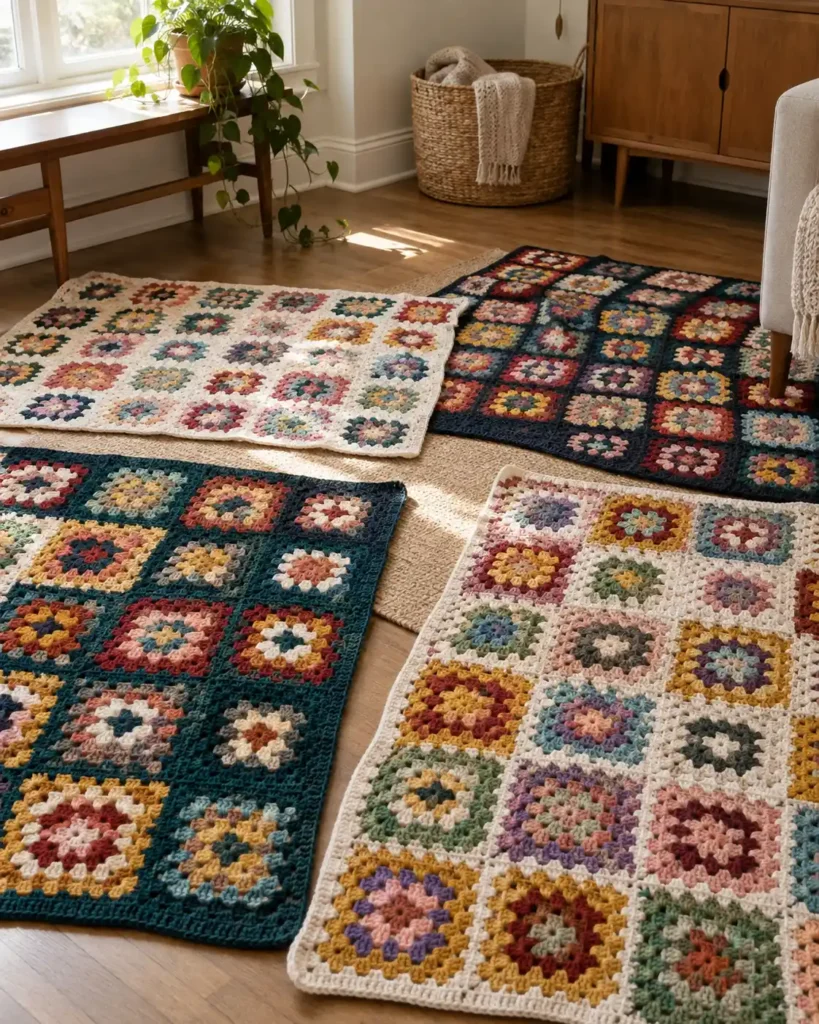
Yes, but choose yarn and construction with practical use in mind. Softness, washability, secure ends, and a comfortable texture matter more than elaborate embellishments.
Project Linus, a nonprofit that donates handmade blankets to children, notes that blanket sizes can vary by need, with examples ranging from about 36 × 36 inches to around 40 × 60 inches, plus larger blankets for older children. It also advises makers to check finished blankets for pins and remove swallowable embellishments such as buttons.
For infants, remember that a handmade blanket is not automatically suitable for unsupervised sleep. The U.S. Consumer Product Safety Commission advises keeping blankets and other soft objects out of an infant’s crib, bassinet, or play yard and recommends a bare sleep space with only a fitted sheet.
13. How Do You Build a Scrap-Yarn Granny Square Blanket?
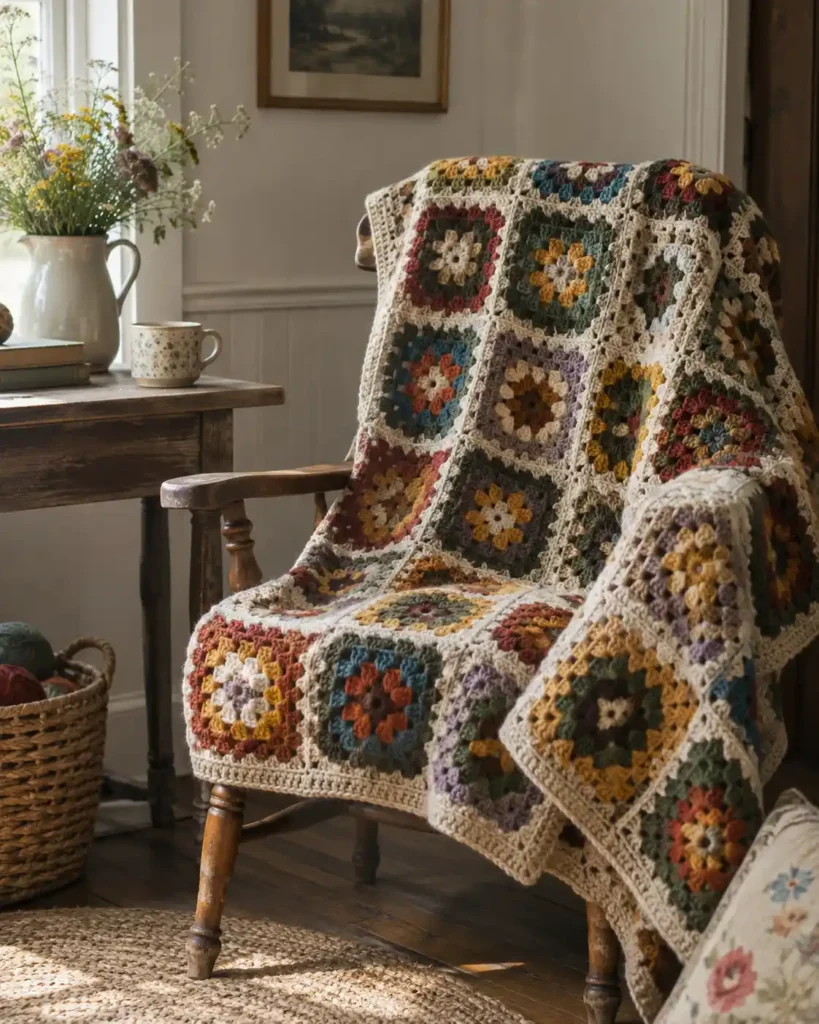
A scrap blanket is one of the most forgiving ways to use yarn leftovers, but it still benefits from a rule.
Pick one element that stays constant:
- Final outer round
- Joining yarn
- Motif style
- Number of rounds
That single repeated feature creates cohesion while everything else changes. It also lets you mix odd quantities of color without constantly asking whether two shades match perfectly.
For the neatest result, try to keep yarns within similar weight categories. If one yarn is much thicker or thinner, the finished squares may vary noticeably in size and drape.
14. Neutral Granny Square Blanket
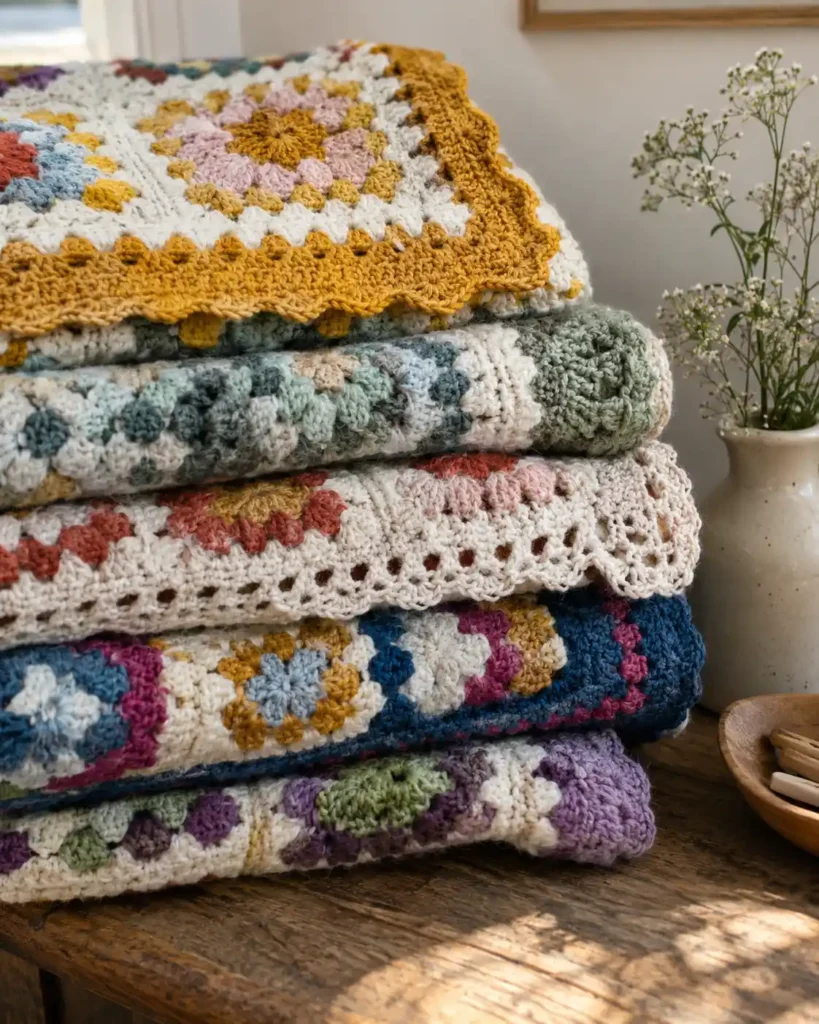
A neutral granny square blanket proves that the technique does not have to look bright or retro. Use cream, taupe, oatmeal, stone, mushroom, warm gray, and soft brown for a calm layered effect.
The secret is contrast. If all your neutrals sit at the same value, the motif can look flat.
Mix pale and deeper shades so the square structure remains visible. This palette works especially well for bedrooms, minimalist living rooms, and handmade gifts when you do not know the recipient’s favorite colors.
15. How Can You Make a Rainbow Granny Square Blanket Feel Grown-Up?
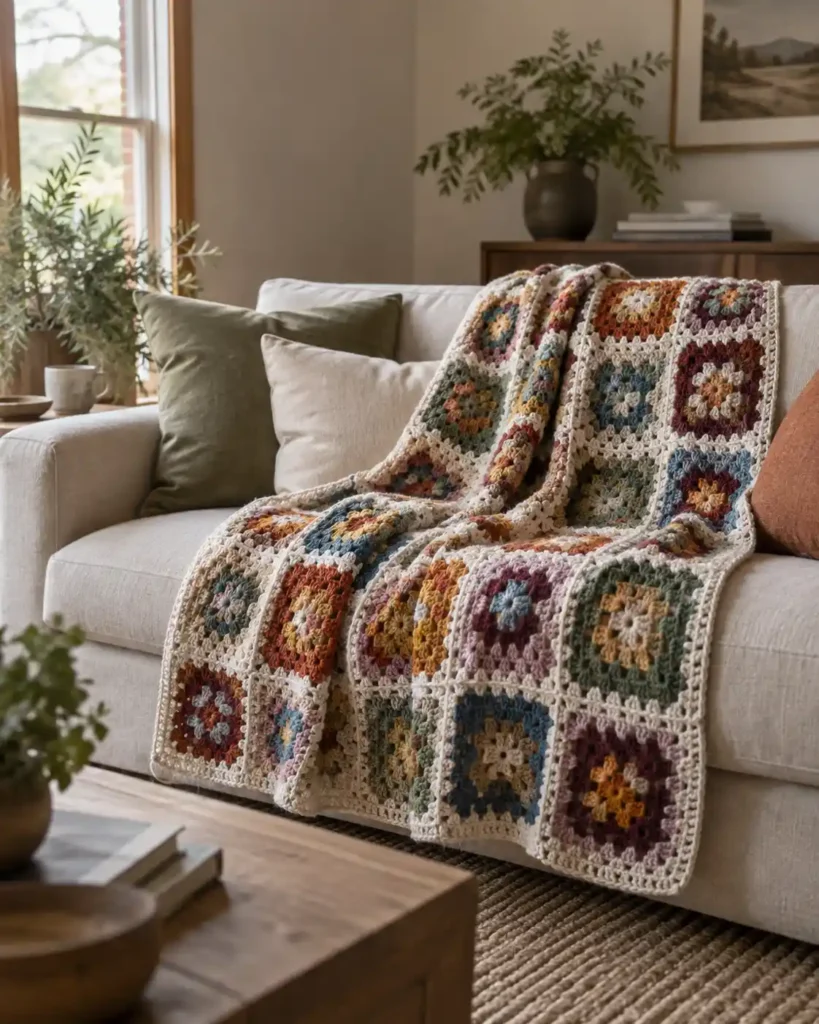
Instead of using every rainbow color at full saturation, soften the palette. Choose dusty or earthy versions of red, orange, yellow, green, blue, and violet, then separate them with cream or charcoal.
Another option is to keep each square mostly one color and arrange the motifs in a gradient across the blanket. The color movement becomes the main design feature.
For a more playful finish, reverse that idea: use random square placement but repeat the same border around every motif.
16. Halloween Ghost Granny Square Blanket
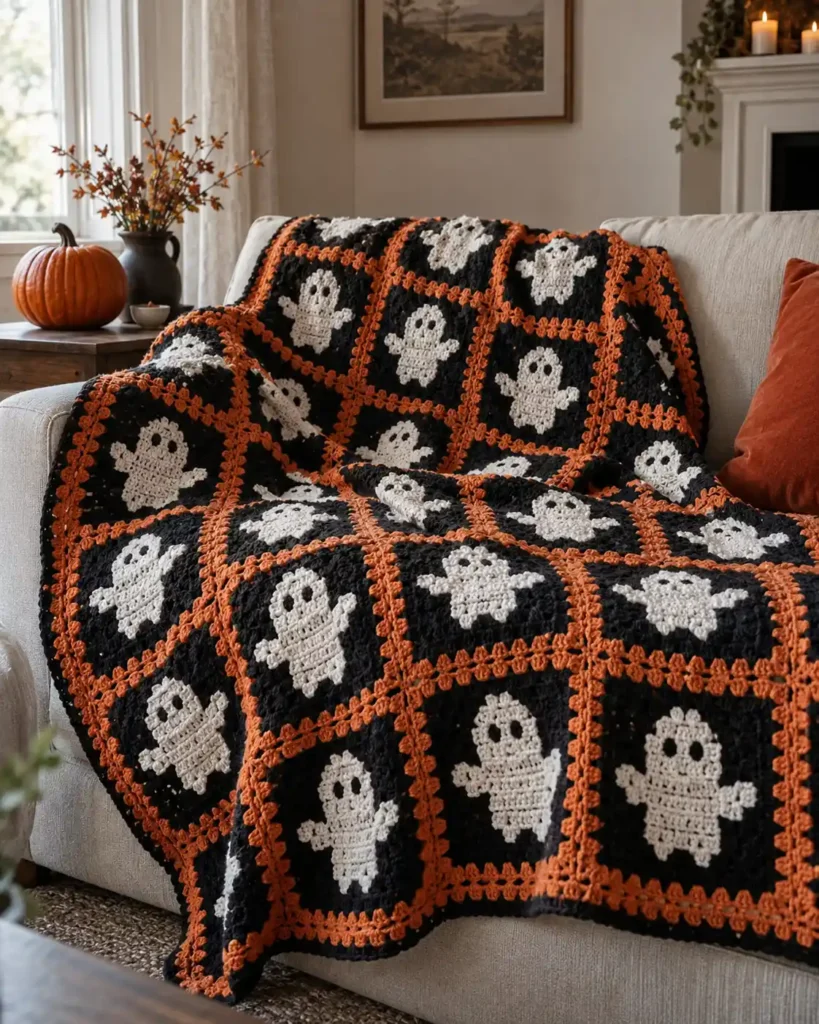
A Halloween granny square blanket can be seasonal without looking like a costume prop. Keep the main palette tight, black, cream, pumpkin orange, and perhaps a touch of muted purple or moss green.
Use ghost motifs as accents rather than filling every square with a character. Mix them with solid granny squares, simple stripes, or checkerboard blocks so the finished throw has breathing room.
This is a fun project when you want décor that comes out every autumn. A simple border in black or cream can pull the different motifs together.
17. What Border Works Best on a Granny Square Blanket?
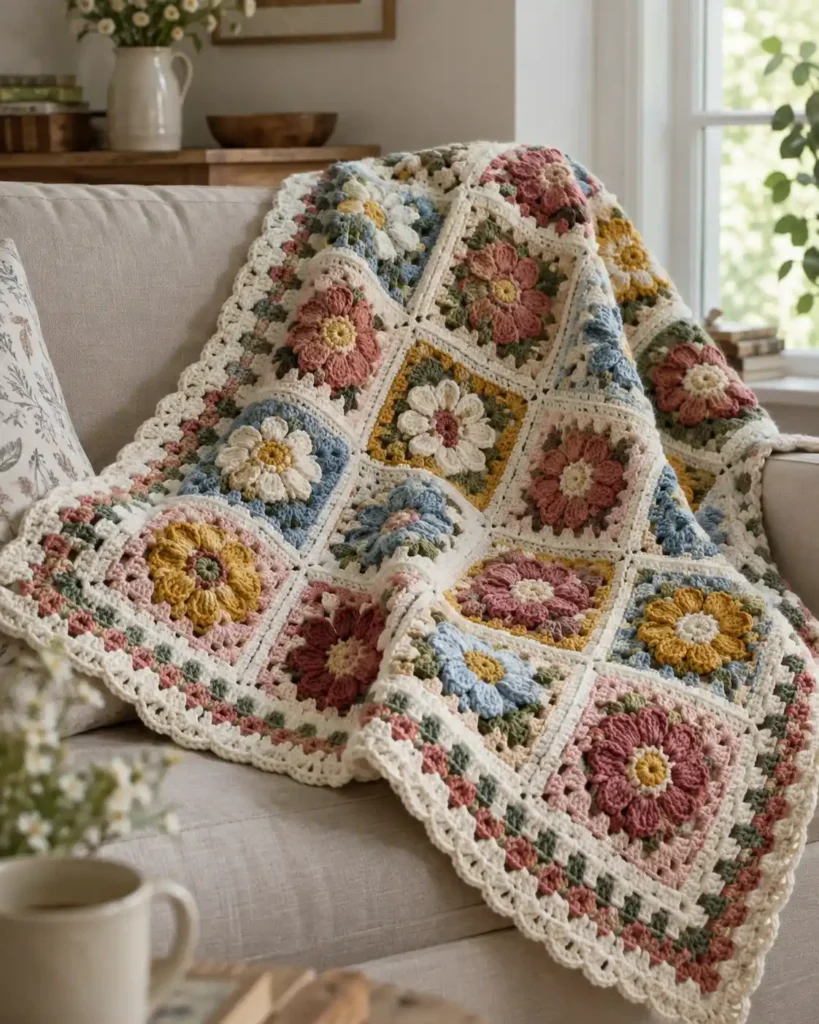
The best crochet blanket edging depends on how busy the blanket already is. A highly patterned blanket usually needs a quiet edge; a simple blanket can handle something more decorative.
Good options include:
- One or two rounds of single crochet for a clean finish
- Granny-stitch rounds for continuity
- Ribbed edging for extra structure
- Scallops or picots for a decorative finish
Before adding a wide border, check whether the edge is lying flat. If it ripples, you may be adding too many stitches; if it pulls inward, you may need more spacing.
18. How Do You Make a Granny Square Blanket Bigger?
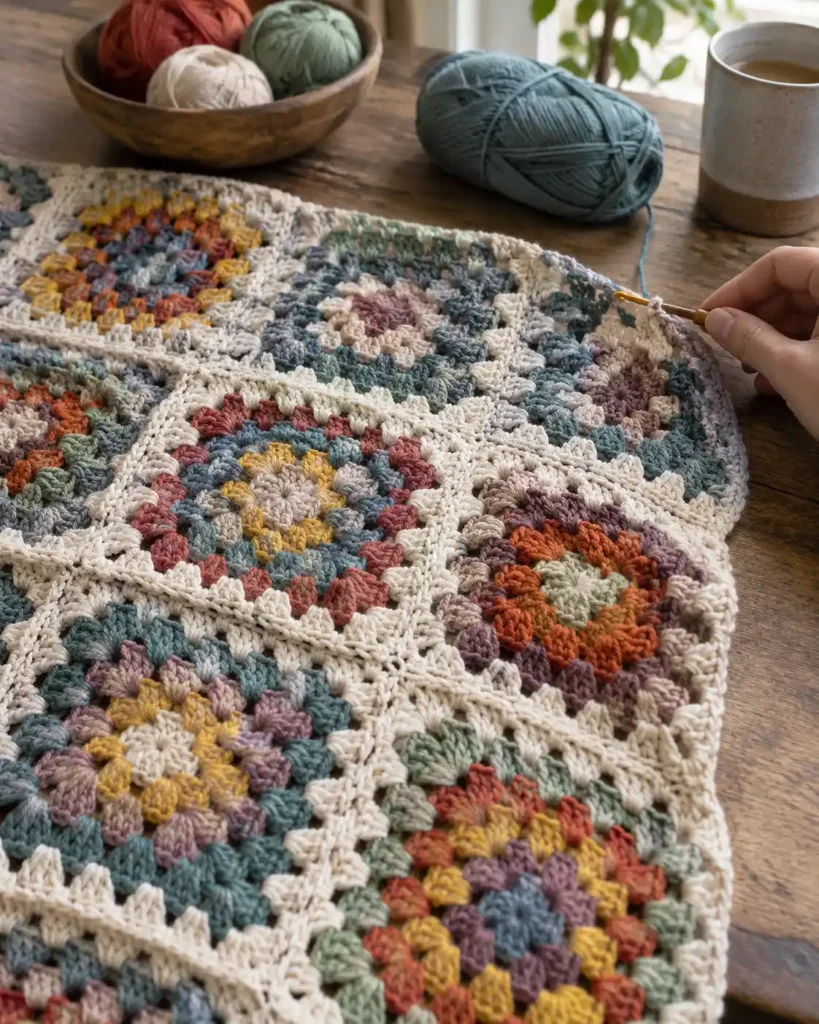
For a blanket made from individual squares, the simplest method is to add more rows or columns of motifs. Measure one finished square, including its joining allowance, then divide your desired width and length by that measurement.
For a continuous square, simply keep adding rounds. You can also add a wider border if the blanket only needs a few extra inches.
Measure before the final edging rather than relying on a universal square count. Yarn weight, hook size, stitch pattern, and personal tension can all change the finished dimensions.
19. What Yarn and Hook Should You Use?
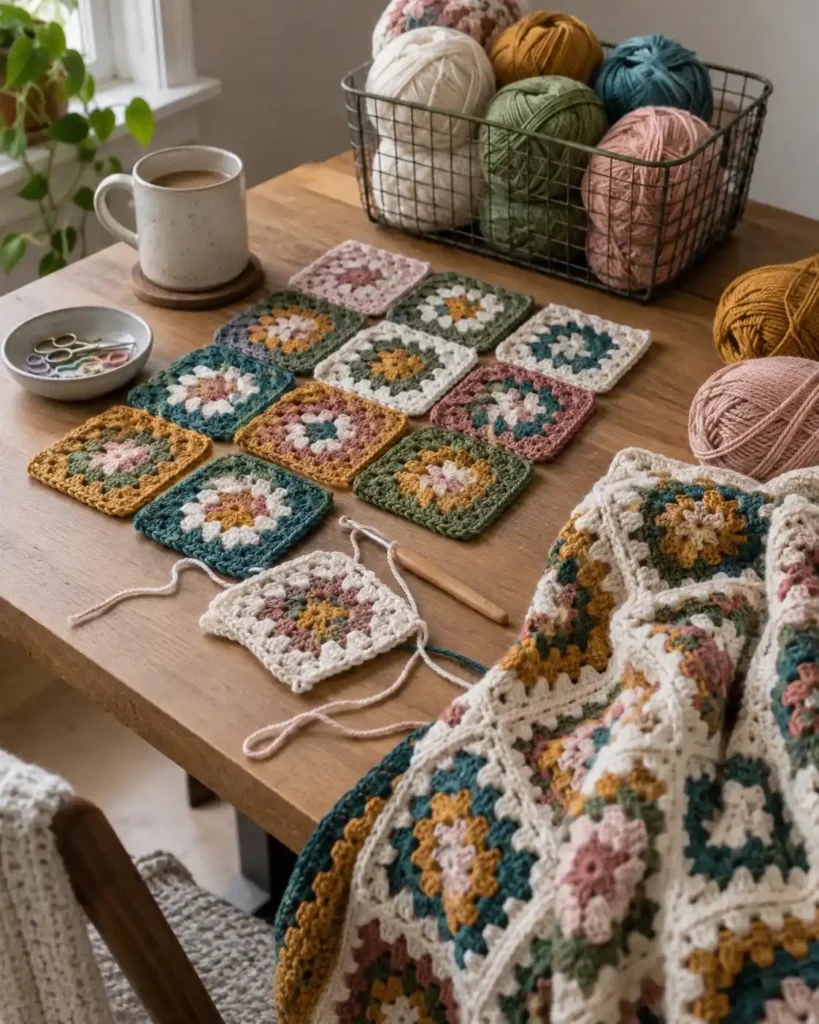
For an everyday blanket, medium or light yarn is a practical place to begin because it balances stitch definition, drape, and manageable weight. Chunkier yarn gives faster coverage and a heavier fabric; finer yarn creates a lighter blanket but requires more stitches and time.
A crochet hook size chart can help you compare sizes, while the Craft Yarn Council recommends relying on millimeter measurements because letter and number hook sizing can vary among manufacturers. It also recommends making a gauge swatch and changing hook size when your swatch does not match the pattern gauge.
If you are combining brands, do not assume two yarns in the same weight category will behave identically. Fiber content, twist, softness, and drape can still differ.
20. How Do You Plan a Granny Square Blanket from Start to Finish?
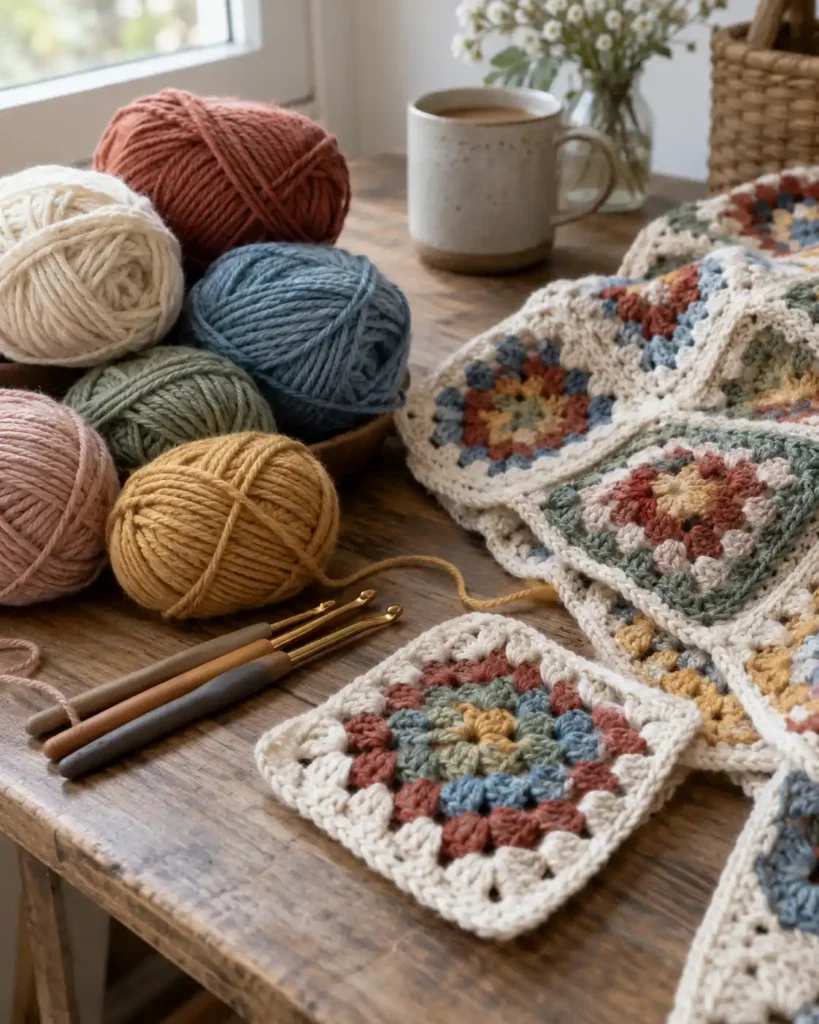
The easiest planning order is simple:
- Choose the finished blanket size.
- Pick one motif or a small motif family.
- Select a limited color palette.
- Crochet and measure a test square.
- Calculate how many squares you need.
- Make all motifs and weave in the ends.
- Arrange and photograph the layout.
- Join the squares.
- Add the border.
- Wash or block according to your yarn’s care instructions.
For a crochet square blanket with many colors, I would always photograph the final layout before joining. It takes seconds and prevents that frustrating moment when you realize your favorite color balance disappeared halfway through assembly.
How Do You Join Granny Squares?
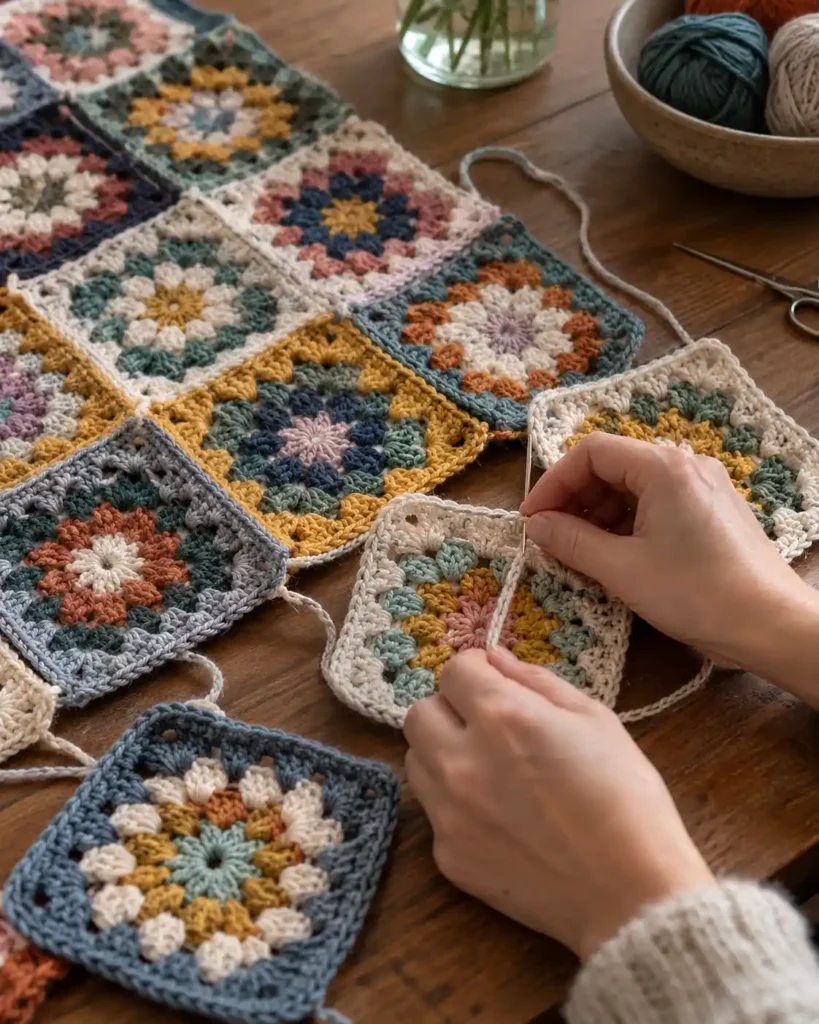
Sew, crochet, or join squares as you go depending on whether you want an invisible seam, a decorative ridge, or less assembly at the end.
At a Glance:
- Sew for a soft, flexible seam.
- Crochet joins can become a design feature.
- Join-as-you-go reduces later assembly.
- Test your join on spare squares first.
There is no single best joining method; the right choice depends on the look you want.
Sewing with a yarn needle creates a flexible join and can look almost invisible when the yarn matches. Slip-stitch or single-crochet joins add a visible ridge that can become part of the design. Join-as-you-go (JAYG) connects motifs during the final round and reduces the amount of assembly waiting at the end.
For beginners, practice the join on four spare squares first. A small sample shows you whether the seam is too tight before you commit to the whole blanket.
How Should You Plan a Granny Square Crochet Blanket?
Choose a small palette, repeat at least one color, and arrange every square before you begin joining.
At a Glance:
- Start with three to five main colors.
- Repeat one shade throughout the blanket.
- Check the layout from a distance.
- Photograph the arrangement before joining.
- Redistribute heavy color clusters if needed.
Start with an inspiration source: a room, a favorite fabric, a season, a photograph, or even one variegated yarn. Pull three to five main colors from it, then decide which shade will repeat most often.
Lay the finished squares out before joining and look at the arrangement from across the room. Distance makes color clumps easier to see.
If one corner feels too dark or too bright, swap a few motifs before you pick up the joining yarn.
For a granny square crochet blanket, that small planning step can make the difference between colors that simply coexist and a palette that feels intentional.
How Do You Calculate Squares for a Crochet Square Blanket?
Divide your desired blanket width and length by the finished dimensions of one square, then multiply the two results.
At a Glance:
- Measure a completed square first.
- Use finished dimensions, not estimates.
- Calculate width and length separately.
- Allow for joins and the final border.
Measure one finished square. Then divide your target blanket width by the square width and your target blanket length by the square height.
For example, if each finished square measures 6 inches and you want a blanket about 48 × 60 inches, you would plan roughly:
- 48 ÷ 6 = 8 squares across
- 60 ÷ 6 = 10 squares down
- 8 × 10 = 80 squares total
Then adjust for your joining method and border.
Always calculate from your own finished or blocked sample rather than assuming every “6-inch square” will behave exactly the same.
Frequently Asked Questions
Is a granny square blanket good for beginners?
Yes. A basic granny square repeats the same stitch groups, so it becomes easier to memorize after a few rounds. The main beginner challenges are consistent tension, color changes, and joining.
A simple granny square crochet blanket is especially manageable when you repeat one motif and limit the project to a few colors.
What is the easiest way to join granny squares?
Sewing with a yarn needle is simple and flexible, while a slip-stitch or single-crochet join is easy to see as you work. Join-as-you-go is useful if you want less assembly at the end.
Try the method on a few spare motifs first so you can compare the seam appearance before joining the full blanket.
Can I make a granny square blanket without sewing?
Yes. Use a crochet join such as slip stitch or single crochet, or choose a join-as-you-go method. A continuous giant granny square removes separate-square joining altogether.
This makes continuous construction a useful option when you enjoy the granny-square look but prefer not to assemble dozens of individual motifs.
What yarn is suitable for a granny square blanket?
Choose yarn based on softness, washability, warmth, drape, and pattern gauge. Medium-weight yarn is versatile for many throws, while lighter yarn creates a softer, less bulky fabric.
For a crochet square blanket, keeping the yarn weights reasonably consistent can also help the finished motifs match more evenly.
How do I make a granny square blanket larger?
Add more motifs to a joined blanket or continue adding rounds to a continuous granny square. A wider border can also add a few extra inches.
Measure the project before edging so you can decide whether adding complete squares, extra rounds, or only a border will give you the size you want.
Final Thoughts
The best crochet granny square blanket is the one that matches the way you actually enjoy crocheting. Choose a continuous square if you love repetitive rounds, a patchwork layout if color planning is your favorite part, or floral and seasonal motifs when you want the blanket to feel like a collection of tiny projects.
Start with one square, settle on your palette, and let the design grow from there. On crochetmind.com, you can build on these ideas with more crochet inspiration, joining tips, color combinations, and blanket-planning guides.

![The Best 30+ Free Crochet Cat Patterns [Beginner-Friendly Guide]](https://crochetmind.com/wp-content/uploads/2025/04/1-The-Best-30-Free-Crochet-Cat-Patterns-Beginner-Friendly-Guide.webp)