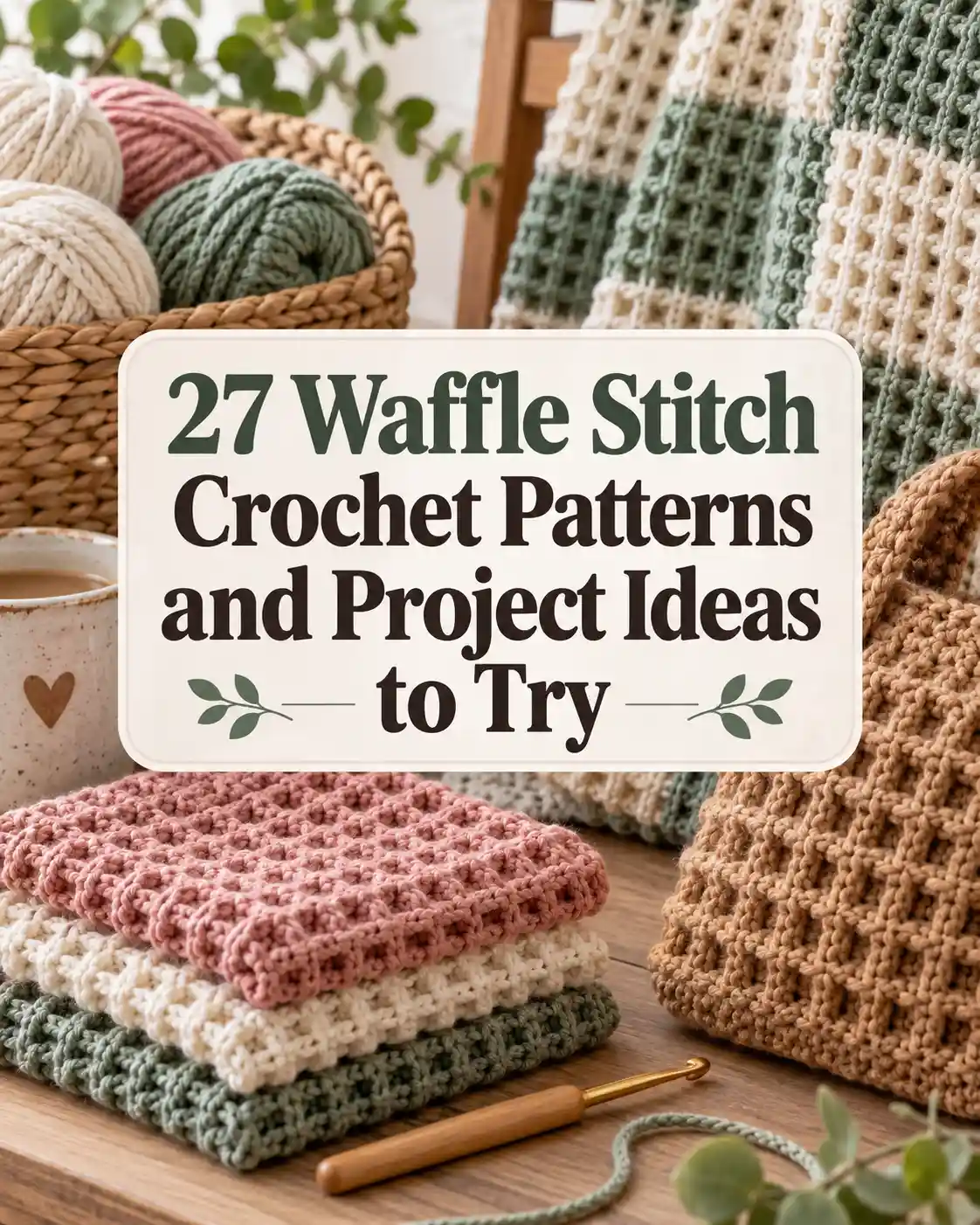


Waffle stitch crochet creates a thick, raised grid using regular double crochet and front-post double crochet stitches. Once you understand the post placement and the repeating rows, you can use the same textured idea for blankets, dishcloths, scarves, bags, wearables, and plenty of smaller projects.
If you are learning the stitch for the first time, start with a small swatch before committing to a blanket. Then use the 27 waffle stitch crochet ideas below to decide where you want to take that wonderfully squishy texture next. If you’re not sure where to begin, use the quick guide below to choose a small project first, then work up to blankets or wearables as the stitch starts to feel familiar.
Key Takeaways
- Start with a small waffle stitch crochet swatch.
- Practice crochet waffle stitch before starting large projects.
- Count stitches regularly to keep raised columns aligned.
- Match yarn choice to the finished project.
- Swatch carefully before making fitted crochet garments.
- Use simple borders to highlight the waffle texture.
How Does Waffle Stitch Crochet Work?
Waffle stitch crochet combines standard double crochet with front-post double crochet to create raised lines and recessed squares.
At a Glance:
- Double crochet forms the basic fabric.
- Front-post stitches create raised vertical texture.
- Repeating rows build the waffle-grid appearance.
- Accurate stitch placement keeps columns aligned.
The classic waffle stitch crochet texture is built mainly with double crochet (dc) and front-post double crochet (FPdc). Instead of placing every stitch only through the top loops, an FPdc is worked around the post of a stitch below, which brings part of the fabric forward and helps form those recognizable raised squares.
The Craft Yarn Council lists dc as double crochet and FPdc as front-post double crochet in standard U.S. crochet terminology.
Many flat waffle-stitch tutorials use a foundation based on a multiple of 3, followed by a two-row repeat. However, turning-chain treatment can vary from pattern to pattern, so always follow the exact instructions for the pattern you are making. Both Dora Does and Easy Crochet demonstrate common versions built around double crochet and FPdc.
A Simple Waffle Stitch Crochet Tutorial
For a practice swatch, a common approach looks like this:
- Make a foundation chain based on a multiple of 3 plus the extra turning chains required by your chosen pattern.
- Work a foundation row of double crochet.
- Alternate regular double crochet stitches with front-post double crochet stitches across the next row.
- On the following row, shift the post-stitch placement so raised vertical and horizontal lines begin forming the waffle squares.
- Repeat those two texture rows until the fabric reaches the length you want.
The important part is not rushing the first few rows. Once the raised columns line up correctly, the pattern becomes much easier to recognize.
Tip: Count your stitches at the end of every row while you are learning. One missed FPdc can make the waffle columns start drifting several rows later.
Which Waffle Stitch Crochet Project Should You Start With?
Beginners usually do best with a swatch, dishcloth, washcloth, or headband before moving to blankets, garments, or advanced waffle variations.
At a Glance:
- Choose small projects for fast stitch practice.
- Pick blankets when you enjoy repetitive rows.
- Select soft yarn for scarves and wearables.
- Try advanced variations after mastering classic waffle stitch.
Here is a quick way to choose.
| Project | Skill Level | Best Yarn Direction | Why Try It |
|---|---|---|---|
| Practice swatch | Beginner | Smooth, light-colored yarn | Easiest way to see stitch placement |
| Dishcloth | Beginner | Cotton | Small, useful, textured |
| Washcloth | Beginner | Soft cotton | Quick practice project |
| Scarf | Beginner–Intermediate | Soft, drapey yarn | Repetitive and wearable |
| Baby blanket | Intermediate | Soft, washable yarn | Beautiful texture in a manageable size |
| Throw blanket | Intermediate | Medium-weight yarn | Shows the waffle texture beautifully |
| Hat/cowl | Intermediate | Soft yarn with some flexibility | Introduces shaping or rounds |
| Cardigan/sweater | Intermediate–Advanced | Lighter, draping yarn | Requires gauge and fit control |
| Diamond/Tunisian variations | Advanced | Depends on pattern | More complex texture and construction |
The Craft Yarn Council divides yarn into standardized weight categories from 0 through 7 and gives suggested hook ranges, but it also stresses that those figures are guidelines. Gauge should still be checked against the individual pattern.
27 Waffle Stitch Crochet Patterns and Project Ideas
1. Classic Waffle Stitch Crochet Pattern
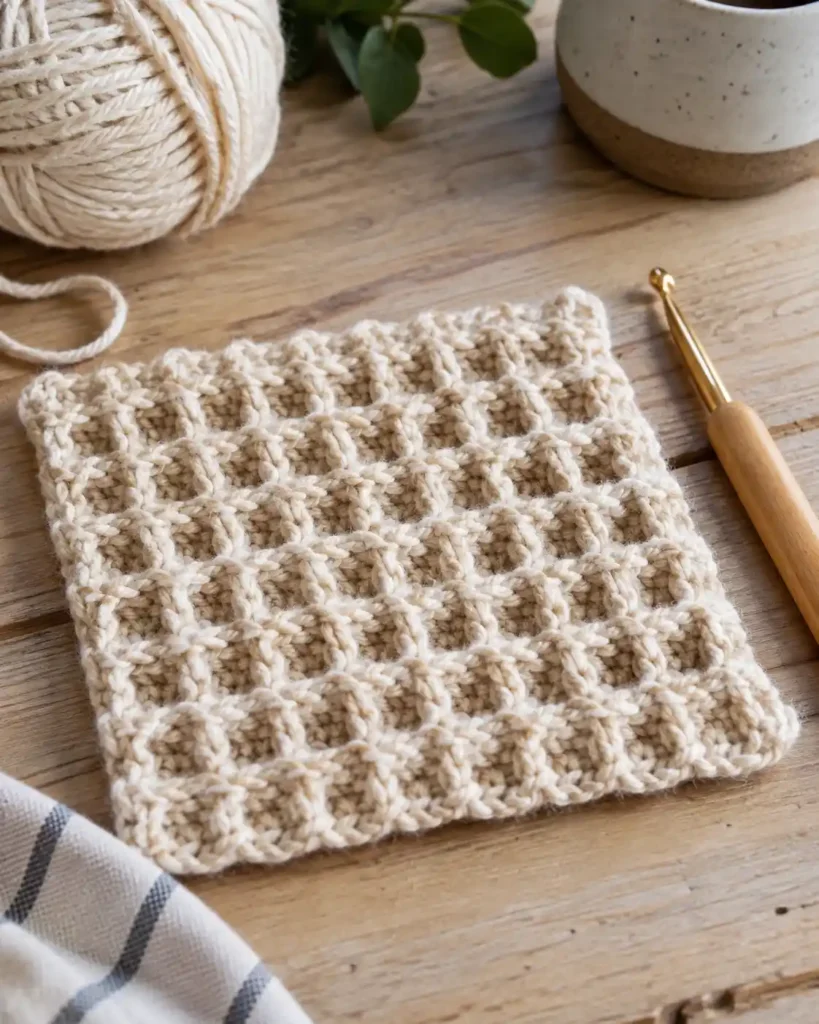
The classic waffle stitch crochet pattern is the best place to begin because you can actually watch the little recessed squares appear row by row. A simple swatch teaches you more about FPdc placement than jumping straight into a huge blanket where one mistake can travel a long way.
I like the idea of keeping this first sample in a solid, light color because every post is easier to see. Once the rhythm feels natural, that same little swatch becomes your reference whenever you forget which row comes next.
Special Tip: Photograph your finished swatch. It can become a handy visual reminder when you return to the stitch months later.
2. Easy Waffle Stitch Crochet Blanket
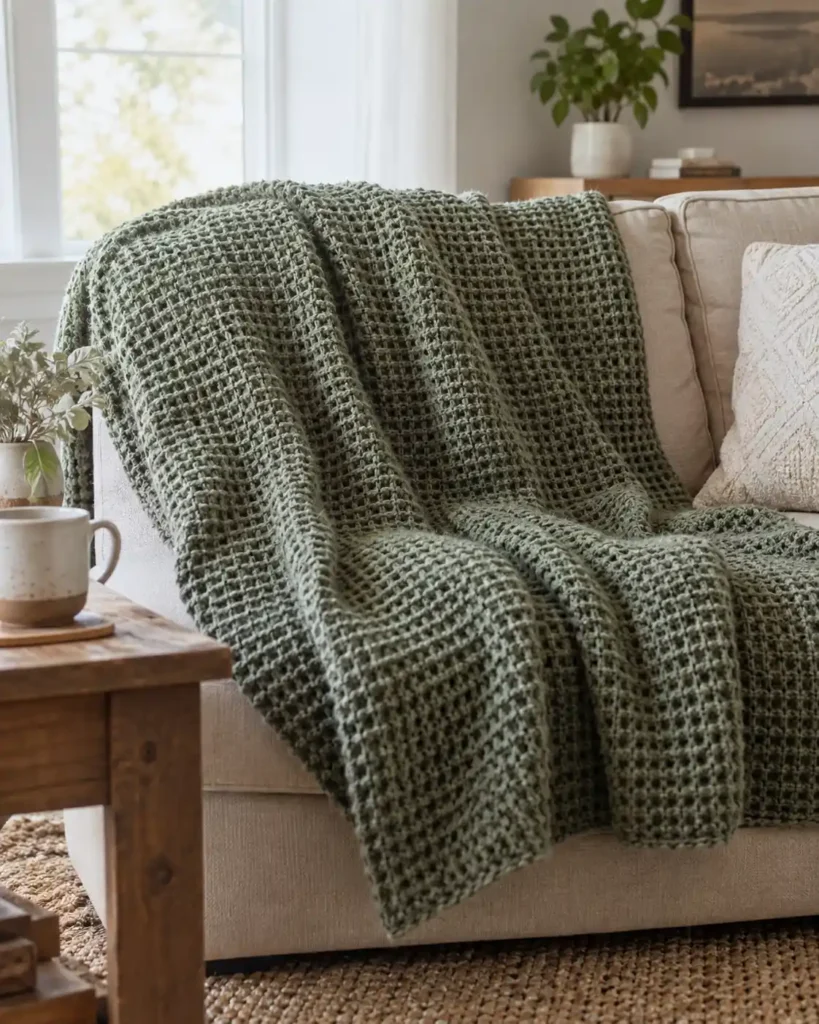
An easy waffle stitch crochet blanket takes the basic repeat and gives it room to shine. Unlike a stitch sampler filled with constant changes, a rectangular waffle blanket lets you settle into one repeating texture and simply keep going.
This is the kind of project I would choose for quiet evening crochet because you start recognizing the pattern visually instead of checking every stitch. A solid neutral creates a calm, modern throw, while stripes can make the grid look completely different.
The biggest thing to plan is yarn quantity because the raised structure creates a denser fabric than many flatter crochet stitches.
3. Waffle Stitch Crochet Baby Blanket
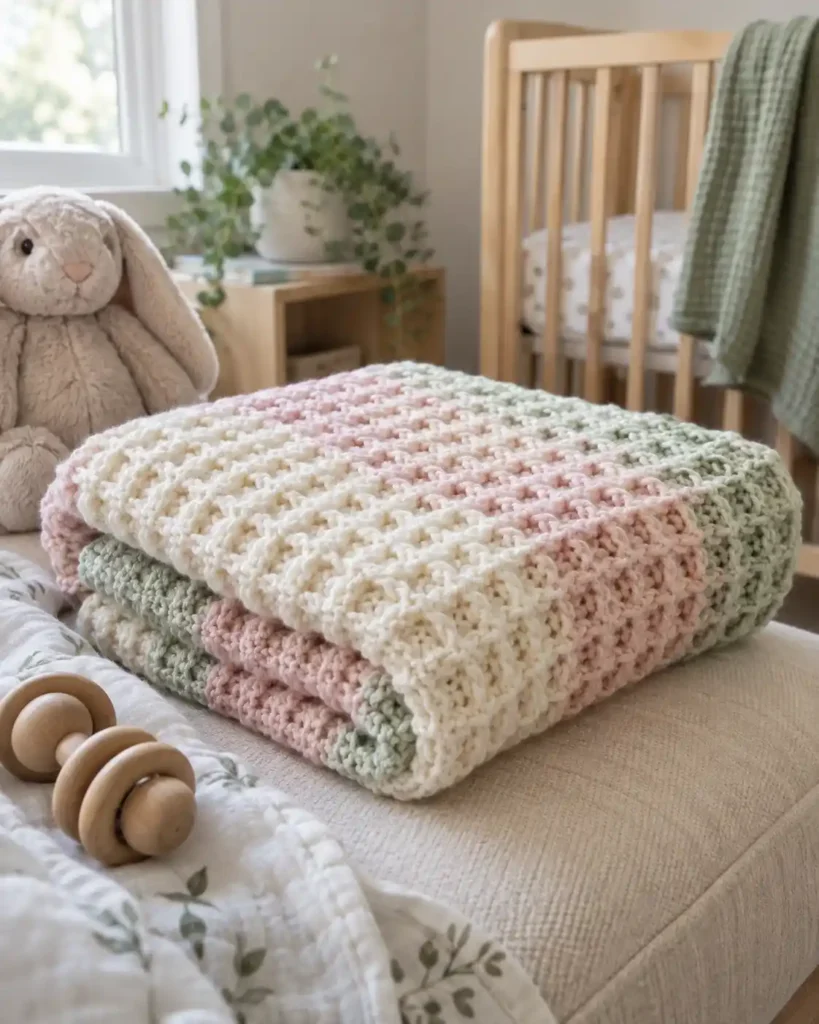
A waffle stitch crochet baby blanket feels extra special because the texture makes even a simple color look finished. Rather than adding complicated motifs, you can let the raised squares become the design.
Choose a soft, washable fiber and keep the finished fabric comfortable rather than overly heavy. Pastels are lovely here, but cream, beige, sage, dusty blue, or another quiet neutral can give the blanket a more timeless look.
One important safety note: a handmade baby blanket can be useful for supervised cuddling, stroller use, or gifting, but loose blankets should not be placed in an infant’s sleep space. The American Academy of Pediatrics recommends keeping blankets and other loose bedding out of the baby’s sleeping area.
4. Chunky Waffle Stitch Crochet Blanket
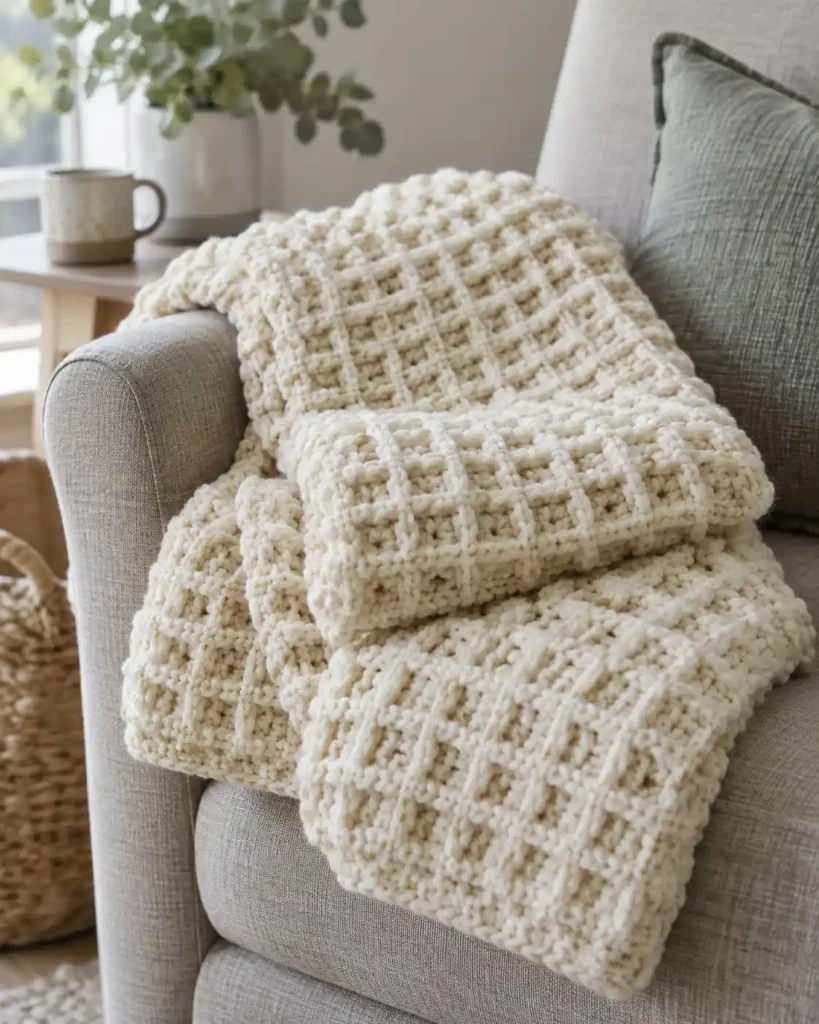
Want the texture to look huge? A chunky waffle stitch crochet blanket takes those small raised squares and turns them into something bold, soft-looking, and almost sculptural.
Bulky yarn can also make a throw grow surprisingly quickly, which is nice when you want the satisfaction of seeing progress after every crochet session. I would keep the color simple here because the oversized texture already provides plenty of visual interest.
Just watch the weight and stiffness. Going too tight with thick yarn can turn a cozy blanket into something closer to a rug.
5. C2C Waffle Stitch Crochet Blanket
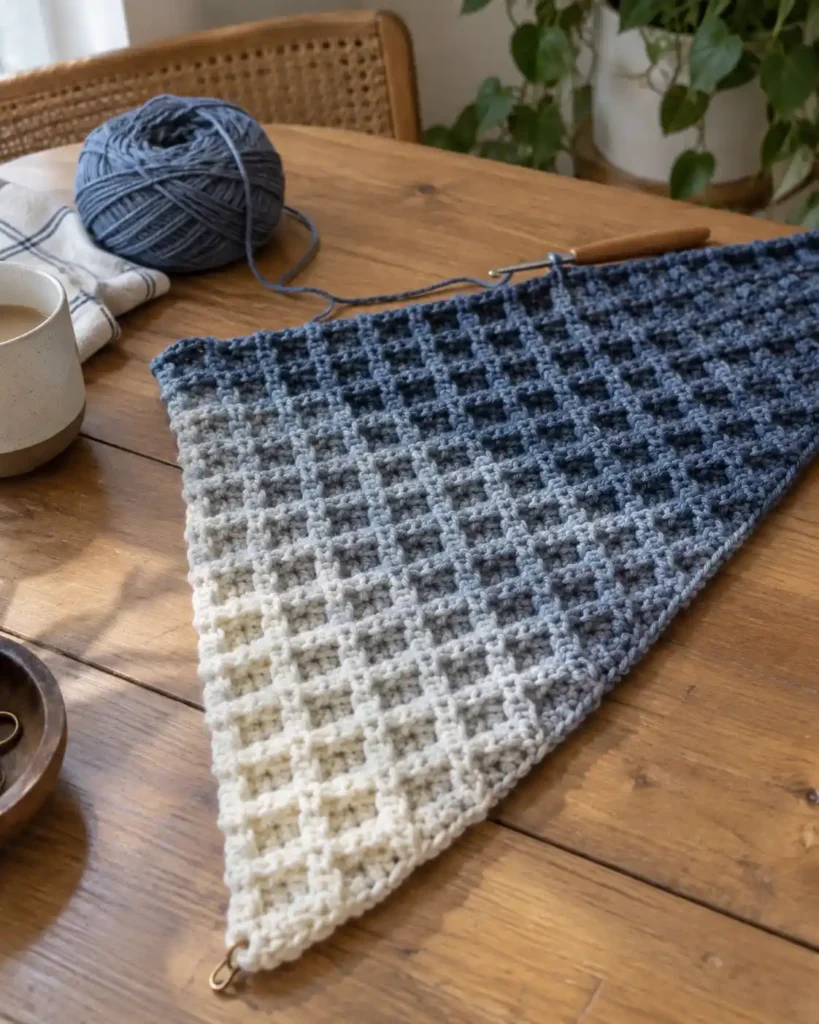
A C2C waffle stitch crochet blanket gives you the familiar waffle look with diagonal movement. Instead of building a standard rectangle straight upward, a corner-to-corner project grows outward from one corner and then decreases toward the opposite one.
The changing silhouette makes this more interesting than an ordinary repeat blanket, especially if you already know basic C2C crochet construction. I particularly like this idea for square blankets because the diagonal lines give the texture a completely different personality.
Use a verified C2C waffle pattern for the increases and decreases rather than assuming the standard flat waffle repeat will transfer directly.
6. Zigzag Waffle Stitch Crochet Blanket
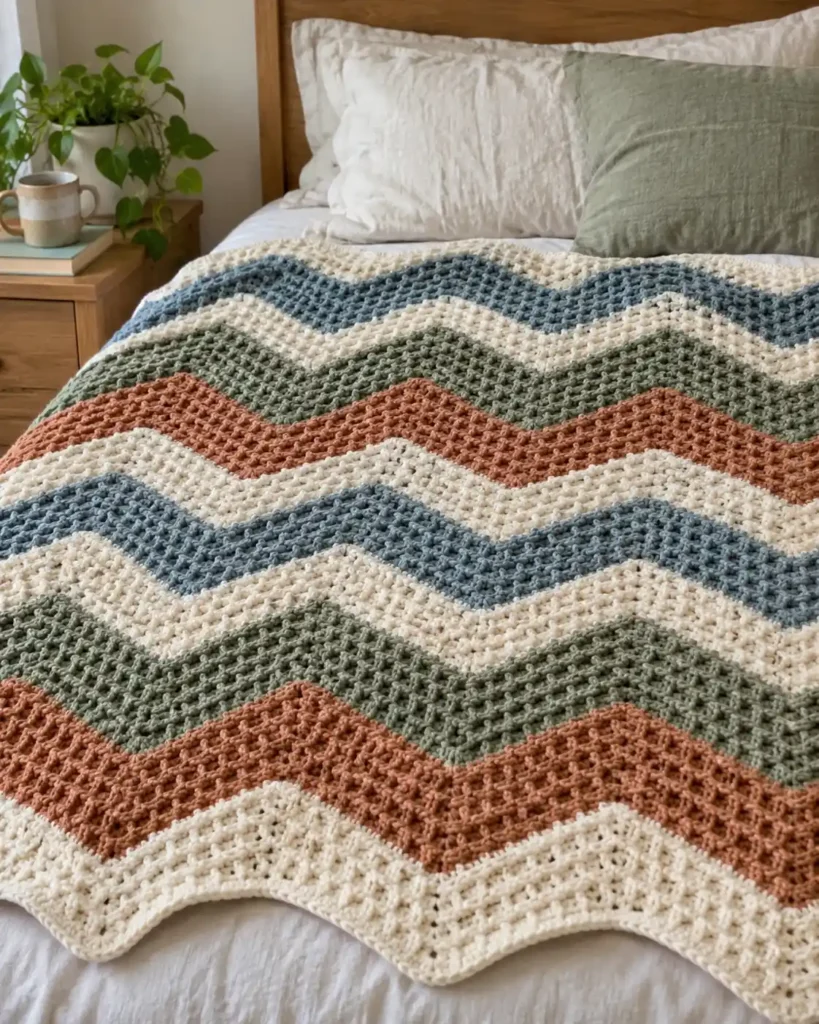
The zigzag waffle stitch crochet idea mixes two strong textures: chevron movement and raised waffle depth. Where a classic waffle blanket feels calm and orderly, the zigzag version has much more motion.
This could look fantastic in two or three colors, especially when each shade helps define the peaks and valleys. I would use it for a statement throw where the blanket itself is meant to be part of the room decor.
Careful row counting matters here. Losing a peak, valley, or post placement can distort both the chevron and the waffle effect.
7. Double Waffle Stitch Crochet Blanket
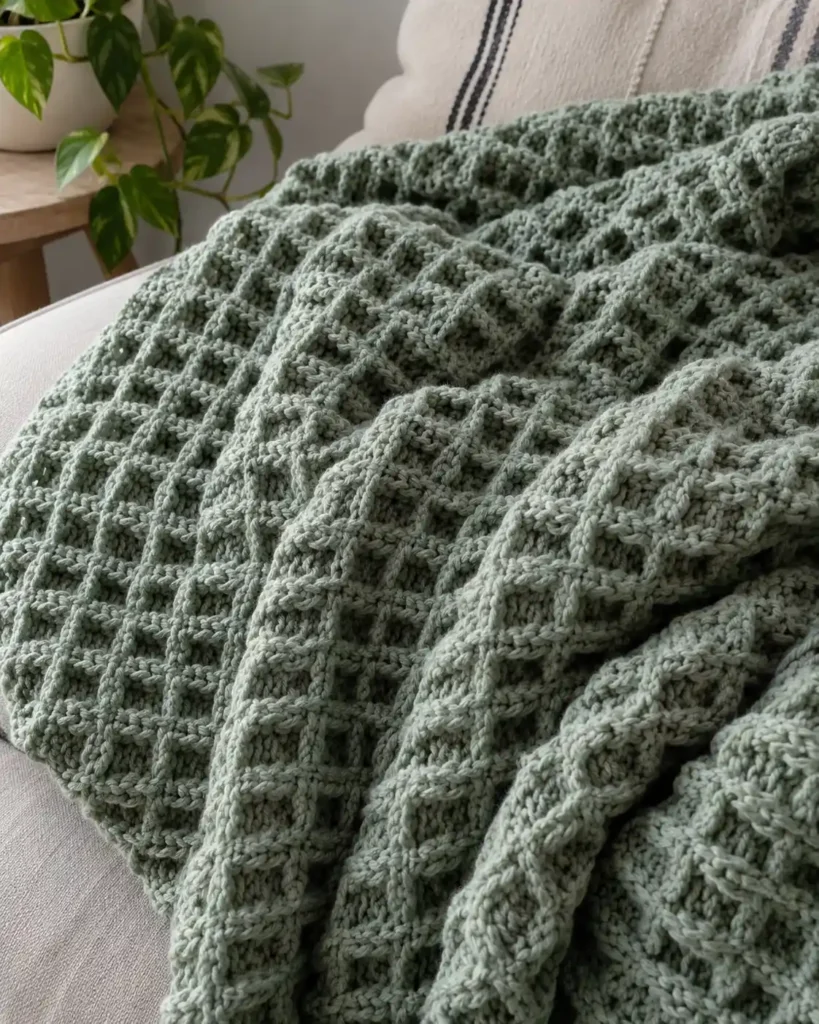
A double waffle stitch crochet blanket pushes the texture further with deeper, more pronounced structure. It is a lovely choice when the regular waffle feels a little too subtle and you want something exceptionally cozy-looking.
Because deeper texture can also mean more yarn and more weight, I would pair this idea with a yarn that still has some softness and movement. It is especially pretty in a single color where light and shadow can define every square.
For a bed blanket, consider making a generous swatch first so you know exactly how heavy the finished fabric may become.
8. Waffle Stitch Fringed Crochet Throw
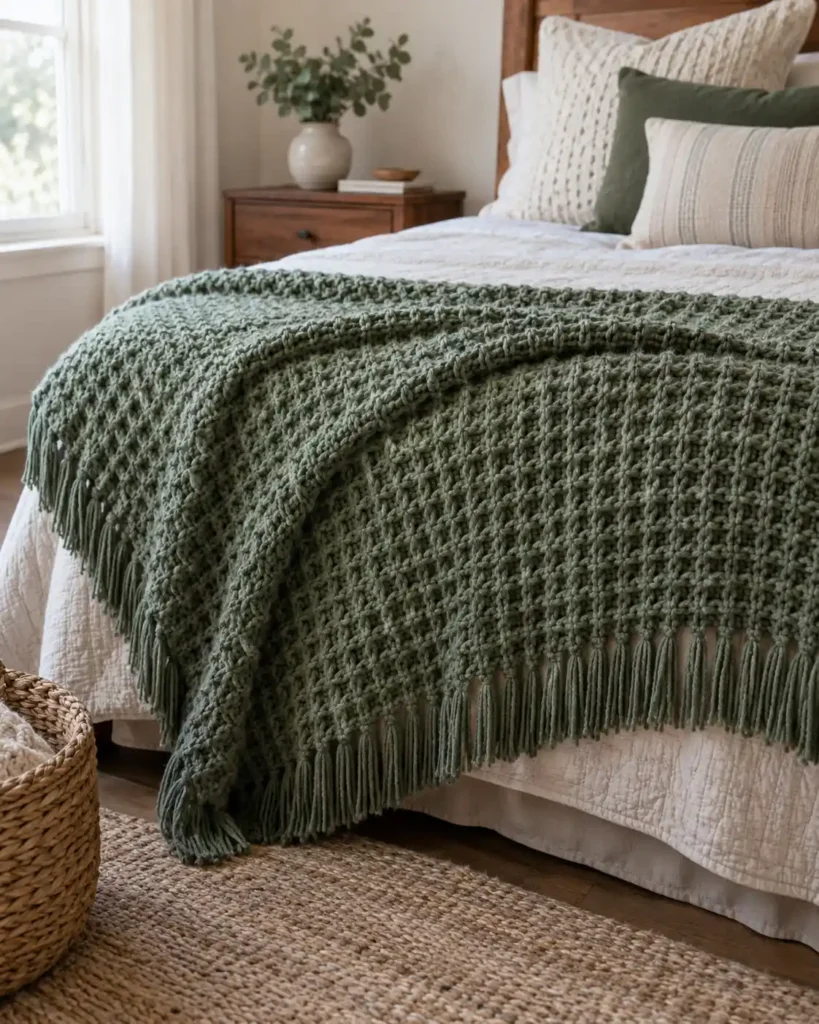
Sometimes the easiest finishing touch makes the entire project feel intentional. A waffle stitch fringed crochet throw combines the tidy geometric grid with loose fringe, which softens the structured appearance.
I would make this for the end of a bed, a reading chair, or the arm of a sofa where the fringe can actually show. Compared with a decorative border, fringe gives you a quicker finish without competing with the texture.
Keep the tassels or fringe evenly spaced and trim them together at the end for a cleaner result.
9. Waffle Stitch Crochet Dishcloth
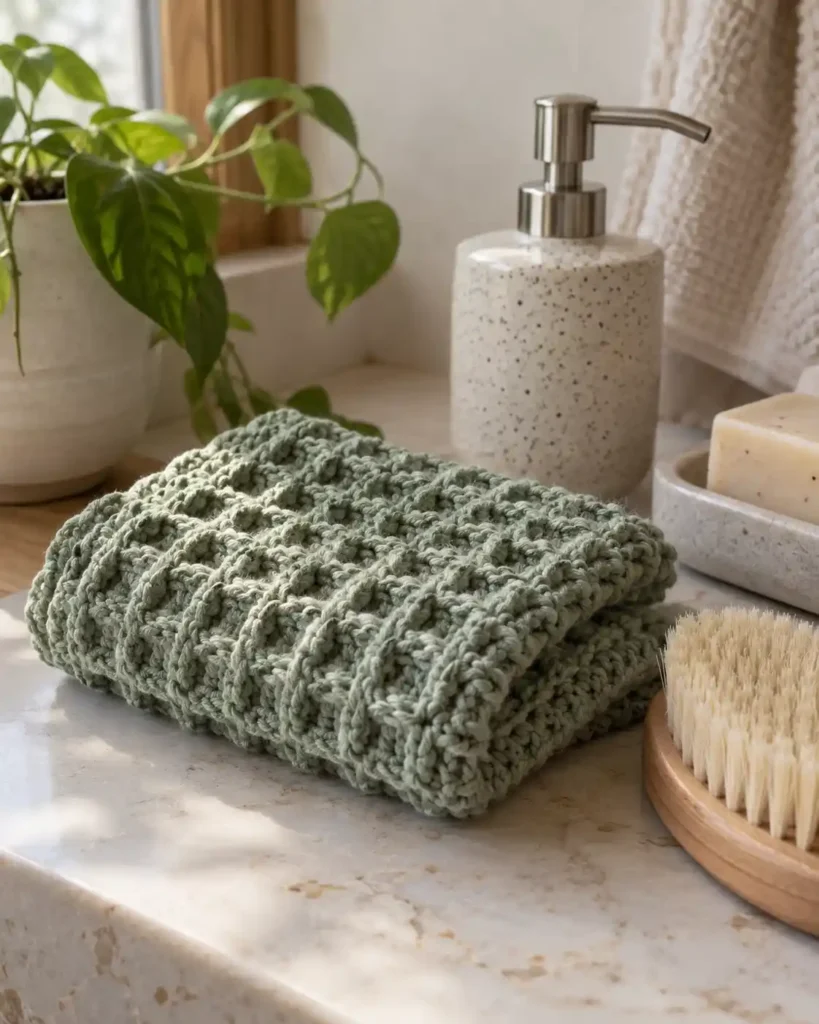
A waffle stitch crochet dishcloth might be one of the smartest first projects on this list. It is small enough to finish quickly, but large enough to practice the same stitch repeat again and again.
Cotton works naturally for kitchen pieces because it gives you a washable fabric with useful texture. I like dishcloth projects for trying unfamiliar stitches because even a slightly imperfect first attempt can still be useful.
Make a set in different colors once the first one feels comfortable—you get practice without committing to a giant project.
10. Waffle Stitch Crochet Washcloth
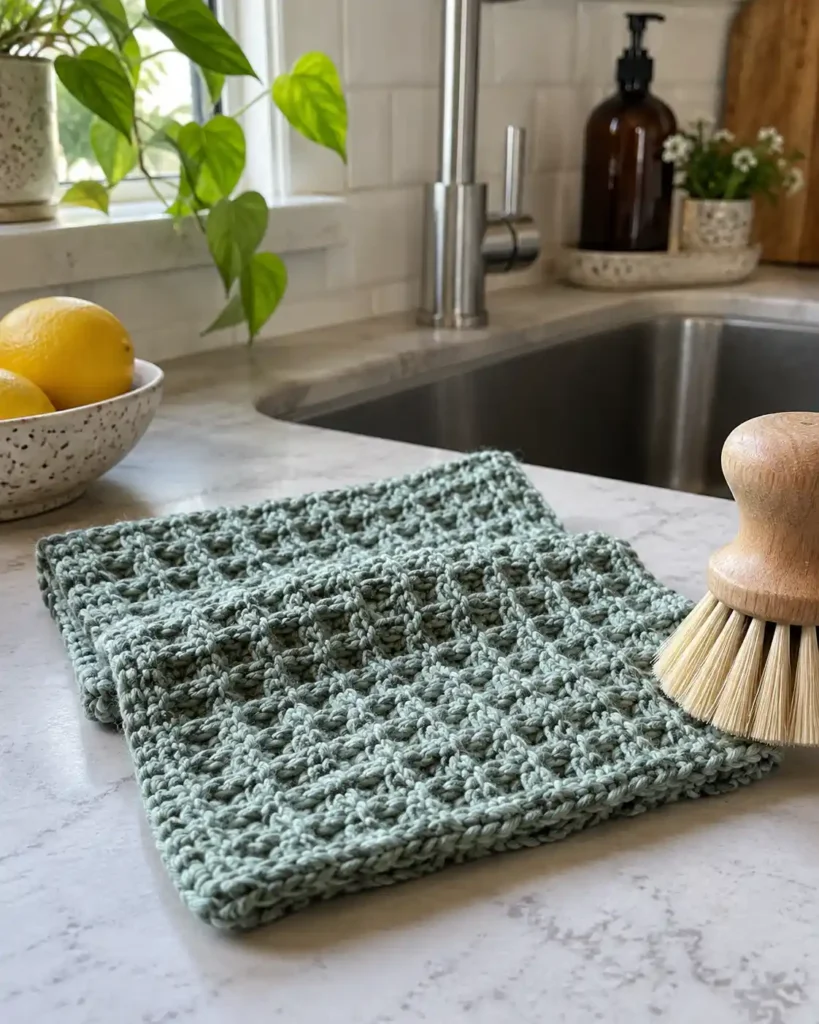
The waffle stitch crochet washcloth uses the same textured idea as a dishcloth, but I would make this version softer. Choose smooth cotton or another skin-friendly washable yarn and avoid an overly stiff gauge.
A small stack of matching washcloths also makes a thoughtful handmade gift without requiring weeks of work. Neutral colors give them a simple spa-like feel, while brighter shades are fun for everyday family use.
A soft, uncomplicated border is usually enough. The waffle surface is already doing most of the decorating.
11. Waffle Stitch Crochet Kitchen Towel
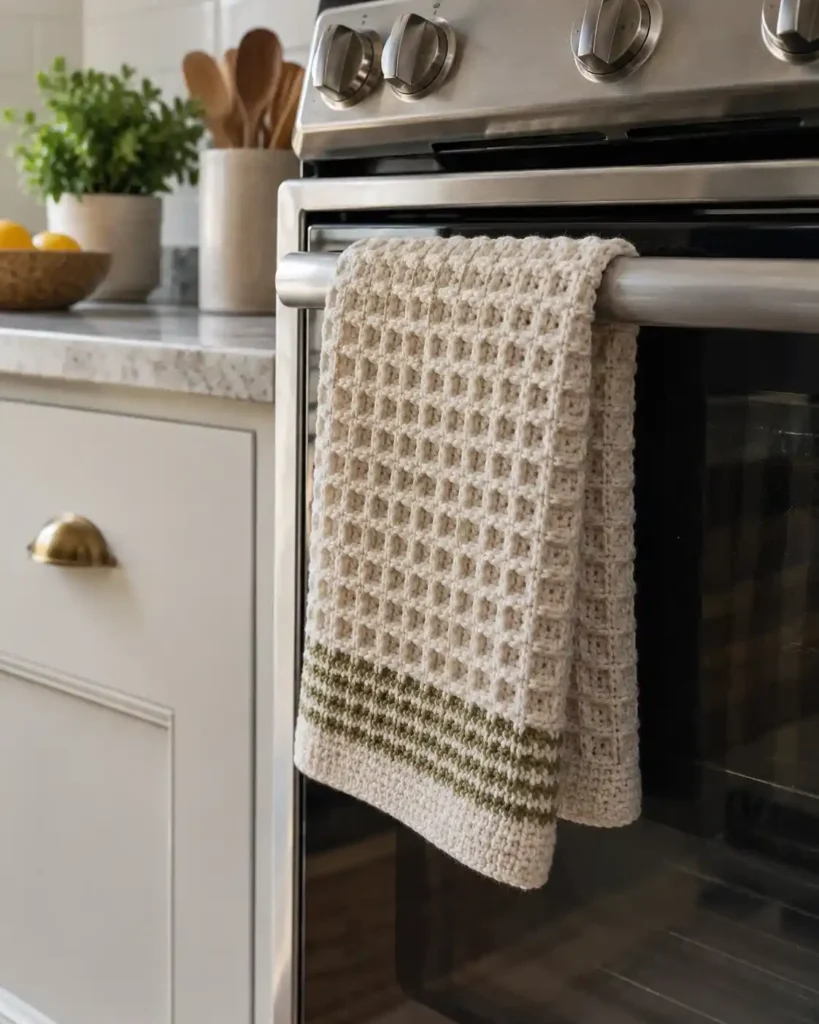
Once a dishcloth feels easy, stretch the idea into a waffle stitch crochet kitchen towel. The longer rectangle gives you more repetition to practice, while the raised grid creates a handmade towel that looks far more detailed than the basic stitch combination suggests.
You can keep it completely rectangular or add a hanging loop or button tab if the pattern supports one. I would use cotton and pay special attention to the side edges because any change in stitch count becomes much more obvious over a longer piece.
This is also a nice project for making a coordinated dishcloth-and-towel set.
12. Waffle Stitch Crochet Scarf
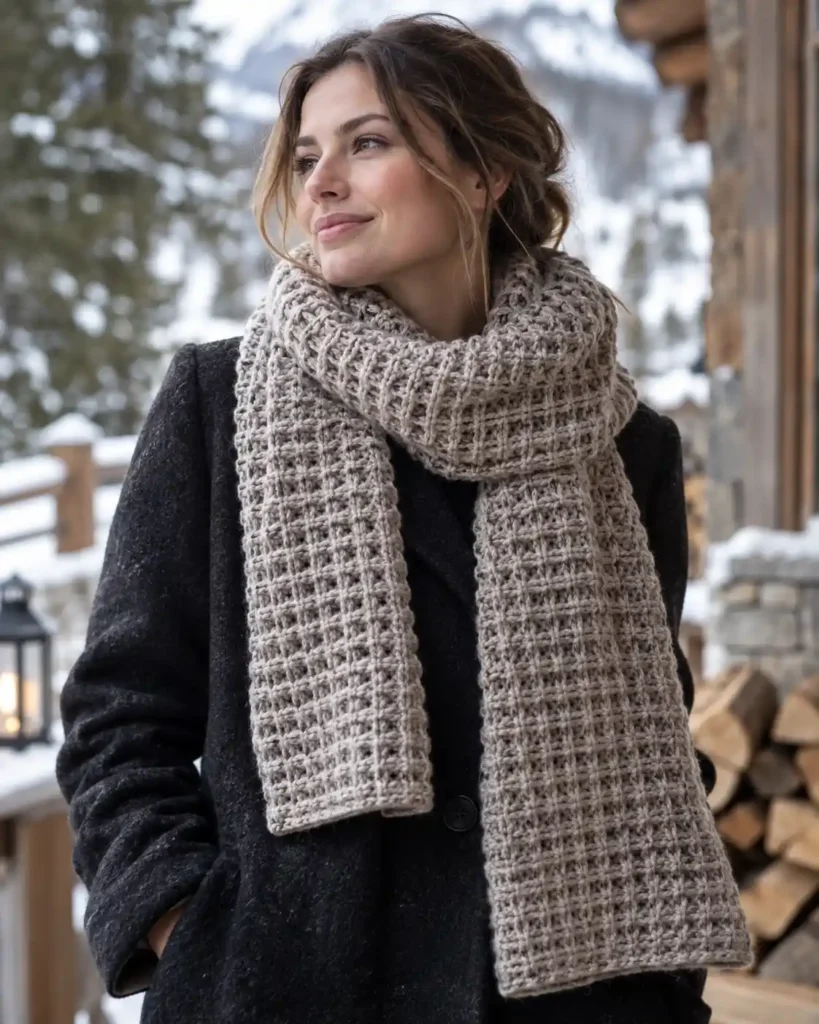
A waffle stitch crochet scarf is warm, textured, and wonderfully straightforward once you know the repeat. The trick is choosing yarn and tension that keep it flexible enough to wrap comfortably around the neck.
Instead of automatically making the thickest possible waffle fabric, try a softer yarn or slightly more relaxed gauge. That lets the texture stay visible without turning the scarf into a stiff board.
For a simple winter wardrobe, I would choose one rich solid shade and let the shadows between the waffle squares create all the interest.
13. Waffle Stitch Crochet Cardigan
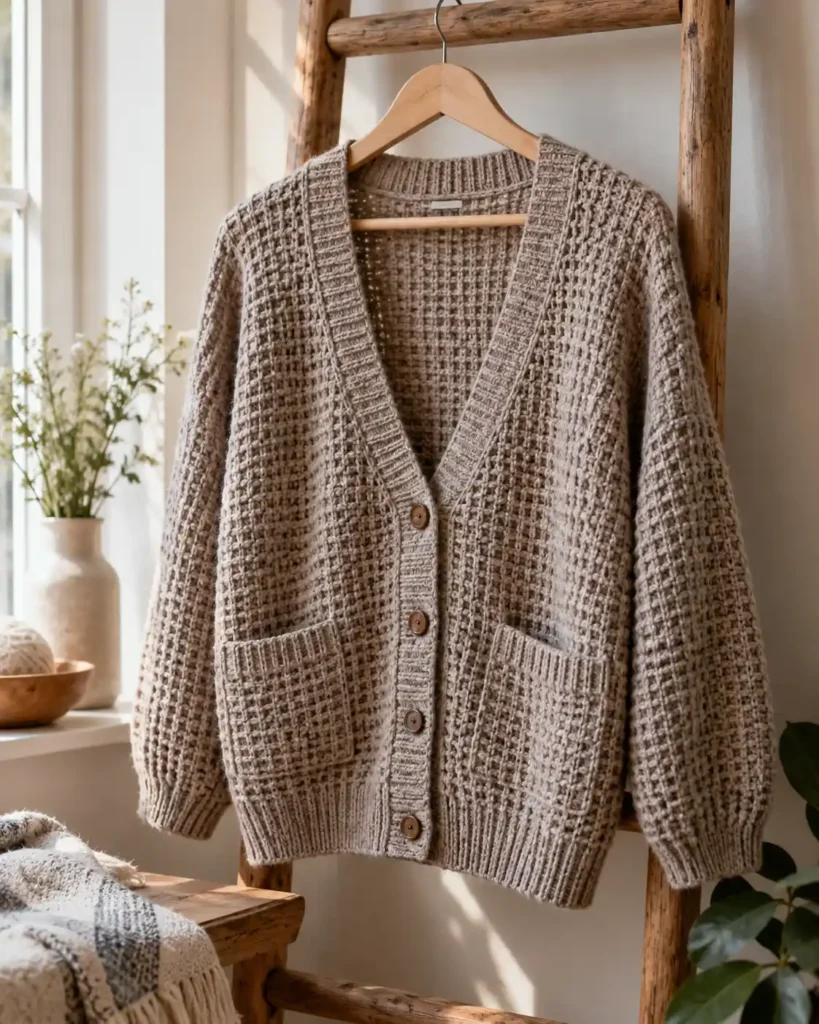
A waffle stitch crochet cardigan can look beautifully cozy, but this is where swatching becomes much more important. A stitch that works perfectly for a blanket may feel too thick when wrapped around the entire body.
One solution is to use waffle panels selectively, perhaps across the front, back, or lower body, while keeping other sections smoother. That gives you the texture without adding unnecessary bulk everywhere.
If you love oversized cardigans, this could be an especially fun way to create a relaxed, winter-ready layer.
14. Waffle Stitch Crochet Sweater
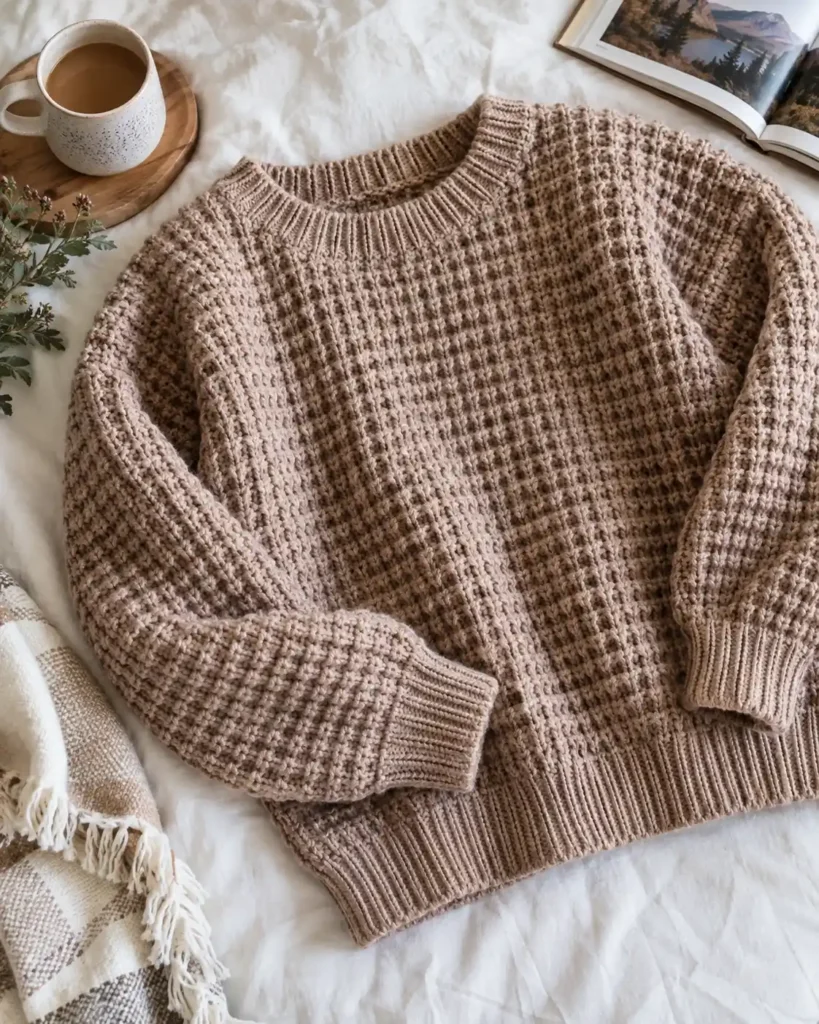
A waffle stitch crochet sweater takes the same wearable idea but makes fit and gauge even more noticeable. Unlike a blanket, where an extra inch rarely ruins anything, a sweater needs the correct chest measurement, sleeve length, and overall drape.
I would pair the waffle body with simpler ribbing or another flatter finish around the cuffs and hem. That contrast keeps the garment from looking visually heavy while helping the texture stand out.
Make and measure a proper gauge swatch before starting the full sweater. The Craft Yarn Council specifically recommends adjusting hook size when a swatch does not match the required pattern gauge.
15. Waffle Stitch Crochet Beanie or Hat
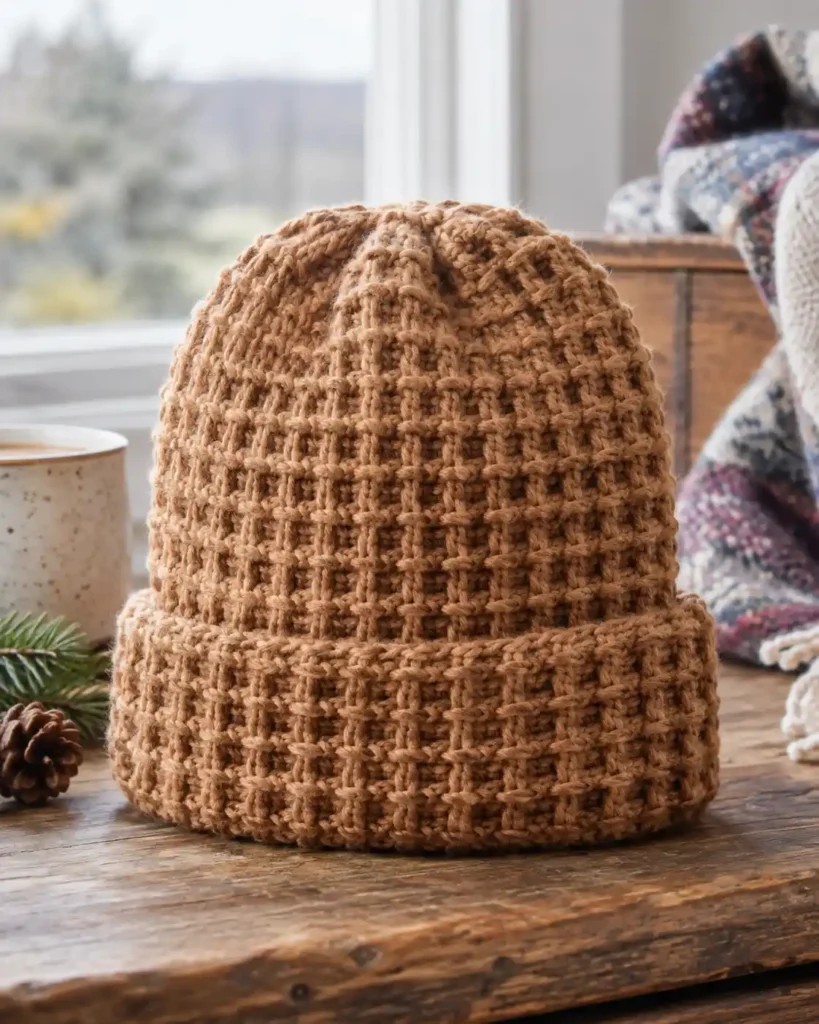
A waffle stitch crochet beanie packs a surprising amount of texture into a small project. You can find versions worked flat and seamed as well as patterns designed in the round, so it is a good stepping stone toward more advanced construction.
For hats, flexibility matters just as much as texture. I would avoid crocheting the posts too tightly because the finished fabric still needs enough give to fit comfortably around the head.
Add a simple brim, folded edge, or pom-pom if you want extra personality without hiding the grid.
16. Waffle Stitch Crochet Headband
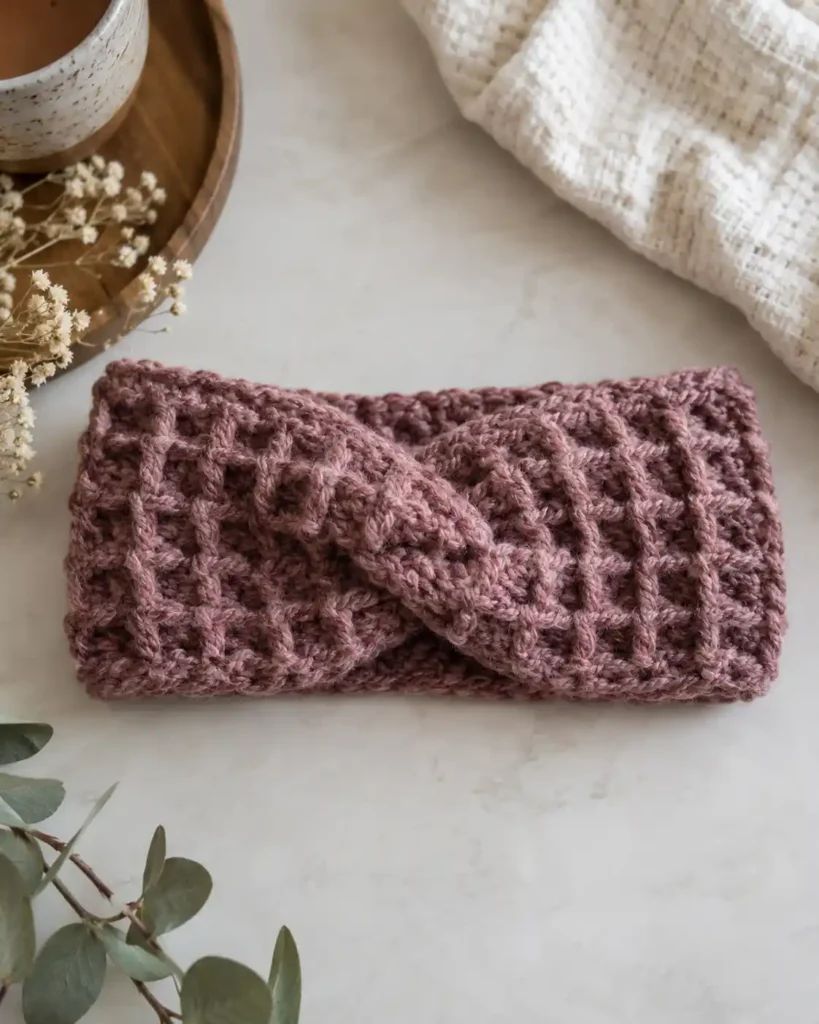
Short on yarn or time? A waffle stitch crochet headband gives you the look without asking for an entire weekend.
It is particularly good for practicing neat side edges because the whole project is essentially one small textured band. A twist-front version can make the finished piece look more complicated than the actual construction.
Use a yarn that feels comfortable against the forehead and check the circumference before joining the ends.
17. Waffle Stitch Crochet Cowl
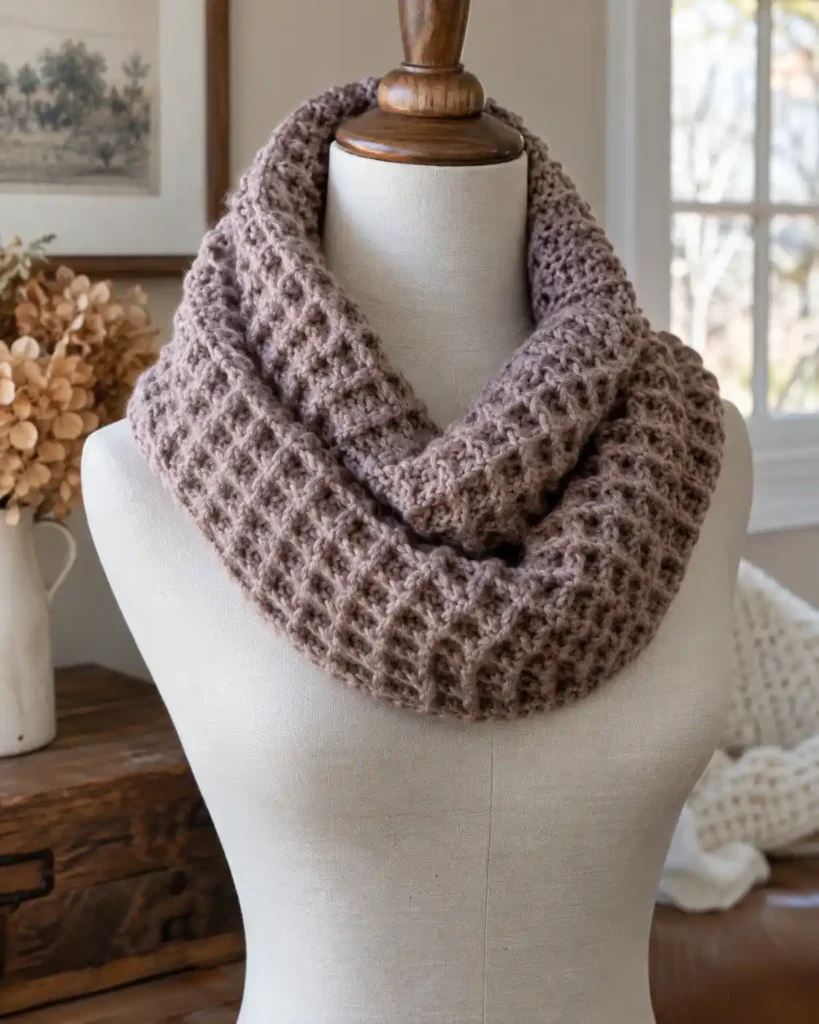
A crochet waffle stitch cowl sits somewhere between a scarf and a hat in both size and difficulty. The loop shape makes it easy to wear, while the raised stitch gives a plain solid color plenty of dimension.
I would make this with softer yarn than I might use for a blanket because anything around the neck needs to feel comfortable. A slightly relaxed waffle texture can also improve drape.
If you want to practice crochet in the round without committing to a garment, a cowl is a very practical place to start.
18. Waffle Stitch Crochet Bag
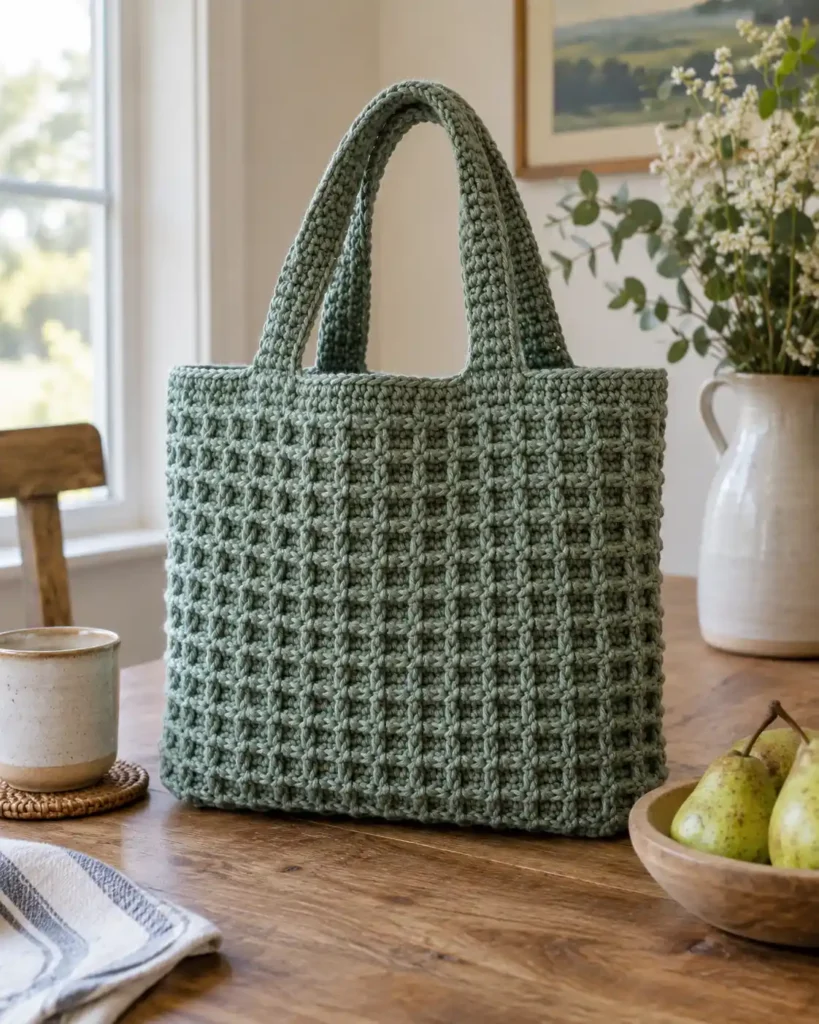
Using waffle stitch in a crochet bag pattern creates a sturdy look before you add any extra decoration. Compared with an open lace stitch, the surface feels substantial and gives a tote or small handbag strong visual structure.
I would reinforce the handles and consider lining the bag, especially if it will carry heavier everyday items. A firm base can also stop the finished shape from sagging.
This is one of my favorite ways to take a “cozy” stitch and make it feel surprisingly modern.
19. Waffle Stitch Crochet Pillow
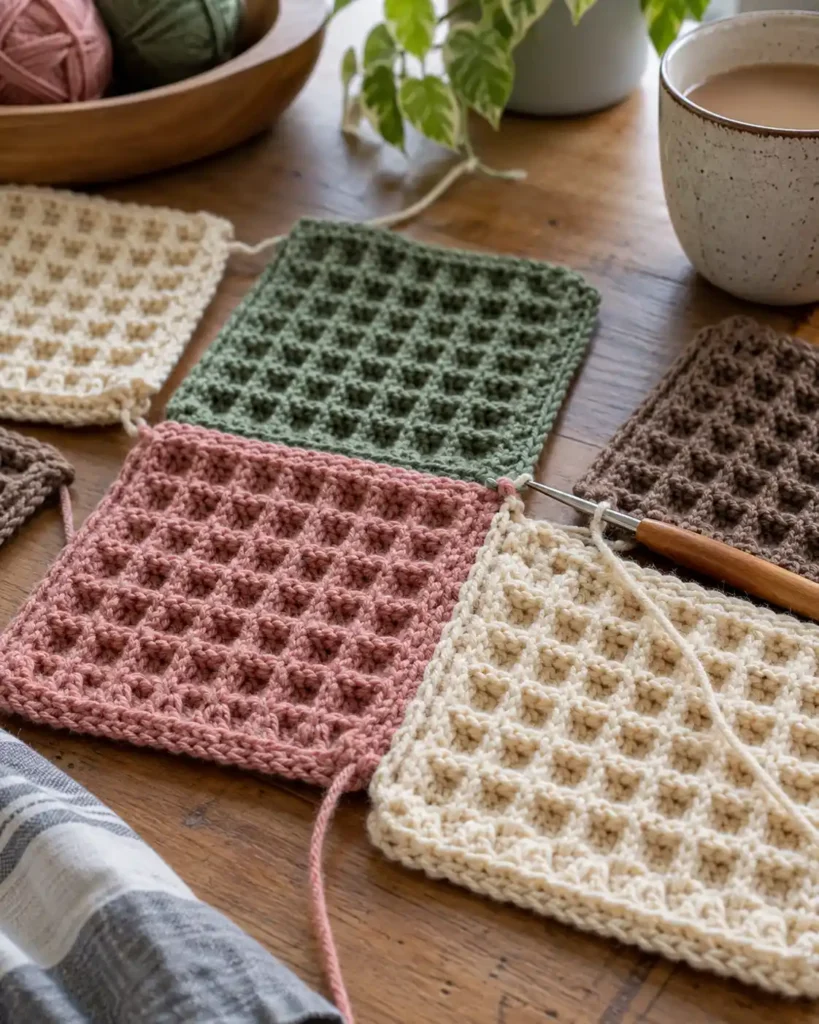
A waffle stitch crochet pillow lets you bring the texture into a room without making an entire blanket. One textured front panel paired with a simple back can be enough.
Solid colors work beautifully because every raised square catches light differently across the cushion. Try cream for a soft minimalist look, earthy rust for autumn, or a deep green for something richer.
Make the cover slightly snug around the insert so the waffle texture stays full rather than looking loose.
20. Waffle Stitch Crochet Granny Square
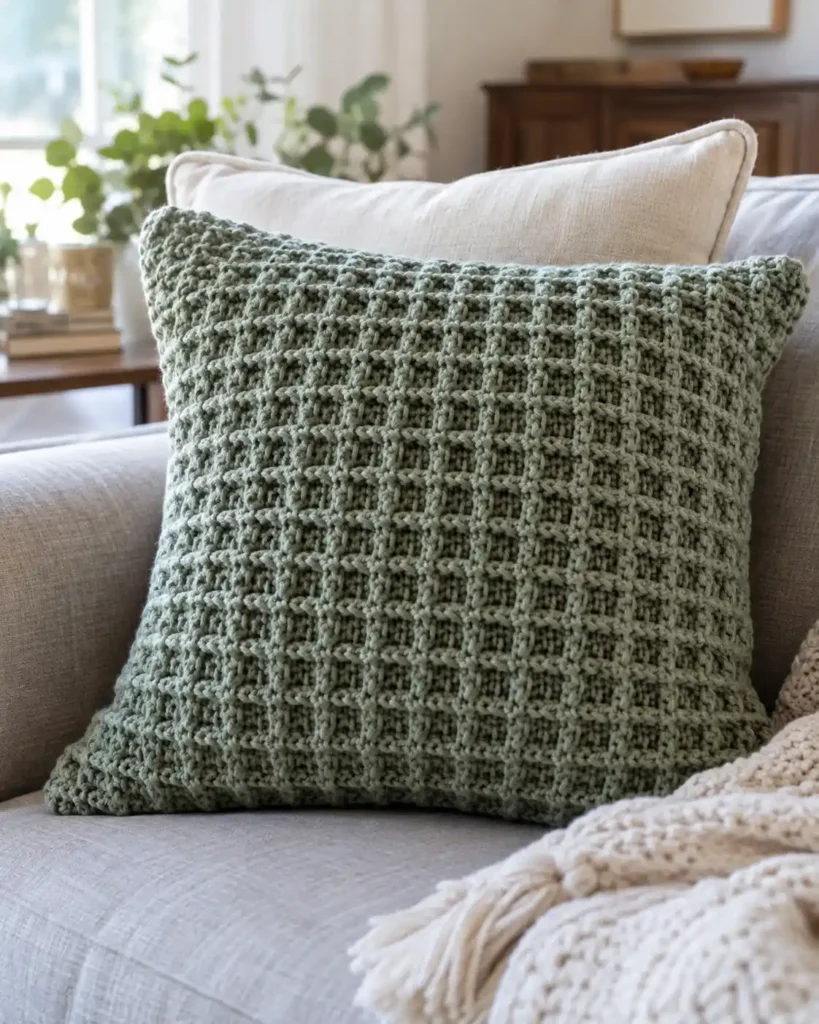
What happens when you combine modular crochet with waffle texture? A waffle stitch crochet granny square gives you small textured blocks that can eventually become blankets, cushions, or bags.
This variation is useful when you enjoy portable projects because you can make one square at a time instead of carrying a whole blanket around. Contrasting borders between the squares can also make each waffle center pop.
Use a dedicated waffle-square pattern so the corners and increases stay flat as the motif grows.
21. Waffle Stitch Crochet Shawl
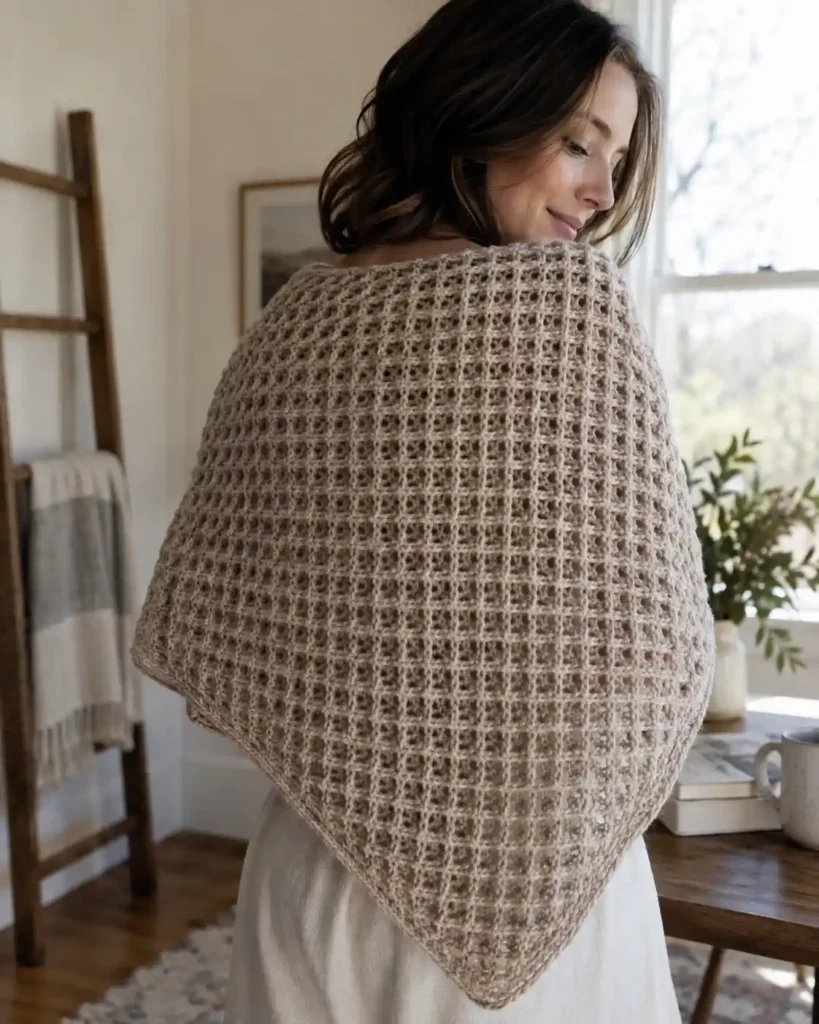
A waffle stitch crochet shawl needs a lighter hand than a thick blanket. Too much density can make a wrap heavy, so I would look for a pattern that uses waffle texture strategically rather than packing every inch with deep posts.
Partial waffle panels can be especially pretty when mixed with simpler rows. You still get the recognizable grid, but the finished shawl can move naturally over the shoulders.
This is a lovely option if you enjoy textured scarves but want something wider and more dramatic.
22. Waffle Stitch Crochet in the Round
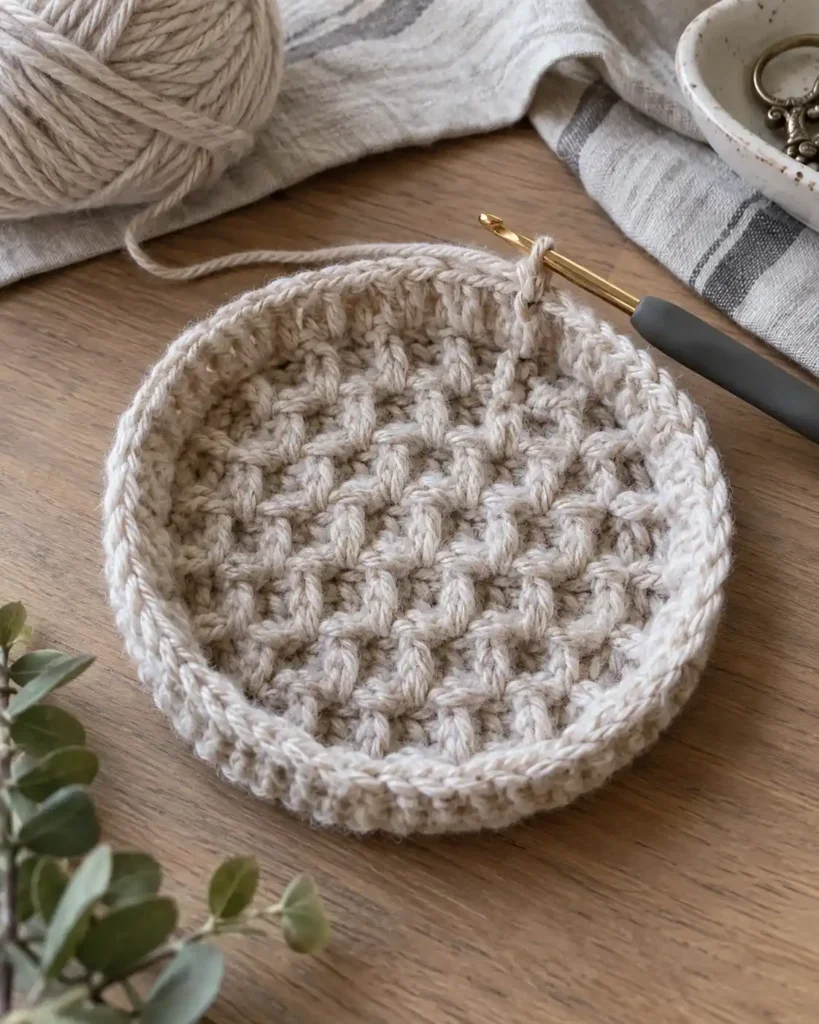
Working waffle stitch crochet in the round opens the door to cowls, hats, baskets, bags, and other seamless shapes. The biggest difference is that you are joining rounds instead of turning regular flat rows, so alignment at the round transition becomes important.
Use a stitch marker at the beginning of each round until you can clearly see the structure. I would also check the seam frequently instead of discovering ten rounds later that the post columns have shifted.
This technique is worth learning because it turns one stitch pattern into an entire family of projects.
23. Reversible Waffle Stitch Crochet
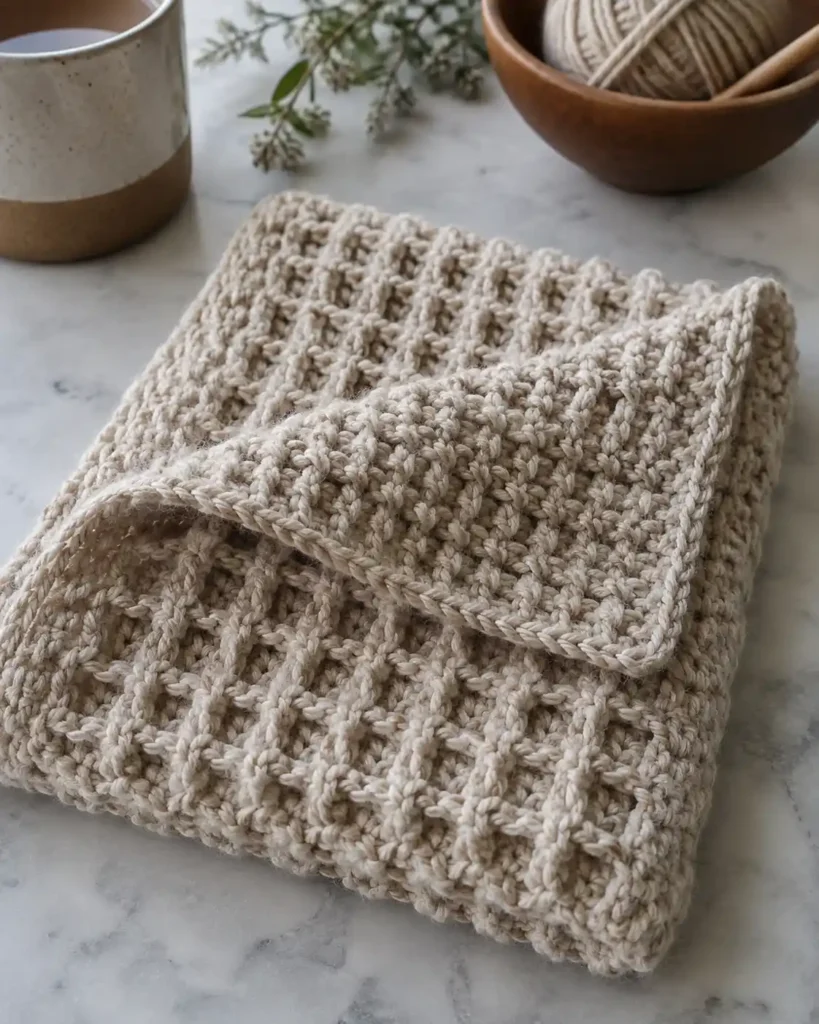
Traditional deep waffle texture naturally has a more defined “front,” but reversible waffle stitch crochet variations aim to make both sides attractive. That is useful for scarves, throws, and wraps where the reverse side will constantly be visible.
The trade-off can be extra thickness or yarn use depending on the exact pattern. Still, for a scarf that twists as you wear it, having two presentable sides can make a noticeable difference.
Choose this variation when appearance on both sides matters more than making the lightest possible fabric.
24. 2-Color Waffle Stitch Crochet
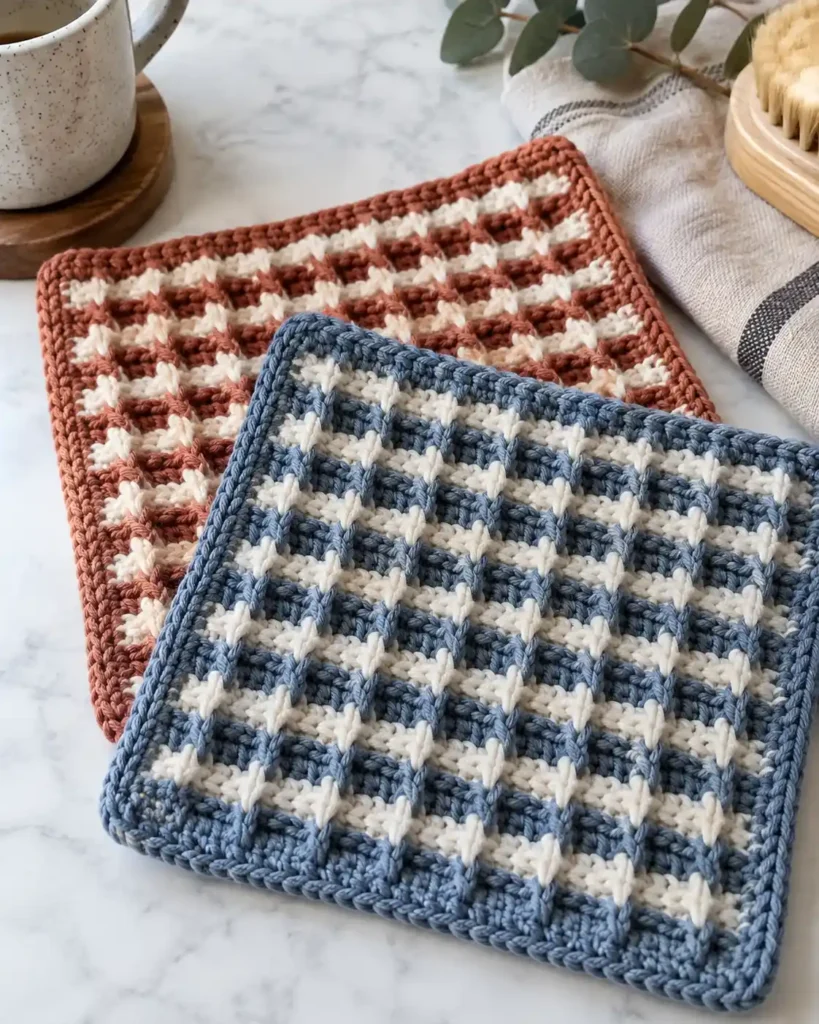
Two colors can completely change the mood of a familiar stitch. A 2-color waffle stitch crochet project lets the raised grid interact with stripes, blocks, or contrasting borders instead of relying only on shadows.
You do not need complicated colorwork to make it effective. Even changing color every few rows can highlight the structure beautifully.
I would start with one light and one darker shade so the contrast makes the texture easy to read, then experiment with softer tone-on-tone combinations later.
25. Diamond Waffle Stitch Crochet
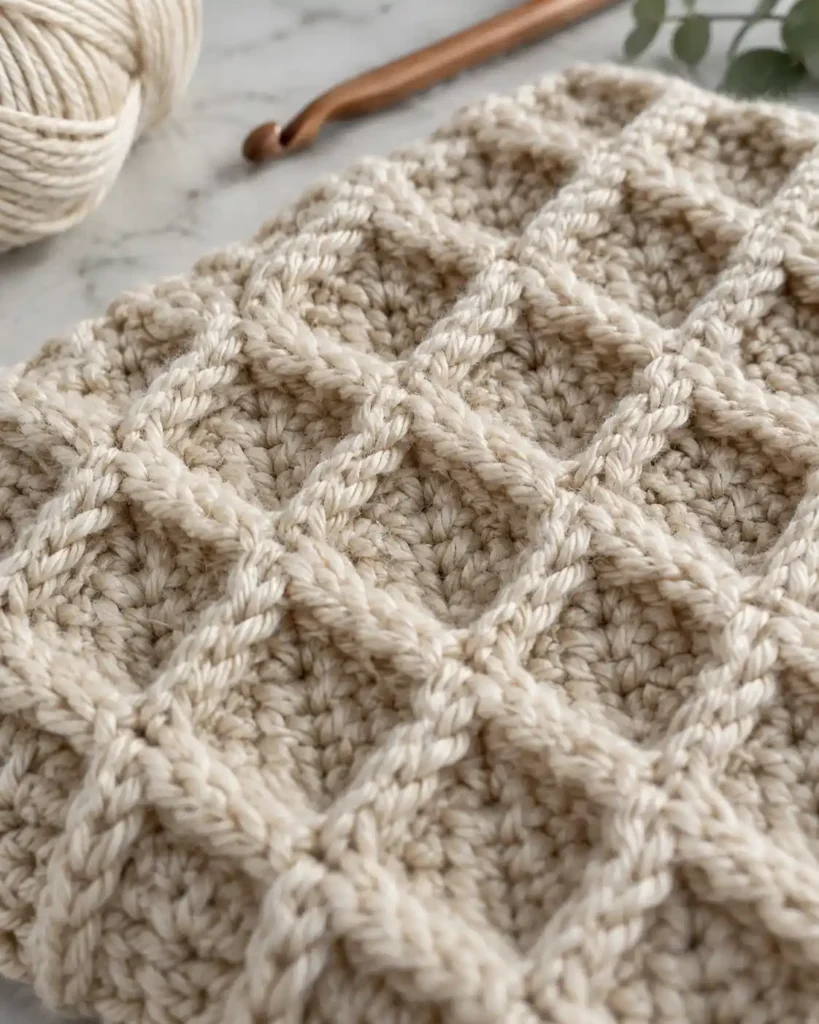
Diamond waffle stitch crochet replaces the familiar square-grid feeling with raised diagonal lines that create a lattice or diamond effect. It feels related to classic waffle texture but looks much more decorative.
This is the kind of stitch I would use for a statement blanket panel or cushion where the surface is the main feature. Because the post placement is more involved, charts or step-by-step photos can be especially useful.
Take your time with row tracking. Once the diagonals start lining up, the emerging diamonds are incredibly satisfying.
26. Tunisian Waffle Stitch Crochet
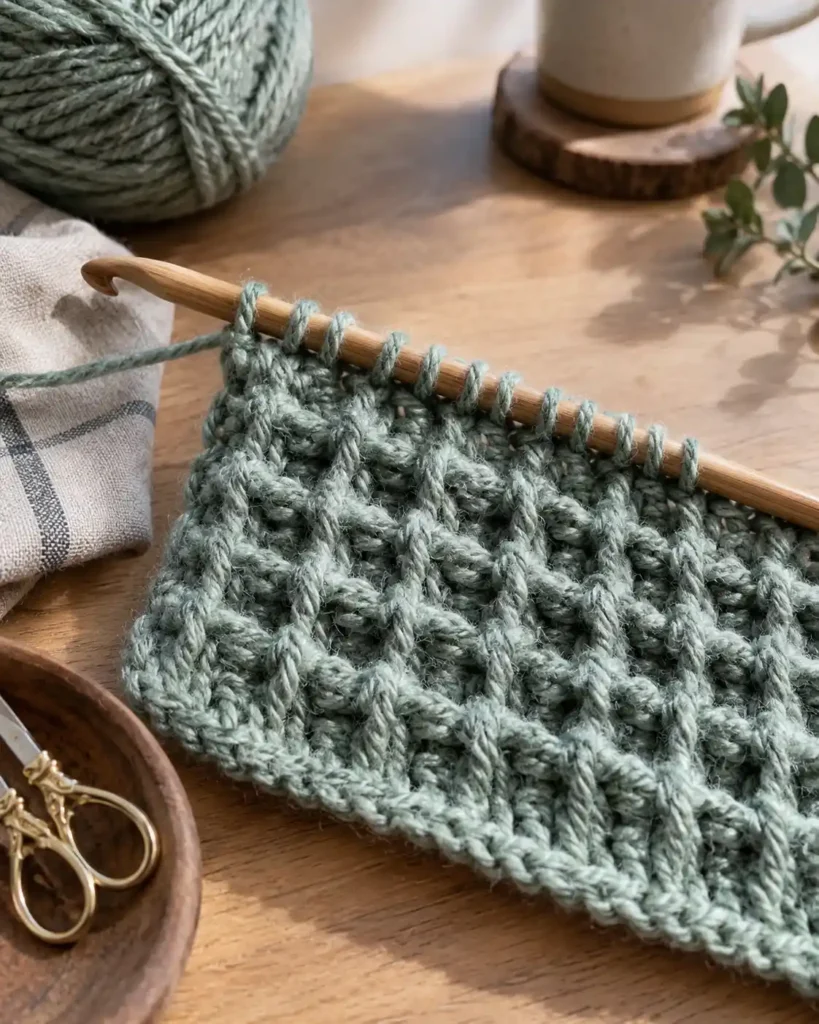
Tunisian waffle stitch crochet gives you another route to deeply textured fabric using Tunisian crochet construction. Tunisian crochet uses forward and return passes, and the Craft Yarn Council recognizes separate terms such as FwP for forward pass and RetP for return pass in its standard abbreviation list.
You will normally need an appropriate Tunisian hook that can hold multiple loops. I would start with a swatch here rather than immediately making a blanket because the technique feels different from ordinary crochet even when the final texture looks familiar.
Try it for scarves, panels, cushion covers, or simply as a new stitch to add to your crochet toolbox.
27. Mini Waffle Stitch Crochet
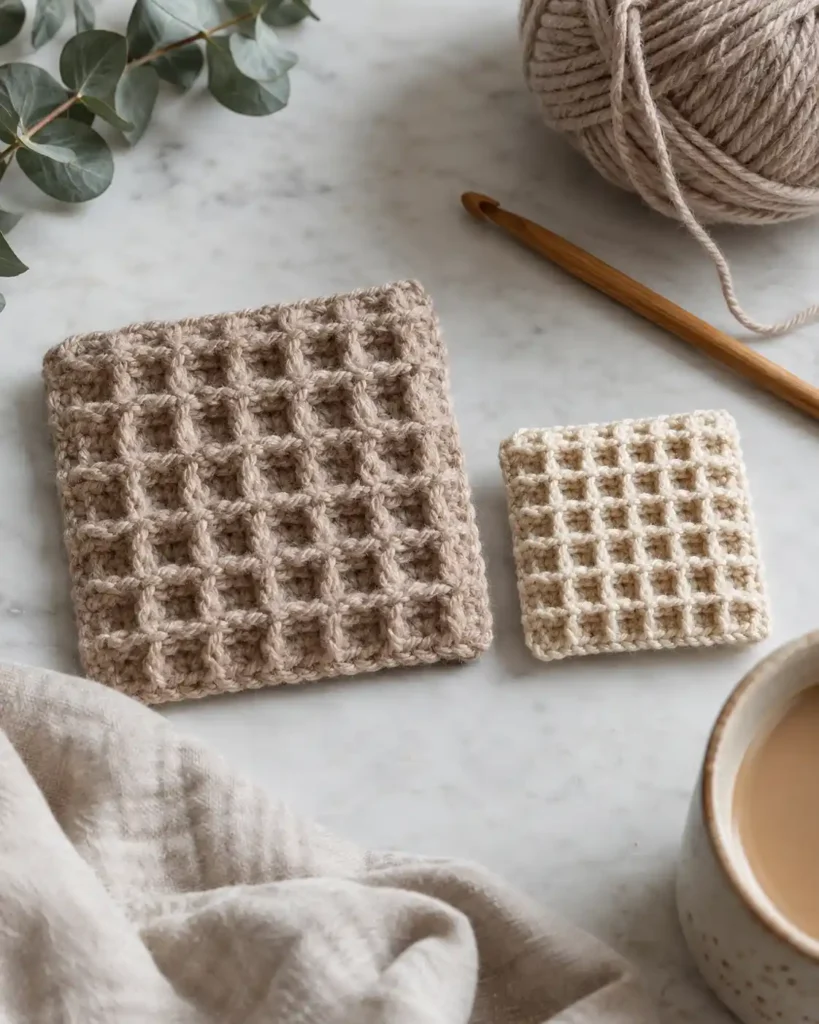
Mini waffle stitch crochet keeps the character of the classic texture but shrinks the scale. With lighter yarn and a suitable pattern, the smaller grid can look cleaner on baby items, accessories, or garment panels.
This is a nice alternative when standard waffle stitch feels visually too chunky for the project you have in mind. I especially like the idea of placing a mini-waffle swatch beside a regular one because the difference in scale becomes instantly obvious.
Choose this variation when you want texture that whispers rather than shouts.
What Is the Best Crochet Border for a Waffle Stitch Blanket?
Simple borders usually work best because they straighten the edges while allowing the raised waffle texture to remain the main feature.
At a Glance:
- Use single crochet for a clean edge.
- Try double crochet for a deeper border.
- Add ribbing for subtle extra texture.
- Choose contrast color only when it complements the center.
A waffle blanket does not always need elaborate crochet blanket edging. In fact, a simple edge often works better because the center already has so much texture.
Three good directions are:
- Simple single-crochet edge: tidy and understated.
- Double-crochet border: slightly deeper but still simple.
- Subtle ribbed or textured edge: useful when you want a more finished frame.
The real goal is to straighten the edges and create clean corners without competing with the raised waffle squares. You can also use a contrasting color if you want the border to act like a picture frame around the blanket.
And yes, leaving the blanket without a decorative border can work too. Some waffle designs already have enough structure at the edges to look complete on their own.
What Yarn and Hook Work Best for Waffle Stitch Crochet?
Choose yarn and hook size according to the project, then use the pattern gauge to fine-tune the finished fabric.
At a Glance:
- Use cotton for many kitchen projects.
- Choose washable softness for baby items.
- Prioritize drape for scarves and garments.
- Use bulky yarn when you want oversized texture.
- Check gauge instead of relying only on yarn labels.
There is no single “best” yarn for every crochet waffle stitch project.
For dishcloths and kitchen towels: cotton is a practical starting point.
For baby items: choose a soft, washable yarn and pay attention to finished weight.
For scarves and cardigans: prioritize softness and drape rather than maximum thickness.
For throws: medium-weight yarn can give good stitch definition without automatically creating an extremely heavy fabric.
For chunky blankets: bulky yarn makes the raised grid larger and more dramatic.
The Craft Yarn Council’s weight system runs from 0 (lace) through 7 (jumbo) and provides typical hook-size ranges for each category. Those ranges are guidelines, though, not substitutes for the gauge in your pattern.
Also pay attention to metric hook measurements. A crochet hook size chart can help you compare sizes, while the Craft Yarn Council notes that letter and number sizing can differ among manufacturers and millimeter measurements give the actual hook diameter.
What Are the Most Common Waffle Stitch Crochet Mistakes?
The most common problems are missed post stitches, changing stitch counts, overly tight tension, drifting columns, and skipping a gauge swatch.
At a Glance:
- Count every row while learning.
- Check post placement before continuing.
- Relax overly tight front-post stitches.
- Compare each row with the texture below.
- Swatch before fitted or size-sensitive projects.
The waffle stitch looks complicated, but most problems come from a handful of small mistakes.
Missing a Front-Post Stitch
One missed FPdc can interrupt the vertical raised column. Stop every few repeats and visually follow the posts downward.
Accidentally Changing the Stitch Count
If the sides begin widening or narrowing, count the row before continuing. Edge stitches and turning chains are common places to accidentally add or lose stitches.
Working the Posts Too Tightly
A very tight FPdc can pull the fabric inward. Relax your tension enough for the post stitch to sit naturally around the stitch below.
Letting the Columns Drift
The raised sections should line up according to your pattern. If they suddenly start moving sideways, check the previous row before continuing.
Skipping the Gauge Swatch
For a washcloth, a small gauge difference may not matter much. For a sweater or fitted cardigan, it absolutely can. Swatching first is far easier than remaking half a garment.
How Do You Choose the Right Waffle Stitch Project?
Choose according to your skill level, available time, desired fabric weight, and whether the finished item needs structure or drape.
At a Glance:
- Pick small accessories for quick practice.
- Use blankets to master repetition.
- Choose wearables when you understand gauge.
- Try variations when classic waffle feels comfortable.
Think about the result you want more than the prettiest photo you see online.
Choose a dishcloth, washcloth, or headband when you want fast practice.
Choose a scarf or cowl when you want an easy wearable.
Choose a classic blanket when you enjoy repetition and want to really master the stitch.
Choose a bag or pillow when you want the texture as part of your home or everyday accessories.
Choose C2C, zigzag, reversible, two-color, diamond, or Tunisian waffle variations when the classic pattern already feels comfortable and you want something new.
CrochetMind’s approach with this collection is simple: learn the core texture first, then choose a project that adds only one or two new challenges at a time.
How Should You Care for Waffle Stitch Crochet?
Follow the yarn label first, wash gently when appropriate, reshape the project after washing, and avoid stretching raised textured areas while drying or storing.
- Follow the fiber-specific care label.
- Reshape textured pieces after washing.
- Dry flat when the yarn requires it.
- Store without stretching raised waffle posts.
Always start with the care instructions for the actual yarn you used. Fiber content matters more than the stitch name.
For washable cotton or synthetic pieces, follow the yarn manufacturer’s washing and drying instructions. For wool, Woolmark recommends checking the garment’s care claim and notes that many wool knits should be dried flat so their wet weight does not stretch them out of shape.
After washing a textured project, gently reshape the raised sections instead of aggressively pulling them. Proper drying and storage help the waffle structure stay crisp rather than stretched and flattened.
Waffle Stitch Crochet FAQ
Is waffle stitch crochet beginner-friendly?
Yes, once you are comfortable with double crochet, waffle stitch can be a good next textured stitch. Practice front-post double crochet on a small swatch or dishcloth before starting a large blanket.
What stitches create the waffle texture?
Most classic versions use regular double crochet and front-post double crochet. The post stitches create the raised lines while the regular stitches help form the recessed square areas.
Does waffle stitch crochet use a lot of yarn?
It can use more yarn than many flatter stitch patterns because the post stitches create a dense, three-dimensional fabric. Several established crochet tutorials specifically describe waffle stitch as yarn-hungry, so planning extra yardage for large blankets is sensible.
What is the best yarn for waffle stitch crochet?
It depends on the project. Cotton works well for many kitchen pieces, soft washable yarn suits baby gifts, drapier yarn is better for scarves and cardigans, and bulkier yarn creates a much larger, deeper-looking waffle texture.
Can waffle stitch crochet be worked in the round?
Yes. There are waffle-stitch variations designed for joined or continuous rounds, making the technique useful for hats, cowls, bags, and baskets. Follow a pattern specifically written for round construction because the post placement and joins differ from flat rows.
What border looks best on a waffle stitch blanket?
A simple border usually lets the texture remain the star. Single crochet, double crochet, restrained ribbing, or even no decorative border can work well depending on the blanket.
How do I stop the waffle columns from drifting?
Count your stitches, identify the correct posts before inserting the hook, and compare each new row with the raised columns below it. Fixing one misplaced post immediately is much easier than undoing several finished rows.
Is waffle stitch suitable for a baby blanket?
It can make a soft and attractive baby gift when you choose suitable washable yarn and avoid making the fabric unnecessarily heavy. For infant sleep safety, however, the American Academy of Pediatrics recommends keeping loose blankets out of an infant’s sleep area.
Final Thoughts
Waffle stitch crochet is a beautiful and versatile technique that can be used for everything from small practice projects to cozy blankets, stylish accessories, and textured home décor. Once you become comfortable with double crochet and front-post double crochet, the stitch becomes much easier to follow.
If you are a beginner, start with a small swatch, dishcloth, or washcloth before moving on to larger projects. As your confidence grows, you can explore a crochet blanket pattern, bags, wearables, color variations, and more advanced waffle stitch designs.
No matter which project you choose, take your time, keep your stitch count consistent, and enjoy watching the raised waffle texture come to life.

![The Best 30+ Free Crochet Cat Patterns [Beginner-Friendly Guide]](https://crochetmind.com/wp-content/uploads/2025/04/1-The-Best-30-Free-Crochet-Cat-Patterns-Beginner-Friendly-Guide.webp)