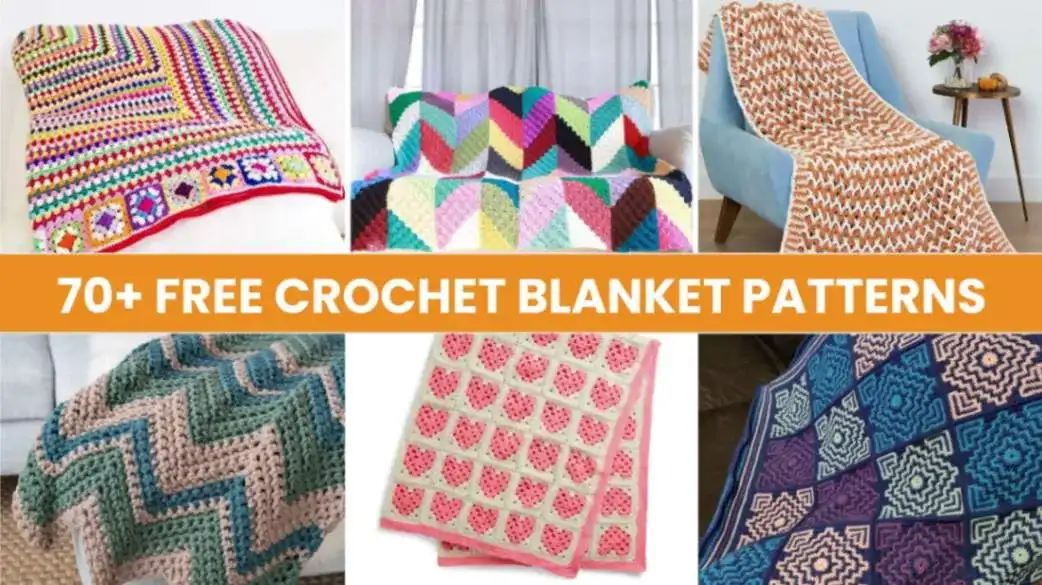
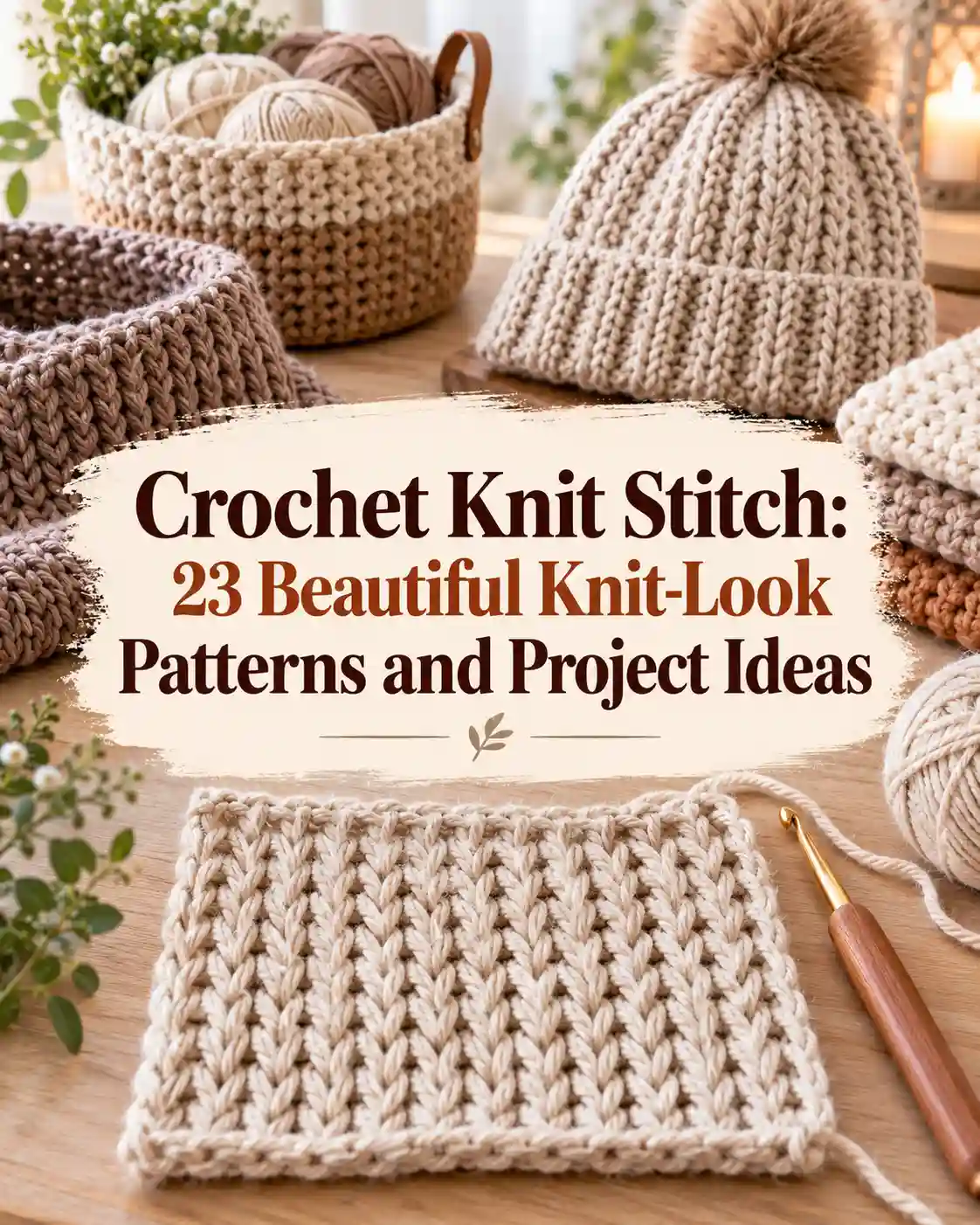
The crochet knit stitch, usually called the waistcoat stitch, center single crochet, or split single crochet, creates little V-shaped stitches that resemble knitted stockinette. You make it with a crochet hook by working single crochet into the center of the stitch below, and you can use it for hats, bags, baskets, and many other projects.
Love the clean look of knitting but prefer to hold a crochet hook? You have more choices than you might expect. Some crochet stitches give you tidy vertical Vs, while others imitate the soft ridges of knit ribbing. This guide begins with a free practice pattern, then explores 23 stitch variations and project ideas, including sweater-friendly alternatives.
Key Takeaways
- Practice Simple crochet knit stitch on a small tube first.
- Try Crochet knit stitch in the round for structured projects.
- Choose flexible back-loop stitches for ribbed cuffs and brims.
- Swatch carefully before starting a Crochet knit stitch sweater.
- Explore 23 knit-look techniques and project ideas below.
What Is the Crochet Knit Stitch?
The classic crochet knit stitch is a variation of single crochet. Rather than inserting your hook under the two loops at the top of the next stitch, you insert it between the two vertical legs of that stitch. Those centered insertions create closely packed Vs on the front of the fabric. For more details, explore waistcoat stitch crochet, also known as the center single crochet stitch.
Unlike actual knitted stockinette, waistcoat crochet tends to be dense and relatively firm. That’s helpful for a structured basket, but it matters when planning a flexible garment. The term knit-look crochet also includes other techniques, such as back-loop ribbing and Tunisian knit stitch; they are related by appearance, not identical in construction.
| Stitch or method | Knit-like appearance | Fabric feel | Good starting project |
|---|---|---|---|
| Waistcoat / center single crochet | Vertical stockinette-style Vs | Dense, structured | Basket or beanie |
| Slip stitch in back loop | Fine knit-style ribs | Stretchy if kept loose | Hat brim |
| Half double crochet slip stitch in back loop | Pronounced ribbing | Flexible, substantial | Cuffs |
| Half double crochet in third loop | Raised horizontal knit-style ridges | Cushioned texture | Cowl |
| Tunisian knit stitch | Stockinette-like surface | Variable; may curl | Flat panel |
| Single crochet in back loop | Garter-like ridges | Flexible ribbing | Headband |
How Do You Crochet the Knit Stitch Step by Step?
Make a single-crochet foundation, then work each new single crochet into the middle of the stitch below instead of under its top loops.
At a Glance
- Choose smooth, light-colored yarn and a comfortable hook.
- Keep foundation stitches loose enough for centered insertion.
- Count actual stitches, not joining slip stitches.
- Practice even tension before changing colors.
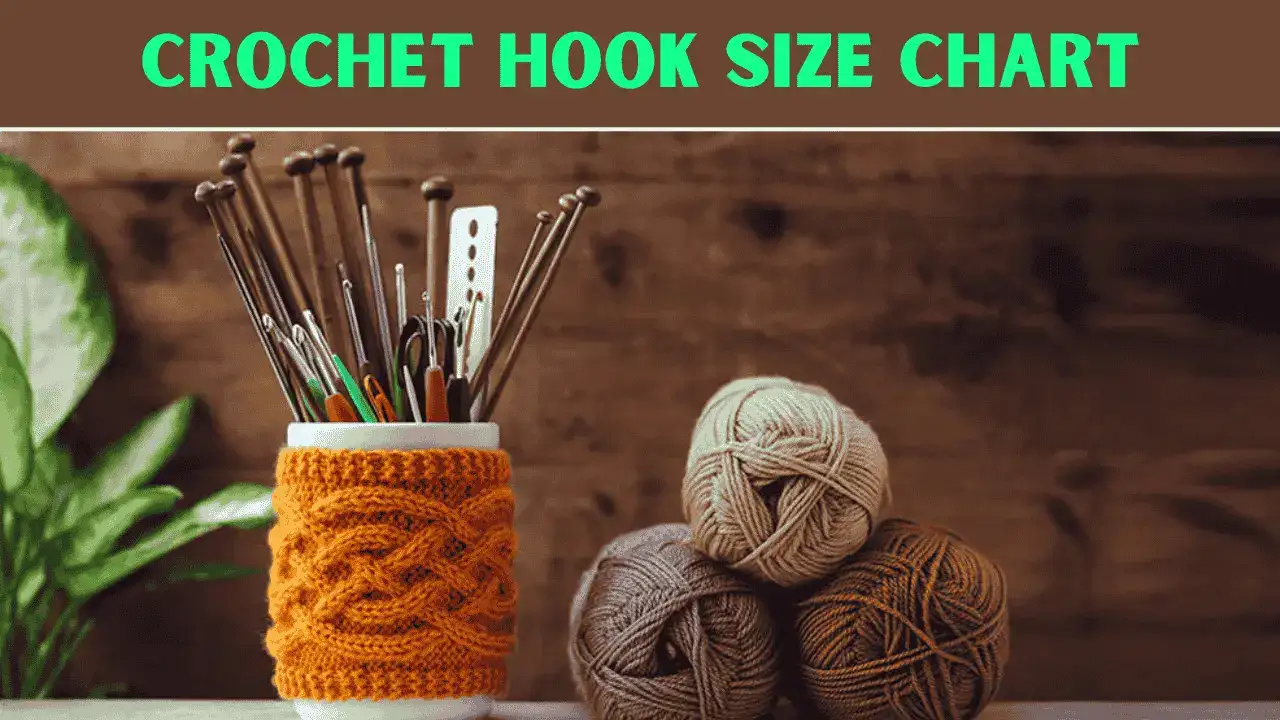
You only need yarn, a crochet hook, scissors, and a yarn needle. For your first sample, choose smooth, medium-weight yarn in a light color so you can actually see the two legs of each stitch. Check a crochet hook size chart if you need help comparing hook sizes, and try a slightly larger hook if entering the stitch center feels difficult.
In the U.S. crochet terms used here, ch means chain, sc means single crochet, sl st means slip stitch, and BLO means back loop only. These abbreviations follow the Craft Yarn Council’s reference list.
Free Crochet Knit Stitch Pattern: Beginner Practice Tube
This is a free practice pattern, not a fitted hat or a tested garment-size pattern. It makes a small tube that lets you practice the crochet knit stitch in the round.
Materials: One small amount of medium-weight yarn, a comfortably sized crochet hook, and a removable stitch marker.
- Foundation: Chain 24 and slip stitch into the first chain to form a ring, taking care not to twist it.
- Round 1: Chain 1, work 1 regular single crochet into each chain, then slip stitch into the first single crochet to join. You have 24 stitches; the joining slip stitch does not count.
- Round 2: Chain 1, insert the hook between the two vertical legs of the first single crochet, pull up a loop, yarn over, and pull through both loops. Repeat the same centered single crochet in each of the 24 stitches. Join to the first stitch with a slip stitch.
- Rounds 3–8: Repeat Round 2, keeping the same 24-stitch count and leaving the chain-1 and joining slip stitch out of the count.
- Finish: Fasten off, weave in the ends, and inspect the vertical Vs on the outside of your tube.
Helpful tip: Make every stitch tall and relaxed enough for the next round’s hook insertion. Make & Do Crew recommends a larger hook and explains that this stitch can be worked either in joined rounds or as a continuous spiral.
Which 23 Crochet Knit Stitch Patterns and Ideas Should You Try?
At a Glance
- Ideas 1–6: Waistcoat techniques and colorwork.
- Ideas 7–12: Alternative knit-look stitches and ribbing.
- Ideas 13–18: Hats, mittens, cowls, and garments.
- Ideas 19–23: Bags, baskets, home décor, and washcloths.
The first twelve entries are stitches or technique variations. The remaining eleven are project concepts you can make using one or more of those methods. For more inspiration, explore these most trendy crochet stitches before choosing a technique or planning your next project. These are ideas rather than 23 complete, independently tested downloadable patterns.
1. Simple Waistcoat Stitch: Why Start Here?
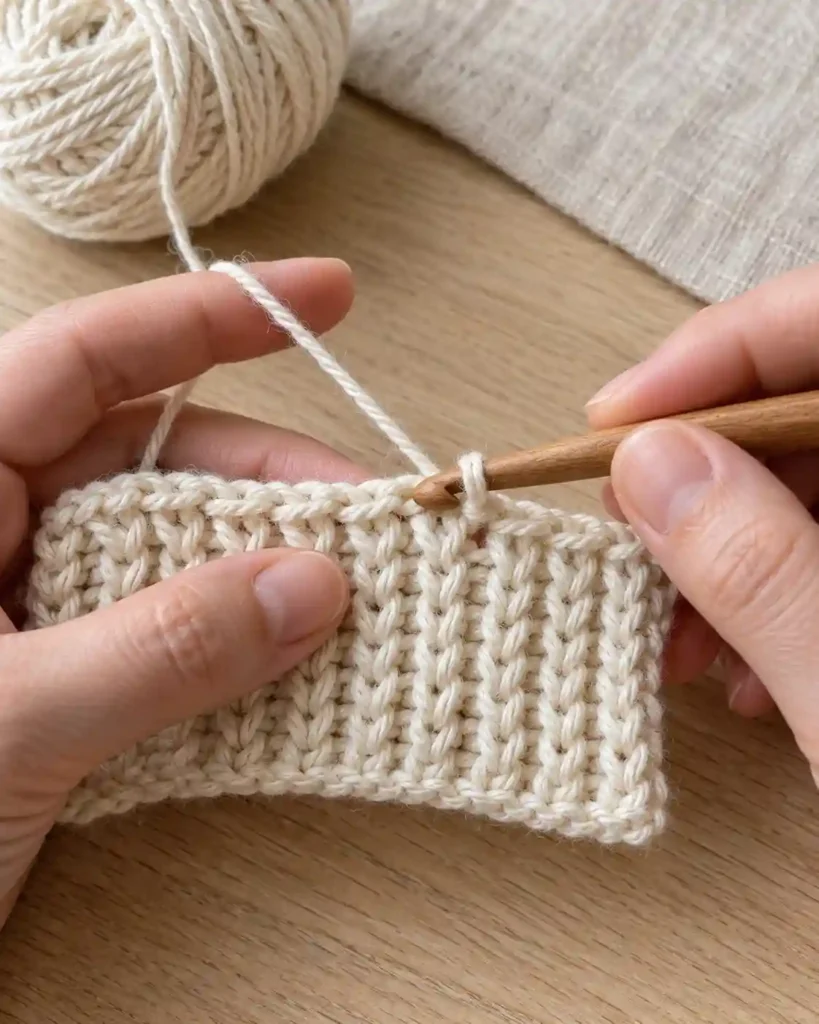
The simple waistcoat stitch turns an ordinary single crochet into a convincing little knit V. Standard single crochet shows a more obviously crocheted surface, but centered insertion smooths that look into tidy columns. A small practice swatch is the ideal place to notice whether your hook slips comfortably between the legs. Choose this one when you want the clearest stockinette-style effect without learning a completely different crochet motion.
Start with light-colored yarn; fuzzy yarn hides the insertion point and makes learning harder.
2. Flat Waistcoat Stitch Swatch
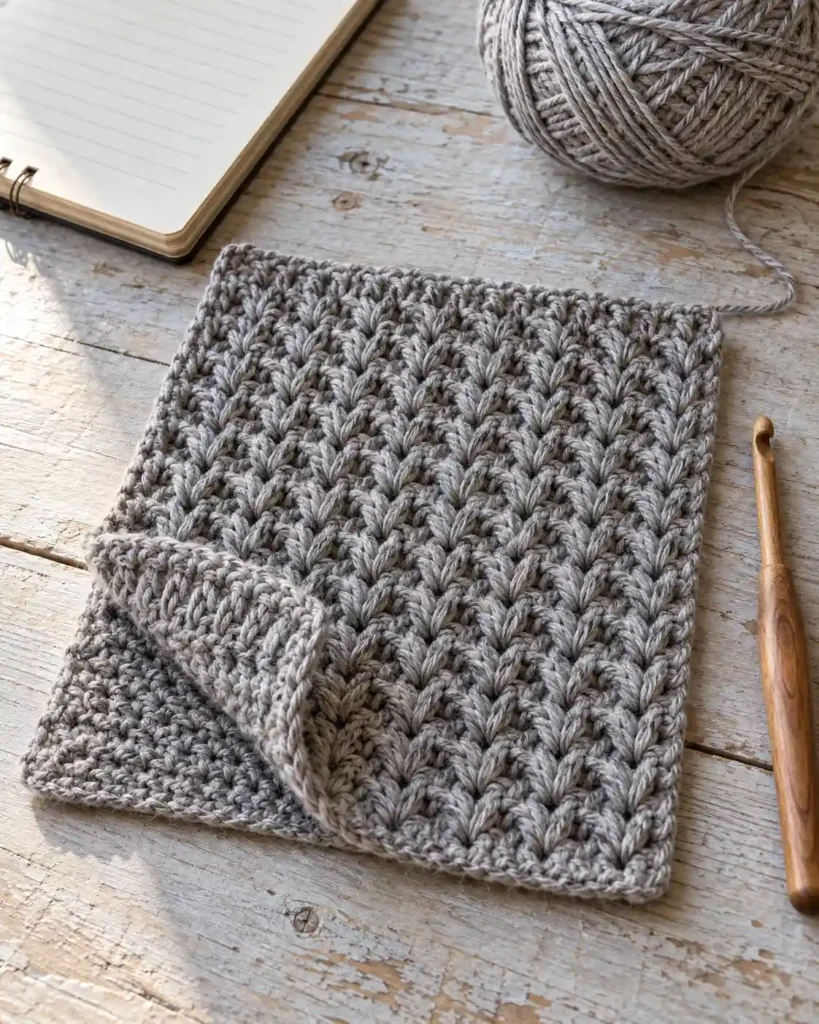
A flat waistcoat swatch lets you practice that knit-inspired texture without joining a round. It differs from the circular version because turning your work changes which side faces you, so the Vs can look less perfectly aligned. Try a rectangular sample before committing to a panel for a bag or cushion. This approach suits anyone who likes working back and forth more than handling a small tube.
Check both sides as you go, and keep your edge stitches easy to identify.
3. Waistcoat Stitch in Joined Rounds: How Do You Keep It Neat?
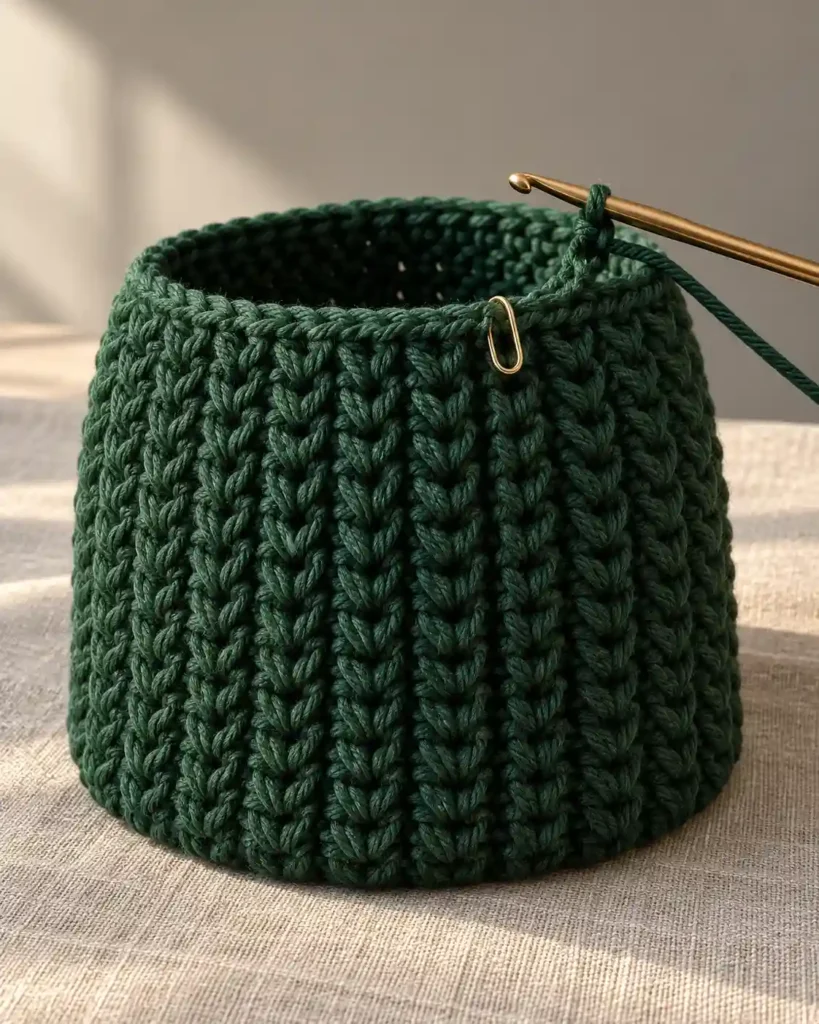
Joined rounds give the waistcoat stitch a pleasing, stacked-V appearance and a clear beginning to each round. They make stitch counting easier than an uninterrupted spiral, although the join may leave a slight line. A beanie or container with simple color bands is a useful place to try this construction. Pick joined rounds when controlling row changes matters more than avoiding a visible seam.
Use a marker on the first actual stitch, not the joining slip stitch.
4. Continuous Spiral Waistcoat Stitch
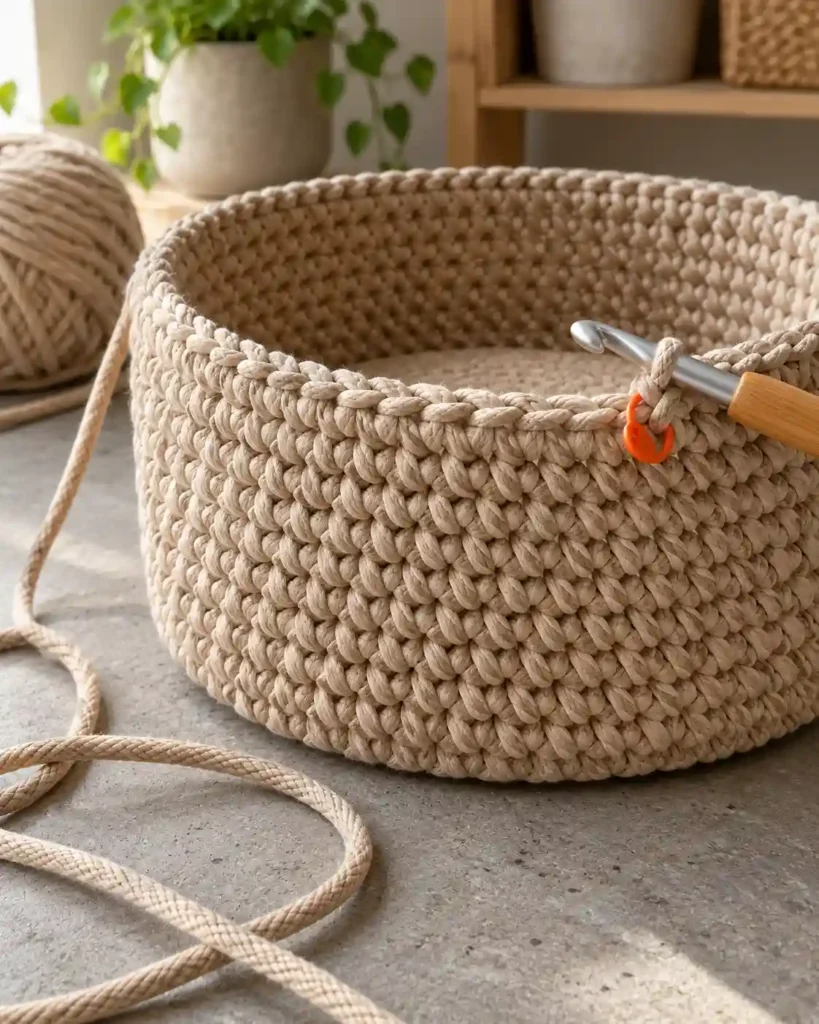
The continuous spiral version feels wonderfully uninterrupted once the first round is established. Instead of joining at every lap, work directly into the next stitch’s center; the texture flows around a tube without a regular joining seam. A cylindrical basket or small pouch is a natural test because the side wall keeps its shape. Choose a spiral for an uncomplicated all-over surface, but mark the beginning of every round carefully.
Color changes in a spiral can create a small jog, so plan stripes accordingly.
5. Two-Color Striped Knit-Look Stitch: What Changes?
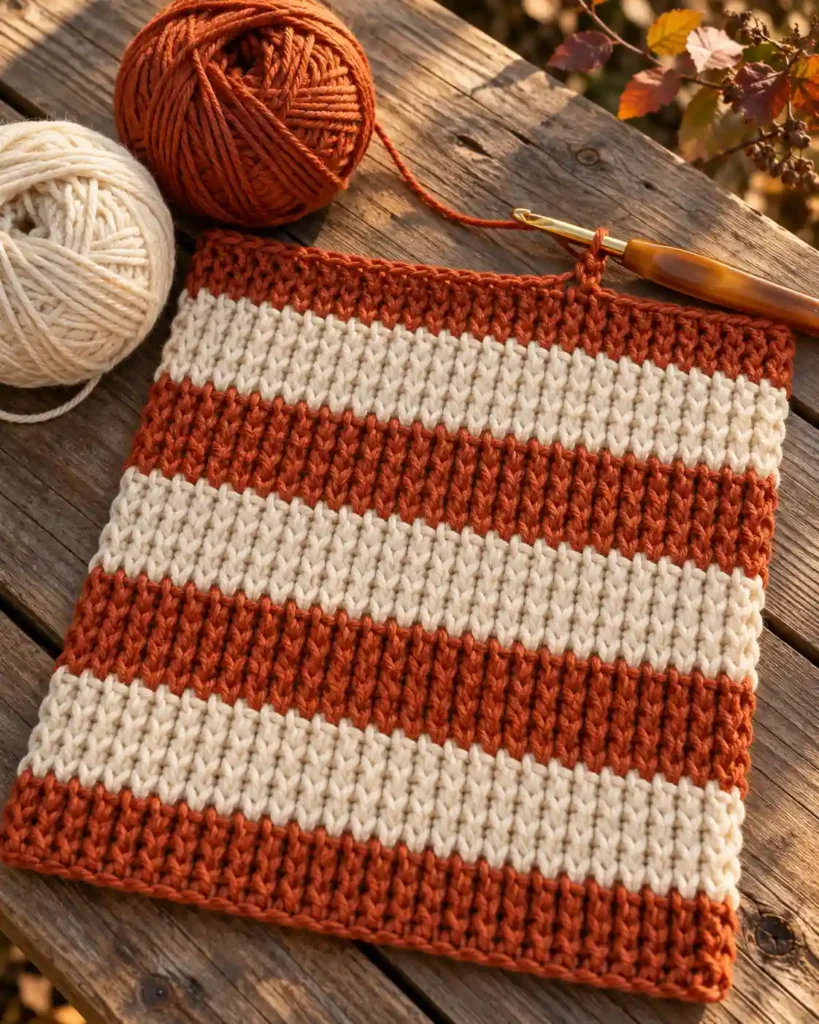
Alternating two yarn shades makes the waistcoat stitch look like a favorite striped knitted accessory. Unlike a complicated motif, broad bands preserve the simple V texture and keep color changes manageable. Imagine cream and rust stripes on a little winter cowl or a navy band around a basket. This version is ideal if plain fabric feels too quiet but you are not ready for detailed colorwork.
Switch colors at a consistent round boundary and weave in your ends securely.
6. Fair Isle–Inspired Waistcoat Colorwork
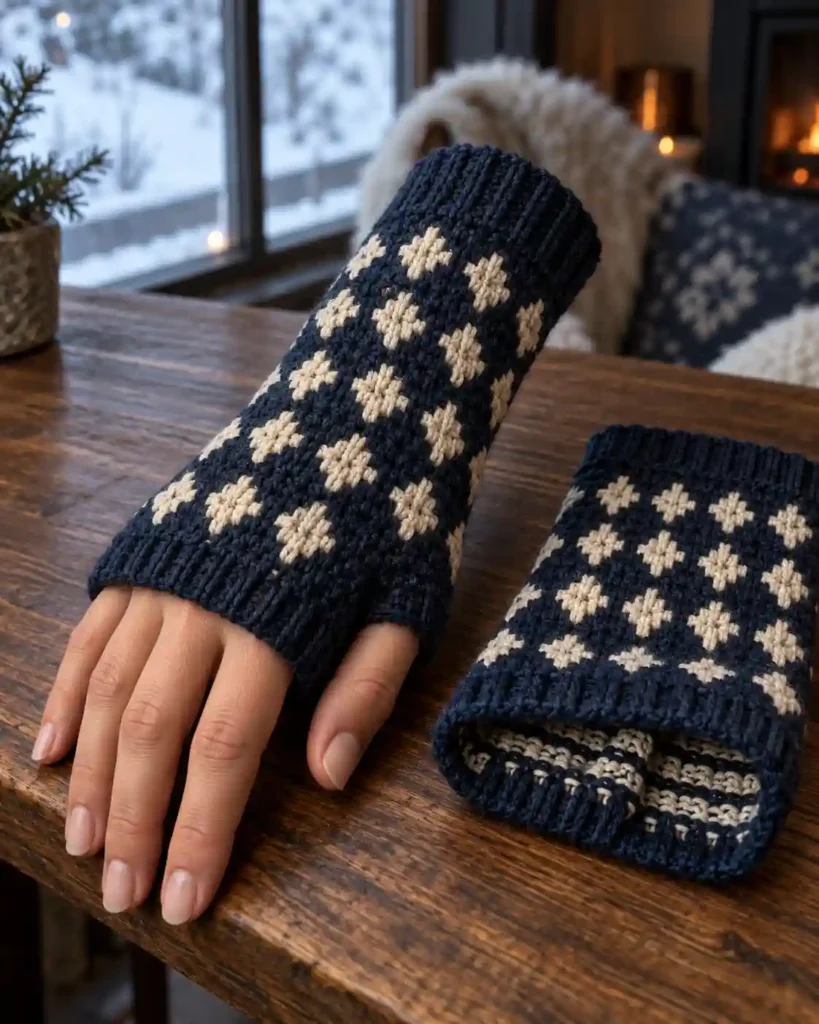
Fair Isle–inspired crochet uses contrasting stitches to create tiny hearts, diamonds, or geometric motifs across a knit-looking background. It takes more attention than stripes because you follow a chart and manage carried yarn or floats behind the work. A narrow wrist warmer gives you enough room to practice a repeating two-color design. Try this when you want the appearance of stranded knitting but already feel confident with waistcoat stitch tension.
KnitterKnotter documents both carried-yarn and Fair Isle-style color handling for waistcoat stitch.
7. Half Double Crochet Third-Loop Stitch: Does It Look Knitted?
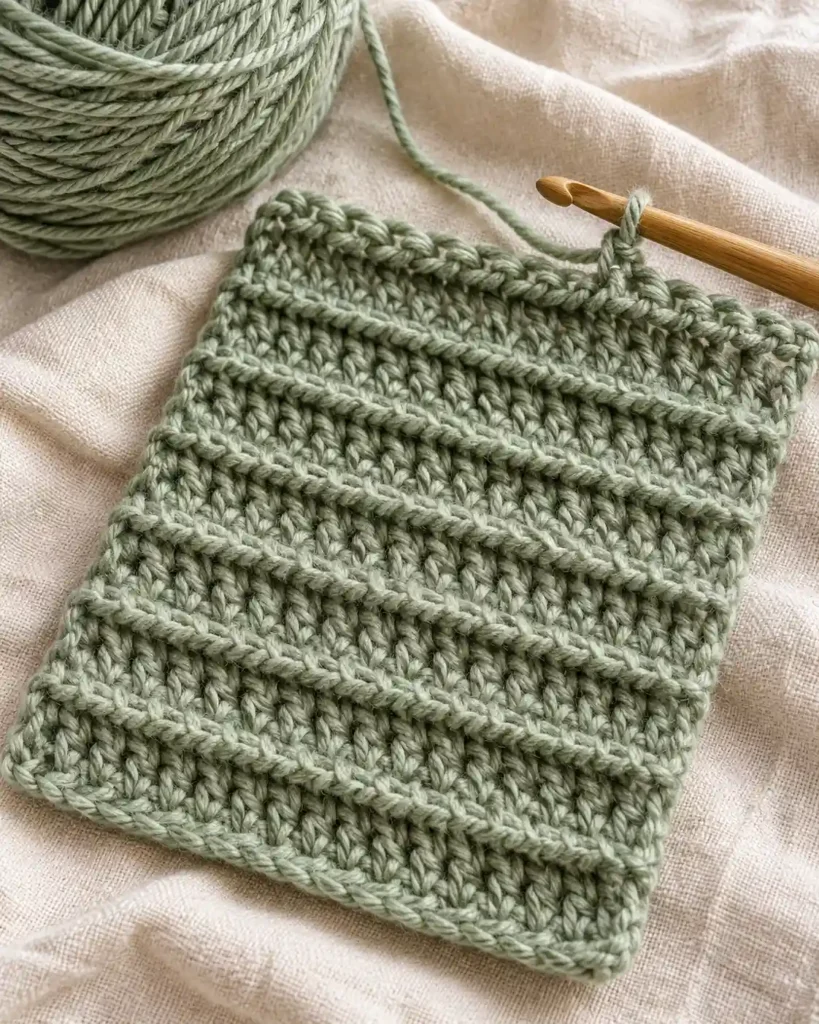
Working half double crochet into its third loop pushes the familiar top loops forward, making raised lines that resemble knitted horizontal ridges. It is not the same vertical-V texture as waistcoat stitch, but it offers a soft alternative when the latter feels too solid. This stitch looks especially inviting in a snug cowl with a little room to drape. Choose it for textured accessories where horizontal definition matters more than a stockinette imitation.
The third loop’s position changes depending on which side of the fabric faces you, so inspect it before each row or round.
8. Back-Loop Slip Stitch: Could It Replace Knit Ribbing?
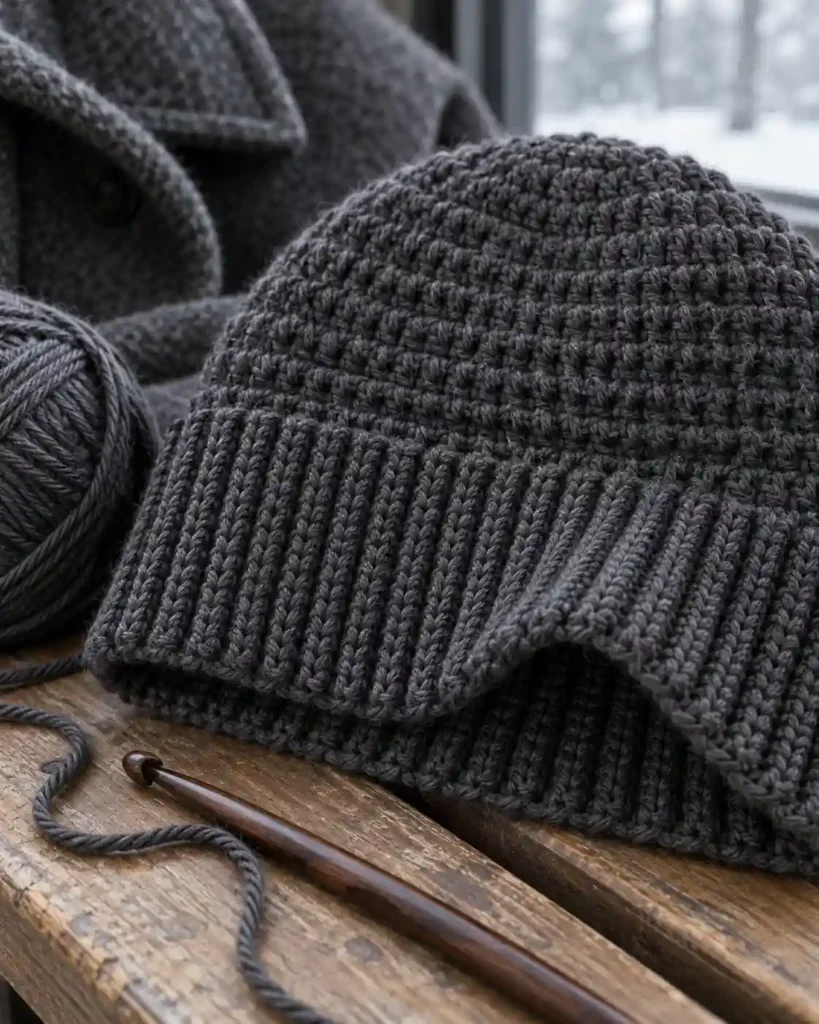
Back-loop slip stitch creates slim, gathered ribs with a quiet, knitted appearance. Its shorter stitches take more rows than a tall crochet stitch, but the resulting fabric can flex beautifully when worked with relaxed tension. On the edge of a hat, these ribs hug the head without the bulky look of ordinary crochet rows. This is an excellent option for patient makers who want refined cuffs or hat bands.
Keep the working loop loose; tightening each slip stitch makes the next row frustratingly difficult, as explained by Designing Vashti.
9. Half Double Crochet Slip-Stitch Ribbing
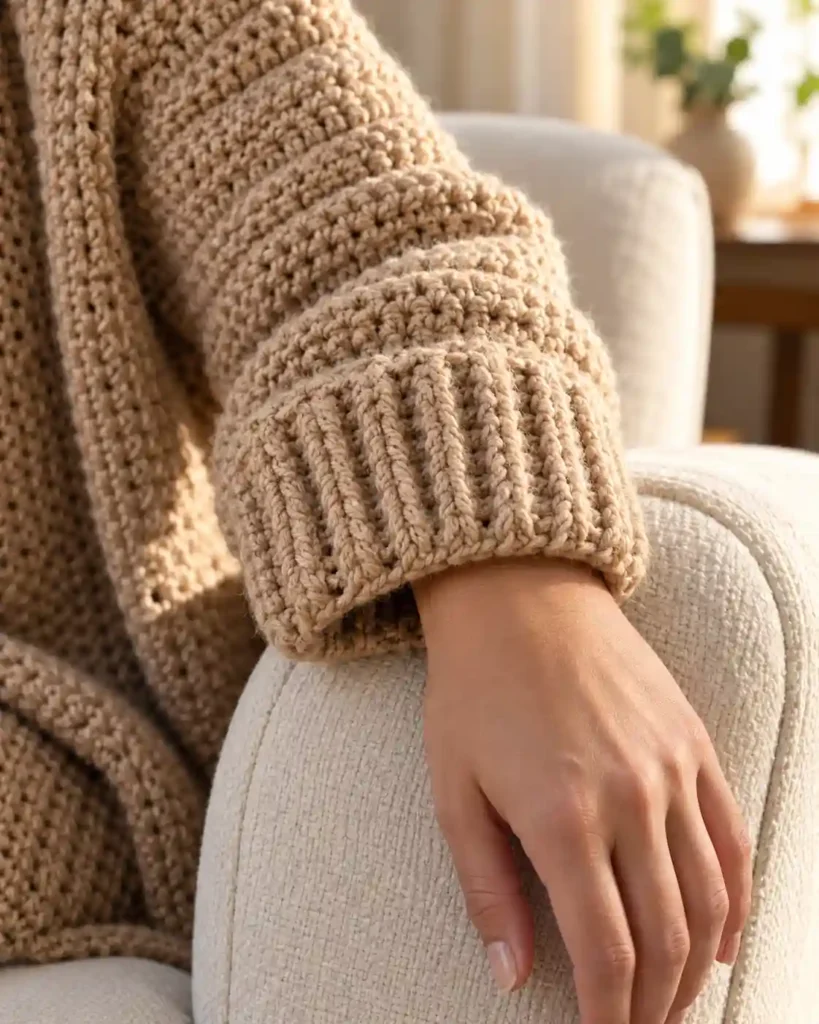
Half double crochet slip-stitch ribbing gives a plush, dimensional finish that looks at home on knitwear. It stands out from ordinary slip-stitch ribbing because the extra yarn-over adds body to each stitch. Make a short band for the wrist of a cardigan, then stretch it gently to judge the recovery. This technique is especially useful when you want comfortable trim with visible ridges.
To form this stitch, yarn over, insert in the back loop, pull up a loop, then draw that new loop through the two remaining loops on the hook.
10. Single Crochet Back-Loop Ridges: Why Are They Useful?
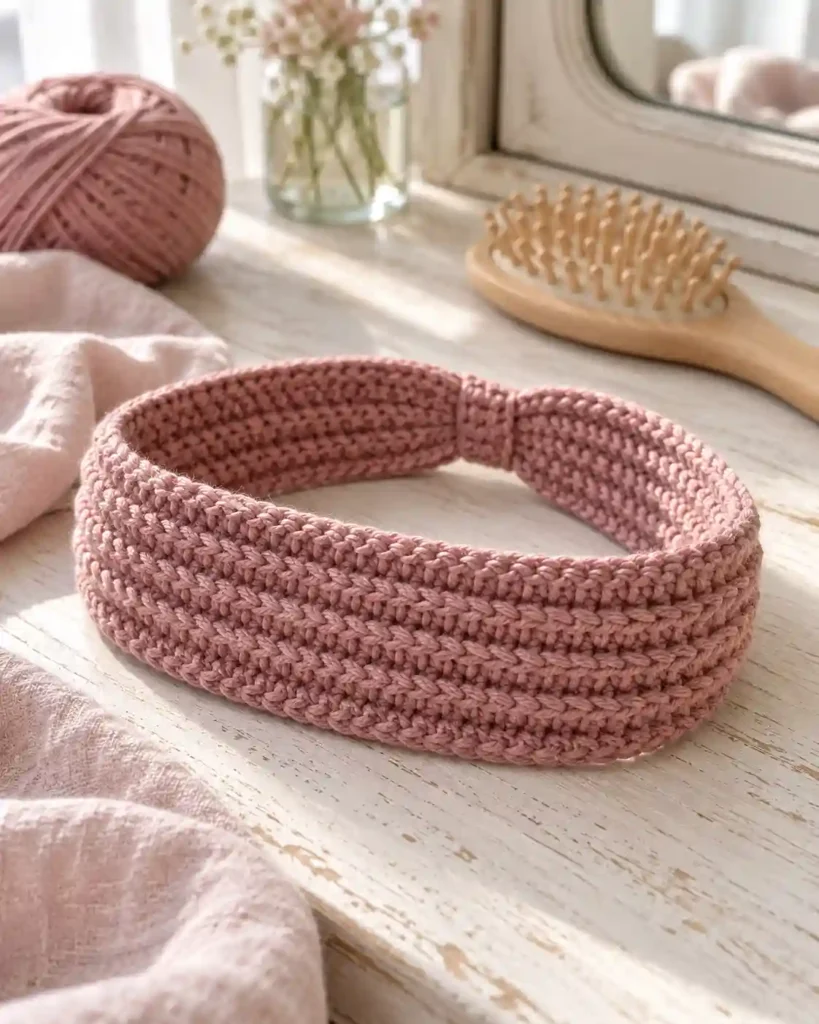
Single crochet worked through the back loop leaves the unused front loops as clear lines across the surface. Those ridges can resemble garter stitch more than stockinette, yet they are much easier to learn than some advanced knit-look methods. A simple headband gives the ridges room to stand out, especially in solid yarn. Choose this option for beginner-friendly texture and a more forgiving stretch than tightly packed waistcoat stitch.
Turn after each row if you want a traditional ribbed rectangle.
11. Tunisian Knit Stitch: Is It the Same Technique?
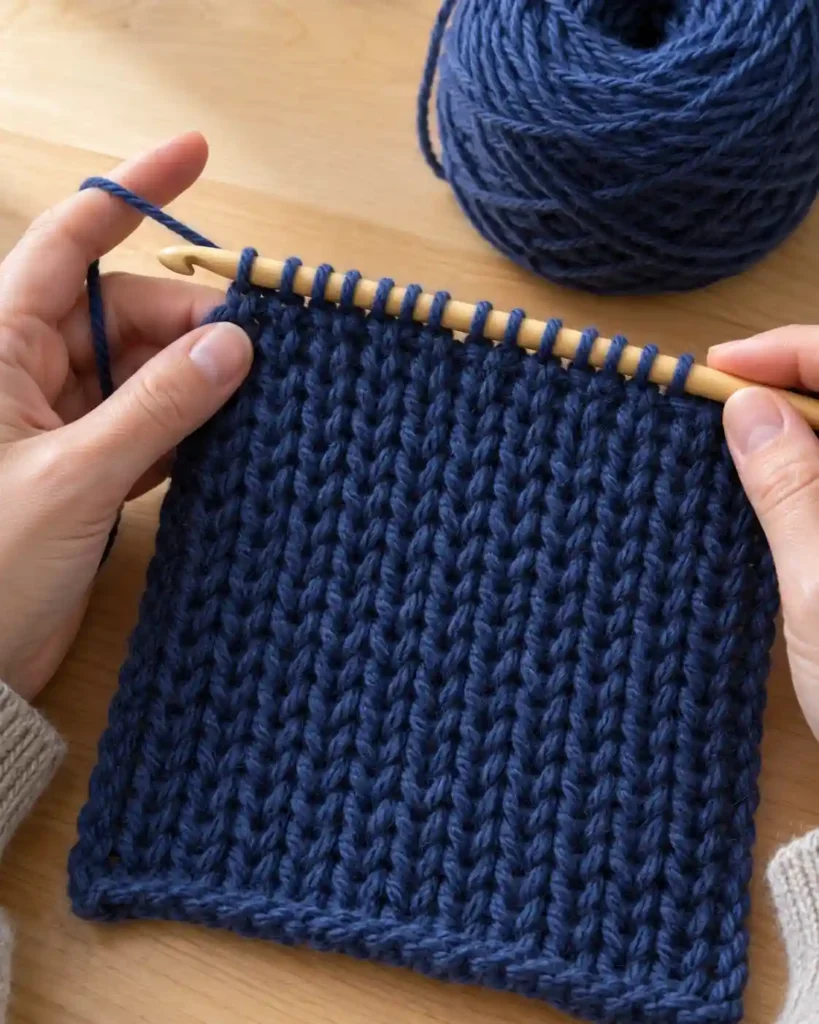
Tunisian knit stitch is another route to a remarkably knitted-looking fabric, but it is not waistcoat stitch. You keep multiple loops on a longer hook during a forward pass, then work them off during a return pass. A scarf panel is a lovely way to learn the two-pass rhythm without complicated shaping. Try it if your main goal is a smooth, stockinette-like surface and you enjoy exploring a different form of crochet.
Interweave describes Tunisian knit stitch as its own technique, and the Craft Yarn Council lists tks separately among Tunisian abbreviations.
12. Linen or Moss Stitch With a Woven Knit-Look Finish
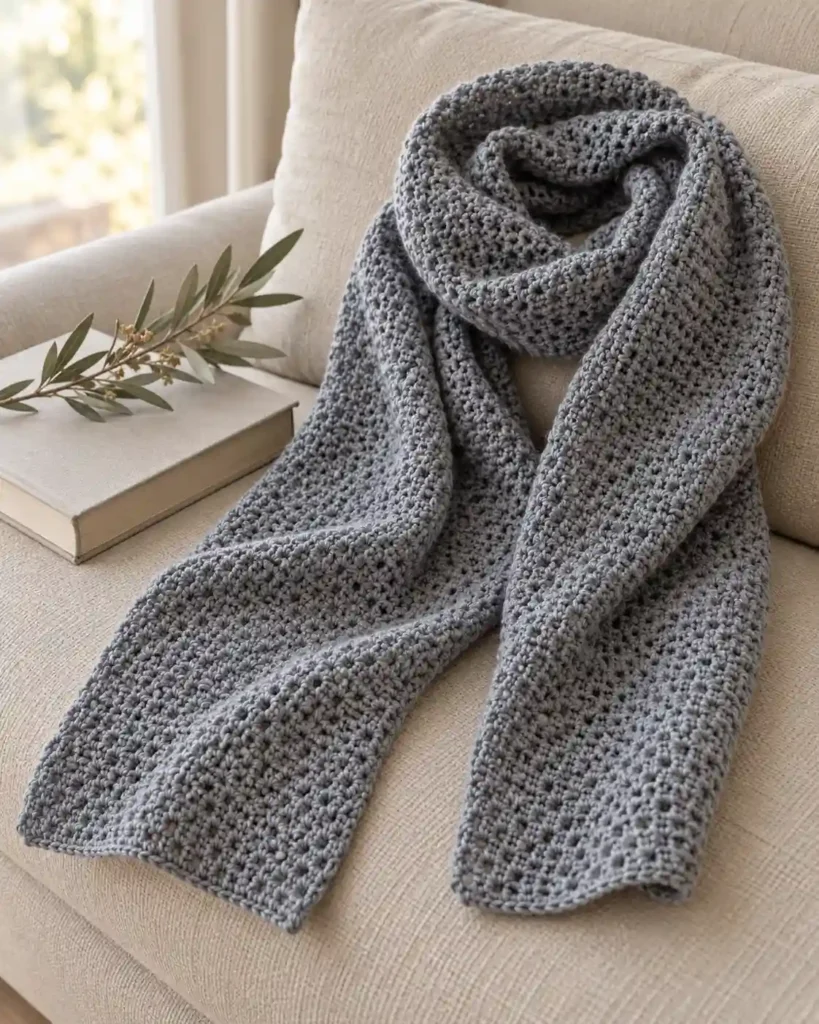
Moss stitch creates a delicate, woven surface by alternating single crochet stitches with chain spaces. It doesn’t reproduce stockinette Vs, but it shares the understated look of knitted linen-style fabric. Picture a lightweight spring scarf in soft gray, where the subtle texture looks polished without dominating the outfit. This is a good choice when you want drape, simplicity, and everyday wearability more than an exact knitting look.
Build a sample by repeating single crochet and chain-one spaces, then placing later single crochets into the previous chain spaces.
13. Crochet Knit Stitch Beanie: What Makes It Work?
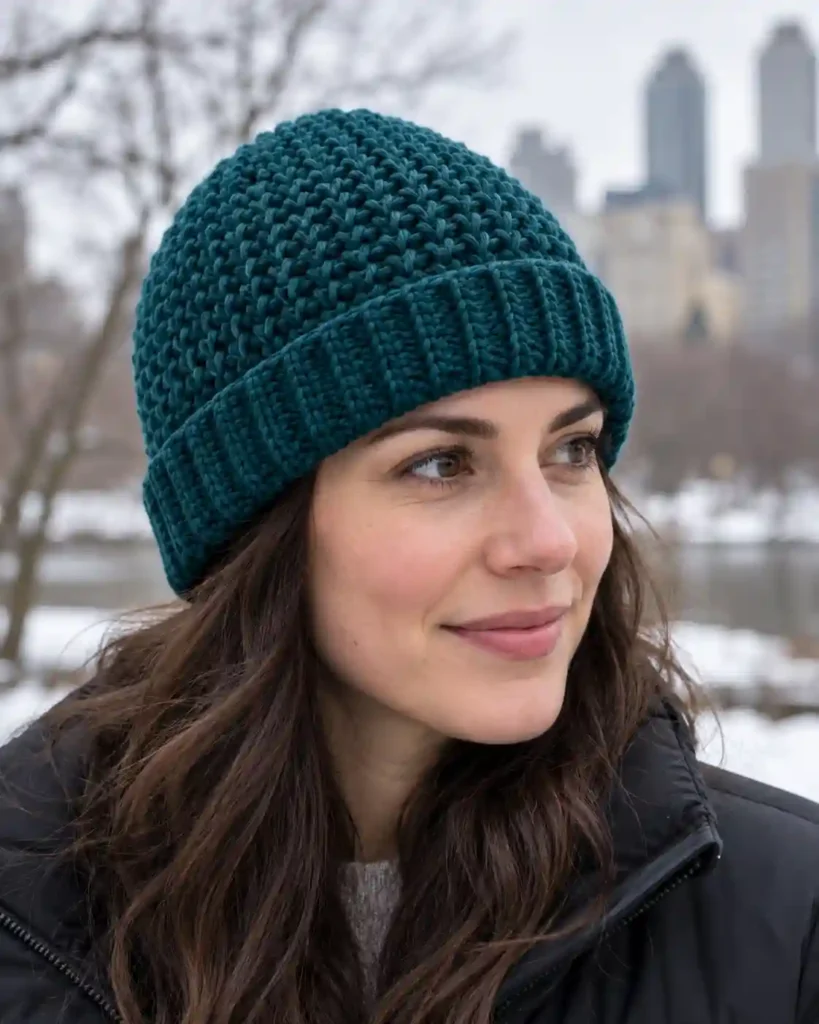
A waistcoat beanie delivers the classic rows of little Vs that people often associate with a knitted winter hat. Unlike an open crochet stitch, its denser surface can make a warm-looking, structured accessory, although actual warmth also depends on the yarn and fit. Try a folded back-loop ribbed brim beneath the waistcoat body to balance the firmness. If you need help with hat construction, follow this guide on how to crochet a hat.
For a free, designer-written reference, see Make & Do Crew’s linked knit-look beanie recommendations rather than guessing a hat’s stitch counts.
14. Cozy Knit-Look Mittens
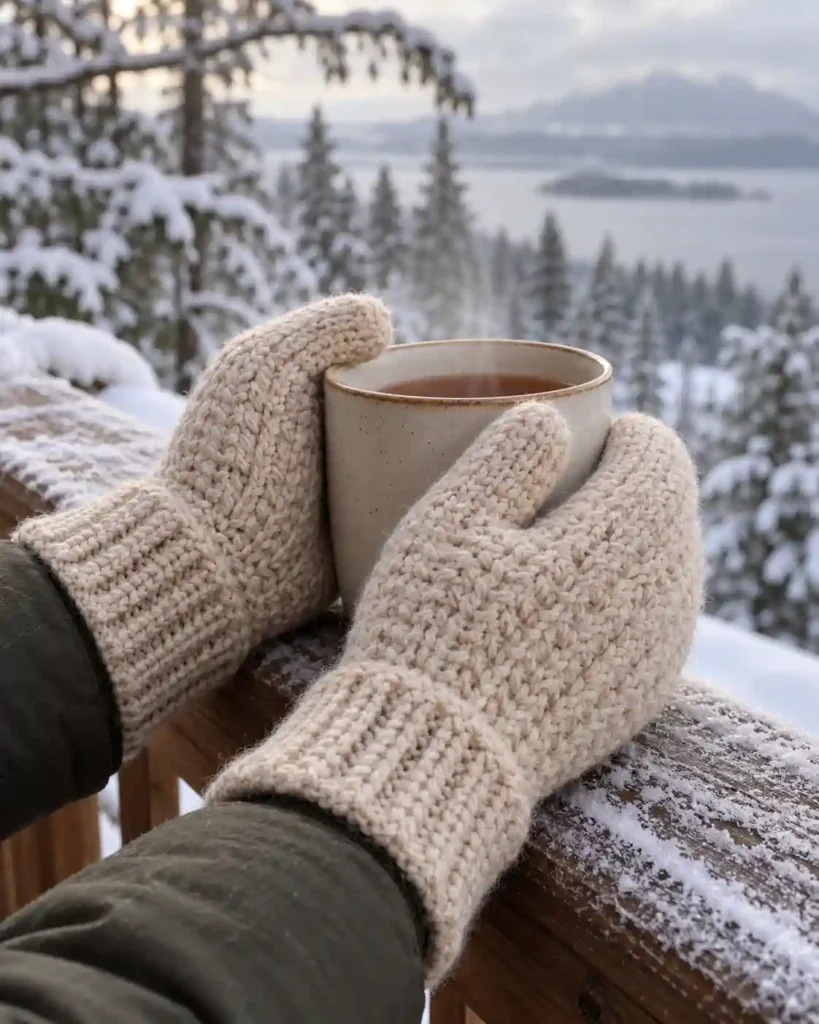
Mittens show off waistcoat stitch on a small area where a dense fabric can be genuinely useful. They feel more substantial than a lacy crochet mitten, and a narrow ribbed cuff adds that familiar winter-knit finish. A pair in oatmeal yarn would look lovely tucked into the pockets of a dark coat. Choose this project once you are ready to follow a properly sized mitten pattern, including the thumb opening.
Make a gauge swatch first; even a few extra stitches per inch can noticeably change the fit.
15. Simple Crochet Knit Stitch Cowl: Is It Beginner Friendly?
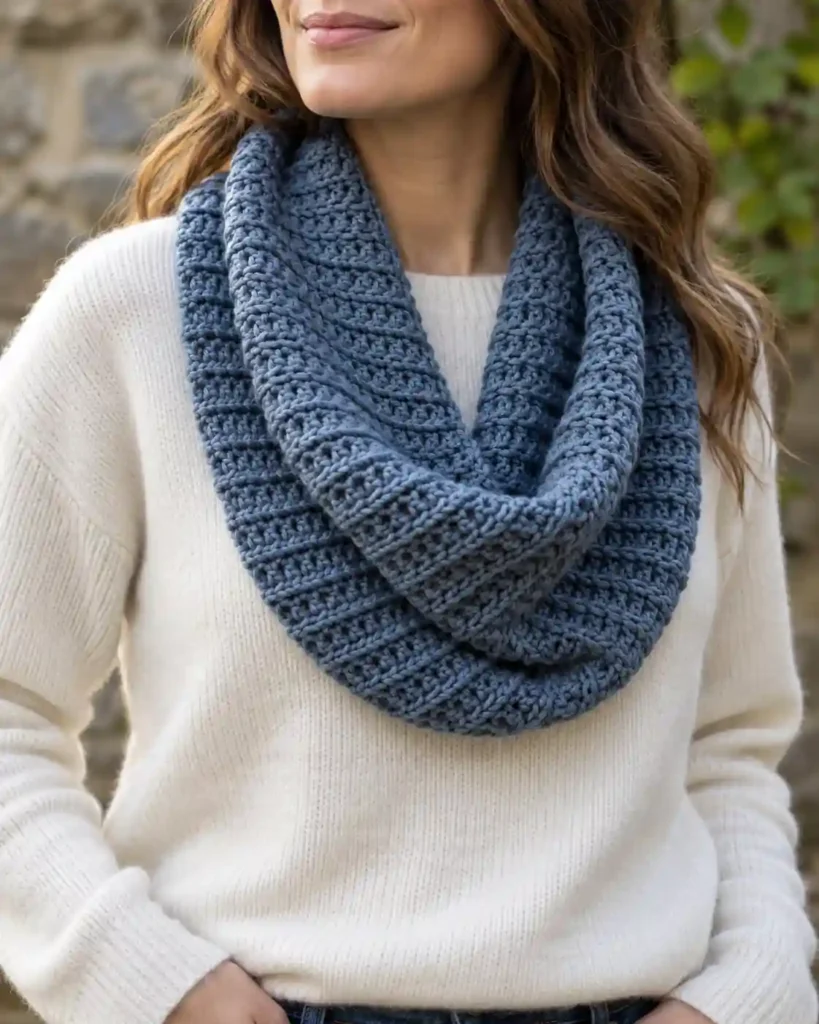
A knit-look cowl offers a generous canvas for practicing even V stitches without shaping sleeves or heels. Compared with a tightly fitted hat, a roomy neck warmer allows more flexibility in size and construction. Work a broad color band around the center, or keep the yarn monochrome for an understated result. If you want a useful gift that can be adjusted after a simple gauge check, a cowl is a friendly starting point.
For a softer cowl, consider the third-loop half double crochet instead of an all-waistcoat fabric.
16. Twist-Front Knit-Look Headband
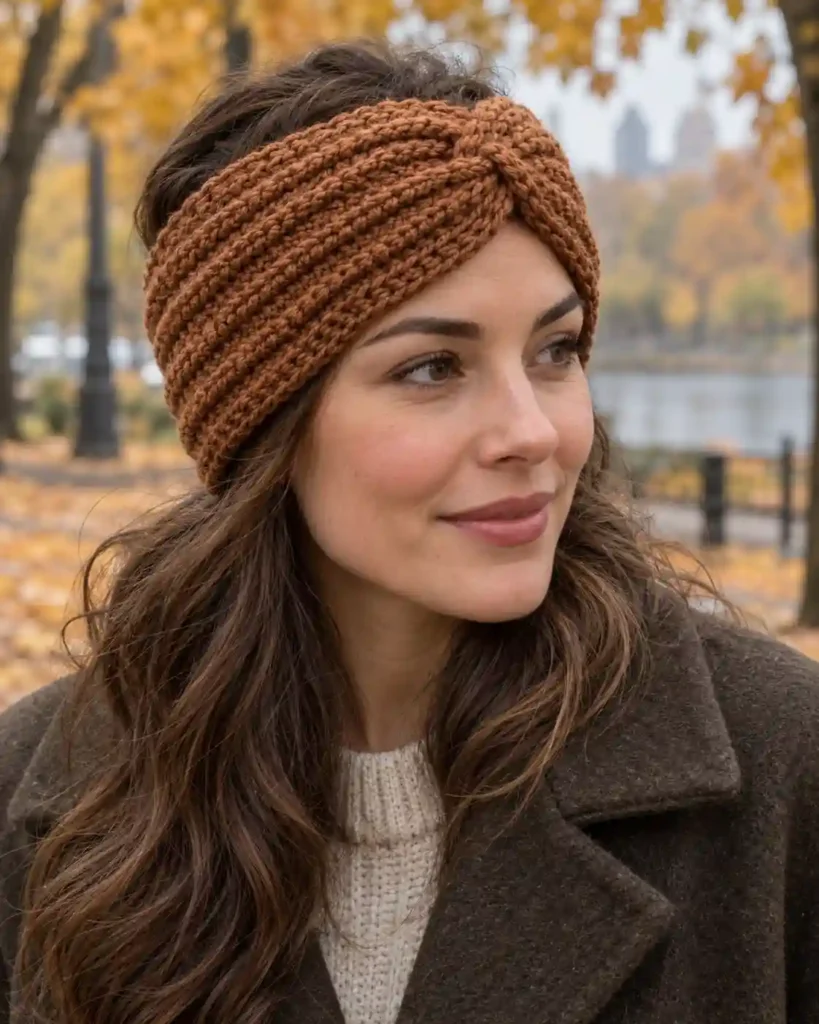
A twist-front headband gives you the appearance of a chic knitted ear warmer in a relatively small project. The twist is a shaping detail at the seam, so it offers a different finish from a plain ribbed strip. Pair a stretchy back-loop stitch with a muted yarn and the front detail becomes the star. Choose this for an easy-to-style accessory if you prefer hair-friendly warmth to a full hat.
Measure your head and test the band’s stretch before sewing the twist; dense waistcoat fabric may need a different fit allowance.
17. Crochet Knit Stitch Sweater: Can You Make One?
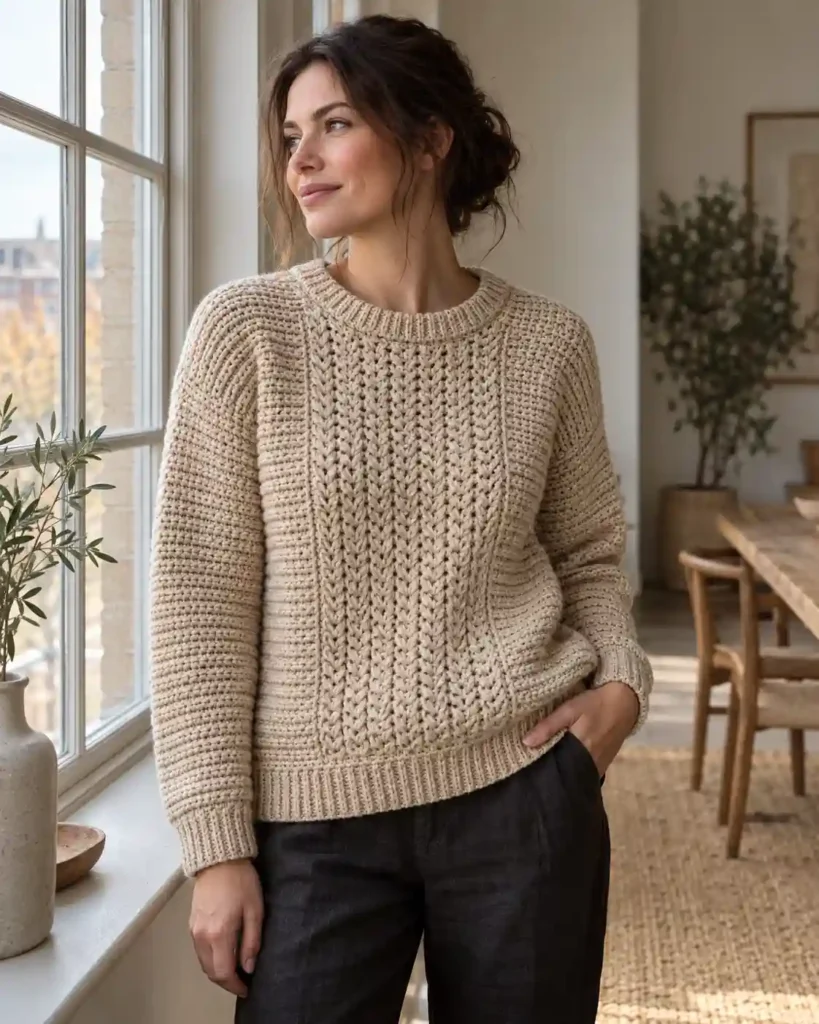
A crochet knit stitch sweater can look strikingly close to a knitted pullover, especially across a simple stockinette-style front panel. The challenge is drape: a full waistcoat fabric may feel heavy or rigid compared with a relaxed knitted sweater. Start with a loose-gauge sample, then consider pairing waistcoat panels with more flexible stitches at the sides, cuffs, or sleeves. For more garment inspiration, explore these crochet pullover sweater patterns before adapting a design to your fabric.
Always recalculate stitch and row gauge before making wearable-size changes; use a tested sweater pattern for the actual shaping.
18. Longline Knit-Look Cardigan
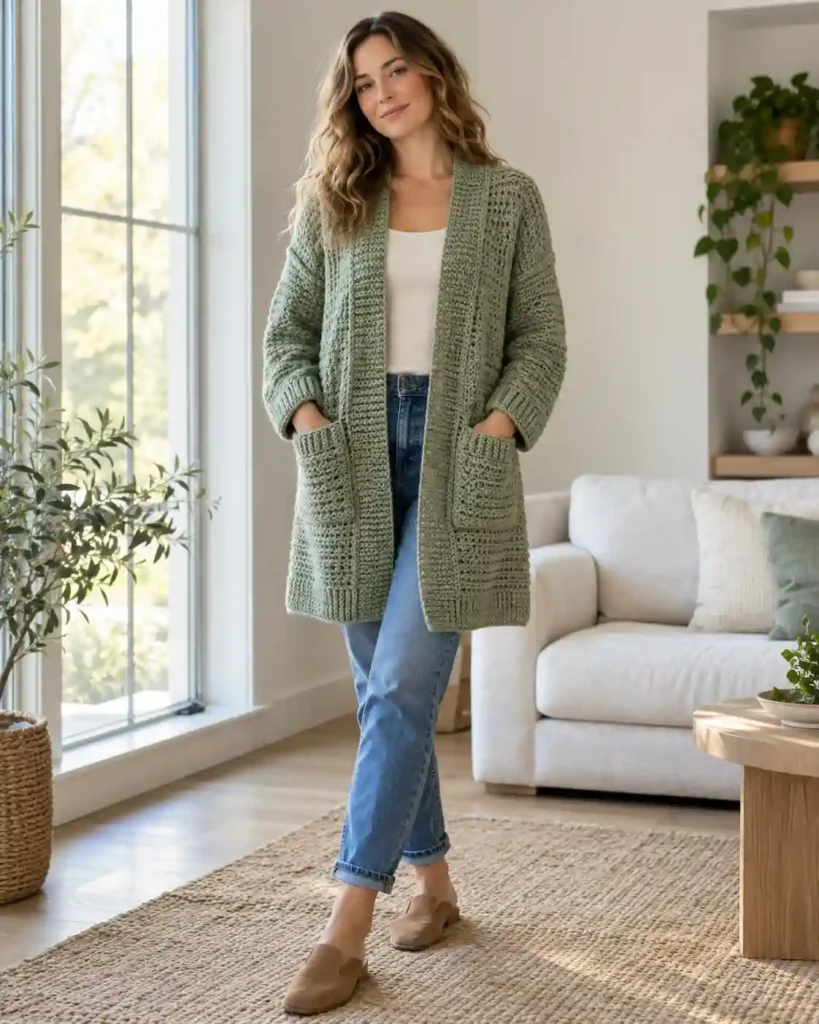
A longline cardigan can borrow the calm look of knitted outerwear without requiring a pair of knitting needles. Instead of making every panel dense, combine a drapier main stitch with waistcoat accents around a pocket or button band. The contrast adds a small design detail without making the whole garment stiff. Pick this concept when you like relaxed layers and prefer a textured accent to an all-over stockinette imitation.
Watch the combined fabric weights so heavy bands do not pull the front edges out of shape.
19. Structured Crochet Knit Stitch Market Tote: Why Choose It?
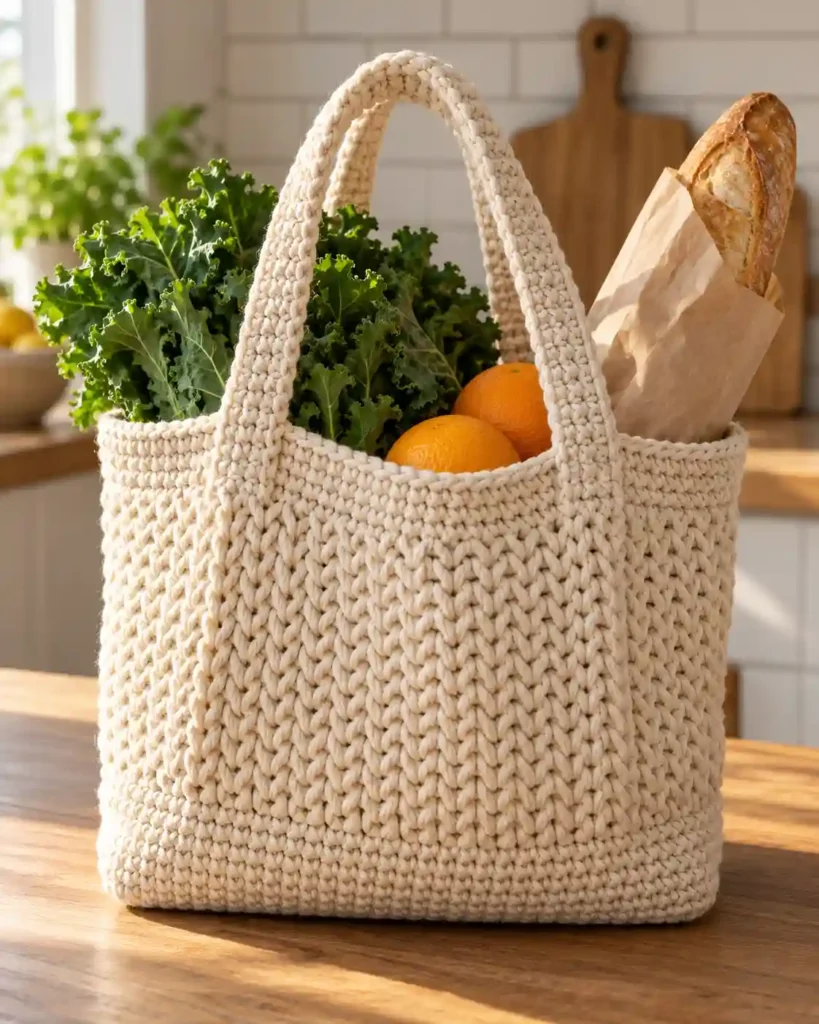
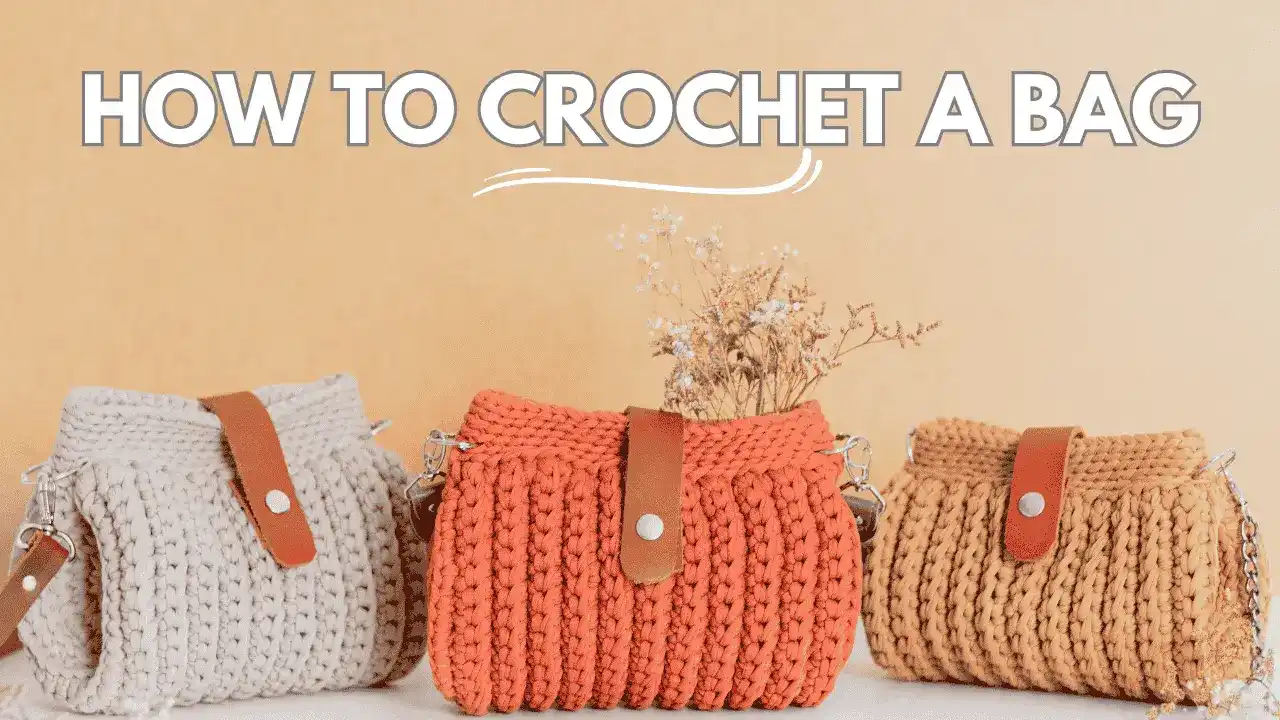
A market tote is one of the most practical places to enjoy waistcoat stitch’s firm surface. Open mesh bags are wonderfully lightweight, but a dense base helps keep smaller items from slipping through. Use regular single crochet for the bottom and waistcoat rounds for the sides, then reinforce the handles. For another practical project idea, explore this crochet market bag guide.
Mama In A Stitch uses center single crochet in a market tote design, making it a useful real-world technique reference.
20. Chunky Knit-Look Storage Basket
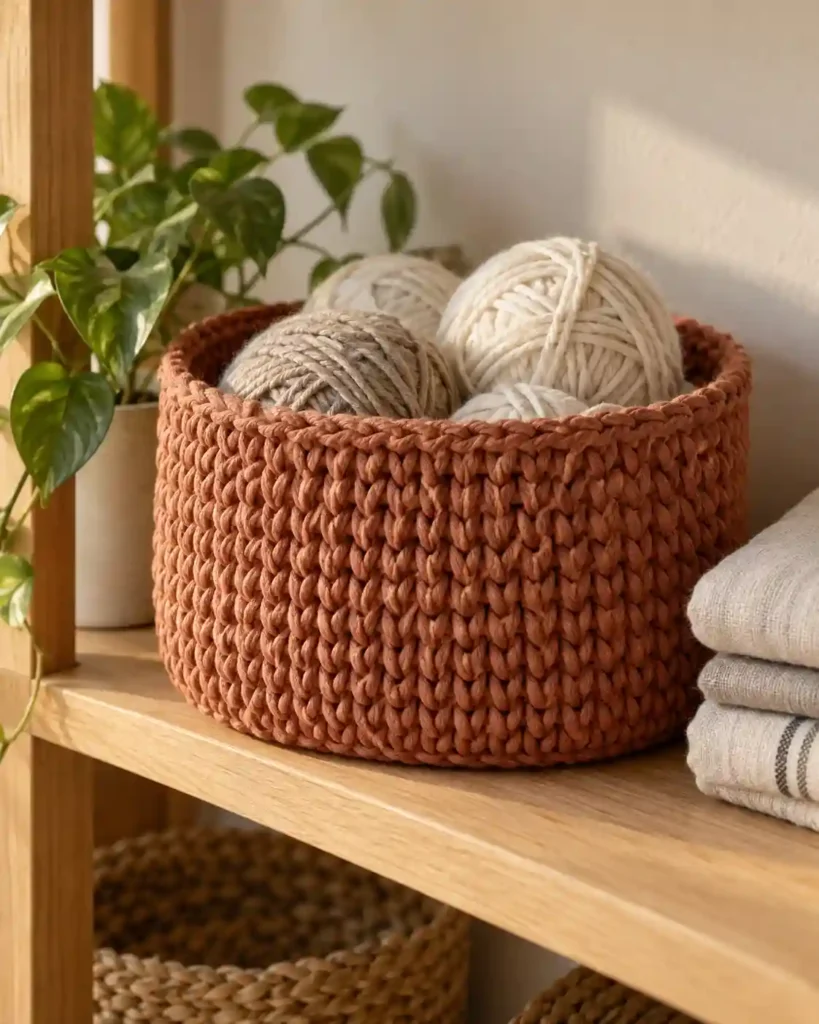
A chunky storage basket makes waistcoat stitch look bold and architectural rather than delicate. Its tightly worked sides hold their outline better than many open crochet textures, especially with a suitable sturdy yarn. Place one on a shelf to corral craft supplies, spare yarn, or small accessories. Choose this project if you want a quick visual payoff and don’t need your finished fabric to stretch.
Sweet Softies shares a genuine free basket pattern with a single-crochet base, waistcoat sides, and a reverse-single-crochet rim.
21. Minimal Knit-Look Cushion Cover: Where Does It Shine?
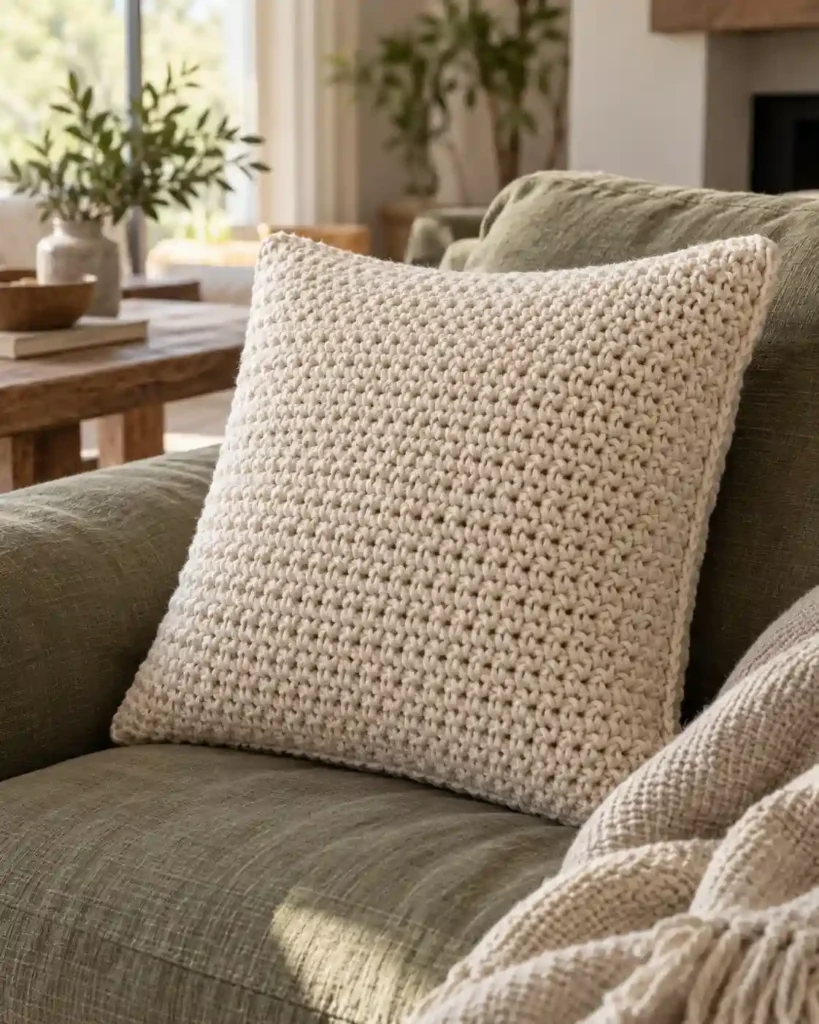
A knit-look cushion cover adds understated texture to a couch without needing elaborate cables. Unlike a basket, its panels can be softer, so you have freedom to choose either loosened waistcoat stitches or more drapey ribbed crochet. Try a warm cream cover against darker upholstery, with a simple envelope-style back for access to the insert. This project suits home decorators who want handmade texture without an overly busy pattern.
Make the front panel to your chosen insert size and allow for any stretch or blocking before assembly.
22. Reusable Cotton Washcloth
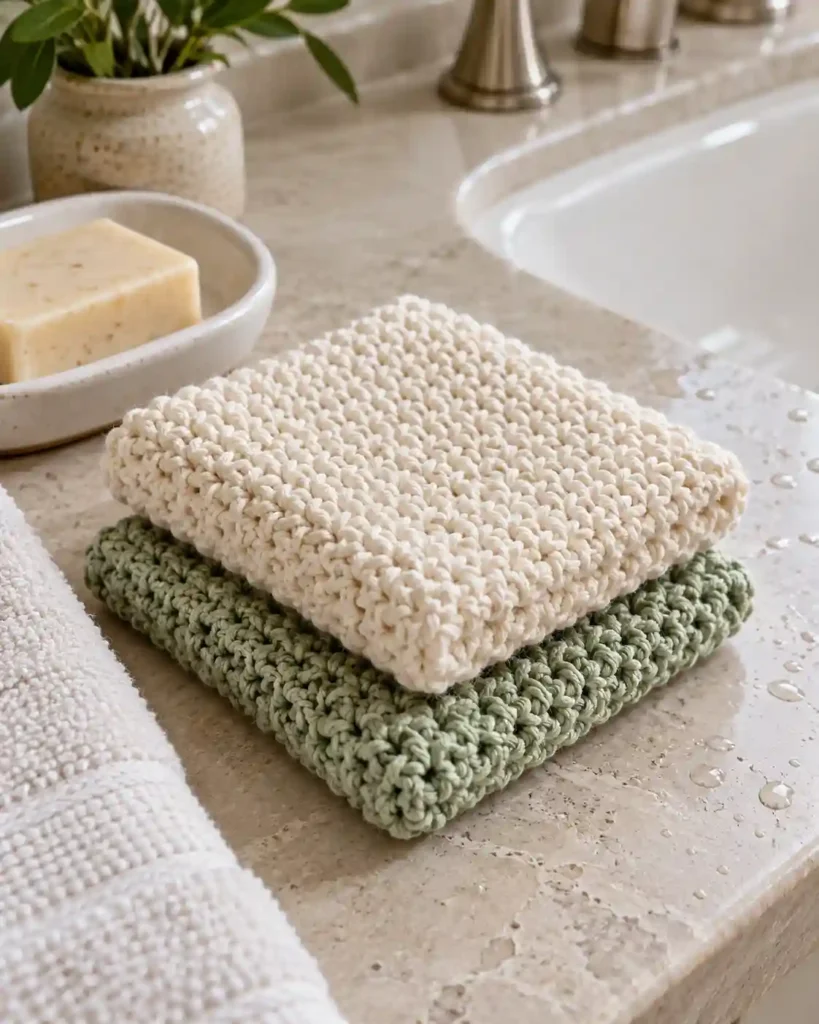
A cotton washcloth is a handy way to turn a stitch practice session into something useful. Waistcoat stitch gives it a dense, fairly smooth surface, while looser moss stitch offers a different feel for a comparison set. Two small squares in contrasting colors make practical gifts and help you judge the stitches after washing. Choose this project when you want low-stakes practice with no garment sizing to worry about.
Use machine-washable cotton appropriate to the item’s care needs, and finish the edges securely.
23. Knit-Look Table Mat Set: Can You Mix Textures?
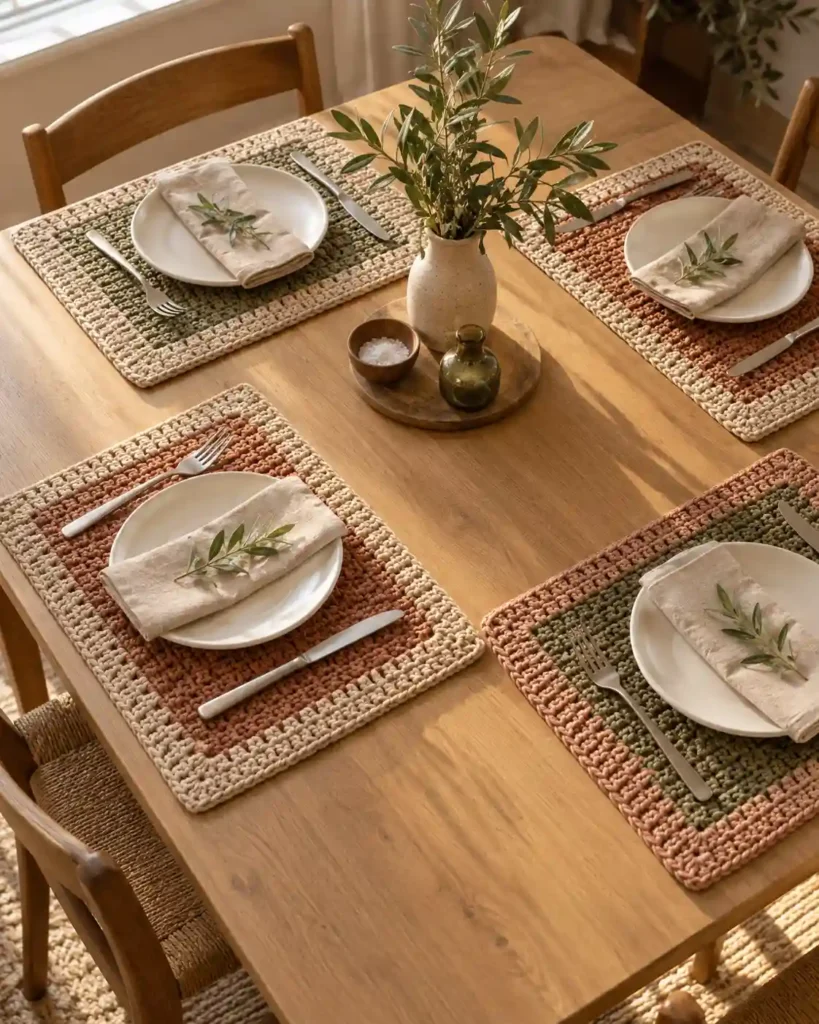
A set of table mats brings knit-inspired fabric to an everyday dining space. Rather than repeating one stitch everywhere, alternate a waistcoat center with single-crochet back-loop borders for subtle contrast. A coordinated set in earthy shades feels cohesive even when the individual textures differ. This is a lovely option if you want to practice straight edges, consistent dimensions, and thoughtful finishing across several small pieces.
These are decorative placemats, not heat-protective pads for hot cookware; choose suitable materials for their intended use.
How Do You Choose Yarn and Hook Size for Knit-Look Crochet?
Start with a smooth yarn that shows stitch definition, then choose a hook that lets you enter each waistcoat stitch without forcing it.
At a Glance
- Use lighter colors while learning to see the V-shaped stitches.
- Try a larger hook if the centered insertion feels tight.
- Wash and measure a swatch before planning fitted projects.
Yarn weight changes the stitch’s appearance almost as much as hook placement does. DK or worsted-weight yarn helps the first waistcoat Vs look distinct, while bulkier yarn emphasizes structure in baskets and bags. According to the Craft Yarn Council, medium-weight (category 4) yarn generally corresponds to a 5.5–6.5 mm suggested crochet-hook range, but that is a general single-crochet guideline, not a fixed waistcoat-stitch requirement.
For waistcoat stitch, begin with a larger hook if the center of each stitch is hard to enter. Make a swatch, wash or block it as appropriate for the yarn, and measure your stitches and rows over a consistent area. The best hook is the one that gives you the fabric you need, not simply the number printed on a label.
Why Does My Crochet Knit Stitch Look Tight or Uneven?
Overly tight loops, inconsistent hook placement, or missed stitches commonly cause stiff fabric, uneven Vs, and changing stitch counts.
If your first sample feels like cardboard, the problem is often tension rather than a lack of skill. The hook must pass through the body of the previous stitch, so pulling each loop short makes the next insertion much harder. Try making taller loops, sizing up the hook, and practicing a little more slowly.
If the vertical Vs lean, check whether you’re crocheting in a spiral or in joined rounds and whether the hook consistently enters the center of each stitch. If your stitch count changes, mark the first real stitch and count at the end of every round. An occasional imperfect V is less noticeable than a tube that gradually grows or shrinks.
Frequently Asked Questions About Crochet Knit Stitch
Is crochet knit stitch the same as waistcoat stitch?
Usually, yes. In standard crochet tutorials, crochet knit stitch, waistcoat stitch, split single crochet, and center single crochet generally refer to the same centered single-crochet technique.
Can beginners learn a simple crochet knit stitch?
Yes, if you already know single crochet. Practice with smooth yarn and a larger hook, then work a short tube before trying fitted garments.
Simple crochet knit stitch practice is easiest when you can clearly see each insertion point.
Can you work crochet knit stitch in the round?
Yes. Both joined rounds and continuous spirals work; joined rounds help organize color changes, while spirals avoid a repeated joining seam.
Crochet knit stitch in the round is especially useful for beanies and baskets.
Where can I find a crochet knit stitch pattern free of charge?
Use the free practice-tube pattern above to learn the basic stitch. For a complete project pattern, Sweet Softies publishes a free knit-stitch basket, and Make & Do Crew links to additional knit-look accessories.
Is waistcoat stitch suitable for a crochet knit stitch sweater?
It can be, but it is often dense and not very stretchy. Make a large gauge swatch and consider combining it with softer stitches to achieve the drape your sweater needs. sider combining it with softer stitches to achieve the drape your sweater needs.
Crochet knit stitch sweater projects need careful gauge checks before shaping.
Final Thoughts: Which Crochet Knit Stitch Will You Try First?
The best crochet knit stitch is the one that suits what you want to make. Start with classic waistcoat stitch for clear knitted-looking Vs, choose back-loop ribbing for cuffs, or reach for Tunisian knit stitch when you want to explore a whole new technique. Once you’ve made one small practice tube, those lovely knit-look hats, sweaters, baskets, and bags become much easier to plan.
For more stitch inspiration, explore CrochetMind’s crochet projects and technique guides as they become available on the site. Which texture would you use first: smooth stockinette-style Vs or soft ribbing?