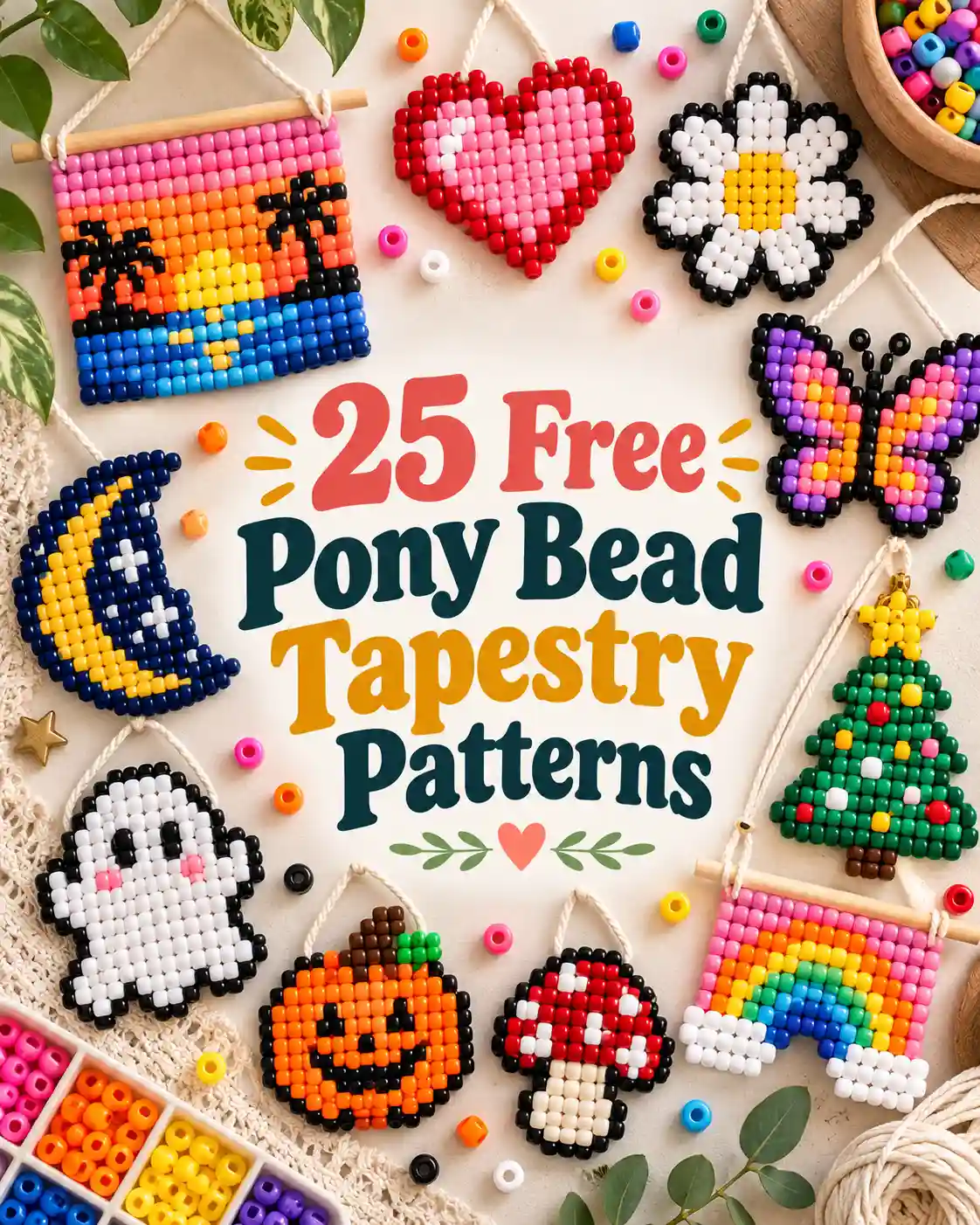


Free pony bead tapestry patterns turn colorful plastic beads into flat, pixel-style wall hangings. This collection explores 25 designs, from a simple heart and checkerboard to flower, animal, celestial, and holiday motifs, with practical advice for planning a grid, stringing a panel, and hanging it neatly.
A bead tapestry is a picture made from arranged beads, not a bracelet or a three-dimensional bead animal. You can use these original motif ideas to plan your own color grids; printable, stitch-checked charts would need to be supplied separately for each finished design.
If you’ve searched for pony bead tapestry patterns free to use at home, you’ve probably noticed how quickly the results wander into bracelets, charms, and fuse beads. If you enjoy exploring other handmade projects too, browse these crochet ideas for more creative inspiration. Here, the focus stays on wall art you can plan with large-hole beads, a clear color grid, and a hanging method that fits the design. Pick the motif that catches your eye first, then use the sizing and stringing sections to make it workable with your own supplies.
Key Takeaways
- Start with bold hearts, checkerboards, and friendly ghosts.
- Choose contrasting colors to keep small designs readable.
- Count occupied grid cells before shopping for beads.
- Test your cord, knots, and bead size first.
- Match each pony bead tapestry pattern to its construction method.
What Are Free Pony Bead Tapestry Patterns?
They are bead-placement grids for making flat, pictured wall hangings using pony beads and a compatible stringing method.
At a Glance
- One chart cell represents one bead position.
- A dowel-hung design can use one vertical strand per column.
- Interwoven kandi tapestries may require a different chart or stitch.
Pony bead tapestry patterns are color-coded grids that guide the placement of large-hole beads into a flat image. In the straightforward dowel-hanging method, each chart column becomes a vertical cord, and beads are threaded from the top down. MakeBead’s guide explains this column-by-column approach; it is different from the interconnected stitches used in some kandi tapestries.
The best designs have bold outlines, a limited palette, and enough contrast to remain recognizable from across a room. Before shopping, decide whether your project will be a small desk-side hanging, a narrow banner, or a larger piece of DIY wall art.
Which Pony Bead Tapestry Pattern Should You Start With?
A heart, checkerboard, or ghost is a sensible first project because it has a simple silhouette and limited colors.
| Pattern idea | Skill level | Main colors | Best use |
|---|---|---|---|
| Mini pixel heart | Beginner | Red, white | Small gift or first hanging |
| Checkerboard | Beginner | Pink, black | Retro room decor |
| Little ghost | Beginner | White, purple | Halloween decoration |
| Butterfly | Beginner–intermediate | Lilac, coral, blue | Pastel wall art |
| Sunset landscape | Intermediate | Orange, pink, indigo | Larger statement piece |
Start with a pattern you can recognize using only a few colors. A straightforward shape makes it easier to notice a misplaced bead before several strands are finished.
Which 25 Pony Bead Tapestry Pattern Ideas Can You Make?
At a Glance
- Simple shapes: Heart, checkerboard, smiley face, and rainbow.
- Nature designs: Daisy, sunflower, butterfly, mushroom, and strawberry.
- Animals and space: Frog, cat, turtle, fish, jellyfish, moon, stars, and Saturn.
- Seasonal pieces: Ghost, pumpkin, candy corn, autumn leaf, tree, and snowman.
- Larger wall art: Sunset landscape.
25 Free Pony Bead Tapestry Patterns to Make at Home
1. Why Start With a Mini Pixel Heart Tapestry?
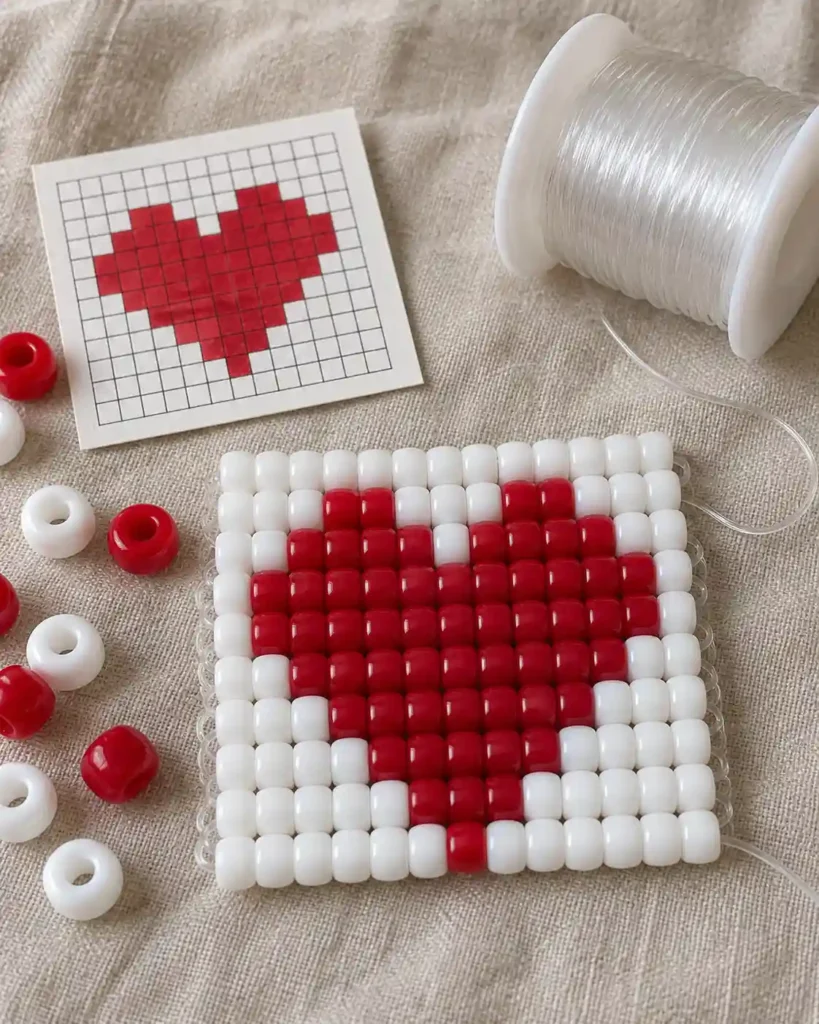
A mini pixel heart is a wonderfully forgiving first project because its shape is familiar even with blocky edges. Compared with a tiny animal portrait, it needs fewer tricky details and makes symmetry easy to check. Picture a cherry-red heart hanging beside a mirror or tucked into a handmade gift package. Beginners get a cheerful result without juggling a complicated color chart.
Plan two matching halves around a centerline, using red for the heart and ivory for the background. A contrasting border can make the finished panel look intentional rather than unfinished.
2. Daisy Flower Bead Tapestry
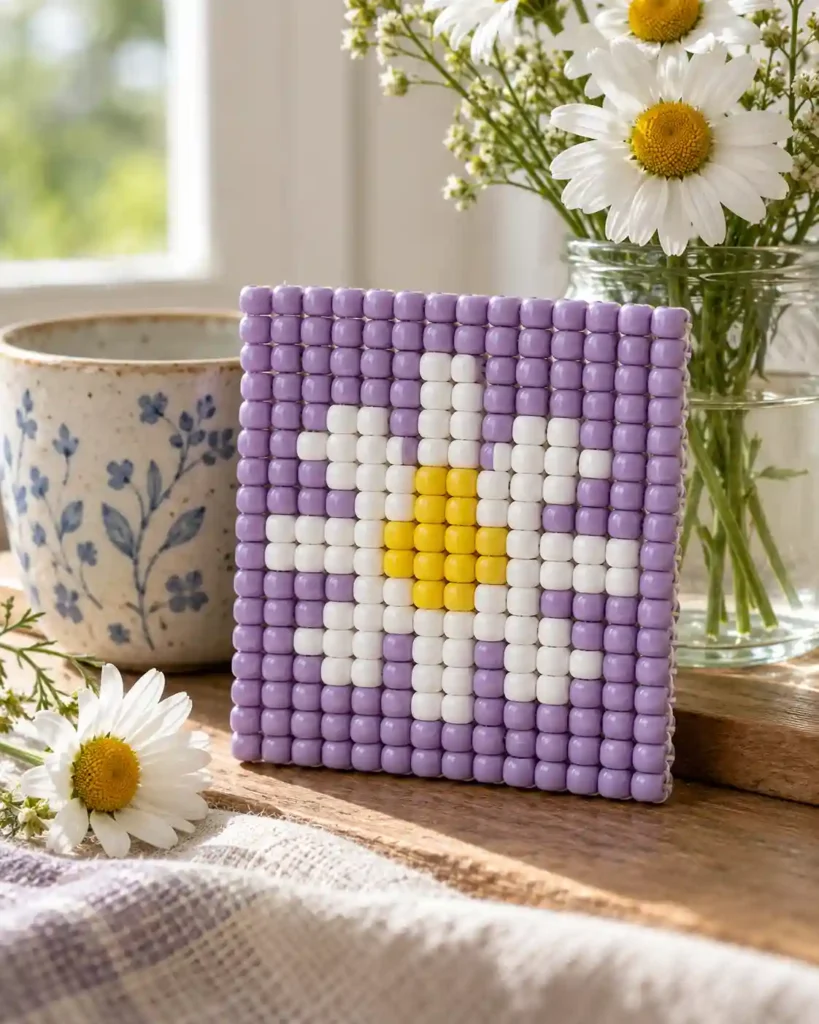
A white daisy with a sunny yellow center gives a pony bead wall hanging a soft, playful look. The rounded petals are simpler to map than a realistic flower with delicate shading, so the design stays readable in a compact grid. This is especially pretty above a craft table or on a lavender bedroom wall. Flower lovers who prefer pastel decor can make it their own with just a few carefully chosen shades, or explore a crochet flower bouquet pattern for another handmade floral project.
Lay out six to eight chunky petal shapes before filling the background, and keep each petal separated from the yellow center by clear color boundaries.
3. Can You Make a Sunflower Bead Tapestry?
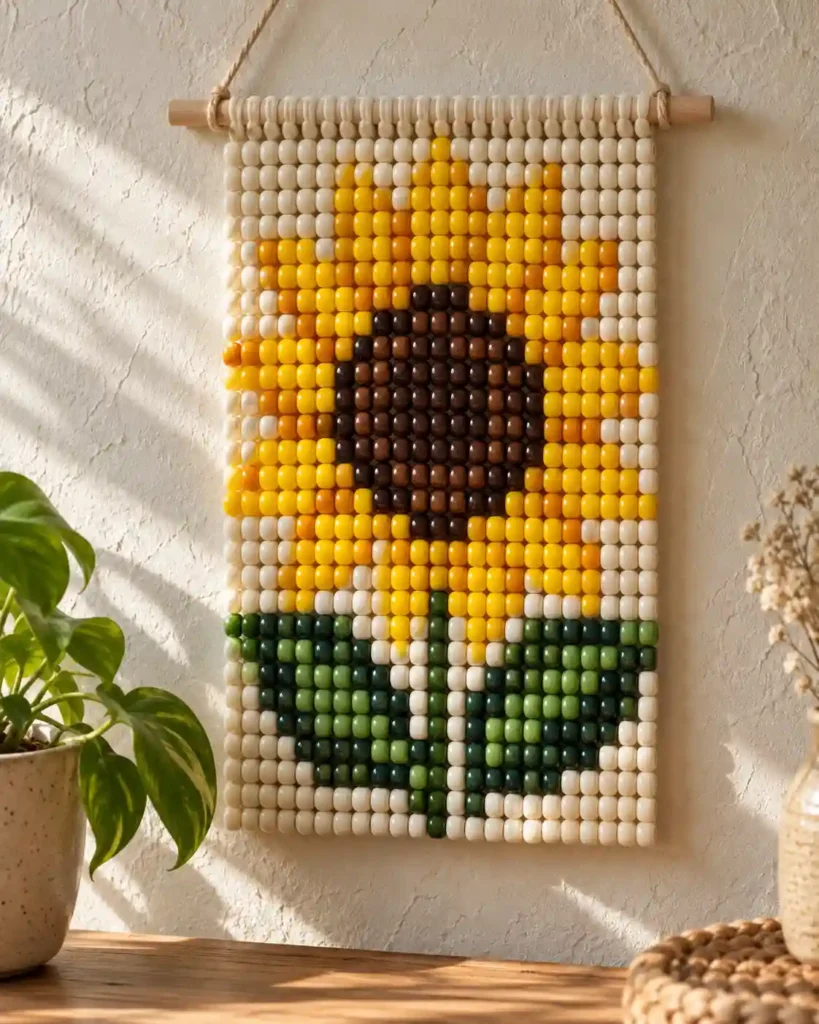
A sunflower brings strong contrast to bead art: golden petals, a dark brown center, and fresh green leaves. Instead of trying to depict every seed or petal vein, use a bold ring around a generous center disk. A warm sunflower hanging in a kitchen corner feels lively even when the rest of the room is neutral. This suits crafters ready for a slightly larger floral design with a satisfying focal point.
Choose two yellows for depth, then make the stem broad enough to survive the pixel-grid look. Check the outer petal shape at full size before stringing.
4. Symmetrical Butterfly Tapestry
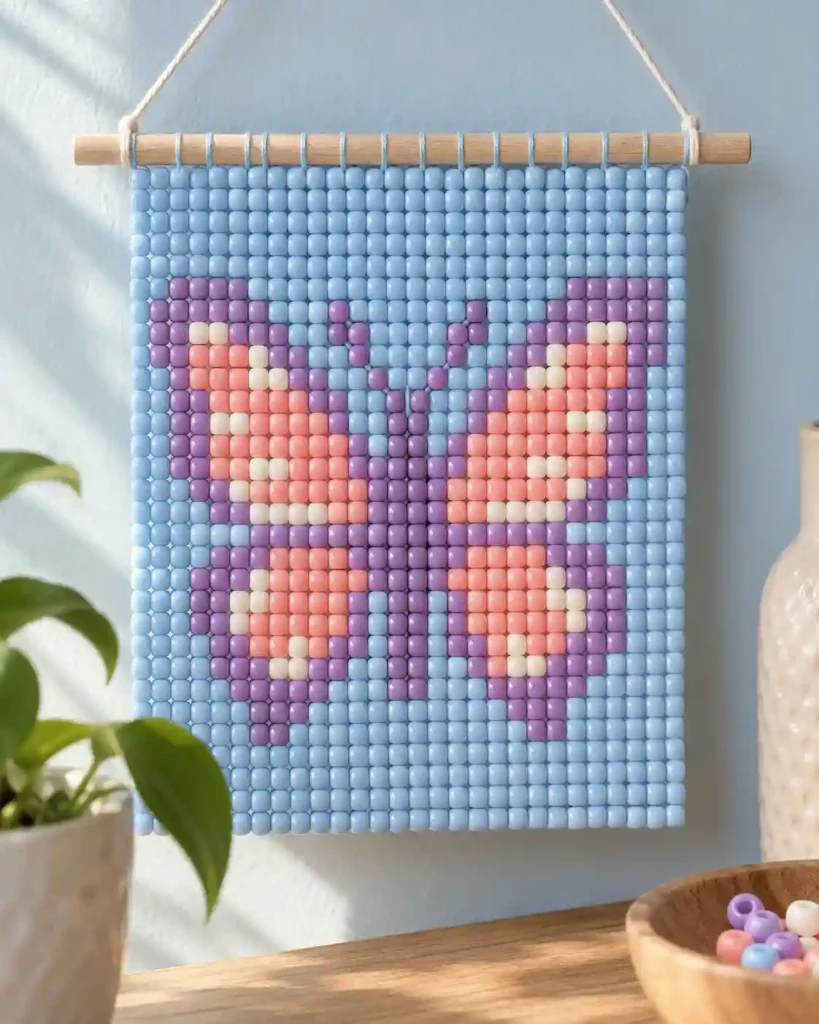
The butterfly pattern is all about two wings that balance each other without looking stiff. A mirrored layout offers a clearer planning method than drawing every wing section from scratch, yet still leaves room for coral, lilac, and pale blue accents. Hung from a slim wooden dowel, it works beautifully in a light, airy room. It is a rewarding step up for someone who has already completed a heart or simple flower.
Draw one wing first and reflect it across the body; give the wing edges a darker outline so the butterfly does not disappear into its background.
5. Is a Retro Smiley Face Tapestry Beginner-Friendly?
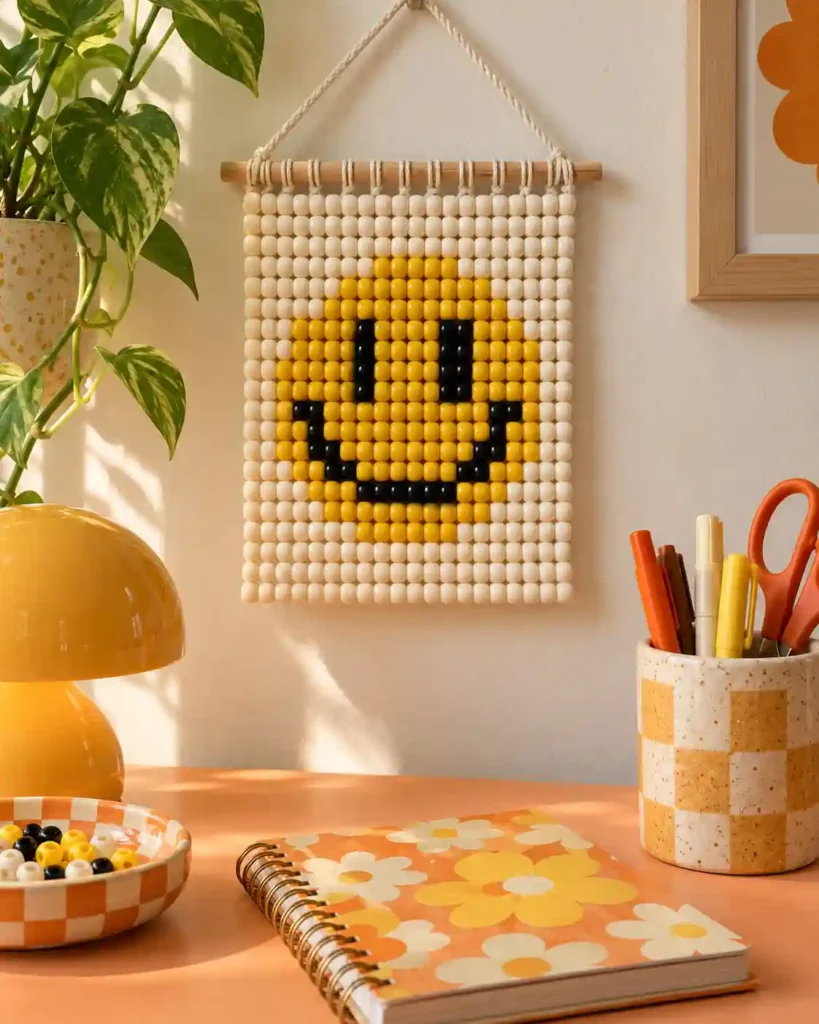
A yellow smiley face delivers a little retro fun without needing advanced beadwork. Its oversized eyes and curved mouth work better than tiny facial details that vanish between chunky beads. Hang it near a desk, record shelf, or colorful gallery wall for an instant lift. Anyone drawn to bold, nostalgic decor will appreciate how much expression a simple three-color design can carry.
Use a pale background, black features, and a generous yellow face. Test the mouth shape on the grid before selecting the final bead colors.
6. Rainbow Arch Bead Tapestry
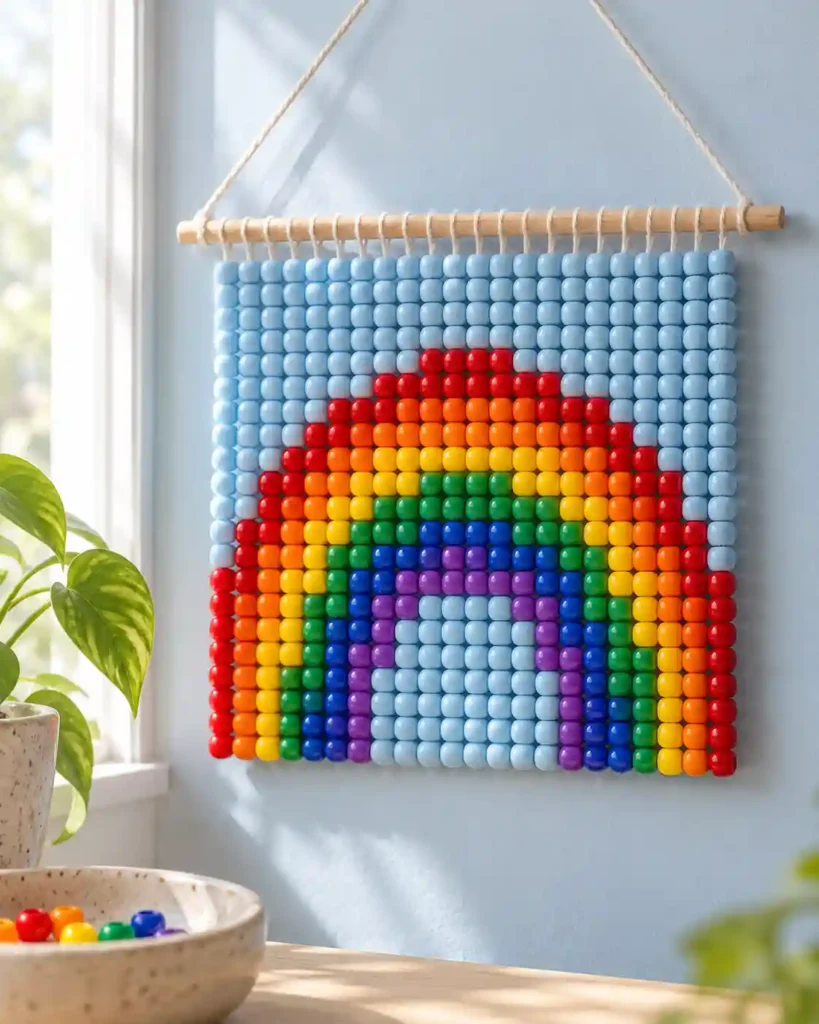
A rainbow arch turns several bright bead colors into one easy-to-recognize shape. It feels more cheerful than a plain striped banner because the staggered bands suggest a curve. A soft pastel version would look lovely near a window, while saturated colors suit an energetic craft room. This is a friendly choice for makers who enjoy color more than intricate outlines.
Build the arch from the inside outward and keep both ends at the same height. Do not squeeze in so many bands that the individual colors become hard to distinguish.
7. How Does a Classic Checkerboard Tapestry Work?
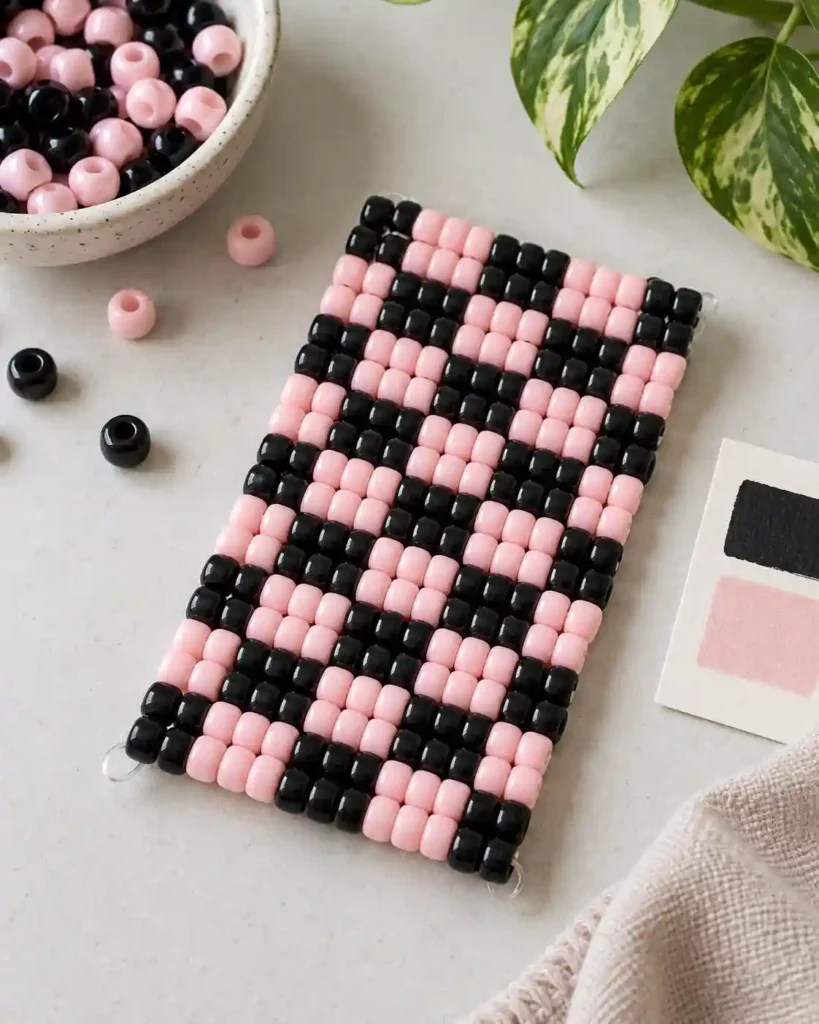
The checkerboard is a lesson in rhythm disguised as cool wall decor. Unlike illustrated motifs, repeating squares tell you immediately when a row or column is out of place. Try dusty pink with black for a retro look, or cream with sage for something quieter above a bookshelf. It is ideal for a first full-width banner and for learning to keep strands evenly spaced.
Choose a square block size that divides neatly into the planned chart width. Alternate colors consistently and mark off each completed column as you go.
8. Crescent Moon Tapestry
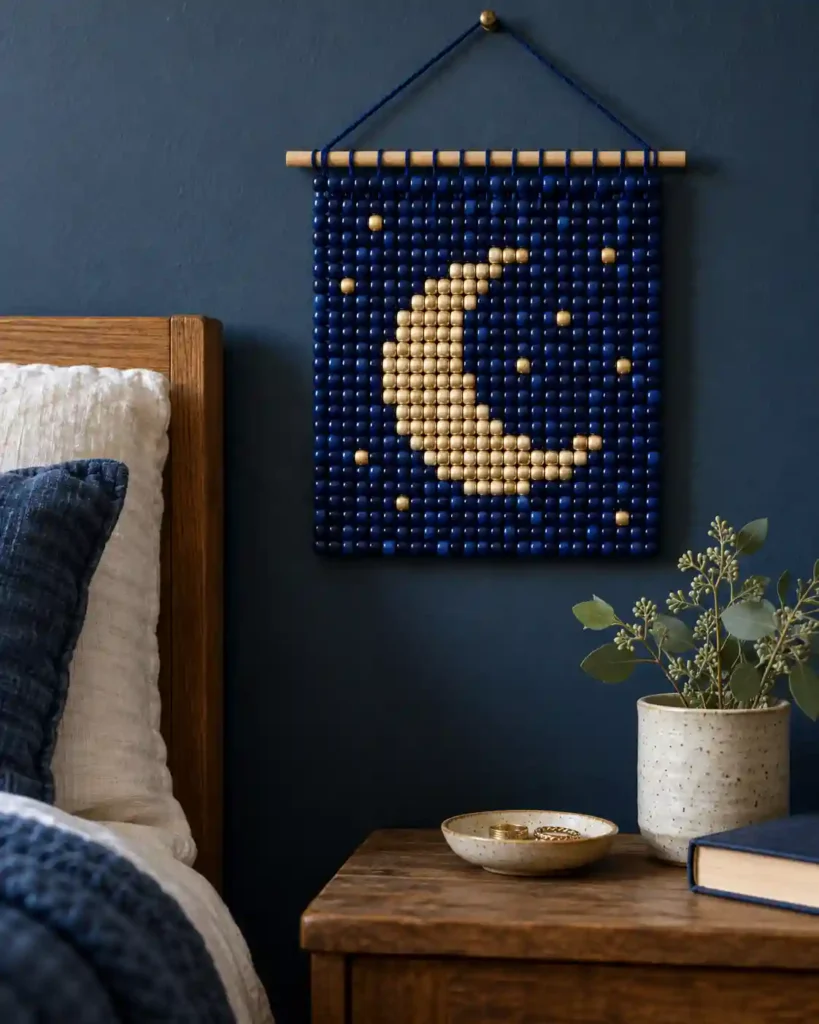
A pale gold crescent set against midnight blue makes a calm, dreamy bead tapestry. The silhouette has more personality than a single star, yet needs fewer tiny details than a complete night-sky scene. It belongs naturally beside a bedside lamp or on a dark accent wall. Crafters who like celestial decor can make a strong statement with only two or three colors.
Give the crescent enough width for a recognizable curve and keep its inner edge crisp. A narrow crescent can look jagged when translated directly to chunky beads.
9. What Makes a Starry Night Tapestry Stand Out?
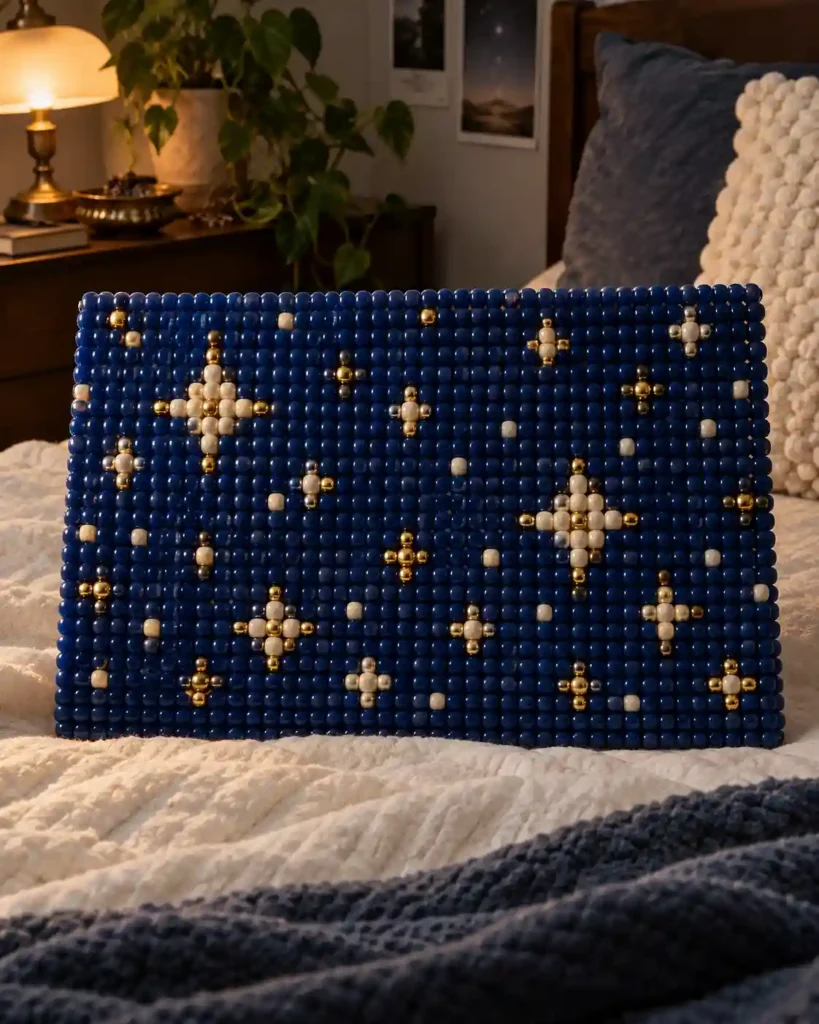
A starry night panel looks best when the stars have space to breathe. Rather than packing the background with dots, scatter a handful of ivory and gold four-point stars across a deep blue field. This creates a lovely backdrop for a reading nook or a small bedroom gallery. Makers comfortable with a medium-size chart will enjoy controlling the balance between busy and peaceful.
Sketch the largest stars first, then place smaller accents in the empty areas. Keep at least a little dark space between bright shapes to preserve their outlines.
10. Saturn Planet Tapestry
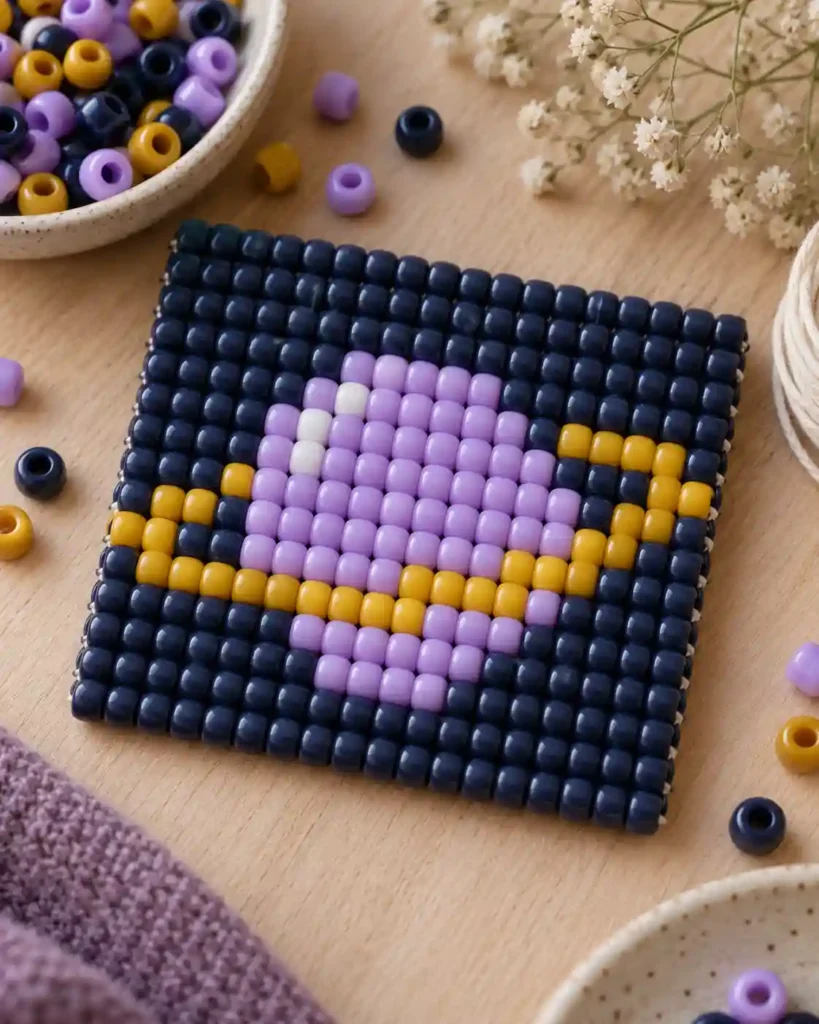
A ringed Saturn design adds movement to an otherwise flat grid. The mustard-gold ring is the star of the show, especially when it crosses a lavender or blue planet against charcoal. Hung near a telescope illustration or space-themed poster, it looks thoughtful rather than childish. This intermediate project rewards anyone who likes graphic shapes and carefully planned contrast.
Start by mapping the outer ring, then fit the planet inside it. Keep a visible gap between neighboring ring sections wherever the bead size allows.
11. Can You Make a Woodland Mushroom Tapestry?
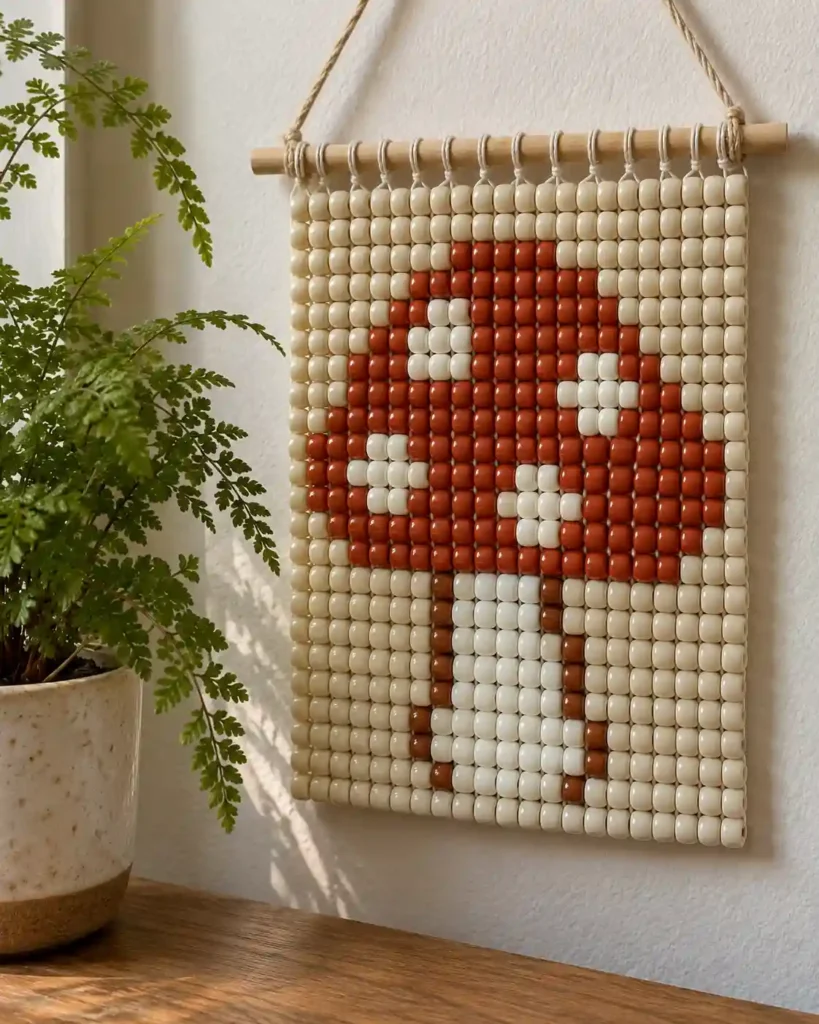
A spotted red mushroom is a sweet introduction to cottagecore-inspired bead decor. Its domed cap and sturdy cream stem are easier to read than a highly detailed woodland illustration. Imagine it beside a little fern or above a shelf of handmade pottery. Beginner crafters get an earthy motif that feels charming in almost any season.
Place a few oversized ivory spots on the red cap and use beige or soft green behind it. Avoid tiny scattered spots that disappear from a distance.
12. Strawberry Mini Tapestry
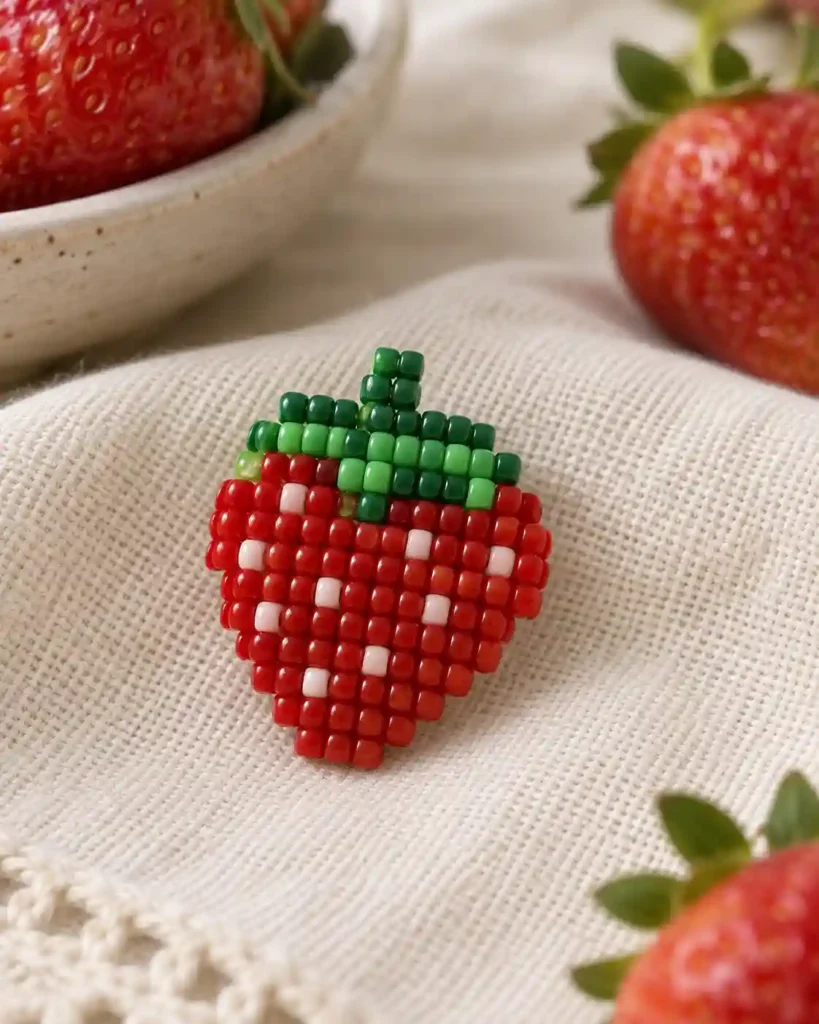
A bright strawberry is small, bold, and surprisingly expressive in pixel form. Green crown leaves and a handful of pale seed marks make it more distinctive than a plain red heart. This tiny fruit design looks delightful in a kitchen, on a pantry wall, or as a handmade summer gift. It suits someone wanting a playful project with just enough detail to feel special.
Give the berry a broad silhouette before adding cream-colored seeds. If the seeds crowd together on your chart, enlarge the whole motif instead of adding more colors.
13. How Do You Design a Happy Frog Face Tapestry?
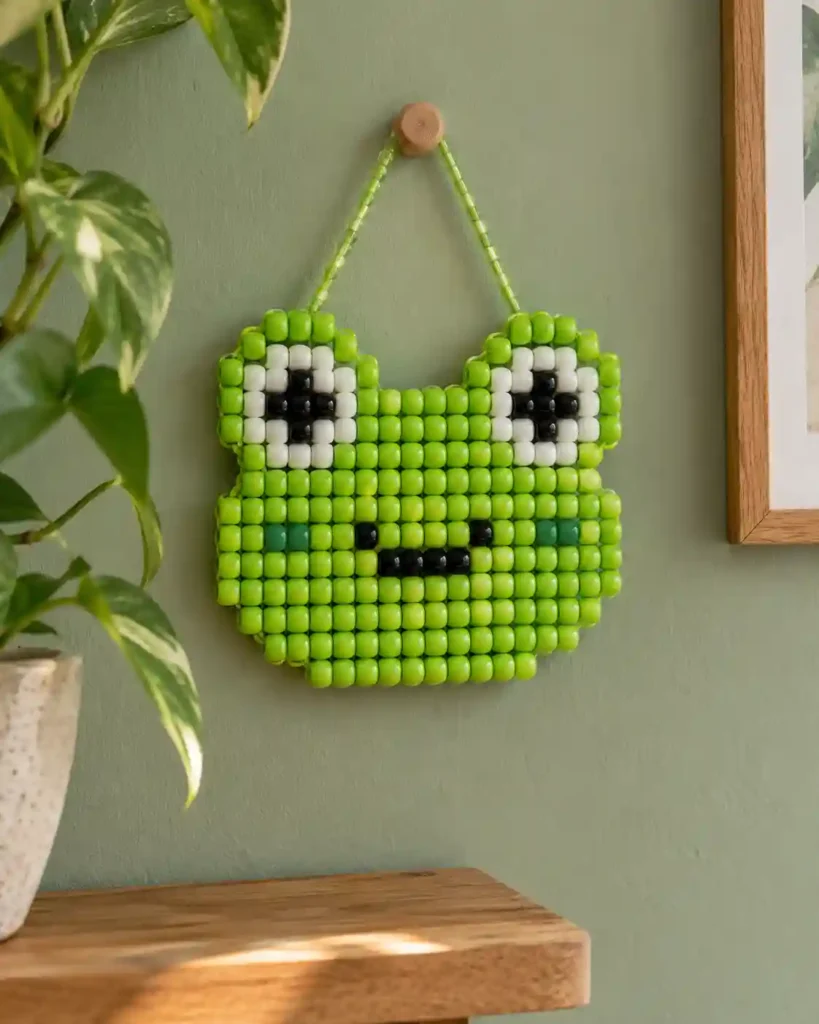
A smiling frog face brings quirky personality to a square pony bead panel. Large eyes rising above a lime-green head are easier to recognize than a full frog body with thin legs. Put one on a sage wall or beside a plant shelf for a cheerful little companion. Animal-craft fans can practice facial features here before trying a more detailed cat portrait or exploring crochet animals for other handmade animal projects.
Use one dark tone for the mouth and eye outlines, with lighter green for the face. Make both eyes the same size to keep the expression balanced.
14. Cute Cat Portrait Tapestry
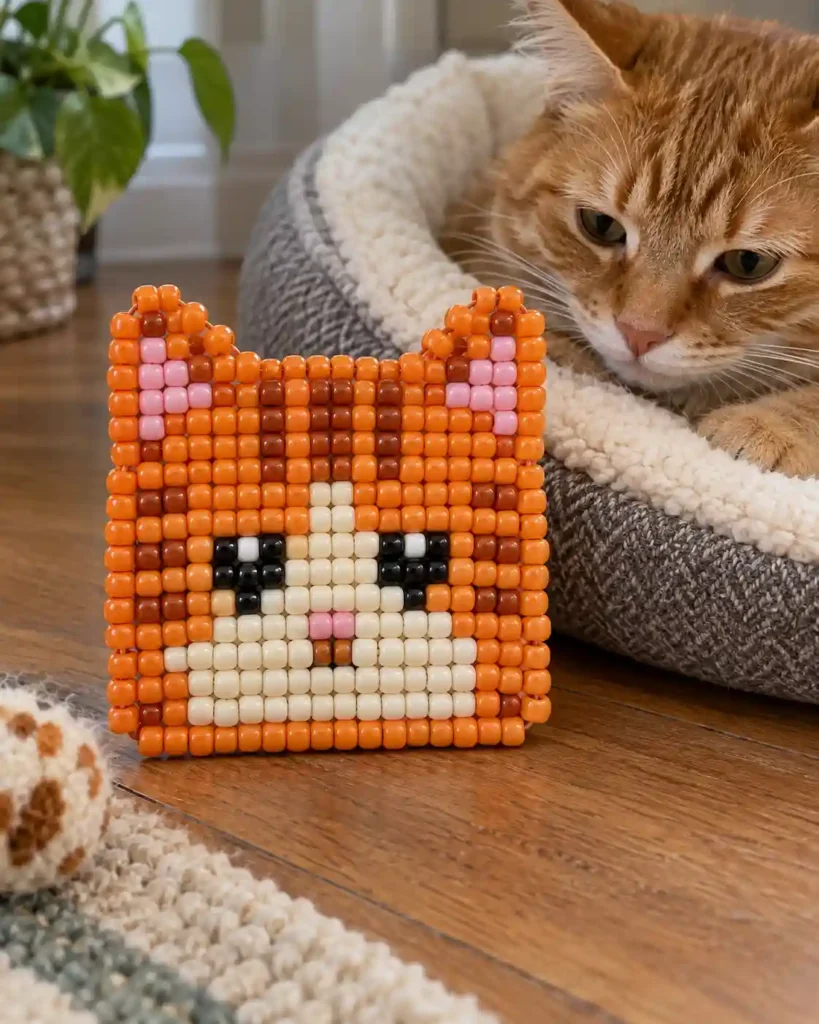
The cat portrait feels personal because a few small choices can change its entire character. Pointed ears, a cream muzzle, and dark bead eyes stand out more clearly than fussy fur texture. A ginger-tabby version beside a pet bed would be a lovely tribute to a favorite cat. This is a satisfying intermediate design for makers who enjoy customizing colors to match an animal they know.
Plan the ear silhouettes and face outline first. Use a medium or larger grid so the whiskers and nose do not merge into one dark patch.
15. Why Choose a Paw Print Bead Tapestry?
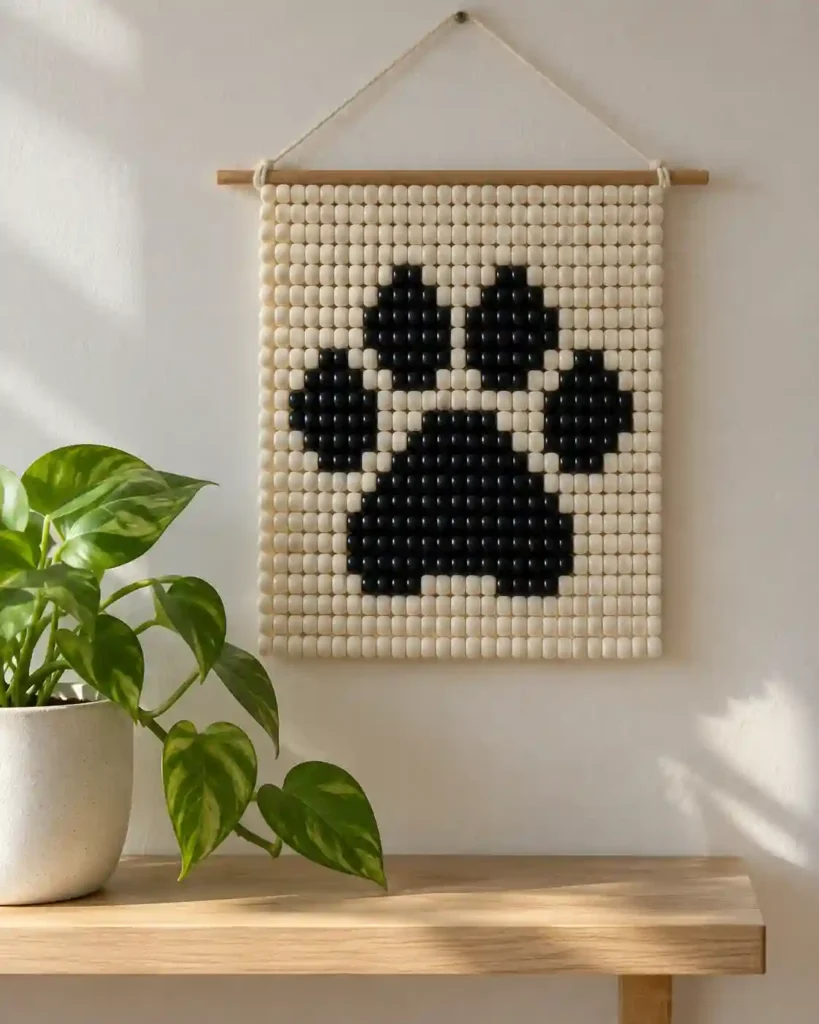
A paw print has instant meaning without requiring an entire animal portrait. The large central pad and four separate toe shapes read clearly in high contrast, making it easier than a detailed cat or dog face. It fits naturally into a pet-themed hallway or a small gift for an animal lover. A two-color palette keeps the focus on the recognizable silhouette.
Make the toe shapes large enough to stay distinct and leave a little background between them. Black on ivory is classic, but darker colors on pale pink or mint work too.
16. Sea Turtle Tapestry
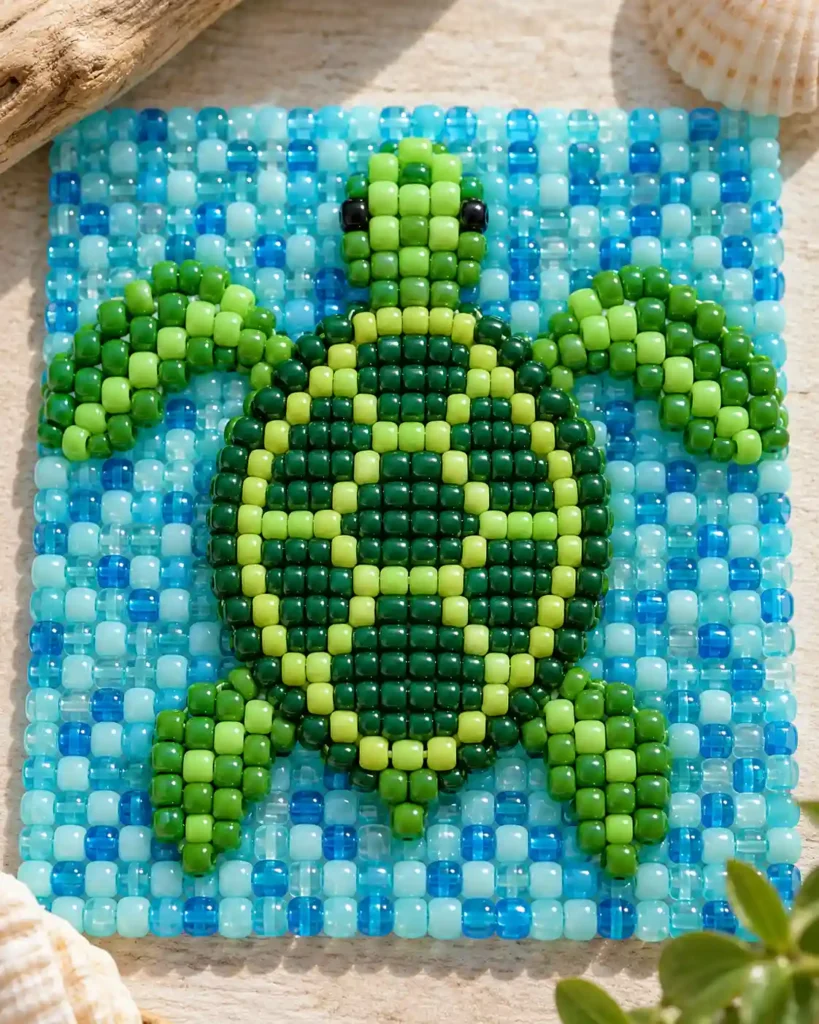
A sea turtle viewed from above has an appealing, almost geometric shape. Its oval shell gives you room for pattern, while four flippers and a small head make the subject instantly recognizable. An aqua background would suit a bathroom shelf or ocean-inspired bedroom. This intermediate design is a good pick for anyone ready to manage several greens without losing the main silhouette.
Draw the shell and flippers as separate blocks before joining them. Use the lightest green for shell markings and a deeper shade around its edge.
17. How Do You Design a Tropical Fish Tapestry?
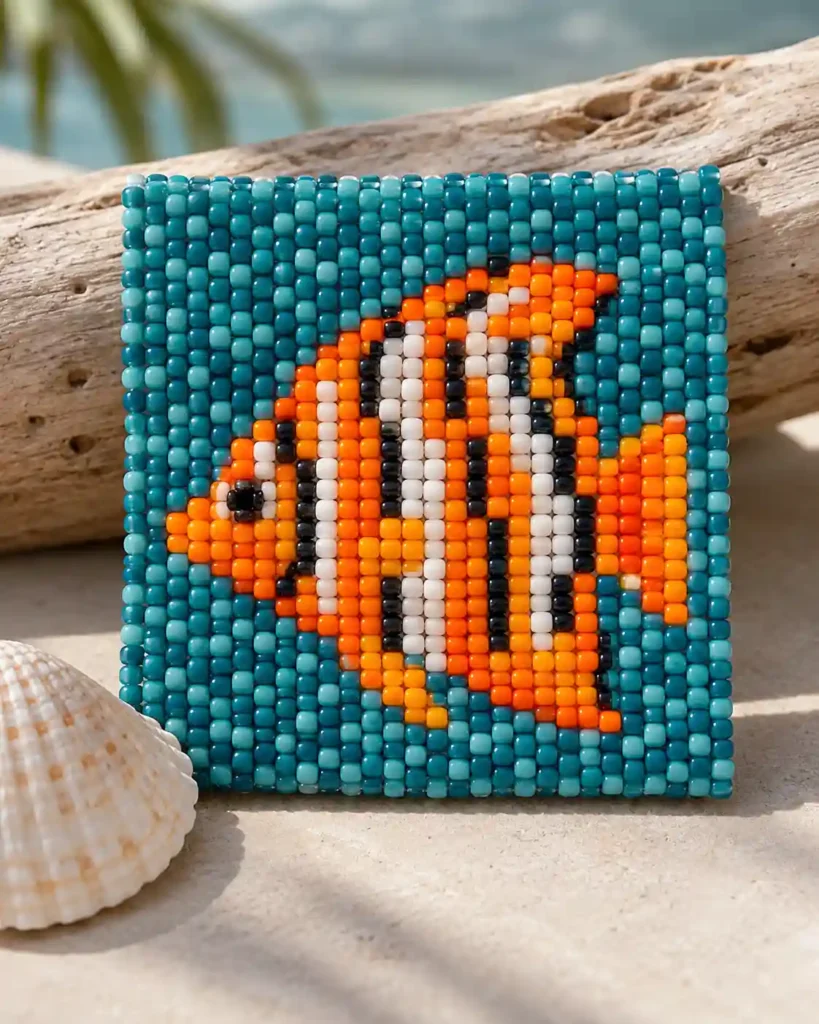
A striped tropical fish makes an energetic centerpiece for ocean-themed bead art. A bold side profile is much easier to interpret in pony beads than individual scales or fins drawn in fine detail. Orange, white, and teal create a lively look over a coastal craft corner. It is approachable for makers who want an animal motif but are not ready for a complex portrait.
Exaggerate the tail and top fin slightly, and use a dark outline where stripes meet the background. The fish should still be obvious when you step back from the chart.
18. Jellyfish Ocean Tapestry
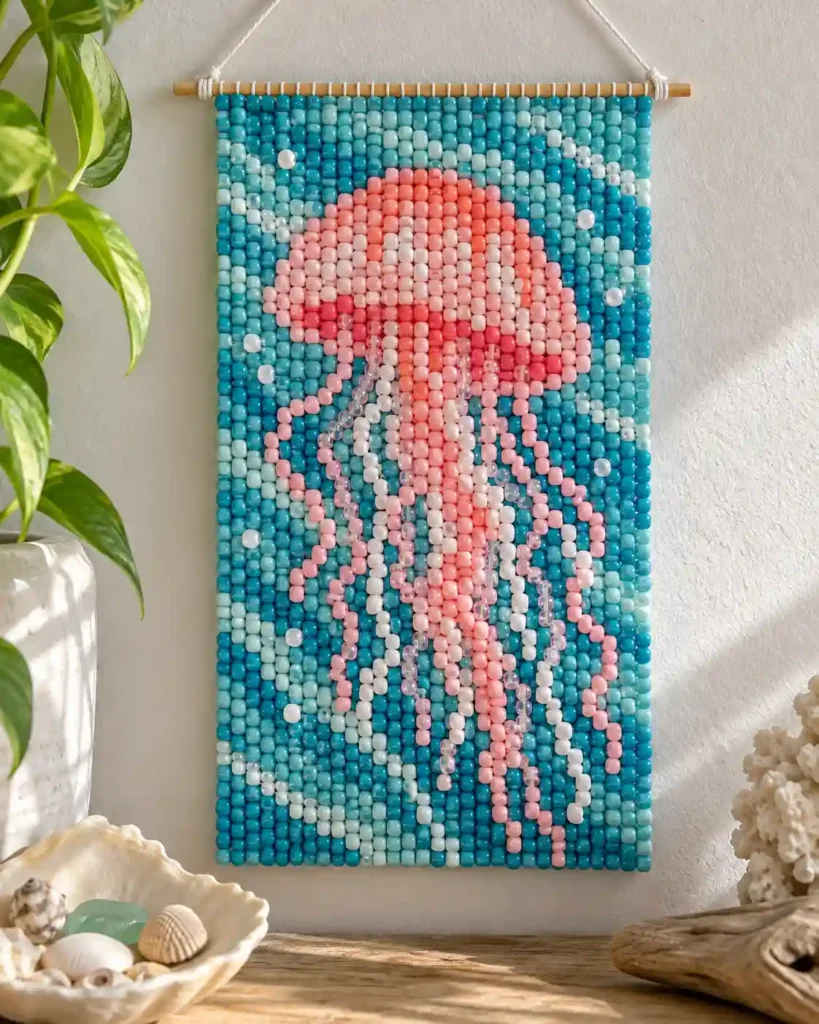
A jellyfish brings graceful motion to a grid full of straight rows and columns. The rounded pink cap anchors the picture, while separated strands of tentacles suggest floating underwater. It would be lovely on an aqua panel in a beach-inspired room. Crafters who enjoy soft colors can experiment with coral, blush, and icy blue without making the design feel crowded.
Keep three to five tentacle paths visibly separate. Make their lengths slightly different, but ensure none of the thin lines disappears against a similarly colored background.
19. Can Beginners Make a Little Ghost Halloween Tapestry?
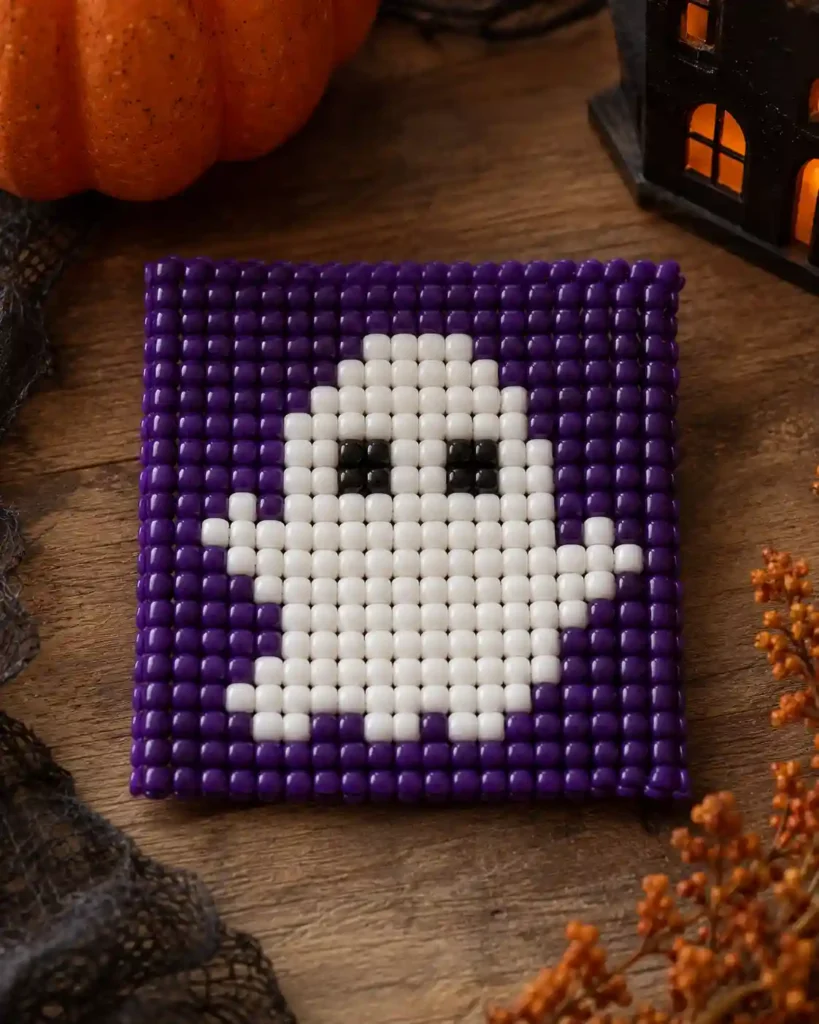
A friendly little ghost is one of the easiest seasonal shapes to recognize. White beads against a deep purple background create a stronger contrast than a complicated haunted-house scene. Hang it on an October gallery wall or give it as a playful Halloween gift. Beginners get a festive design with very few color changes and room for a charming expression.
Keep the eyes dark and fairly large, with a softly stepped lower edge. A tiny mouth is optional; the ghost should remain recognizable without it.
20. Jack-o’-Lantern Pumpkin Tapestry
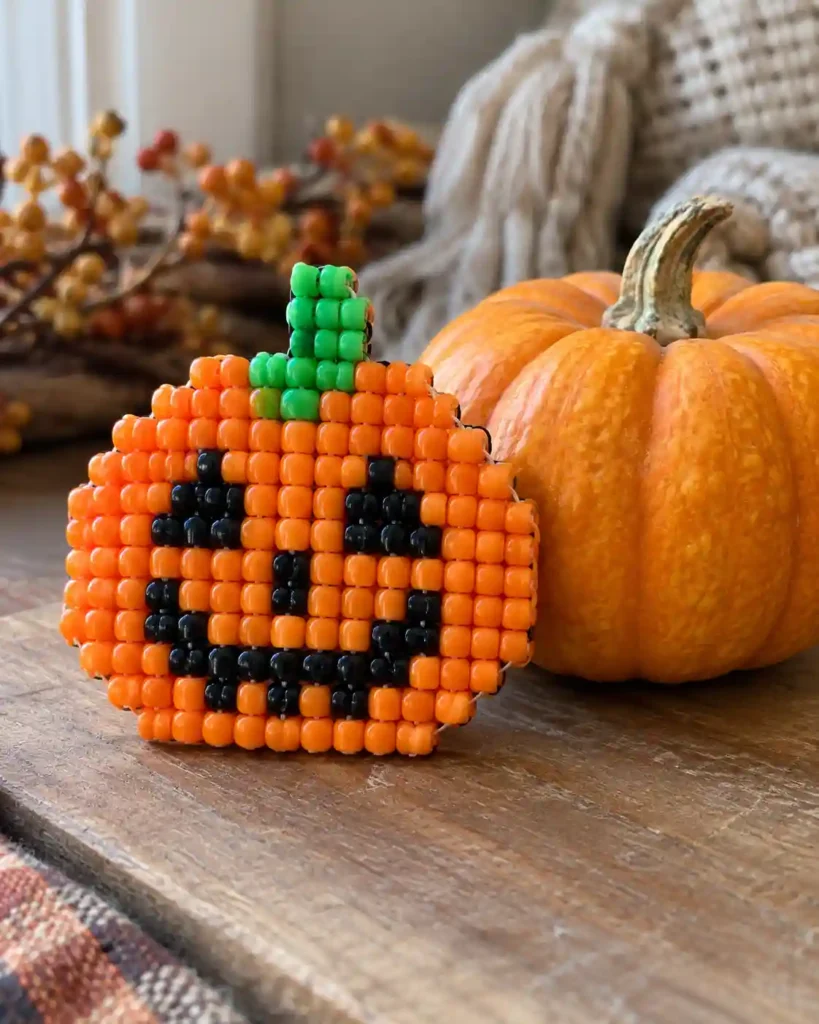
A jack-o’-lantern packs plenty of Halloween character into a square panel. Its bright orange shape, green stem, and black eyes look more vivid than delicate autumn patterns that rely on subtle shading. A small hanging beside a real mini pumpkin makes a fun seasonal display. For another seasonal crafting project, explore a crochet pumpkin pattern for handmade autumn decor. This is a quick-looking project for crafters who want a dramatic result from a simple palette.
Try triangular eyes and one broad smiling mouth rather than several miniature cutouts. Leave a border around the pumpkin so the silhouette stays distinct.
21. Is Candy Corn an Easy Halloween Tapestry?
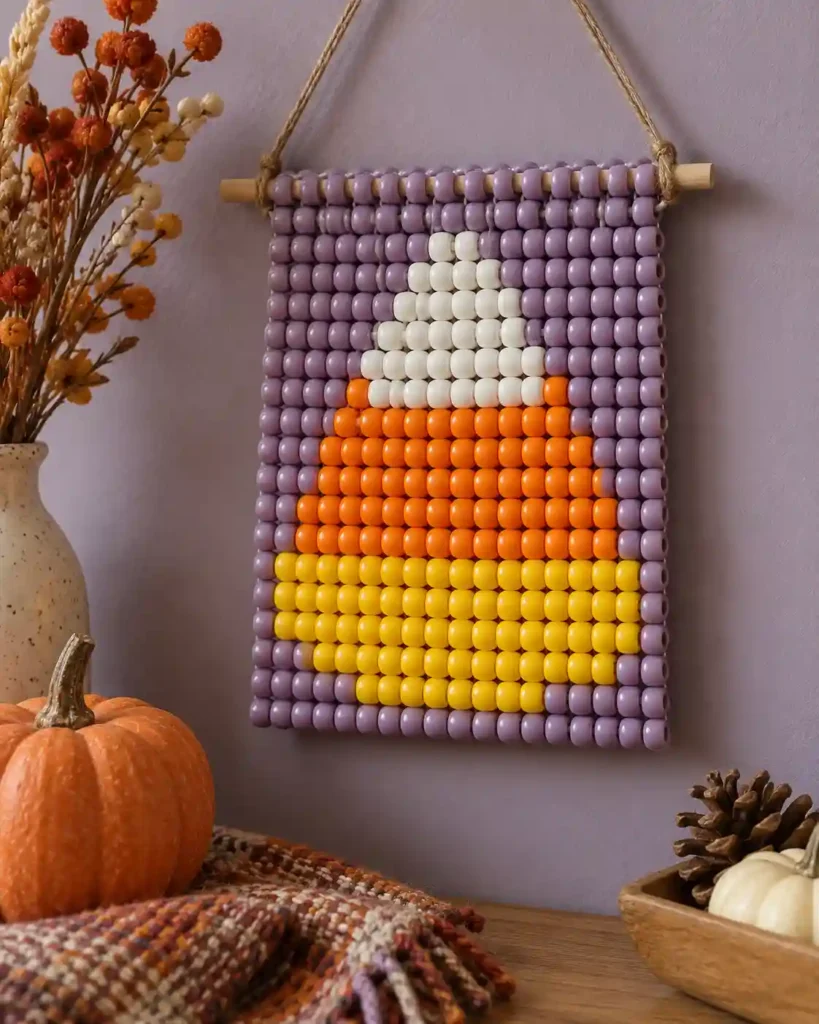
Candy corn is a playful beginner motif with a clear three-part color story. Cream at the tip, orange in the middle, and yellow at the base create an instantly familiar shape without complicated features. A narrow hanging would look cute on a kitchen cabinet or Halloween treat table. It is especially good for practicing centered, stepped diagonals before moving on to leaves or stars.
Build the triangle from its widest base upward and keep both sloping sides balanced. Use a contrasting background rather than leaving the shape visually floating.
22. Autumn Maple Leaf Tapestry
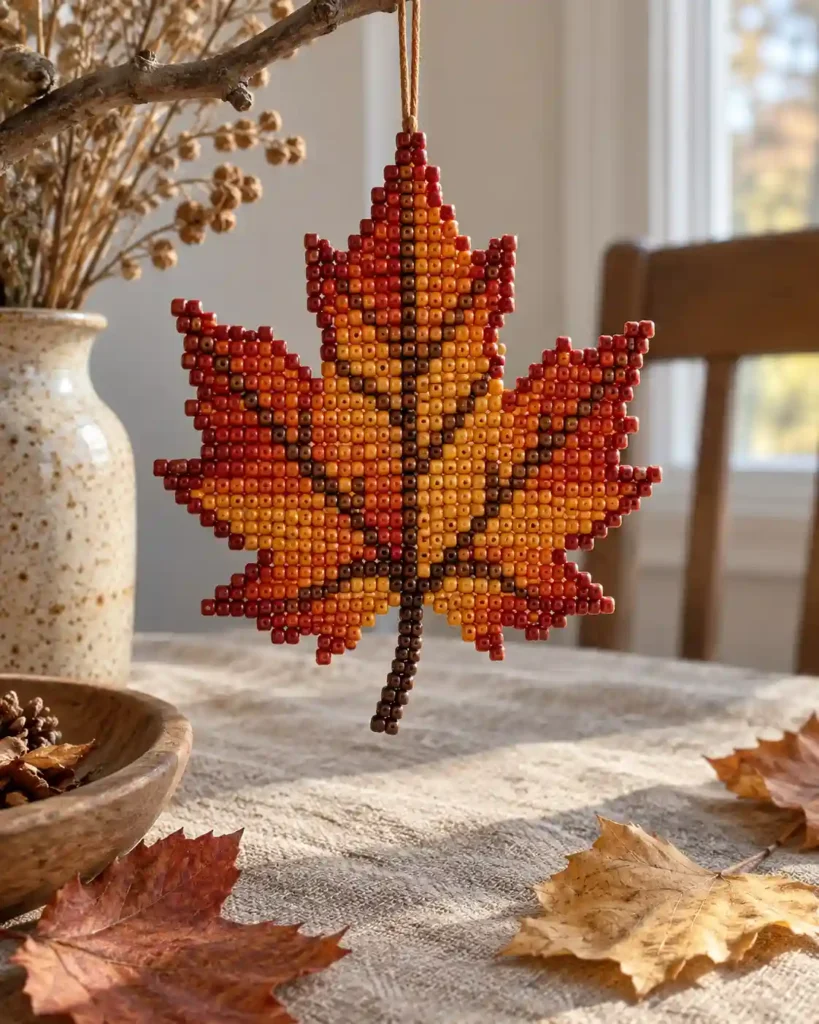
An autumn maple leaf feels more organic than the tidy geometry of hearts or checkerboards. Pointed lobes and jagged edges capture the season even with only burnt orange, ochre, and cream. Hung above a console with dried leaves, it gives a room a quiet handmade touch. This is a worthwhile intermediate challenge for anyone who has mastered simple diagonal outlines.
Sketch the overall leaf shape before filling the inner colors. Give the stem enough thickness to remain visible after the beads are threaded.
23. How Do You Make a Christmas Tree Tapestry?
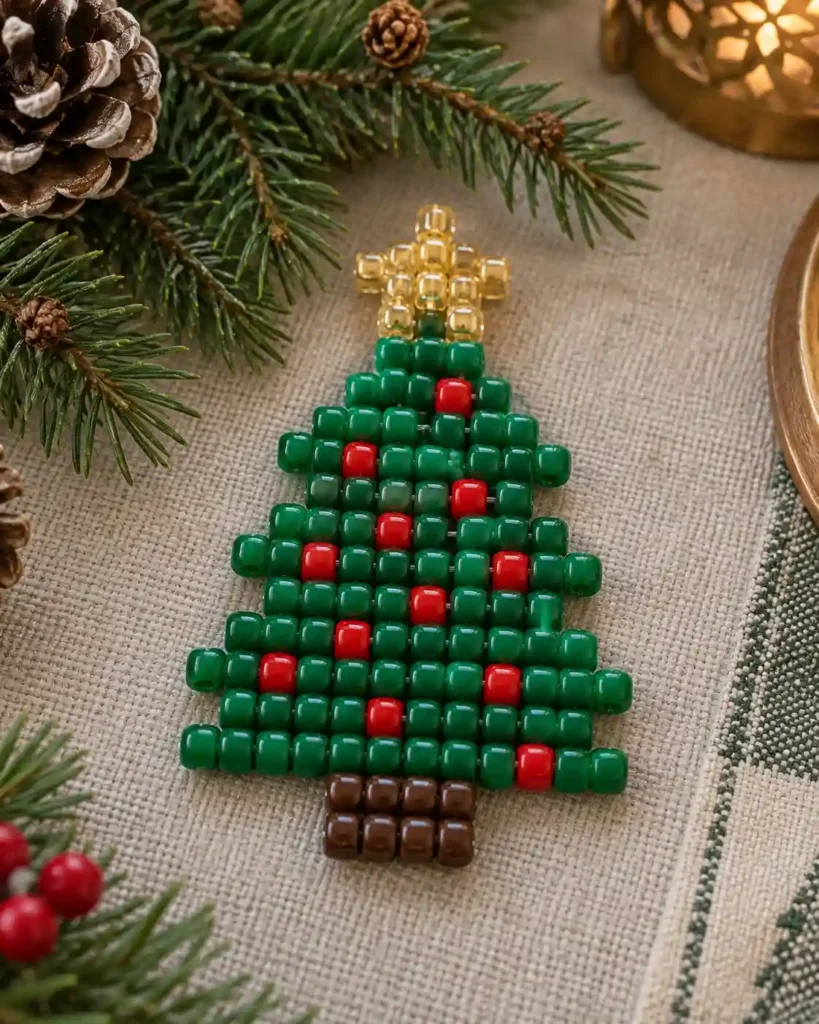
A miniature Christmas tree is an easy way to turn leftover green beads into holiday decor. Layered branches feel more festive than a plain green triangle, especially with red ornaments and a gold topper. It can hang on a door handle, shelf hook, or seasonal display dowel. Beginners who enjoy decorations will appreciate the forgiving symmetry and customizable details. You can also explore Christmas crafts for more handmade ideas to add to your holiday display.
Work from the widest branches upward, leaving space for a short brown trunk. Use only a few ornament beads so the tree does not lose its green shape.
24. Snowman Winter Tapestry
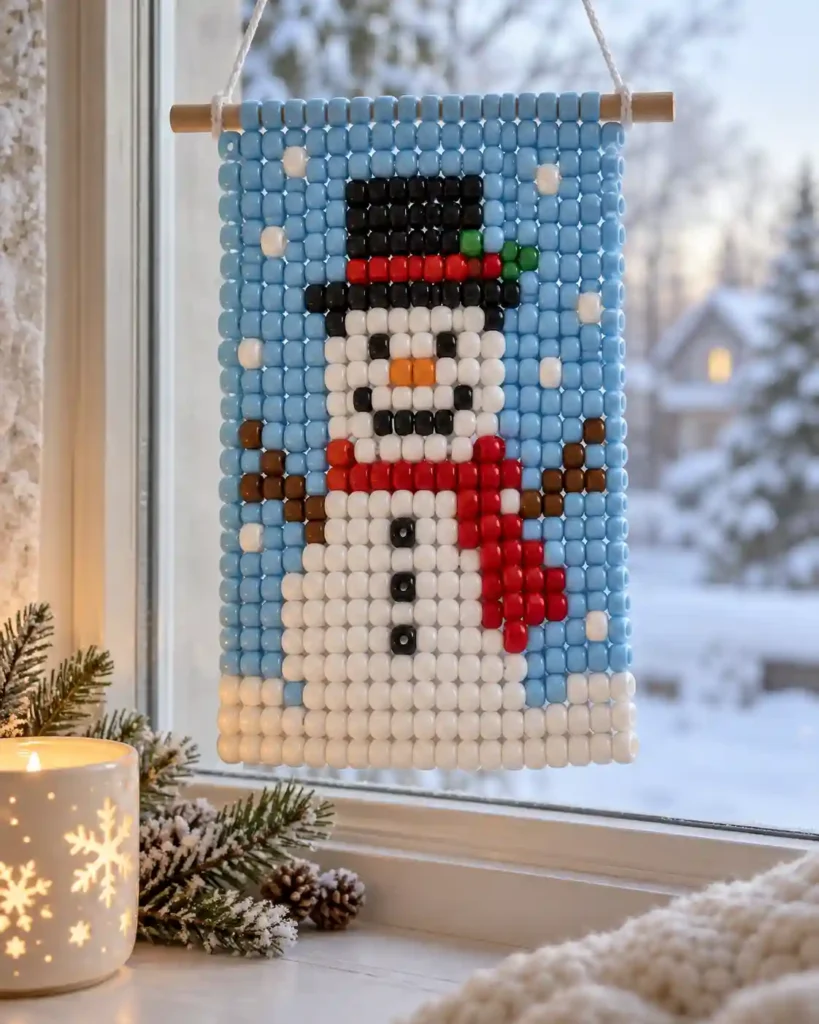
A snowman brings a cozy winter mood without needing a detailed landscape. Two rounded white sections, dark buttons, and a red scarf create a friendly face against icy blue. This would look particularly sweet by a winter windowsill or a holiday card display. It is an approachable project for someone wanting seasonal wall art that can stay up beyond Christmas.
Use enough blue background to keep the white body visible, and make the scarf a broad stripe. Tiny buttons should be spaced out rather than clustered.
25. What Makes a Sunset Landscape Tapestry Worth Trying?
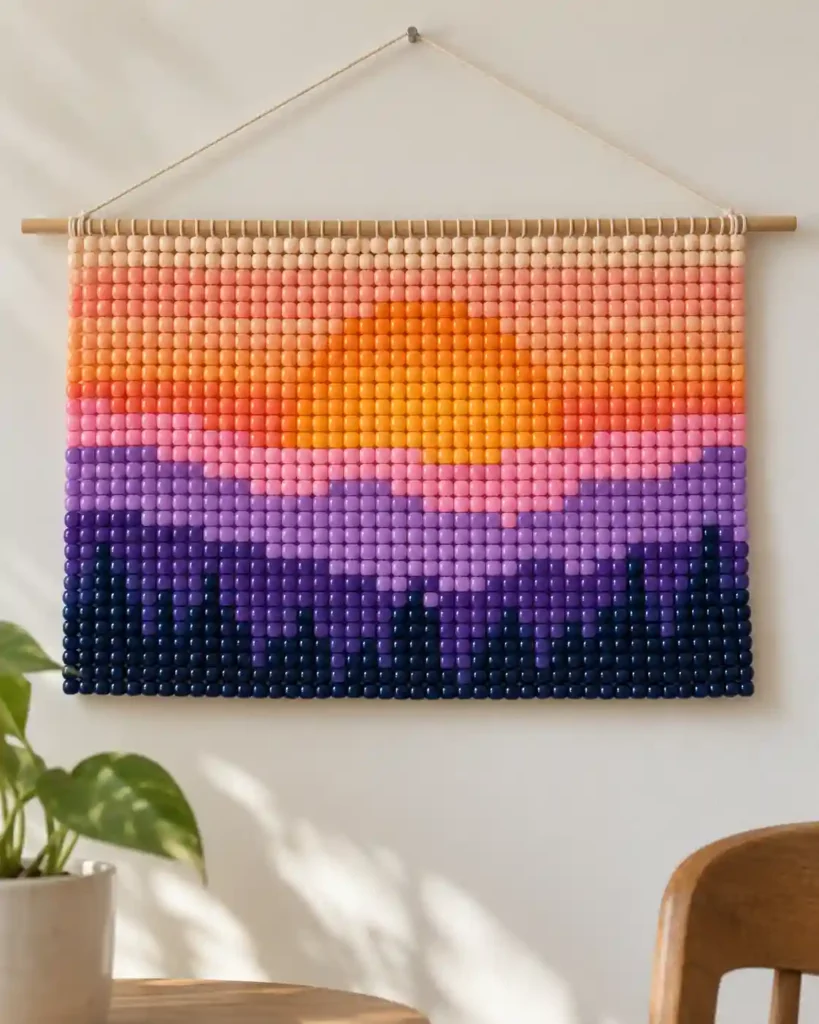
A sunset landscape is the big finish for a collection of smaller bead patterns. Bands of orange, pink, purple, and indigo create atmosphere without relying on intricate figures, while a dark mountain silhouette adds depth. A wider panel above a desk or on an empty wall gives those colors room to shine. Intermediate makers get the pleasure of a substantial piece with a beautifully simple overall idea.
Map the horizon first, then place the sun and the darkest foreground shapes. Lay out all the color transitions before threading so the bands stay consistent across neighboring strands.
What Supplies Do You Need for a Pony Bead Tapestry?
Use uniform pony beads, compatible strong cord, a wooden dowel, a chart, and basic cutting and measuring tools.
At a Glance
- Check bead-hole size against cord thickness.
- Prepare enough colors for your chosen motif.
- Test a knot and a short sample strand.
You do not need a complicated kit for a basic dowel-hung tapestry. Gather pony beads in a consistent size, strong cord that passes comfortably through their holes, scissors, a wooden dowel, a ruler, and a printed or hand-drawn color grid. If you enjoy experimenting with other bead crafts, a clay bead bracelet is another project to explore. Tape can help hold loose cord ends while you work. Test your chosen cord and knot with a few beads before cutting every strand.
Standard pony beads are often described as approximately 6 × 9 mm, but check the dimensions of the actual beads you buy. MakeBead notes that beads can appear wider than they are tall in a vertical hanging, which affects how a square chart looks when finished.
Safety note: Keep loose beads and long cords away from infants and toddlers. The U.S. Consumer Product Safety Commission identifies small parts as a choking, swallowing, and inhalation risk for children under three. Review the Commission’s small-parts safety guidance for additional information, follow product age labels, and supervise age-appropriate crafting.
How Do You Read a Pony Bead Tapestry Pattern Grid?
Read one grid cell as one bead, then follow the color key and the correct reading direction for your technique.
At a Glance
- Number columns or stitch rows before starting.
- Count only the cells that require beads.
- Check each finished strand against the chart.
Think of each colored cell as one bead position. In the vertical-strand method, the number of columns tells you how many hanging cords to prepare, while the number of occupied cells in a column tells you how many beads go on that cord. Number the columns, keep a simple color key nearby, and check off each one as it is finished.
For a fully filled 20-column × 24-row grid, the theoretical bead count is 480. If some cells are intentionally blank, subtract those positions. Count each color separately and keep a small supply of extras in case a bead is damaged or lost.
How Do You String a Flat Pony Bead Tapestry?
For a dowel-hung version, attach a cord for each chart column, thread its beads in order, and secure the bottom.
This beginner-friendly method creates a series of adjacent, hanging strands rather than an interwoven kandi panel. It follows the same basic construction demonstrated in At Yarn’s Length’s beaded sun-catcher tutorial.
- Make a color chart. Decide the width in columns and the number of beads on each vertical strand.
- Cut and attach cords. Prepare one cord per column, leaving extra length for attachment knots, the lower stop knot, and optional fringe. Tie each securely to the dowel in numbered order.
- Thread top to bottom. Working on the first cord, add beads according to the first chart column, then push them into position below the dowel.
- Knot and repeat. Secure a stop knot beneath the last bead. Continue with the next column, checking that neighboring colors line up.
- Adjust and display. Straighten the cords, even out the lower fringe, and add a securely attached hanging loop at both ends of the dowel.
Not all pony bead tapestries use this construction. Some connected kandi designs use peyote or other stitches; the Kandi Pad horizontal-stitch tutorial describes a more involved alternative. Choose a method first, then use a chart compatible with it.
How Big Should Your Pony Bead Wall Hanging Be?
Estimate finished dimensions from bead size and grid count, then verify them with a short threaded sample.
Size depends on actual bead dimensions and orientation, not merely how square the paper grid looks. For vertically hanging 9-mm-wide, 6-mm-tall beads, a fully filled 20-column by 24-bead panel has an approximate beaded area of 18 cm wide × 14.4 cm high, excluding spacing, knots, dowel, and fringe. Treat this as a planning example rather than a guaranteed finished measurement.
Smaller designs are easier to manage on a narrow dowel; larger scenes allow more detail and smoother curves. Before cutting all the cords, thread a short test strand and measure it, then adjust your grid proportions if the image looks too wide.
How Can You Avoid Common Pony Bead Tapestry Mistakes?
At a Glance
- Choose clearly contrasting colors for small features.
- Keep column spacing and cord tension consistent.
- Check chart orientation before threading each strand.
- Do not iron standard strung pony bead tapestries.
The most common problems are weak contrast, mismatched cord lengths, uneven knot tension, and details too small for the grid. Choose colors that are visibly different in ordinary room light, check the chart after each column, and resist pulling the cords so tightly that the dowel-hung picture bunches up. A test swatch is more useful than guessing how tightly the beads will settle.
Also, pony beads and fuse beads are not interchangeable construction materials. Perler’s official instructions describe arranging fuse beads on a pegboard and joining them with heat; a pony bead tapestry is threaded instead, with no ironing involved. A pixel drawing can inspire both crafts, but its dimensions and assembly instructions need adapting.
FAQs About pony bead tapestry patterns free
Where can I find free pony bead tapestry patterns?
You can browse pattern ideas and build a printable color chart with a free bead-pattern maker such as MakeBead. Check that any chart you download is suitable for your chosen stringing method and that its creator permits your intended use.
For pony bead tapestry patterns, look for a legible color key and a chart that matches the construction method.
Can beginners make a pony bead tapestry?
Yes. Start with a mini heart, checkerboard, candy corn, or friendly ghost, and use a small grid with high-contrast colors. Practice a few strands before moving to a larger picture.
For your first pony bead tapestry pattern, choose a bold shape with just two or three colors.
How many pony beads do I need for a tapestry?
Multiply the grid’s columns by its rows if every cell is filled, then subtract empty positions. For example, 20 × 24 gives 480 beads; use the actual chart to work out counts by color.
Do I need a bead loom?
Not for a basic dowel-hung tapestry made with separate vertical cords. Interwoven kandi or loom-style designs follow different methods, so use instructions that match your chosen pattern.
Why is my pony bead tapestry curling or uneven?
Uneven cord spacing, mismatched bead counts, and over-tightened knots can distort the shape. Check the chart, adjust the strands gently, and secure them evenly across a straight dowel.
Final Thoughts
Creating your own pony bead tapestry is a fun way to turn simple, colorful beads into beautiful handmade wall art. Whether you love cute hearts, cheerful flowers, adorable animals, or seasonal designs, these 25 pony bead tapestry patterns offer plenty of inspiration for your next creative project.
If you’re just getting started, choose an easy design like a heart, checkerboard, or little ghost. As you gain confidence, experiment with more detailed patterns, unique color combinations, and larger wall hangings. Remember, a clear bead grid, the right materials, and a little patience can make all the difference.
The best part about exploring free pony bead tapestry patterns is the freedom to personalize every design. Pick your favorite idea, plan your colors, and enjoy creating something handmade that reflects your style.
Which pony bead tapestry pattern will you try first? Save your favorite ideas and start creating your next colorful masterpiece!

![The Best 30+ Free Crochet Cat Patterns [Beginner-Friendly Guide]](https://crochetmind.com/wp-content/uploads/2025/04/1-The-Best-30-Free-Crochet-Cat-Patterns-Beginner-Friendly-Guide.webp)