




A crochet cable stitch creates a raised, twisted design by crossing stitches, usually tall stitches worked around the posts of earlier stitches. This guide covers 12 cable techniques and 13 project ideas, from a small beginner swatch to textured blankets and a crochet cable stitch sweater. You will also learn which effects are true crossed cables, which are look-alikes, and what to check before starting a larger project.
Cables can look intimidating when you first see them. But once you understand where your hook goes, those dramatic twists start to make sense. The trick is to practice the crossing on a little square before committing to a sweater or blanket.
Maybe you’ve spotted a beautiful raised braid on a handmade scarf and wondered how to create something similar with your crochet hook. Starting with a simple crochet cable stitch pattern makes the learning process easier, especially when you can practice each crossing before moving on to larger projects. From delicate mini twists to bold sweater cables, there is plenty of room to experiment and find a texture that suits your style.
Key Takeaways
- Learn front post stitches before attempting crossed crochet cables.
- Practice a crochet cable stitch pattern on a small swatch.
- Choose mini twists and faux cables for easier projects.
- Use smooth yarn to highlight raised cable textures.
- Check gauge before making blankets, hats, and sweaters.
- Follow tested instructions for advanced braided and Celtic cables.
What Is a Crochet Cable Stitch, and How Does It Work?
In a typical structural cable, you work around the post (the upright body) of an earlier stitch rather than under the two loops at the top. A front post double crochet (FPdc) brings that post forward, while a front post treble crochet gives more height for crossing groups of stitches. A cable forms when the pattern tells you to work one group, then return to another group you passed over.
The Craft Yarn Council’s crochet abbreviations define FPdc and FPtr in US terminology and explain that designers may introduce their own special abbreviations. That distinction matters: a four-post crossing in one tutorial may not use the same written shorthand or setup rows as another.
| Cable approach | What creates the texture? | Starting level | Good use |
|---|---|---|---|
| Mini twist | Small crossed post-stitch groups | Beginner with post-stitch practice | Sample square, headband |
| Classic four-post cable | Two groups crossing over each other | Intermediate | Scarf, sweater panel |
| Braided or Celtic cable | Repeated, sometimes interlaced crossings | Intermediate to advanced | Statement panel, cushion |
| Cable rib | Vertical ribs beside raised twists | Confident beginner to intermediate | Scarves, fitted accessories |
| Faux or surface cable | Raised texture or an applied line without a structural crossing | Beginner | Quick decorative projects |
| Tunisian cable | A motif worked in Tunisian crochet fabric | Intermediate | Knit-look samples and throws |
How Can You Practice Crochet Cable Stitches Before Starting a Project?
Practice front post stitches on a small swatch, then follow a tested crossing sequence while keeping your stitch counts and tension consistent.
Start with smooth, light-colored yarn so you can see the posts clearly. Make a few rows of plain fabric, locate the stitches around which your hook will travel, and practice front post stitches before attempting a crossing. Follow a tested tutorial for the exact skip-and-return sequence; the stitch counts are not universal. Then work a few more rows to see how the twist settles into the fabric.
For a detailed visual example, WeCrochet’s post-stitch cable guide demonstrates how crossed front post stitches form the twist. Keep your pattern’s row counter handy, especially when the cable is only crossed every few rows.
At a Glance
- Yarn: Smooth, light-colored yarn for visible stitches.
- Hook: The size recommended for your practice pattern.
- Technique: Front post stitches followed by crossed stitch groups.
- Practice project: A small rectangular crochet swatch.
- Important check: Crossing direction, stitch counts, and tension.
Which Crochet Cable Stitch Patterns Should You Learn First?
Start with mini cable twists and simple raised textures before progressing to four-post cables, braided stitches, Celtic weave, and Tunisian techniques.
The following 12 crochet cable stitch ideas move from approachable raised textures to more detailed decorative patterns. Some use actual crossed post stitches, while others achieve a cable-like appearance through alternative techniques.
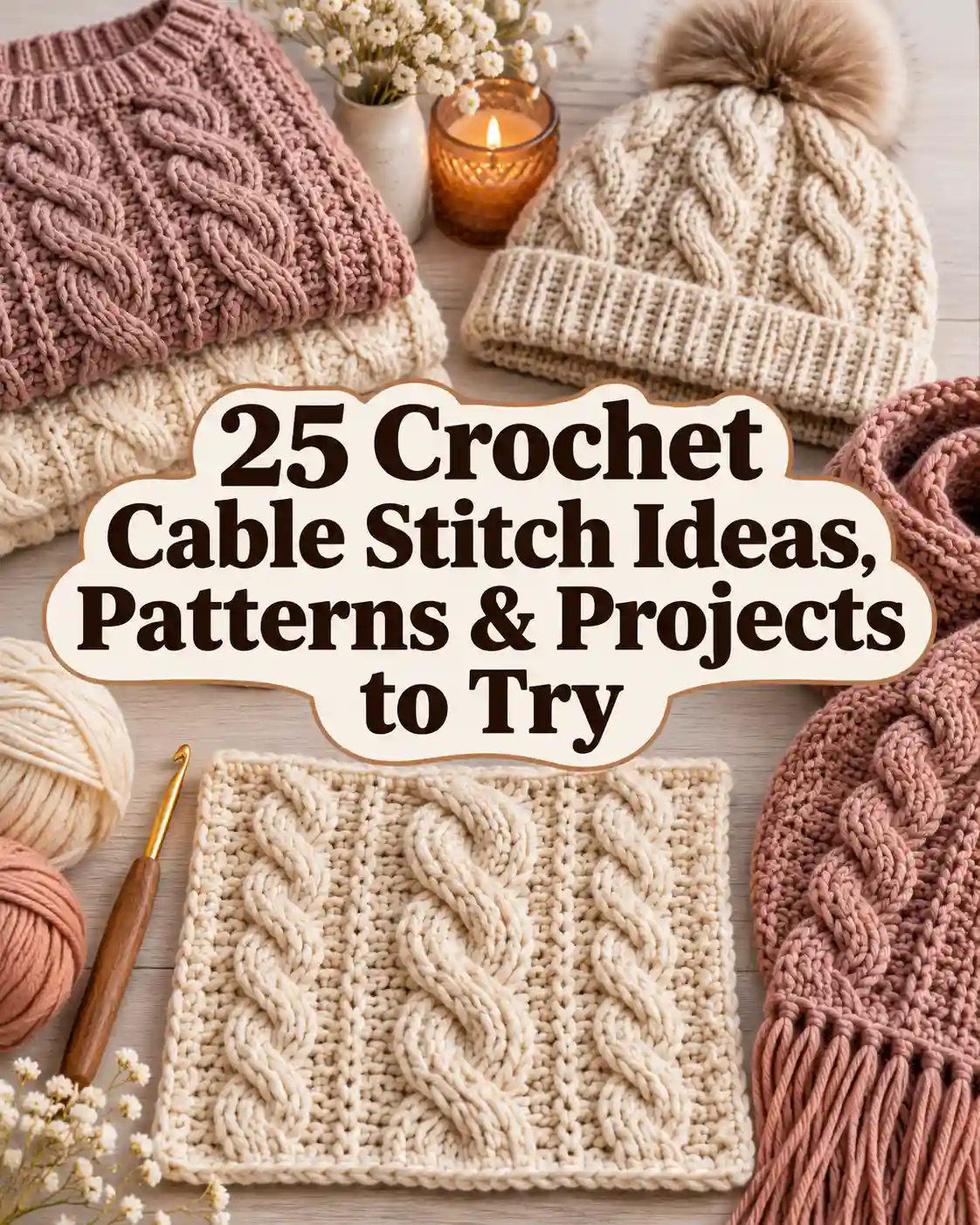
25 Crochet Cable Stitch Ideas, Patterns & Projects to Try
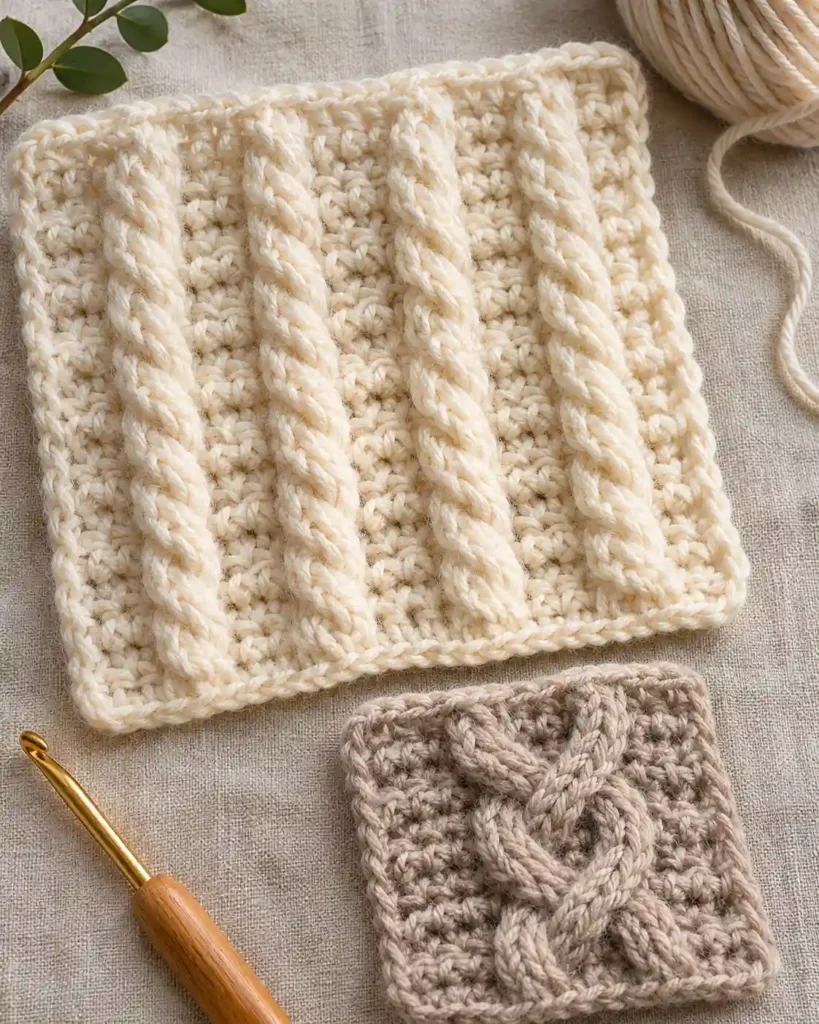
1. Why Start with a Two-Post Mini Cable Twist?
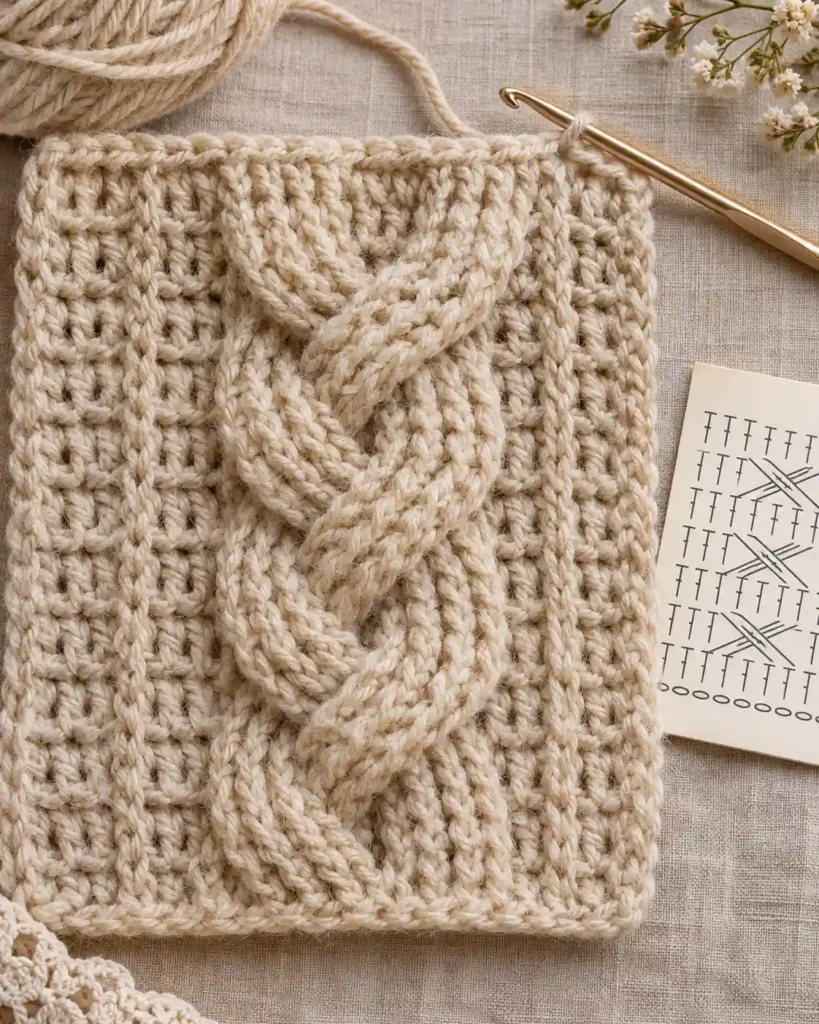
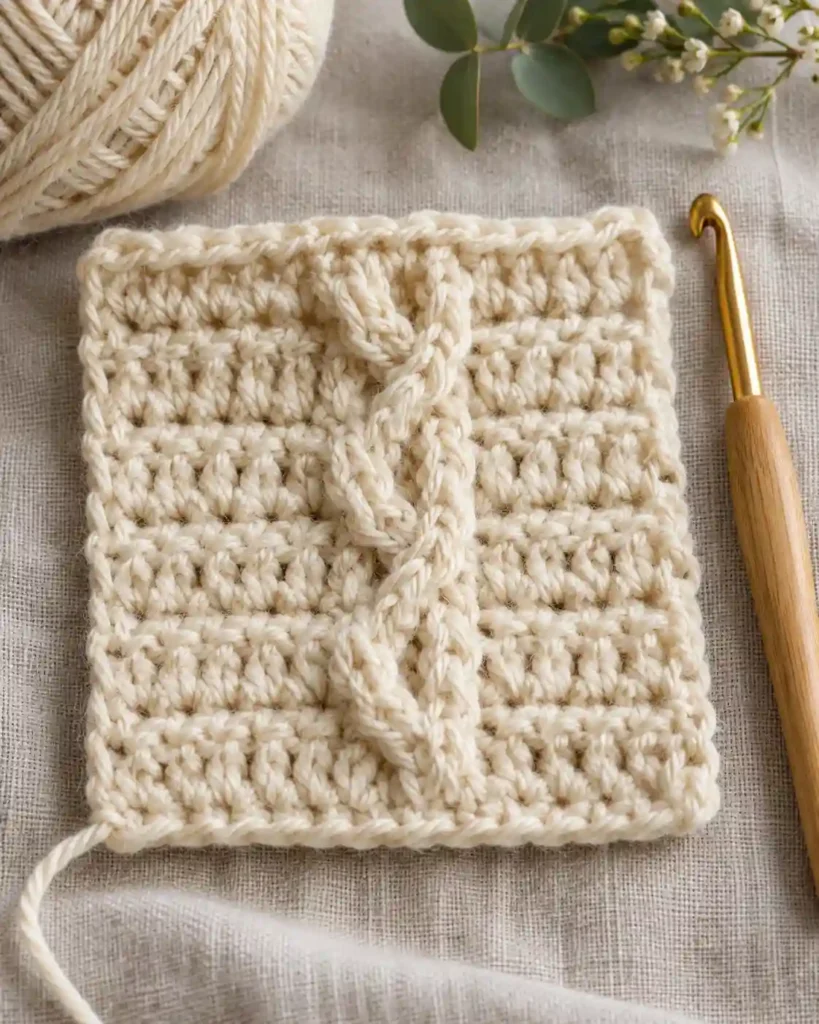
The two-post mini cable twist is a small detail with a surprisingly noticeable result. Instead of wrestling with a broad braid, you only have a narrow crossing to track, which makes it easier to see where the second group belongs. Try it in the center of a practice square, using plain stitches on both sides as a frame. It is a smart first choice for anyone who knows the basic post stitches but has never crossed them.
Special tip: Put a stitch marker beside the cable column, not inside the crossing, so you can find the right area on the next row.
2. How Does a Classic Four-Post Crossed Cable Take Shape?
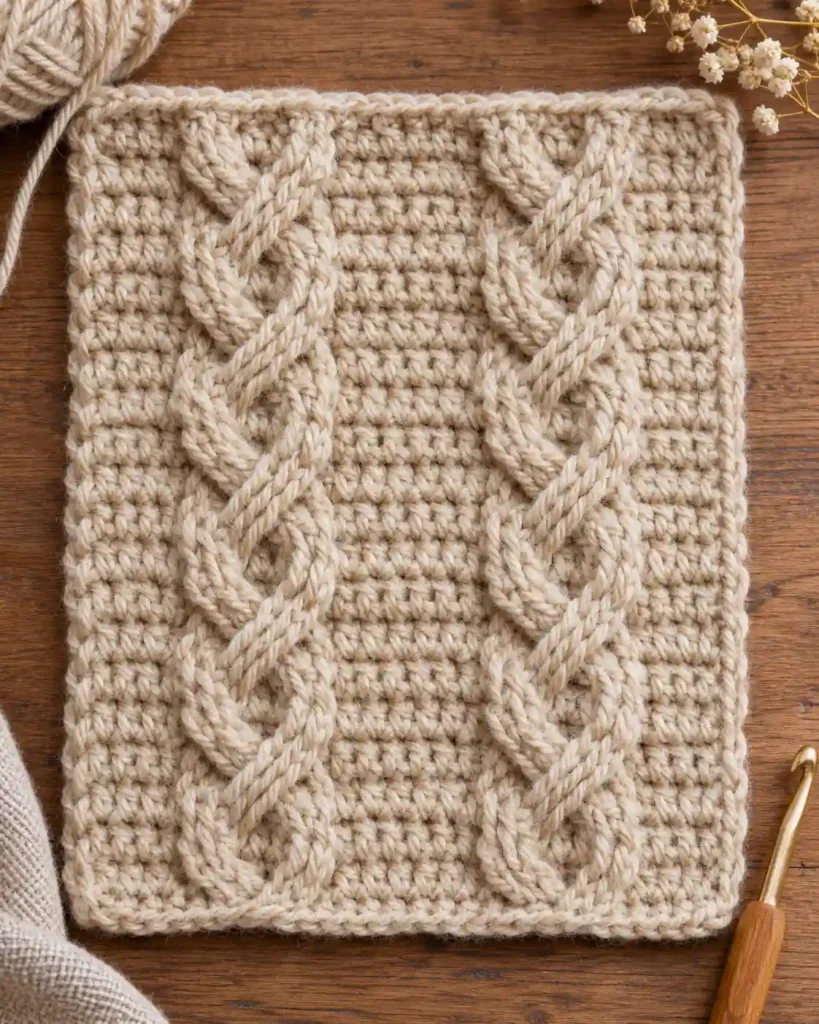
A classic four-post cable has the familiar rope-like twist many people picture when they hear “cable crochet.” The crossing looks fuller than a mini twist, but it still leaves enough plain fabric around it to make each movement visible. This is a useful stitch for a central scarf panel or the front of a sweater. Learn the direction of the crossing first; a left-leaning twist and a right-leaning twist will not look identical.
Check both the chart and written instructions, where available. Some designers use taller post stitches or different foundation rows to reach the stitches comfortably.
3. What Makes a Six-Post Braided Cable So Bold?
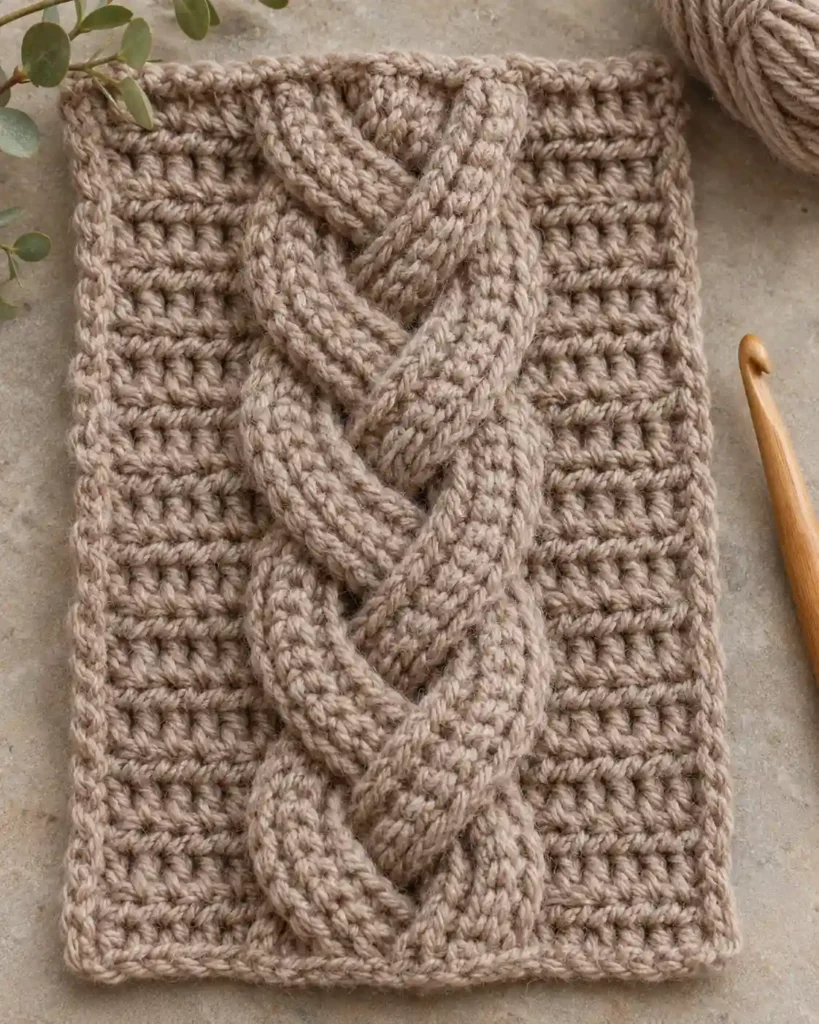
A six-post braided cable builds a thick, interlocking-looking feature across several rows. It attracts more attention than a narrow twist, which is why it works beautifully as a single statement stripe rather than an all-over repeat. Picture one braid running along a cushion front or down the middle of an infinity scarf. It is worth trying when you are ready to watch several stitch groups instead of only two.
Do a contrast-color swatch first. Alternating crossing directions can change the braid’s appearance, and the pattern’s stitch order matters more than the name “six-post.”
4. Can a Crochet Cable Rib Stitch Stretch Like Regular Ribbing?
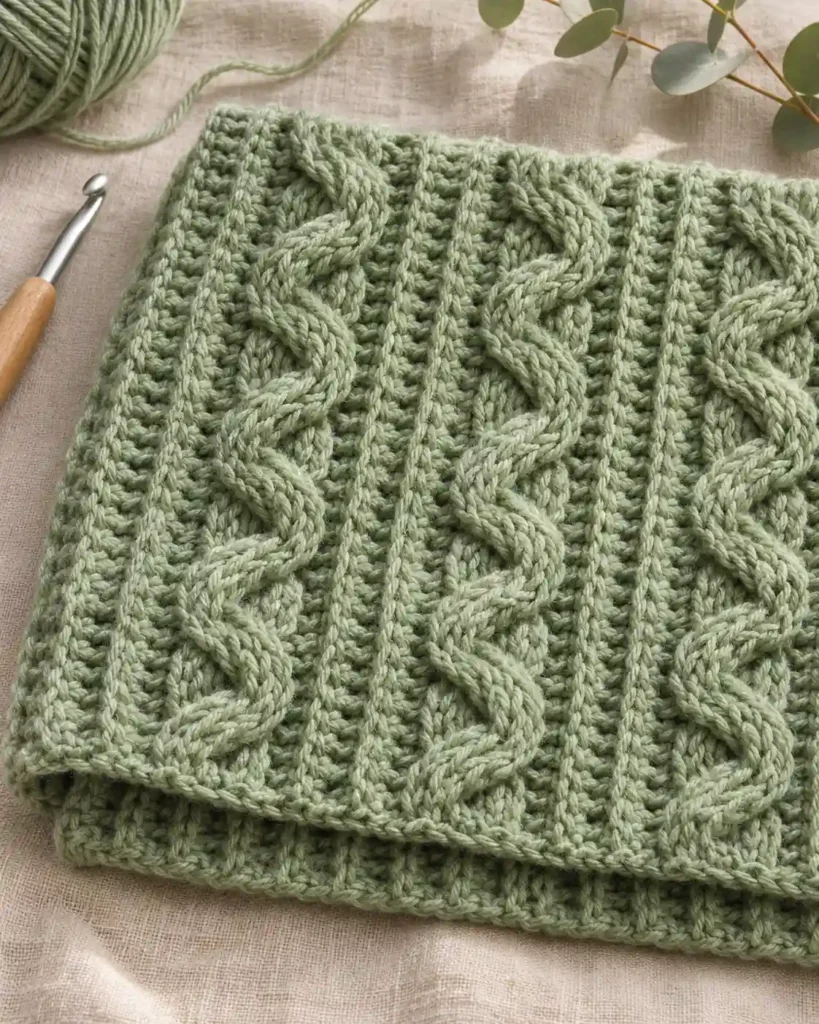
Cable rib combines orderly vertical ridges with occasional raised twists, creating a textured fabric that feels both familiar and special. Plain ribbing is simpler and often more elastic, so adding cables means you should check stretch instead of assuming the same fit. A scarf or sweater side panel is an easy place to appreciate the combination. Choose it when you want a knit-inspired look without covering every inch in big braids.
Test the relaxed and gently stretched width of your sample, particularly for cuffs or hat brims. A pretty cable does not automatically make a comfortable fitted edge.
5. Why Use Twin Cable Stitch Columns?
Two matching cable columns bring symmetry to an otherwise quiet piece of crochet. A single oversized braid can dominate a design, while twin cables leave room for plain stitches between them and give the eye somewhere to rest. This works especially well on a sweater front or a rectangular blanket panel. It suits anyone who prefers balanced texture over a busy, all-over pattern.
Before starting, sketch the cable positions against the full stitch count. Even spacing at the edges matters as much as the cables themselves.
6. How Can You Make a Thick Raised Cable Stitch Stand Out?
Thick raised cables are all about depth: the twist catches light and creates a strong shadow in the fabric. Bulky yarn can exaggerate that effect, although it may also make a crossing feel stiff or difficult to pull through. On a winter throw or oversized cushion, one bold cable can be enough. Try this style if you want maximum texture and do not mind a fabric with a little more structure.
Do not force the yarn tight around the crossing. If the swatch puckers, review your stitch height and hook choice before scaling up.
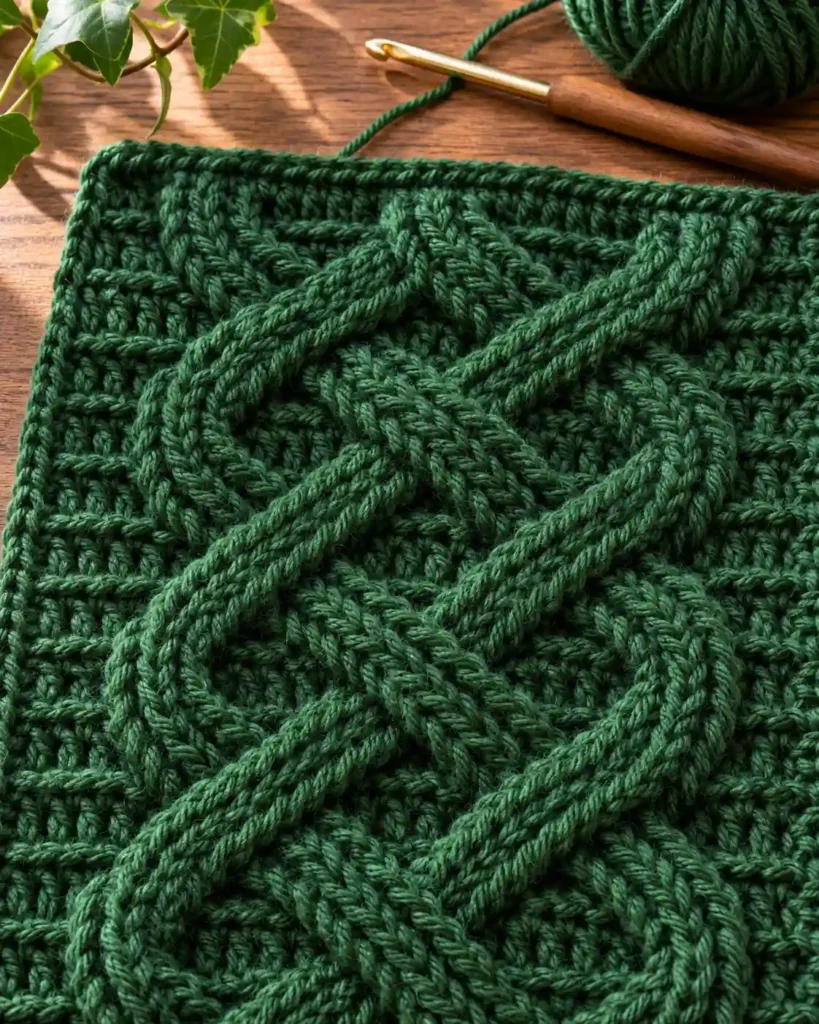
7. Is Celtic Weave Crochet Cable Stitch Difficult?
Celtic-inspired cable texture looks like raised strands passing over and under each other. The result is more intricate than a straight rope cable because your eye follows the crossings in different directions. It makes a striking decorative panel for a bag, cushion, or blanket. Save this one until you are comfortable reading charts and keeping your crossing rows in order; the effort pays off in a richly woven appearance.
The “Celtic” label describes a design style here, not proof of a particular historical origin. Use the specific pattern’s chart rather than improvising its crossings.
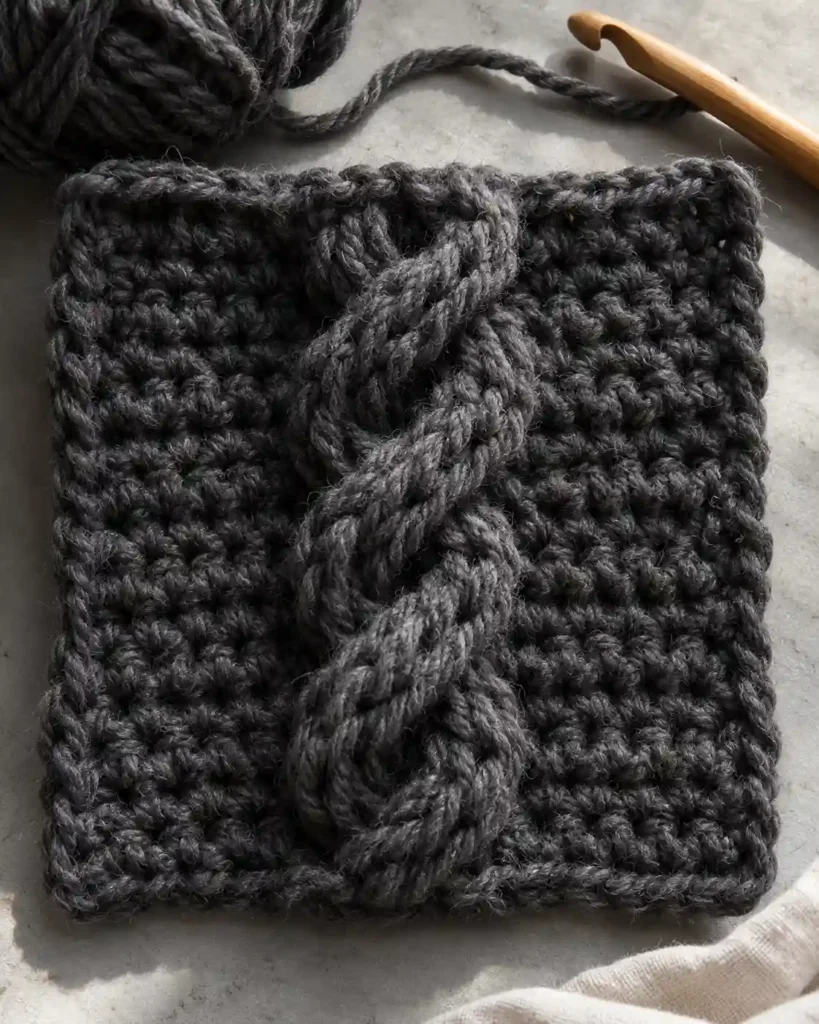
8. When Is a Faux Cable Crochet Stitch the Better Choice?
A faux cable gives you a raised, twisted-looking line without necessarily crossing groups of post stitches. That can be welcome news when you like the cable aesthetic but want a quicker or flatter fabric. Use a mock cable on a simple hat band, washcloth, or easy scarf where intricate crossings would get in the way. It is ideal for beginners who want the appearance first and the complicated technique later.
A faux cable is not a mistake or a lesser design. Just label it honestly so readers know whether they are learning an actual crossing.
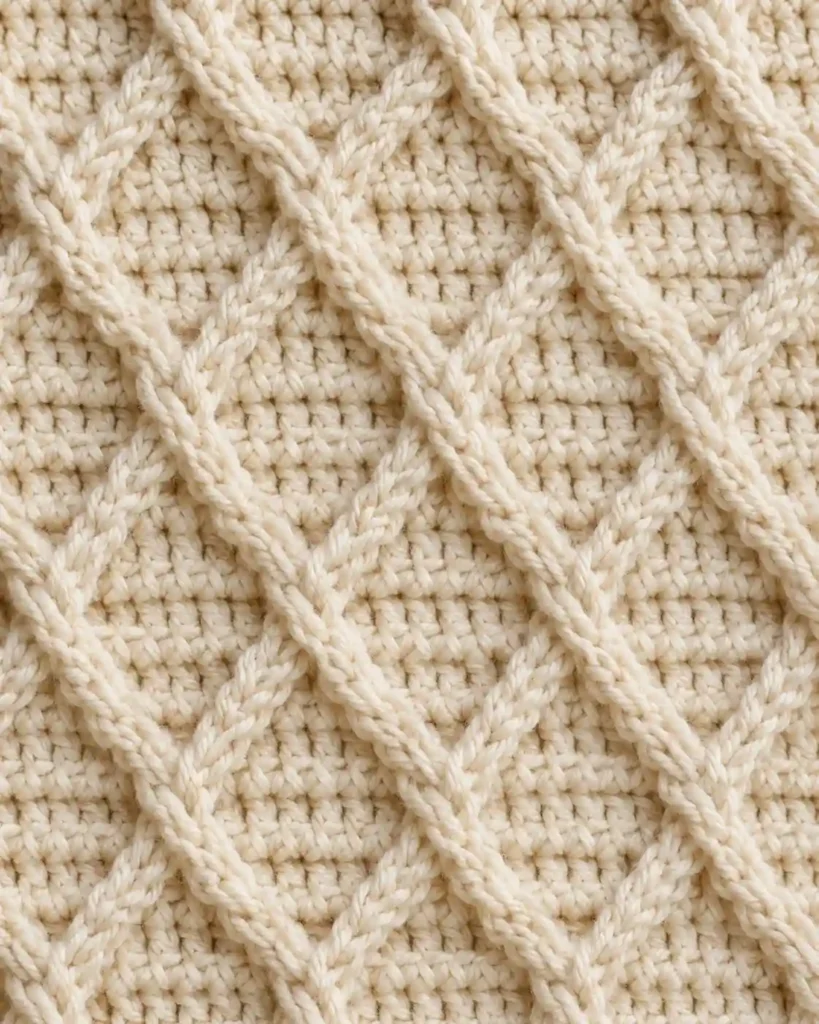
9. How Does a Diamond Lattice Cable Stitch Work?
Diamond lattice cables turn raised lines into a repeating geometric network rather than a vertical rope. Their beauty comes from careful placement: the diagonal strands need enough space to meet cleanly, and uneven repeats quickly show. A small decorative panel lets you enjoy the pattern without handling a whole blanket. Choose this idea if you love structured, detailed crochet and are happy to follow a chart row by row.
Place markers at the edges of each repeat and photograph your swatch every few rows. It is much easier to spot a wandering diamond early.
10. What Is a Leafy Rib and Cable Texture?
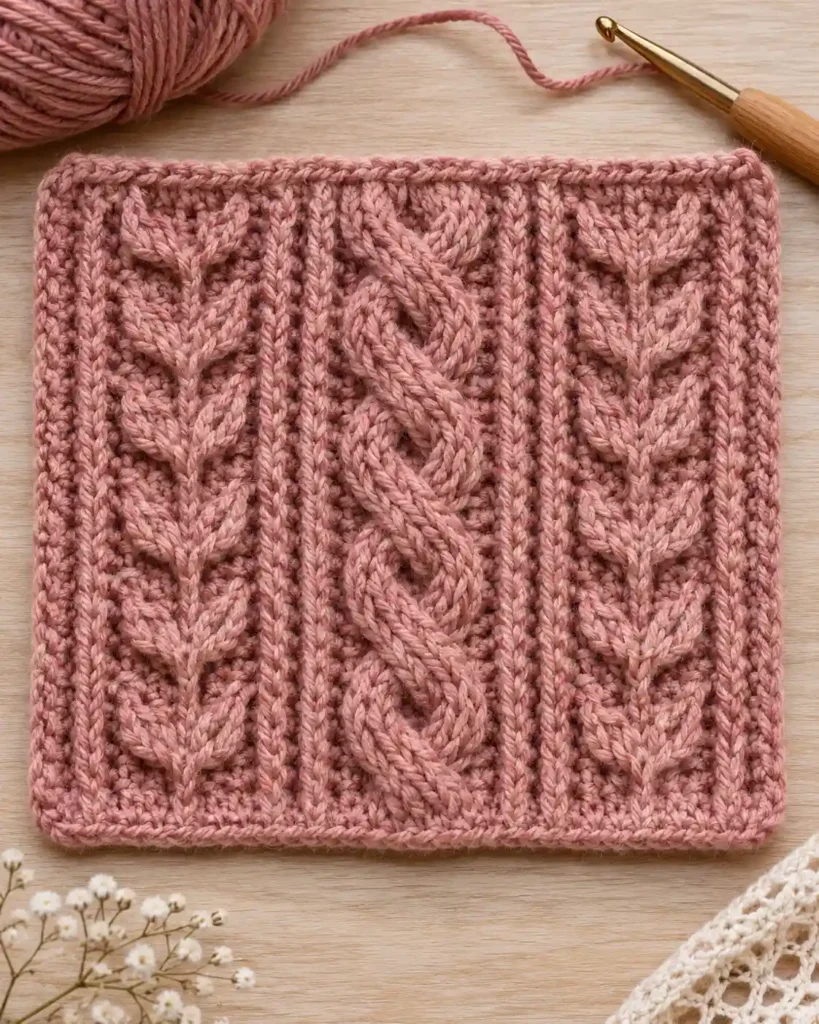
Leafy rib and cable texture pairs slim vertical ridges with raised, leaf-like accents. It has a softer, more botanical feel than a straightforward braid, so it can add charm to a cushion front or handbag panel. This is a design concept to develop from a tested stitch chart, not one universal stitch pattern with fixed counts. Try it when your goal is decorative detail and you have the patience to keep several motifs aligned.
Smooth yarn helps the leaf shapes remain distinct. Heavily fuzzy yarn can hide the very details that make this style appealing.
11. Can You Make Cables with Tunisian Crochet?
Tunisian crochet can create cable-like motifs in its own structured fabric, often with a beautiful knit-look finish. It differs from ordinary cable crochet because Tunisian rows are formed through a forward pass and a return pass, typically with a longer hook. A small swatch is a far better first experiment than a full Tunisian throw. Choose this technique if you already enjoy Tunisian crochet and want another way to build texture.
The Craft Yarn Council’s Tunisian abbreviations distinguish FwP (forward pass) from RetP (return pass). Use Tunisian-specific instructions instead of translating a standard front-post cable mechanically.
12. What Can a Surface Crochet Cable Effect Add?
Surface crochet lets you place a visible decorative line onto fabric you have already made. Unlike a structural cable, the raised motif sits on top rather than being formed by crossed stitches in the underlying rows. It is handy for refreshing a plain bag panel or adding a rope-like curve to a finished cushion. If you would rather decorate existing fabric than recalculate a complicated repeat, this is the friendlier option.
Use a contrasting yarn for clear definition and keep the surface stitches relaxed. A tight overlay can draw the fabric inward.
Which Crochet Cable Stitch Projects Are Worth Making?
Crochet cable stitches work well in scarves, hats, blankets, sweaters, cushions, and decorative accessories when the stitch repeat, fabric weight, and finished shape are considered together.
Once you have a cable swatch you like, a project gives those stitches a reason to shine. Match the cable’s width and stiffness to the object’s shape: a drapey scarf needs different behavior from a structured pillow cover.
At a Glance
- Small accessories: Headbands, beanies, and fingerless mitts.
- Winter wearables: Straight scarves and braided infinity scarves.
- Home décor: Cable blankets, throws, and cushion covers.
- Garments: Pullovers, cardigans, and sweater vests.
- Seasonal projects: Textured crochet pumpkins and decorative gifts.
13. Why Is a Beginner Cable Stitch Scarf a Good First Project?
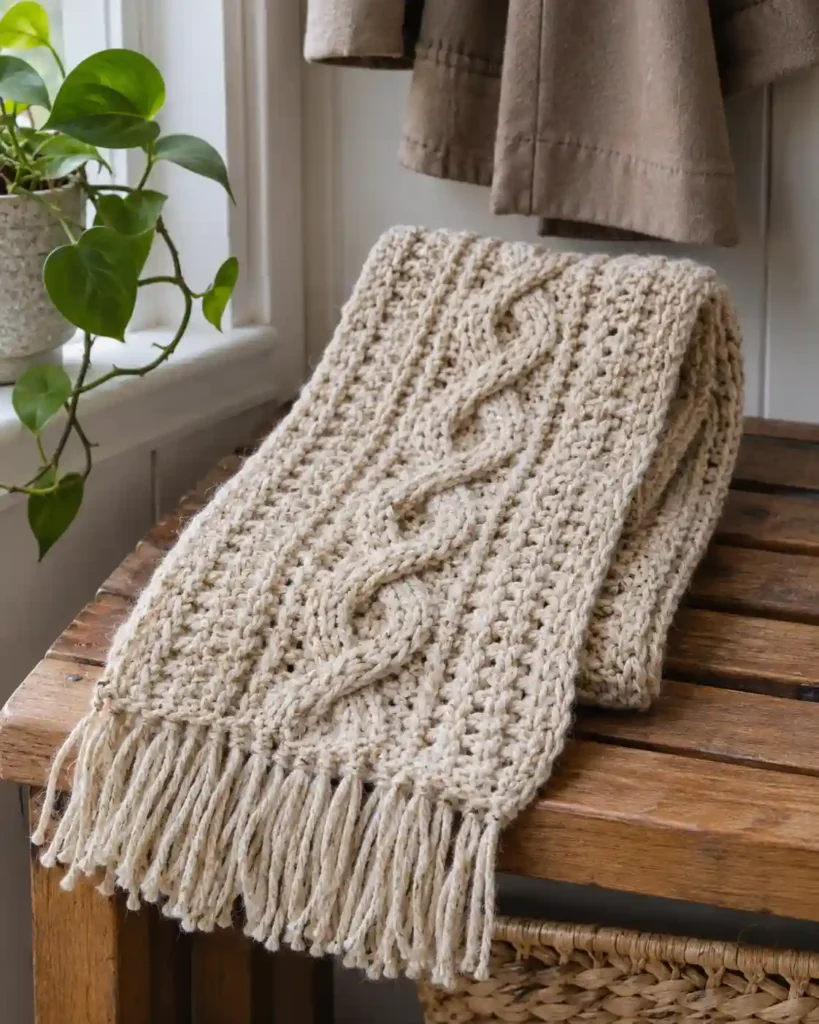
A beginner cable stitch scarf gives one simple twist room to run the full length of the fabric. You can keep the borders plain, which makes mistakes easier to notice than in a blanket filled with repeats. A rectangular scarf is forgiving because you do not need to shape a neckline or crown, and quick easy crochet scarf patterns offer more beginner-friendly project inspiration. It is a great next move after a successful swatch, especially if you want something wearable from your new skill.
For a crochet cable stitch scarf free pattern, confirm that the linked instructions actually provide stitch counts, repeat rows, and a usable finished size. An inspiration photo alone is not a pattern.
14. How Does a Braided Cable Infinity Scarf Differ?
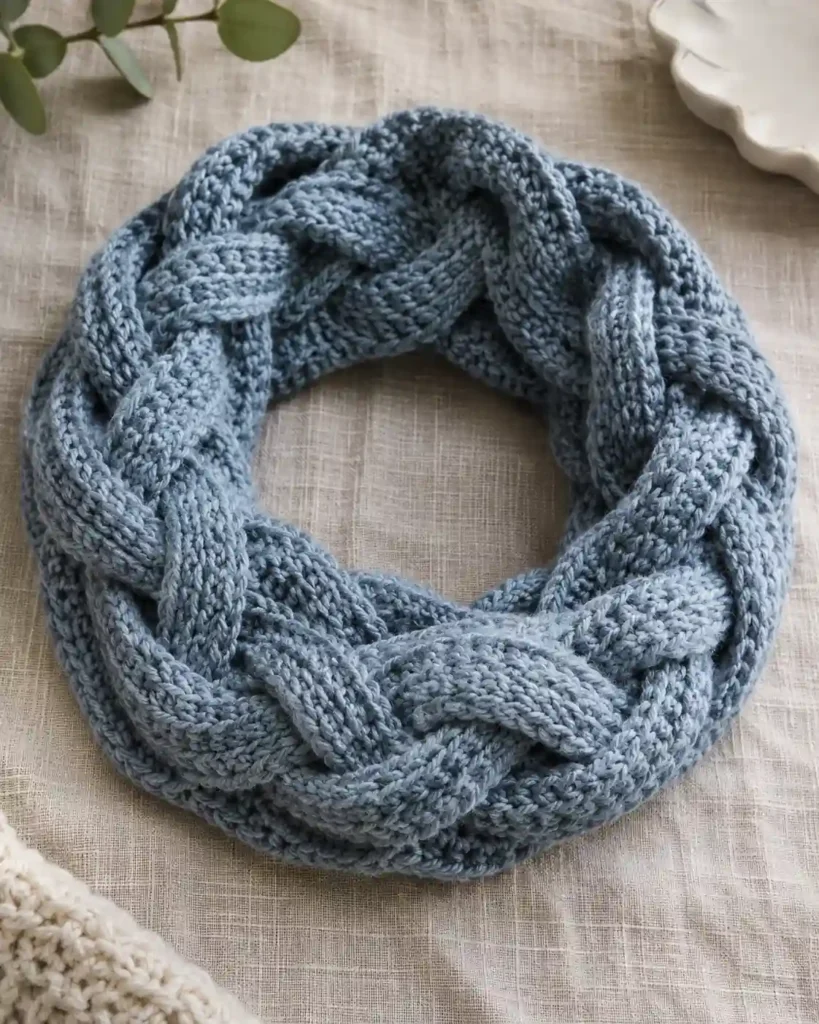
An infinity scarf wraps the cable into a continuous loop, so a wide braid gets shown off every time the fabric drapes around the neck. Compared with a straight scarf, the join needs extra thought: a mismatch can interrupt the cable rhythm. This shape is lovely with a softer yarn that bends without feeling bulky at the throat. Pick it if you want a cozy accessory with one strong textured feature.
Check whether the pattern is worked as a joined rectangle or in rounds. The method affects how you handle the cable direction.
15. What Makes a Cabled Crochet Beanie Fit Well?
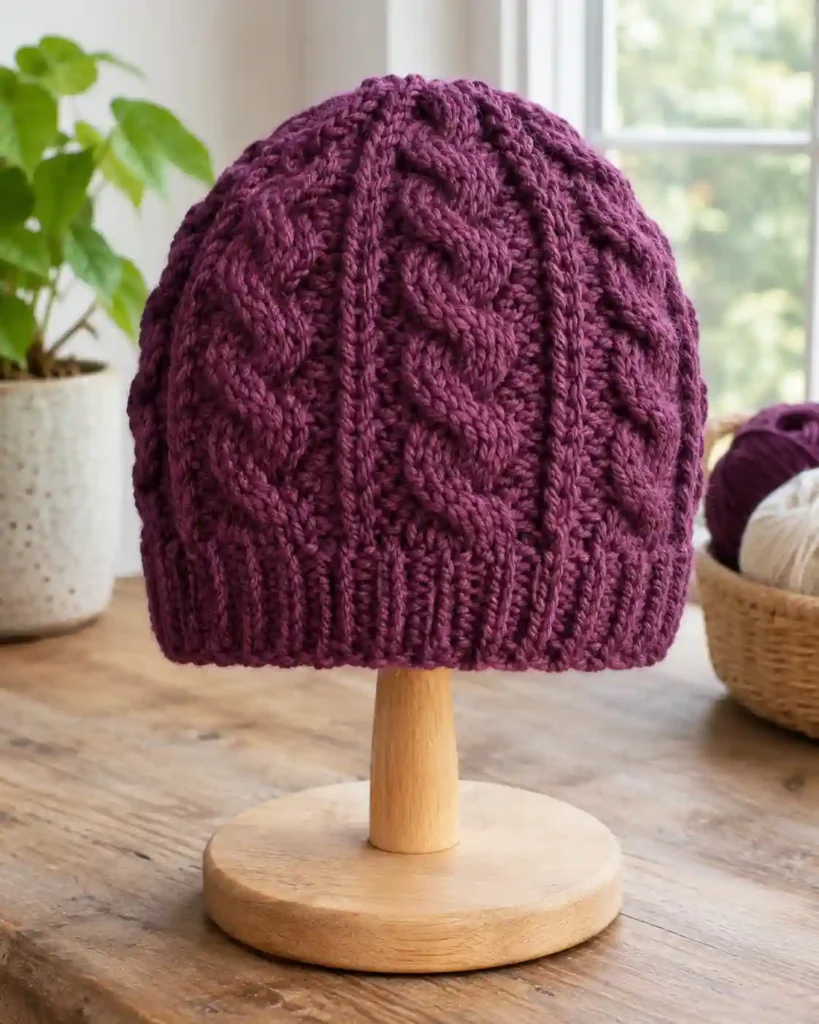
A cabled crochet beanie can look beautifully tailored, with raised columns rising above a stretchy brim. The challenge is that cables change the fabric’s width, so a plain hat’s stitch count may not transfer to a cabled version. On a cold morning, a comfortable fit matters more than a perfectly dramatic twist. Choose a tested beanie pattern when you are ready to combine cable placement with crown shaping.
Measure head circumference, work a gauge swatch, and check how the cable sections taper at the top. Avoid a stiff brim that does not stretch.
16. Can You Finish a Cabled Headband or Ear Warmer Quickly?
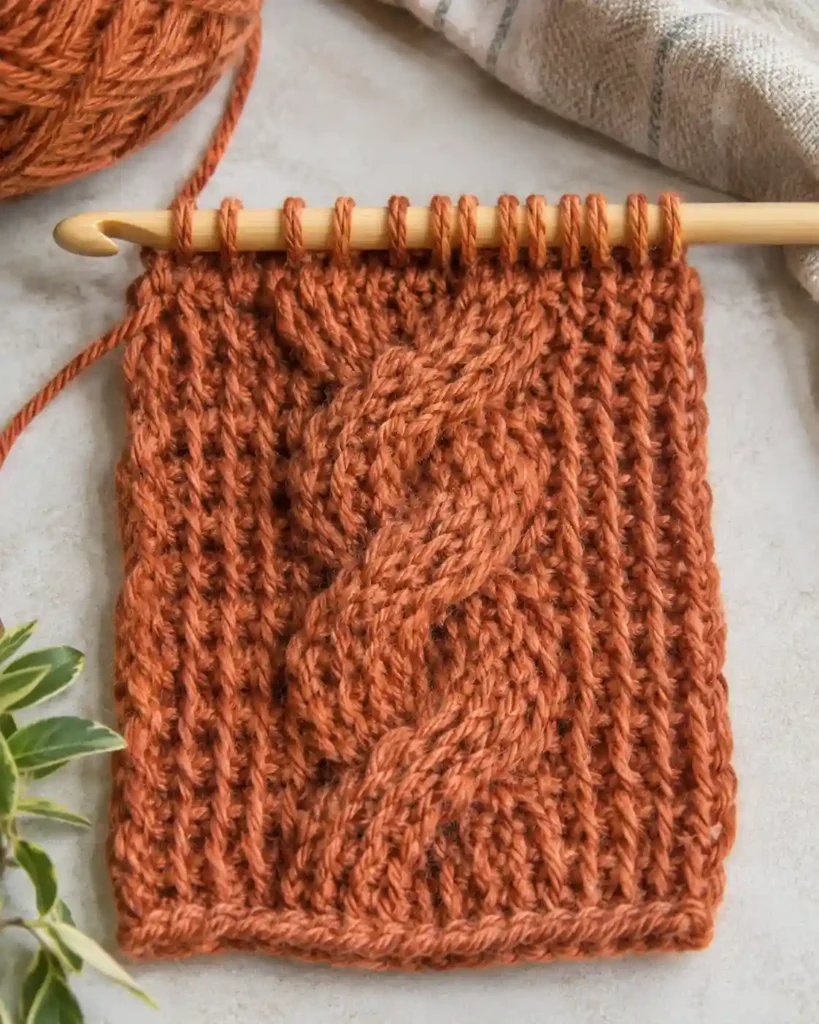
A cabled headband puts a miniature statement stitch right at the front, where everybody can see it. It requires less fabric than a hat and gives you a practical way to repeat one crossing until it feels familiar. A neutral-color ear warmer makes an easy cold-weather gift without the commitment of a larger garment. This is the project for a confident beginner who wants a finished accessory soon.
Check the fit before sewing the final seam. The band should stay in place without squeezing the wearer’s head.
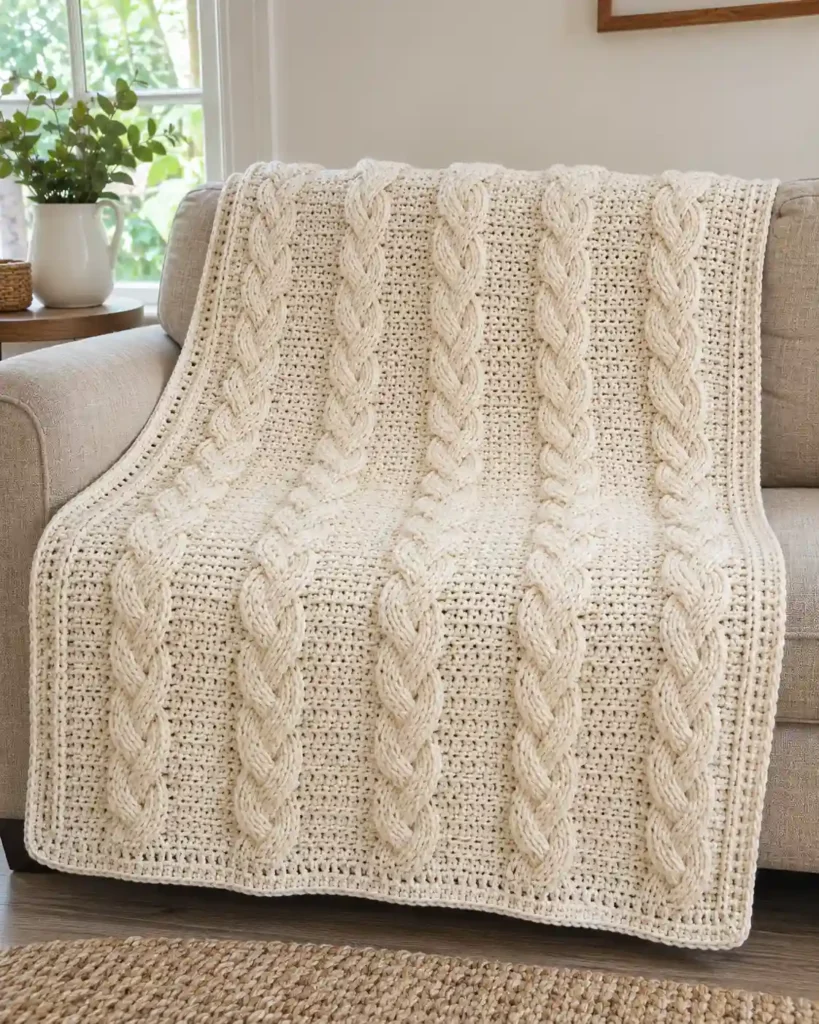
17. Why Choose a Classic Crochet Cable Stitch Blanket?
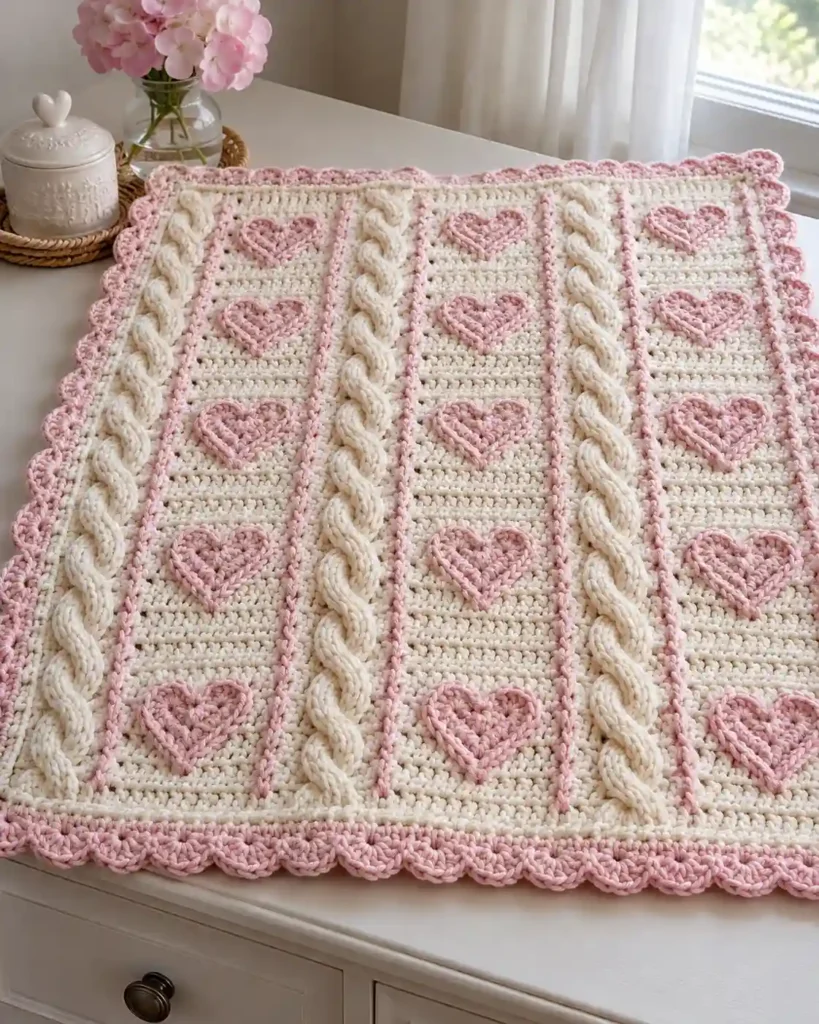
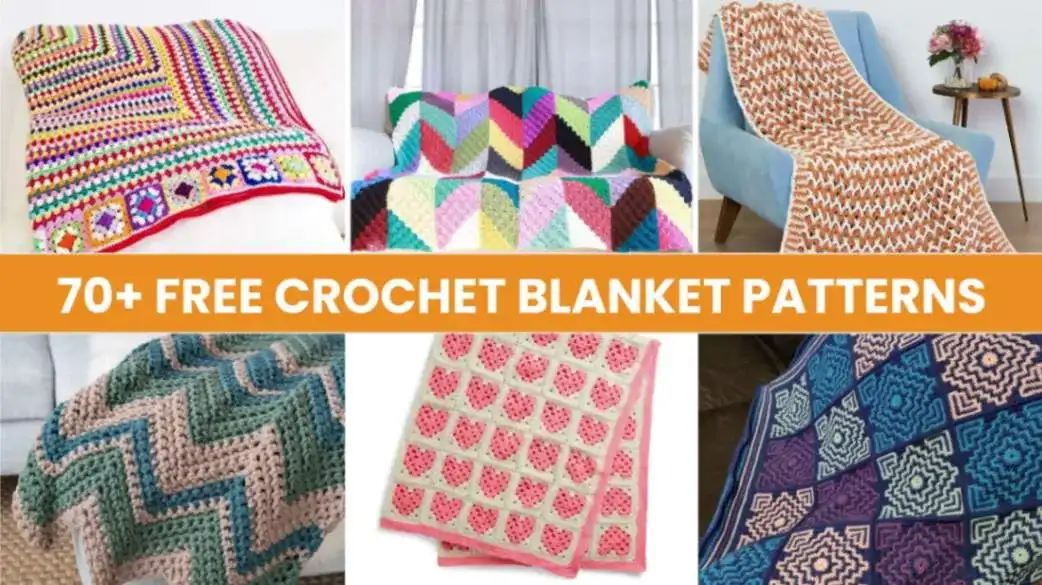
A crochet cable stitch blanket turns repeating rope-like columns into the main design. It can feel more orderly than a patchwork blanket, but all those raised posts may use extra yarn and change the finished width. Spread over a sofa, a simple stripe layout already looks richly textured. You can also explore crochet throw blanket ideas when planning the finished size and drape. Choose this route if you enjoy repeating a learned cable over a large, relaxing project.
Swatch and measure the cable repeat before deciding on blanket dimensions. For any crochet cable stitch blanket free pattern, verify the directions and yarn requirements rather than relying on the title alone.
18. How Is a Chunky Crochet Cable Throw Different?
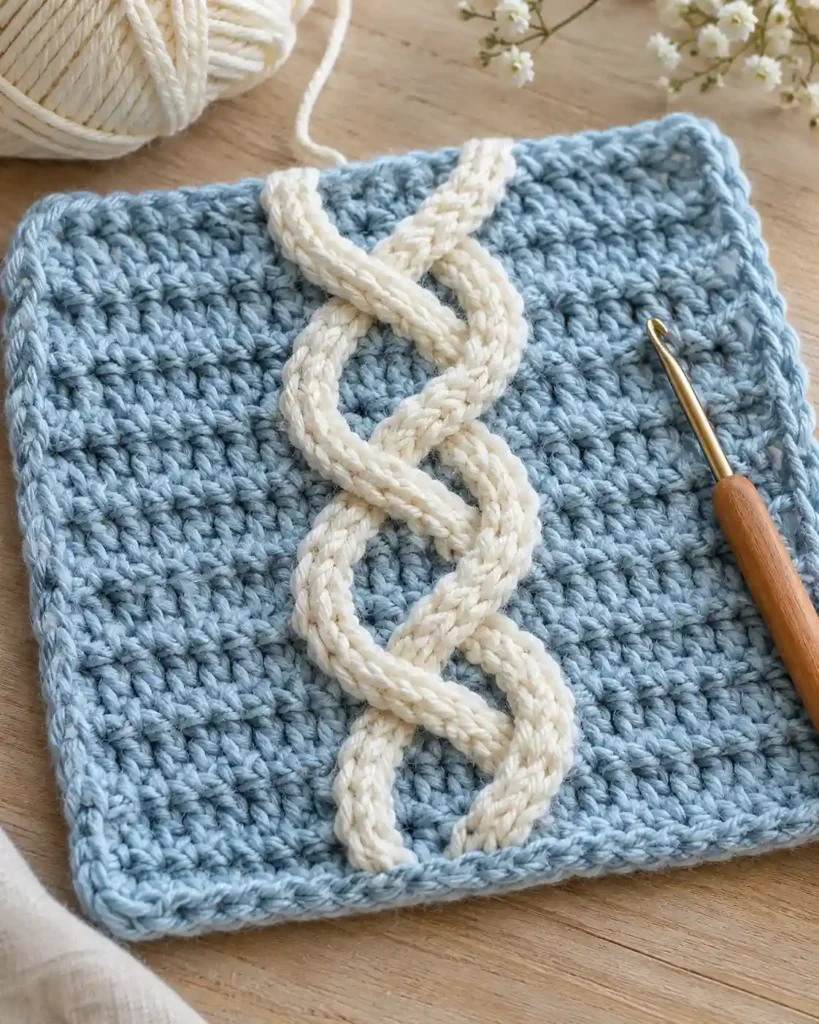
A chunky crochet cable throw makes the twist the star with thick yarn and oversized relief. It is often more dramatic than a lighter blanket, although the extra bulk may reduce drape and make the project heavy. A short throw folded over a living-room chair is a good way to use this texture without covering an entire bed. It suits anyone who prefers bold, cozy home accents.
Make a small washed swatch before purchasing all the yarn. Large cables can behave differently after washing, and an early sample helps you estimate the fabric’s weight and size.
19. Is a Cable-and-Heart Baby Blanket a Practical Gift?
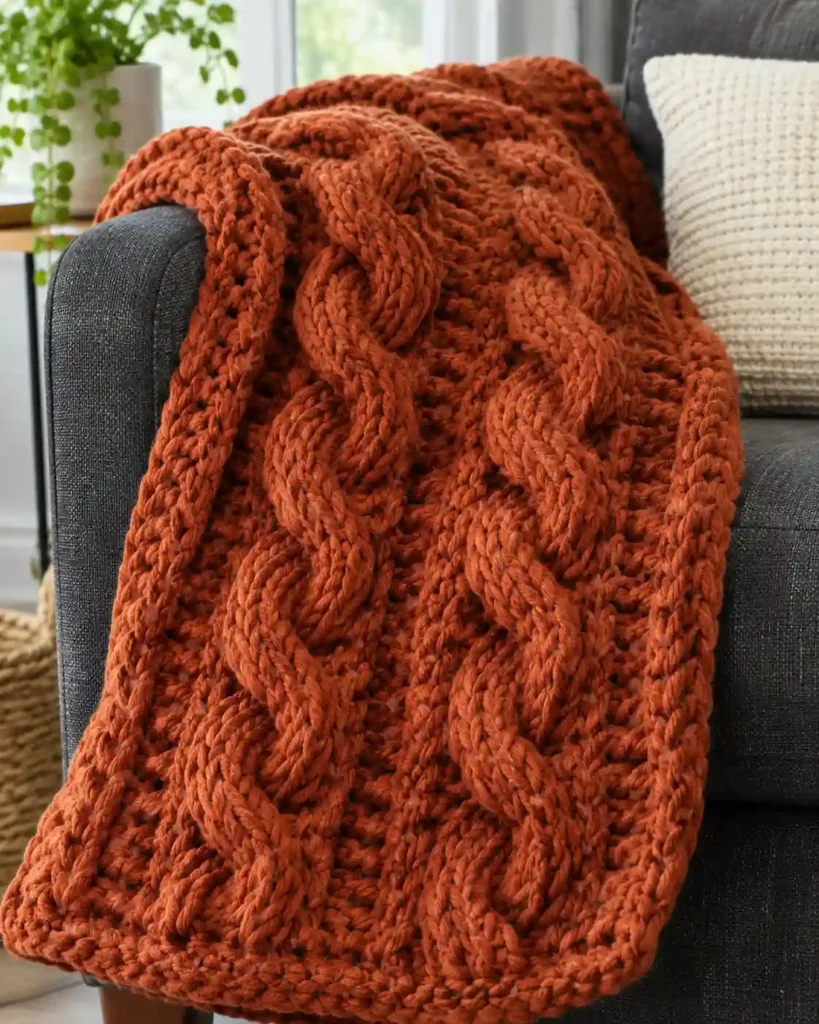
A cable-and-heart baby blanket combines straight raised bands with small heart motifs for a sweet keepsake design. Compared with an all-over cable, the heart details give each section a gentle focal point. It can work as a supervised floor-time accessory or a decorative gift rather than as loose bedding for sleep. Choose machine-washable yarn and secure every end, especially around any textured embellishment.
Safety note: The American Academy of Pediatrics advises keeping loose blankets out of an infant’s sleep area. Do not place a handmade blanket in a sleeping baby’s crib.
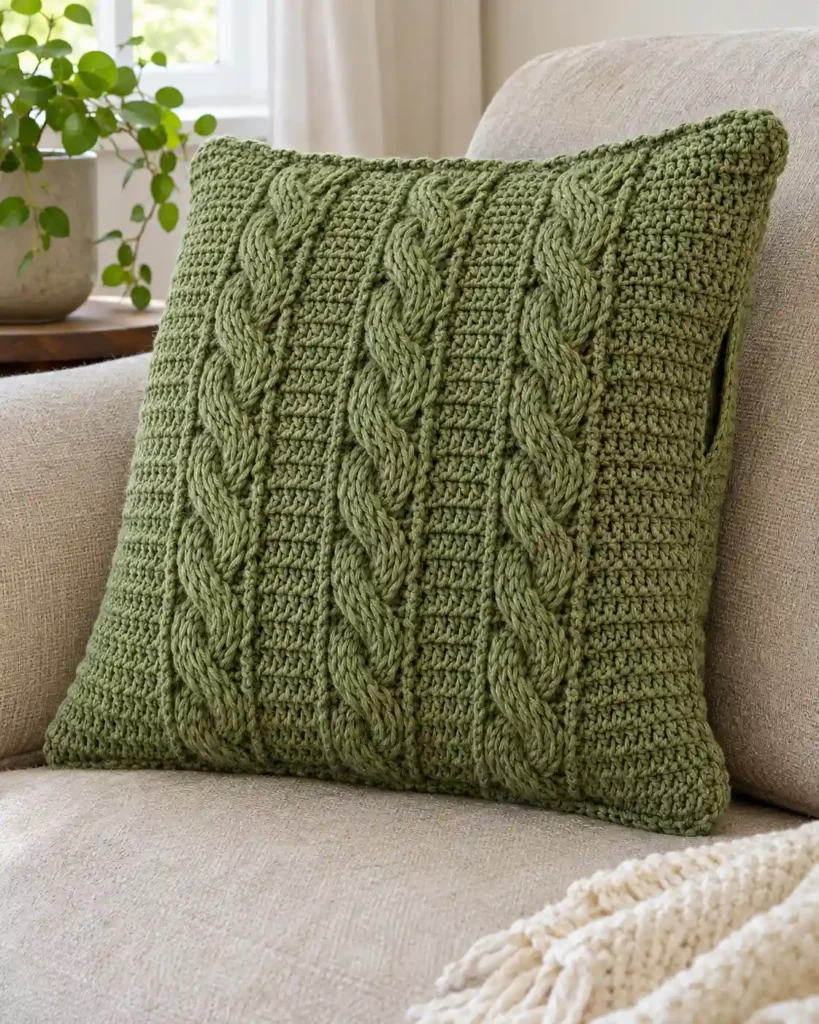
20. How Do You Plan a Cable Stitch Cushion Cover?
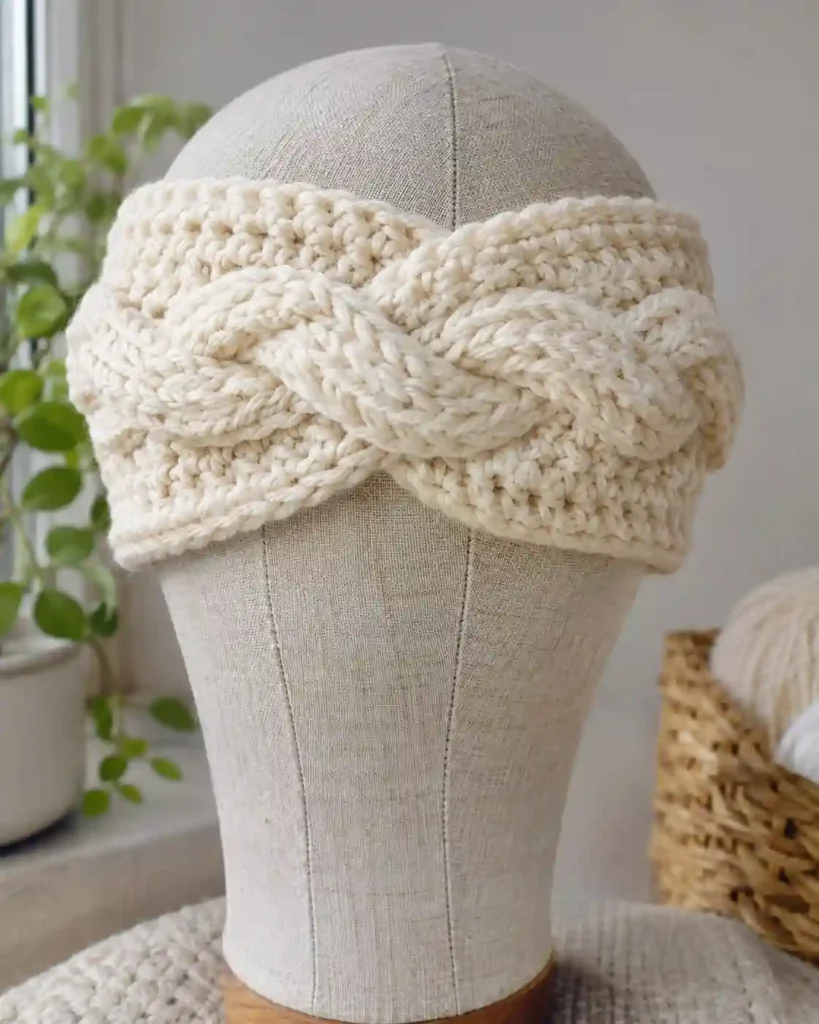
A cable stitch cushion cover uses a compact square to show off braids without requiring the repeat of a full blanket. Because the insert provides its shape, you can focus on arranging cable columns neatly across the front panel. On a sofa, a single textured cushion pairs well with quieter fabrics and does not need extra decoration. This is a rewarding project if you love crochet home décor and want an everyday use for your stitches.
Measure the intended insert and swatch the cable panel before making the cover. An envelope closure or other removable back makes cleaning easier.
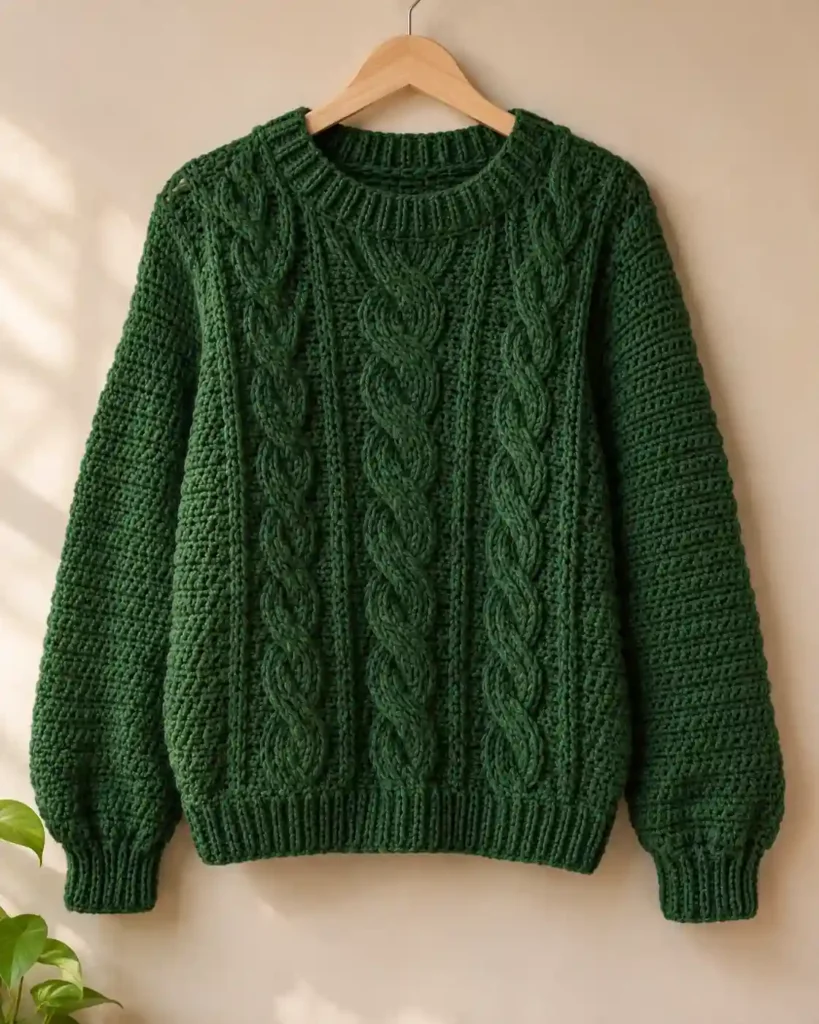
21. What Should You Know Before Making a Crochet Cable Stitch Sweater?
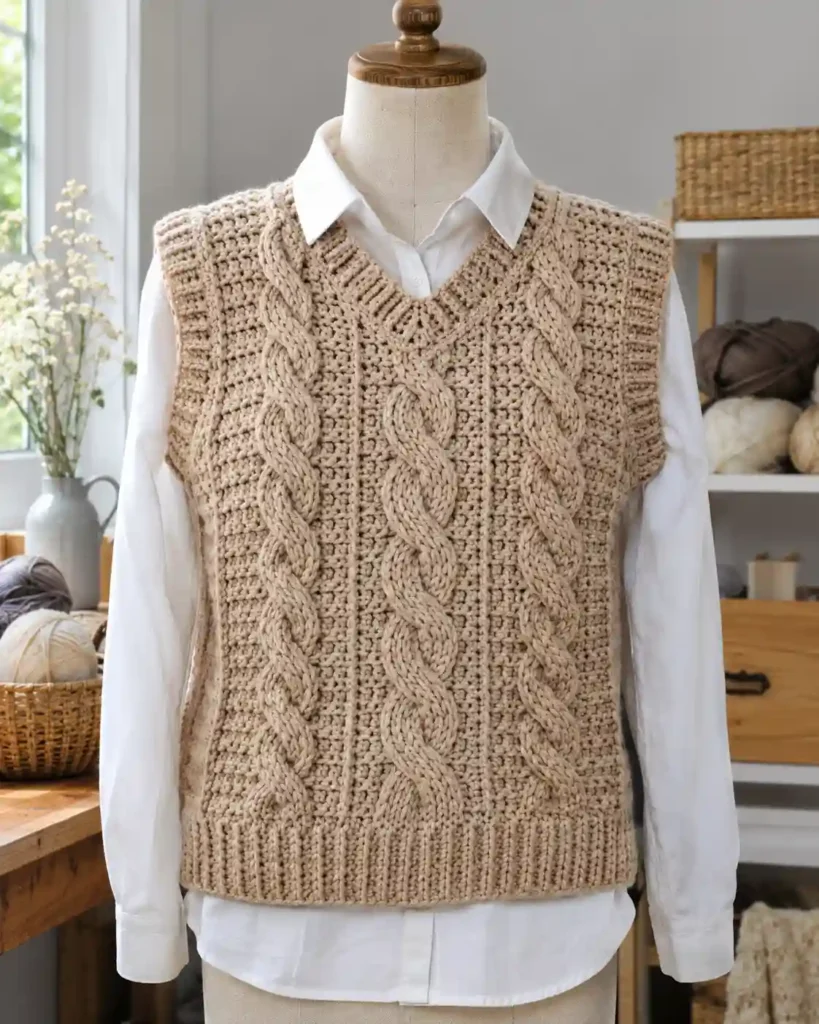
A crochet cable stitch sweater can place one beautiful cable panel on the chest while leaving the sides and sleeves simpler. That balance looks polished and avoids the weight of cables across the entire garment. A pullover is especially satisfying when you want something handmade that feels substantial without being stiff everywhere. Explore how to crochet a sweater for more garment-making inspiration. Choose this project after you understand gauge and can follow a tested, size-graded garment pattern.
Measure both the plain fabric and the cable panel: they may not have the same width at the same stitch count. Check ease, finished garment dimensions, and yarn drape before committing.
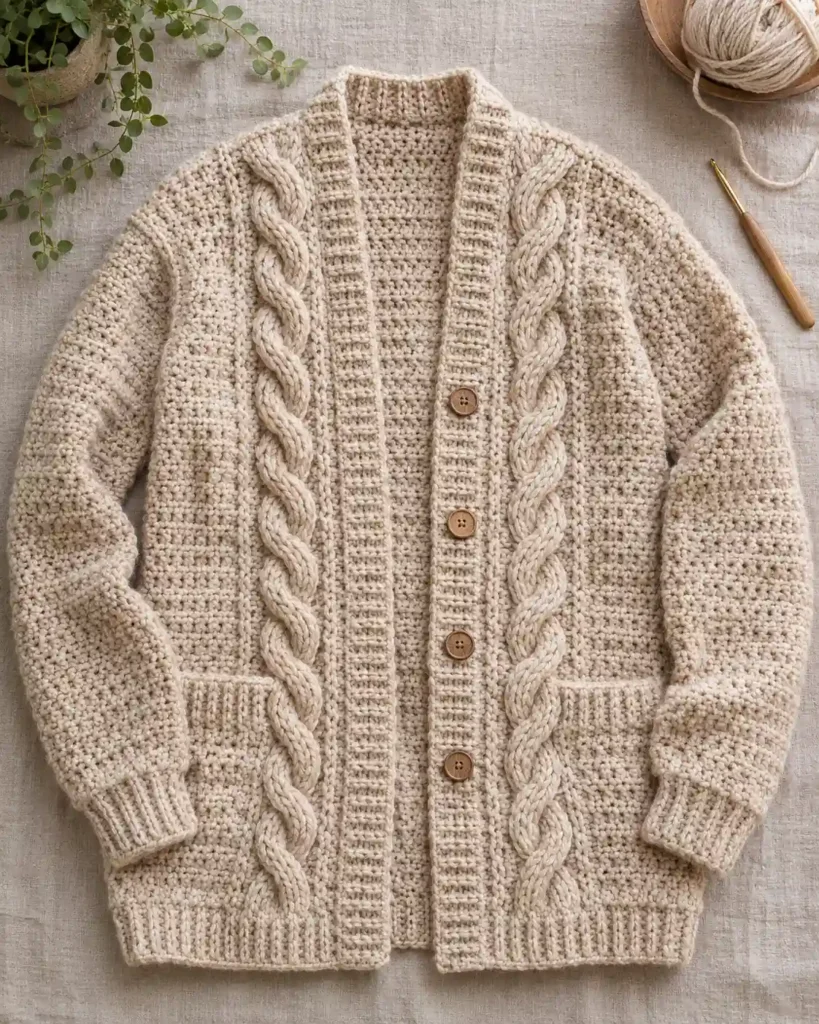
22. How Can Crochet Cables Improve a Cardigan?
Crochet cable bands along a cardigan’s opening turn a simple layer into a statement piece. Unlike a pullover’s central panel, these cables frame the front edges, so balanced placement is important. Wear an open cardigan over a plain shirt and the texture becomes the focal point without feeling busy. It is a good choice if you want a garment with visible cables but prefer an open front.
Watch the button band or front edging: heavy raised stitches can pull it out of shape. A stable band and properly measured panels help it hang evenly.
23. Why Try a Crochet Cable Sweater Vest?
A crochet cable sweater vest gives you that classic textured sweater look without making sleeves. The reduced construction can feel less overwhelming than a full pullover, although shoulders, armholes, and neckline still need careful shaping. Layer a sand-colored vest over a crisp shirt and the vertical cables instantly stand out. Choose this option if you want a versatile wearable and have moved beyond simple rectangular accessories.
Do not extend scarf measurements into a vest pattern. Use garment-specific sizing with appropriate ease and finishing details.
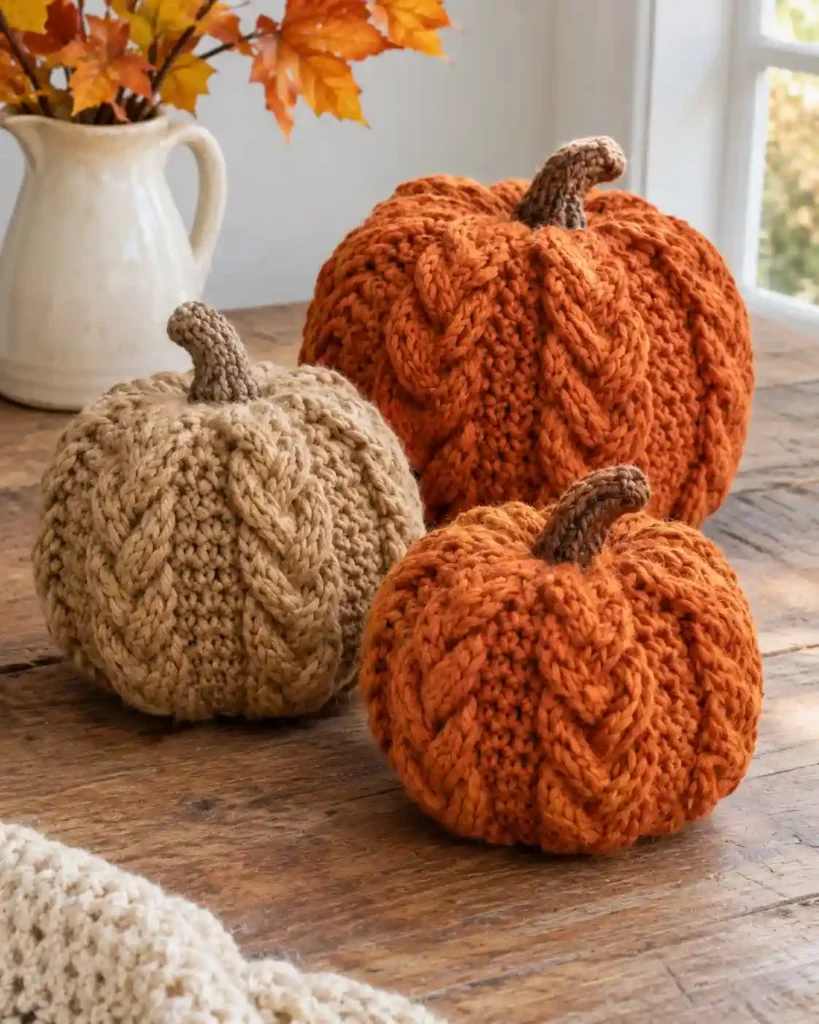
24. Can You Use Cable Stitches for a Crochet Pumpkin?
A crochet cable pumpkin makes use of the same raised ridges that give winter scarves their charm. Here, the cables suggest the pumpkin’s natural sections, adding texture without needing complicated surface decoration. A cluster of small pumpkins on an autumn table has plenty of impact in burnt orange, tan, or cream. Try this seasonal project if you enjoy quick decorative makes and already know your preferred cable repeat.
Stuff evenly so the ribs stay visible, then stitch the stem securely. The aim is a shaped decorative object, not a flat cable swatch folded in half.
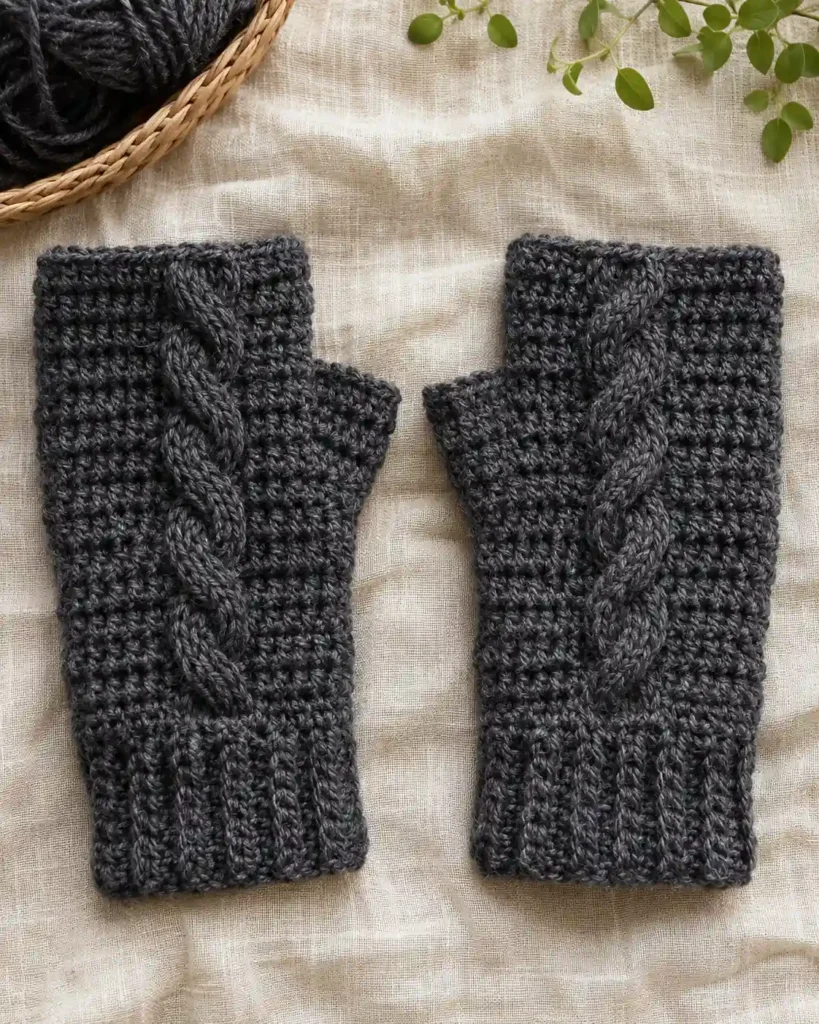
25. What Makes Crochet Cable Fingerless Mitts Useful?
Fingerless mitts can carry one slim cable along the back of each hand while leaving the fingers free. Compared with fully enclosed gloves, you can focus more on the wrist, thumb opening, and decorative stripe than on shaping individual fingers. They are handy for chilly desk work or outdoor errands when you still need some dexterity. Pick them if you are ready for a matching pair that feels more challenging than a headband but smaller than a sweater.
Work the two mitts as mirrored pieces where the pattern requires it. Check wrist stretch and thumb placement before finishing the second one.
How Do You Read a Crochet Cable Stitch Diagram?
Read the chart key, follow the indicated row direction, and identify which stitch posts are crossed before attempting the cable repeat.
Start with the chart’s key, not with what you think a symbol should mean. The Craft Yarn Council’s chart symbols provide common reference symbols for stitches including FPdc and BPdc, but special crossed-stitch symbols may still need the individual designer’s explanation.
Learn how to read a crochet pattern before following the row direction, identifying the background stitches, and locating the earlier posts that the cable stitches surround. Then compare the diagram with the written row. If those instructions disagree, do not guess your way through a garment: check for the designer’s correction or errata.
At a Glance
- Symbols: Identify each stitch using the chart’s legend.
- Direction: Follow the row or round direction shown.
- Crossings: Locate the posts worked out of normal sequence.
- Repeats: Check stitch counts and repeat boundaries.
Which Yarn, Hook, and Gauge Work Best for Crochet Cables?
Smooth yarn, a pattern-appropriate hook, and a measured cable-repeat swatch help produce visible, consistent crochet cables.
Smooth, fairly solid-colored yarn usually makes raised stitches easier to inspect than highly fuzzy or busy yarn. Use a hook appropriate to the specific pattern and the fabric you want rather than choosing a size from yarn weight alone. The Craft Yarn Council’s yarn-weight system presents hook ranges as guidance and tells makers to follow a pattern’s stated gauge.
For a sweater or blanket, make the swatch using the actual cable repeat. Measure after washing and drying it according to the yarn’s care instructions. Cable crossings can pull a fabric inward, so gauge from plain stitches alone can mislead you.
At a Glance
- Yarn texture: Smooth yarn provides clearer stitch definition.
- Yarn color: Solid shades make crossing details easier to identify.
- Hook selection: Follow the pattern and check fabric tension.
- Gauge: Measure the actual cable repeat, not just plain stitches.
For a crochet cable stitch sweater, accurate cable-panel gauge is particularly important because the textured and plain portions may behave differently.
Why Do Crochet Cables Pucker or Look Uneven?
If a crossing bunches up, start by checking which post you entered and whether you skipped the correct group before returning. Taller stitches sometimes make a crossing easier, while pulling the working yarn tight can make the fabric buckle. A mismatched hook, missed ground stitch, or extra row between crossings can also change the overall look.
Troubleshooting checklist:
- Compare the crossing row with the pattern’s chart.
- Count stitches immediately before and after the cable.
- Check whether you accidentally reversed the crossing direction.
- Relax your tension, then work another small swatch before changing hook size.
Which Crochet Cable Stitch Should a Beginner Choose?
For a first true crossing, choose a mini twist with generous plain stitches on either side. If you want the look with fewer technical demands, start with a faux cable or surface detail. From there, a headband or rectangular scarf is a sensible bridge to four-post braids, blankets, and finally garments or Celtic-inspired textures.
On CrochetMind.com, use this list as a project-planning guide: identify the stitch effect you want, then choose a verified pattern suited to your skill level. An attractive stitch photo tells you how something looks; a tested pattern tells you how to make it.
Frequently Asked Questions About Crochet Cable Stitch
Is crochet cable stitch suitable for beginners?
Yes, especially a small two-post crossing after you have practiced front post stitches. Start with a swatch and follow a tested row-by-row tutorial rather than a full sweater pattern.
What is the difference between a crochet cable stitch pattern and a faux cable?
A true structural cable crosses raised stitch groups. A faux cable imitates that appearance with simpler texture or surface decoration and may not contain any actual crossed posts.
Can crochet cable stitches look like knitting?
Yes. Vertical braids, cable ribs, and some Tunisian crochet textures can create a knit-inspired look, although the stitch structures and stretch will differ from knitted fabric.
What yarn shows crochet cable stitches clearly?
Smooth, light or medium-colored yarn makes crossing points easier to see. Test the exact cable repeat in a swatch, because fuzzy or variegated yarn can obscure small details.
Do I need a special hook to make a crochet cable stitch sweater?
Most conventional cable crochet uses a regular crochet hook, while Tunisian cable techniques generally require a suitable Tunisian hook. More important than a special tool is meeting the garment pattern’s gauge and sizing instructions.
Ready to Try Your First Crochet Cable Stitch?
Begin with a two-post twist, then move toward a braid or rib pattern once the crossings feel natural. A little swatch teaches you more than guessing at a large project, and it helps you find the right texture for the yarn in your basket. Whether your next make is a scarf, a cushion, or a crochet cable stitch sweater, choose the stitch that works with the finished object’s shape and feel.
Save your favorite idea and look for a tested pattern before you begin. The best cable project is one you will enjoy making and using.
Final Thoughts
Crochet cable stitches bring beautiful texture, depth, and dimension to handmade projects. From cozy blankets and scarves to stylish sweaters, hats, and home accessories, these 25 ideas offer plenty of inspiration for every skill level. Start with a simple cable pattern, practice working around front and back post stitches, and experiment with different yarns and hook sizes as your confidence grows. With a little patience, you can turn basic crochet stitches into impressive projects you’ll love to make, wear, or gift.